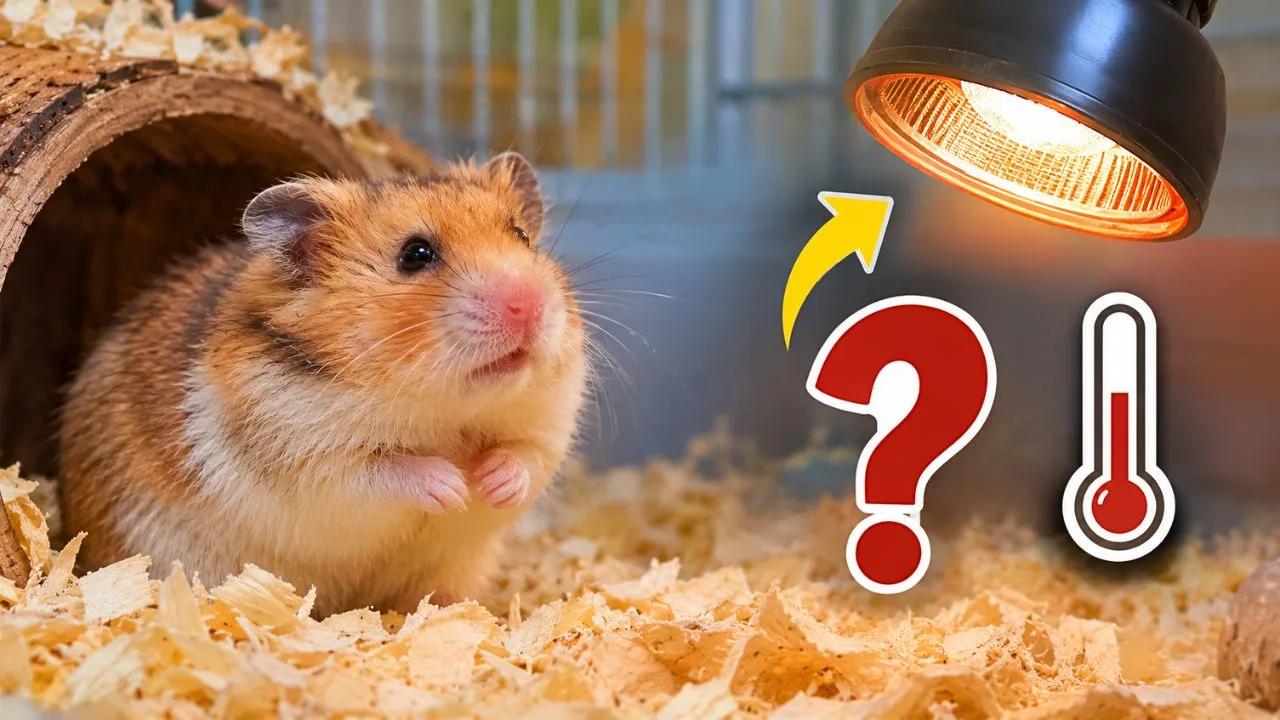
When temperatures drop, it’s natural to worry about whether your hamster is warm enough. You might consider buying a heat lamp, heating pad, or other equipment to keep the enclosure comfortable. However, hamsters generally don’t need a dedicated heat lamp. What they need is a stable room temperature, suitable bedding, and a safe place to nest. Using the wrong heating equipment can create additional risks, including overheating and burns.
Quick Answer: Do Hamsters Need a Heat Lamp?
No, most pet hamsters do not need a heat lamp. A comfortably heated room with a stable temperature is usually a safer and more practical solution.
The Royal Veterinary College recommends keeping a hamster’s environment between 18°C and 26°C (64°F–79°F). The PDSA recommends maintaining a steady temperature between 18°C and 21°C (64°F–70°F).
Because recommendations vary slightly, focus on maintaining a comfortable, consistent temperature rather than trying to make the enclosure unusually warm.
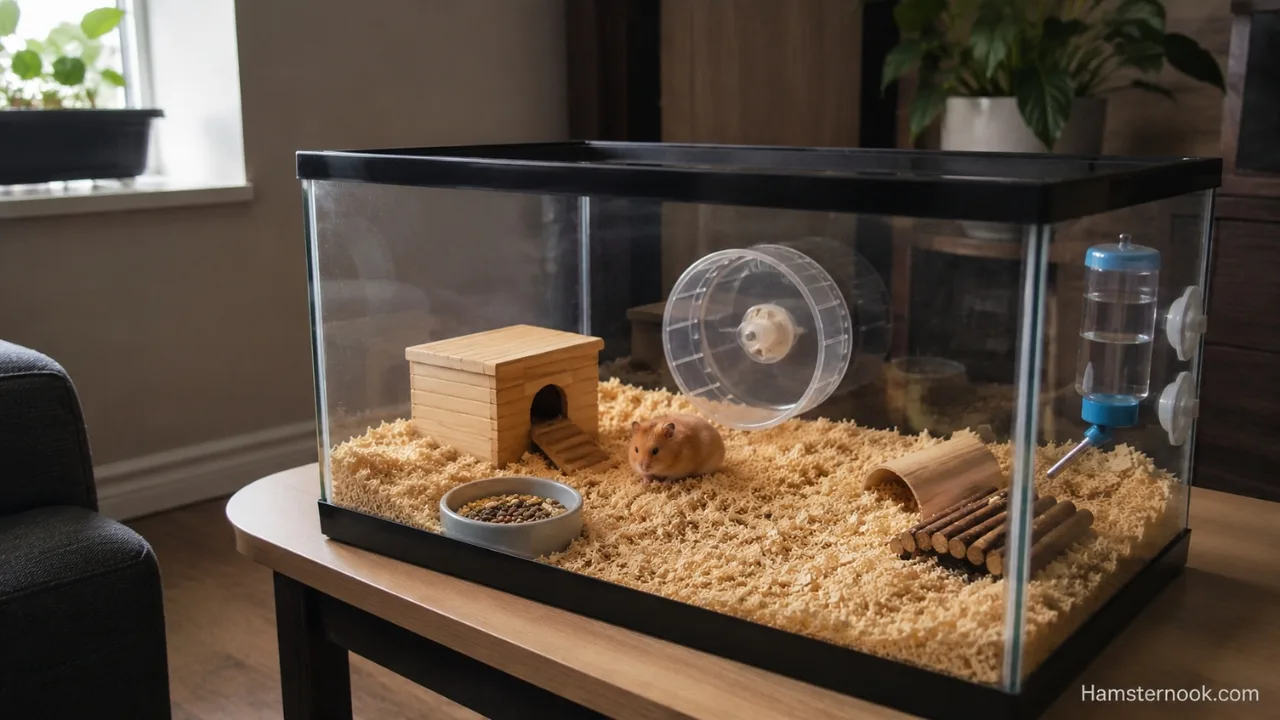
Here is what hamster owners should know:
- Avoid placing a heat lamp directly over the enclosure.
- Keep the room at a stable, comfortable temperature.
- Provide sufficient suitable bedding and nesting material.
- Keep the enclosure away from cold drafts.
- Monitor the temperature near your hamster’s enclosure.
- Avoid direct contact with heating pads, hot-water bottles, or other intense heat sources.
A heat lamp is not a replacement for proper temperature control.
What Temperature Do Hamsters Need?
Temperature is an important part of hamster housing. An enclosure that becomes excessively cold or hot can affect your pet’s comfort and health.
Different veterinary and animal welfare resources provide slightly different recommended ranges.

For a more detailed guide to safe temperature ranges and the risks of excessive heat or cold, see Hamster Temperature: Safe Range, Too Hot & Too Cold.
| Source | Recommended environmental temperature |
|---|---|
| Royal Veterinary College | 18–26°C (64–79°F) |
| PDSA | 18–21°C (64–70°F) |
| MSD Veterinary Manual | Approximately 18–26°C (64–79°F) |
| NC3Rs | 20–24°C (68–75°F) |
These recommendations come from different care and husbandry contexts, so they should not be treated as identical limits.
For an ordinary pet hamster, maintaining a steady temperature around 18–21°C (64–70°F) is a sensible conservative target, provided the environment remains comfortable and the enclosure is properly set up.
Why does temperature consistency matter?
A room that becomes cold overnight and excessively warm during the day can create an unstable environment.
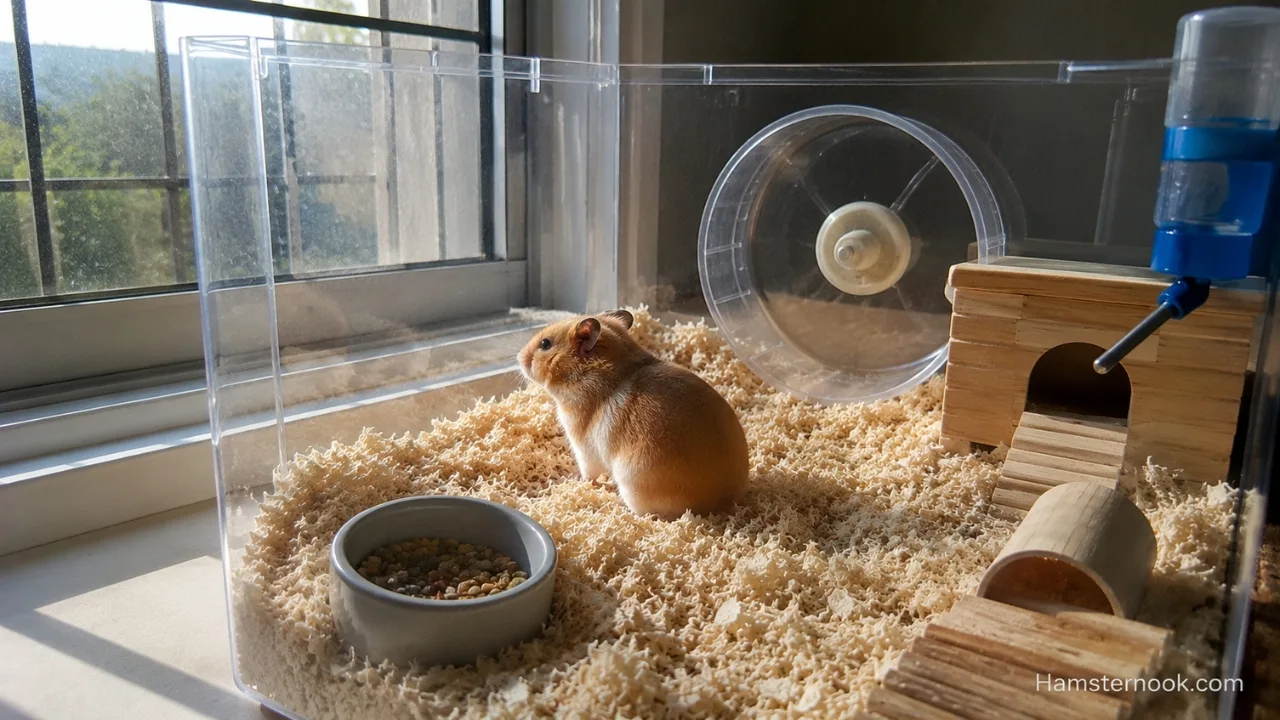
Hamsters need a comfortable place to rest, burrow, and maintain their normal activity.
Sudden temperature changes, cold drafts, and excessive heat can all create problems.
Rather than repeatedly switching heating equipment on and off, aim for a stable room environment.
Why Heat Lamps Are Not Recommended for Most Hamsters
Heat lamps are commonly associated with reptile enclosures, where carefully controlled heating may be necessary for particular species.
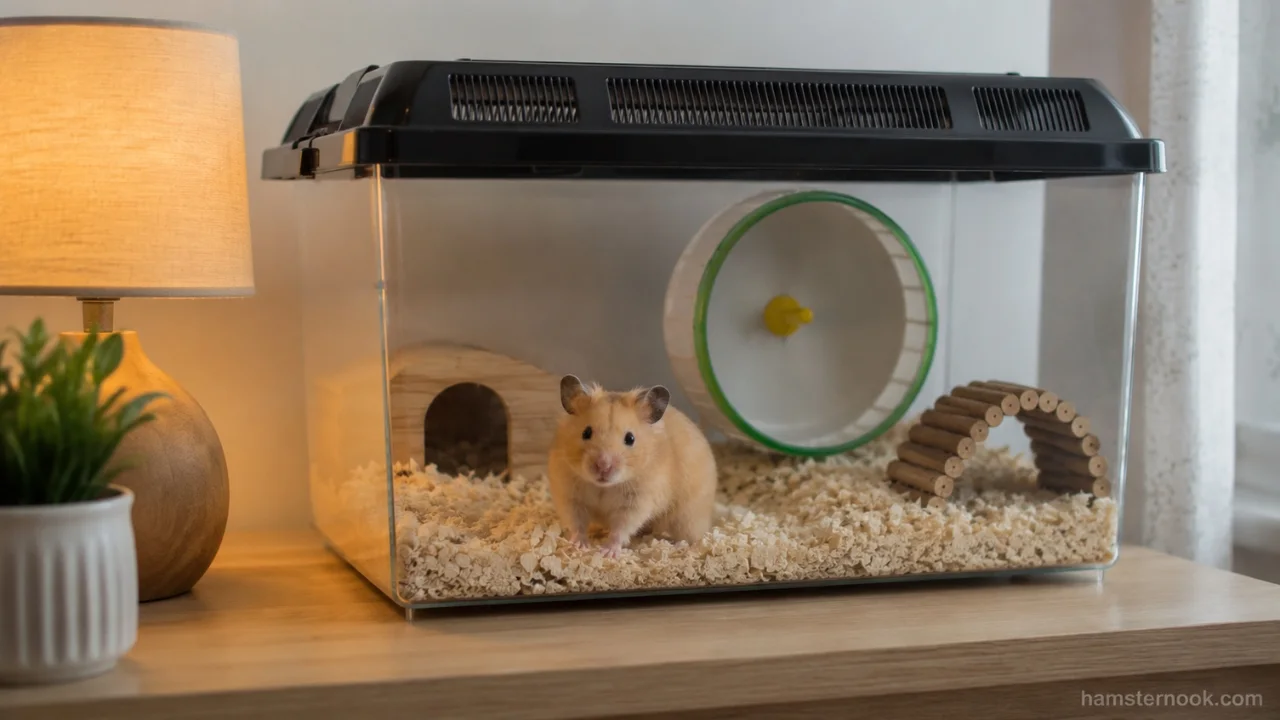
Hamsters have different housing requirements.
They generally do not need a dedicated heat source inside their enclosure when the room itself is maintained at an appropriate temperature.
There are several reasons to avoid using a heat lamp as your default heating solution.
1. Risk of overheating
A heat lamp produces concentrated heat in the area beneath it.
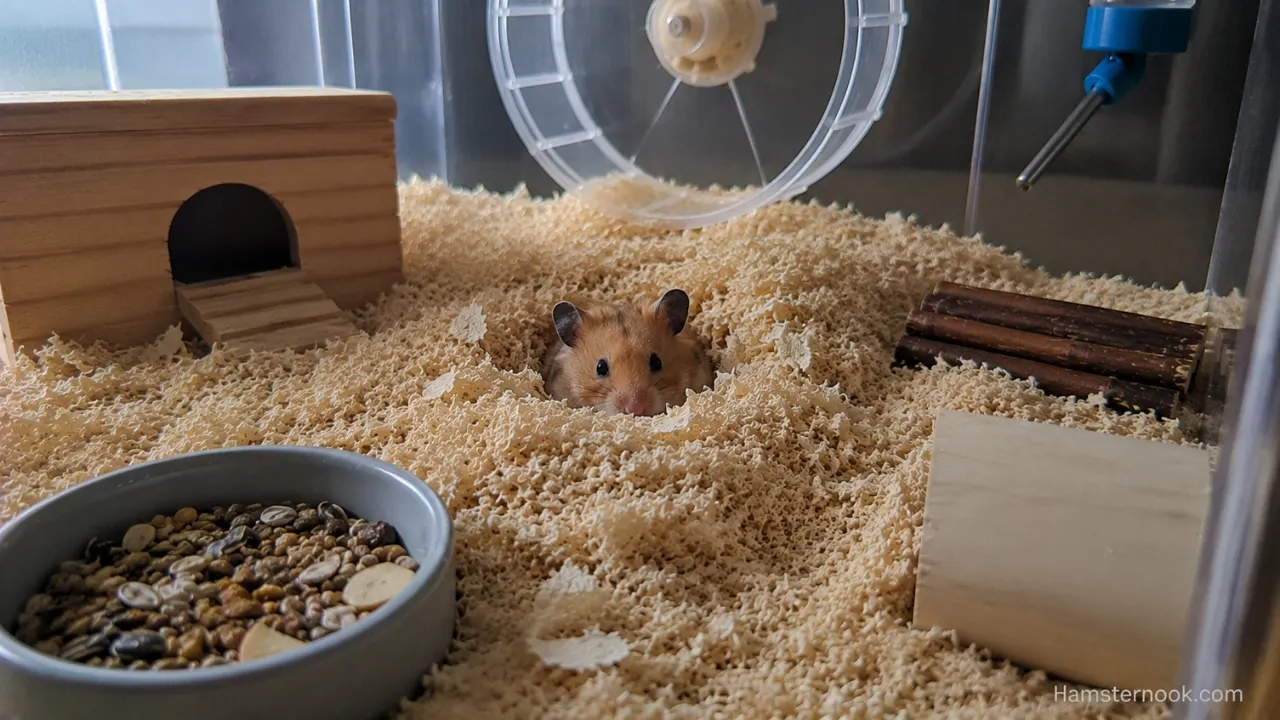
If the lamp is too powerful, too close, or operated for too long, the enclosure may become warmer than intended.
This is particularly concerning in enclosures with limited ventilation.
Glass tanks and enclosed habitats can become excessively warm when exposed to direct heat or sunlight.
A hamster cannot simply tell you when its environment has become uncomfortable.
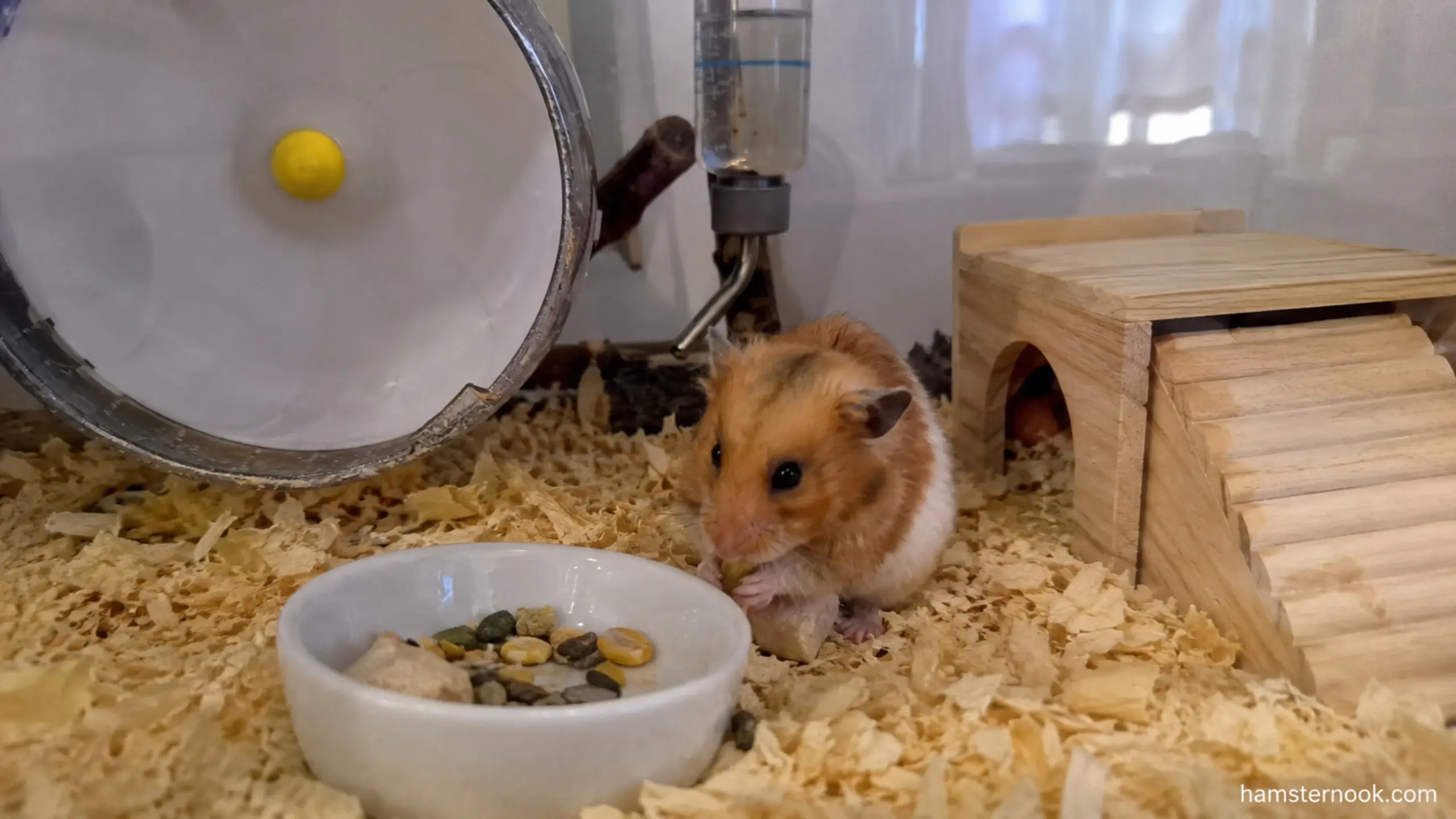
2. Risk of burns
Heating equipment can create hot surfaces.
If a hamster can reach a hot lamp, bulb, fixture, or other heated component, it may be injured.
Poorly installed equipment can also create electrical and fire hazards.
Keep heating equipment out of reach and follow the manufacturer’s installation and clearance instructions.

3. Uneven enclosure temperatures
A heat lamp may warm one section of the enclosure while leaving another section considerably cooler.
This makes it difficult to maintain consistent conditions throughout the habitat.
A properly controlled room temperature is generally easier to manage.
4. False reassurance from the room temperature
You might see a comfortable reading on your room thermometer and assume the enclosure has the same temperature.

That isn’t always the case.
Direct sunlight, nearby windows, heating vents, and the enclosure’s material can affect the temperature inside the habitat.
Monitor the actual area where your hamster lives instead of relying entirely on a thermostat across the room.
What Are the Safer Alternatives to a Hamster Heat Lamp?
If your room becomes cold during winter, you have several more practical options than placing a heat lamp over the enclosure.
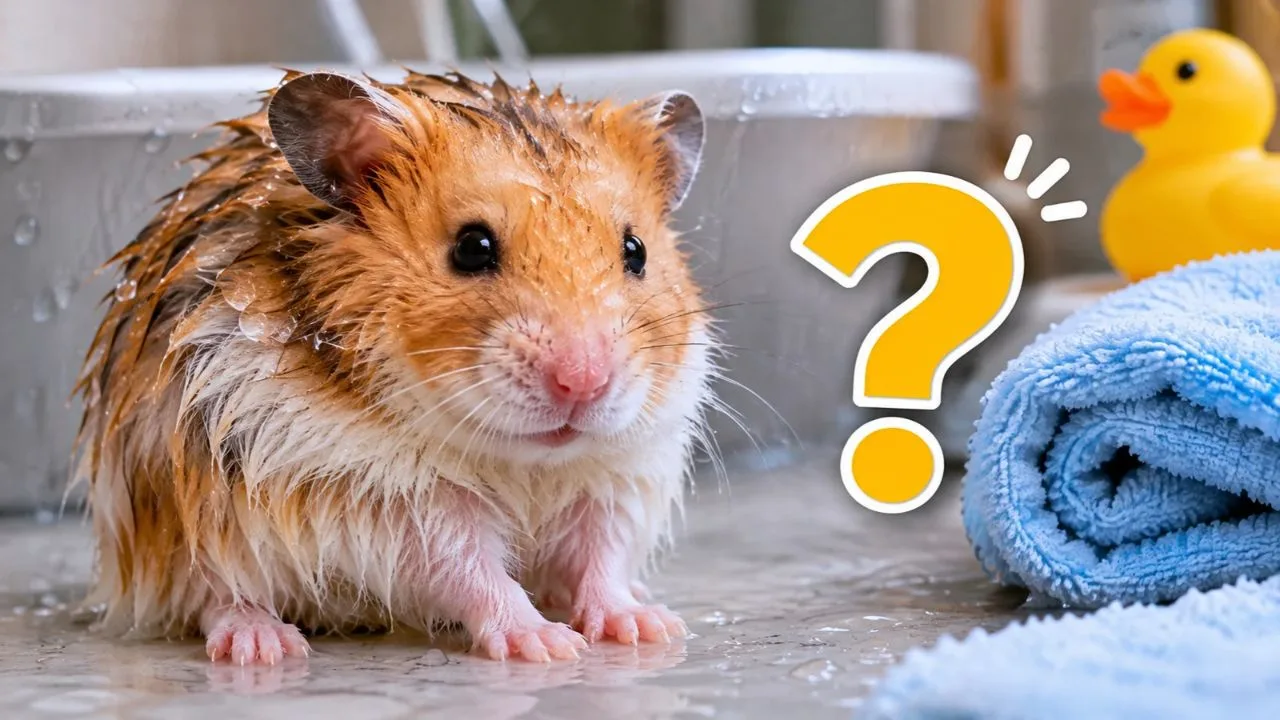
1. Maintain a comfortable room temperature
The simplest approach is to maintain a comfortable temperature throughout the room.
You can use:
- A household heating system.
- A thermostatically controlled room heater.
- Central heating.
- An appropriately installed room thermostat.
If you use a portable heater, position it away from the enclosure and follow its safety instructions.
Do not direct hot air toward your hamster’s habitat.
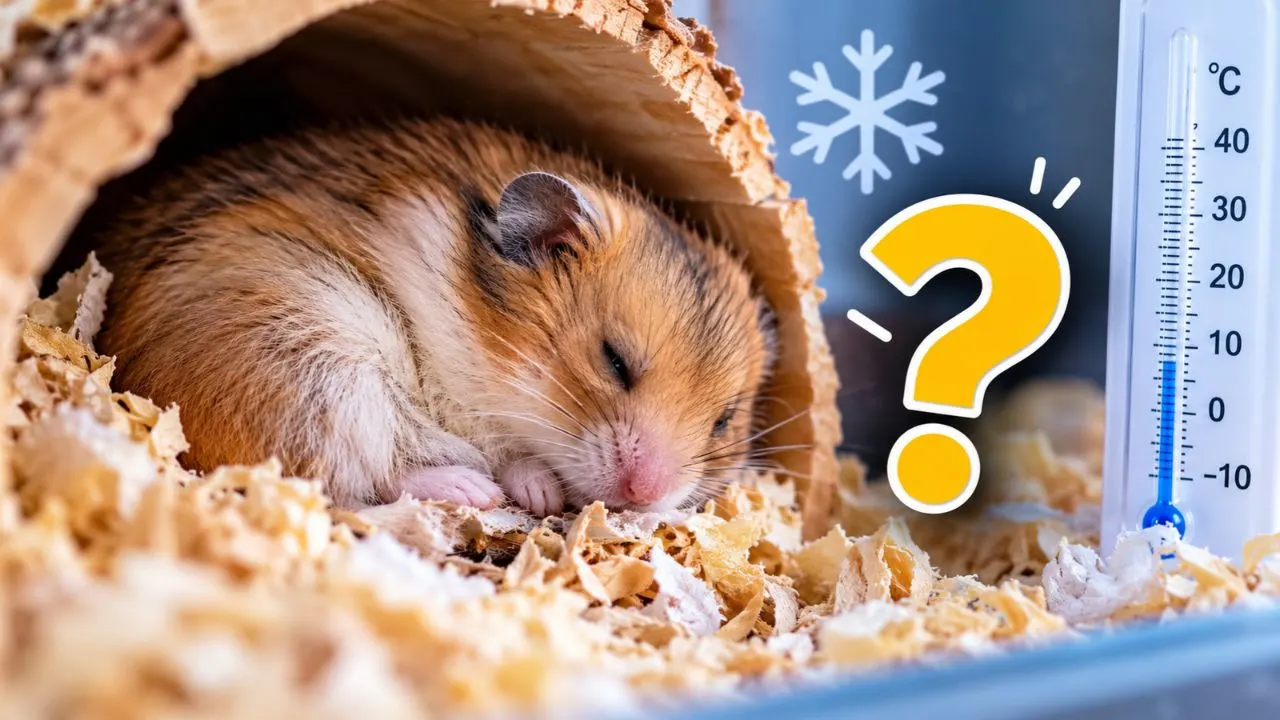
The goal is to warm the room rather than create a hot spot inside the enclosure.
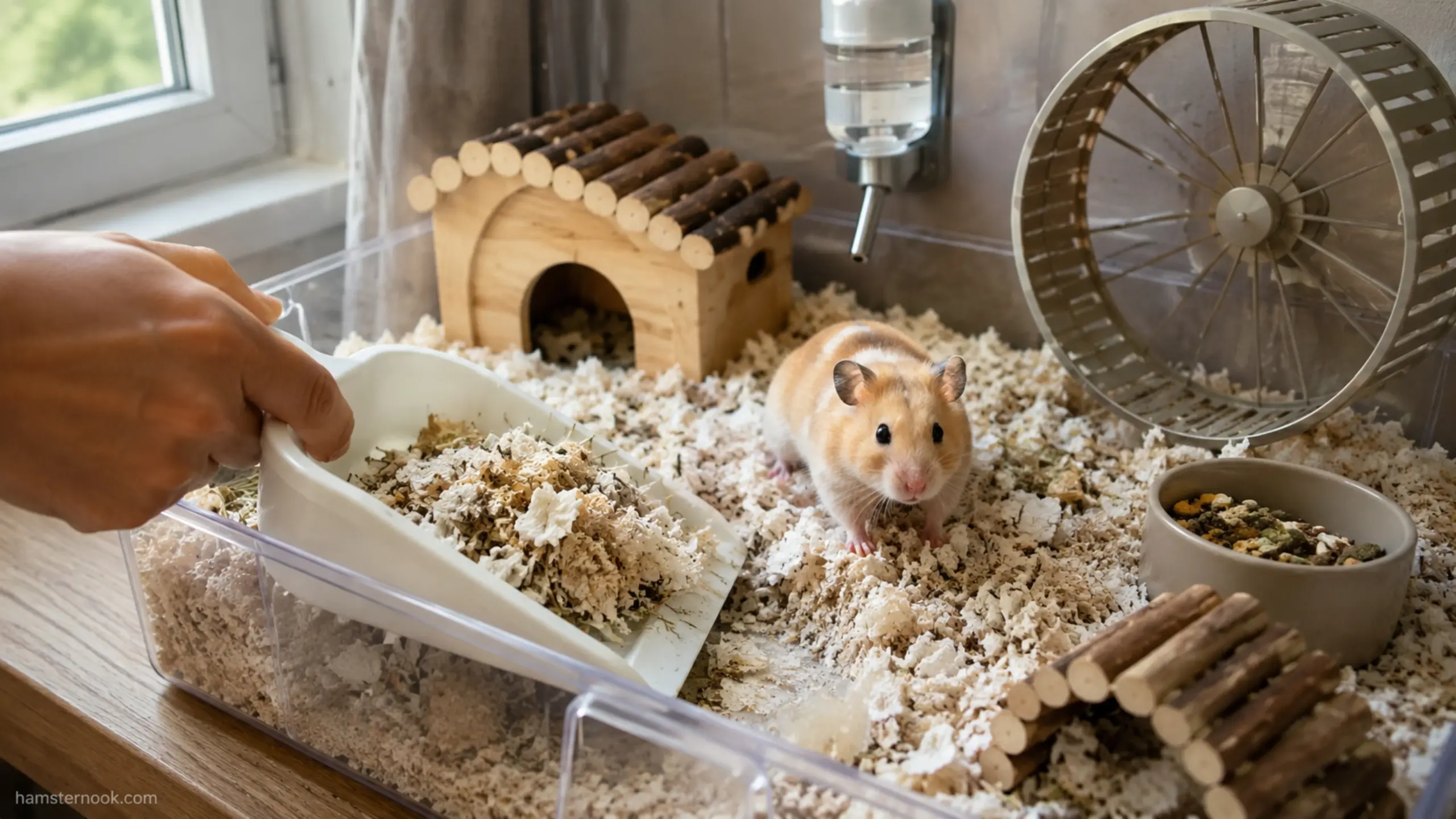
2. Provide sufficient bedding
Bedding is an important part of a hamster’s environment.
Hamsters naturally dig, burrow, and build nests. Suitable bedding allows them to create a sheltered resting area.
For help choosing suitable materials and understanding bedding safety, see Best Hamster Bedding: Safest Types, Depth, Burrowing & What to Avoid.
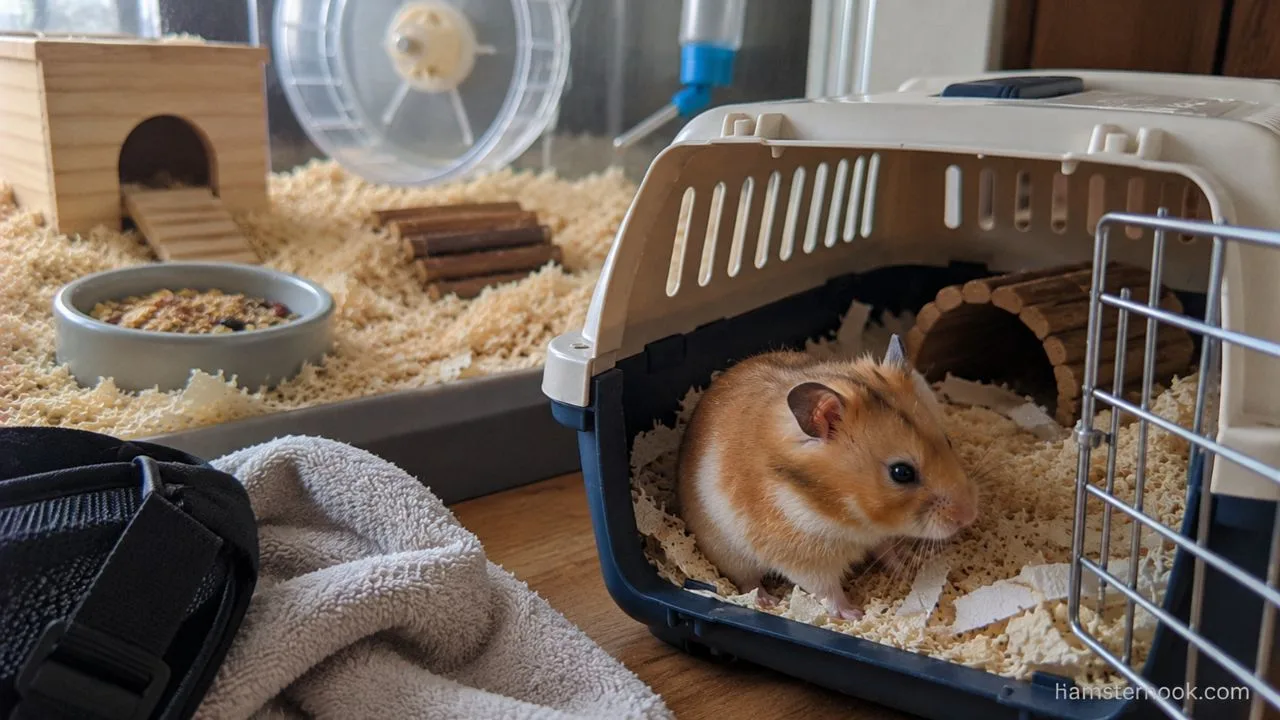
Provide:
- Appropriate paper-based bedding.
- Sufficient depth for burrowing.
- Safe, unscented nesting material.
- A suitable enclosed hideout.
Avoid cotton wool and fluffy synthetic nesting products because they can become tangled around limbs or cause problems if swallowed.
Adding more suitable bedding is generally a better choice than trying to heat the hamster directly.
3. Use a suitable hideout
A hamster should have access to a secure hiding place where it can rest without being disturbed.

For more guidance on choosing a suitable sheltered resting space, see Best Hamster Hideouts and Sleeping Areas: What Hamsters Prefer.
Suitable options include:
- Wooden hamster hideouts.
- Multi-chamber wooden houses.
- Appropriate ceramic hides.
- Safe cardboard hideouts.
Choose a hideout that allows your hamster to enter and exit comfortably.
A suitable hideout combined with deep bedding gives your hamster a sheltered nesting area.
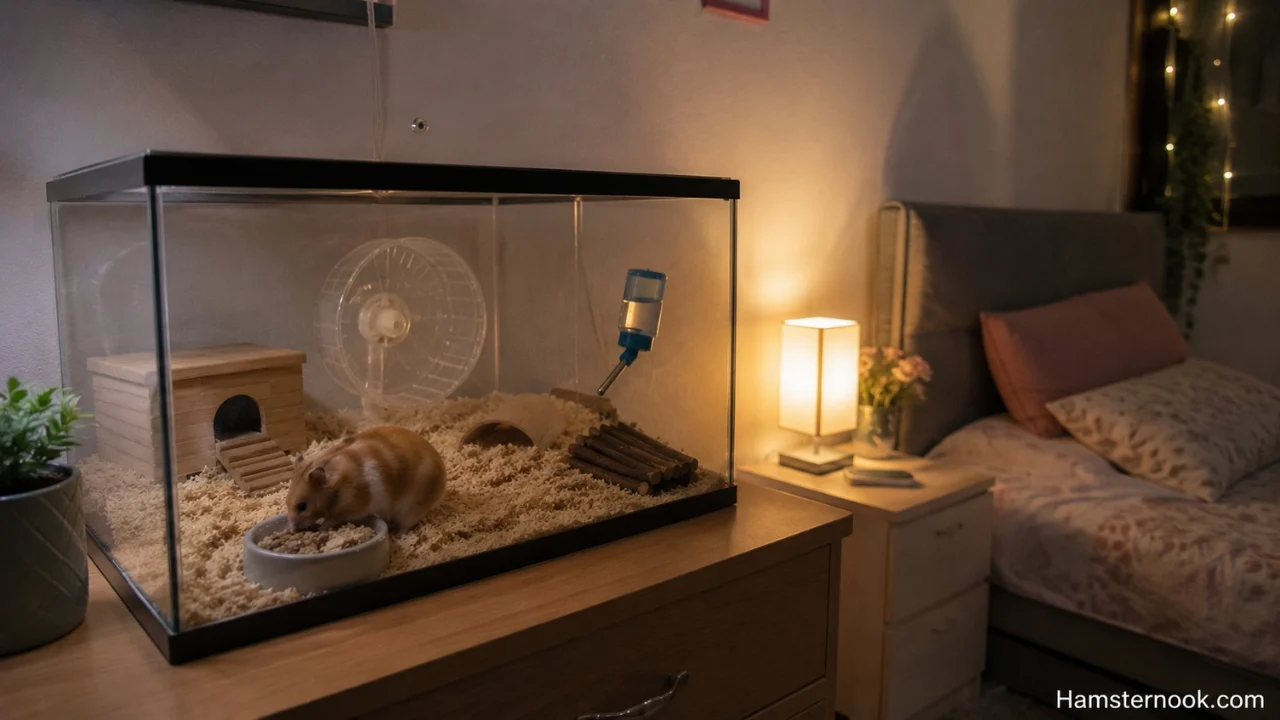
4. Move the enclosure away from cold drafts
Check where your hamster’s enclosure is positioned.
For more guidance on choosing a suitable location and avoiding common placement risks, see Hamster Cage Placement: Where to Put It & What to Avoid.
Avoid placing it:
- Directly beside an open window.
- Near frequently opened exterior doors.
- Under an air-conditioning vent.
- Against a particularly cold exterior wall.
- In an unheated garage or shed.
- In a room with large temperature fluctuations.
A quiet indoor room with stable conditions is usually a better location.

5. Use room-level temperature control
If your home becomes particularly cold, a thermostatically controlled room heater can help maintain a consistent environment.
Choose equipment designed for indoor use and position it safely away from the enclosure.
Do not cover the hamster cage with thick blankets to trap heat. This can restrict ventilation and make temperature monitoring difficult.
Can You Use a Heating Pad for a Hamster?
Heating pads are another product owners sometimes consider during winter.

However, placing a standard human heating pad underneath or inside a hamster enclosure is not recommended.
There are several concerns:
- The surface may become too hot.
- The hamster may be unable to escape the heated area.
- Direct contact can cause burns.
- Temperature distribution may be uneven.
- Electrical cables may become accessible to chewing.
A heating pad should not be treated as a routine replacement for room heating.
What about reptile heat mats?
Reptile heat mats are designed for specific enclosure setups and heating requirements.

They should not automatically be considered suitable for hamsters.
A heat mat placed underneath an enclosure may create a concentrated warm area, and its effectiveness depends on the enclosure material, placement, thermostat, and ventilation.
For ordinary hamster housing, maintaining the room temperature is a simpler approach.
If a veterinarian recommends specialized warming equipment for an individual hamster, follow their specific instructions.
How to Monitor Your Hamster’s Enclosure Temperature
You don’t need expensive equipment to monitor your hamster’s environment.
A simple digital thermometer can help you identify temperature changes and determine whether your room heating is working properly.
Where should you place the thermometer?
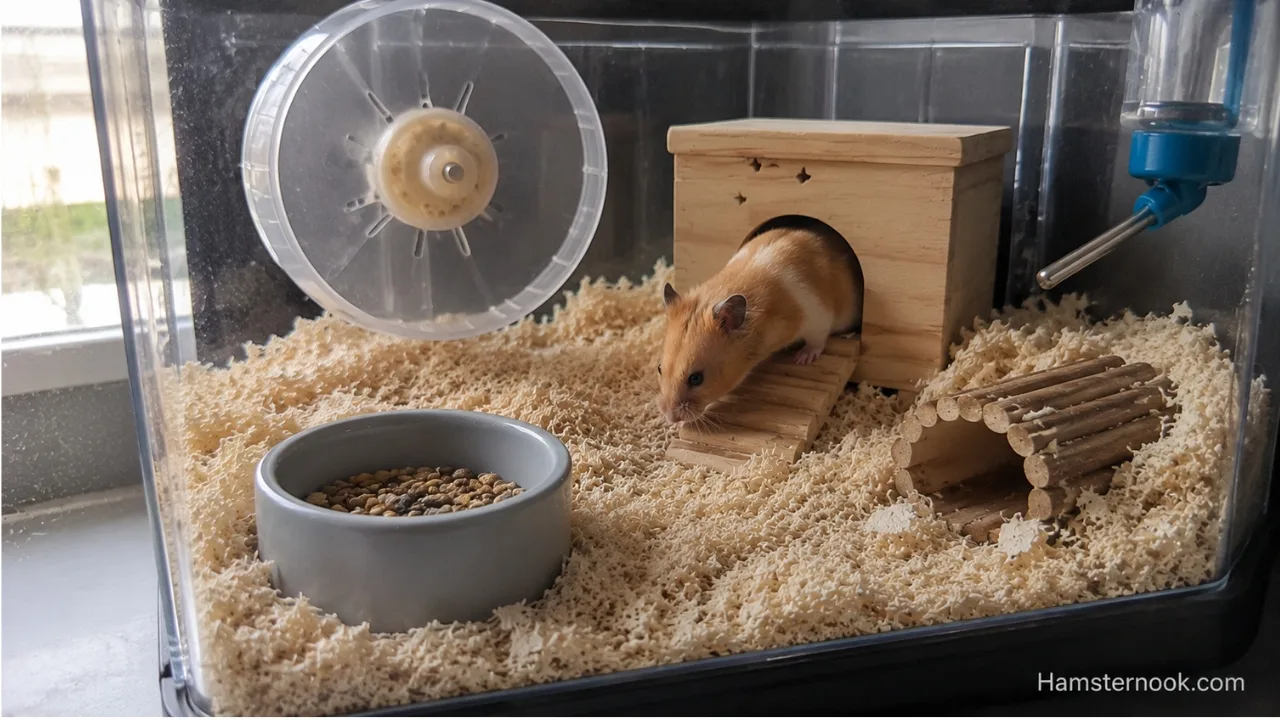
Place the thermometer near the hamster enclosure at approximately the level where your hamster spends time.
Avoid positioning it:
- Directly above a radiator.
- In direct sunlight.
- Immediately beside an air-conditioning outlet.
- Directly against a heating appliance.
For a large enclosure, you can use two thermometers in different areas to identify temperature differences.
A thermometer with minimum and maximum readings is particularly useful because it can help you identify overnight temperature drops or daytime increases.
How often should you check it?
Check the temperature regularly, particularly during seasonal changes.
Pay extra attention when:
- Winter temperatures drop.
- Heating systems are switched off overnight.
- You move the enclosure.
- You introduce a room heater.
- Weather becomes unusually hot.
Record unusual readings so you can identify patterns rather than relying on a single measurement.
What Happens If a Hamster Gets Too Cold?
Cold environments can be particularly concerning for hamsters.
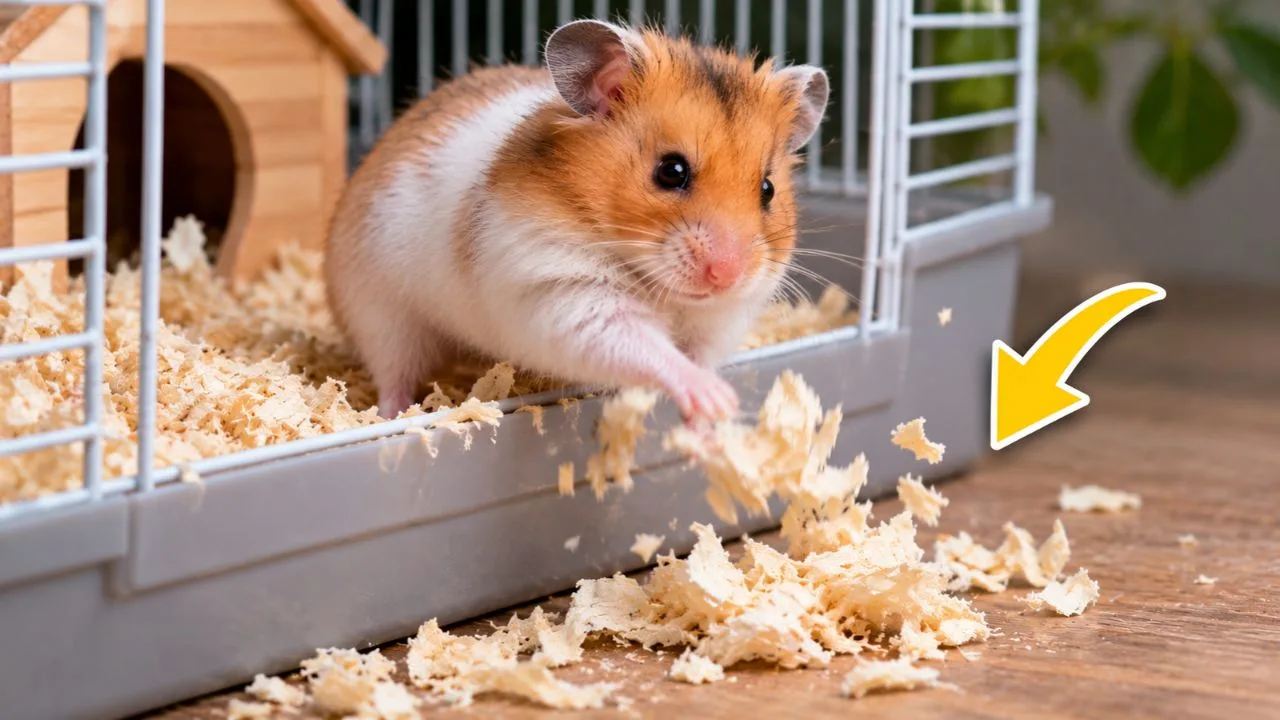
When exposed to sufficiently low temperatures, some hamsters may enter a state called torpor.
Torpor is a condition in which body temperature, heart rate, breathing, and metabolic activity decrease.
For a more detailed explanation of this state, its warning signs, and possible causes, see Do Hamster Hibernate? Torpor Signs, Causes & What to Do.
It is not something pet owners should intentionally encourage.
What is hamster torpor?
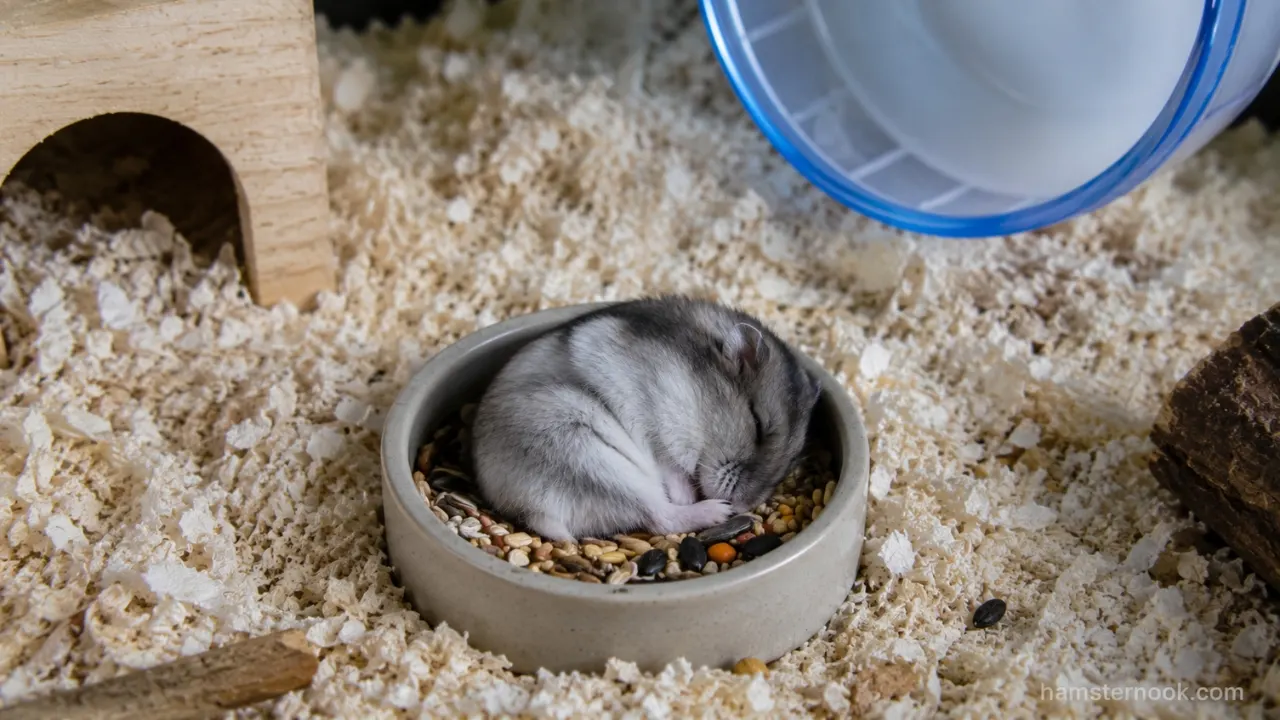
A hamster experiencing torpor may appear unusually inactive or difficult to wake.
Possible signs include:

- Feeling unusually cold.
- Sleeping much longer than normal.
- Being unusually lethargic.
- Curling up tightly.
- Having very slow, shallow breathing.
- Showing little response to normal stimulation.
Torpor can be mistaken for deep sleep or even death.
However, a seriously ill hamster may also appear weak and unresponsive. You should never assume that unusual inactivity is simply caused by cold weather.
What should you do if your hamster becomes cold and unresponsive?
Treat this as a veterinary concern.
- Contact a veterinarian or emergency clinic immediately.
- Move the hamster to a comfortably warm room.
- Handle it gently.
- Avoid direct heat from lamps, hair dryers, or heating pads.
- Do not force food or water into an unresponsive hamster.
- Arrange veterinary assessment as soon as possible.
Do not attempt rapid warming.

Even if your hamster begins moving again, veterinary assessment is important because illness and other complications can cause similar symptoms.
For additional guidance on possible reasons a hamster feels unusually cold and what owners should do, see Why Does My Hamster Feel Cold? Causes, Torpor & What to Do.
Can a Hamster Get Too Hot From a Heat Lamp?
Yes. Excessive heat can be dangerous for hamsters.
Hamsters have limited ways to lose excess body heat. Research and veterinary guidance indicate that they are vulnerable to heat stress, making it particularly important to avoid concentrated heating.
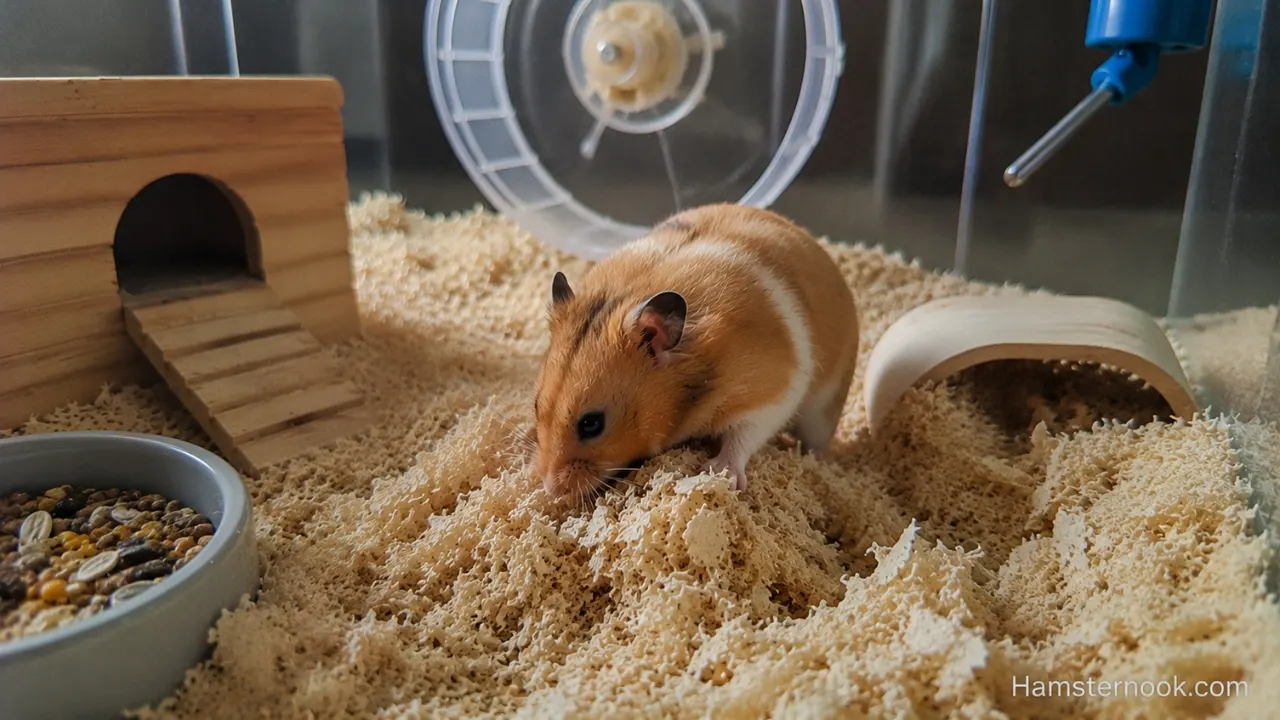
A heat lamp can contribute to an excessively warm enclosure if the temperature is not properly controlled.
Signs of overheating in hamsters
Watch for:
- Unusual lethargy.
- Sluggish or reduced movement.
- Drooling or dribbling.
- Unresponsiveness.
- Collapse.
These signs can indicate serious illness, including possible heatstroke.
If you suspect overheating:

- Move your hamster away from the heat source.
- Place it in a cooler, comfortably ventilated room.
- Contact a veterinarian immediately.
- Follow veterinary instructions.
Do not place your hamster in ice water or apply ice directly to its body.
Suspected heatstroke requires urgent veterinary attention.
How to Keep Your Hamster Comfortable During Winter
Winter requires a little extra attention, particularly in homes where indoor temperatures fluctuate.
Here are some practical ways to prepare your hamster’s enclosure.
| Winter concern | Safer approach |
|---|---|
| Cold bedroom | Move the enclosure to a warmer indoor room |
| Cold drafts | Keep the enclosure away from windows and doors |
| Insufficient bedding | Provide suitable bedding for burrowing |
| Cold overnight temperatures | Maintain stable room heating |
| Uncertain enclosure temperature | Use a digital thermometer |
| Cold floor | Place the enclosure on a stable, raised surface |
| Power outage | Prepare an alternative warm indoor location |
Should you add extra nesting material?
Yes, suitable nesting material can help your hamster create a comfortable resting place.
Plain, unscented paper-based nesting material is a practical option.
Avoid adding materials that are dusty, scented, or made from loose cotton-like fibers.
Should you move the hamster’s cage into your bedroom?
You can, provided the bedroom maintains a suitable temperature and is quiet enough for your hamster.
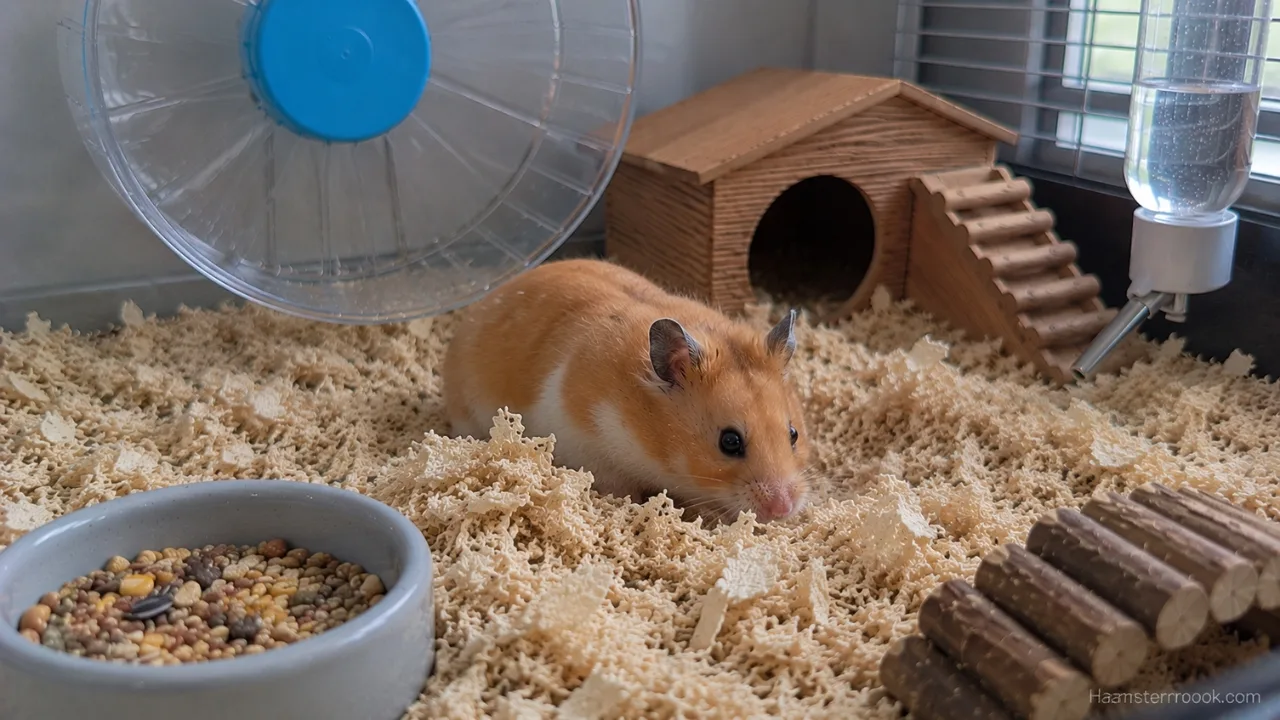
Avoid placing the enclosure next to a radiator, heater, open window, or direct source of hot or cold air.
The room should remain comfortable throughout the day and night.
Common Heating Mistakes Hamster Owners Should Avoid
Some heating methods appear convenient but can create unnecessary risks.
1. Placing a heat lamp directly above the cage
This can create localized heating and make it difficult to control the enclosure temperature.
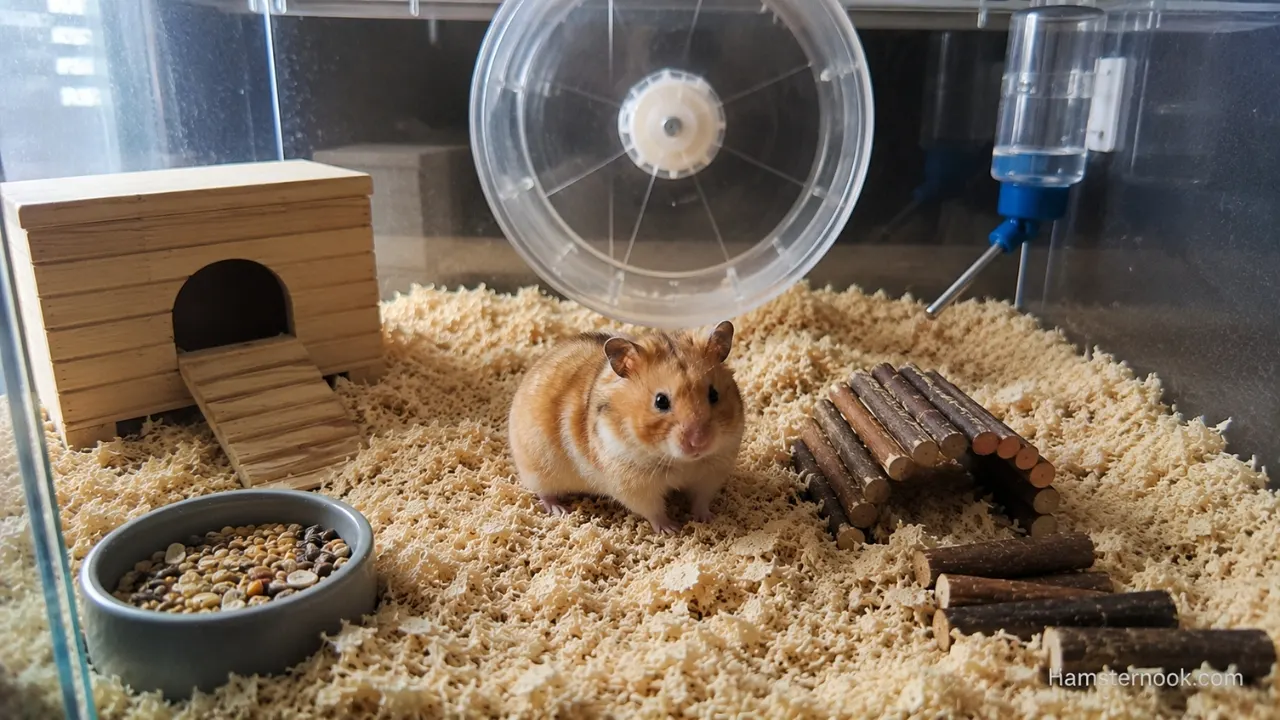
Use stable room heating instead.
2. Placing a hot-water bottle inside the enclosure
A hot-water bottle can leak, become excessively warm, or create a burn risk.
Do not place it where your hamster can chew or come into direct contact with it.
3. Covering the entire enclosure with blankets
Thick coverings can restrict airflow and make it difficult to monitor the environment.

Keep ventilation unobstructed.
4. Keeping the enclosure next to a radiator
Radiators produce concentrated heat and can make nearby enclosure temperatures uncomfortable.
Maintain a safe distance and monitor the actual enclosure temperature.
5. Assuming hamsters always need extra heating in winter
A hamster living in a comfortably heated home may not need any additional heating equipment.
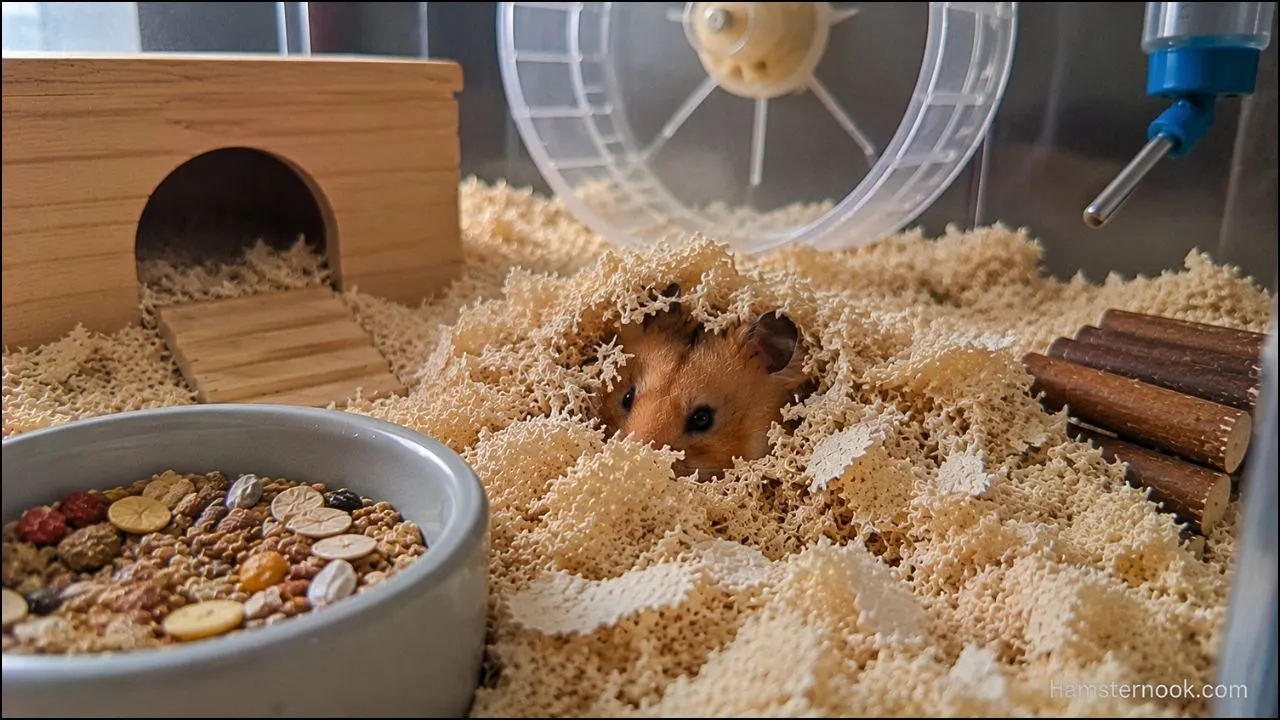
Check the temperature before purchasing heating products.
6. Using a hair dryer to warm a cold hamster
A hair dryer produces concentrated hot air that can cause burns and overheating.
Never use one to warm your hamster.
What You Should Do: A Safe Hamster Heating Checklist
Before winter arrives, check the following:

- Maintain a stable, comfortable indoor temperature.
- Aim for approximately 18–21°C (64–70°F) as a conservative household target.
- Keep the enclosure away from drafts.
- Provide suitable bedding for burrowing and nesting.
- Make sure your hamster has a secure hideout.
- Use a digital thermometer near the enclosure.
- Check overnight temperature changes.
- Avoid direct heat lamps and unregulated heating pads.
- Keep electrical cables and heaters inaccessible to your hamster.
- Identify a veterinarian who treats hamsters in case of an emergency.
These simple steps are generally more useful than installing a dedicated heat lamp.
Final Thoughts
Most hamsters do not need a heat lamp to stay comfortable. A stable indoor temperature, suitable bedding, a sheltered hideout, and protection from drafts are usually sufficient.
If your home becomes cold during winter, focus on warming the room rather than heating the enclosure directly. Use a digital thermometer to monitor conditions and avoid equipment that can create concentrated or uncontrolled heat.
Remember that excessive heat can be just as concerning as cold temperatures. Your goal is not to make your hamster’s enclosure hot but to maintain a comfortable, stable environment throughout the year.
Frequently Asked Questions
1. Do hamsters need a heat lamp in winter?
No. Most pet hamsters do not need a heat lamp during winter if they live in a comfortably heated room. Maintain a stable temperature and provide suitable bedding and nesting material.
2. What is the ideal temperature for a hamster?
Veterinary and animal welfare recommendations vary. The Royal Veterinary College and MSD Veterinary Manual recommend approximately 18–26°C, while the PDSA recommends a steady 18–21°C. A stable temperature around 18–21°C is a sensible conservative target for ordinary home care.
3. Can I put a heat lamp over my hamster’s cage?
It is generally better to avoid this. Heat lamps can create concentrated heat, and improper placement can cause overheating or burns. Maintaining a comfortable room temperature is a safer everyday approach.
4. Can hamsters sleep in a cold room?
Hamsters should not be housed in excessively cold or drafty rooms. Low temperatures can contribute to torpor, a potentially dangerous state involving reduced body temperature and metabolic activity. Maintain a suitable indoor temperature.
5. Can I use a heating pad under a hamster cage?
A standard heating pad is not recommended as routine hamster heating. It can create uneven temperatures and may cause burns if the hamster cannot move away from the heat. Use room-level temperature control instead.
6. How do I know if my hamster is too cold?
A hamster that is unusually inactive, cold to the touch, curled up, or difficult to wake may be experiencing cold stress or torpor. These signs can also occur with serious illness. Contact a veterinarian immediately rather than assuming your hamster is simply sleeping.
7. Can hamsters overheat?
Yes. Excessive environmental heat can cause heat stress and potentially heatstroke. Signs can include drooling, sluggish movements, severe lethargy, and unresponsiveness. Suspected heatstroke requires urgent veterinary attention.
8. Is extra bedding enough to keep a hamster warm?
Suitable bedding and nesting material help hamsters create sheltered resting areas. However, bedding should not be used as a substitute for maintaining an appropriate room temperature.
9. Can I cover my hamster’s cage at night to keep it warm?
Avoid covering the entire enclosure with blankets or thick materials. This can restrict ventilation. Maintain a comfortable room temperature instead.
10. Do Syrian and dwarf hamsters need different heating equipment?
Neither Syrian nor dwarf hamsters generally needs a dedicated heat lamp in a properly maintained indoor environment. Both need suitable housing, stable temperatures, and protection from excessive heat and cold.
11. Can I use a ceramic heat emitter instead of a heat lamp?
A ceramic heat emitter still produces concentrated heat, even though it does not emit visible light. It is not necessary for ordinary hamster housing. If specialized heating is required for a particular situation, seek veterinary guidance and use professionally appropriate temperature controls.
12. What should I do if the power goes out during winter?
Monitor the room temperature and move your hamster’s enclosure to a warmer indoor location if necessary. Keep the enclosure away from drafts and provide suitable nesting material. Never use an open flame or an unregulated heating device near the enclosure.
References
This guide is based on veterinary, animal welfare, and research-based guidance on hamster temperature regulation, housing, heat stress, cold-related conditions, and environmental care, including:
- Royal Veterinary College – Caring for Your Hamster – Veterinary guidance on suitable environmental temperatures, enclosure positioning, bedding, and preventing overheating.
- PDSA – Hamsters as Pets – Guidance on stable indoor temperatures, avoiding drafts and direct sunlight, and recognizing heatstroke and torpor risks.
- MSD Veterinary Manual – Providing a Home for a Hamster – Veterinary recommendations on hamster housing, environmental temperature, ventilation, and suitable bedding.
- NC3Rs – Housing and Husbandry: Hamster – Research-based husbandry guidance covering temperature, environmental conditions, nesting material, and cold-related torpor.
- University of California, Davis – Hamster Care – Veterinary information about hamster temperature regulation and susceptibility to heat stress.
- Woodgreen Pets Charity – Do Hamsters Hibernate or Is Mine Dead? What Is Torpor? – Practical guidance on recognizing torpor, cold-related behavior, safe warming considerations, and prevention.
- Woodgreen Pets Charity – How to Care for Small Pets in Hot Weather – Guidance on recognizing possible heatstroke signs in hamsters and seeking veterinary assistance.
Medical Disclaimer
This article provides general hamster housing and temperature guidance and is not a substitute for professional veterinary advice. Unusual lethargy, suspected torpor, overheating, or breathing difficulties can indicate serious health problems. Contact a veterinarian experienced with small mammals promptly if your hamster shows concerning signs.

Narayan Kumar is the founder and author of HamsterNook. He creates practical, research-based hamster care guides covering hamster behavior, nutrition, cage setup, enrichment, health, and everyday care. His goal is to help hamster owners make informed decisions and provide safer, healthier lives for their pets through clear, beginner-friendly information based on trusted animal care resources.