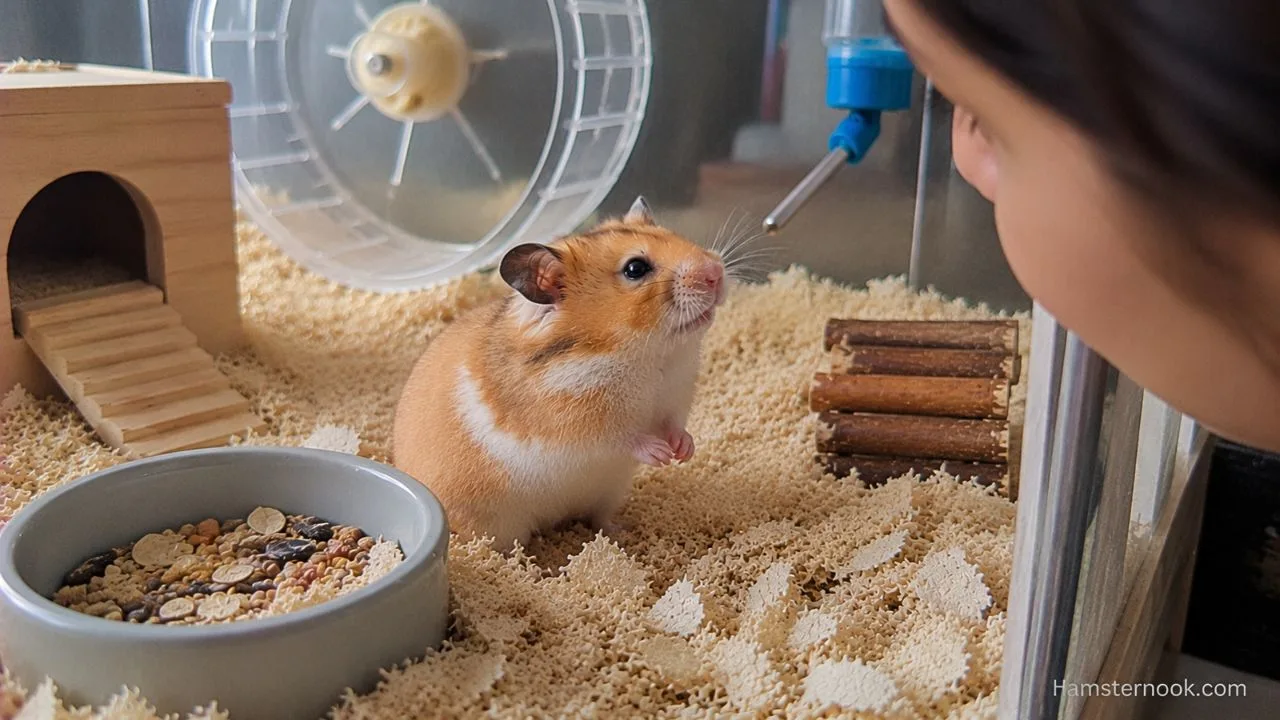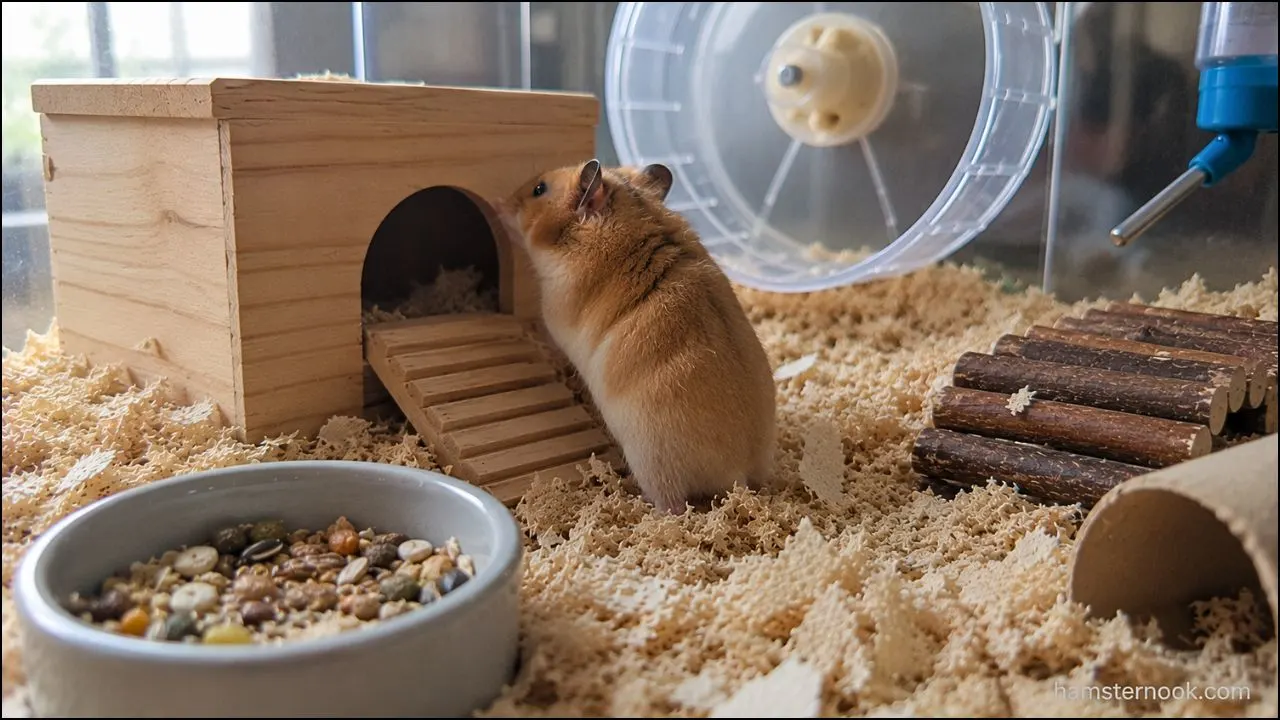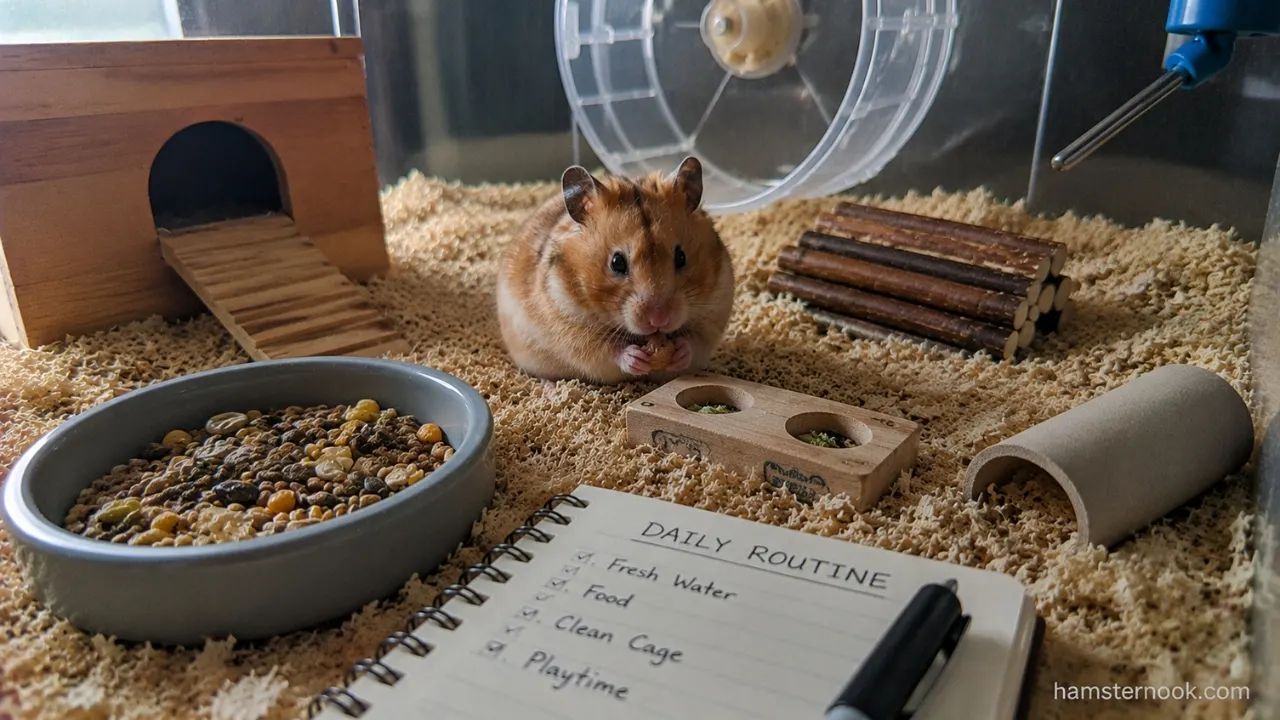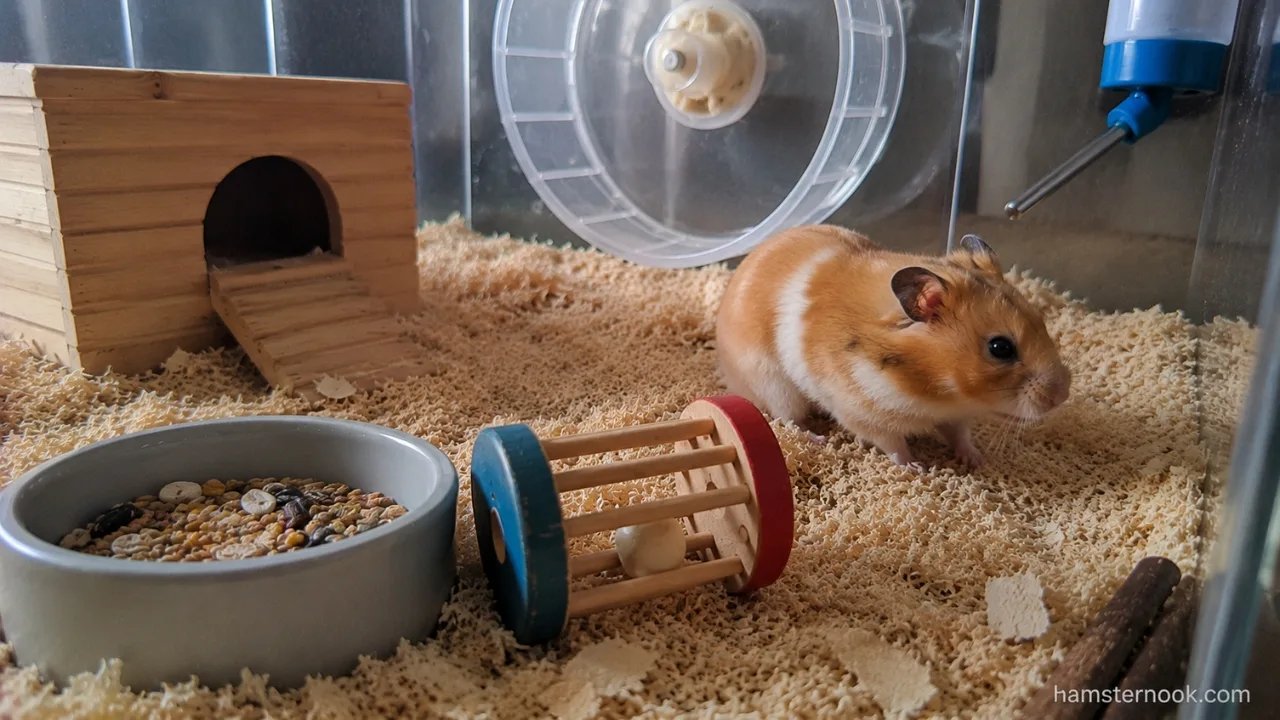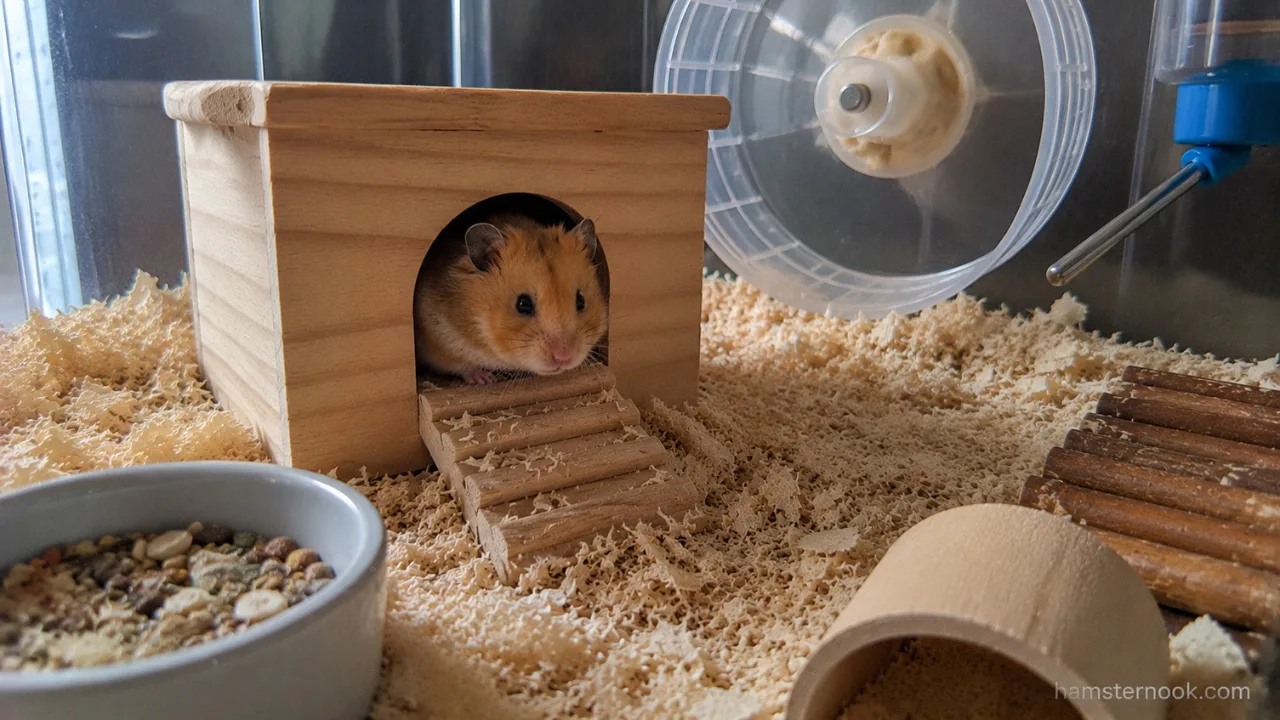
Hamsters may be small, but they’re highly aware of what’s happening around them. If your hamster suddenly darts into a hide, freezes, or seems unusually nervous after a loud sound, there may be a simple explanation.
Because hamsters rely heavily on hearing to detect potential danger, noisy or unpredictable environments can sometimes be stressful. Understanding how sound affects your hamster can help you create a calmer and more secure home.
Creating a low-stress environment is an important part of responsible hamster ownership. Read our Complete Hamster Care Guide for Beginners (2026) to learn the foundations of proper hamster care.
Quick Answer
Yes, loud noises can stress a hamster. Hamsters have sensitive hearing and naturally react to sudden or unfamiliar sounds because, in the wild, unexpected noise can signal danger. Occasional household sounds are usually not a problem, but repeated loud noises, vibrations, or constant disturbances may cause stress-related behaviors such as hiding, freezing, excessive alertness, or avoiding normal activities.

Why Are Hamsters Sensitive to Noise?
Hamsters evolved as prey animals. In their natural environment, detecting sounds quickly can mean the difference between safety and danger.
While a hamster’s eyesight is relatively limited, its hearing is much more developed. This helps it notice movement, approaching animals, and environmental changes. As a result, sounds that seem harmless to us may appear significant to a hamster.
Hamsters can also detect sounds that people may not notice. Our Do Hamster Have Sensitive Hearing? What Their Ears Can Detect guide explains more about their hearing and sensitivity to sound.
Many owners notice that their hamster suddenly pauses, stands upright, or runs for cover after hearing a loud noise. This reaction is often an instinctive safety response rather than a sign that something is seriously wrong.

A sudden freeze can be another normal response to an unexpected sound; our Why Does My Hamster Freeze After Hearing Loud Noises? guide explains why this happens and when repeated freezing may deserve attention.
In many cases, a hamster that resumes normal activities within a short period has simply reacted to a potential threat and determined that the environment is safe again.
Animal welfare guidance emphasizes that small mammals benefit from environments that minimize unnecessary stressors, including excessive noise and disturbance. (RSPCA, PDSA)
Common Noises That Can Stress a Hamster
Not every sound will bother every hamster, but certain noises are more likely to trigger a reaction.
Loud Television or Speakers
A television played at moderate volume is often tolerated, but very loud audio systems, surround sound setups, or speakers placed close to the enclosure can create a stressful environment.
Low-frequency vibrations may also travel through furniture and cage surfaces.
Shouting or Sudden Loud Voices
A hamster resting during the day may be startled by sudden yelling, arguments, or loud laughter near its enclosure.
The sudden change in volume is often more startling than the sound itself.
Barking Dogs
Many hamsters react strongly to barking because it is sudden, unpredictable, and often repeated.
Even if the dog has no access to the enclosure, the noise alone can be stressful.
Vacuum Cleaners
Vacuum cleaners combine loud sound with floor vibrations, making them one of the most common household triggers for hamster stress.
Some hamsters quickly adapt, while others prefer to remain hidden until the cleaning is finished.
Slamming Doors
The combination of noise and vibration can startle a hamster, particularly if the enclosure is located near frequently used doors.
Construction or Renovation Noise
Drilling, hammering, and power tools produce intense sounds and vibrations that many hamsters find unsettling.
During major home projects, it may be helpful to temporarily move the enclosure to a quieter room when practical.
How Hamsters React to Loud Noises
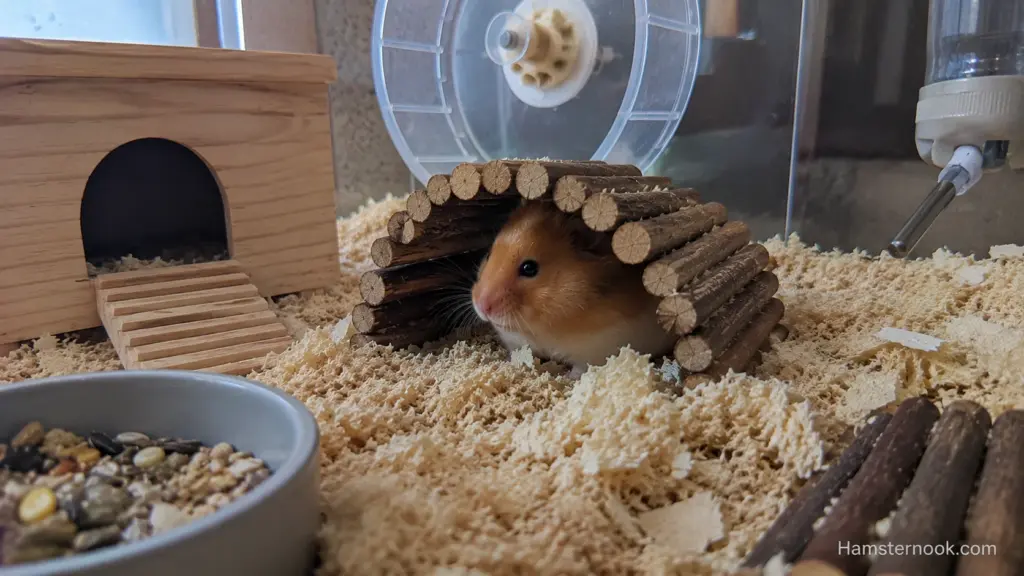
Every hamster has a unique personality, but many show similar behavioral responses when startled.
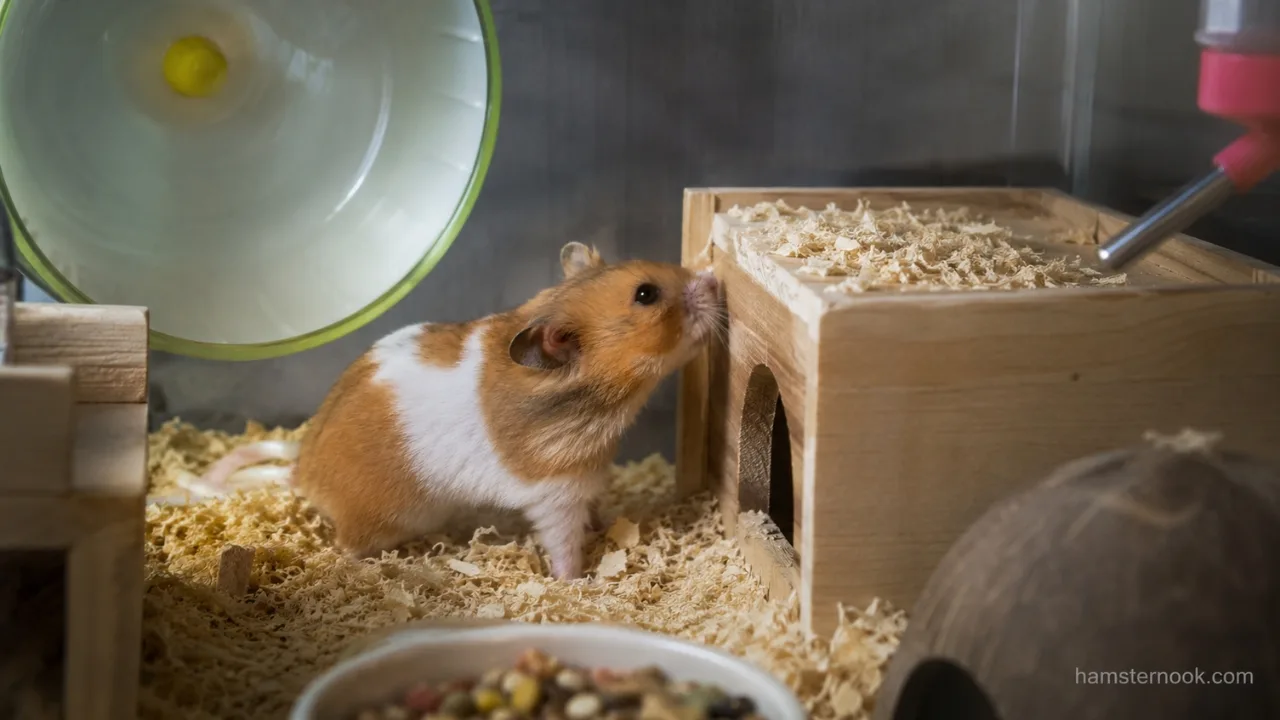
Freezing
A hamster may suddenly stop moving and remain completely still.
This behavior allows the animal to assess its surroundings before deciding what to do next.
Running to a Hide
Many hamsters instinctively seek shelter after hearing a loud or unfamiliar sound.
Once they feel safe, they usually emerge and resume normal activities.
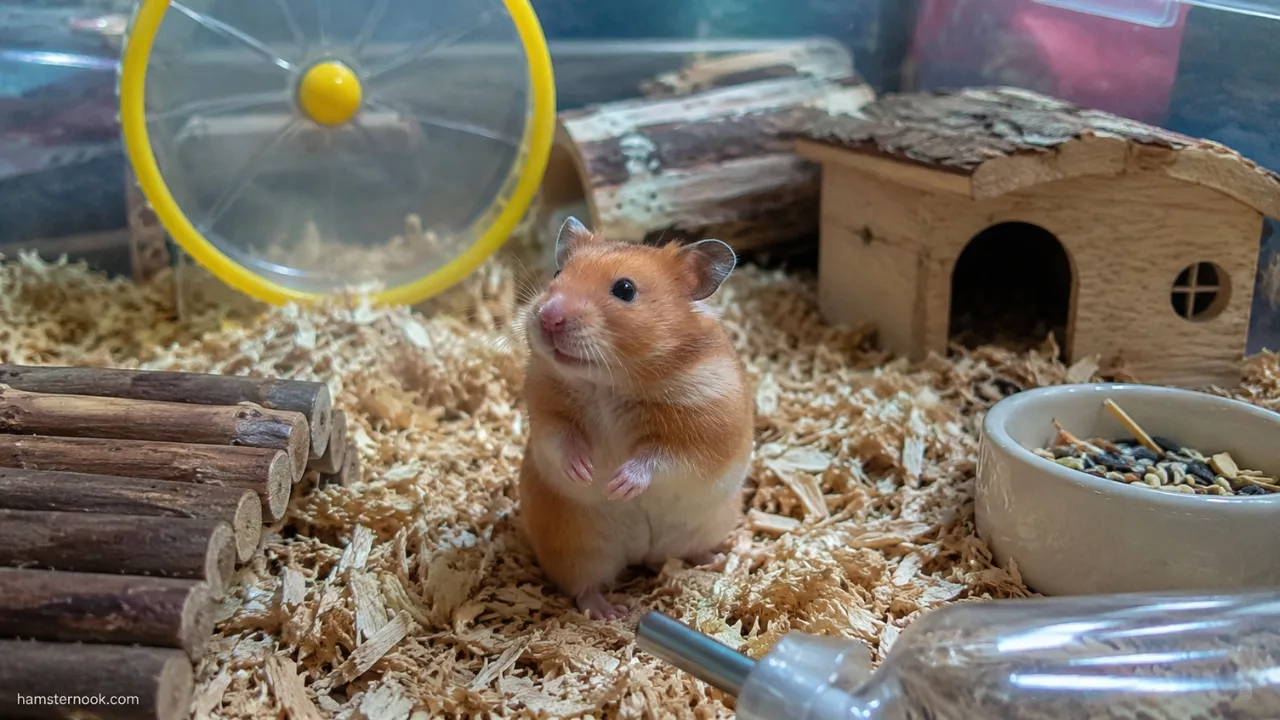
Standing Upright
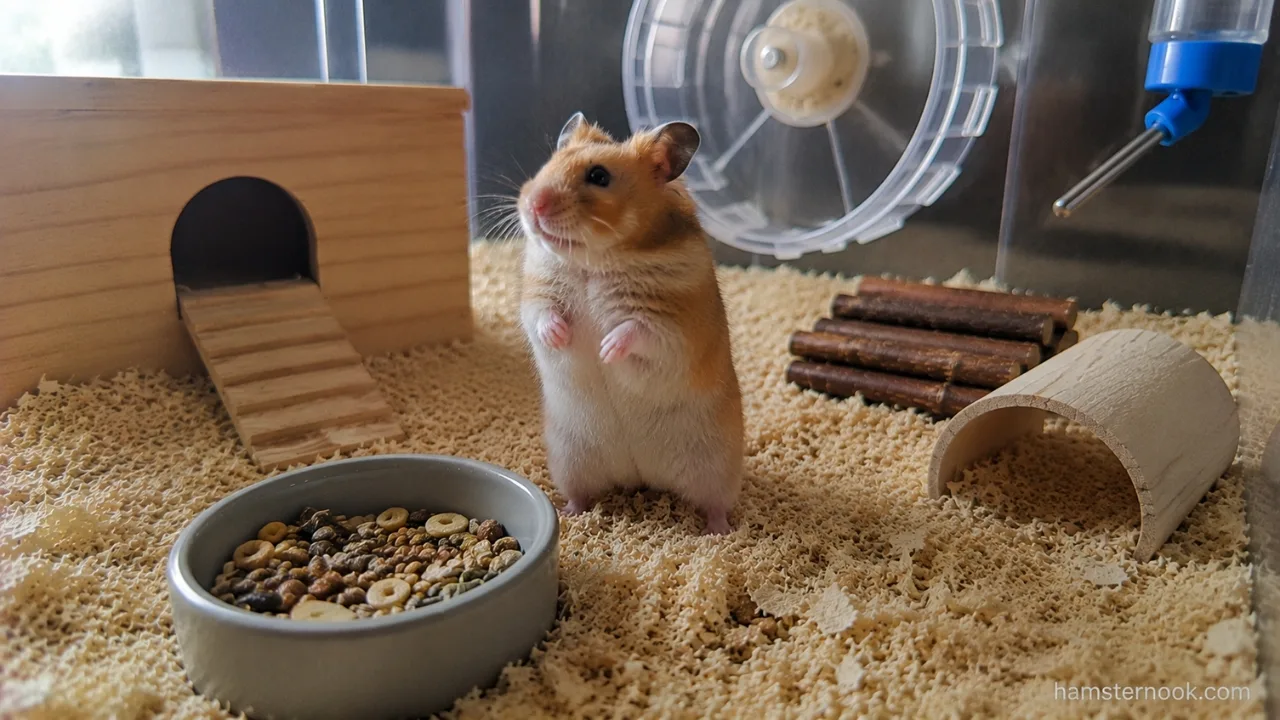
You may notice your hamster rise onto its hind legs while sniffing the air and listening carefully.
This is often an attempt to gather more information about the source of the sound.
Increased Alertness
After a loud noise, a hamster may spend extra time scanning its surroundings before returning to normal behavior.
Temporary Avoidance of Open Areas
Some hamsters become more cautious and prefer to stay close to tunnels, hides, or burrows for a short period.
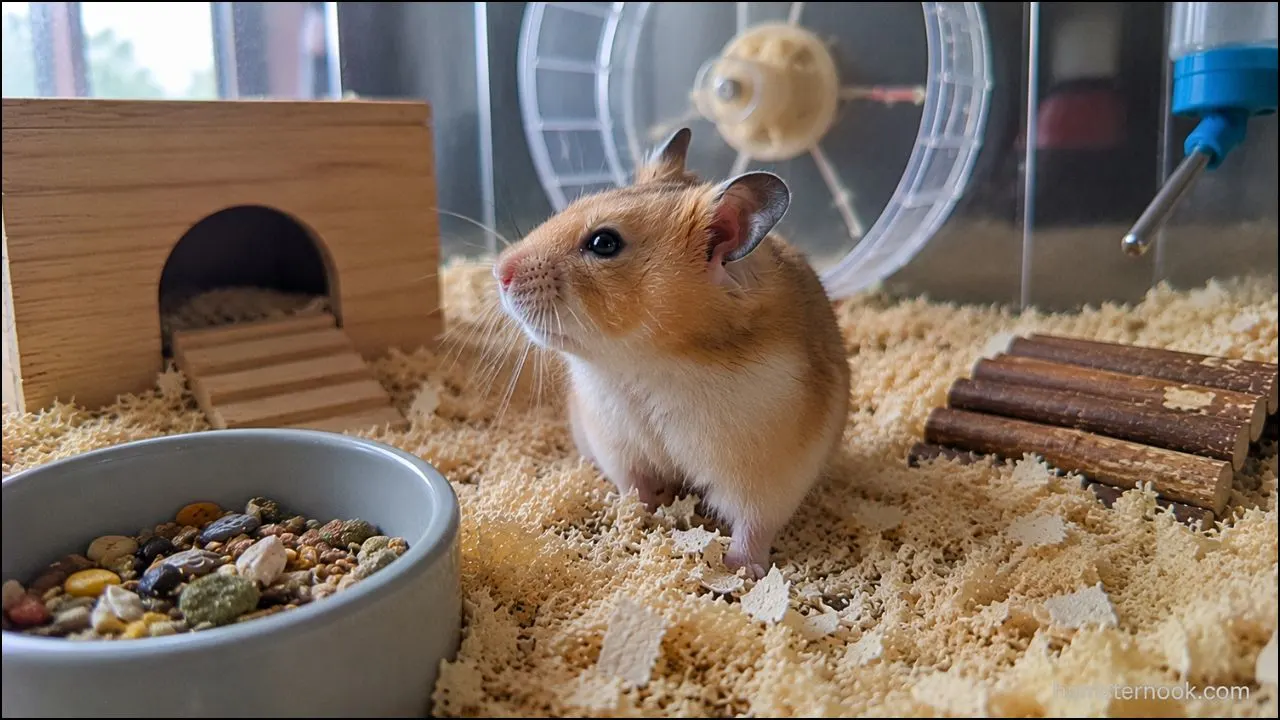
Normal Startle Response vs. Ongoing Stress
A brief reaction to noise is normal.
What matters is how quickly the hamster recovers afterward.
| Normal startle response | Possible ongoing stress |
|---|---|
| Brief freezing after a sudden sound | Repeated freezing or prolonged fear |
| Running to a hide, then reappearing | Hiding throughout normal active hours |
| Standing upright to investigate | Repeated pacing or escape attempts |
| Temporary caution | Avoiding normal activities |
| Returning to usual behavior | Persistent nervousness after disturbances |
Many hamsters settle once the disturbance has passed, especially when the environment becomes quiet and predictable again.
Can Hamsters Get Used to Household Sounds?
In many cases, yes.
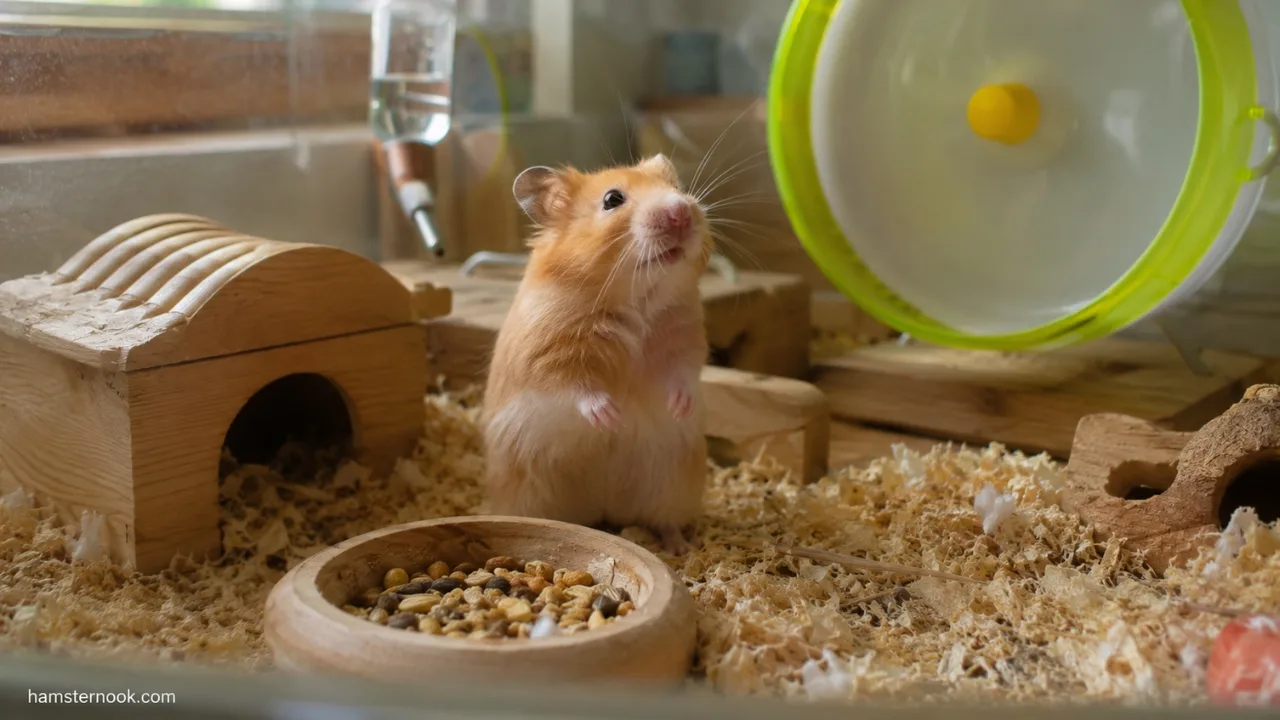
Hamsters often learn that predictable household sounds are not dangerous.
For example, a hamster may initially react to a washing machine, ceiling fan, or family conversations but eventually ignore them after repeated exposure.
Predictability plays an important role in how comfortable a hamster feels within its environment.
A consistent daily environment is generally easier for a hamster to adapt to than sudden, unpredictable bursts of noise.
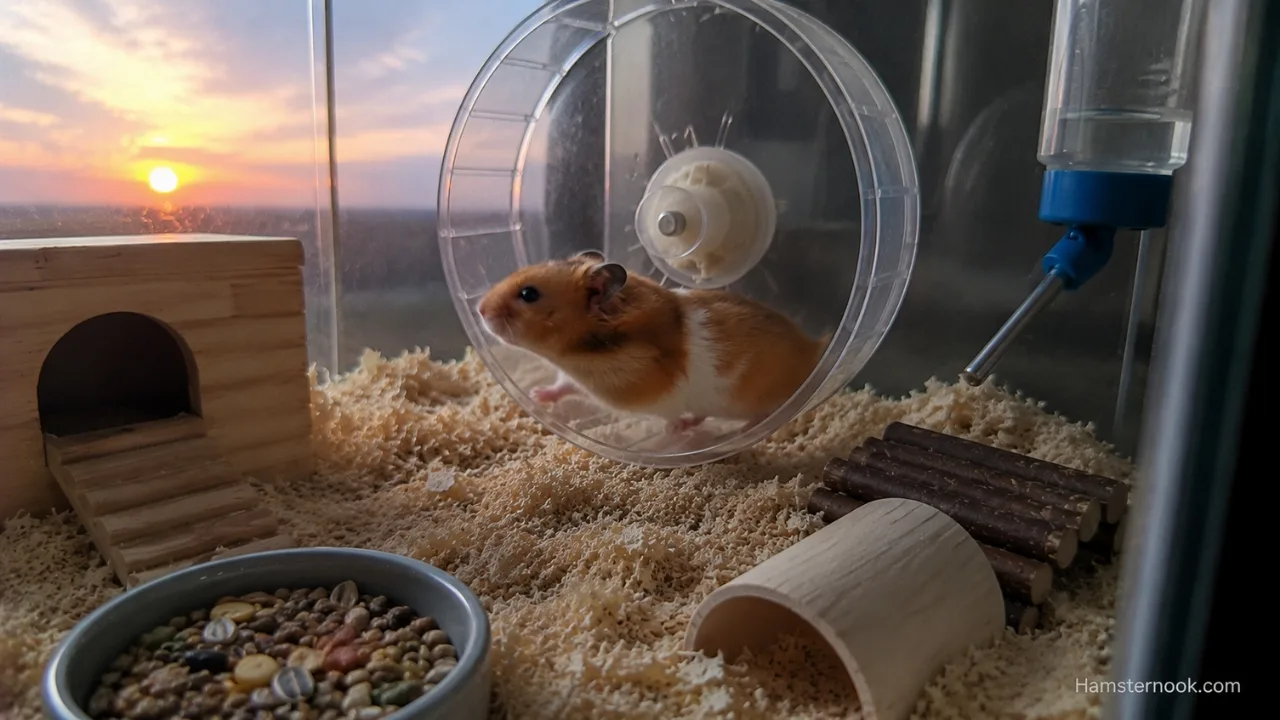
Keeping the enclosure in a predictable environment can also support normal sleep and activity patterns; our Are Hamsters Nocturnal? Their Natural Sleep Schedule Explained guide explains their natural daily rhythm.
This is one reason why predictable household activity is often less stressful than occasional loud events such as parties, home repairs, or rearranging furniture.
That said, adaptation has limits. Constantly exposing a hamster to very loud sounds does not necessarily mean it will become comfortable with them.
Can Hamsters Die From Loud Noises?
An ordinary household noise or a single startle response does not automatically mean a hamster is in life-threatening danger. However, very loud or prolonged disturbances can cause significant distress, and loud sounds may occur alongside vibrations or other environmental hazards. Reduce the noise immediately and let your hamster retreat to a secure hide. If your hamster develops marked weakness, breathing difficulty, collapse, or another sudden concerning change, contact a veterinarian promptly rather than assuming the noise is the only cause.
Does Noise Affect Sleep?
Yes, it can.
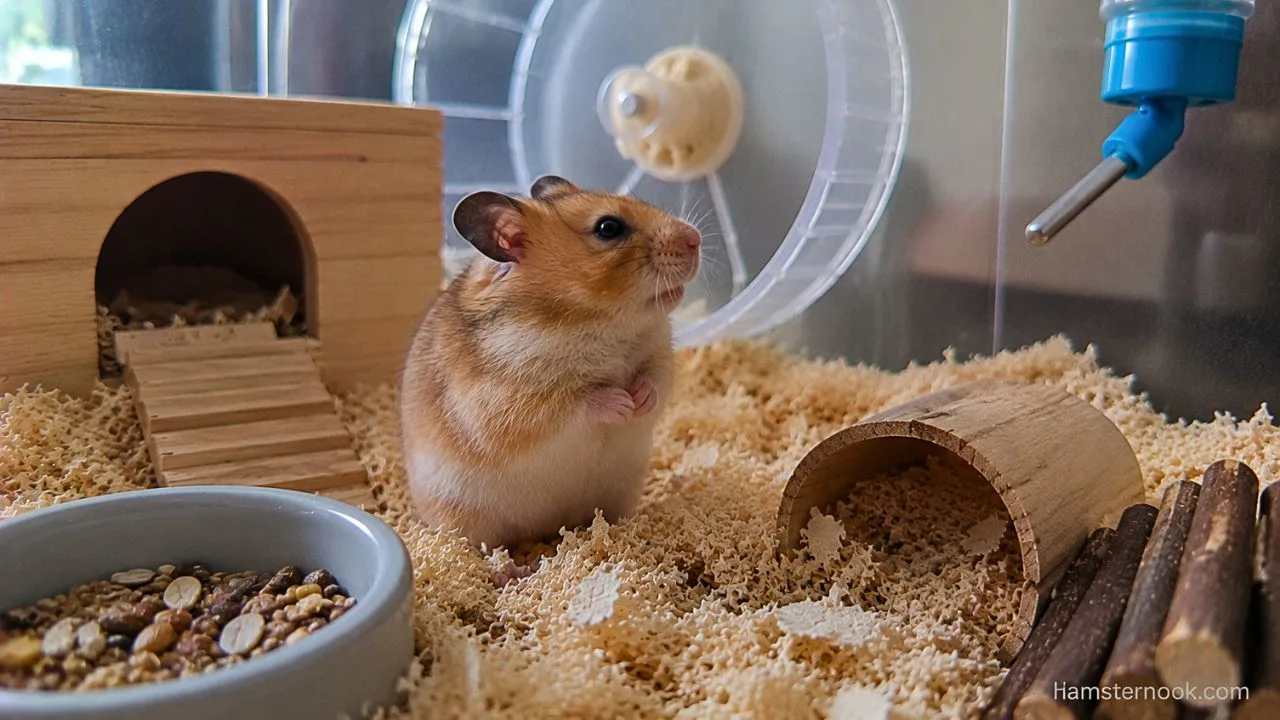
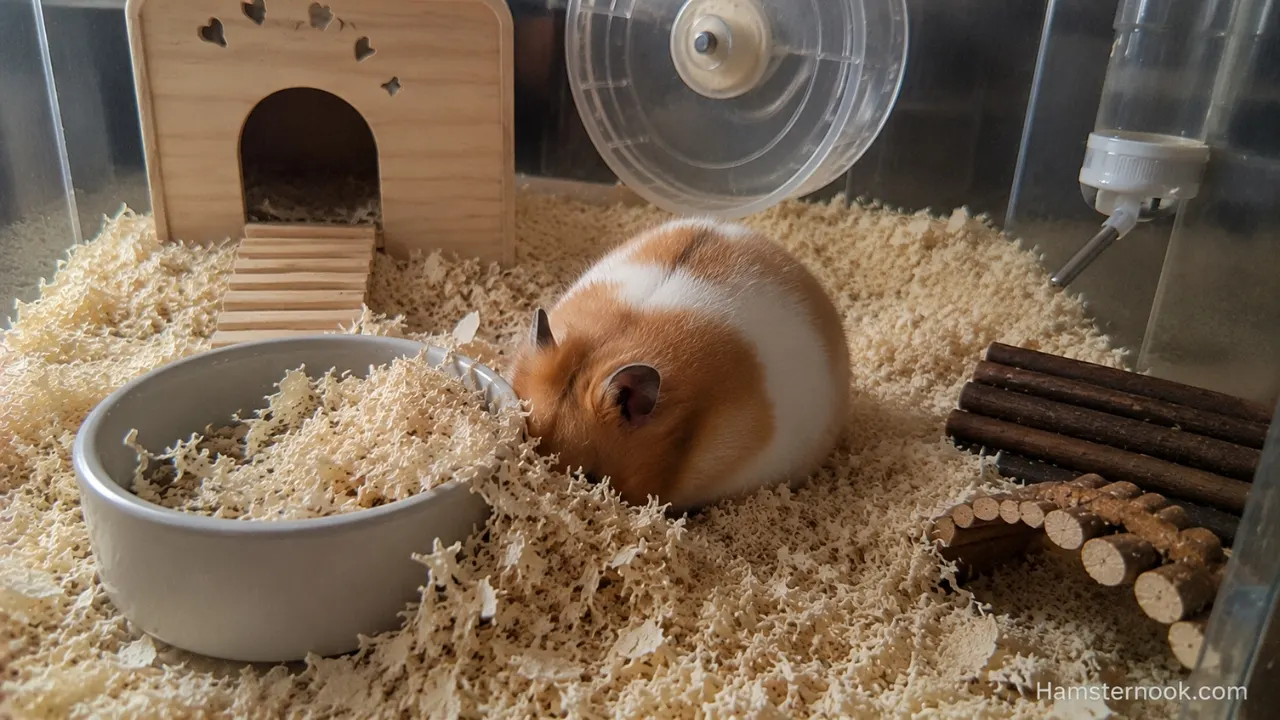
Hamsters spend much of the daytime resting. Frequent disturbances may interrupt their sleep cycles.
Since hamsters are naturally active during the evening and night, repeated daytime interruptions can interfere with their normal routine.
A sleeping hamster should ideally have access to:

- Deep bedding for burrowing
- Multiple hides
- A quiet area of the home
- Protection from frequent disturbances
Providing these conditions helps support natural behaviors and welfare.
Practical Examples
Example 1: Vacuuming Near the Cage
Your hamster hears the vacuum start, runs into a hide, and stays there until cleaning is finished.
This is a normal response to a loud and unfamiliar sound.
Example 2: Loud Music During a Party
A hamster that normally explores during the evening suddenly remains hidden for most of the night.
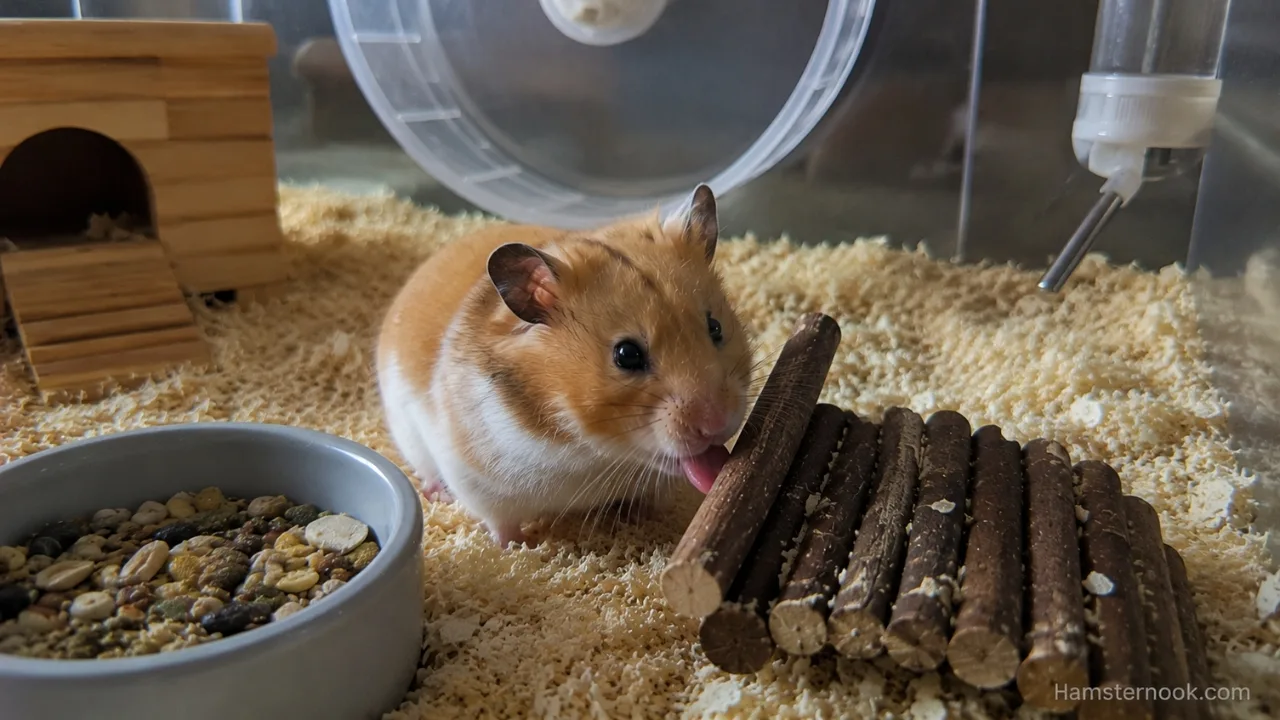
The increased activity, voices, vibrations, and music may be causing temporary stress.
Example 3: Daily Family Activity
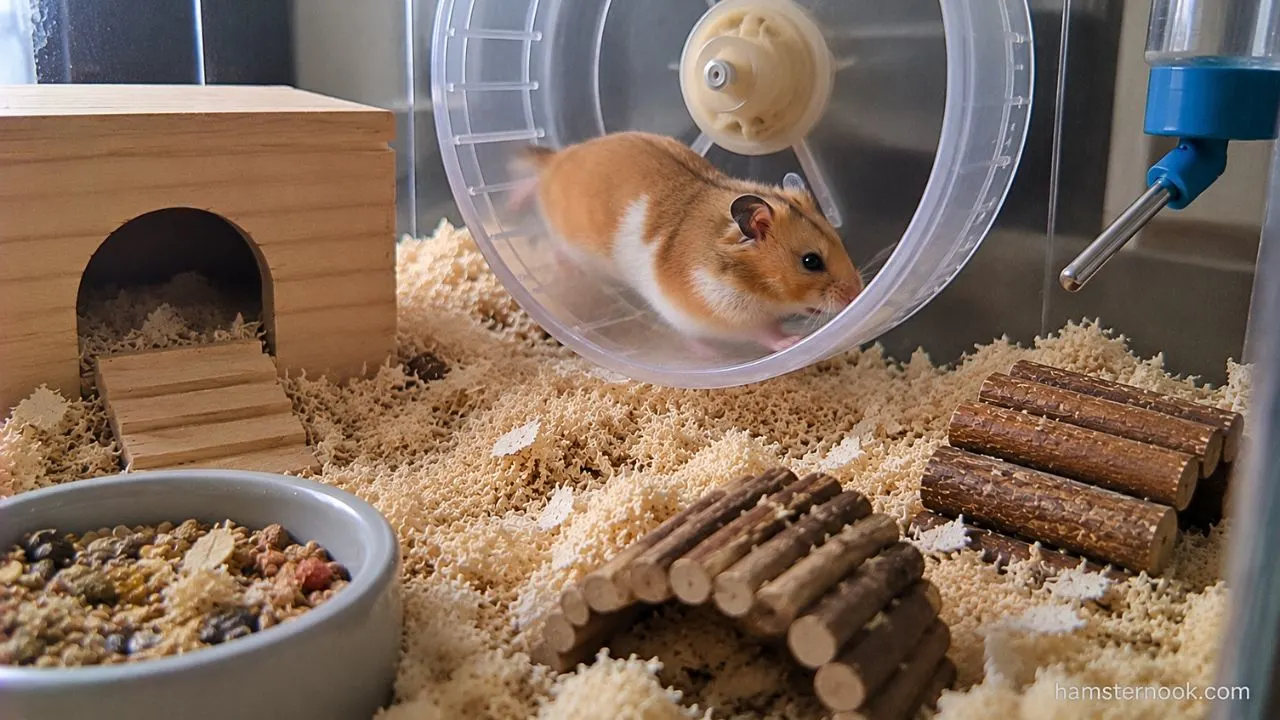
Your hamster hears normal conversations, footsteps, and kitchen sounds every day but continues eating, exploring, and using its wheel normally.
This suggests the hamster has adapted to those predictable household noises.
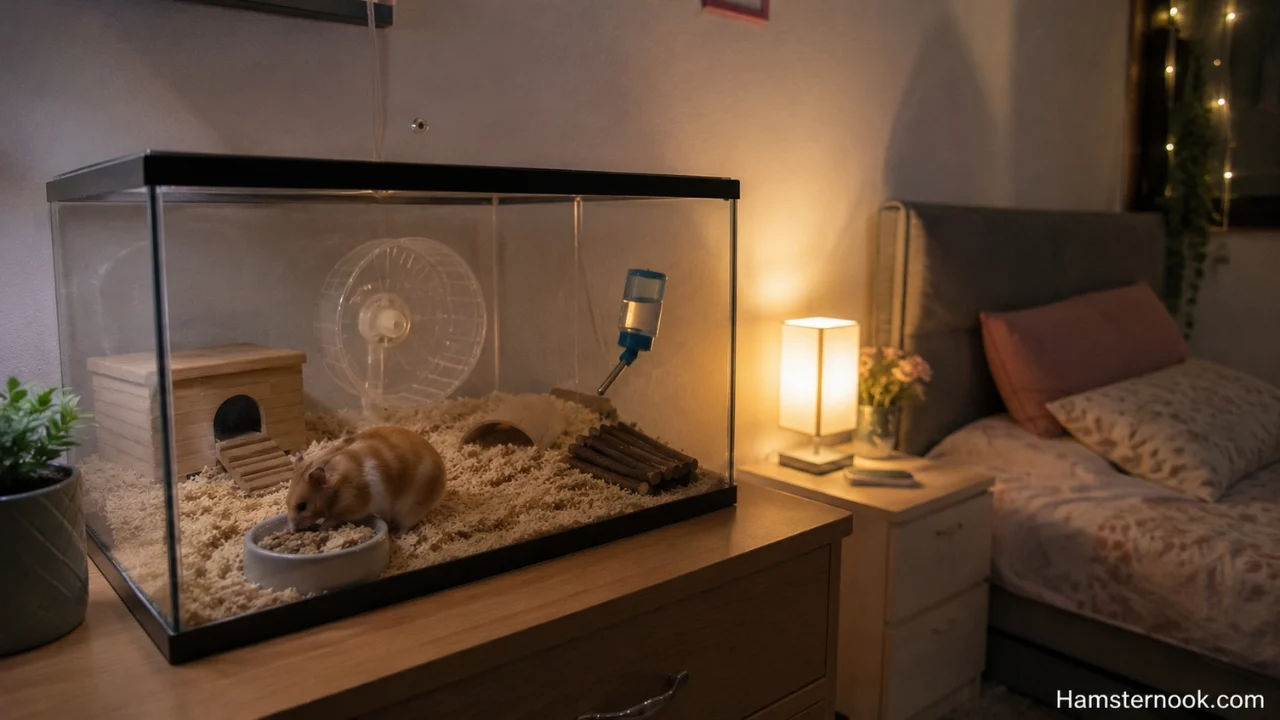
Can Cage Placement Make a Difference?

Absolutely.
The location of the enclosure often has a greater impact than owners realize.
Hamsters generally do best when housed away from:
- Television speakers
- Home theater systems
- Frequently slammed doors
- Washing machines
- Busy hallways
- Large speakers or subwoofers
- Constant dog barking
A quieter area helps reduce unnecessary disturbances while still allowing the hamster to remain part of the household.
If you’re choosing where to place the enclosure, our Where Should You Put a Hamster Cage? Best & Worst Places Explained guide covers common placement factors that can affect noise and household disturbance.
Are Some Hamsters More Sensitive Than Others?
Yes.
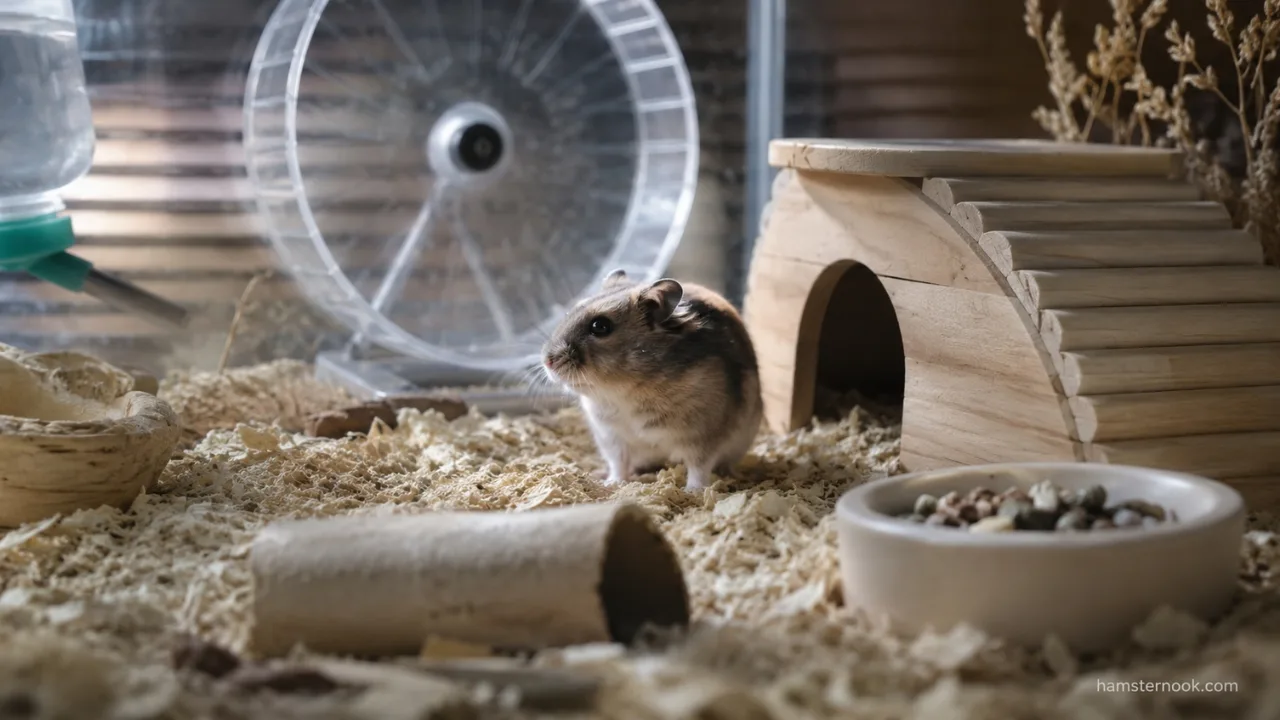
Personality can influence how a hamster reacts to noise.
Some hamsters appear more confident and recover quickly after being startled.
Others remain cautious and may take longer to feel secure again.
Age, previous experiences, temperament, and the overall environment can all influence sensitivity to noise.
Even within the same species, reactions can vary considerably from one hamster to another.
Common Mistakes Owners Make
Keeping the Enclosure Near Loud Electronics
Many owners place a hamster cage near a television, gaming setup, or speaker system simply because it’s a convenient location. Unfortunately, constant noise and vibration can create a stressful environment, especially during the hamster’s resting hours.
Assuming a Hamster Will “Get Used to Anything”
While hamsters can adapt to many everyday sounds, that doesn’t mean all noise levels are harmless. Repeated exposure to loud, unpredictable sounds may continue to cause stress even if the hamster doesn’t show an obvious reaction every time.
Stress is not always obvious at first. Our 7 Signs You’re Accidentally Stressing Your Hamster (Without Even Realizing It guide covers common stress signals and environmental triggers owners may overlook.
Ignoring Vibrations
Sound isn’t the only issue. Vibrations from speakers, subwoofers, washing machines, or heavy foot traffic can travel through furniture and enclosure surfaces. A hamster may react to vibrations even when the sound itself doesn’t seem particularly loud to humans.
Frequently Disturbing a Sleeping Hamster
Checking on a hamster repeatedly during the day, tapping on the enclosure, or allowing children to wake it for interaction can interrupt important rest periods and increase stress.
Mistaking Fear for Shyness
A hamster that suddenly spends more time hiding after repeated loud disturbances may not simply be shy. It may be trying to avoid an environment that feels unsafe.
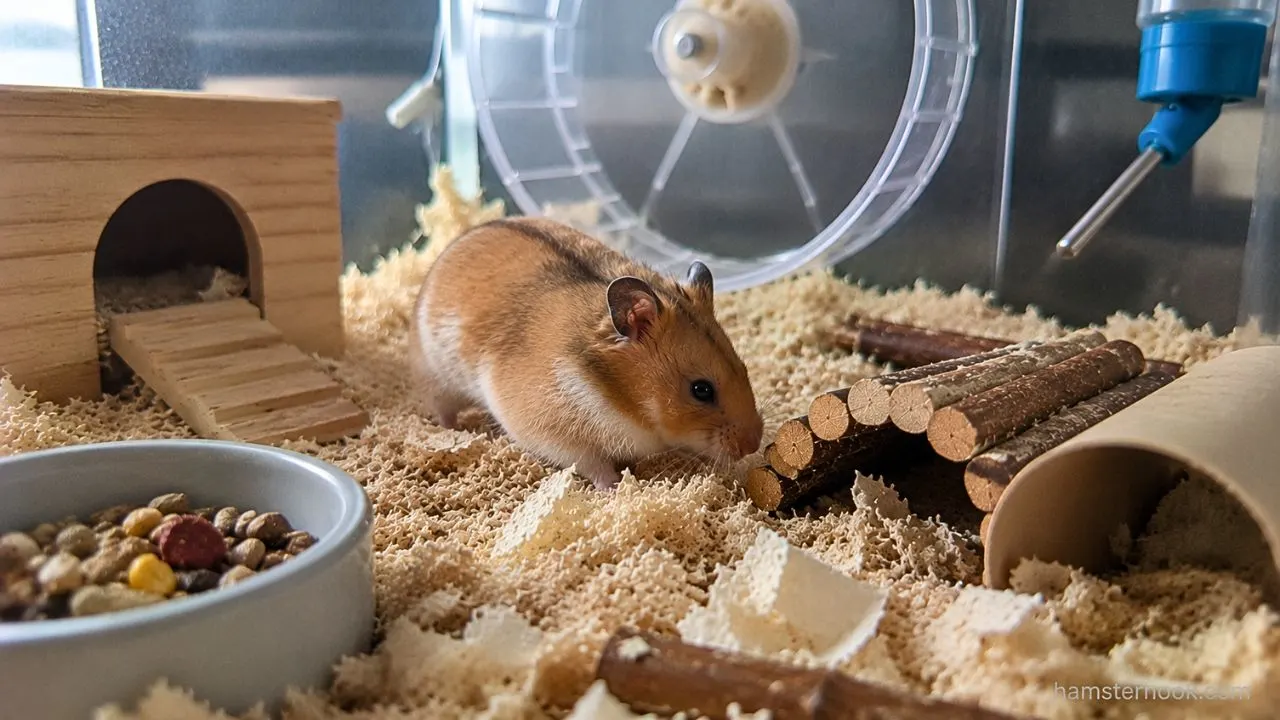
Extended hiding can sometimes be a response to environmental stress or discomfort. Read Why Do Hamsters Sleep and Hide All Day? The Truth Most New Owners Don’t Know.
What You Should Do
If you suspect noise is affecting your hamster, start by evaluating its environment.
Look for sources of:
- Sudden loud sounds
- Constant background noise
- Vibrations
- Frequent disturbances during daytime rest
Simple changes can make a significant difference.

Choose a Quiet Location
Place the enclosure in a room where noise levels are generally predictable and moderate.
Avoid areas directly beside:
- TVs
- Sound systems
- Home gyms
- Washing machines
- Frequently used doors
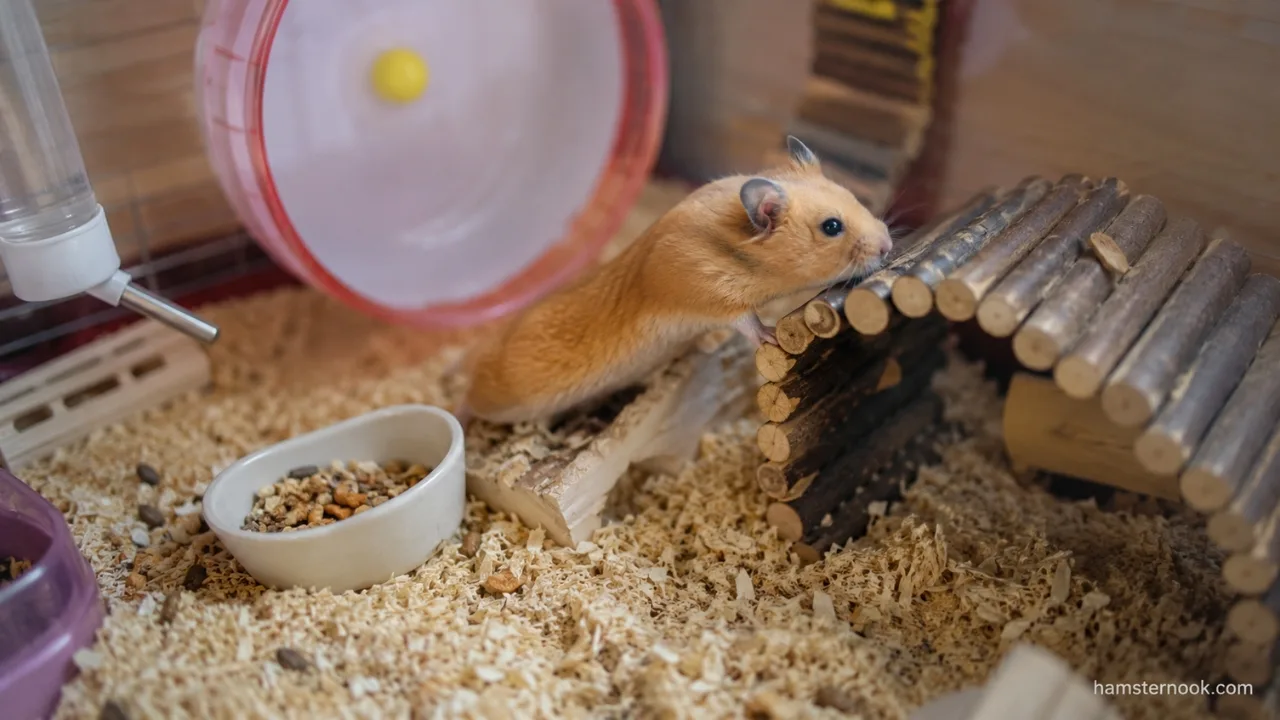
Provide Multiple Hiding Places
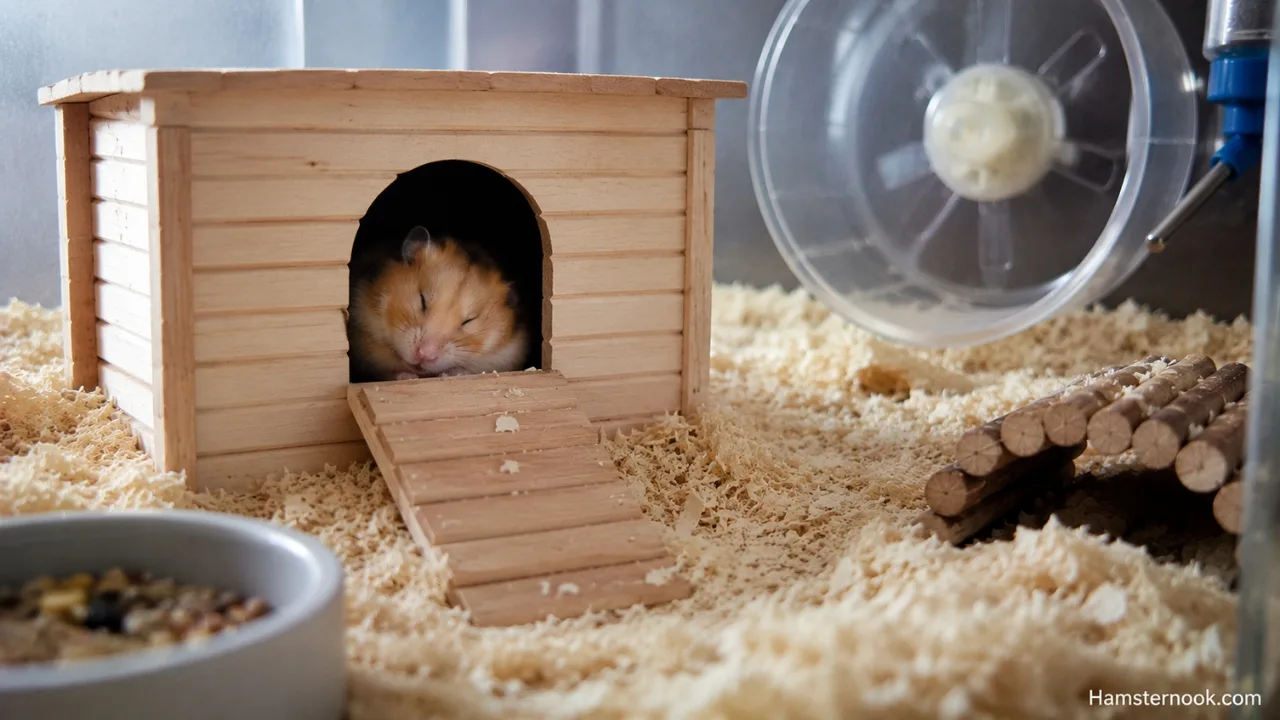
Animal welfare organizations recommend offering secure shelters where small animals can retreat when they feel uncertain.
A hamster should always have access to:
- At least one enclosed hide
- Deep bedding for burrowing
- Covered areas that block light and movement
Maintain a Predictable Routine
Regular feeding times, cleaning schedules, and handling routines help reduce unnecessary stress.
Hamsters often feel more secure when their environment remains consistent.
Introduce Changes Gradually
If you need to move the enclosure or make environmental changes, doing so gradually may help your hamster adjust more comfortably.
Observe Behavior Over Time
Keeping a simple record of when unusual behaviors occur can sometimes help identify environmental triggers that might otherwise be overlooked.
Instead of reacting to a single incident, watch for patterns.
A hamster startled by one loud noise is behaving normally.
Understanding normal hamster reactions makes it easier to identify when behavior changes may be a concern. See Hamster Behavior Guide: Understanding Every Common Hamster Behavior (2026).
A hamster showing signs of stress day after day may need environmental adjustments.
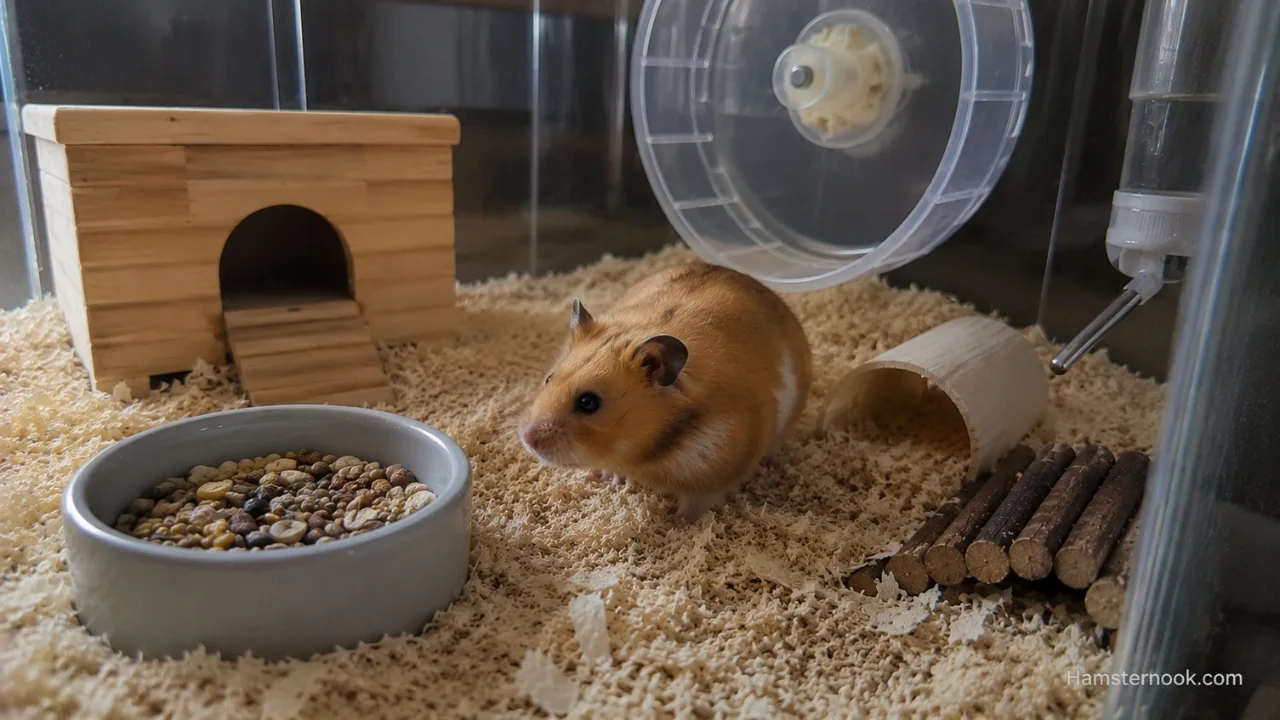
Warning Signs That Noise May Be Causing Stress
Occasional startle responses are expected.
The following behaviors may indicate that a hamster is experiencing ongoing stress:
- Constant hiding during normal active hours
- Repeated freezing episodes
- Excessive alertness
- Persistent pacing
- Frequent attempts to escape
- Reduced interest in enrichment activities
- Reluctance to explore open areas
- Sudden behavioral changes after environmental disturbances
These signs do not automatically mean noise is the only cause, but they suggest that the environment deserves closer evaluation.
Behavioral changes are often easier to interpret when viewed alongside your hamster’s overall condition. Read How to Tell If Your Hamster Is Happy, Healthy, Stressed, or Sick: Complete Owner’s Guide (2026).
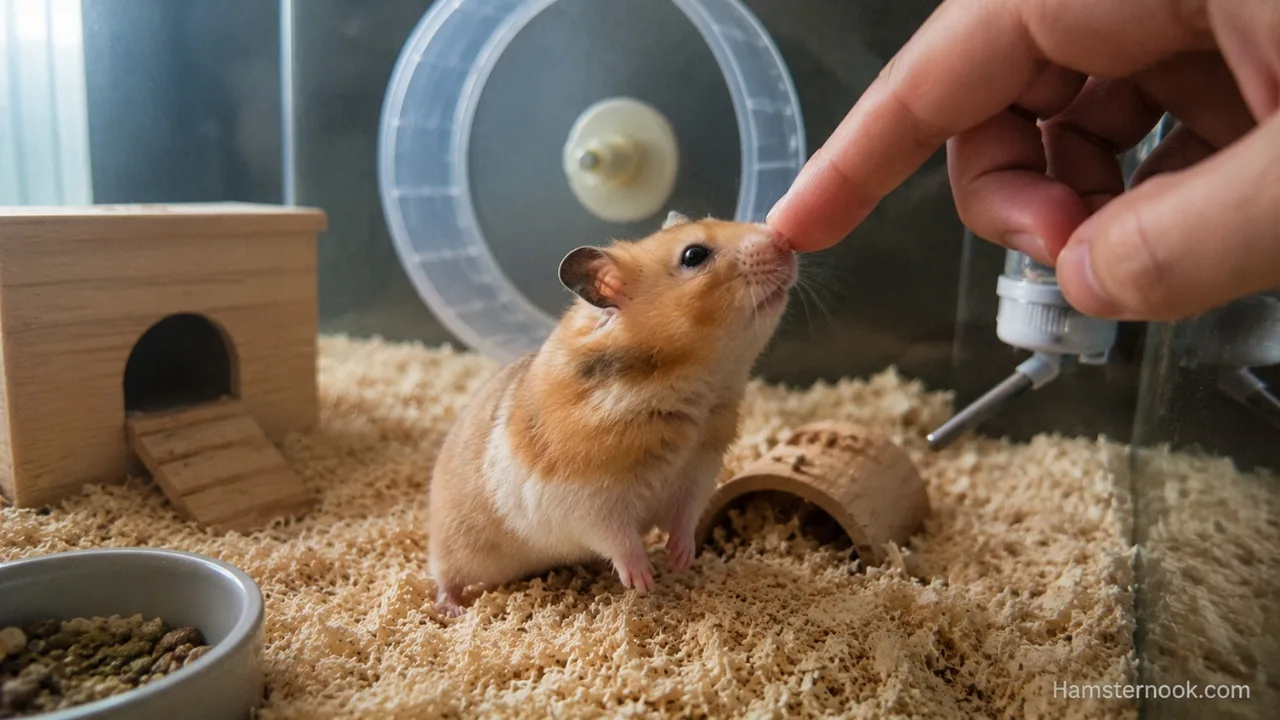
When to Worry
Most hamsters recover quickly once a disturbance ends.
However, it may be time to investigate further if your hamster:
- Remains unusually withdrawn after the environment has been made quieter
- Stops engaging in normal nighttime activities
- Eats or drinks noticeably less
- Shows ongoing fear responses without an obvious trigger
- Develops repetitive stress-related behaviors
- Experiences a significant change in temperament
Behavioral changes that persist despite improving the environment should not be ignored.
If these changes occur alongside breathing difficulty, loss of appetite, marked weakness, or another sign of illness, contact a veterinarian rather than assuming noise is the only cause.
Final Thoughts
Loud noises can absolutely stress a hamster, especially when they are sudden, frequent, or accompanied by strong vibrations. Because hamsters are prey animals with sensitive hearing, reacting to unfamiliar sounds is a normal survival behavior.
A brief startle response is usually nothing to worry about. Most healthy hamsters will pause, assess the situation, and return to their usual routine once they feel safe.
The bigger concern is ongoing exposure to stressful noise. Providing a quiet location, secure hiding places, and a predictable environment can go a long way toward helping your hamster feel comfortable and confident in its home.
Focus on your hamster’s overall behavior patterns rather than a single reaction to one unexpected sound. A relaxed hamster that continues eating, exploring, burrowing, and using its wheel is generally adapting well to its surroundings.
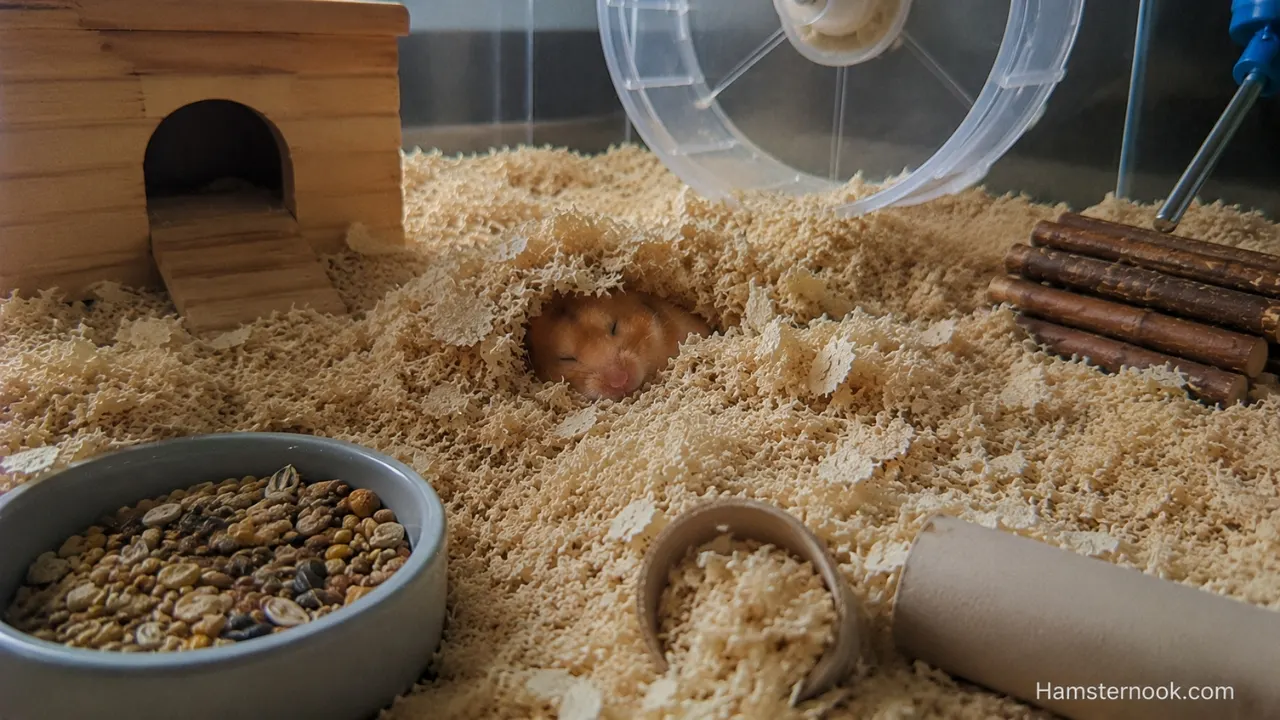
Helping a hamster feel safe and confident takes time and consistency. Learn more in How to Gain Your Hamster’s Trust: A Beginner-Friendly Guide.
Frequently Asked Questions
Can loud music hurt a hamster?
Moderate household music is usually tolerated, but very loud music or prolonged exposure to high volume levels may cause stress and disrupt normal behavior.
Do hamsters get scared by TV sounds?
Some do. Sudden loud noises, action scenes, explosions, or speakers placed close to the enclosure may startle a hamster.
Is it okay to vacuum near my hamster’s cage?
Most hamsters will react to the noise and vibration of a vacuum cleaner. If possible, avoid placing the enclosure directly beside areas that are frequently vacuumed.
Can a hamster get used to household noises?
Many hamsters adapt to predictable daily sounds such as conversations, footsteps, and routine household activity. Sudden or unusually loud noises are more likely to cause stress.
Why does my hamster hide after hearing a loud sound?
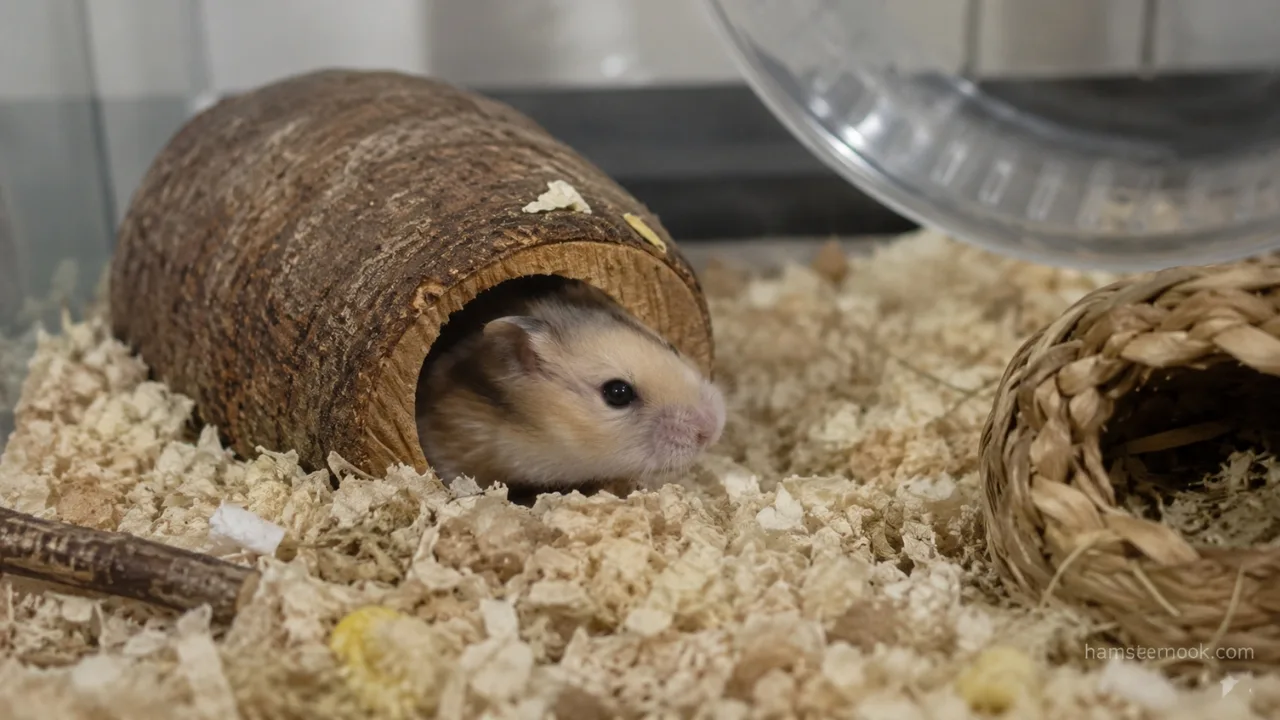
Seeking shelter is a natural defensive behavior. A hamster may retreat to a hide or burrow until it feels safe again.
Where is the best place to keep a hamster cage?
A quiet room with stable temperatures, minimal vibrations, and moderate household activity is generally the best choice.
References
This guide is based on hamster welfare, behavior, and environmental care information from trusted animal care organizations and veterinary resources, including:
- Royal Veterinary College – Small Mammal Welfare Resources – Welfare and care considerations for small mammals.
- RSPCA – Keeping Hamsters as Pets – Guidance on hamster behavior, hearing, housing, and environmental needs.
- PDSA – Hamsters as Pets – Guidance on quiet cage placement, noise, vibrations, and suitable hiding places.
- Blue Cross – Hamster Care – Guidance on housing, enrichment, handling, and hamster welfare.
- NC3Rs – Housing and Husbandry: Hamster – Evidence-based guidance on hamster housing, husbandry, and environmental needs.

Narayan Kumar is the founder and author of HamsterNook. He creates practical, research-based hamster care guides covering hamster behavior, nutrition, cage setup, enrichment, health, and everyday care. His goal is to help hamster owners make informed decisions and provide safer, healthier lives for their pets through clear, beginner-friendly information based on trusted animal care resources.