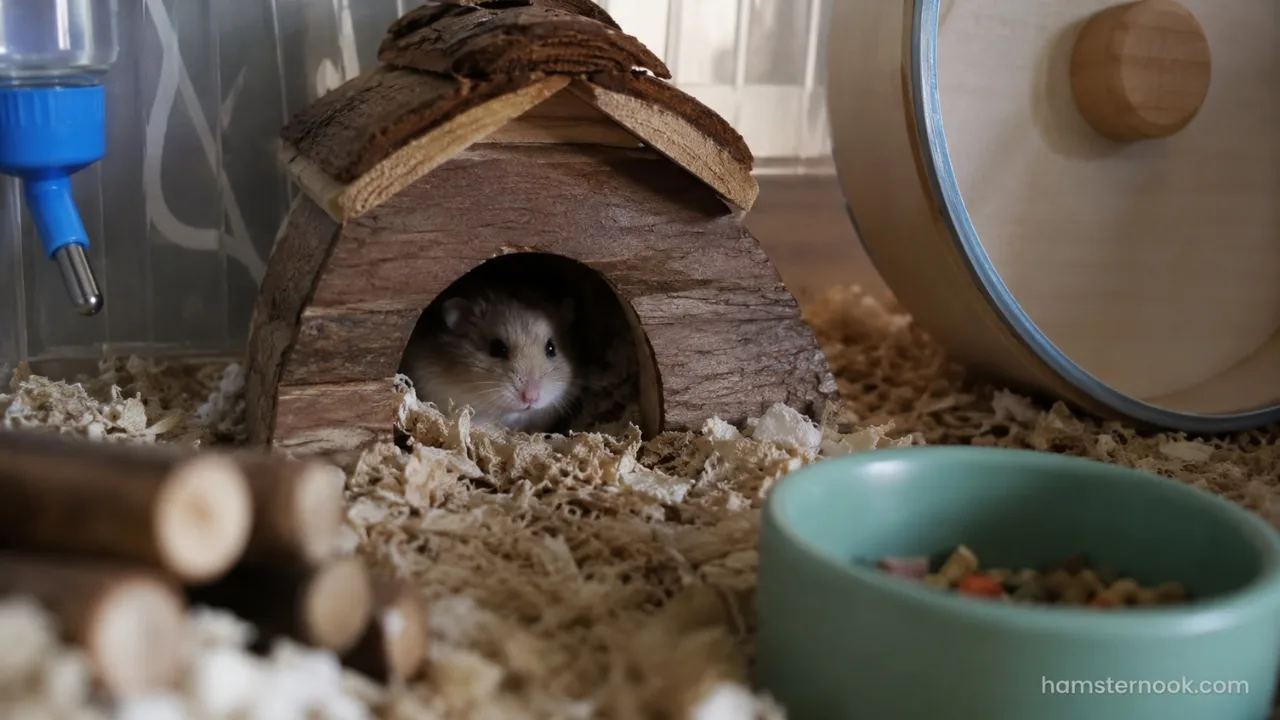
You bring your hamster home, set up a comfortable cage, provide fresh food and water, and eagerly wait to watch your new pet explore. Instead, you discover something surprising: your hamster seems to spend most of the day hidden inside a burrow, house, or tunnel.
For many new owners, this behavior can be confusing and even worrying. Is your hamster scared? Sick? Unhappy?
In most cases, hiding during the day is not only normal but also a sign that your hamster is following its natural routine. A hamster that spends much of the day sleeping or staying hidden is usually behaving exactly as its natural instincts encourage. However, there are situations where excessive hiding can signal stress, illness, or environmental problems that need attention.
Knowing the difference between normal hiding and problem-related hiding helps you react more confidently as an owner.
Quick Answer: Why Do Hamsters Hide During the Day?
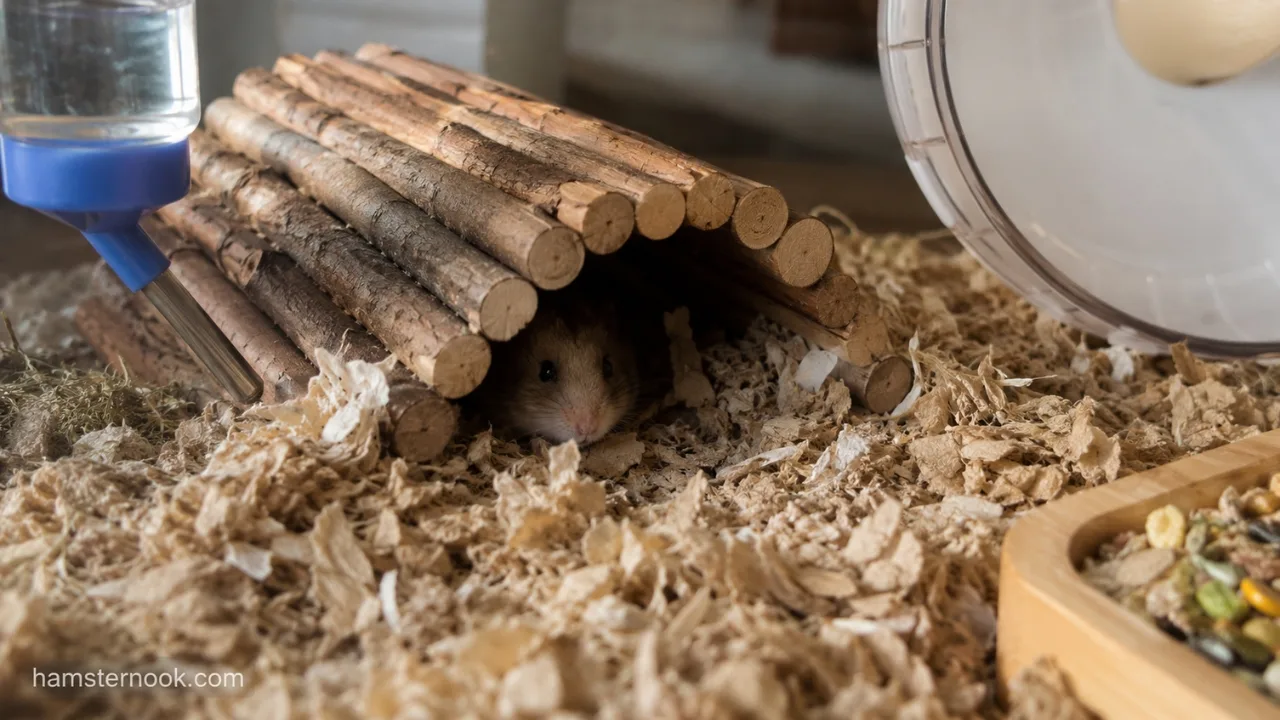
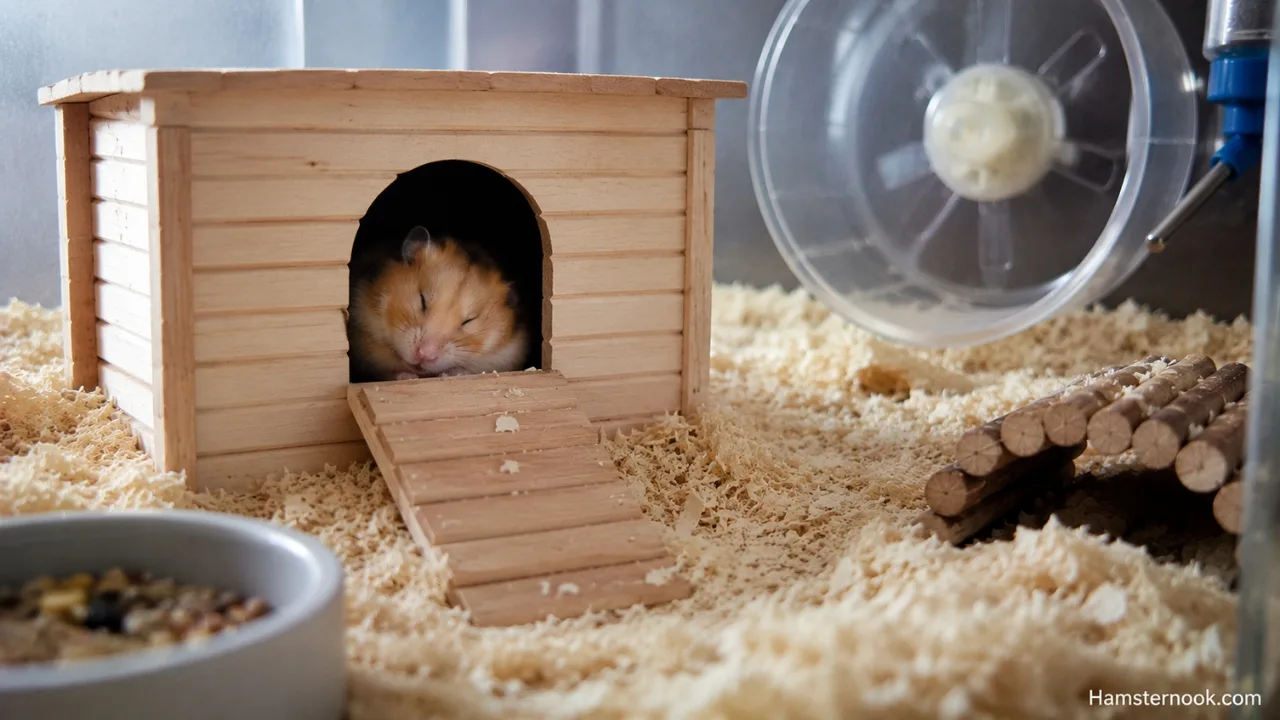
Hamsters naturally hide during the day because they are nocturnal animals, meaning they are most active in the evening and at night and usually sleep during daylight hours. In the wild, staying hidden in burrows during the day helps them rest and avoid exposure. Pet hamsters retain these natural patterns, so spending daylight hours sleeping in a hideout, burrow, or nest is usually normal.
Should You Be Worried If Your Hamster Sleeps All Day?
Usually not.
Many healthy hamsters spend most daylight hours sleeping and may not emerge until late evening. Owners who work during the day often miss their hamster’s most active period entirely.
As long as your hamster maintains a healthy appetite, stable weight, and normal nighttime activity, daytime sleeping is rarely a concern.

If you’re also wondering whether an unusual sleeping posture is normal, our What Your Hamster’s Sleeping Position Says About Their Health guide explains common sleeping positions and when changes may deserve attention.
Why Hamsters Naturally Hide During the Day

One of the most important things to understand about hamsters is that they are naturally crepuscular animals. This means they are most active during dawn and dusk and often remain hidden for much of the daylight period.
In the wild, hamsters face numerous predators, including birds, foxes, snakes, and other hunting animals. Remaining underground during bright daylight hours helps them stay safe.
Although pet hamsters live in safe homes, the survival instincts that kept their wild ancestors alive are still deeply ingrained.

Hamsters also need undisturbed places to sleep during the day. Daytime hiding by itself does not mean your hamster is frightened or unhappy; the more useful question is whether it eats, drinks, explores, and behaves normally during its active hours.
Common daytime behaviors include:
- Sleeping in underground-style burrows
- Resting inside hideouts
- Nesting in bedding
- Briefly waking to eat or drink
- Returning quickly to a safe shelter
Because hiding and burrowing are natural behaviors, seeing your hamster tucked away during the day is not, by itself, a sign that something is wrong.
Normal Hiding vs Concerning Hiding Behavior
A healthy hamster may spend most of the day hidden and still be perfectly fine. The concern arises when hiding is combined with reduced eating, weight loss, weakness, breathing problems, or a noticeable drop in normal nighttime activity.

Not all hiding behavior means the same thing.
The table below can help owners distinguish between normal and potentially concerning situations.
| Behavior | Usually Normal? | May Need Attention? |
|---|---|---|
| Sleeping in a hide during daylight | Yes | No |
| Coming out during evening hours | Yes | No |
| Burrowing under bedding | Yes | No |
| Hiding after moving to a new home | Yes | Usually No |
| Refusing food while hiding | No | Yes |
| Hiding continuously for several days without activity | No | Yes |
| Showing weight loss while hiding | No | Yes |
| Hiding alongside lethargy or weakness | No | Yes |
The most important thing to observe is what your hamster does during its active hours. A hamster that hides by day but eats, drinks, explores, and exercises at night is usually behaving normally.
New Hamsters Often Hide More Than Expected
A newly adopted hamster may spend several days hiding almost constantly.

Everything in the new environment is unfamiliar:
- New smells
- New sounds
- Different lighting
- Different cage setup
- New people
During this adjustment period, hiding provides a sense of security.
Many first-time owners become concerned and try to encourage interaction too quickly. Unfortunately, this can increase stress rather than reduce it.
If you’ve recently brought your hamster home, you may find The Biggest Mistake New Hamster Owners Make in the First Week helpful for understanding why patience matters during the adjustment period.

Most hamsters start appearing more often once they become familiar with their surroundings.
How Long Does Adjustment Hiding Last?
The adjustment period varies between hamsters. Some become more confident quickly, while others may take longer to settle into a new environment. A predictable routine, quiet surroundings, and undisturbed sleeping time can help a new hamster feel secure.
5 Common Reasons Hamsters Hide During the Day
They’re Simply Sleeping
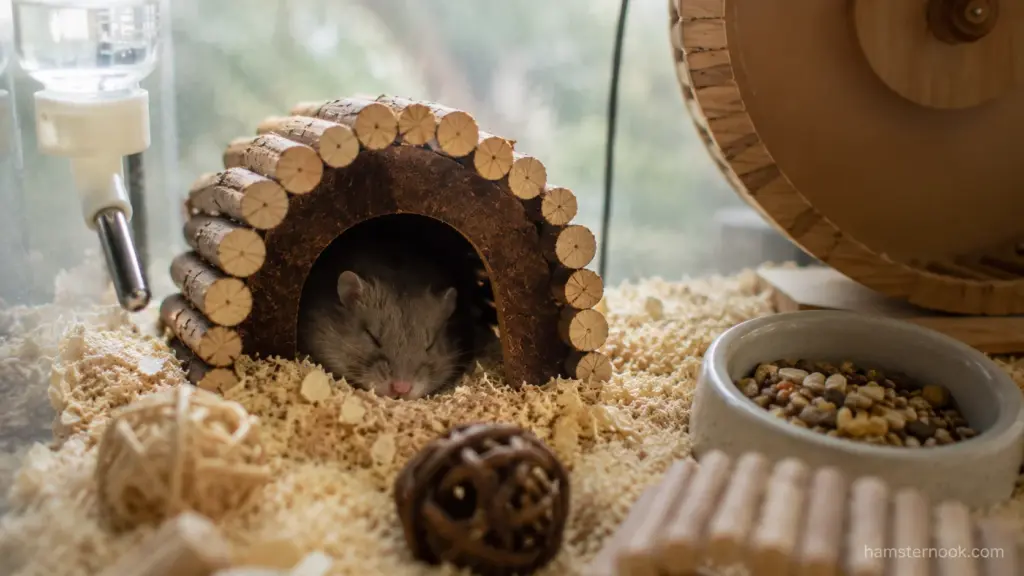
The most common reason is also the simplest.
Hamsters spend much of the daytime resting.

Many owners accidentally assume their hamster should behave like a dog, cat, or rabbit that remains active throughout the day. In reality, your hamster’s preferred schedule may be completely opposite to yours.
Checking the cage late in the evening often reveals a very different picture, with the hamster actively running, digging, climbing, and exploring.
They Feel Safe in Their Burrow
Hiding isn’t always a sign of fear.
A hamster that creates deep tunnels and spends time inside them may actually feel secure and comfortable.

Wild hamsters spend much of their lives underground, so burrowing is a natural and healthy behavior.
This is one reason deep bedding is so important for hamster welfare.
The Environment Is Too Bright
Bright lighting can encourage hiding.
Hamsters naturally prefer dim environments and may retreat if exposed to strong sunlight or intense room lighting for extended periods.

Signs this may be happening include:
- Staying hidden whenever lights are on
- Becoming active only after dark
- Quickly returning to shelter when exposed
Providing shaded areas and maintaining a natural day-night cycle can help.
Daytime Household Activity Can Encourage Hiding
Busy homes can unintentionally encourage a hamster to remain hidden.
Common triggers include:

- Television noise
- Children playing nearby
- Vacuum cleaners
- Frequent movement around the cage
- Barking dogs
Many hamsters choose to stay hidden until the environment becomes quieter.
They’re Feeling Stressed
Stress is another common cause of excessive hiding.
Potential stressors include:
- Frequent cage cleaning
- Loud household noises
- Constant handling
- Other pets near the enclosure
- Lack of hiding spaces
A stressed hamster often remains hidden longer than normal and may avoid interaction altogether.

If hiding is accompanied by other signs of fear or stress, our Hamster Stress: 10 Common Causes and How to Reduce It guide explains common stressors and ways to make the environment calmer.
Cage Setup Problems That Encourage Excessive Hiding
Sometimes the environment itself contributes to unusual hiding behavior.
Insufficient Hiding Places
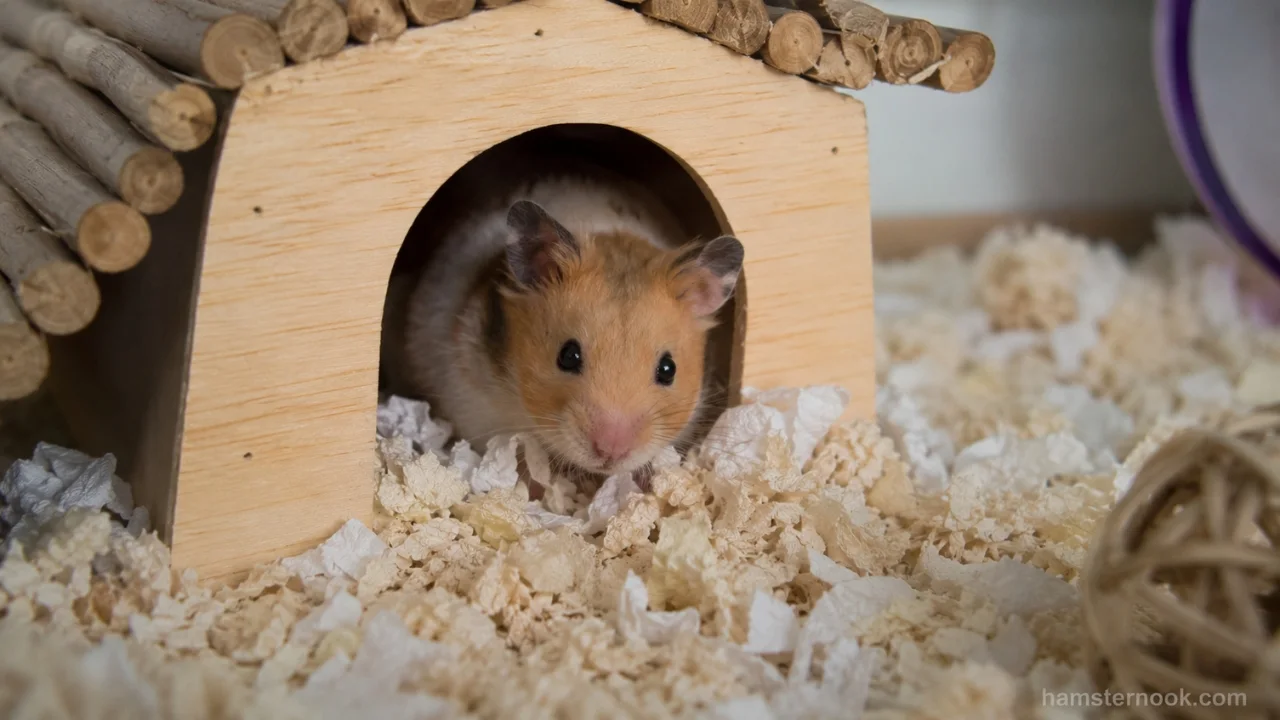
Hamsters need multiple places where they can retreat and feel secure.
A cage with only one hideout may leave a hamster feeling exposed.
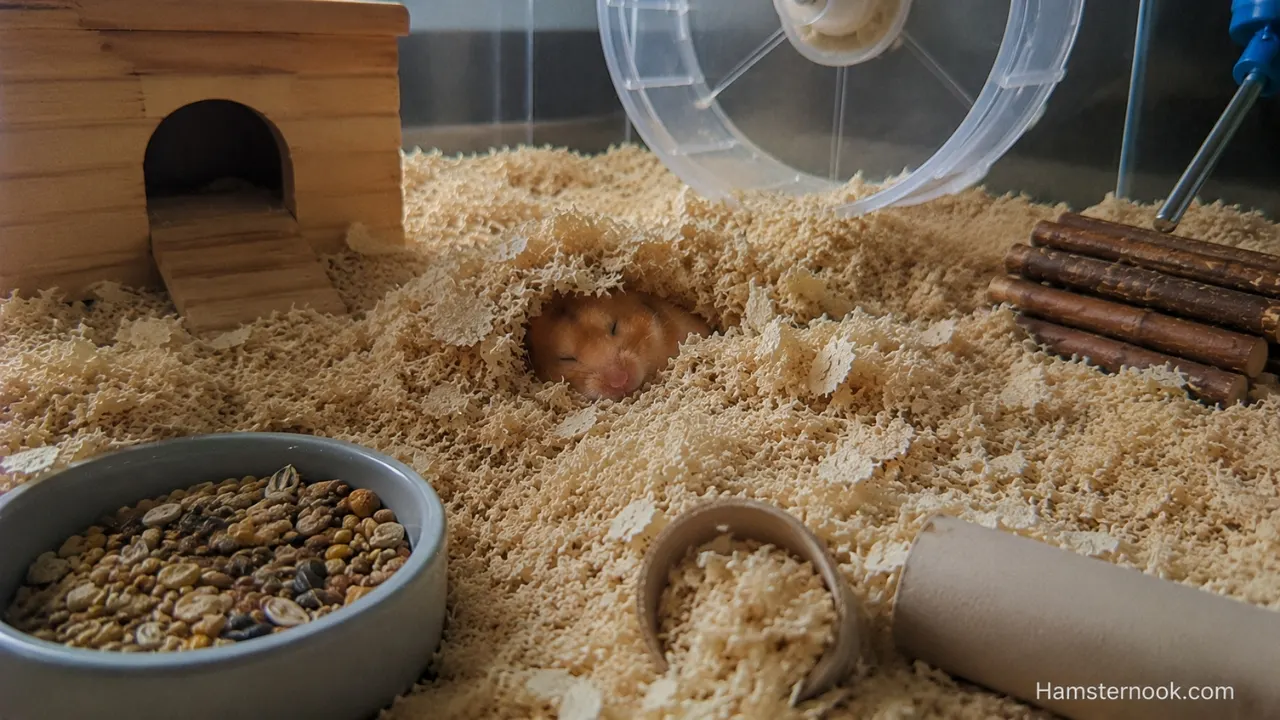
A good enclosure often includes:
- A primary hide
- Tunnels
- Burrow opportunities
- Covered areas
- Nesting material
The more secure a hamster feels, the more likely it is to explore openly during active hours.
Cage Size Is Too Small
Small enclosures can increase stress levels.
When a hamster lacks enough space for natural behaviors, it may spend more time hiding and less time exploring.
Other signs of enclosure-related stress include:
- Bar chewing
- Repetitive pacing
- Climbing cage walls
- Hyperactivity
If you’re evaluating your setup, Best Hamster Cage Setup for Beginners can help identify environmental problems that may be affecting your pet’s behavior.
When Hiding Could Be a Sign of Illness
While hiding is usually normal, illness should always remain a consideration when behavior changes suddenly.
A sick hamster often seeks isolation because conserving energy becomes a priority.

Warning signs include:
| Symptom | Why It Matters |
|---|---|
| Refusing food | Possible illness or pain |
| Rapid weight loss | Serious health concern |
| Labored breathing | Veterinary attention needed |
| Hunched posture | Often indicates discomfort |
| Wet tail area | Potential digestive issue |
| Weakness or instability | May signal underlying illness |
If excessive hiding occurs alongside any of these symptoms, a veterinarian should evaluate the hamster promptly.
Our Signs of a Sick Hamster: Warning Symptoms Every Owner Should Know guide explains many of the early health changes that owners should never ignore.
Sudden Changes Matter More Than Normal Habits
A hamster that has always enjoyed sleeping in a hideout is usually behaving normally.

However, a hamster that suddenly begins hiding much more than usual deserves closer observation, especially if other behavioral or physical changes appear at the same time.
Why Older Hamsters May Hide More Often
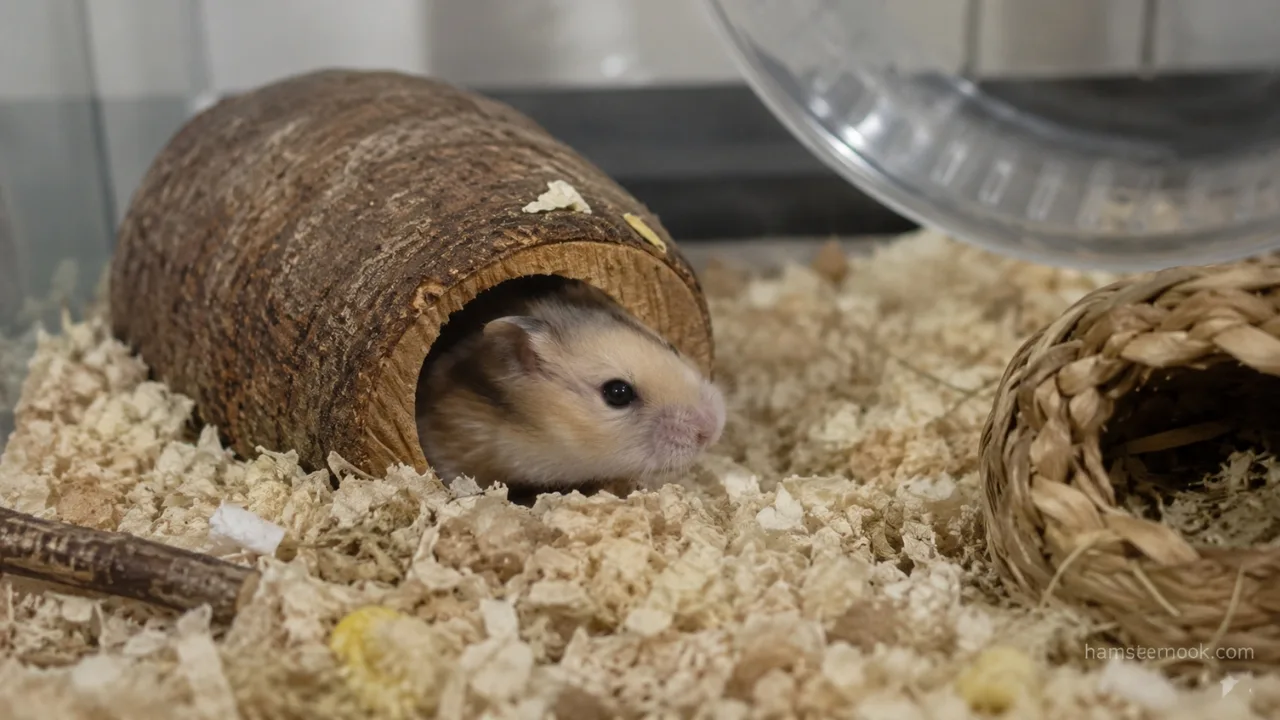
Senior hamsters frequently become less active than younger ones.
As they age, they may:
- Sleep longer
- Move more slowly
- Explore less frequently
- Spend additional time in nesting areas
Age-related changes are often gradual.
However, sudden increases in hiding should still be monitored carefully, even in older hamsters.
How to Help a Shy Hamster Feel Safe Enough to Explore
Rather than trying to make a hamster come out, focus on helping it feel secure enough to emerge on its own.
Helpful strategies include:
Respect Their Schedule
Interact during evening hours when your hamster is naturally awake.

Trying to engage during daytime sleep periods often causes unnecessary stress.
Build Trust Slowly
Allow your hamster to approach you voluntarily.
Offering treats and speaking softly can create positive associations over time.
If you’re working on taming, How to Get a Hamster to Trust You Faster Without Stressing It Out provides additional guidance on building trust without overwhelming your pet.

Avoid Excessive Disturbance
Constantly lifting hides, rearranging bedding, or waking a sleeping hamster can make hiding worse.
Give your hamster opportunities to control its own environment whenever possible.
Provide Enrichment
A mentally stimulated hamster is often more confident.
Wheels, tunnels, chew toys, and foraging opportunities can encourage natural exploration.

Owners looking for enrichment ideas may enjoy Fun Ways to Keep Your Hamster Mentally Stimulated, which includes activities that support both physical and mental health.
Mistakes That Often Make Hiding Worse
Several well-intentioned actions can accidentally increase fear.
Avoid:
- Waking your hamster repeatedly
- Removing hides to force interaction
- Constant cage rearrangement
- Chasing the hamster with your hand
- Expecting immediate bonding
Giving a hamster time to build confidence is usually far more effective than pushing interaction too quickly.
Signs Your Hamster’s Hiding Is Completely Normal
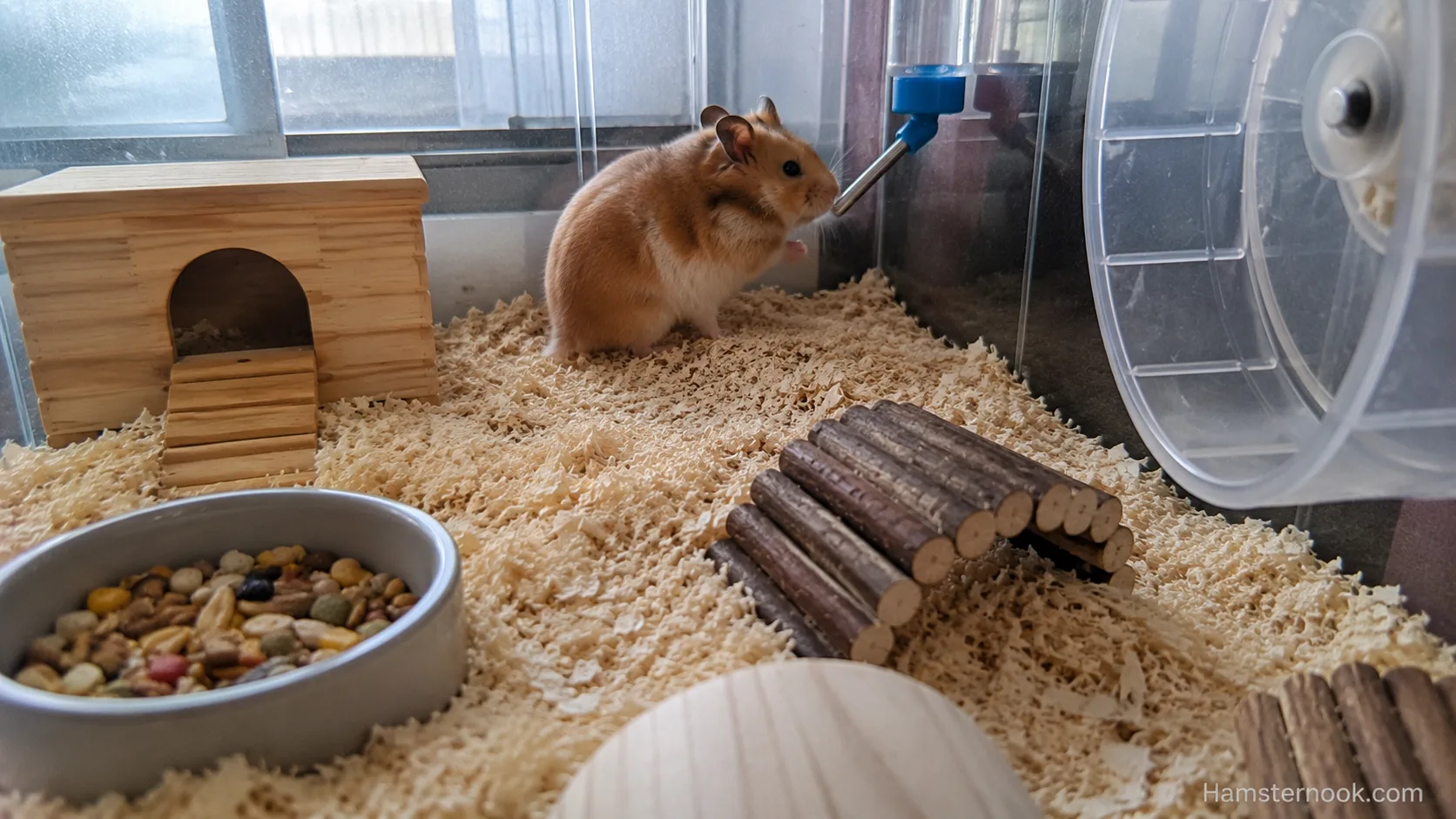
The following signs usually indicate healthy behavior:
- Coming out regularly during the evening
- Eating and drinking normally
- Maintaining a healthy body weight
- Exploring the enclosure when awake
- Using the exercise wheel
- Building nests and rearranging bedding
When these behaviors are present, daytime hiding is generally nothing to worry about.
Final Thoughts
For most pet hamsters, hiding during the day is completely normal and reflects their natural instincts as prey animals. Sleeping in burrows, resting in hideouts, and remaining inactive during daylight hours are all behaviors that healthy hamsters commonly display.
The important question is not whether your hamster hides, but whether it appears healthy and active when awake.
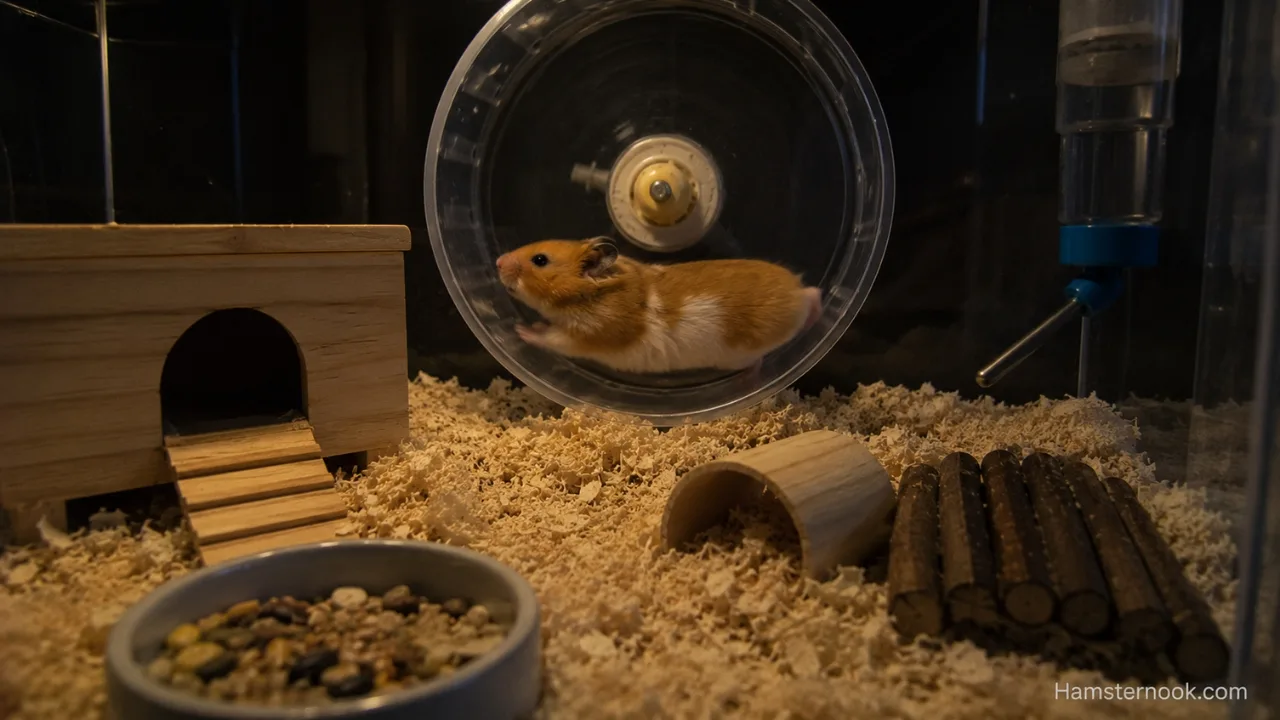
If your hamster eats normally, drinks regularly, explores during the evening, and shows curiosity about its environment, daytime hiding is rarely a cause for concern.
However, when hiding is accompanied by weight loss, lethargy, refusal to eat, breathing difficulties, or other unusual symptoms, it may signal an underlying health issue that deserves attention.
Once you become familiar with your hamster’s usual habits, it becomes much easier to notice when something is genuinely different.
Keeping track of your hamster’s normal sleeping, eating, and activity patterns can make it easier to identify unusual behavior before a small issue becomes a larger problem.

Frequently Asked Questions
Is it normal for my hamster to stay hidden all day?
Yes. Most hamsters naturally sleep or rest in burrows and hideouts throughout the day and become more active during the evening and nighttime.
Why does my new hamster never come out?
New hamsters often spend several days hiding while adjusting to unfamiliar surroundings. This behavior usually improves as they become comfortable.
Should I wake my hamster if it hides all day?
No. Waking a sleeping hamster can create stress and may damage trust. It’s best to interact during its natural waking hours.
How do I know if my hamster is hiding because it’s sick?
Watch for additional symptoms such as weight loss, weakness, poor appetite, breathing problems, or changes in appearance. These signs are more concerning than hiding alone.
Why does my hamster hide even when I’m nearby?
Your hamster may still be building confidence around people. Trust develops gradually, especially in younger or recently adopted hamsters.
Can a bored hamster hide more often?
A lack of enrichment can reduce normal exploration and activity, but hiding during the day alone is not enough to indicate boredom. Look at your hamster’s overall behavior during its active hours and make sure it has suitable opportunities to burrow, exercise, forage, and explore.
Why does my hamster hide immediately when the room lights turn on?
Hamsters naturally prefer dim conditions and may retreat to a hideout when exposed to bright light, especially during daytime hours.
Is it bad if I rarely see my hamster?
Not necessarily. Many healthy hamsters are most active late at night when owners are asleep. Monitoring food intake, water consumption, and activity signs is often more useful than judging visibility alone.

Should I remove my hamster’s hideout so it comes out more often?
No. Removing hideouts usually increases stress and can make hiding behavior worse. Secure hiding places are an important part of hamster welfare.
Why does my hamster come out only when I’m asleep?
Many hamsters are most active late in the evening or during the night. Owners often miss these activity periods because they occur outside normal waking hours.
References
This guide is based on hamster behavior, sleep patterns, housing, enrichment, stress, and welfare guidance from trusted animal welfare and veterinary resources, including:
- RSPCA – Hamster Behaviour – Guidance on natural hamster behavior, activity patterns, sleeping, hiding, handling, and signs of stress.
- RSPCA – Creating a Good Home for Hamsters – Guidance on suitable housing, bedding, hiding areas, environmental conditions, and opportunities for natural behavior.
- RSPCA – Keeping Hamsters as Pets – General hamster care, behavior, housing, enrichment, diet, and welfare guidance.
- Blue Cross – Hamster Care Guide – Practical information on hamster housing, enrichment, handling, sleeping patterns, and wellbeing.
- MSD Veterinary Manual – Providing a Home for a Hamster – Veterinary guidance on hamster housing, bedding, hiding places, exercise, and environmental needs.
- MSD Veterinary Manual – Disorders and Diseases of Hamsters – Veterinary reference information on common hamster health problems and signs that may require veterinary evaluation.
- NC3Rs – Housing and Husbandry: Hamster – Guidance on hamster housing, environmental conditions, enrichment, burrowing, and species-appropriate husbandry.
- NC3Rs – Choosing Appropriate Enrichment – Principles for providing enrichment that supports natural behaviors and promotes animal welfare.
Medical Disclaimer
This article is intended for educational purposes only and should not be considered veterinary advice. Daytime hiding is often normal hamster behavior, but sudden or excessive hiding accompanied by appetite loss, weight loss, weakness, breathing difficulties, or other unusual symptoms may indicate an underlying health problem. If you are concerned about your hamster’s health or behavior, consult a qualified exotic animal veterinarian for proper evaluation and advice.

Narayan Kumar is the founder and author of HamsterNook. He creates practical, research-based hamster care guides covering hamster behavior, nutrition, cage setup, enrichment, health, and everyday care. His goal is to help hamster owners make informed decisions and provide safer, healthier lives for their pets through clear, beginner-friendly information based on trusted animal care resources.


