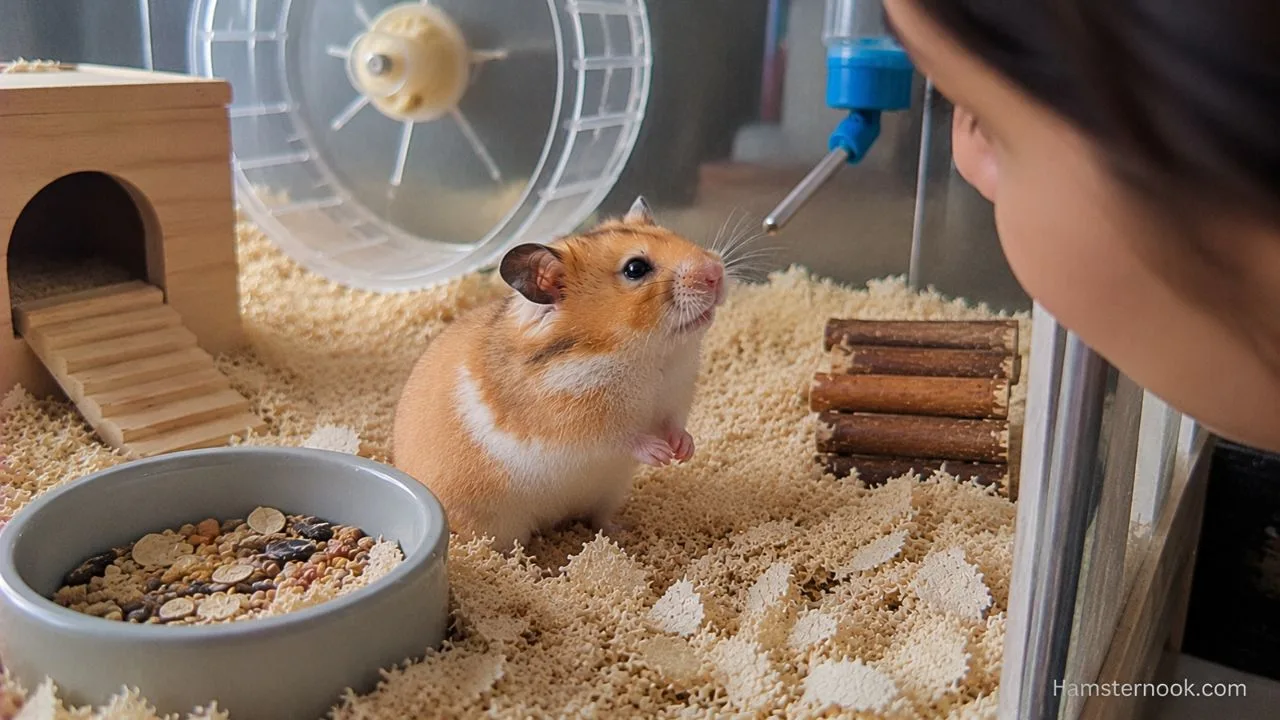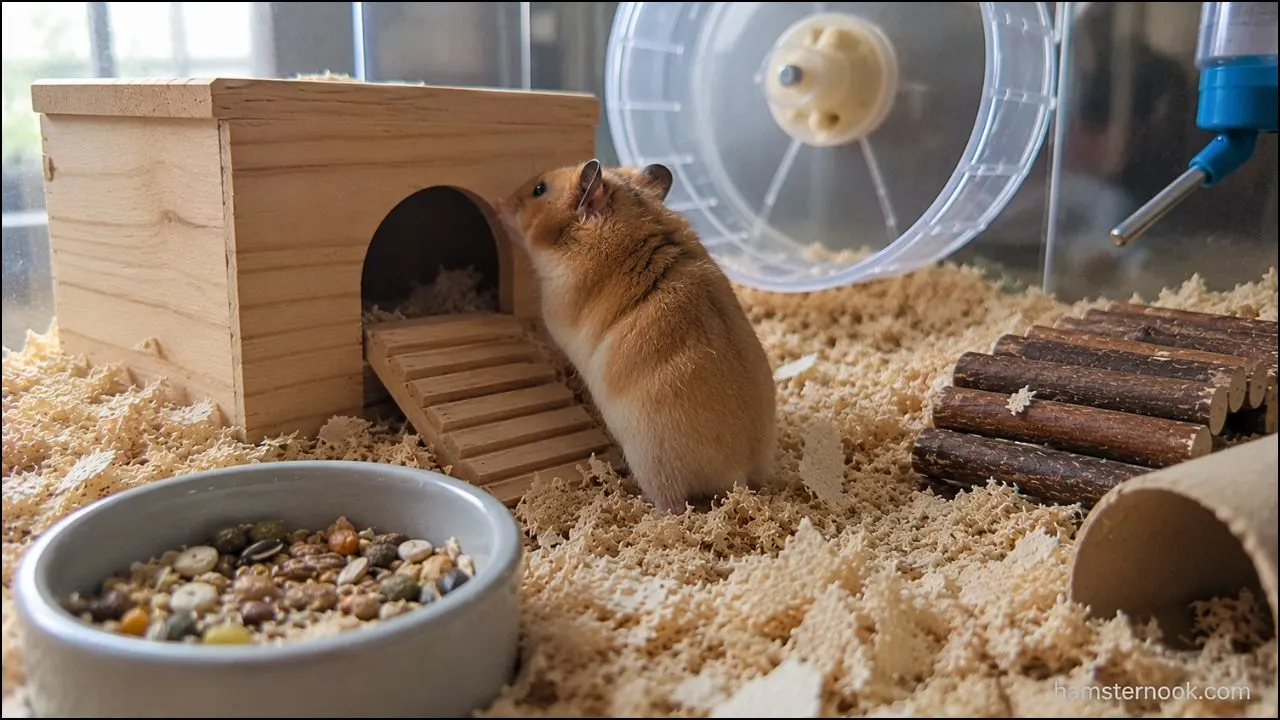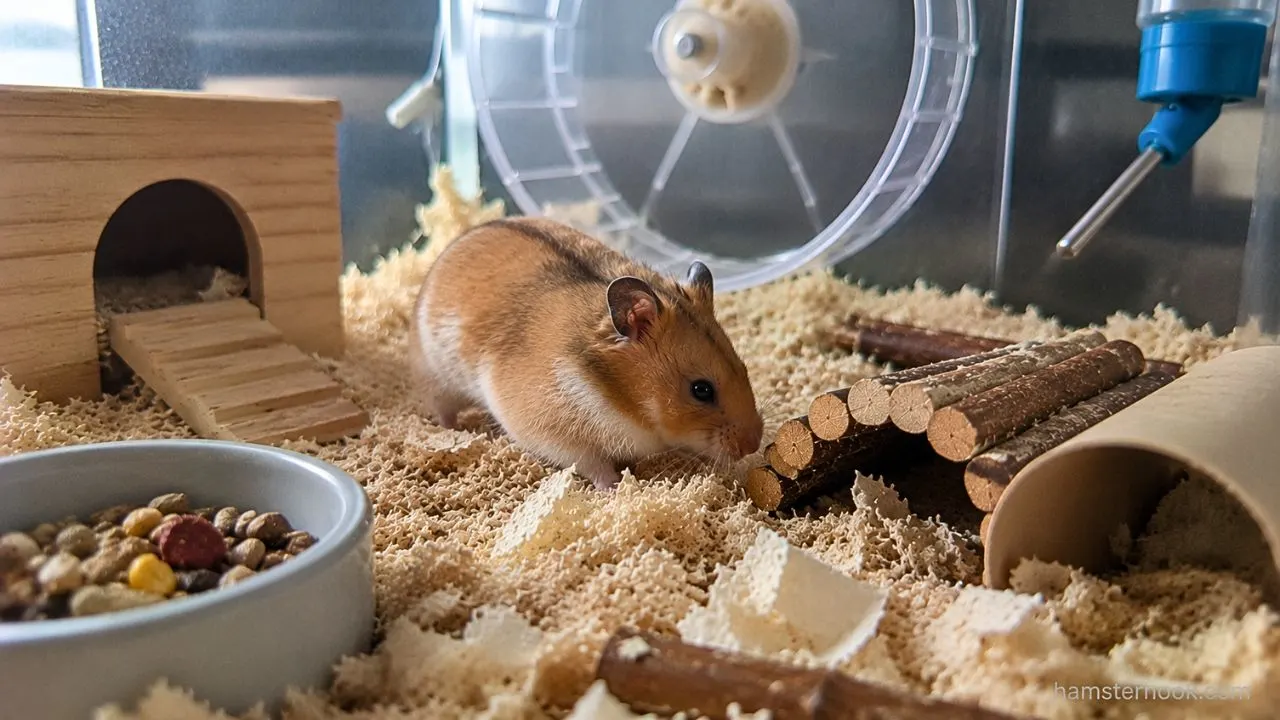
Seeing your hamster lying flat on its back can be surprising, especially if you’ve never noticed this position before. You might wonder whether your pet is comfortable, frightened, sleeping, or experiencing a health problem. The meaning depends on what happens around the behavior. A hamster briefly rolling onto its back is different from one that cannot turn over, appears weak, or remains unresponsive. Knowing what else to look for can help you decide whether to observe or seek veterinary care.
Quick Answer: Why Is My Hamster Lying on Its Back?
A hamster may briefly lie on its back while moving, grooming, stretching, or reacting to something in its surroundings. However, lying on its back should not automatically be considered normal or a sign of relaxation.
The most important distinction is whether your hamster can move normally and turn itself over.
Consider these differences:

- Briefly rolling onto its back: May occur during ordinary movement or grooming.
- Rolling during an interaction: Could be associated with fear, discomfort, or defensive behavior.
- Lying on its back and quickly getting up: Observe whether the hamster continues behaving normally.
- Remaining on its back and struggling to move: Concerning and needs prompt veterinary assessment.
- Lying on its back with little response: Potentially an emergency, particularly if breathing or responsiveness is abnormal.
Look at your hamster’s breathing, movement, alertness, appetite, and overall behavior rather than judging its condition from its position alone.
Is It Normal for a Hamster to Lie on Its Back?
It can happen, but context matters.
Hamsters move through different positions while exploring their surroundings, grooming, resting, and interacting with objects. A brief change in position does not necessarily indicate a problem.
However, there is limited authoritative guidance establishing that lying flat on the back is a standard or reliable sign of relaxation in pet hamsters. Owners should therefore avoid assuming that a hamster is comfortable simply because its belly is facing upward.
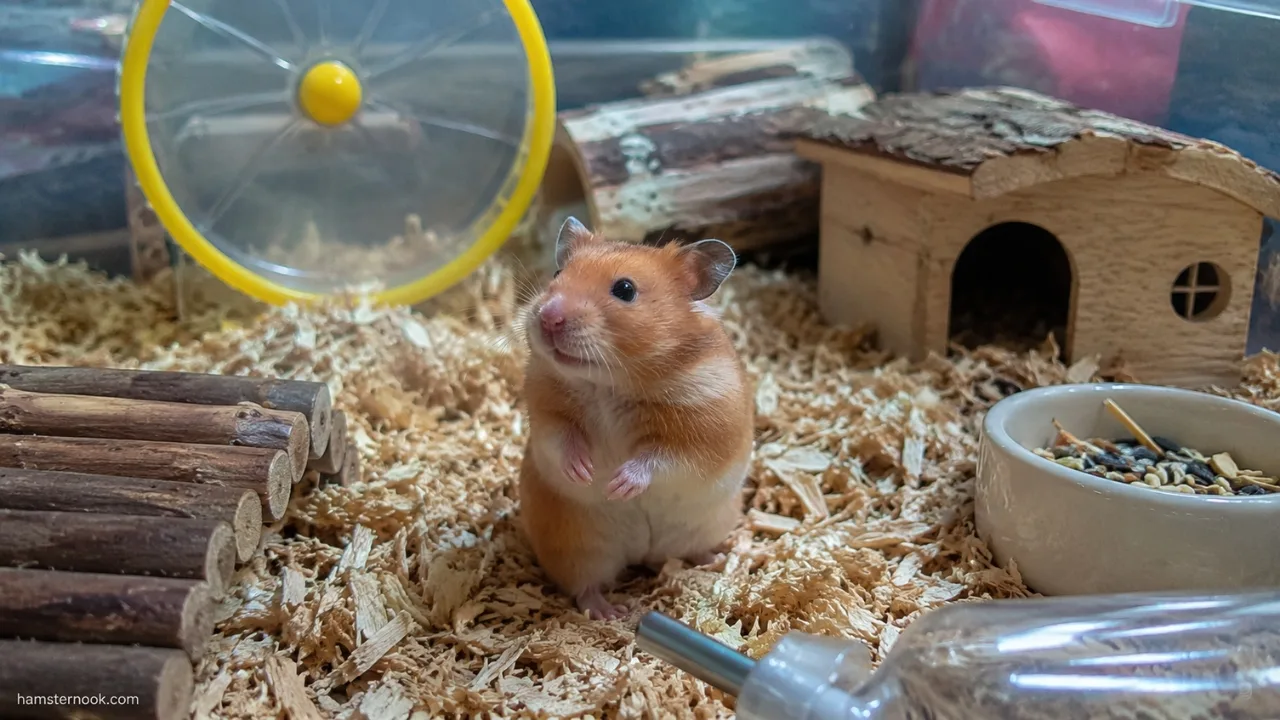
1. Your hamster may be grooming itself
Hamsters spend time cleaning their fur and maintaining their bodies.
During grooming, they may change positions, twist, stretch, and briefly roll. You might notice your hamster reaching different parts of its body with its paws or mouth.
If your hamster gets back onto all four feet easily and continues its usual activities, the position alone is less concerning.
2. Your hamster may be stretching or changing position
After resting or waking up, a hamster may stretch its body and adjust its position before becoming active.
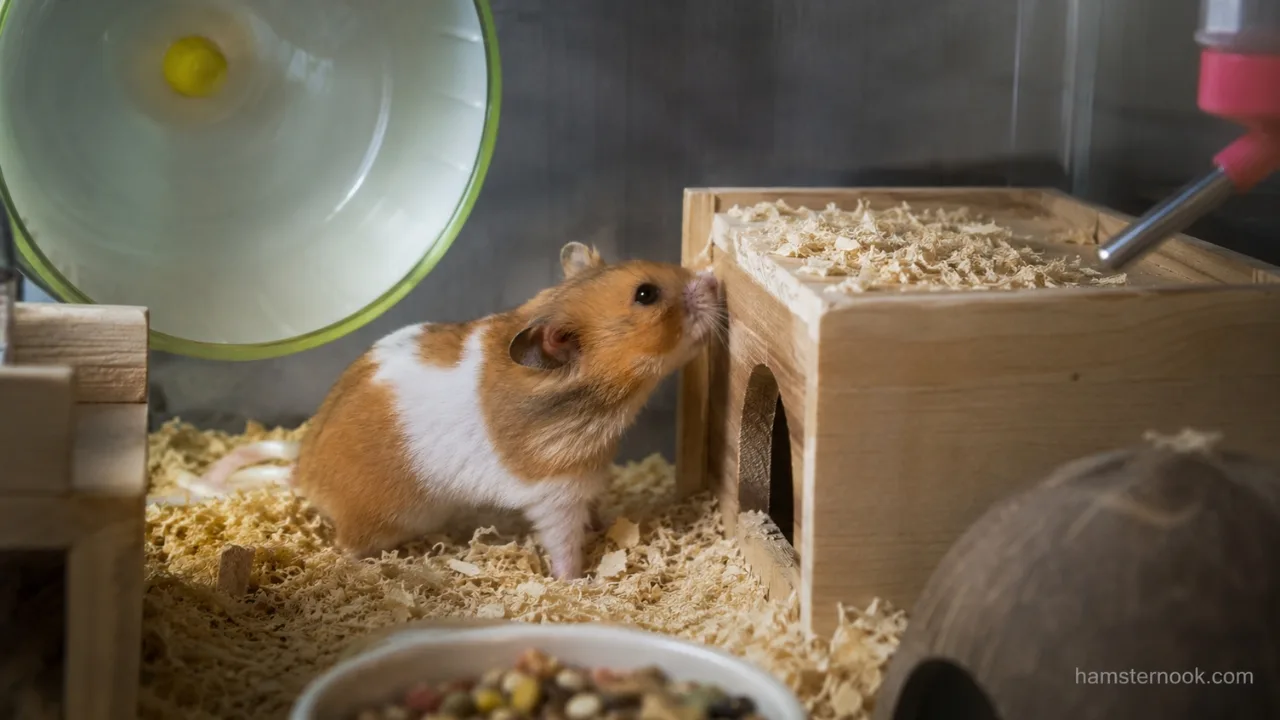
Some movements can look unusual when viewed from above, particularly if your hamster briefly rolls or twists.
Pay attention to what happens afterward. A hamster that moves normally, explores, eats, and grooms itself is showing a different overall picture from one that repeatedly falls over or struggles to stand.
3. Your hamster may be reacting defensively
Hamsters are naturally cautious animals. An unfamiliar hand, sudden movement, loud noise, or unwanted handling can make them uncomfortable.
A hamster that feels threatened may show defensive behavior, including turning onto its back and exposing its teeth.
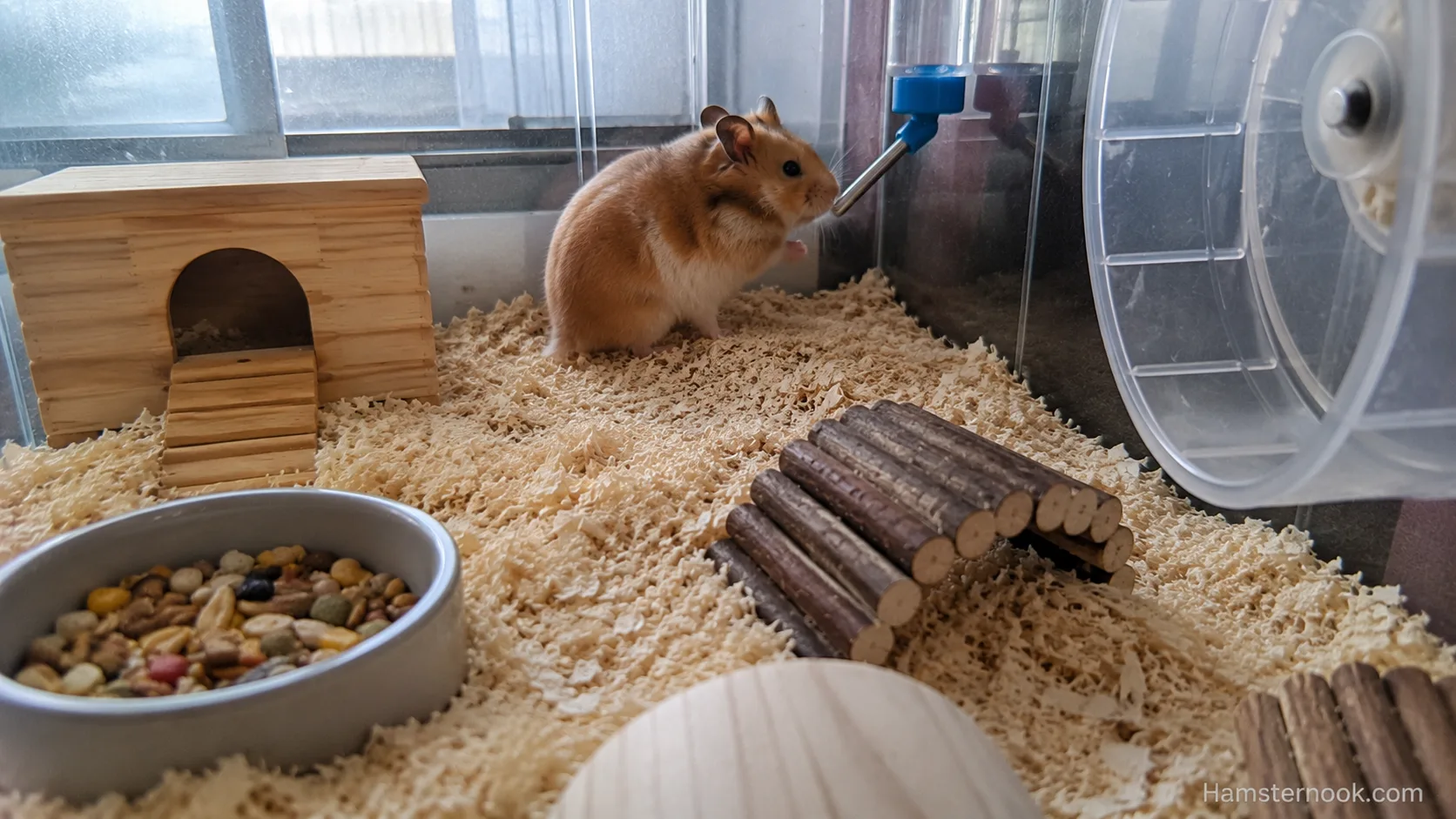
To understand other signs of fear, discomfort, and defensive reactions, see Hamster Body Language: Signs of Happiness, Stress, Fear & Illness.
Watch for additional signs such as:
- Hissing or squeaking.
- Sudden attempts to escape.
- Biting or trying to bite.
- Freezing when approached.
- Flattening its body or appearing tense.
Do not force interaction if your hamster appears frightened.
Give it space and allow it to retreat to a hiding place.
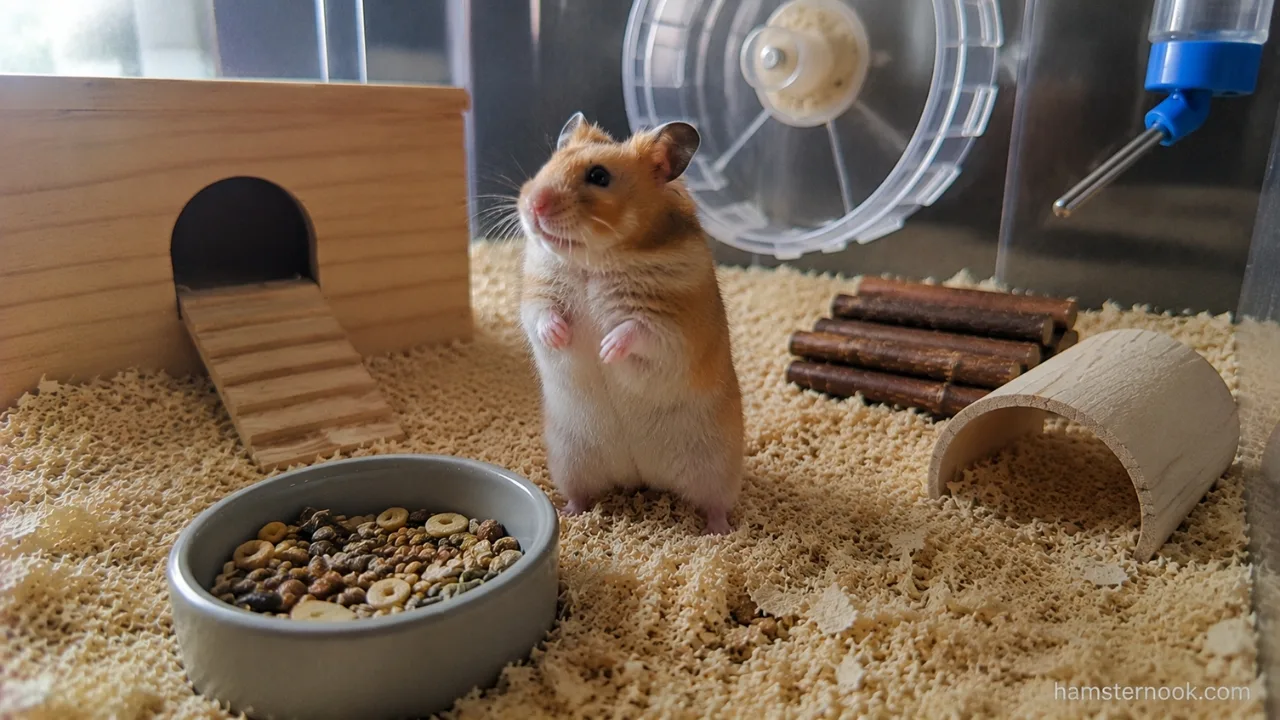
Why Is My Hamster Lying on Its Back and Not Moving?
This situation deserves more attention than a brief roll during normal activity.
A hamster that remains on its back and does not get up may be experiencing weakness, injury, or another health problem.
For a more detailed explanation of possible causes of sudden weakness and the warning signs to watch for, see Why Is My Hamster Suddenly Weak? 9 Causes, Warning Signs & What to Do.
It is not possible to identify the cause from body position alone.
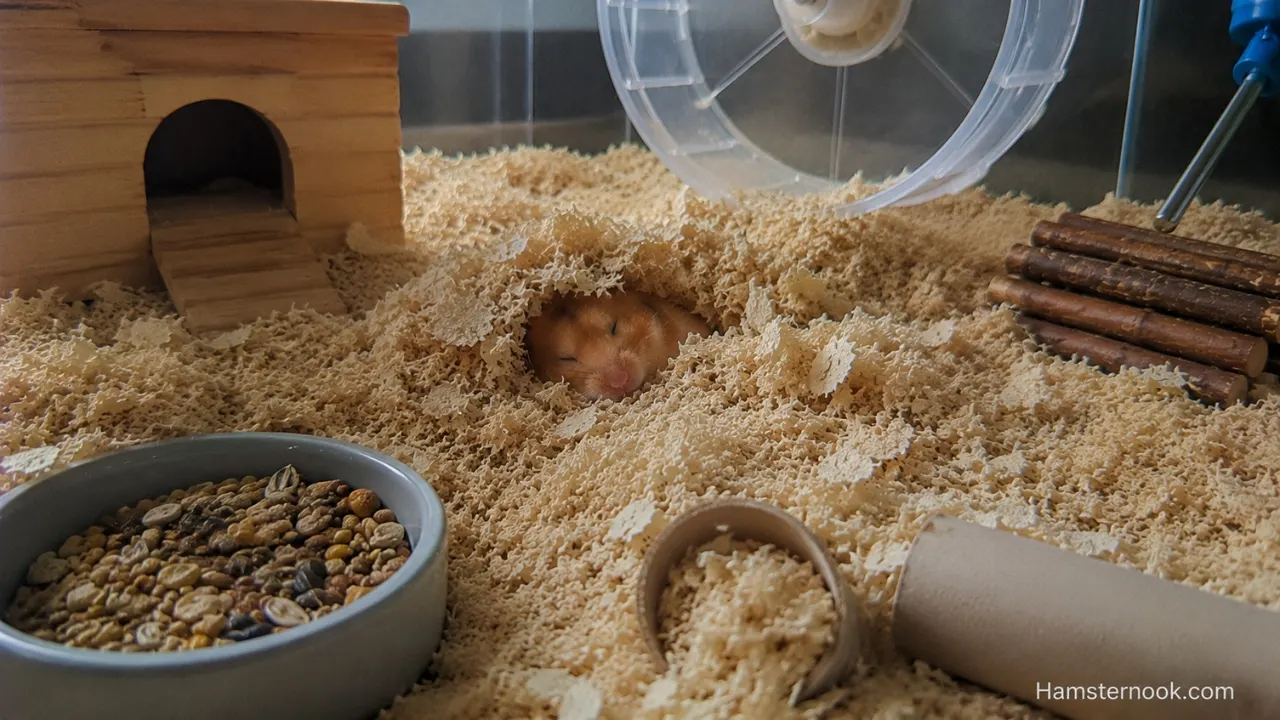
Possible explanations include:
1. Injury or pain
A fall, accident, or other physical injury may affect your hamster’s ability to move normally.
Look for difficulty standing, unusual limb positioning, swelling, or an obvious wound. Do not manipulate the legs or attempt to test whether anything is broken.
2. Severe weakness
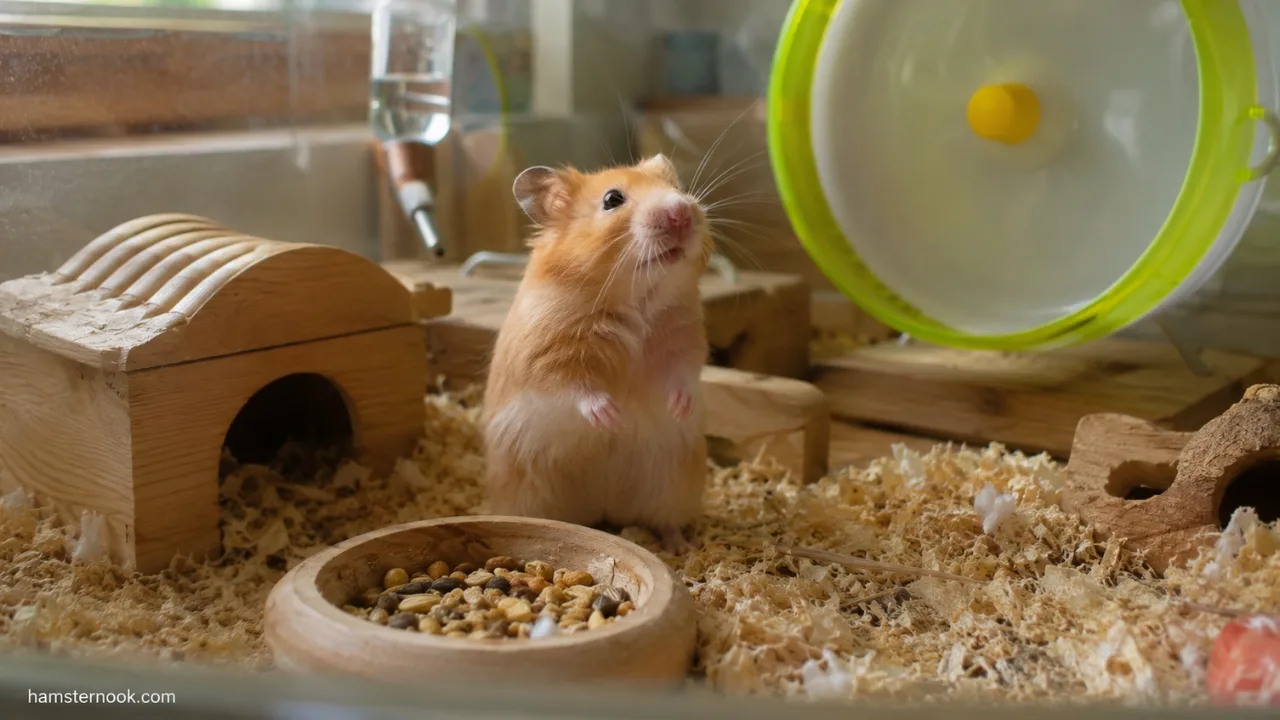
A hamster that is unusually weak may struggle to maintain a normal posture.
Weakness can accompany several health conditions. It should not be dismissed as ordinary tiredness, especially when accompanied by reduced responsiveness or appetite.
3. Neurological or balance problems
Problems affecting coordination can cause abnormal movement, falling, or difficulty maintaining balance.
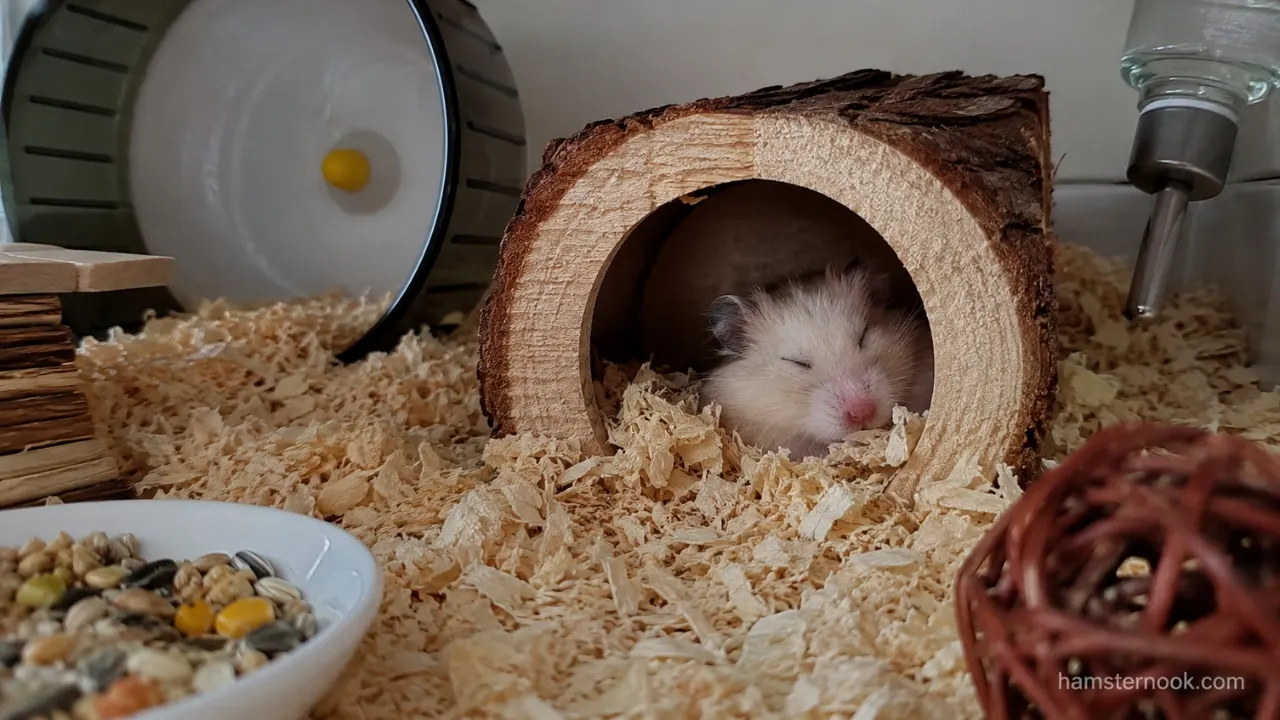
A veterinarian needs to examine your hamster to determine what is happening.
4. Serious illness
Illness can cause changes in activity, posture, and responsiveness.
The MSD Veterinary Manual identifies inactivity, loss of appetite, weight loss, abnormal walking, and breathing difficulties among signs that may indicate a sick hamster.
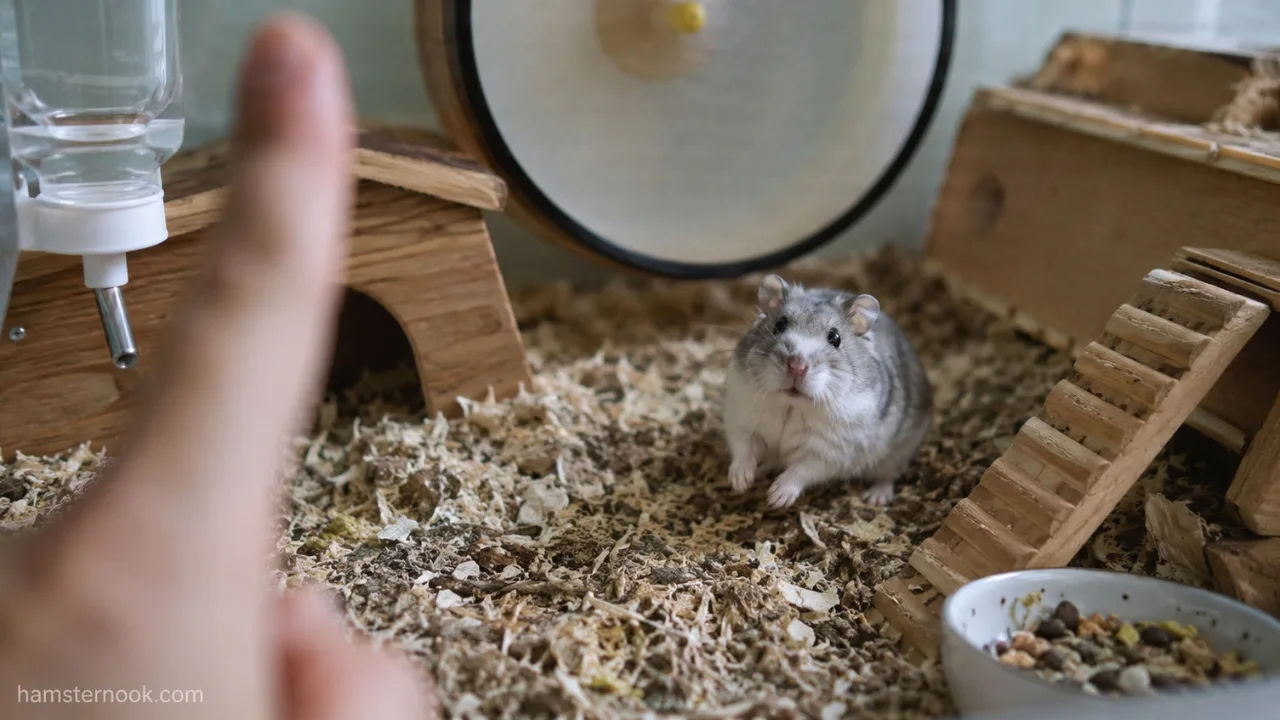
A hamster that suddenly cannot stand or repeatedly falls over needs prompt veterinary attention.
How to Tell Normal Rolling From a Potential Health Problem
The surrounding behavior is more useful than the position alone.
| What you observe | What it may indicate | What to do |
|---|---|---|
| Briefly rolls over and gets up | Ordinary movement or grooming | Observe for other changes |
| Rolls while cleaning its fur | Possible grooming behavior | Watch whether movement remains normal |
| Turns over during unwanted handling | Possible fear or defensive response | Stop handling and give space |
| Repeatedly falls onto its back | Possible balance or movement problem | Contact a veterinarian promptly |
| Lies on its back and struggles to stand | Possible weakness, injury, or illness | Seek urgent veterinary assessment |
| Remains unresponsive | Serious health concern | Seek emergency veterinary care |
| Has difficulty breathing while lying down | Possible respiratory distress or another serious problem | Seek emergency veterinary care |
This comparison is a guide, not a diagnostic tool. A veterinarian must assess concerning behavior in context.
Why Is My Hamster Lying on Its Back With Its Legs in the Air?
Seeing all four legs raised can look particularly unusual.
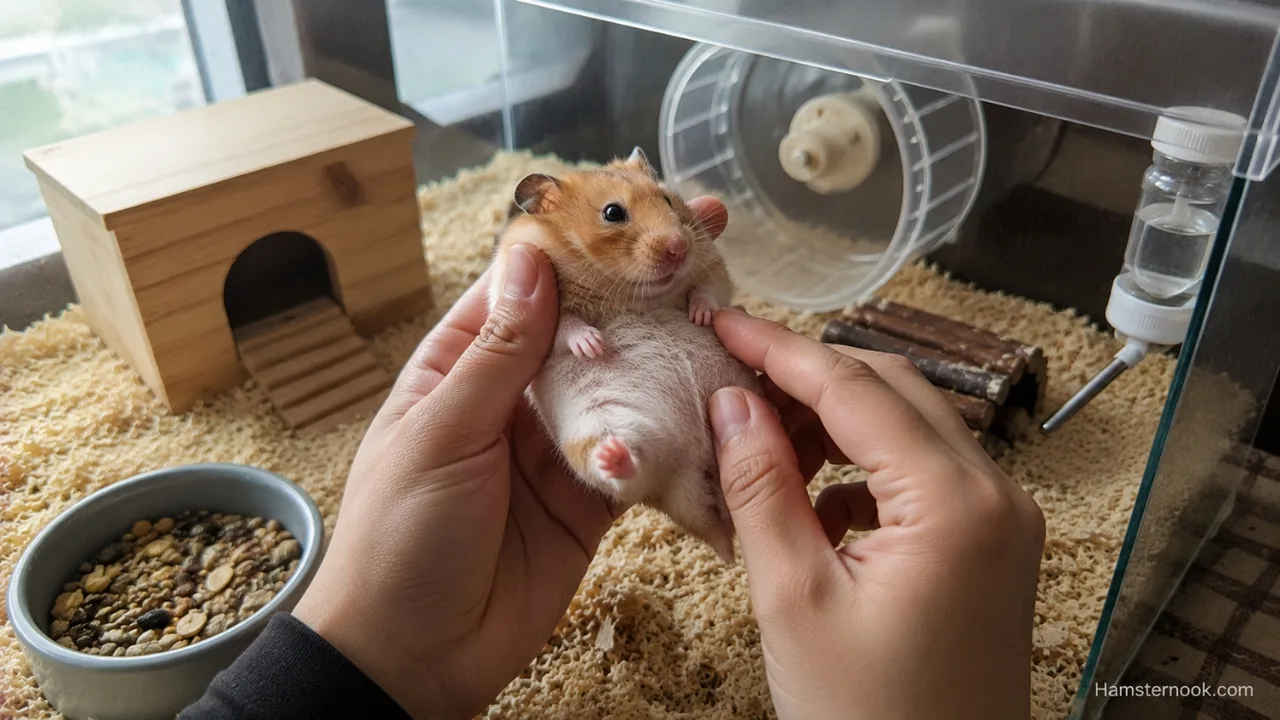
There are several possible explanations, depending on whether the hamster is moving normally.
During grooming or rolling
Your hamster may briefly raise its legs while twisting or cleaning itself.
If it quickly returns to a normal position and continues its usual activities, monitor the behavior rather than assuming something is wrong.
During a defensive reaction
A frightened hamster may turn onto its back when it feels threatened.
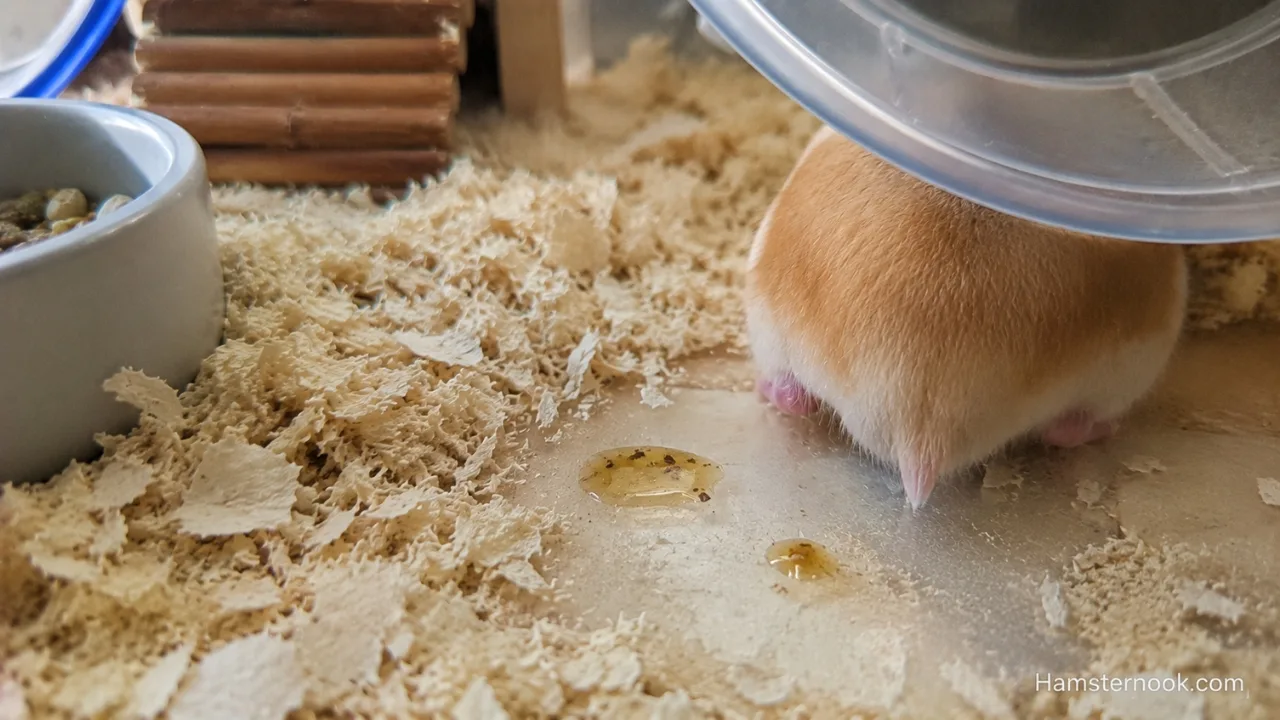
If this happens when you approach, try to identify what is making the interaction uncomfortable.
Avoid repeatedly approaching or touching the hamster to reproduce the behavior.
When it cannot turn over
This is more concerning.
If your hamster remains belly-up, moves its legs without successfully getting up, or appears unable to coordinate its movements, contact a veterinarian immediately.
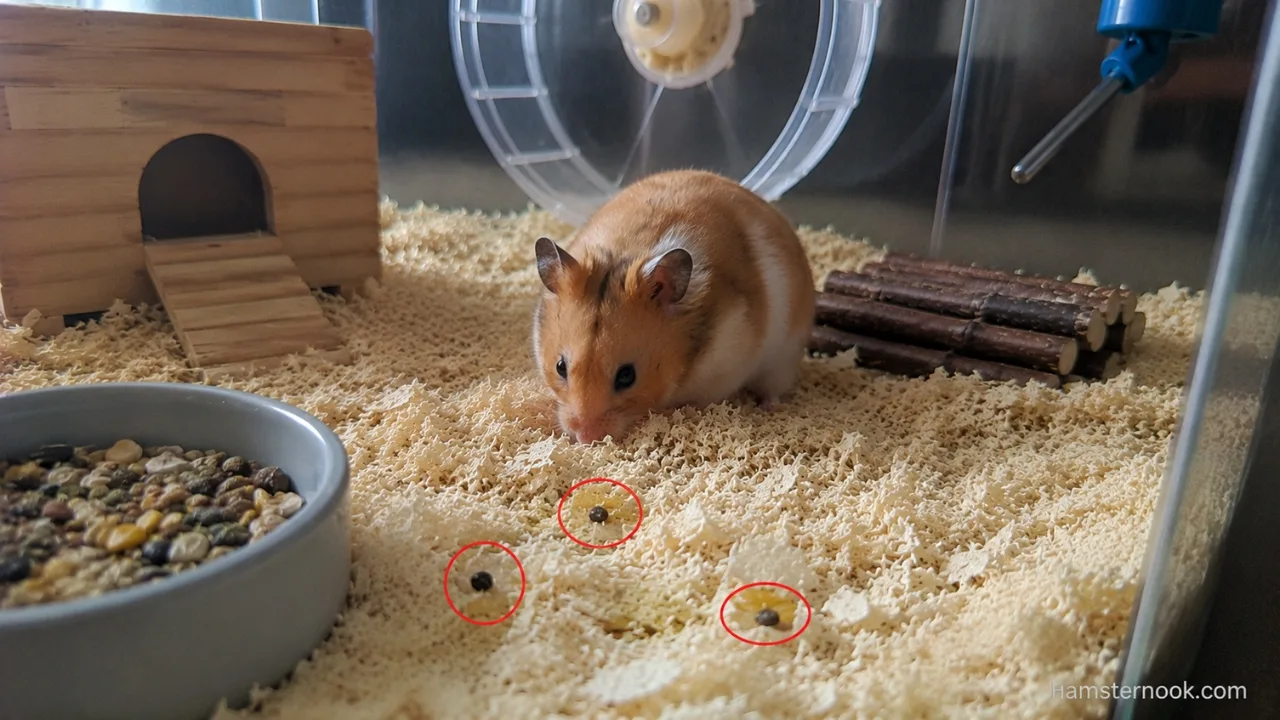
Do not repeatedly turn the hamster over or force it to stand.
Why Does My Hamster Lie on Its Back When I Touch It?
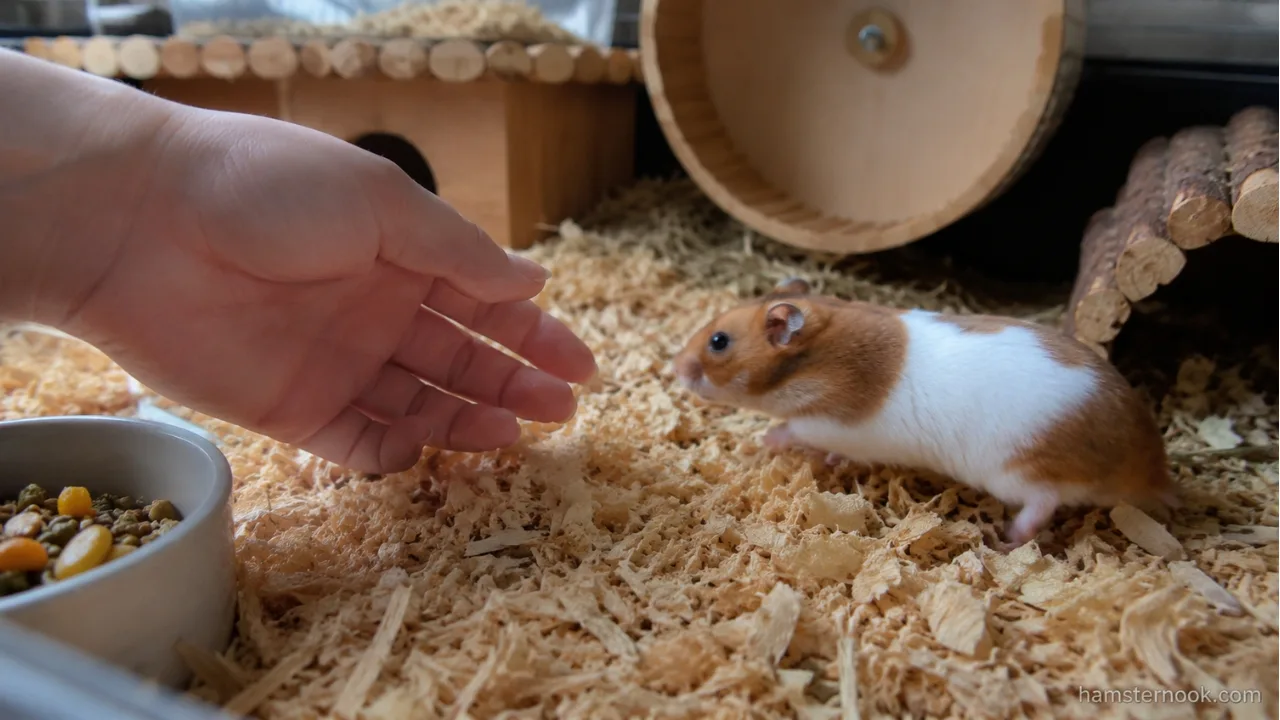
If your hamster turns onto its back whenever you try to pick it up, it may be uncomfortable with the interaction.
Hamsters have individual temperaments. Some become comfortable with gentle handling, while others prefer limited physical contact.
Possible reasons include:
- Your hamster is frightened by sudden movements.
- It has not become accustomed to your hands.
- You are disturbing it while sleeping.
- It does not want to be picked up.
- Handling is causing discomfort or pain.
How to make handling less stressful
Try a calmer approach:

- Interact with your hamster during its normal active period.
- Speak softly before approaching the enclosure.
- Place your hand inside and allow your hamster to investigate.
- Avoid grabbing it from above.
- Let it climb onto your cupped hands voluntarily.
- Keep your hands close to a stable surface when lifting.
The RSPCA recommends handling hamsters gently, allowing them to investigate your hands, and avoiding disturbance while they are resting or sleeping.
If your hamster suddenly becomes defensive despite previously accepting handling, consider whether pain or illness could be involved.
Can a Hamster Be Sleeping on Its Back?
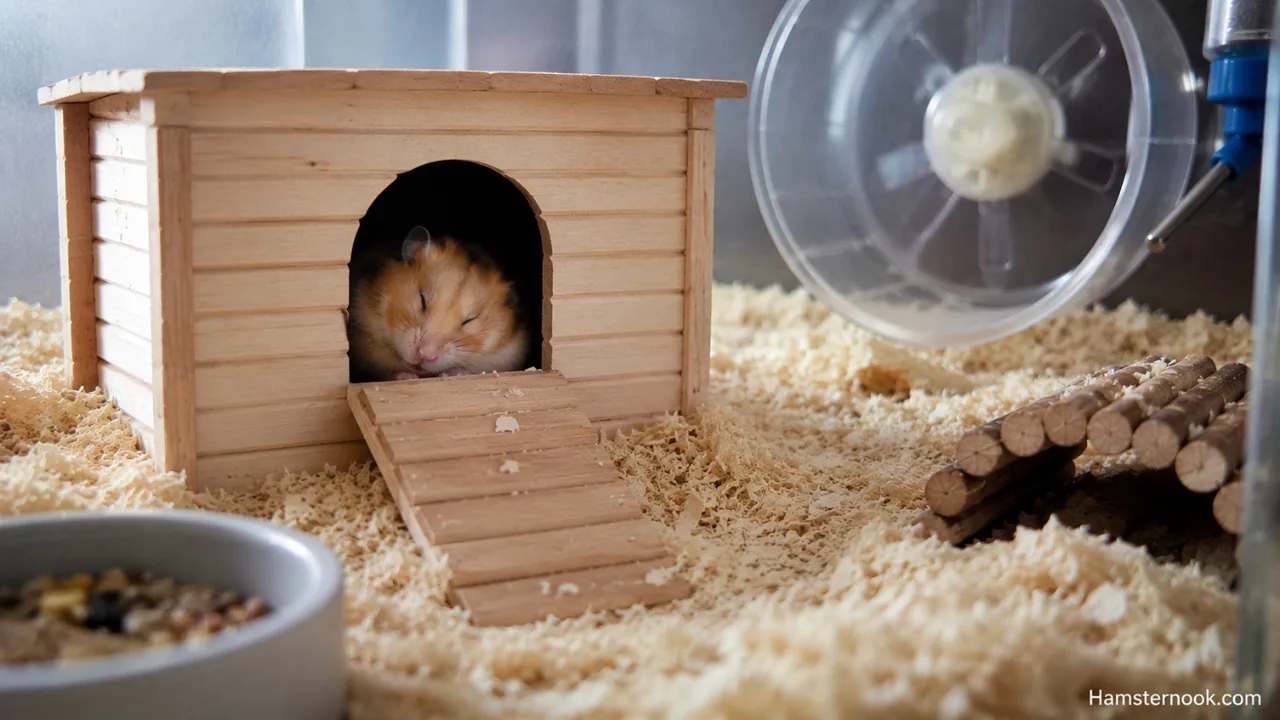
Hamsters spend much of the day resting and sleeping, often inside their nests or other sheltered areas.
You might occasionally notice an unusual sleeping position, but lying on the back should not be treated as proof that a hamster is sleeping comfortably.
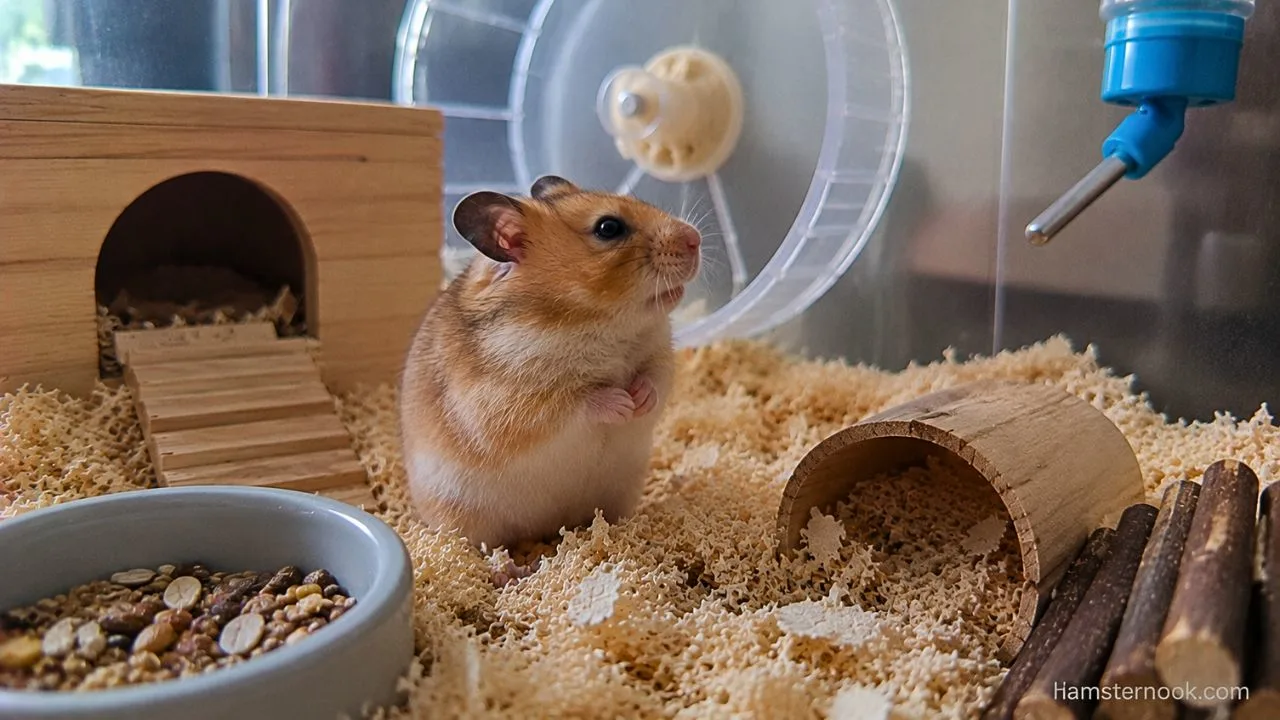
Look at the overall situation:
- Does your hamster wake and respond normally?
- Can it change positions without difficulty?
- Does it move normally when active?
- Is it eating and drinking as usual?
- Does it maintain its normal activity pattern?
If the position is new and accompanied by weakness, abnormal breathing, or reduced responsiveness, do not assume your hamster is simply sleeping.
Avoid waking a sleeping hamster unnecessarily. If you are genuinely concerned about its condition, contact a veterinarian for guidance.
Warning Signs That Your Hamster May Need Veterinary Attention
A hamster lying on its back becomes more concerning when other changes appear.
Pay particular attention to the following signs.
1. Difficulty standing or walking
Repeated falling, dragging a limb, or being unable to return to a normal position should not be ignored.
These changes may indicate an injury or health problem requiring veterinary examination.
2. Unusual breathing
Watch for:

- Rapid or labored breathing.
- Open-mouth breathing.
- Noisy breathing.
- Obvious effort when breathing.
Severe breathing difficulty requires emergency veterinary care.
3. Reduced appetite
If your hamster suddenly stops eating or shows much less interest in food, arrange veterinary assessment.
Hamsters are small animals, and changes in appetite can accompany significant health problems.
4. Unusual inactivity
A hamster that normally becomes active at night but suddenly remains inactive may be unwell.

Compare its behavior with its usual routine rather than judging it only by how much it moves during daylight hours.
5. Changes in appearance
Look for:
- A rough or unkempt coat.
- Discharge around the eyes or nose.
- Unusual swelling.
- Visible wounds.
- Noticeable weight loss.
These signs are not specific to one condition, but they deserve attention when they appear alongside unusual body positioning.
Seek emergency veterinary care immediately if your hamster is unresponsive, struggling to breathe, having seizures, or unable to move normally after a serious injury.
What Should You Do If Your Hamster Is Lying on Its Back?
Your response should depend on whether your hamster can move normally and whether other warning signs are present.
If your hamster rolls over briefly
If it gets back onto its feet easily and behaves normally:
- Give it space.
- Observe its movement.
- Check that it can walk and explore normally.
- Monitor its appetite and usual activity.
- Avoid unnecessary handling.
There is no need to panic over every brief change in position.
If your hamster repeatedly falls over
Arrange a prompt veterinary examination.

Keep the environment calm and avoid placing your hamster on elevated surfaces.
If possible, record a short video of the movement from a safe distance. This may help the veterinarian understand what you observed.
If your hamster cannot get up
Treat this as an urgent concern.
- Contact an emergency veterinarian.
- Avoid forcing your hamster into a standing position.
- Minimize handling.
- Keep it in a secure, appropriately ventilated carrier if transport is required.
- Follow the veterinarian’s instructions.
For a practical guide to preparing for urgent veterinary visits, organizing emergency supplies, and transporting your hamster safely, see Hamster Emergency Preparedness: First-Aid Supplies, Vet Contacts & Safe Transport.

Do not give human medication or attempt physical manipulation.
Common Mistakes Hamster Owners Should Avoid
Assuming that every belly-up position means happiness
A hamster lying on its back is not automatically showing that it trusts you or wants a belly rub.
Look at its overall body language and whether it can move normally.
Picking up the hamster repeatedly to test its movement
Repeated handling can cause stress and may worsen an existing injury.
For guidance on minor hamster injuries, recovery considerations, and when home care may not be appropriate, see Can Hamsters Recover From Minor Injuries? When Home Care Is Safe.
Observe from a safe distance whenever possible.
Waking the hamster to check its sleeping position
Hamsters need undisturbed daytime rest. Avoid regularly disturbing their sleep to see whether they lie on their backs.
Ignoring repeated falls
A hamster that repeatedly rolls over or cannot maintain balance should not be assumed to be playing.

Seek veterinary advice.
Trying home treatments
Do not massage your hamster, straighten its limbs, or administer medication without veterinary instructions.
These actions may cause additional harm.
How to Make Your Hamster’s Environment Safer
Although an unusual sleeping or rolling position cannot always be prevented, a suitable enclosure reduces avoidable risks.
Provide a safe enclosure
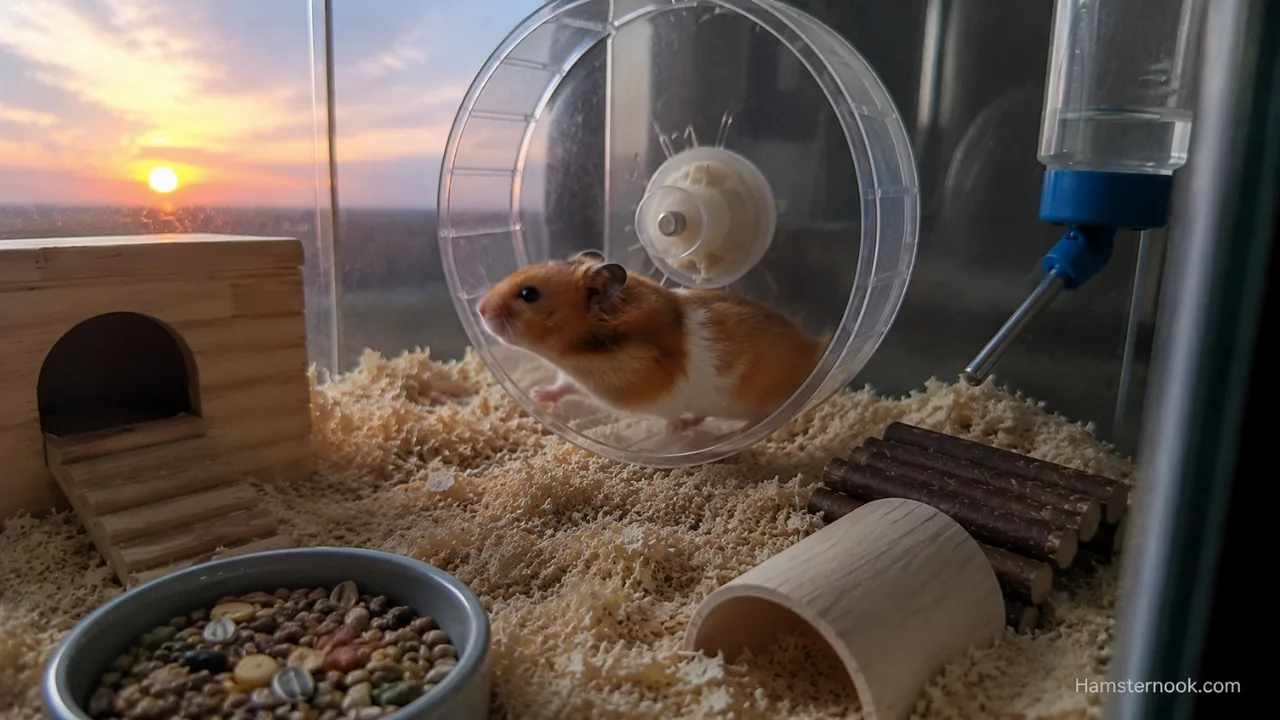
Check that your hamster has:
- A secure enclosure with enough usable floor space.
- Deep, suitable bedding for burrowing.
- Stable hiding places.
- A properly sized, solid-surface exercise wheel.
- Safe access to food and water.
- No sharp edges or dangerous gaps.
Check elevated areas
Avoid high platforms or structures from which your hamster could fall and become injured.
Make sure climbing accessories are stable and appropriate for your hamster.
Maintain a comfortable environment
Place the enclosure away from direct sunlight, drafts, and excessive noise.
Avoid sudden environmental changes that may cause unnecessary stress.
Allow undisturbed sleep
Hamsters generally sleep during the day and become active during the evening and night.
Maintain a predictable lighting routine and avoid waking your hamster simply because you want to interact with it.
What You Should Do: A Simple Checklist
If you notice your hamster lying on its back, use this checklist:
- Observe its movement: Can it turn over and stand normally?
- Check responsiveness: Does it react normally to its surroundings?
- Watch its breathing: Is breathing quiet and comfortable?
- Review its behavior: Is it eating, drinking, and moving as usual?
- Look for additional signs: Check for wounds, swelling, unusual posture, or reduced activity.
- Avoid unnecessary handling: Do not repeatedly turn it over or force it to move.
- Contact a veterinarian: Seek prompt advice if the behavior is new, repeated, or accompanied by other concerning signs.
When in doubt, a short video and a clear description of when the behavior started can be useful during a veterinary consultation.
Final Thoughts
A hamster lying on its back can look unusual, but the position alone does not tell you whether something is wrong. Brief rolling during movement or grooming may be less concerning when your hamster quickly gets up and continues behaving normally.
The situation changes if your pet repeatedly falls over, struggles to stand, appears weak, or becomes unresponsive. These are not behaviors to dismiss as ordinary sleeping or playing.
Pay attention to your hamster’s normal routine, avoid unnecessary handling, and seek veterinary advice when something changes. Understanding the difference between an unusual movement and a possible warning sign helps you respond appropriately without causing unnecessary stress.
Frequently Asked Questions
1. Why is my hamster lying flat on its back?
A hamster may briefly roll onto its back during movement, grooming, or an interaction. However, persistent belly-up positioning, especially when accompanied by difficulty standing or weakness, requires veterinary attention.
2. Is my hamster dead if it is lying on its back?
Not necessarily. A hamster lying on its back may still be alive and moving. However, if it is unresponsive or breathing abnormally, seek emergency veterinary care immediately. Do not assume it is dead based on its position.
3. Why is my hamster lying on its back and moving its legs?
It may be rolling or grooming, but repeated leg movements without successfully getting upright can indicate a movement or coordination problem. If your hamster cannot turn over normally, contact a veterinarian urgently.
4. Why does my hamster show its belly when I approach?
It may be reacting defensively or feeling uncomfortable with your approach. Look for other signs of fear, such as hissing, squeaking, or attempts to escape. Give it space instead of forcing interaction.
5. Do hamsters sleep on their backs?
Hamsters can rest in different positions, but lying on the back is not a reliable indicator of normal sleep or comfort. Check whether your hamster wakes, moves, and behaves normally.
6. Why is my hamster suddenly lying on its back?
A sudden change in posture deserves attention, especially if it happens repeatedly. Possible explanations include an unusual movement, discomfort, injury, or illness. If your hamster struggles to stand or shows other changes, seek veterinary assessment.
7. Why does my hamster fall onto its back when walking?
Repeated falling may indicate a problem with balance, coordination, strength, or movement. It is not something to automatically dismiss as play. Arrange a prompt veterinary examination.
8. Should I turn my hamster over if it is lying on its back?
If your hamster is moving normally, allow it to change position by itself. If it cannot get up, avoid repeatedly manipulating its body and contact a veterinarian for instructions.

9. Can stress make a hamster lie on its back?
A frightened hamster may display defensive behavior, including turning onto its back. However, this position alone cannot establish that stress is the cause. Look at the surrounding interaction and other behavioral signs.
10. When should I take my hamster to the vet for lying on its back?
Contact a veterinarian if the behavior is new, repeated, or accompanied by reduced appetite, unusual inactivity, or difficulty walking. Seek emergency care if your hamster cannot get up, is unresponsive, has seizures, or struggles to breathe.
References
This guide is based on veterinary health, hamster behavior, welfare, and routine care guidance from trusted veterinary and animal welfare organizations, including:
- MSD Veterinary Manual – Routine Health Care of Hamsters – Veterinary guidance on recognizing abnormal behavior, weakness, appetite changes, abnormal walking, and other signs of illness in hamsters.
- MSD Veterinary Manual – Disorders and Diseases of Hamsters – Veterinary information about hamster health conditions, including injuries, respiratory problems, and signs that require veterinary attention.
- RSPCA – Understanding Hamster Behaviour – Guidance on normal hamster behavior, sleeping patterns, handling, stress, and appropriate interactions.
- RSPCA – Hamster Health and Welfare – Information on recognizing health concerns, monitoring behavior, and seeking veterinary help.
- PDSA – Hamsters as Pets – Practical guidance on hamster housing, sleeping habits, handling, and environmental welfare.
Medical Disclaimer: This article provides general hamster-care information and cannot diagnose the reason your hamster is lying on its back. Unusual posture, weakness, repeated falls, and changes in breathing or responsiveness may indicate a health problem. Contact a veterinarian experienced with small mammals for assessment, and seek emergency care for severe symptoms.

Narayan Kumar is the founder and author of HamsterNook. He creates practical, research-based hamster care guides covering hamster behavior, nutrition, cage setup, enrichment, health, and everyday care. His goal is to help hamster owners make informed decisions and provide safer, healthier lives for their pets through clear, beginner-friendly information based on trusted animal care resources.