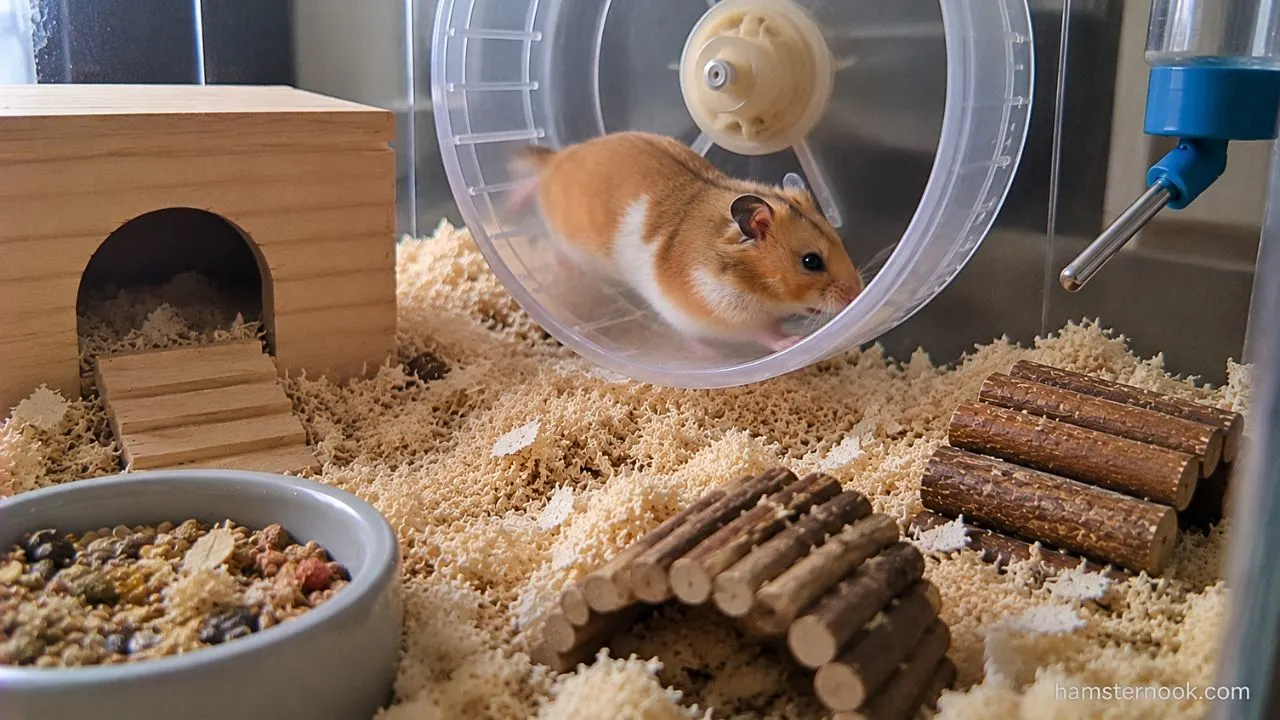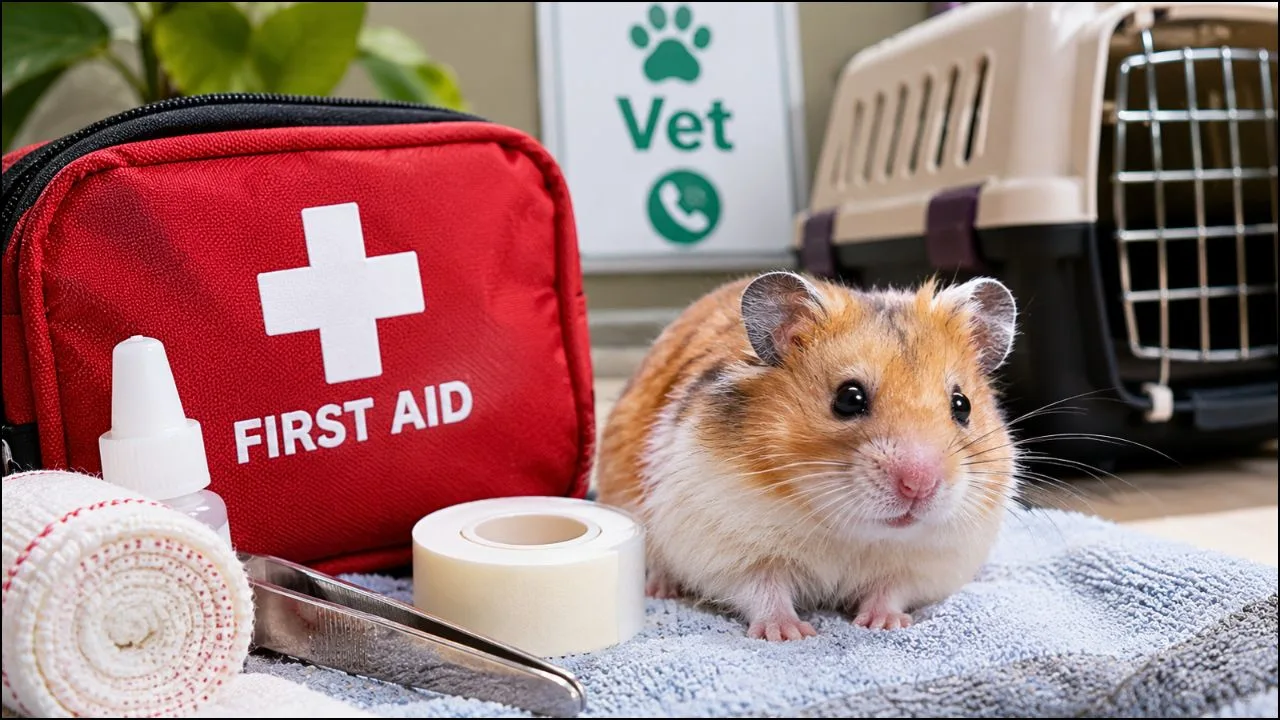
A hamster emergency can happen unexpectedly, and when your pet is injured, struggling to breathe, or suddenly becomes unwell, knowing what to do can save valuable time. Preparing before something goes wrong makes it easier to respond calmly. From keeping the right first-aid supplies at home to finding an emergency veterinarian and preparing a secure travel carrier, every hamster owner should have a simple emergency plan ready.
Quick Answer: How Do You Prepare for a Hamster Emergency?
To prepare for a hamster emergency, keep a small pet first-aid kit, save the contact details of a veterinarian experienced with hamsters, identify an after-hours emergency clinic, and have a secure transport carrier ready.
Your emergency supplies should include:
- Sterile gauze pads and wound dressings.
- Non-adhesive wound dressings.
- Blunt-ended scissors.
- Disposable gloves.
- Clean paper towels.
- A secure, well-ventilated pet carrier.
- Familiar, clean nesting material.
- Your hamster’s usual food.
- Recent health records and photographs.
- A written list of emergency veterinary contacts.
Remember: A first-aid kit is for basic preparation and temporary support, not for treating serious injuries or illnesses at home. If your hamster shows signs of an emergency, contact a veterinarian promptly rather than trying to manage the condition yourself.

Why Every Hamster Owner Needs an Emergency Plan
Hamsters are small animals, and changes in their health can sometimes be difficult to recognize. A hamster that normally explores its enclosure may suddenly become inactive, stop eating, or develop an unusual posture.
Waiting until an emergency happens to search for a veterinarian can waste valuable time. You may also discover that your usual clinic is closed or does not treat small mammals.
An emergency plan helps you answer four important questions:
- What signs mean my hamster needs veterinary attention?
- Which veterinarian can treat my hamster?
- Where are my first-aid supplies?
- How will I transport my hamster safely?
You don’t need expensive equipment or a complicated medical setup. A few carefully selected supplies, accurate records, and reliable contact information provide a practical starting point.

Hamster First-Aid Kit: Essential Supplies to Keep at Home
A hamster first-aid kit should contain basic protective and dressing supplies. Keep everything together in a clean, dry, clearly labeled container that is easy to access.
1. Sterile gauze pads
Sterile gauze pads can be useful when a veterinarian instructs you to protect a wound or apply gentle pressure to bleeding.
Choose individually wrapped pads so they remain clean until needed.
Do not attempt to tightly bandage a hamster yourself. Their small bodies make inappropriate pressure particularly dangerous.

2. Non-adhesive wound dressings
Non-adhesive dressings are designed to reduce the chance of sticking directly to a wound.
Keep a few in your kit, but use them only when appropriate and preferably under veterinary guidance.
3. Blunt-ended scissors
Small blunt-ended scissors can help cut gauze or dressing material.
Keep scissors away from your hamster when not in use. Never use them to cut tangled fur close to the skin or remove objects embedded in an injury.
4. Disposable gloves
Disposable gloves help maintain cleanliness when handling soiled materials or preparing basic supplies.
Choose a size that fits securely and avoid touching clean dressing surfaces after handling contaminated materials.
5. Clean paper towels
Plain, unscented paper towels are useful for cleaning up spills, temporarily protecting a surface, and keeping a small work area clean.
Avoid scented tissues, heavily printed paper, and materials that shed fibers into an injury.
6. Sterile saline solution
Sterile saline may be useful for certain cleaning purposes when recommended by a veterinarian.
Keep the original packaging and check its expiration date. Do not assume that saline is appropriate for every injury, particularly eye injuries or deep wounds.
7. A small digital weighing scale
A digital gram scale is a useful addition to your hamster-care supplies.
Recording your hamster’s weight regularly can help you recognize changes that might otherwise be difficult to notice.

You can also use How Often Should You Check Your Hamster Health? A Weekly Wellness Checklist to build regular health monitoring into your care routine.
Use the same scale and a suitable container when weighing your hamster. Record the date and weight rather than relying on memory.
8. Emergency contact and health information
Keep a printed information sheet inside the kit containing:
- Your hamster’s name.
- Species or breed, if known.
- Approximate age.
- Current weight and previous weight records.
- Known medical conditions.
- Current medications prescribed by a veterinarian.
- Regular food and feeding routine.
- Your usual veterinary clinic’s details.
- The nearest emergency veterinary clinic’s details.
This information can help the veterinarian understand your hamster’s background more quickly.

What Should You NOT Keep in a Hamster First-Aid Kit?
Having more supplies does not necessarily make an emergency kit safer. Some products commonly found in human medicine cabinets can be dangerous when used on small animals without veterinary guidance.
Avoid using or administering:
- Human painkillers such as ibuprofen or acetaminophen.
- Human antibiotic creams or ointments.
- Leftover antibiotics prescribed for another animal.
- Hydrogen peroxide for wound cleaning.
- Alcohol or strong antiseptic solutions.
- Essential oils or fragranced products.
- Flea treatments intended for cats or dogs.
- Unprescribed eye drops.
- Home remedies intended to stop diarrhea or treat infections.
Hamsters can be particularly vulnerable to incorrect medication doses because of their small body size. Some medications that are appropriate for other animals can cause serious problems in hamsters.
Never give medication based on advice intended for humans, dogs, cats, or another hamster. Always ask a veterinarian who is familiar with hamster care.

How to Find an Emergency Veterinarian for Your Hamster
Finding the right veterinarian before an emergency is one of the most useful things you can do.
Not every veterinary clinic has experience treating hamsters. Some clinics primarily treat dogs and cats, while others have veterinarians trained in exotic companion mammal medicine.
Look for a veterinarian experienced with small mammals
When searching for a clinic, ask whether it regularly treats:
- Syrian hamsters.
- Dwarf hamsters.
- Roborovski hamsters.
- Chinese hamsters.
Ask whether the clinic can examine hamsters during emergencies or whether it refers small mammals to another hospital.
You can also search the Association of Exotic Mammal Veterinarians directory for qualified professionals in the United States.
Questions to ask your veterinary clinic
Before an emergency occurs, contact your preferred clinic and ask:
- Do you treat hamsters regularly?
- Do you offer emergency appointments?
- What should I do if my hamster becomes ill outside normal opening hours?
- Do you have access to emergency imaging and laboratory services?
- If you cannot treat my hamster, which clinic do you recommend?
- Should I call before arriving with an emergency?
Write down the answers and keep them somewhere accessible.
Keep two veterinary contacts
Ideally, have:

| Contact | Purpose |
|---|---|
| Regular hamster veterinarian | Routine examinations, health concerns, and follow-up appointments |
| Emergency veterinary hospital | Urgent problems outside regular clinic hours |
Save both numbers in your phone and keep a printed copy at home.
Do not assume your regular veterinarian will always be available. Check the emergency clinic’s operating hours and confirm that it accepts hamsters.
How to Recognize a Hamster Emergency
Knowing the difference between an urgent problem and a situation that can wait for a routine appointment is essential.
Hamsters sometimes hide signs of discomfort, so changes in their usual behavior deserve attention.

If you are unsure which changes may indicate a health problem, see How to Tell If Your Hamster Is Sick: Signs, Symptoms & When to See a Vet for a closer look at common warning signs.
Warning signs that need veterinary attention
Watch for:
If your hamster suddenly becomes unusually weak, My Hamster Is Suddenly Weak: What to Check & When to See a Vet explains what owners should watch for and when veterinary attention is important.
- Refusing food or water.
- Unusual inactivity or weakness.
- A hunched posture.
- Unexplained weight loss.
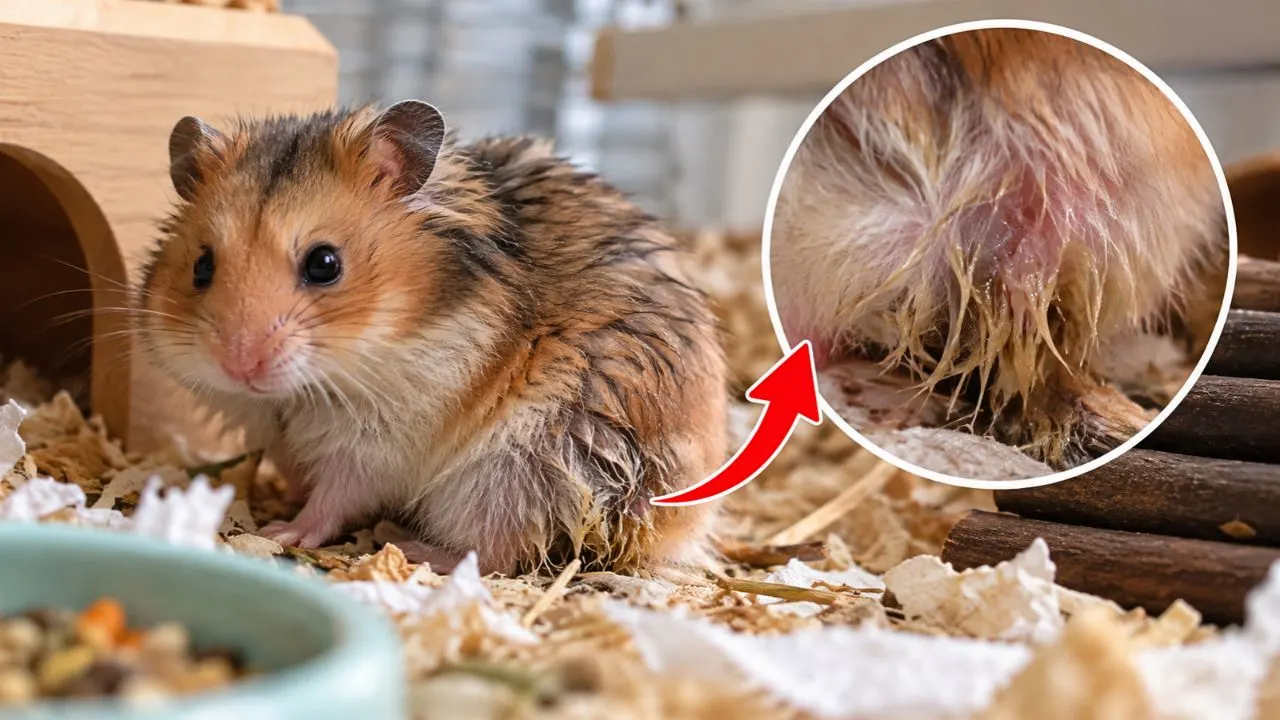
- Wet or soiled fur around the rear.
- Discharge from the eyes or nose.
- Difficulty walking.
- Unusual swelling or lumps.
- Wounds, bleeding, or suspected fractures.
- Changes in normal breathing.
To understand possible reasons for unusual movement, see Why Is My Hamster Walking Weird? Causes & When to See a Vet.

These signs do not all represent the same level of urgency. However, a hamster that suddenly stops eating, becomes unusually weak, or develops diarrhea should not simply be left for several days to see what happens.
Signs that require emergency veterinary care
Seek emergency veterinary help immediately if you notice:
- Open-mouth breathing or severe difficulty breathing.
- Collapse or unresponsiveness.
- Heavy or uncontrolled bleeding.
- Seizures.
- Severe trauma, including a suspected broken bone.
- Protruding or displaced eyeballs.
- Inability to stand accompanied by severe weakness.
- Suspected poisoning or ingestion of a potentially toxic substance.
For additional information about serious warning signs and when urgent veterinary help may be needed, read 7 Signs Your Hamster May Be Dying: When to Seek Emergency Veterinary Care.
Call the emergency clinic before leaving if possible. Explain what happened, describe your hamster’s current condition, and follow its instructions.

Do not delay transport to try home treatments.
What to Do During a Hamster Emergency
When something goes wrong, it is easy to panic. Having a simple response routine helps you focus on the most important steps.
Step 1: Stay calm and assess the situation
Observe your hamster without unnecessary handling.
Check whether it is responsive, breathing normally, moving, and showing obvious signs of injury.

Avoid repeatedly picking it up to inspect the same area. Handling can cause additional stress and may worsen an injury.
Step 2: Contact a veterinarian
Call your hamster’s regular veterinarian or an emergency clinic.
Describe:
- What happened.
- When you first noticed the problem.
- What symptoms you can see.
- Whether your hamster is eating and drinking.
- Whether there was a fall, injury, or possible exposure to something toxic.
Be honest if you do not know what happened. Do not guess about the cause.

Step 3: Follow the veterinarian’s instructions
The veterinarian may advise immediate transport, specific handling precautions, or other steps while you prepare to leave.
Do not administer medicine, force-feed your hamster, or attempt to treat a serious injury without veterinary direction.
Step 4: Prepare the transport carrier
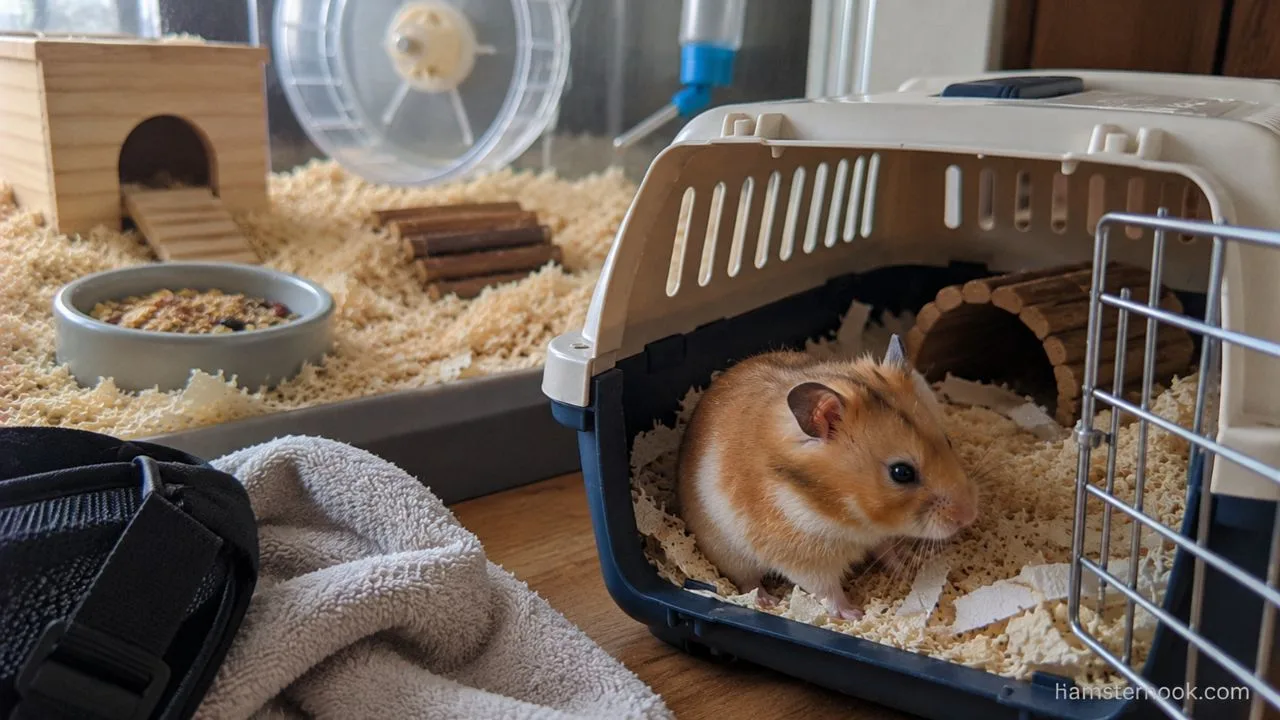
Use a secure carrier with familiar, clean bedding and sufficient ventilation.
Move your hamster gently and avoid unnecessary handling.

Step 5: Take relevant information with you
Bring the following when possible:
- Your hamster’s medical records.
- Its current medication packaging, if applicable.
- Photographs or videos showing the problem.
- Information about any suspected toxin or substance ingested.
- A recent weight record.
If you suspect poisoning, take the original product packaging or a photograph of its ingredient label.
How to Transport a Hamster Safely to the Vet
Transporting a hamster requires some preparation. Hamsters can become stressed by unfamiliar surroundings, noise, movement, and handling.
For ordinary journeys, unnecessary travel should be avoided. Veterinary emergencies, however, should not be delayed simply because transportation may cause stress.

Choose the right travel carrier
A suitable hamster carrier should be:
- Secure and escape-resistant.
- Well ventilated.
- Large enough for the hamster to move comfortably.
- Made from a material that cannot be easily chewed through.
- Easy to clean.
- Free from sharp edges or loose parts.
A secure plastic small-animal carrier is generally a practical option.
Avoid carrying your hamster in an open cardboard box, shopping bag, glass jar, or loosely covered container.
Prepare the carrier before putting your hamster inside
Place a layer of familiar, clean bedding inside.

Add some dry, unsoiled nesting material from the hamster’s enclosure. Familiar smells can help make the unfamiliar carrier less stressful.
You can also include a lightweight hide or tunnel if it cannot move around and injure your hamster during transport.
Avoid heavy ceramic objects, unstable toys, exercise wheels, and anything that could fall onto your pet.
Maintain comfortable conditions
During the journey:
- Keep the carrier level and secure.
- Avoid direct sunlight.
- Maintain a comfortable temperature.
- Keep the environment quiet.
- Avoid loud music and sudden movements.
- Keep the carrier away from dogs, cats, and other potential sources of stress.
- Never leave your hamster unattended in a parked car.
Avoid placing the carrier directly in front of an air-conditioning vent.
A partially covered carrier can help reduce visual stimulation, but never block ventilation.
What about food and water during transport?
For a short veterinary journey, provide access to your hamster’s familiar dry food as appropriate.
Water bottles can leak during travel, so avoid placing an unsecured water container inside the carrier.
For longer journeys, ask your veterinarian how to maintain access to water safely. Do not assume that cucumber or another vegetable is a substitute for drinking water in every situation.
Should you transport your hamster in its regular cage?
If the home enclosure is small enough to move securely and safely, it may be an option. However, large cages can be difficult to transport, and loose accessories may injure your hamster.
A dedicated travel carrier is often more practical for veterinary visits.
For more detailed guidance on carrier preparation and safe journeys, read How to Travel With a Hamster Safely: Carrier Setup, Car Rides & Stress Prevention.

If you use the regular enclosure, secure or remove objects that could fall during the journey and make sure the enclosure is properly ventilated.
Emergency Preparedness Checklist for Hamster Owners
Use this checklist to check whether your emergency arrangements are ready.
| Preparation task | Ready? |
|---|---|
| Regular hamster veterinarian identified | Yes / No |
| Emergency clinic identified | Yes / No |
| Veterinary phone numbers saved | Yes / No |
| Secure travel carrier available | Yes / No |
| Clean familiar bedding available | Yes / No |
| Basic first-aid supplies organized | Yes / No |
| Recent weight records available | Yes / No |
| Medical history recorded | Yes / No |
| Usual hamster food available | Yes / No |
| Emergency transport plan arranged | Yes / No |
Keep the checklist somewhere visible, such as inside a cupboard near your hamster’s supplies.
How to Prepare Your Hamster for Unexpected Vet Visits
Emergency preparedness isn’t just about buying equipment. It also involves making ordinary handling and transport less unfamiliar.

Get your hamster comfortable with gentle handling
Allow your hamster to approach your hands voluntarily whenever possible.
Use gentle, calm movements and avoid grabbing it suddenly, particularly when it is sleeping.
Learning to handle your hamster safely can make necessary transfers less difficult.
Introduce the carrier before an emergency
Keep the empty carrier accessible occasionally during normal cleaning or handling routines.

Allow your hamster to investigate it without forcing it inside.
You can place some familiar bedding inside so the carrier becomes less unfamiliar.
This does not guarantee that your hamster will enjoy traveling, but it can make the carrier less unusual.
Keep familiar supplies available
Try to maintain a small reserve of:

- Your hamster’s regular food.
- Clean paper-based bedding.
- Nesting material.
- Essential cleaning supplies.
Having familiar materials available makes it easier to prepare a carrier or temporary enclosure without making unnecessary changes during an already stressful situation.
What to Do If Your Hamster Needs Temporary Care Away From Home
Sometimes an emergency requires your hamster to stay away from its usual enclosure for examination, treatment, or observation.
Follow the veterinarian’s instructions about temporary housing.
If you need to prepare a temporary enclosure at home, prioritize:

- Secure walls and a properly ventilated lid.
- Appropriate, familiar bedding.
- A safe hiding place.
- Access to the hamster’s usual food and drinking water.
- A comfortable temperature.
- A quiet location away from other household pets.
Do not use an unsuitable plastic storage container without checking its ventilation and escape safety.
If your hamster has an injury or is recovering from a procedure, ask the veterinarian whether its usual wheel, sand bath, bedding depth, or other enclosure accessories need temporary adjustments.
Common Emergency Preparedness Mistakes to Avoid
Even well-intentioned owners can make mistakes when preparing for an emergency.
1. Waiting until the hamster becomes sick to find a veterinarian
Searching for an exotic-pet veterinarian during an emergency can waste time. Identify a suitable clinic beforehand.

2. Keeping medicine without veterinary instructions
Buying antibiotics, painkillers, or other medication in advance does not make your emergency kit better.
Incorrect medication or dosing can seriously harm a hamster.
3. Using an unsuitable transport container
Open boxes, bags, and poorly ventilated containers create unnecessary escape and safety risks.
Choose a secure small-animal carrier.

4. Giving food or water during every emergency
A hamster that is weak, unconscious, or having difficulty breathing should never be force-fed or given water by mouth without veterinary instructions.
Doing so may cause additional complications.
5. Transporting the hamster without securing its surroundings
A loose wheel, heavy hideout, or unstable accessory can move during travel and injure your pet.
Prepare the carrier carefully before every journey.
6. Assuming a hamster is fine because it is still moving
Some serious health problems do not immediately cause complete inactivity.
Changes in appetite, breathing, posture, and normal behavior should not be ignored.
What You Should Do: Your Hamster Emergency Action Plan
Use these steps to create a practical emergency routine:
- Find a veterinarian who regularly treats hamsters.
- Identify an emergency clinic that accepts small mammals.
- Save both clinics’ phone numbers and addresses.
- Prepare a small first-aid kit with basic supplies.
- Purchase a secure, well-ventilated travel carrier.
- Keep familiar, clean bedding available.
- Record your hamster’s weight and relevant health information.
- Familiarize your hamster with the carrier during normal care.
- Keep the carrier and emergency kit in an accessible location.
- Review your emergency contacts and replace expired supplies regularly.
A little preparation now can make an unexpected veterinary visit much easier to manage.
Final Thoughts
Preparing for a hamster emergency is part of responsible pet ownership. You cannot prevent every accident or illness, but you can make sure you are ready to respond.
Keep basic first-aid supplies organized, identify a veterinarian who treats hamsters, and have a secure travel carrier available before you need one. Learn your hamster’s normal behavior so you can recognize changes early.
Most importantly, don’t try to replace professional veterinary care with home treatments. When a hamster is seriously unwell, getting appropriate veterinary help quickly matters far more than having a complicated first-aid kit.
Frequently Asked Questions
1. What should be in a hamster first-aid kit?
A basic kit can include sterile gauze pads, non-adhesive dressings, blunt-ended scissors, disposable gloves, clean paper towels, sterile saline, and a digital weighing scale. Also keep veterinary contact information and your hamster’s medical records nearby.

2. Do hamsters need a special emergency carrier?
Yes. Choose a secure, well-ventilated small-animal carrier that prevents escapes and provides enough room for your hamster to move comfortably. Add familiar, clean bedding and avoid heavy objects that could shift during transport.
3. Can I use a regular cat carrier for my hamster?
A cat carrier may be suitable if it has secure closures, appropriate ventilation, and openings small enough to prevent your hamster from escaping. However, many standard cat carriers are unnecessarily large or have gaps that are unsuitable for a small hamster. Check the design carefully before using one.
4. How do I transport an injured hamster?
Contact a veterinarian first and follow its instructions. Use a secure carrier with a stable layer of familiar bedding. Handle your hamster gently and minimize unnecessary movement, particularly if you suspect a fracture or spinal injury.
5. What should I do if my hamster is bleeding?
Contact a veterinarian immediately. If instructed, use sterile gauze to apply gentle pressure to an accessible bleeding area. Do not tightly wrap the hamster, probe the wound, or attempt to remove embedded objects. Heavy or uncontrolled bleeding requires emergency veterinary attention.

6. Can I give my hamster human medicine in an emergency?
No. Never give human medication unless a veterinarian specifically prescribes it for your hamster. Even commonly used human medicines can be dangerous to small animals.
7. How do I find a 24-hour emergency vet that treats hamsters?
Search for emergency veterinary hospitals and exotic-pet veterinarians in your area. Call beforehand to confirm that they accept hamsters and have appropriate staff available. Save the clinic’s number and address before an emergency happens.
8. Should I take my hamster’s regular food to the vet?
Yes. Bringing its usual food or a photograph of the packaging can help the veterinarian understand its diet. You can also bring information about recent appetite changes, feeding habits, and any suspected food exposure.
9. How often should I check my hamster’s emergency supplies?
Check your kit every few months. Replace expired sterile products, damaged packaging, and used dressings. Make sure your carrier still closes securely and your veterinary contact information is current.

10. What are the most serious signs of a hamster emergency?
Severe breathing difficulty, collapse, unresponsiveness, uncontrolled bleeding, seizures, serious trauma, and suspected poisoning require immediate veterinary attention. Contact an emergency clinic rather than attempting home treatment.
References
This guide is based on hamster health monitoring, emergency preparedness, first-aid planning, safe transportation, and veterinary care guidance from trusted animal welfare and veterinary resources, including:
- MSD Veterinary Manual – Routine Health Care of Hamsters – Veterinary guidance on hamster health monitoring, recognizing signs of illness, finding an experienced veterinarian, and medication safety.
- PDSA – First Aid for Pets – General pet first-aid preparation, emergency response, veterinary contacts, and recommended first-aid supplies.
- RSPCA – Transporting Your Hamster – Hamster-specific transportation guidance covering secure carriers, familiar bedding, food, ventilation, and reducing travel stress.
- RSPCA – Hamster Health and Welfare – Guidance on recognizing health concerns, handling hamsters carefully, and avoiding unnecessary transportation.
- PDSA – Hamsters as Pets – Information about hamster handling, common health problems, injuries, and when veterinary attention is needed.
- RSPCA – Taking Your Pet on Holiday – Guidance on transporting small animals, familiar nesting material, food and water access, and reducing environmental stress.
Medical Disclaimer: This article provides general hamster emergency-preparedness information and does not replace professional veterinary advice. First-aid supplies are intended for basic preparation, not independent treatment of injuries or illnesses. Contact a veterinarian experienced with hamsters whenever your pet shows concerning symptoms or requires emergency care.

Narayan Kumar is the founder and author of HamsterNook. He creates practical, research-based hamster care guides covering hamster behavior, nutrition, cage setup, enrichment, health, and everyday care. His goal is to help hamster owners make informed decisions and provide safer, healthier lives for their pets through clear, beginner-friendly information based on trusted animal care resources.