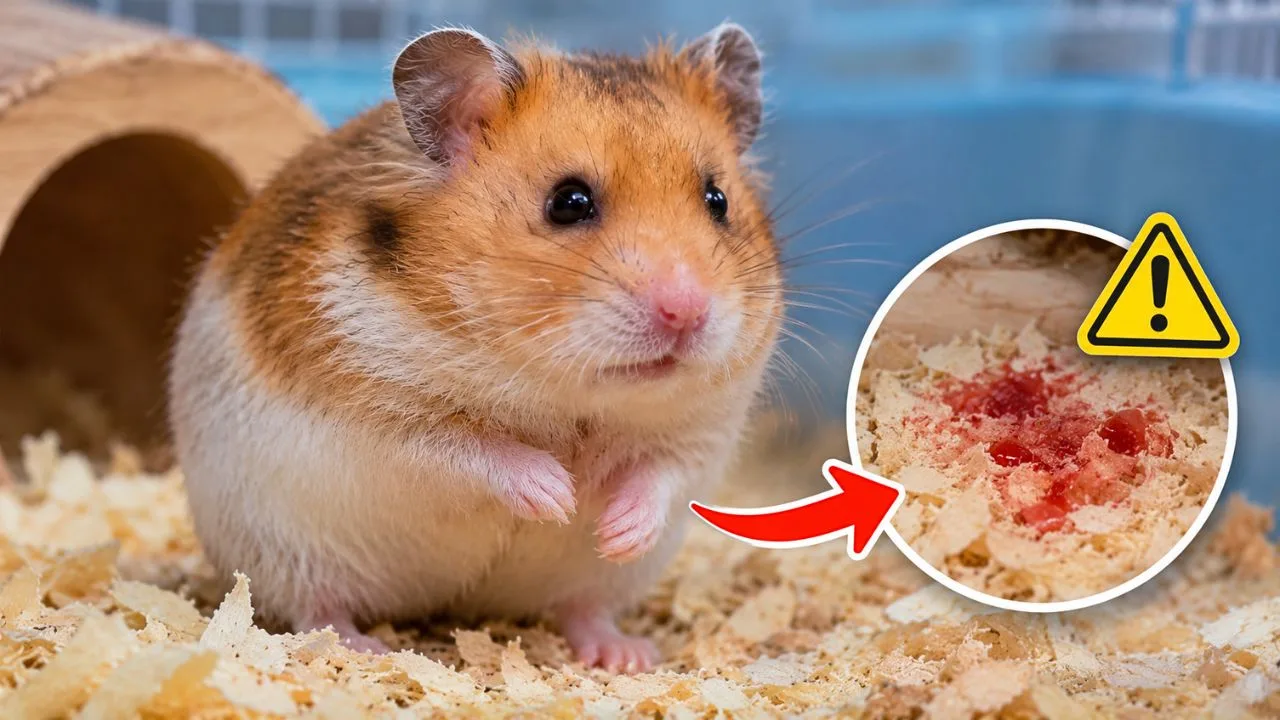
Hamsters are good at hiding discomfort, which can make it difficult to recognize when something is wrong. A pet that seems slightly quieter than usual may actually be showing an early sign of illness. Changes in appetite, breathing, movement, fur, or droppings deserve attention, especially when they appear suddenly. Learning what is normal for your hamster makes it easier to spot concerning changes and seek veterinary help before a problem becomes more serious.
Quick Answer: What Are the Warning Signs of a Sick Hamster?
The most important warning signs of hamster health problems include:
- Loss of appetite or refusal to eat.
- Unexplained weight loss.
- Unusual inactivity or weakness.
- Difficulty breathing.
- Diarrhea or a wet, soiled rear end.
- Discharge from the eyes or nose.
- Persistent sneezing or coughing.
- Hunched posture.
- Difficulty walking or loss of balance.
- Excessive scratching or hair loss.
- Unusual lumps or swelling.
- Overgrown teeth or drooling.
- Changes in urine or droppings.
- Wounds or unexplained injuries.
- A swollen or unusually firm abdomen.
Not every change means your hamster has a serious disease. However, several of these signs can indicate conditions that require prompt veterinary attention.
Important: Difficulty breathing, collapse, seizures, severe bleeding, and suspected poisoning require emergency veterinary care. Do not wait to see whether these problems disappear.

Why Hamster Health Problems Can Be Difficult to Recognize
Hamsters often continue their normal routines even when something is wrong. They may hide in their nests, groom themselves less, eat less frequently, or become less active without showing an obvious injury.
Another challenge is their natural activity pattern. Hamsters are generally more active during the evening and night, so a hamster sleeping during the day is not automatically sick.
The important difference is a change from your pet’s usual behavior.
For example, a hamster that normally comes out to explore during the evening but suddenly remains hidden, refuses food, and appears weak deserves attention.
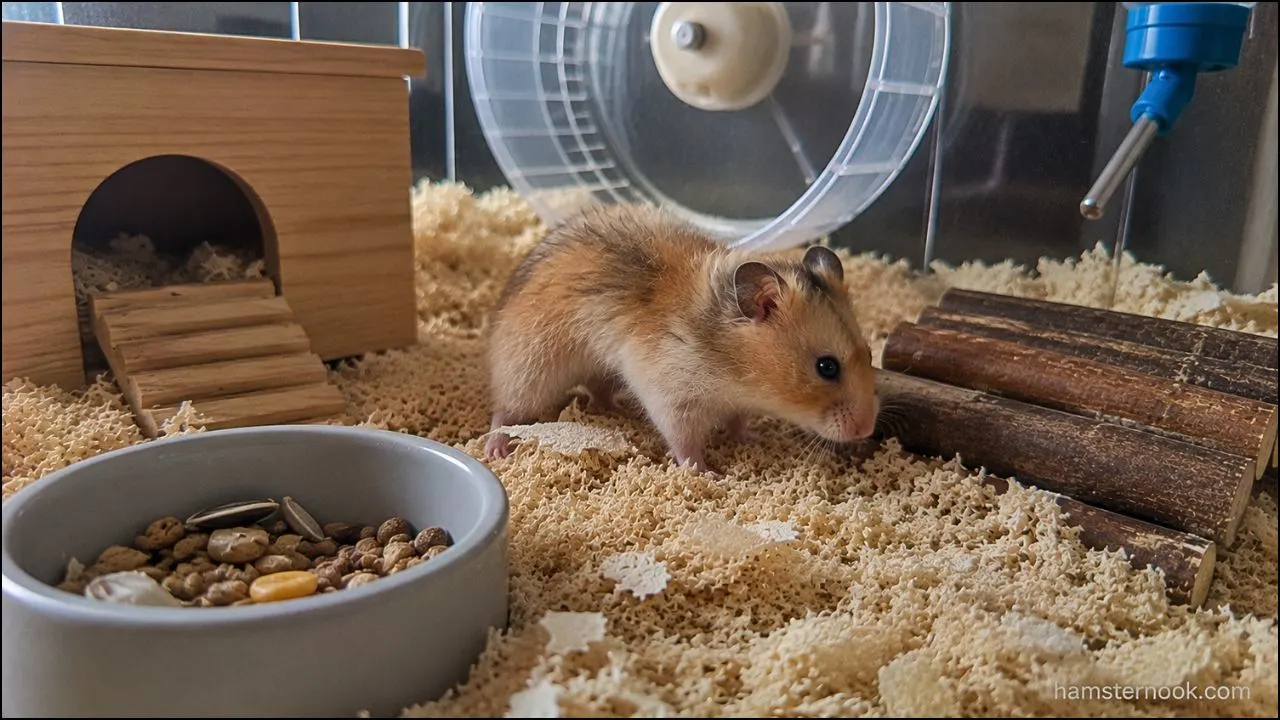
The MSD Veterinary Manual identifies changes such as inactivity, appetite or weight loss, abnormal walking, rough fur, discharge, diarrhea, and breathing difficulty as signs that a hamster may be unwell.
15 Hamster Health Warning Signs You Should Never Ignore
1. Loss of Appetite or Refusing Food
A sudden loss of appetite is one of the most important changes to notice.
Hamsters normally eat throughout their active periods and often store food in their cheek pouches or nesting areas. This means an apparently full food bowl does not always tell you how much your hamster has eaten.
Look for:

- Food remaining untouched.
- Less food disappearing than usual.
- Refusing favorite foods.
- Reduced chewing activity.
- Difficulty picking up or swallowing food.
Dental problems, illness, pain, and other conditions can affect eating.
What to do: Check whether your hamster has been storing food, observe its eating behavior, and contact a veterinarian promptly if it is refusing food. Do not wait several days to see whether appetite returns.
2. Unexplained Weight Loss
Weight loss can be difficult to notice because hamsters are small and their thick fur hides changes in body shape.
A digital gram scale makes monitoring easier.

Record your hamster’s weight regularly and compare measurements over time. Use the same scale and weighing container to keep measurements consistent.
Possible reasons for weight loss include:
- Dental problems.
- Reduced food intake.
- Digestive disorders.
- Chronic illness.
- Other underlying health conditions.
A noticeable or continuing decrease in weight needs veterinary assessment, even if your hamster still appears active.
For a more detailed look at possible reasons for weight changes, see Why Is My Hamster Losing Weight? Causes, Warning Signs & What to Do.

3. Unusual Inactivity or Weakness
Hamsters sleep during much of the day, so sleeping alone is not a warning sign.
What matters is unusual inactivity during the hours when your hamster would normally explore, eat, or exercise.
Watch for:
- Remaining in one place during normal active hours.
- Unusual weakness.
- Reduced interest in food.
- Difficulty getting into or out of hiding places.
- Reduced movement compared with normal behavior.
Illness, pain, dehydration, and other health problems can contribute to low energy.

If your hamster is difficult to wake, collapses, or cannot move normally, seek emergency veterinary care.
4. Difficulty Breathing
Breathing problems should never be dismissed as ordinary tiredness.
Warning signs include:
- Rapid or labored breathing.
- Noticeable effort when breathing.
- Open-mouth breathing.
- Unusual respiratory noises.
- Discharge around the nose.
- Weakness alongside breathing changes.
Respiratory problems can have several causes, including infections and heart disease. These conditions cannot reliably be distinguished by observing breathing alone.

For a closer look at changes in breathing and their possible causes, read Why Is My Hamster Breathing Fast or Heavy? Causes & Warning Signs.
What to do: Contact a veterinarian immediately for abnormal breathing. Severe breathing difficulty or open-mouth breathing requires emergency attention.
Do not force your hamster to move around or attempt home treatments.
5. Diarrhea or a Wet, Soiled Rear End
Loose or watery droppings are a serious warning sign in hamsters.

You may notice wet fur around the tail and belly, an unpleasant smell, reduced appetite, or unusual weakness.
Diarrhea can have different causes, including infections and digestive disturbances. Wet tail is also associated with serious intestinal disease, particularly in young Syrian hamsters.
For dedicated information about this condition, including its warning signs and veterinary care, see Wet Tail in Hamsters: Symptoms, Causes, Treatment & When to See a Vet.
Do not assume every dirty rear end is wet tail, but never dismiss watery diarrhea as ordinary mess.

What to do: Contact a veterinarian immediately if your hamster develops diarrhea, especially when accompanied by lethargy, reduced appetite, or a wet rear end. Dehydration can develop quickly.
6. Discharge From the Eyes or Nose
Healthy hamster eyes should not have persistent discharge, and the nose should not have unexplained secretions.
Look for:
- Wetness around the eyes.
- Crusting or discharge.
- Persistent nasal moisture.
- Swelling around the eyes.
- Repeated rubbing of the face.
Eye discharge may be associated with irritation, injury, infection, or other problems. Nasal discharge can accompany respiratory disease.

Do not use human eye drops or attempt to remove material stuck to the eye.
Arrange a veterinary examination, particularly if discharge persists or occurs alongside breathing changes or reduced appetite.
7. Persistent Sneezing or Coughing
An occasional sneeze does not automatically mean your hamster is ill.
Dusty bedding, environmental irritants, and other factors can cause irritation. However, repeated sneezing, coughing, or sneezing accompanied by discharge deserves attention.

Check for possible environmental irritants such as:
- Dusty bedding.
- Strong cleaning products.
- Aerosol sprays.
- Perfumes.
- Smoke.
- Excessive dust around the enclosure.
If the sneezing continues after removing an obvious irritant, or if your hamster develops breathing difficulties, contact a veterinarian.
For more information about recurring sneezing and possible causes, read Why Is My Hamster Sneezing? Causes, Warning Signs & When to See a Vet.
Do not assume that every respiratory symptom is caused by bedding.

8. Hunched Posture
A hamster that repeatedly sits with a hunched back may be experiencing discomfort or illness.
Other accompanying signs might include:
- Reduced movement.
- Unusual quietness.
- Refusing food.
- A tense-looking body posture.
- Reduced grooming.
A hamster briefly crouching while grooming or eating is not necessarily abnormal. The concern is a persistent hunched posture, particularly when it appears alongside other changes.
Contact a veterinarian if your hamster repeatedly maintains this position outside normal activities.
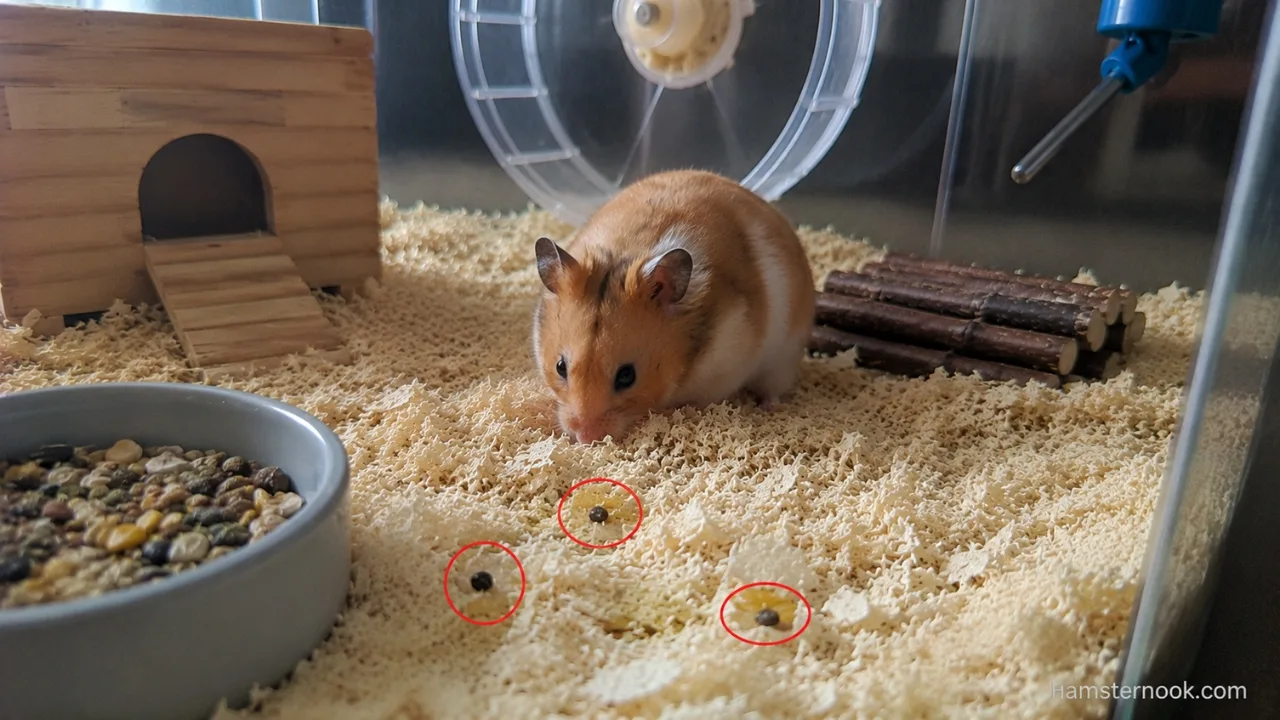
9. Difficulty Walking or Loss of Balance
A healthy hamster should generally move around its enclosure without obvious difficulty.
Watch for:
- Limping.
- Dragging a leg.
- Falling over.
- Walking in circles.
- Unsteady movement.
- Head tilt.
- Refusing to put weight on a limb.
These changes may be associated with injury, pain, neurological problems, or other medical conditions.
Do not try to straighten a limb or test how much pressure your hamster can tolerate.
If your hamster suddenly cannot walk normally, seek urgent veterinary care.
For additional guidance on unusual walking patterns, see Why Is My Hamster Walking Weird? Causes & When to See a Vet.
10. Excessive Scratching or Hair Loss
Occasional grooming is normal. Constant scratching, repeated biting at the skin, or visible patches of missing fur are not changes to ignore.
Possible causes include:

- Skin parasites such as mites.
- Fungal skin infections.
- Skin irritation.
- Repeated rubbing against enclosure surfaces.
- Other underlying health problems.
Look for additional changes, including redness, flaky skin, scabs, crusts, or irritated patches.
Hair loss does not automatically mean your hamster has mites. Several different conditions can produce similar appearances.
For a more detailed explanation of bald patches and other possible causes, see Why Is My Hamster Losing Hair? Causes, Bald Spots & When to See a Vet.
What to do: Arrange a veterinary examination if hair loss or persistent scratching develops. Avoid applying flea products, shampoos, or skin treatments intended for other animals.
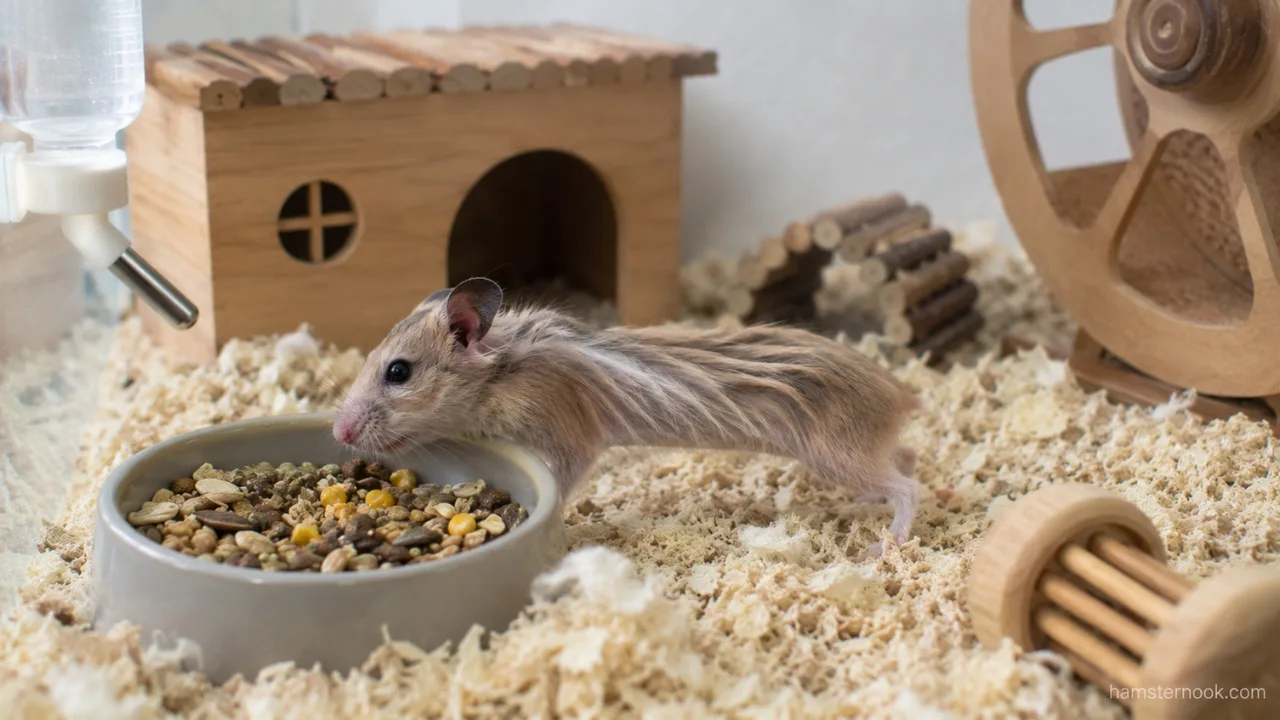
11. Unusual Lumps or Swelling
A new lump under the skin should be checked by a veterinarian.
Hamsters can develop abscesses, cyst-like swellings, and tumors. Some lumps are associated with infections or injuries, while others have different causes.
Pay attention to:
- A new lump near the face or neck.
- Swelling around the abdomen.
- A warm or red area.
- A lump that appears to grow.
- Swelling accompanied by reduced appetite or activity.
Abscesses can develop after wounds or bites. Tumors may also cause visible or palpable changes.

Do not squeeze, puncture, or attempt to drain a lump at home.
Even if your hamster seems comfortable, arrange a veterinary examination to identify the cause.
12. Overgrown Teeth or Drooling
Hamster incisors grow continuously throughout life. They need suitable food and safe materials to chew so their teeth can wear down naturally.
Dental problems can develop when teeth become overgrown, misaligned, or damaged.
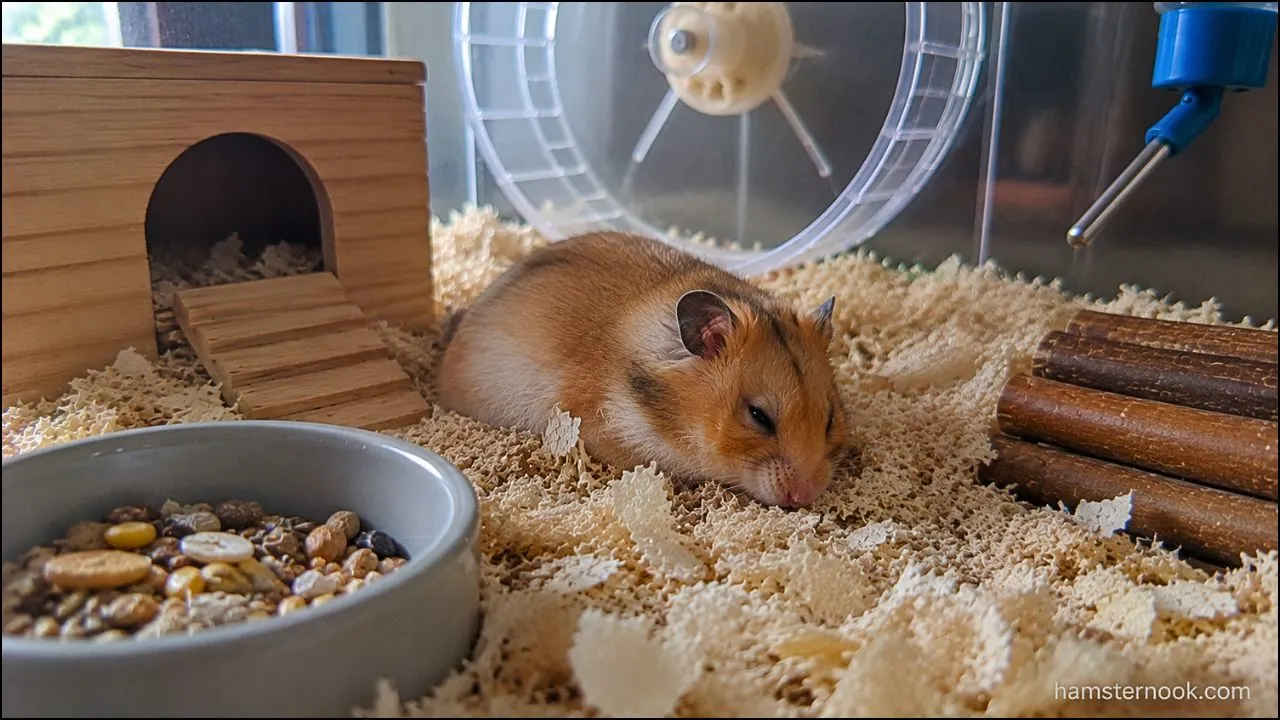
Look for:
- Teeth that appear unusually long.
- Drooling or wet fur around the mouth.
- Difficulty picking up food.
- Reduced chewing.
- Weight loss.
- Swelling around the face.
A hamster with dental discomfort may still approach its food but struggle to eat it.
A veterinarian should examine the teeth and determine whether treatment is needed. Never attempt to trim your hamster’s teeth using household nail clippers or scissors.
13. Changes in Urine or Droppings
Your hamster’s normal droppings and urination habits provide useful information about its health.

Pay attention to changes such as:
- Fewer droppings than usual.
- Unusually soft or watery droppings.
- Blood in the urine or feces.
- A noticeable change in urine output.
- Unusual discharge around the rear.
- Difficulty passing urine or feces.
A change in droppings can be associated with digestive problems, reduced food intake, or other conditions.
Hamster urine can naturally vary in appearance, so color alone is not enough to diagnose a problem.
For a more detailed explanation of normal urine color and changes that may need veterinary attention, see Hamster Urine Color: What’s Normal and When to Call a Vet.
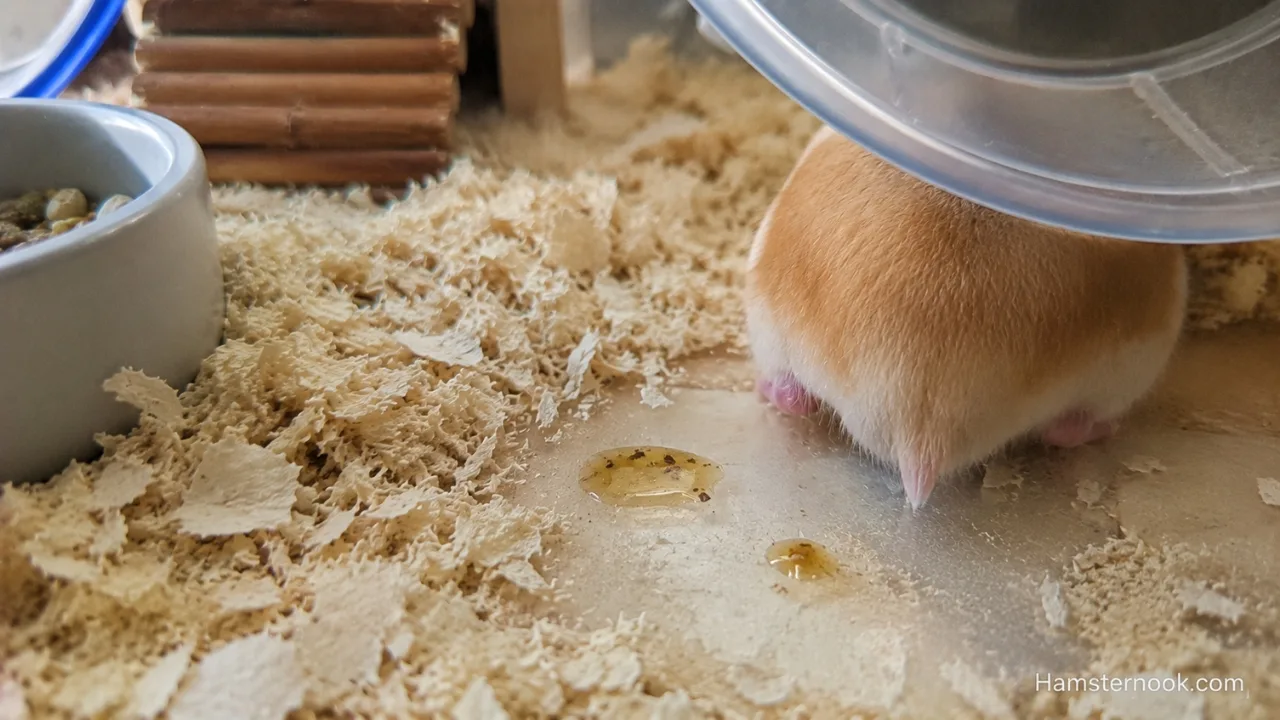
If you notice blood, difficulty urinating, or a significant change in output, contact a veterinarian promptly.
14. Wounds or Unexplained Injuries
Small wounds can become more serious if they are ignored.
Check for:
- Cuts or scratches.
- Bite marks.
- Bleeding.
- Swelling around an injury.
- Limping.
- Sensitivity when moving.
Injuries may happen after falls, contact with sharp enclosure objects, or fighting between hamsters housed together.

Syrian hamsters should generally be housed individually. If hamsters are fighting, separate them safely and do not attempt to reintroduce them without appropriate guidance.
If you find a wound, contact a veterinarian for advice. Heavy bleeding, deep injuries, or suspected fractures require emergency care.
15. A Swollen or Unusually Firm Abdomen
An enlarged or firm-looking abdomen is another sign that deserves attention.
Possible causes include digestive problems, fluid accumulation, masses, pregnancy, or other abdominal conditions.

Look for additional changes:
- Reduced appetite.
- Unusual posture.
- Difficulty walking.
- Weakness.
- Discomfort when moving.
- Changes in droppings or urination.
Do not press the abdomen to find out whether it hurts. A swollen abdomen accompanied by severe weakness, difficulty breathing, or collapse requires emergency veterinary attention.
Hamster Warning Signs: How Urgent Is the Problem?
Not every health concern requires the same response. This comparison can help you decide how quickly to seek veterinary assistance.
| Warning sign | Recommended response |
|---|---|
| Occasional sneeze without other changes | Observe and check environmental irritants |
| Persistent sneezing or nasal discharge | Contact a veterinarian promptly |
| Mild but continuing hair loss | Arrange a veterinary appointment |
| New lump or swelling | Arrange a veterinary examination promptly |
| Reduced appetite | Contact a veterinarian promptly |
| Noticeable or continuing weight loss | Arrange prompt veterinary assessment |
| Diarrhea or wet rear end | Seek immediate veterinary advice |
| Labored or open-mouth breathing | Emergency veterinary care |
| Collapse or seizures | Emergency veterinary care |
| Heavy bleeding or serious injury | Emergency veterinary care |
When in doubt, call a veterinarian and describe the symptoms. A veterinarian can help determine whether your hamster needs immediate examination or a scheduled appointment.

How to Check Your Hamster’s Health at Home
You do not need to perform a complicated physical examination every day. A simple observation routine is often more useful and less stressful.
Check behavior during normal active hours
Spend a few minutes observing your hamster when it would normally be awake.
Notice whether it:
- Comes out of its hiding place.
- Explores its surroundings.
- Eats normally.
- Uses its usual exercise equipment.
- Moves without difficulty.
Avoid waking your hamster just to perform a routine check.

Monitor weight regularly
Use a digital gram scale and record the results.
Look for trends rather than relying on a single measurement. If your hamster is losing weight, contact a veterinarian even if its appetite appears normal.
Observe the eyes, nose, fur, and rear end
Look for visible discharge, bald patches, unusual swelling, dirty fur, or signs of irritation.
You can do this through normal observation without repeatedly restraining your hamster.

Check food and water habits
Notice whether your hamster is eating and drinking normally.
Remember that hamsters hoard food, so inspect their usual food-storage areas when appropriate. Also check that the water bottle or bowl is working properly.
Keep a simple health record
A basic record can help you recognize changes and provide useful information to your veterinarian.
| What to record | Why it helps |
|---|---|
| Weight | Identifies changes over time |
| Appetite | Helps identify reduced food intake |
| Activity | Reveals changes in normal behavior |
| Droppings | Helps identify digestive changes |
| Breathing | Helps notice unusual respiratory signs |
| Skin and fur | Tracks lumps, irritation, and hair loss |
| Veterinary visits | Keeps medical history organized |
A photograph or short video of unusual behavior can also help your veterinarian understand what you have observed.

Common Mistakes Hamster Owners Make When Their Pet Is Sick
Even experienced owners can make mistakes when they are worried about a sick hamster.
Waiting too long to seek veterinary help
A hamster that stops eating, develops diarrhea, or has difficulty breathing should not be left untreated while you wait for improvement.
Assuming everything is caused by old age
Older hamsters can develop age-related health problems, but new symptoms should not automatically be dismissed as aging.
Pain, infections, dental disease, and other treatable conditions may also affect older pets.

Giving human medication
Never give human painkillers, antibiotics, or other medication without specific veterinary instructions.
Some medications can be dangerous to hamsters, and incorrect dosing can cause serious harm.
Changing several things at once
When a hamster appears unwell, owners sometimes change its food, bedding, enclosure, and routine simultaneously.
This can make it harder to identify possible environmental triggers.

Remove obvious hazards or irritants, but avoid unnecessary changes while arranging veterinary care.
Trying home remedies instead of contacting a veterinarian
Natural ingredients and household treatments are not automatically safe for hamsters.
Do not apply oils, creams, antiseptics, or medications without veterinary advice.
How to Help Prevent Common Hamster Health Problems
Not every illness can be prevented, but good daily care can reduce avoidable risks and make health changes easier to notice.

Provide a balanced diet
Feed a nutritionally complete hamster food as the foundation of the diet. Offer suitable fresh foods in appropriate quantities and avoid sudden dietary changes.
Always provide clean drinking water.
Keep the enclosure clean
Remove spoiled fresh food and clean soiled areas regularly.
Use appropriate, low-dust bedding and avoid strong fragrances, aerosol sprays, and harsh cleaning chemicals around the enclosure.

Make the enclosure safe
Check for sharp edges, damaged accessories, unstable objects, and anything that could trap a foot or cause an injury.
Provide appropriate enrichment, hiding places, and safe chewing materials.
Avoid unnecessary stress
Give your hamster a predictable environment, appropriate nesting material, and opportunities to hide.
Handle it gently and avoid waking it suddenly.

Arrange veterinary checkups
A veterinary checkup soon after bringing a hamster home helps establish its health history.
Ask your veterinarian how frequently future examinations are appropriate for your hamster’s age and individual needs.
What You Should Do If You Notice a Warning Sign
If your hamster suddenly behaves differently, follow these practical steps:
- Observe carefully: Identify what has changed and when you first noticed it.
- Check basic needs: Make sure clean water and its normal food are available.
- Record symptoms: Note appetite, activity, weight, droppings, and breathing changes.
- Take photographs or videos: These can help explain unusual behavior to your veterinarian.
- Contact a hamster-experienced veterinarian: Explain the symptoms rather than trying to diagnose the condition yourself.
- Prepare for transport: Use a secure, well-ventilated carrier with familiar, clean bedding.
- Follow professional instructions: Give medication or provide treatment only as directed by your veterinarian.
If your hamster has severe breathing difficulties, collapses, experiences seizures, or suffers a serious injury, seek emergency veterinary care immediately.

Final Thoughts
Hamsters cannot tell us when they are uncomfortable, so recognizing changes in their normal behavior is an important part of responsible ownership.
Pay attention to appetite, weight, breathing, movement, droppings, and the condition of your hamster’s skin and fur. A small change may have several possible explanations, but persistent or sudden symptoms should never be ignored.
Keep a simple health record, identify a veterinarian who treats hamsters, and seek help when something doesn’t seem right.
The most useful habit is learning what is normal for your hamster. That makes it easier to recognize when something has changed and act before the problem becomes more serious.

Frequently Asked Questions
1. What are the first signs that a hamster is sick?
Early warning signs can include reduced appetite, weight loss, unusual inactivity, messy fur, changes in droppings, discharge from the eyes or nose, and abnormal breathing. A noticeable change from your hamster’s usual behavior deserves attention.
2. How do I know if my hamster is sick or just sleeping?
Hamsters normally sleep for much of the day and become more active during the evening and night. A sleeping hamster that wakes and behaves normally during its usual active hours may be perfectly fine. Unusual weakness, refusal to eat, difficulty moving, or reduced activity during normal waking hours is more concerning.
3. Can hamsters recover from illnesses?
Yes, some hamster illnesses and injuries can be treated successfully. Recovery depends on the underlying condition, its severity, the hamster’s overall health, and how quickly appropriate veterinary care is provided. Early assessment can make a difference.
4. Why is my hamster suddenly not moving?
Sudden inactivity can be associated with illness, pain, weakness, environmental temperature problems, or other conditions. Do not assume your hamster is simply tired. If it is difficult to wake, weak, unresponsive, or unable to move normally, seek emergency veterinary care.

5. Why is my hamster losing weight?
Weight loss may result from reduced food intake, dental problems, digestive disorders, chronic illness, or other health conditions. Monitor its weight using a digital gram scale and arrange a veterinary examination if the loss is noticeable or continues.
6. How often should I check my hamster’s health?
Observe your hamster every day during its normal active hours. Check its appetite, activity, breathing, droppings, and general appearance. Regular weight records can also help identify changes before they become obvious.
7. Can stress make a hamster sick?
Stress can affect hamster health and may contribute to certain illnesses. Overcrowding, unsuitable environmental conditions, and other stressful circumstances can affect welfare. Provide a quiet, secure enclosure, suitable bedding, and a predictable routine.
8. What is the most serious health problem in hamsters?
There isn’t one condition that is always the most serious. Severe breathing problems, serious injuries, diarrhea with dehydration, collapse, and poisoning can all be life-threatening. The urgency depends on the condition and your hamster’s current symptoms.

9. Should I take my hamster to the vet if it stops eating?
Yes. Contact a veterinarian promptly if your hamster refuses food or shows a noticeable reduction in eating. Dental problems, pain, and other illnesses can interfere with feeding. Do not wait several days for the appetite to return.
10. Do older hamsters have more health problems?
Older hamsters may develop age-related changes and health conditions, but symptoms should not automatically be attributed to aging. New lumps, weight loss, breathing changes, and difficulty moving still deserve veterinary assessment.
References
This guide is based on veterinary and animal welfare guidance from trusted sources, including:
- MSD Veterinary Manual – Routine Health Care of Hamsters – Veterinary guidance on recognizing illness, monitoring weight and behavior, dental health, medication safety, and preventive care.
- MSD Veterinary Manual – Disorders and Diseases of Hamsters – Veterinary information about infectious diseases, skin conditions, abscesses, tumors, parasites, and other hamster health problems.
- MSD Veterinary Manual – How to Tell When Your Hamster Is Sick – Common warning signs, including inactivity, appetite or weight loss, abnormal walking, discharge, diarrhea, and breathing difficulties.
- PDSA – Hamsters as Pets – Guidance covering common hamster health problems, including wet tail, wounds, abscesses, dental problems, breathing issues, and tumors.
- RSPCA – Signs of Illness in Hamsters – Hamster-specific warning signs, including changes in appetite, posture, breathing, activity, weight, and movement.
- Animal and Veterinary Service (Singapore) – Caring for a Hamster – Guidance on hamster nutrition, housing, daily care, and recognizing signs that require veterinary attention.
Medical Disclaimer
This article provides general educational information about hamster health and is not a substitute for professional veterinary diagnosis or treatment. The warning signs described can have several different causes. Only a qualified veterinarian can determine what is affecting your hamster and recommend appropriate treatment. Seek emergency veterinary assistance for severe or rapidly worsening symptoms.

Narayan Kumar is the founder and author of HamsterNook. He creates practical, research-based hamster care guides covering hamster behavior, nutrition, cage setup, enrichment, health, and everyday care. His goal is to help hamster owners make informed decisions and provide safer, healthier lives for their pets through clear, beginner-friendly information based on trusted animal care resources.