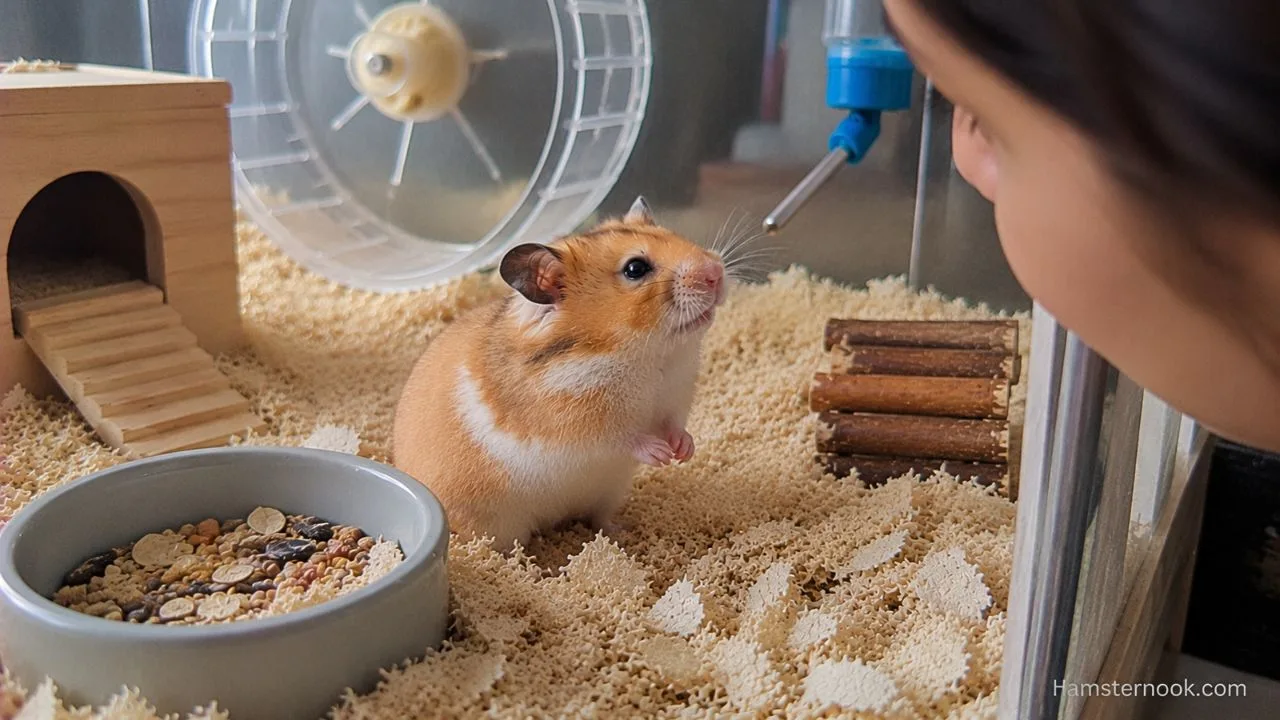
Many hamster owners worry when they realize the room light stayed on after bedtime or wonder whether it’s okay to keep a cage in a bright living room. Since hamsters naturally follow a day-night activity cycle, lighting plays an important role in supporting their normal daily routine. While a hamster may still fall asleep with lights on, constant or inappropriate lighting isn’t ideal for its long-term welfare.
Quick Answer
Yes, hamsters can sleep with the lights on, but it shouldn’t become a regular habit. Hamsters naturally rest during the day inside dark burrows and enclosed nesting chambers. Bright or prolonged artificial lighting may make it harder for hamsters to maintain a consistent day-night rhythm, especially if they have limited access to dark nesting areas. Providing a quiet enclosure with dark hiding places helps support healthy sleep and natural behavior.
Why Light Matters to Hamsters
Wild hamsters spend much of the daylight hours underground, where their nests remain dark even when the sun is shining outside. This protected environment allows them to rest safely before becoming active around dusk and throughout the night.
Pet hamsters still retain these instincts. Even though they live indoors, they rely on changes in light and darkness to help regulate their daily rhythm.
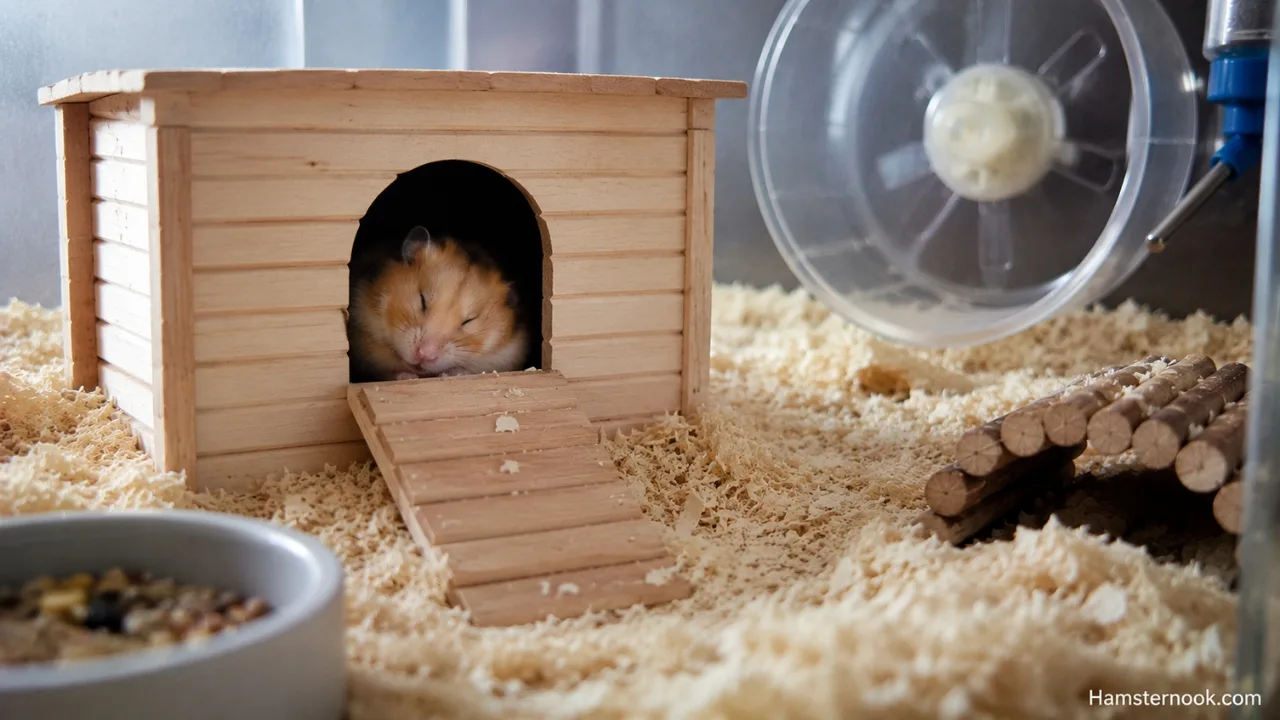
Understanding an appropriate day-and-night lighting routine makes it easier to create a healthy environment. See our Do Hamsters Need Light? Daylight, Darkness & Night Lights Explained guide for more detail.
Closing curtains during the brightest part of the day can help reduce excessive light entering the room without making the enclosure completely dark. This may be useful if the cage is located near a window with strong daylight.
Can Hamsters Actually Sleep in a Bright Room?

Yes, they can.
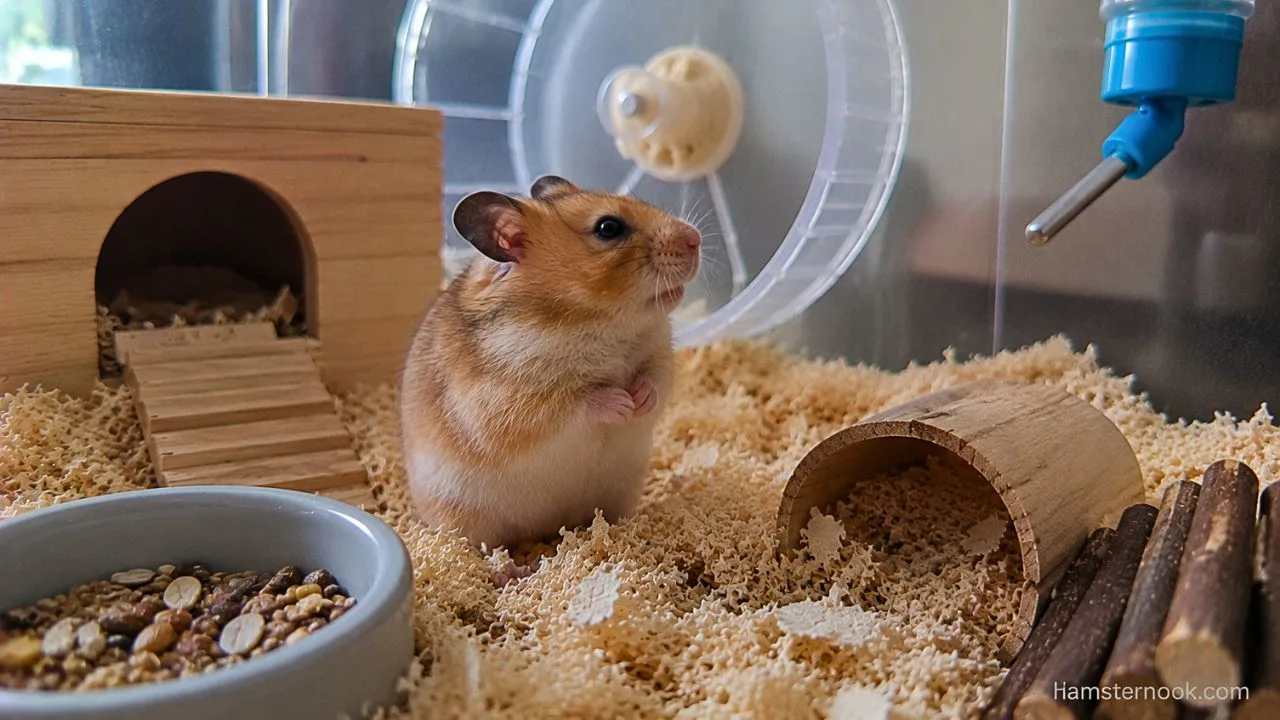
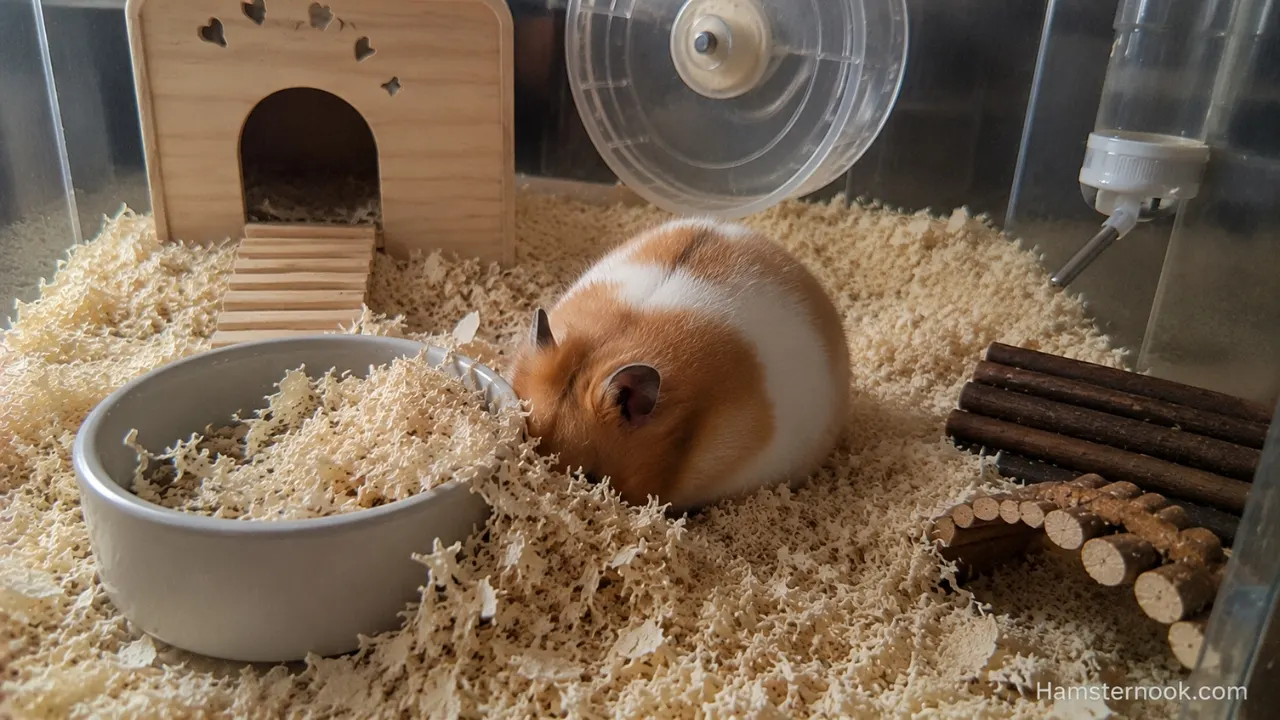
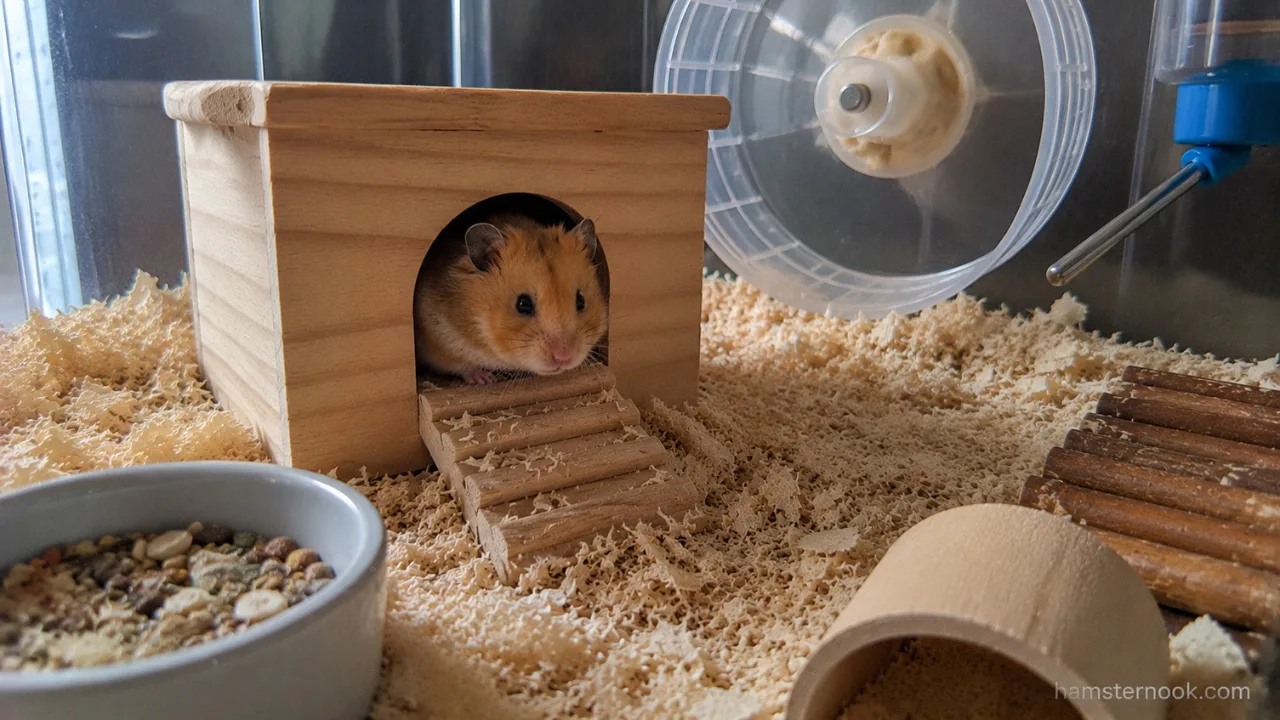
If your hamster has a well-built nest inside a hideout or deep bedding, it may sleep soundly even if the room itself is bright.
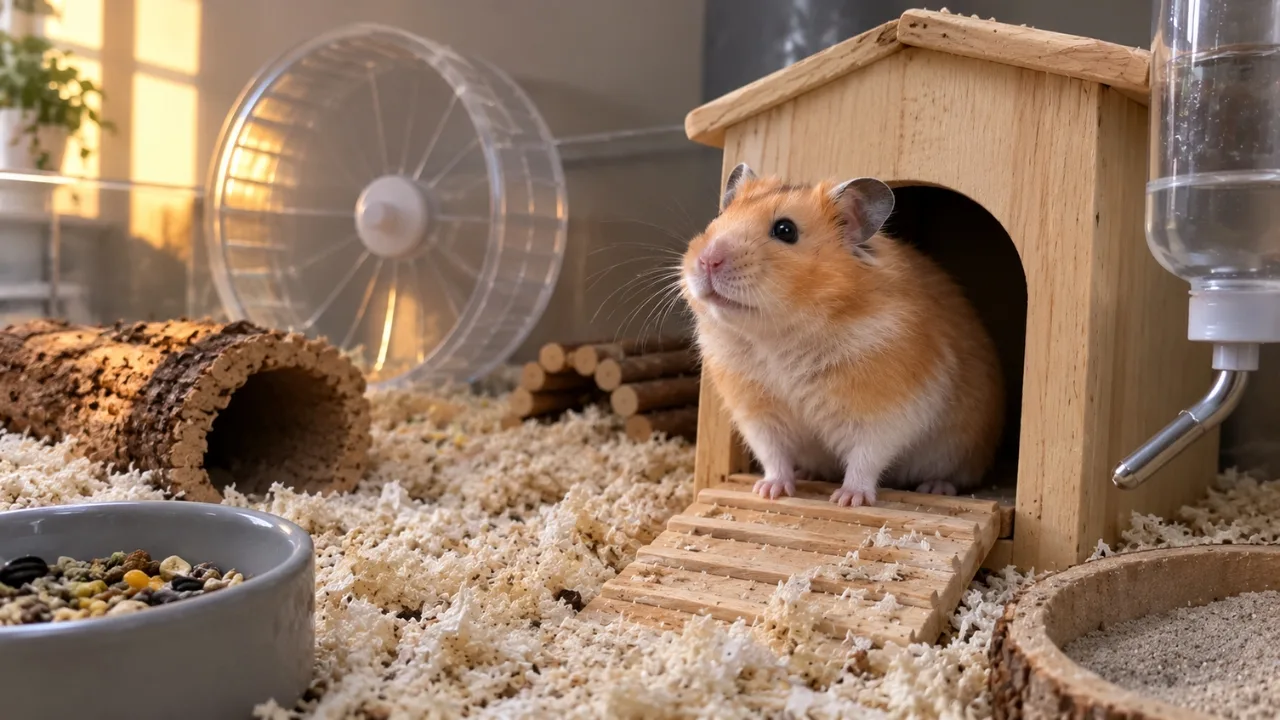
That’s because most hamsters don’t sleep out in the open. They create enclosed nests where very little light reaches them.
However, if the enclosure has:
- Very shallow bedding
- Few hides
- Transparent nesting areas
- Constant bright lighting
your hamster may have a harder time settling into restful sleep.
Providing dark nesting areas allows your hamster to manage light exposure naturally instead of having to adapt to a bright environment.

Dark, enclosed sleeping spaces help hamsters rest more comfortably during the day. See our Best Hamster Hideouts and Sleeping Areas: What Hamsters Prefer guide for suitable hide options.
How Hamsters Protect Themselves From Light
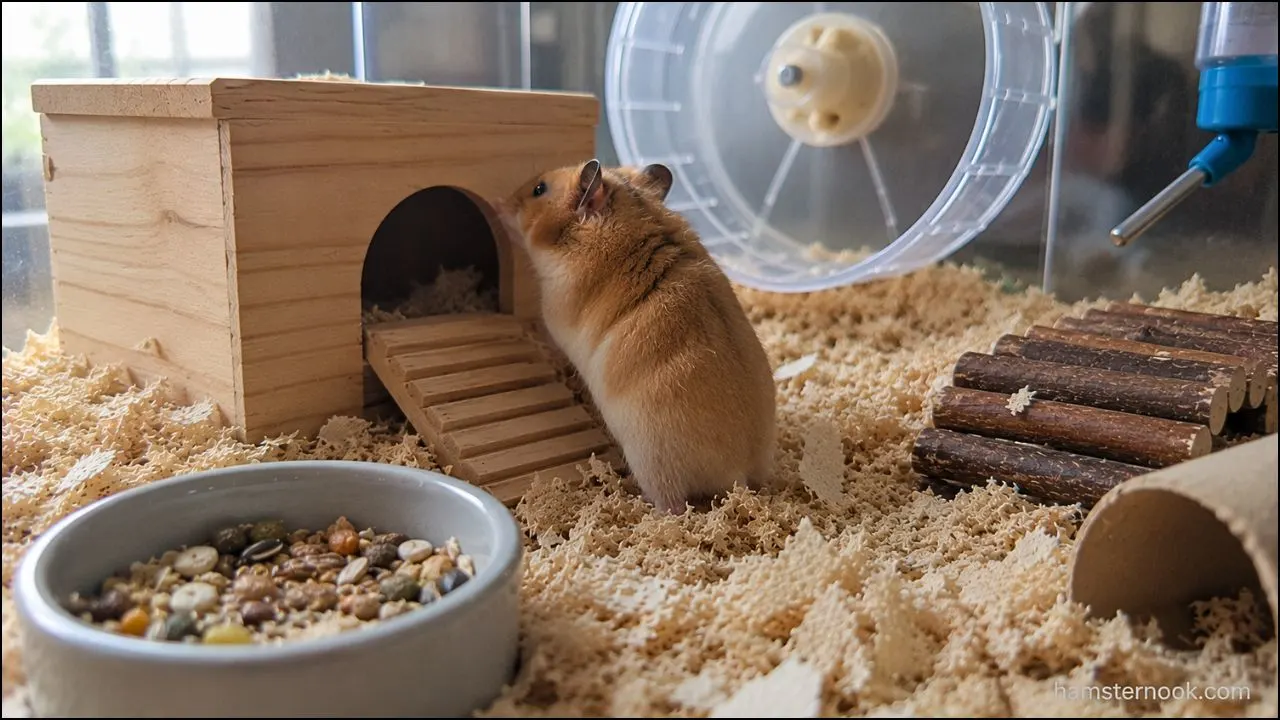
Hamsters naturally build sleeping areas that help reduce light exposure while providing a secure place to rest.
Common nesting locations include:
- Wooden hideouts
- Multi-chamber houses
- Deep paper bedding tunnels
- Cork logs
- Underground burrows they dig themselves
A hamster that consistently buries itself before sleeping is usually following perfectly normal instincts.
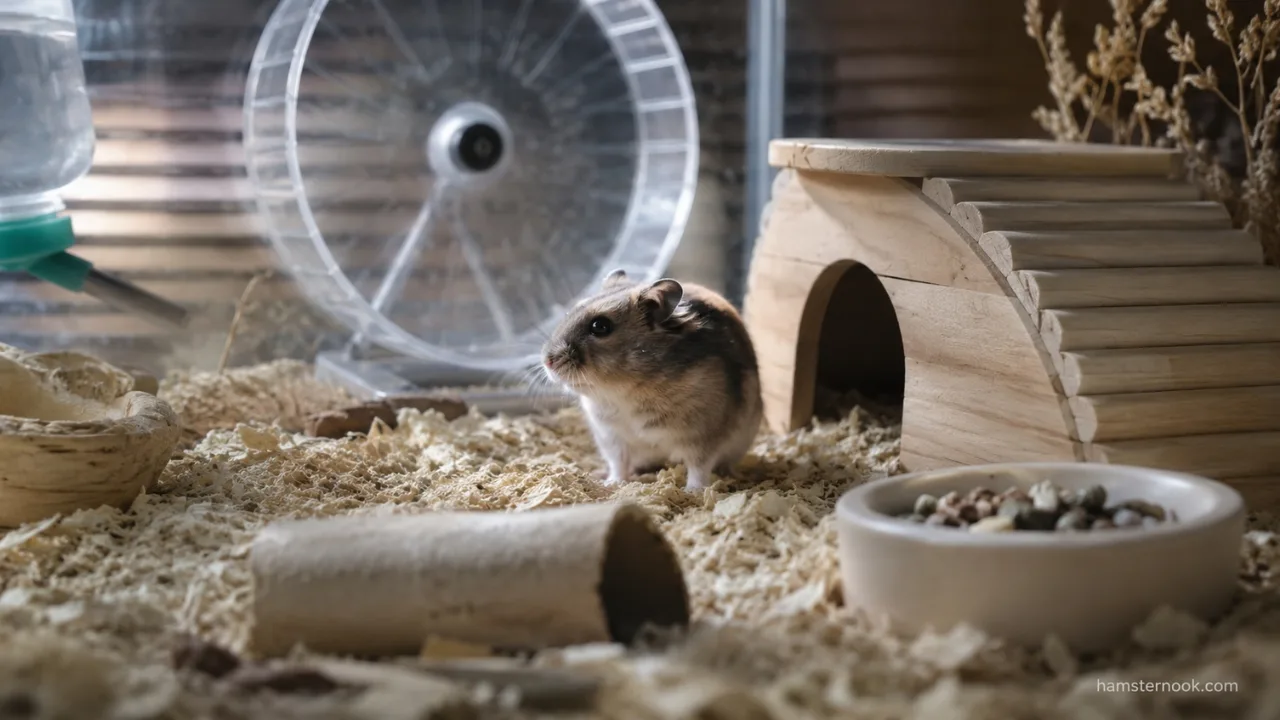
Sleeping inside a hide or staying out of sight for long periods is often completely normal hamster behavior. Learn more in our Why Do Hamster Hide During the Day? Is It Normal? guide.
Natural Day-Night Rhythms
Hamsters are generally crepuscular, meaning they’re most active around dawn and dusk, although many pet hamsters are also active throughout much of the night.
Their internal body clock responds to regular periods of light and darkness.
A predictable lighting schedule helps support natural behaviors such as:
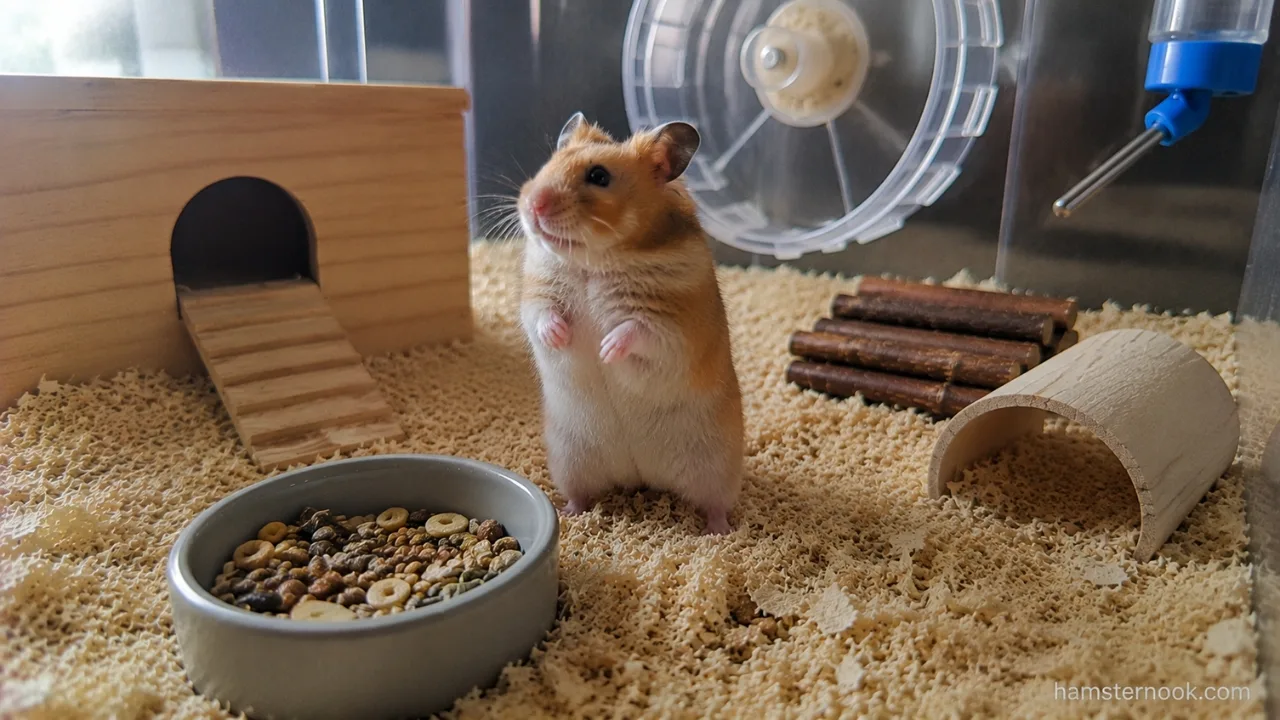
- Exploring
- Foraging
- Wheel running
- Grooming
- Nest building
- Resting during the day
Sudden or unpredictable changes in lighting can interfere with these routines.
Animal welfare guidance recommends maintaining a stable environment that allows small mammals to express their normal behavioral patterns.
Can Artificial Lights Affect Hamsters?
Artificial lighting isn’t automatically harmful.
Most households use indoor lighting every evening without causing problems.
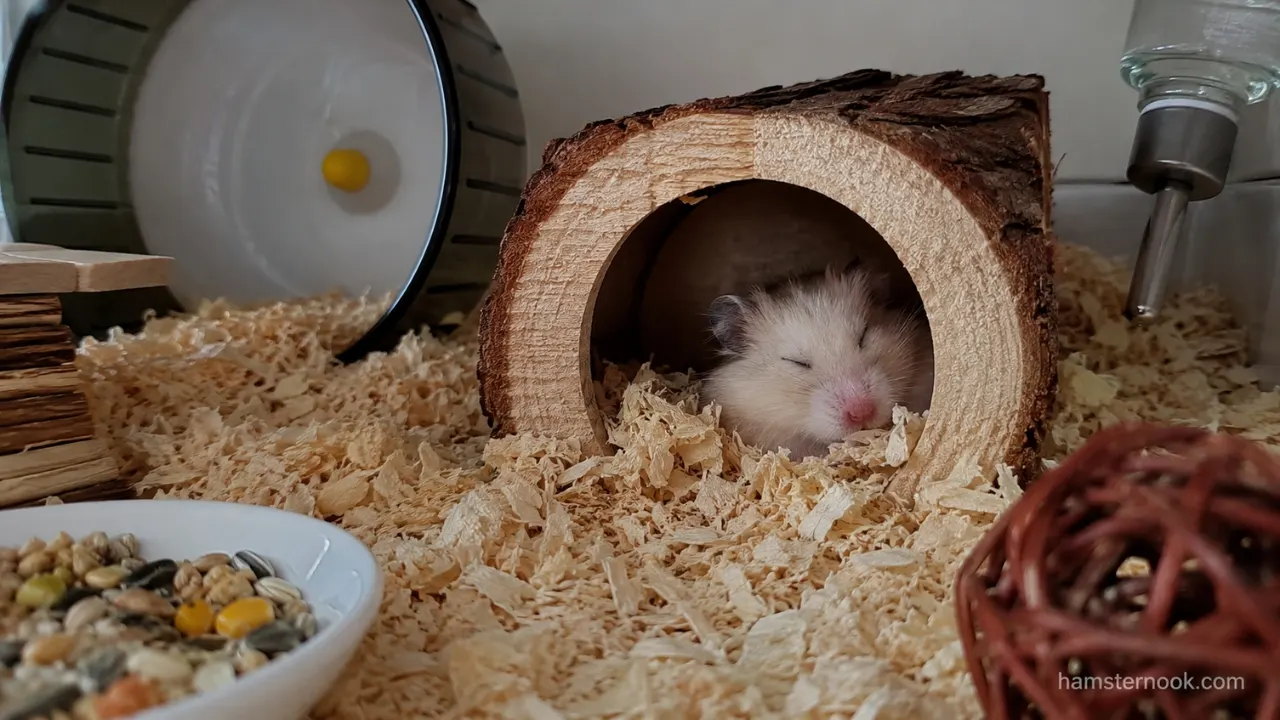
The issue is prolonged exposure to bright light when the hamster would normally experience darkness.
Examples include:
- Bright room lights left on all night
- Desk lamps pointed directly at the enclosure
- Television screens illuminating the cage overnight
- Continuous decorative LED lighting around the habitat
Occasional exposure is unlikely to cause lasting problems, but making it a nightly routine isn’t recommended.
Normal Lighting vs. Problematic Lighting
| Generally Fine | Better to Avoid |
|---|---|
| Normal daylight from windows | Bright lights left on all night |
| Evening household lighting before bedtime | Spotlights shining directly into the enclosure |
| Short periods of room lighting | Flashing decorative lights near the cage |
| A dim night light in the room | Continuous high-intensity LED strips around the habitat |
| Natural darkness overnight | Constant lighting with no dark period |
Does Cage Placement Matter?
Yes.
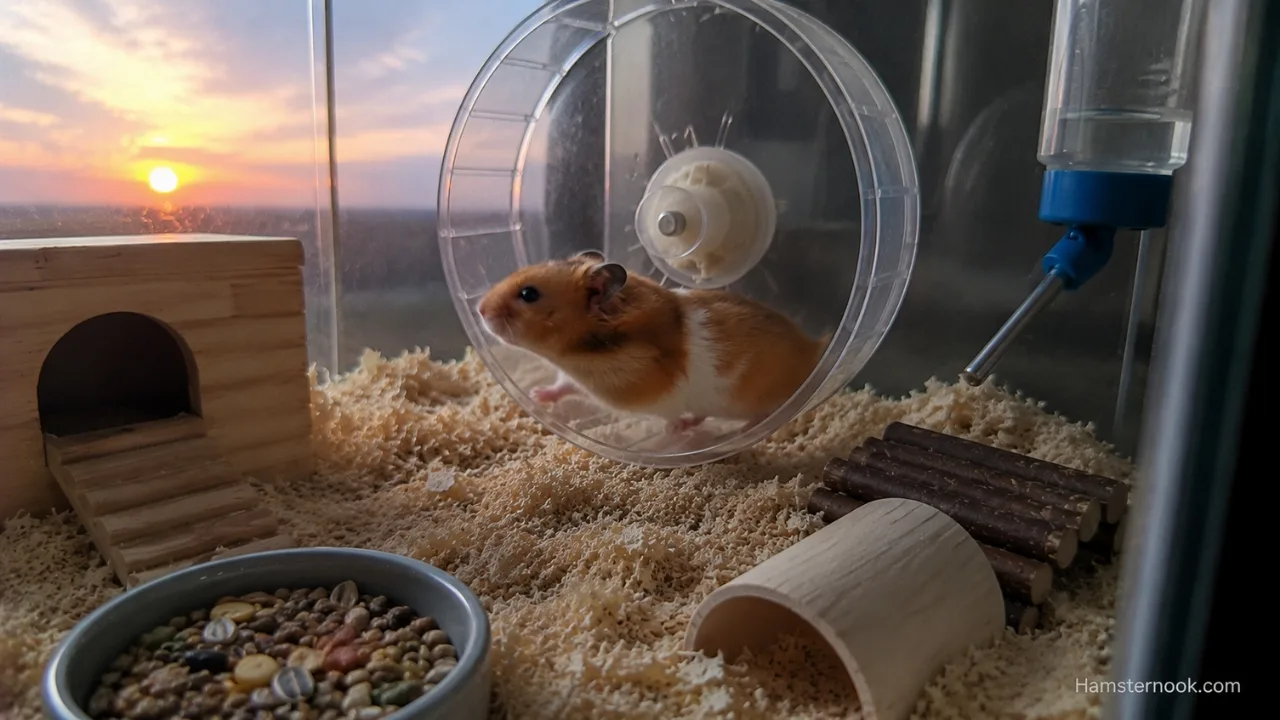
Where you place the enclosure can affect both lighting and sleep quality.
A good location usually provides:
- A regular day-night cycle
- Quiet during daytime sleeping hours
- Protection from direct afternoon sunlight
- Stable room temperatures
- Limited nighttime disturbance
Choosing the right location for the enclosure is just as important as managing indoor lighting. Read Should a Hamster Cage Be Near a Window? Risks Every Owner Should Know.
Avoid placing the cage directly beside:
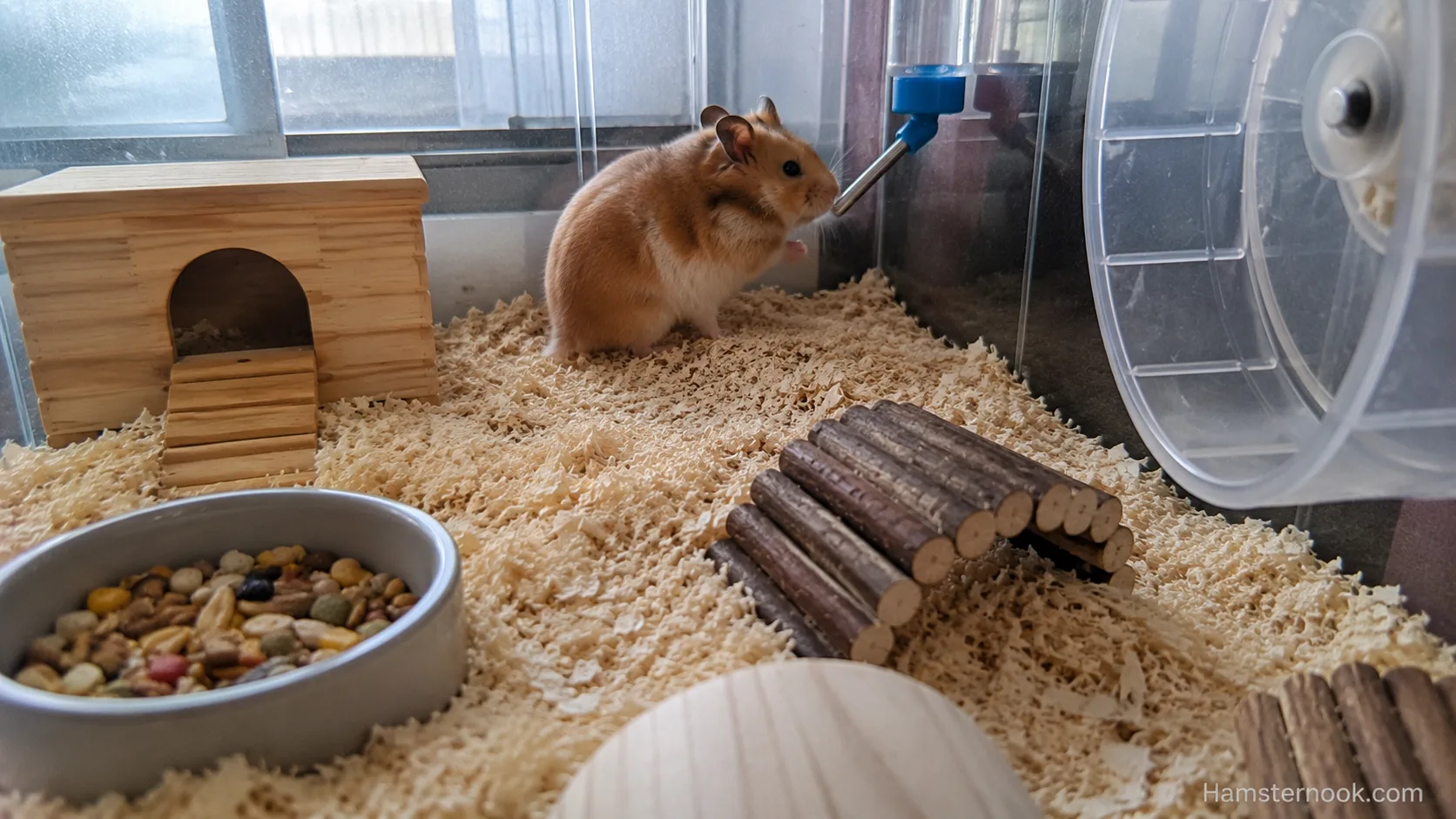
- Large televisions
- Loud speakers
- Frequently opened doors
- Bright gaming setups
- Windows with intense afternoon sun
Even if the lighting itself isn’t excessive, frequent activity around the enclosure may interrupt your hamster’s rest.
What Happens if You Accidentally Leave the Light On?
This happens to nearly every hamster owner at some point.
If the room light stayed on for one evening, there’s usually no reason to panic.
A healthy hamster will often continue sleeping inside its nest or simply wait until the surroundings become quieter and darker before becoming active.
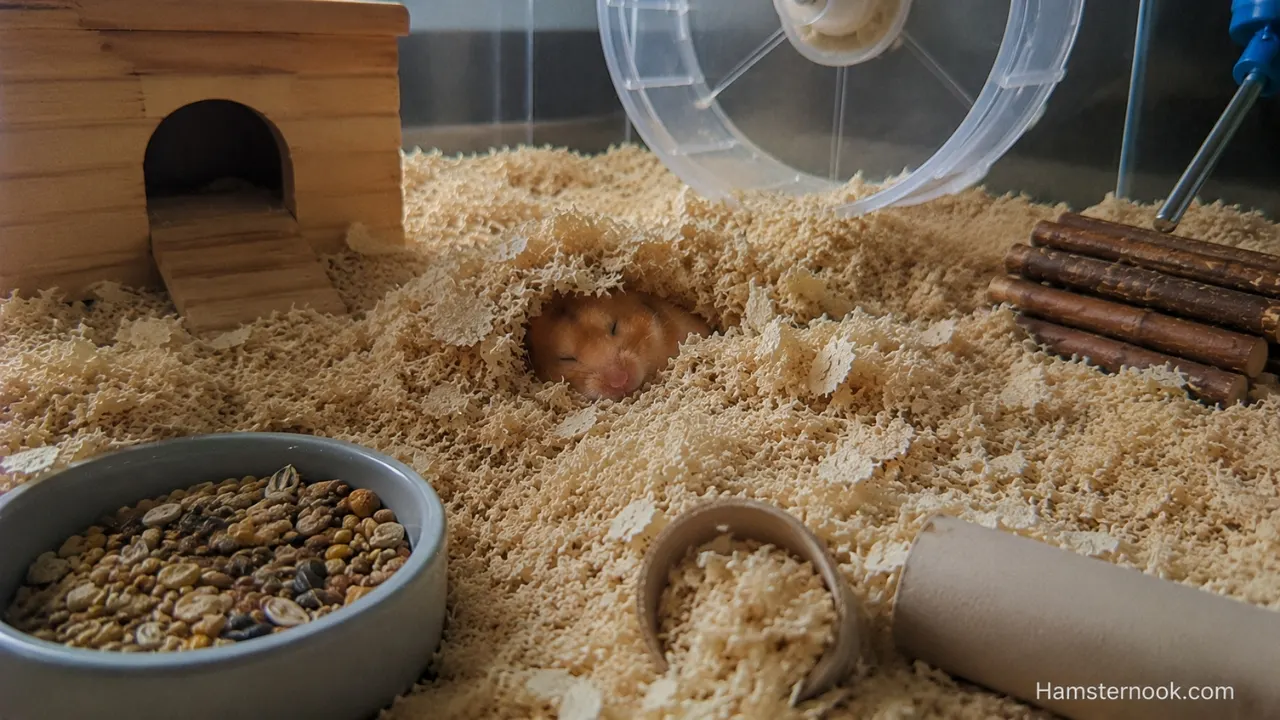
One forgotten light is very different from exposing your hamster to bright lighting night after night.
There’s no need to wake your hamster or move the enclosure in the middle of its resting period. Instead, return to your normal routine the following day.
Practical Examples
Example 1: Living Room Cage
Your hamster lives in the living room where the family watches television until 10:30 p.m.
If the enclosure includes deep bedding and enclosed hides, the hamster will often remain asleep until it’s ready to become active later in the evening.

Example 2: Bedroom Lamp
You stay up reading with a bedside lamp for an hour.
A lamp positioned away from the enclosure is usually much less disruptive than a bright light shining directly into the cage.
Example 3: Forgotten Room Light
You accidentally leave the ceiling light on overnight once.
Your hamster may adjust its activity slightly that evening, but an isolated incident is unlikely to cause lasting problems if its normal lighting schedule resumes afterward.
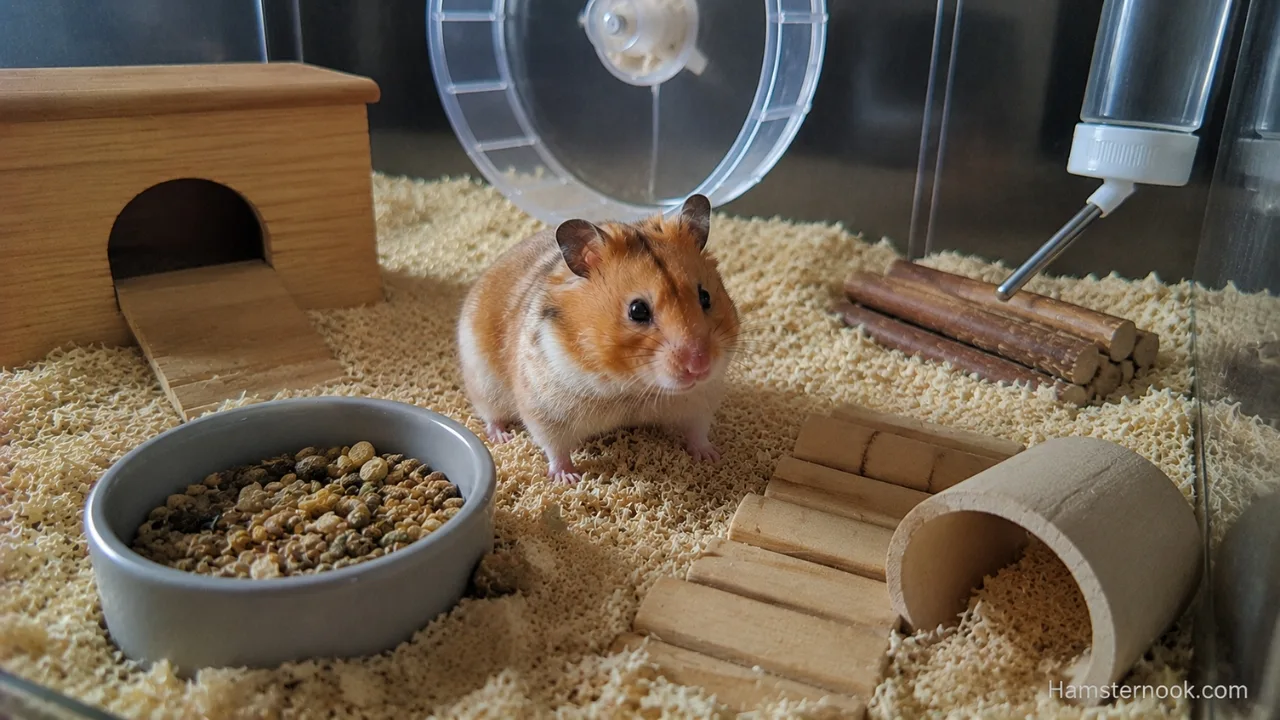
Do Hamsters Prefer Complete Darkness?
Not necessarily.
They don’t need complete darkness all the time.
In nature, hamsters may emerge around sunset, dawn, or during moonlit nights. What matters most is having access to dark, secure places for resting rather than living in complete darkness 24 hours a day.
Many healthy pet hamsters happily adapt to normal household routines as long as they have:
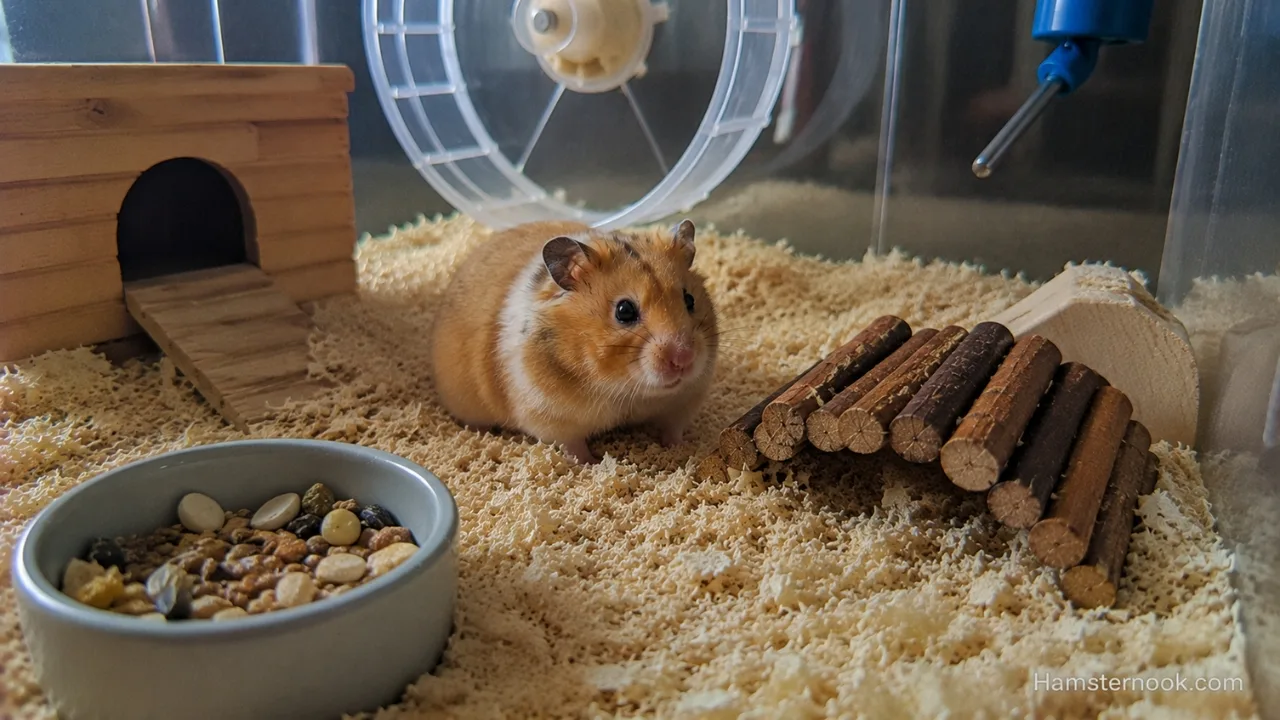
- Deep bedding
- Secure nesting areas
- Predictable lighting
- Quiet places to rest
Can Bright Light Cause Stress?
Light alone is rarely the only cause of stress.
However, constant bright lighting combined with frequent disturbances may prevent a hamster from resting comfortably.
Environmental conditions such as lighting, noise, and repeated disturbances can all contribute to stress over time. See our Hamster Stress: Common Causes, Warning Signs & How to Reduce It guide for related stress signs and prevention.
You might notice your hamster:
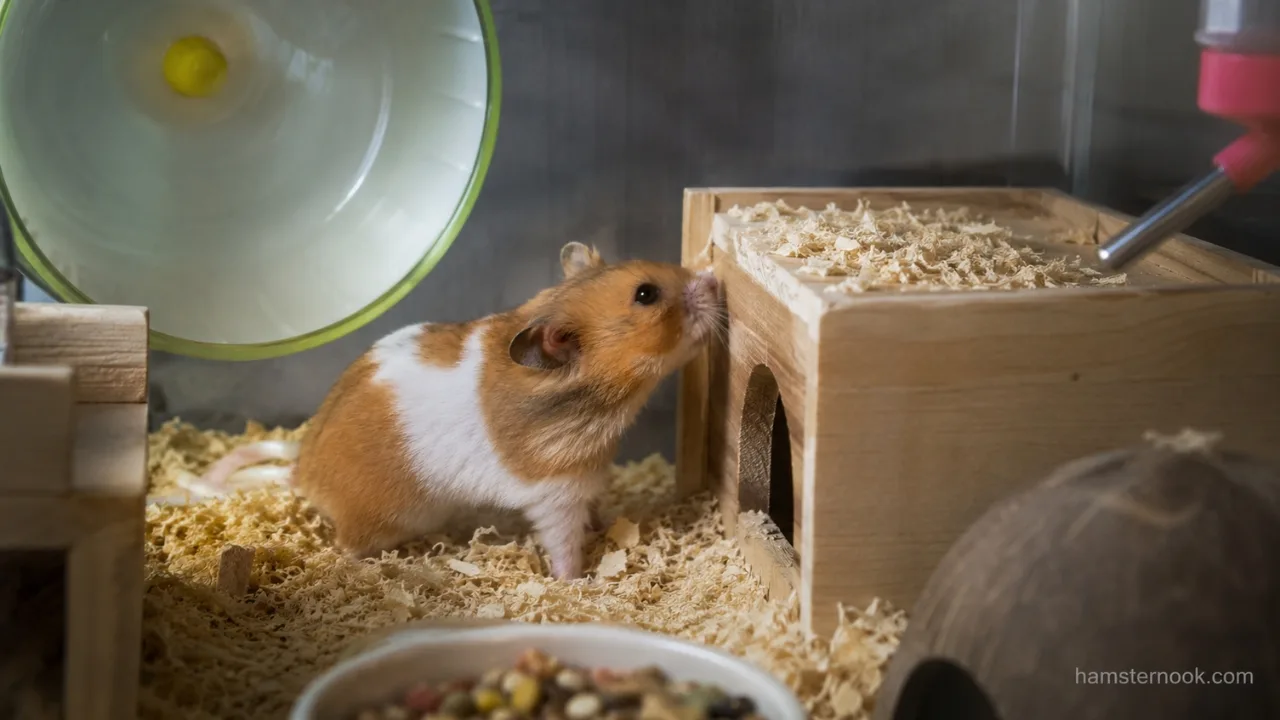
- Staying inside its hide longer than usual
- Waiting until the room is quiet before emerging
- Becoming active much later than normal
- Frequently rebuilding its nest in darker parts of the enclosure
Before making changes, observe your hamster’s normal routine for several days. Looking for consistent patterns is usually more helpful than reacting to a single unusual day.
Common Mistakes Owners Make
Small changes to your hamster’s environment can make a big difference in how comfortably it rests. Many lighting-related problems come from good intentions rather than neglect.
Leaving Bright Lights on Every Night
An occasional forgotten light isn’t a major concern, but keeping the enclosure under bright room lights throughout the night can interfere with your hamster’s natural activity cycle.
Placing the Cage in Direct Sunlight
Some owners place a cage beside a sunny window to give their hamster “natural light.” Direct sunlight can quickly overheat an enclosure and create uncomfortable temperature fluctuations. Bright indirect daylight is a much safer choice.
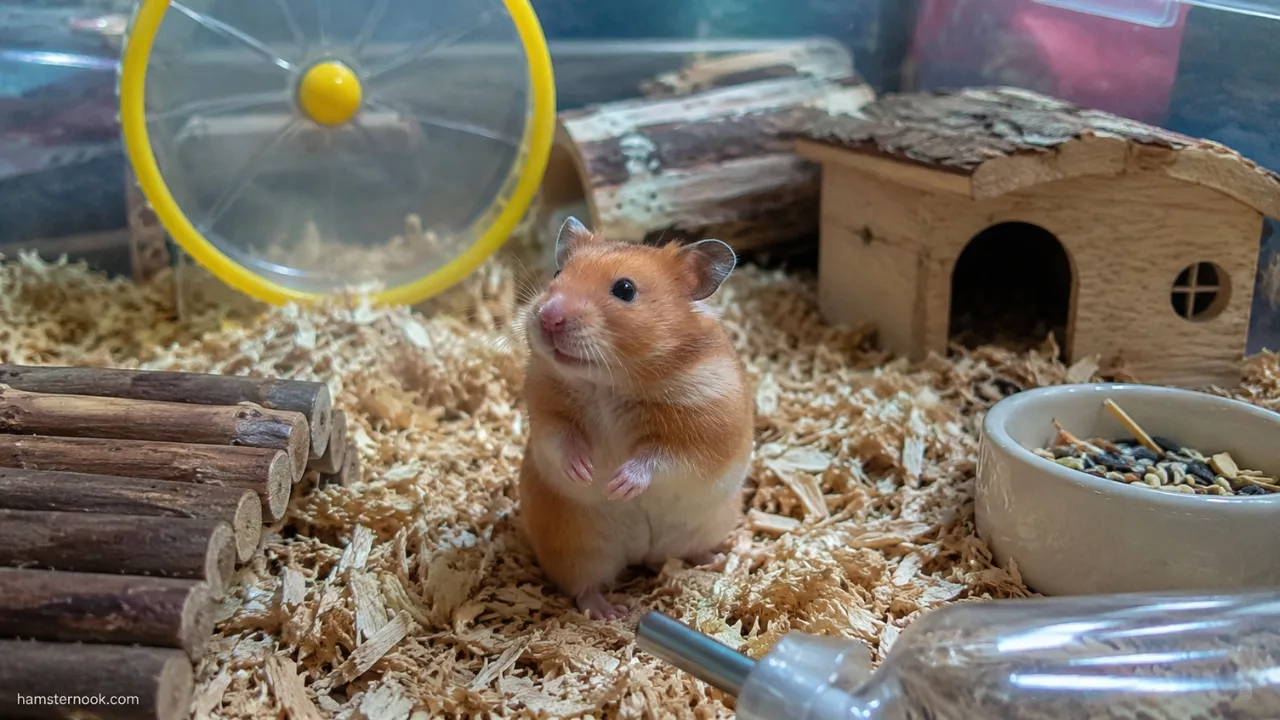
Using Transparent Hides Only
Clear plastic houses let light pass through, making it harder for hamsters to create the dark sleeping environment they naturally prefer. Wooden houses, cork tunnels, or multi-chamber hides offer better shelter.
Frequently Turning Lights On and Off
Repeatedly switching bright lights on during the hamster’s active period can interrupt normal exploration and foraging. A predictable routine is less disruptive than sudden changes.
Waking a Sleeping Hamster
If your hamster is resting during the day, avoid lifting its hide or turning on bright lights just to check on it. Regular daytime disturbances can increase stress and reduce the quality of its rest.
What You Should Do
You don’t need to keep your hamster in complete darkness. Instead, aim to create an environment that follows a natural daily rhythm.
Here are a few simple practices that work well:
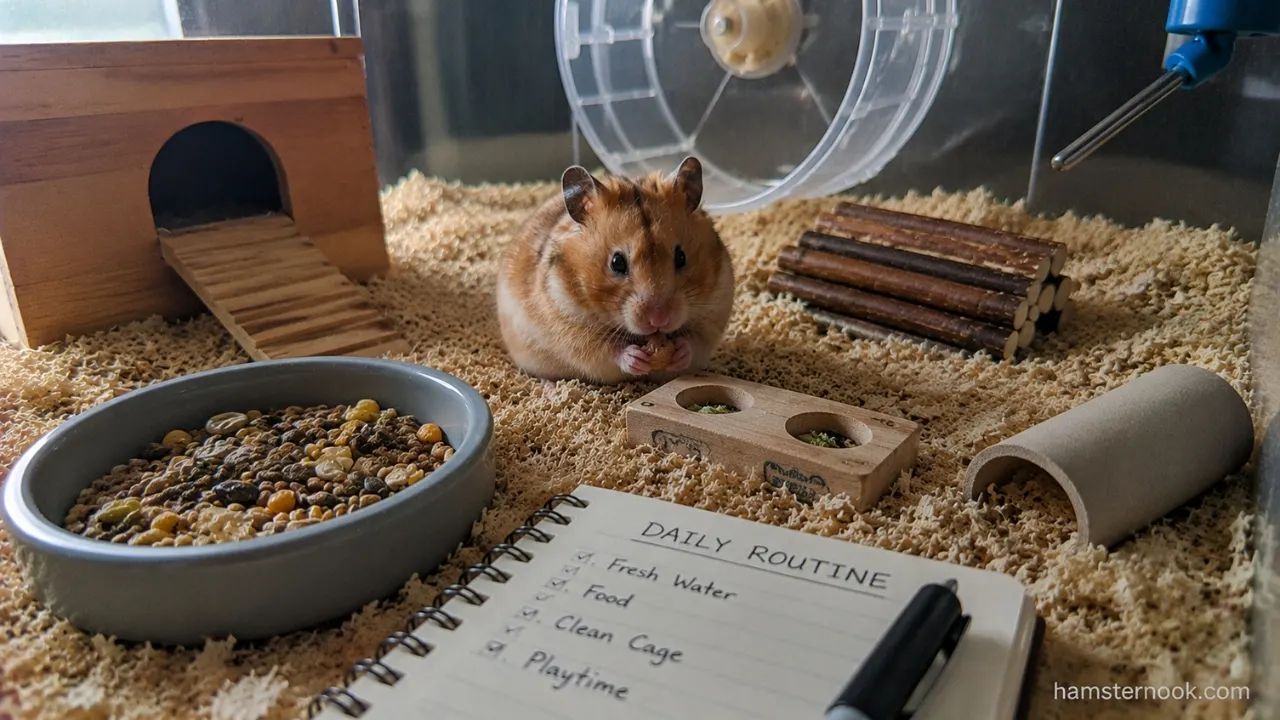
- Keep a regular schedule of daytime light and nighttime darkness.
- Provide at least one enclosed hide where your hamster can sleep undisturbed.
- Use deep bedding so it can dig a dark nest if it chooses.
- Position the enclosure away from direct sunlight.
- Avoid shining lamps or spotlights directly into the cage.
- Reduce loud activity around the enclosure during your hamster’s daytime sleeping hours.
If possible, choose a room where lights are turned off at a fairly consistent time each evening instead of staying brightly lit throughout the night.
If your hamster has a quiet place to rest, it will usually decide for itself when and where to sleep.
Warning Signs
Sleeping with the room light on occasionally is unlikely to cause problems by itself. However, observe your hamster if you notice changes that continue for several days.
Watch for:
- Consistently avoiding its usual sleeping area.
- Remaining hidden far longer than its normal routine.
- Becoming unusually restless at inappropriate times of day.
- Reduced interest in food or enrichment.
- Repeated attempts to relocate its nest to darker corners of the enclosure.
These signs don’t necessarily mean lighting is the cause, but they suggest it’s worth reviewing the overall environment.
When to Worry
Most healthy hamsters adapt well to normal household lighting when they have secure, dark places where they can rest undisturbed.
Consider consulting an experienced exotic animal veterinarian if your hamster:
- Stops eating or drinking.
- Shows marked lethargy during its normal active hours.
- Develops additional signs of illness, such as weight loss or breathing difficulties.
- Displays sudden behavioral changes that don’t improve after environmental conditions have been corrected.
Persistent changes in behavior should never be blamed on lighting alone without considering other possible causes.
Looking at your hamster’s overall condition—including appetite, activity, posture, and behavior—provides a clearer picture than focusing on lighting alone. Read How to Tell If Your Hamster Is Happy, Healthy, Stressed, or Sick: Complete Owner’s Guide (2026).
Final Thoughts
Hamsters are remarkably adaptable, but they still depend on a consistent day-night cycle and secure places to sleep. While they can sleep with the lights on, they rest best when they have access to dark nesting areas that mimic the underground burrows their wild relatives use.
Rather than worrying about the occasional forgotten light, focus on providing a well-designed enclosure with deep bedding, enclosed hides, and a predictable daily routine. Those simple husbandry practices are far more beneficial than trying to keep the entire room completely dark.
Frequently Asked Questions
Can my hamster sleep if my bedroom light is on?
Yes. If your hamster has a dark hide or nest, it will often continue sleeping despite the room light. However, leaving bright lights on every night isn’t ideal.
Is it okay to leave a night light near my hamster?
A dim night light in the room is generally less disruptive than bright overhead lighting, especially if it isn’t directed at the enclosure.
Do hamsters need complete darkness to sleep?
No. They mainly need access to dark, sheltered nesting areas where they feel safe. Complete darkness throughout the room isn’t usually necessary.
Can I cover my hamster’s cage with a blanket at night?
It’s generally better not to. Covering the cage may reduce ventilation and can trap heat. Instead, provide proper hides and place the enclosure in a suitable location.
Does blue LED lighting affect hamsters?
A special night light is not necessary for a hamster. The important thing is to keep lighting predictable and give your hamster a dark, sheltered place where it can rest. Avoid leaving bright lights on around the enclosure throughout the night.
Should I turn the lights off as soon as my hamster wakes up?
No. Normal household lighting in the evening is usually fine. A consistent daily routine is more important than switching lights on and off whenever your hamster becomes active.
References
This guide is based on hamster lighting, sleep patterns, housing, environmental conditions, behavior, and welfare guidance from trusted animal welfare and veterinary resources, including:
- RSPCA – Creating a Good Home for Hamsters – Guidance on hamster housing, environmental conditions, bedding, nesting areas, lighting, and creating a suitable home environment.
- RSPCA – Hamster Behaviour – Information on natural hamster activity, sleeping behavior, environmental changes, and behaviors associated with stress or disturbance.
- RSPCA – Keeping Hamsters as Pets – General guidance on hamster care, housing, behavior, daily routines, and welfare.
- Blue Cross – Hamster Care Guide – Practical advice on hamster housing, sleeping areas, bedding, enrichment, handling, and wellbeing.
- MSD Veterinary Manual – Providing a Home for a Hamster – Veterinary guidance on hamster enclosure design, bedding, nesting areas, environmental conditions, and housing requirements.
- NC3Rs – Housing and Husbandry: Hamster – Guidance on hamster housing, environmental conditions, husbandry practices, and supporting species-appropriate behavior.

Narayan Kumar is the founder and author of HamsterNook. He creates practical, research-based hamster care guides covering hamster behavior, nutrition, cage setup, enrichment, health, and everyday care. His goal is to help hamster owners make informed decisions and provide safer, healthier lives for their pets through clear, beginner-friendly information based on trusted animal care resources.