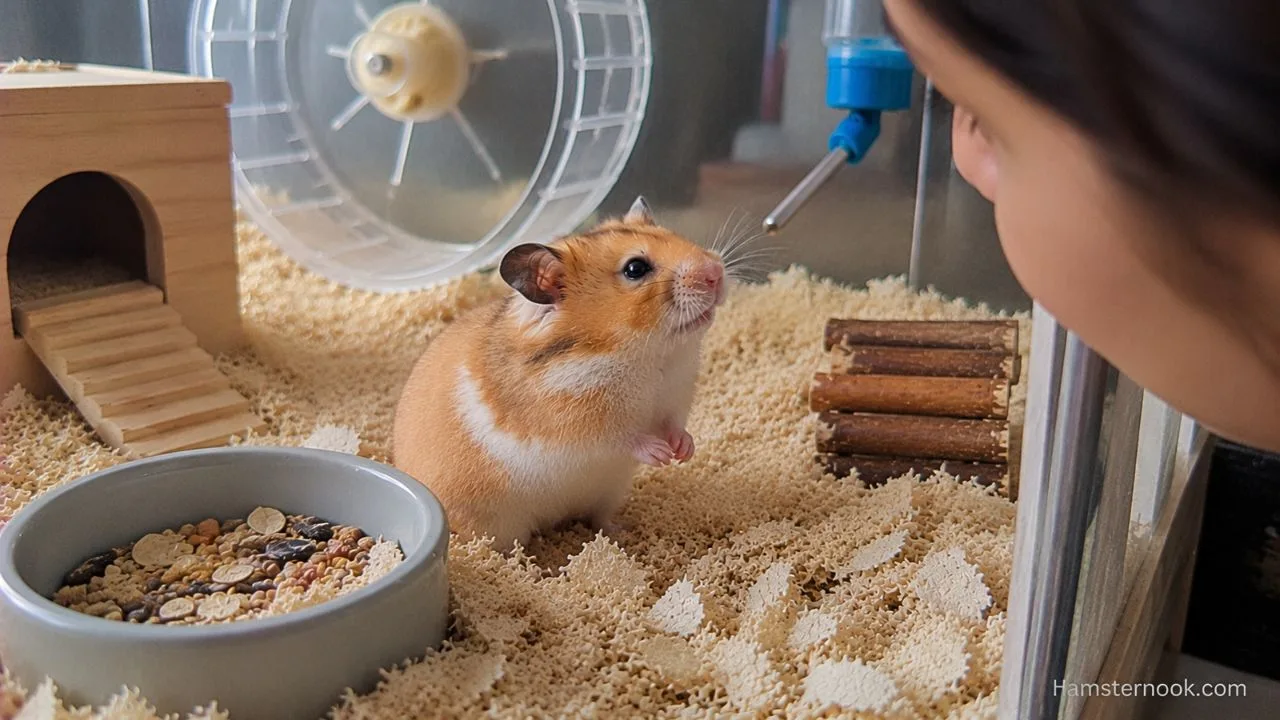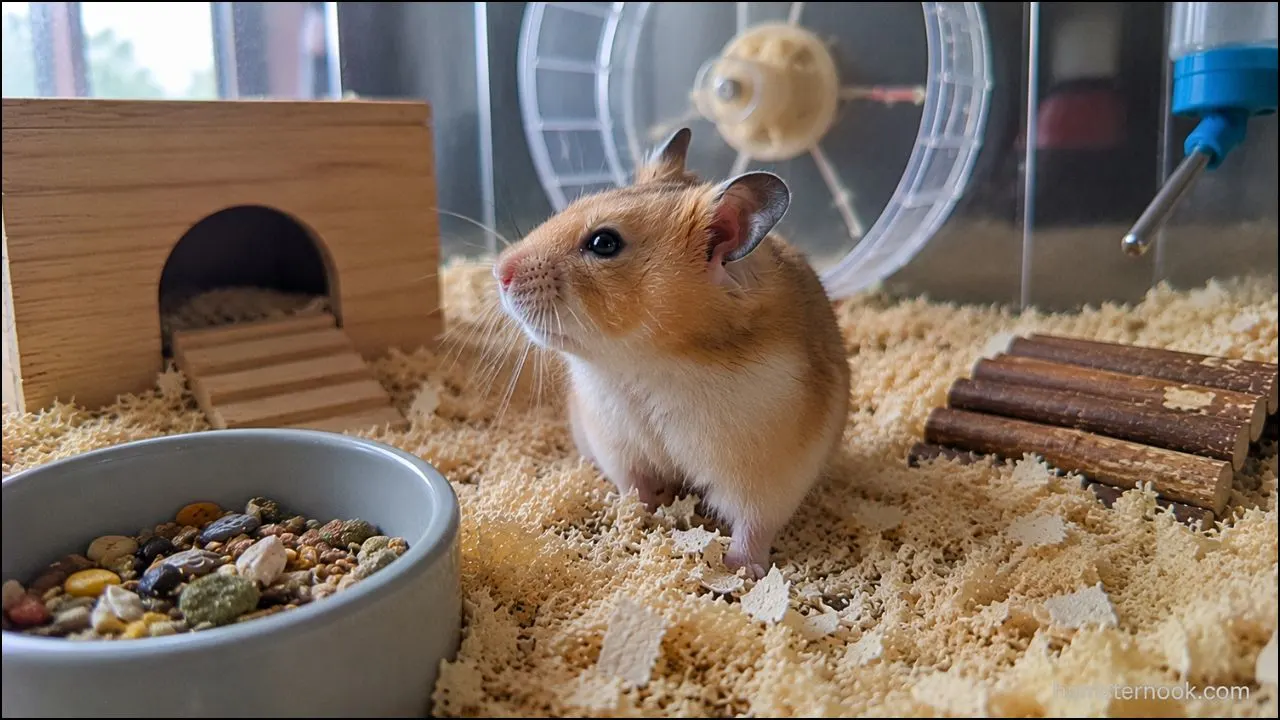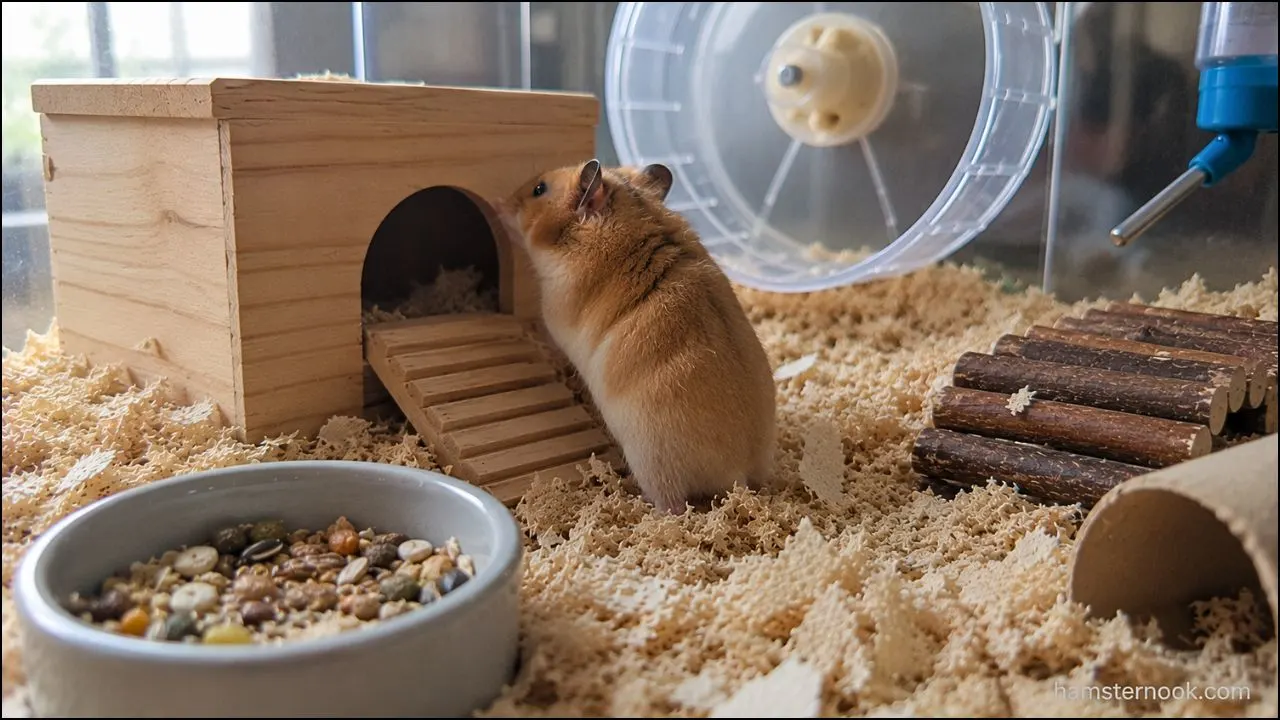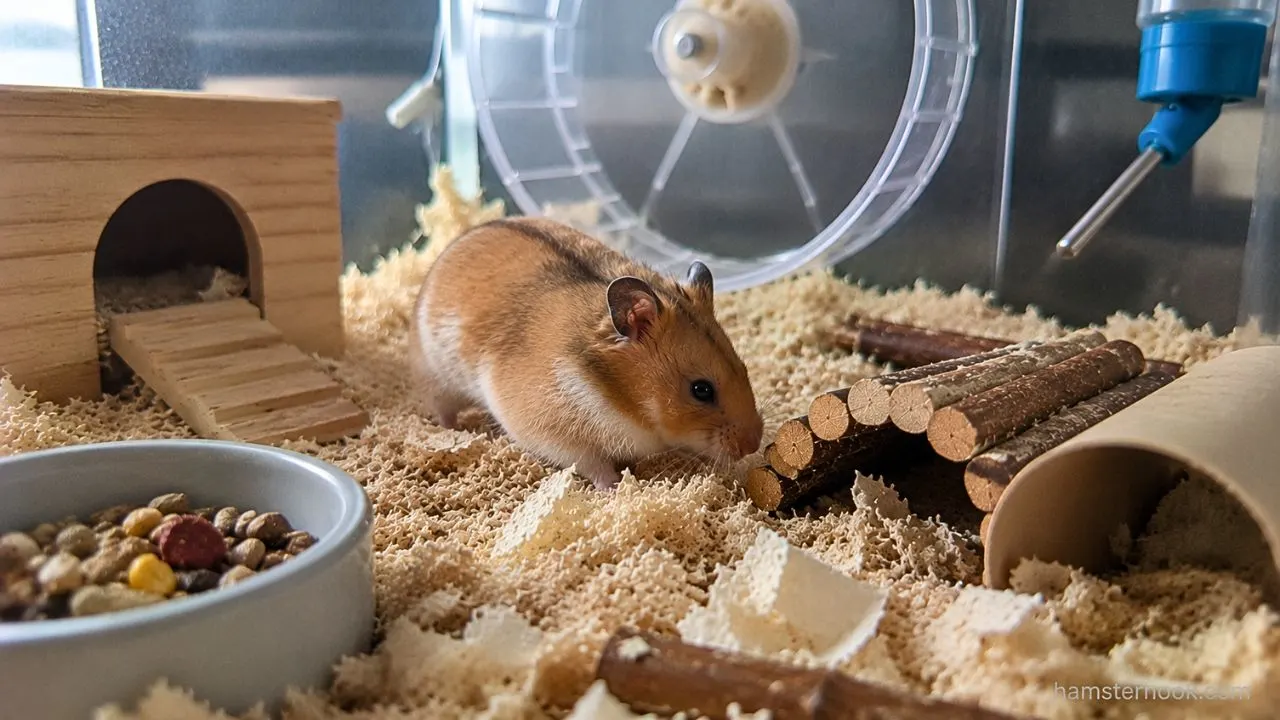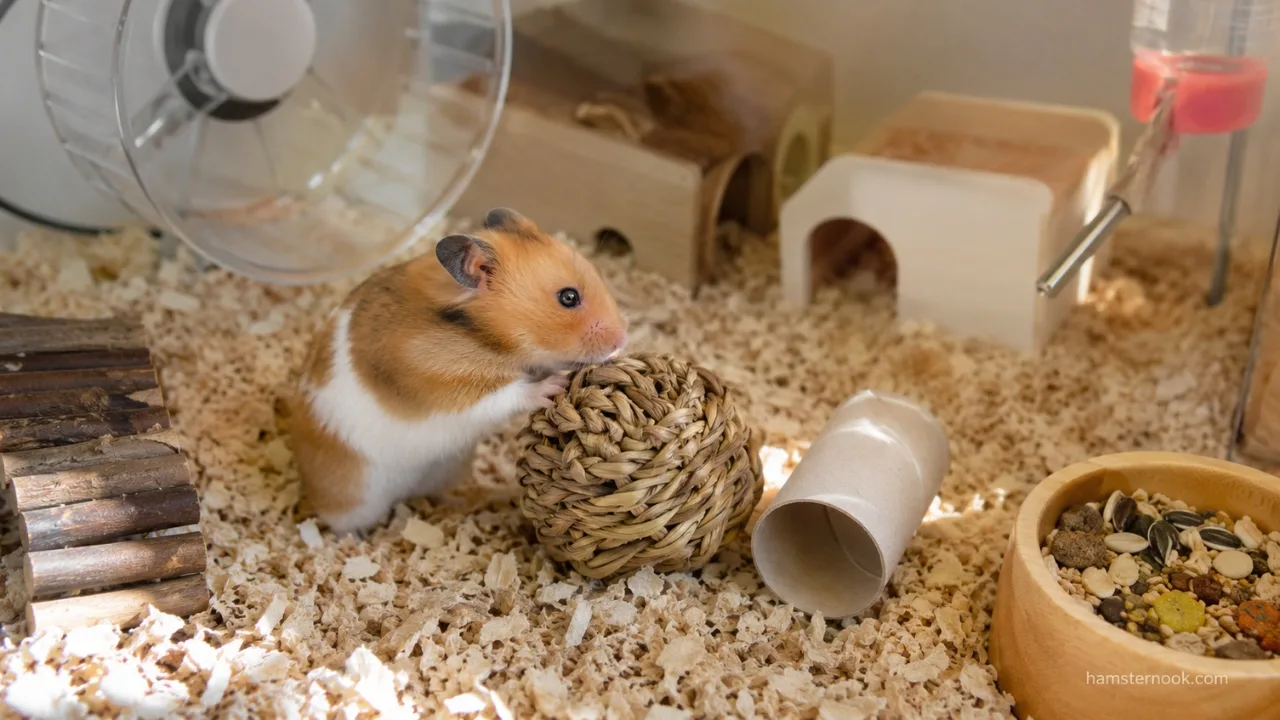
A hamster may look perfectly content while sleeping all day and running on a wheel at night, but mental stimulation is just as important as food, water, and a clean cage. In the wild, hamsters spend hours exploring, digging, searching for food, and navigating changing environments. Pet hamsters still have those same instincts, even when they live in a safe home.
When a hamster becomes bored, the effects can show up in surprising ways. Excessive bar chewing, cage pacing, overgrooming, lethargy, and even aggression can sometimes be linked to a lack of enrichment. Many effective enrichment activities can be created using simple items that are already available in most homes.
Here are 15 easy, practical ways to challenge your hamster’s mind, encourage natural behaviors, and help them live a happier, more fulfilling life.
Quick Answer: How Do You Keep a Hamster Mentally Stimulated?
You can keep a hamster mentally stimulated by encouraging natural behaviors such as foraging, digging, chewing, burrowing, exploring, and problem-solving. Simple activities like scatter feeding, toy rotation, cardboard mazes, dig boxes, and foraging puzzles provide enrichment that helps reduce boredom and promotes overall well-being.
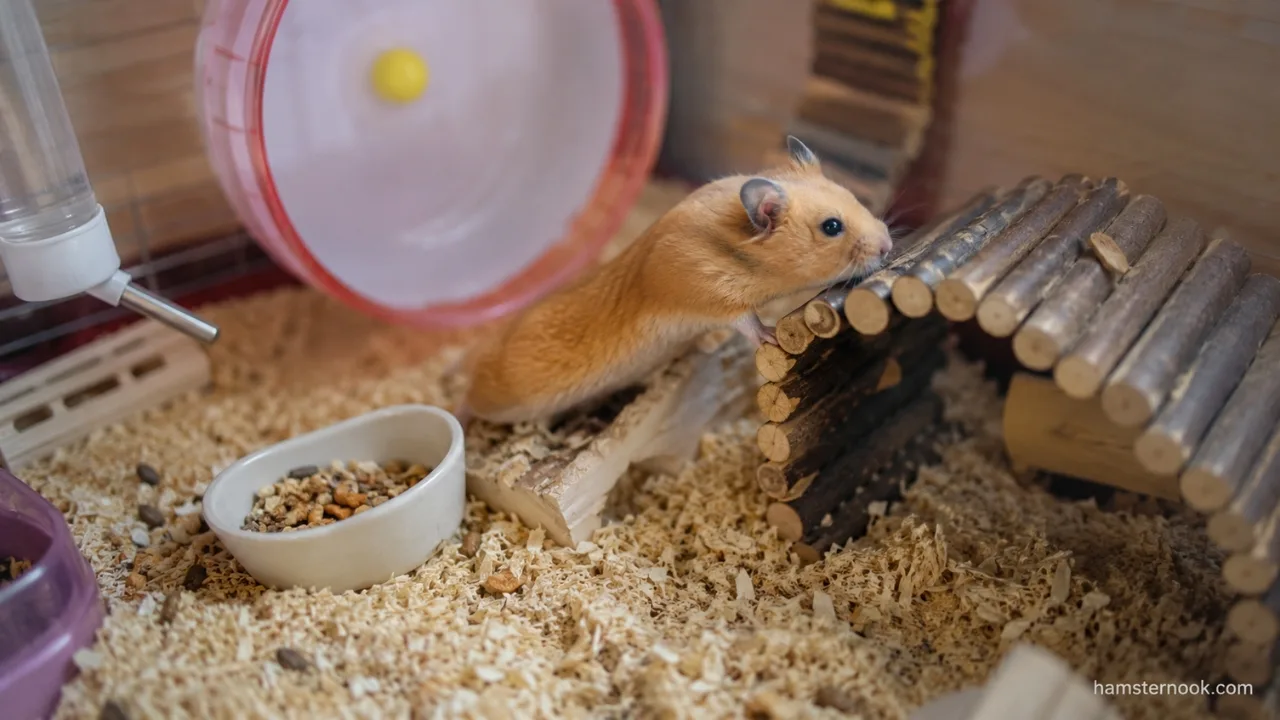
Why Mental Enrichment Is Important for Hamsters
Physical exercise gets a lot of attention, but mental stimulation is just as important for a hamster’s overall well-being. A wheel provides exercise, but it doesn’t replace opportunities to explore, forage, dig, and solve simple challenges.
Mental stimulation helps:
- Reduce boredom
- Encourage natural instincts
- Prevent repetitive behaviors
- Increase confidence
- Support overall well-being
- Create a more interesting environment
Persistent cage-bar chewing can be a sign that something in the environment needs attention, so understanding the common causes of Why Is My Hamster Biting the Cage Bars? can help you decide whether the enclosure needs changes.
Can Hamsters Really Get Bored?
Absolutely. Although hamsters spend much of their time sleeping, they are naturally active and curious animals. When their environment lacks variety, they may begin repeating the same behaviors or show reduced interest in their surroundings.
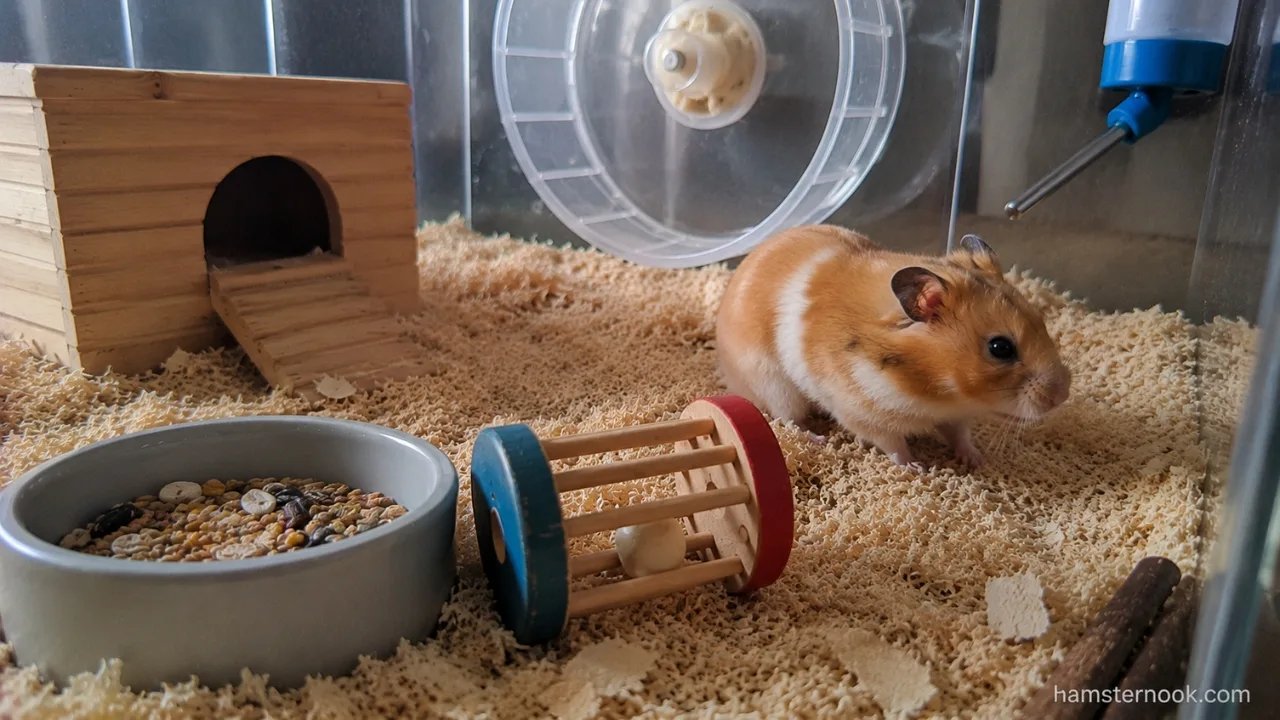
Signs Your Hamster May Be Bored
Before adding new activities, it’s helpful to recognize potential boredom-related behaviors.
| Possible Sign | What It May Indicate |
|---|---|
| Constant bar chewing | Frustration or lack of stimulation |
| Repetitive pacing | Seeking more enrichment |
| Excessive sleeping when awake hours | Low engagement |
| Overgrooming | Stress or boredom |
| Ignoring toys | Enrichment needs updating |
| Digging at cage corners | Desire for more exploration |
Not every hamster will display these behaviors, and some can have multiple causes. However, seeing several of these signs together may indicate that your hamster would benefit from additional enrichment and environmental variety.
Because stress and boredom can produce similar behaviors, 7 Signs You’re Accidentally Stressing Your Hamster can help you distinguish environmental stress from a simple need for more enrichment.
Boredom vs. Stress or Illness
Not every unusual behavior means your hamster is bored. Changes such as excessive sleeping, overgrooming, reduced activity, aggression, or repetitive behavior can also be associated with stress or an underlying health problem. If a behavior is sudden, severe, or continues despite improving enrichment, do not assume boredom is the cause.
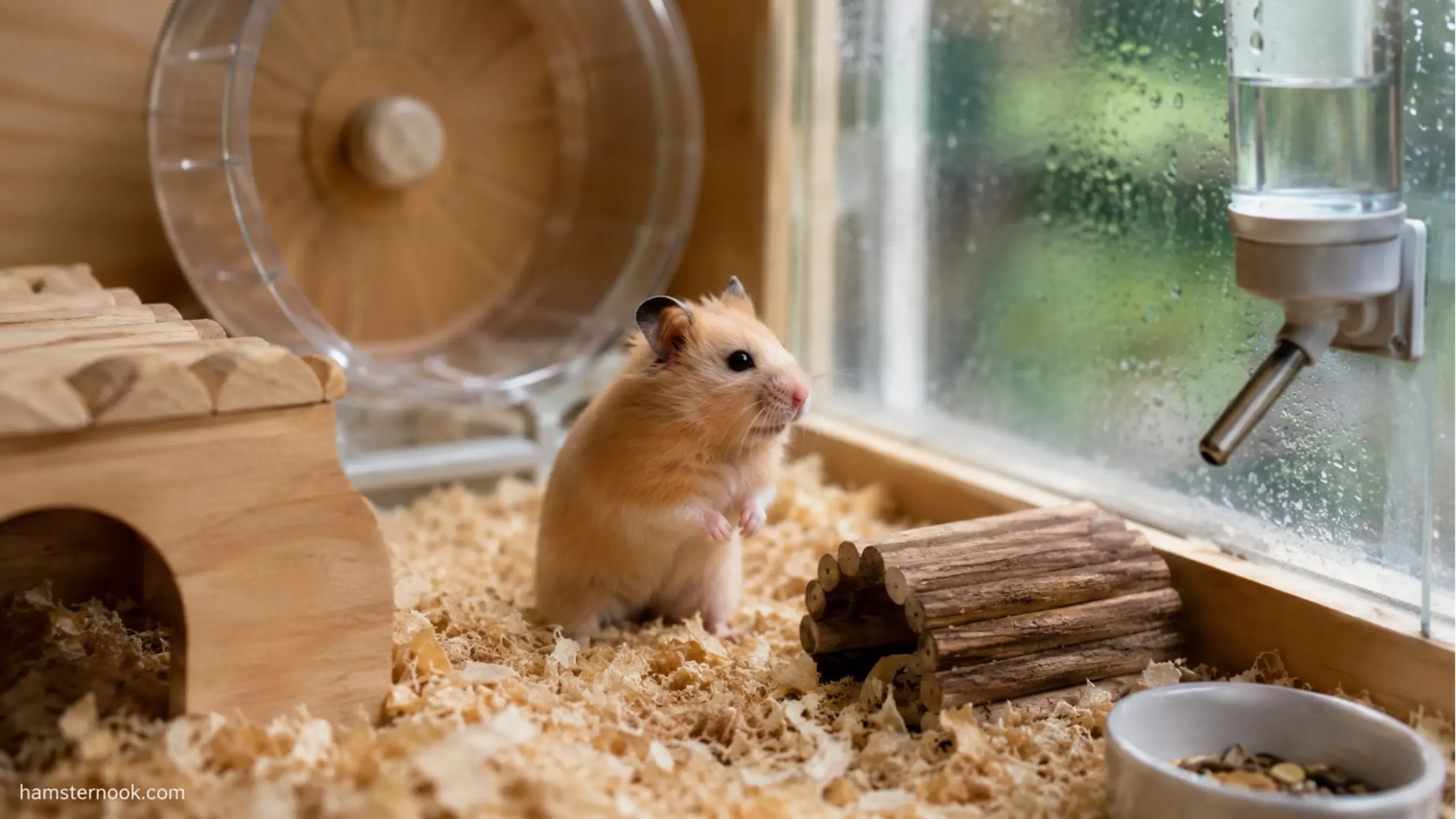
Look at the bigger picture, including appetite, drinking, movement, grooming, breathing, and normal activity during your hamster’s usual awake period. If several behaviors change at once or your hamster appears unwell, veterinary advice is more appropriate than simply adding more toys.
1. Scatter Feed Instead of Using a Bowl
One of the simplest forms of enrichment is scatter feeding.
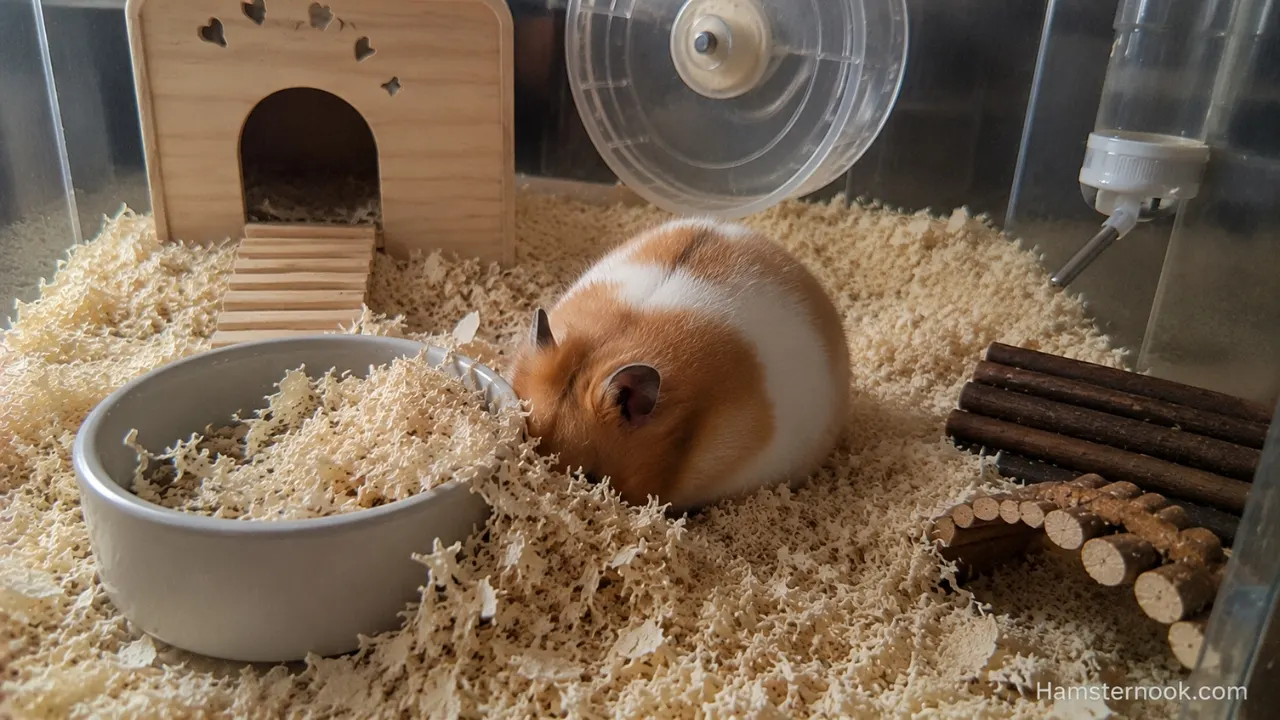
Instead of placing all food in a dish, sprinkle part of your hamster’s food around the enclosure. This encourages natural foraging behavior and gives your hamster a reason to explore.
In the wild, hamsters spend considerable time searching for food rather than finding it all in one location.
Why Scatter Feeding Works
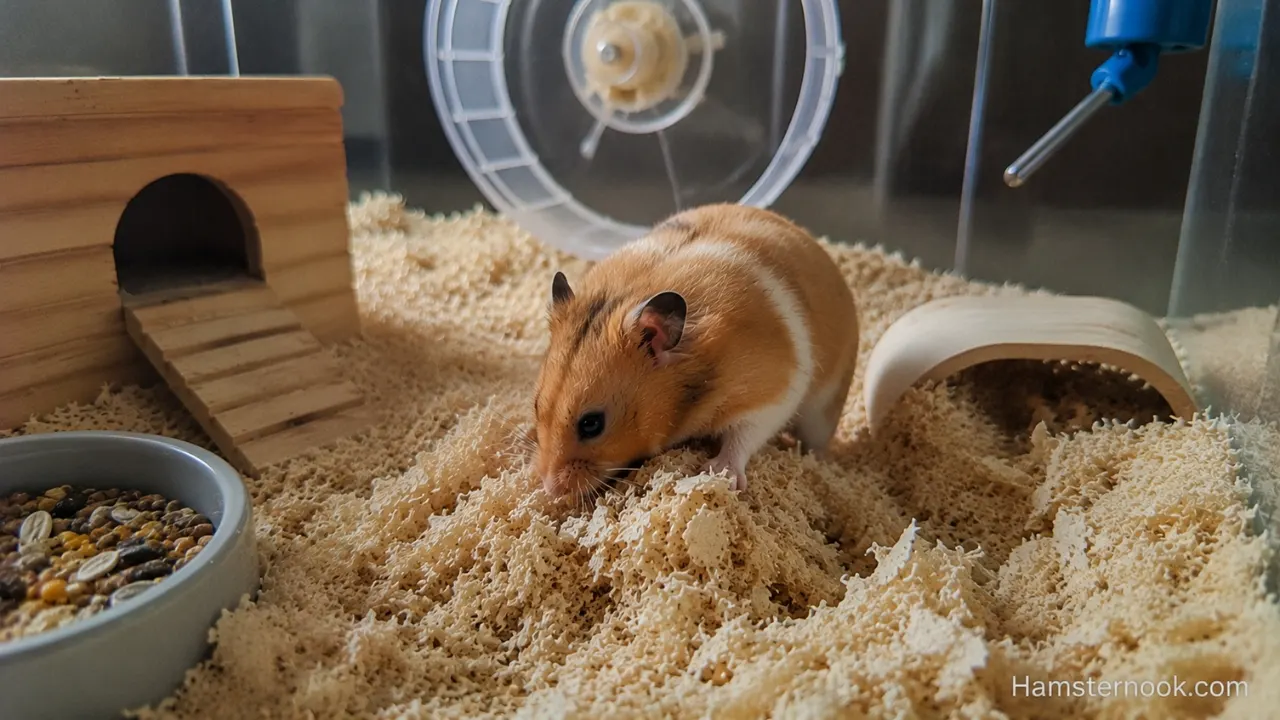
Scatter feeding turns mealtime into an activity rather than a routine. Instead of walking to a food bowl, your hamster must use its sense of smell and natural foraging instincts to locate food throughout the enclosure.
2. Create a Dig Box
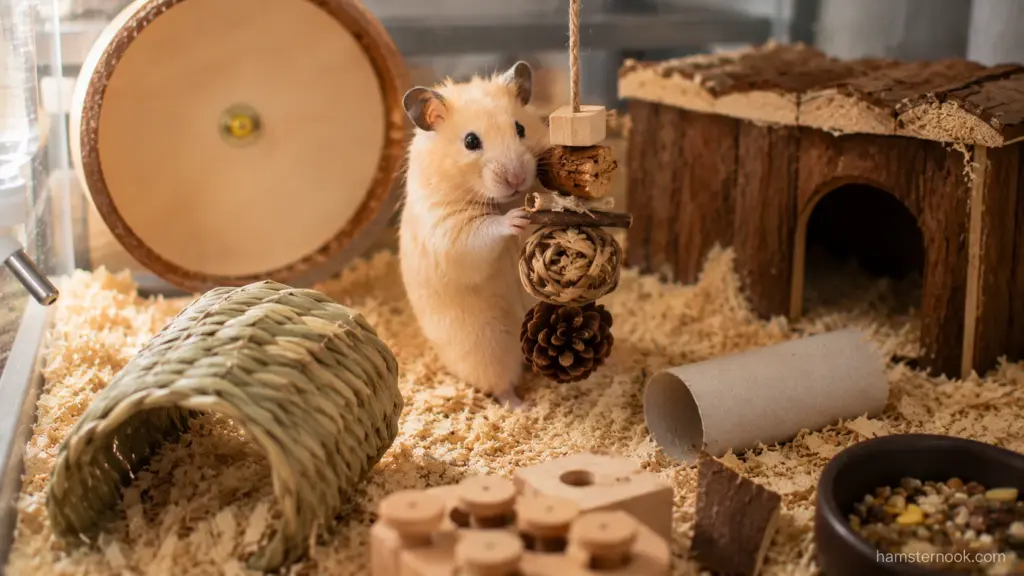
Digging is one of the most natural hamster behaviors.
A dig area can use appropriate dust-free bedding or another substrate known to be safe for hamsters. Paper-based bedding, suitable dust-free wood shavings, and appropriate soil or sand substrates are among the materials recommended by established hamster-care guidance.
Hide a few treats inside to encourage investigation and digging.
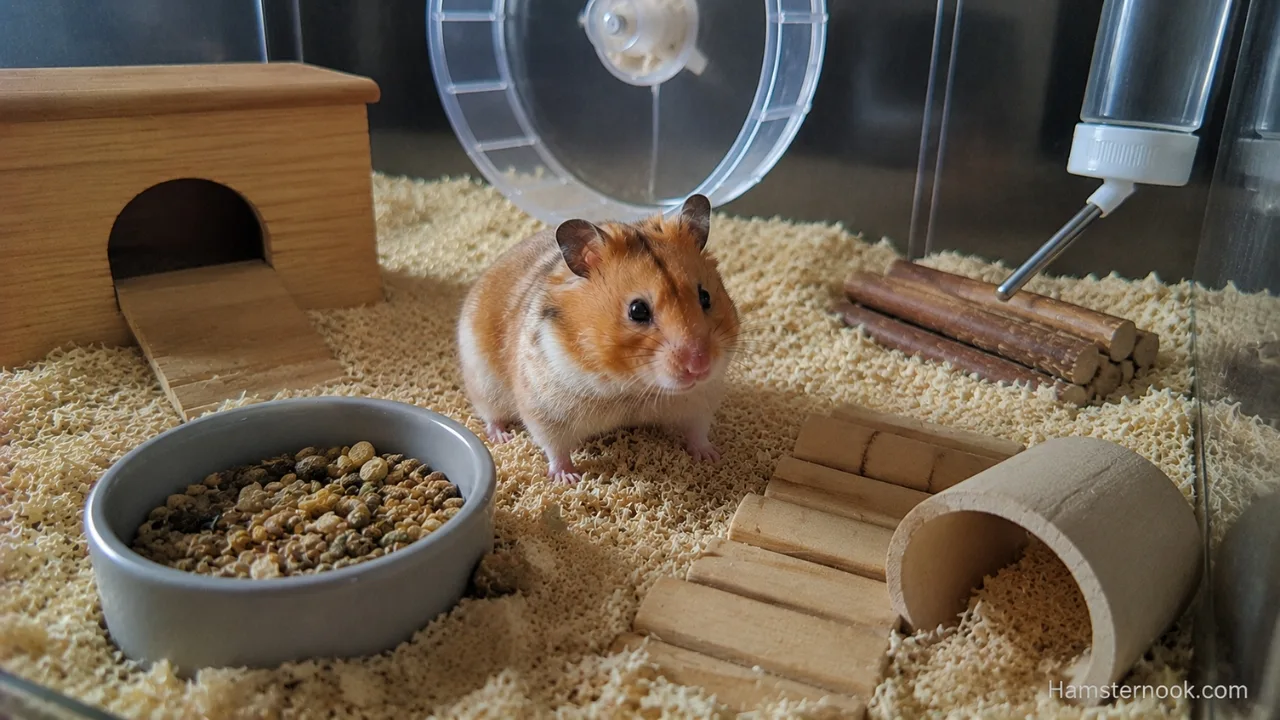
Even a small dig box can provide hours of enrichment, especially for hamsters that enjoy burrowing and searching for hidden rewards.
3. Rotate Toys Regularly
A cage filled with the same items for months can become predictable.
Instead of buying more toys constantly, rotate existing accessories every few weeks.
Changing layouts and objects creates novelty without overwhelming your hamster.
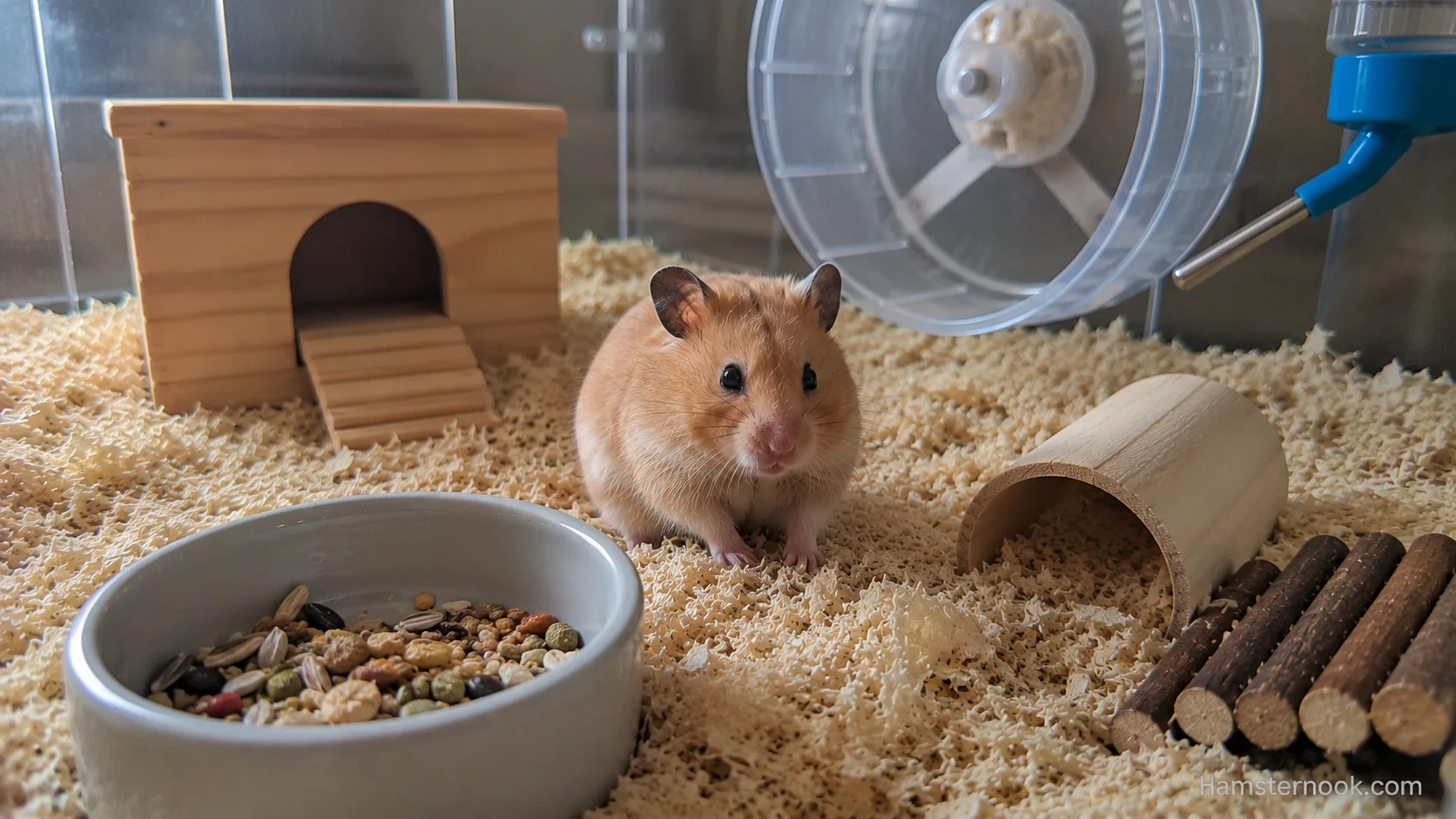
Many owners notice renewed interest in toys simply by removing them for a few weeks and reintroducing them later.
4. Hide Treats Around the Enclosure
Food puzzles don’t need to be complicated.
Place treats in different safe locations throughout the habitat so your hamster has to search for them.
This activity combines physical movement with mental engagement.
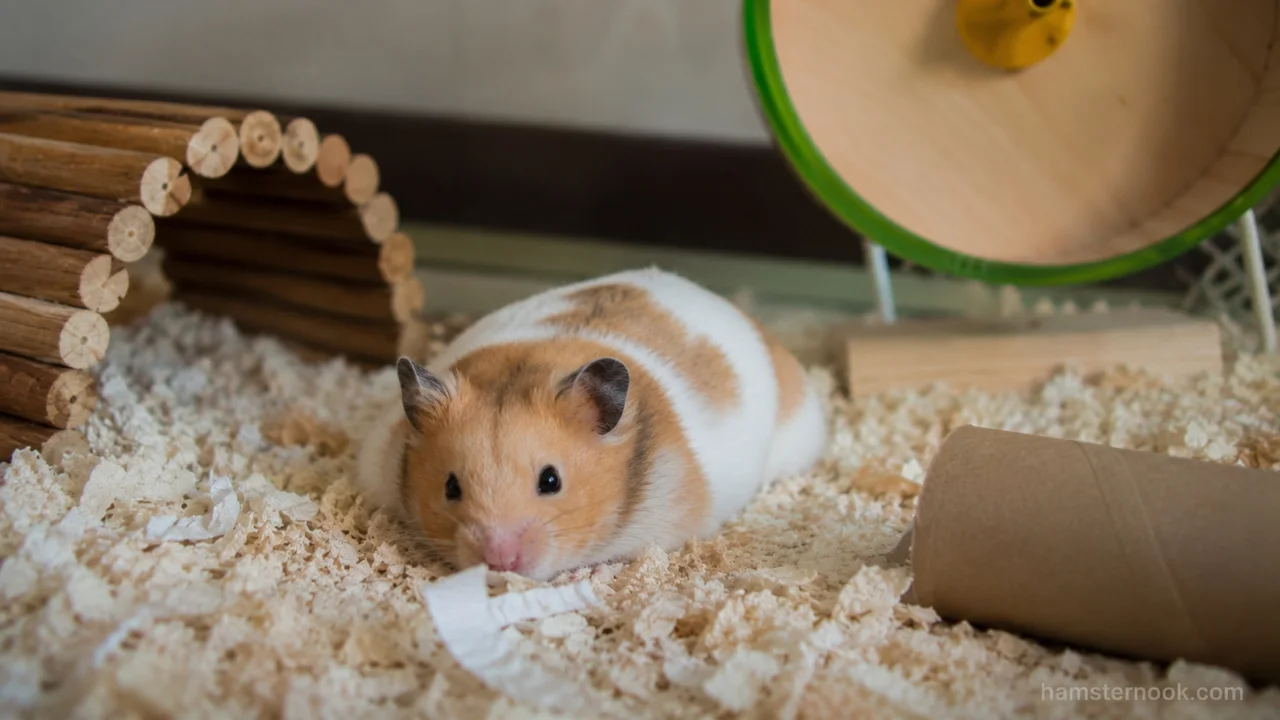
5. Offer Safe Chewing Materials
Chewing is both a physical and mental activity.
Hamsters continuously explore objects using their teeth. Safe chewing options include:
- Apple wood sticks
- Willow balls
- Untreated wooden toys
- Cardboard tubes
Providing appropriate chewing outlets may also reduce destructive behaviors.
6. Build Simple Cardboard Mazes
Cardboard can become a surprisingly effective enrichment tool.
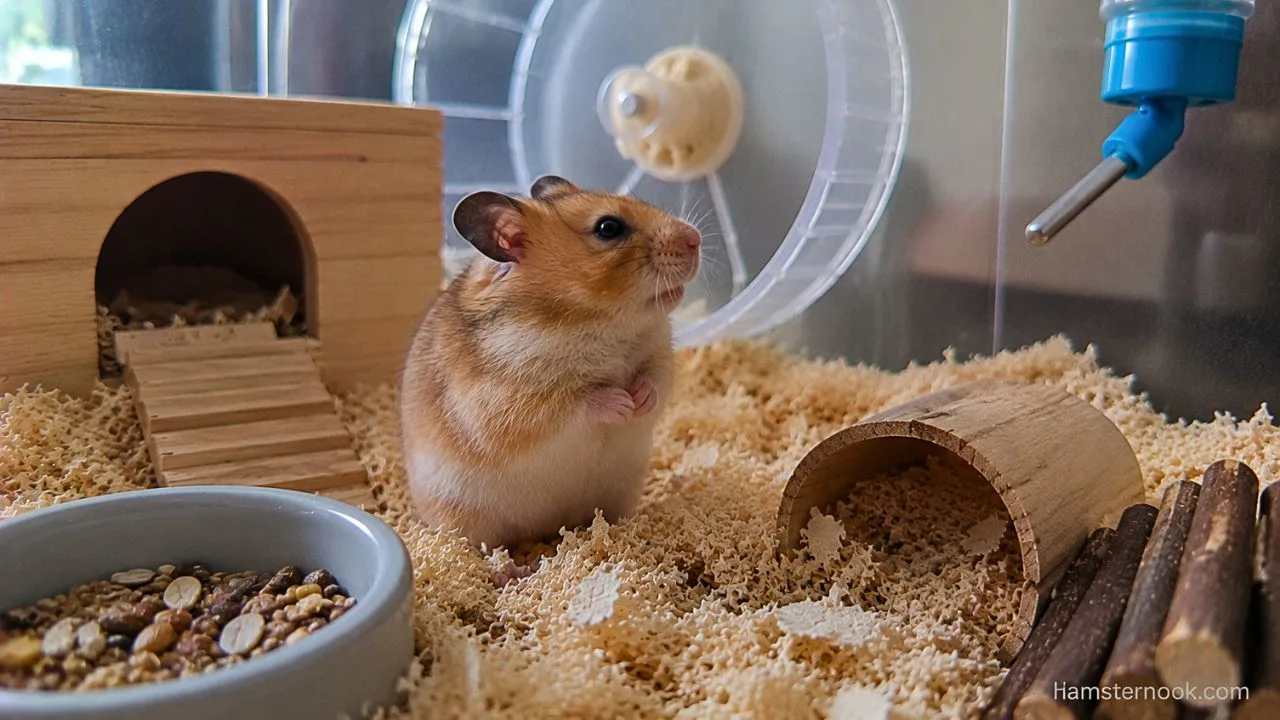
Create tunnels, rooms, and pathways from clean cardboard boxes. Your hamster will often spend hours investigating new routes.
Cardboard mazes can be useful for any hamster that enjoys exploring, but individual preferences matter more than breed. Start with a simple layout and keep pathways wide enough for your hamster to move through comfortably.
7. Introduce New Textures
A varied environment keeps things interesting.
Consider incorporating safe textures such as:
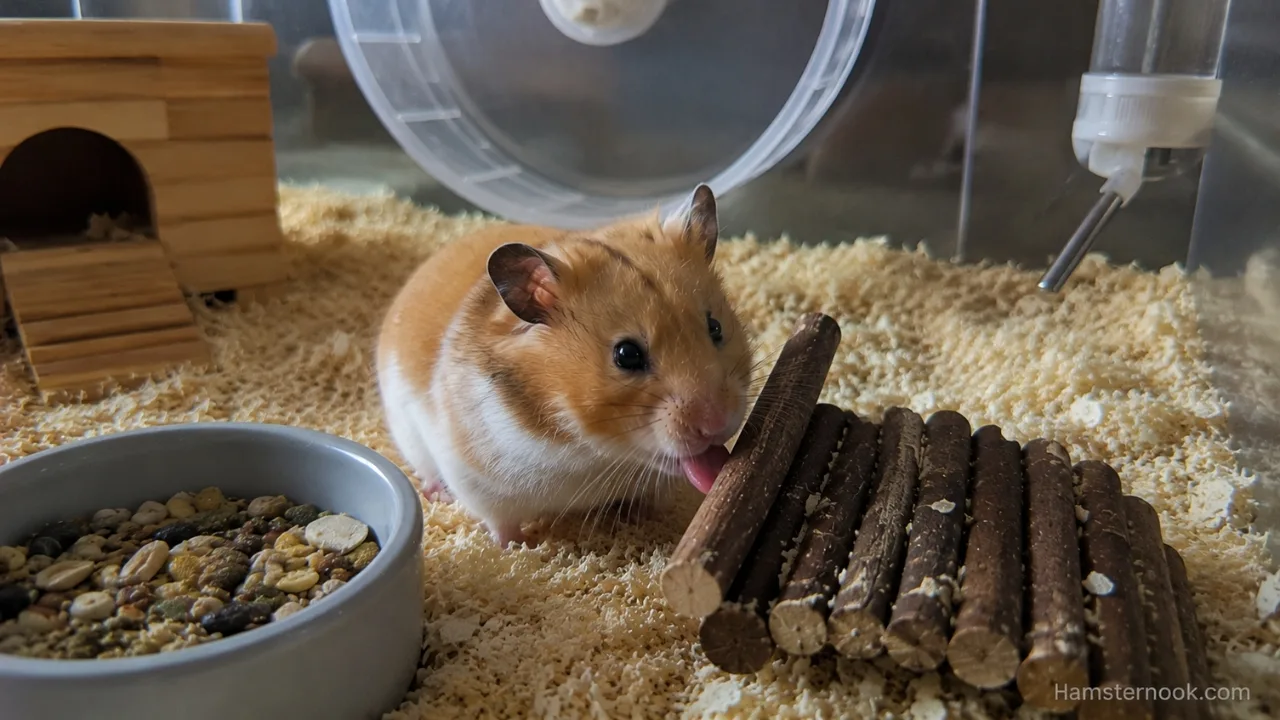
- Cork tunnels
- Wooden platforms
- Sand baths
- Different bedding depths
Exploring different surfaces provides valuable sensory enrichment.
8. Use a Sand Bath for Exploration
A sand bath isn’t only useful for grooming.
Many hamsters enjoy digging, rolling, and exploring within sand. This creates additional opportunities for natural behaviors.
Enrichment works best when the basic enclosure already provides enough usable space, bedding, hiding places, and exercise opportunities, as covered in Best Hamster Cage Setup for Beginners
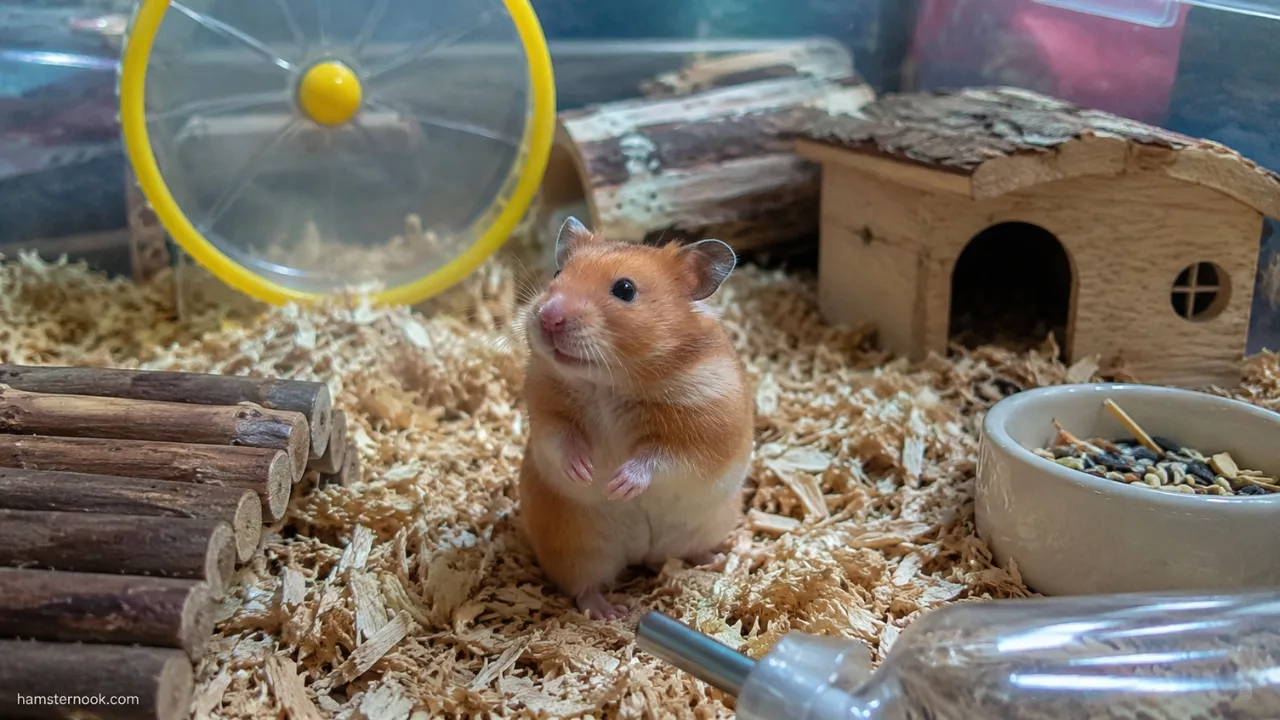
9. Create Multi-Level Exploration Areas
Low platforms and safe changes in layout can add variety, but hamsters should not be given tall structures that create significant fall risks. A larger single-level enclosure with deep bedding and opportunities to explore is generally more useful than adding height simply for the sake of creating multiple levels. PDSA specifically notes that larger, single-level cages can be preferable because hamsters have poor eyesight and can fall from heights.
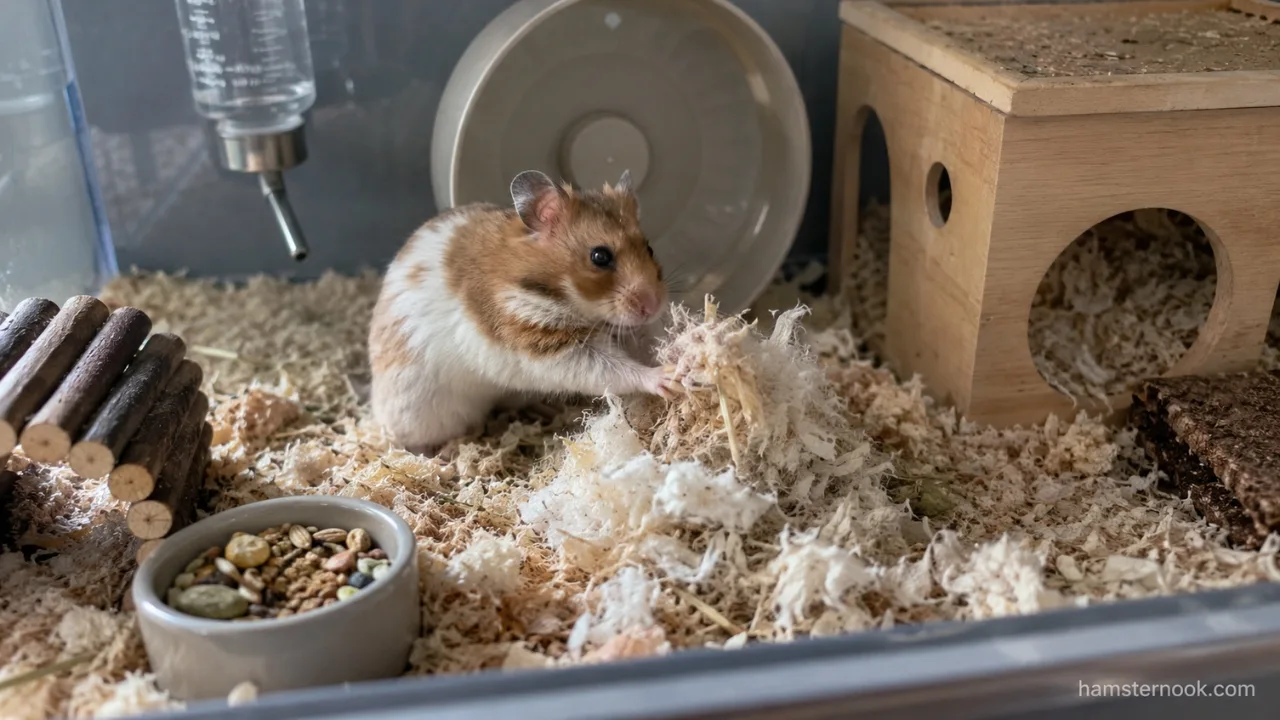
10. Give Your Hamster More Bedding to Burrow
Many pet hamsters live with less bedding than they naturally prefer.
Deep bedding encourages:
- Tunnel building
- Nest construction
- Food storage
- Exploration
Burrowing itself is a highly stimulating activity that supports both physical and mental health.
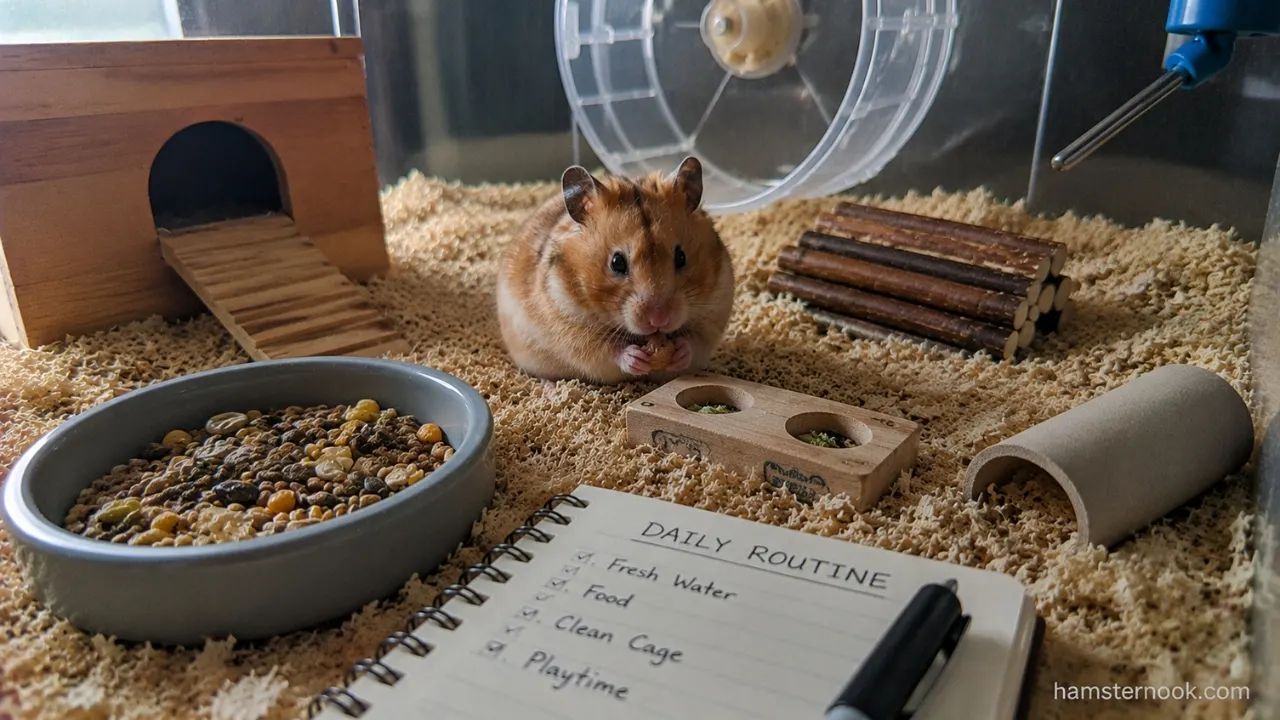
If a hamster has plenty of bedding but still avoids digging, Why Isn’t My Hamster Burrowing? Common Reasons Explained helps explain some of the enclosure and adjustment factors that can affect burrowing.
11. Offer Foraging Toys
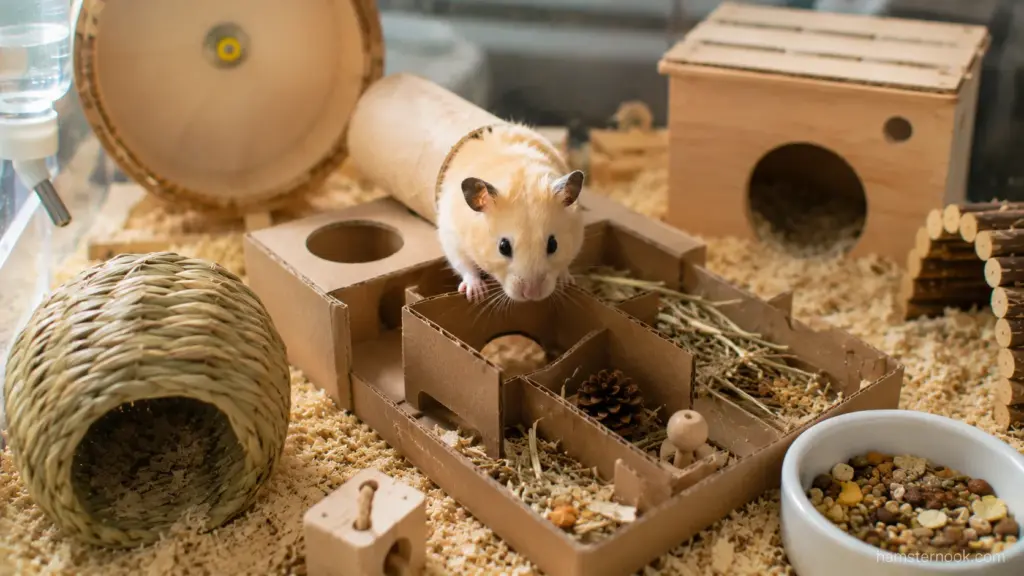
Foraging toys require hamsters to work for rewards.
Examples include:
| Foraging Activity | Mental Challenge Level |
|---|---|
| Treat hidden in tissue paper | Easy |
| Cardboard puzzle box | Moderate |
| Multiple-layer food search | Moderate |
| DIY tunnel treasure hunt | Advanced |
The goal isn’t to make food difficult to access but to create engaging opportunities for problem-solving.

12. Rearrange the Cage Occasionally
Hamsters become familiar with their environment over time.
A small layout change every few weeks can encourage exploration and curiosity.
Avoid making drastic changes too frequently, as some hamsters prefer stability.
13. Use Toilet Paper Rolls Creatively
Empty toilet paper tubes are excellent enrichment items.

You can:
- Hide treats inside
- Connect them into tunnels
- Stuff them with bedding
- Create simple puzzles
Always remove sticky residues and ensure the cardboard is clean.
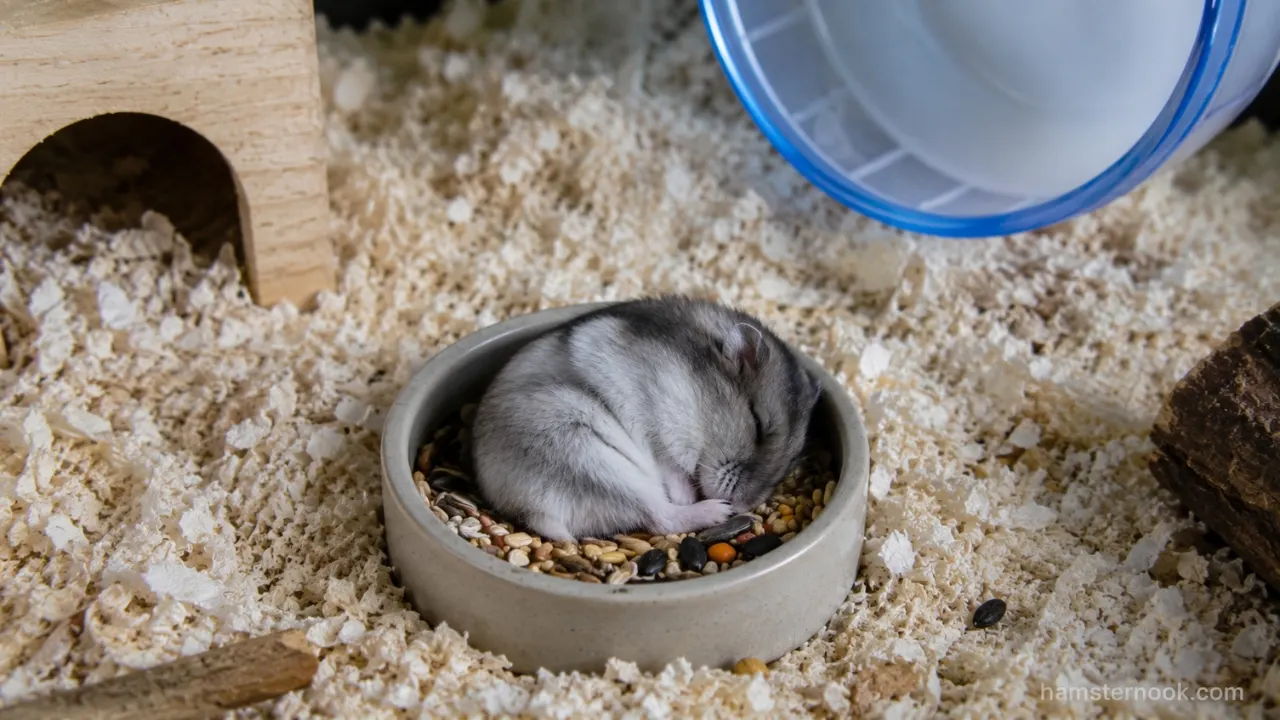
14. Allow Safe Playpen Exploration
A secure playpen offers opportunities beyond the cage.
Exploration outside the enclosure provides:
- New smells
- Different surfaces
- Additional exercise
- Environmental variety
Never leave a hamster unsupervised during out-of-cage time.
A hamster that is still nervous around handling may need more time to build confidence, and How to Get a Hamster to Trust You Faster covers the gradual approach that works best for this stage.
Playpen Safety Tips
Always remove electrical cords, household plants, gaps, and climbable furniture from the play area. Supervision is essential because hamsters can squeeze into surprisingly small spaces.
15. Teach Simple Interaction Games
Hamsters may not perform tricks like dogs, but they can learn simple routines.
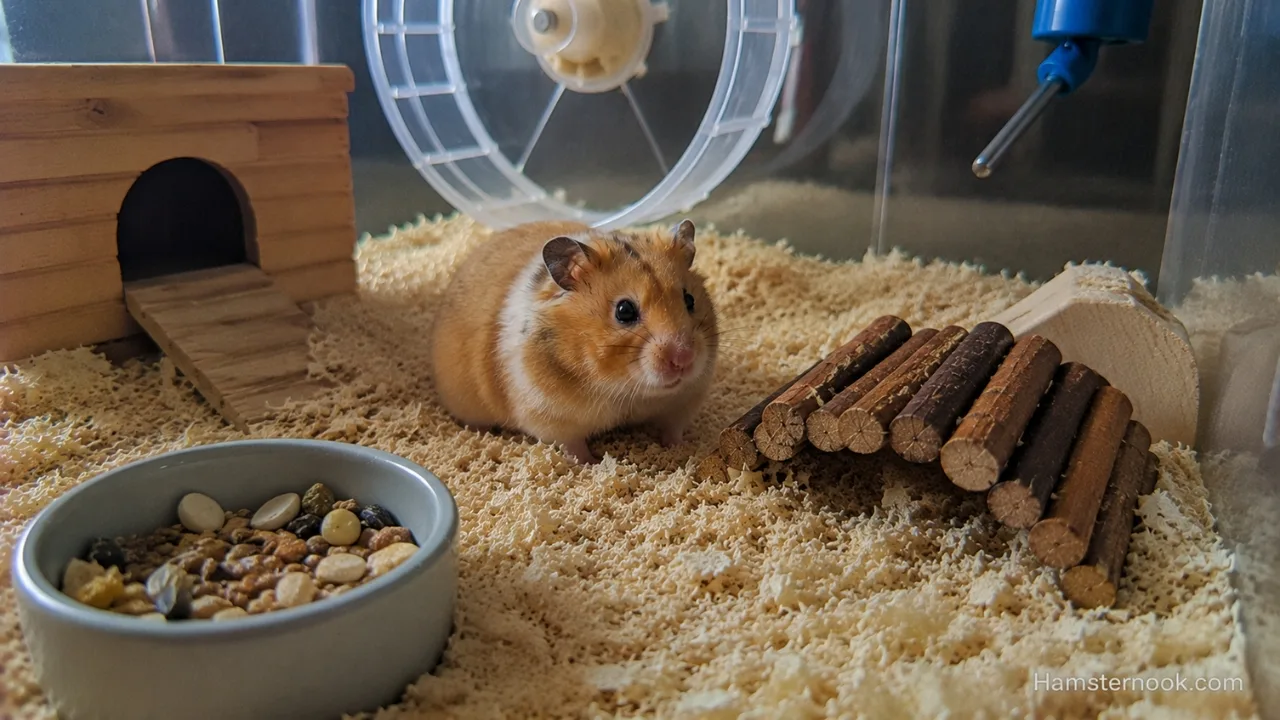
Some examples include:
- Coming to a hand for treats
- Following a target object
- Entering a travel carrier voluntarily
- Exploring obstacle paths
Mental challenges like these help strengthen trust while providing enrichment.
Simple interaction games are easier to understand when you know what hamsters can actually recognize and learn, including the behaviors discussed in Can Hamsters Learn Their Names?.
How Often Should You Change Enrichment Activities?
Most hamsters benefit from occasional changes rather than constant rearrangement. Introducing one new activity or rotating one accessory every few weeks helps maintain novelty while preserving a sense of security.
How Much Mental Stimulation Does a Hamster Need?
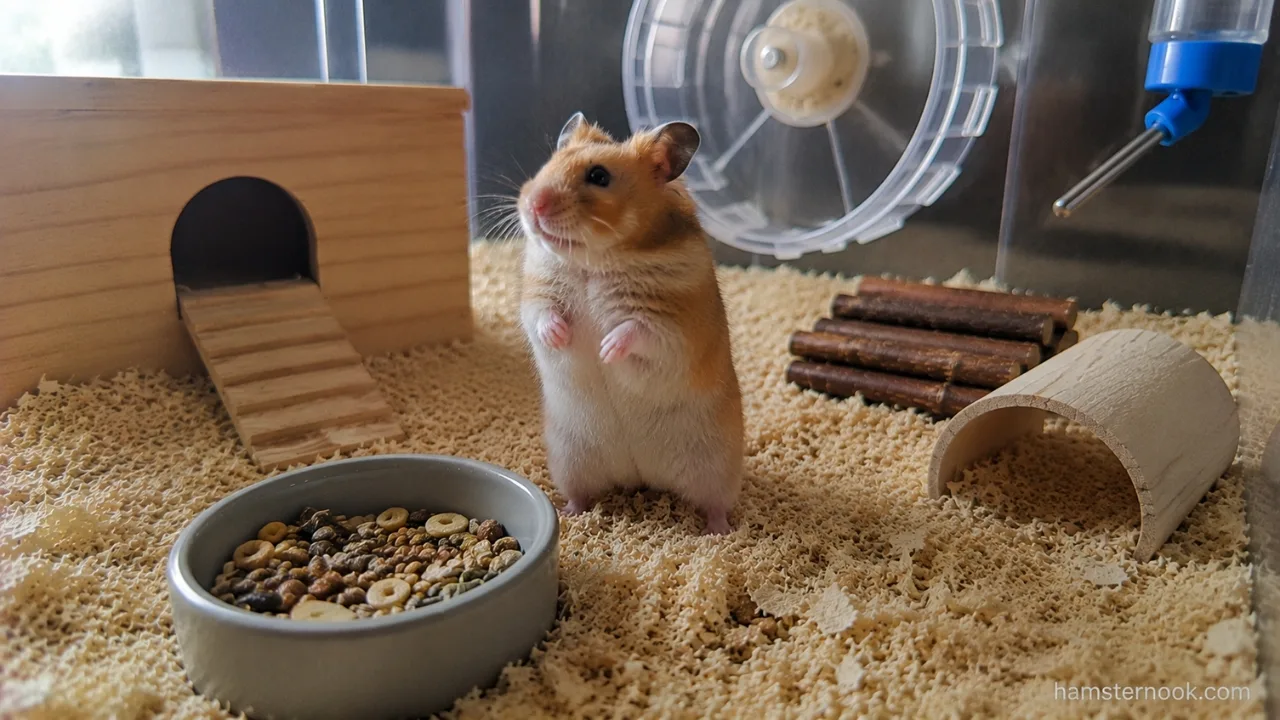
Enrichment should add to a good enclosure rather than compensate for missing basics. A hamster still needs enough usable floor space, deep bedding, safe hiding places, and a properly sized wheel before extra puzzles and activities become the focus. Welfare guidance from the RSPCA and PDSA emphasizes opportunities to dig, forage, explore, hide, and exercise as part of a suitable hamster environment.
You also don’t need to give your hamster extra treats every time you provide enrichment. Using part of the normal daily food ration for scatter feeding, hiding food, or simple foraging activities can provide mental stimulation without unnecessarily increasing calorie intake. PDSA specifically recommends making hamsters work for meals through scattering, burying, and hiding food.
There is no single number of enrichment activities that every hamster needs each day. A better approach is to provide regular opportunities to forage, dig, chew, explore, and investigate while keeping essential resources such as food, water, nesting areas, and safe hiding places consistent.
Watch how your hamster responds to each activity. If they repeatedly investigate, forage, dig, or interact with an enrichment item, it may be worth keeping it available or rotating similar activities into their routine. If they avoid an activity, remove it rather than forcing interaction.
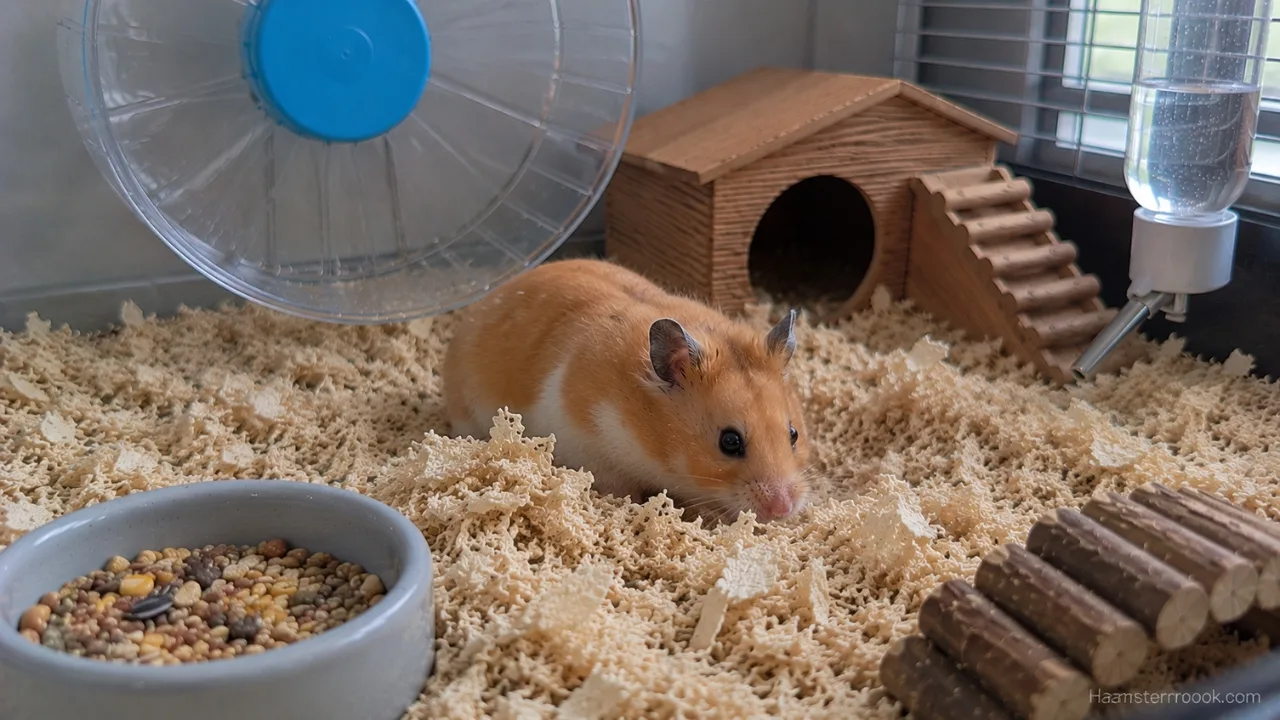
A simple enrichment routine can include scatter feeding or foraging during one activity period, digging or burrowing opportunities as part of the enclosure setup, and occasional rotation of safe toys or textures. Keep familiar essentials such as the sleeping area, food, water, and safe hiding places consistent while introducing changes gradually.
Common Hamster Enrichment Mistakes to Avoid
Even well-meaning owners sometimes create problems when trying to provide stimulation.
Changing Everything at Once
A completely redesigned cage can overwhelm some hamsters.
Introduce new enrichment gradually rather than replacing the entire environment overnight.
Using Unsafe Materials
Avoid:
- Painted wood
- Sharp plastics
- Toxic plants
- Scented products
- Glue-covered crafts
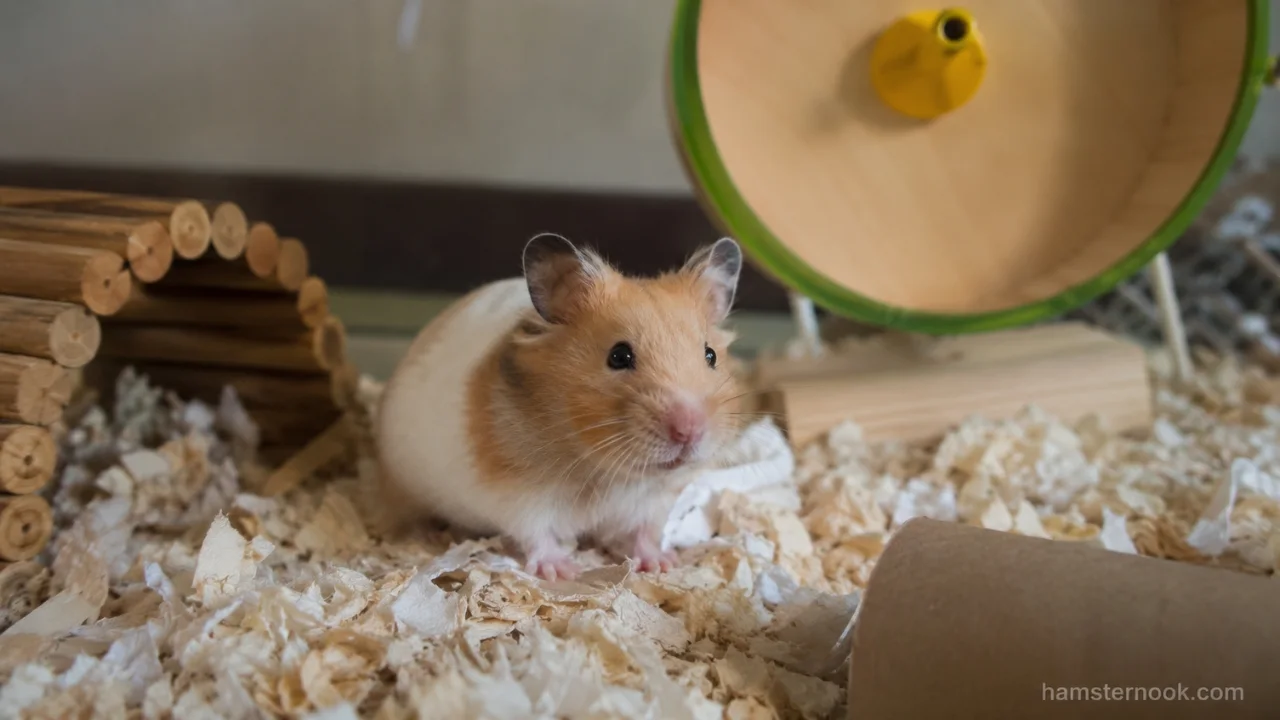
Only use hamster-safe materials, and check homemade enrichment regularly for sharp edges, loose pieces, damage, or anything your hamster could chew and swallow.
Overstimulating a Nervous Hamster
Not every hamster enjoys constant interaction.
During the first week in a new home, enrichment should never come at the expense of giving a nervous hamster time to settle; The Biggest Mistake New Hamster Owners Make in the First Week explains why early interaction should remain gradual.
Forgetting Natural Behaviors
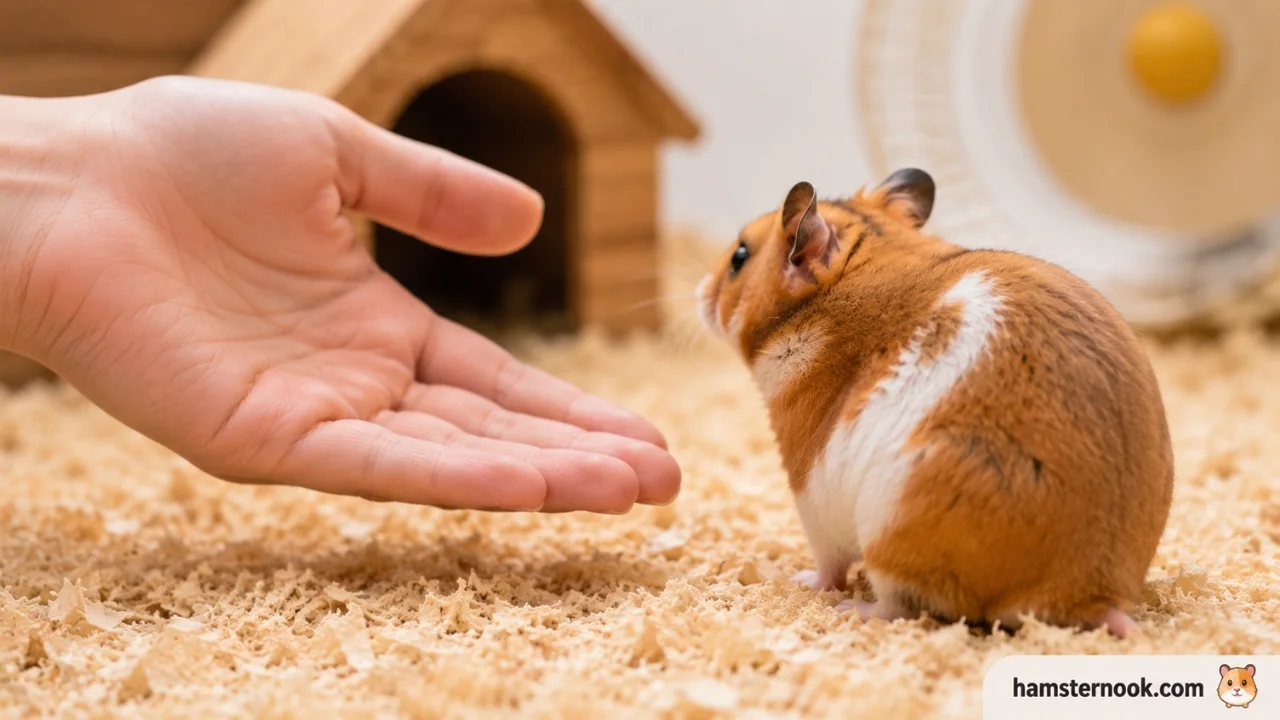
The most successful enrichment activities are usually the simplest ones. Activities that encourage digging, nesting, foraging, and chewing often provide more value than complicated commercial toys.
The best enrichment often mimics what hamsters naturally do:
- Dig
- Search for food
- Hide
- Chew
- Explore
- Build nests
Fancy toys are less important than opportunities to express these instincts.
Which Hamster Enrichment Activities Work Best?
Just like people, hamsters often develop preferences for certain activities and may ignore others completely.
| Activity | Best For | Difficulty |
|---|---|---|
| Scatter feeding | All hamsters | Easy |
| Dig box | Burrowers | Easy |
| Cardboard maze | Curious hamsters | Moderate |
| Foraging puzzles | Food-motivated hamsters | Moderate |
| Playpen exploration | Confident hamsters | Moderate |
| Target training | Interactive hamsters | Advanced |
Experimenting with different activities often reveals which types of enrichment your hamster finds most engaging.
Key Takeaway
The best hamster enrichment encourages natural behaviors. Providing opportunities to forage, burrow, chew, explore, and solve simple challenges helps prevent boredom while supporting both physical and mental health.
Final Thoughts on Keeping Your Hamster Mentally Stimulated
Mental enrichment is often overlooked, yet it plays a major role in helping hamsters stay active, curious, and emotionally healthy. While food, water, and housing are essential, enrichment helps transform a cage from a place to live into an environment where a hamster can thrive.
Effective enrichment is usually simple, practical, and easy to incorporate into a regular care routine. Scatter feeding, digging opportunities, puzzle toys, safe exploration, and simple interaction games can provide hours of engagement while encouraging natural behaviors.
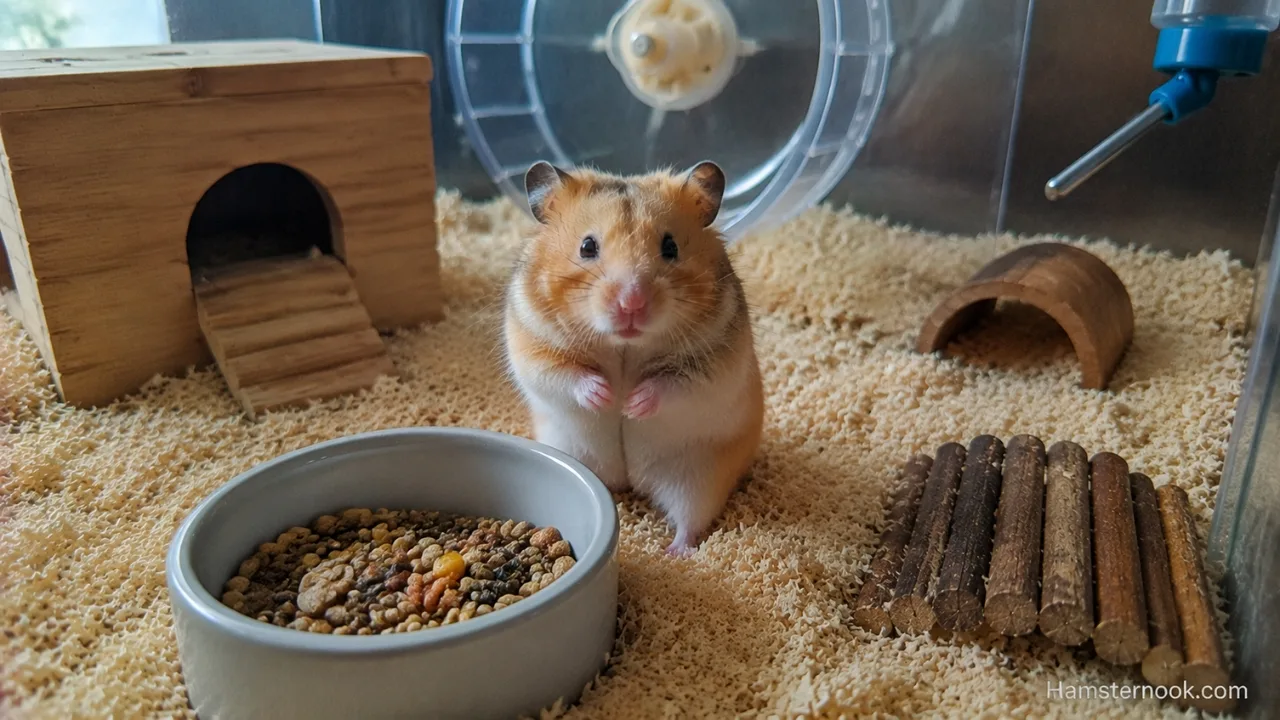
Small changes that encourage exploration, foraging, and problem-solving can make a noticeable difference in a hamster’s daily life.
Mental enrichment is only one part of responsible hamster care, alongside housing, diet, health, handling, and daily routines. These fundamentals are brought together in the Ultimate Hamster Care Guide for Beginners: Everything You Need to Know (2026)
Frequently Asked Questions
How do I know if my hamster needs more mental stimulation?
Signs may include bar chewing, pacing, excessive sleeping during active hours, overgrooming, or a lack of interest in the environment. These behaviors can have other causes too, so a sudden or persistent change should not automatically be assumed to be boredom.
What is the easiest enrichment activity for a hamster?
Scatter feeding is one of the easiest and most effective enrichment methods because it encourages natural foraging behavior.
Can too many toys overwhelm a hamster?
Yes. An overcrowded enclosure can reduce usable space and create stress. Focus on meaningful enrichment rather than quantity.
Do hamsters get bored in the same cage?
They can. Occasional layout changes, toy rotation, and new enrichment opportunities help keep the environment interesting.
How often should I change enrichment items?
Many owners rotate some enrichment items every few weeks while keeping core resources such as nesting areas, food, water, and familiar hiding places consistent. The right frequency depends on how your hamster responds to changes.
Are homemade hamster enrichment toys safe?
They can be, provided they are made from clean, untreated, hamster-safe materials without glue, toxic paints, or sharp edges.
What enrichment activity do most hamsters enjoy?
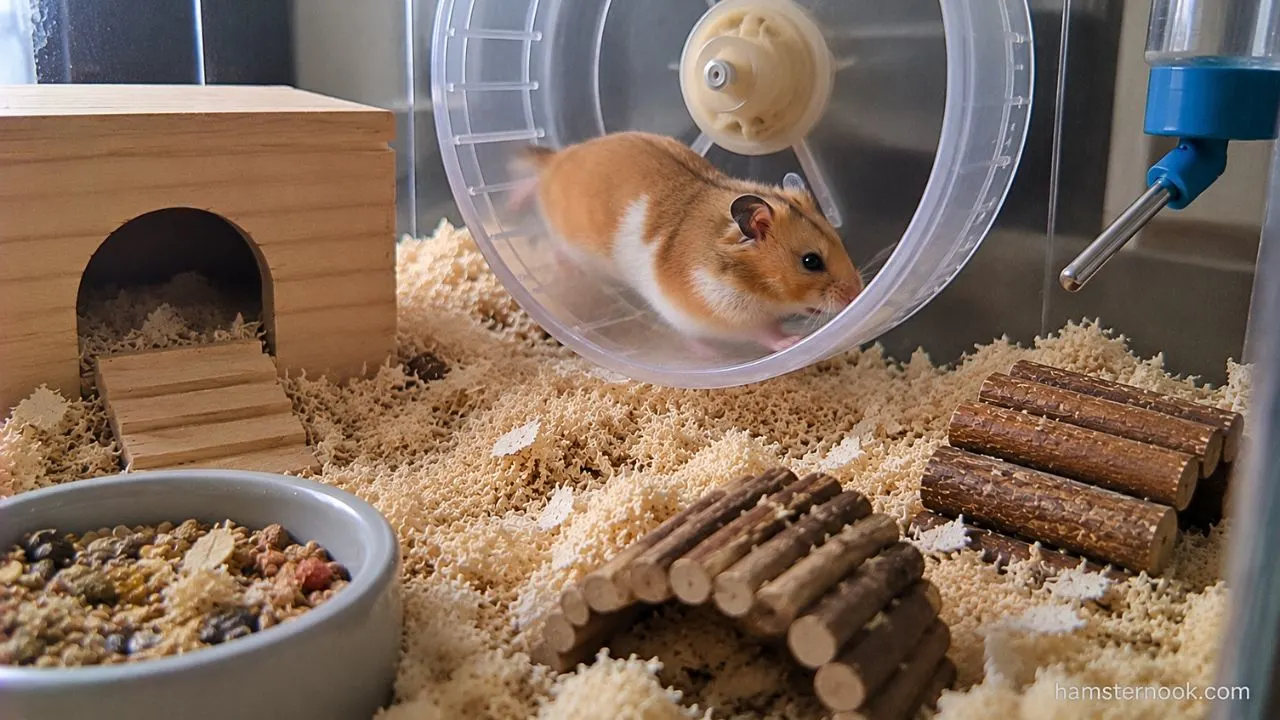
Foraging, scatter feeding, deep bedding, and digging are natural behaviors that many hamsters engage with readily, but individual preferences still vary. The best enrichment is the activity your hamster repeatedly chooses to investigate, use, or interact with.
Should I add new enrichment every day?
No. Constant changes can be stressful. Small additions or rotations every few weeks are usually enough to keep the environment interesting.
Can enrichment reduce cage chewing?
In some cases, yes. Hamsters that receive more opportunities to forage, dig, chew, and explore may be less likely to develop boredom-related behaviors such as repetitive cage chewing.
References
This guide is based on hamster enrichment, natural behavior, housing, foraging, digging, chewing, and welfare guidance from trusted animal welfare and veterinary resources, including:
- RSPCA – Hamster Behaviour – Natural behaviors, exercise, digging, burrowing, and enrichment needs.
- RSPCA – Creating a Good Home for Hamsters – Bedding, nesting, hiding places, cage environment, and opportunities for natural behaviors.
- RSPCA – What to Feed a Pet Hamster – Scatter feeding, hiding food, and encouraging natural foraging behavior.
- PDSA – Hamsters as Pets – Hamster enrichment, toys, chewing, foraging, digging, bedding, and boredom prevention.
- Blue Cross – Hamster Care – Burrowing, deep bedding, enrichment, playpen exploration, and safe hamster housing.
- MSD Veterinary Manual – Hamsters – Veterinary information on hamster husbandry, housing, behavior, and general care.
- NC3Rs – Choosing Appropriate Enrichment – Principles of environmental enrichment and opportunities for species-appropriate behavior.

Narayan Kumar is the founder and author of HamsterNook. He creates practical, research-based hamster care guides covering hamster behavior, nutrition, cage setup, enrichment, health, and everyday care. His goal is to help hamster owners make informed decisions and provide safer, healthier lives for their pets through clear, beginner-friendly information based on trusted animal care resources.