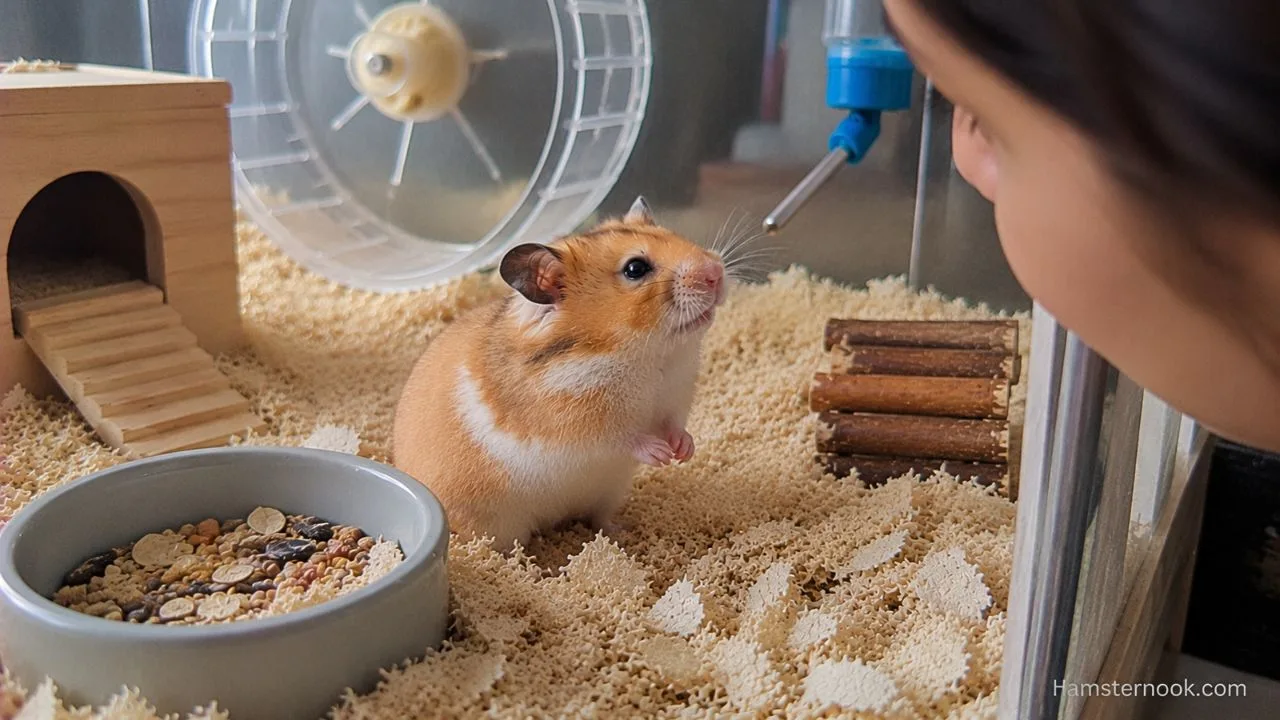
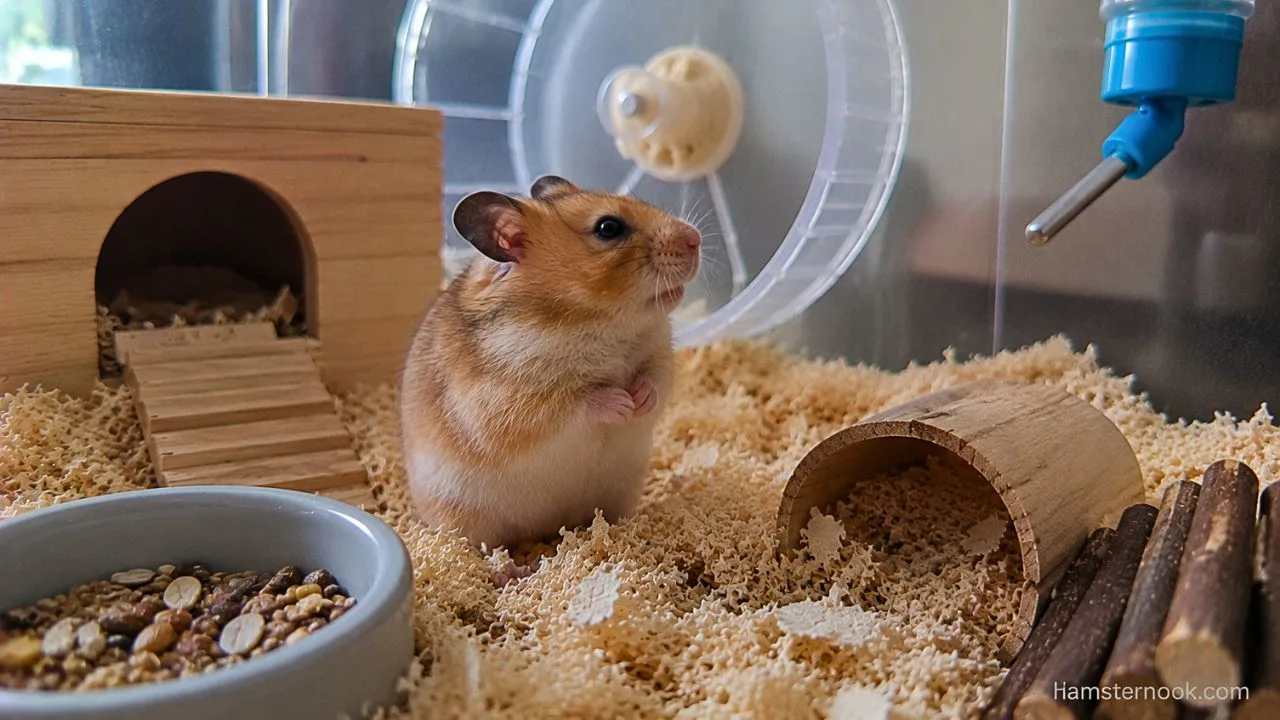
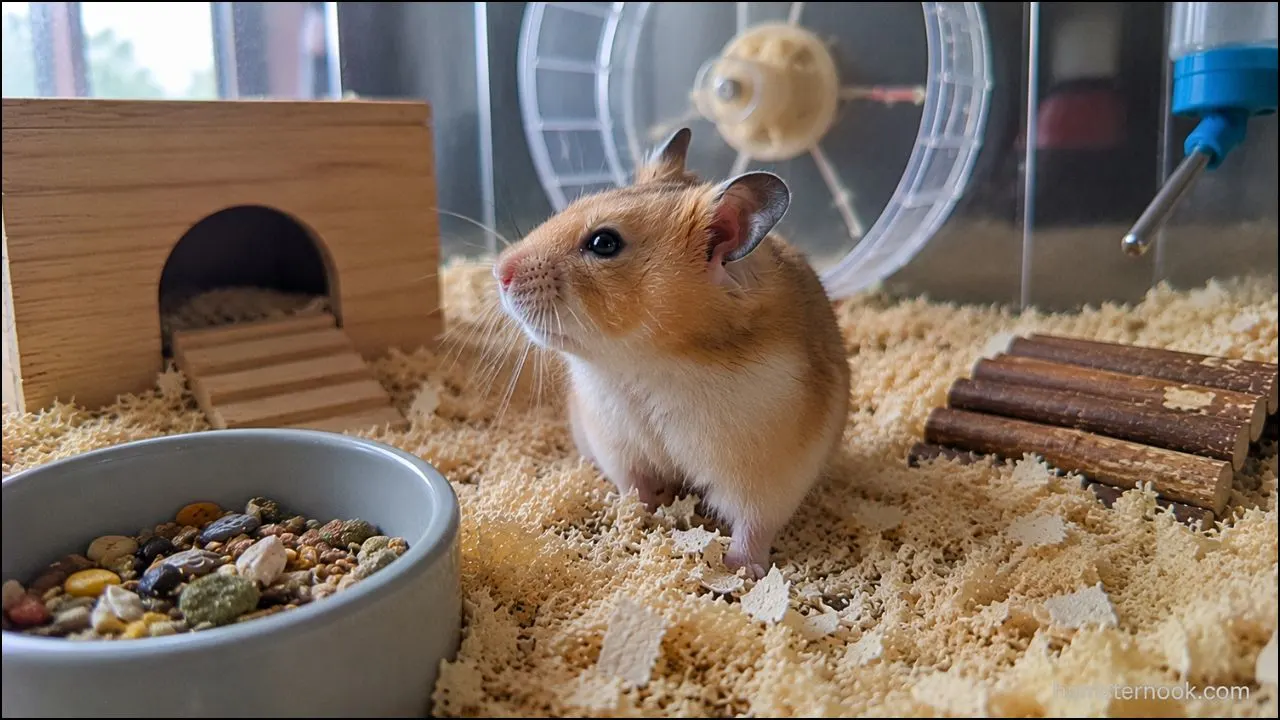
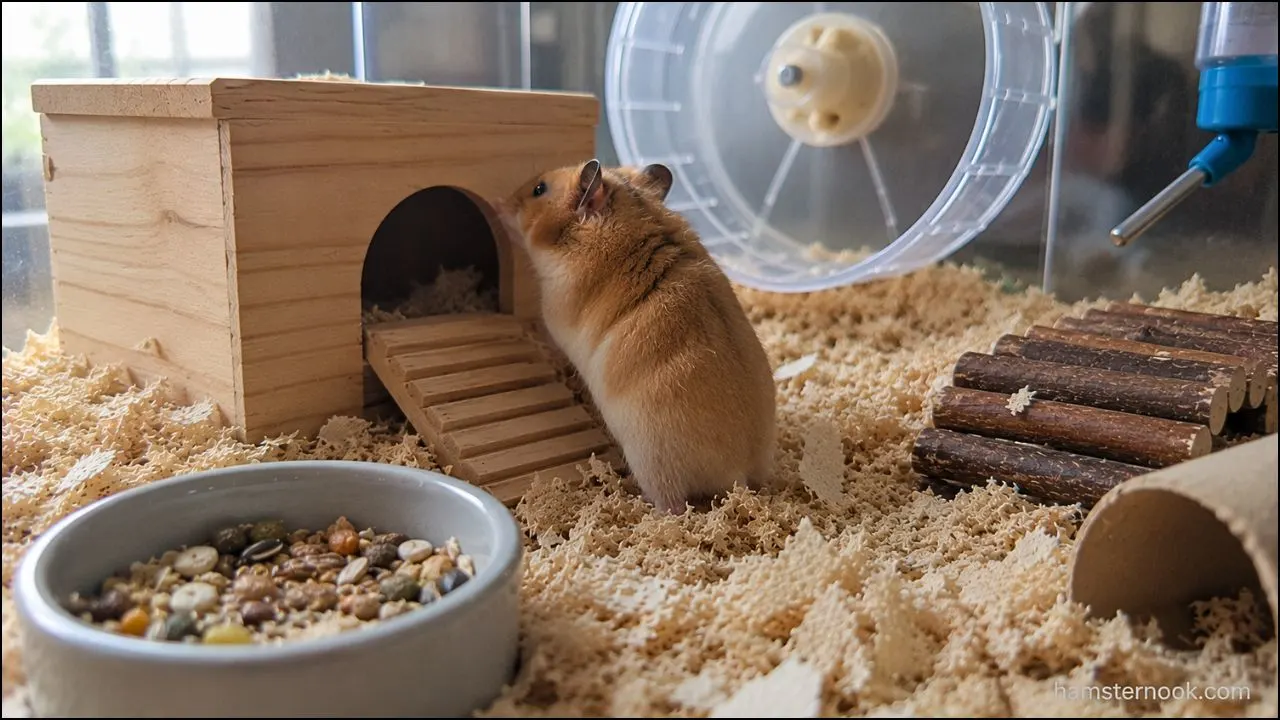
A hamster sleeping in the corner may simply have chosen that area for nesting, but a change in sleeping location can also be influenced by bedding, hideout design, temperature, noise, stress, or health.
The sleeping spot alone usually does not explain whether something is wrong. What matters more is whether the behavior is new and whether it appears alongside changes in appetite, activity, breathing, posture, grooming, or other normal habits.
This guide explains why a hamster may sleep in a cage corner, what to check in the enclosure, and which accompanying signs deserve closer attention.
Quick Answer
A hamster sleeping in the corner is not automatically a problem. The hamster may be nesting there because the location feels suitable, or it may be responding to bedding, hideout conditions, temperature, light, noise, or another environmental factor. If corner sleeping starts suddenly and appears with reduced appetite, unusual inactivity, breathing difficulty, diarrhea, weight loss, or other concerning changes, consider a health problem rather than the sleeping location alone.
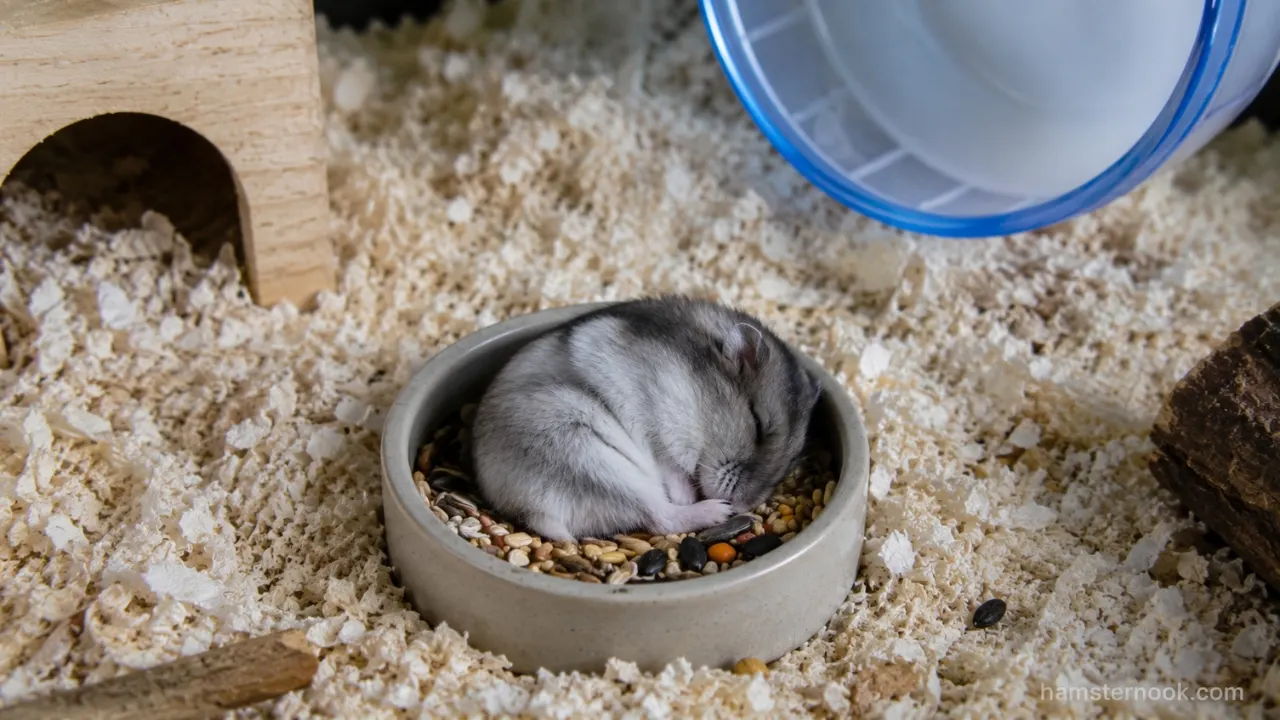
Is It Normal for Hamsters to Sleep in the Corner?
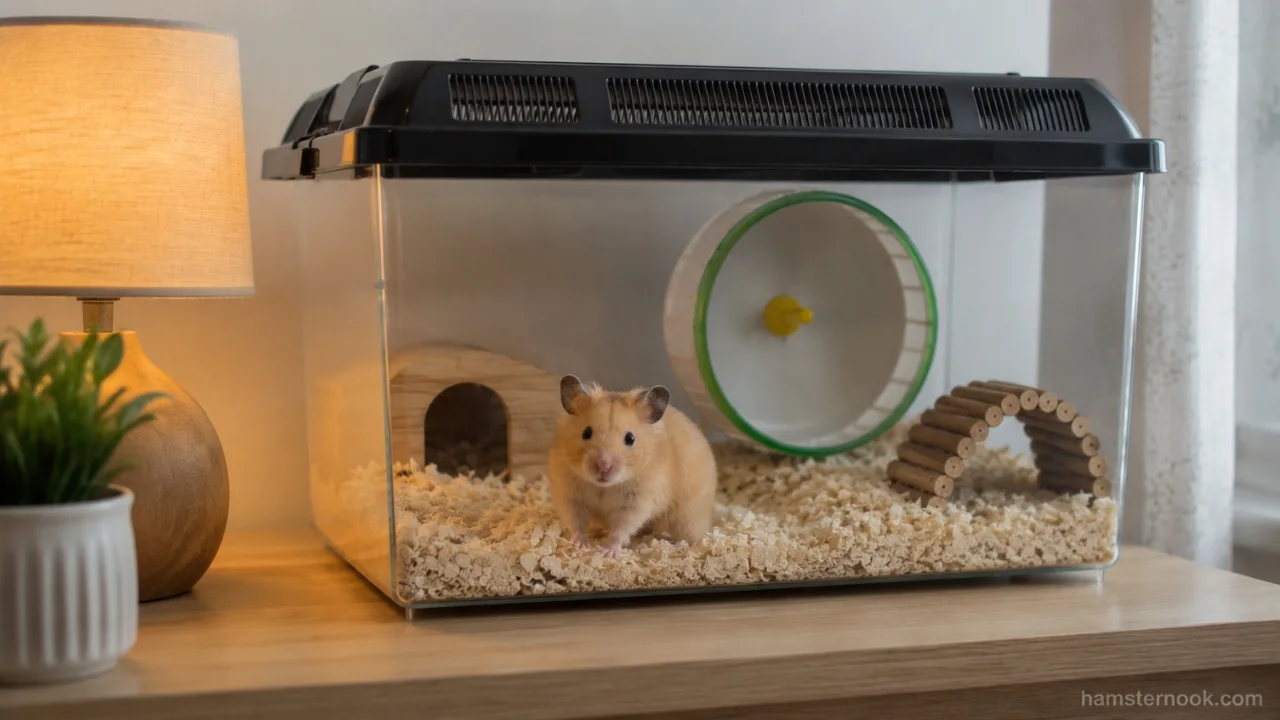
A hamster can choose a corner as a regular nesting or sleeping location without the behavior being abnormal. Bedding can accumulate there, the location may be away from disturbance, or the hamster may simply continue using an established nest site.
Instead of judging the corner itself, observe whether your hamster continues eating, drinking, moving normally during its waking period, maintaining its nest, and interacting with the enclosure as usual.

Common Reasons Hamsters Sleep in Corners
Several factors influence where a hamster decides to sleep.
Corner Sleeping Behavior Explained
| Possible Factor | What to Check | Concern Level |
|---|---|---|
| Nesting preference | Bedding or nesting material gathered in the corner | Usually low |
| Temperature | Whether the chosen area differs in warmth or airflow | Depends on conditions |
| Hideout setup | Size, location, accessibility and interior conditions | Usually manageable |
| Environmental disturbance | Noise, light, frequent changes or nearby activity | Monitor behavior |
| Recent relocation | Whether the hamster is still settling into a new enclosure | Often temporary |
| Health problem | Appetite, activity, breathing, stool, weight or other changes | Needs attention if symptoms are present |
Understanding your hamster’s overall behavior is more important than the sleeping spot alone.
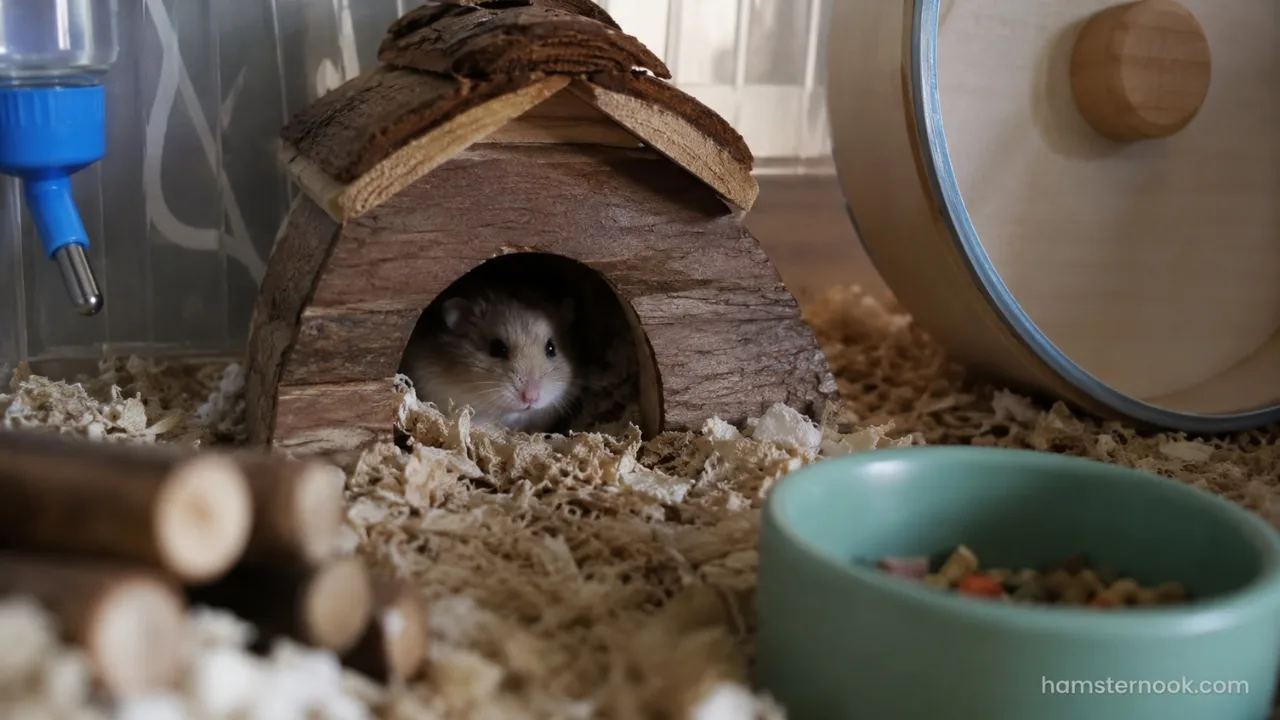
Your Hamster May Feel Safer in the Corner
Hamsters naturally seek protected sleeping locations.
Corners provide:
- Fewer open sides
- Reduced exposure
- Support against walls
- Quiet areas away from activity
Some hamsters even build nests directly against cage edges because it feels more secure than sleeping in the center.
When corner sleeping occurs without changes in appetite, normal waking activity, breathing, stool, weight, or other behavior, the sleeping location alone provides limited evidence of a problem.
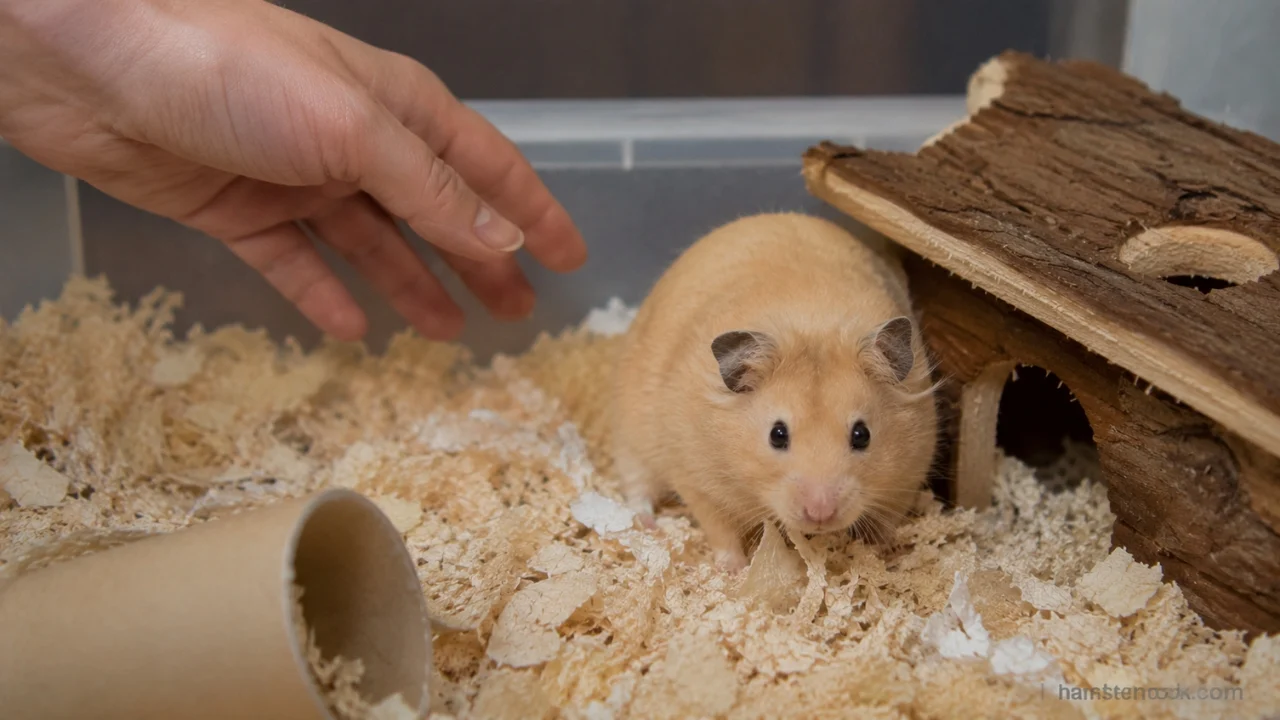
Cage Temperature May Affect Sleeping Location
Temperature differences within or around the enclosure may influence where a hamster chooses to rest, particularly if one sleeping area becomes uncomfortable.
If the cage becomes too warm, your hamster may move away from enclosed hides and choose cooler corners with better airflow.
Signs the Cage May Be Too Warm
Do not diagnose overheating from sleeping position alone. If the room is unusually warm and your hamster also develops marked lethargy, weakness, abnormal breathing, or another sudden physical change, treat the overall condition as the concern rather than assuming the corner itself is the problem.
Keep the enclosure in a stable indoor environment away from temperature extremes and sudden drafts. Direct sunlight and nearby heat sources can create local temperature changes even when the rest of the room feels comfortable.
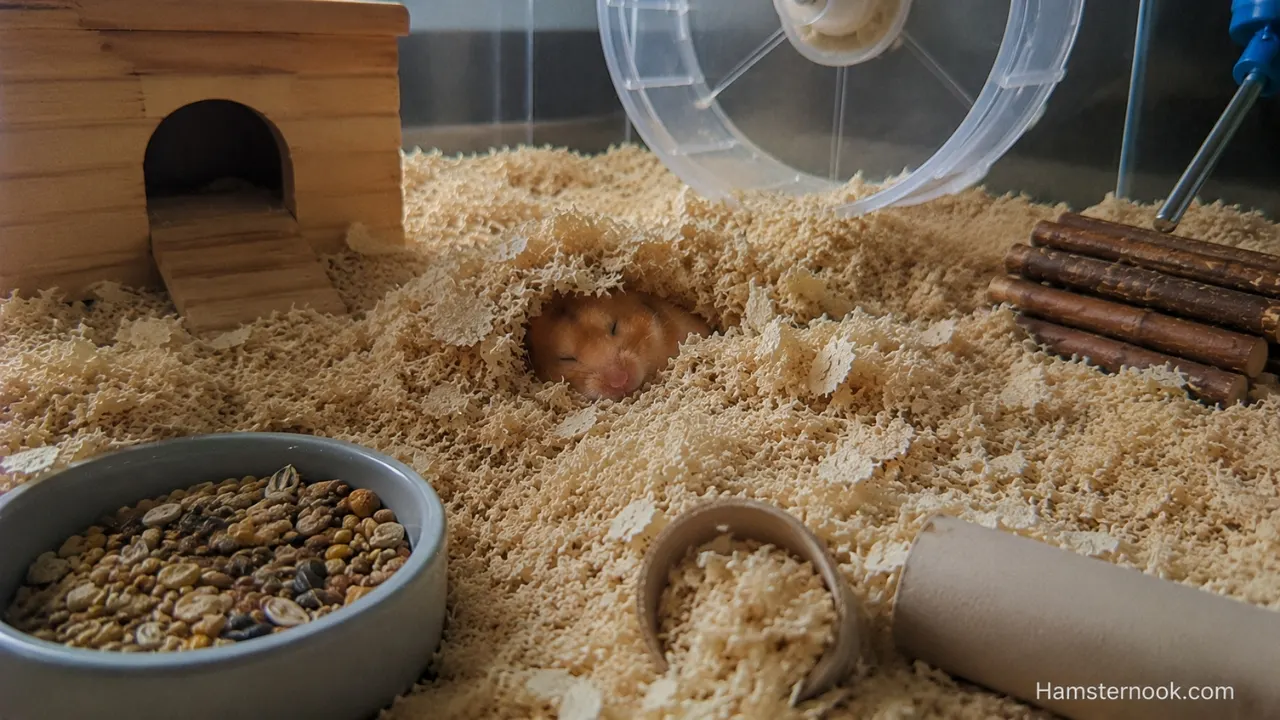
Avoid placing cages near:
- Direct sunlight
- Heaters
- Windows with strong heat exposure
- Electronics producing warmth
Because temperature problems require more than judging a hamster’s sleeping spot, our Hamster Temperature Safety Guide explains environmental temperature concerns and warning signs in more detail.
The Hideout Might Not Be Comfortable
Sometimes the issue is not the corner itself but the sleeping house provided.
A hamster may avoid its hide if it is:
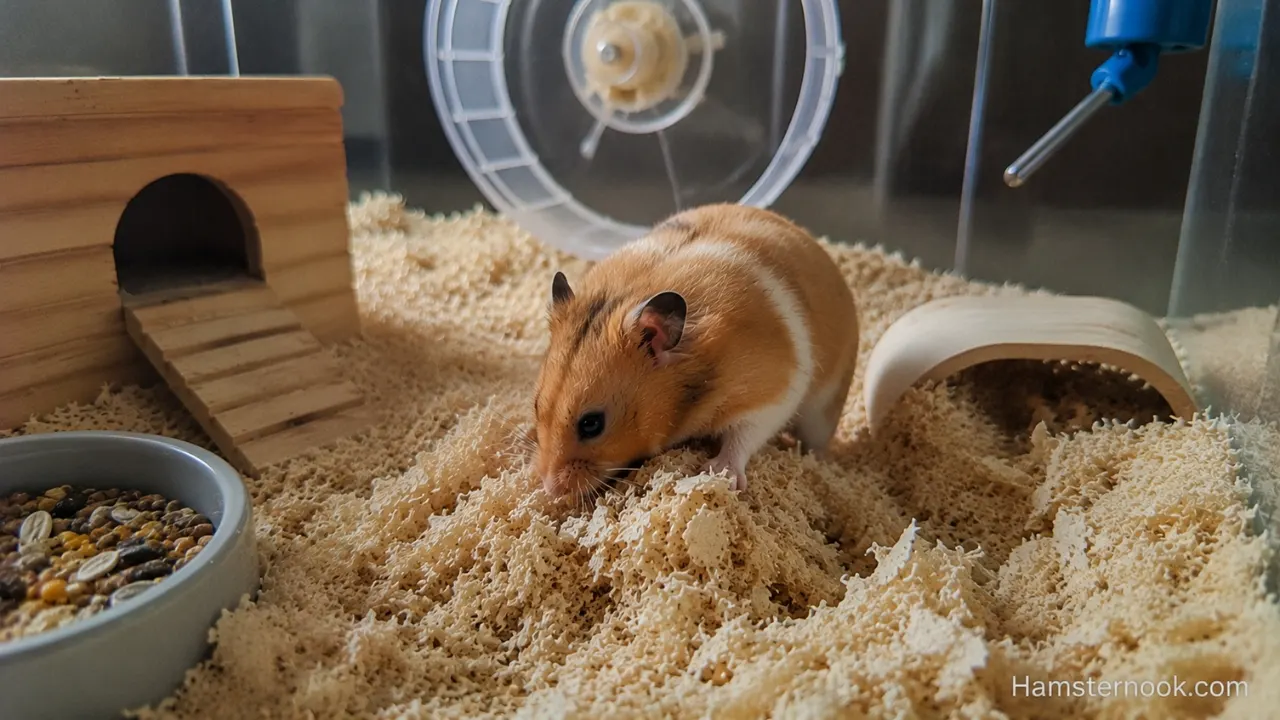
- Too small
- Too exposed
- Made from uncomfortable material
- Too hot inside
- Difficult to access
- Too bright or noisy nearby
A hamster may also create its own sleeping area in deep bedding rather than consistently using the hideout provided.
Lack of Bedding Can Encourage Corner Sleeping
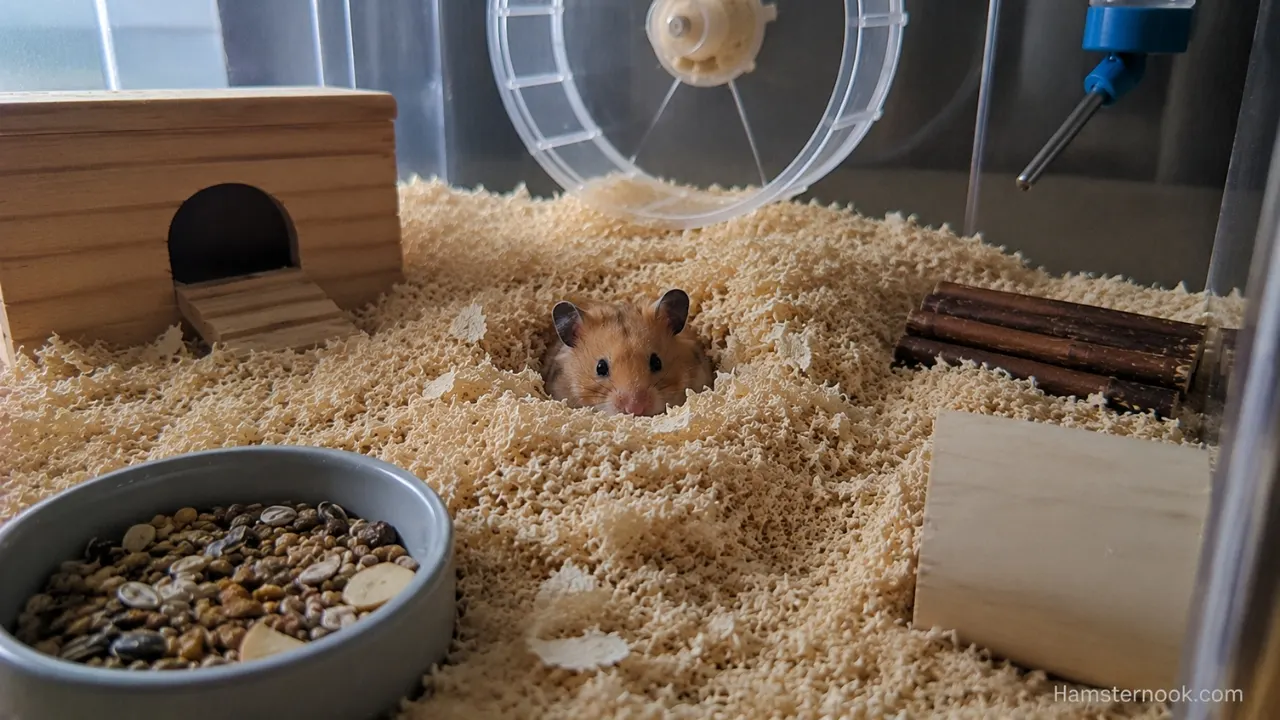
Bedding depth affects whether a hamster can dig, move material, and create covered nesting areas within the enclosure.
If bedding is too shallow, your hamster may struggle to create secure tunnels or nests. Corners often become substitute nesting spots because bedding naturally piles there more easily.
Recommended Bedding Depth
Deeper areas of suitable bedding give a hamster more opportunity to dig, arrange nesting material, and choose a covered sleeping location. The usable depth also depends on the enclosure layout and whether the bedding can hold tunnels.

Bedding type and depth both affect how easily a hamster can create a nest or burrow. Our Hamster Bedding Depth Guide explains how to plan bedding for burrowing, while Best Bedding for Hamsters covers suitable bedding options and materials.
Paper-based bedding is usually one of the safest and most suitable options.
Stress Can Cause Changes in Sleeping Habits
Stress or cage discomfort can sometimes cause sudden changes in sleeping habits, including sleeping in corners more frequently than usual.
Common stress triggers include:

- Loud noises
- Frequent cage rearranging
- Small cage size
- Lack of hiding spots
- Other pets nearby
- Excessive handling
- Bright lights
Hamsters prefer quiet, predictable environments.
Stress-Related Behaviors to Watch For
Stress-related behaviors are not specific to one cause. Hiding, freezing, repetitive behavior, defensive responses, or changes in normal activity should be interpreted alongside recent changes in handling, noise, lighting, enclosure setup, and health.
Our 5 Warning Signs Your Hamster Is Stressed guide covers common environmental and handling-related stress triggers and the behaviors owners can monitor.
If corner sleeping appears alongside these behaviors, the cage setup may need adjustments.
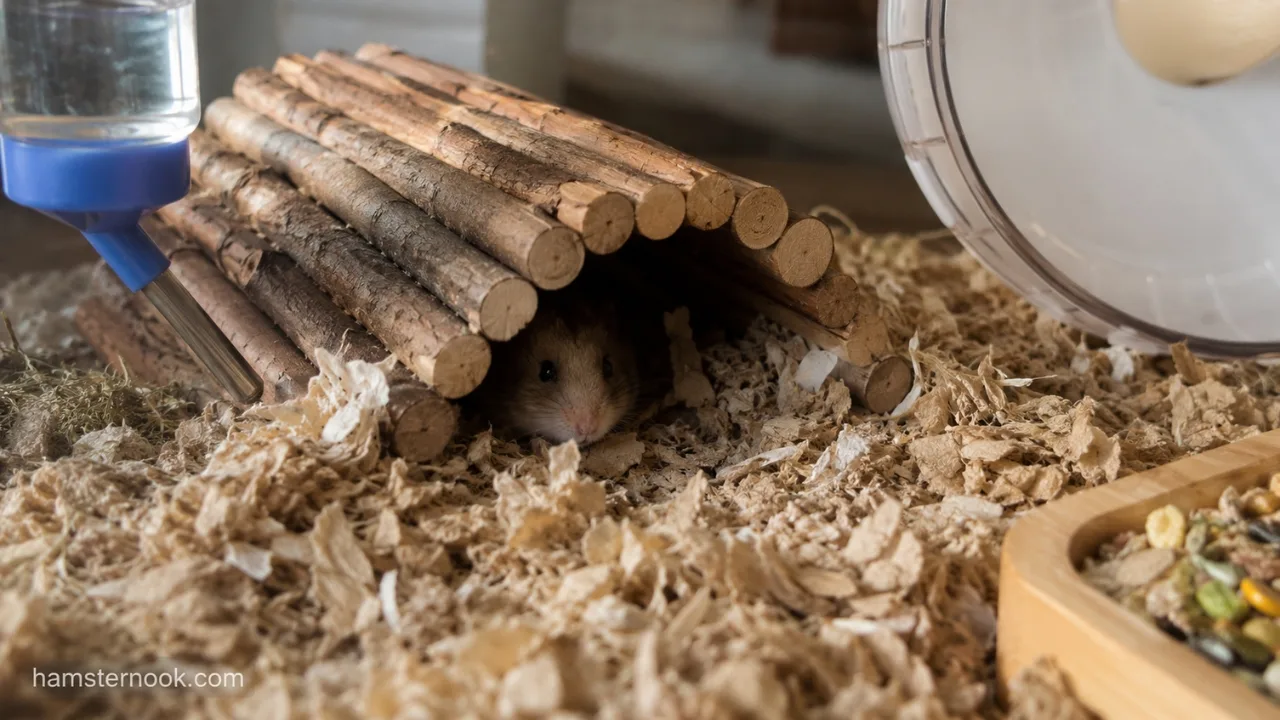
Why New Hamsters Often Sleep in Corners
A newly adopted hamster may choose one sheltered area while becoming familiar with its new enclosure.
During the adjustment period, avoid forcing exploration or handling simply because the hamster is spending much of its time in one area.

During the first few days:
- Avoid excessive handling
- Keep noise levels low
- Allow quiet adjustment time
- Provide plenty of bedding
- Offer multiple hideouts
Can Cage Placement Affect Where a Hamster Sleeps?
Yes. The location of the cage itself can influence sleeping behavior.
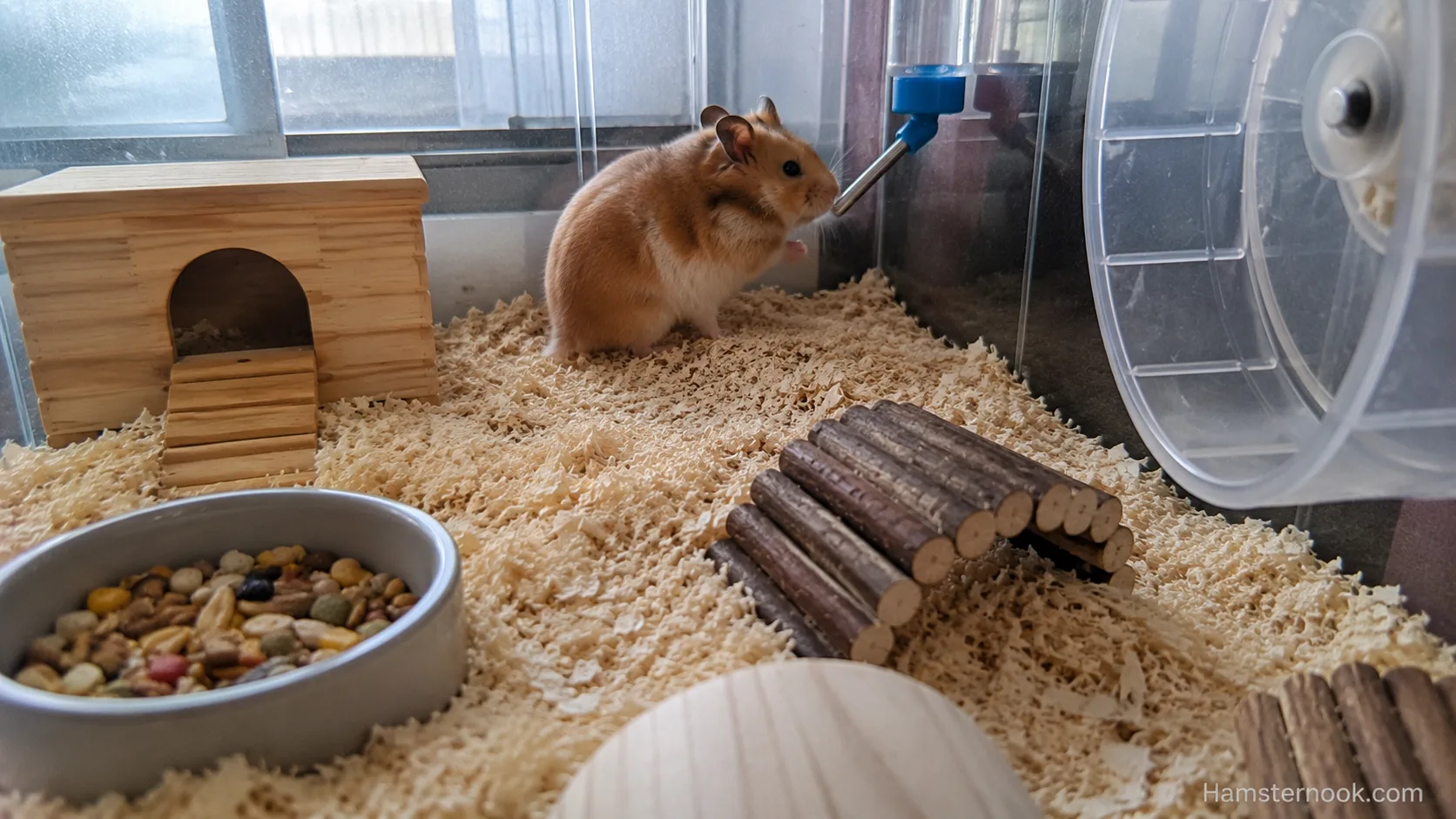
Hamsters often choose corners that feel quieter, darker, and less exposed. If one side of the cage is near a television, doorway, window, or frequently used area, your hamster may avoid that section and sleep elsewhere.
Consider the following:
- Keep the cage away from direct sunlight
- Avoid loud speakers or televisions
- Reduce nighttime disturbances
- Place the enclosure in a calm, stable location
A stable location can reduce unnecessary disturbance around the sleeping area.
Could Corner Sleeping Mean Your Hamster Is Sick?
Sometimes, yes.
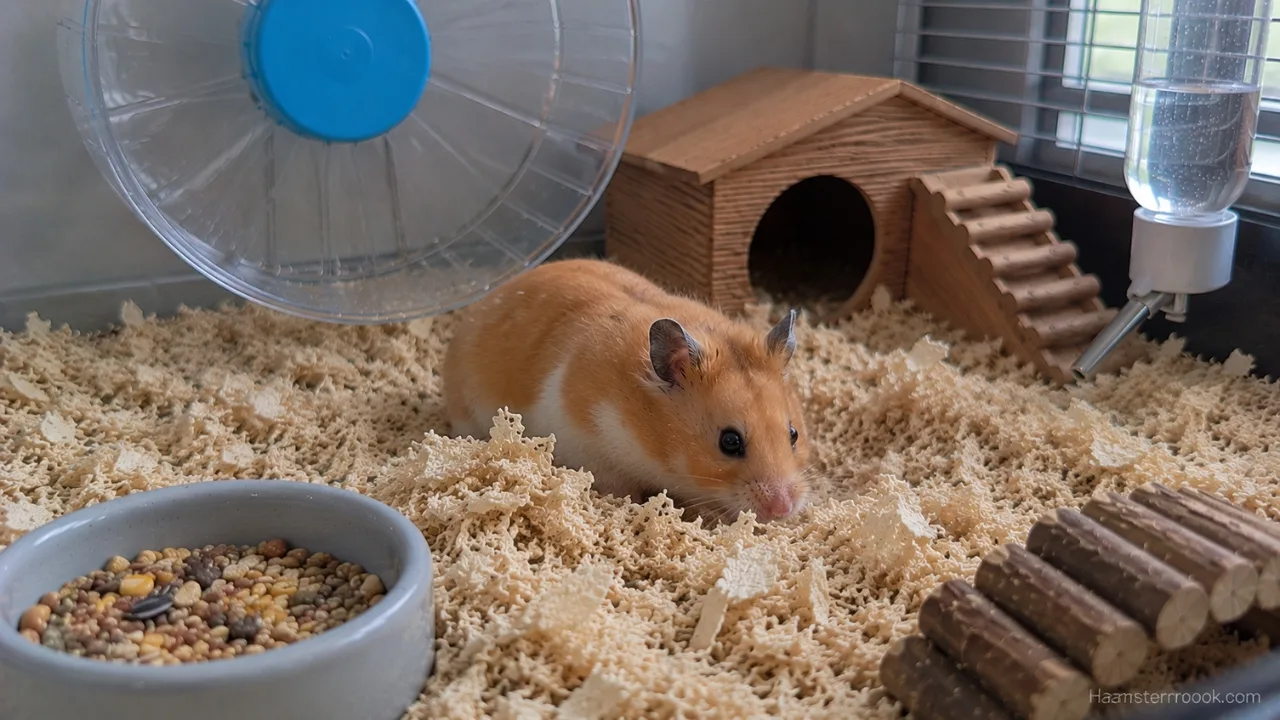
Corner sleeping becomes more concerning when it represents a clear change from normal behavior and appears alongside physical or behavioral symptoms. Sleeping location alone cannot tell you whether a hamster is ill.
While corner sleeping alone is usually harmless, sudden behavior changes combined with other symptoms can indicate illness.
Warning Signs That Need Attention
| Warning Sign | Why It Deserves Attention |
|---|---|
| Marked lethargy during normal waking time | Significant change in usual activity |
| Reduced or absent appetite | Change in normal eating behavior |
| Diarrhea or wet/soiled rear area | Gastrointestinal or hygiene concern requiring assessment |
| Labored or abnormal breathing | Breathing changes can require prompt veterinary attention |
| Unexplained weight loss | May accompany an underlying health problem |
| Persistent isolation with other symptoms | More concerning than sleeping location alone |
Seek veterinary advice promptly when a sudden behavior change occurs with breathing difficulty, persistent appetite loss, diarrhea, marked weakness, unexplained weight loss, or other significant physical symptoms.
Hamsters Sometimes Choose Corners for Food Storage
Hamsters often combine sleeping and food storage areas.
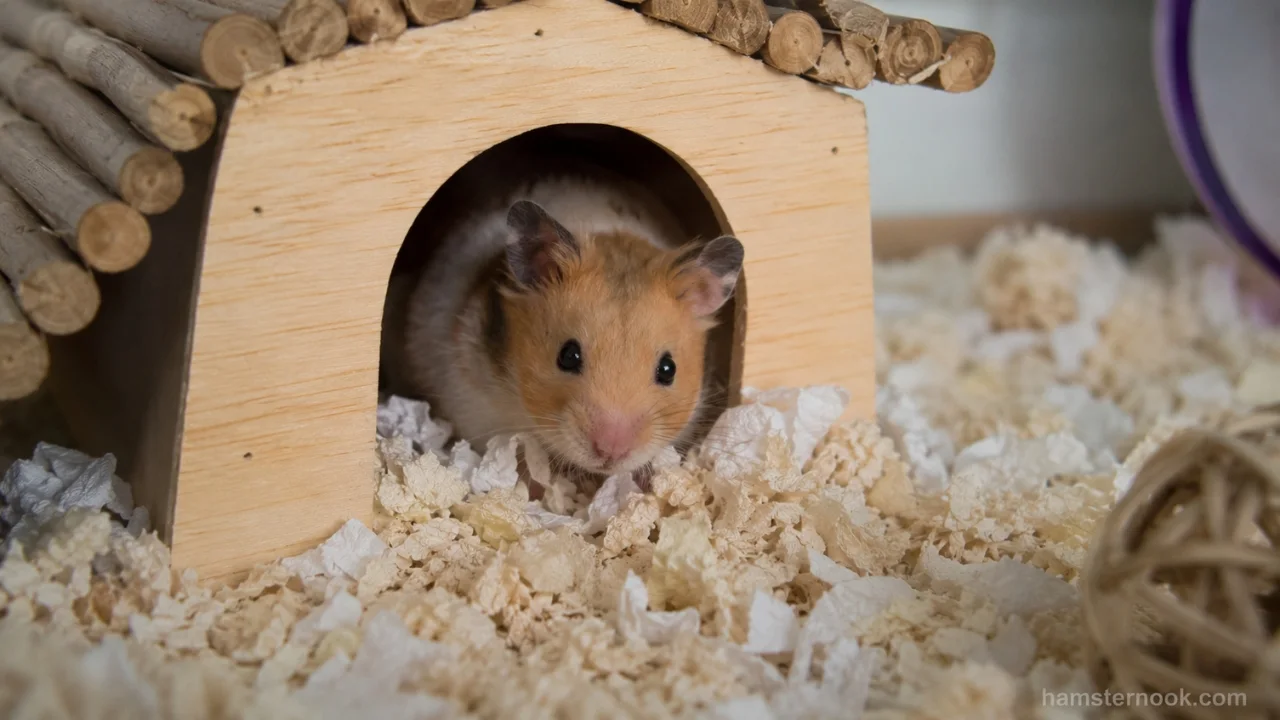
A hamster may use the same general area for nesting and food storage, especially if bedding and enclosure layout make that location convenient.
You may notice:
- Hidden food piles
- Bedding gathered nearby
- Tunnel-like nesting areas
- Repeated use of one specific corner
Check stored fresh foods during routine spot cleaning so perishable leftovers do not remain hidden and spoil.
How to Improve Your Hamster’s Sleeping Environment
You should never force a hamster to sleep somewhere else, but you can improve the enclosure to encourage healthier nesting behavior.
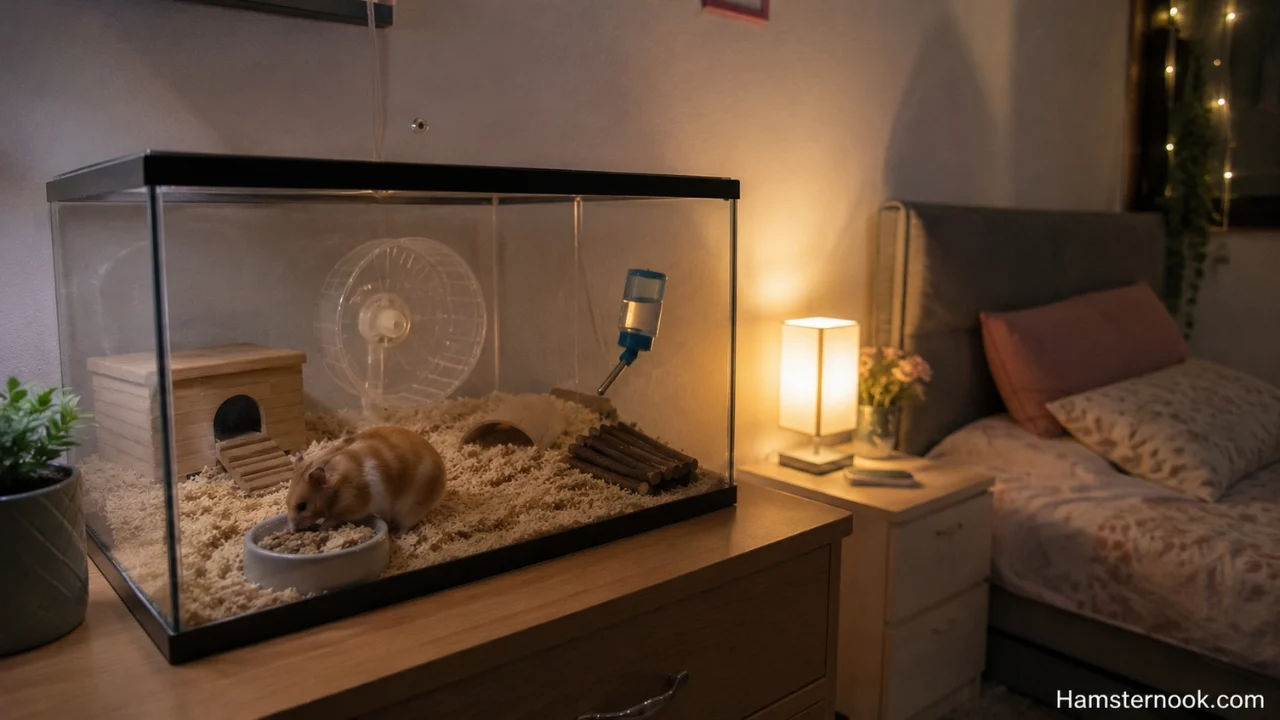
Ways to Improve Your Hamster’s Sleeping Area
| Improvement | Purpose |
|---|---|
| Provide suitable bedding depth | Allows digging and nest building |
| Offer secure hide options | Gives the hamster alternative resting areas |
| Reduce unnecessary disturbance | Keeps the sleeping area more predictable |
| Keep the enclosure away from heat extremes | Avoids unsuitable environmental conditions |
| Preserve familiar nest areas during cleaning | Reduces unnecessary disruption |
| Maintain safe access around the enclosure | Keeps food, water, wheel and hides accessible |
Many hamsters naturally change sleeping locations once the enclosure better matches their instincts.
Should You Wake a Hamster Sleeping in the Corner?
No, hamsters should generally not be disturbed while sleeping.
Our Are Hamsters Nocturnal? guide explains hamster sleep and activity timing in more detail, which can help owners choose better times for interaction.
Hamsters are generally active during the darker part of the day and may sleep through much of the daytime, so a sleeping hamster should not be disturbed unnecessarily.
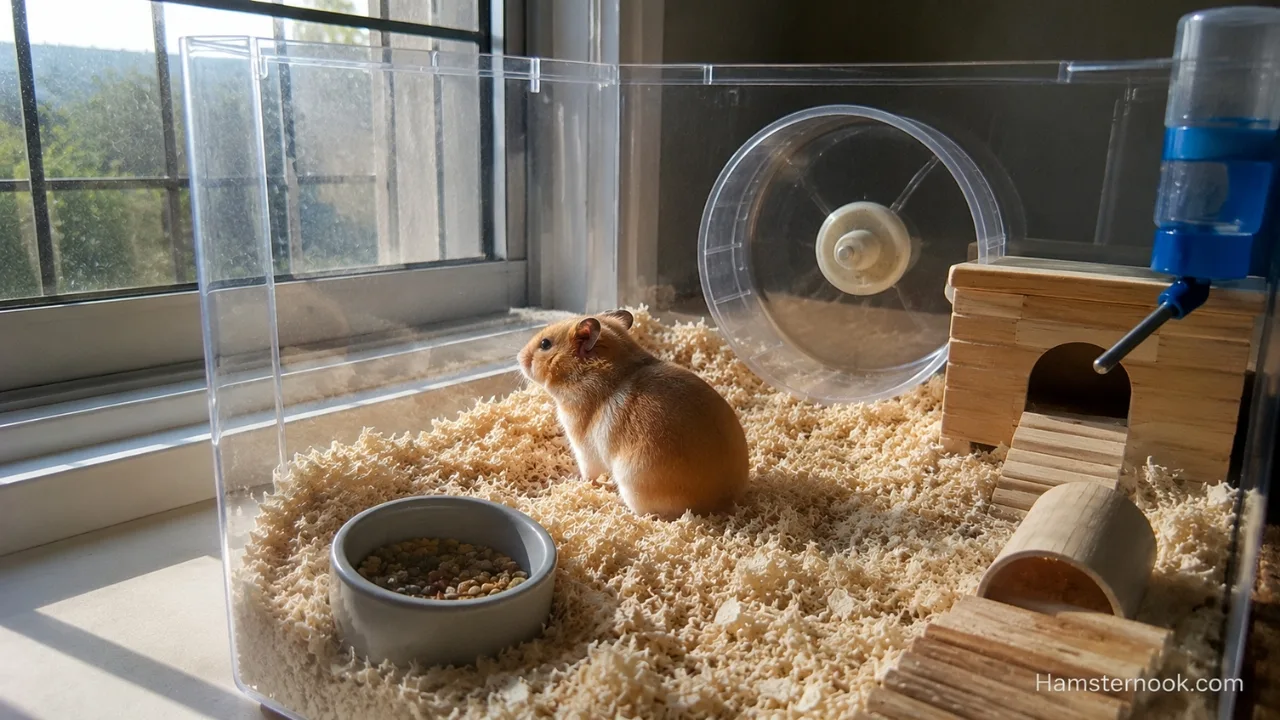
If you need to check on your hamster, observe quietly without touching unless necessary.
When Corner Sleeping Is Less Concerning
Corner sleeping is usually harmless when your hamster:
- Eats normally
- Drinks regularly
- Remains active at night
- Maintains healthy weight
- Shows curiosity and normal behavior
- Builds nests or burrows nearby
When these patterns remain stable and no other concerning signs are present, the sleeping location itself may simply be part of the hamster’s normal routine.
Sleeping in a Corner vs Sitting in One Spot
Sleeping in a chosen corner is different from remaining awake and unusually still in one location. A hamster that has built a nest, sleeps there, and later resumes normal waking activity presents a different situation from one that remains motionless, weak, hunched, or disengaged while awake.

If your hamster is staying in one place during its normal active period rather than simply sleeping there, our Why Does My Hamster Keep Sitting in One Spot? guide covers that behavior separately.
A corner can also become relevant when it represents a sudden change from an established nest location. Our Why Is My Hamster Suddenly Sleeping in a Different Spot? guide focuses specifically on changes in sleeping location and what owners should check when a hamster abandons its usual sleeping area.
Final Thoughts
A hamster sleeping in the corner does not automatically indicate a problem. The location may function as a nest because of bedding, hideout setup, environmental conditions, or simply an established sleeping preference.
Pay more attention to changes than to the corner itself. Appetite, activity during normal waking periods, breathing, stool, weight, posture, and other behavior provide better context for deciding whether the new sleeping location deserves concern.
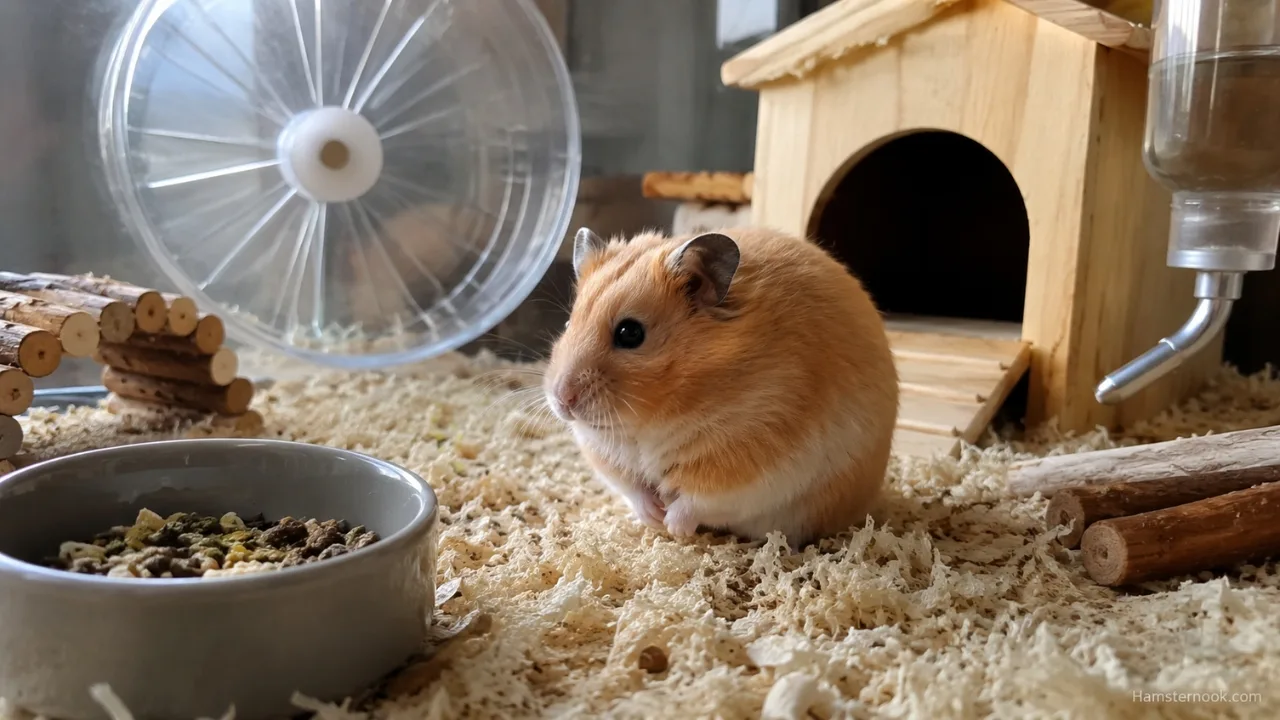
Looking at several behaviors together can provide a clearer picture than relying on one sleeping habit. Our 10 Signs Your Hamster Is Happy and Healthy guide covers broader indicators of normal activity, comfort, and everyday behavior.
A suitable enclosure should give your hamster options rather than forcing it to use a particular sleeping area. Provide appropriate bedding, secure hides, a stable environment, and minimal unnecessary disturbance, then observe which sleeping location the hamster chooses.
Frequently Asked Questions
Why does my hamster sleep in the corner instead of its house?
The corner may provide suitable bedding, less disturbance, different temperature conditions, or simply a preferred nesting location. Check the hideout and enclosure setup, but do not force the hamster to sleep elsewhere.
Is corner sleeping a sign of stress?
Not by itself. Stress is more plausible when the change appears alongside other behavioral changes or follows a disturbance in handling, noise, lighting, enclosure setup, or routine.
Should I move my hamster when it sleeps in the corner?
No. Avoid disturbing sleeping hamsters unless necessary for health or safety reasons.
Why did my hamster suddenly stop using its nest?
Check for recent changes in temperature, bedding, hideout condition, cleaning, noise, enclosure layout, and health. A sudden sleeping-location change is more informative when considered alongside the hamster’s other behavior.
Can cage size affect sleeping behavior?
Enclosure layout and usable space can affect where nesting areas, hides, food stores, and activity zones develop. Sleeping in a corner alone, however, does not show that enclosure size is the cause.
Do dwarf hamsters sleep in corners too?
Yes. A dwarf or Syrian hamster may choose a corner for nesting or sleeping. The significance depends more on the individual hamster, enclosure setup, and accompanying behavior than on the corner itself.
Can hamsters change their sleeping spot frequently?
Yes. Hamsters may switch sleeping locations based on temperature, bedding conditions, stress levels, or personal preference. Occasional changes are usually normal.
Health Note: Changes in sleeping location alone cannot diagnose illness. Seek veterinary advice when unusual sleeping behavior appears with significant changes in appetite, activity, breathing, stool, weight, or other physical symptoms.
References
This guide is based on hamster sleeping behavior, housing, and welfare guidance from trusted animal care organizations, including:
- RSPCA – Hamster Housing, Behavior and Care Guidance
- Blue Cross – Hamster Care and Housing Guidance
- PDSA – Hamster Health and Care Guidance

Narayan Kumar is the founder and author of HamsterNook. He creates practical, research-based hamster care guides covering hamster behavior, nutrition, cage setup, enrichment, health, and everyday care. His goal is to help hamster owners make informed decisions and provide safer, healthier lives for their pets through clear, beginner-friendly information based on trusted animal care resources.