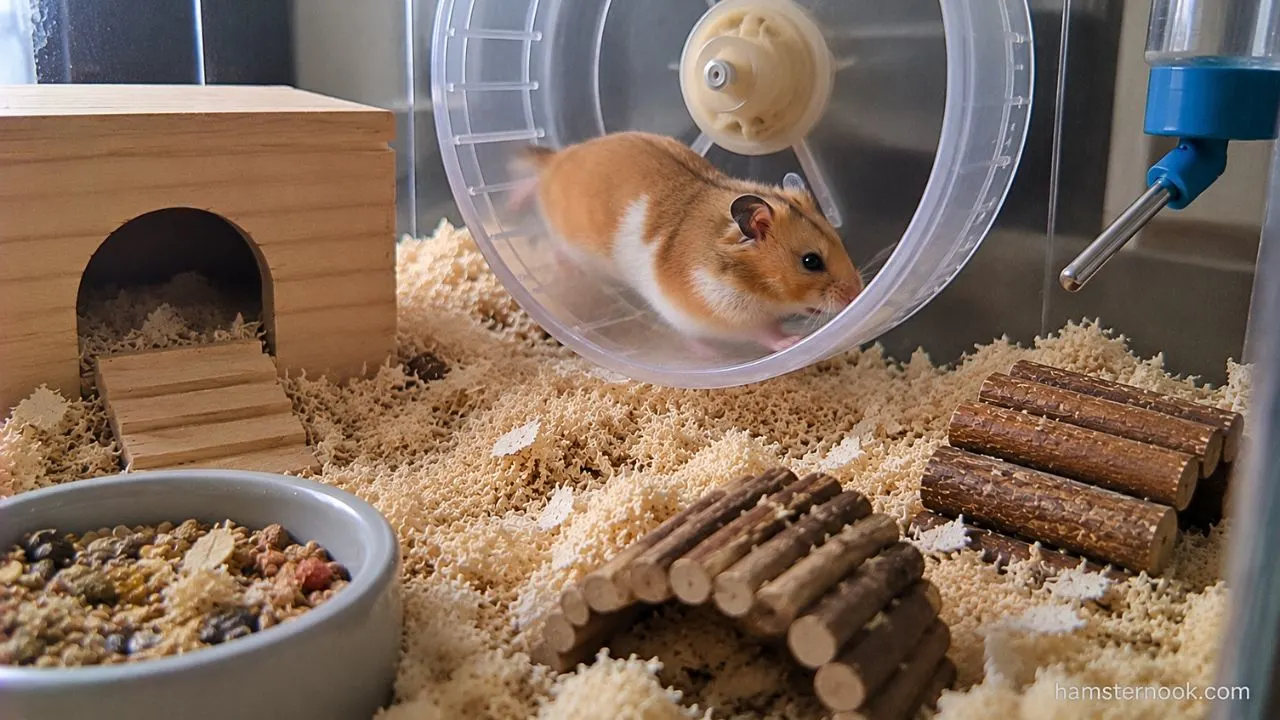
A noisy hamster cage can be surprisingly distracting, especially at night when your hamster is most active. Clicking, rattling, squeaking, scratching, chewing, and a constantly moving water bottle can all have different causes. Most cage noises are related to normal activity or loose equipment, but some are signs that the enclosure needs an adjustment. The key is identifying where the sound is coming from and what your hamster is doing when it happens.
Quick Answer: Why Is My Hamster’s Cage Making Noise?
The most common reasons a hamster cage makes noise are:
- A wheel vibrating against the cage
- A loose wheel stand or attachment
- Your hamster chewing the cage bars
- A water bottle rattling against the enclosure
- Tunnels, hides, or toys moving around
- Scratching, digging, or burrowing in bedding
- A hamster pushing or rearranging objects
- Cage bars or doors vibrating
- A wheel that needs cleaning or adjustment
- The cage sitting on a surface that amplifies vibration
Some of these sounds are completely normal. If the noise is coming from your hamster’s normal nighttime activities, there may be nothing wrong at all. Hamsters are naturally active during the darker hours and need opportunities to run, dig, forage, nest, and explore.
Whether these normal activities become noisy often depends on how the enclosure is arranged and secured. A suitable setup gives your hamster enough room for exercise, digging, hiding, and enrichment while keeping the main equipment stable. The Best Hamster Cage Setup for Beginners: Size, Bedding, Wheel & Essentials guide covers the broader setup.
Common Causes of a Noisy Hamster Cage
1. The Exercise Wheel Is Vibrating
For many owners, the wheel is the biggest source of nighttime noise.
A wheel can make a repetitive rattling, clicking, humming, or vibrating sound when your hamster runs. This is especially noticeable when the wheel is attached directly to cage bars or when its stand touches the enclosure.
A wheel does not necessarily need to be removed just because it makes noise. Hamsters need appropriate exercise opportunities, and reputable welfare guidance recommends a suitable solid running wheel.
What to check:

- Is the wheel firmly secured?
- Is the stand wobbling?
- Is the wheel touching a wall or cage bar?
- Is bedding packed underneath the stand?
- Does the wheel spin smoothly when your hamster is not using it?
- Is the running surface solid rather than made from exposed spokes or mesh?
A slightly loose attachment can turn an otherwise quiet wheel into a surprisingly loud one.
2. Your Hamster Is Chewing the Cage Bars
If you hear repeated metallic tapping or scraping, your hamster may be chewing or biting the cage bars.
Hamsters naturally need opportunities to gnaw, and welfare guidance recommends providing appropriate gnawing materials as part of their enrichment.
That does not mean every hamster chewing a bar automatically has a behavioral problem. However, if bar chewing happens frequently, look at the overall enclosure rather than simply trying to stop the sound.

Your hamster should have opportunities to:
- Burrow
- Nest
- Explore
- Forage
- Chew suitable materials
- Exercise on an appropriate wheel
- Hide and rest undisturbed
Cardboard tubes, safe chew materials, hides, and other suitable enrichment can give your hamster more appropriate things to investigate and manipulate.
Providing appropriate things to chew can give your hamster a safer outlet for normal gnawing behavior. The material still needs to be suitable and stable inside the enclosure, rather than simply adding anything that happens to be available. See Best Hamster Chew Toys: Safe Materials, Dental Care & What to Avoid for specific chew options.
Do not punish or frighten your hamster for making noise.

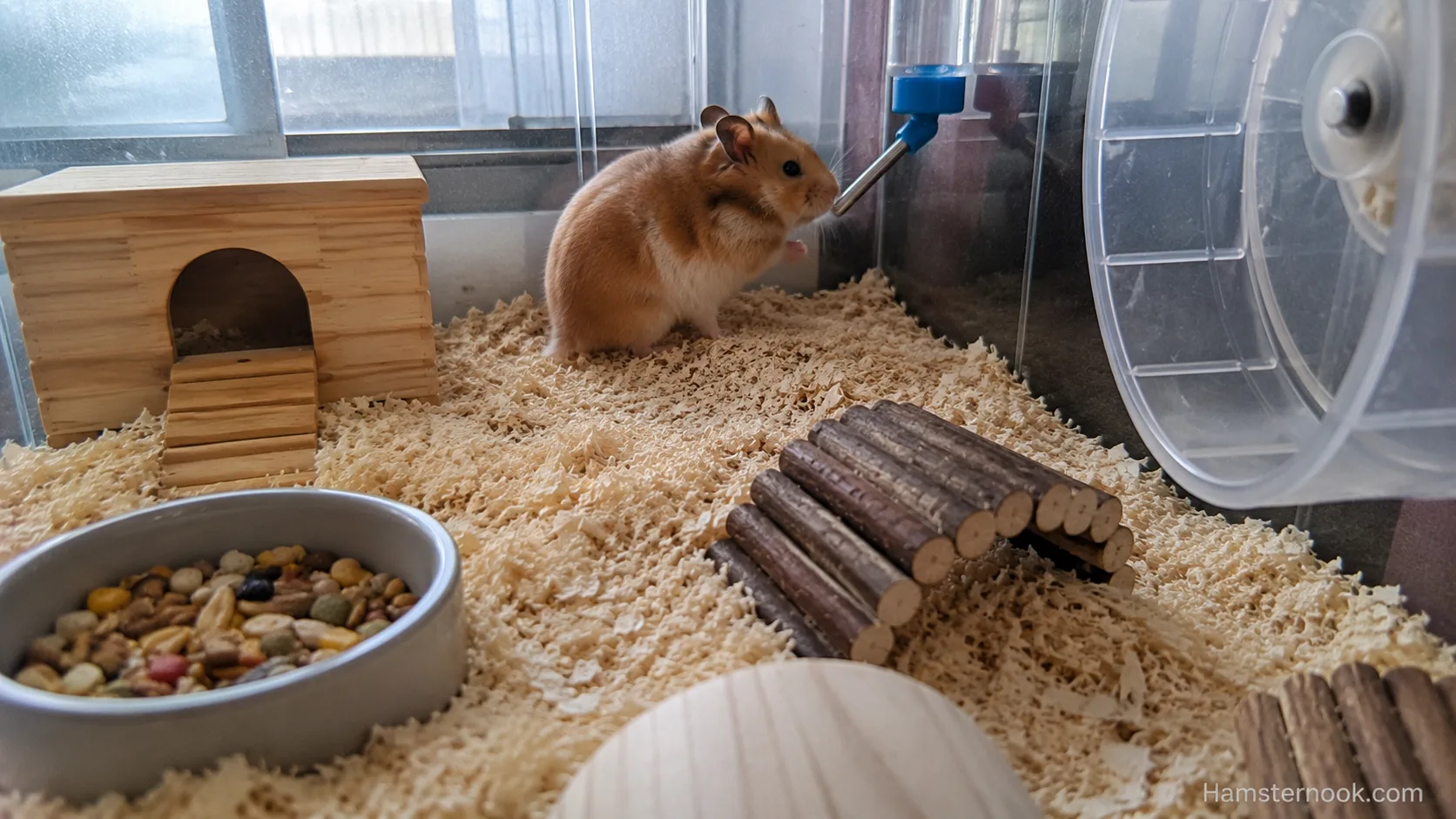
3. The Water Bottle Is Rattling
A water bottle can create a surprisingly loud clicking or knocking sound.
Your hamster may bump into it while climbing or moving around, or the bottle itself may vibrate against the cage.
Check whether:
- The bottle is loose
- The holder is touching the bars
- The bottle is positioned where your hamster repeatedly bumps it
- The bottle moves whenever your hamster walks past
Make sure the bottle remains securely positioned and that your hamster can easily access the drinking point.

RSPCA guidance also recommends checking the bottle and its tube regularly for blockages.
4. Your Hamster Is Moving Toys and Hides
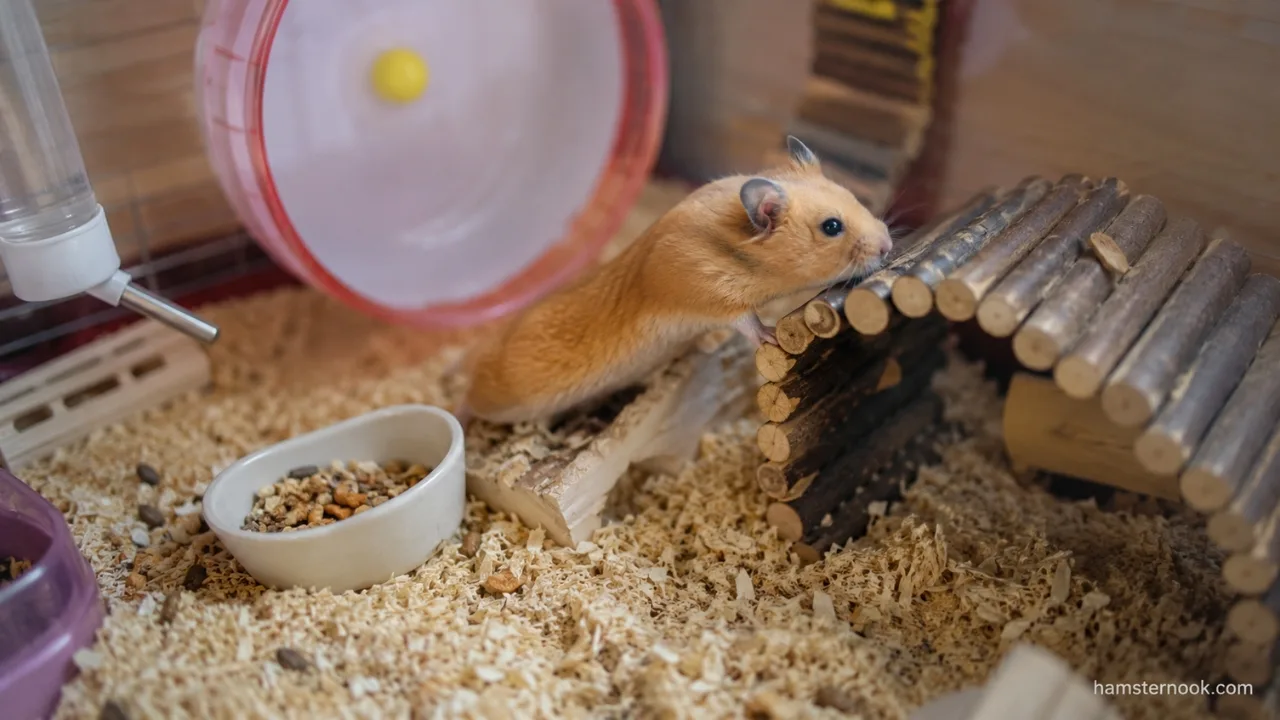
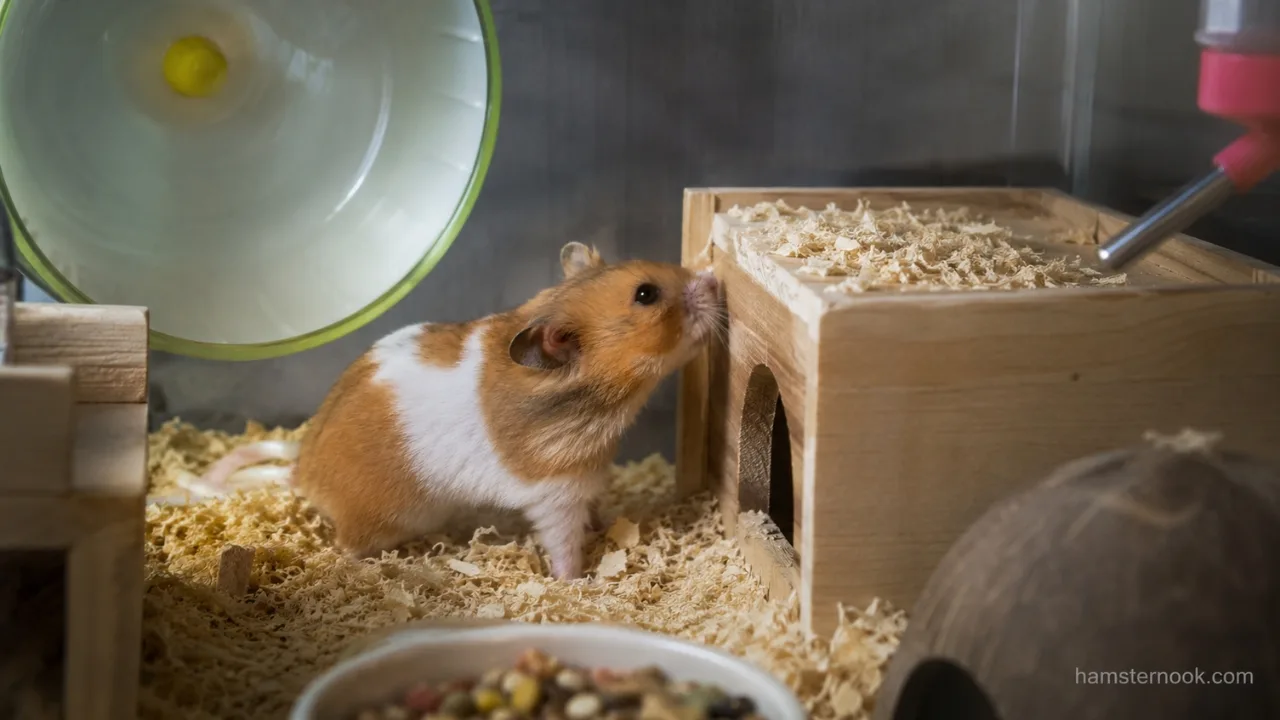
Hamsters are natural explorers and burrowers. They may push, drag, scratch, climb over, or rearrange objects in their enclosure.
A lightweight hide can slide across the floor. A tunnel can roll slightly. A wooden item can knock against another object.
This can produce repeated knocking or scraping noises even when everything is functioning normally.
Rather than removing enrichment simply because it makes occasional noise, check that the items are stable, safe, and appropriate for your hamster.
5. Digging and Burrowing Are Making Noise
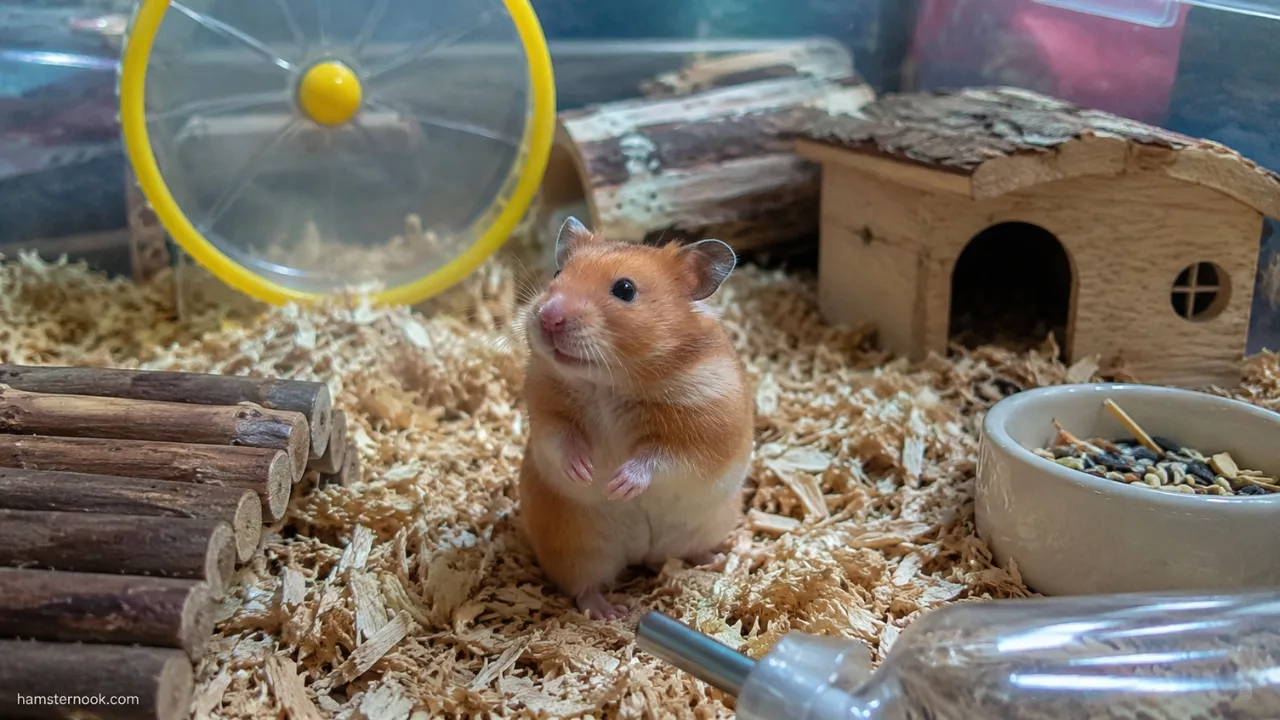
Sometimes the “cage noise” is actually your hamster digging.
You may hear:
- Scratching
- Rustling
- Bedding being pushed around
- Cardboard being shredded
- Nesting material being moved
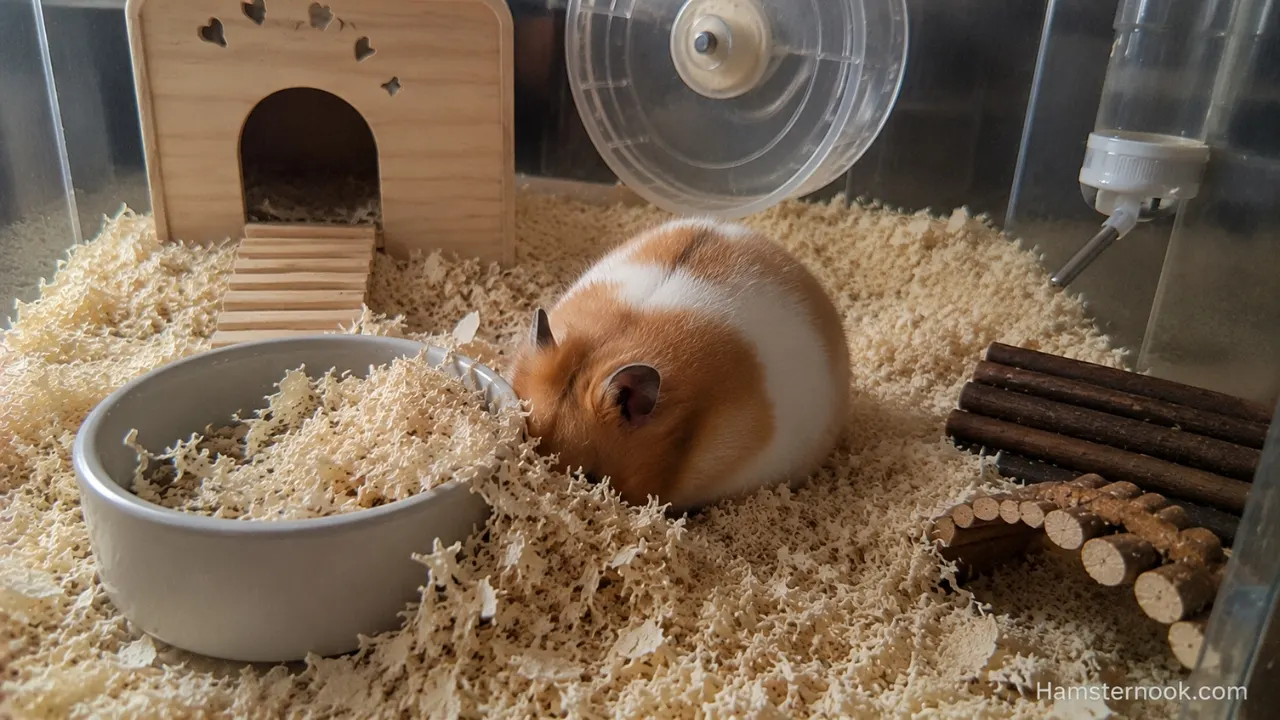
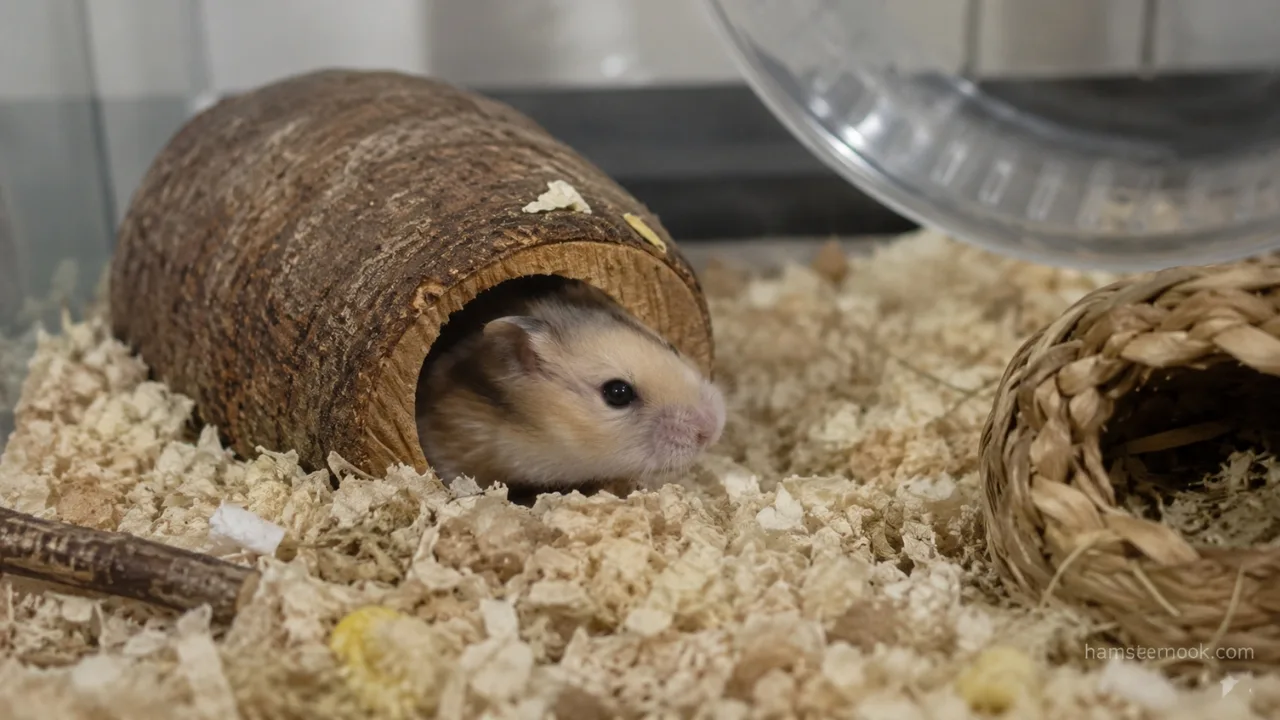
These behaviors are normal parts of hamster activity. Hamsters are burrowing animals, and appropriate bedding and nesting material allow them to express these behaviors.

If the sound happens mainly when your hamster is underneath the bedding, there may be nothing that needs fixing.
In fact, trying to eliminate every digging or nesting sound would mean removing behaviors that are important to a hamster’s normal use of its enclosure.
Because digging and burrowing are normal, the goal is not to eliminate every sound your hamster makes while using its bedding. The more important question is whether the substrate is appropriate for digging, nesting, and normal movement. More detail is available in Best Hamster Bedding: Safest Types, Depth, Burrowing & What to Avoid.
How to Tell What the Noise Means
| Noise you hear | Likely source | What to check |
|---|---|---|
| Repeated rattling | Wheel or cage attachment | Wheel stability and contact points |
| Rhythmic humming | Wheel | Wheel bearings/axle and mounting |
| Metallic tapping | Cage bars or chewing | Observe your hamster closely |
| Clicking near the side of cage | Water bottle | Bottle holder and positioning |
| Scratching/rustling | Digging or nesting | Usually normal activity |
| Knocking | Toy, hide, or tunnel | Check whether it can slide or tip |
| Loud vibration | Cage or furniture | Check the cage base and surrounding surface |
| Sudden unfamiliar noise | Loose equipment or object | Inspect the entire enclosure |
The important part is not simply identifying the sound. Watch what your hamster is doing at the same time.
If the sound stops when your hamster leaves the wheel, the wheel is an obvious place to investigate. If it continues while your hamster is underneath the bedding, digging is a more likely explanation.
How to Make a Hamster Cage Quieter
Start With the Wheel
If the wheel is responsible for most of the noise, inspect its mounting before changing anything else.
Place the wheel securely so it does not wobble or repeatedly strike the enclosure. If it has a stand, make sure the stand is stable.
The wheel should also be appropriately sized. A hamster should be able to run without having to arch its back or raise its head. Blue Cross and RSPCA both emphasize using a suitable solid running wheel rather than inappropriate designs.
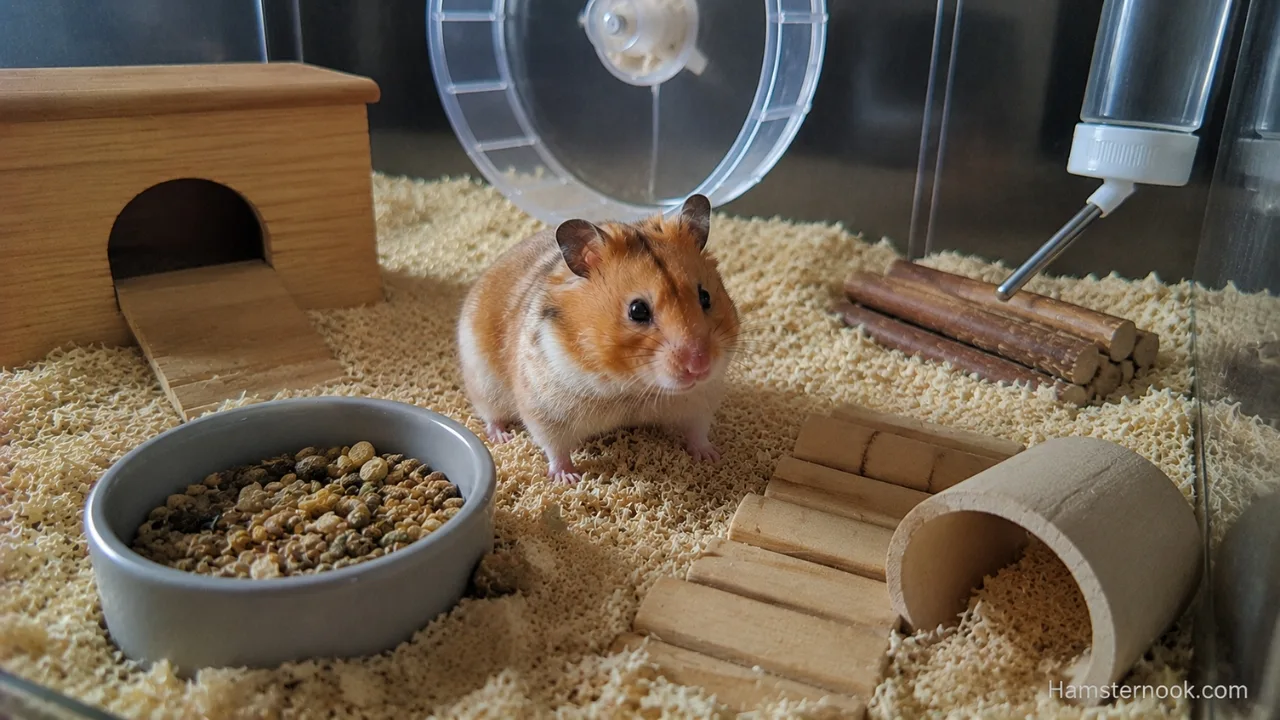
Do not replace a suitable wheel with a smaller one simply because the smaller wheel is quieter.
Check Every Attachment
Run through the enclosure and gently check:
- Wheel
- Water bottle
- Door
- Cage bars
- Shelves or platforms
- Tunnels
- Hides
- Food bowl
- Other movable enrichment
A small amount of movement can create a surprisingly loud vibration once it is transferred through the cage.
Look at What the Cage Is Sitting On
A cage can be mechanically sound but still sound loud because the surface underneath it amplifies vibration.

For example, a wheel vibration that seems minor inside the enclosure may become much more noticeable when the cage sits directly on a hard desk or cabinet.
The goal is not to seal the cage or block ventilation. Instead, make sure the enclosure is stable and positioned securely on an appropriate, level surface.
The location of the enclosure can also affect how much surrounding vibration and disturbance reaches your hamster. A secure position helps keep the cage stable while reducing unnecessary environmental problems. For the wider placement considerations, see Hamster Cage Placement: Safe Locations, Room Conditions & What to Avoid.
Keep the Enclosure in a Quiet Location
Hamsters are sensitive to sudden loud noises. RSPCA and NC3Rs guidance both recommend minimizing disturbing noise and providing an environment where hamsters can rest without unnecessary disturbance.
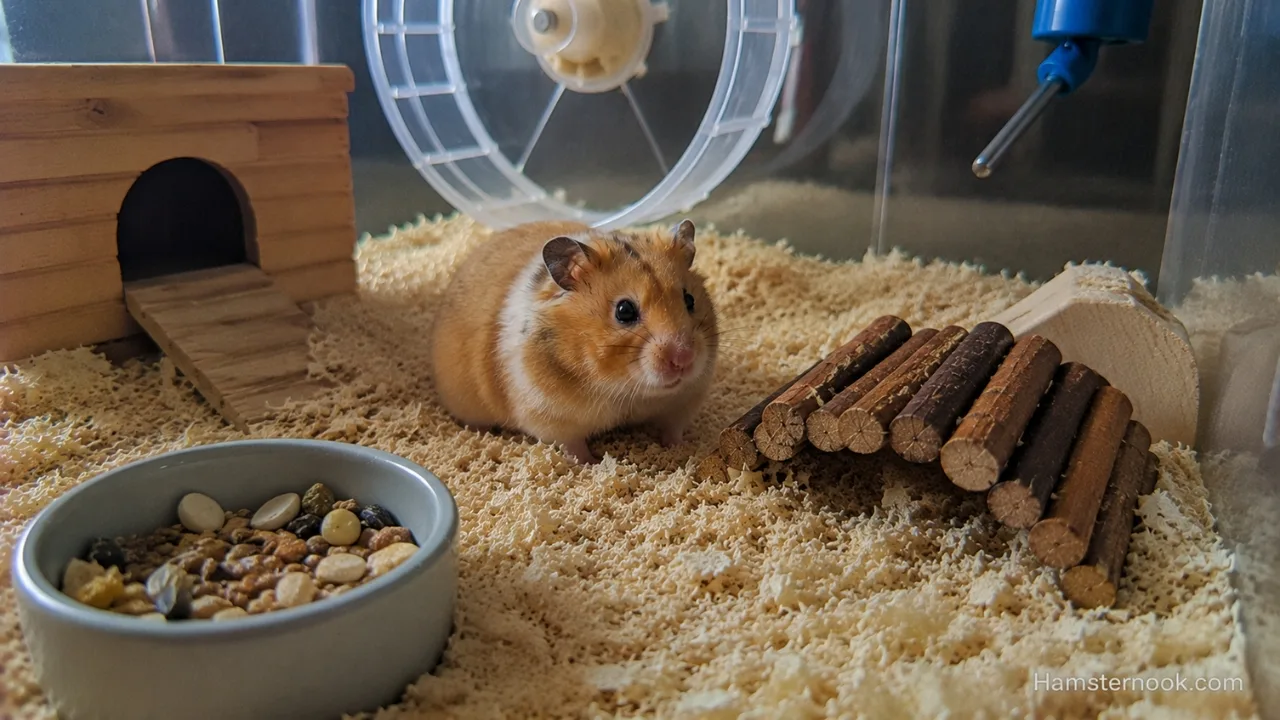
Keep the enclosure away from obvious sources of repeated disturbance such as:
- Loud speakers
- Constantly busy areas
- Heavy machinery
- Repeated banging
- Objects that vibrate against the enclosure
Remember that your hamster’s active period may be different from yours. A cage that seems quiet during the day can become very noisy after the household goes to bed because that is when your hamster becomes active.
Should You Stop Your Hamster From Making Noise at Night?
Not necessarily.
Nighttime activity is a normal part of hamster life. Hamsters need opportunities for exercise, exploration, digging, nesting, and foraging.
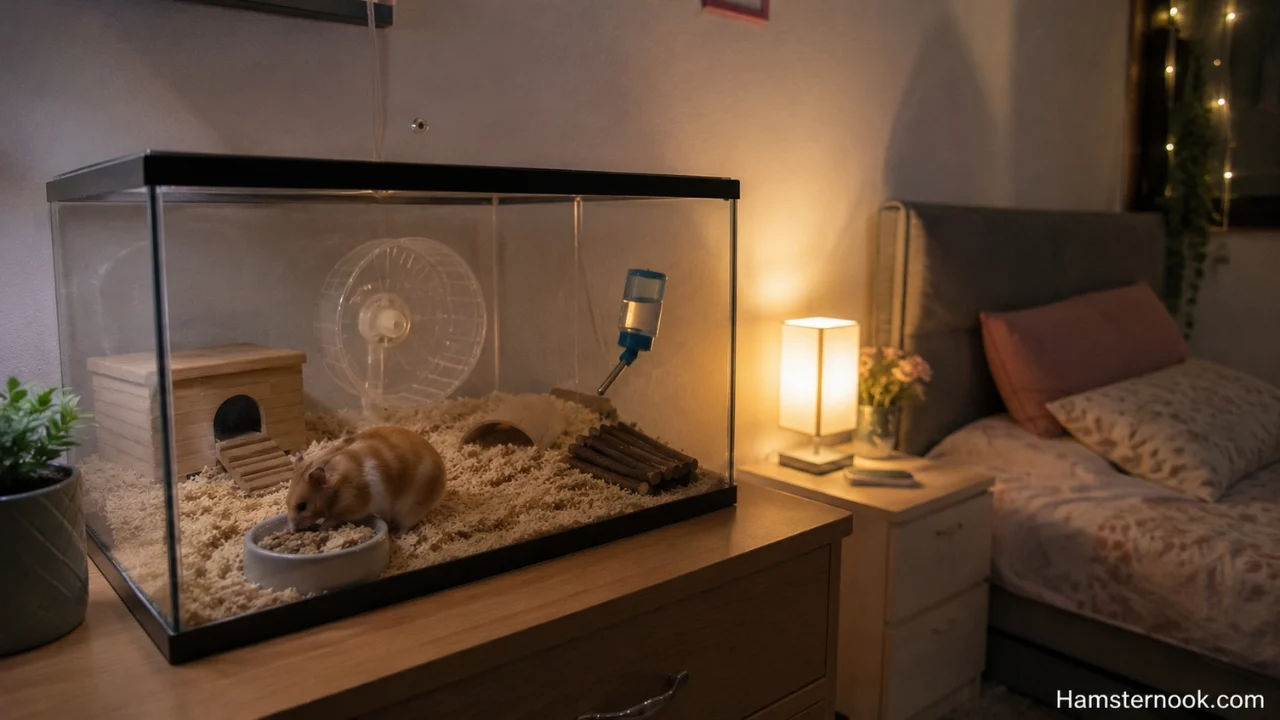
If your hamster is running on a suitable wheel, digging through bedding, moving nesting material, or exploring enrichment, some noise is simply part of keeping a hamster.
The goal should be safe and manageable noise, not a completely silent cage.
For example, reducing a wheel’s unnecessary vibration is sensible. Removing the wheel because it makes noise is not a good solution.
What If My Hamster Keeps Chewing the Cage?
First, make sure your hamster has appropriate enrichment and enough opportunities to perform normal behaviors.

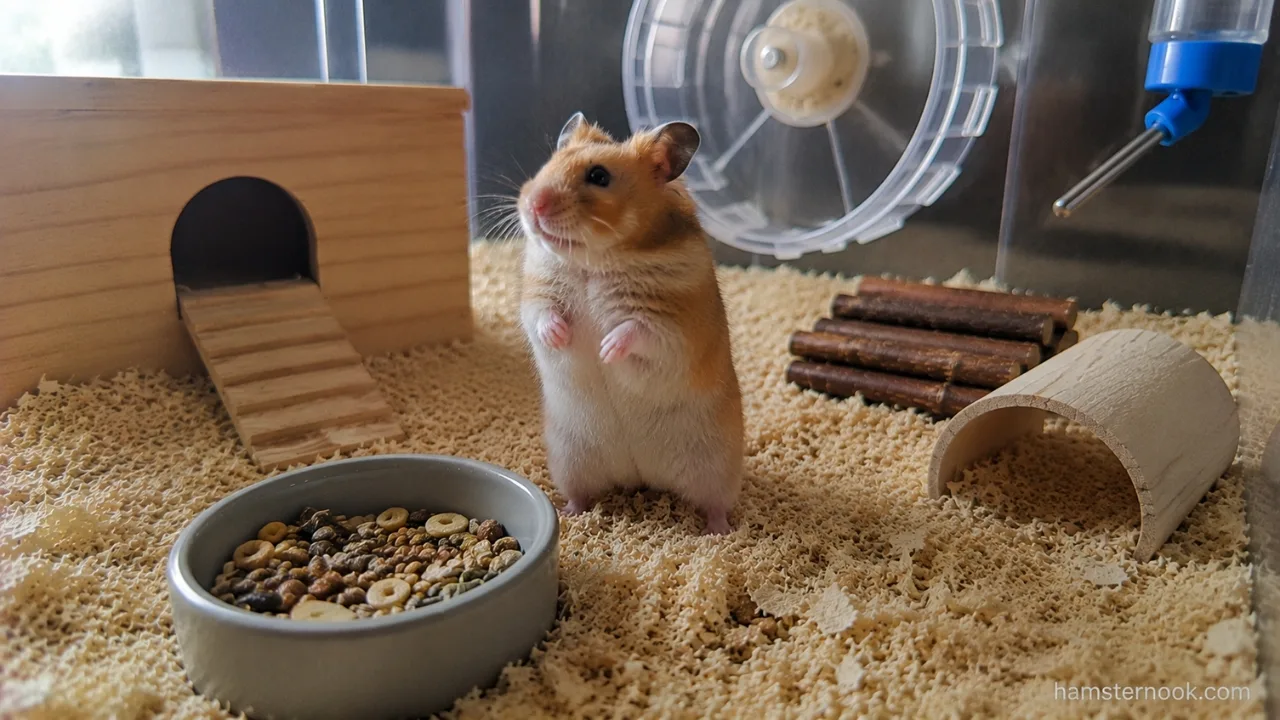
A suitable setup includes deep bedding for digging and nesting, hiding areas, a suitable wheel, and enrichment that encourages exploration and chewing. Blue Cross recommends a spacious enclosure with deep bedding, hides, tunnels, enrichment, and an appropriate wheel.
Enrichment is useful because it gives a hamster different ways to explore, forage, manipulate objects, and stay active inside the enclosure. A well-planned enrichment setup can also make it easier to understand which noises are simply part of normal activity. The Hamster Cage Enrichment: 10 Safe Ideas for Boredom & Natural Behavior guide covers practical options.
If bar chewing continues frequently, observe when it happens.
Ask yourself:
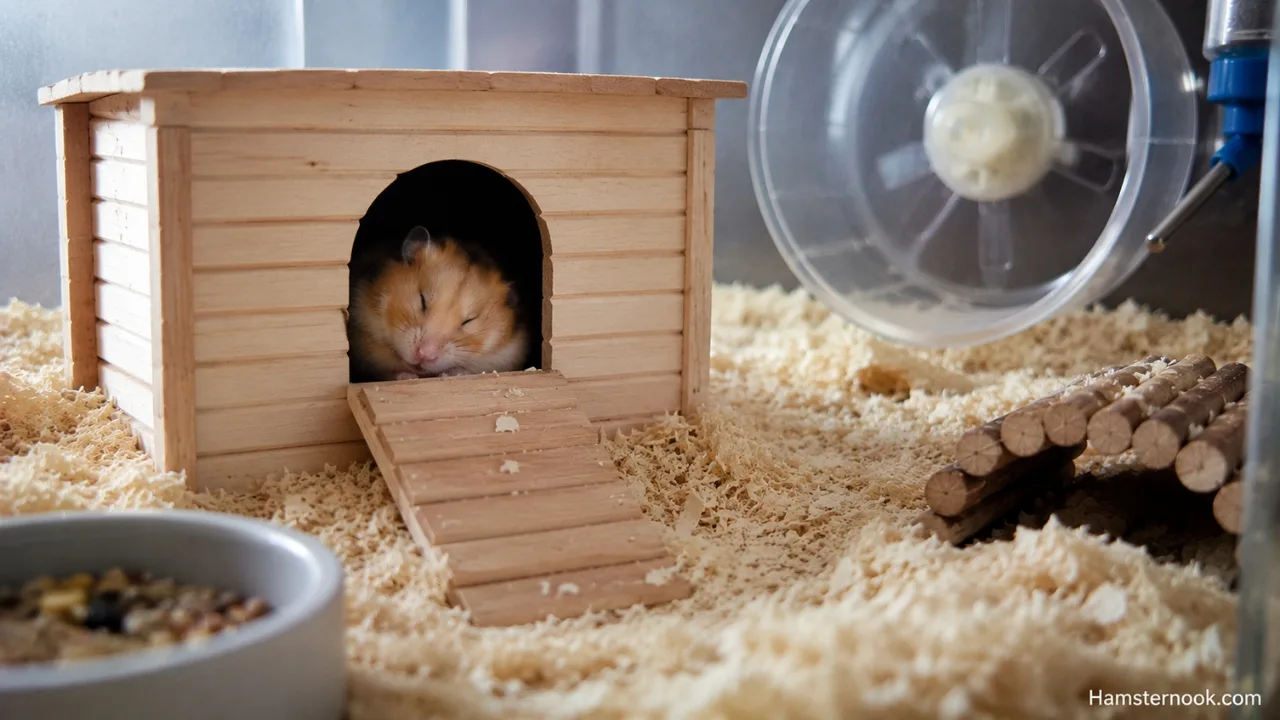
- Does it happen only briefly?
- Does it happen mainly at night?
- Does it happen near one particular area?
- Does your hamster have suitable things to chew?
- Does your hamster spend most of its active period repeatedly chewing the same bars?
Do not assume that cage chewing has one universal cause. Looking at the entire enclosure and your hamster’s behavior gives you much more useful information.
Looking at the wider behavior pattern is especially useful when a noisy behavior becomes frequent or repetitive. A change in normal behavior can sometimes provide more information than the sound itself, so it is worth considering the hamster’s overall behavior and environment. The GSC-performing 7 Ways You’re Accidentally Stressing Your Hamster: Signs & What to Do guide is a useful related resource.
Common Mistakes Owners Make
Removing the Wheel Because It Is Loud
This solves the noise but removes an important source of exercise.
Instead, investigate the wheel’s mounting, stability, size, and condition.
Waking the Hamster to Investigate
If the noise happens overnight, avoid repeatedly waking your hamster during its normal rest period simply because you want to find the source.
Observe during an appropriate active period whenever possible. Hamsters need undisturbed sleep during the day.
Removing Enrichment to Make the Cage Silent
Tunnels, hides, cardboard, nesting materials, and other enrichment can make some noise when a hamster uses them.
That does not automatically mean they should be removed.
Assuming Every Noise Means Something Is Wrong
A hamster digging through bedding can sound surprisingly dramatic.
A cage making noise is not, by itself, evidence that your hamster is distressed or unwell.
Ignoring a New or Mechanical Sound
The opposite mistake is also possible.
If a previously quiet wheel suddenly starts grinding, a bottle begins repeatedly knocking against the bars, or a fixture becomes loose, inspect it rather than assuming the noise is normal.

What You Should Do: A Simple Noise Check
If your hamster’s cage is suddenly noisy, use this five-minute checklist.
First, identify the sound. Is it rattling, scratching, clicking, chewing, or vibration?
Next, watch your hamster. See what your hamster is doing when the noise occurs.
Then check the equipment. Test the wheel, bottle, door, hides, tunnels, and other movable items for unnecessary movement.
After that, check the cage position. Make sure the enclosure is stable and not transferring vibration into furniture.
Finally, check the environment. Make sure the cage is away from unnecessary loud or sudden disturbances.
If the noise is simply your hamster digging, nesting, chewing appropriate materials, or using its wheel normally, you may not need to eliminate it.
When to Worry
Most cage noises are environmental or behavioral, but pay closer attention if the noise seems to come from your hamster rather than the enclosure.
For example, unusual breathing sounds, obvious difficulty breathing, or a clear change in normal behavior should not be dismissed simply as “cage noise.” Hamsters can become ill quickly, and RSPCA guidance recommends contacting a veterinarian when a hamster shows signs of illness.
Do not give a hamster human medication or another animal’s medication. RSPCA specifically warns that some medicines can be dangerous to hamsters.
Final Thoughts
A noisy hamster cage is usually easier to understand once you identify exactly where the sound is coming from. A vibrating wheel, loose water bottle, moving hide, cage bars, or nighttime digging can all create noise without indicating that something is wrong.
Start by observing your hamster instead of immediately changing the enclosure. Fix loose or vibrating equipment, keep the cage stable, provide appropriate enrichment, and allow normal behaviors such as running, digging, nesting, and foraging.

The goal is not to make your hamster’s home completely silent. It is to make sure the noise comes from safe, normal activity rather than loose, unsuitable, or damaged equipment.
Frequently Asked Questions
Why is my hamster’s cage so loud at night?
Hamsters are generally most active during the darker hours, so running, digging, nesting, chewing, and exploring can make the enclosure noticeably louder at night.
Why does my hamster’s wheel make so much noise?
The wheel may be vibrating against the enclosure, wobbling on its stand, or transferring movement into the cage. Check that it is securely positioned and spins smoothly. The wheel should also be appropriately sized and have a solid running surface.
Is it normal for a hamster to make scratching noises?
Yes. Scratching and rustling can happen when a hamster digs through bedding or rearranges nesting material. Digging and nest building are normal hamster behaviors.

Why does my hamster keep biting the cage bars?
Bar chewing can happen as part of normal gnawing behavior, but frequent repetitive chewing is worth examining in the context of the whole enclosure. Provide appropriate chew materials and enrichment, along with opportunities for digging, nesting, foraging, and exercise.
Should I remove my hamster’s wheel because it is noisy?
No. A suitable wheel is an important source of exercise. Instead, investigate whether the wheel is loose, unstable, incorrectly positioned, or vibrating against the enclosure.
How can I make my hamster’s cage quieter?
Start by checking the wheel, water bottle, cage door, bars, hides, tunnels, and other movable items. Make sure the enclosure is stable and placed securely. Also keep it away from unnecessary sudden or loud disturbances.
Can cage noise stress a hamster?
Sudden loud or startling noises can disturb hamsters, which is why reputable welfare guidance recommends keeping unnecessary noise to a minimum. Normal sounds produced by a hamster using its enclosure, such as digging or running, are different from external loud disturbances.
When should I contact a veterinarian?
Contact a veterinarian if the unusual sound appears to come from your hamster rather than the cage, particularly if it is accompanied by signs of illness or breathing difficulty. Do not attempt to treat the hamster with human or other animal medicines without veterinary direction.
References
This guide is based on hamster behavior, health, welfare, care, enrichment, housing, and husbandry guidance from trusted animal welfare and veterinary resources, including:
- RSPCA – Understanding Hamster Behaviour – Guidance on natural hamster behavior, handling, activity, sleep patterns, enrichment, and signs of stress.
- RSPCA – Hamster Health & Welfare Tips – Information on hamster health, welfare, handling, illness signs, and safe care practices.
- Blue Cross – Hamster Care – Practical guidance on hamster housing, bedding, enrichment, handling, exercise, and general wellbeing.
- Blue Cross – Small Pet Enrichment – Guidance on enrichment and providing opportunities for natural behaviors in small pets.
- NC3Rs – Housing and Husbandry: Hamster – Guidance on hamster housing, bedding, nesting, enrichment, handling, environmental conditions, and natural behaviors.
- MSD Veterinary Manual – Providing a Home for a Hamster – Veterinary information on hamster husbandry, housing, bedding, behavior, and environmental needs.
Medical Disclaimer
This article is for general hamster-care information and is not a substitute for veterinary diagnosis or treatment. If your hamster appears unwell, has breathing difficulties, or develops a sudden or concerning change in behavior, contact a veterinarian experienced with small mammals.

Narayan Kumar is the founder and author of HamsterNook. He creates practical, research-based hamster care guides covering hamster behavior, nutrition, cage setup, enrichment, health, and everyday care. His goal is to help hamster owners make informed decisions and provide safer, healthier lives for their pets through clear, beginner-friendly information based on trusted animal care resources.


