Finding a damp spot in your hamster’s enclosure is completely normal, but many owners become concerned when they notice changes in the color, smell, or appearance of their pet’s urine. Because hamsters are small animals that often hide signs of illness, paying attention to their bathroom habits can provide useful clues about their health.
Understanding what normal hamster urine looks like can help you spot potential problems early while avoiding unnecessary worry over harmless variations.
Quick Answer
Healthy hamster urine is usually yellow to amber in color and may naturally appear somewhat cloudy due to minerals normally excreted in the urine. A mild odor is also normal. However, urine that appears red, contains visible blood, has an unusually strong smell, is accompanied by straining, or is associated with changes in behavior may indicate a health problem that requires veterinary attention.
What Does Normal Hamster Urine Look Like?
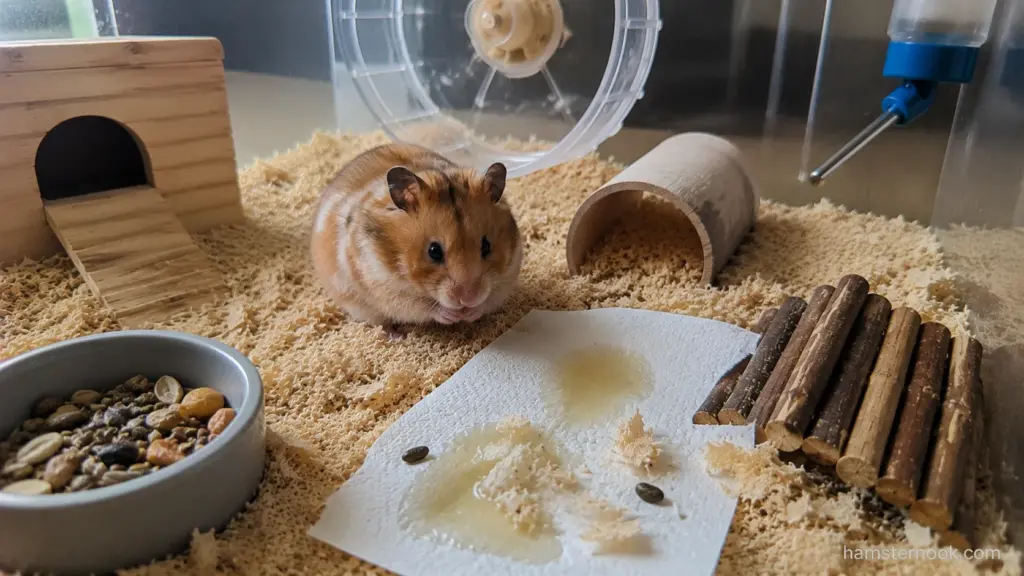
Many first-time owners expect hamster urine to look exactly like human urine. In reality, healthy hamster urine often varies in appearance.
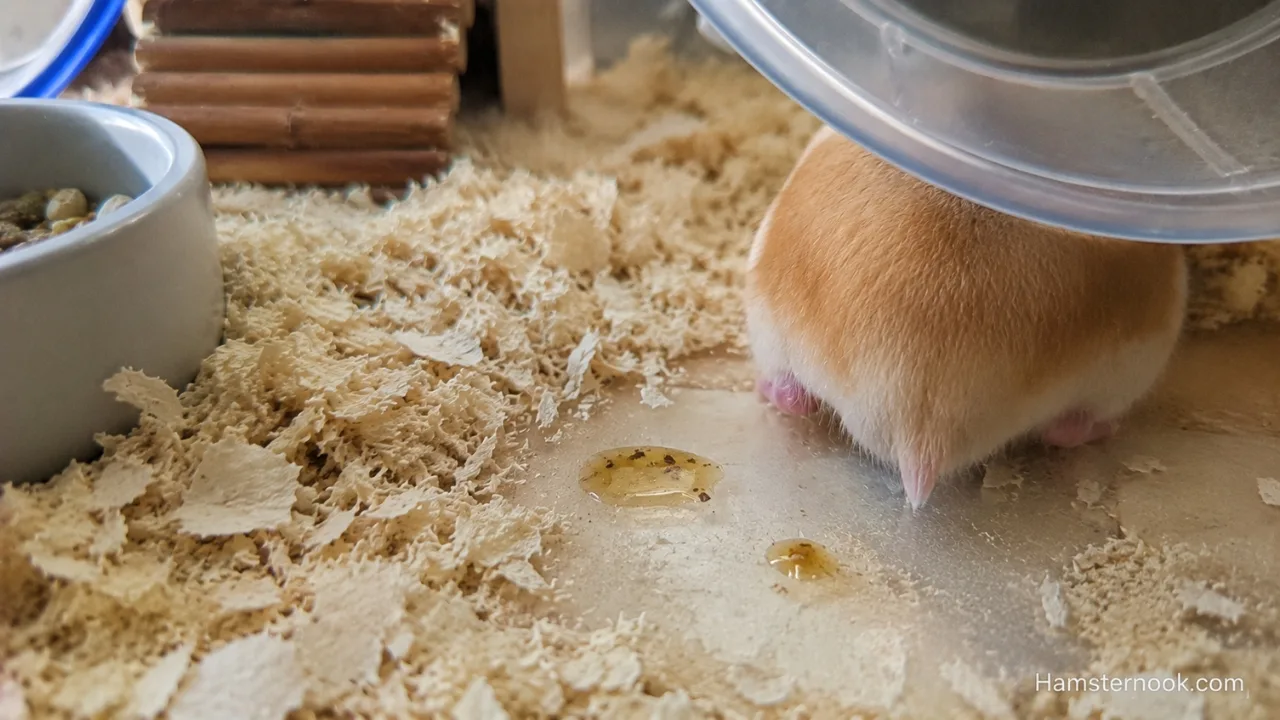
Normal hamster urine is typically:
- Yellow to dark yellow in color
- Sometimes amber-colored
- Mildly cloudy or opaque
- Mild in odor
- Produced without obvious discomfort
The cloudy appearance surprises many owners. Hamsters naturally excrete minerals, particularly calcium compounds, which can make urine appear less clear than expected. This does not automatically indicate illness.
It’s also worth remembering that urine can look slightly different depending on the surface where you find it. A urine spot on white bedding may appear darker or more noticeable than the same urine in a sand bath or litter area. Looking for consistent changes over several days is usually more useful than judging a single urine spot.
Urine may also look slightly darker first thing after a hamster wakes up because it has been resting and not drinking during its sleeping period.
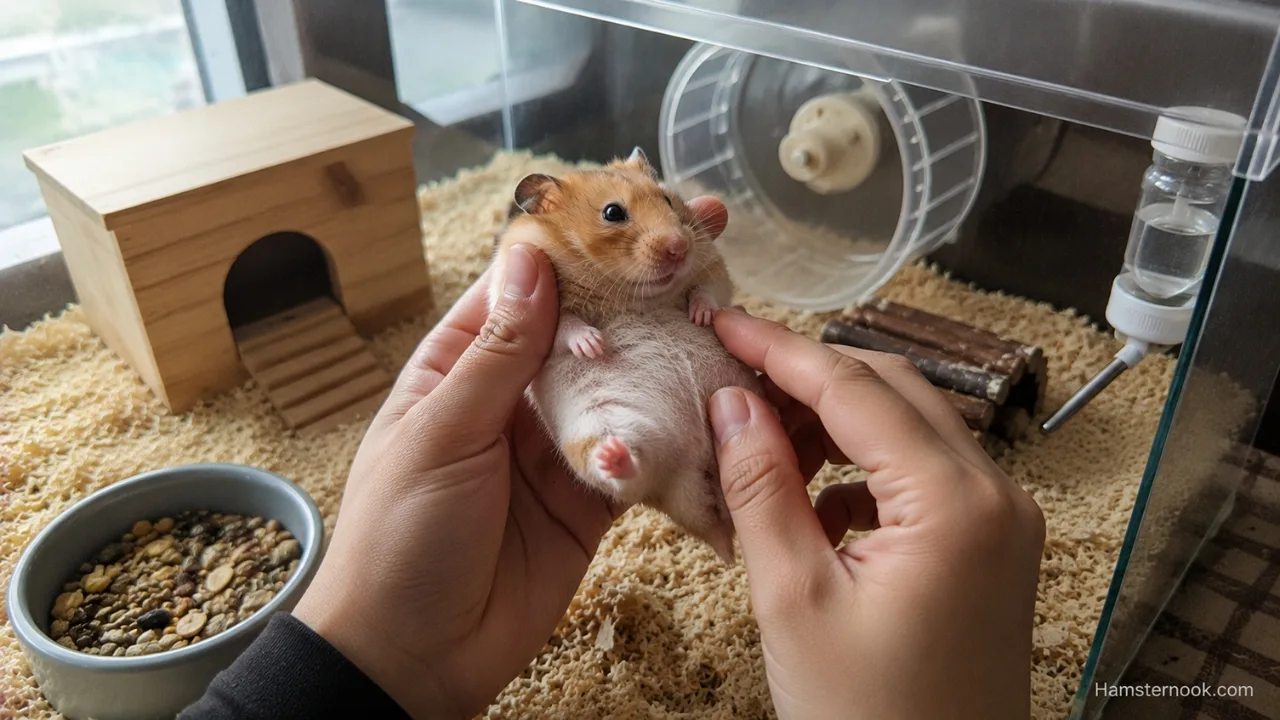
Why Hamster Urine Isn’t Always Clear
A common misconception is that cloudy urine always signals infection.
In hamsters, some cloudiness can be normal because mineral crystals are naturally present in the urine. According to veterinary references, rodents often produce urine containing mineral deposits that may dry into a chalky residue on cage surfaces.
This is one reason why urine spots may leave white marks on plastic shelves, ceramic dishes, or litter trays after drying.
Cloudiness becomes more concerning when it appears alongside other symptoms such as:
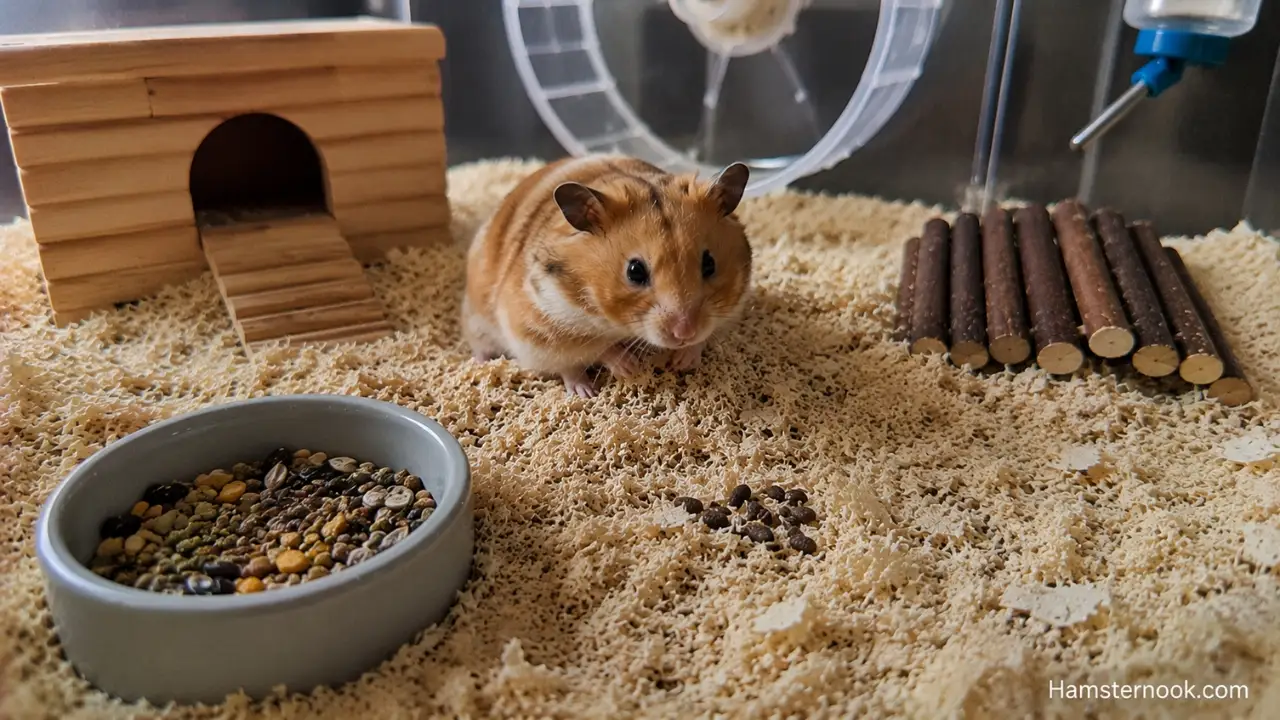
- Reduced appetite
- Weight loss
- Difficulty urinating
- Blood in urine
- Increased drinking
- Lethargy
In those situations, the urine itself is only one part of a larger health picture.
Looking at your hamster’s overall condition is often more helpful than focusing on urine appearance alone, since behavior, appetite, weight, and activity levels usually provide important context. Learn more in How to Tell If Your Hamster Is Happy, Healthy, Stressed, or Sick: Complete Owner’s Guide (2026).
Normal vs Warning Signs
| Normal Urine | Possible Warning Sign |
|---|---|
| Yellow or amber color | Red, pink, or visibly bloody urine |
| Mild odor | Strong or unusually foul odor |
| Slight cloudiness | Thick discharge-like appearance |
| Regular urination | Straining or difficulty urinating |
| Normal behavior | Lethargy or reduced activity |
| Normal appetite | Refusing food or water |
Changes should always be considered alongside your hamster’s overall condition rather than judged on urine appearance alone.
Can Healthy Hamster Urine Smell Strong?
Hamster urine naturally has an odor.
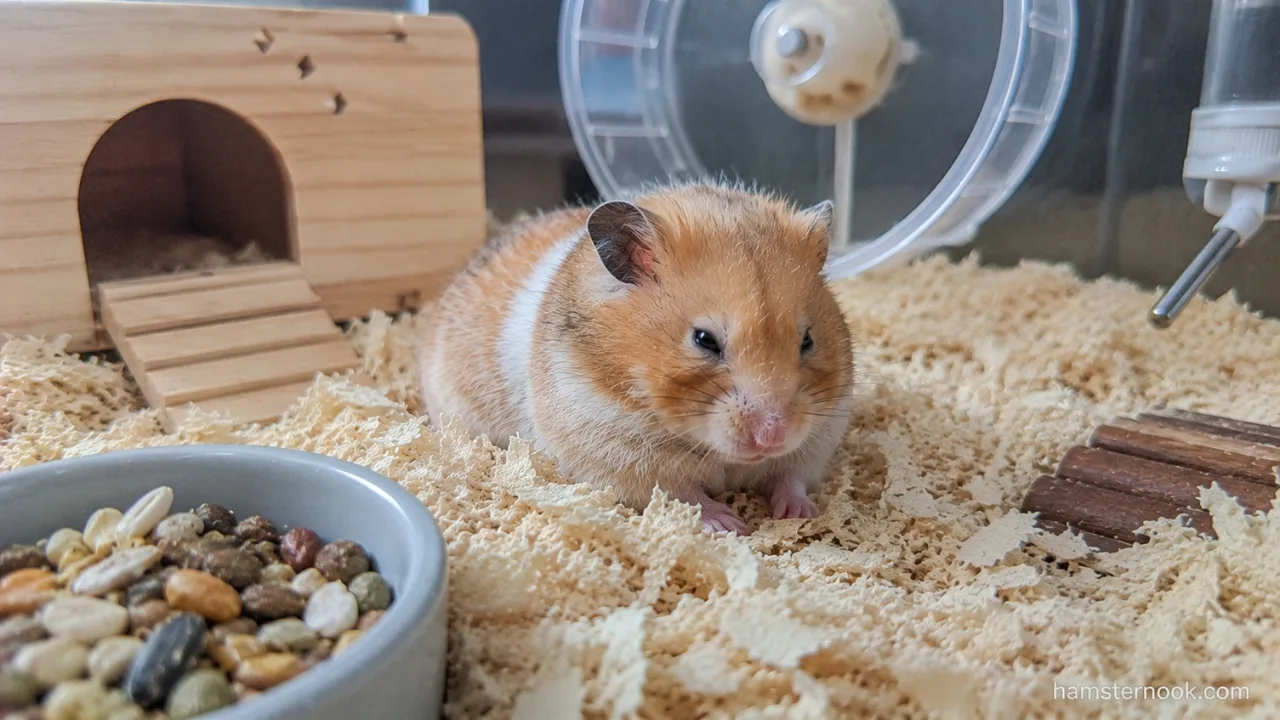
In fact, hamsters use scent marking as part of their normal behavior and communication. Because of this, urine may smell stronger than some owners expect, particularly in smaller enclosures or cages that need cleaning.
Several factors can influence odor:
Enclosure Cleanliness
Urine becomes more concentrated and noticeable as it accumulates in bedding.
Spot-cleaning regularly helps reduce odor while preserving enough familiar scent to avoid stressing your hamster.
Hydration
A hamster that has recently consumed less water may produce more concentrated urine, which can smell stronger and appear darker.
Changes in hydration can affect both urine appearance and overall health. Read Why Is My Hamster Suddenly Drinking Less Water? Causes, Warning Signs & What to Do.
Species Differences
Urine odor can vary considerably between individual hamsters and can also become more noticeable when urine accumulates in bedding.
A stronger smell alone does not necessarily indicate illness.
However, a sudden change in odor is often more important than the odor itself. If your hamster’s urine suddenly becomes much stronger-smelling than usual and this change occurs alongside appetite loss, lethargy, or altered drinking habits, it deserves closer observation.
What Color Changes Should Owners Watch For?
Red or Pink Urine
This is one of the most concerning changes.
Red urine may indicate blood, although certain foods can occasionally alter urine color. Because it is difficult to determine the cause without examination, visible red or pink urine should always be taken seriously.
Brown Urine
Dark brown urine is not considered normal and warrants veterinary evaluation, particularly if accompanied by lethargy or appetite changes.

Extremely Dark Yellow Urine
Occasionally, concentrated urine may appear darker than usual. If your hamster is otherwise healthy and drinking normally, this may simply reflect temporary concentration.
Persistent changes should still be monitored carefully.
White Residue
A dried white residue is often associated with normal mineral content rather than disease. This is particularly common in areas where hamsters regularly urinate.
How Hamsters Choose Bathroom Areas
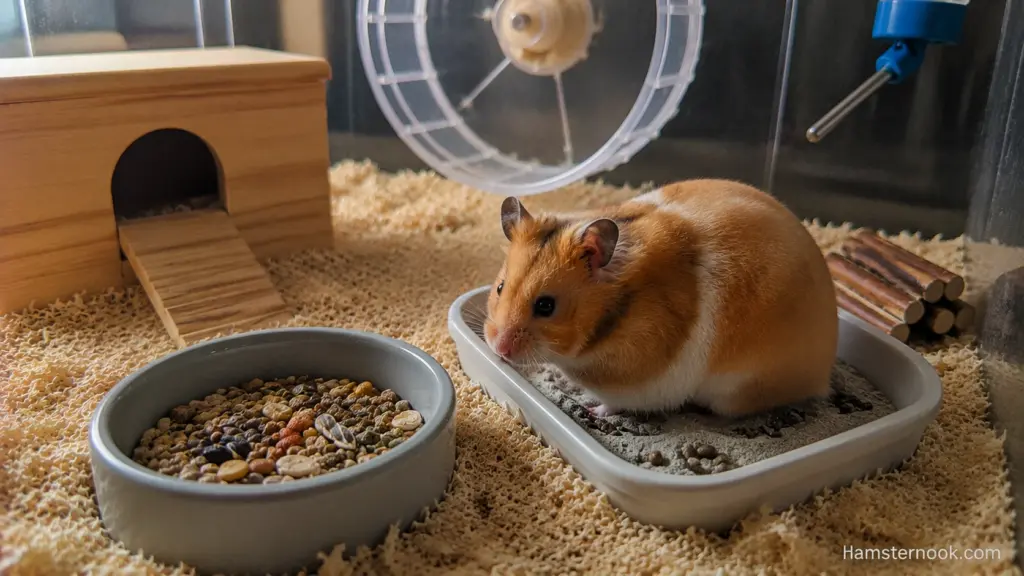
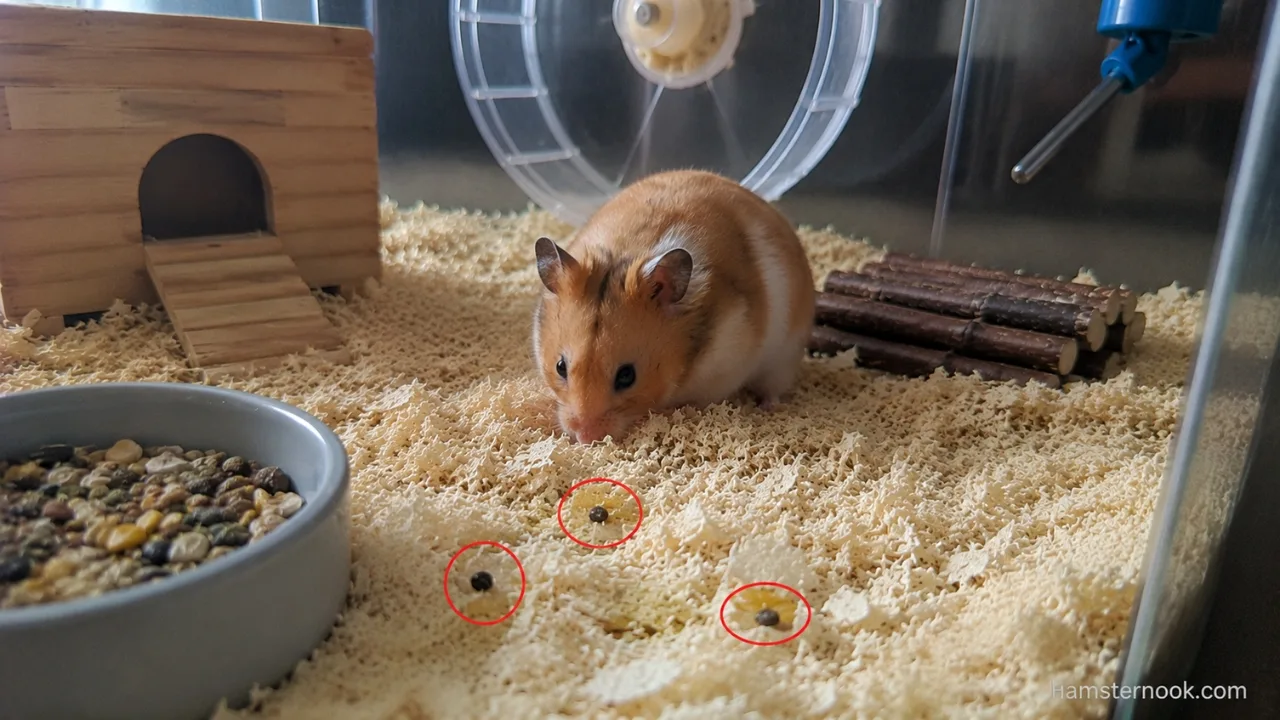
Most hamsters develop preferred toilet locations within their enclosure.
Common bathroom areas include:
- Sand baths
- Cage corners
- Ceramic dishes
- Specific bedding sections
This habit can actually help owners monitor urine appearance more easily because waste becomes concentrated in predictable locations.
A sudden change in bathroom habits may sometimes indicate stress, environmental changes, or health issues, although it can also occur after enclosure rearrangements or deep cleaning.
Some hamsters may also switch toilet locations after new enrichment items, additional bedding, or changes to cage layout are introduced. Temporary changes like these are often harmless if your hamster otherwise appears healthy and comfortable.
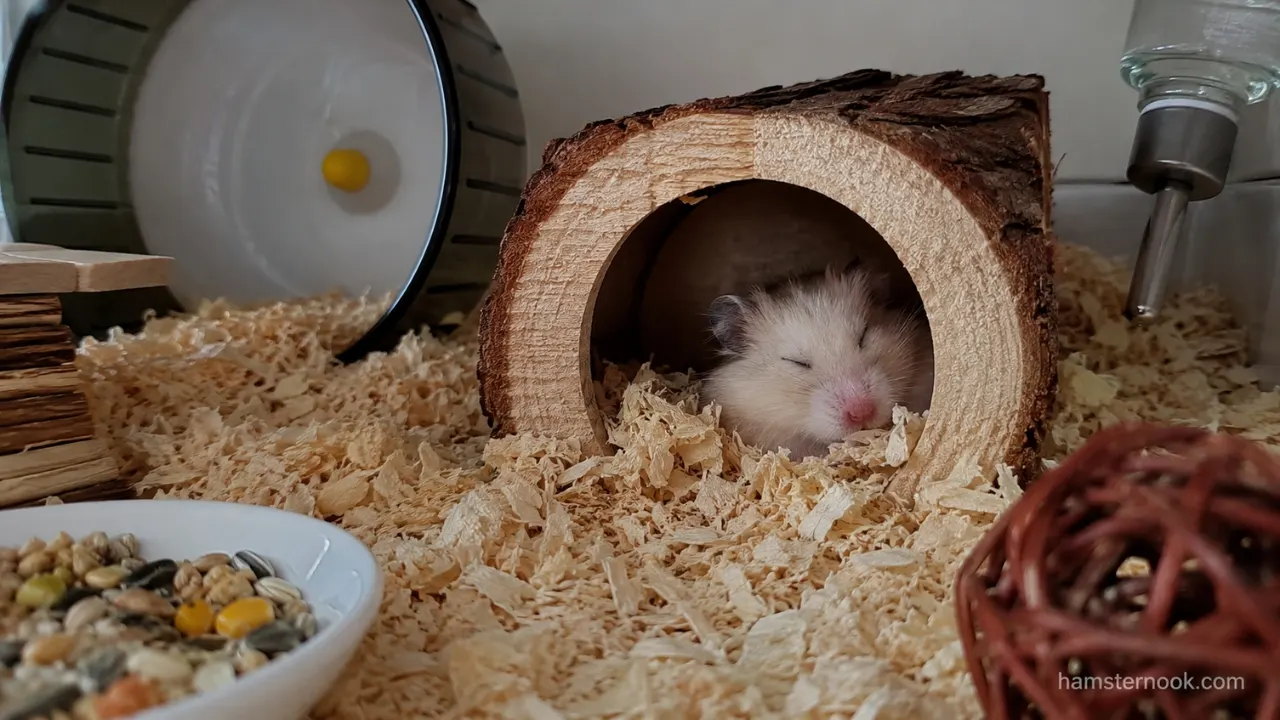
Behavioral changes often provide important clues about a hamster’s wellbeing. See Why Your Hamster Suddenly Started Acting Weird.
Practical Examples
Example 1: Yellow Urine With White Residue
You notice a yellow urine patch that dries into a chalky white mark on a ceramic dish.
This is often consistent with normal mineral excretion and is commonly seen in healthy hamsters.
Example 2: Strong-Smelling Corner of the Cage
One cage corner develops a noticeable odor despite the hamster appearing active and healthy.

This usually indicates a favorite toilet area rather than illness and can often be managed through regular spot cleaning.
Example 3: Pink-Tinted Urine Spot
You discover urine that appears pink or red.
Even if your hamster seems normal, this warrants closer attention and veterinary advice because blood in urine can have several underlying causes.
Can Diet Affect Urine Appearance?
Diet can influence urine concentration and sometimes its appearance.

Foods with high moisture content may lead to lighter urine because they contribute additional fluids. Meanwhile, temporary changes in hydration can make urine appear darker.
However, significant color changes should never automatically be blamed on food without considering other possibilities.
If you observe unusual urine color alongside changes in appetite, behavior, or activity levels, further evaluation is appropriate.
Many serious illnesses first appear through subtle changes in appetite, activity, and bathroom habits. Learn the early warning signs in Signs of a Sick Hamster: Warning Symptoms Every Owner Should Know.

Why Monitoring Urine Matters
Hamsters are prey animals and often hide signs of illness until they become quite unwell.
Because owners rarely observe urination directly, checking bedding, sand baths, litter areas, and favorite toilet corners during routine cleaning can provide valuable information.
Monitoring urine regularly allows you to notice potentially important changes such as:
- Changes in color
- Changes in frequency
- Changes in odor
- Changes in bathroom habits
When combined with observations about eating, drinking, weight, and activity levels, these details can help identify potential problems sooner rather than later.
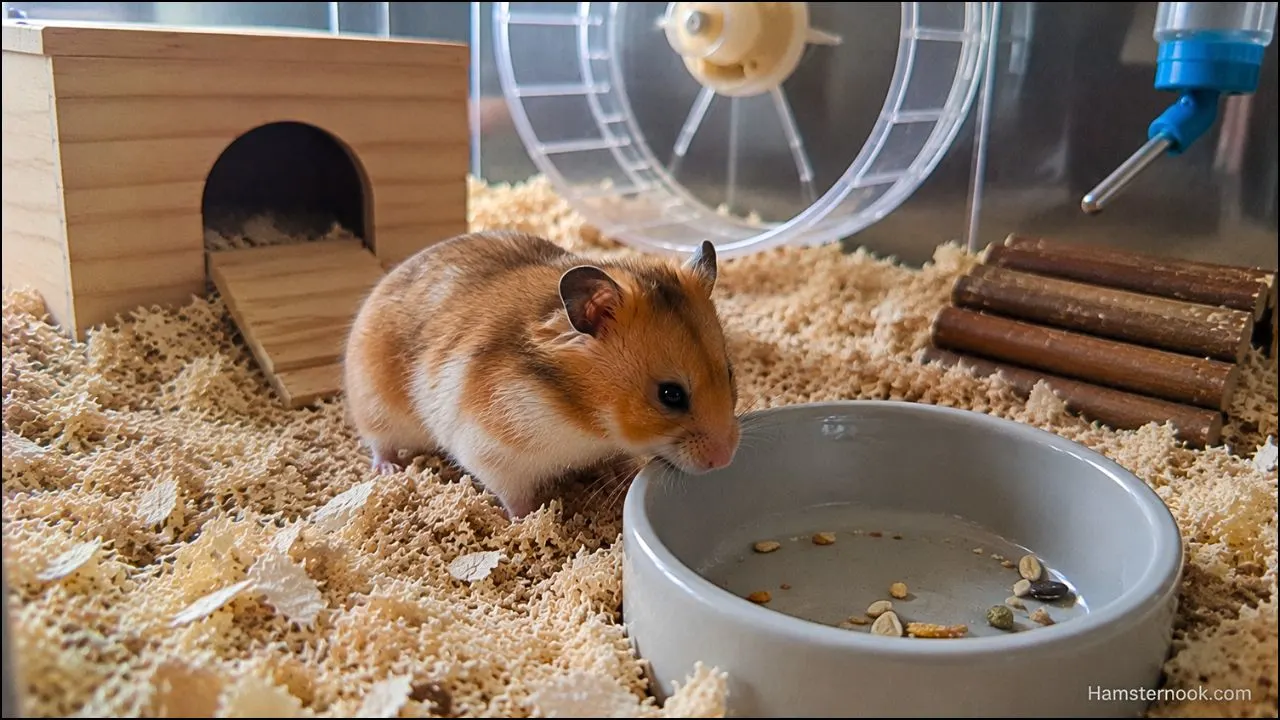
Common Mistakes Owners Make
Monitoring hamster urine can be useful, but many owners become concerned about perfectly normal findings or overlook more important warning signs.
Assuming Cloudy Urine Always Means Infection
A slightly cloudy appearance is often normal in hamsters because minerals are naturally present in their urine. Looking at the urine color alone can lead to unnecessary worry.
Ignoring Behavioral Changes
The urine itself is only one piece of information. A hamster that is eating well, staying active, maintaining its weight, and behaving normally may be perfectly healthy even if its urine looks slightly different from what you expected.
Deep Cleaning Too Frequently
Many owners remove every trace of scent from the enclosure. While cleanliness is important, excessive cleaning can be stressful because hamsters rely heavily on scent to navigate their environment.
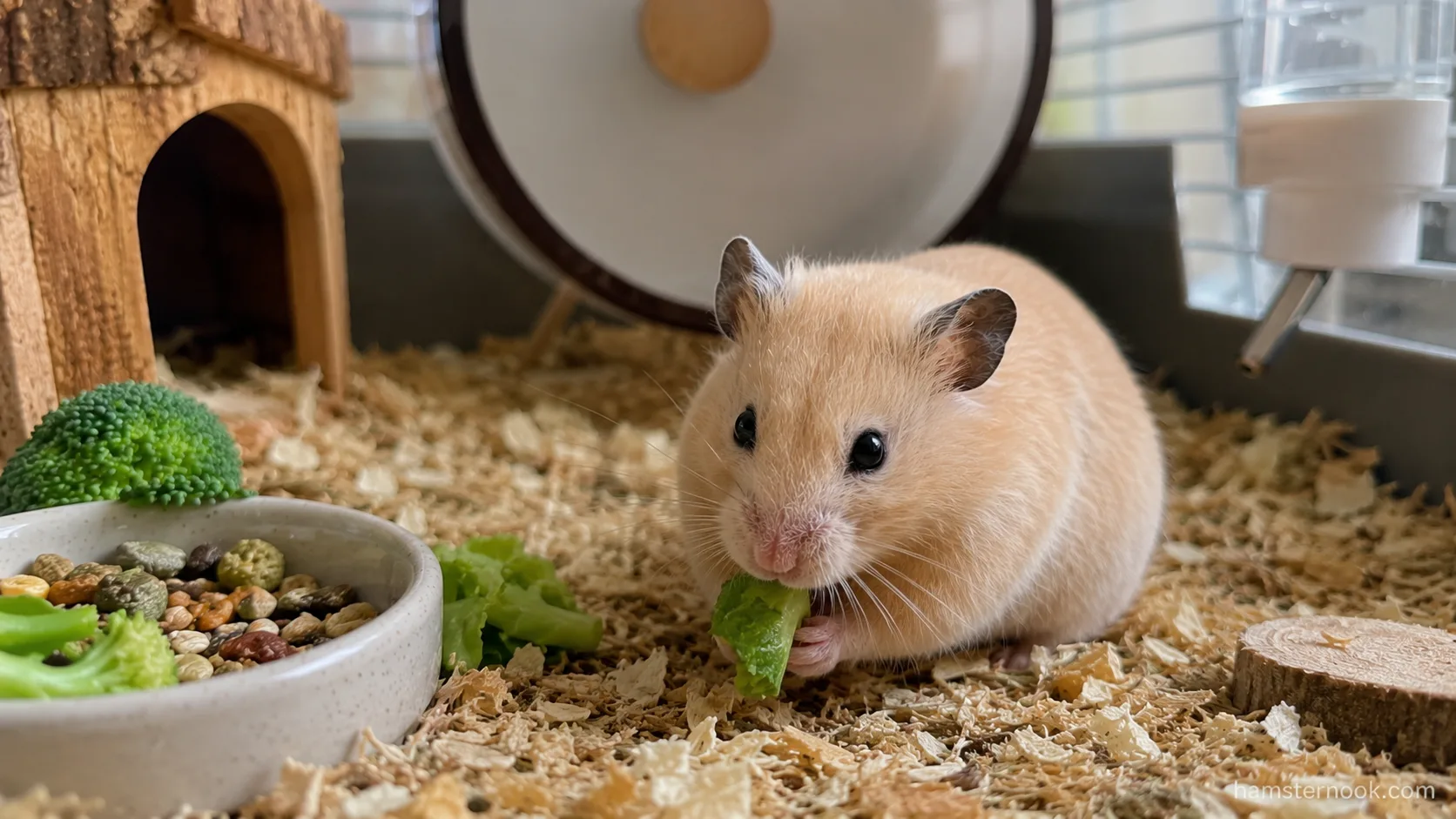
Missing Changes in Drinking Habits
Increased or decreased water consumption can sometimes be more significant than the appearance of the urine itself. Watching both together provides a clearer picture of your hamster’s health.
Waiting Too Long When Blood Is Present
Visible red or pink urine should never be dismissed as “probably nothing.” Blood in urine can be associated with several medical conditions and deserves prompt veterinary attention.
What You Should Do
A simple routine can help you keep track of your hamster’s urinary health without becoming overly focused on every small change.
Check Toilet Areas During Spot Cleaning
Most hamsters urinate in the same locations repeatedly. Take a quick look at these areas when replacing soiled bedding.

Monitor Water Intake
Notice whether your hamster is drinking significantly more or less than usual.
Watch Overall Behavior
Healthy hamsters generally:
- Remain active during normal waking hours
- Show interest in food
- Maintain normal grooming habits
- Continue exploring their enclosure
Keep Records of Unusual Changes
If you notice an unusual urine color or sudden change in bathroom habits, making a note of the date and any accompanying symptoms can be helpful if veterinary advice becomes necessary.
Provide Fresh Water Daily
Reliable access to clean drinking water supports normal hydration and urinary function.

Warning Signs
The following signs should not be ignored, especially when they occur alongside changes in urine appearance:
- Red or pink urine
- Visible blood
- Straining while urinating
- Crying or squeaking during urination
- Strong foul-smelling urine
- Increased drinking
- Decreased drinking
- Frequent attempts to urinate
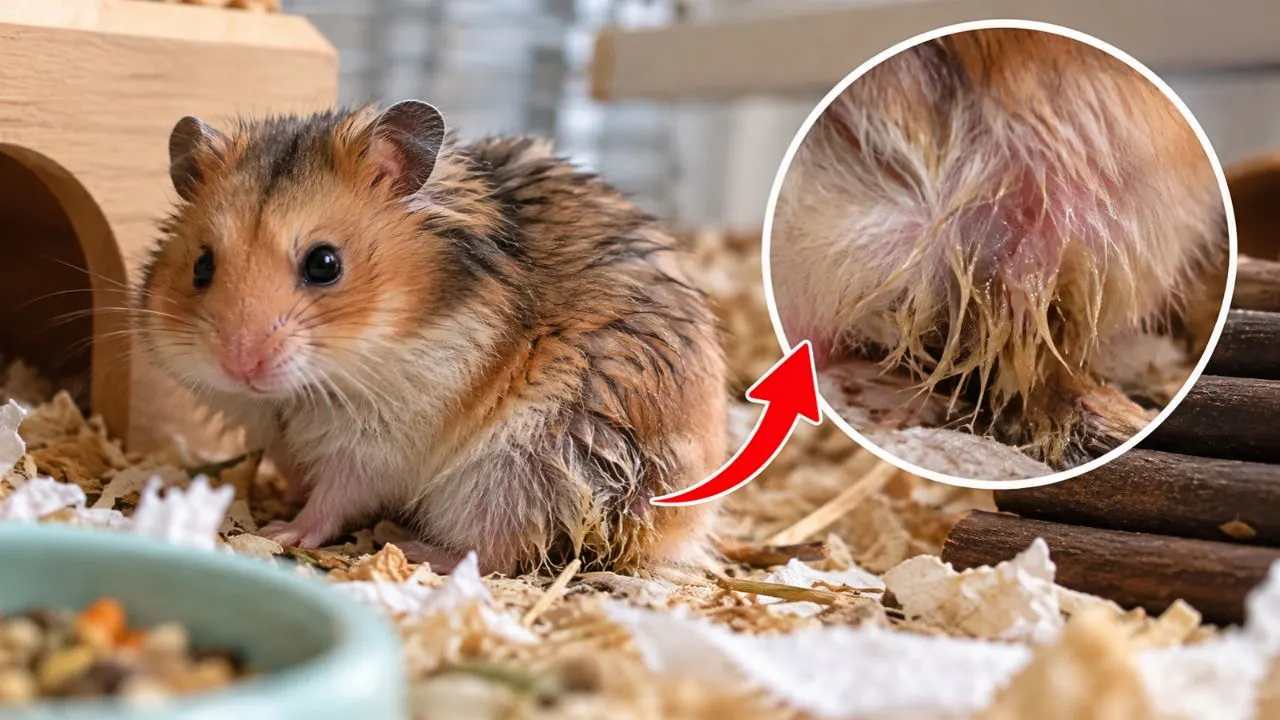
- Wet fur around the rear end
- Sudden lethargy
- Reduced appetite
- Weight loss
Excessive thirst can sometimes accompany urinary problems and should not be ignored. Read Why Is My Hamster Drinking So Much Water? Normal Habit or Warning Sign?.
These signs suggest that the issue may be more than a harmless variation in urine color or concentration.
These signs suggest that the issue may be more than a harmless variation in urine color or concentration. If reduced appetite is also present, our Why Is My Hamster Not Eating? 9 Causes, Warning Signs & What to Do guide explains when appetite changes need prompt veterinary attention.
When to Worry
Contact an experienced exotic animal veterinarian if your hamster:
- Has blood in its urine
- Appears unable to urinate normally
- Strains repeatedly without producing urine
- Shows signs of pain while urinating
- Develops a sudden change in thirst
- Becomes lethargic or stops eating
- Has persistent urine changes that do not resolve
If your hamster appears uncomfortable or painful during normal activities, see How Can You Tell If a Hamster Is in Pain?.
Urinary problems can worsen quickly in small animals. Early veterinary assessment is generally safer than waiting to see if symptoms disappear on their own.
Final Thoughts
Healthy hamster urine is usually yellow to amber in color and may naturally appear somewhat cloudy due to normal mineral excretion. A mild odor is also expected, especially in areas your hamster frequently uses as a toilet.
What matters most is not an isolated urine spot but consistent patterns that develop over time. Changes in color, odor, urination habits, appetite, activity levels, and water consumption often provide a much clearer picture of your hamster’s health.
By becoming familiar with what is normal for your individual hamster, you’ll be better equipped to recognize warning signs early and seek help when necessary.
Frequently Asked Questions
Is cloudy hamster urine normal?
Yes. Mild cloudiness is often normal because hamsters naturally excrete minerals in their urine. Cloudiness alone does not necessarily indicate disease.
What color should healthy hamster urine be?
Healthy hamster urine is typically yellow to amber in color. The exact shade may vary depending on hydration and other normal factors.
Why does my hamster’s urine leave a white residue?
Dried urine may leave white or chalky deposits because of the minerals naturally present in hamster urine.
Is strong-smelling hamster urine normal?
A mild to moderately strong odor can be normal, particularly if urine has accumulated in bedding. A sudden foul odor accompanied by other symptoms deserves closer attention.
Should I worry about pink urine?
Yes. Pink or red urine may indicate blood and should be evaluated by a veterinarian, even if your hamster otherwise seems normal.
How often do hamsters urinate?
There is no single normal number of times a hamster should urinate that is useful for owners to track. What matters more is a clear change from your hamster’s usual bathroom pattern, especially if it occurs with straining, blood in the urine, increased thirst, reduced appetite, lethargy, or other unusual symptoms.
Can dehydration affect urine color?
Yes. More concentrated urine may appear darker yellow when a hamster has consumed less water than usual.
References
This guide is based on veterinary references and recognized animal welfare resources covering hamster health, urinary health, husbandry, and general care, including:
- NC3Rs – Housing and Husbandry: Hamster
- MSD Veterinary Manual – Small Mammals: Disorders of the Urinary System
- Merck Veterinary Manual – Care and Husbandry of Hamsters
- RSPCA – Hamsters: Health and Welfare Advice
- PDSA – Hamsters as Pets
- Blue Cross – Hamster Care Guide
Medical Disclaimer: This article is intended for educational purposes only and should not replace professional veterinary advice. If your hamster shows signs of illness, pain, difficulty urinating, blood in the urine, or any other concerning symptoms, consult a qualified veterinarian experienced with small mammals.

Narayan Kumar is the founder and author of HamsterNook. He creates practical, research-based hamster care guides covering hamster behavior, nutrition, cage setup, enrichment, health, and everyday care. His goal is to help hamster owners make informed decisions and provide safer, healthier lives for their pets through clear, beginner-friendly information based on trusted animal care resources.