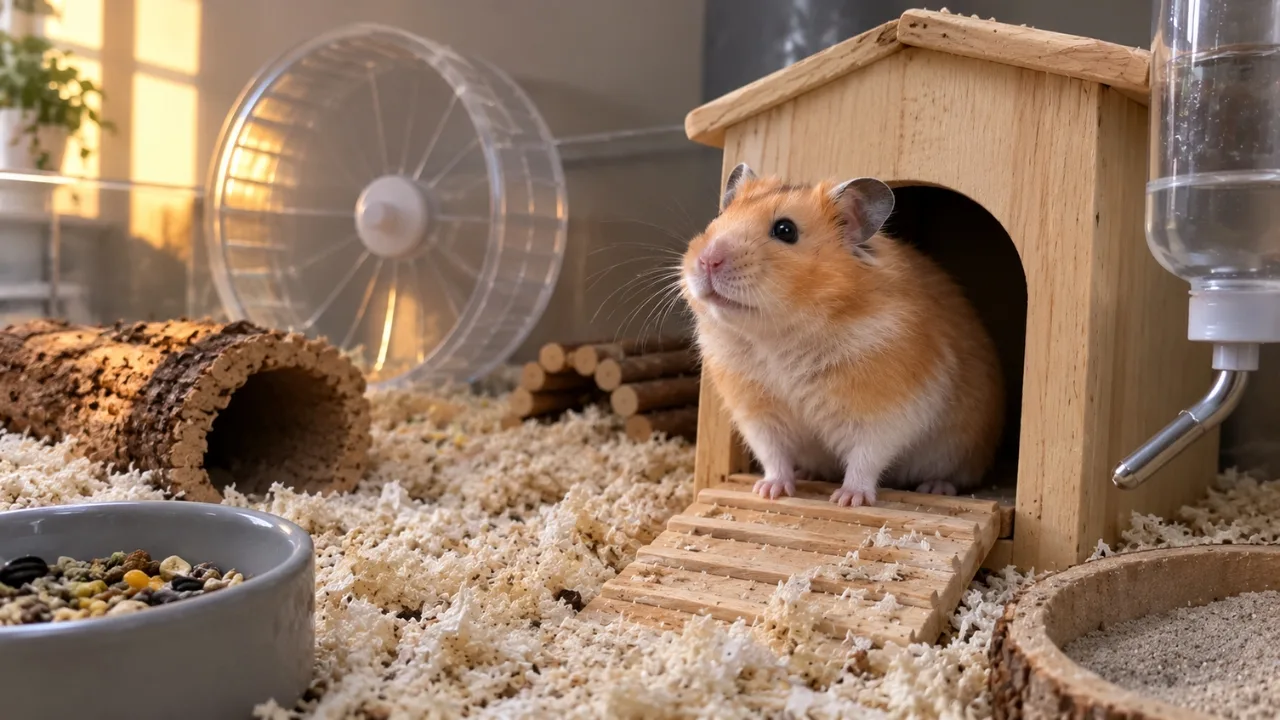
Many new hamster owners focus on cage size, bedding depth, and diet, but lighting is another important part of a hamster’s environment. Because hamsters are naturally most active during the evening and nighttime hours, owners often wonder whether their pet needs special lighting, complete darkness, or even a lamp inside the enclosure.
Understanding how hamsters respond to light and darkness can help you create a more comfortable and predictable daily environment.
Lighting is just one part of creating a healthy environment for your pet. Our Complete Hamster Care Guide for Beginners (2026) covers the essential aspects of hamster care, housing, diet, and daily welfare.
Quick Answer
Hamsters do not need a night light, heat lamp, or special UVB lamp in a typical home setup. They benefit from a regular day-night cycle, with normal indirect daylight during the day and a dimmer, generally dark environment at night. Avoid direct sunlight because it can heat the enclosure, and do not leave bright lights shining on the cage throughout the night. Provide dark hides and deep bedding so your hamster can retreat and rest securely.
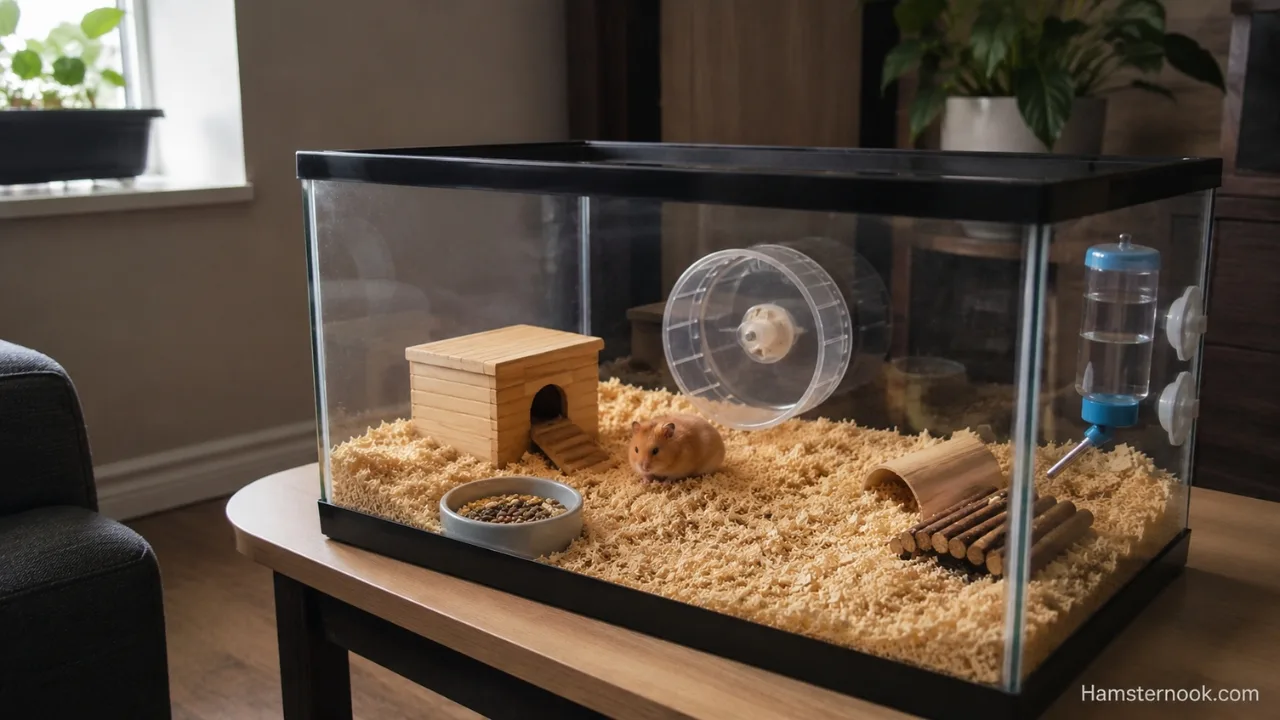
Why Light Matters to Hamsters
Like many animals, hamsters have biological rhythms that help regulate sleep, activity, feeding, and other daily behaviors.
These rhythms are influenced by changes in light and darkness throughout the day. In the wild, hamsters typically spend daylight hours resting in underground burrows and become more active around dusk and during the night.
Pet hamsters still retain these natural instincts. Even though they live indoors, they rely on environmental light cues to help determine when it is time to rest and when it is time to become active.
Many owners notice that their hamster naturally becomes more active as the room grows dimmer during the evening, even when feeding times remain unchanged.

A predictable lighting schedule helps maintain normal behavior patterns and reduces unnecessary stress.
Do Hamsters Need Light During the Day?
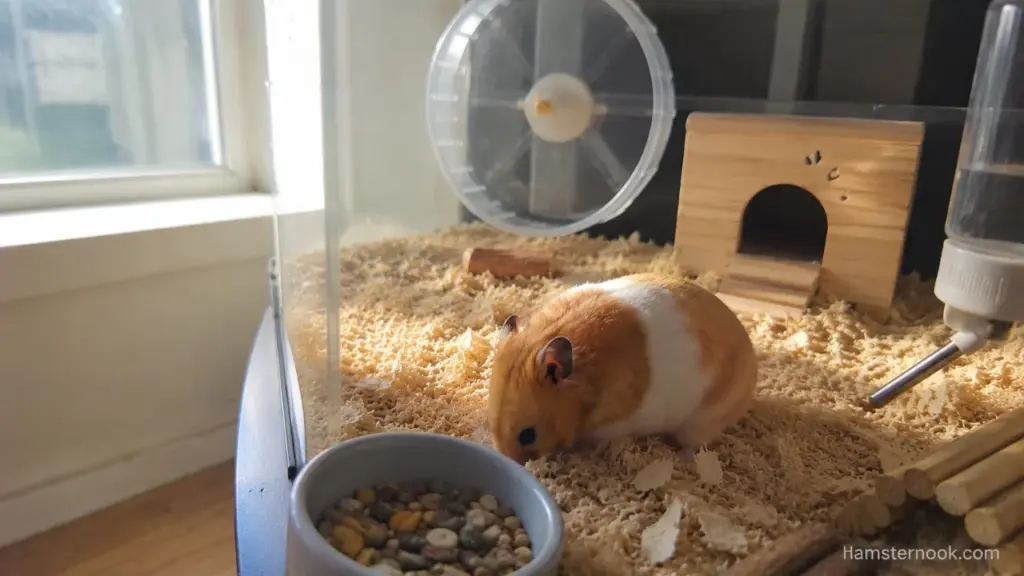
Yes, hamsters should experience normal daylight during daytime hours.
This does not mean they need direct sunlight or a bright spotlight aimed at their enclosure. Instead, they benefit from a room that naturally becomes lighter during the day and darker at night.
Natural daylight entering the room indirectly is usually sufficient.
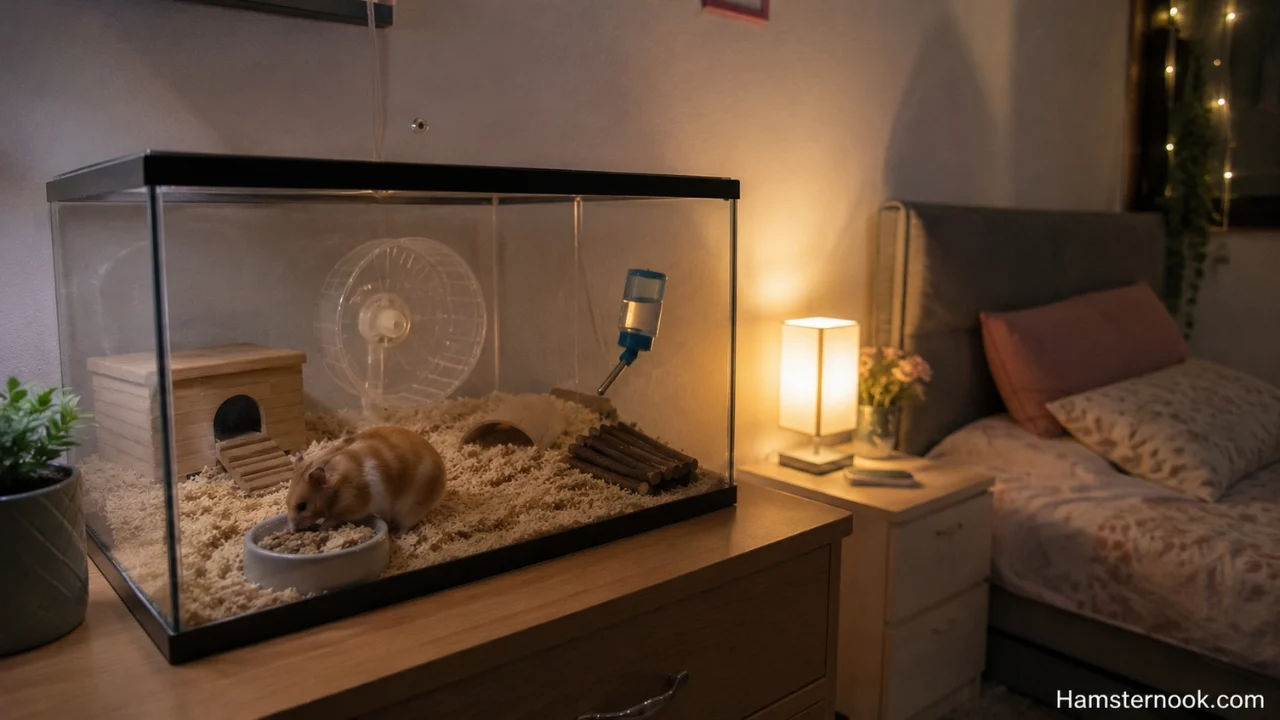
You do not need to provide a separate lamp just to give your hamster daytime light. Normal indirect daylight in the room is generally enough, while the enclosure should remain protected from direct sun and excessive heat.
Why Daytime Light Is Helpful
Daylight helps reinforce the hamster’s internal body clock.
When the environment gradually becomes brighter during the day, the hamster receives signals that it is time to rest. As evening approaches and the room becomes darker, activity levels typically increase.
This predictable pattern supports natural behavior and helps reinforce normal active and resting periods.
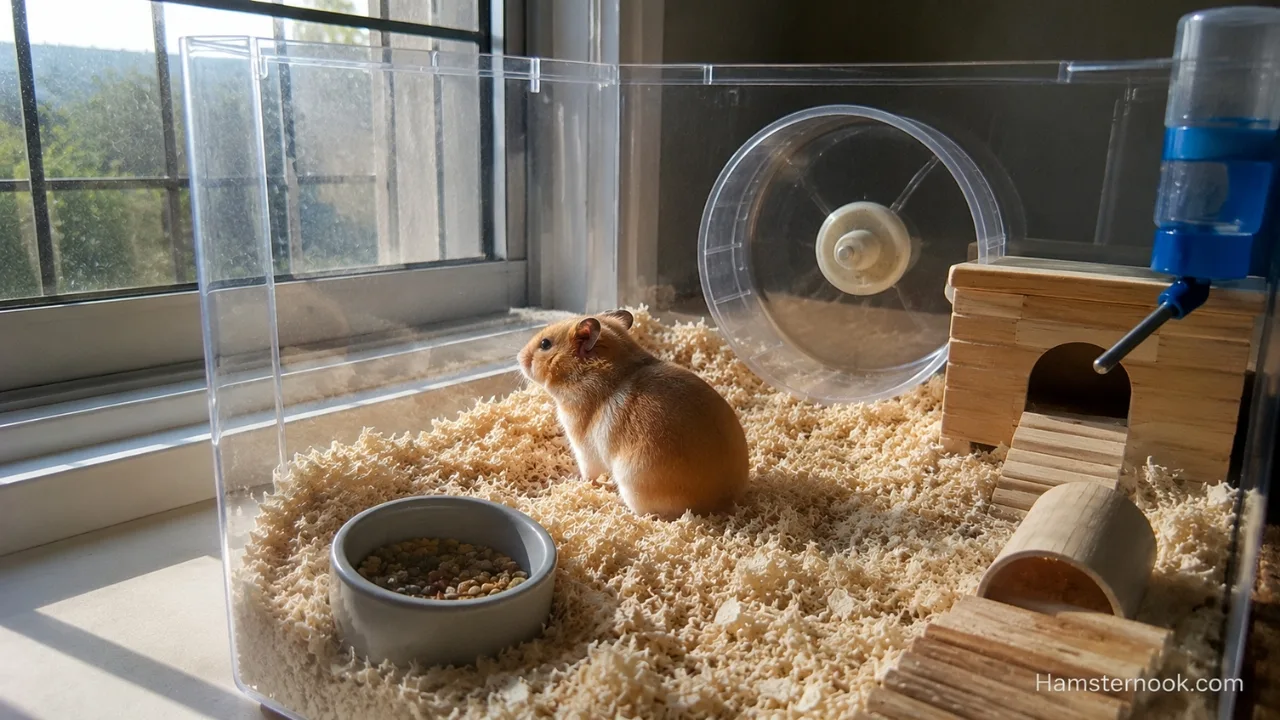
Direct Sunlight Should Be Avoided
While daylight is beneficial, direct sunlight is not.
Hamsters can overheat surprisingly quickly because their enclosures trap warmth more easily than open environments.
Placing a cage directly in front of a sunny window can create several problems:
- Excessive heat buildup
- Bright glare
- Reduced ability to rest comfortably
- Potential temperature fluctuations throughout the day
Most animal welfare organizations recommend keeping hamster enclosures away from direct sunlight and excessive heat sources.

Direct sunlight can also raise the temperature inside an enclosure. Our Hamster Temperature: Safe Range, Too Hot & Too Cold guide explains the environmental temperature risks owners should watch for.
Do Hamsters Need Complete Darkness at Night?
Not necessarily.
Hamsters do not require perfect darkness, but they do benefit from a generally dark environment during their active hours.
A small amount of background light from outside streetlights or a distant hallway is usually not a problem.

The bigger concern is constant bright artificial lighting.
Do Hamsters Prefer the Dark or Light?
Hamsters generally prefer darker, sheltered conditions when they are active and resting, rather than bright light. A normal daytime room is fine, but their enclosure should provide hides and darker areas where they can retreat. At night, unnecessary bright lighting should be avoided so your hamster can follow its normal activity pattern.
How Artificial Light Can Affect Activity
If a hamster’s enclosure remains brightly lit late into the night, it may delay normal activity patterns.
Some hamsters become hesitant to leave their hides when exposed to bright lighting because darkness naturally provides a greater sense of security.

If your hamster spends unusually long periods hidden away, the environment may be playing a role. Read Why Do Hamsters Sleep and Hide All Day? The Truth Most New Owners Don’t Know.
This is especially noticeable in shy or recently adopted hamsters.
Is a Night Light Necessary?
No.
Unlike some reptiles and aquarium animals, hamsters do not require specialized nighttime lighting.
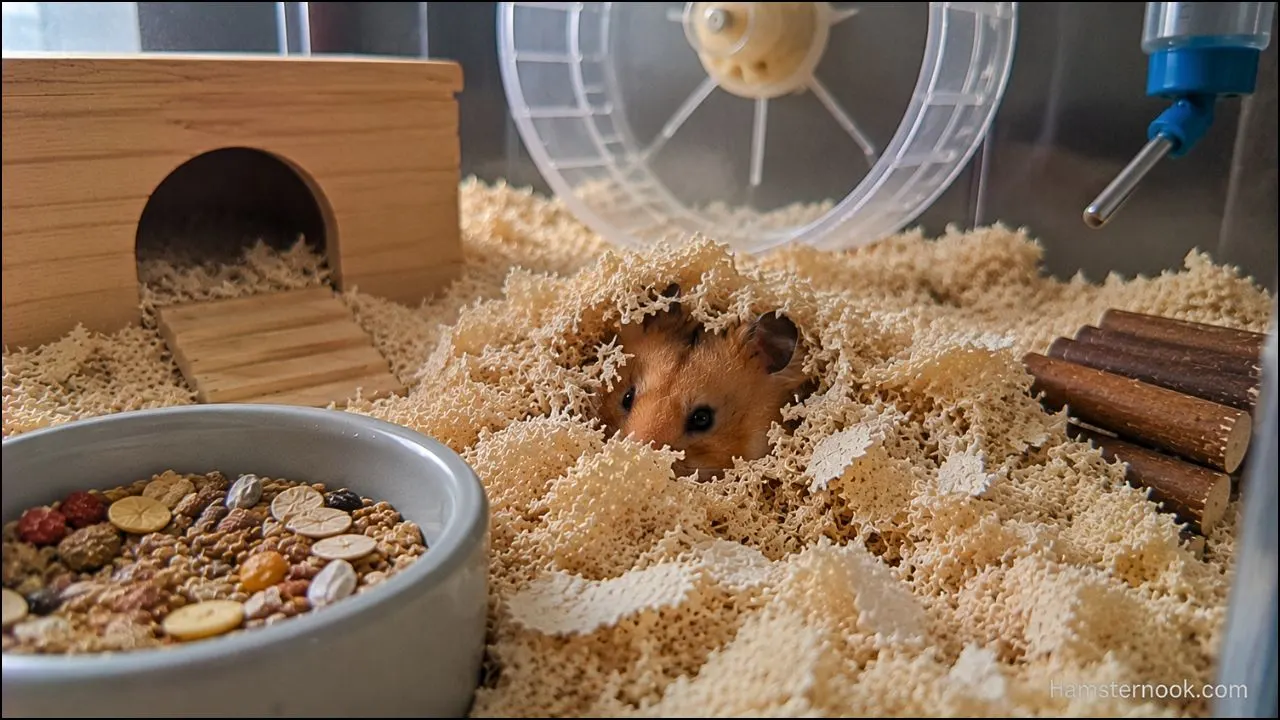
A night light is generally unnecessary unless you need enough illumination to safely move around the room.
If you need a little light to move around safely, illuminate the room rather than directing a bright lamp at the enclosure. Your hamster does not need a dedicated light source to stay active at night.
If you want to observe your hamster after dark, dim room lighting is usually less disruptive than a bright overhead light.
Allowing your hamster a few minutes to adjust to changes in lighting can also reduce startle responses when checking on it during the evening.

Do Hamsters Need Light at Night?
No. Hamsters do not need a light at night. A small amount of unavoidable background light is generally less concerning than bright lighting directed at the enclosure, so there is no need to leave a lamp or night light on for your hamster. If you need to check on your hamster, keep the lighting dim and brief rather than leaving a bright light on continuously.
Do Hamsters Need UVB or Special Pet Lights?
No.
Hamsters are very different from reptiles.
Reptiles often require UVB lighting for essential biological functions, but there is no widely accepted husbandry recommendation that healthy pet hamsters require UVB lamps in standard home environments.

For most owners, a normal indoor day-night cycle provides appropriate lighting conditions.
Installing specialized reptile lights above a hamster enclosure can introduce unnecessary heat and brightness.
Best Lighting Conditions for a Hamster
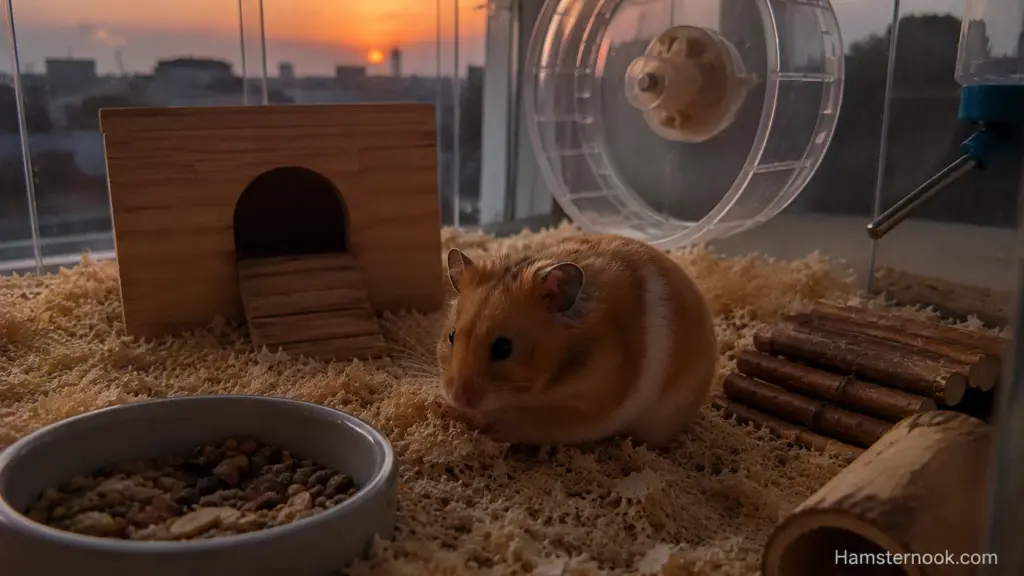
The ideal setup is surprisingly simple.
| Lighting Factor | Recommended |
|---|---|
| Daytime Light | Normal room daylight |
| Direct Sunlight | Avoid |
| Nighttime Light | Mostly dark room |
| UVB Lamps | Not required |
| Bright Spotlights | Avoid |
| Consistent Day-Night Cycle | Recommended |
| Cage Near Window | Only if direct sunlight is avoided |
The goal is not to create perfect darkness or intense brightness. Instead, aim for a stable and predictable routine that mirrors natural daylight patterns.
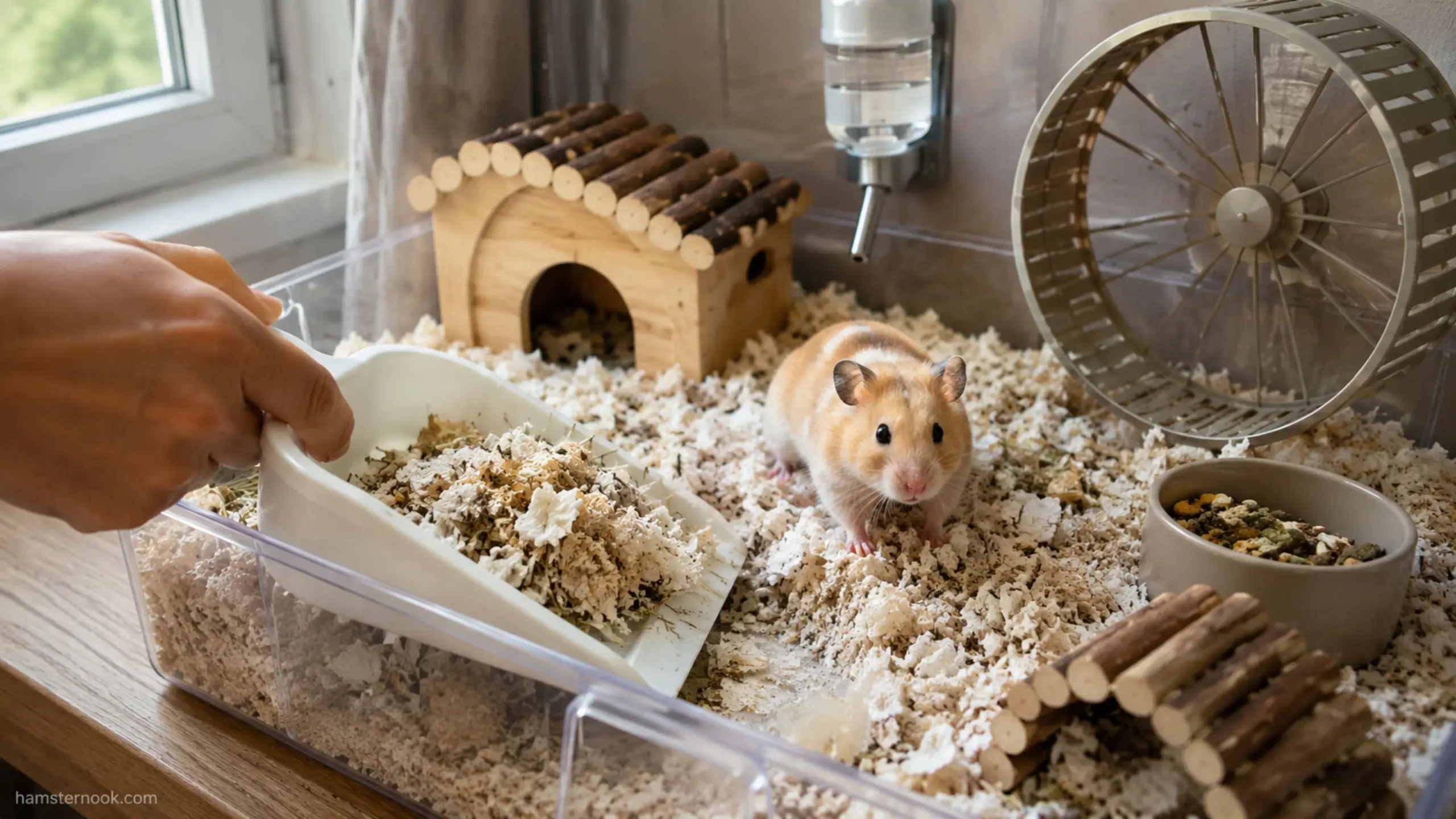
How Hamsters React to Different Lighting Conditions
Bright Daytime Room
Most hamsters will continue resting in their nest or burrow during daylight hours.
This is normal and does not mean they are unhappy.
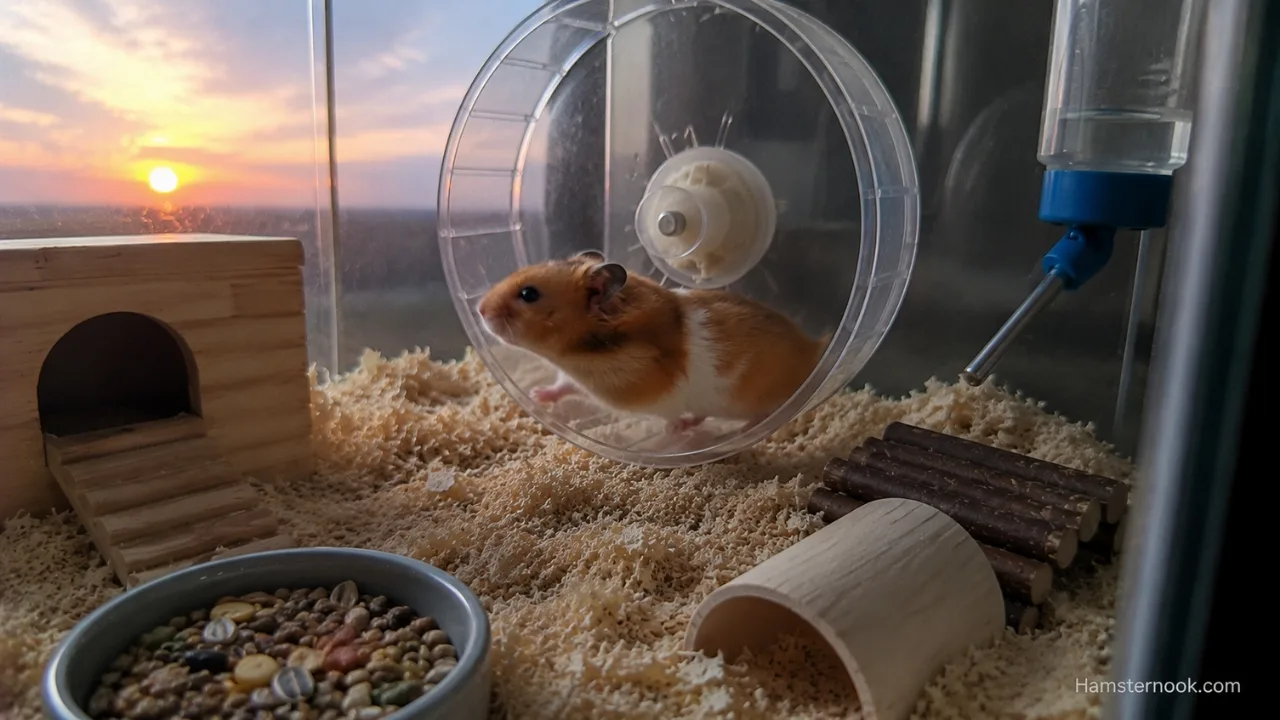
Dim Evening Light
Many hamsters begin emerging from their hides as the room becomes darker.
Owners often notice activity levels increasing as evening approaches.
Sudden Bright Light at Night
A hamster that has already become active may freeze, retreat to a hide, or pause exploration when exposed to a sudden bright light.
This reaction is generally temporary and reflects natural caution rather than a problem.
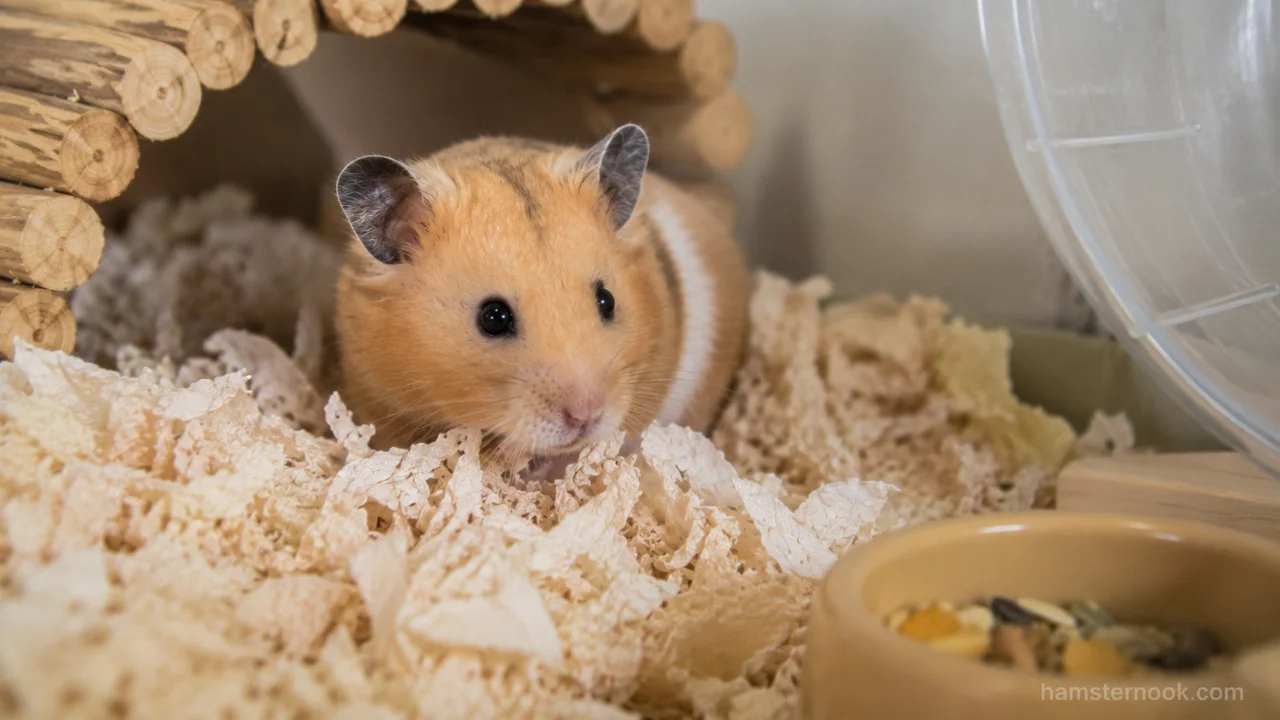
Constant Lighting
A room that remains brightly illuminated around the clock may interfere with the natural distinction between rest periods and active periods.
Although individual responses vary, maintaining a regular day-night cycle is generally considered better for overall welfare.
If your hamster’s activity seems unusual, it is useful to consider its normal sleep pattern as well as the lighting around the enclosure. Our Are Hamsters Nocturnal? Their Natural Sleep Schedule Explained guide explains when hamsters normally sleep and become active.
Practical Examples
Example 1: Cage Near a Sunny Window
An owner places the enclosure directly beside a south-facing window.
During the afternoon, sunlight shines onto part of the cage and temperatures increase noticeably.
This type of setup is one of the most common lighting mistakes owners make. Read Should a Hamster Cage Be Near a Window? to learn why direct sunlight and window placement can create problems for hamsters.
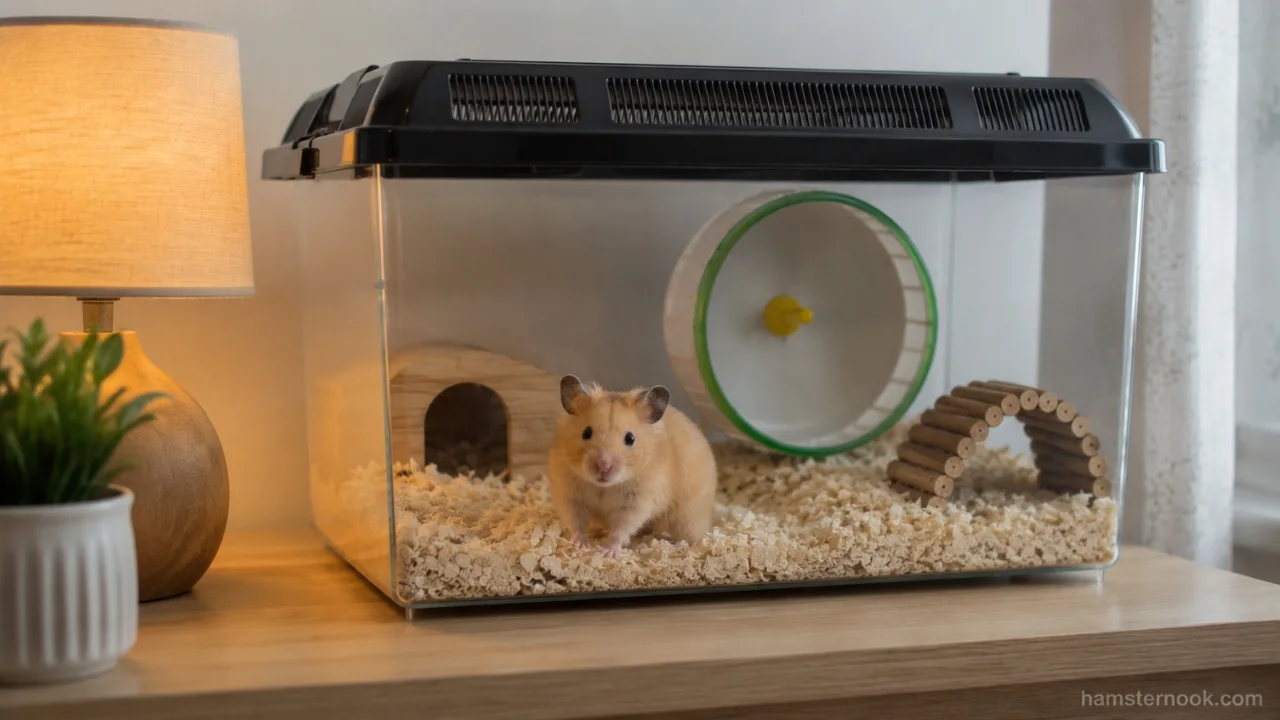
This setup can create unnecessary heat stress and should be adjusted.
Example 2: Living Room Environment
The hamster lives in a quiet living room that receives indirect daylight during the day and becomes dim during the evening.
This closely mimics a natural daily lighting pattern and is generally suitable.
Example 3: Late-Night Gaming Setup
A hamster enclosure sits beside a desk illuminated by bright monitors and overhead lights until 2 a.m. every night.

Some hamsters may still adapt, but others may delay activity until lighting levels decrease.
Can Hamsters See Well in the Dark?
Hamsters are often described as nocturnal animals, but their vision is not designed for complete darkness.
Instead, they rely heavily on:
- Smell
- Hearing
- Whisker sensitivity
- Environmental familiarity
Their ability to navigate in low-light conditions is supported by these senses working together.
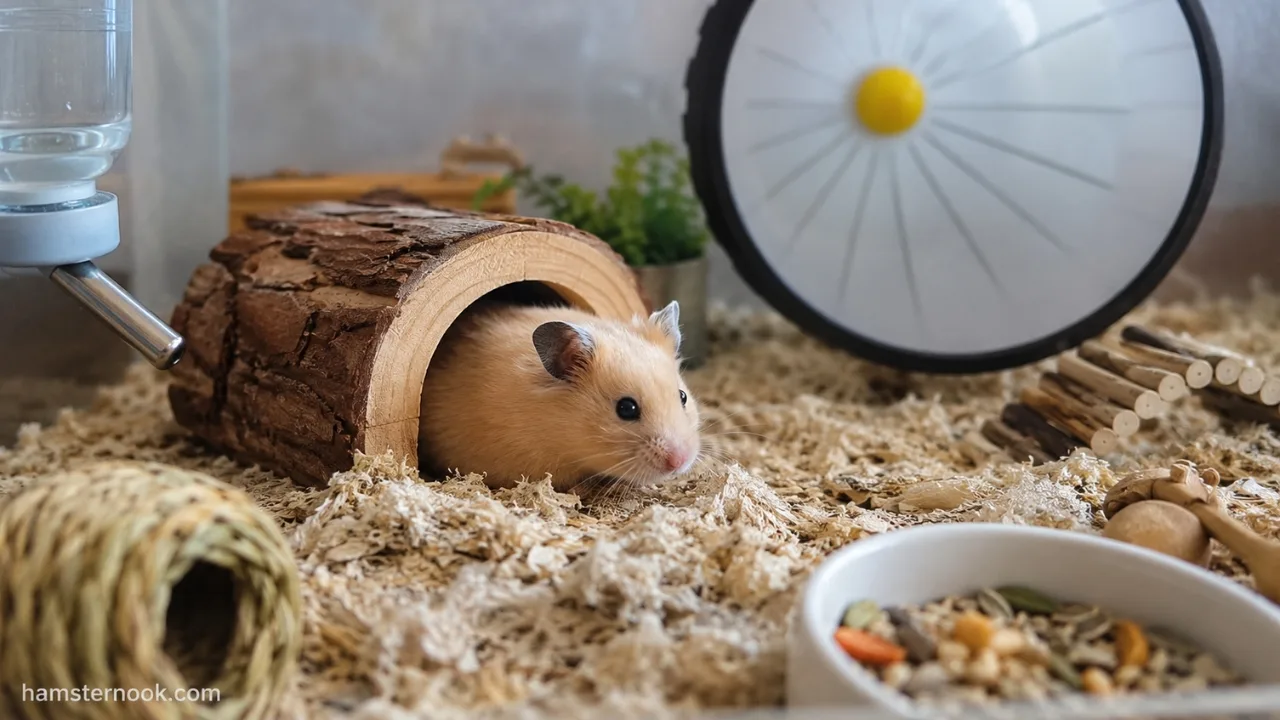
For a deeper explanation of hamster vision and what they can actually see, read our Can Hamsters See in the Dark? The Truth About Hamster Vision guide.
This is why a hamster can confidently move through tunnels, locate food, and explore familiar areas even when the room appears quite dark to humans.
Should You Cover the Cage at Night?
Usually not.
Some owners place blankets or covers over enclosures to make the environment darker.
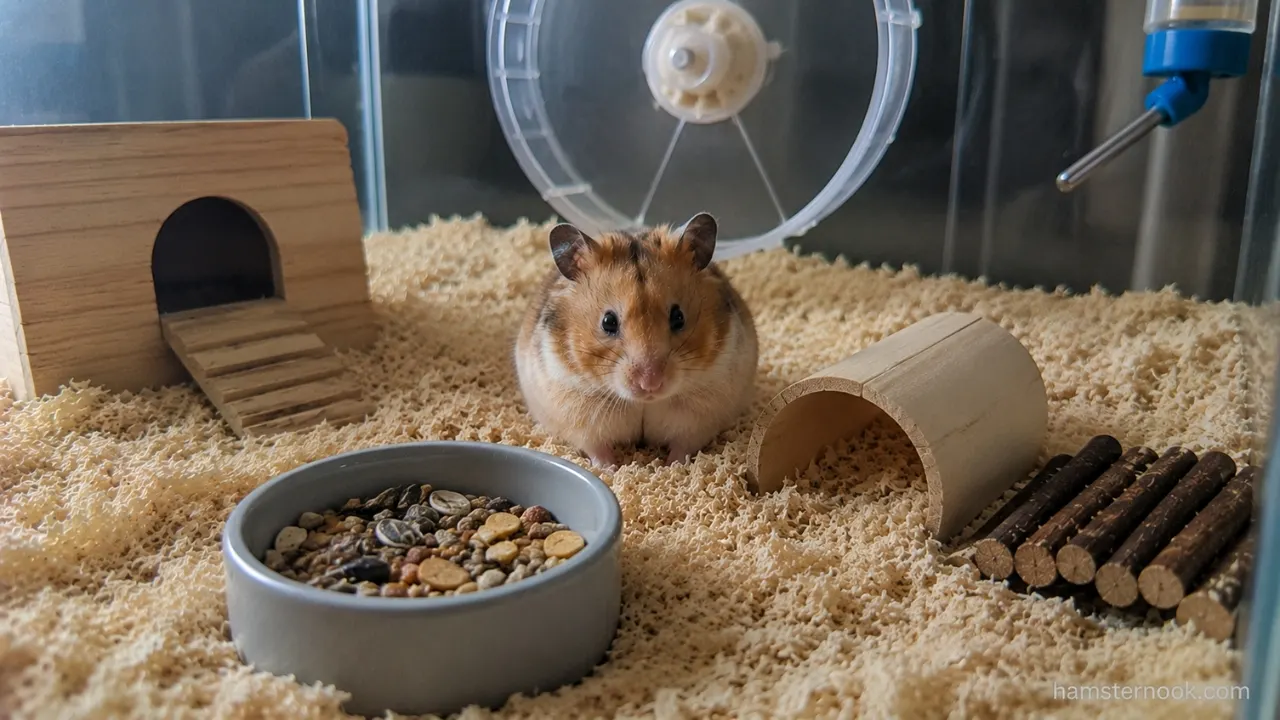
In most situations, this is unnecessary.
A cover can sometimes restrict airflow, trap heat, or create unwanted humidity if used improperly.
Most hamsters do perfectly well in a room that naturally becomes darker at night without additional covering.
Does Seasonal Daylight Affect Hamsters?
To some extent, yes.

Hamsters are capable of detecting seasonal changes in light exposure, even in indoor environments. In the wild, seasonal changes help influence natural behavioral patterns.
Indoor pet hamsters are less affected because artificial household lighting creates a more stable environment year-round.
Still, maintaining a reasonably consistent routine helps reduce unnecessary disruptions to their daily rhythm.
Common Mistakes Owners Make
Lighting mistakes are often unintentional because many owners don’t realize that hamsters experience their environment differently than humans do.
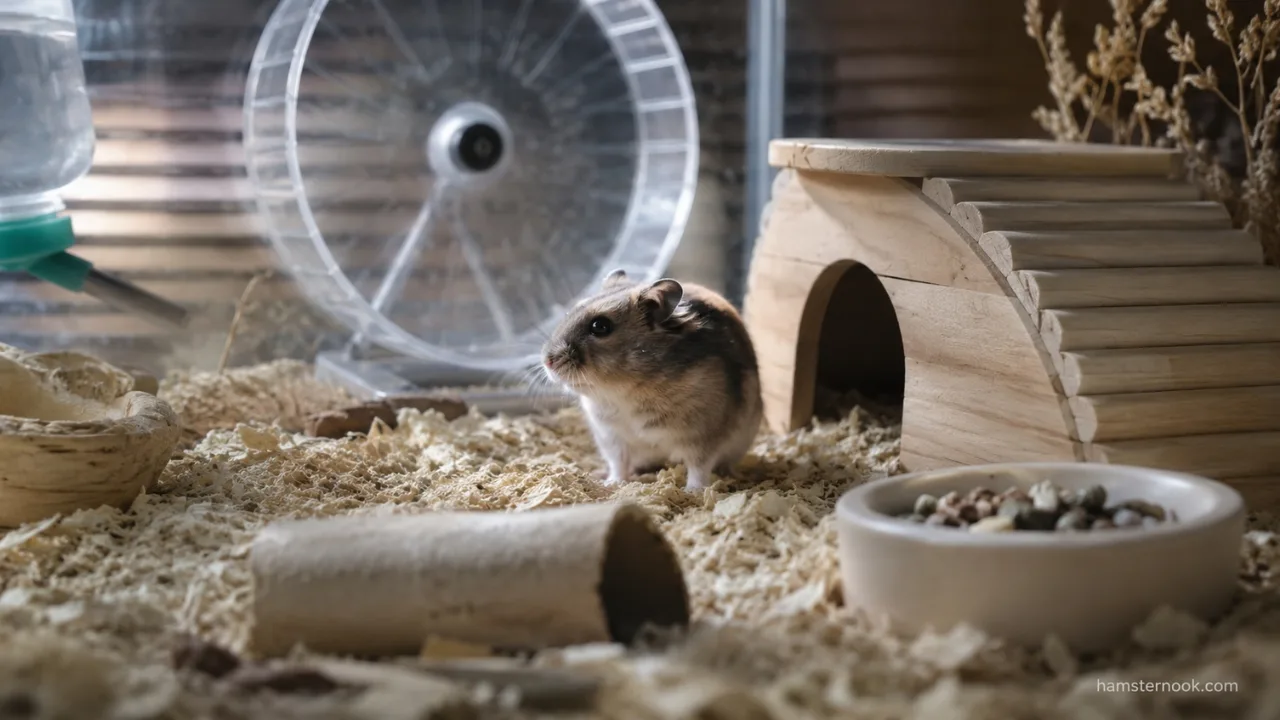
Placing the Cage in Direct Sunlight
This is one of the most common mistakes.
A sunny windowsill may seem like a pleasant location, but sunlight can quickly raise temperatures inside an enclosure. Hamsters are sensitive to heat and need access to cooler areas where they can rest comfortably.
Leaving Bright Lights On All Night
Some owners keep room lights, desk lamps, or bright LED strips running throughout the night.
While hamsters can adapt to some household activity, continuous bright lighting may discourage normal nighttime exploration and interfere with their natural activity patterns.
Using Reptile UVB Lamps
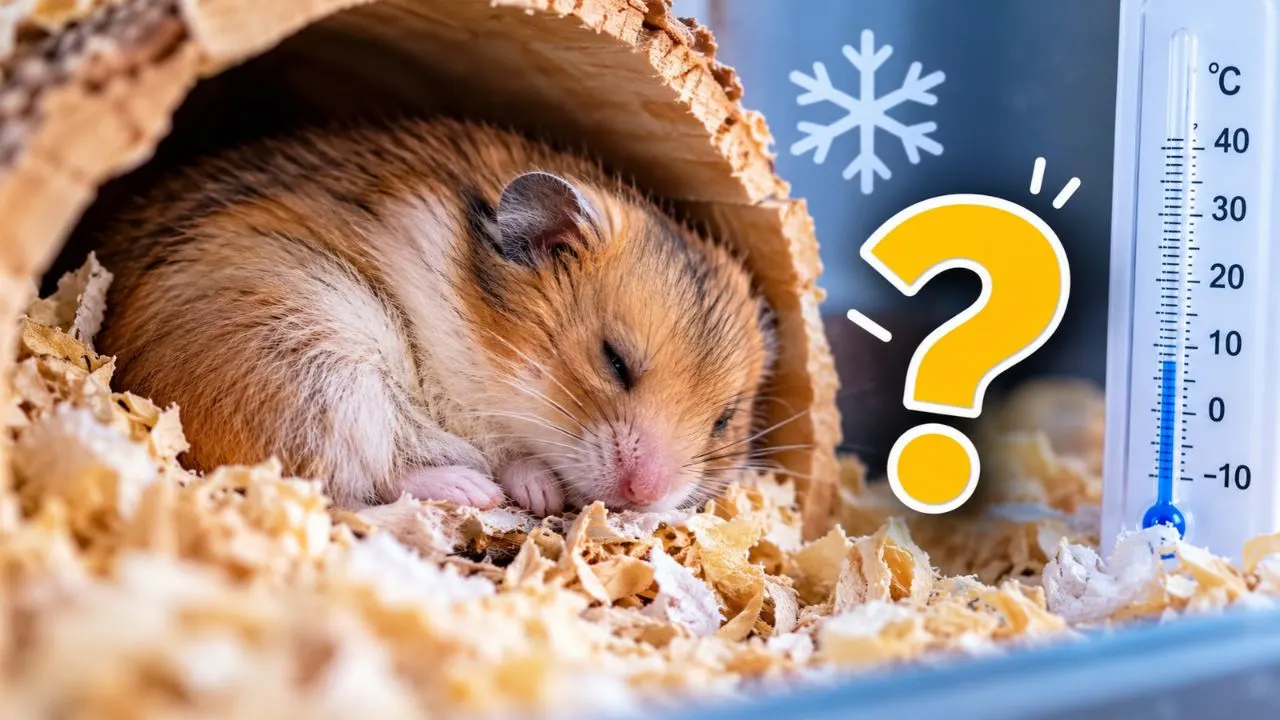
UVB lighting is an important part of care for many reptiles, but it is not considered a standard requirement for pet hamsters. Installing powerful UVB or heat-producing lamps can create unnecessary brightness and warmth inside the enclosure.
Constantly Changing Light Schedules
A hamster benefits from predictable daily routines.
For example, if the room is dark during the day one week and brightly lit all night the next, the hamster receives inconsistent environmental cues. Maintaining a stable pattern is usually better than making frequent changes.
Waking a Hamster for Daytime Interaction
Many owners want to spend time with their hamster during the day, but repeatedly waking a sleeping hamster under bright lighting can be stressful. Allowing the hamster to wake naturally during its normal active period is a better approach.
What You Should Do
Creating suitable lighting conditions doesn’t require expensive equipment.
A few simple habits are usually enough:
- Keep the enclosure in a room with a normal day-night cycle.
- Avoid placing the cage in direct sunlight.
- Allow the room to become naturally darker during the evening.
- Use soft lighting if you need to observe your hamster at night.
- Maintain a consistent routine from day to day.
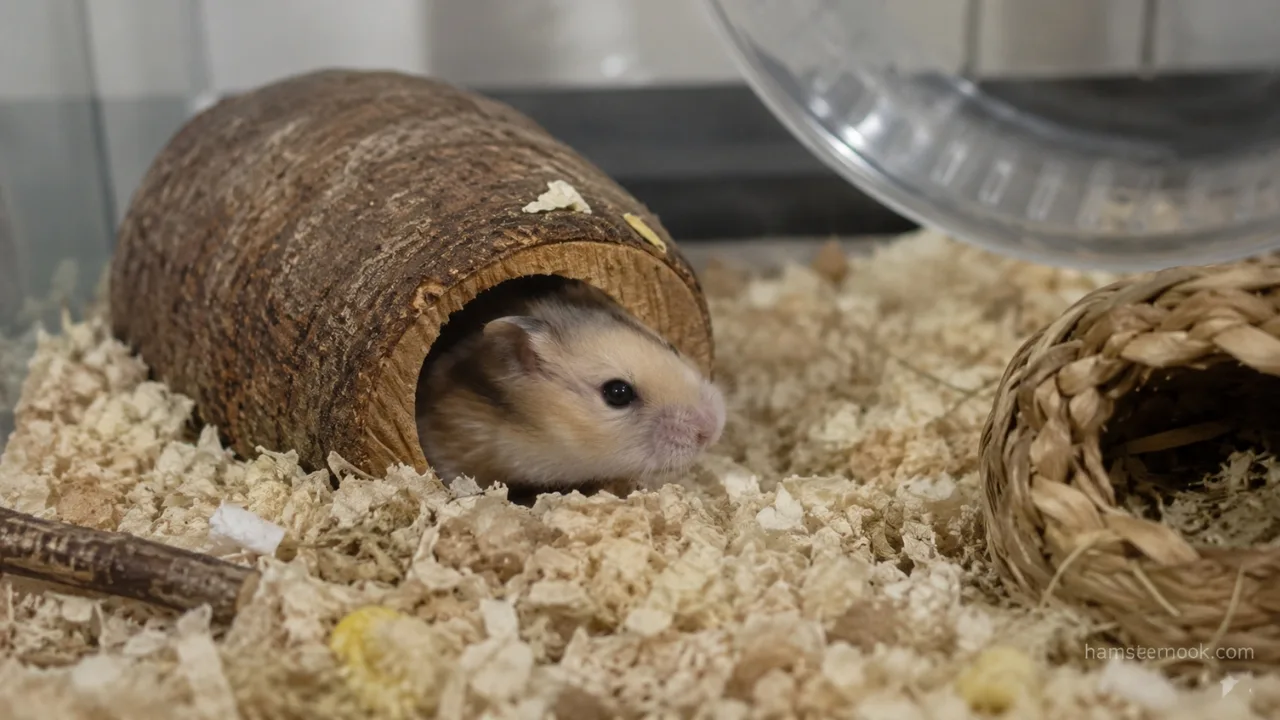
- Provide plenty of hides, tunnels, and deep bedding so your hamster can choose how much light exposure it wants.
One advantage of a well-designed enclosure is that it allows the hamster to regulate its own comfort. Deep burrows and enclosed hides naturally create darker resting areas even when the room itself is bright.
This gives the hamster the ability to choose brighter or darker areas depending on whether it wants to rest, hide, groom, or explore.
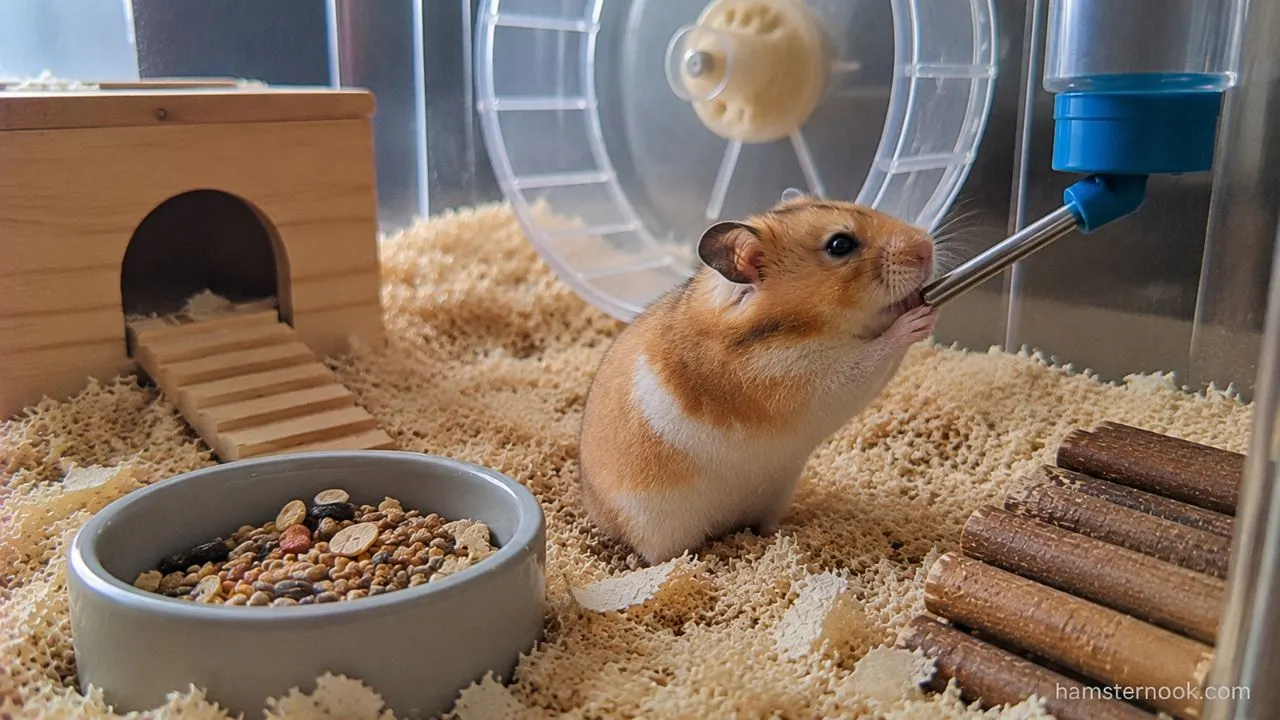
Providing enough bedding allows hamsters to create the dark, secure sleeping areas they naturally prefer. Learn more in How Much Bedding Does a Hamster Need? Minimum Depth Guide for Healthy Burrowing.
Warning Signs That Lighting May Be a Problem
Lighting issues are rarely the sole cause of behavioral changes, but they can contribute to stress or disrupted routines.
Watch for signs such as:
- Reluctance to leave the nest during normal active hours.
- Frequent retreating when lights are switched on.
- Restlessness associated with major environmental changes.
- Difficulty establishing a consistent activity pattern.
- Persistent attempts to avoid illuminated areas.
These signs do not automatically mean lighting is the problem, but they may suggest that the enclosure setup deserves a closer look.
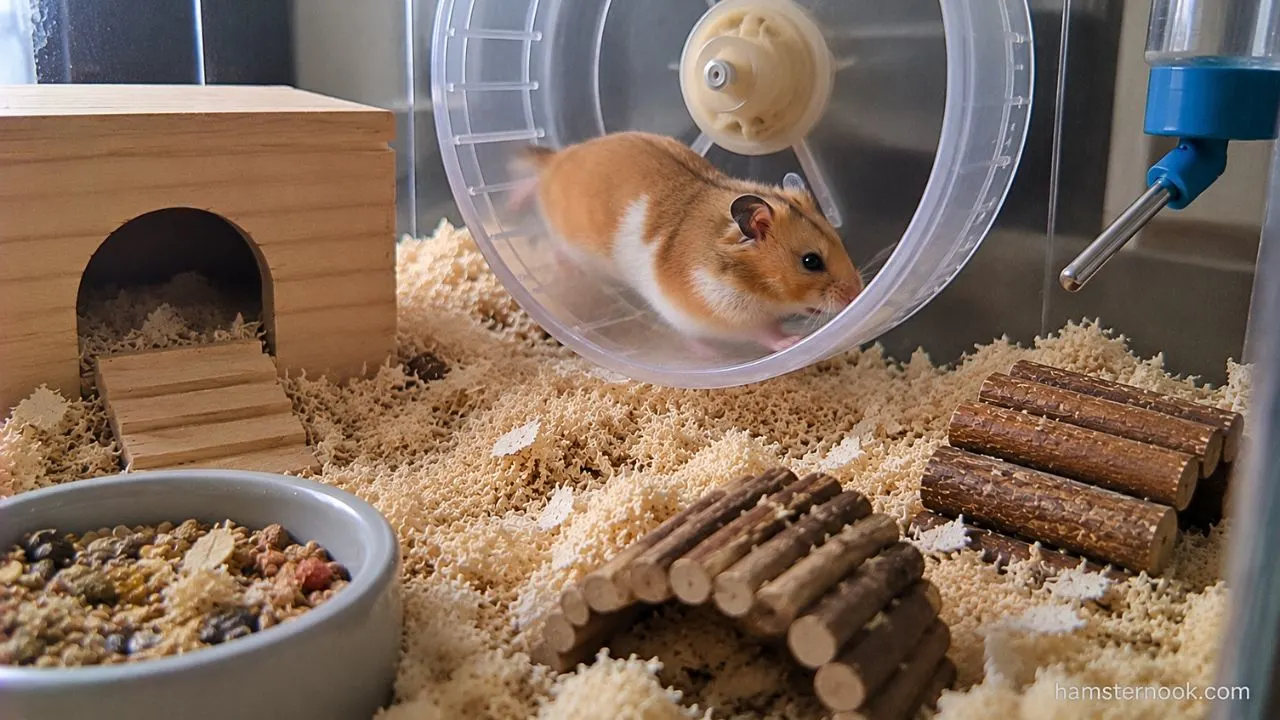
Environmental issues such as lighting, noise, or enclosure setup can sometimes contribute to stress. Learn how to recognize the warning signs in 5 Warning Signs Your Hamster Is Stressed (And How to Help).
When to Worry
Most hamsters adapt well to typical household lighting conditions.
However, you should pay closer attention if your hamster shows ongoing behavioral changes such as:
- Significant decreases in activity.
- Refusal to eat or drink.
- Persistent hiding beyond its normal routine.
- Signs of overheating, such as lethargy or seeking unusually cool surfaces.
- Sudden changes in behavior that continue for several days.
Because many factors can affect hamster behavior, lighting should be considered alongside enclosure size, temperature, enrichment, diet, and overall husbandry.

Looking at your hamster’s overall condition often provides a clearer picture than focusing on a single factor. Read How to Tell If Your Hamster Is Happy, Healthy, Stressed, or Sick: Complete Owner’s Guide (2026).
If you notice persistent concerns or signs of illness, consult an experienced exotic animal veterinarian.
Final Thoughts
Hamsters don’t need special lamps, UVB lighting, or complete darkness to thrive. What they need most is a consistent and natural day-night cycle that supports their instinctive behavior.
Normal daylight during the day and a generally darker environment at night help reinforce the rhythms that guide sleeping, exploring, foraging, and activity. Combined with proper housing, deep bedding, and secure hiding places, appropriate lighting helps create an environment where a hamster can feel safe and comfortable.
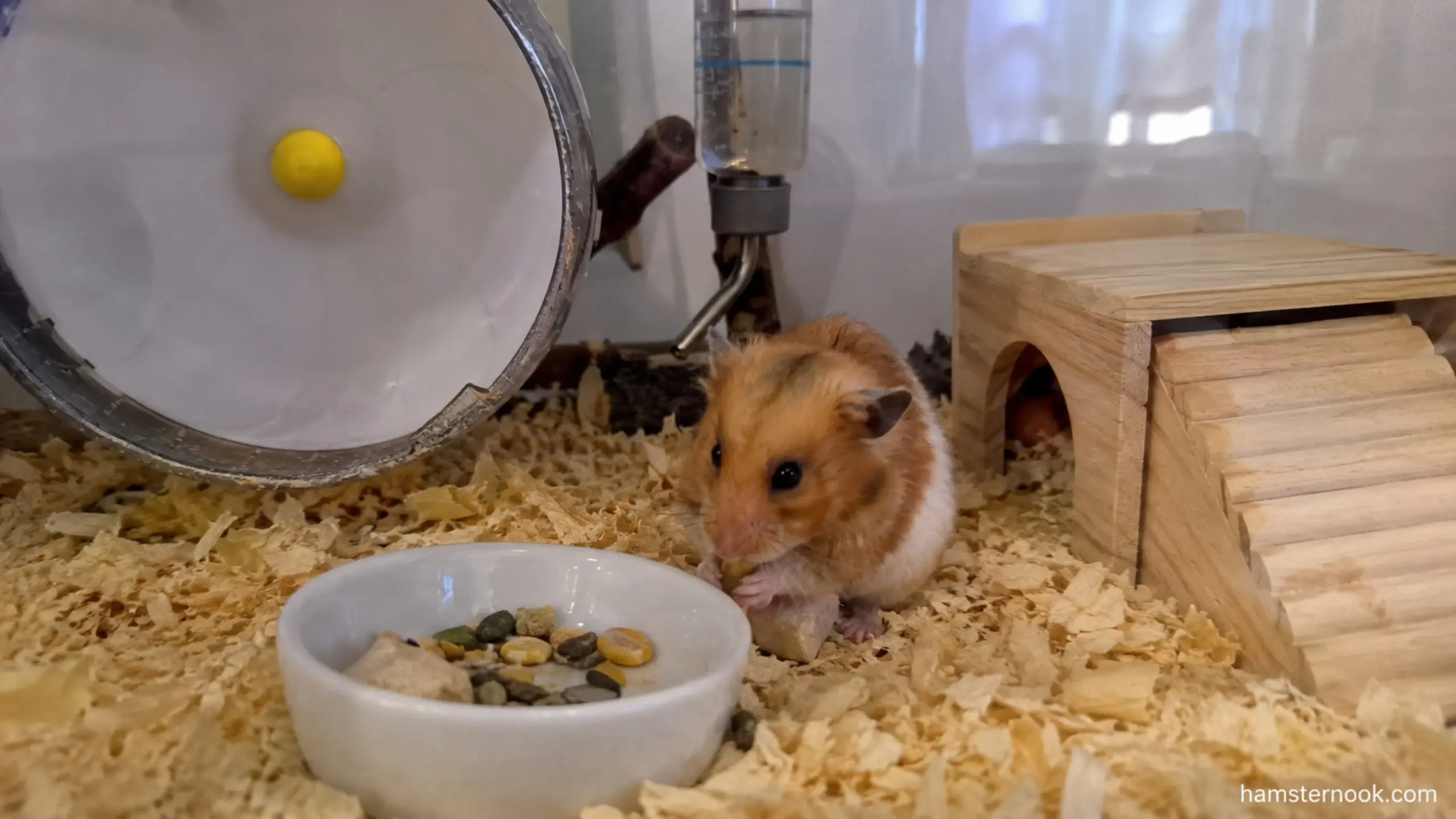
For most owners, the simplest approach is often the most effective: avoid direct sunlight, limit unnecessary nighttime brightness, and allow your hamster to follow its natural activity rhythm.
Frequently Asked Questions
How many hours of light does a hamster need each day?
There is no universally established number of light hours that every pet hamster needs. Aim for a consistent daily cycle with normal indirect daylight during the day and darkness or dimmer conditions at night. Avoid keeping the enclosure brightly lit around the clock, and provide hides and bedding where your hamster can rest away from light.
Can hamsters sleep with lights on?
Hamsters can sleep in a lit room, especially if they have access to burrows and hides. However, they generally benefit from having darker periods at night that support their natural activity rhythm.
Is it okay to keep a hamster in a dark room all day?
A consistently dark room is not ideal because it removes normal daylight cues that help regulate daily activity patterns.

Do hamsters need a night light?
No. Hamsters do not need a night light in a typical home environment. Keep nighttime lighting dim, avoid bright lights directed at the enclosure, and provide hides and tunnels where your hamster can feel secure. If you need to check on your pet, use dim room lighting briefly.
Can bright lights stress a hamster?
Sudden or continuous bright lighting may cause some hamsters to become cautious or less willing to leave their hiding places, particularly during their active hours.
Should I turn on a light when checking on my hamster at night?
If you need to check on your hamster, use the dimmest practical room lighting and keep it brief. Avoid suddenly switching on a bright overhead light directly around the enclosure.
A dim room light is usually less disruptive than a bright overhead light. If possible, keep nighttime lighting gentle and brief.
References
This guide is based on hamster lighting, environmental conditions, housing, behavior, and welfare guidance from trusted animal welfare and veterinary resources, including:
- RSPCA – Creating a Good Home for Hamsters – Guidance on hamster housing, environmental conditions, lighting, temperature, bedding, and creating a suitable home environment.
- RSPCA – Hamster Behaviour – Information on natural hamster activity patterns, sleeping behavior, environmental changes, and reducing unnecessary stress.
- RSPCA – Keeping Hamsters as Pets – General guidance on hamster care, housing, behavior, welfare, and suitable environmental conditions.
- Blue Cross – Hamster Care Guide – Practical advice on hamster housing, environmental management, bedding, enrichment, and wellbeing.
- MSD Veterinary Manual – Providing a Home for a Hamster – Veterinary guidance on hamster housing, environmental conditions, bedding, ventilation, temperature, and enclosure setup.
- NC3Rs – Housing and Husbandry: Hamster – Guidance on hamster housing, husbandry, environmental conditions, and supporting natural behavioral needs.

Narayan Kumar is the founder and author of HamsterNook. He creates practical, research-based hamster care guides covering hamster behavior, nutrition, cage setup, enrichment, health, and everyday care. His goal is to help hamster owners make informed decisions and provide safer, healthier lives for their pets through clear, beginner-friendly information based on trusted animal care resources.