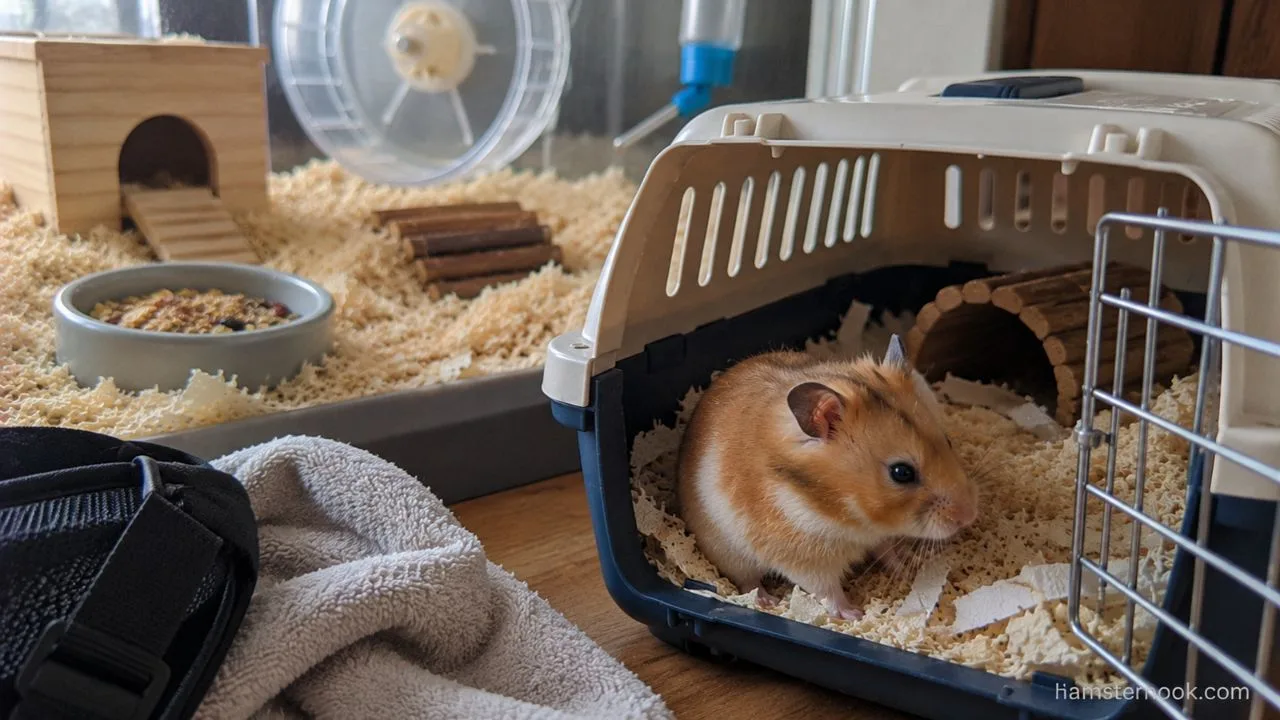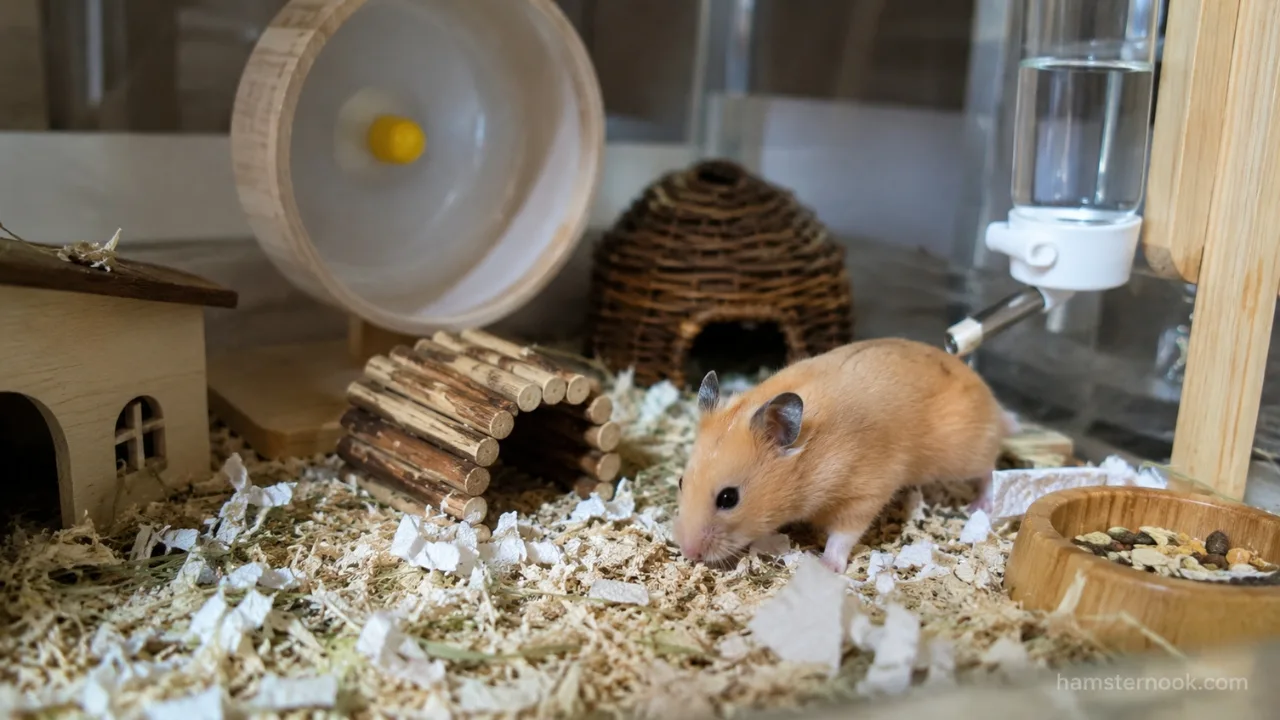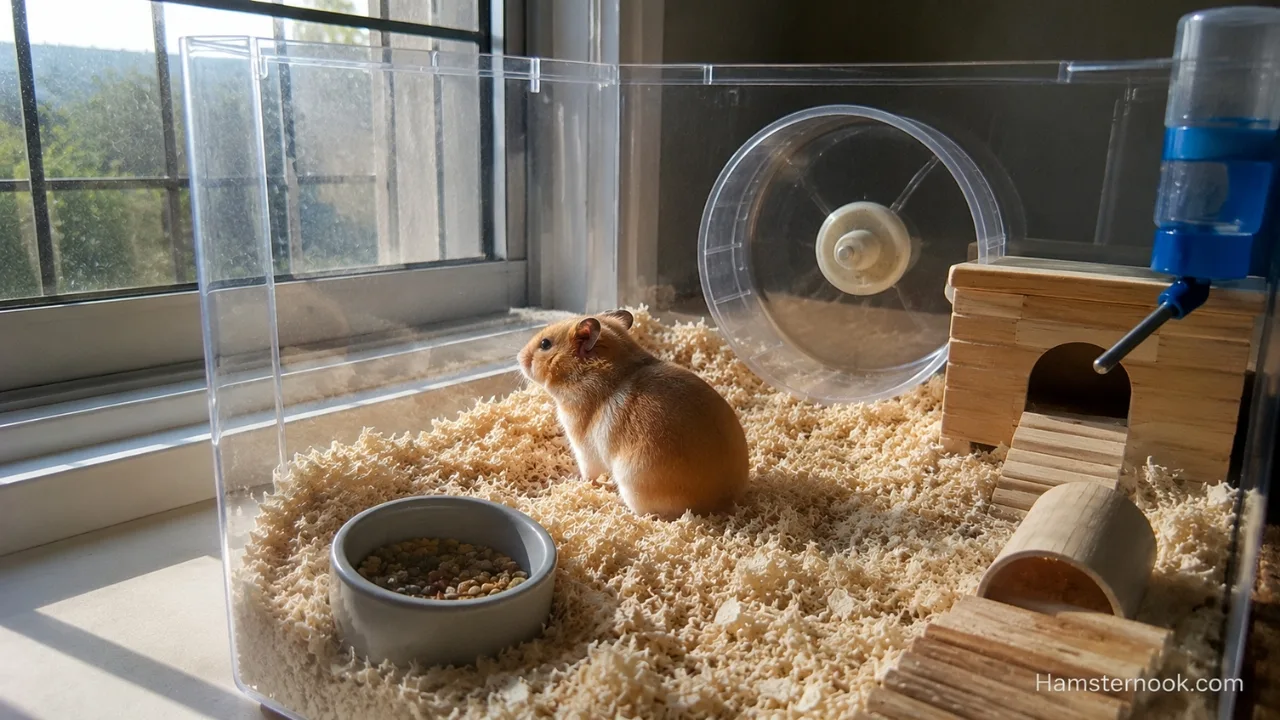
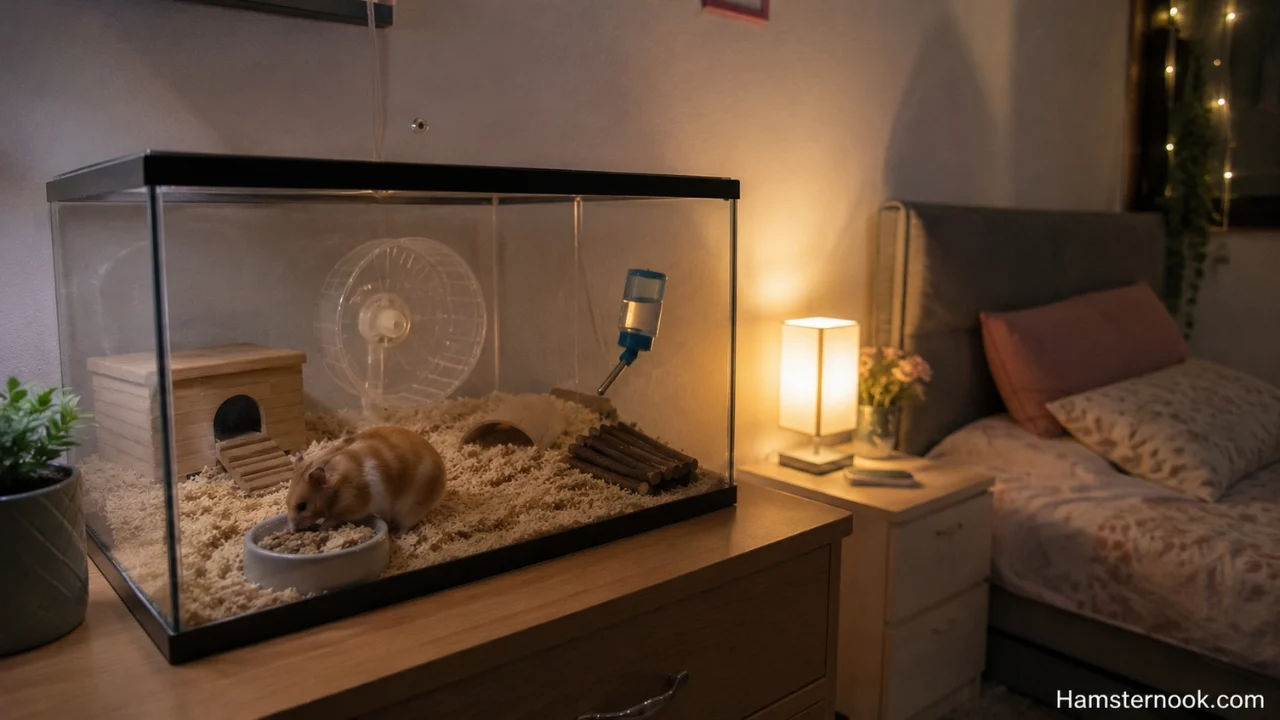
Choosing the right location for a hamster cage is just as important as choosing the cage itself. Many new owners place a hamster enclosure near a window to provide natural light or make the cage easier to see.
While that may seem harmless, a nearby window can expose a hamster to temperature fluctuations, direct sunlight, drafts, and outdoor disturbances that may affect its comfort and wellbeing.
Understanding proper housing conditions is an important part of responsible hamster ownership. Our Best Hamster Cage Setup for Beginners: Size, Bedding & Essentials guide explains how to create a suitable enclosure and choose the right setup before deciding where to place it.
Quick Answer
No, a hamster cage should generally not be placed directly next to a window. Windows can expose hamsters to direct sunlight, overheating, cold drafts, rapid temperature changes, and excessive outdoor noise. A better location is a quiet room with a stable temperature, away from direct sunlight and strong air currents.
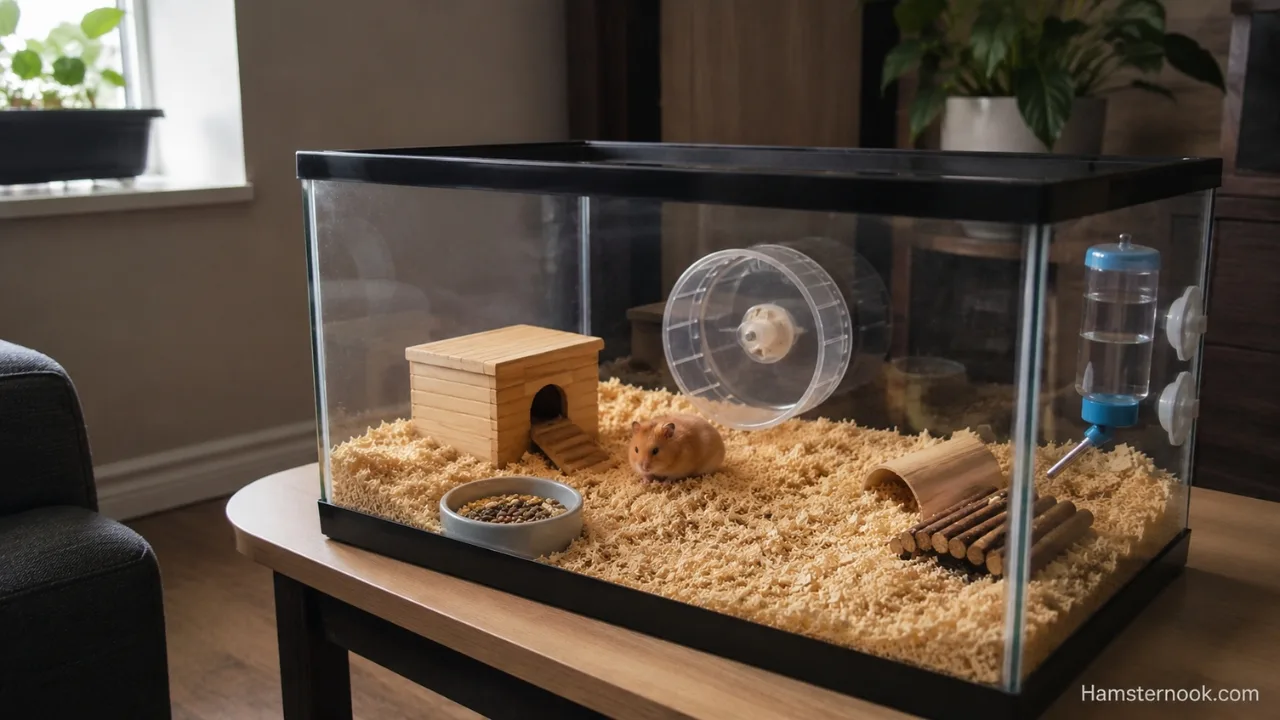
Choosing the right room is only the first step. Our Where Should You Put a Hamster Cage? Best & Worst Places Explained guide compares different locations throughout the home and explains why some are much safer than others.
Why Cage Placement Matters
Hamsters may be small, but they are sensitive to changes in their environment.
In the wild, hamsters spend much of their time underground where temperatures remain relatively stable. Their burrows provide protection from weather, bright sunlight, and sudden environmental changes. A pet hamster cannot move its enclosure away from an uncomfortable location, so owners must choose a suitable spot from the beginning.
Poor cage placement can affect much more than comfort. Ongoing exposure to heat, drafts, sudden temperature changes, or frequent disturbances may gradually alter your hamster’s sleeping habits, activity levels, feeding routine, and overall sense of security. Choosing a stable location from the beginning helps prevent many avoidable behavior problems.
The Biggest Risks of Keeping a Hamster Cage Near a Window
Direct Sunlight Can Cause Overheating
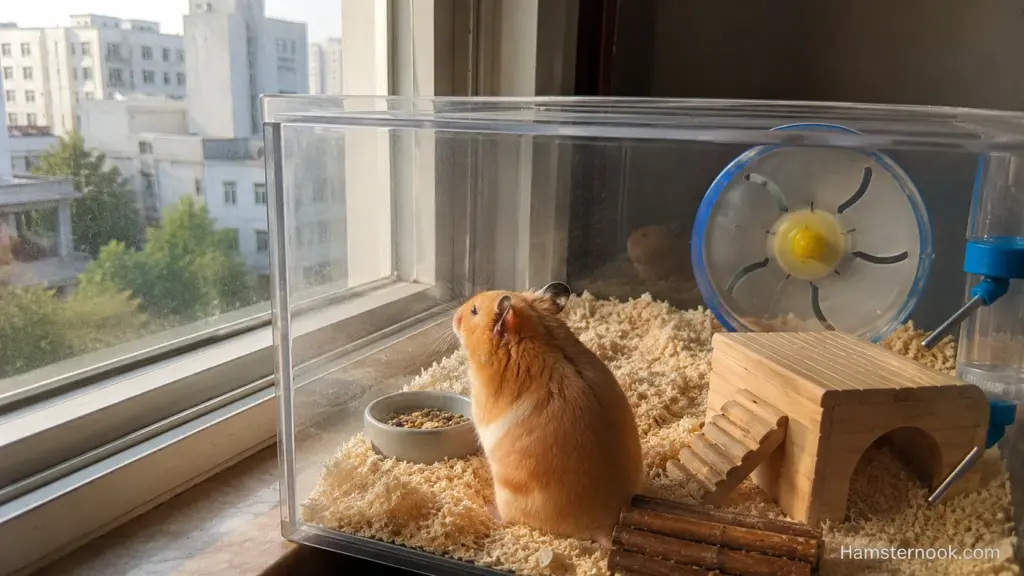
One of the most significant concerns is direct sunlight.
Even when a room feels comfortable to people, sunlight passing through a window can create much warmer conditions inside part of a hamster enclosure. Glass can intensify heat, especially during warmer months.
Hamsters are sensitive to high temperatures and can struggle to regulate their body temperature in excessive heat. Animal welfare guidance recommends keeping hamsters away from direct sunlight and providing a cool, stable environment. Excessive heat can become dangerous quickly.
Understanding the safe temperature range makes it easier to judge whether a window location is suitable throughout the year. Our Safe Temperature for Hamsters: How Hot or Cold Is Too Much? explains how seasonal changes affect hamster health.

A cage positioned where direct sunlight reaches it for part of the day is generally not ideal.
Temperature Changes Throughout the Day
Windows are often among the least temperature-stable areas in a home because they are directly affected by outdoor conditions.
During the day, sunlight may warm the area significantly. After sunset, temperatures near the glass can drop much faster than elsewhere in the room.
These fluctuations may create an environment that changes repeatedly within a 24-hour period.

Hamsters generally do best when temperatures remain relatively stable rather than constantly shifting between warmer and cooler conditions.
Cold Drafts During Winter
Many windows allow small amounts of cold air to enter even when closed.
You may not notice these drafts, but a hamster sleeping near a window can experience them continuously.
Cold air can make nesting areas less comfortable and may encourage the hamster to spend more time hidden underground. Draft-free housing is recommended by several animal welfare organizations because small mammals are particularly sensitive to cold air currents.

Outdoor Noise and Disturbances
Loud or unexpected sounds can disturb some hamsters, especially when they are trying to sleep during the day.
Windows often expose pets to environmental activity they would not otherwise notice.
Common disturbances include:
- Passing vehicles
- Dogs barking outdoors
- Lawn equipment
- Construction noise
- People walking nearby
- Outdoor lighting at night
A hamster may repeatedly wake, freeze, or investigate unfamiliar sounds. Occasional noise is normal, but constant disturbances can reduce the sense of security many hamsters prefer.
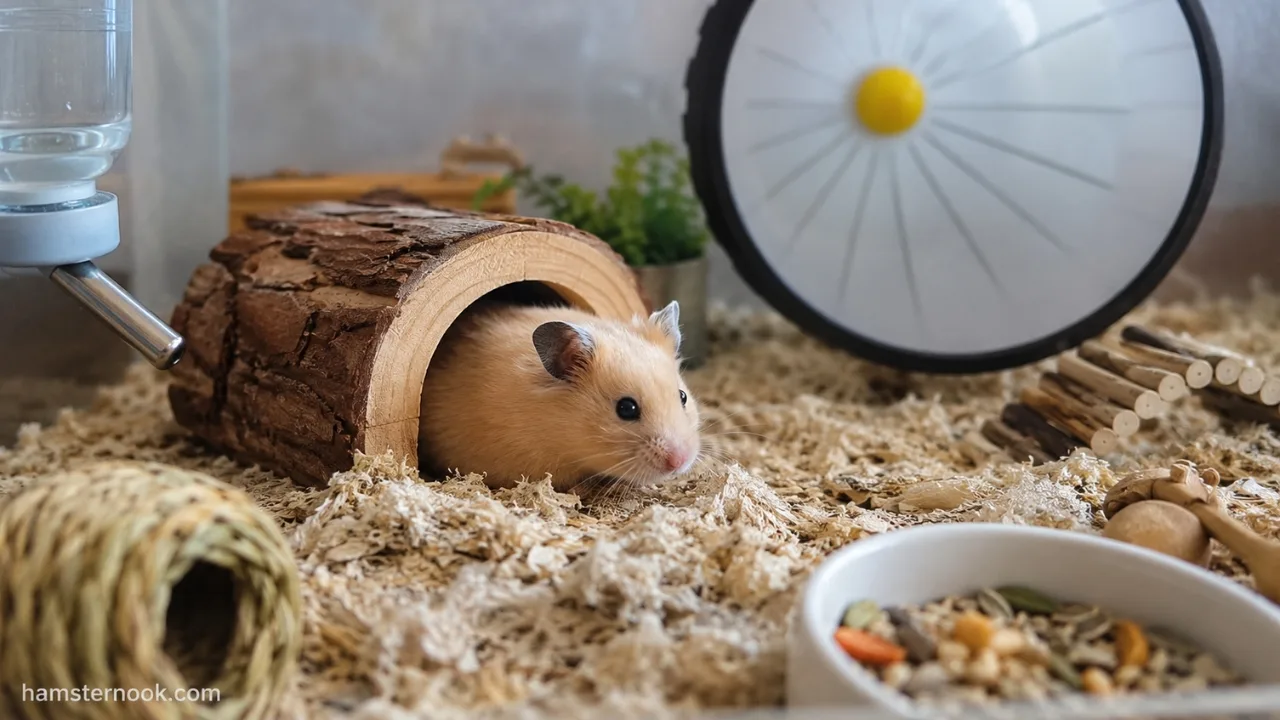
Some hamsters respond to unexpected sounds by freezing instead of running away. Our Why Does My Hamster Freeze After Hearing Loud Noises? guide explains why this happens and when it’s a sign of ongoing stress.
Window Location vs. Ideal Cage Location
| Near a Window | Ideal Cage Location |
|---|---|
| Direct sunlight may occur | No direct sunlight |
| Greater temperature fluctuations | Stable room temperature |
| Possible drafts | Draft-free area |
| Outdoor noise exposure | Quiet environment |
| Bright light at sunrise | Predictable lighting conditions |
| Weather influences nearby temperature | More consistent conditions |
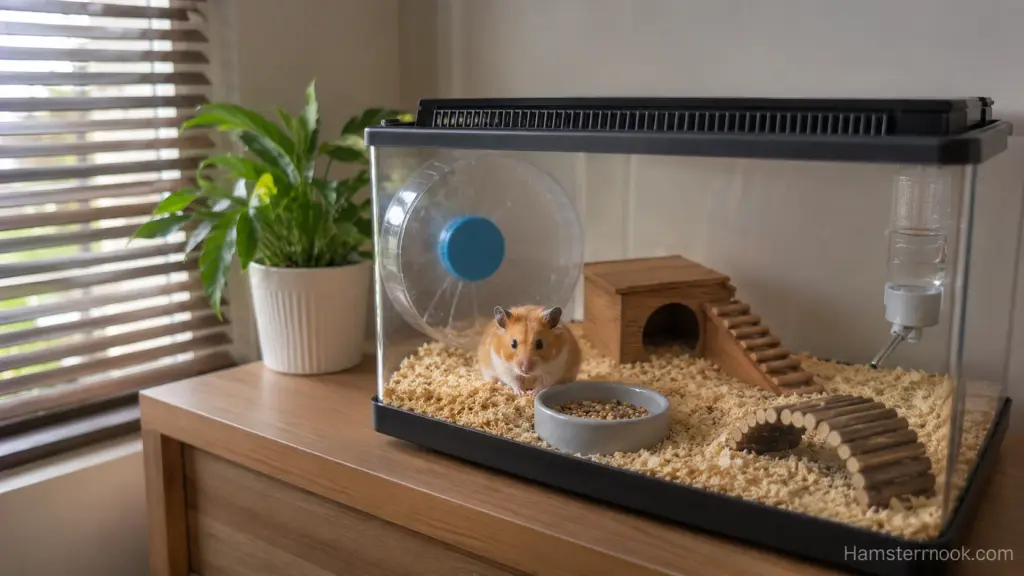
For most homes, a location away from windows provides a more stable environment.
Does Natural Light Benefit Hamsters?
Natural daylight itself is not harmful.
In fact, normal day-and-night light cycles help animals maintain natural rhythms.
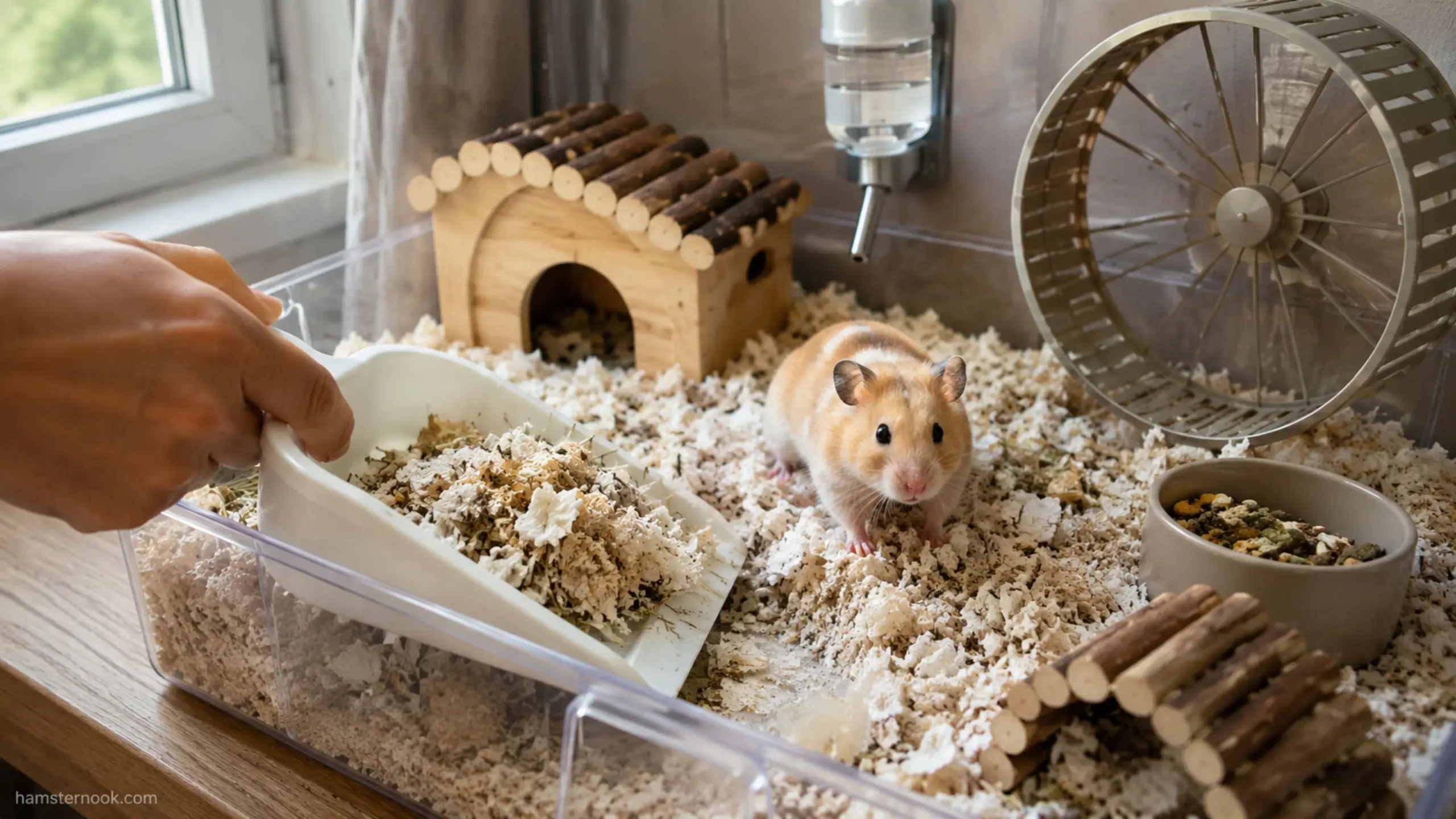
The issue is not normal daylight exposure but direct sunlight and excessive heat buildup around the enclosure.
A hamster does not need to sit beside a window to recognize the difference between day and night. Ambient daylight entering a room is usually sufficient for maintaining a normal light cycle.
Many experienced owners successfully keep hamster enclosures on interior walls where natural room lighting remains available without exposing the cage to direct sun.
What About a Window That Never Gets Sun?
Some owners have north-facing windows or shaded windows that receive little direct sunlight.
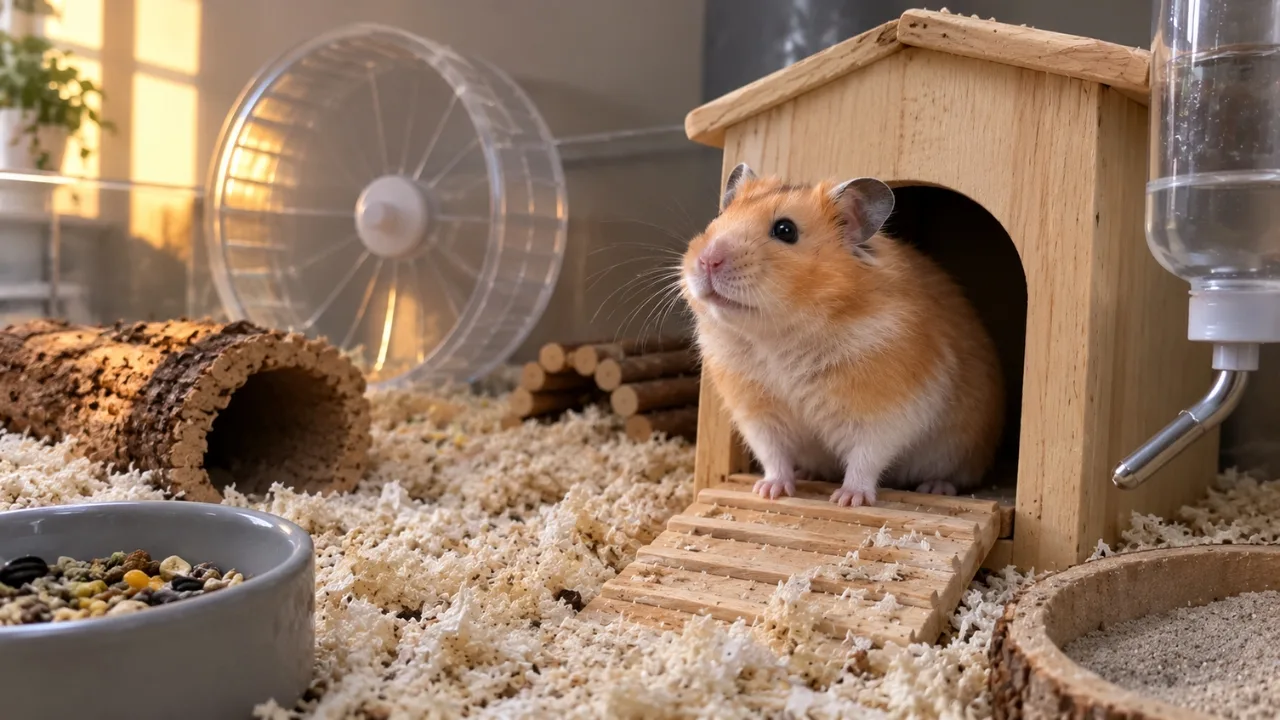
This situation may reduce some risks, but it does not automatically make the location ideal.
Other factors still matter:
- Drafts
- Temperature fluctuations
- Outdoor noise
- Condensation during colder months
- Bright headlights or security lights at night
A simple way to assess a location is to check it at different times throughout the day. Areas near windows can sometimes feel very different in the morning, afternoon, and evening.
One practical test is to place a room thermometer where the cage will sit for 24 hours. If temperatures near the window fluctuate noticeably more than the rest of the room, choose a different location. Small daily changes may seem harmless, but repeated fluctuations can create unnecessary stress for a hamster over time.

How Far Should a Hamster Cage Be From a Window?
There is no universally recommended distance because window designs, climates, and room layouts vary.
Instead of focusing on a specific measurement, ask these questions:
- Does direct sunlight ever reach the cage?
- Can you feel drafts near the enclosure?
- Is the area noticeably warmer or colder than the rest of the room?
- Do outdoor noises frequently startle the hamster?
If the answer to any of these questions is yes, relocating the enclosure may improve your hamster’s environment.
Practical Examples
Example 1: Sunny Bedroom Window
A hamster cage sits on a dresser beside a south-facing window.
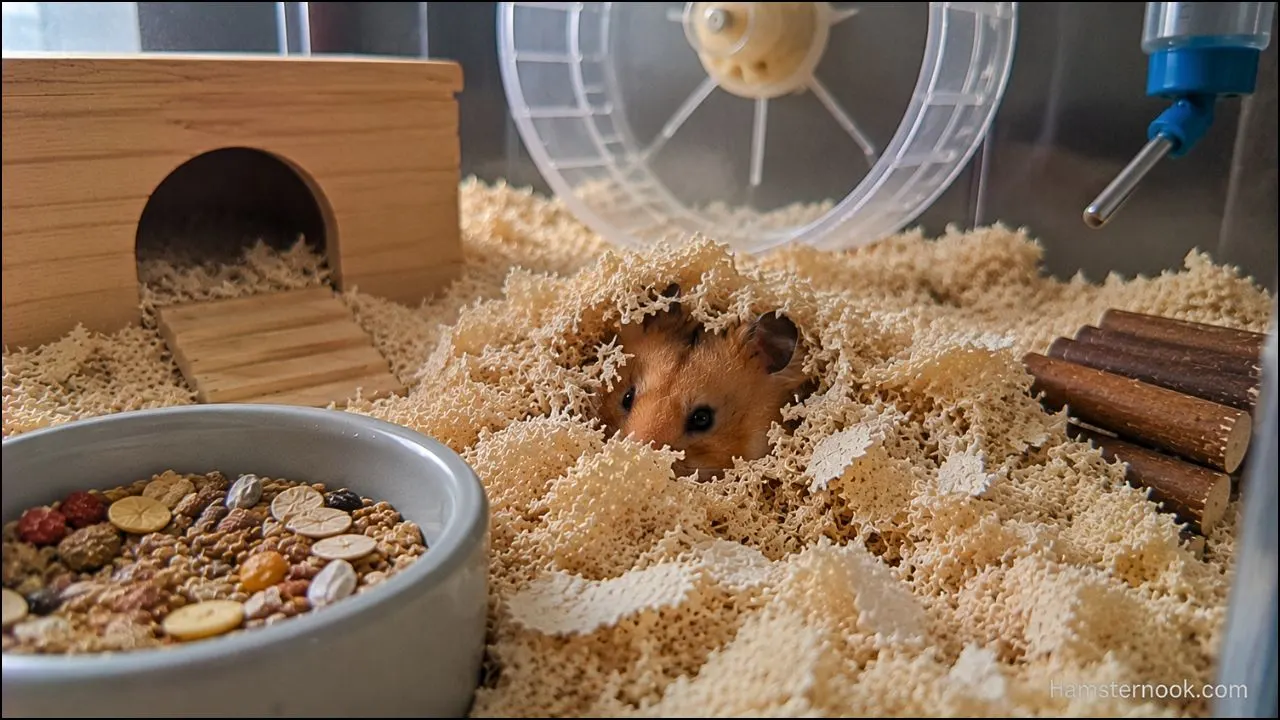
During the morning, sunlight shines directly onto one side of the enclosure for several hours.
Even if the room itself feels comfortable, parts of the cage may become considerably warmer than others. This setup should be avoided.
Example 2: Living Room Interior Wall
The enclosure is positioned against an interior wall across the room from the window.
The hamster still experiences normal daylight entering the room but avoids direct sunlight and drafts.

This arrangement is generally much safer.
Example 3: Window With Air Leaks
During winter, cool air enters around the edges of an older window.
The owner notices the cage area feels colder than the rest of the room.
Moving the enclosure away from the window would provide a more stable environment for the hamster.
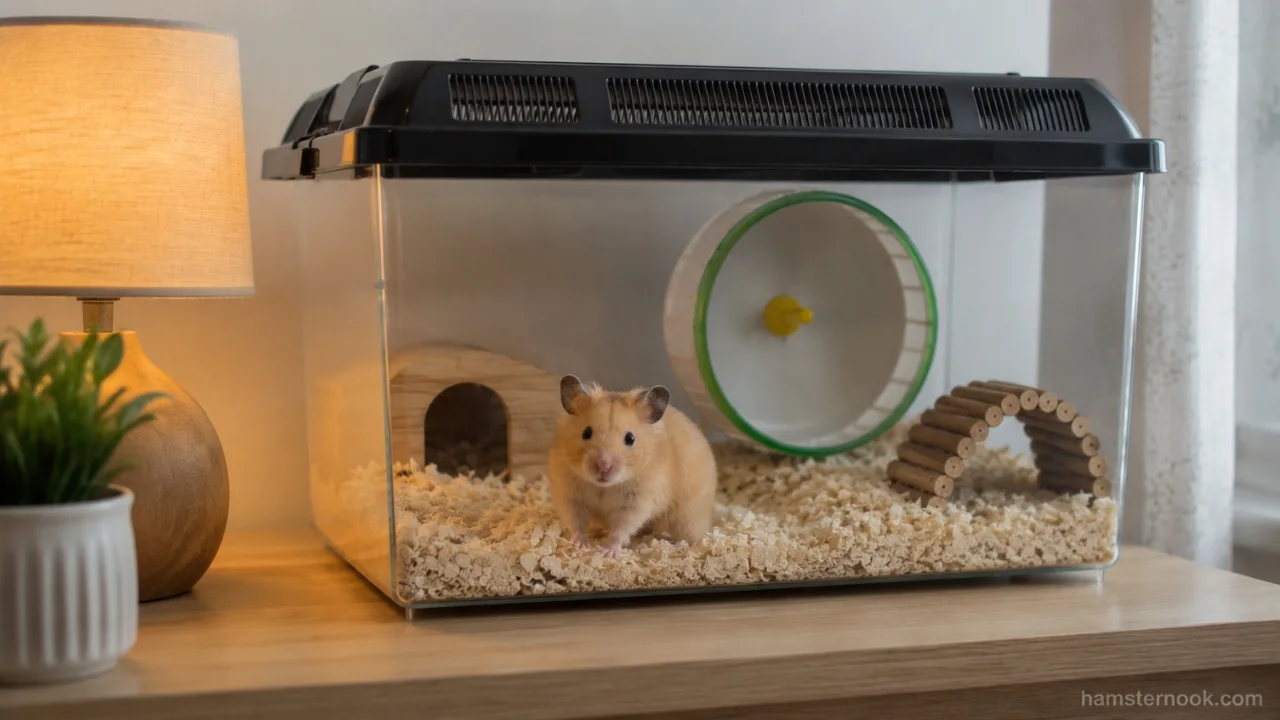
Can a Hamster Ever Live Near a Window?
Sometimes, but only if several conditions are met.
The enclosure should remain:
- Out of direct sunlight
- Protected from drafts
- Away from heating and cooling vents
- In a room with stable temperatures
- Free from excessive outdoor disturbances
Even then, many hamster keepers prefer locations farther from windows simply because environmental conditions are easier to control.
How Hamsters May React to a Poor Cage Location
A hamster cannot tell you that sunlight is making it uncomfortable.
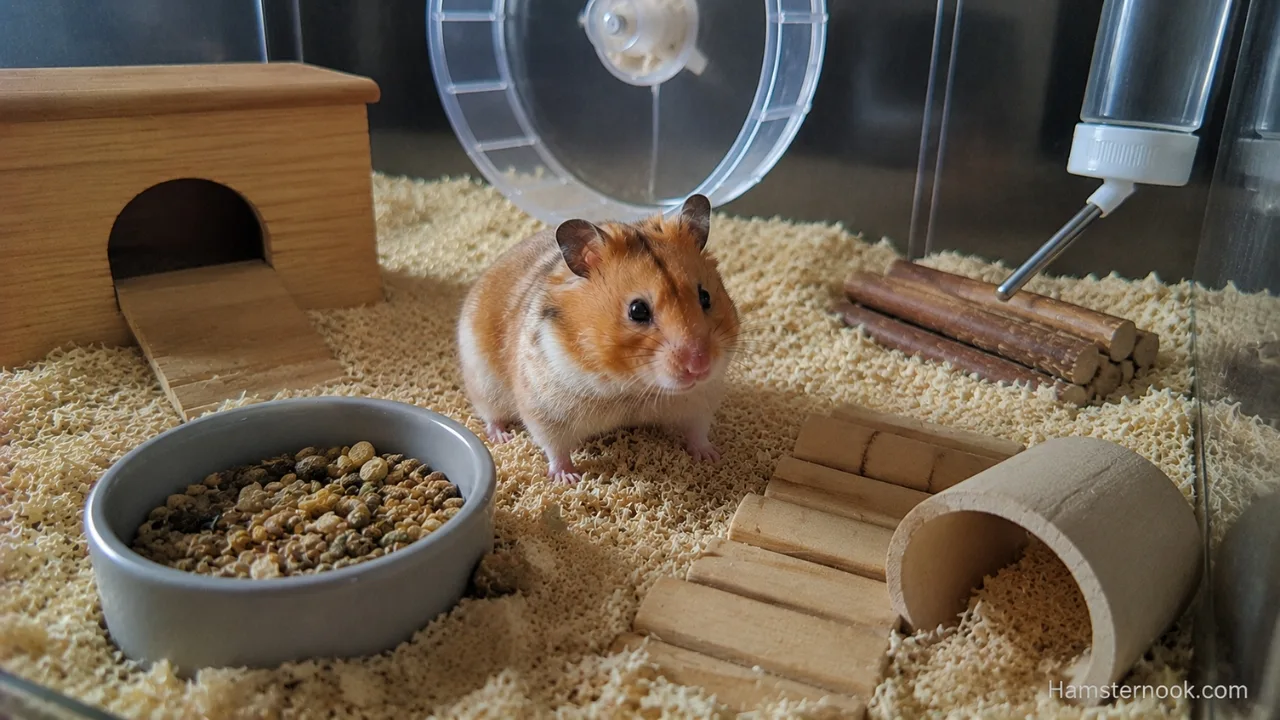
Instead, you may notice behavioral changes such as:
- Spending more time hidden
- Frequently changing sleeping locations
- Excessive burrowing
- Avoiding certain areas of the enclosure
- Appearing restless during active periods
While hiding is completely natural, excessive hiding can sometimes indicate stress or discomfort within the environment. Learn more in Why Do Hamsters Sleep and Hide All Day? The Truth Most New Owners Don’t Know.
These behaviors do not automatically mean the window location is the cause, but the environment should always be considered when evaluating changes in behavior.
Looking at behavior as a whole usually provides a clearer picture than focusing on a single sign. Our Hamster Behavior Guide: What Common Hamster Behaviors Mean explains how different behaviors often connect to the hamster’s environment.

Common Mistakes Owners Make
Placing the Cage in Direct Sunlight
This is one of the most common setup mistakes for new hamster owners. A sunny spot may look pleasant to people, but a glass window can create localized heat inside an enclosure that a hamster cannot easily escape from.
Assuming Natural Light Means Better Welfare
Hamsters benefit from a normal day-and-night cycle, but that does not mean they need to be placed beside a window. Ambient daylight in a room is usually enough to help maintain natural rhythms.
Ignoring Seasonal Changes
A location that seems comfortable during spring may become too hot during summer or too cold during winter. Cage placement should be evaluated throughout the year, not just when the enclosure is first set up.
Forgetting About Drafts
Many people check for sunlight but overlook air movement. Even a small draft from an older window can make the area around a hamster cage less comfortable.
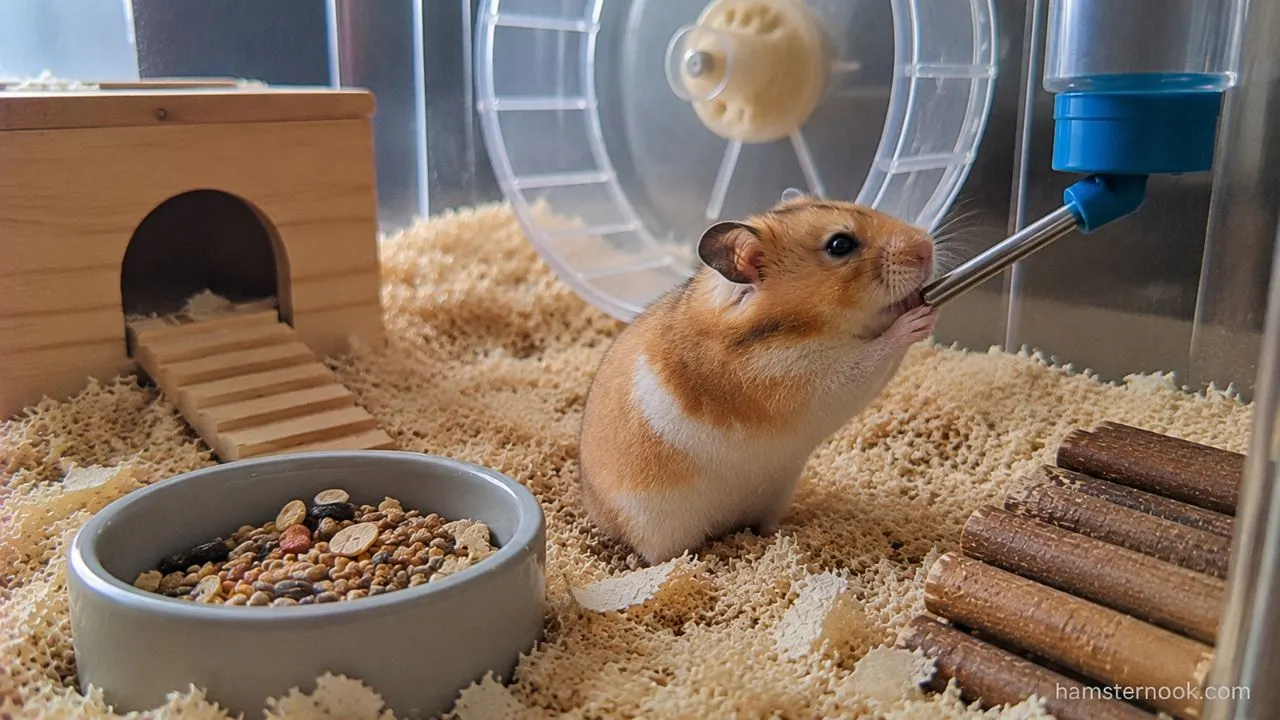
Prioritizing Visibility Over Comfort
Owners sometimes place cages near windows because they enjoy seeing their hamster throughout the day. While visibility is important, the hamster’s comfort and environmental stability should always come first.
What You Should Do
The safest approach is to place your hamster’s enclosure in a quiet part of the home where temperatures remain relatively stable.
After relocating the cage, give your hamster a few days to settle before making any other major habitat changes. Keeping the environment consistent helps your hamster regain confidence more quickly.
A suitable location should have:
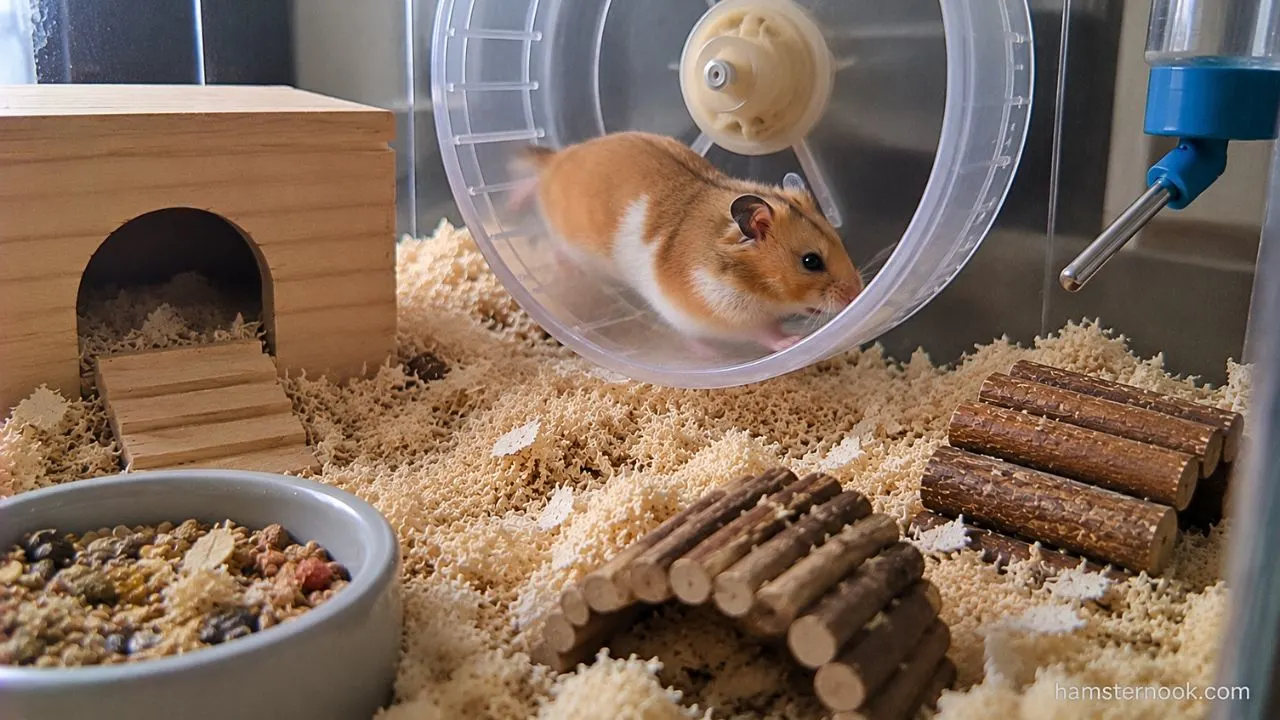
- No direct sunlight reaching the cage
- Minimal drafts
- Stable room temperatures
- Low levels of noise and disturbance
- A predictable light-dark cycle
- Adequate ventilation without strong air currents
Interior walls are often useful locations because they are less affected by outdoor weather conditions. For a complete setup checklist covering enclosure size, bedding, hides, and other essentials, see our Best Hamster Cage Setup for Beginners: Size, Bedding & Essentials guide.
Avoid placing the enclosure directly beneath curtains or blinds that are opened and closed throughout the day. Constant movement and changing light levels can disturb some hamsters, especially while they are sleeping.
A good cage location works best when combined with proper bedding depth. Our How Much Bedding Does a Hamster Need? Minimum Depth Guide for Healthy Burrowing explains how deep bedding helps hamsters feel secure, regulate temperature more effectively, and express natural burrowing behavior.
Paying attention to seasonal changes is equally important, as a location that works well during cooler months may become less suitable during summer.
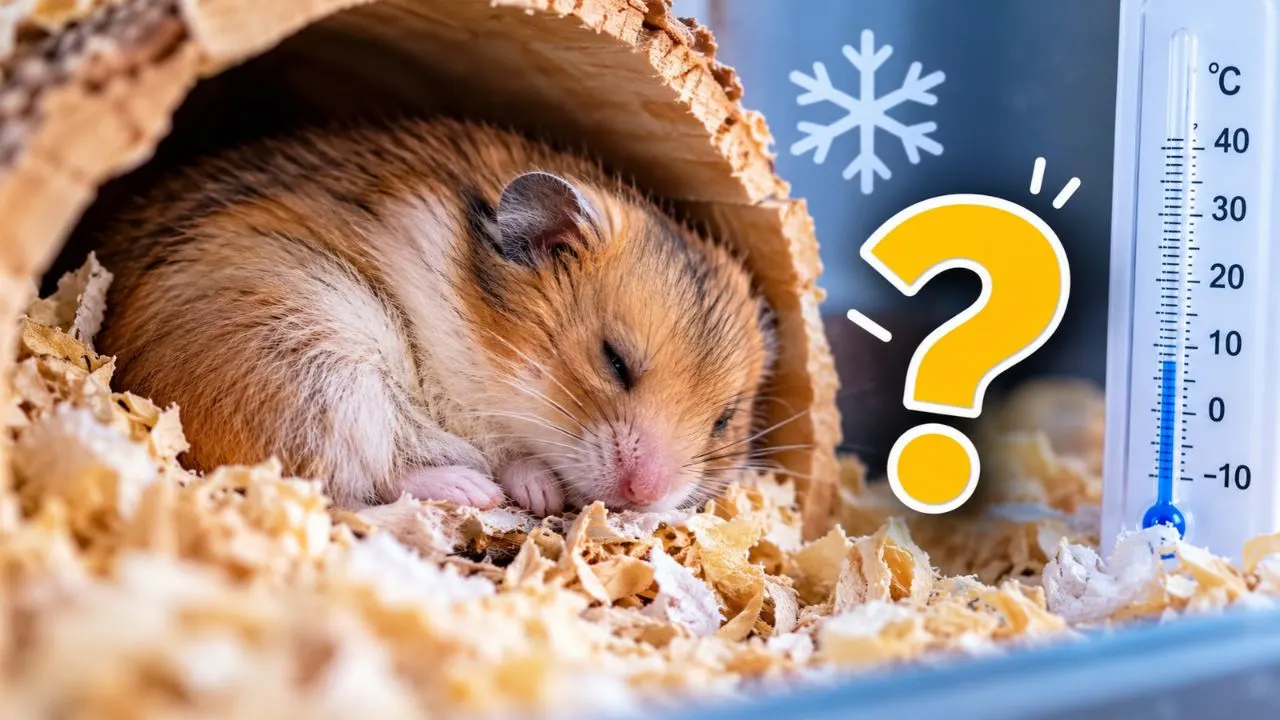
Warning Signs That the Cage Location May Be a Problem
Hamsters can sometimes show subtle signs that their environment is not ideal.
Watch for:
- Consistently avoiding one side of the enclosure
- Frequently relocating nesting material
- Increased hiding behavior
- Restlessness during normal active periods
- Sleeping in unusual locations
- Repeated attempts to burrow deeper than usual
If these behaviors continue for several days, environmental stress may be contributing to the problem. Our 5 Warning Signs Your Hamster Is Stressed (And How to Help) guide explains how to identify stress early and what changes usually help.
These signs do not automatically prove that a nearby window is causing a problem, but they may indicate that something about the environment deserves closer evaluation.

Looking for patterns over several days is usually more helpful than reacting to a single behavior change, since hamsters naturally vary their activity and sleeping locations from time to time.
When to Worry
Certain situations require immediate attention.
Before moving the cage, prepare the new location first so the enclosure only needs to be moved once. Repeatedly relocating a hamster over several days can create additional stress while it adjusts to unfamiliar surroundings.
Move the enclosure to a safer location if:

- Direct sunlight regularly reaches the cage.
- The enclosure becomes noticeably warm during the day.
- Cold drafts can be felt around the cage.
- Temperatures near the window vary significantly from the rest of the room.
- The hamster appears distressed whenever outdoor activity occurs.
If a hamster shows signs of heat stress, extreme lethargy, difficulty breathing, or other concerning symptoms, contact an experienced veterinarian as soon as possible. Environmental conditions should be reviewed immediately.
Environmental issues are often easier to identify when viewed alongside your hamster’s overall condition. Read How to Tell If Your Hamster Is Happy, Healthy, Stressed, or Sick: Complete Owner’s Guide (2026).
Final Thoughts
A hamster cage may look perfectly fine beside a window, but appearances can be misleading. Windows often expose small pets to direct sunlight, temperature fluctuations, drafts, and outdoor disturbances that are difficult for owners to notice at first.
Most hamsters thrive in a calm, stable environment where temperatures remain consistent and environmental changes are kept to a minimum. For that reason, a location away from direct sunlight and not immediately next to a window is usually the safest choice.
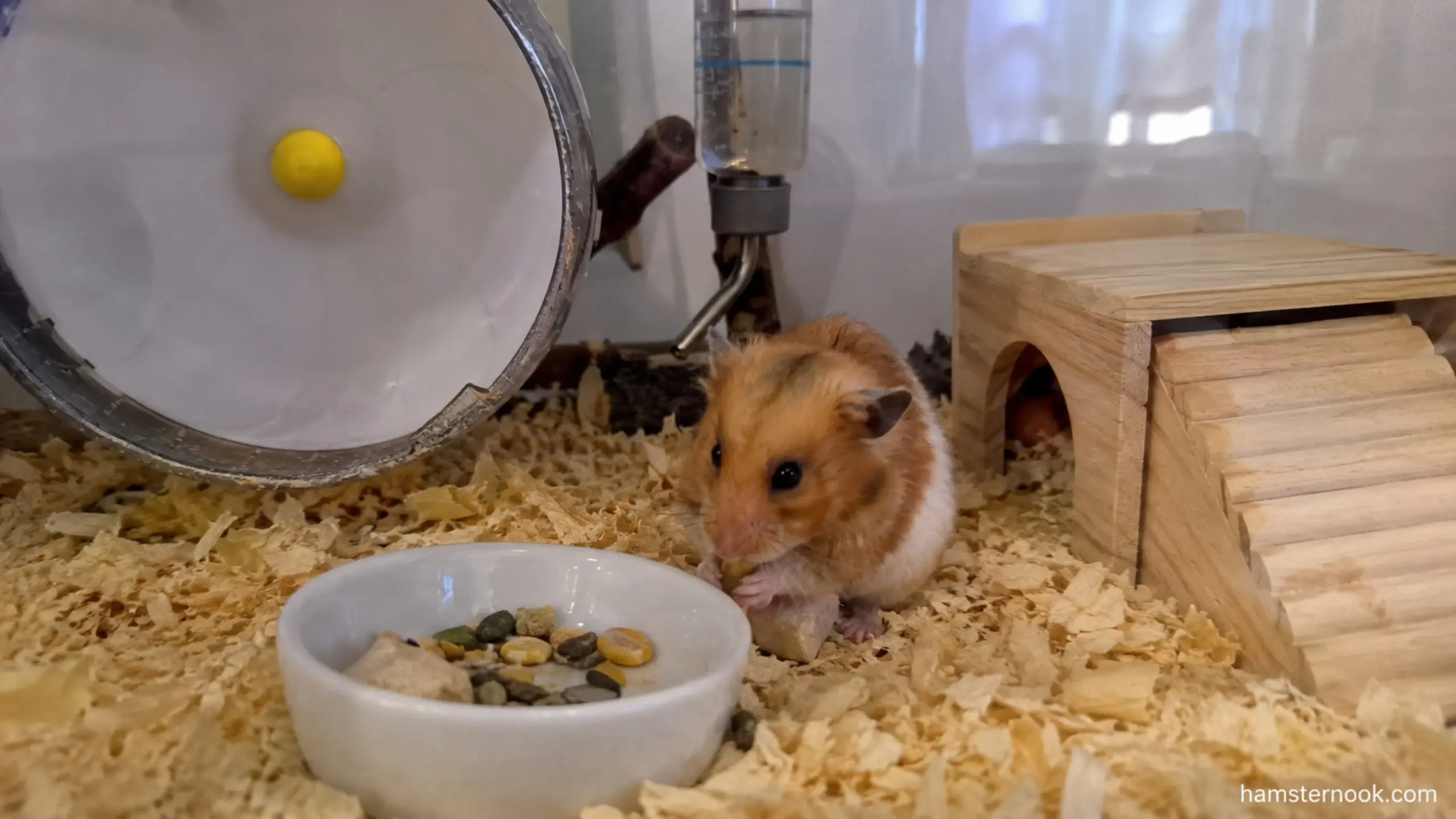
When deciding where to place a hamster enclosure, prioritize environmental stability over convenience or visibility. A comfortable, predictable environment allows your hamster to rest, explore, forage, and behave naturally without unnecessary stress.
Frequently Asked Questions
Can a hamster cage be in a room with windows?
Yes. A hamster cage can safely be kept in a room with windows as long as the enclosure is not exposed to direct sunlight, drafts, or major temperature fluctuations.
Is sunlight bad for hamsters?
Direct sunlight can be harmful because it may overheat parts of the enclosure. Hamsters should always have protection from direct sun exposure.
How much light does a hamster need?
Hamsters benefit from normal day-and-night lighting cycles. Ambient daylight entering a room is usually sufficient, and special lighting is rarely necessary.
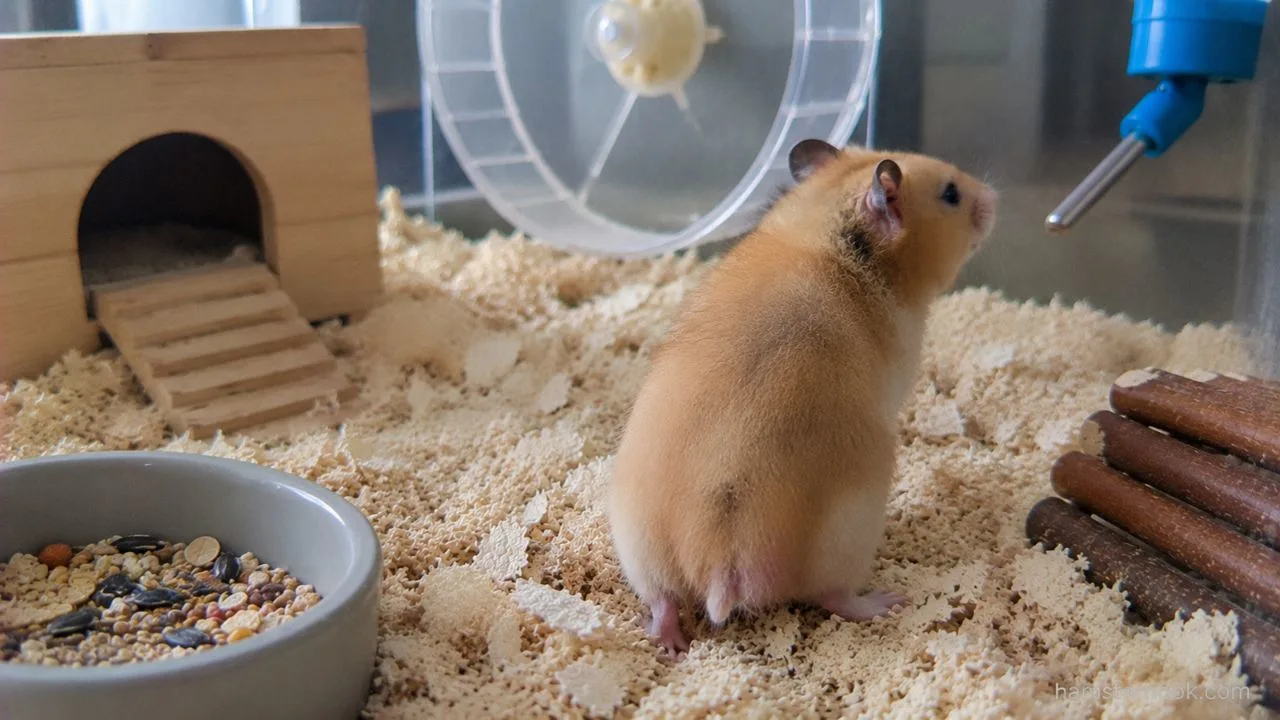
Can a hamster cage be near a shaded window?
A shaded window is generally safer than a sunny one, but owners should still consider drafts, outdoor noise, and temperature changes before placing the enclosure nearby.
What is the best room for a hamster cage?
A quiet room with stable temperatures, low traffic, no direct sunlight, and minimal disturbances is usually the best environment for a hamster.
Can cold air from a window affect a hamster?
Yes. Drafts and cold air can make a cage less comfortable and may disrupt the stable environment that hamsters prefer.
References
This guide is based on hamster housing, environmental conditions, temperature, behavior, and welfare guidance from trusted animal welfare and veterinary resources, including:
- RSPCA – Creating a Good Home for Hamsters – Guidance on suitable cage placement, temperature, lighting, bedding, ventilation, and creating a safe and comfortable environment.
- RSPCA – Keeping Hamsters as Pets – General hamster care, housing, environmental needs, behavior, and welfare guidance.
- Blue Cross – Hamster Care Guide – Practical information on hamster housing, temperature, bedding, enrichment, handling, and wellbeing.
- MSD Veterinary Manual – Providing a Home for a Hamster – Veterinary guidance on hamster housing, environmental conditions, bedding, ventilation, and maintaining a suitable enclosure.
- NC3Rs – Housing and Husbandry: Hamster – Guidance on hamster housing, environmental conditions, bedding, husbandry, and welfare considerations.
- MSD Veterinary Manual – Hamsters – Veterinary reference information covering hamster care, environmental needs, health concerns, and husbandry.

Narayan Kumar is the founder and author of HamsterNook. He creates practical, research-based hamster care guides covering hamster behavior, nutrition, cage setup, enrichment, health, and everyday care. His goal is to help hamster owners make informed decisions and provide safer, healthier lives for their pets through clear, beginner-friendly information based on trusted animal care resources.