Many hamster owners spend hours choosing bedding, toys, and accessories but give very little thought to where the cage will actually sit inside the home. Even a well-designed habitat can become stressful if it sits in a noisy, hot, or constantly disturbed area.
The location of a hamster cage affects everything from sleep quality and stress levels to temperature comfort and daily activity patterns. A cage placed near loud noises, direct sunlight, or frequent disturbances can cause stress, sleep disruption, and even health problems over time.
Whether you’re setting up a new enclosure or relocating an existing one, the right location can make a noticeable difference to your hamster’s comfort and daily routine.
Quick Answer
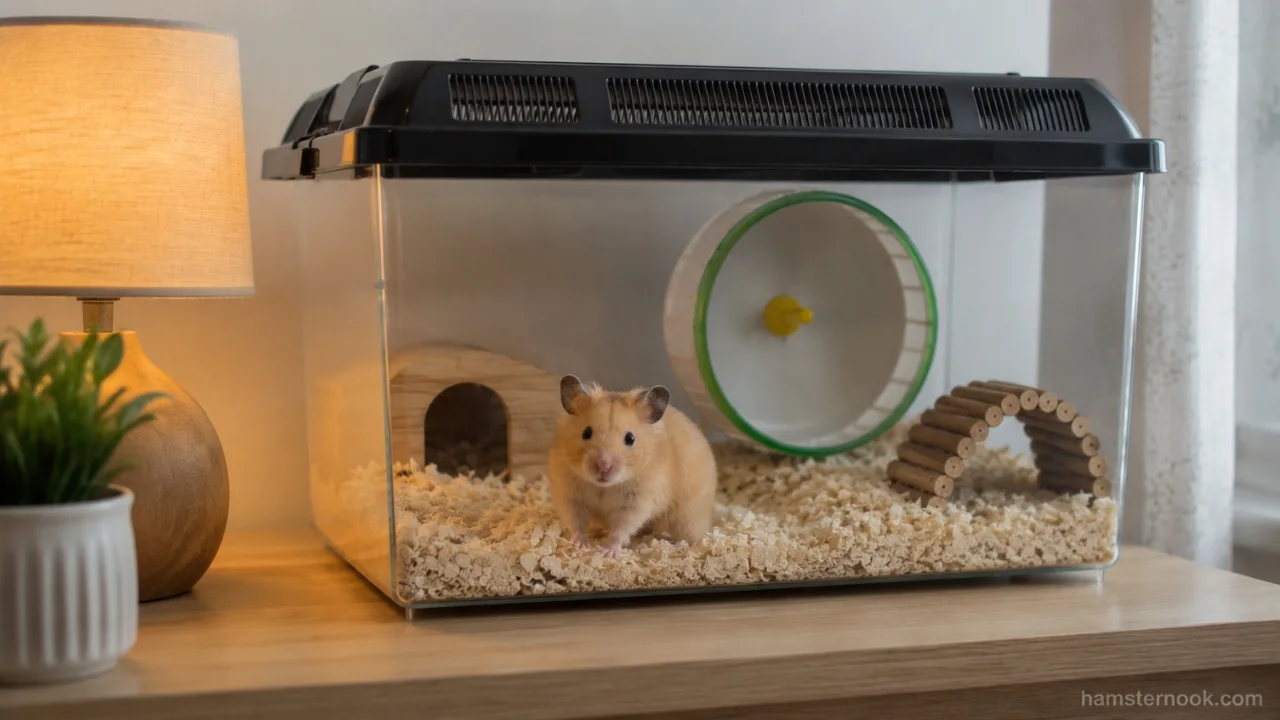
The best place for a hamster cage is a quiet, dry, stable area where your hamster can sleep undisturbed during the day and remain comfortable at night. Choose a location away from direct sunlight, drafts, loud or unpredictable noise, household hazards, and other pets. A bedroom can work in some homes, but it is not automatically the best choice because nighttime wheel running and other activity may disturb sleep.
Why Hamster Cage Placement Matters More Than Most Owners Realize
Hamsters are small prey animals with highly sensitive senses. In the wild, they rely on hearing, smell, and awareness of their surroundings to stay safe from predators.
Inside a home, they may not face predators, but they can still be affected by environmental stressors such as:
- Loud sounds
- Sudden vibrations
- Temperature changes
- Bright light exposure
- Frequent disturbances
Environmental stress can show up through changes in behavior, so our 7 Signs You’re Accidentally Stressing Your Hamster (Without Even Realizing It) guide covers common stressors owners may overlook.
A hamster that never gets proper daytime rest or experiences frequent disturbances may become more nervous, hide more often, or show stress-related behaviors. A good cage location gives your hamster a predictable environment where it can rest and stay active without unnecessary disturbances.
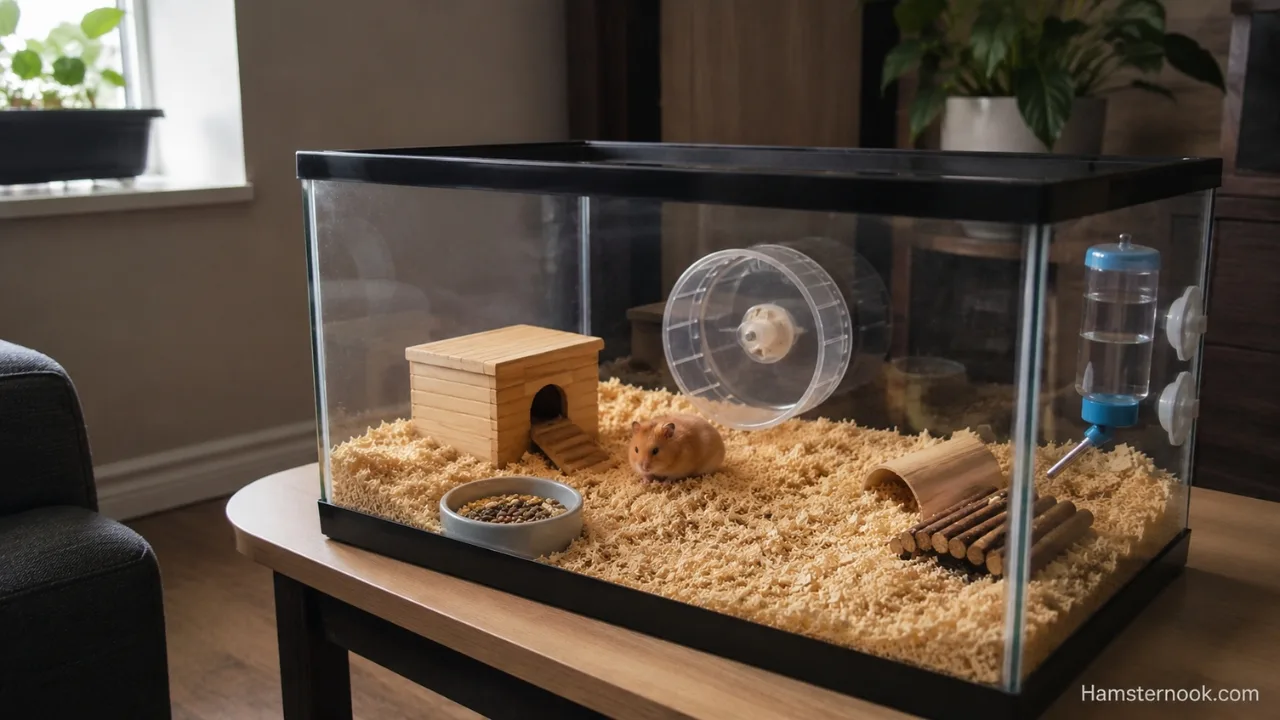
What Makes an Ideal Location for a Hamster Cage?
The best cage location provides a balance of comfort, safety, and stability.
Key Features of a Good Cage Location
| Factor | Ideal Condition | Why It Matters |
|---|---|---|
| Temperature | Stable and moderate | Prevents overheating or chilling |
| Lighting | Natural daylight but no direct sun | Supports normal day-night cycles |
| Noise Level | Quiet to moderate | Reduces stress and sleep disruption |
| Airflow | Fresh air without drafts | Helps maintain comfort |
| Activity Level | Some household activity but not constant traffic | Helps hamsters feel secure |
| Safety | Away from other pets | Prevents fear and stress |
When evaluating a location, think about what your hamster experiences throughout the entire day and night, not just when you’re awake.
Before choosing a permanent location, spend a full day observing the area at different times. A spot that seems quiet in the morning may become much noisier or warmer later in the day.
Lighting is also part of choosing a suitable location, so our Do Hamsters Need Light? Daylight, Darkness & Night Lights Explained guide explains how to maintain a predictable light-dark routine.
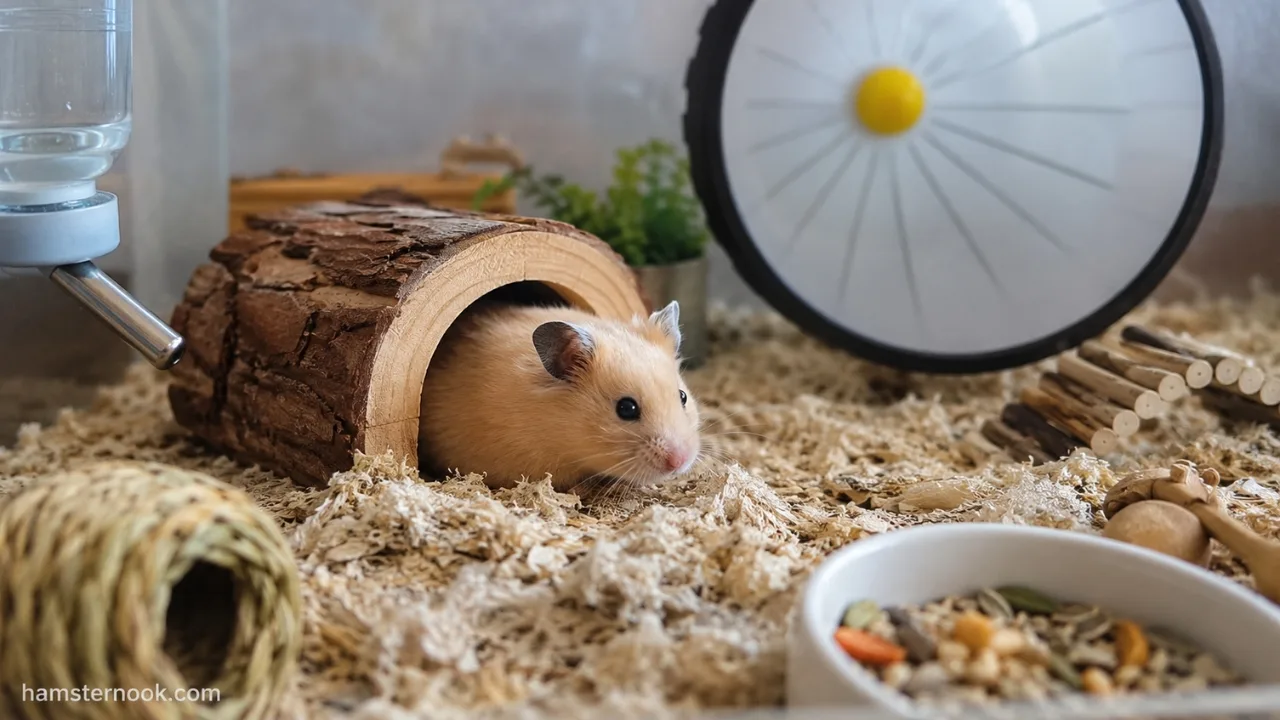
Does Cage Placement Affect Hamster Behavior?
Yes. Hamsters are highly sensitive to their surroundings. A cage located in a stressful environment may contribute to excessive hiding, bar chewing, sleep disruption, or reduced activity. While cage placement is not the only factor affecting behavior, it can play a surprisingly important role in your hamster’s overall comfort.
Suitable Location: A Quiet Bedroom
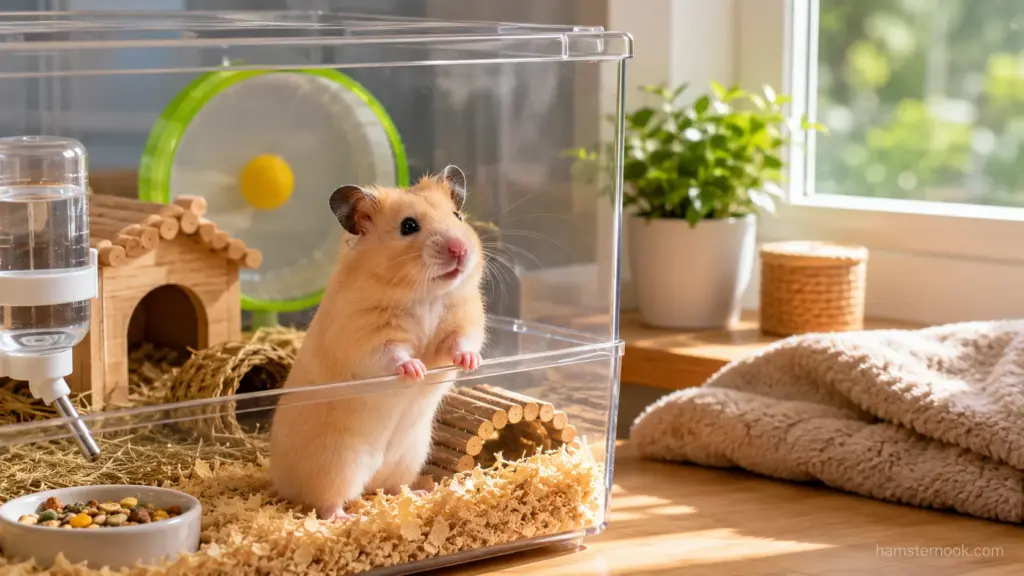
A bedroom can work when it stays quiet and comfortable during the day, but it is not automatically an ideal location. Hamsters are active at night, so wheel running, digging, chewing, and other movement can disturb people who are sleeping.
Bedrooms often have:
- Consistent temperatures
- Lower daytime traffic
- Reduced household noise
- Less sudden activity
A quiet spare bedroom may be suitable if the hamster can rest undisturbed during the day and nighttime activity will not cause repeated disturbance. If the room makes you wake the hamster or interfere with its routine, another suitable room may be better.
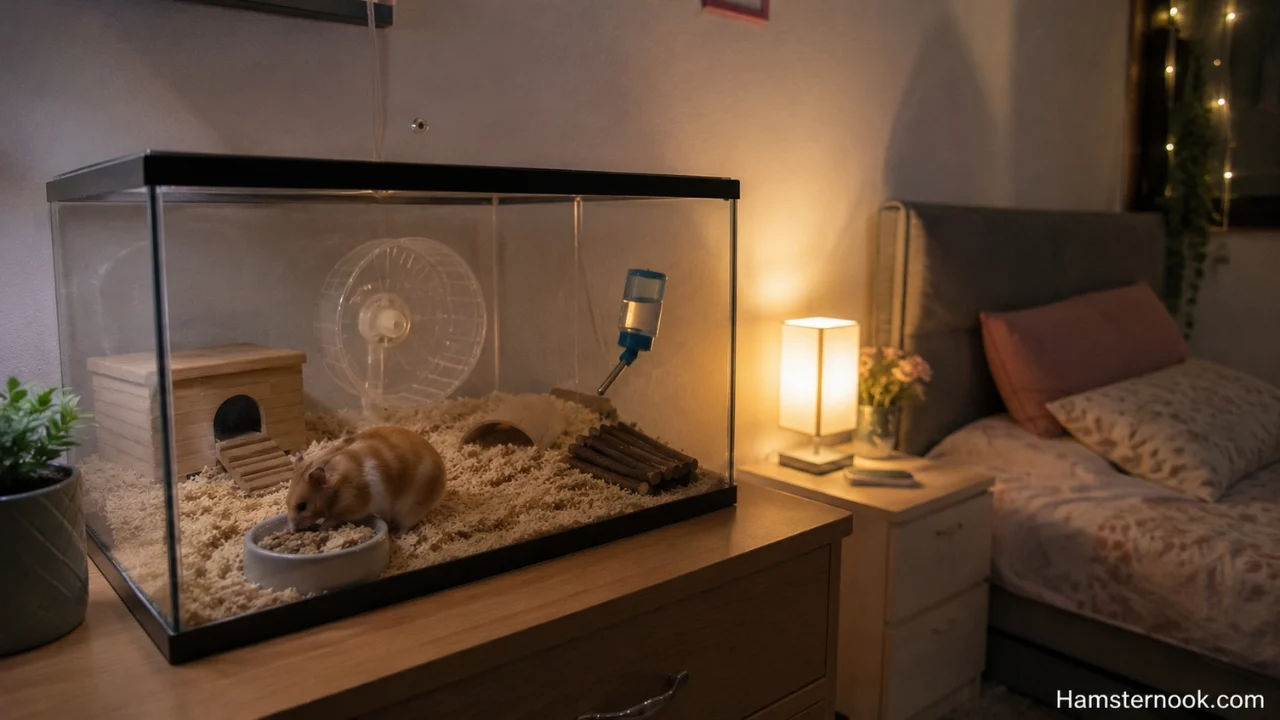
Hamsters are generally most active during the evening and night, although activity patterns vary. Wheel running, digging, and exploring can disturb your sleep, so choose a bedroom only if both your hamster’s routine and your own sleep can be accommodated.
If you’re still learning about hamster sleep patterns, see Why Is My Hamster Sleeping So Much?
Best Place #2: A Calm Home Office
A home office can work extremely well for a hamster habitat.
These rooms are typically:

- Quiet
- Climate controlled
- Free from heavy foot traffic
- Easy for monitoring your pet
Many hamsters become accustomed to normal daytime sounds such as typing or occasional conversations without experiencing stress.
Best Place #3: A Quiet Living Room Corner
A living room can also be suitable if the cage is placed thoughtfully.
The best setup is usually a corner away from:
- Televisions
- Speakers
- Subwoofers
- Busy walkways
Being around normal household activity can actually help some hamsters become more comfortable around people, provided the environment remains predictable.
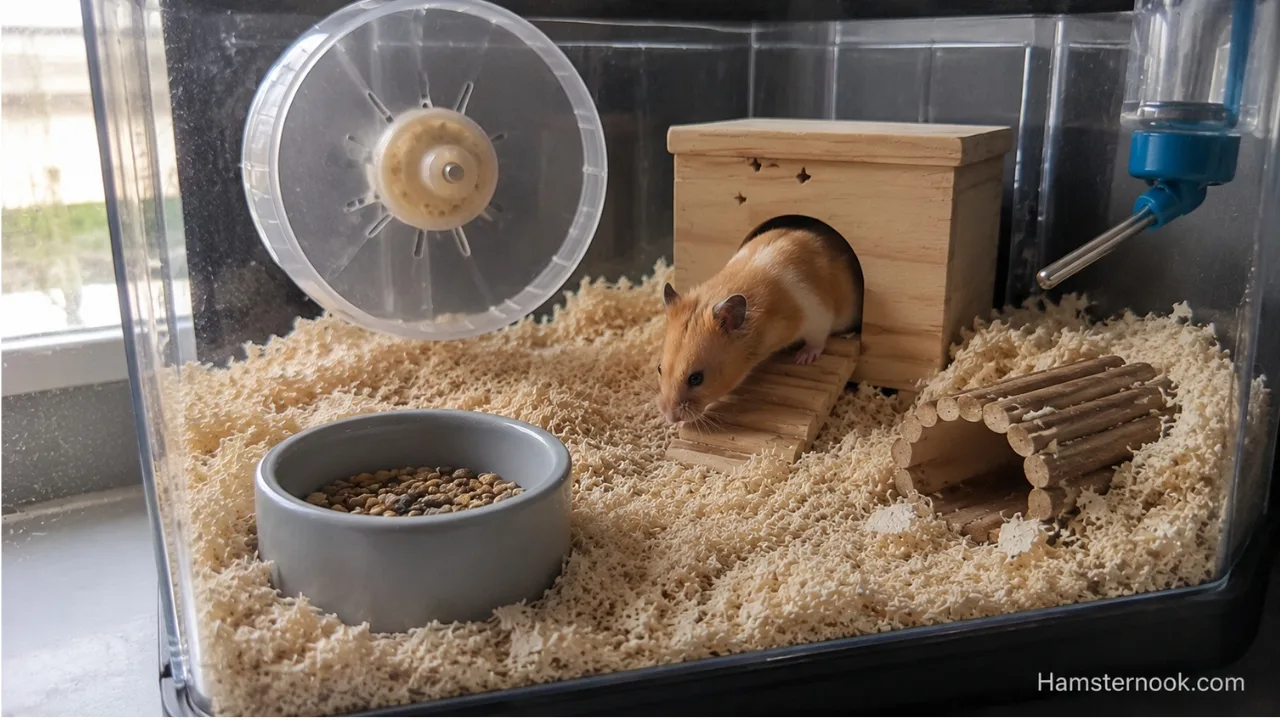
Many owners find that hamsters housed in a calm but regularly occupied room often become easier to observe because they gradually get used to normal household sounds and routines.
Best Place #4: A Dedicated Pet Room
Owners with multiple small pets sometimes create a dedicated animal room.
This offers several advantages:
- Controlled environment
- Consistent lighting
- Minimal disturbances
- Easier cleaning and maintenance
A dedicated room can provide one of the most stable environments possible for a hamster.

Should a Hamster Cage Be Kept on the Floor?
Not necessarily. A floor location can work if the cage is secure, dry, draft-free, protected from other pets, and away from heavy foot traffic.
Keeping a hamster cage directly on the floor creates several potential problems.
Risks of Floor Placement
| Potential Issue | Why It Can Be a Problem |
|---|---|
| Drafts | Cold air often settles near the floor |
| Household Traffic | Increased risk of accidental bumps |
| Dust Accumulation | More dust and debris near floor level |
| Other Pets | Easier access for cats and dogs |
| Temperature Swings | Less stable environmental conditions |
A sturdy stand or table can make the cage easier to monitor and protect it from household traffic, but elevation itself is not a requirement. The location matters more than simply whether the cage is on the floor or raised.
Ideally, the cage should sit at a comfortable height where you can easily observe and maintain it.

Worst Place #1: Direct Sunlight
Direct sunlight should be avoided because an enclosure can heat up quickly when exposed to strong sun.
Glass and plastic enclosures can trap heat surprisingly quickly, creating temperatures that become unsafe for hamsters.
Even during cooler weather, sunlight shining directly onto part of a cage can create hot spots that lead to overheating.
Warning Signs of Heat Stress
| Symptom | What It May Indicate |
|---|---|
| Lethargy | Overheating |
| Rapid Breathing | Heat stress |
| Stretching Out Flat | Attempting to cool down |
| Weakness | Dangerous overheating |
| Reduced Activity | Temperature-related discomfort |
Hamsters tolerate moderate temperatures far better than excessive heat.
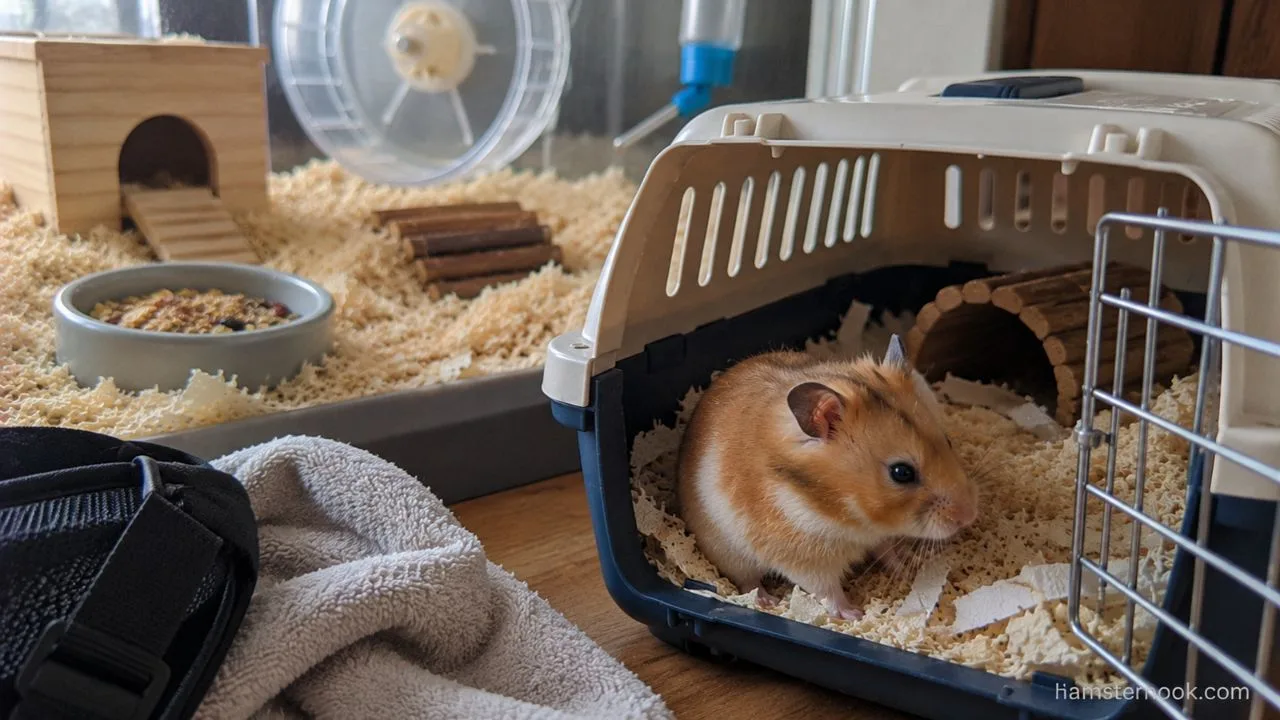
If your hamster starts breathing rapidly during hot weather, What Temperature Is Too Hot or Too Cold for Hamsters? explains how dangerous temperatures can affect your hamster and when immediate action may be needed.
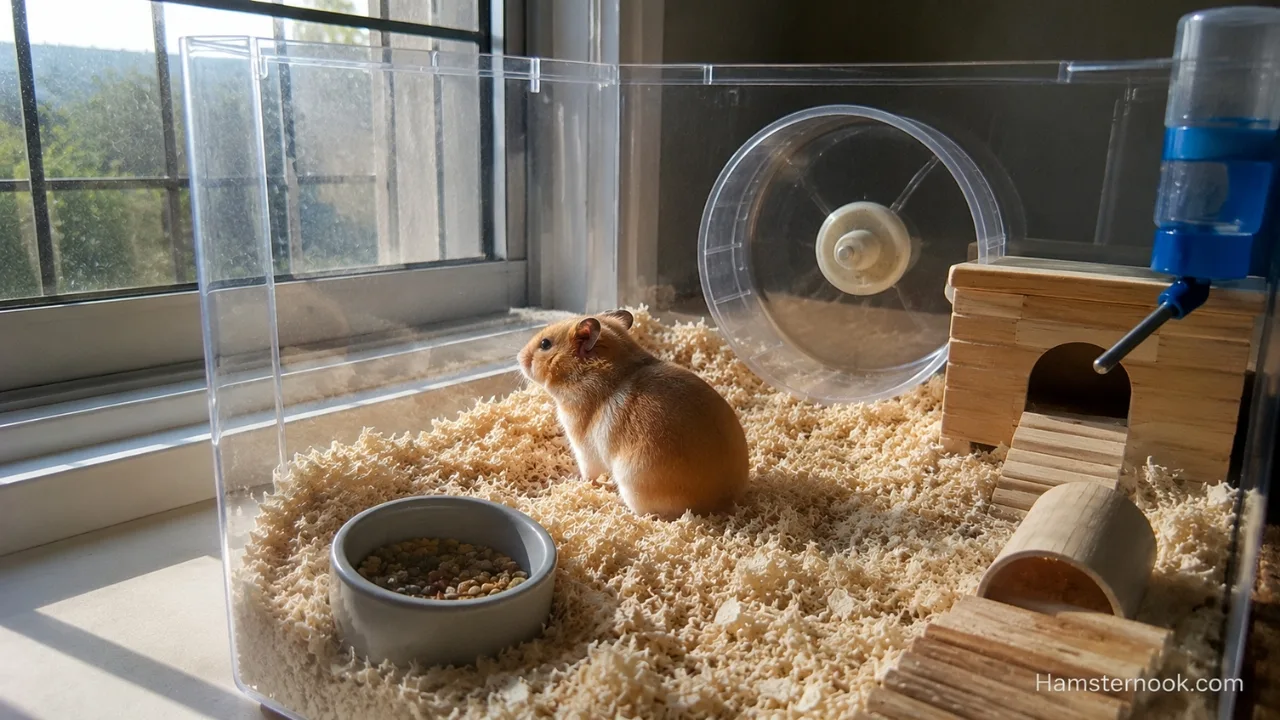
Worst Place #2: Near a Window
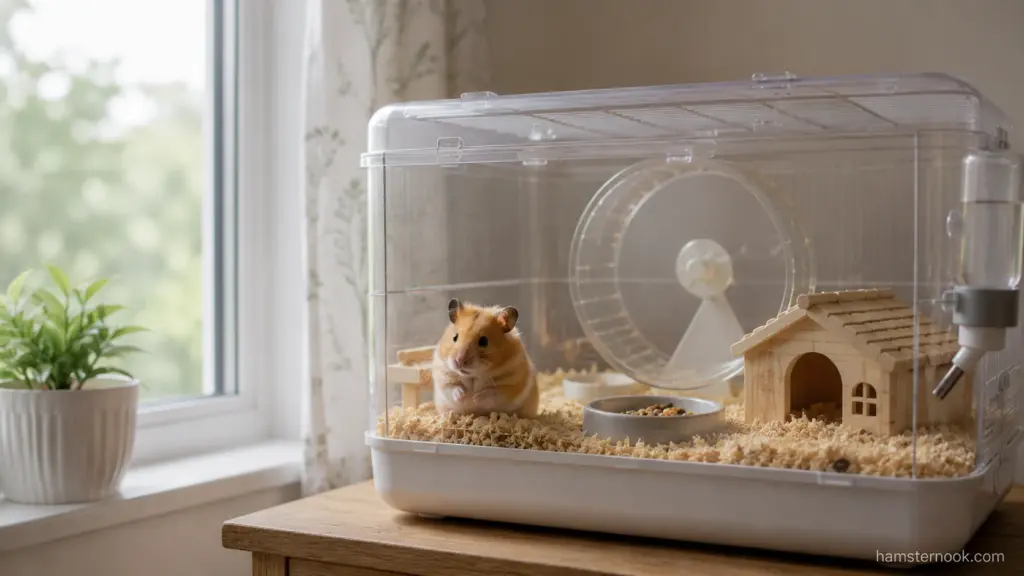
Many owners place cages near windows because the area seems bright and pleasant.
However, windows create several environmental challenges:
- Temperature fluctuations
- Direct sunlight exposure
- Cold drafts during winter
- Excessive heat during summer
Even if sunlight does not directly hit the cage, changing temperatures around windows can make conditions uncomfortable.

For more detail on window-specific risks, see our Should a Hamster Cage Be Near a Window? Risks Every Owner Should Know guide.
If a window is the only available location, position the enclosure out of direct sun and check the area at different times of day for drafts and temperature changes.
Proper cage setup matters just as much as location. See Best Hamster Cage Setup for Beginners for enclosure recommendations.
Worst Place #3: Next to a Television or Speaker
Hamsters have sensitive hearing.

Placing a cage beside loud electronics can expose them to:
- Vibrations
- Bass frequencies
- Sudden sounds
- Prolonged noise exposure
While a hamster may eventually tolerate some household sounds, constant loud entertainment systems can become a source of chronic stress.
Worst Place #4: In the Kitchen
The kitchen may seem convenient, but it is rarely an ideal location.
Common Kitchen Hazards
| Hazard | Risk to Hamsters |
|---|---|
| Cooking Fumes | Respiratory irritation |
| Temperature Changes | Environmental stress |
| Food Odors | Disturbance and overstimulation |
| Steam | Increased humidity |
| Frequent Activity | Sleep disruption |
Because kitchens are among the busiest rooms in most homes, they generally provide too much activity for a hamster habitat.

Worst Place #5: Near Air Conditioners, Heaters, or Fans
Strong airflow can create uncomfortable living conditions.
Avoid placing cages directly beside:
- Air conditioners
- Space heaters
- Radiators
- Heating vents
- Ceiling fan drafts
- Portable fans
Hamsters do best when temperatures remain relatively stable throughout the day.
If a fan is part of the room setup, our Can a Fan Blow Directly on a Hamster Cage? What Every Owner Should Know guide explains why airflow direction matters.
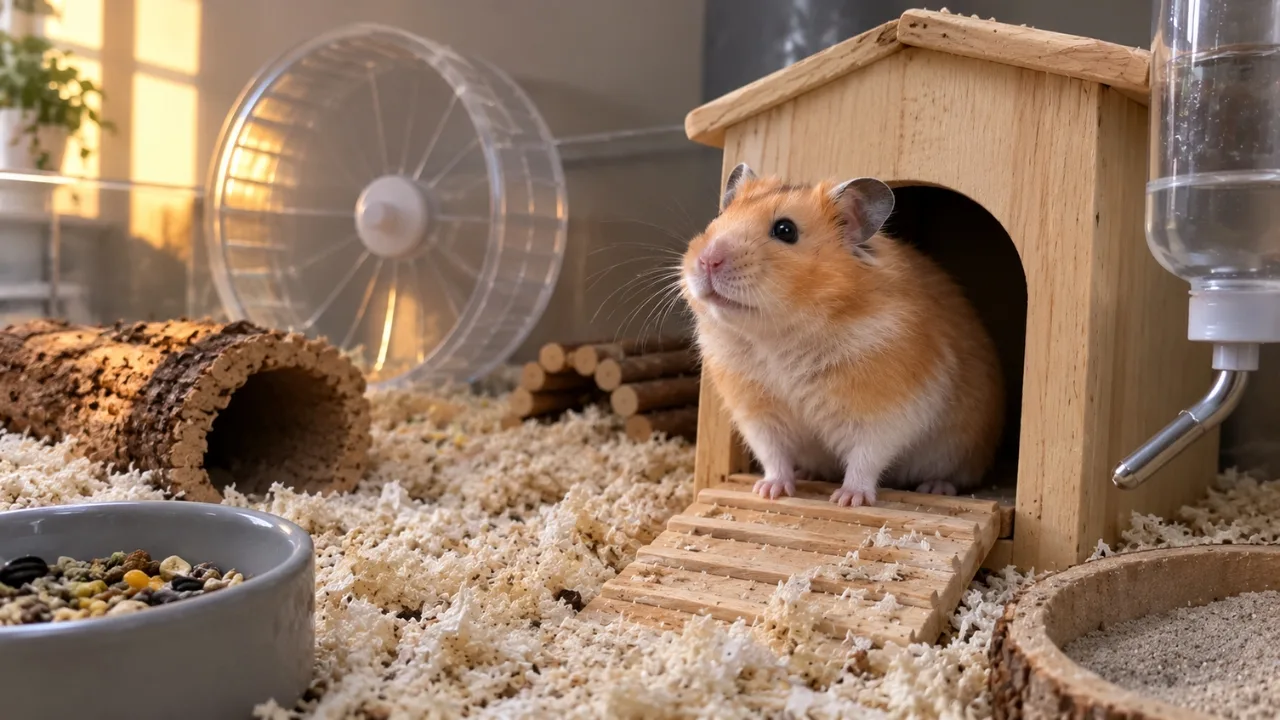
How Other Pets Can Affect Cage Placement
Cats and dogs can create stress even when they never physically touch the hamster.
Many hamsters become anxious when:
- A cat watches them continuously
- A dog repeatedly approaches the cage
- Larger animals bump the enclosure
Choose a location where other pets cannot constantly stare at, paw at, or investigate the cage.
Signs Your Hamster Dislikes Its Cage Location
Sometimes hamsters show clear signs that their environment needs adjustment.

Watch for behaviors such as:
For a deeper look at stress-related behaviors, see Why Is My Hamster Hiding So Much?
| Behavior | Possible Cause |
|---|---|
| Constant Hiding | Stress or insecurity |
| Excessive Bar Chewing | Environmental frustration |
| Reduced Activity | Poor comfort levels |
| Agitation When Awake | Frequent disturbances |
| Changes in Sleep Patterns | Excessive light or noise |
These signs do not always indicate poor cage placement, but the environment should be evaluated if they appear consistently.
If these behaviors continue, consider other possible environmental stressors too. How to Tell If Your Hamster Is Stressed: 5 Warning Signs & What to Do explains signs that may help you assess your hamster’s behavior.
How to Choose the Best Spot in Your Home
Before placing a cage permanently, ask yourself a few questions:
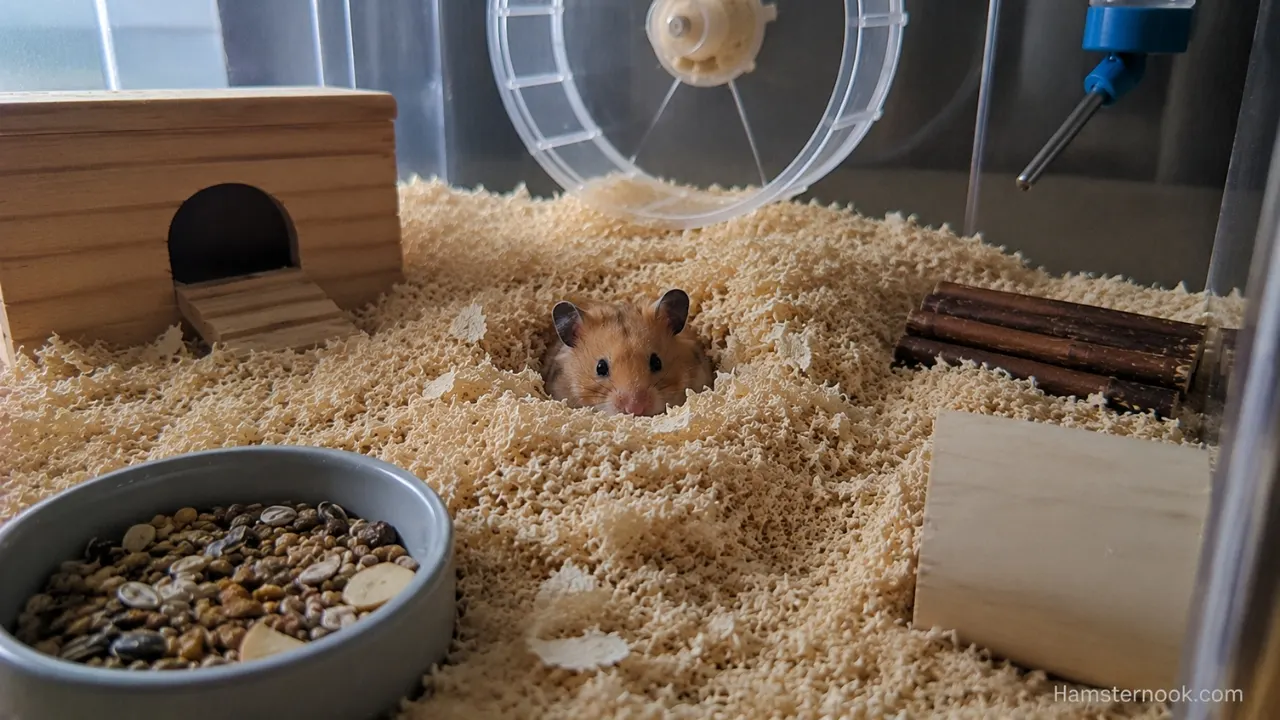
Check the actual conditions before settling on a spot. Use a room thermometer near the cage to check conditions at different times of day, including when heating or air conditioning is running. Make sure direct sunlight never falls on the enclosure, the room has a consistent light-dark routine, and the cage is away from smoke, strong household fumes, and noisy equipment. Recheck the location when the seasons change, because a comfortable spot in one month may become too hot, cold, or draughty later.
- Is the room temperature stable year-round?
- Does direct sunlight reach the cage?
- Is the area free from strong drafts?
- Are loud noises frequent?
- Can other pets easily access the cage?
- Will the hamster be able to sleep undisturbed during the day?
If the answer to all these questions is favorable, you’ve likely found a suitable location.
Final Thoughts
The best place for a hamster cage is a quiet, stable area where your hamster can rest undisturbed during the day and remain comfortable at night. A home office, quiet living room area, or suitable bedroom can work when the room is free from direct sunlight, drafts, excessive noise, and frequent disturbances.
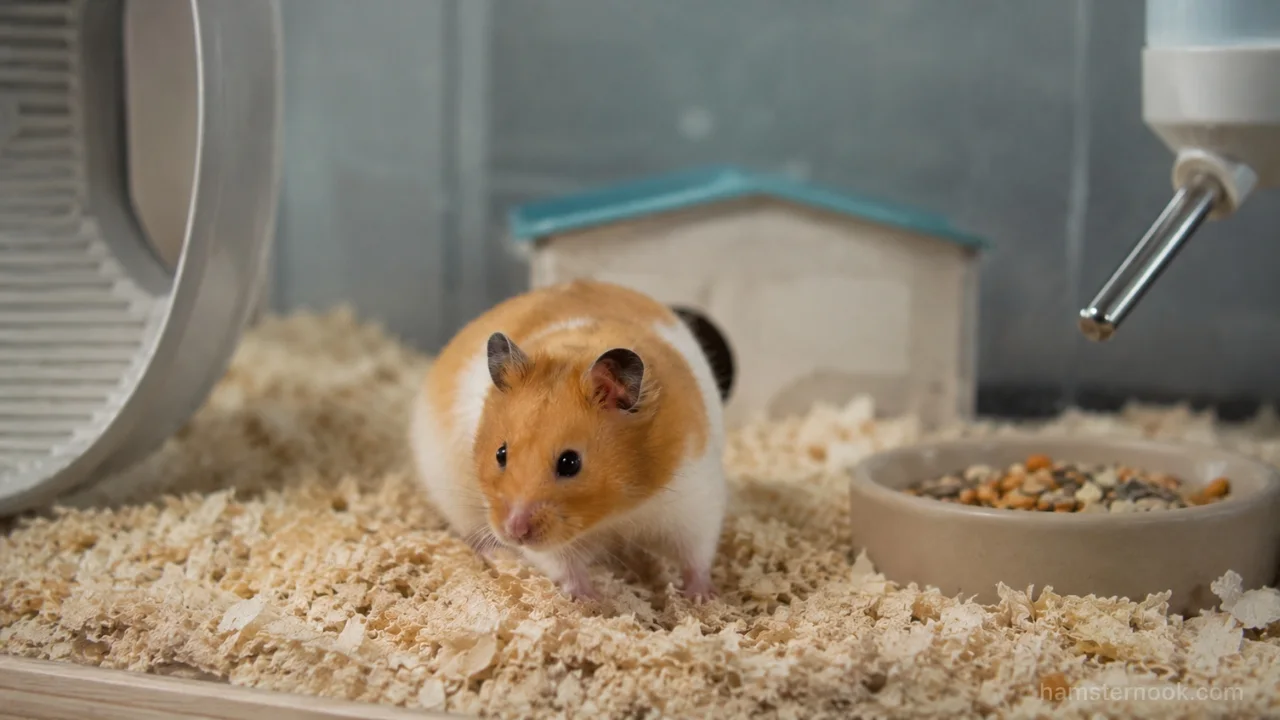
On the other hand, locations near windows, kitchens, televisions, heating vents, and busy household traffic can create unnecessary stress and discomfort.
A hamster spends its entire life inside the environment you create. Choosing the right cage location is one of the simplest yet most important steps you can take to help your pet feel safe, comfortable, and healthy.
Frequently Asked Questions
Is it okay to keep a hamster cage in my bedroom?
A bedroom can work, but it is not automatically an ideal location. The room should stay quiet enough for daytime sleep, have stable conditions, and allow the hamster to follow a predictable light-dark routine. Nighttime wheel noise and other activity may also disturb your sleep.
Can a hamster cage be placed near a window?
It is generally not recommended. Windows can expose hamsters to direct sunlight, drafts, and temperature fluctuations.
Should a hamster cage be elevated?
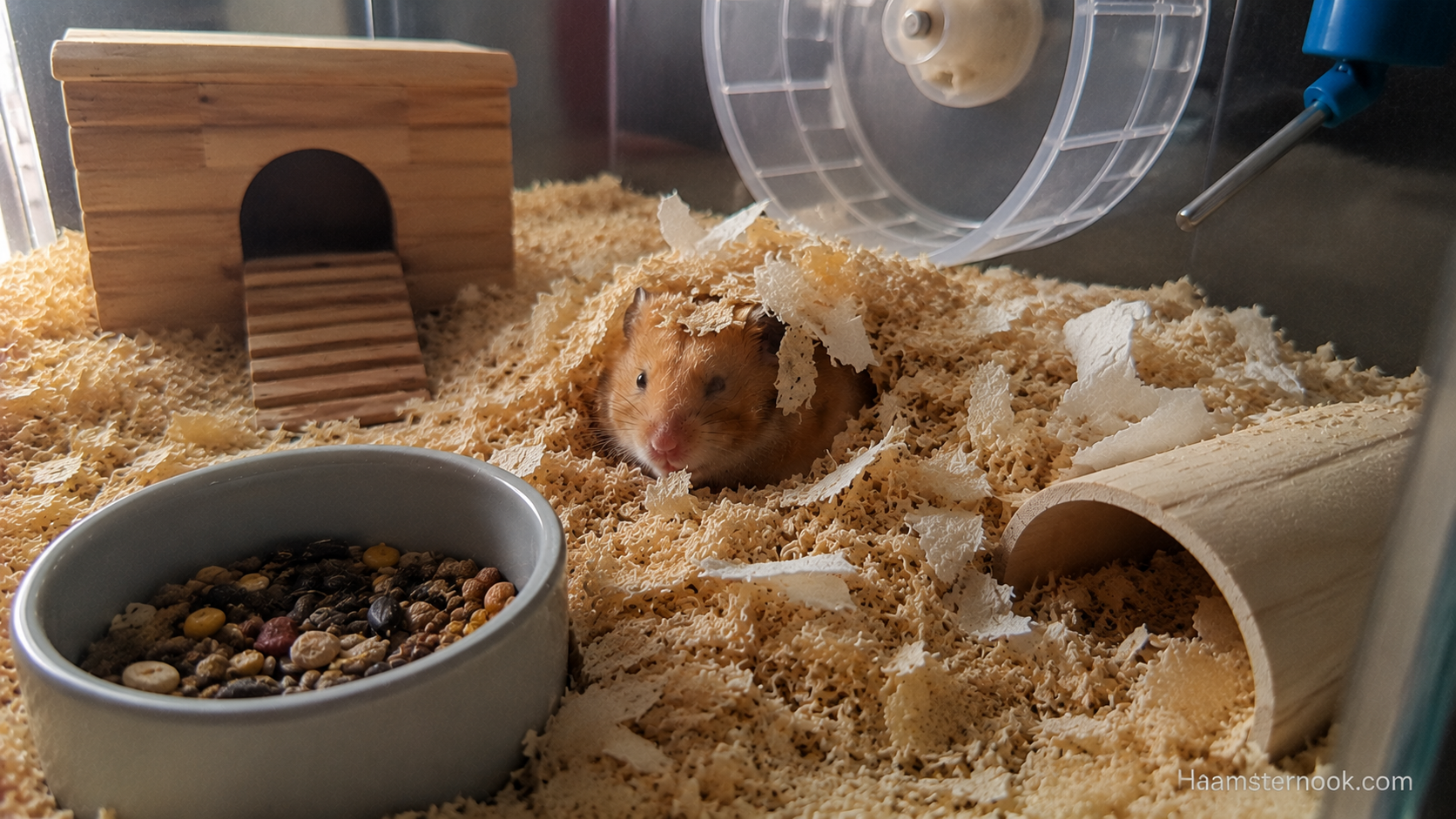
Not necessarily. A stable stand or table can make the cage easier to monitor and protect it from household traffic, but a floor location can also work when the cage is secure, dry, draft-free, and protected from pets and accidental bumps.
Can hamsters live in the living room?
Yes, if the cage is placed away from loud televisions, speakers, and heavy foot traffic.
Do hamsters need sunlight?
Hamsters benefit from a normal day-night cycle but should not be exposed to direct sunlight inside their cage.
Can a hamster cage be near a radiator or air conditioner?
No. Heating and cooling equipment can create rapid temperature changes and uncomfortable drafts that may stress your hamster.

Can I move my hamster’s cage to a different room?
Yes, but avoid moving it frequently. Hamsters feel most secure when their environment remains predictable. If you need to relocate the cage, try to keep bedding, hides, and cage layout familiar during the transition.
References
This guide is based on hamster housing, environmental conditions, cage placement, behavior, and welfare guidance from trusted animal welfare and veterinary resources, including:
- RSPCA – Creating a Good Home for Hamsters – Guidance on suitable housing, temperature, lighting, ventilation, and maintaining a safe and comfortable environment.
- RSPCA – Hamster Behaviour – Information on natural activity patterns, sleeping behavior, environmental stressors, and hamster welfare.
- Blue Cross – Hamster Care Guide – Practical advice on hamster housing, suitable surroundings, daily care, and wellbeing.
- PDSA – Hamsters as Pets – Guidance on hamster housing, environmental needs, behavior, and general welfare.
- MSD Veterinary Manual – Providing a Home for a Hamster – Veterinary guidance on enclosure setup, ventilation, bedding, and environmental conditions that support hamster health.

Narayan Kumar is the founder and author of HamsterNook. He creates practical, research-based hamster care guides covering hamster behavior, nutrition, cage setup, enrichment, health, and everyday care. His goal is to help hamster owners make informed decisions and provide safer, healthier lives for their pets through clear, beginner-friendly information based on trusted animal care resources.