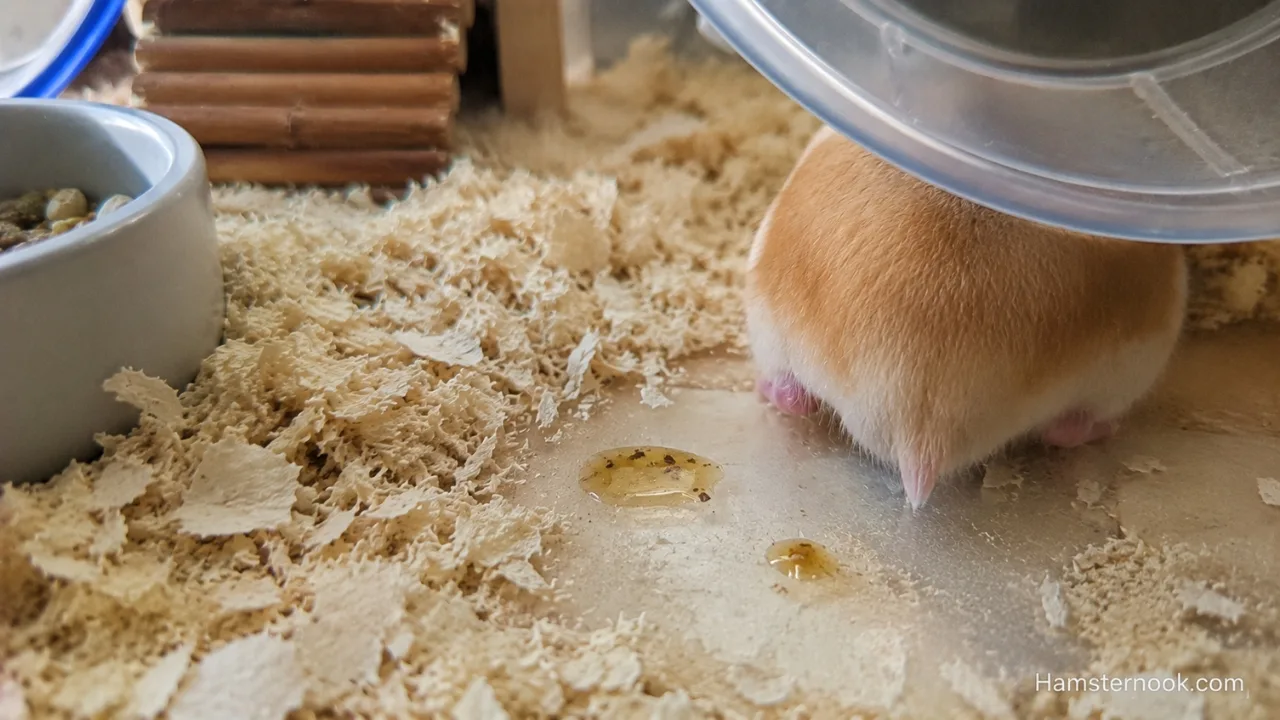
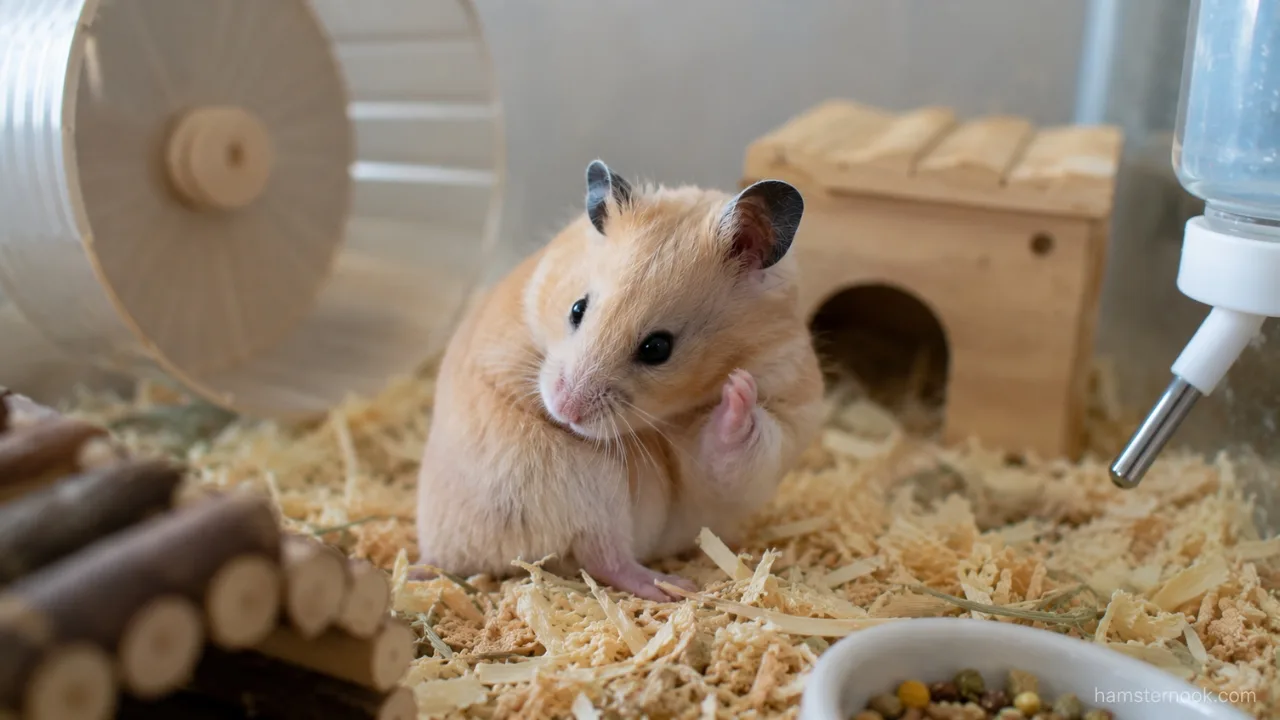
Finding a few missing whiskers on your hamster can be surprisingly alarming. Those long hairs around the nose are easy to notice, so even one-sided whisker loss can make your hamster look different overnight. The good news is that a missing whisker does not automatically mean your hamster is sick. What matters is why the whisker disappeared, whether more are being lost, and whether the skin or your hamster’s behavior has changed.
Can Hamster Lose Their Whiskers?
Yes. Hamsters can lose individual whiskers, and a whisker may also become shorter or disappear after being broken, pulled out, or otherwise damaged.
Hamster whiskers are called vibrissae. They are specialized sensory hairs, not simply ordinary facial fur. Research on golden hamsters shows that their facial vibrissae actively move during exploration and are involved in detecting and monitoring the environment through touch.
Because whiskers have a sensory role, you should not deliberately cut, pluck, or trim them just because they look uneven.

A single missing whisker, by itself, is usually much less concerning than repeated whisker loss accompanied by skin changes, facial rubbing, itching, or other signs of illness.
Because whisker changes are best understood alongside your hamster’s overall health and daily condition, it helps to look at the skin, behavior, appetite, and activity as well.
Why Is My Hamster Losing Whiskers?
There isn’t one single cause. The most useful way to think about whisker loss is to ask whether the whisker was naturally lost or broken, or whether something is affecting the skin, follicle, or surrounding face.
1. A whisker may simply have broken
Whiskers are strong, but they are still hair shafts. A whisker can become damaged and break, leaving a noticeably shorter whisker or a temporary gap.

This is particularly easy to notice when you compare the two sides of your hamster’s face. One side may have a long whisker while the corresponding whisker on the other side is much shorter.
A broken whisker does not necessarily mean there is a medical problem.
2. The whisker may have been pulled out
A whisker can disappear if it is physically pulled out rather than simply broken.
This could happen through accidental contact with something in the enclosure or through excessive grooming or chewing. Hair chewing and barbering can cause hair loss in hamsters, but whisker loss should not automatically be assumed to be barbering.
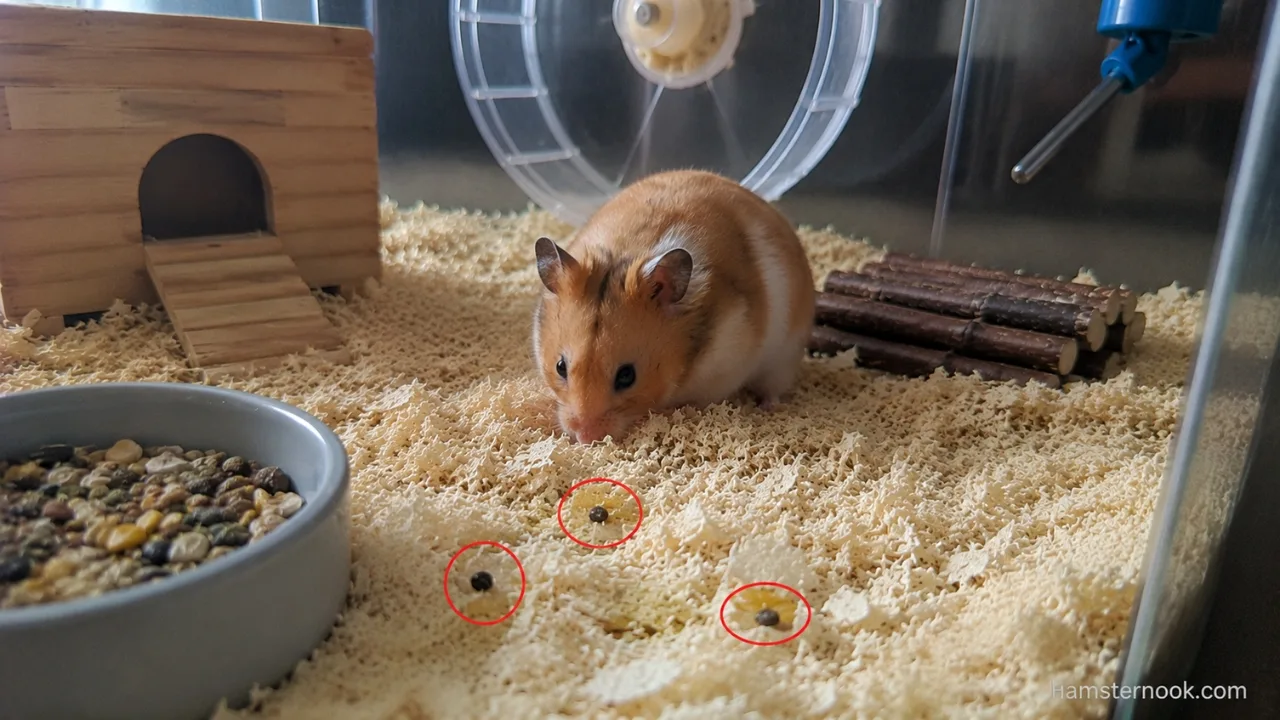
If you repeatedly find very short facial hairs or notice your hamster rubbing or grooming one particular area excessively, the pattern deserves closer attention.
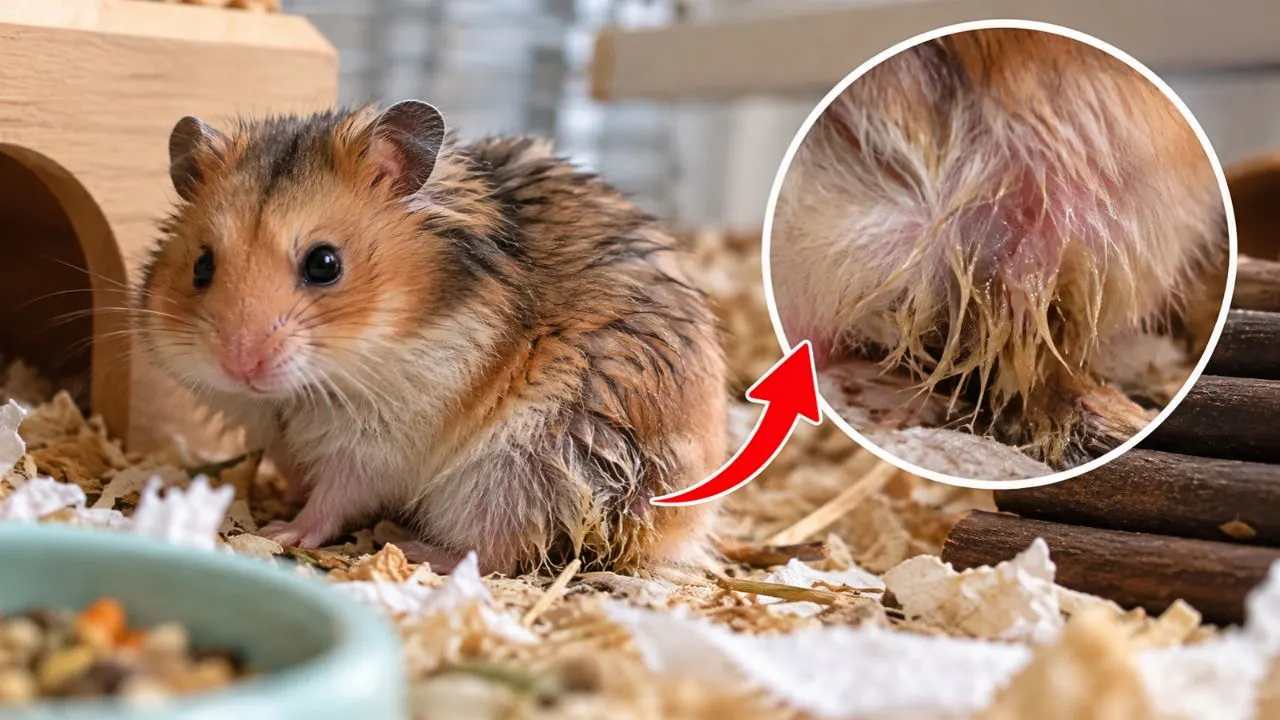
3. Skin irritation or disease can affect the facial area
This is where whisker loss becomes more important.
Hamsters can develop skin problems caused by parasites, infections, trauma, and other conditions. Mites, for example, can cause hair loss and changes to the skin, while some conditions can produce facial hair loss. MSD Veterinary Manual recommends checking hamsters regularly for hair loss, skin problems, wounds, and external parasites.
Look closely at the skin around the whisker area without repeatedly handling or disturbing your hamster.
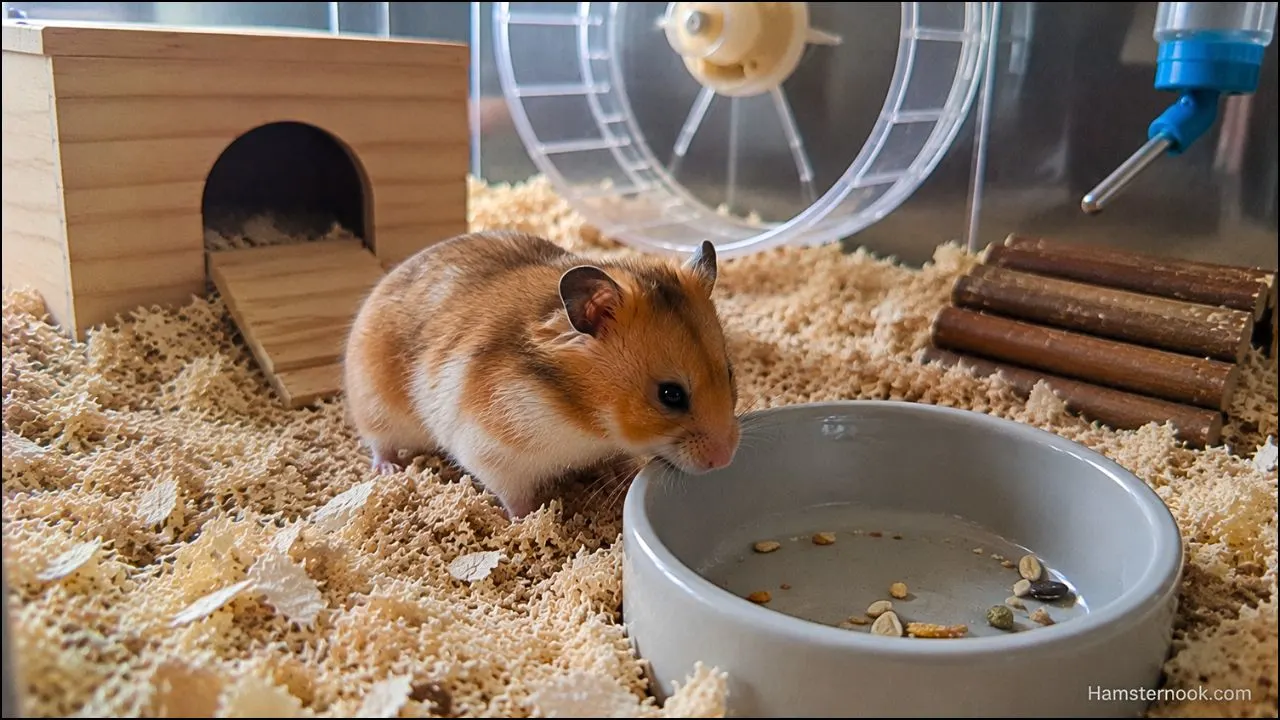
Watch for:
- Redness
- Crusting
- Flaking or scaling
- Swelling
- Scabs
- A wound
- Wet or irritated skin
- Excessive scratching or rubbing
- Hair loss spreading beyond the whiskers
If the skin itself looks abnormal, don’t treat the whisker loss as merely cosmetic.
When hair loss extends beyond the whisker area, the pattern becomes more important to investigate. Why Is My Hamster Losing Hair? 9 Common Causes and When to Worry explains the broader causes of hair loss and the signs that should prompt closer attention.
4. Facial rubbing can break or remove whiskers
Repeated rubbing against cage equipment or another object can damage hair.

MSD Veterinary Manual lists constant rubbing against cage parts among the possible causes of hair loss in hamsters.
Check the areas where your hamster repeatedly squeezes, climbs, rubs its face, or pushes its nose. Look for rough edges, sharp points, abrasive surfaces, or unusually tight openings.
You don’t need to redesign the entire enclosure because one whisker is missing. Instead, look for an obvious source of repeated facial trauma.
5. A cage mate may be involved
This is more relevant if your hamster is housed with another hamster.
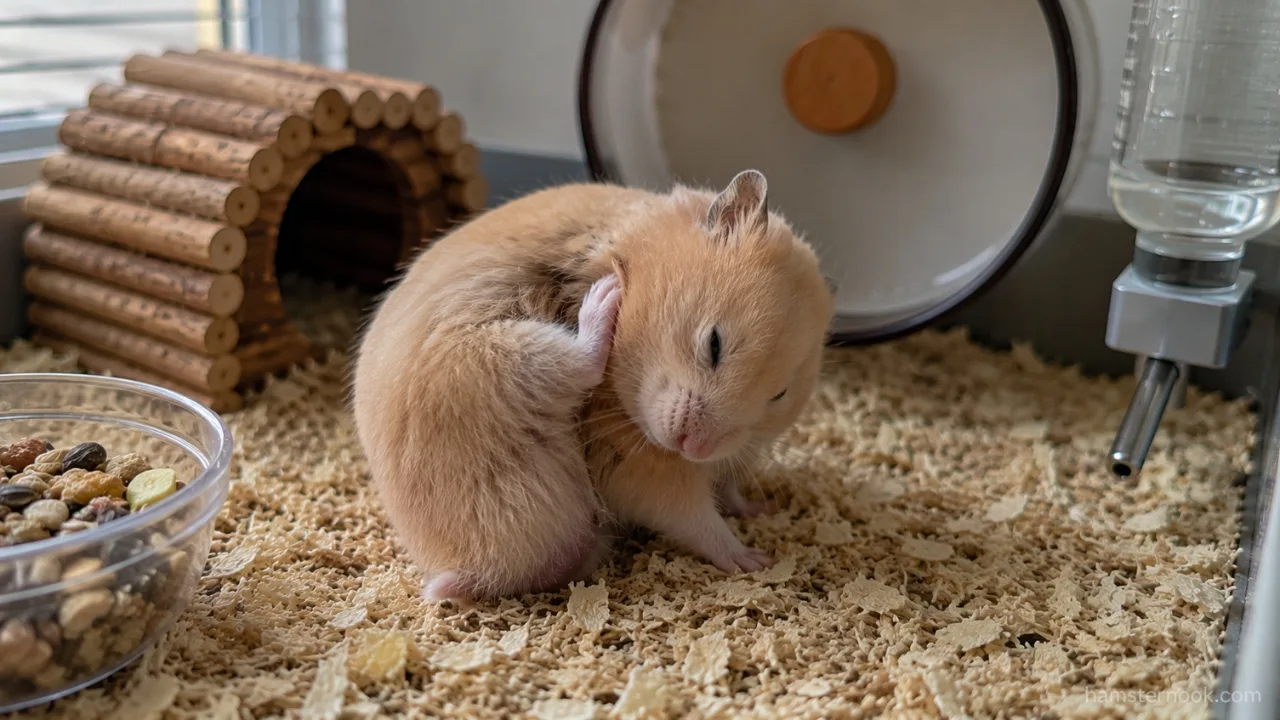
Hamsters are generally housed individually because fighting can lead to serious injury. If another hamster is present, check for signs of fighting or facial injury rather than assuming the missing whisker is harmless.
If facial hair is being chewed or pulled by another hamster, you may notice more than a single missing whisker. There could be short facial hairs, wounds, hair loss, or other signs of conflict.
Never assume two hamsters are getting along simply because you haven’t witnessed a fight.
Can Hamster Whiskers Grow Back?
Often, yes, if the whisker follicle has not been permanently damaged.

Research in rodents shows that vibrissae can regrow after being removed or trimmed. However, findings from mice and rats should not be treated as an exact regrowth timetable for an individual pet hamster.
However, there is an important distinction: there is not a well-established, universal timetable for how quickly a pet hamster’s missing whisker will grow back.
So be cautious with claims that every hamster’s whisker will return in a specific number of days.
If the whisker was simply broken or shed and the follicle remains healthy, you may eventually see a new whisker emerging. If the underlying skin or follicle has been injured or diseased, regrowth can be delayed or may not occur normally.
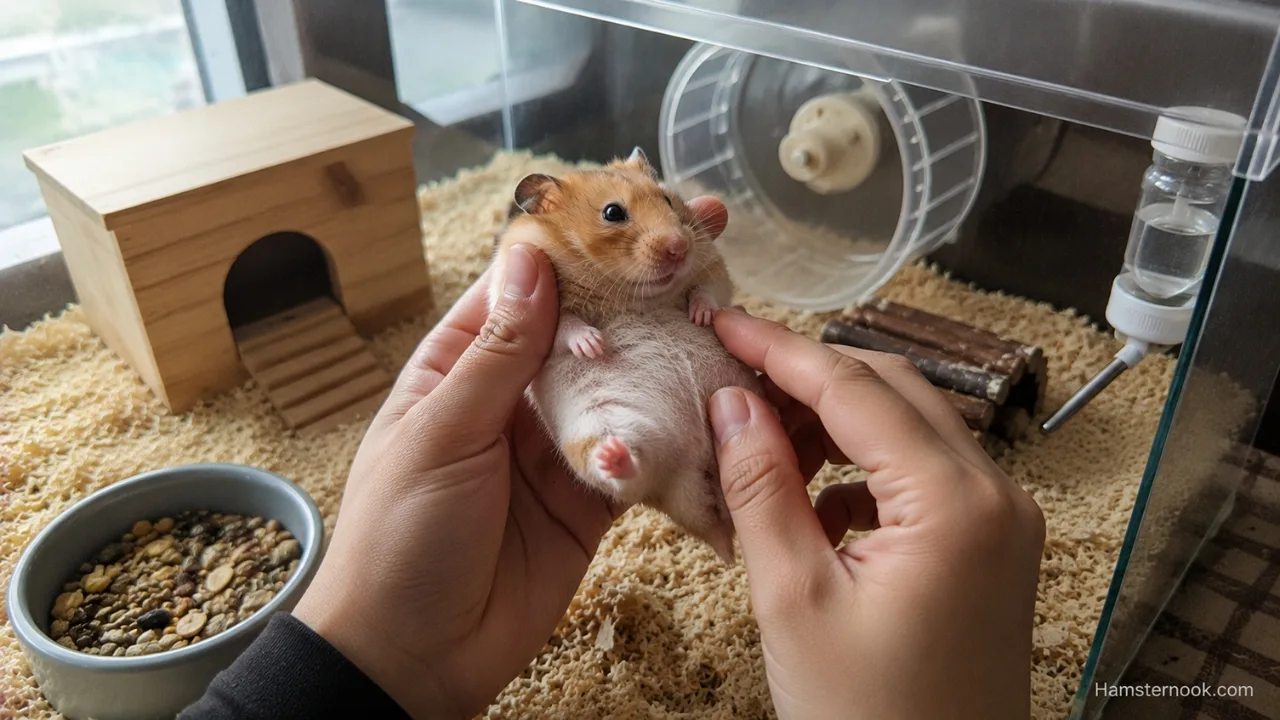
What if only one whisker is missing?
One missing whisker with otherwise normal skin and behavior is generally less concerning than multiple missing whiskers.
For example:
| What You Notice | What It May Suggest | What to Do |
|---|---|---|
| One missing whisker, normal skin | May be isolated breakage or loss. | Monitor for further changes. |
| One short or broken whisker | Possible physical damage. | Check for obvious rubbing hazards. |
| Several whiskers disappearing | Repeated damage or an underlying problem may be involved. | Arrange veterinary advice if loss continues. |
| Whisker loss with facial rubbing | Possible irritation or trauma. | Check the enclosure and observe the skin. |
| Whisker loss with redness, crusts, or scabs | Possible skin disease or injury. | Contact a veterinarian. |
| Whisker loss with widespread hair loss | A broader skin or health problem may be present. | Arrange a veterinary examination. |
| Facial swelling or an open wound | Potential injury or other medical problem. | Seek prompt veterinary care. |
| Whisker loss with poor appetite or low energy | May be part of a wider health problem. | Contact a veterinarian promptly. |
This table is a practical guide, not a way to diagnose your hamster at home.
Should You Be Worried if Your Hamster Has Uneven Whiskers?
Not necessarily.

Whiskers do not have to look perfectly symmetrical at every moment. A hamster can have one shorter whisker because it was broken while the other remained intact.
The more useful question is whether the pattern is changing.
If you notice one missing whisker today, take a mental note and continue observing. If you return a few days later and several more have disappeared, or the facial skin has become irritated, that is much more meaningful.
Your hamster’s overall condition also matters. A hamster that is eating normally, behaving normally, maintaining its weight, and has healthy-looking skin is less concerning than one showing several simultaneous changes.

MSD Veterinary Manual lists inactivity, appetite or weight loss, abnormal posture, hair loss, discharge, and breathing difficulty among signs that can indicate illness in hamsters.
When several changes appear together, it can be difficult for an owner to judge whether they are connected. Why Is My Hamster Acting Strange? 9 Warning Signs & What to Do covers broader behavioral and physical changes that can help put an unusual whisker change into context.
How to Check Your Hamster Safely
You don’t need to restrain your hamster and inspect every whisker individually.

Instead, observe your hamster during its normal active period.

Look at the face
Check whether the skin around the nose, cheeks, and whisker pads appears normal.
You’re looking for obvious changes such as:
- Swelling
- Redness
- Crusts
- Scabs
- Wetness
- Discharge
- Wounds
- New areas of hair loss
Watch normal behavior
Pay attention to whether your hamster is:
- Eating normally
- Moving normally
- Grooming normally
- Exploring its enclosure
- Using its usual sleeping and nesting areas
- Showing normal interest in food
Don’t repeatedly wake your hamster just to inspect its whiskers. A calm observation during its normal activity is usually more useful.

Check the enclosure
Look for anything that could repeatedly rub against your hamster’s face.
Pay particular attention to:
- Rough or damaged surfaces
- Sharp edges
- Narrow openings
- Broken accessories
- Objects your hamster repeatedly pushes its face against
Fix or remove an obvious hazard rather than trying to treat the whisker itself.
Should You Cut or Trim a Hamster’s Whiskers?
No.
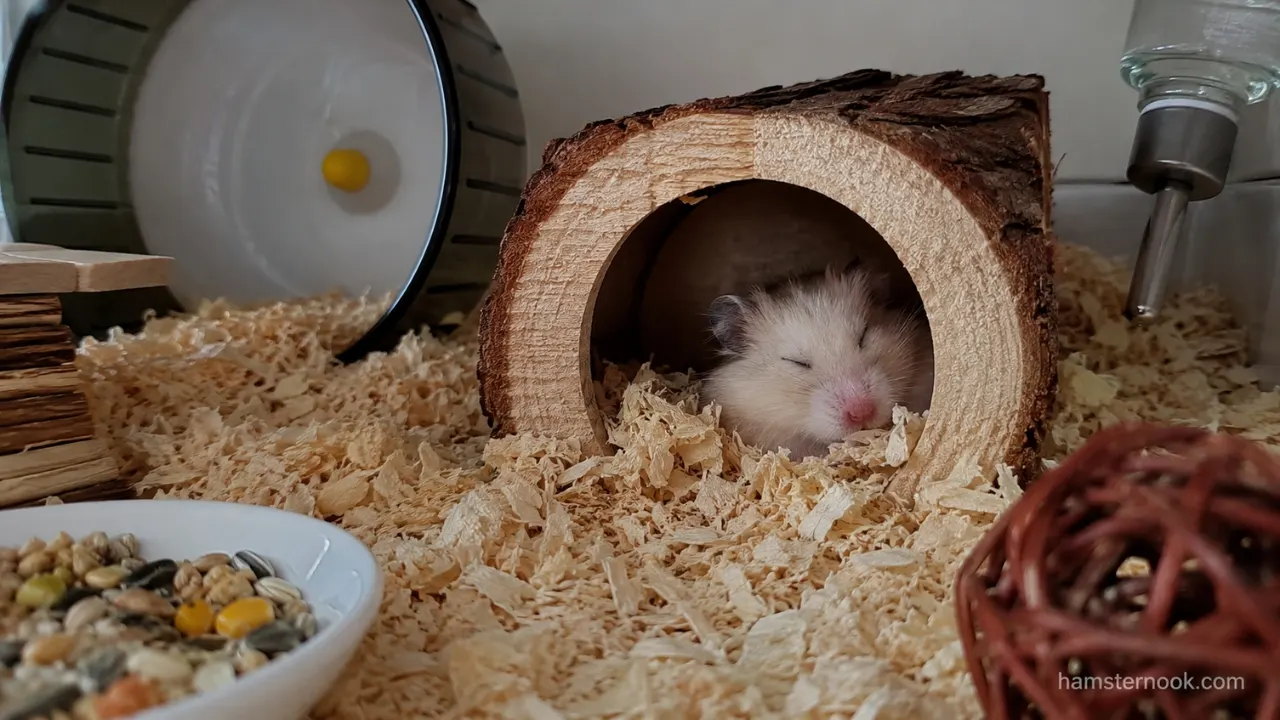
There is no good reason for a pet owner to trim a hamster’s whiskers for cosmetic purposes.
Whiskers are specialized sensory structures. Research in golden hamsters demonstrates that their vibrissae actively participate in tactile exploration, and experimental work in rodents has shown that removing whiskers changes sensory input.
If a whisker looks too long, crooked, or uneven, leave it alone.
You also shouldn’t pluck a loose whisker to make both sides match.

Common Mistakes Owners Make
Assuming every missing whisker means illness
A single missing whisker isn’t enough to diagnose a problem.
Look at the bigger picture: skin condition, behavior, appetite, activity, and whether the loss continues.
Assuming every missing whisker is harmless
The opposite mistake is just as unhelpful.
Repeated whisker loss, facial hair loss, skin lesions, or other changes should not be dismissed simply because whiskers can regrow.
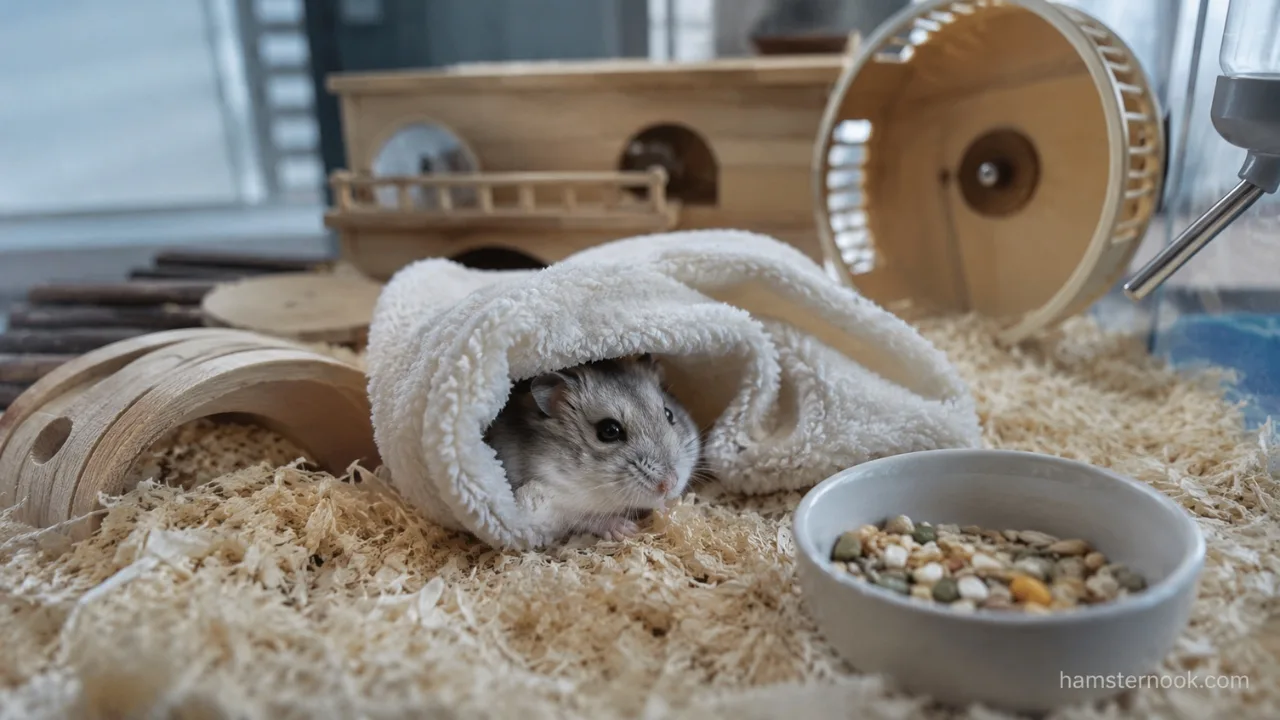
Trying human or pet skin products
Don’t put creams, oils, shampoos, essential oils, flea products, or other treatments on your hamster’s face unless a veterinarian specifically recommends them.
Small animals can be particularly sensitive to inappropriate products, and treating the wrong condition can delay proper diagnosis.
Changing everything at once
If you notice one missing whisker, don’t immediately replace the entire enclosure, change the diet, bathe the hamster, and start supplements.
First observe what is actually happening. If there is an obvious environmental hazard, correct it. If there are signs of illness, seek veterinary advice.

What You Should Do if Your Hamster Loses a Whisker
If you notice one or two missing whiskers and your hamster otherwise looks healthy:
- Don’t pull, cut, or trim the remaining whiskers.
- Look at the surrounding skin for redness, swelling, crusting, or wounds.
- Check the enclosure for obvious rough or sharp areas that could cause repeated rubbing.
- Observe your hamster normally rather than repeatedly handling it.
- Watch for additional whisker or facial hair loss.
- Keep track of other health changes, particularly appetite, activity, weight, grooming, and breathing.
- Contact a veterinarian if the loss continues, the skin looks abnormal, or your hamster develops other signs of illness.
RSPCA guidance emphasizes regular health checks so owners can notice changes in their hamster’s condition early.
When to Worry About Missing Whiskers
A missing whisker becomes more concerning when it is part of a larger pattern.
Arrange a veterinary examination if you notice:

- Multiple whiskers disappearing over a short period
- Facial hair loss spreading beyond the whiskers
- Red, flaky, crusty, or irritated skin
- Persistent scratching or face rubbing
- A lump, swelling, or wound
- Discharge around the nose or eyes
- Significant changes in grooming
- Reduced appetite
- Weight loss
- Unusual inactivity
- A hunched or abnormal posture
- Breathing difficulty
Breathing difficulty is particularly important and should not be blamed on whisker loss. Trouble breathing is a recognized sign of illness in hamsters and warrants veterinary attention.
Breathing changes should always be considered separately from the whisker itself. Why Is My Hamster Breathing Fast? Causes, Warning Signs & When To Worry explains what abnormal breathing can look like and when it deserves prompt veterinary attention.
If your hamster appears severely unwell, is struggling to breathe, has significant facial swelling, or has suffered an obvious injury, seek veterinary care promptly rather than waiting for the whisker to grow back.
Appetite is another useful indicator when deciding whether a facial change is isolated or part of a wider health problem. Why Is My Hamster Not Eating? 9 Causes, Warning Signs & What to Do explains why a noticeable change in eating deserves attention.
What About Sneezing Along With Whisker Loss?
Occasional sneezing can have an environmental explanation, but persistent sneezing should not automatically be dismissed as harmless.
If your hamster is sneezing as well as losing facial hair or whiskers, check for obvious environmental irritants and observe whether there is nasal or eye discharge, breathing difficulty, reduced appetite, or a change in activity.
Do not spray air fresheners, perfumes, cleaning products, or other strongly scented products around the enclosure. Also avoid experimenting with medications or human cold remedies.
Most importantly, don’t assume that sneezing and whisker loss necessarily have the same cause. They may be unrelated, or they may occur together as part of a broader health problem. A veterinarian can assess the hamster rather than relying on the appearance of one symptom.

Final Thoughts
Yes, hamsters can lose their whiskers, and a missing whisker by itself does not automatically mean something is wrong. A whisker may be broken, pulled out, or otherwise lost and later replaced.
What deserves attention is a pattern of ongoing loss, facial hair loss, skin irritation, repeated rubbing, wounds, or changes in your hamster’s normal behavior.
The safest approach is simple: leave the whiskers alone, inspect the surrounding skin without stressing your hamster, check the enclosure for obvious sources of trauma, and monitor the rest of your hamster’s health. If the problem continues or other symptoms appear, get a veterinarian involved rather than trying to diagnose the cause yourself.
Frequently Asked Questions
Do hamster whiskers grow back after falling out?
They can. Rodent research demonstrates regrowth of whiskers after removal or trimming, but there is no reliable universal timetable for a pet hamster. Regrowth depends partly on what happened to the whisker and its follicle.

Is it normal for a hamster to have one shorter whisker?
It can happen. A whisker may break or become damaged, leaving one side temporarily shorter than the other. If the skin looks healthy and no additional symptoms develop, it is generally reasonable to monitor the situation.
Should I cut my hamster’s whiskers if they look uneven?
No. Hamster whiskers are sensory structures and should be left intact. There is no health benefit to making them symmetrical.
Why are several of my hamster’s whiskers missing?
Several missing whiskers deserve more attention than one isolated whisker. Possible explanations include physical damage, rubbing, grooming or chewing, or a skin problem affecting the facial area. If the loss continues or the skin is abnormal, contact a veterinarian.
Can mites cause hamster whisker loss?
Mites can cause hair loss and skin disease in hamsters, including facial areas with some mite infestations. They cannot be diagnosed reliably just by looking at a missing whisker, so persistent facial hair loss should be evaluated by a veterinarian.
Can stress make a hamster lose its whiskers?
Stress can contribute to health and grooming problems, but a missing whisker should not automatically be blamed on stress. If whisker or facial hair loss is persistent, other causes such as trauma, parasites, or skin disease need to be considered.
Rather than assuming stress is responsible, look for other recognizable signs of stress and changes in the environment. 7 Signs You’re Accidentally Stressing Your Hamster (Without Even Realizing It) explains the broader behavior and environment clues owners can watch for.
How long does it take for a hamster’s whisker to grow back?
There is no well-established exact timeframe for pet hamsters. Research in other rodents shows that replacement whiskers can appear after removal, but growth rates and timing vary with the species and circumstances.
Should I take my hamster to the vet for one missing whisker?
Usually, one isolated missing whisker without any other abnormal signs is not enough by itself to indicate an emergency. Monitor your hamster and the surrounding skin. A veterinary visit becomes more important if whisker loss continues or is accompanied by skin changes, facial swelling, wounds, appetite loss, lethargy, or breathing problems.

Can a hamster’s whisker grow back if it was pulled out?
A whisker can regrow after being removed when the follicle remains capable of producing a new whisker. Rodent studies have demonstrated this process, although exact regrowth timing should not be assumed for individual pet hamsters.
Are hamster whiskers important?
Yes. Hamster vibrissae are specialized tactile structures used during environmental exploration. Golden hamster research has documented active whisker movements during investigation of their surroundings.
References
- MSD Veterinary Manual – Disorders and Diseases of Hamsters
- MSD Veterinary Manual – Routine Health Care of Hamsters
- Wineski, L. E. – Movements of the Cranial Vibrissae in the Golden Hamster (Mesocricetus auratus), Journal of Zoology
- Ibrahim and Wright – The Effect of a Single Plucking at Different Times in the Hair Cycle on the Growth of Individual Mouse Vibrissae
- Jacquin et al. – 2-DG Uptake Patterns Related to Single Vibrissae During Exploratory Behaviors in the Hamster Trigeminal System
Medical Disclaimer: This article is for general hamster-care information and is not a diagnosis. If your hamster has facial swelling, skin damage, significant hair loss, pain, breathing difficulty, loss of appetite, or other signs of illness, contact a veterinarian experienced with hamsters or other small mammals.

Narayan Kumar is the founder and author of HamsterNook. He creates practical, research-based hamster care guides covering hamster behavior, nutrition, cage setup, enrichment, health, and everyday care. His goal is to help hamster owners make informed decisions and provide safer, healthier lives for their pets through clear, beginner-friendly information based on trusted animal care resources.