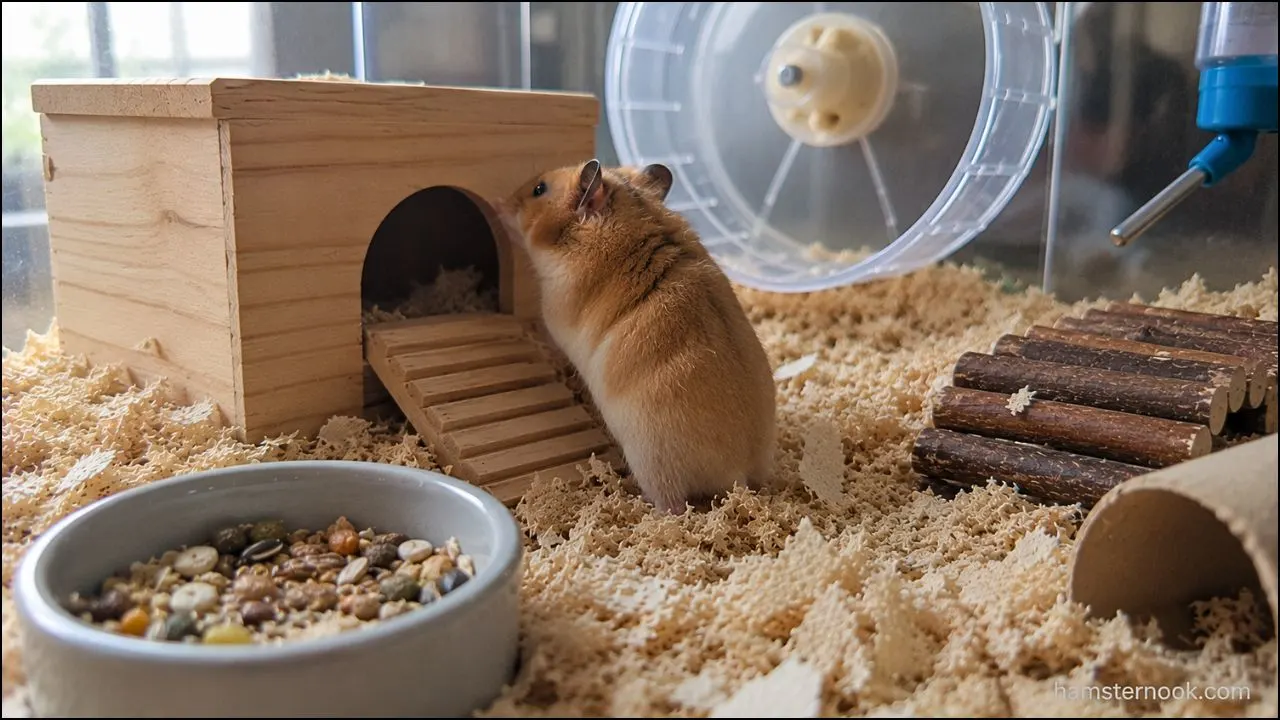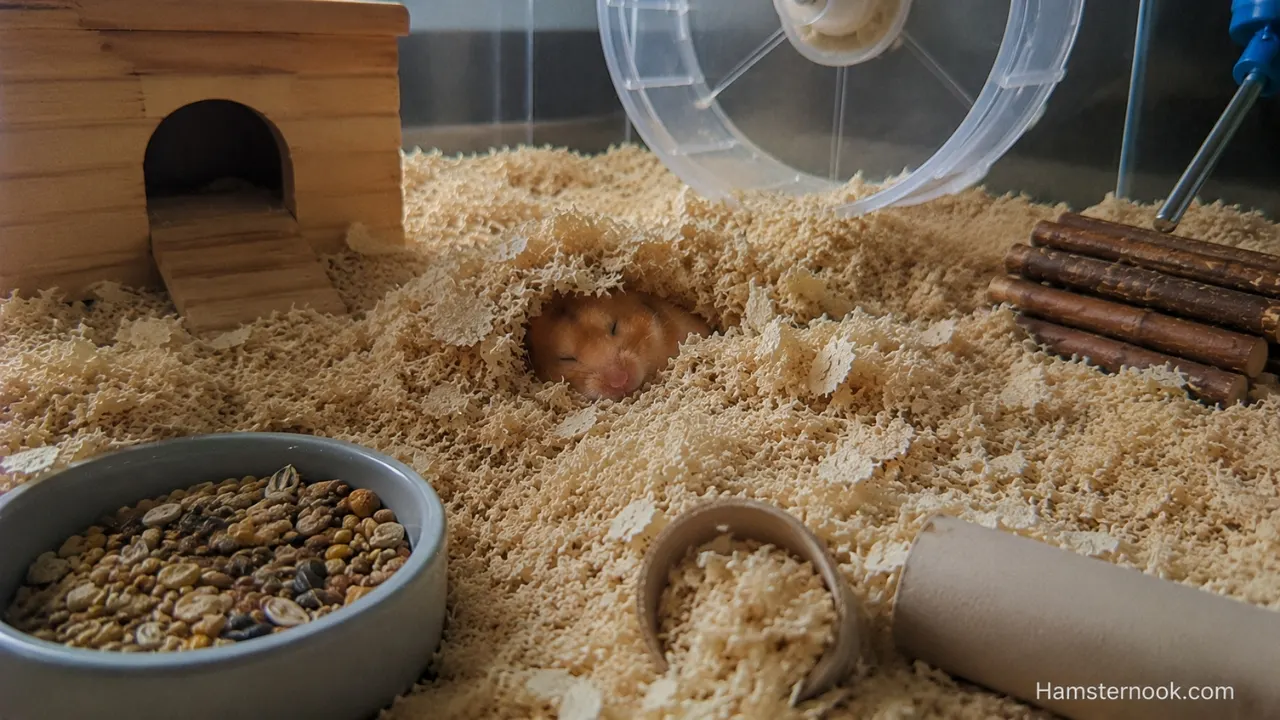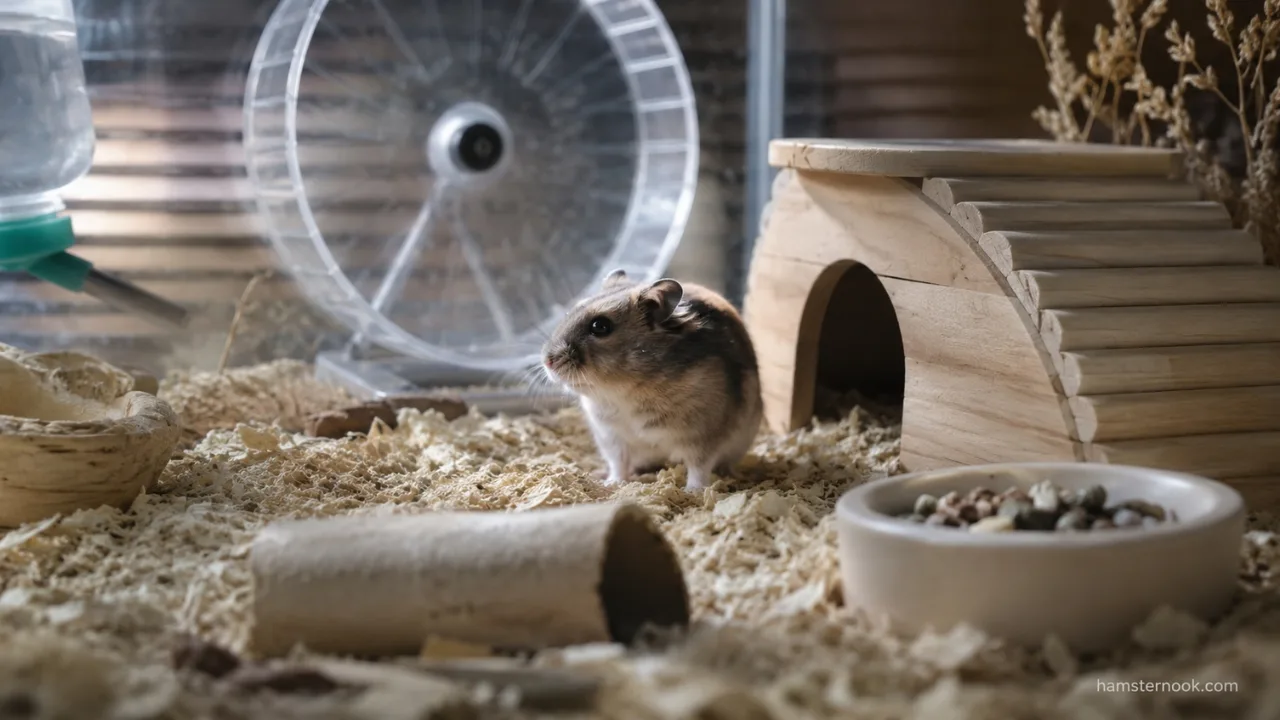
If your hamster confidently explores its enclosure after the room gets dark, you may wonder whether hamsters can actually see in the dark. Hamsters can see in low-light conditions, but they cannot see in complete darkness. Instead, they combine limited low-light vision with smell, hearing, sensitive whiskers, and memory to navigate their surroundings.
Understanding how hamster vision works makes it easier to choose appropriate lighting, set up a safer enclosure, and better understand why your hamster behaves the way it does.
Quick Answer
Hamsters can see in dim or low-light conditions, but they cannot see in complete darkness. Like other mammals, they need some available light for vision. Their other senses—including smell, hearing, whiskers, and memory—help them navigate when visual information is limited.
How Hamster Vision Works

Hamsters have limited visual acuity and rely heavily on their other senses when interpreting their surroundings. Their eyes are adapted to function in lower-light conditions, but their vision is not well suited to fine detail compared with humans.
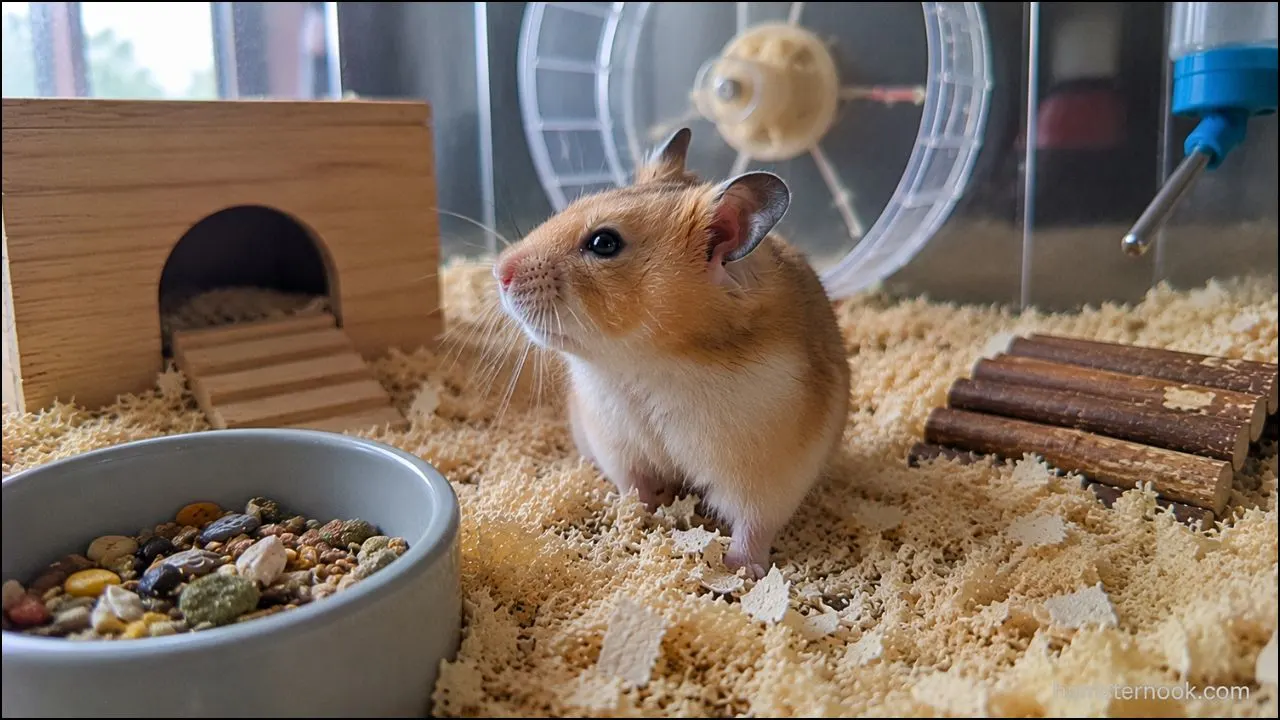
Hamsters are adapted to being active during lower-light periods, so fine visual detail is less important to them than detecting movement and combining vision with information from their other senses.
Because of this, their other senses play a much larger role in everyday life.
A hamster mainly depends on:
- Its sensitive whiskers to detect nearby objects
- A highly developed sense of smell
- Good hearing that detects unfamiliar sounds
- Familiar scent trails and memory of its surroundings
These senses work together with vision, allowing a hamster to move confidently through places it already knows.
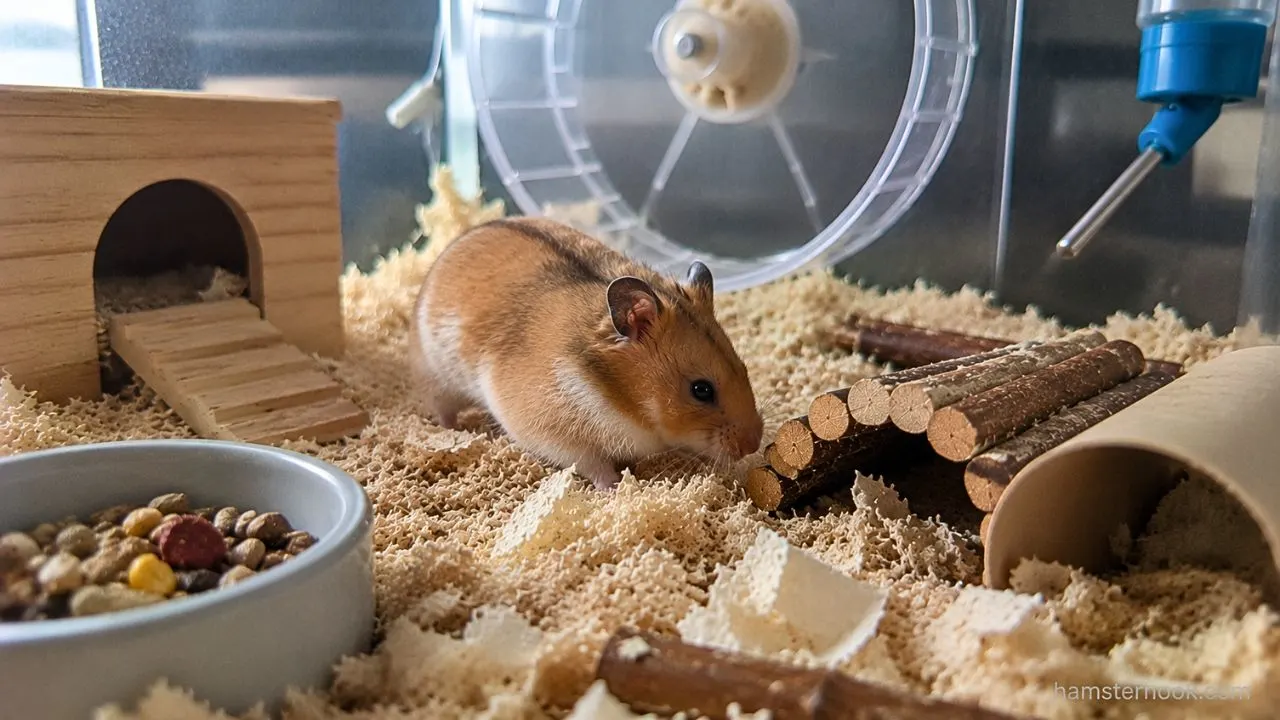
Can Hamsters See in Complete Darkness?
No.
Complete darkness means there is no light available at all. Without any light, hamsters cannot form visual images.
However, they perform much better than humans in dim lighting, which explains why they appear comfortable exploring after sunset or in a softly lit room.
This often leads owners to believe hamsters have true night vision, but that’s not entirely accurate.

Instead, their eyes are adapted for low-light vision, not total darkness.
The key difference is that low-light environments still provide enough light for a hamster’s eyes to detect movement and familiar objects. Complete darkness, however, provides no visual information at all, so the hamster must rely almost entirely on its other senses.
Do Hamsters Have Night Vision?
Hamsters do not have night vision in the sense of being able to see when no light is available. Their advantage is better described as adaptation to low-light conditions. When some ambient light is present, vision can contribute to navigation, while smell, hearing, whiskers, and memory provide additional information about the surroundings.
This is why a hamster may appear perfectly comfortable moving around at night even though it cannot visually see in pitch-black conditions.
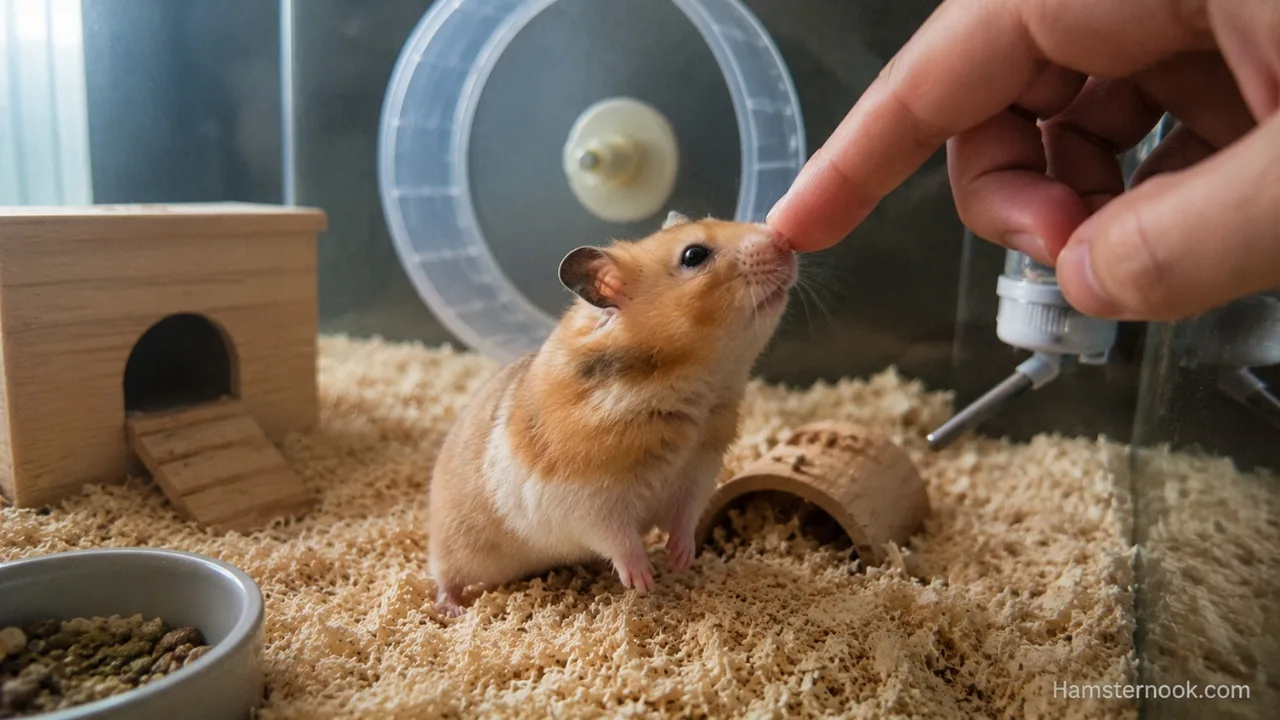
Low Light vs. Complete Darkness
Understanding this difference makes hamster behavior much easier to explain.
| Low-Light Conditions | Complete Darkness |
|---|---|
| Hamsters can see reasonably well. | Vision is not possible without light. |
| They can detect movement and navigate familiar areas. | They rely almost entirely on smell, hearing, whiskers, and memory. |
| Typical at dusk, dawn, or a dimly lit room. | No usable light is available. |
| Natural environment for many hamster activities. | Not the same as normal nighttime conditions. |
At night, a room may still contain ambient light from windows, hallways, or other sources. When some light is available, a hamster can combine limited visual information with its other senses to navigate familiar surroundings. In complete darkness, vision itself cannot provide visual information, so the hamster must rely much more heavily on its other senses.
Their ability to function in dim conditions is closely connected with when they naturally become active. Our Are Hamsters Nocturnal? guide explains hamster sleep and activity patterns in more detail.
Why Hamsters Don’t Depend on Vision Alone
Unlike humans, hamsters don’t rely primarily on eyesight to understand their surroundings.
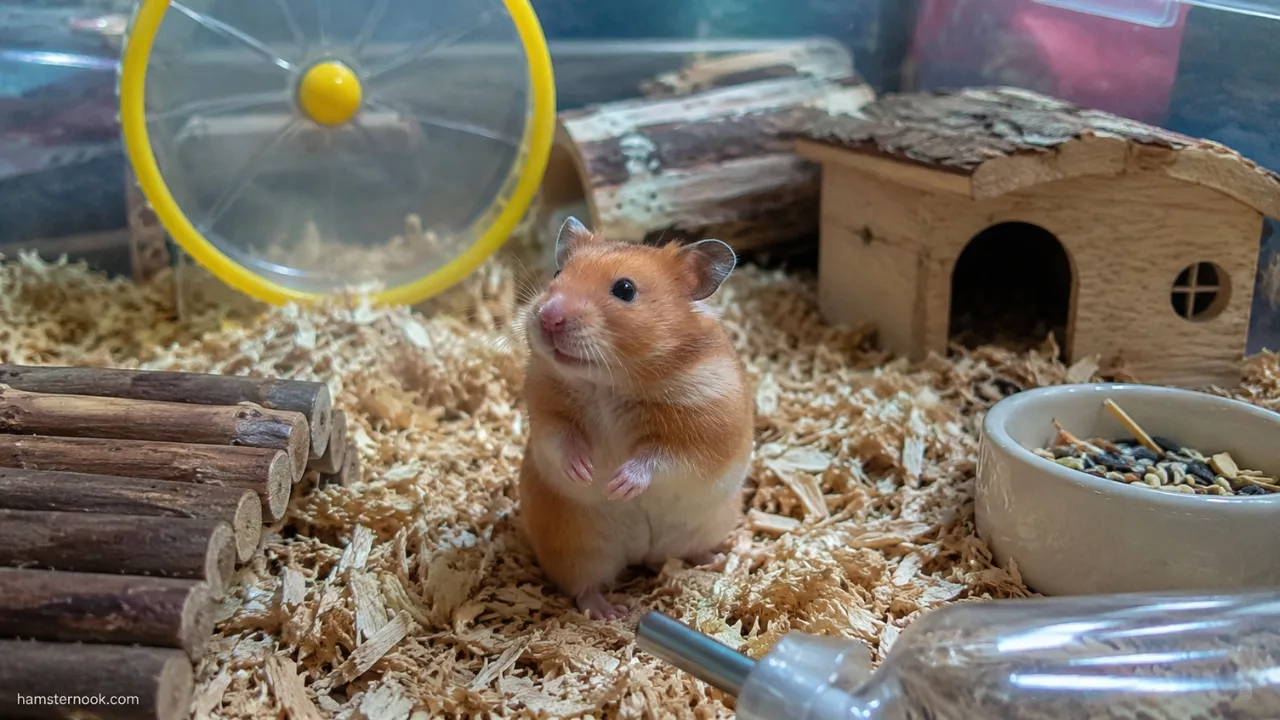
Sensitive Whiskers
A hamster’s whiskers help it judge distances and detect nearby objects, especially when moving through tunnels or narrow spaces.
As the whiskers brush against surfaces, they provide important information about the environment.
Excellent Sense of Smell
Hamsters recognize familiar places, food, nesting material, and even other hamsters through scent.
They also leave scent marks that help them identify their territory.
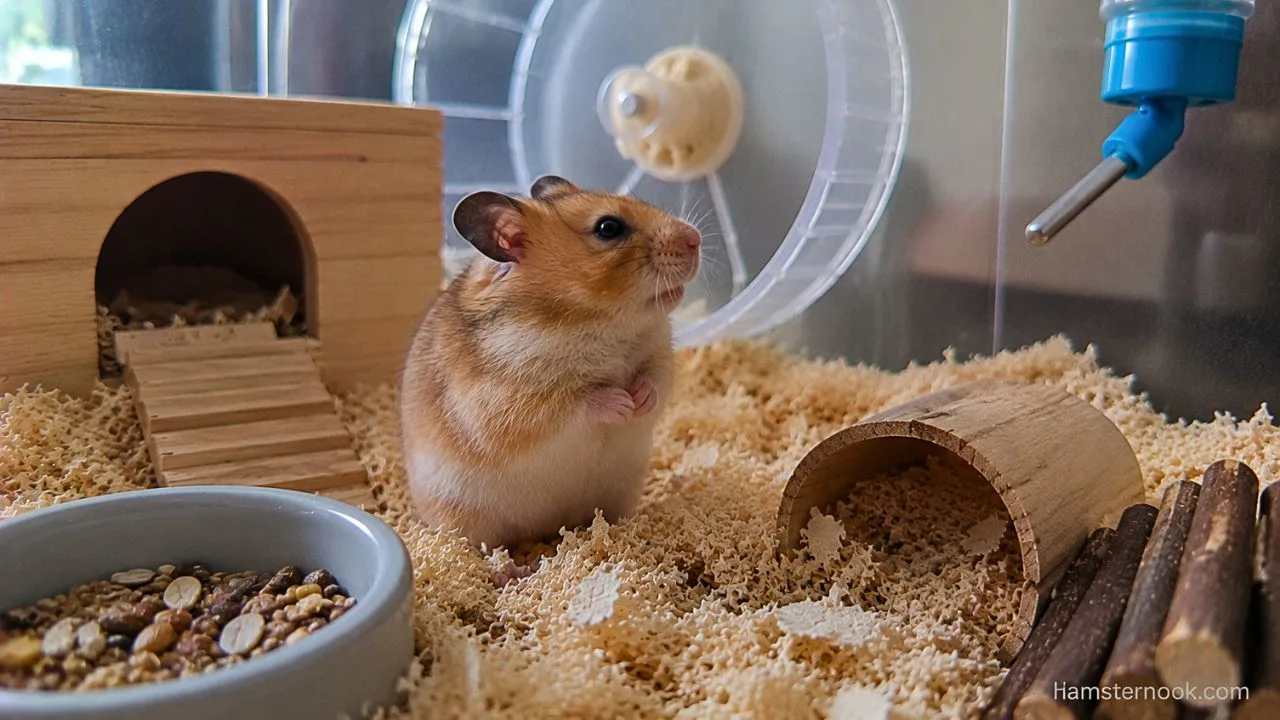
Sharp Hearing
Hamsters hear sounds that humans may barely notice.
This helps them detect potential danger and respond quickly to unfamiliar noises.
Working together, these senses help hamsters confidently explore familiar surroundings even when they cannot rely on their eyesight alone.
Vision is only one part of how hamsters interact with their environment. Their activity patterns, burrowing, food hoarding, freezing, scent marking, and responses to unfamiliar sounds all depend on a combination of sensory information and natural instincts. Our Hamster Behavior Guide brings these behaviors together, making it easier to distinguish normal hamster activity from meaningful changes in routine.
Do Hamsters Have Good Eyesight?
Not really.
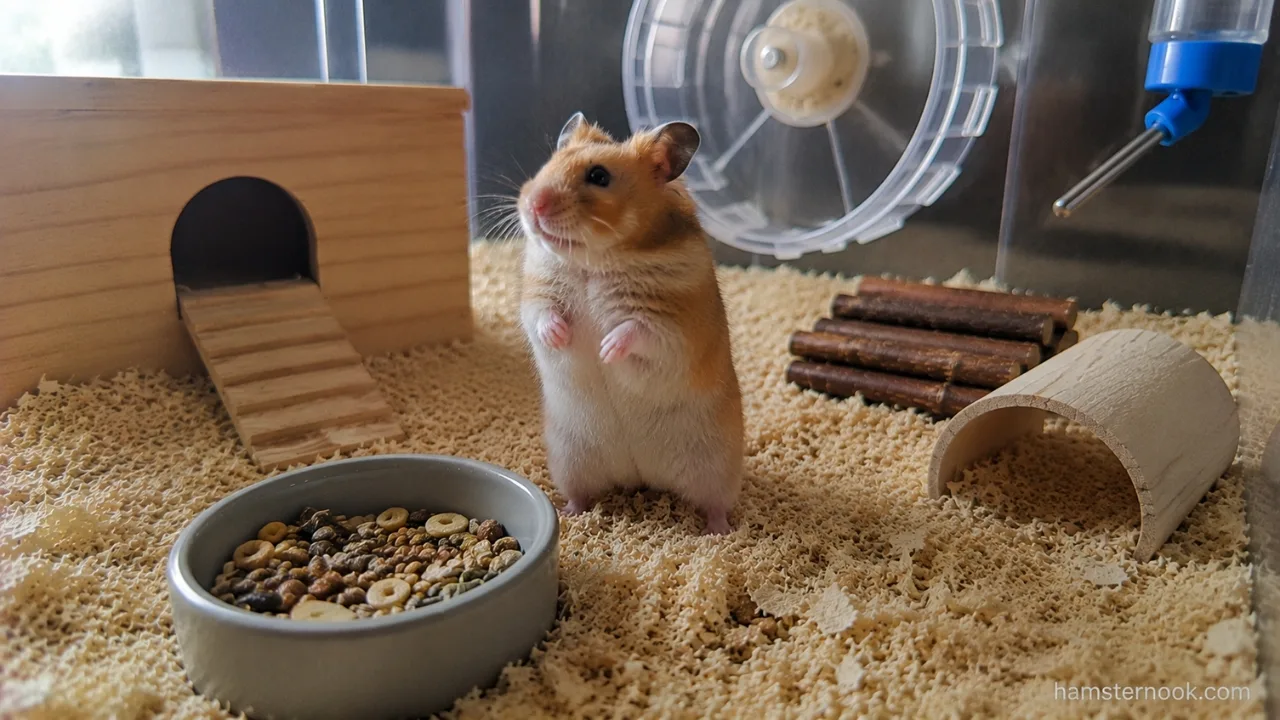
Hamsters have relatively limited visual acuity compared with humans and rely heavily on their other senses when interpreting nearby objects and movement. Fine visual detail is less important to hamster navigation than movement cues combined with smell, hearing, whiskers, and familiarity with the environment.
For example, your hamster may notice your hand approaching before it clearly recognizes exactly what it is.
How Far Can Hamsters See?
There is no single useful distance that applies to every hamster. Because hamsters have limited visual acuity, they are better at detecting movement and navigating familiar surroundings than judging fine detail over longer distances. This is another reason they rely heavily on smell, hearing, whiskers, and familiarity with their environment.

This is one reason why sudden movements can sometimes startle a hamster, particularly one that is still getting used to being handled.
Do Hamsters Prefer Dark or Light?
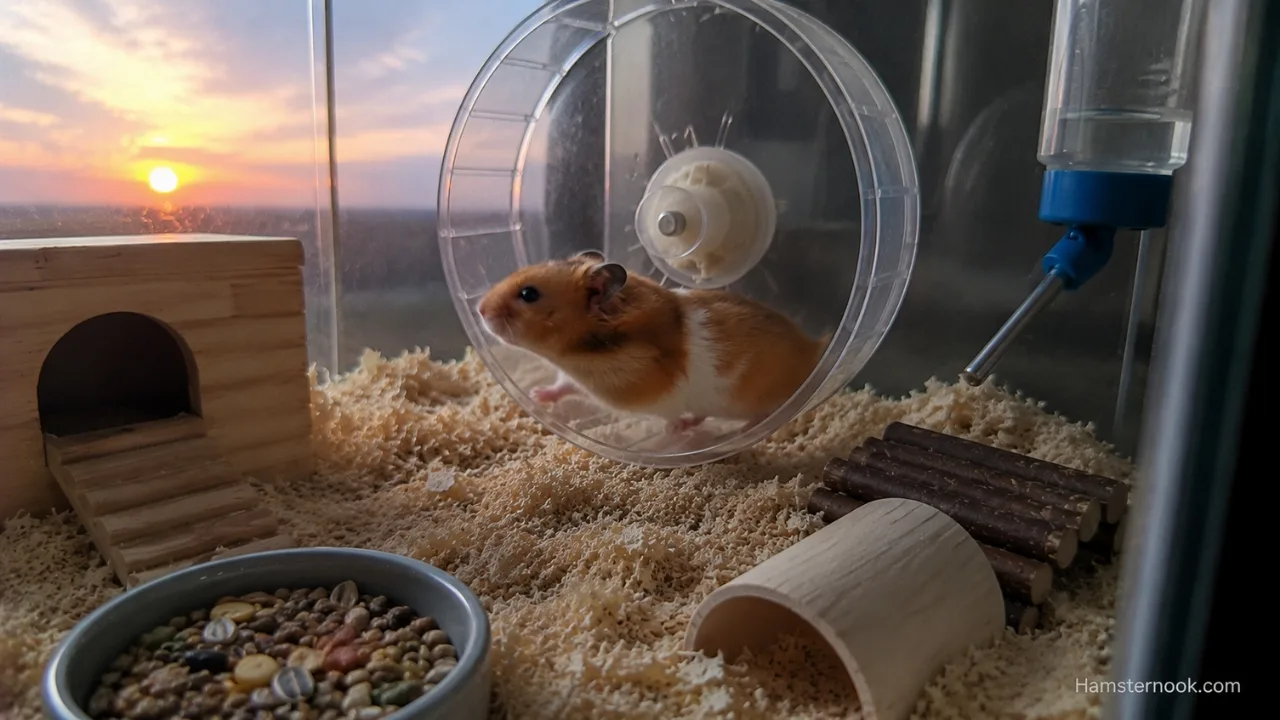
Hamsters do not need bright artificial lighting at night. As nocturnal animals, they are adapted to lower-light conditions, but they still need a predictable light-dark cycle. A dark, secure sleeping area and the ability to move away from bright light are more appropriate than keeping the enclosure brightly illuminated.
A better approach is to let your hamster follow its normal daily rhythm by providing:
- A quiet sleeping area during the day
- Soft room lighting in the evening
- A dark, comfortable place to rest
- Plenty of hideouts where it can choose how much light it wants
Giving your hamster secure places to retreat from light also supports normal resting and nesting behavior. Our Best Hamster Hideouts and Sleeping Areas guide explains what makes a sleeping area feel secure and comfortable.

Can Hamsters See Colors?
Hamster color vision is more limited than human color vision, and it can also differ between hamster species. Research has found different cone arrangements in Syrian golden and Siberian dwarf hamsters, so it is safer not to assume that every hamster sees exactly the same range of colors. For everyday pet care, movement, scent, touch, hearing, and familiar environmental cues are generally more important than exact color perception.
This is why changing the color of a toy is unlikely to matter as much as changing its texture, shape, or location.
Do Hamsters Have Good Depth Perception?
Hamsters should not be expected to judge heights and distances as reliably as humans. Their visual system is better suited to navigating familiar ground-level environments than safely assessing drops from elevated surfaces.
For owners, the practical takeaway is simple: do not rely on a hamster to recognize that a table, bed, platform, or hand is high enough to cause injury if it falls.
Can Hamsters See Their Owners?
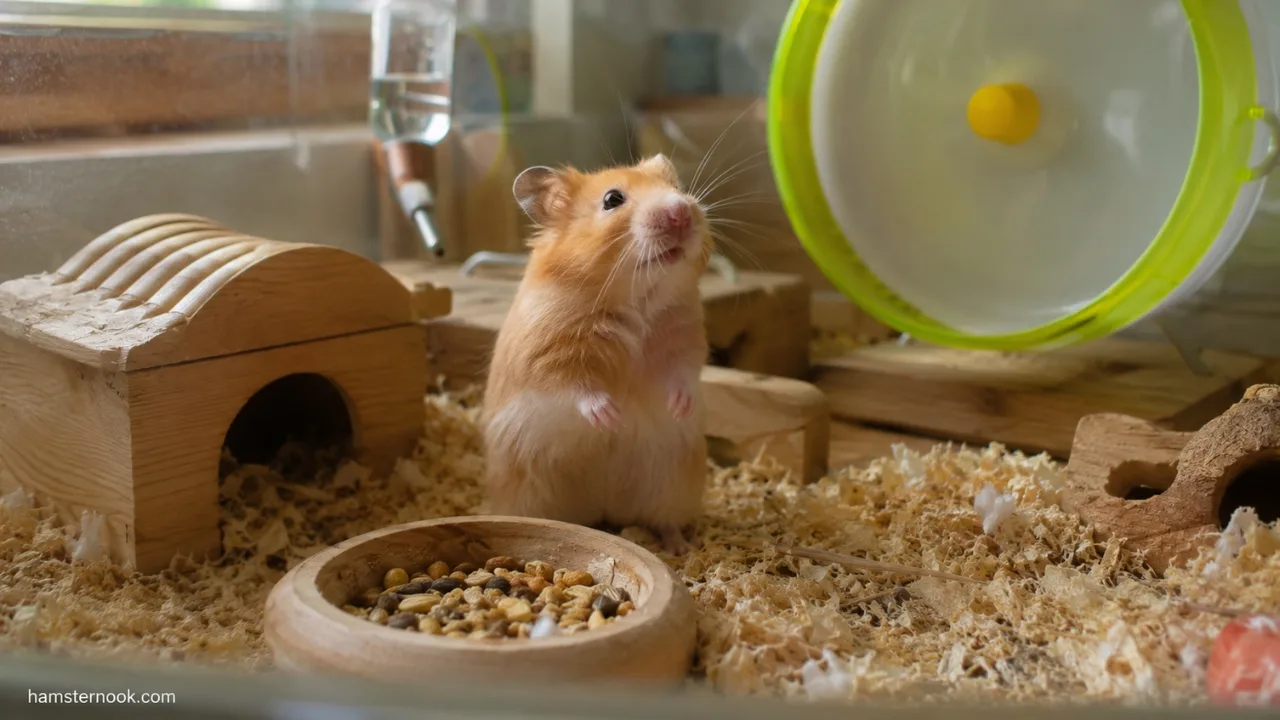
Hamsters can visually detect a person nearby, particularly movement, but vision is unlikely to be the only or most important way they identify a familiar owner. Scent, voice, routine, and repeated interactions provide additional cues that help a hamster distinguish familiar situations from unfamiliar ones.
How Do Hamsters Recognize Their Owners?
Many owners notice that their hamster seems to recognize them over time.
This recognition is thought to rely far more on smell, sound, and routine than on facial recognition.
Your hamster may learn to associate:

- Your scent
- Your voice
- The sound of the enclosure opening
- Feeding routines
- Gentle handling
This explains why approaching your hamster calmly and consistently often helps build trust.
Because familiar scent, voice, and routine can matter more than facial detail, consistent interactions can help a hamster become comfortable with its owner. Our How to Get a Hamster to Trust You Faster Without Stressing It Out guide explains how to build that familiarity gradually.
Common Myths About Hamster Vision
Several myths about hamster eyesight continue to circulate online.
Myth: Hamsters can see perfectly in complete darkness.
Reality: They need some available light for vision.
Myth: Hamsters have excellent eyesight.
Reality: Their vision is limited, and other senses play a major role in navigation.
Myth: Hamsters recognize people mainly by sight.
Reality: Scent, sound, routine, and familiarity are important recognition cues.
Myth: Bright lights help hamsters see better.
Reality: Bright nighttime lighting is unnecessary; a normal light-dark cycle is more appropriate.
Should You Leave a Light On for Your Hamster at Night?
Usually, no. Hamsters do not need a night light simply to move around their enclosure. A normal light-dark cycle allows them to follow their natural routine, while smell, hearing, whiskers, memory, and any available ambient light help them navigate during active periods.

Avoid keeping a bright light directed at the enclosure throughout the night. If you briefly need visibility, use the minimum room lighting necessary rather than illuminating the hamster continuously.
If you are unsure about the right lighting routine, our Do Hamsters Need Light? Daylight, Darkness & Night Lights Explained guide covers practical lighting conditions and common night-light questions.
What You Can Do to Help Your Hamster

Understanding how your hamster experiences its surroundings helps you provide a safer and less stressful environment.
Good practices include:

- Keep the enclosure layout reasonably consistent.
- Avoid sudden bright lights during the evening.
- Speak softly before handling your hamster.
- Let your hamster smell your hand before picking it up.
- Provide several hideouts and tunnels.
- Avoid placing the enclosure where flashing lights or constant disturbances occur.
These simple changes can help your hamster feel safer, explore more confidently, and adjust to its environment with less stress.
When Should You Be Concerned About Your Hamster’s Eyes?
Although naturally poor eyesight is normal, some eye changes are not.
Arrange a veterinary examination if you notice:
- Eyes that remain closed
- Persistent discharge
- Swelling around the eye
- Cloudiness
- Obvious injury
- Bleeding
- Your hamster repeatedly rubbing one eye
These signs may indicate an eye problem rather than normal vision limitations.
Eye changes can be more concerning when they occur alongside appetite loss, lethargy, breathing changes, or other signs of illness. Our Signs of a Sick Hamster guide covers broader warning symptoms owners should monitor.
Conclusion
Hamsters cannot see in complete darkness, but they are adapted to navigating in low-light conditions. Vision is only part of the picture: smell, hearing, sensitive whiskers, and memory help them move confidently through familiar surroundings.
Owners do not need to provide bright nighttime lighting. A normal day-night cycle, familiar enclosure layout, safe ground-level setup, and secure hiding areas better support the way hamsters naturally experience their environment.
Frequently Asked Questions
Can hamsters see in pitch-black darkness?
No. Hamsters require at least a small amount of available light to see. In complete darkness, they rely mainly on their whiskers, smell, hearing, and memory.
Do hamsters have night vision?
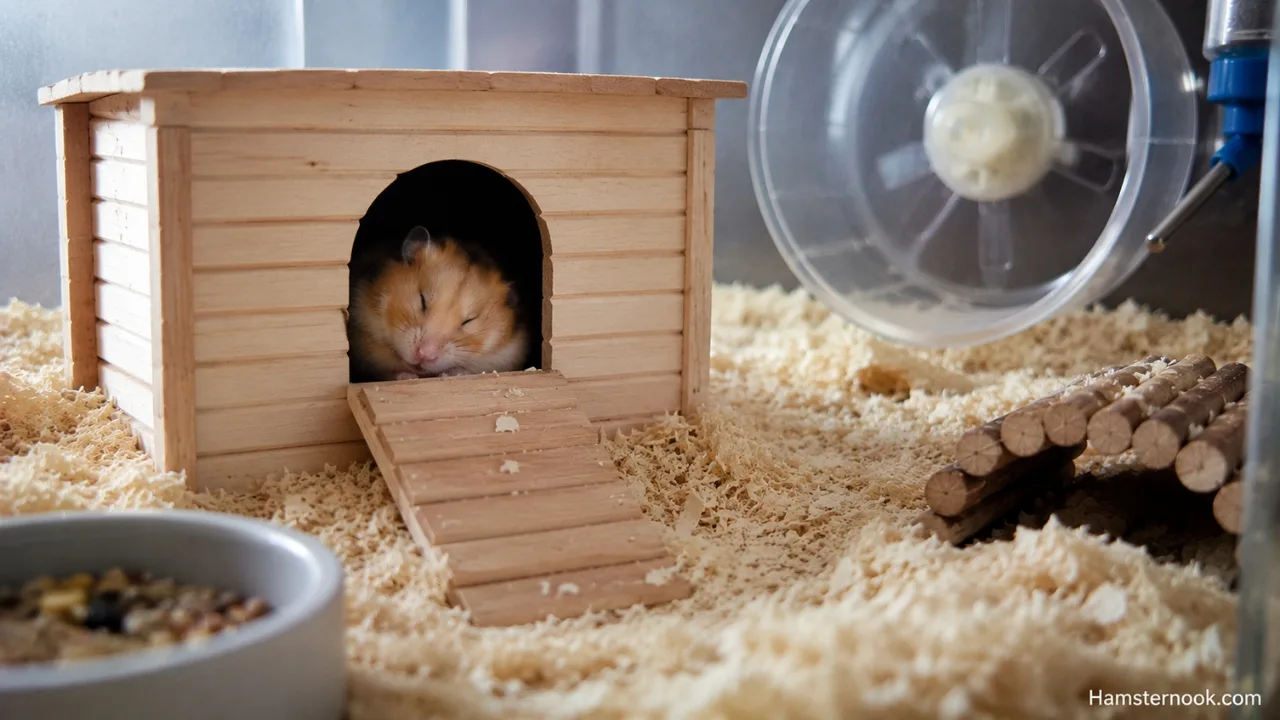
Hamsters are adapted to low-light conditions, but they do not have vision that works without any available light. In complete darkness, they depend primarily on smell, hearing, whiskers, and memory.
Are hamsters blind during the day?
No. Hamsters can see during the day, although their vision is adapted to lower-light conditions and they generally rely heavily on their other senses.
Can hamsters recognize their owners?
Yes, but they primarily recognize familiar scents, voices, routines, and handling rather than facial features.
Should I leave a light on for my hamster at night?
No. Hamsters are naturally active in low-light conditions and generally do not need artificial lighting overnight.
Why does my hamster bump into things?
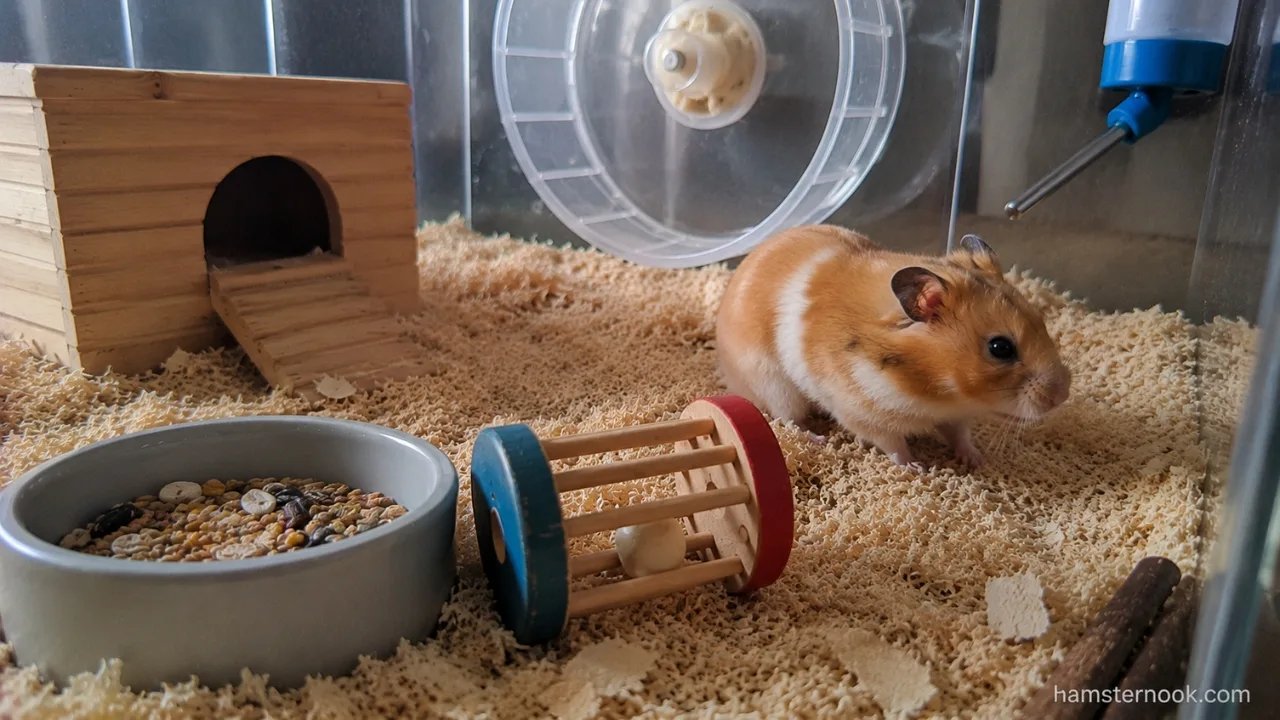
Occasional bumps can happen because hamsters have relatively poor eyesight and rely heavily on their other senses. If this behavior appears suddenly or becomes frequent, it is worth having your hamster examined by an exotic animal veterinarian.
References
This guide is based on hamster vision, sensory behavior, lighting, housing, and eye health guidance from trusted veterinary and animal welfare resources, including:
- MSD Veterinary Manual – Hamsters – Veterinary information on hamster biology, sensory function, health, behavior, and common medical concerns.
- RSPCA – Hamster Behaviour – Guidance on hamster behavior, activity patterns, sensory needs, natural instincts, and environmental factors.
- RSPCA – Creating a Good Home for Hamsters – Guidance on suitable housing, lighting, sleeping areas, hiding places, and creating a secure hamster environment.
- Blue Cross – Hamster Care Guide – Practical guidance on hamster housing, handling, enrichment, daily care, and wellbeing.
- NC3Rs – Housing and Husbandry: Hamster – Guidance on hamster housing, environmental conditions, enrichment, and species-appropriate husbandry.
- MSD Veterinary Manual – Disorders and Diseases of Hamsters – Veterinary information on hamster health problems and signs that may require professional examination.
Medical Disclaimer
This article is intended for educational purposes only and should not be considered veterinary advice. Hamster vision and behavior can vary between individual animals, and information about normal eyesight does not replace a professional veterinary examination. If your hamster develops persistent eye discharge, swelling, cloudiness, bleeding, keeps an eye closed, repeatedly rubs an eye, or shows a sudden change in vision or behavior, consult a qualified exotic animal veterinarian for proper evaluation and treatment.

Narayan Kumar is the founder and author of HamsterNook. He creates practical, research-based hamster care guides covering hamster behavior, nutrition, cage setup, enrichment, health, and everyday care. His goal is to help hamster owners make informed decisions and provide safer, healthier lives for their pets through clear, beginner-friendly information based on trusted animal care resources.