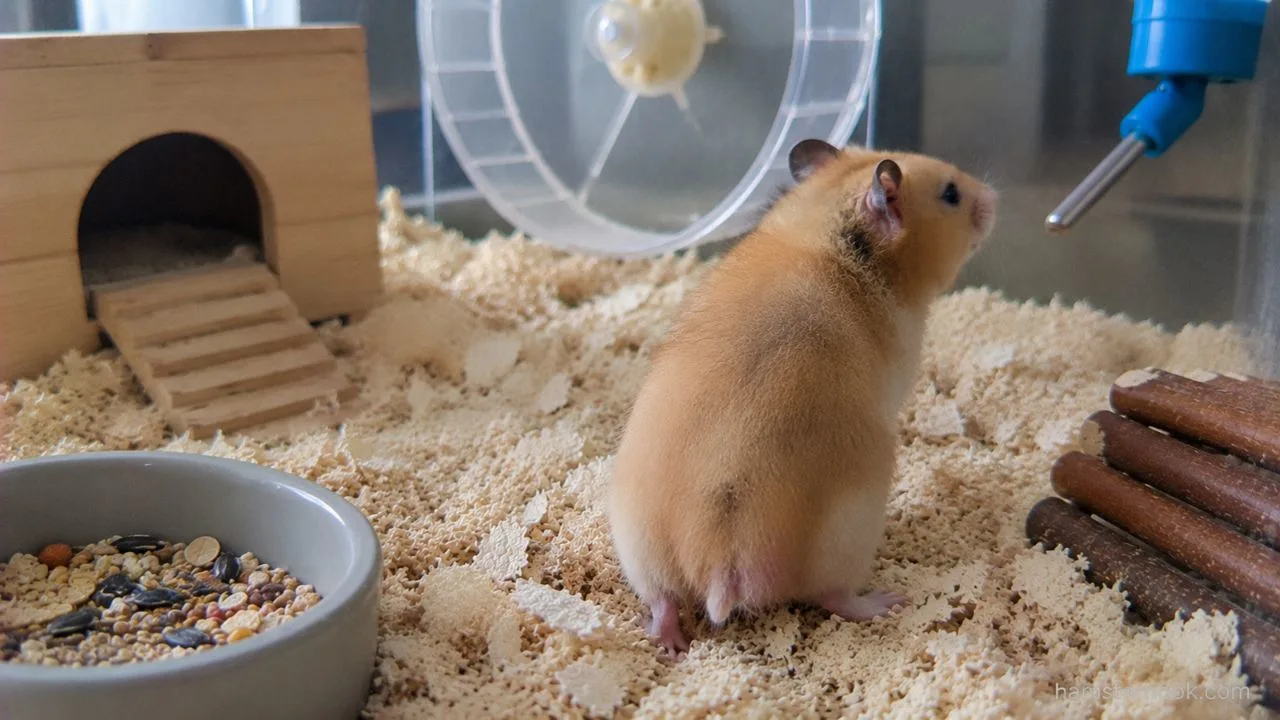
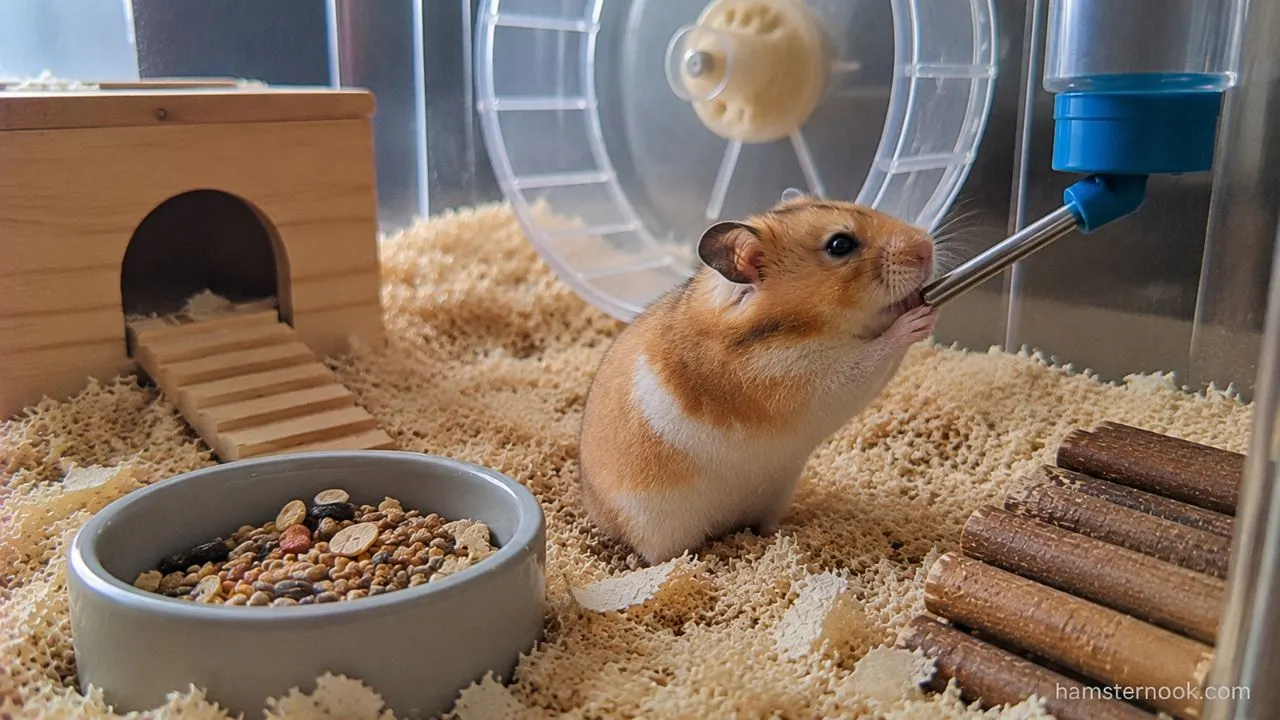
If you’ve ever noticed your hamster becoming active just as you’re heading to bed, you may have wondered whether covering the cage at night would help it sleep better, reduce noise, or make it feel safer. While some small pets benefit from partial enclosure covers, hamsters have different environmental needs. Whether covering the cage is helpful depends on why you’re doing it, how the enclosure is built, and whether airflow remains unrestricted.
Quick Answer
In most homes, you should not cover a hamster cage at night. Hamsters naturally sleep in enclosed nests or hides and do not need an external blanket or towel to create darkness. Covering the enclosure can restrict ventilation and may trap heat or humidity if airflow is reduced. If light or noise is the concern, it is usually better to improve the room environment and provide secure hiding places rather than covering the entire enclosure.
Covering the cage is only one part of creating a healthy environment. Our Complete Hamster Care Guide for Beginners (2026) explains the essential housing, environment, enrichment, and daily care practices every hamster owner should know.
Do Hamsters Need Their Cage Covered at Night?
For the vast majority of pet hamsters, the answer is no.
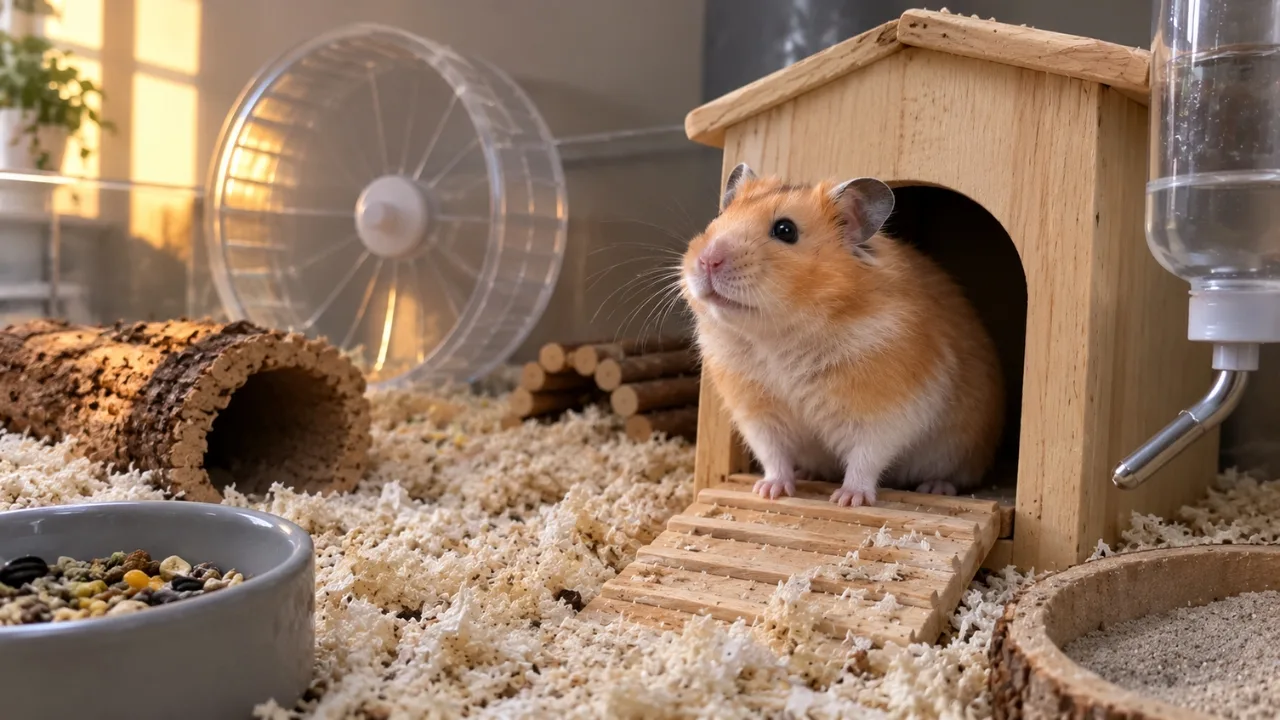
Hamsters have evolved to spend much of their active time after sunset. Their internal body clock is already adapted to lower light levels, so they don’t need owners to artificially create nighttime by placing a cover over the enclosure.
Instead, what matters most is maintaining:
- A regular day and night cycle
- Good airflow
- A comfortable room temperature
- A quiet environment during rest periods
- Plenty of places to hide inside the enclosure
Maintaining a consistent lighting schedule is far more important than covering the enclosure. Read How Much Light Does a Hamster Need? Day, Night, and Room Lighting Explained to create a natural day-and-night routine.
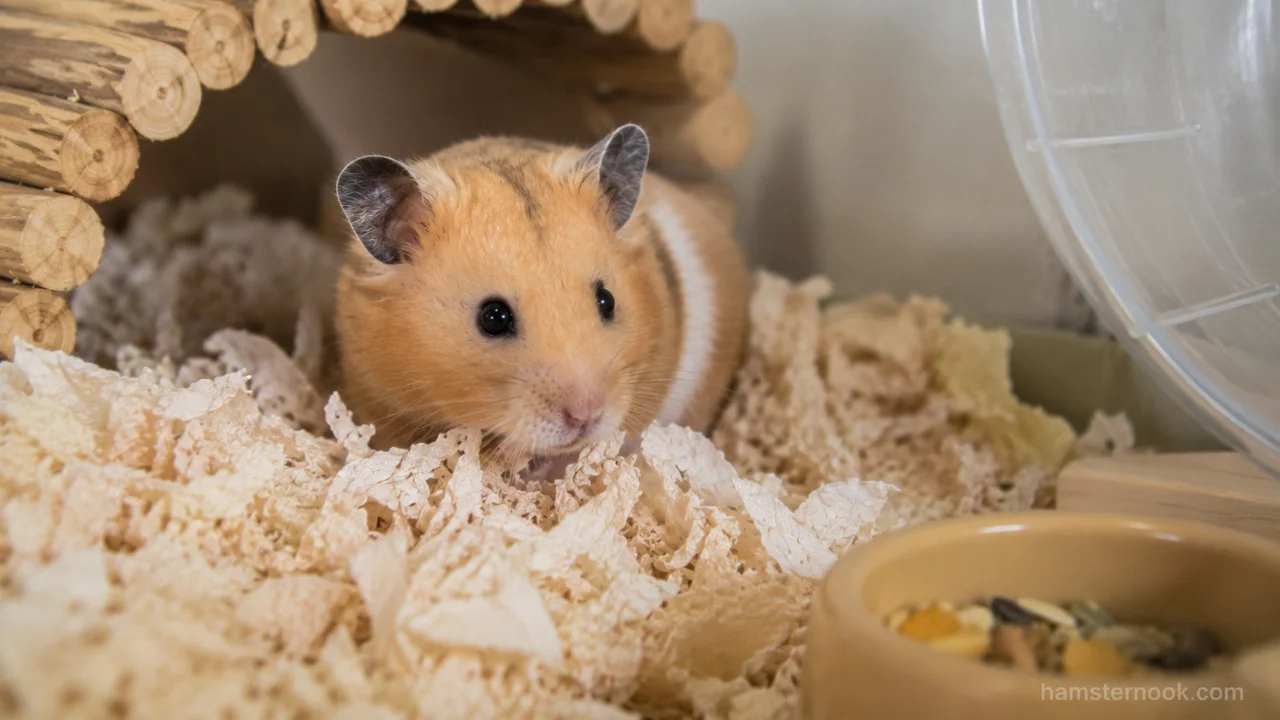
A hamster that has several secure hides, deep bedding, and nesting material already has everything it needs to feel protected while sleeping.
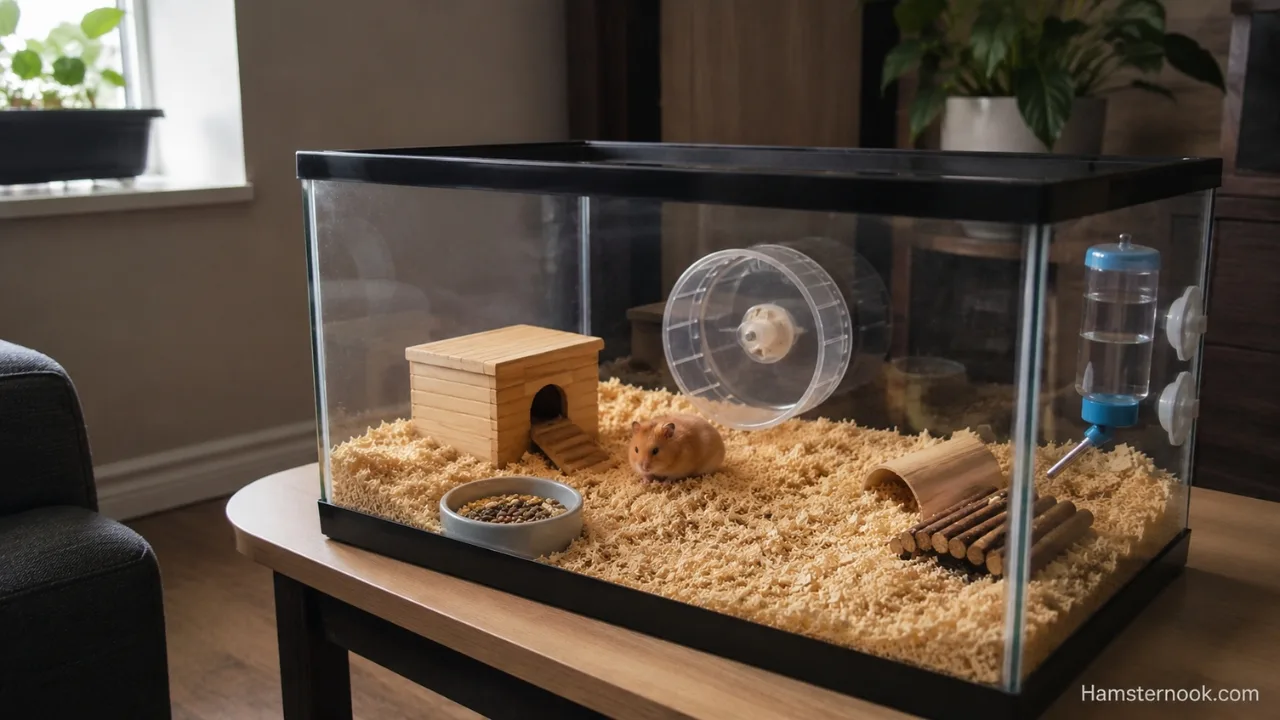
Secure hideouts provide the darkness and privacy hamsters naturally seek without reducing airflow around the enclosure. See Best Hamster Hideouts and Sleeping Areas: What Hamsters Actually Prefer.
Why Some Owners Cover the Cage
Many owners have good intentions when they place a blanket or towel over the enclosure.
Common reasons include:
Reducing Room Light
Some people worry that lamps, televisions, or hallway lights will disturb their hamster.
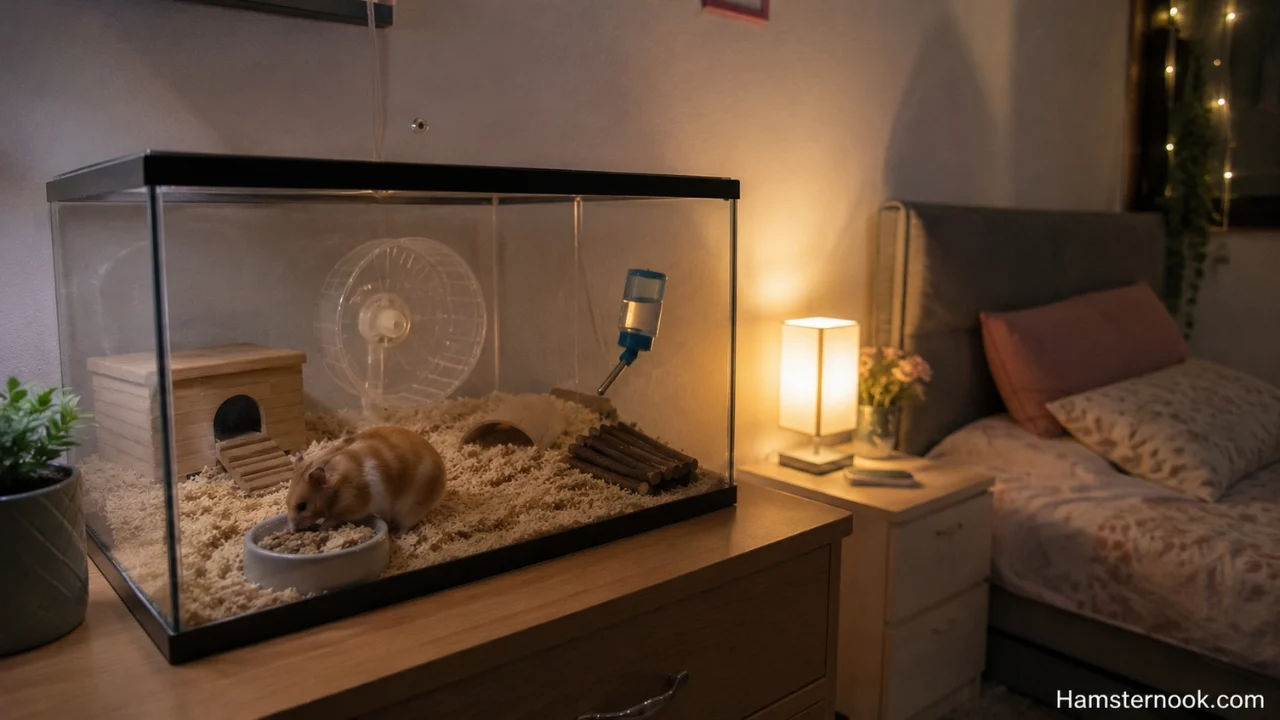
If light is the concern, focus on keeping the hamster’s daily lighting routine predictable and providing a dark, enclosed sleeping area. A suitable hide allows the hamster to retreat from light without reducing ventilation around the enclosure.
Making the Hamster Feel Safe
Covering the cage is sometimes thought to imitate a burrow.
In reality, hamsters create their own secure sleeping spaces underground using bedding and nesting material. A well-designed enclosure naturally allows them to control how exposed they want to be.
Keeping the Room Quiet
A blanket over the cage won’t block much sound.
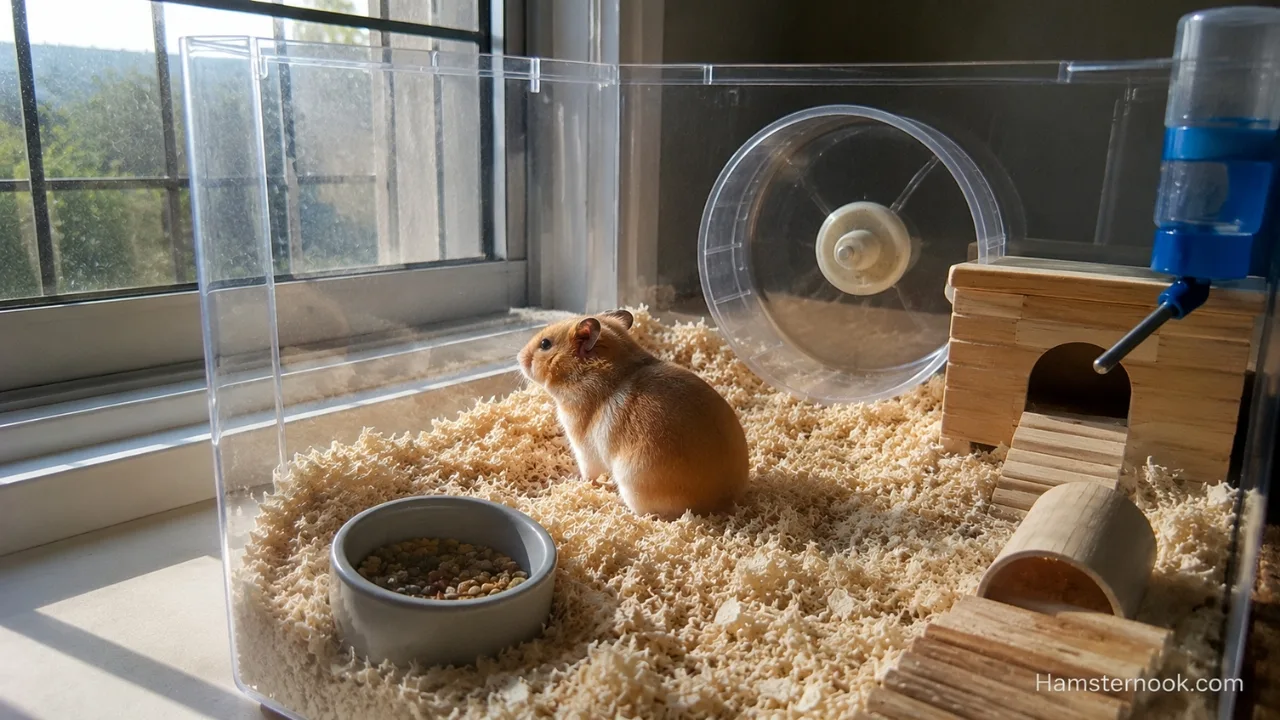
Hamsters hear extremely well, and vibrations travel through furniture and floors regardless of whether the enclosure is covered.
If noise is the concern, moving the enclosure to a quieter room is usually much more effective.
Trying to Keep the Cage Warm
This is common during winter.
While maintaining a suitable room temperature is important, covering the enclosure is not a reliable way to achieve it. Blankets can trap heat unevenly and reduce ventilation, especially around wire cages.

Maintaining an appropriate ambient room temperature is generally safer than insulating the cage itself.
If the room is genuinely too cold, address the room temperature rather than wrapping the enclosure. The cage should remain away from cold drafts while still allowing normal ventilation.
Potential Risks of Covering a Hamster Cage
Although placing a light cloth over part of the enclosure may seem harmless, fully covering it can create several problems.
Reduced Ventilation
Fresh airflow is essential for every hamster enclosure.

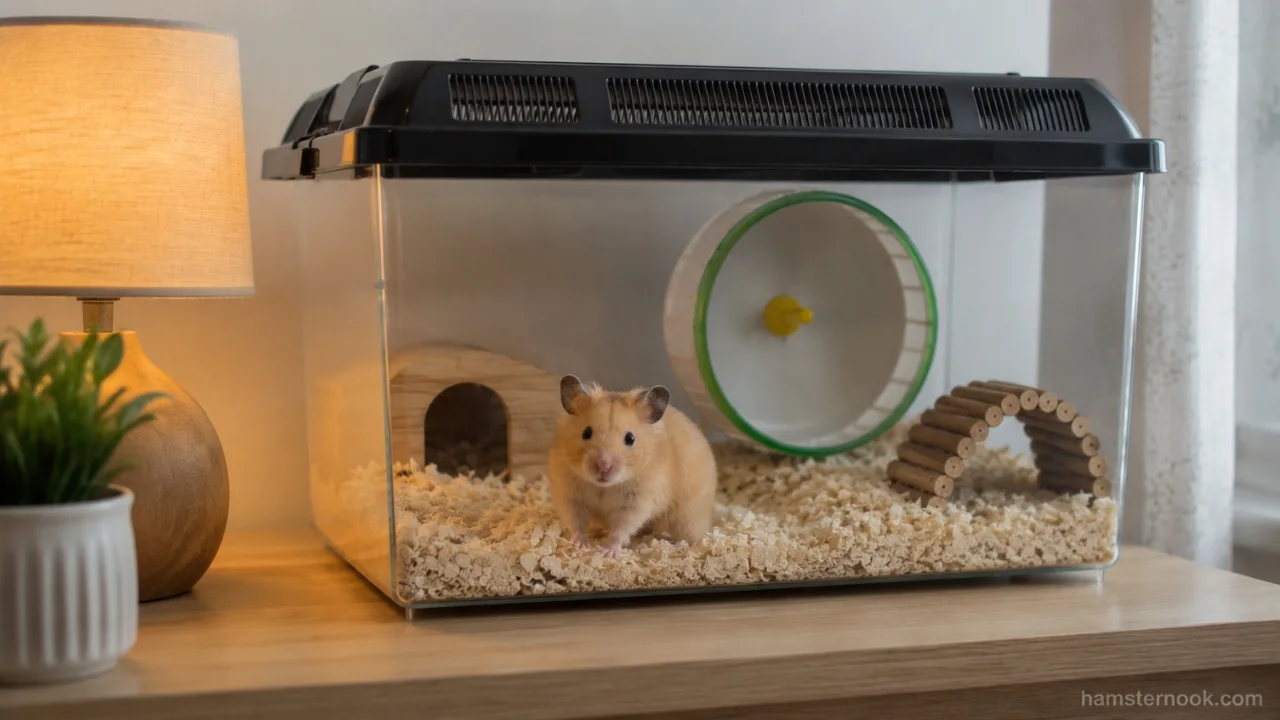
Covering a wire cage or blocking ventilation openings on a tank-style habitat can reduce air circulation, allowing moisture and odors to build up more quickly.
Good ventilation helps maintain a healthier environment by reducing humidity and improving air quality.
Poor ventilation can also cause odors to build up more quickly inside the enclosure, making routine cleaning less effective over time. Keeping air flowing freely helps maintain a fresher and healthier habitat.
Heat Build-Up
Hamsters tolerate cool conditions better than excessive heat.
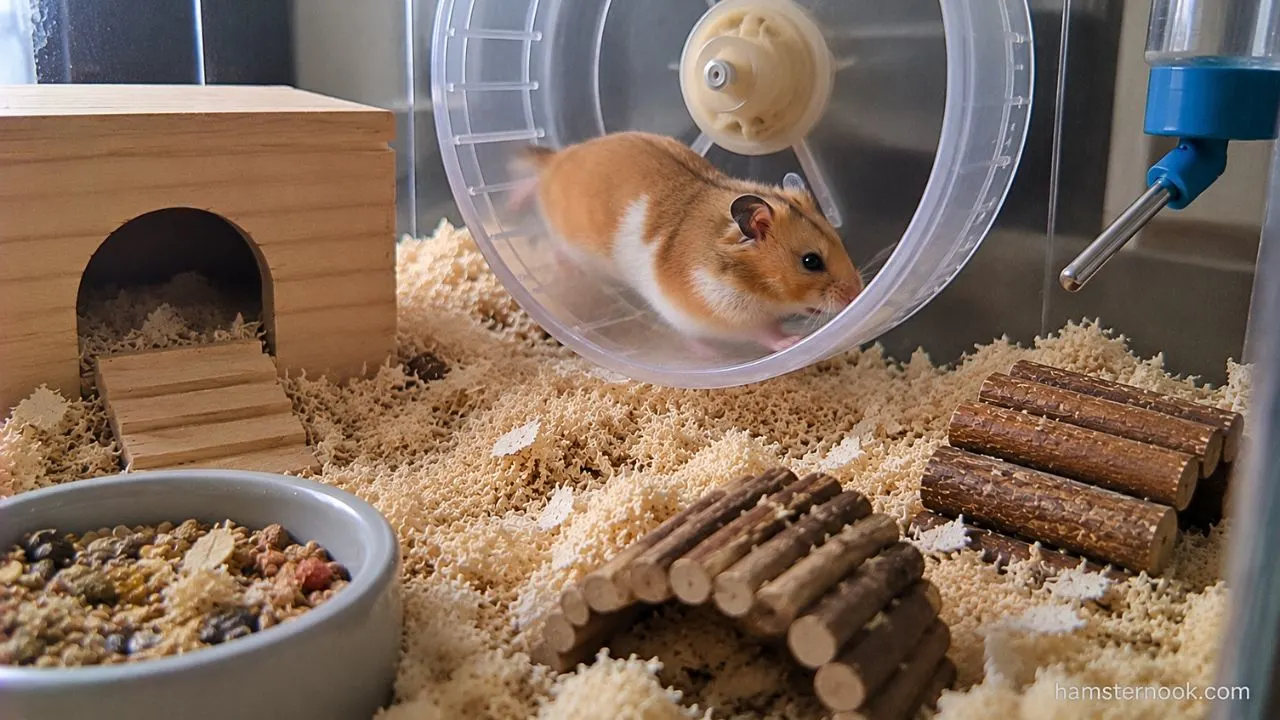
A thick blanket can trap warmth, particularly if the enclosure is already near a heater, sunny window, or other heat source.
Poor ventilation combined with rising temperatures can make the enclosure uncomfortable much faster than many owners realize.
Increased Humidity
Every hamster enclosure naturally produces moisture from:
- Breathing
- Water bottles
- Fresh foods
- Urine
- Damp bedding
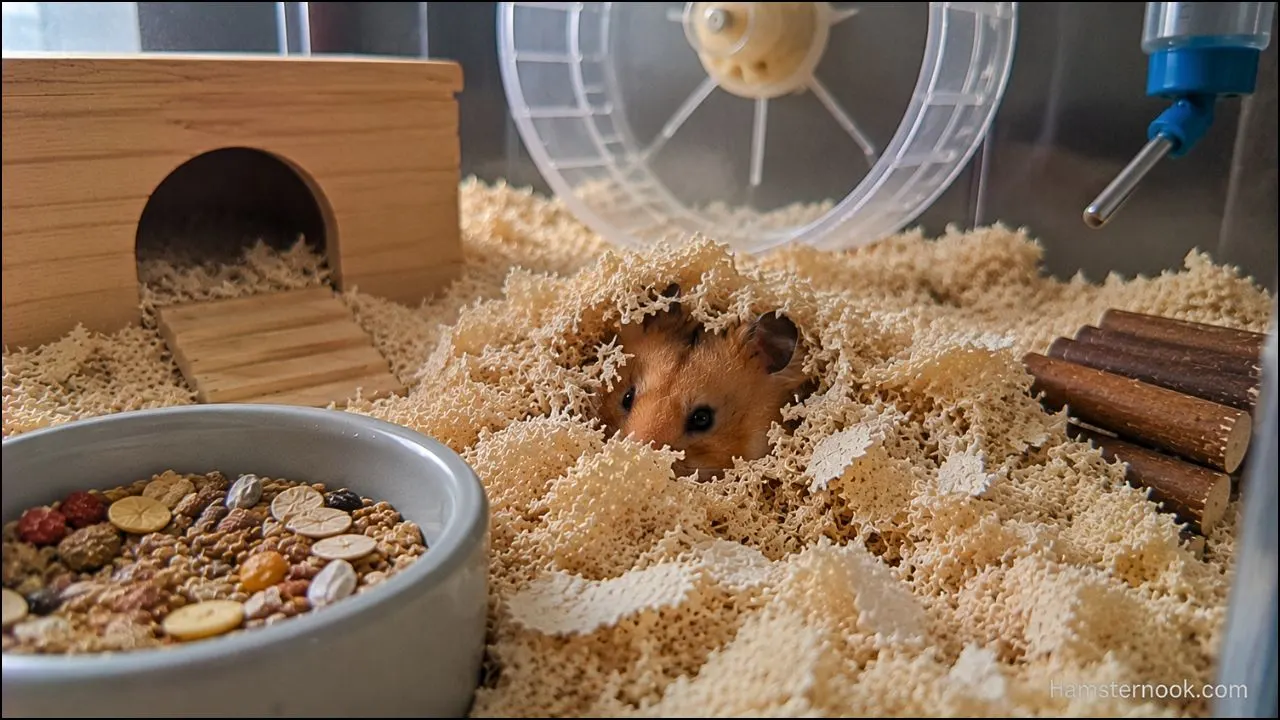
Without proper airflow, humidity may increase, making bedding less comfortable and potentially encouraging faster odor development.
Reduced Visibility
Owners are less likely to notice:
- Water bottle problems
- Escaped food spoiling
- Bedding becoming damp
- Signs that the hamster is unusually inactive
Being able to glance at the enclosure during the evening makes it easier to spot issues before they become larger problems.
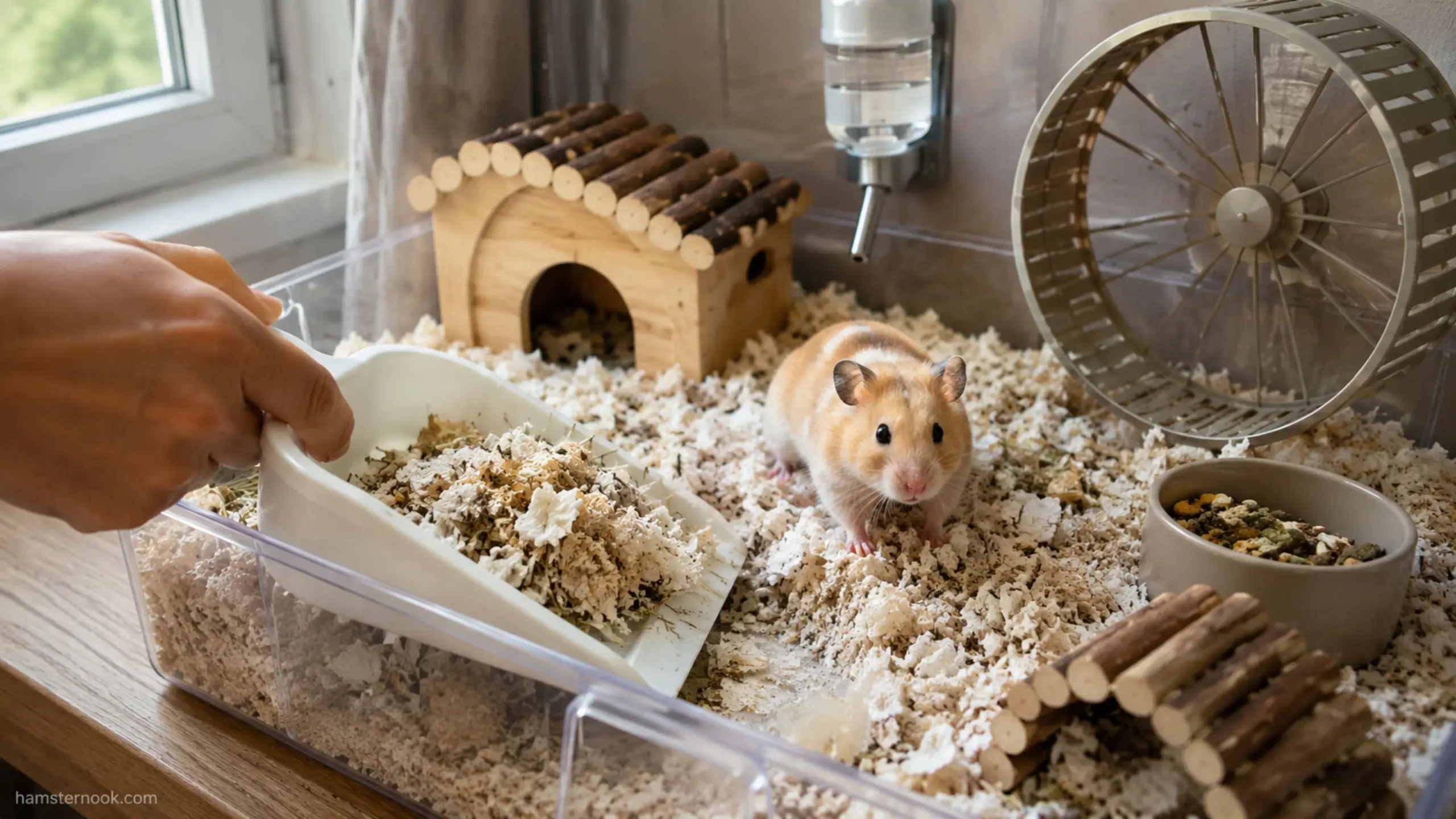
Wire Cages vs. Glass Tanks
Not every enclosure responds the same way to being covered.
| Enclosure Type | Covering Recommended? | Reason |
|---|---|---|
| Wire cage | Generally no | Can restrict airflow if covered extensively. |
| Glass tank with mesh lid | Usually no | The mesh lid provides important ventilation that should remain unobstructed. |
| Bin cage with ventilation panels | Usually no | Air vents should remain open to maintain proper circulation. |
Regardless of enclosure style, ventilation should always take priority over blocking light.

When a Partial Cover May Be Reasonable
There are a few situations where partially covering one side of the enclosure may be appropriate.
For example:
- The enclosure is beside a frequently used hallway.
- Bright morning sunlight briefly reaches one side of the cage.
- Another household pet causes visual stress by constantly staring into the enclosure.
Even then, only one side should be shielded while ventilation openings remain completely clear.
If a visual barrier is needed, keep it outside the enclosure and use it only on the side causing the disturbance. All ventilation openings should remain completely unobstructed.

Practical Examples
Example 1: The Living Room TV
Your hamster’s enclosure is in the living room where the television stays on until midnight.
Instead of covering the cage every evening, moving it to a quieter room with a consistent light schedule is usually the better long-term solution.
Example 2: Winter Nights
The room feels chilly, so you consider placing a thick blanket over the cage.
A better approach is maintaining an appropriate room temperature and ensuring the hamster has deep bedding for burrowing rather than reducing airflow around the enclosure.

Example 3: Curious Cat Nearby
Your cat frequently watches the hamster through the side of the enclosure.
A partial visual barrier on one side of the habitat may help reduce stress while still allowing excellent ventilation and visibility.
Does Covering the Cage Help a Hamster Sleep Better?
Probably not.
Hamsters naturally decide where they sleep by building nests deep inside bedding or enclosed hides. Once inside those shelters, they’re already surrounded by darkness and insulation.

Because of this natural behavior, adding a blanket over the outside of the enclosure rarely provides meaningful additional comfort.
Instead, sleep quality is more likely to be affected by:
- Loud household noises
- Frequent disturbances during the day
- Insufficient bedding depth
- Lack of secure hiding places
- Constant changes to the enclosure layout
Providing a stable, predictable environment supports natural resting behavior far better than covering the cage.
Common Mistakes Owners Make
Even experienced hamster owners sometimes cover an enclosure with the best intentions. The problem is that the cover often solves the wrong issue while creating new ones.

Wrapping the Entire Cage
Completely covering a wire cage or blocking the mesh lid of a glass enclosure restricts airflow. Fresh air is essential for maintaining a healthy environment and preventing excess heat and humidity from building up.
Using Thick Blankets
Heavy blankets, quilts, or comforters trap much more heat than owners expect. This is especially risky during warmer months or in homes without air conditioning.
Covering the Cage Every Night
Making this part of the daily routine usually isn’t necessary. Healthy hamsters naturally rest in enclosed nests and don’t need an additional external cover to feel secure.
Ignoring the Real Problem
If your hamster seems stressed, covering the cage may not address the actual cause. Environmental changes such as excessive light, noise, or poor cage placement can contribute to stress. Our 7 Signs You’re Accidentally Stressing Your Hamster (Without Even Realizing It) guide covers common environmental stressors owners may overlook.
For example:
- A noisy room should be made quieter.
- Bright direct sunlight should be blocked with curtains rather than covering the cage.
- A lack of hiding places should be solved by adding hides and deeper bedding.
If sunlight is the real issue, choosing the right cage location is usually a better solution than covering the enclosure. Read Should a Hamster Cage Be Near a Window? Risks Every Owner Should Know.
Addressing the source of the problem is almost always more effective than placing a cover over the enclosure.
If the main problem is nighttime noise, our Can Loud TV or Music Stress a Hamster? What Research and Owners Observe guide explains how household sound can affect a hamster’s environment.

What You Should Do
Most hamster owners don’t need to cover the cage at all.
The main goal is not to make the enclosure darker from the outside. It is to give your hamster a secure place to sleep while keeping the enclosure well ventilated and the room environment predictable.
Instead, focus on creating an environment that supports your hamster’s natural behavior.
A good setup includes:
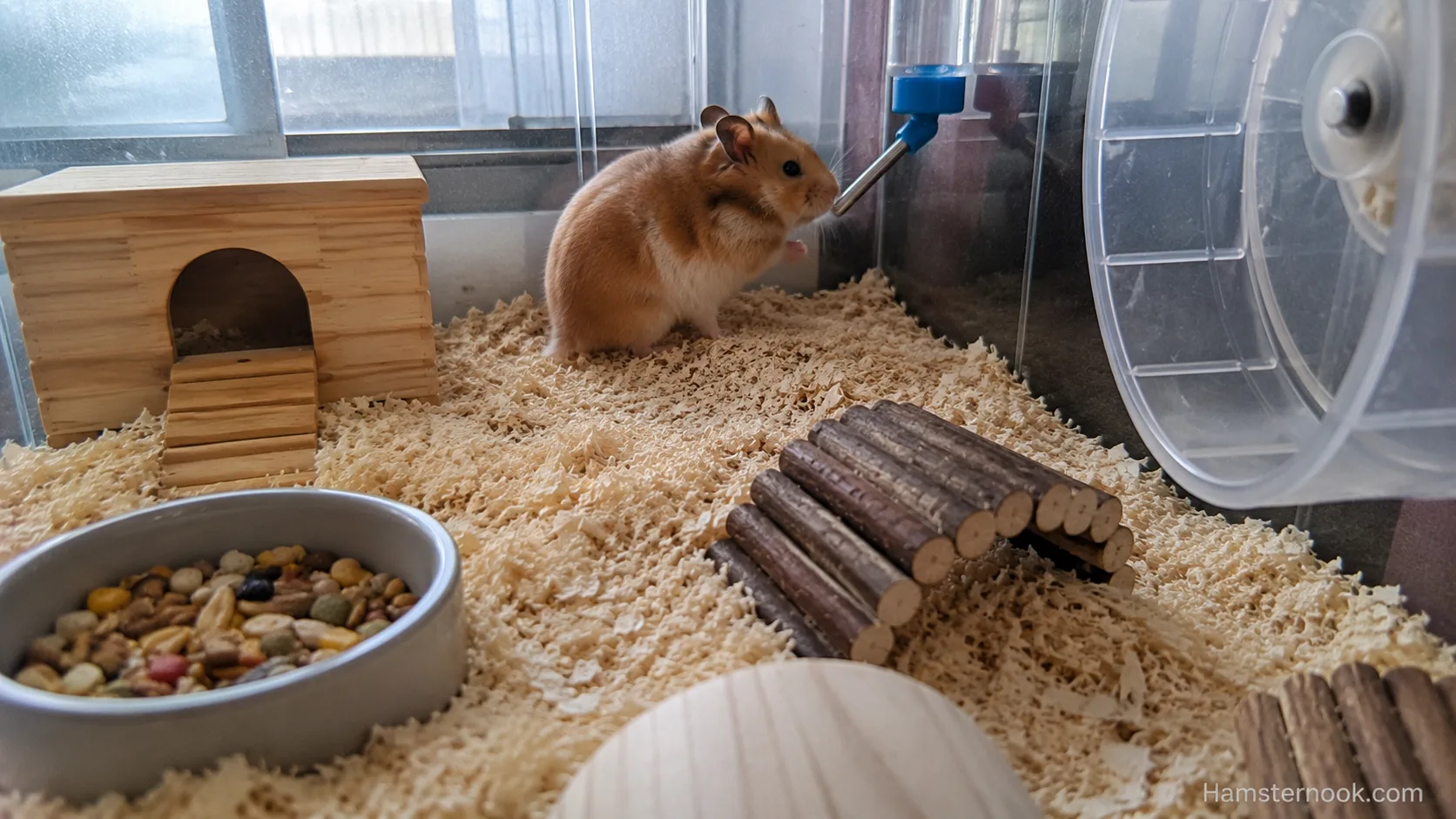
- Plenty of deep paper-based bedding for burrowing.
- At least one secure enclosed hide, preferably several.
- Good ventilation throughout the enclosure.
- A stable room temperature away from heaters and direct sunlight.
- A predictable day and night routine.
- A quiet location where the hamster won’t be disturbed during its rest periods.

Deep bedding allows hamsters to build insulated burrows where they naturally feel secure and comfortable. Read How Much Bedding Does a Hamster Need? Minimum Depth Guide for Healthy Burrowing to learn the recommended depth for healthy burrowing.
If your hamster is resting inside its hide or burrow during the day, that is usually part of its normal sleep pattern rather than a sign that the cage needs to be covered.
If you want to reduce visual disturbances from one direction, use a breathable barrier on only one side of the enclosure while keeping all ventilation openings completely unobstructed.
Warning Signs Your Cage May Be Too Covered
If you’ve already been covering the enclosure, watch for signs that the environment isn’t staying comfortable.

These include:
- The inside of the enclosure feels unusually warm.
- Condensation forms on glass walls or lids.
- Bedding feels damp more often than usual.
- Strong odors develop quickly despite regular spot cleaning.
- Your hamster spends less time exploring during its normal active hours.
These signs don’t automatically mean the cover is causing the problem, but they suggest it’s worth improving ventilation and reviewing the enclosure setup.
When to Worry
If you have been covering the enclosure, remove the cover and review the setup if you notice:
- Persistent heat inside the enclosure.
- Poor air circulation.
- Damp bedding that doesn’t dry properly.
- Your hamster showing signs of heat stress, such as lethargy or lying stretched out for long periods in unusually warm conditions.
- Repeated attempts to escape immediately after the cage is covered.
If your hamster develops unusual behavior that continues after environmental adjustments—or appears ill, injured, or has difficulty breathing—consult an experienced exotic animal veterinarian.
Final Thoughts
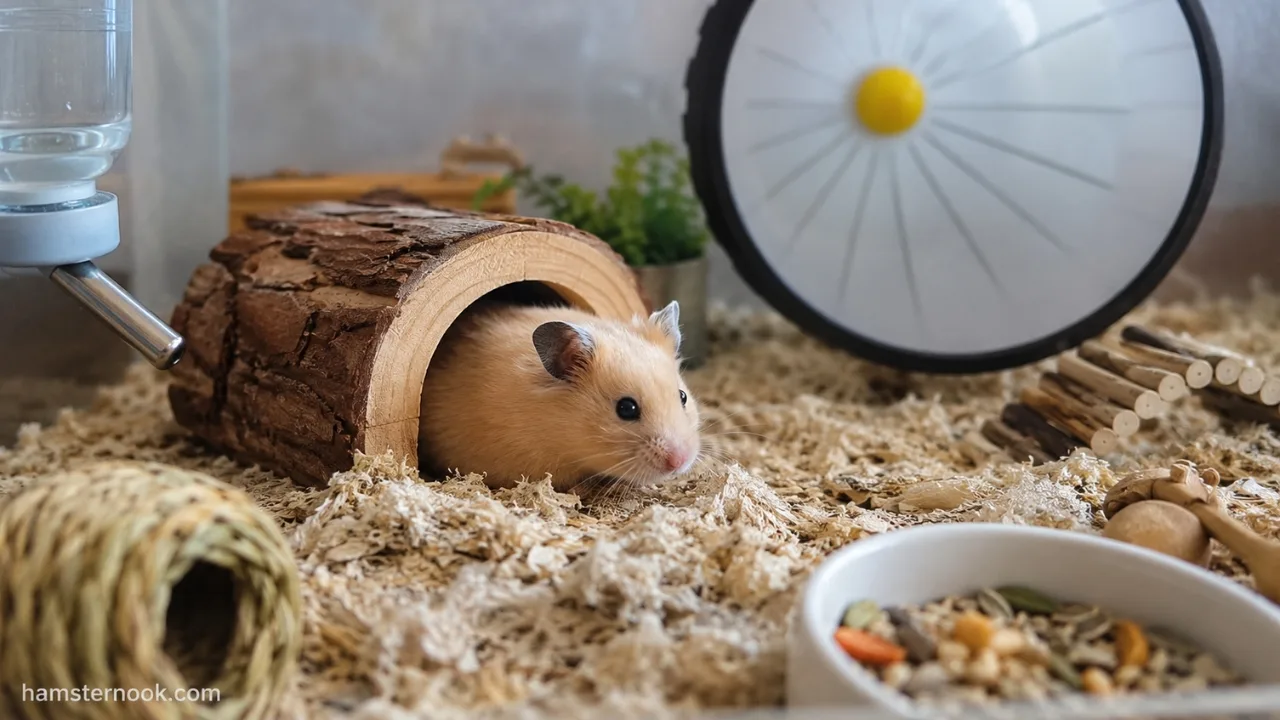
Hamsters don’t need their cages covered at night to sleep well or feel safe. Their natural instinct is to build secure nests beneath bedding or inside enclosed hides, where they can rest undisturbed regardless of what’s happening outside the enclosure.
Rather than reaching for a blanket, spend your effort creating a habitat with good ventilation, deep bedding, multiple hiding places, and a consistent daily routine. Those factors contribute far more to your hamster’s comfort and overall welfare than covering the cage ever will.
In most homes, leaving the enclosure uncovered while providing a quiet, comfortable environment is the safest and most practical approach.
Frequently Asked Questions
Should I put a blanket over my hamster’s cage every night?
No. Most pet hamsters don’t need their enclosure covered at night. A stable room environment with proper ventilation and secure hiding places is usually sufficient.
Is it okay to partially cover a hamster cage?
Sometimes. A breathable cover placed over one side of the enclosure may help reduce visual disturbances, but it should never block ventilation or trap heat.
Can covering a hamster cage make it too hot?
Yes. Thick blankets or fully covering the enclosure can reduce airflow and trap heat, particularly in warm rooms or during summer.
Will my hamster sleep better if the cage is covered?
Probably not. Hamsters naturally sleep inside enclosed nests that they build themselves, so an external cover usually provides little additional benefit.
Sleeping inside a hide for long periods is completely normal for most hamsters and doesn’t usually mean something is wrong. Read Why Do Hamsters Sleep and Hide All Day? The Truth Most New Owners Don’t Know to better understand this natural behavior.

Should I cover my hamster’s cage in winter?
Instead of covering the cage, maintain an appropriate room temperature and provide plenty of bedding so your hamster can build an insulated nest.
What if my hamster’s cage is near a bright light?
It’s better to reduce the room’s lighting or move the enclosure if possible. If necessary, a partial visual barrier on one side is generally safer than covering the entire cage.
References
This guide is based on hamster housing, ventilation, environmental conditions, bedding, enrichment, and welfare guidance from trusted animal welfare and veterinary resources, including:
- RSPCA – Creating a Good Home for Hamsters – Guidance on hamster housing, ventilation, bedding, temperature, enclosure placement, and environmental conditions.
- RSPCA – Keeping Hamsters as Pets – General guidance on hamster care, housing, behavior, diet, enrichment, and welfare.
- Blue Cross – Hamster Care Guide – Practical information on hamster housing, bedding, hiding places, enrichment, temperature, and wellbeing.
- MSD Veterinary Manual – Providing a Home for a Hamster – Veterinary guidance on hamster enclosure design, ventilation, bedding, nesting, temperature, and environmental management.
- NC3Rs – Housing and Husbandry: Hamster – Guidance on hamster housing, ventilation, bedding, environmental conditions, and species-appropriate husbandry.
- NC3Rs – Choosing Appropriate Enrichment – Guidance on providing appropriate hiding places, enrichment, and opportunities for natural hamster behaviors.

Narayan Kumar is the founder and author of HamsterNook. He creates practical, research-based hamster care guides covering hamster behavior, nutrition, cage setup, enrichment, health, and everyday care. His goal is to help hamster owners make informed decisions and provide safer, healthier lives for their pets through clear, beginner-friendly information based on trusted animal care resources.