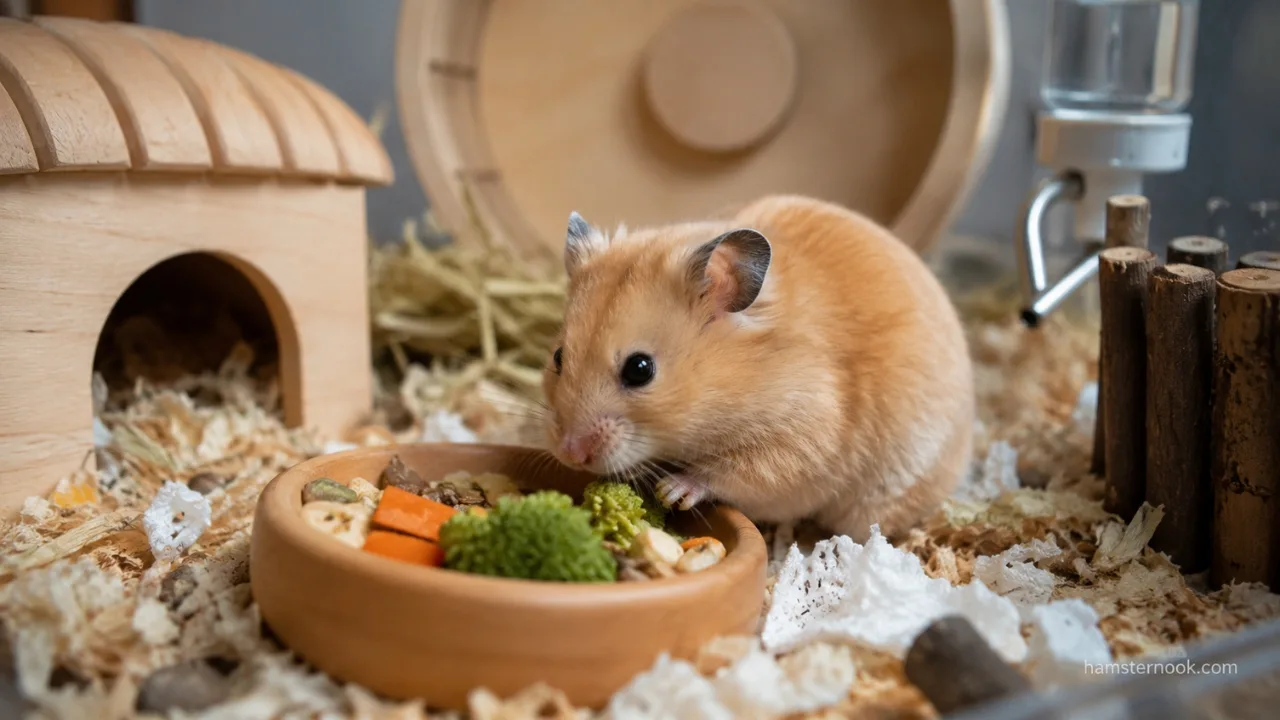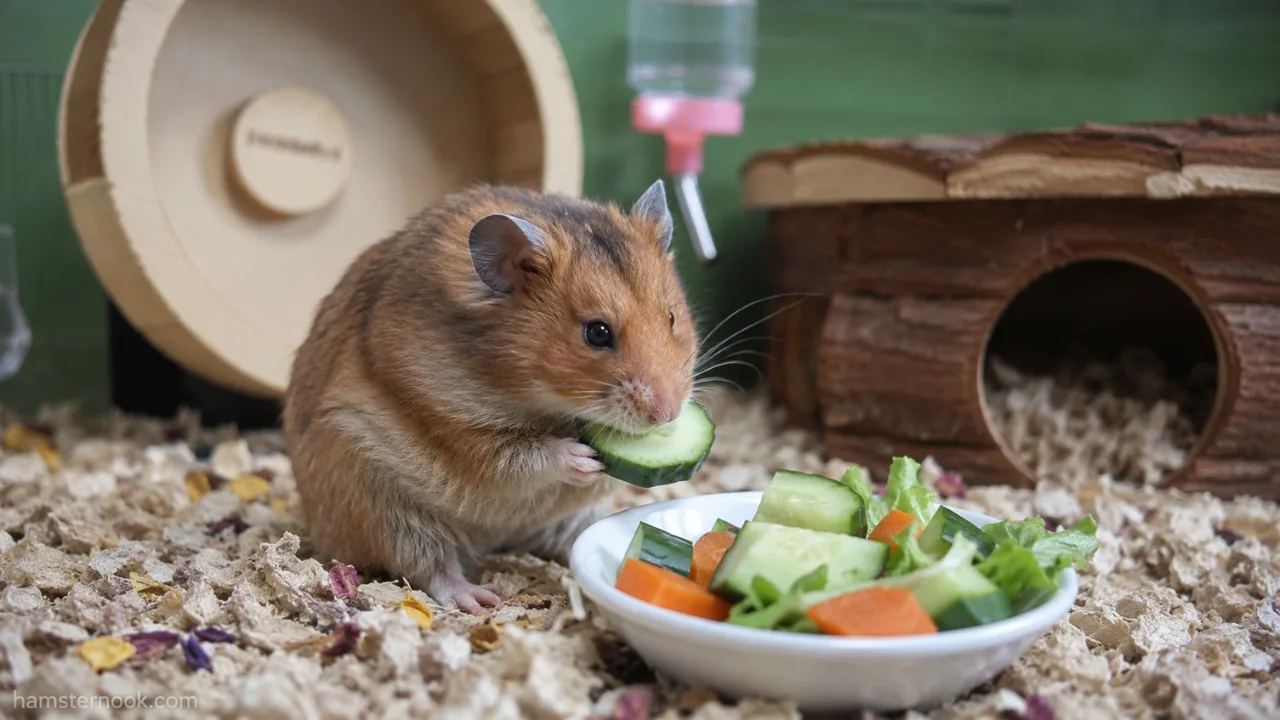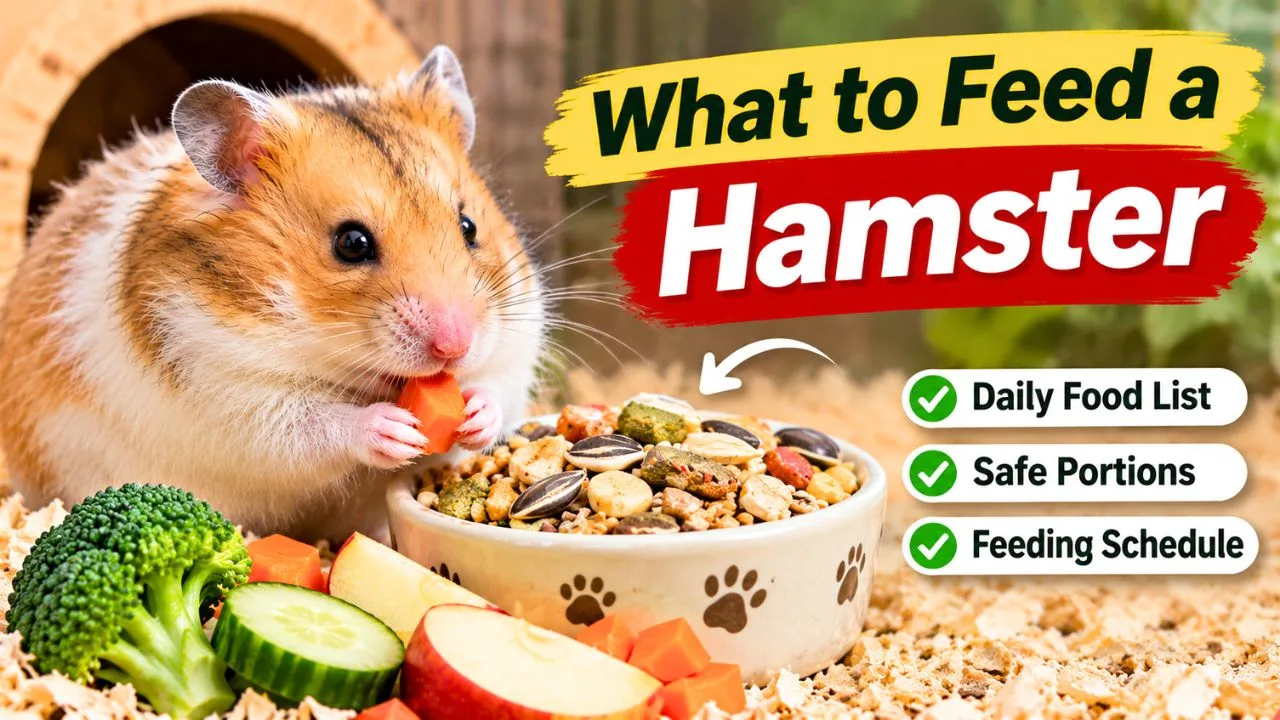
Feeding a hamster seems simple until you start wondering how much food it needs, which vegetables are safe, and whether it should eat seeds, pellets, or fresh food every day. A healthy hamster diet is not about offering lots of different snacks. It is about providing balanced nutrition, sensible portions, fresh drinking water, and enough variety to make mealtimes interesting without upsetting your pet’s routine.
Quick Answer: What Should You Feed a Hamster Every Day?
A hamster should eat a complete commercial food formulated specifically for hamsters as its dietary foundation. You can supplement this with small amounts of suitable fresh vegetables, occasional fruit, and protein-rich treats.
A practical daily feeding routine includes:
- Main food: A nutritionally complete hamster pellet or suitable balanced hamster food mix.
- Fresh vegetables: A small piece of a suitable vegetable, introduced gradually.
- Protein treats: Small amounts of plain cooked egg or suitable insects occasionally.
- Seeds and nuts: Small quantities as occasional extras.
- Fresh water: Available continuously and checked every day.
The exact amount of dry food depends on the product, hamster species, individual needs, and how much food your hamster stores. Follow the manufacturer’s feeding instructions and monitor what your hamster actually eats.
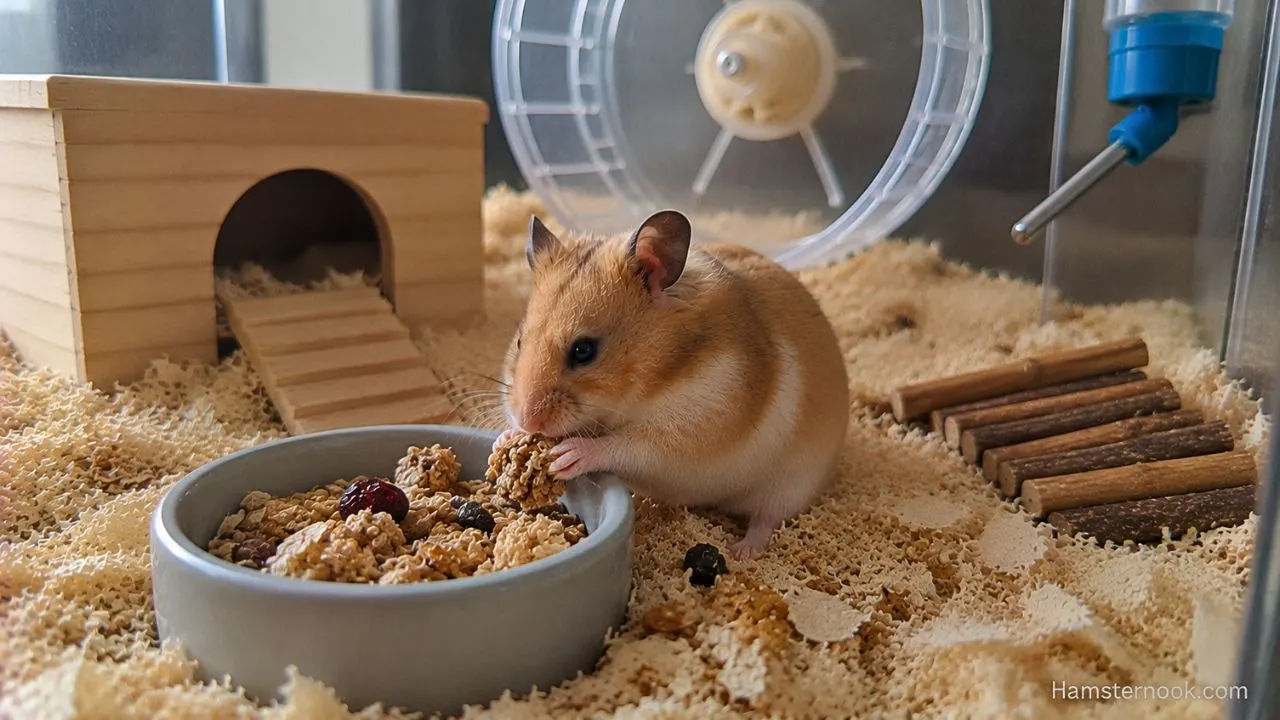
The most important rule: Complete hamster food should provide the nutritional foundation. Fresh foods and treats should add variety rather than replace the main diet.
What Does a Balanced Hamster Diet Include?
Hamsters are omnivores, meaning they naturally eat both plant-based and animal-based foods. Their diet can include seeds, grains, vegetation, and insects.
A suitable pet diet should reflect this nutritional variety without relying on random human foods or sugary treats.
1. Complete commercial hamster food
A good-quality commercial hamster food should form the foundation of your pet’s daily diet.

You will commonly find two main types:
Pelleted hamster food
Pellets are designed to provide a consistent nutritional balance. Each piece has a similar composition, making it harder for a hamster to select only its favorite ingredients.
Hamster seed mixes
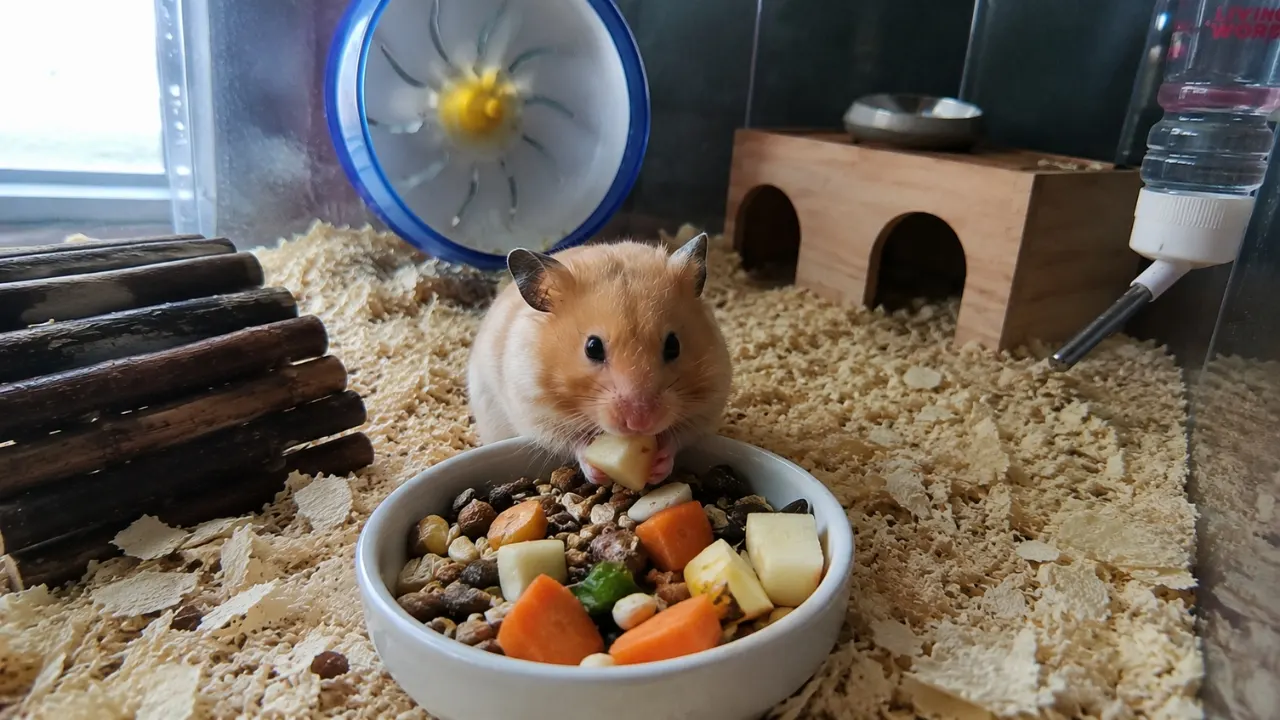
These mixtures contain ingredients such as seeds, grains, and other food components. They can provide variety, but some hamsters selectively eat the tastier pieces and leave other ingredients behind.
This selective feeding can make the overall diet unbalanced.
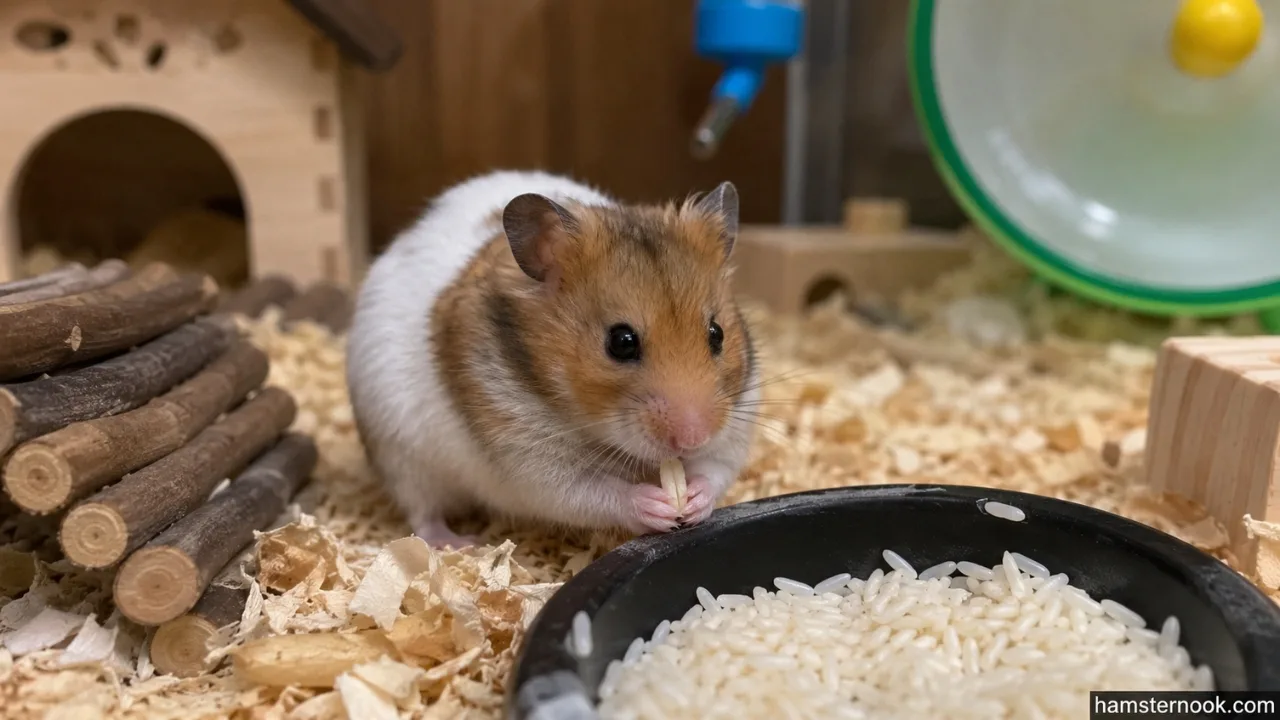
For beginners, a complete pelleted food is often easier to portion and monitor. If you choose a seed-based mix, make sure it is specifically formulated as a complete hamster diet rather than a bag of general birdseed or loose seeds.
2. Fresh vegetables
Vegetables provide variety and can be offered in small quantities.
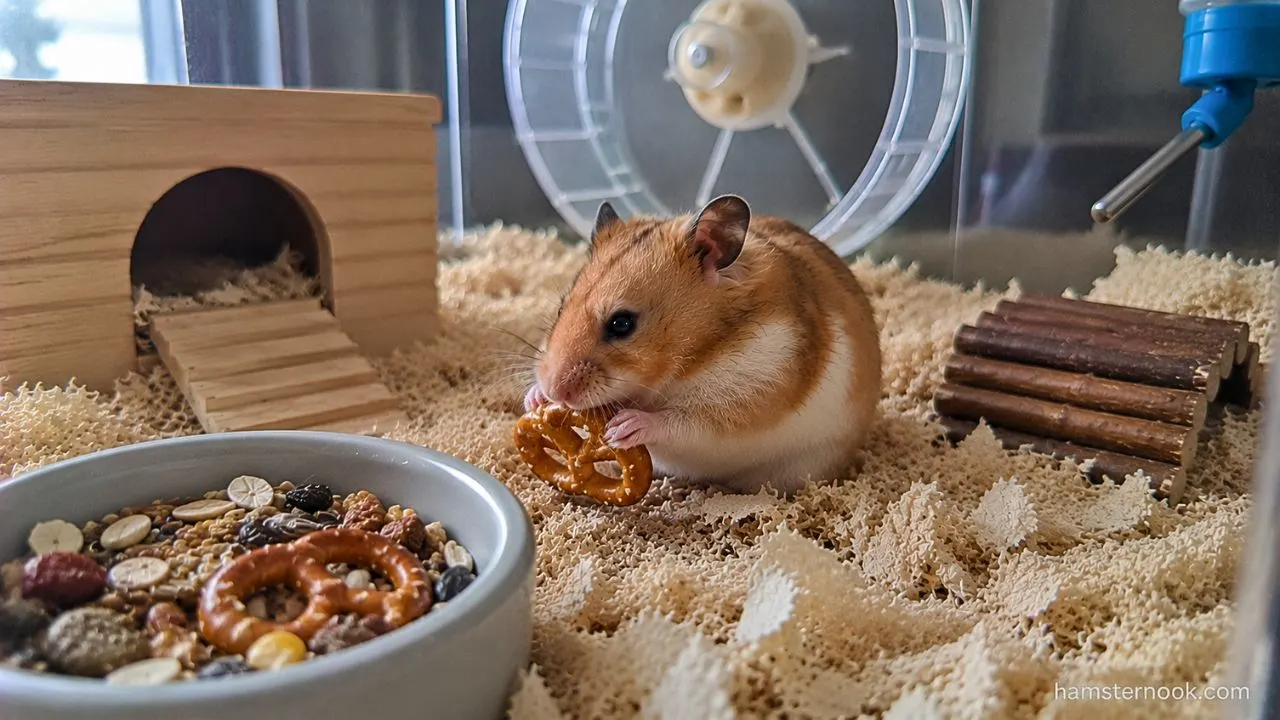
Suitable choices include:
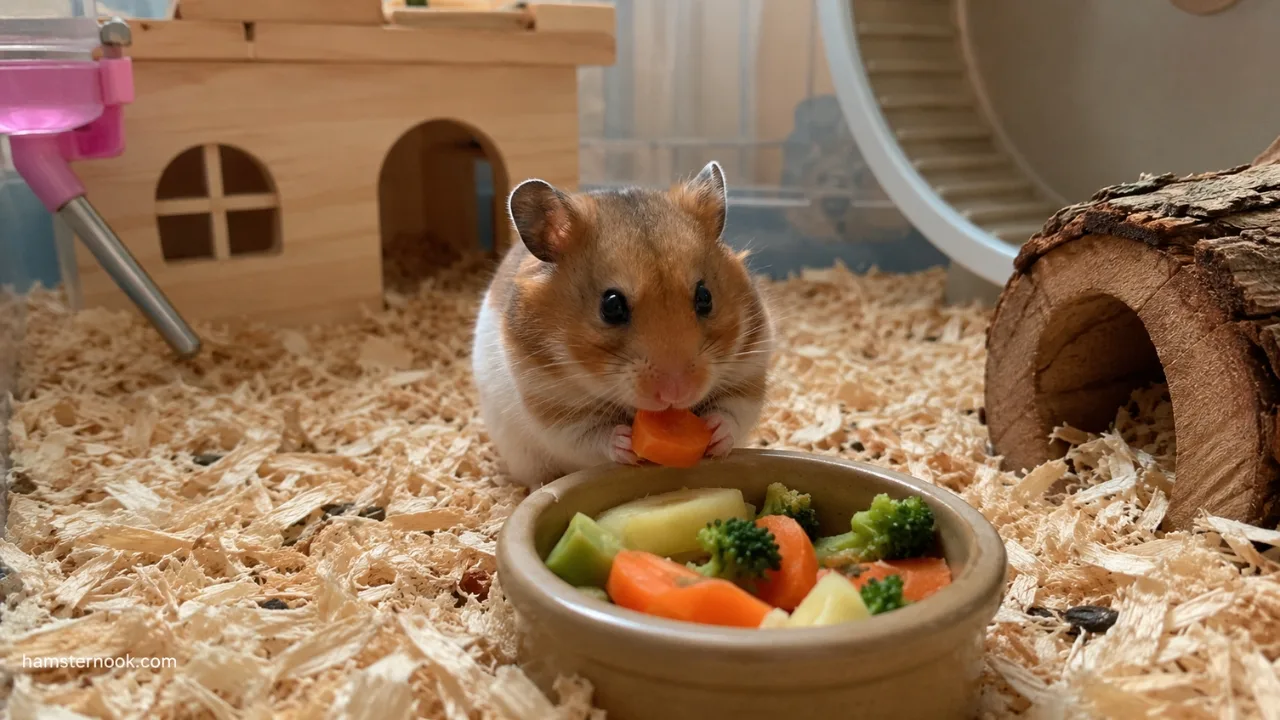
- Broccoli
- Cucumber
- Bell pepper
- Zucchini
- Carrot
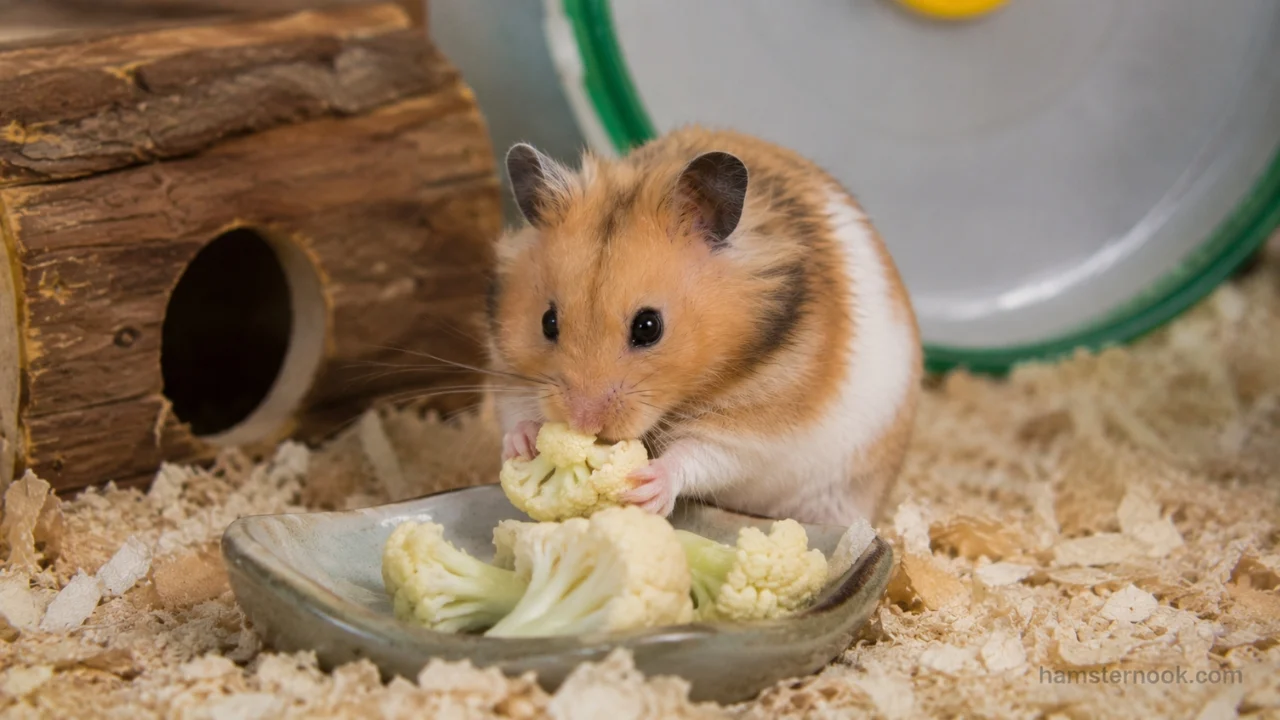
- Cauliflower
- Pumpkin
- Spinach
- Kale
- Peas
Wash vegetables thoroughly and serve them plain, without salt, butter, oil, sauces, or seasoning.
Introduce one new vegetable at a time. This makes it easier to notice whether a particular food causes digestive changes.
For a step-by-step approach to introducing unfamiliar foods, read How to Introduce New Foods to a Hamster Safely: Step-by-Step Guide.

3. Fresh fruit
Some fruits can be offered occasionally, but they should not become a major part of your hamster’s diet.
For a broader list of suitable fruits and vegetables with portion guidance, see What Fruits and Vegetables Can Hamsters Eat? Safe List & Portions.
Suitable options include:
- Apple without seeds
- Pear without seeds
- Banana
- Melon
- Peach without the pit
- A small piece of strawberry
Fruit contains natural sugars, so keep portions particularly small. Be cautious about offering sugary fruit frequently, especially to dwarf hamsters because some dwarf species are more prone to diabetes.

Fruit is an occasional treat, not an everyday requirement.
4. Protein-rich foods
Hamsters are omnivores, so suitable animal-based foods can add variety to their diet.
Examples include:
- Plain boiled egg.
- Plain cooked egg without seasoning.
- Dried mealworms intended for small pets.
- Small amounts of appropriately prepared lean cooked meat.
These foods should be offered in small portions rather than replacing the complete hamster food.

Remove leftover cooked or moist protein promptly so it does not spoil inside the enclosure.
5. Seeds and nuts
Seeds and nuts can be enjoyable treats, but many are energy-dense.
For more ideas about suitable occasional treats and how often to offer them, see Best Hamster Treats: 10 Healthy & Safe Options + How Often to Feed.
Suitable examples include:
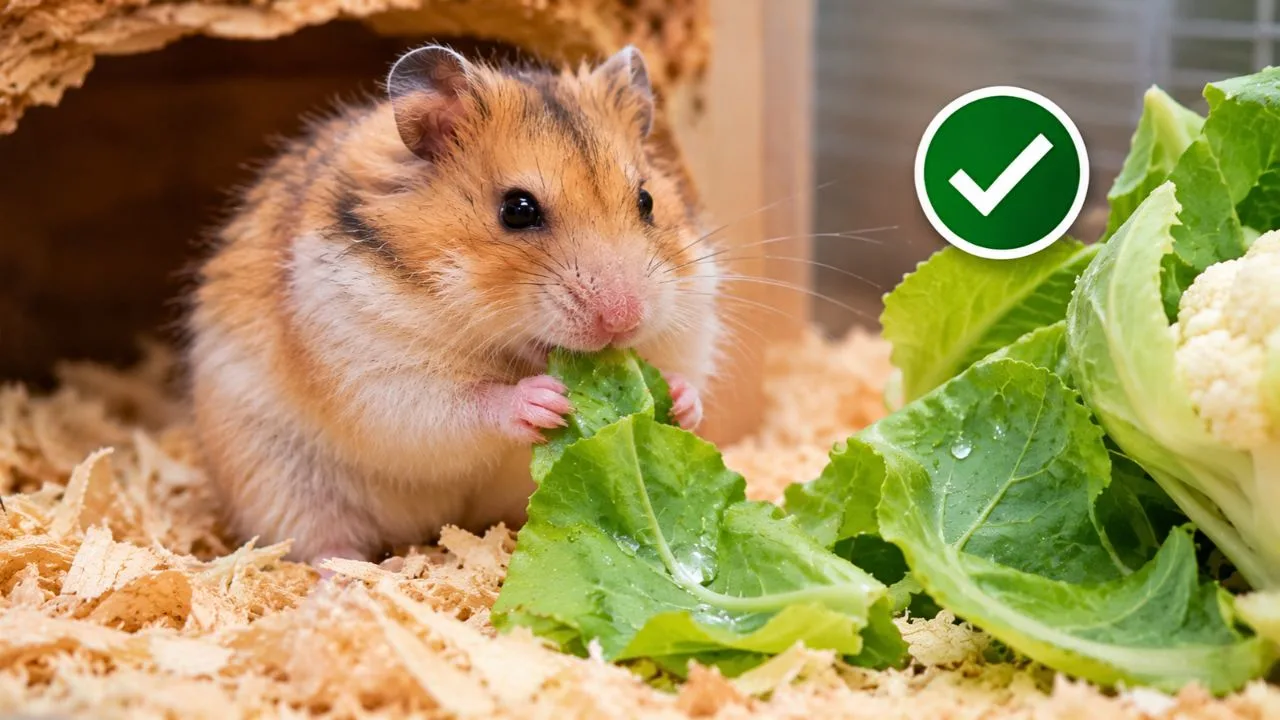
- Pumpkin seeds.
- Sunflower seeds.
- Plain unsalted peanuts.
- Small pieces of plain walnut.
Choose unseasoned varieties without added salt, sugar, chocolate, or flavor coatings.
Do not use a large handful of seeds or nuts as your hamster’s main meal.
Daily Hamster Food List: What Can You Feed Safely?
If you’re new to hamster ownership, it helps to have a simple list of foods you can rotate without constantly guessing.
The following table separates everyday staple food from occasional extras.
| Food | How often? | Feeding guidance |
|---|---|---|
| Complete hamster pellets | Daily | Main nutritional foundation |
| Suitable hamster seed mix | According to product guidance | Use a balanced, complete formula |
| Broccoli | Small amount | Wash and serve plain |
| Cucumber | Small amount | Offer a small fresh piece |
| Bell pepper | Small amount | Remove seeds and serve plain |
| Zucchini | Small amount | Wash and cut into a manageable piece |
| Carrot | Occasionally | Keep portions small |
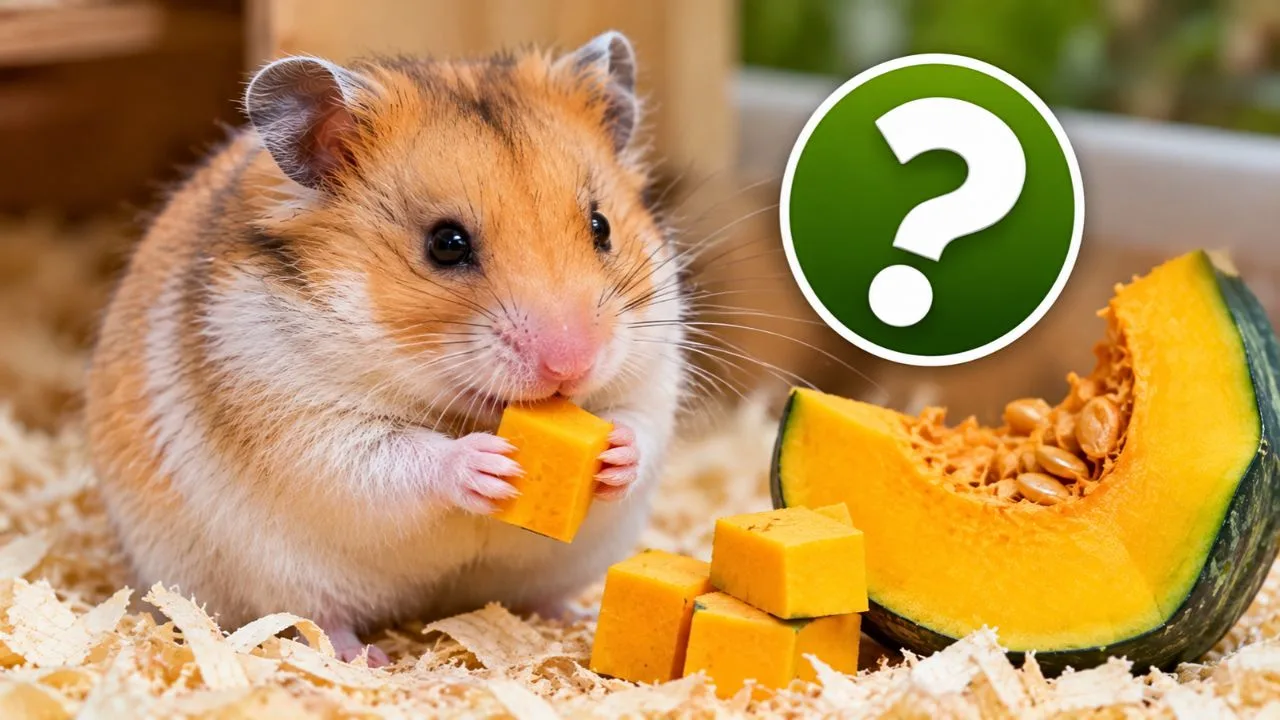
| Pumpkin | Occasionally | Plain, cooked or fresh without seasoning |
| Apple | Occasionally | Remove seeds and offer a tiny piece |
| Banana | Occasionally | Very small portion because of natural sugar |
| Strawberry | Occasionally | Small piece, washed |
| Boiled egg | Occasionally | Plain and fully cooked |
| Mealworms | Occasionally | Use a suitable pet-food product |
| Pumpkin seeds | Occasionally | Plain and unsalted |
| Sunflower seeds | Occasionally | Limit because they are energy-dense |
These are supplementary foods, not a replacement for complete hamster food. Introduce new ingredients gradually, and don’t offer several unfamiliar foods together.
How Much Food Should a Hamster Eat Every Day?
Portion size is one of the most confusing parts of hamster care.
A Syrian hamster, for example, is larger than a dwarf hamster, but that does not mean you should automatically double the food portion. Individual appetite, activity, food formulation, and stored food all matter.
There is no single dry-food measurement that works for every hamster and every commercial diet.

Daily dry food portions
Start with the feeding amount recommended on your hamster food packaging.
Then observe:
- How much food disappears from the feeding area.
- Whether your hamster leaves certain ingredients behind.
- Whether it stores food in its nest.
- Whether uneaten food remains in the bowl.
- Whether its body weight is changing over time.
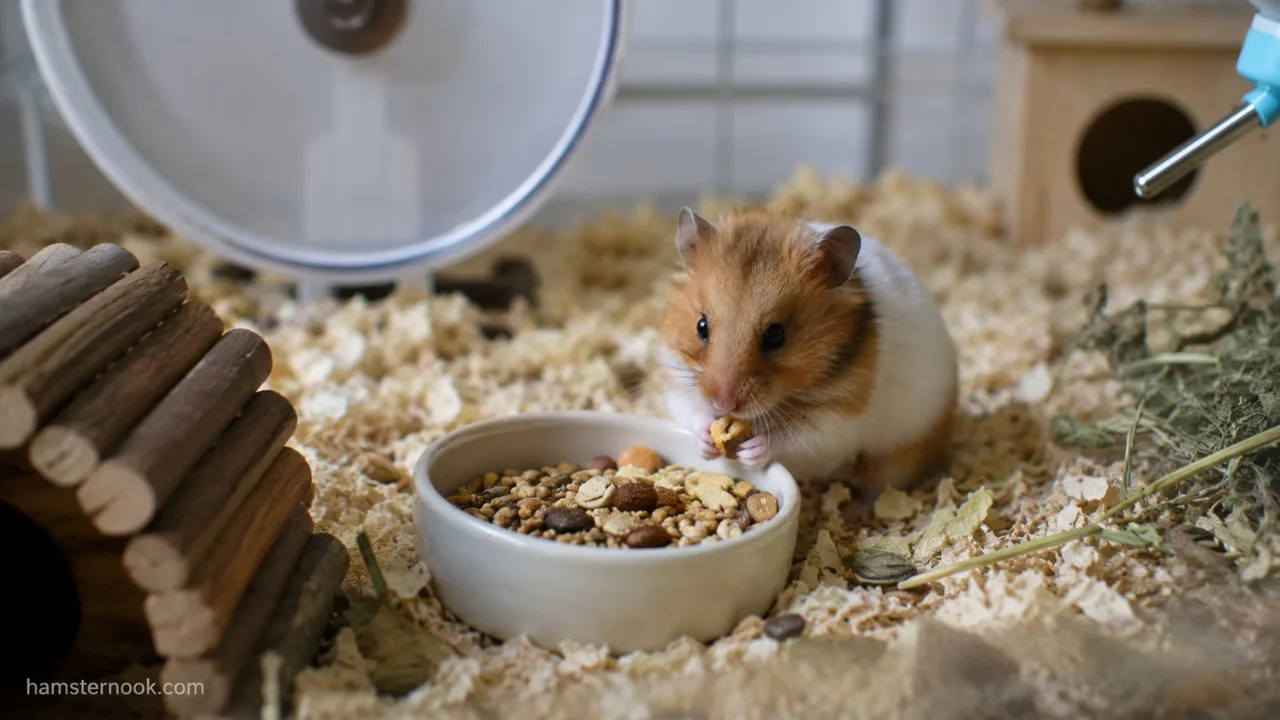
Don’t keep adding food simply because the bowl looks empty. Your hamster may have moved its food into a hiding place.
Likewise, don’t reduce its ration just because you find a hidden food stash. Stored food is part of normal hamster feeding behavior.
How much fresh food should you give?
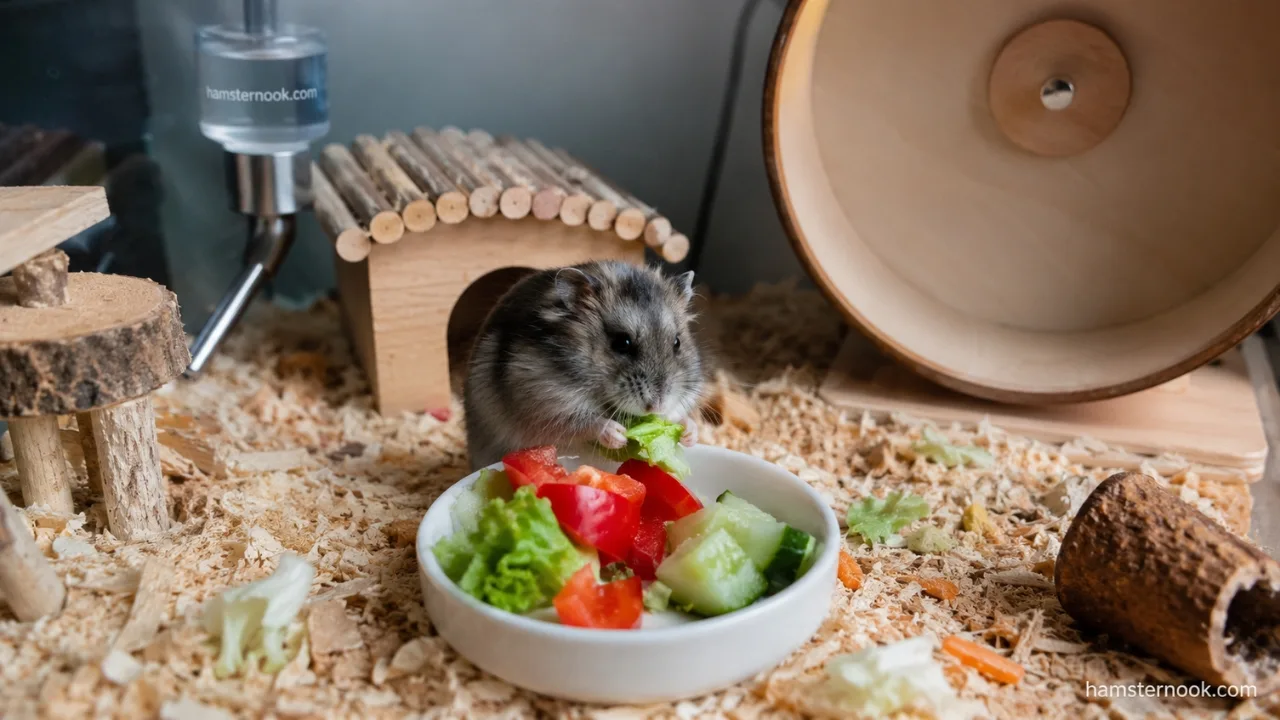
Keep fresh food portions small.
The PDSA suggests approximately one to two teaspoons of fresh vegetables, fruit, and herbs daily, while Blue Cross recommends portions around the size of a hamster’s ear.
These are practical general guidelines, not a requirement to feed every hamster the same amount every day.
For a beginner, start with a small piece of one suitable vegetable. See how your hamster responds before increasing variety.

A practical example of a small serving

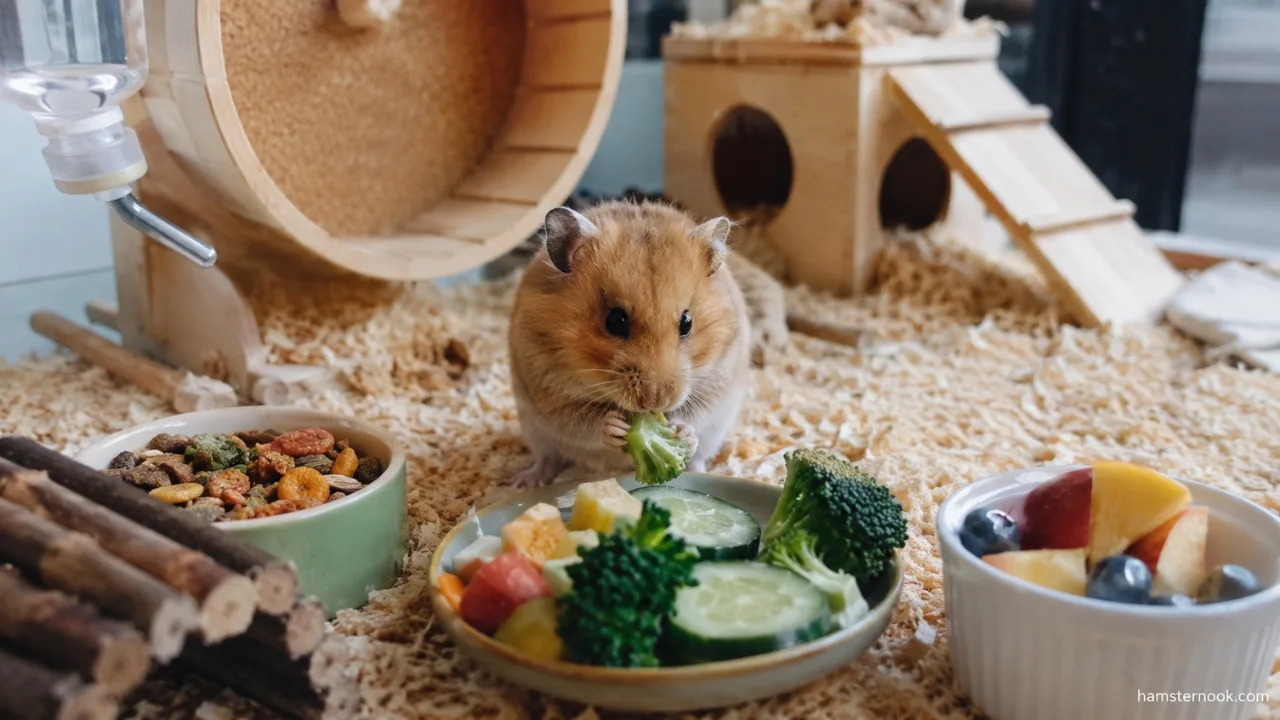
A small fresh-food serving might include:
- One tiny piece of cucumber.
- One small piece of broccoli.
You can alternate vegetables on different days rather than giving a large mixed salad.
If your hamster is not accustomed to fresh vegetables, start with less.
Hamster Feeding Schedule: Morning, Afternoon and Evening
Hamsters are generally more active during the evening and nighttime. Feeding them around the time they naturally wake up is a convenient way to establish a consistent routine.

You don’t need to wake a sleeping hamster to provide food.
Here’s a practical daily schedule.
| Time | What to do | Why it matters |
|---|---|---|
| Morning | Check drinking water and remove spoiled fresh food | Keeps the food and water supply clean |
| Afternoon | Check the enclosure and inspect accessible food storage | Helps identify spoiled food |
| Evening | Offer the daily dry-food ration | Fits naturally with the hamster’s active period |
| Evening | Offer a small fresh-food portion when appropriate | Adds variety without excessive treats |
| Before bed | Check the water bottle or bowl again | Confirms drinking water is available |
You can provide the dry-food ration in one evening feeding or divide it into portions according to the food manufacturer’s instructions and your veterinarian’s advice.
The important thing is consistency, not following an exact clock.

Should you feed your hamster once or twice a day?
Both approaches can work when the total daily ration is appropriate.
Some feeding guidance recommends dividing the daily ration into two meals. Other guidance recommends feeding daily in the evening.
Choose a routine that suits your hamster and allows you to monitor its food intake without unnecessarily disturbing its sleep.
Always maintain access to fresh drinking water.

Safe Foods vs. Foods Hamsters Should Avoid
Not every food that looks natural or healthy is suitable for hamsters.
Some human snacks contain ingredients that can be harmful, while others are unsuitable because of their sugar, salt, fat, or seasoning content.
For a more detailed list of foods that should never be offered to hamsters, see What Foods Should Hamsters Never Eat? Toxic & Unsafe Foods to Avoid.
| Food | Recommendation | Reason |
|---|---|---|
| Plain broccoli | Suitable in small amounts | Fresh vegetable option |
| Cucumber | Suitable in small amounts | Provides variety |
| Plain apple without seeds | Occasional treat | Contains natural sugar |
| Plain boiled egg | Occasional treat | Provides animal-based protein |
| Chocolate | Never feed | Contains compounds toxic to animals |
| Grapes | Avoid | Identified by the RSPCA as potentially poisonous to rodents |
| Rhubarb | Avoid | Identified by the RSPCA as potentially poisonous to rodents |
| Onion | Avoid | Not an appropriate hamster food |
| Garlic | Avoid | Not an appropriate hamster food |
| Salted snacks | Avoid | Excess salt is unnecessary |
| Sugary candy | Avoid | Provides no useful dietary benefit |
| Honey-coated treats | Avoid | Adds unnecessary sugar |
| Alcohol | Never feed | Unsafe for pets |
Avoid giving hamsters foods with unknown ingredients, artificial flavorings, or heavy seasoning.

If your hamster accidentally eats a potentially toxic food, contact a veterinarian for advice rather than waiting for symptoms.
How to Feed a Hamster Without Wasting Food
Feeding is more than placing food in a bowl. The way you provide meals can also encourage natural foraging behavior.
Scatter feeding
Instead of putting the entire dry-food ration in one bowl, scatter some suitable food across clean areas of the enclosure.
This encourages your hamster to search for food.
Make sure the food remains clean and accessible.
Hide food in safe places
You can hide a few pieces of dry food in:
- Clean cardboard tubes.
- Paper-based enrichment toys.
- Safe hiding areas.
- Shallow areas of suitable bedding.
Avoid placing moist vegetables deep inside bedding where you may not notice them spoiling.
Keep a feeding bowl available
A small, stable ceramic dish is useful for providing food in one location.
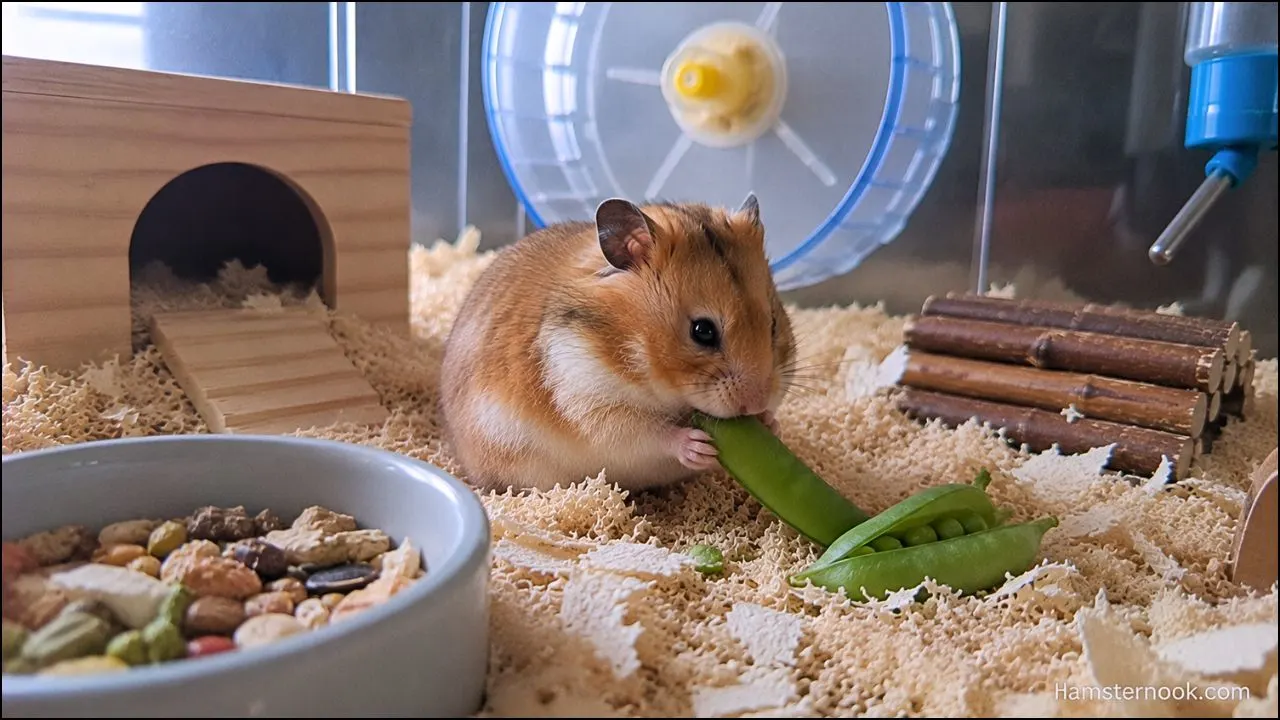
It also makes it easier to observe how much your hamster appears to eat.
You can combine bowl feeding with occasional scatter feeding to provide variety.
Why Do Hamsters Store Food in Their Cheeks and Hide It?
You may notice your hamster filling its cheeks and carrying food away from the feeding area.
This is normal hamster behavior.
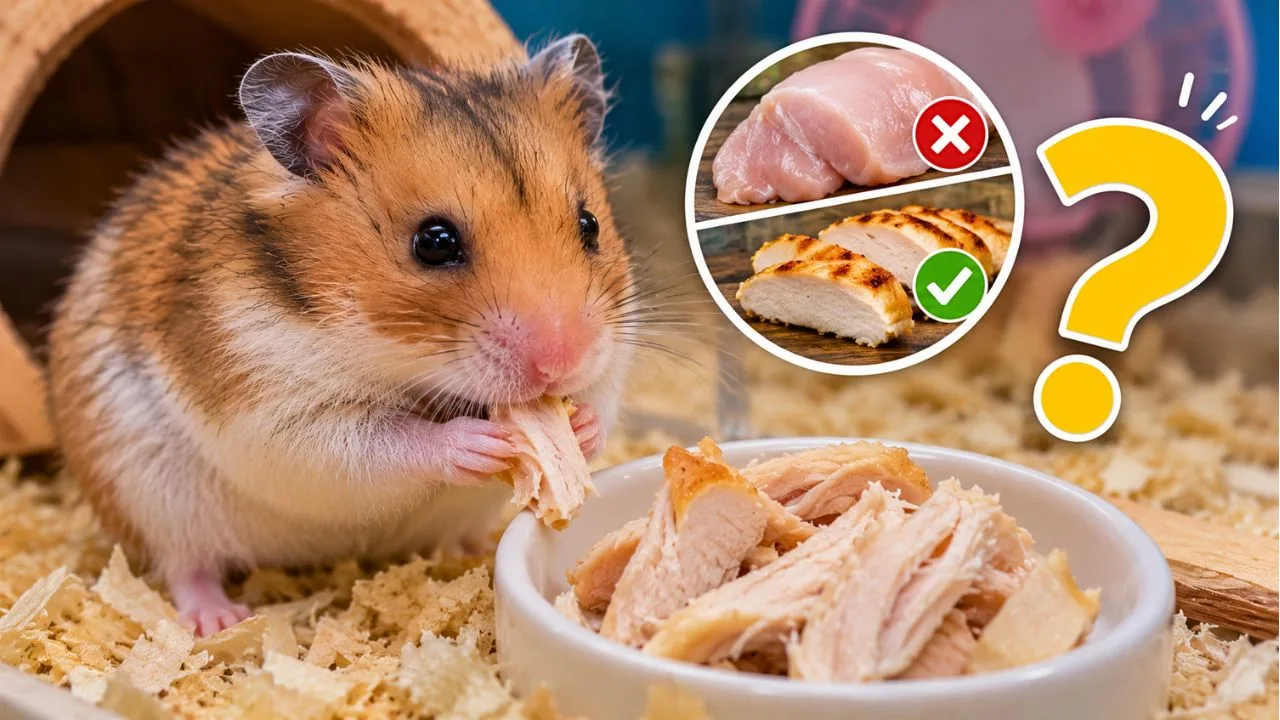
Hamsters have expandable cheek pouches that allow them to transport food to a safer location. They may then eat it or store it in their nest.
Finding a food stash does not automatically mean you are overfeeding.
To understand why hamsters hide their meals and what this behavior means, see Why Does My Hamster Keep Hiding Food? Normal Hoarding Explained.
However, stored food needs occasional inspection.

How to clean a hamster’s food stash safely
- Check the food-storage area during regular enclosure maintenance.
- Remove spoiled, moldy, or damp food.
- Remove perishable fresh food that has been stored too long.
- Preserve clean, dry food whenever possible.
- Avoid completely emptying the food stash unnecessarily.
Blue Cross advises owners to avoid removing a hamster’s entire food store because hoarding is a natural behavior. If a stash must be removed, replacing it with suitable food helps maintain a familiar routine.
Fresh vegetables and cooked foods need particular attention because they can spoil inside hidden storage areas.
How to Change Your Hamster’s Food Safely
A sudden change in diet can upset a hamster’s digestive system.
This is particularly relevant when bringing home a newly purchased or adopted hamster.

Ask the previous owner, breeder, rescue organization, or pet shop which food the hamster has been eating.
If you want to introduce a different complete food, change it gradually rather than replacing the entire diet overnight.
The RSPCA recommends transitioning to a new diet over approximately ten days by gradually mixing the new food with the familiar food.
A simple transition might look like this:

| Period | Feeding approach |
|---|---|
| Days 1–3 | Mostly familiar food with a small amount of new food |
| Days 4–6 | Gradually increase the new food |
| Days 7–9 | Make the new food the larger portion |
| Day 10 onward | Complete the transition if your hamster is tolerating it |
This is an illustrative gradual transition, not a fixed veterinary prescription. Adjust the pace if your hamster develops digestive changes, and seek veterinary advice if problems occur.
Don’t introduce several new vegetables, treats, and a new staple food at the same time.
Fresh Water: An Essential Part of Your Hamster’s Daily Diet
Food is only one part of hamster nutrition. Your hamster also needs constant access to clean drinking water.
You can provide water using a suitable small-animal bottle or a stable, shallow water bowl.

Whichever option you choose:
- Refill with fresh water daily.
- Check the water supply every day.
- Clean the bottle or bowl regularly.
- Check that the bottle nozzle isn’t blocked.
- Make sure the water container is accessible.
- Watch occasionally to confirm your hamster can drink comfortably.
A water bottle should not be considered reliable simply because it is attached to the enclosure. The nozzle can become blocked or the bottle can leak.
Check that water actually comes through the drinking tube.
If your hamster suddenly drinks much more or less than usual, or stops drinking, contact a veterinarian for advice.

Common Hamster Feeding Mistakes to Avoid
Even small feeding mistakes can affect your hamster’s diet over time.
Here are some habits worth avoiding.
1. Feeding too many sunflower seeds
Sunflower seeds are popular because hamsters enjoy them, but they are energy-dense. Feeding large quantities can make the overall diet less balanced.
Use them as occasional treats rather than the main food.

2. Giving too much fruit
Fruit contains natural sugars. Offering large portions or sugary fruit frequently is unnecessary, particularly for dwarf hamsters.
Choose vegetables more often and keep fruit occasional.
3. Feeding only a seed mixture
A hamster may select its favorite seeds and leave other ingredients behind.
Choose a nutritionally complete food and monitor whether your hamster is eating a balanced selection.

4. Removing all hidden food
Your hamster naturally stores food. Removing every stash during cleaning can disrupt this behavior.
Remove spoiled and perishable food while preserving clean, dry stored food.
5. Leaving fresh vegetables inside the enclosure
Fresh food can spoil when hidden in bedding or nesting areas.
Check food-storage locations and remove uneaten perishable food before it deteriorates.

6. Changing food suddenly
Switching brands or introducing multiple new ingredients overnight can cause digestive upset.
Make changes gradually and monitor your hamster.
Warning Signs: How to Know If Your Hamster’s Diet Needs Attention
Food-related problems are not always obvious. Changes in appetite, drinking habits, droppings, and body weight can provide useful information about your hamster’s health.
Watch for:

- Eating significantly less than usual.
- Refusing its normal food.
- Noticeable weight loss or unexplained weight gain.
- Changes in drinking habits.
- Persistent soft or watery droppings.
- A dirty or wet rear end.
- Unusual inactivity.
- Difficulty chewing or dropping food while eating.
If your hamster is eating less or refusing its usual food, see Why Is My Hamster Not Eating? 9 Causes, Warning Signs & What to Do for more information.
These signs can have causes unrelated to diet, so don’t assume that changing food will solve the problem.
When should you contact a veterinarian?
Contact a veterinarian promptly if your hamster stops eating, develops persistent diarrhea, loses weight unexpectedly, or shows a noticeable change in normal behavior.
Diarrhea accompanied by lethargy or a wet rear end can be particularly concerning in hamsters.
Severe weakness, collapse, or breathing difficulty requires emergency veterinary attention.
Never try to treat digestive problems by withholding food, giving human medication, or experimenting with home remedies.
What You Should Do: A Simple Daily Hamster Feeding Checklist
Use this routine to keep your hamster’s feeding habits consistent.
- Provide the recommended daily amount of complete hamster food.
- Offer a small portion of suitable fresh vegetables when appropriate.
- Keep fruit and high-fat treats occasional.
- Provide fresh drinking water continuously.
- Check the water bottle or bowl for proper function.
- Remove spoiled or uneaten fresh food.
- Inspect food-storage areas without unnecessarily disturbing the nest.
- Monitor appetite and normal eating behavior.
- Record weight periodically to identify changes.
- Introduce new foods gradually.
You don’t need to prepare complicated meals or buy dozens of different treats. A consistent, balanced feeding routine is much more useful.
Final Thoughts
Feeding a hamster properly is about providing the right balance rather than offering as many foods as possible.
Start with a complete commercial hamster diet, introduce suitable vegetables in small portions, and reserve fruit, seeds, nuts, and protein-rich treats for occasional variety. Keep fresh water available at all times and check your hamster’s food stores regularly.
Pay attention to what your hamster actually eats, not just what you put in its bowl. Once you understand its normal feeding habits, it becomes much easier to recognize changes and maintain a healthy routine.
A simple feeding schedule, appropriate portions, and gradual dietary changes can make everyday hamster care much easier for both beginners and experienced owners.

Frequently Asked Questions
1. What should I feed my hamster every day?
Feed a complete commercial hamster food formulated to meet its nutritional needs. You can supplement this with small amounts of suitable vegetables. Fresh water should always be available.
2. How many times a day should I feed my hamster?
Once-daily feeding in the evening is a practical routine for many hamster owners. You can also divide the daily ration into two meals. Follow the food manufacturer’s instructions and avoid waking your hamster unnecessarily.
3. Can hamsters eat vegetables every day?
Suitable vegetables can be offered regularly in small quantities. Introduce them gradually, wash them thoroughly, and remove uneaten fresh food before it spoils.
4. Can hamsters eat fruit every day?
Fruit is better treated as an occasional snack rather than an everyday requirement. Small pieces of apple without seeds, banana, pear, or strawberry can provide variety, but their natural sugar content means portions should remain small.

5. What is the best food for a Syrian hamster?
A complete commercial hamster food formulated for Syrian hamsters is a suitable dietary foundation. Supplement it with appropriate vegetables and occasional protein-rich treats.
6. What should dwarf hamsters eat?
Dwarf hamsters need a nutritionally complete food appropriate for their species, alongside carefully selected supplementary foods. Avoid making sugary fruit and treats a regular part of their diet because some dwarf species are particularly prone to diabetes.
7. Can hamsters eat only seeds?
A diet consisting only of loose seeds is not recommended. Seeds alone may not provide the nutritional balance a hamster needs. Choose a complete hamster food instead.
8. Do hamsters need protein?
Yes. Hamsters are omnivores, and their nutritional needs include protein. A complete commercial hamster diet should provide an appropriate nutritional foundation. Small amounts of suitable foods such as plain cooked egg or pet-food mealworms can be offered occasionally.
9. Should I leave food in my hamster’s cage overnight?
Yes. Hamsters are naturally active during the evening and night, so food should be available when they wake up. You can provide their daily ration in the evening and maintain a clean, accessible food supply.
10. Why does my hamster hide its food instead of eating it?
Food hoarding is normal hamster behavior. Hamsters use their cheek pouches to carry food to their nests and other storage areas. Check hidden food regularly and remove anything spoiled or damp.
11. Can hamsters drink milk?
Milk is not necessary for a hamster’s diet. Provide clean drinking water instead. Avoid offering cow’s milk or sweetened dairy drinks as routine treats.
12. How do I know if I’m feeding my hamster too much?
Monitor your hamster’s body weight, food consumption, and stored food. Unexplained weight gain may indicate that its overall food intake or treat portions need reviewing. Speak with a veterinarian if you notice persistent weight changes.
13. Do hamsters need hay?
Hay can provide additional fiber and material for chewing and enrichment. Timothy hay is commonly offered to small pets, including hamsters. However, hay should not replace a complete hamster food.
14. Can I feed my hamster human food?
Some plain ingredients that people eat, such as certain vegetables, fruit, and cooked egg, can be suitable in small quantities. Avoid processed snacks, chocolate, salty foods, sugary foods, and heavily seasoned meals.
References
This guide is based on hamster nutrition, feeding practices, food safety, and veterinary husbandry guidance from trusted animal welfare and veterinary resources, including:
- RSPCA – What to Feed a Pet Hamster – Guidance on balanced hamster diets, suitable fresh foods, drinking water, food storage, and monitoring eating habits.
- PDSA – Hamsters as Pets – Veterinary guidance on commercial hamster pellets, vegetables, fruit, protein-rich treats, feeding portions, and enrichment through foraging.
- Blue Cross – Hamster Care – Information about suitable hamster foods, fresh-food portion sizes, food hoarding, daily feeding, and water requirements.
- MSD Veterinary Manual – Hamsters – Veterinary reference covering hamster biology, omnivorous dietary habits, complete commercial food, and general husbandry.
- MSD Veterinary Manual – Providing a Home for a Hamster – Additional veterinary guidance on hamster nutrition, treats, food storage, and drinking water.
- RSPCA – Taking Your New Hamster Home – Guidance on maintaining a familiar diet when bringing home a hamster and gradually transitioning to a different food over approximately ten days.
Medical Disclaimer
This article provides general hamster nutrition and care information. It is not a substitute for professional veterinary advice, diagnosis, or treatment. If your hamster develops digestive problems, stops eating, or shows unusual health changes, consult a veterinarian experienced with small mammals.

Narayan Kumar is the founder and author of HamsterNook. He creates practical, research-based hamster care guides covering hamster behavior, nutrition, cage setup, enrichment, health, and everyday care. His goal is to help hamster owners make informed decisions and provide safer, healthier lives for their pets through clear, beginner-friendly information based on trusted animal care resources.