Bringing home a hamster seems simple at first—until you stand in front of the pet food aisle wondering what these tiny pets are actually supposed to eat. Many beginner owners accidentally feed too many sugary treats, seed-heavy mixes, or unsafe human foods because hamster diets are often misunderstood online.
The good news is that feeding a hamster properly is not complicated once you understand the basics. A healthy hamster diet focuses on a balanced staple food, small portions of fresh vegetables, occasional protein, and limited treats. The right diet helps prevent obesity, diabetes, digestive problems, and nutritional deficiencies while keeping your hamster active and healthy for years.
Hamsters are omnivores, which means they eat both plant-based foods and animal protein. In the wild, they forage for seeds, grains, insects, roots, and vegetation. Pet hamsters thrive when their diet reflects that natural variety.
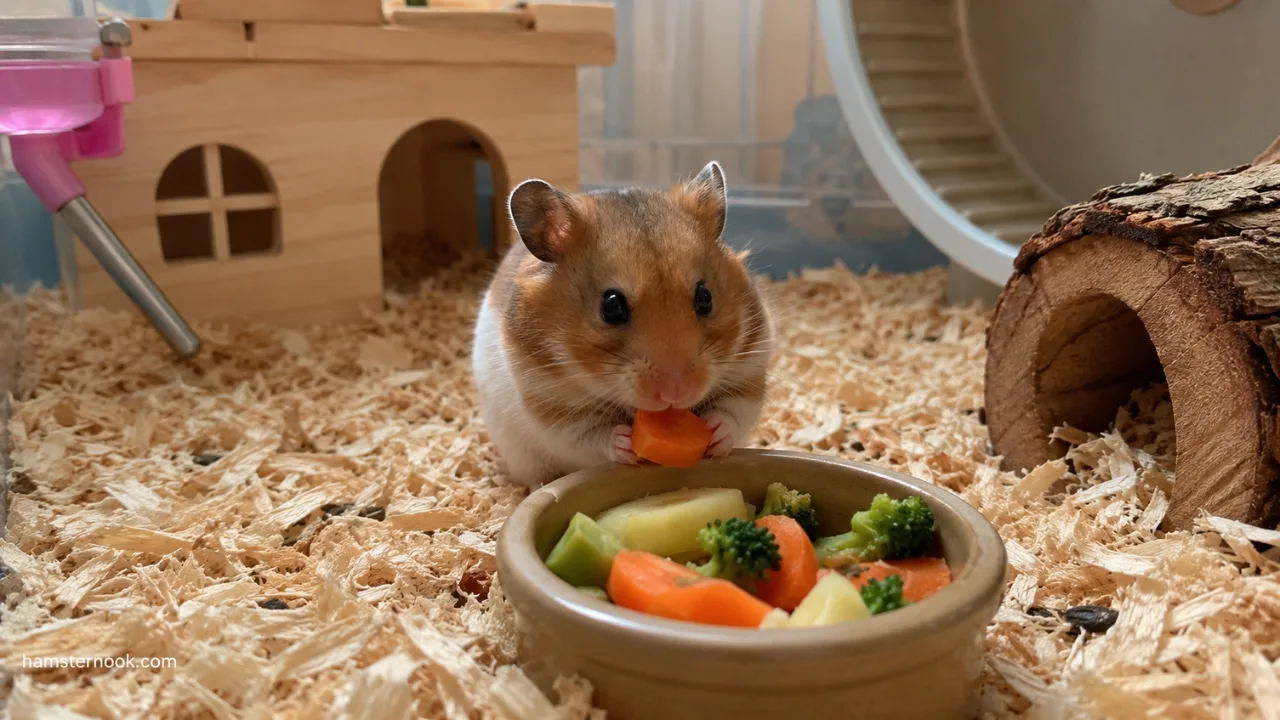
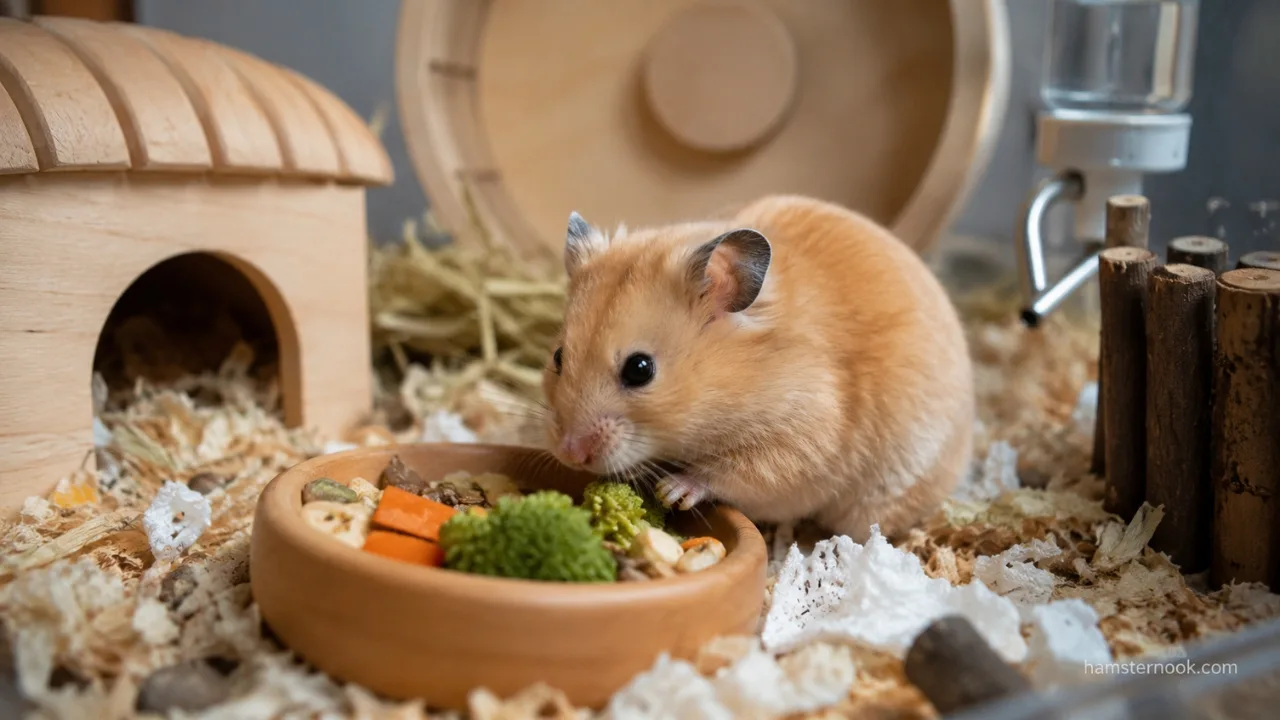
Hamsters eat a balanced diet of complete hamster food, small amounts of safe vegetables, and occasional protein-rich treats such as mealworms or plain cooked egg. Fruit should be limited because of its sugar content, and fresh drinking water must always be available. Avoid chocolate, grapes, rhubarb, unsafe plant parts, and salty or sugary processed foods.
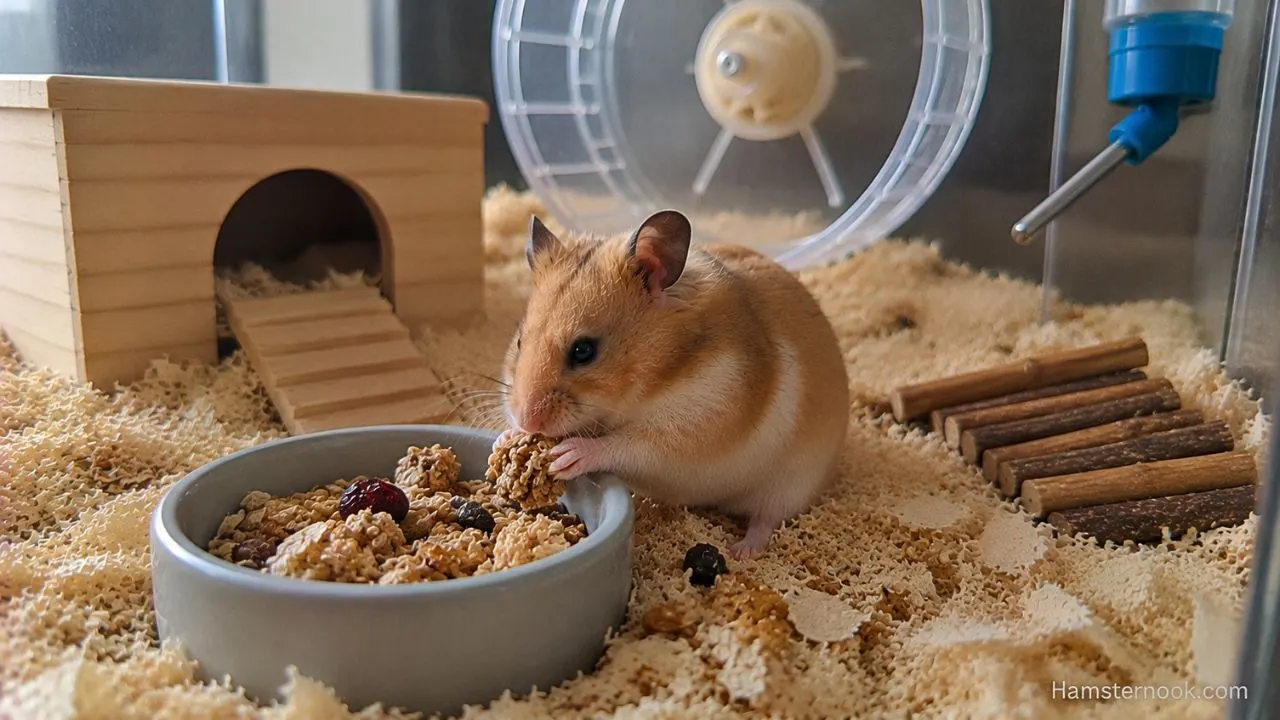
This gives readers a more complete immediate answer without adding another repetitive introduction. The dietary foundation and food restrictions are supported by veterinary and animal-welfare guidance.
What Do Different Types of Hamsters Eat?
Most pet hamsters can safely eat the same basic foods, but portion sizes may vary depending on the species.
- Syrian hamsters generally eat larger portions and can handle slightly bigger vegetable servings.
- Dwarf hamsters often require more careful treat management because some species are more prone to diabetes.
- Roborovski hamsters have similar dietary needs but usually consume smaller amounts overall.
Regardless of breed, a balanced diet built around high-quality hamster food, fresh vegetables, occasional protein, and limited treats remains the healthiest approach.
What Should a Hamster Eat Every Day?
A beginner-friendly hamster diet usually includes:

- High-quality hamster pellets or lab blocks
- A balanced seed mix in moderation
- Fresh vegetables
- Small amounts of protein
- Fresh clean water at all times
Veterinary and hamster care sources consistently recommend pellets or lab blocks as the nutritional foundation because they provide balanced nutrients and reduce selective eating.
Fresh foods should supplement the diet, not replace the main food source.
The exact balance depends on the hamster, species, food formulation, and advice from your veterinarian. The safest approach is to use a complete hamster food as the nutritional base, then add small amounts of appropriate fresh foods for variety rather than replacing the staple diet with vegetables, fruit, or treats. RSPCA guidance also recommends a balanced hamster diet with small quantities of greens, root vegetables, and fruit.
Introducing only one new food at a time makes it much easier to identify the cause if your hamster develops digestive problems or refuses to eat afterward.

How to Choose the Best Hamster Food
The best staple food is not simply the food with the most seeds, treats, or colorful ingredients. Choose a complete hamster food formulated for hamsters and use it as the nutritional foundation of the diet. Fresh vegetables, occasional fruit, and suitable protein can then be added in small amounts for variety.
When comparing foods, check the product label and make sure it is specifically intended for hamsters. Avoid making a homemade mixture the sole diet unless you have guidance from a qualified veterinary professional, because balancing nutrients correctly can be difficult.
Best Foods for Hamsters
1. Hamster Pellets or Lab Blocks
This should form the core of your hamster’s diet.
Good pellets contain balanced protein, fiber, vitamins, and minerals in every bite. Unlike loose seed mixes, pellets prevent hamsters from picking only their favorite fatty ingredients.
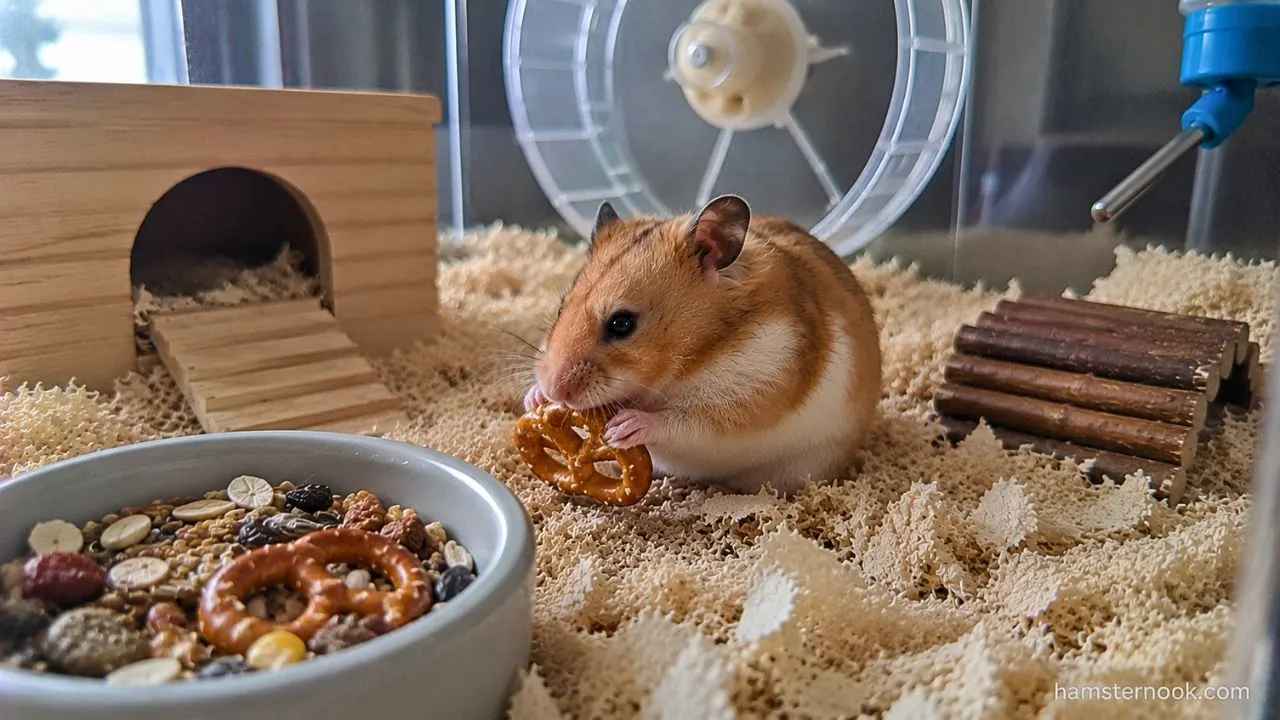
For the main diet, choose a complete food specifically formulated for hamsters. A nutritionally complete pellet or lab-block style food is useful because it reduces selective feeding and helps ensure your hamster receives consistent nutrients. Seed-heavy mixes should not become the only food source, because hamsters may selectively eat the higher-fat ingredients and leave the rest.
Why pellets are important:
- Balanced nutrition
- Helps prevent picky eating
- Supports healthy teeth
- Easier portion control
Some experienced hamster organizations and veterinary sources recommend lab-style blocks because they are nutritionally complete.
A complete commercial hamster food can help provide consistent nutrition. When choosing one, look for a product specifically formulated for hamsters rather than relying on a loose mix that allows selective feeding. Merck Veterinary Manual recommends a complete, balanced pelleted diet for captive hamsters
Pellet Food vs Seed Mixes
| Feature | Pellets/Lab Blocks | Seed Mixes |
|---|---|---|
| Balanced nutrition | Yes | Sometimes inconsistent |
| Prevents picky eating | Yes | No |
| Mental enrichment | Moderate | High |
| Fat content control | Easier | Harder |
| Beginner-friendly | Best option | Good when balanced |
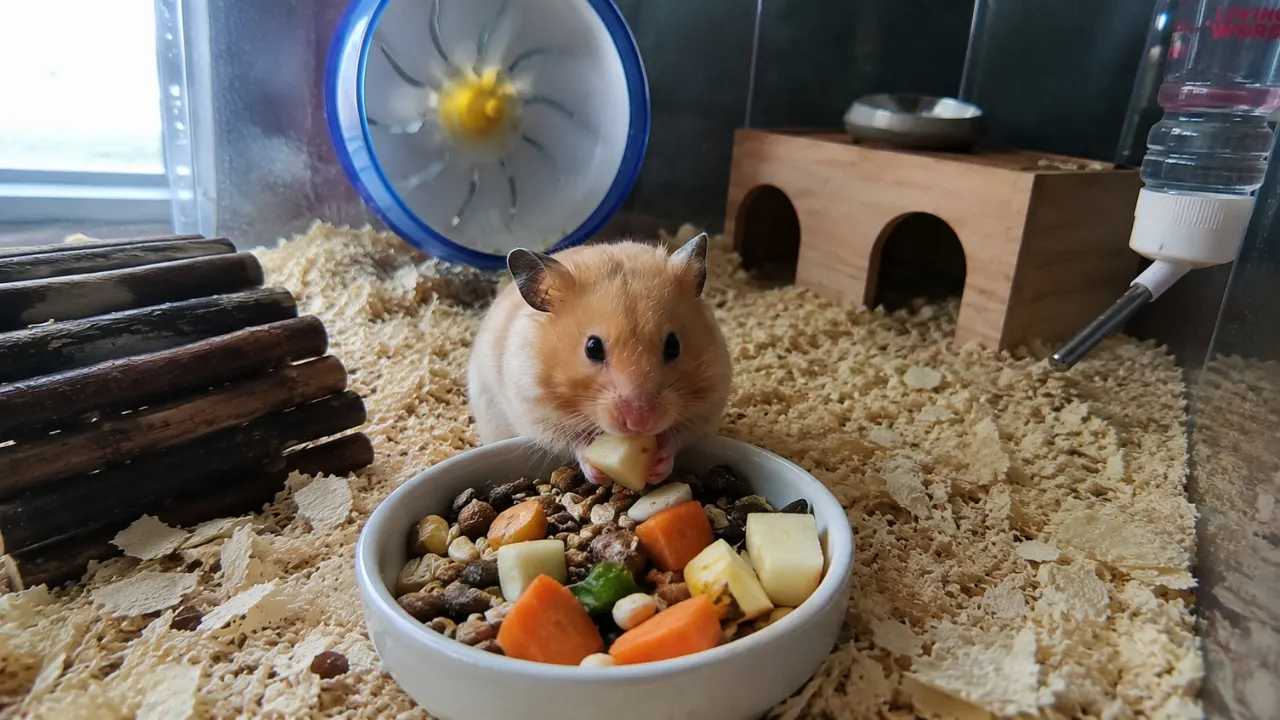
A combination approach often works well: use pellets as the staple diet and offer small amounts of quality seed mix for enrichment and variety.

A balanced diet is only one part of keeping a hamster healthy. Our Complete Hamster Care Guide for Beginners explains how proper housing, enrichment, handling, and daily care all work together with good nutrition.
Safe Vegetables for Hamsters
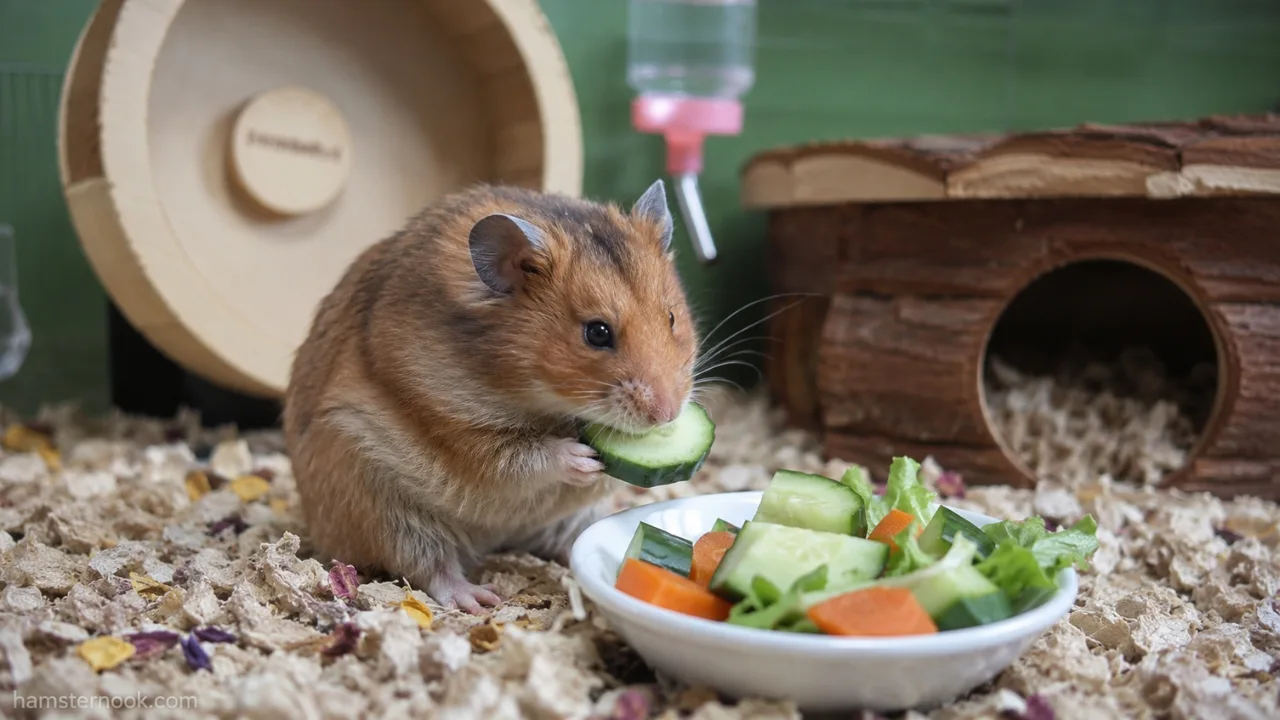
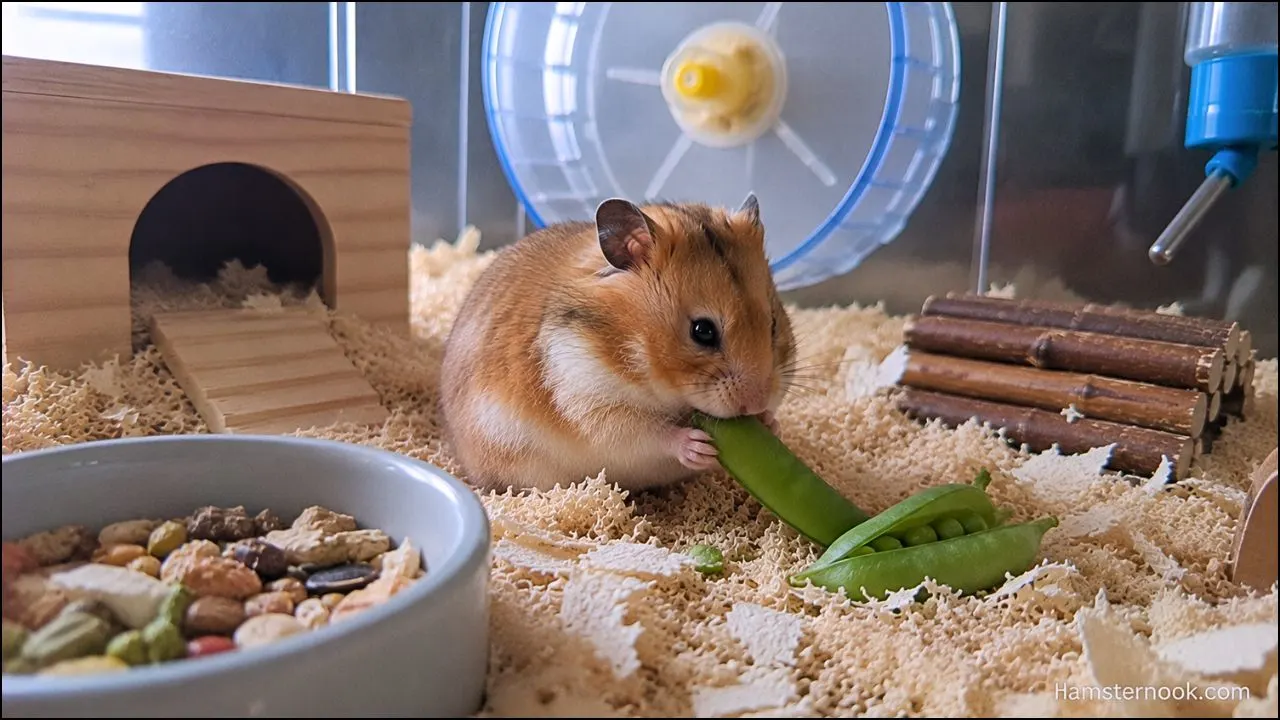
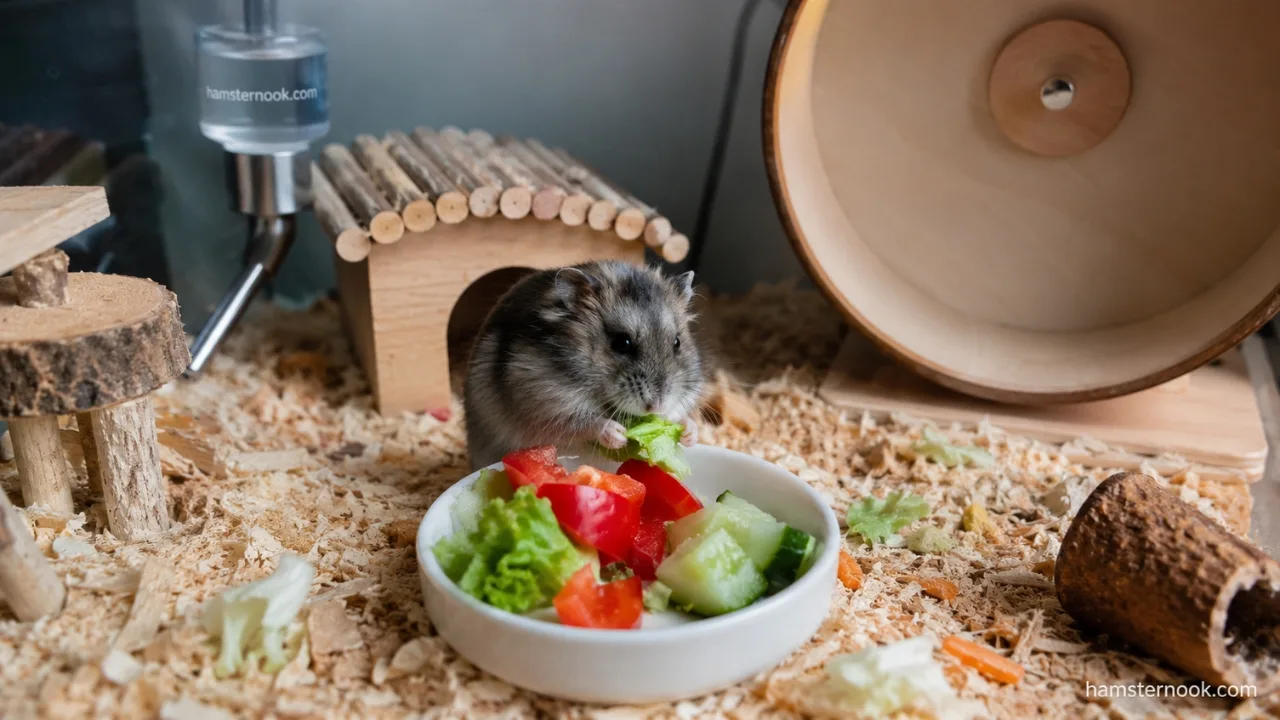
Fresh vegetables provide fiber, hydration, and vitamins. Offer small portions only, especially when introducing new foods.
Safe vegetables include:
- Carrot
- Cucumber
- Broccoli
- Cauliflower
- Bell pepper
- Zucchini
- Spinach
- Romaine lettuce
- Kale
- Peas
- Pumpkin
- Squash
Several hamster care organizations list these vegetables as safe options when fed moderately.
Broccoli is one option, but preparation and portion size still matter. Our Can Hamsters Eat Broccoli? Safe Amount, Raw vs Cooked & Risks article explains these feeding considerations in detail.
Tips for feeding vegetables:
- Wash thoroughly
- Feed fresh, not seasoned
- Introduce slowly
- Remove leftovers within a few hours
- Avoid large portions
Too much watery food can upset a hamster’s digestive system.
Safe Fruits for Hamsters
Hamsters can eat fruit, but only in tiny amounts because fruits contain natural sugars.
Safe fruits include:
- Apple (without seeds)
- Banana
- Blueberries
- Strawberries
- Pear
- Peach
- Raspberry
Fruit should be treated as an occasional snack rather than a daily food.
If you’re considering watermelon as an occasional fruit treat, our Can Hamsters Eat Watermelon? guide explains the important portion and safety considerations before you offer it.

Important:
Dwarf hamster species are more prone to diabetes, so sugary fruits should be offered very sparingly.
Protein Foods Hamsters Can Eat
Because hamsters are omnivores, protein is an important part of their diet.
Protein treats should only be offered in moderation. Our Healthy Treats for Hamsters guide covers safe treat ideas and appropriate serving frequency.
Safe protein sources:
- Mealworms
- Plain cooked egg
- Plain cooked chicken
- Crickets
- Small amounts of tofu
Offer additional protein foods as occasional small treats, taking into account the protein already supplied by your hamster’s complete food. The appropriate amount depends on the hamster’s species, age, health, and overall diet.

Avoid oily, salty, or heavily processed meats.
Plain cooked egg is another occasional protein option, although serving size and preparation are important. Our Can Hamsters Eat Eggs? Safe Amounts, Benefits & Risks article covers these details.
Foods Hamsters Should Never Eat
Some foods are dangerous or toxic to hamsters and should always be avoided.
| Unsafe Food | Why It’s Dangerous |
|---|---|
| Chocolate | Toxic compounds |
| Onion | Harmful to red blood cells |
| Garlic | Digestive and toxicity risks |
| Rhubarb | Toxic |
| Grapes | Can be poisonous to hamsters |
| Apple seeds | Contain harmful compounds |
| Citrus fruits | Too acidic |
| Raw potato | Unsafe compounds |
| Sugary candy | Obesity and diabetes risk |
| Salty chips | Too much sodium |
| Alcohol | Toxic |
| Caffeinated drinks | Dangerous stimulants |
Animal welfare organizations specifically warn against grapes, rhubarb, and highly sugary foods.

If you are unsure whether a food is safe, it is better not to feed it.
What If Your Hamster Eats Something Unsafe?
If your hamster eats a potentially toxic food, remove access to it and contact an exotic-pet veterinarian promptly. Tell the veterinarian what your hamster ate, approximately how much, and when it happened. Do not try to induce vomiting, give human medication, or wait for symptoms before seeking advice about a known toxic exposure.
Can Hamsters Eat Human Food?
Some plain human foods are safe in moderation, but many processed foods are not suitable.
Occasionally safe:
- Plain cooked rice
- Plain pasta
- Oats
- Unsalted nuts
- Whole grains
Never feed:
- Fast food
- Fried food
- Sugary desserts
- Spicy foods
- Highly salted snacks
Hamsters have tiny bodies, so even small amounts of unhealthy food can cause problems quickly.

While some human foods can be offered safely in moderation, others should be avoided. Can Hamsters Eat Bread? Safe or Dangerous? explains whether bread is suitable and how much is safe.
How Much Should a Hamster Eat?
The amount a hamster needs depends on its species, size, age, activity level, and the calorie density of its staple food. Use the feeding instructions for your specific complete hamster food as a starting point, then monitor your hamster’s weight, body condition, and food intake. Avoid relying on one fixed portion for every hamster because individual needs can vary.
Syrian hamsters generally eat more than dwarf hamsters.
A practical feeding routine is to keep the complete hamster food as the nutritional foundation, then add small amounts of fresh foods for variety. Fresh vegetables can be offered several times per week, while fruit and protein should remain occasional foods rather than replacing the staple diet.

- Complete hamster food as the main diet
- Small portions of suitable vegetables several times per week
- Fruit only as an occasional treat
- Small amounts of suitable protein occasionally
- Fresh, clean drinking water available at all times
Overfeeding treats is one of the most common beginner mistakes.
Do Hamsters Store Food?
Yes. Hamsters naturally hoard food in hidden areas of their enclosure.
This behavior is completely normal and instinctive.
Fresh vegetables, fruit, and other moist foods need extra attention because they can spoil if hidden in the nest or burrow. Check stored fresh food regularly and remove anything that is wet, moldy, spoiled, or starting to smell.

Remove:
- Moldy food
- Wet food
- Rotten vegetables or fruit
What Foods Do Wild Hamsters Eat?
Understanding a hamster’s natural diet can help owners make better feeding choices.
In the wild, hamsters spend much of their time foraging for seeds, grains, roots, grasses, insects, and other small food sources. Their diet changes throughout the year depending on what is available.
Pet hamsters do best when their diet includes a similar variety. While commercial hamster food provides balanced nutrition, adding safe vegetables, occasional protein, and enrichment foods can help encourage natural foraging behaviors.

Best Feeding Tips for Beginners
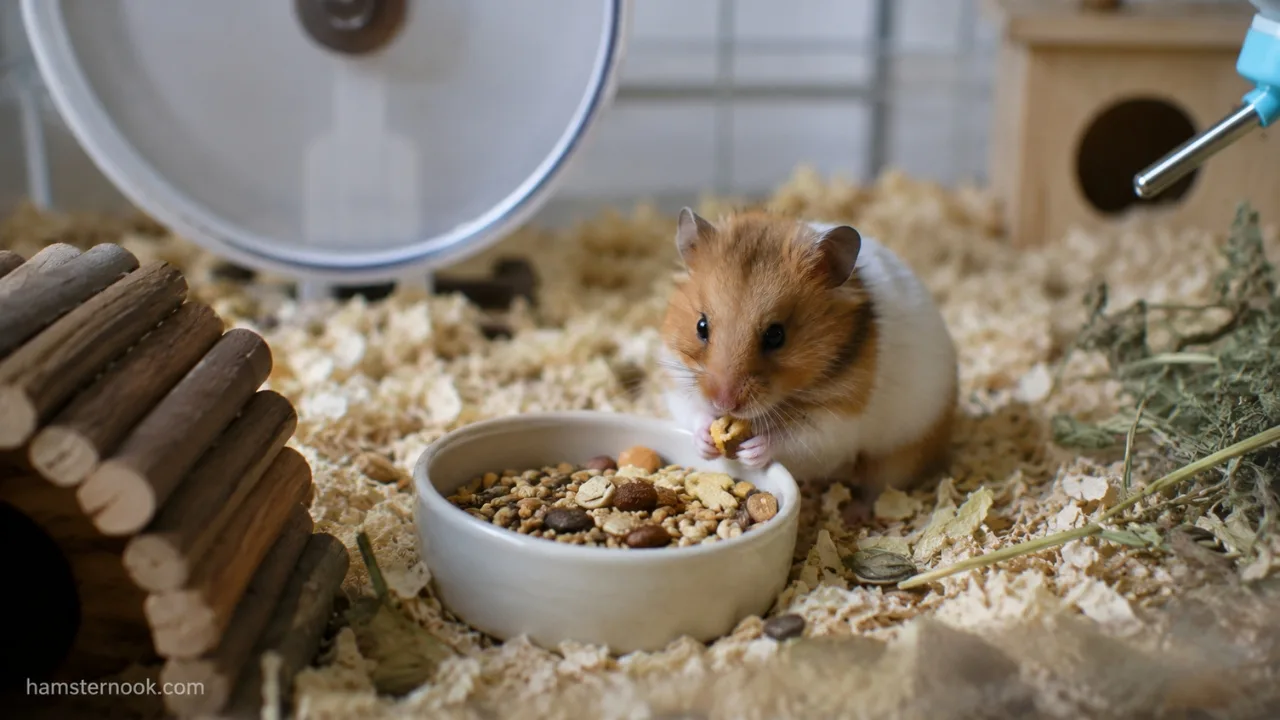
Use a shallow food dish
Heavy ceramic bowls work best because they are difficult to tip over.
Scatter some food around the cage
Rotating safe vegetables and occasional protein treats throughout the week can also make feeding more enriching without changing your hamster’s overall balanced diet.
Introduce new foods slowly
Introduce only one new vegetable, fruit, or treat at a time and start with a very small amount. This makes it easier to notice digestive changes and identify which food may have caused a problem. Avoid introducing several new foods at once.
Sudden diet changes may upset digestion.

Always provide fresh water
Provide fresh, clean drinking water at all times. Check and clean the bottle or dish daily, make sure your hamster can reach it easily, and confirm that the water source is working properly.
Watch your hamster’s weight
Obesity is common in pet hamsters, especially when fed too many treats.
Signs Your Hamster’s Diet May Be Poor
A poor diet can lead to health issues over time.
Watch for:

- Weight gain
- Diarrhea
- Low energy
- Dull fur
- Overgrown teeth
- Excessive food selectiveness
If symptoms continue, contact an exotic pet veterinarian.
Common Beginner Feeding Mistakes
Feeding only seed mixes
Hamsters may selectively eat fatty seeds and ignore healthier ingredients.
Giving too much fruit
Excess sugar is unhealthy, especially for dwarf species.
Overfeeding treats
Tiny pets need tiny portions.

Leaving fresh food too long
Spoiled food can quickly grow bacteria or mold.
Using rabbit or guinea pig food
Different species have different nutritional needs.
Quick Hamster Feeding Checklist
For easy daily feeding, remember these simple rules:
- ✓ Provide a quality hamster pellet or lab block as the main diet
- ✓ Offer fresh vegetables in small portions
- ✓ Give protein treats once or twice per week
- ✓ Limit fruit because of its natural sugar content
- ✓ Remove uneaten fresh food before it spoils
- ✓ Always provide clean drinking water
- ✓ Avoid chocolate, onions, garlic, citrus fruits, and processed snacks
Following these basics will help most hamsters maintain a healthy weight and receive balanced nutrition.
Final Thoughts
Feeding a hamster well doesn’t have to be complicated. A balanced diet built around quality pellets, fresh vegetables, occasional protein, and limited treats provides the nutrition most healthy hamsters need. Small, consistent feeding habits are usually far more beneficial than frequently changing your hamster’s diet.
Understanding what hamsters eat—and just as importantly, what they should avoid—helps prevent many common feeding mistakes made by new owners.
Beginners often worry about creating the “perfect” diet, but consistency matters more than complexity. Avoid unsafe foods, limit sugary treats, provide fresh water daily, and your hamster will usually do very well.
FAQ About Hamster Food
What should a hamster eat every day?
A hamster’s main diet should be a complete, balanced food formulated for hamsters, with fresh water available at all times. Small amounts of suitable vegetables can provide variety, while fruit, protein foods, and other treats should remain occasional additions rather than replacing the staple diet.
What is the best food for hamsters?
A high-quality hamster pellet or lab block combined with small portions of fresh vegetables and occasional protein is considered one of the healthiest options.
Can hamsters eat carrots?
Yes, hamsters can safely eat small amounts of carrot as an occasional vegetable treat.
Can hamsters eat bananas?
Yes, but only tiny pieces because bananas contain a lot of sugar.
Can hamsters drink milk?
Milk is generally unnecessary for hamsters and may cause digestive upset. Fresh water is the safest option.

How often should hamsters eat fresh vegetables?
Small portions can usually be offered several times per week, depending on the hamster and the vegetable type.
Can hamsters eat cheese?
Small amounts of low-fat cheese are sometimes tolerated, but it should only be an occasional treat because it is high in fat and salt.
Do hamsters need hay?
Hamsters do not rely on hay the way rabbits or guinea pigs do, but some owners provide safe hay for nesting and enrichment.
Some everyday foods are unsuitable or potentially dangerous for hamsters. Our Foods Hamsters Should Never Eat: Toxic & Unsafe Foods to Avoid article covers important food hazards and ingredients owners should check before feeding.
References
This guide is based on hamster nutrition, feeding, safe foods, dietary requirements, and welfare guidance from trusted veterinary and animal welfare organizations, including:
- RSPCA – Hamster Diet and Feeding – Guidance on balanced hamster diets, staple foods, fresh vegetables, fruit, treats, water, and foods to avoid.
- RSPCA – Keeping Hamsters as Pets – General hamster care, feeding, nutrition, natural foraging behavior, and welfare guidance.
- PDSA – Hamsters as Pets – Advice on hamster nutrition, feeding, treats, fresh foods, water, and general small-pet welfare.
- Blue Cross – Hamster Care Guide – Practical guidance on hamster diet, feeding, safe foods, treats, housing, and everyday care.
- MSD Veterinary Manual – Hamsters – Veterinary reference information on hamster nutrition, complete diets, feeding practices, digestive health, and common dietary considerations.
- MSD Veterinary Manual – Routine Health Care of Hamsters – Veterinary guidance on routine hamster care, nutrition, weight monitoring, dental health, and preventive care.

Narayan Kumar is the founder and author of HamsterNook. He creates practical, research-based hamster care guides covering hamster behavior, nutrition, cage setup, enrichment, health, and everyday care. His goal is to help hamster owners make informed decisions and provide safer, healthier lives for their pets through clear, beginner-friendly information based on trusted animal care resources.