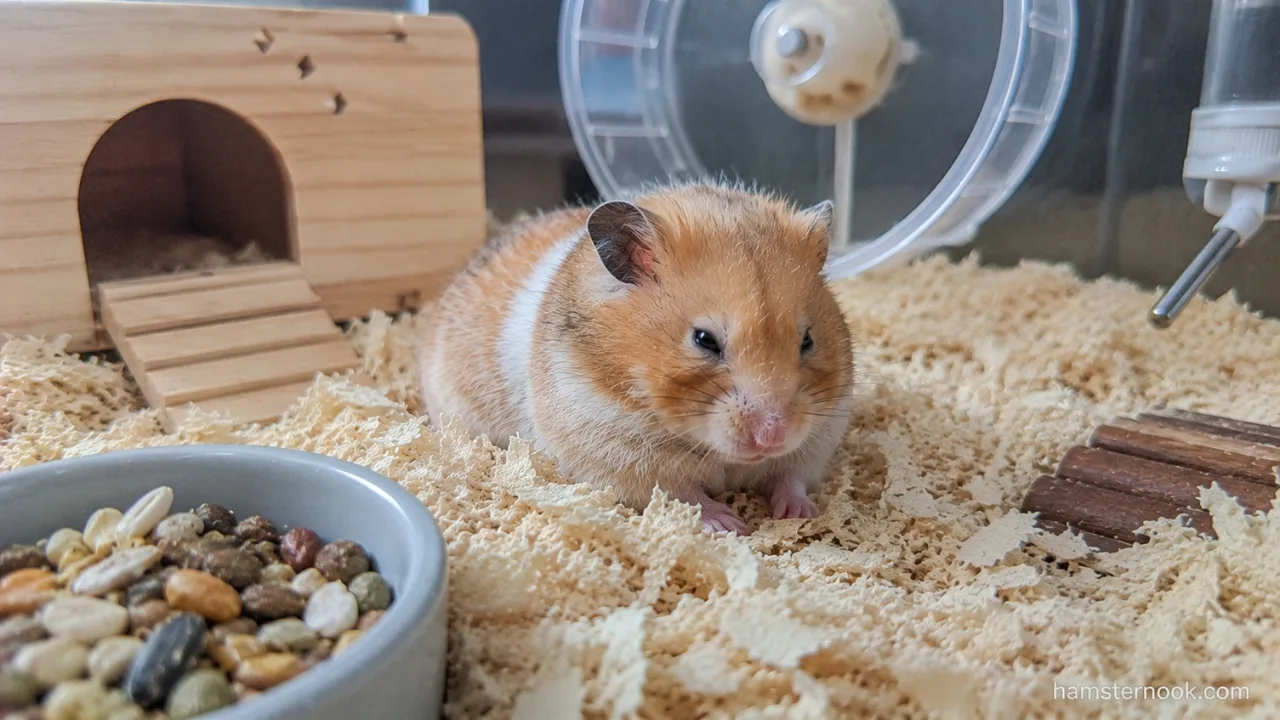
A slightly moist hamster nose can look alarming, especially if you are used to seeing a dry, clean nose. But nose moisture by itself does not automatically mean your hamster is sick. The more useful question is what the moisture looks like and whether anything else has changed. A wet or runny nose accompanied by sneezing, eye discharge, reduced appetite, low activity, or breathing changes deserves much more attention than mild moisture in an otherwise healthy hamster.
Quick Answer: Is a Wet Hamster Nose Normal?
A slightly moist nose does not necessarily mean your hamster is sick. What matters is whether you are seeing simple moisture or actual nasal discharge, especially if your hamster is also sneezing, eating less, acting unusually tired, or having trouble breathing.
Veterinary guidance lists nasal discharge among signs of illness in hamsters. Respiratory problems can also cause sneezing, abnormal breathing, reduced activity, and loss of appetite.
The key is to look at the whole picture:

| What you notice | What it may mean |
|---|---|
| Nose looks slightly moist, hamster otherwise normal | May not indicate illness by itself |
| Occasional sneeze with no other changes | May be temporary irritation |
| Repeated sneezing plus a wet nose | Needs closer observation and may require veterinary advice |
| Clear or persistent nasal discharge | More concerning than simple moisture |
| Thick, crusty, pus-like, or bloody discharge | Veterinary attention is appropriate |
| Wet nose plus eye discharge, lethargy, or poor appetite | Possible illness; contact a veterinarian |
| Wet nose plus noisy or difficult breathing | Prompt veterinary care is needed |
There is no reliable way to diagnose the cause simply by looking at the nose. The pattern of symptoms matters.
What Does a Healthy Hamster Nose Look Like?
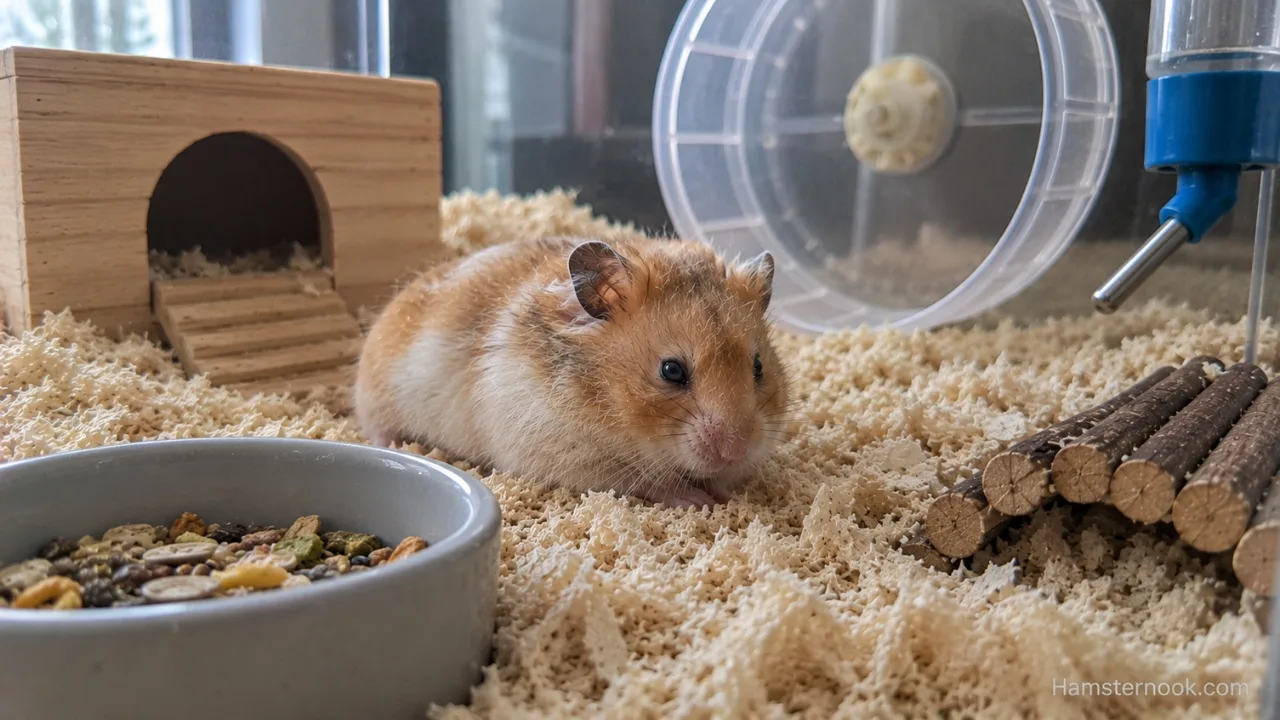
A hamster’s nose does not have to look completely dry every moment of the day. A small amount of moisture can be difficult to interpret, particularly when you are looking closely at a very small animal.
What matters more is whether the nose has new or excessive discharge and whether your hamster is behaving normally.
A healthy-looking hamster should generally remain alert during its normal active period, continue eating and drinking, and move around normally. Veterinary guidance recommends paying attention to your hamster’s usual appearance and behavior because changes can be early clues that something is wrong.
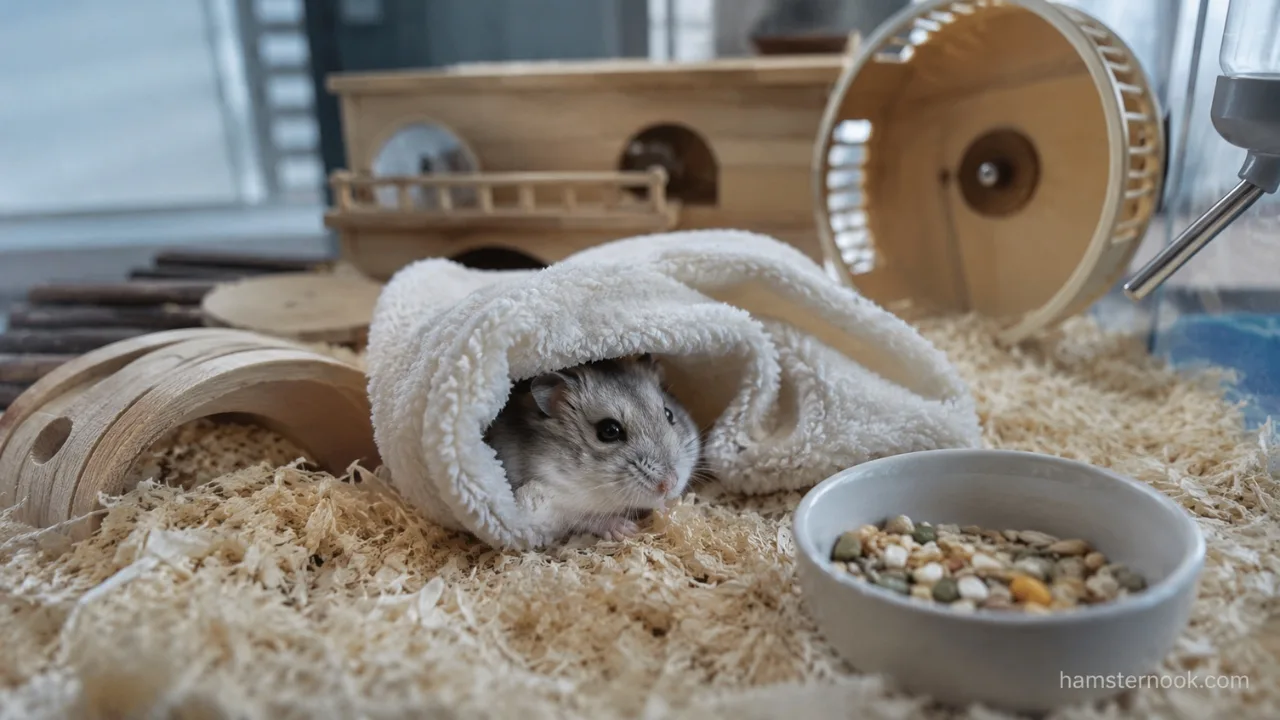
For example, a nose that simply appears a little shiny while your hamster is active, eating normally, grooming, and breathing quietly is a very different situation from a nose that repeatedly becomes wet and leaves visible discharge around the nostrils.
Why Can a Hamster’s Nose Become Wet?
Temporary irritation
The nose can become irritated when a hamster encounters particles or substances in its environment. Sneezing itself is a protective reflex that helps clear irritating material from the nasal passages. Veterinary respiratory guidance lists particulate matter and irritation of the nasal cavity among triggers for sneezing.
If your hamster suddenly starts sneezing after digging through bedding, for example, the timing is useful information. It does not prove that the bedding is the cause, but it gives you something practical to investigate.
Dusty bedding
Bedding is worth checking whenever nasal irritation or sneezing appears.
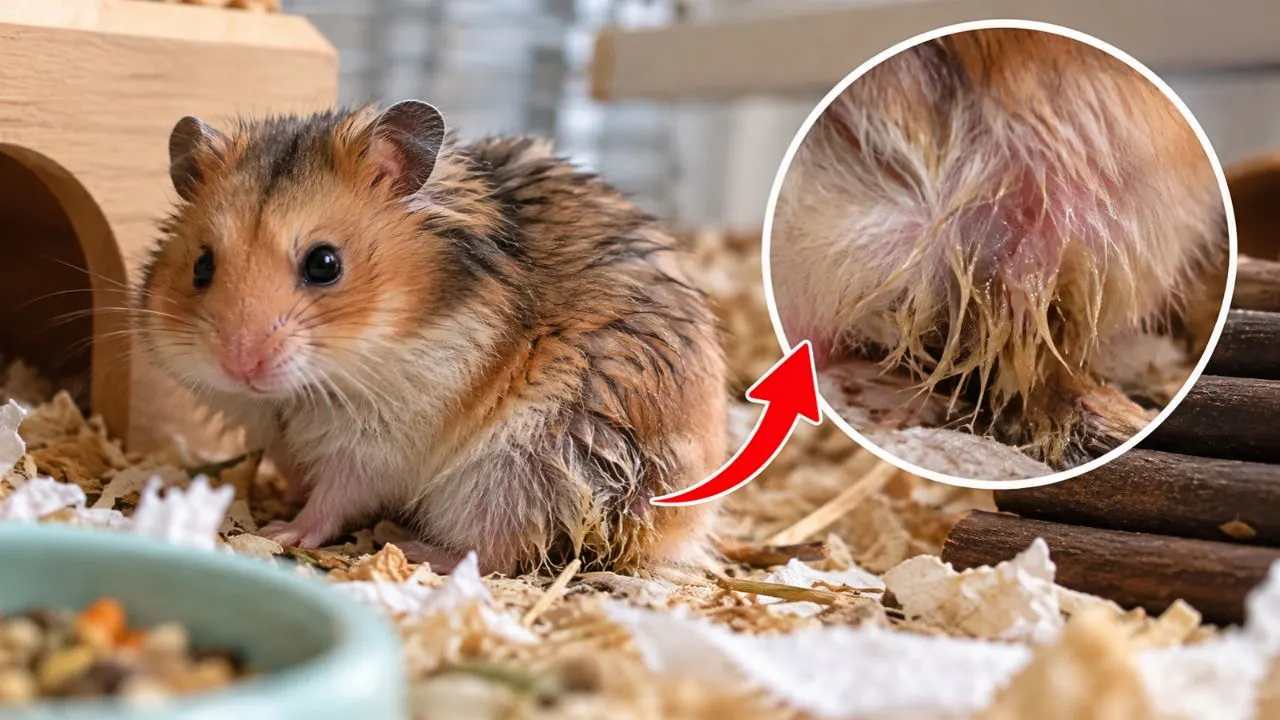
Dusty bedding can be worth investigating when sneezing or nasal irritation starts after a bedding change. You do not need to assume the bedding is definitely responsible, but removing an obvious source of airborne irritation is a sensible step while you watch for other symptoms.
You do not need to assume that every respiratory symptom is caused by bedding. Infection and other medical problems can produce similar signs. The goal is simply to remove obvious environmental irritants while monitoring the hamster.
Smoke, sprays, and strong fragrances
A hamster’s enclosure should not be exposed to cigarette smoke, aerosol sprays, strong cleaning fumes, or other airborne irritants.
The cage location matters as well, particularly when it is close to windows or other sources of changing air conditions. Should a Hamster Cage Be Near a Window? Risks Every Owner Should Know explains the environmental risks to consider before placing a hamster cage beside a window.
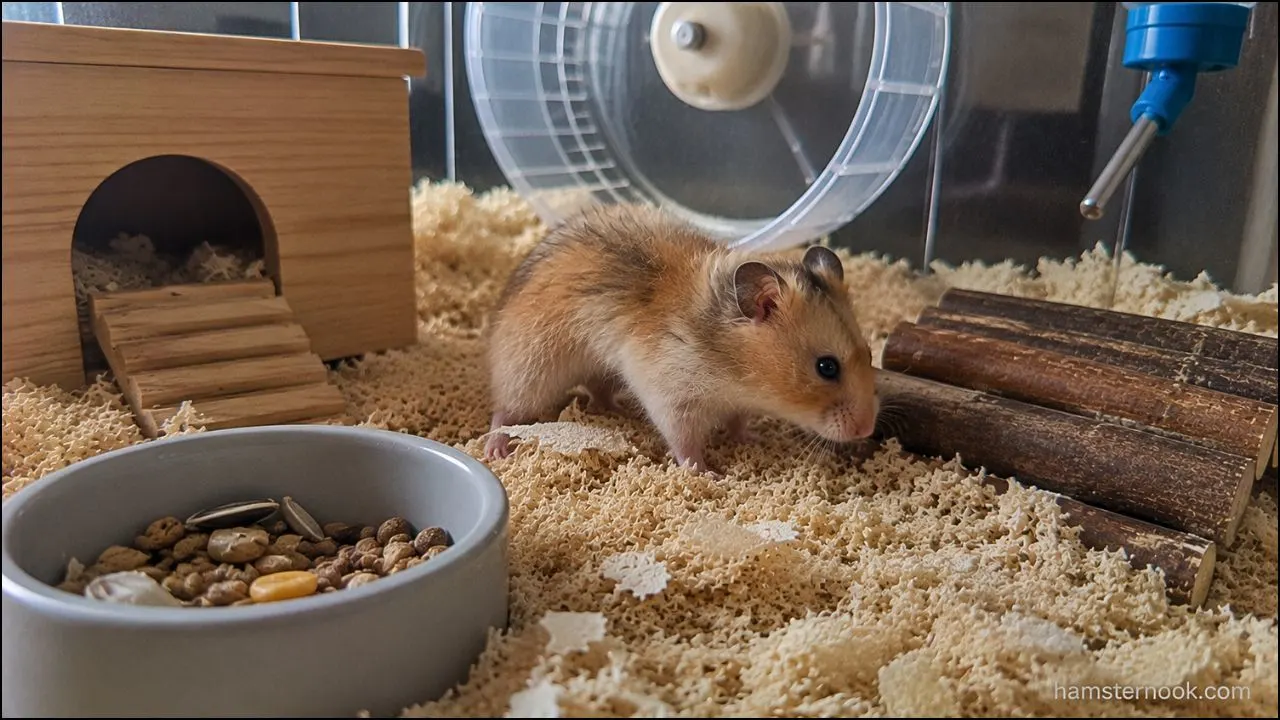
If you use a spray, air freshener, perfume, or strongly scented cleaning product near the enclosure, move the hamster away from the area and allow the air to clear before bringing it back.
Avoid spraying cleaning products directly around the hamster or its enclosure.
Nasal or respiratory disease
A wet nose becomes more concerning when it represents nasal discharge rather than simple surface moisture.
Respiratory disease can cause nasal discharge, sneezing, abnormal breathing, and changes in activity or appetite. In hamsters, pneumonia can be associated with mucus or pus around the nose or eyes, difficulty breathing, reduced appetite, and inactivity.
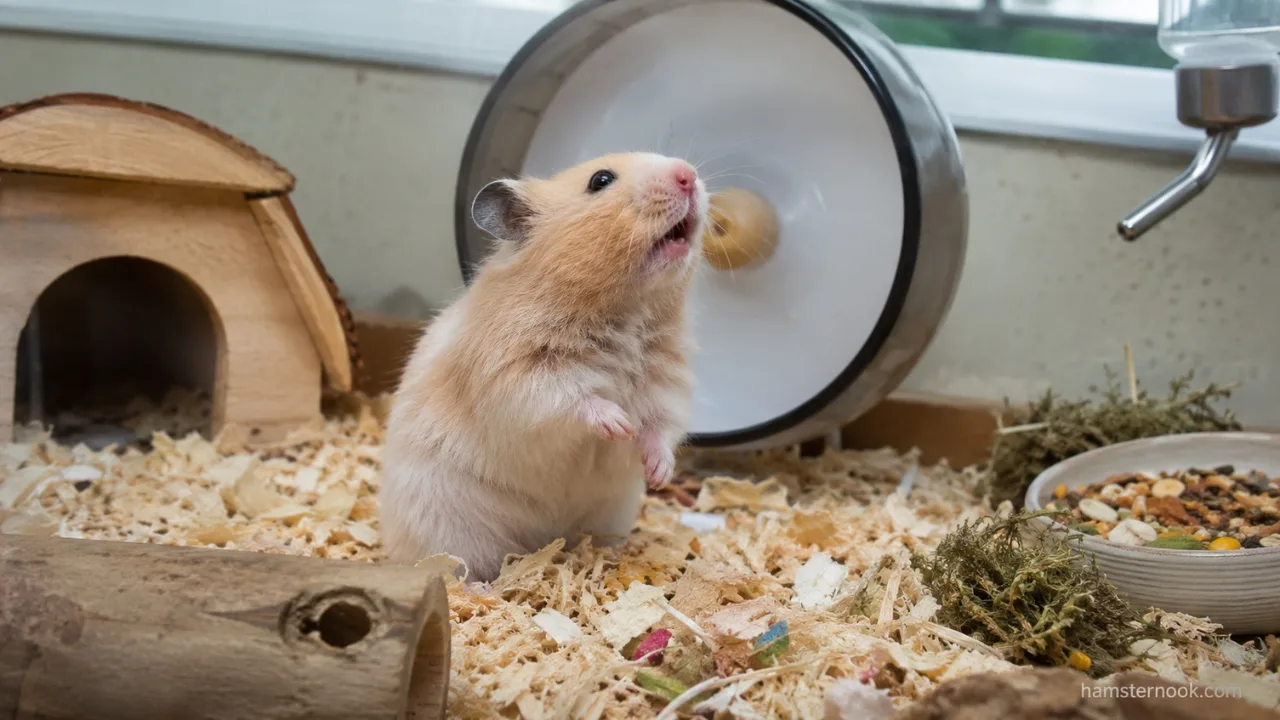
This is why it is a mistake to assume that a runny nose is simply a “hamster cold.”
A foreign object or other nasal problem
A small piece of bedding or other material can potentially irritate the nasal passages. Veterinary respiratory guidance recognizes foreign material as one possible cause of sneezing and nasal discharge in animals.
You should not try to dig inside your hamster’s nostrils to remove something you think is stuck. A tiny nose is easy to injure, and determining what is actually causing the problem may require a veterinary examination.
Wet Nose and Sneezing: When Should You Pay Attention?
An occasional sneeze does not automatically mean your hamster is ill. Sneezing is a normal protective reflex, and temporary irritation can cause it.
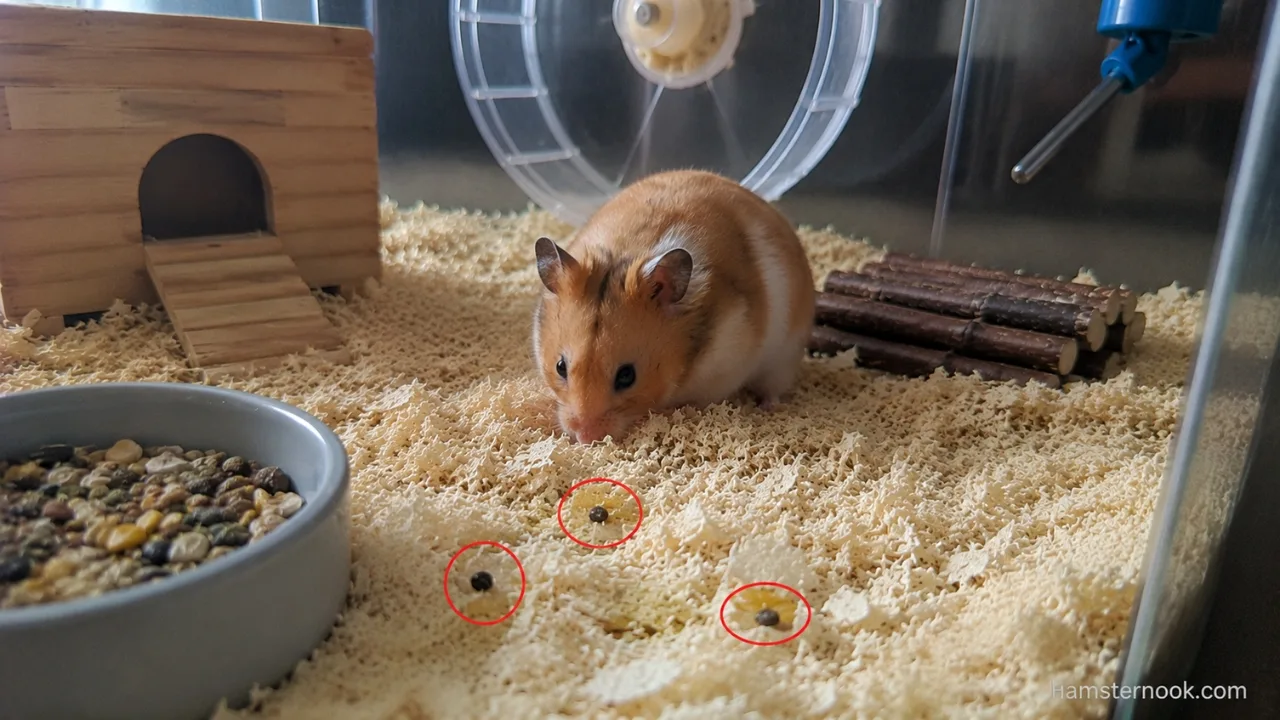
The pattern becomes more important when sneezing is repeated, persistent, or accompanied by other changes. If sneezing keeps happening, Why Is My Hamster Sneezing? Causes, Warning Signs & When to See a Vet explains possible causes and when veterinary care is needed.
Pay closer attention if you notice:
- Frequent or persistent sneezing
- A nose that stays visibly wet or develops discharge
- Crusting around the nostrils
- Discharge from the eyes
- Noisy breathing
- Faster or more difficult breathing
- Reduced appetite
- Weight loss
- Unusual tiredness or inactivity
- A hunched posture
- Less interest in normal activities
The RSPCA specifically lists persistent sneezing or coughing, discharge from the nostrils, and labored breathing among signs requiring veterinary attention.
How to Tell Normal Moisture From Nasal Discharge
You cannot make a diagnosis from appearance alone, but these differences can help you decide how seriously to take the change.
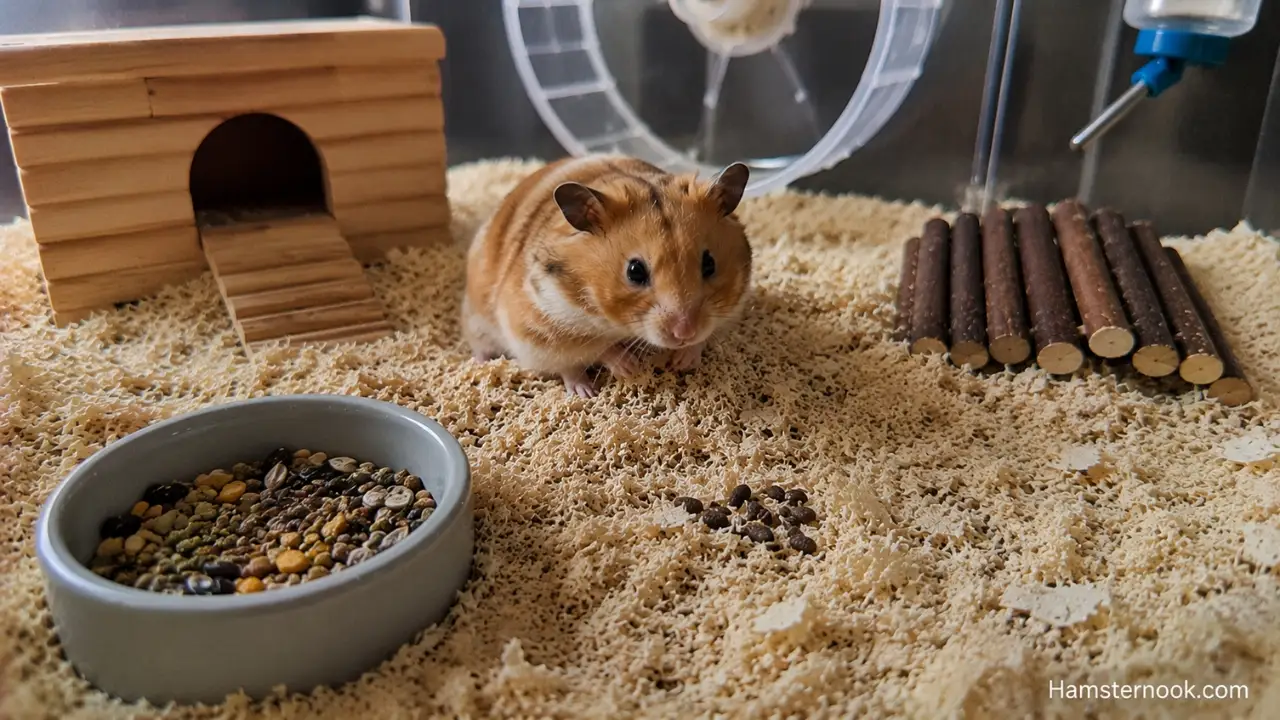

Mild moisture
A mildly shiny or damp-looking nose is less concerning when your hamster:
- Is eating normally
- Is drinking normally
- Is active during its usual active period
- Is grooming normally
- Has quiet, comfortable breathing
- Has no eye discharge
- Has no repeated sneezing
- Has no other noticeable change in behavior
In this situation, avoid repeatedly handling or waking your hamster just to inspect the nose. Instead, observe it naturally.
More concerning discharge
Be more cautious when the nose is consistently wet, visibly running, crusted, or coated with mucus.
Discharge can be clear, cloudy, thick, or contain blood depending on the underlying problem. Nasal discharge is recognized as a clinical sign of respiratory disease rather than something that should automatically be considered normal.
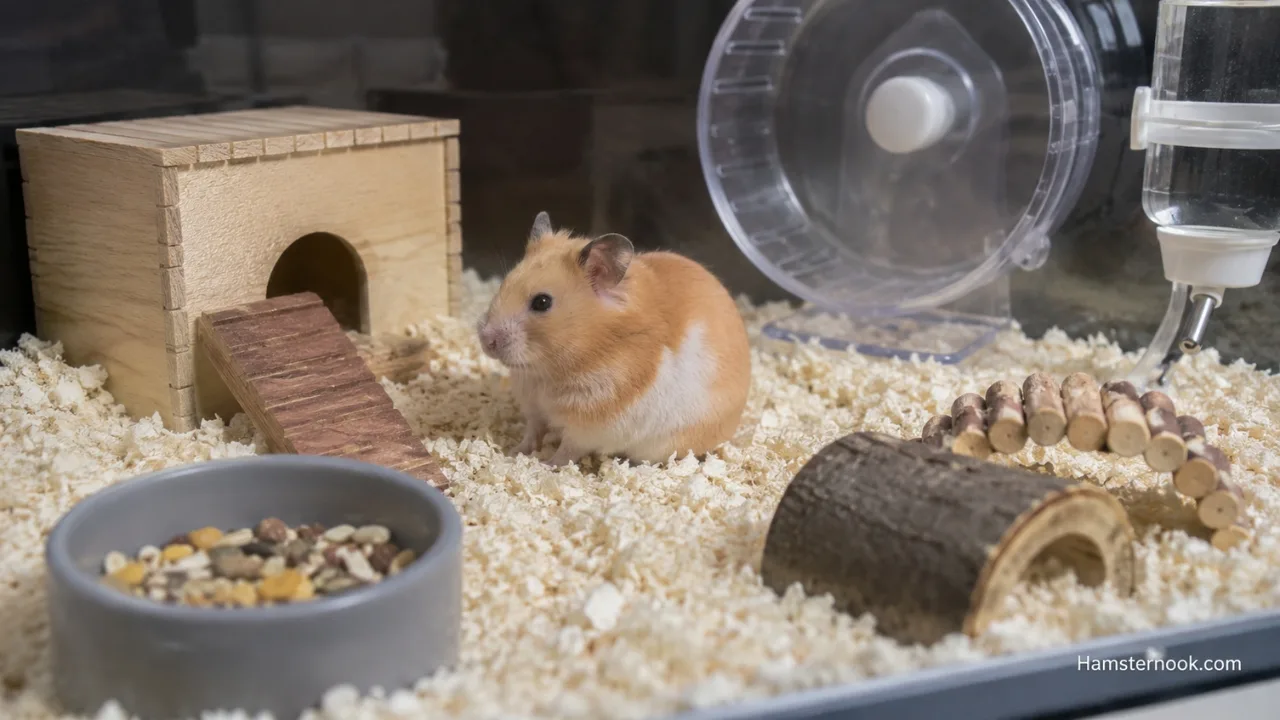
A wet nose accompanied by changes elsewhere is particularly important.
One of the most useful changes to watch is appetite, especially when nasal discharge appears alongside other symptoms. Why Is My Hamster Not Eating? 9 Causes, Warning Signs & What to Do explains why a noticeable change in eating can be an important health warning.
What You Can Safely Check at Home
You do not need to perform a medical examination. A simple observation is often more useful.
1. Watch your hamster when it is naturally awake
Look at its breathing, movement, appetite, grooming, and general behavior.
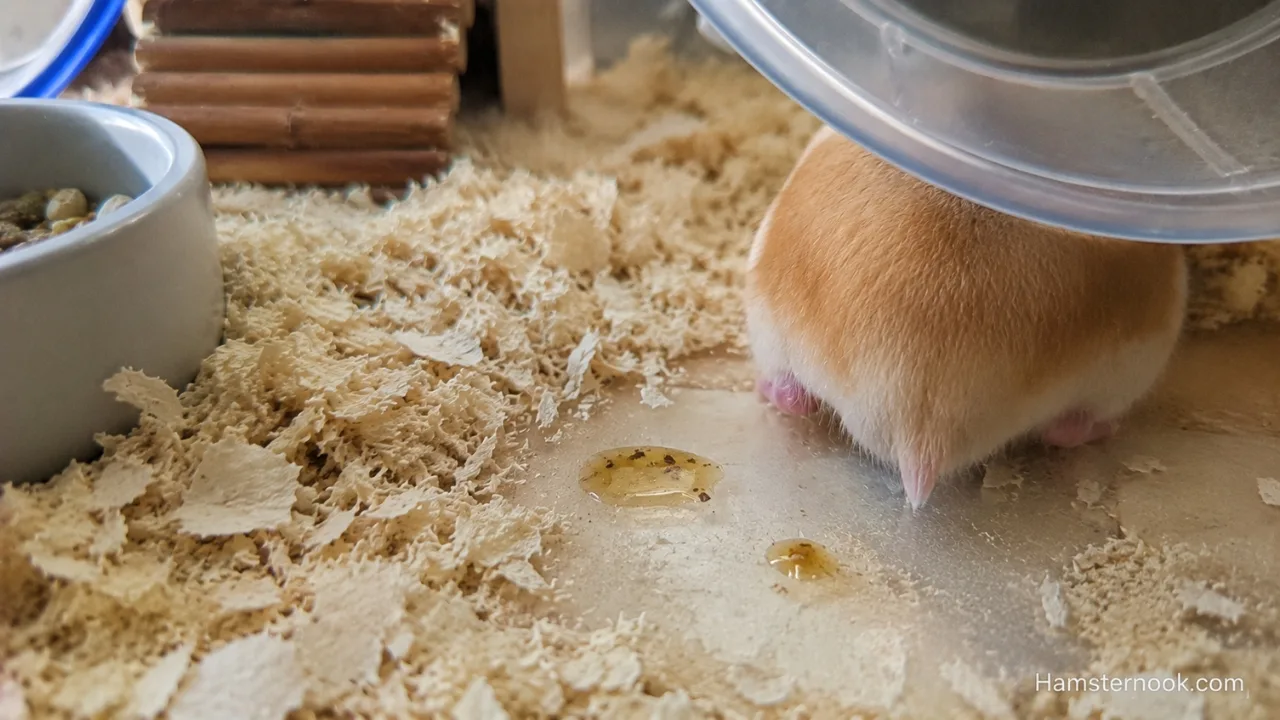
Avoid waking it repeatedly during the daytime just to check its nose. Hamsters are generally active at night, and disturbing a sleeping hamster can add unnecessary stress.
2. Look at the nose without touching it
Check whether the nose merely looks shiny or whether you can actually see discharge coming from the nostrils.
Do not insert cotton swabs, tissues, tweezers, or other objects into the nostrils.
3. Listen for breathing changes
When your hamster is resting, its breathing should not look labored or unusually difficult.
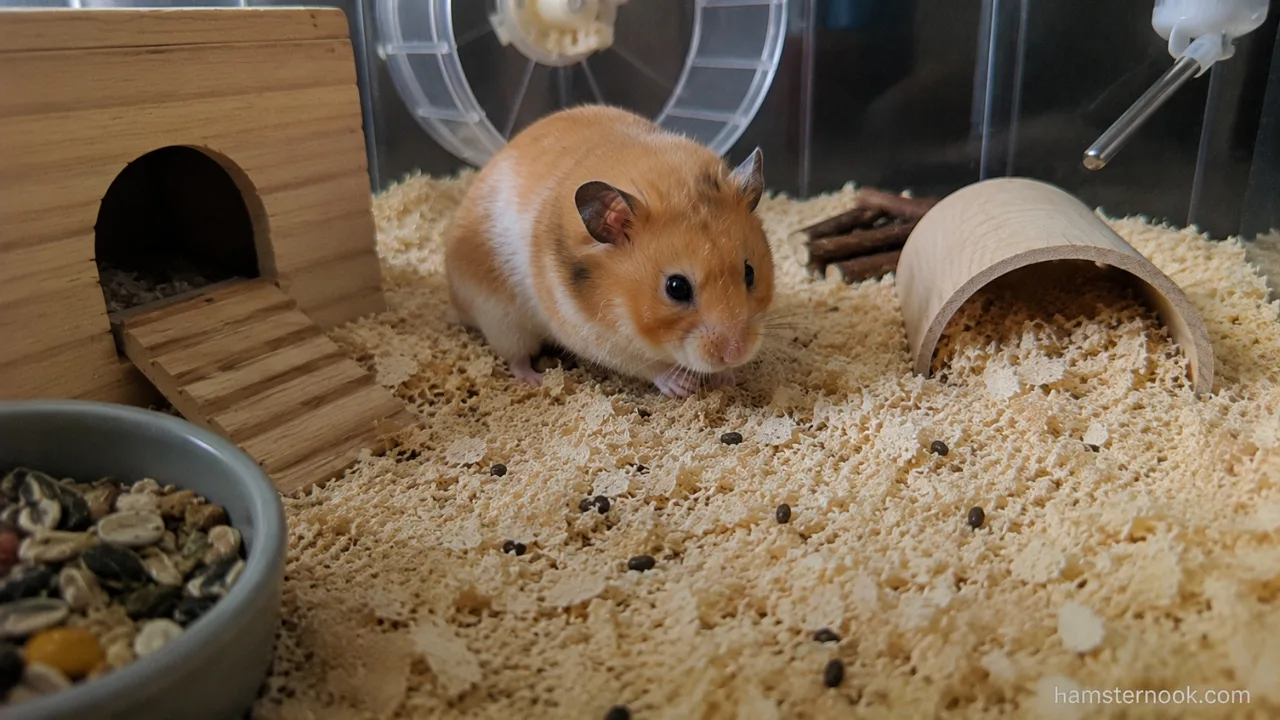
Noisy breathing, obvious effort, rapid breathing, or shortness of breath is much more concerning than a slightly moist nose. Respiratory difficulty is specifically identified as a sign requiring veterinary attention in hamsters.
Breathing changes deserve separate attention because they can indicate a more serious respiratory problem. Why Is My Hamster Breathing Fast? Normal Breathing, Causes & Warning Signs explains what abnormal breathing can look like and which changes should concern owners.
4. Check the enclosure
Look for obvious sources of irritation:
- Dusty bedding
- Strong fragrances
- Smoke
- Aerosol products
- Poorly ventilated areas
- Damp or soiled sections of the enclosure
- Recent changes to bedding or other enclosure materials
Do not completely strip and rearrange the enclosure simply because the nose looks slightly moist. Major unnecessary changes can create additional stress. Address the obvious environmental issue while keeping the hamster’s routine as stable as possible.
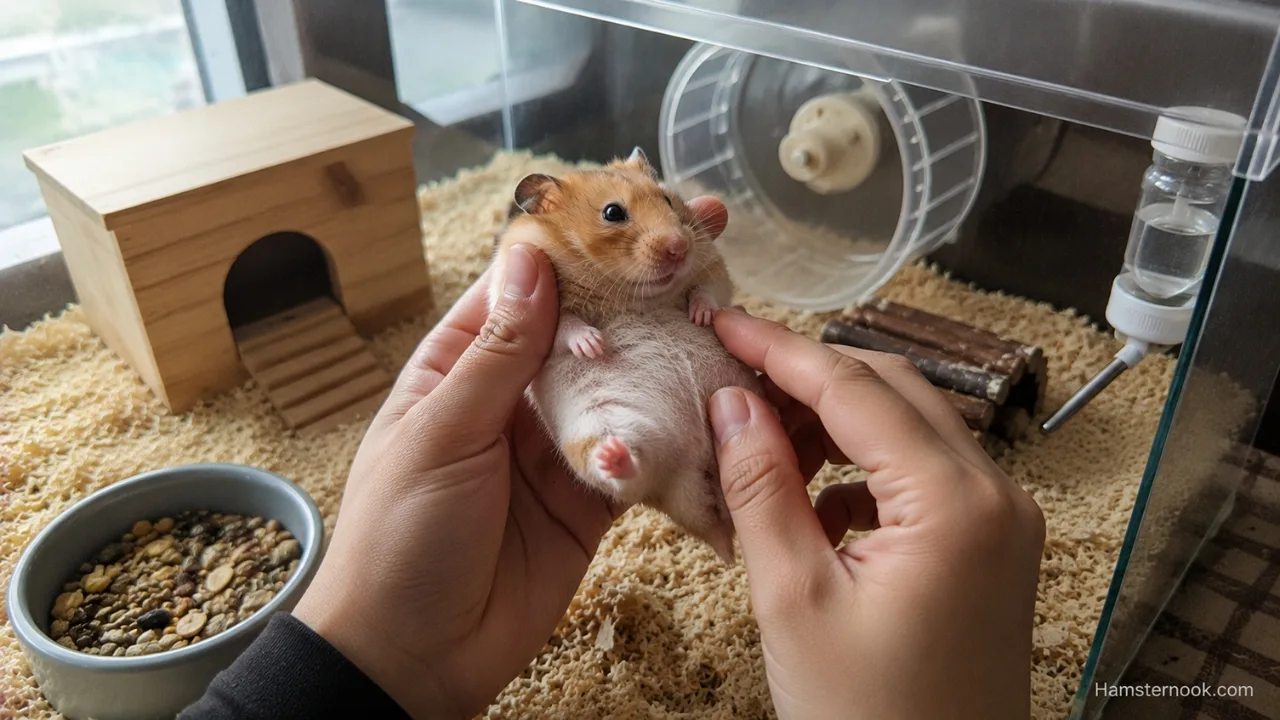
What Should You Do If Your Hamster Has a Wet Nose?
If the nose is only mildly moist and your hamster is otherwise acting normally, observe rather than immediately treating the hamster.
If you suspect an environmental irritant:
- Remove obvious sources of dust, smoke, sprays, and strong fragrances.
- Make sure the enclosure is clean and dry.
- Check that the bedding is not producing excessive visible dust.
- Keep the enclosure in a suitable, stable location rather than directly beside an obvious source of fumes or drafts.
- Watch your hamster’s eating, activity, grooming, and breathing.
- If the wetness persists, worsens, or is joined by other symptoms, contact a veterinarian.
The important part is that environmental changes should not become a substitute for veterinary care when illness is suspected.
Common Mistakes to Avoid
Assuming a wet nose is always harmless
A slightly moist nose and persistent nasal discharge are not the same thing. If discharge continues or other symptoms appear, it deserves attention.

Assuming every wet nose means an infection
The opposite mistake is also possible. Nasal irritation can have environmental causes, and a wet nose alone does not establish an infection.
Giving human cold medicine
Do not give your hamster human cold medicine, decongestants, antibiotics, or medication left over from another pet unless a veterinarian has specifically told you to use it for your hamster.
The RSPCA warns that human and other-animal medicines can be dangerous to hamsters, and some oral antibiotics can cause serious digestive problems in this species.
Putting products around the nose
Do not apply oils, ointments, essential oils, vapor rubs, or other household remedies to your hamster’s nose unless a veterinarian specifically instructs you to do so.
Waiting because the hamster is still eating
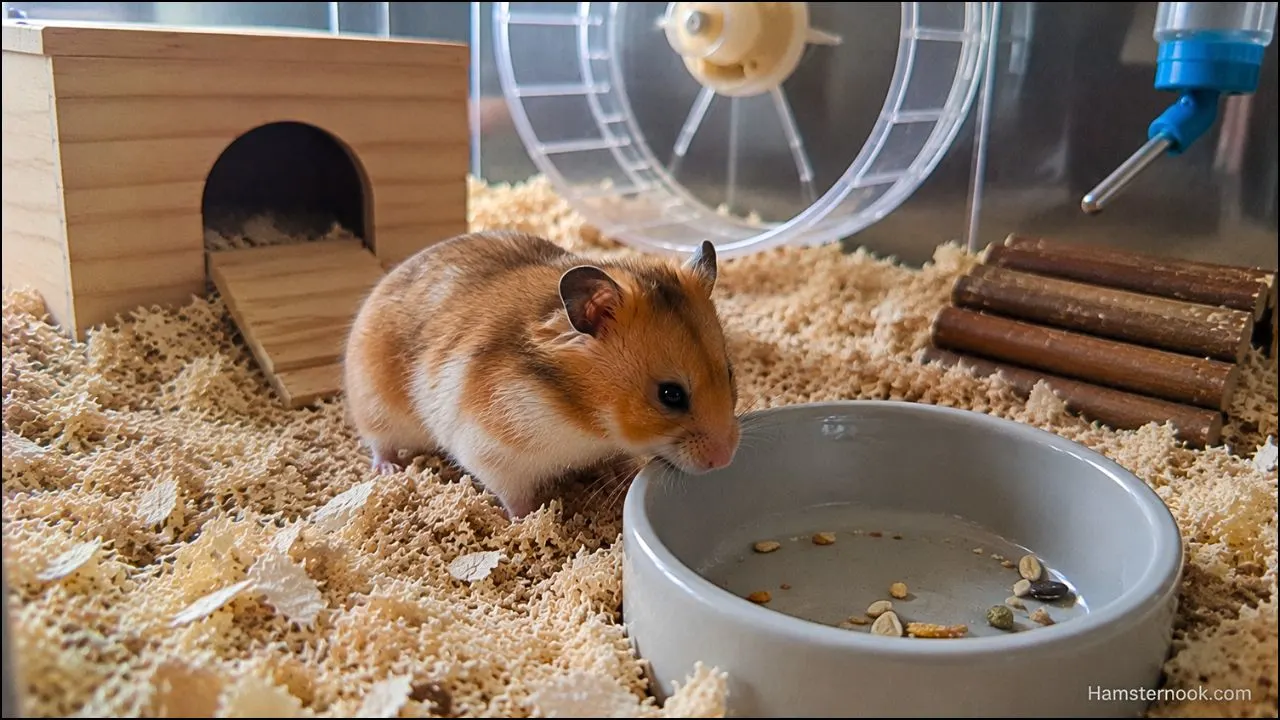
Eating is reassuring, but it does not rule out illness. Hamsters can show subtle signs when they are becoming unwell, so changes in breathing, activity, discharge, or behavior still matter.
If several signs appear together, a hamster may be becoming generally unwell rather than simply experiencing temporary nasal irritation. Why Is My Hamster Suddenly Weak? 9 Causes, Warning Signs & What to Do covers the broader warning signs that can accompany a decline in a hamster’s condition.
When to Worry About a Wet Hamster Nose
Contact a veterinarian if the wet nose is persistent or is accompanied by signs such as:
- Repeated or persistent sneezing
- Nasal discharge
- Eye discharge
- Reduced appetite
- Weight loss
- Unusual inactivity
- Hunched posture
- Noisy breathing
- Changes in breathing rate or effort
A veterinarian can assess the discharge together with your hamster’s other symptoms and determine what may be causing it.

If you are unsure whether you are seeing normal moisture or actual discharge, take a clear photo while the hamster is naturally awake. It can also help to note any sneezing, appetite changes, or breathing changes to tell the veterinarian.
Breathing trouble is more urgent
If your hamster is visibly struggling to breathe, breathing with significant effort, or showing severe respiratory distress, do not wait to see whether the nose dries out.
Hamster respiratory disorders can become serious, and MSD Veterinary Manual specifically advises prompt veterinary attention for hamsters with wheezing or difficulty breathing.
Final Thoughts
A hamster with a slightly moist-looking nose is not automatically sick. What matters most is whether you are seeing a little surface moisture or actual nasal discharge, and whether anything else about your hamster has changed.

Look at the whole hamster rather than the nose alone. Normal appetite, activity, grooming, and comfortable breathing are reassuring. Repeated sneezing, visible discharge, eye problems, lethargy, appetite changes, or breathing difficulty shift the situation from simple observation toward veterinary attention.
When in doubt, resist the temptation to treat the nose yourself. A careful environmental check and close observation are reasonable first steps, but persistent or worsening symptoms are best assessed by a veterinarian.
Frequently Asked Questions
Should a hamster’s nose be wet or dry?
A nose does not have to look completely dry at every moment. Mild moisture by itself does not establish that a hamster is sick. Persistent or obvious nasal discharge is different and can be a sign of illness.
Why is my hamster’s nose wet but it is acting normal?
If your hamster is eating, active during its normal waking period, grooming, and breathing comfortably, a mildly moist nose is less concerning than wetness accompanied by other symptoms. Continue observing rather than assuming either that it is definitely normal or definitely an infection.
Is a wet nose in a hamster a sign of a cold?
Not necessarily. A wet or runny nose can occur with respiratory disease, but irritation and other nasal problems can also produce respiratory signs. A hamster should not be diagnosed with a “cold” based only on a wet nose.
Can dusty bedding make a hamster’s nose wet?
Dust can irritate the nasal passages and trigger sneezing. If wetness or sneezing began after a bedding change or is associated with visibly dusty material, the bedding is worth investigating as a possible irritant. It does not, however, prove that bedding is the cause.
Should I wipe my hamster’s wet nose?
Do not repeatedly rub or scrub the nose. If there is persistent discharge, crusting, or material around the nostrils, it is better to have the hamster assessed rather than trying to clean inside the nose yourself.
When should I take my hamster to the vet for a wet nose?
Arrange veterinary care when the wetness is persistent, clearly represents nasal discharge, or occurs with repeated sneezing, eye discharge, reduced appetite, weight loss, inactivity, or breathing changes. Labored or difficult breathing warrants prompt veterinary attention.
Can I give my hamster medicine for a runny nose?
No. Do not give human cold medicine or medication intended for another animal unless a veterinarian has specifically prescribed or recommended it for your hamster. Some medications that are tolerated by other species can be dangerous to hamsters.
References
This guide uses veterinary and animal-welfare guidance to explain the difference between mild nose moisture and signs that may need veterinary attention.
- Merck Veterinary Manual – Routine Health Care of Hamsters
- Merck Veterinary Manual – Disorders and Diseases of Hamsters
- Merck Veterinary Manual – Clinical Signs of Respiratory Disease in Animals
- RSPCA – Hamster Health and Welfare Tips
Medical Disclaimer
This article is for educational purposes only and is not a substitute for veterinary advice. If your hamster shows signs of illness, breathing problems, severe weakness, loss of appetite, or other concerning symptoms, consult a qualified veterinarian promptly.

Narayan Kumar is the founder and author of HamsterNook. He creates practical, research-based hamster care guides covering hamster behavior, nutrition, cage setup, enrichment, health, and everyday care. His goal is to help hamster owners make informed decisions and provide safer, healthier lives for their pets through clear, beginner-friendly information based on trusted animal care resources.