
If you’re trying to decide between a Syrian hamster and a dwarf hamster, you’re not alone. These are two of the most popular pet hamster types, but they have very different personalities, care needs, and handling requirements. Some owners prefer the larger, easier-to-handle Syrian hamster, while others enjoy the energetic and playful nature of dwarf hamsters.
Understanding these differences can help you choose the hamster that best matches your lifestyle and expectations. Two of the most popular choices are Syrian hamsters and dwarf hamsters, but they differ in size, personality, care requirements, handling, and housing needs.
Many new owners choose based on appearance alone, only to realize later that the hamster’s temperament or care needs don’t match their expectations. Some people want a hamster that is easier to handle, while others prefer a smaller, highly active pet that is fascinating to watch.
Neither Syrian nor dwarf hamsters are objectively better than the other. The right choice depends on what you’re looking for in a pet, including how often you plan to handle it, the amount of space you can provide, and whether you prefer a calm companion or an energetic explorer.

This guide compares Syrian and dwarf hamsters in detail so you can decide which type is the better fit for your home.
Quick Answer
Syrian hamsters are usually better for beginners because they are larger and easier to handle, while dwarf hamsters are smaller, faster, and better suited to owners who enjoy watching active behavior. Neither species is universally better—the best choice depends on your experience, lifestyle, and handling preferences.
Syrian Hamster vs Dwarf Hamster: Quick Comparison

Before diving deeper, here’s a side-by-side overview.
While comparison tables provide a helpful overview, they don’t tell the whole story. Two hamsters of the same species can still have very different personalities, so it’s best to use these comparisons as general guidance rather than strict rules when choosing a pet.

| Feature | Syrian Hamster | Dwarf Hamster |
|---|---|---|
| Body Size | Larger | Smaller, with size varying by species |
| Handling | Usually easier to hold securely | Often faster and harder to hold |
| Activity | Active | Often very active |
| Speed | Generally easier to follow during handling | Often very fast-moving |
| Housing | Needs a spacious, species-appropriate enclosure | Also needs spacious housing; small size does not mean a tiny cage |
| Wheel | Larger species-appropriate wheel | Smaller species-appropriate wheel |
| Social Housing | Should be housed alone | Housing needs depend on the species; do not assume dwarf hamsters can live together |
| Beginner Fit | Often easier for hands-on handling | Can suit beginners who prefer observing active behavior |
Understanding Syrian Hamsters
Syrian hamsters are the largest pet hamster species commonly kept in homes.
They are sometimes called teddy bear hamsters, golden hamsters, or fancy hamsters depending on color and coat type.
Because of their larger size, many owners find them easier to interact with and hold.
If this will be your first hamster, learning the basics before choosing a species can make the decision much easier. Our Hamster Care Guide for Beginners explains housing, diet, handling, and daily care in greater detail.

Common Characteristics of Syrian Hamsters
Syrian hamsters are known for:
- Larger body size
- Easier visibility during handling
- Strong personalities
- Solitary nature
- Wide variety of coat colors
Most Syrian hamsters prefer living alone and should not be housed with other hamsters.
Understanding Dwarf Hamsters
“Dwarf hamster” is a general term that includes several smaller hamster species.
Popular dwarf hamster types include:

- Campbell’s Dwarf Hamster
- Winter White Dwarf Hamster
- Roborovski Hamster
- Chinese Hamster (often grouped separately but commonly compared)
Dwarf hamsters are significantly smaller than Syrians and tend to move much faster.
Why “Dwarf Hamster” Is Not One Single Species
“Dwarf hamster” is a broad term used for several smaller hamster species, so their size, speed, temperament, and care considerations are not identical. Campbell’s, Winter White, and Roborovski hamsters can differ from one another, while Chinese hamsters are often discussed separately. For that reason, a general Syrian-versus-dwarf comparison should be treated as a starting point rather than a rule for every individual hamster.
Common Characteristics of Dwarf Hamsters
Dwarf hamsters are often:
- Small and lightweight
- Highly energetic
- Fast-moving
- Curious explorers
- Fun to observe
Their small size can make them more challenging for inexperienced handlers.

Which Hamster Is Easier to Handle?
For most beginners, Syrian hamsters are generally easier to handle.
Their larger size makes them:
- Easier to pick up
- Easier to hold securely
- Less likely to slip through fingers
- Easier for supervised older children to handle
Dwarf hamsters can be friendly, but their speed often surprises new owners.
| Handling Factor | Syrian Hamster | Dwarf Hamster |
|---|---|---|
| Easy to Pick Up | Excellent | Moderate |
| Likely to Escape Hands | Lower | Higher |
| Suitable for Beginners | High | Moderate |
| Size for Handling | Larger | Smaller |
If regular handling is important to you, Syrians often have the advantage.

If handling is one of your biggest priorities, Which Hamster Breed Is Least Likely to Bite? 5 Breeds Compared for Beginners gives more context on breed differences and bite risk.
Whichever species you choose, gentle handling and patience play a major role in building trust. Our How Long Does It Take a Hamster to Trust You? guide explains what to expect during the bonding process.
Which Hamster Has the Better Personality?

Personality varies between individual hamsters, but some general trends exist.
Syrian Hamster Personality
Many Syrian hamsters are:
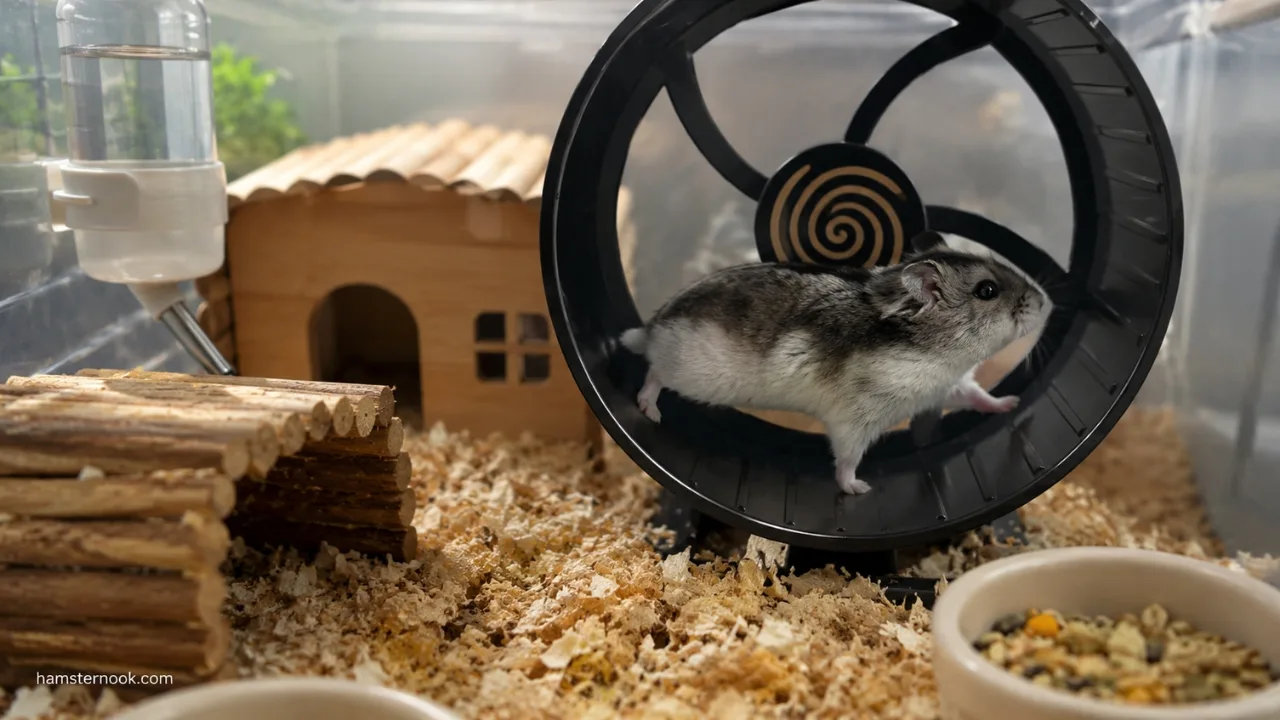
- Confident
- Curious
- Independent
- Calm when tamed
Some become very comfortable interacting with their owners.
Dwarf Hamster Personality
Many dwarf hamsters are:
- Energetic
- Busy
- Curious
- Fast-moving
They may spend more time exploring than sitting still.
Neither personality type is better; it depends on what you enjoy.

It’s also important to remember that personality varies between individual hamsters. Some Syrian hamsters are naturally shy, while some dwarf hamsters become surprisingly confident with regular, gentle handling. Spending time building trust often has a greater impact than choosing one species over the other.
Cage Requirements: Which Needs More Space?
One common misconception is that dwarf hamsters can live comfortably in tiny cages.
In reality, both types require spacious housing.
| Housing Factor | Syrian Hamster | Dwarf Hamster |
|---|---|---|
| Floor Space | Spacious enclosure required | Spacious enclosure required |
| Bedding Depth | Deep bedding needed | Deep bedding needed |
| Exercise Wheel | Larger species-appropriate wheel | Smaller species-appropriate wheel |
| Enrichment | High | High |
| Burrowing | Important | Important |
Although Syrians need more room overall, dwarf hamsters still require much larger cages than many pet stores advertise.

Choosing the right enclosure involves more than floor space alone. Our Best Hamster Cage Setup for Beginners guide explains how bedding depth, hideouts, wheels, and enrichment work together to create a healthier habitat.
Activity Levels: Which Hamster Is More Entertaining?
If you enjoy watching your pet explore, dwarf hamsters are often extremely entertaining.
They tend to:
- Run frequently
- Explore constantly
- Investigate every corner
- Use enrichment items actively
Syrian hamsters are active too, but many owners describe their behavior as slightly calmer and less frantic.

| Activity Category | Syrian Hamster | Dwarf Hamster |
|---|---|---|
| Wheel Usage | High | Very High |
| Exploration | High | Very High |
| Speed | Moderate | Extremely Fast |
| Observation Value | High | High |
Both species can provide hours of interesting behavior.
If activity level is one of the biggest factors in your decision, learning When Are Hamsters Most Active? can help you understand when both Syrian and dwarf hamsters are naturally awake and most enjoyable to observe.
Which Hamster Is Better for Children?
No hamster should be considered a low-supervision pet for young children.
However, older children who have learned gentle handling techniques often find Syrian hamsters easier to manage.

| Child-Related Factor | Syrian Hamster | Dwarf Hamster |
|---|---|---|
| Visibility | Better | Smaller |
| Handling Ease | Easier | Harder |
| Escape Risk | Lower | Higher |
| Beginner Friendliness | Higher | Moderate |
Adult supervision remains important regardless of species.
It’s also worth considering the child’s expectations. A child hoping for a pet that enjoys regular handling may become frustrated with a fast-moving dwarf hamster, while families that enjoy quietly observing natural behaviors may find either species equally rewarding.
Cost Differences Between Syrian and Dwarf Hamsters
The hamster itself is usually one of the least expensive parts of ownership.
Most costs come from:

- Cage
- Wheel
- Bedding
- Food
- Veterinary care
- Enrichment items
| Expense Category | Syrian Hamster | Dwarf Hamster |
|---|---|---|
| Purchase Price | Similar | Similar |
| Cage Cost | Often higher | Similar |
| Wheel Cost | Larger wheel needed | Smaller wheel |
| Monthly Care Costs | Similar | Similar |
Long-term expenses are usually comparable.
Although the initial purchase price is often similar, most owners spend far more on creating a suitable habitat than on the hamster itself. Investing in a spacious enclosure, quality bedding, enrichment items, and a properly sized wheel usually has a much bigger impact on your hamster’s well-being than choosing the less expensive pet.
Health and Care Considerations
Both Syrian and dwarf hamsters require:
- Proper nutrition
- Clean housing
- Fresh water
- Exercise opportunities
- Regular monitoring
Good nutrition supports long-term health regardless of species. Our Complete Hamster Diet Guide explains how to build a balanced feeding routine for both Syrian and dwarf hamsters.

Different hamster species can have different health considerations, so it is better to follow species-appropriate feeding guidance rather than assume every dwarf hamster has the same needs.
Regardless of species, regular observation is one of the best ways to spot health problems early. Watching changes in appetite, activity, grooming, or body condition helps owners recognize when a hamster may need closer attention or veterinary care.
Care and feeding should be based on the individual hamster and its species rather than assuming that one diet or health profile applies to every Syrian or dwarf hamster.
Regardless of which species you choose, recognizing changes in appetite, grooming, or activity early can make a big difference. Our Signs of a Sick Hamster guide explains the warning signs every owner should monitor.

Pros and Cons of Syrian Hamsters
| Pros | Cons |
|---|---|
| Easier to handle | Require larger accessories |
| Better for many beginners | Must live alone |
| Larger size | Need more floor space |
| Easier to observe during handling | Can become territorial |
Pros and Cons of Dwarf Hamsters
| Pros | Cons |
|---|---|
| Extremely active | Harder to handle |
| Fun to watch | Easier to lose during escapes |
| Smaller body size | Fast movement can challenge beginners |
| Excellent explorers | Some species are sugar-sensitive |
Which Hamster Fits Your Lifestyle Best?
There isn’t a universally better hamster—only one that’s better suited to your lifestyle. If you enjoy frequent handling and want a pet that’s generally easier to pick up, a Syrian hamster is often the simpler choice. If you prefer watching natural behaviors and don’t mind a faster, more energetic pet, a dwarf hamster may be a better fit.
Who Should Choose a Syrian Hamster?
A Syrian hamster may be the better choice if you:
- Want easier handling
- Are a first-time owner
- Prefer a larger pet
- Enjoy regular interaction
- Have space for a larger setup
Many beginners find Syrians easier to bond with because their size makes interactions feel less intimidating.
Who Should Choose a Dwarf Hamster?
A dwarf hamster may be the better choice if you:

- Enjoy observing active behavior
- Prefer smaller pets
- Like creating enrichment setups
- Don’t mind less hands-on interaction
- Want a highly energetic hamster
Dwarf hamsters can be incredibly rewarding pets for owners who appreciate their fast-paced personalities.
At this point, you may have noticed that both hamster types have their own strengths. The best choice depends less on which species is “better” and more on which one fits your lifestyle, experience level, and expectations.
Many first-time owners focus mainly on size, but long-term satisfaction usually comes from choosing a hamster whose activity level, handling needs, and care requirements match your daily routine. Taking a few minutes to compare these differences now can help prevent disappointment later.
Final Verdict: Which Hamster Is Better?
There isn’t one hamster species that’s perfect for every owner. Syrian hamsters are generally easier to handle and are often recommended for beginners, while dwarf hamsters appeal to people who enjoy observing fast-paced, active behavior. Choosing the species that best matches your lifestyle usually leads to a more rewarding ownership experience.

Whichever species you choose, success comes down to proper housing, enrichment, nutrition, and patience. When cared for correctly, both Syrian and dwarf hamsters can become rewarding and enjoyable pets.
Choosing the right hamster is only the first step. Knowing what healthy daily behavior looks like makes it much easier to notice problems early. Our How to Tell If Your Hamster Is Happy, Healthy, Stressed, or Sick guide explains the signs every owner should know.
Frequently Asked Questions
Are Syrian hamsters friendlier than dwarf hamsters?
Not always. Individual personality matters more than species, but Syrians are often easier to tame because of their larger size and calmer handling experience.
Which hamster lives longer?
Both can live around two to three years with proper care, although lifespan varies between individuals and species.

Lifespan also varies across hamster species, so Which Hamster Breed Lives the Longest? Breed Lifespan Comparison provides a broader comparison of expected lifespan.
Do dwarf hamsters need smaller cages?
No. Their smaller body size does not mean they should be kept in a cramped enclosure. Dwarf hamsters still need enough usable space for exercise, burrowing, hiding, foraging, and enrichment.
Which hamster bites more?
Any hamster may bite if frightened, stressed, or handled incorrectly. Proper taming and gentle handling reduce the likelihood of biting.
Are Syrian hamsters better for beginners?
Many hamster keepers consider Syrians one of the most beginner-friendly hamster species because they are larger and easier to handle.

Can Syrian and dwarf hamsters live together?
No. Syrian hamsters should always live alone, and mixed-species housing is not recommended. Keeping Syrian and dwarf hamsters together can result in serious fighting and injury.
Can a dwarf hamster be a good first hamster?
Yes. Dwarf hamsters can be good pets for beginners, but their small size and fast movement may make handling more challenging than with Syrian hamsters.
Do Syrian and dwarf hamsters need different wheel sizes?
Yes. Because Syrian hamsters are much larger, they require a larger exercise wheel to keep their back straight while running. Dwarf hamsters can use smaller wheels, but the wheel should still be large enough to allow a natural running posture.
References
This guide is based on hamster species, breed characteristics, housing, handling, behavior, nutrition, and welfare guidance from trusted veterinary and animal welfare resources, including:
- RSPCA – Keeping Hamsters as Pets – General guidance on hamster care, housing, behavior, diet, exercise, handling, and welfare.
- RSPCA – Creating a Good Home for Hamsters – Guidance on appropriate enclosure space, bedding, nesting, exercise, enrichment, and environmental needs.
- Blue Cross – Hamster Care Guide – Practical information on hamster housing, handling, enrichment, feeding, exercise, and wellbeing.
- MSD Veterinary Manual – Hamsters – Veterinary reference information covering hamster species, husbandry, nutrition, health, housing, and common care considerations.
- NC3Rs – Housing and Husbandry: Hamster – Guidance on hamster housing, bedding, exercise, environmental enrichment, and species-appropriate husbandry.
- NC3Rs – Choosing Appropriate Enrichment – Guidance on providing enrichment that supports natural behaviors and welfare in hamsters.

Narayan Kumar is the founder and author of HamsterNook. He creates practical, research-based hamster care guides covering hamster behavior, nutrition, cage setup, enrichment, health, and everyday care. His goal is to help hamster owners make informed decisions and provide safer, healthier lives for their pets through clear, beginner-friendly information based on trusted animal care resources.