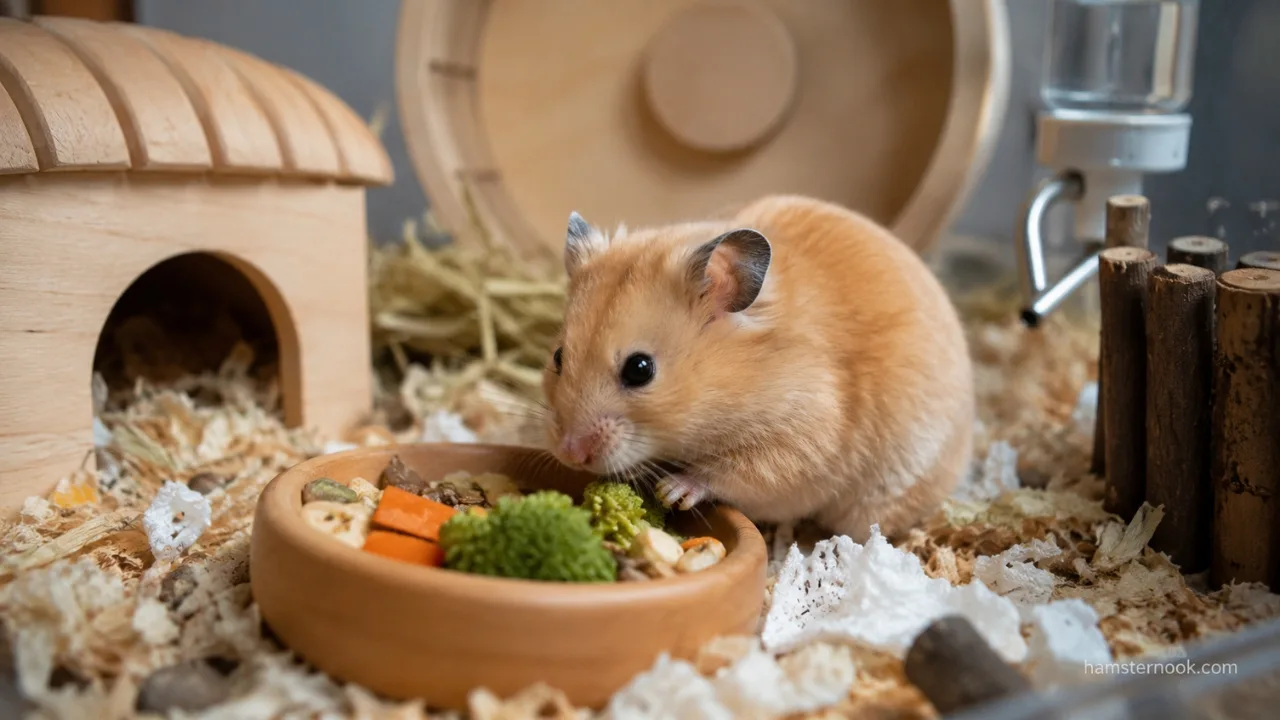
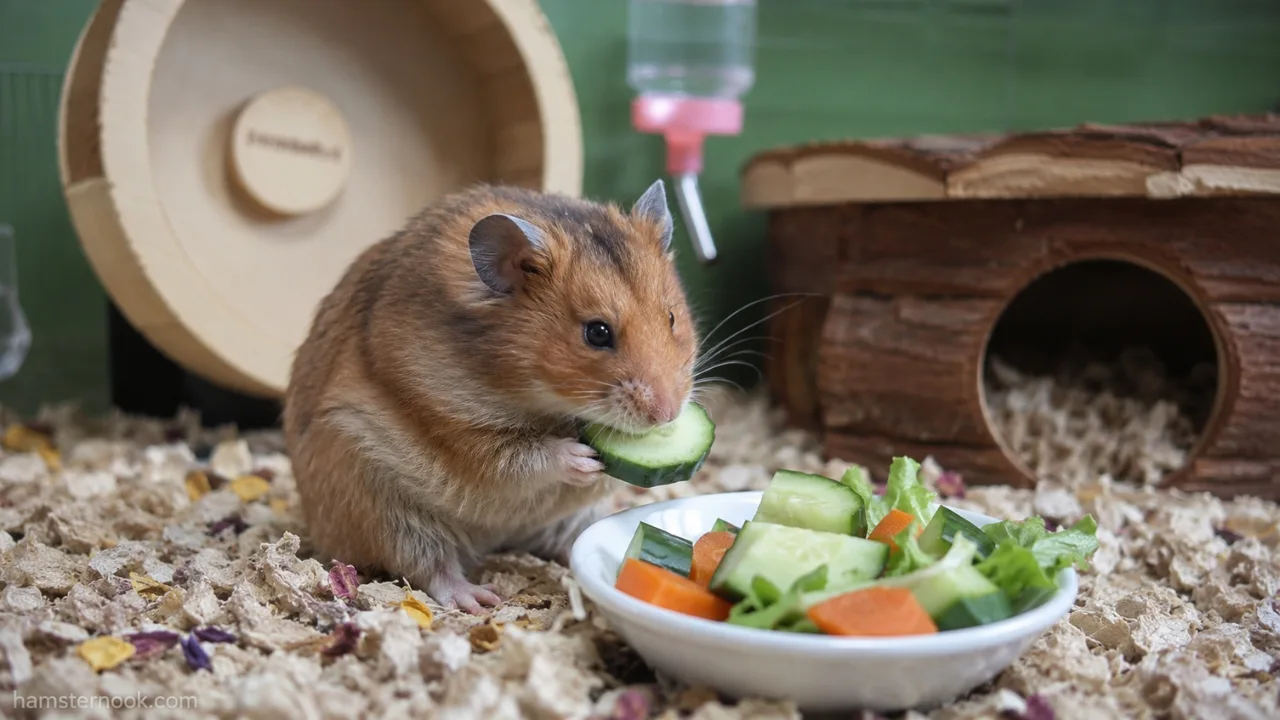
Yes, hamsters can eat pumpkin in small amounts. Pumpkin is listed among suitable vegetables for hamsters, but it should be treated as a supplement to a balanced hamster diet rather than a staple food. The safest approach is to offer a small piece of plain pumpkin, introduce it gradually, and remove leftovers before they spoil.
Quick Answer: Can Hamsters Eat Pumpkin?
Yes. Hamsters can eat plain pumpkin in moderation. PDSA includes pumpkin on its list of vegetables suitable for hamsters, while veterinary guidance recommends that fresh vegetables remain a small part of the overall diet.
For most pet hamsters, the practical rules are simple:
- Give a small piece, not a large serving.
- Serve pumpkin plain, without sugar, salt, butter, oil, or seasoning.
- Wash fresh pumpkin before offering it.
- Introduce it gradually if your hamster has never eaten it before.
- Remove uneaten pumpkin rather than allowing it to sit in the enclosure.
- Keep a complete hamster food as the foundation of the diet.
- Do not replace your hamster’s regular food with pumpkin.
Pumpkin can be a useful way to add variety, but it is not nutritionally complete enough to replace a properly formulated hamster diet.
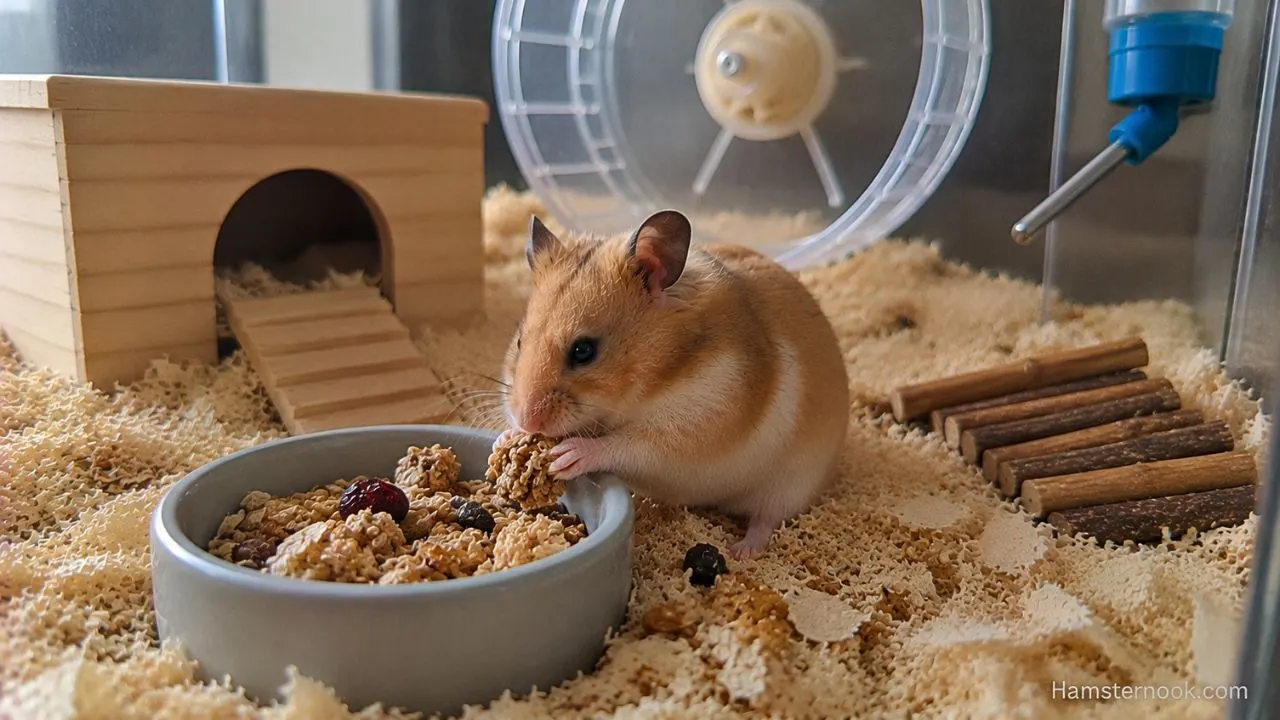
Is Pumpkin Safe for Hamsters?
Pumpkin itself is considered a suitable vegetable for hamsters. PDSA specifically lists pumpkin alongside vegetables such as broccoli, cucumber, kale, peas, spinach, and squash. The RSPCA also recommends small quantities of fresh vegetables and other plant foods as part of a varied hamster diet.
That does not mean a hamster should eat unlimited pumpkin.
Hamsters are very small animals, so even foods that are safe can become inappropriate when offered in excessive quantities. Fresh foods should complement, rather than displace, the balanced diet that supplies the nutrients your hamster needs.
Fresh vegetables and treats are useful additions, but they should remain part of a properly balanced feeding routine. Complete Hamster Diet Guide: Best Foods, Safe Treats & Toxic Foods (2026) explains how to balance the main diet with fresh foods and treats.
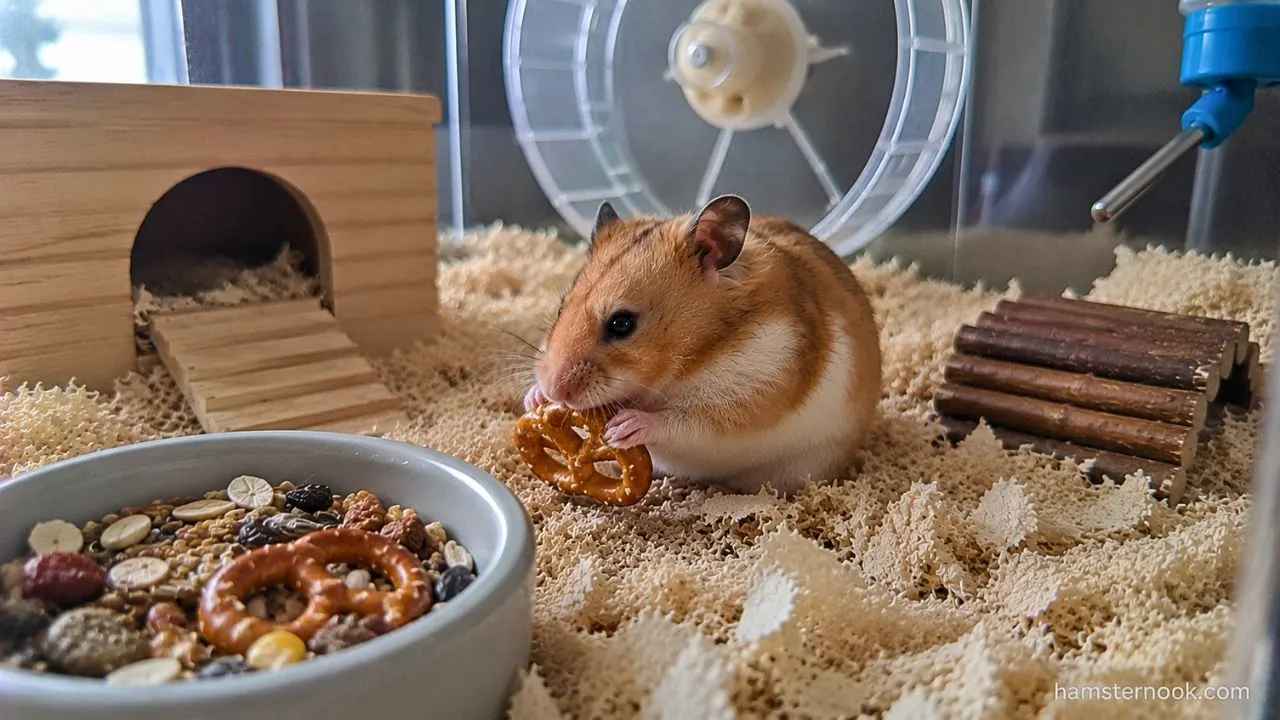
MSD Veterinary Manual notes that healthy treats such as fruits and vegetables should be limited to a small proportion of the overall diet. It also warns that seeds should be offered sparingly because hamsters may selectively eat them instead of their more nutritionally balanced food.
Can Syrian and Dwarf Hamsters Eat Pumpkin?
Both Syrian and dwarf hamsters can have pumpkin as an occasional fresh-food treat.
The main difference is portion size. A dwarf hamster is much smaller than a Syrian hamster, so the piece you offer should be correspondingly smaller.
There is no need to give the same amount to every hamster simply because pumpkin is considered safe. Your hamster’s overall diet, size, age, weight, and individual tolerance matter when deciding how much fresh food to provide.

How Much Pumpkin Can a Hamster Eat?

There is not a universally established veterinary pumpkin portion that applies to every hamster. Because hamsters vary in size and their regular diets vary too, it is better to think in terms of tiny portions rather than a large measured serving.
A practical starting point is:
| Hamster | Starting portion |
|---|---|
| Dwarf hamster | A very small bite, around the size of a pea or smaller |
| Syrian hamster | A small bite, roughly pea-sized to slightly larger |
| First time trying pumpkin | Start smaller than the usual treat portion |
| Frequency | ccasional, as part of the overall fresh-food allowance |
These are practical starting portions, not official veterinary dosing guidelines. The goal is to introduce pumpkin in a small amount without allowing it to become a significant part of the diet.
PDSA recommends only a small daily portion of fresh vegetables, fruit, and herbs overall, while MSD Veterinary Manual recommends keeping treats and vegetables limited as part of a balanced diet.

If pumpkin is one of several fresh foods your hamster receives, you should think about the total amount of fresh food, not just the pumpkin portion.
Other vegetables may also be part of that total, so portions should be considered across the whole day’s fresh food. Can Hamsters Eat Cucumber? Safe Amount, Skin, Seeds & Risks explains how cucumber can fit into a hamster’s fresh-food routine.
Can Hamsters Eat Raw Pumpkin?
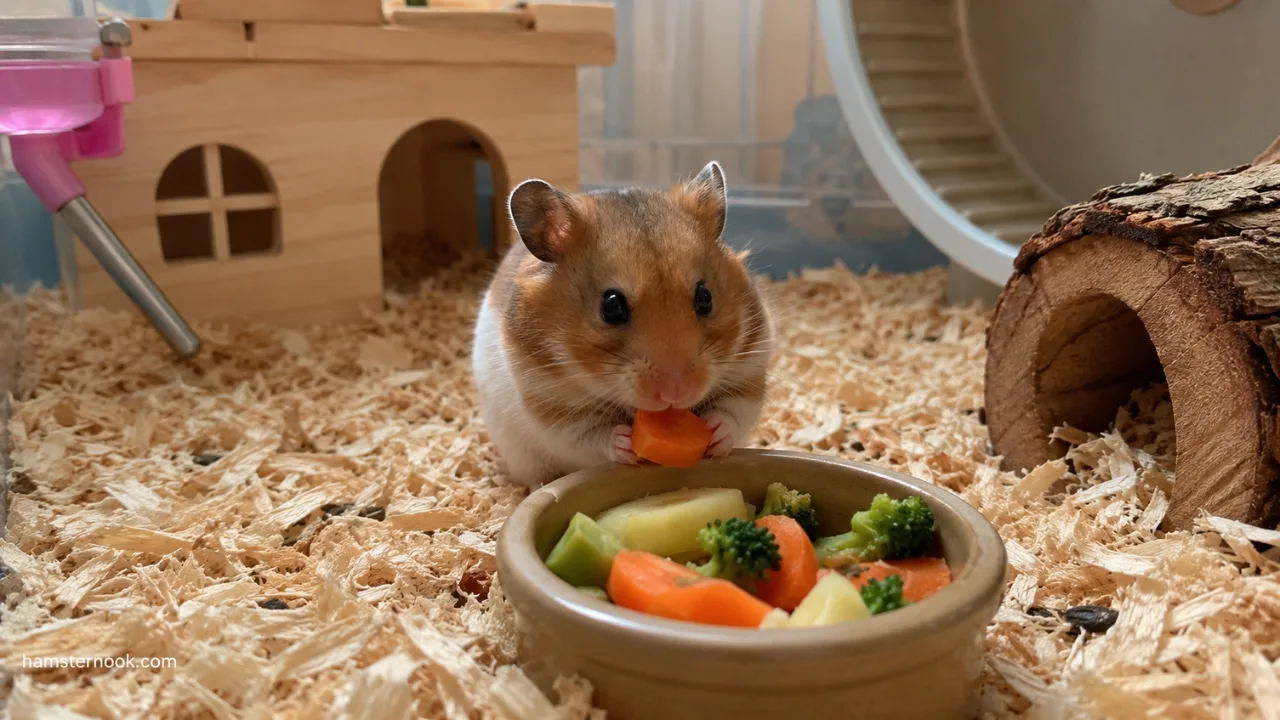
Yes. Plain raw pumpkin can be offered in a small piece.
Wash the pumpkin first and remove any dirt or debris. Cut off a small piece of the flesh and serve it by itself.

There is no need to turn pumpkin into a recipe for your hamster. In fact, simple is better. Your hamster does not need the sugar, fat, salt, or seasonings commonly added to human pumpkin dishes.
If you are cutting a pumpkin for your own cooking, set aside a tiny piece of plain flesh before adding ingredients for human food.
Can Hamsters Eat Cooked Pumpkin?
Plain cooked pumpkin can also be offered, but it should be completely free of added ingredients.
That means avoiding:

- Salt
- Sugar
- Butter
- Oil
- Syrups
- Spices
- Sweeteners
- Sauces
Human pumpkin dishes are a different matter. A hamster should not be given pumpkin pie or similar desserts.
The safest feeding habit is to keep the pumpkin as close to its natural, plain form as possible.
Can Hamsters Eat Pumpkin Seeds?

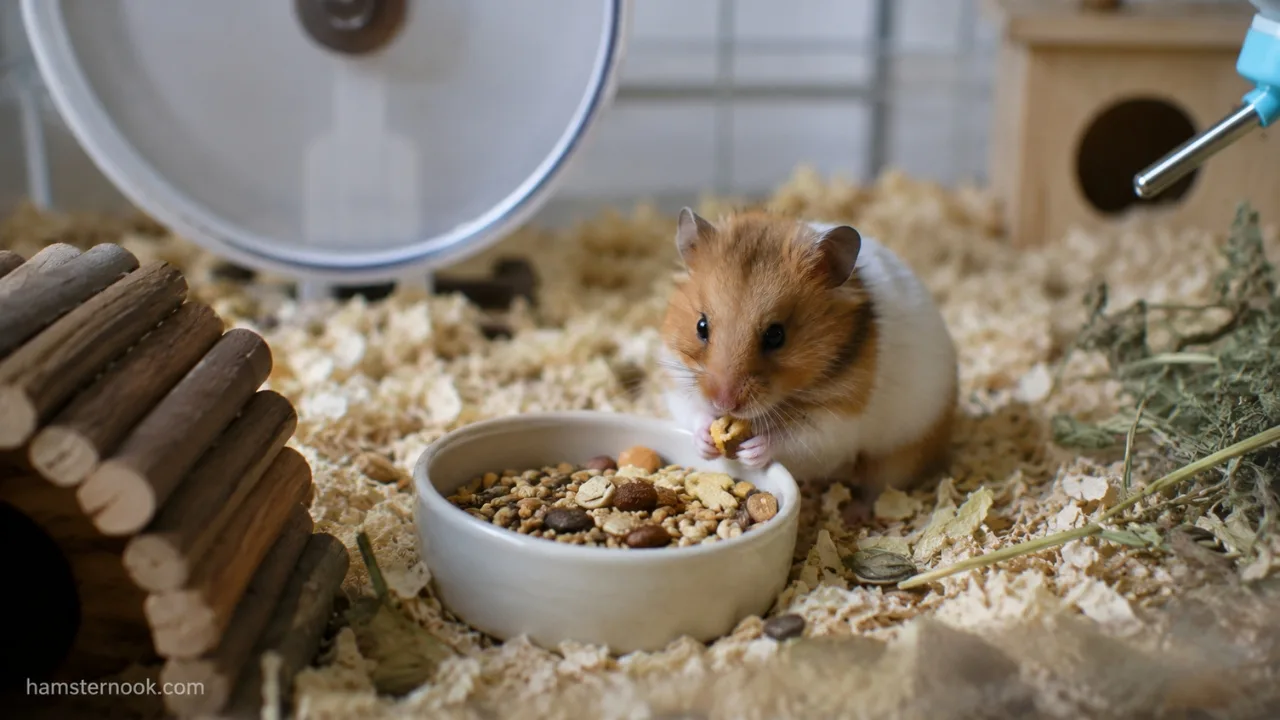
Pumpkin seeds can be offered to hamsters as an occasional treat, but they deserve more caution than pumpkin flesh.
Pumpkin seeds can be offered as an occasional treat, but they should be given sparingly. MSD Veterinary Manual advises limiting seeds because hamsters may favor them over their nutritionally balanced staple food.

Pumpkin seeds are also much more calorie-dense than watery pumpkin flesh. That makes portion control especially important.
For a hamster that has never had a pumpkin seed, starting with one small plain seed is a sensible cautious approach. Smaller dwarf hamsters should receive less than larger Syrian hamsters.
What Kind of Pumpkin Seeds Are Safe?
If you choose to offer pumpkin seeds, use plain, unseasoned seeds.
Avoid pumpkin seeds prepared for people that contain:

- Salt
- Sugar
- Spices
- Flavor coatings
- Garlic or onion seasoning
- Chocolate or sweet coatings
- Other additives
Do not give your hamster a handful simply because it seems interested in them. Hamsters can be selective eaters, and too many high-energy seeds can encourage them to ignore their balanced food.
Pumpkin Flesh vs. Pumpkin Seeds
The two foods are quite different from a feeding perspective.
| Food | Suitable for hamsters? | How to use it |
|---|---|---|
| Plain pumpkin flesh | Yes | Small occasional fresh-food portion |
| Plain pumpkin seeds | Yes, in moderation | Occasional treat in a very small amount |
| Salted pumpkin seeds | No | Avoid |
| Flavored pumpkin seeds | No | Avoid |
| Pumpkin pie | No | Human dessert, not hamster food |
| Pumpkin with butter or sugar | No | Avoid added ingredients |
| Large quantities of pumpkin | No | Too much fresh food is unnecessary |
The important distinction is that safe does not mean unlimited.
How to Introduce Pumpkin Safely
If your hamster has never eaten pumpkin, don’t suddenly place a large chunk in the enclosure.

Instead, start with a very small piece.
Watch your hamster normally after introducing the food. The RSPCA advises avoiding sudden dietary changes and introducing new foods gradually because abrupt changes can upset a hamster’s digestive system.
That gradual approach is especially useful when pumpkin is completely new to your hamster. How to Introduce New Foods to a Hamster Safely: Step-by-Step Guide explains how to make dietary changes gradually while watching for problems.
A simple approach is:

- Give a tiny piece of plain pumpkin.
- Do not introduce several other new foods at the same time.
- Observe your hamster’s eating and droppings.
- Remove any uneaten pumpkin.
- If your hamster tolerates it well, keep future servings small.
You do not need to give pumpkin every day. Rotating suitable vegetables provides variety without making one fresh food a major part of the diet.
Rotating different suitable vegetables can make it easier to provide variety without overusing one food. Best Fruits and Vegetables for Hamsters: Safe Foods, Portion Sizes & Feeding Tips gives a broader guide to suitable fresh foods and sensible portions.
Pumpkin does not have to be the only fresh food in that rotation. Can Hamsters Eat Watermelon? Safe Amount, Seeds & Rind Explained covers another fresh-food option and the portion considerations owners should keep in mind.
Why You Should Remove Uneaten Pumpkin
This is particularly important with hamsters because they naturally carry food away and hide it.

A hamster may take a piece of pumpkin into its favorite hiding area instead of eating it immediately. The problem is that fresh pumpkin contains considerable moisture and does not have the shelf life of dry hamster food.
The RSPCA notes that hamsters hide food and recommends removing uneaten food that could become moldy. This is particularly important with fresh pumpkin because it is moist and can be harder to notice when it has been carried into a hiding place.
After your hamster has finished eating, check the enclosure for hidden fresh food. This matters even more if your hamster is a dedicated hoarder.
Can Hamsters Eat Pumpkin Every Day?
Pumpkin does not need to be fed every day.
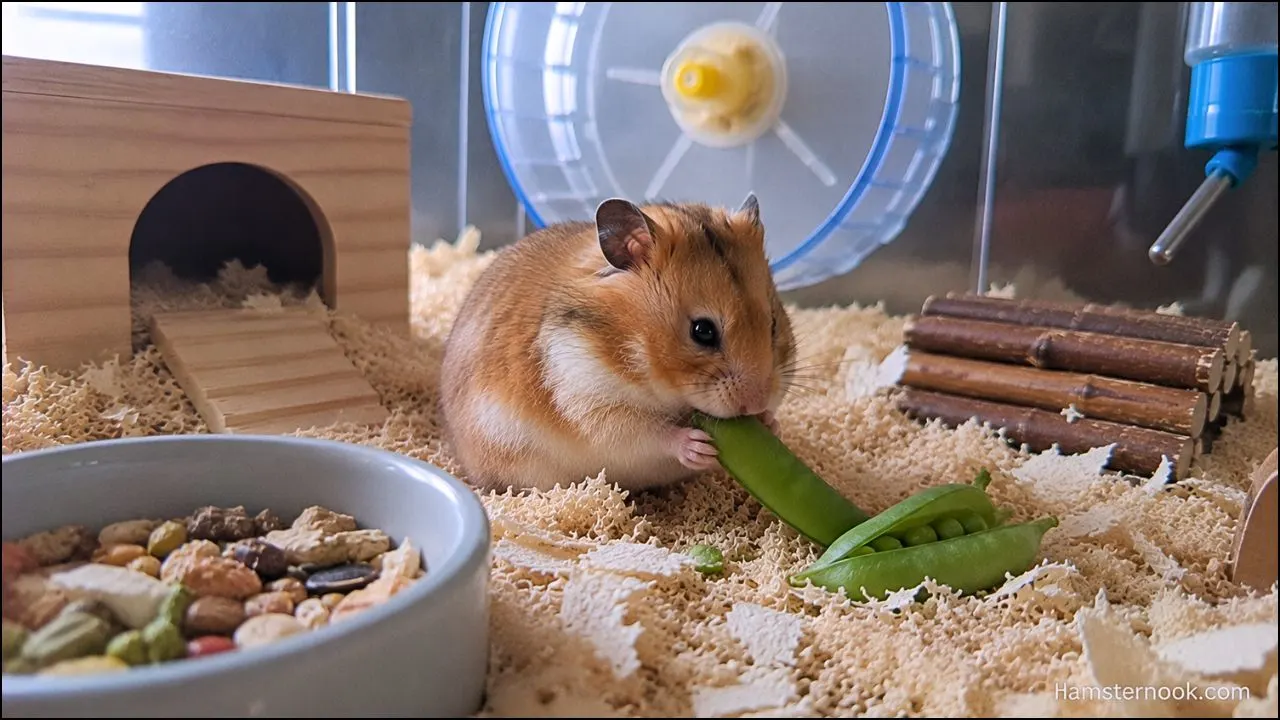
A hamster’s main diet should remain a complete, balanced food formulated for hamsters. Fresh vegetables can provide variety, but they should remain a relatively small part of the overall diet.
Pumpkin should therefore stay a small addition rather than becoming a major part of daily feeding. What Do Hamsters Eat? Complete Safe & Unsafe Food List explains what should make up the foundation of a hamster’s everyday diet.
Feeding the same vegetable repeatedly also isn’t necessary. You can rotate suitable vegetables instead of relying on pumpkin as a daily food.
Pumpkin is only one possible option when offering occasional fresh foods. Healthy Treats for Hamsters: 10 Safe Treats They Actually Love covers other suitable treat choices that can add variety without replacing the main diet.

Think of pumpkin as one option in the fresh-food rotation, not something your hamster needs to consume routinely.
Common Mistakes When Feeding Pumpkin
Giving too much
A large piece can be excessive for a tiny animal. More is not better simply because the food is considered safe.
Feeding pumpkin pie
Pumpkin pie is made for people, not hamsters. Sugar, fats, crust, and seasonings make it unsuitable.
Offering seasoned pumpkin seeds
Salted or flavored seeds should be avoided. Plain is the better choice.
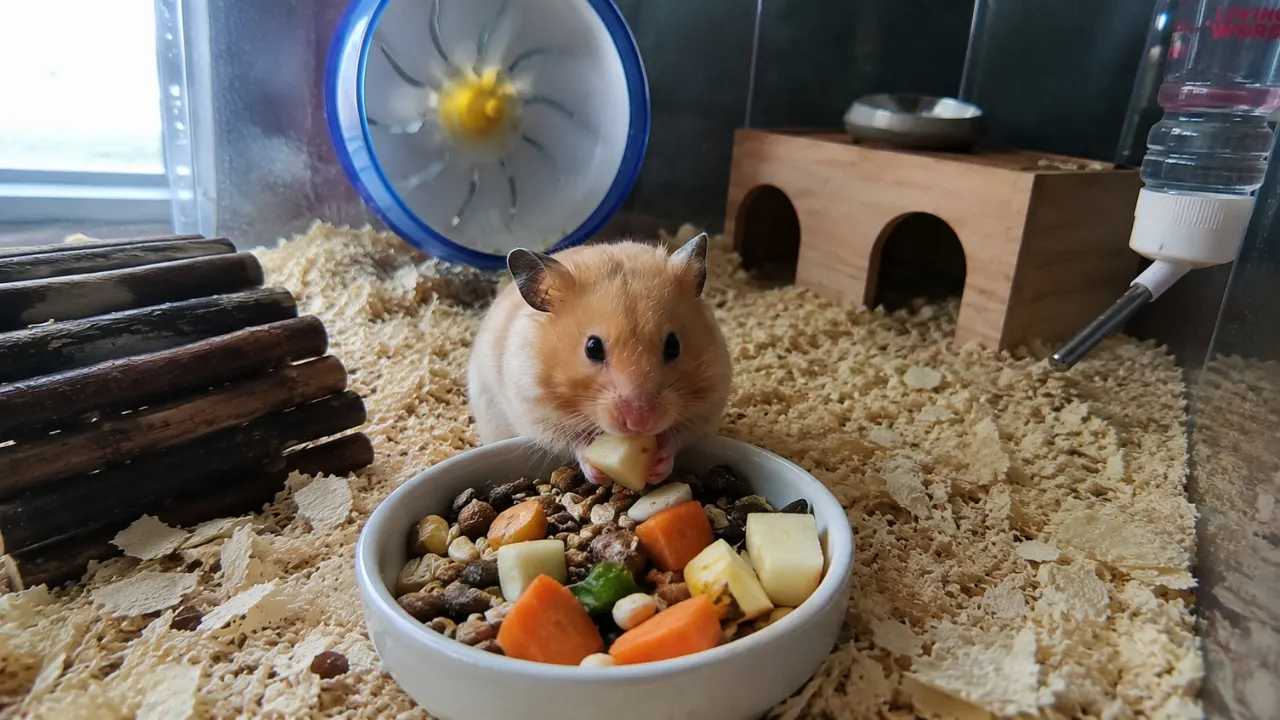
Leaving pumpkin inside the cage
A hamster may stash it somewhere you cannot immediately see. Check hiding places and remove leftovers before they spoil.
Replacing normal hamster food
Pumpkin cannot provide everything a hamster needs from its staple diet. MSD Veterinary Manual recommends a complete, balanced hamster diet, with fresh foods making up only a limited portion.
Introducing several new foods at once
If your hamster develops digestive changes after a new food, introducing multiple foods simultaneously makes it much harder to identify what caused the problem.
What You Should Do
If you want to give your hamster pumpkin, keep the process simple.

Choose fresh, plain pumpkin and wash it before preparing a tiny piece. Offer a small amount appropriate for your hamster’s size, and start especially small if pumpkin is new to your hamster.
For pumpkin seeds, choose plain, unseasoned seeds and treat them as an occasional seed treat rather than a regular part of the diet.
Most importantly, keep your hamster’s normal balanced food available. Fresh pumpkin is there for variety, not as a replacement for the nutritional foundation of the diet.
When to Be More Careful
Pay attention if your hamster’s eating or droppings change after introducing a new food.

The RSPCA advises contacting a veterinarian if a hamster starts eating less, develops moist droppings, or has a soiled hind end. Those signs should not simply be assumed to be a normal reaction to pumpkin.
If your hamster appears unwell, stops eating, has significant diarrhea, becomes unusually weak, or shows other concerning changes, contact a veterinarian familiar with small or exotic pets rather than trying to treat the problem with food changes.
Can Hamsters Eat Pumpkin Skin?
There is not enough hamster-specific guidance here to recommend pumpkin skin as a routine food. The simplest option is to remove the outer skin and offer a small piece of clean, plain pumpkin flesh.
Can Hamsters Eat Pumpkin From a Can?
Only plain pumpkin without added ingredients should even be considered.
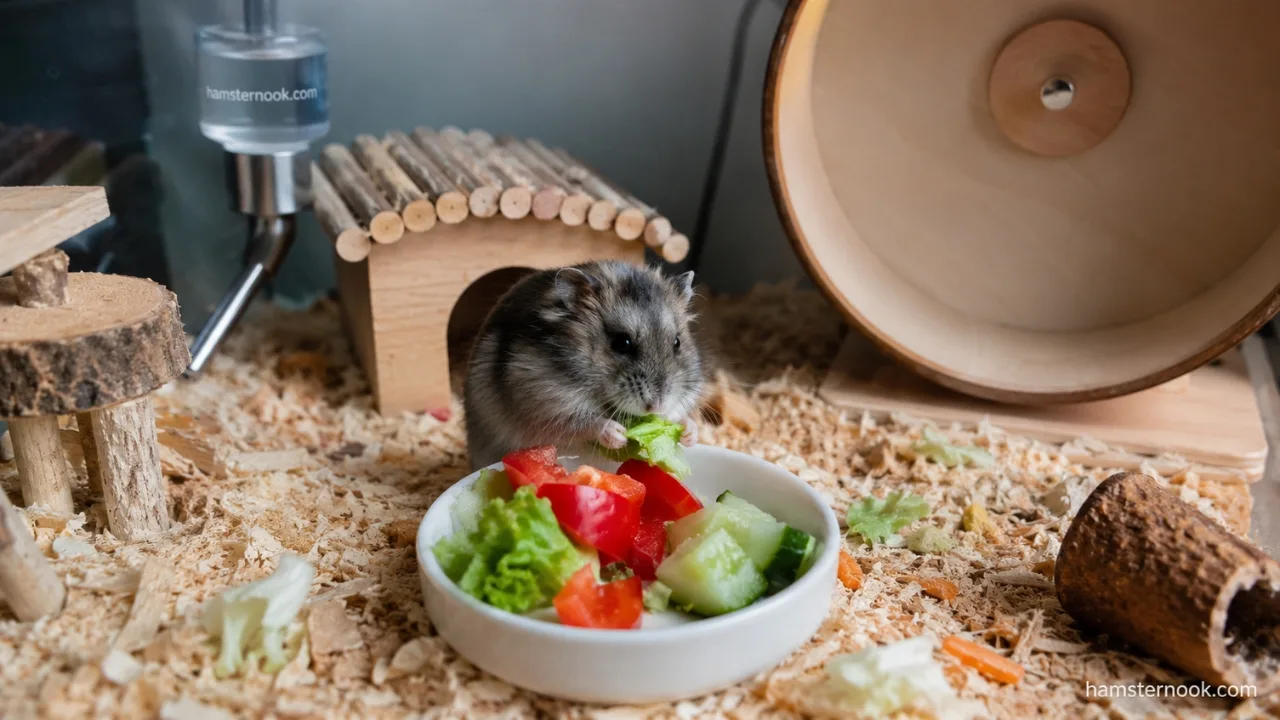
Canned pumpkin should only be considered if it is plain pumpkin with no added ingredients. Always check the label, and do not use pumpkin pie filling or other products containing added sugar, salt, spices, or seasonings.
For a hamster, fresh plain pumpkin is the simpler choice.
Can Hamsters Eat Pumpkin Leaves or Stems?
Pumpkin leaves, stems, and vines are not necessary to include in your hamster’s diet. Because the hamster-specific feeding guidance used here supports pumpkin as a vegetable but does not establish these plant parts as routine food, sticking with plain pumpkin flesh is the more straightforward choice.
When there is a well-established safe option available, there is little reason to experiment with less-established parts of the plant.
Frequently Asked Questions
Is pumpkin good for hamsters?
Pumpkin can be a suitable occasional vegetable for hamsters, but it is not a replacement for a complete hamster diet. PDSA specifically lists pumpkin among vegetables suitable for hamsters.
How much pumpkin can I give my hamster?
Start with a very small piece. Dwarf hamsters should receive smaller portions than Syrian hamsters. There is no universally established pumpkin-specific portion for every hamster, so moderation is more appropriate than a large measured serving.
Can dwarf hamsters eat pumpkin?
Yes. Pumpkin is listed as a suitable hamster vegetable. Because dwarf hamsters are smaller, give them a correspondingly smaller piece.
Can Syrian hamsters eat pumpkin?
Yes. Syrian hamsters can have plain pumpkin as an occasional fresh-food treat. Keep the serving small and continue providing a complete balanced diet.
Can hamsters eat pumpkin seeds?
Yes, plain pumpkin seeds can be given in moderation. They should be treated as an occasional seed treat rather than a major part of the diet because seeds can be calorie-dense and hamsters may preferentially eat them.
Can hamsters eat roasted pumpkin seeds?
If offering pumpkin seeds, plain and unseasoned is the safest straightforward choice. Avoid seeds that are salted, flavored, spiced, or coated with other ingredients.
Can hamsters eat pumpkin pie?
No. Pumpkin pie is a human dessert and can contain sugar, fat, crust, and seasonings that are not appropriate for hamsters.
Can hamsters eat raw pumpkin?
Yes. A small piece of plain raw pumpkin can be offered as an occasional vegetable.

Can hamsters eat cooked pumpkin?
Plain cooked pumpkin without salt, sugar, butter, oil, or seasoning can be offered in a small amount. There is no need to add ingredients.
Can hamsters eat pumpkin every day?
There is no need to feed pumpkin daily. Fresh vegetables should remain a small part of a balanced diet, and rotating suitable foods is a better approach than relying heavily on one vegetable.
Should I remove leftover pumpkin?
Yes. Hamsters often carry food into hiding places, and fresh foods can spoil. Check the cage and remove uneaten pumpkin rather than allowing it to remain hidden.
Final Thoughts
Hamsters can eat pumpkin, and it can be a perfectly reasonable addition to a varied diet when served correctly. The key is portion control. A tiny piece of plain pumpkin is enough; your hamster does not need a bowlful.

Pumpkin seeds can also be offered as an occasional treat, but they should be handled more sparingly than pumpkin flesh. Choose plain, unseasoned seeds and never let treats displace the balanced food that forms the foundation of your hamster’s diet.
If you keep the serving small, introduce new food gradually, and remove anything your hamster hides before it spoils, pumpkin can remain a simple and enjoyable part of your hamster’s fresh-food rotation.
Sources & References
- PDSA — Hamsters as Pets: Diet and Safe Vegetables
- RSPCA — What To Feed a Pet Hamster
- MSD Veterinary Manual — Providing a Home for a Hamster
- MSD Veterinary Manual — Hamsters: Husbandry and Nutrition
- RSPCA — Hamster Advice and Welfare Guidance
Medical Disclaimer:
This article provides general hamster-care and nutrition information and is not a substitute for veterinary advice. If your hamster develops concerning symptoms, has a significant change in eating or drinking, or you are worried about a possible health problem, consult a qualified veterinarian.

Narayan Kumar is the founder and author of HamsterNook. He creates practical, research-based hamster care guides covering hamster behavior, nutrition, cage setup, enrichment, health, and everyday care. His goal is to help hamster owners make informed decisions and provide safer, healthier lives for their pets through clear, beginner-friendly information based on trusted animal care resources.