If your hamster looks interested when you are eating avocado, it can be tempting to offer a tiny piece. After all, avocado is nutritious for people. But foods that are healthy for humans are not automatically safe for hamsters. Avocado is best kept off a hamster’s menu. The concern is not simply its fat content: avocado contains persin, a compound associated with toxicity in susceptible animals, and veterinary toxicology sources specifically identify rodents among animals that can be affected.
Quick Answer: Can Hamsters Eat Avocado?
No. Hamsters should not be intentionally fed avocado.
Avocado contains a naturally occurring compound called persin. Veterinary toxicology references document avocado toxicity in several animal species, including rodents, so avocado is not a food to experiment with for hamsters.
There is also no nutritional reason to take the risk. Hamsters can get appropriate variety from safer foods, while their main diet should remain a nutritionally complete hamster food.
For a broader guide to your hamster’s everyday nutrition, see Complete Hamster Diet Guide: What to Feed, How Much & How Often.
If your hamster has eaten avocado accidentally, don’t panic—but don’t offer any more, and contact a veterinarian for advice, particularly if your hamster ate more than a tiny accidental amount or has any unusual signs.
Why Is Avocado Unsafe for Hamsters?
The concern is persin
Avocado plants contain persin, a naturally occurring compound found in the fruit as well as other parts of the plant.
Avocado toxicity varies by species. Veterinary toxicology references document harmful effects in several animals, including rodents such as mice and rats, but they do not establish a safe avocado dose for hamsters. Because hamster-specific safety evidence is lacking and avocado contains persin, the safest choice is not to feed it to hamsters.
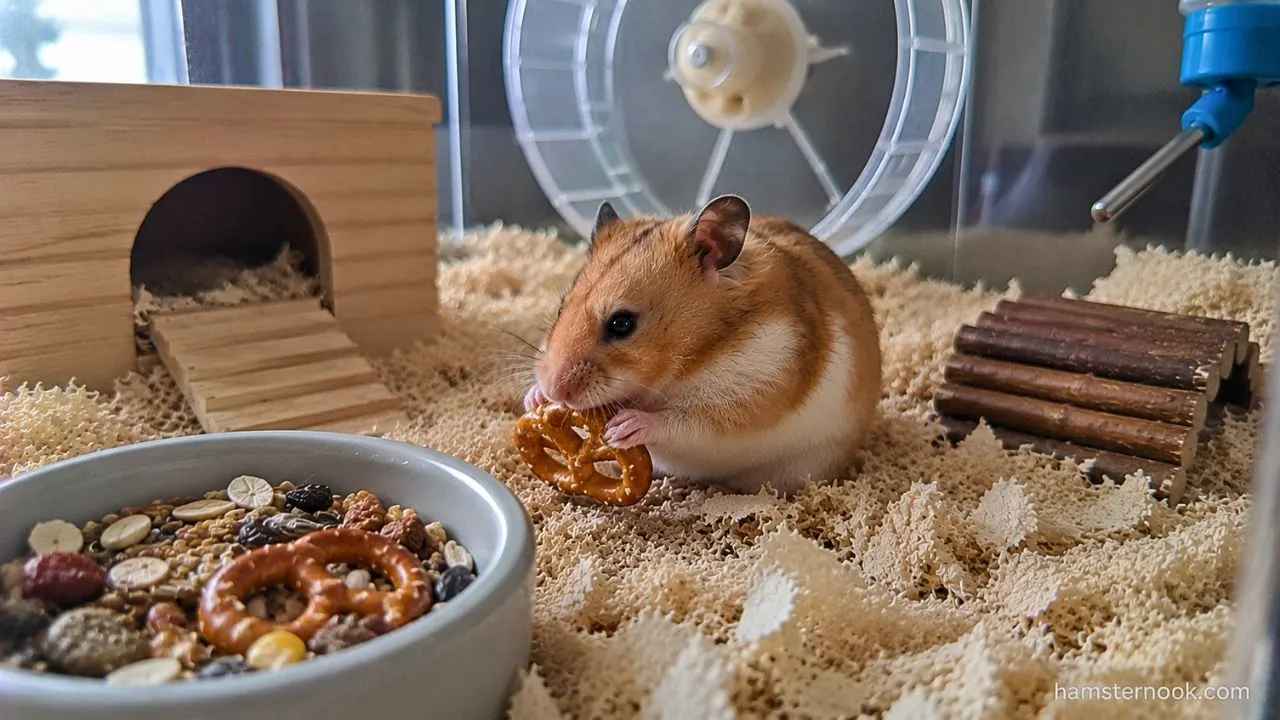
That distinction matters. You may see conflicting information online because avocado does not affect every animal in the same way. A food being tolerated by one species does not make it suitable for another.
Avocado is also unusually rich for a hamster treat
Even without the toxicity concern, avocado is not a particularly useful treat for a hamster.
Hamsters need a balanced staple diet rather than calorie-dense human foods. Veterinary guidance recommends that treats and fresh foods remain a limited part of the overall diet.
There is simply no advantage to choosing avocado when safer vegetables and other appropriate foods are available.

For a broader reference on foods that should be avoided, see Foods Hamsters Should Never Eat: Toxic & Unsafe Foods to Avoid.
Can Hamsters Eat Any Part of an Avocado?
It is safest to treat the entire avocado plant as off-limits.
| Part of avocado | Give to a hamster? | Why |
|---|---|---|
| Avocado flesh | No | Contains persin and is not an appropriate hamster food |
| Avocado skin | No | Part of the avocado plant and not suitable for feeding |
| Avocado pit/seed | No | Should never be offered; it can also create a physical obstruction hazard if swallowed |
| Leaves or plant material | No | Avocado plant material contains persin |
| Guacamole | No | Contains avocado and may also contain additional ingredients unsuitable for hamsters |
The avocado pit deserves particular attention. Apart from the avocado toxicity concern, hard fruit pits and similar objects can become physical hazards if swallowed. Never give the pit to a hamster as something to chew on or play with.
What If My Hamster Accidentally Ate Avocado?
Accidental ingestion is different from intentionally feeding avocado as a treat.

If your hamster has eaten any avocado, remove the remaining food and contact a veterinarian familiar with small mammals for advice. Tell them which part was eaten, the approximate amount, and when it happened. The risk can vary with the exposure, and there is no established safe dose for hamsters, so do not wait for symptoms before seeking guidance.
Instead:
- Remove the remaining avocado so your hamster cannot eat more.
- Note approximately what was eaten and which part of the avocado was involved.
- Keep the avocado packaging or fruit available for identification if needed.
- Observe your hamster closely for anything unusual.
- Contact a veterinarian for specific advice if ingestion occurred, especially if more than a very small amount was consumed.
Do not try to make your hamster vomit. Do not give home remedies, human medicines, or another food in an attempt to “neutralize” the avocado unless a veterinarian specifically tells you to do so.
What signs should you watch for?
Avocado toxicity can cause serious effects in susceptible animals. Depending on the species and exposure, veterinary references describe problems involving the heart and other systems.

For a hamster, any significant change after suspected avocado ingestion deserves veterinary attention rather than trying to work out the cause at home.
Watch for signs such as:
- unusual weakness or marked lethargy
- difficulty breathing
- collapse
- severe loss of appetite
- abnormal behavior or responsiveness
- other sudden or significant changes in normal condition
Hamsters are small prey animals and can become seriously unwell without dramatic early signs. If your hamster appears to be having trouble breathing, collapses, or becomes severely unresponsive, seek urgent veterinary care.
What Should You Do at Home After Possible Ingestion?
The safest approach is observation plus professional advice, not home treatment.

Make sure your hamster has access to its normal fresh water and usual food. Keep its environment quiet and avoid unnecessary handling while you are monitoring it.
Do not:
- force food or water into its mouth
- give human medications
- give activated charcoal unless specifically instructed by a veterinarian
- attempt to induce vomiting
- offer another food to counteract the avocado
- wait for severe symptoms before seeking advice if a significant amount was eaten
There is no reliable home method for determining whether a hamster has been affected by avocado exposure.
What Should a Hamster’s Normal Diet Look Like?
Avoiding avocado does not mean your hamster needs a boring diet.

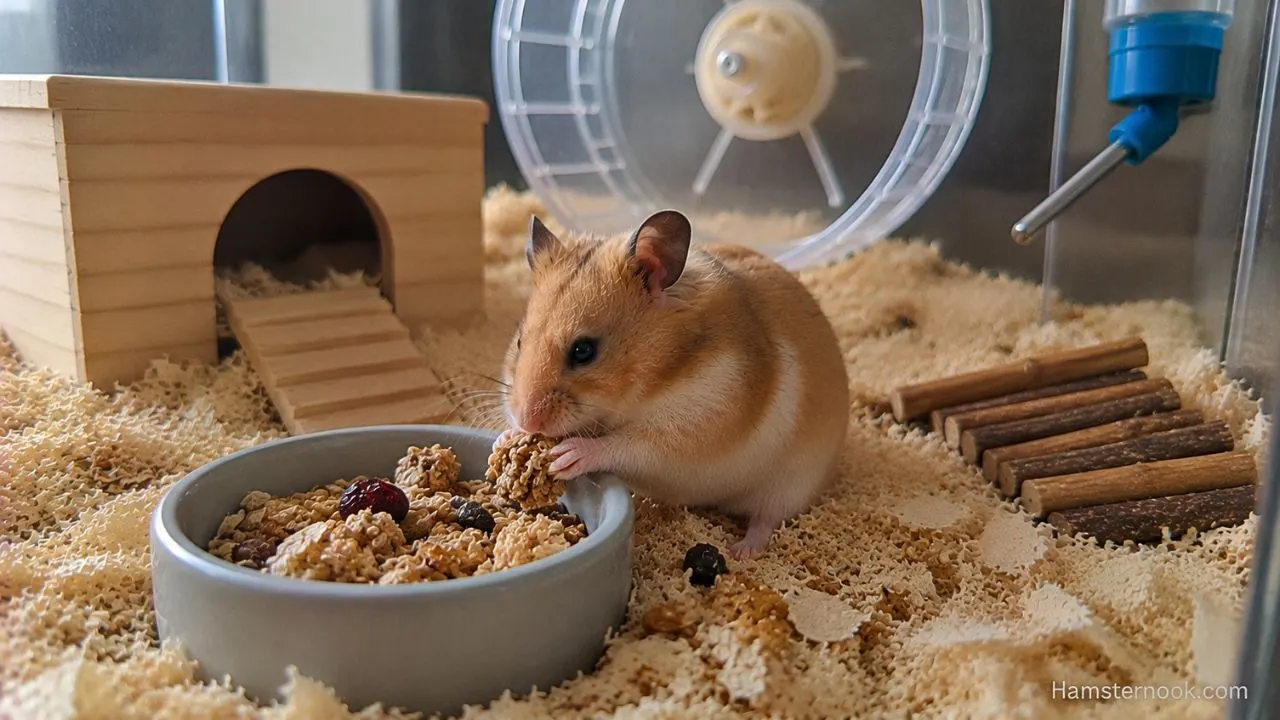
A hamster’s foundation should be a complete, balanced food formulated for hamsters. Fresh foods can be used as limited additions rather than replacing the main diet.
The RSPCA recommends a good-quality balanced hamster diet, with small quantities of suitable greens, cleaned root vegetables, and certain pieces of fruit. Merck Veterinary Manual similarly describes fruits and vegetables as treats that should remain limited rather than becoming the main part of the diet.
Safer fresh-food choices
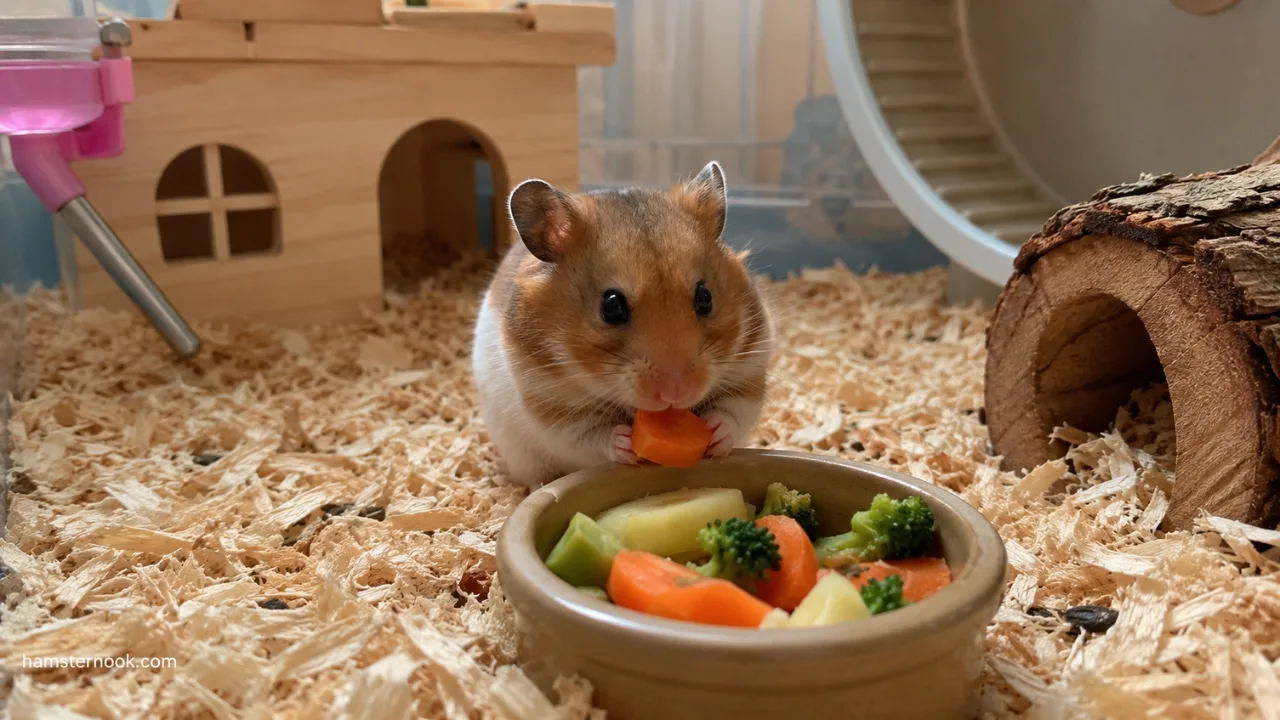
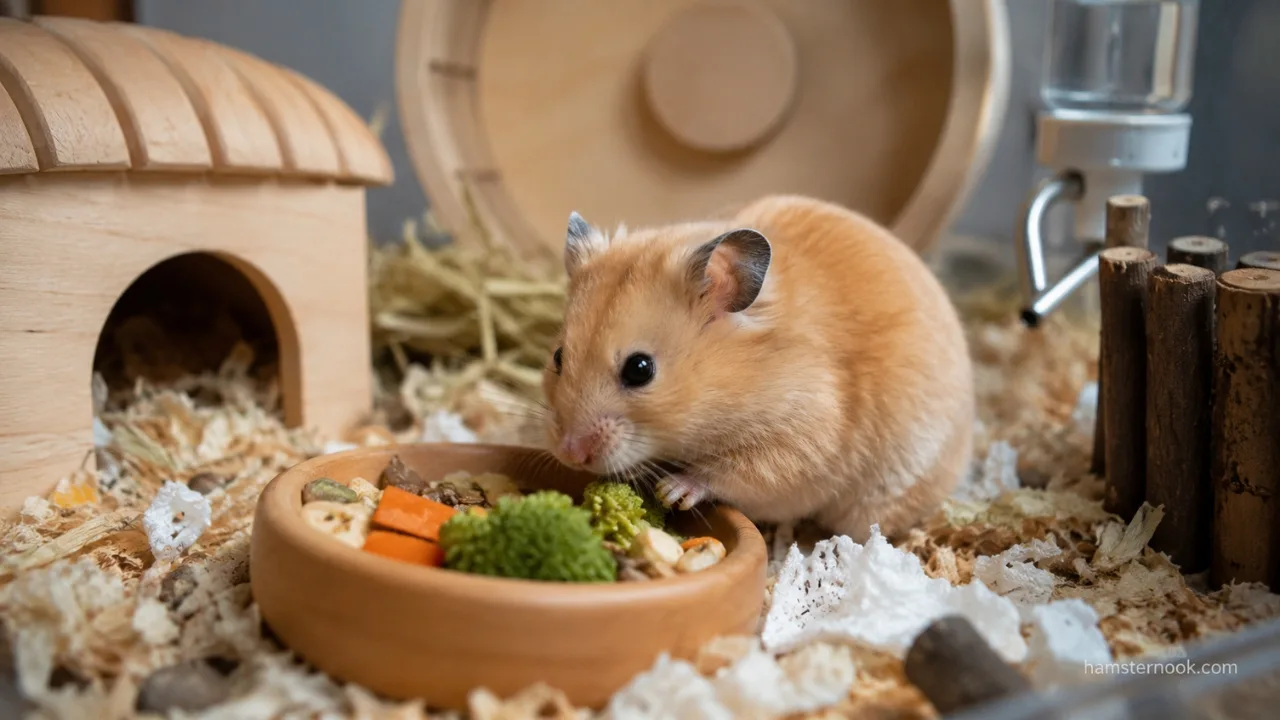
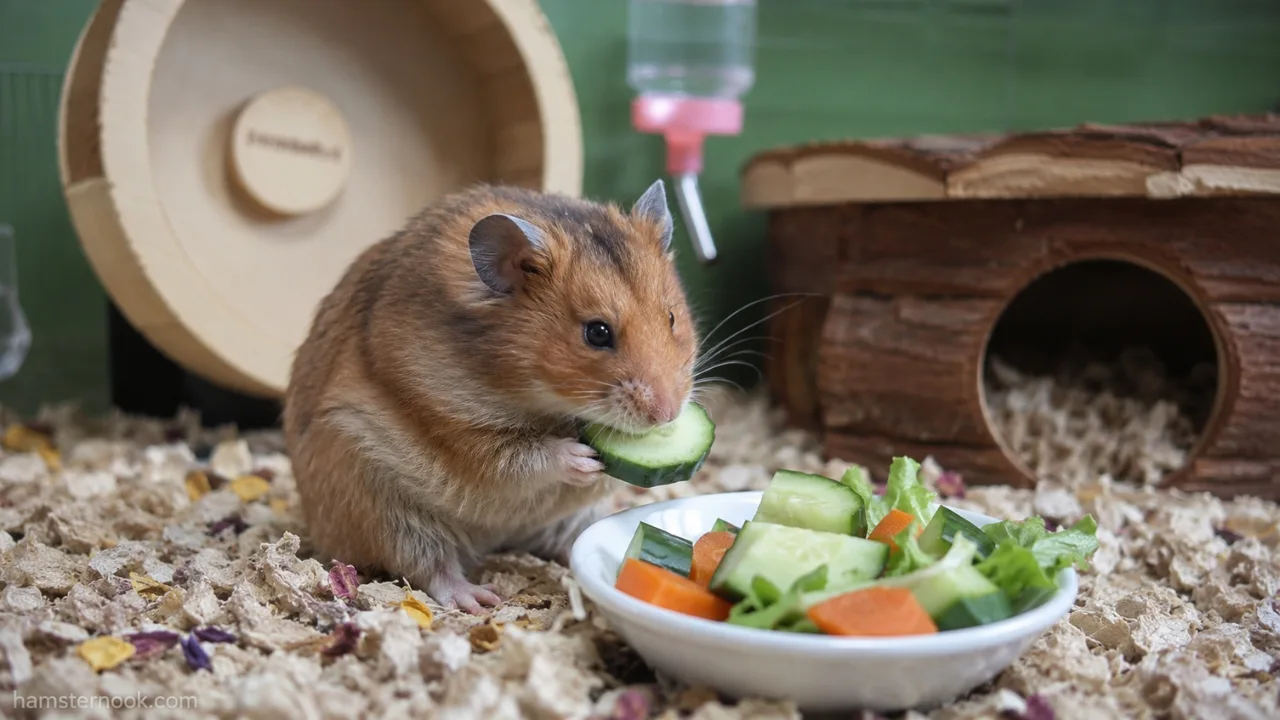
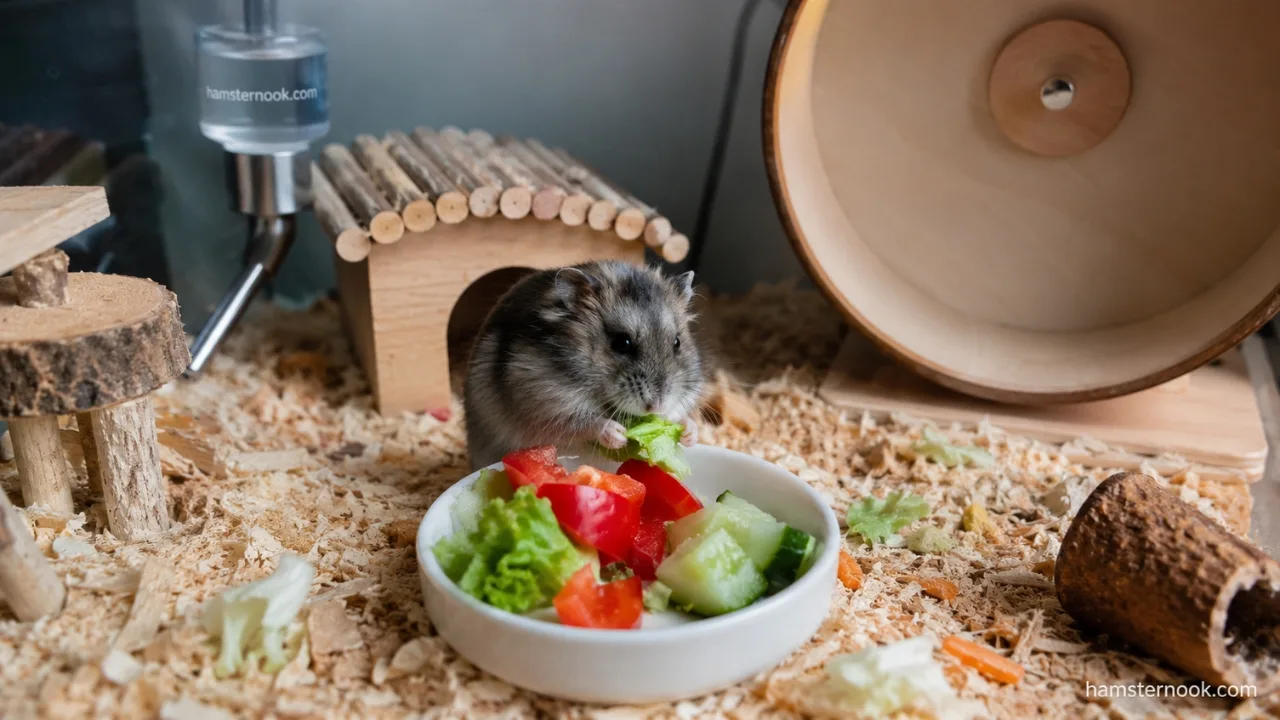
Examples of fresh foods that are commonly included in reputable hamster-care guidance include small portions of suitable vegetables such as:
- carrot
- broccoli
- cucumber
- squash
- cauliflower
- leafy greens
Fresh foods should be introduced cautiously rather than suddenly changing a hamster’s entire diet.
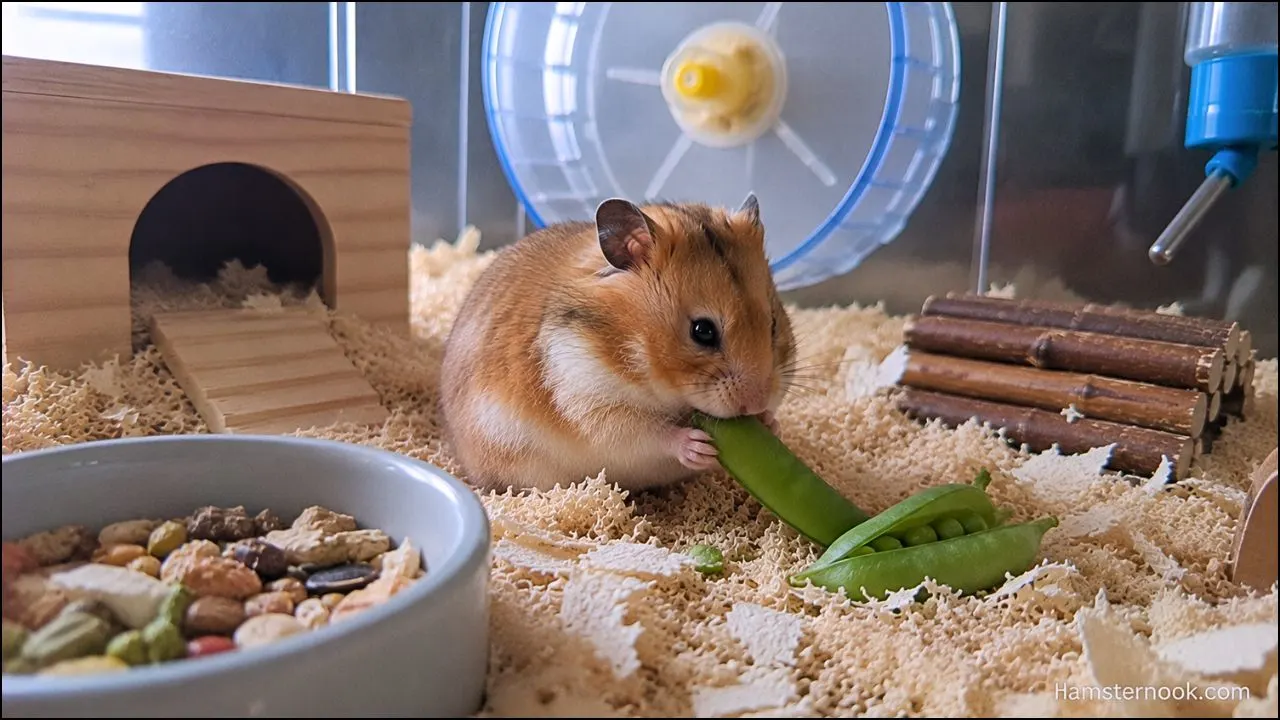
For a wider selection of suitable produce and portion guidance, see Best Fruits and Vegetables for Hamsters: Safe Foods, Portion Sizes & Feeding Tips.
A new food also should not be left sitting in the enclosure indefinitely. Hamsters naturally carry and store food, so fresh foods can end up hidden inside nests or other areas. Perishable food can spoil if it remains there.
Why You Shouldn’t Replace the Main Diet With Fruits and Vegetables
A common beginner mistake is assuming that because fresh produce is healthy, more of it must be better.
That is not how a hamster’s diet works.

Hamsters need appropriate nutrition from their staple food. Fresh produce is better viewed as a small addition for variety, not the foundation of the diet.
The RSPCA also advises owners to monitor how much their hamster eats and drinks and to avoid sudden dietary changes because they can upset the stomach.
For step-by-step guidance on introducing unfamiliar foods, see How to Introduce New Foods to a Hamster Safely: Step-by-Step Guide.
If your hamster suddenly eats much less than usual, develops moist droppings, or has a soiled hind end, veterinary advice is appropriate rather than assuming the problem is simply a reaction to a particular treat.

Common Avocado Mistakes Hamster Owners Make
“It’s a fruit, so it must be safe.”
Not necessarily. Some fruits are appropriate in small quantities, while others are unsuitable or potentially toxic to animals.
Hamsters should not be given every fruit that humans commonly eat.
“I’ll only give a tiny piece.”
A lack of an established safe amount is exactly why avocado should not be used as a hamster treat.
There are plenty of safer foods available, so there is little reason to test how much avocado a particular hamster might tolerate.

“I’ll remove the pit, so the avocado is safe.”
Removing the pit does not remove the persin concern from the fruit itself.
The flesh should not be deliberately fed either.
“My hamster seems fine, so avocado must be harmless.”
A hamster appearing normal immediately after eating something does not establish that the food is safe or that no problems will develop.
If you know your hamster has eaten avocado, base your next step on the exposure and veterinary guidance rather than using the absence of immediate symptoms as proof that there is no risk.

If your hamster later shows a significant change in appetite or eating behavior, see Why Is My Hamster Not Eating? 9 Causes, Warning Signs & What to Do for more information.
What You Should Do Instead
If you’re eating avocado and your hamster is watching you, simply give your hamster its normal food instead.
For an occasional fresh treat:
- Choose a food known to be appropriate for hamsters.
- Wash fresh produce thoroughly.
- Offer only a small amount.
- Introduce unfamiliar foods one at a time.
- Remove uneaten perishable food before it spoils.
- Keep the hamster’s regular balanced food as the nutritional foundation.
This approach gives your hamster variety without introducing an unnecessary food-safety risk.

When to Worry
A suspected avocado exposure becomes more concerning when:
- your hamster ate a noticeable amount
- the amount eaten is unknown
- your hamster ate the pit or another part of the avocado plant
- your hamster is already unwell
- unusual behavior or physical signs develop
- breathing appears abnormal
- your hamster becomes weak, collapses, or is difficult to rouse
For a very small animal such as a hamster, it is better to get professional guidance when you are unsure than to guess at a safe dose.
Final Thoughts
Can hamsters eat avocado? No—avocado should not be offered to hamsters.
The main reason is the presence of persin and the documented sensitivity of rodents to avocado toxicity. There is also no nutritional need to use avocado when hamsters can receive appropriate variety from safer foods.
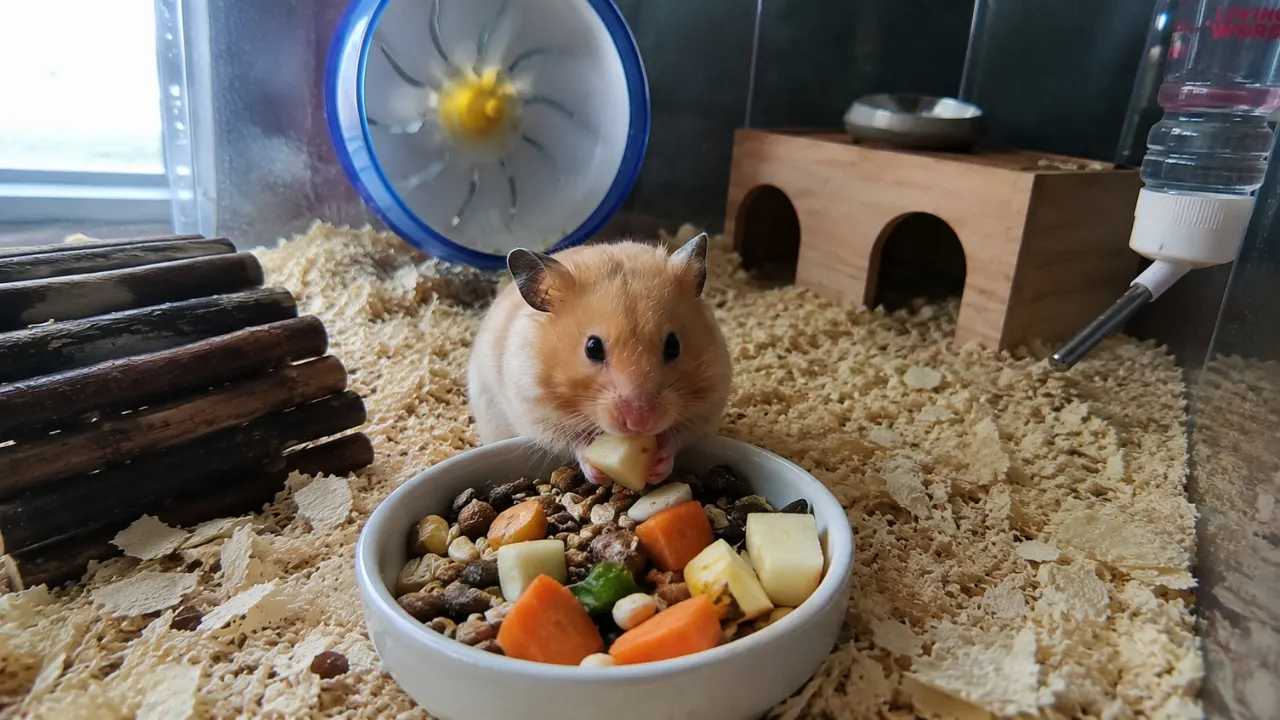
If your hamster accidentally gets a bite, remove the remaining avocado, keep track of what was eaten, and contact a veterinarian for advice when the exposure is significant or you notice anything unusual.
When choosing hamster treats, the safest rule is simple: stick with foods that have a clear history of being appropriate for hamsters rather than experimenting with human foods that may carry species-specific risks.
For examples of appropriate occasional treats, see Best Hamster Treats: 10 Healthy & Safe Treats They Love.
Frequently Asked Questions
Can Syrian hamsters eat avocado?
No. Syrian hamsters should not be intentionally fed avocado. Syrian hamsters are rodents, and veterinary toxicology sources identify rodents as animals that can be sensitive to avocado toxicity.

Can dwarf hamsters eat avocado?
No. Dwarf hamsters should also not be given avocado. Their smaller size does not create a known safe amount of avocado, so it is better avoided.
Is avocado flesh toxic to hamsters?
Avocado flesh contains persin, the compound associated with avocado toxicity. Because rodents can be sensitive to avocado, the flesh should not be offered to hamsters.
Can hamsters eat cooked avocado?
Cooking does not make avocado an appropriate hamster food. Do not use cooked avocado, baked avocado, or avocado-containing human foods as hamster treats.
Can hamsters eat guacamole?
No. Guacamole should not be given to hamsters because it contains avocado and may contain additional ingredients that are inappropriate for them.

What if my hamster ate avocado by accident?
Remove the remaining avocado and determine, as closely as possible, what part and how much was eaten. Contact a veterinarian for advice, particularly if the amount was more than a tiny accidental taste or your hamster develops any unusual signs.
Can hamsters eat avocado oil?
Avocado oil should not be used as a hamster food or supplement. There is no need to add it to a hamster’s diet, and products made for humans should not automatically be assumed safe for hamsters.
What fruits can hamsters eat instead?
The RSPCA lists small quantities of suitable fruit such as apple as an option for hamsters, while emphasizing that fresh foods should be limited and that some fruits, including grapes, should be avoided. Always check that a particular food is appropriate before offering it.
Is the avocado pit dangerous to hamsters?
Yes, the pit should never be given to a hamster. Apart from being part of the avocado plant, a swallowed hard pit can create a physical obstruction hazard.
References
This guide draws on veterinary toxicology and animal-welfare guidance about avocado exposure and hamster nutrition.
- Merck Veterinary Manual – Avocado (Persea spp) Toxicosis in Animals
- ASPCA Animal Poison Control – The Scoop on Avocado and Your Pets
- ASPCA – Toxic and Non-Toxic Plants: Avocado
- RSPCA – What To Feed a Pet Hamster
Medical Disclaimer
This article provides general hamster-care information and is not a substitute for veterinary advice. If your hamster may have eaten avocado or is showing unusual, severe, or rapidly worsening signs, contact a veterinarian familiar with hamsters or other exotic small mammals. Do not attempt to treat suspected poisoning at home unless a veterinarian directs you to do so.

Narayan Kumar is the founder and author of HamsterNook. He creates practical, research-based hamster care guides covering hamster behavior, nutrition, cage setup, enrichment, health, and everyday care. His goal is to help hamster owners make informed decisions and provide safer, healthier lives for their pets through clear, beginner-friendly information based on trusted animal care resources.