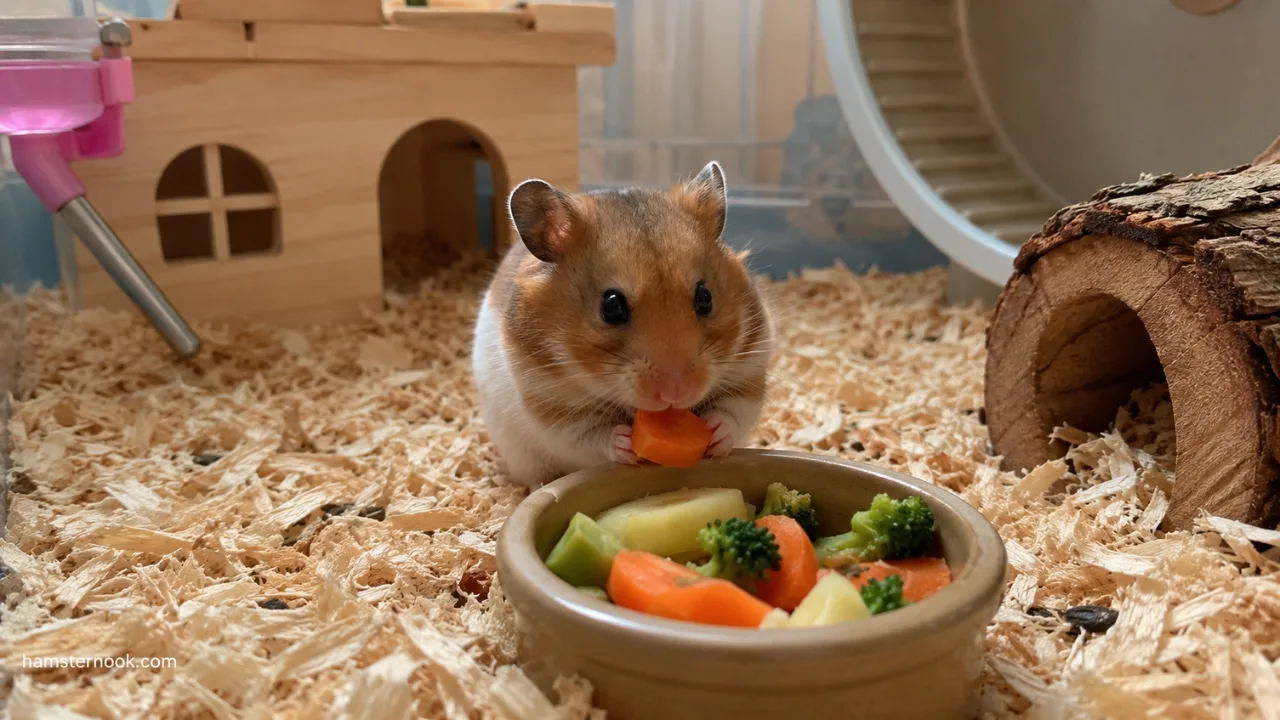
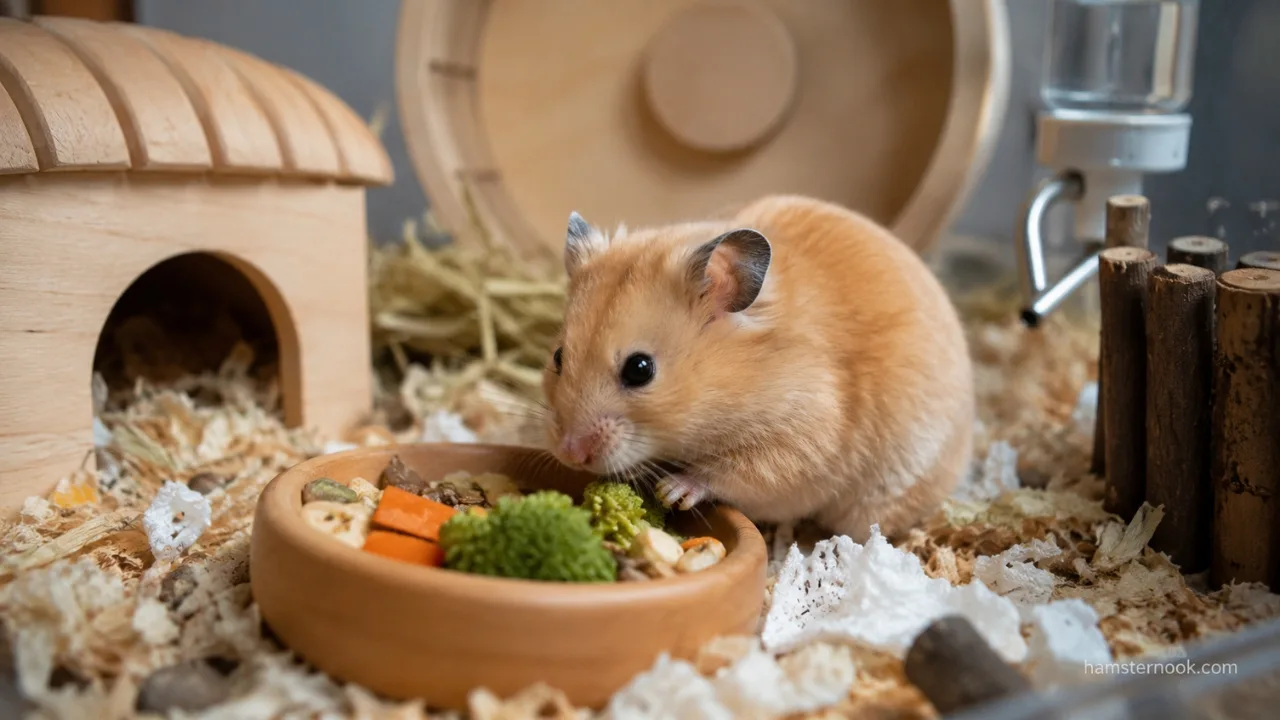
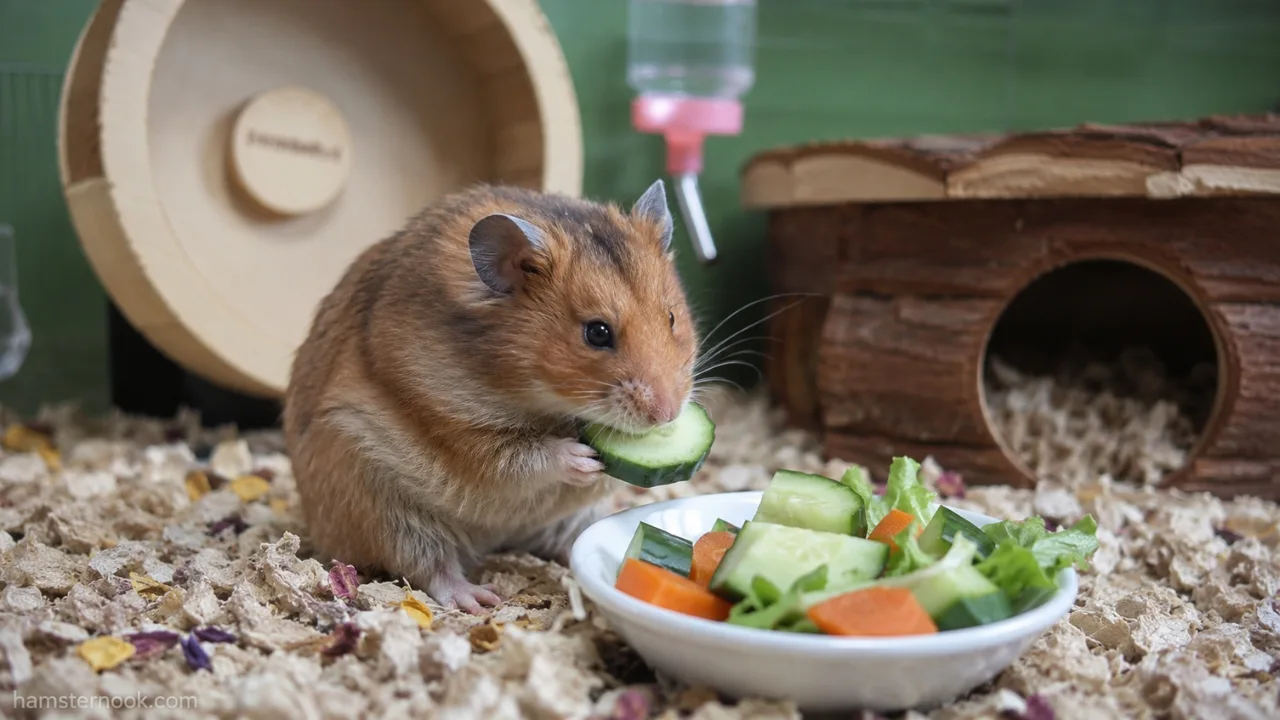
If your hamster grabbed a few bites of rabbit food, the first thing to check is what kind of rabbit food it was. Plain rabbit pellets are different from rabbit muesli mixes, treats, supplements, or medicated products.
For everyday feeding, hamsters should have a complete, balanced food formulated for hamsters. But an accidental nibble of plain rabbit pellets is not automatically an emergency, and veterinary guidance does recognize rabbit pellets as something hamsters can eat occasionally.
Quick Answer: Can Hamsters Eat Rabbit Food?
Yes, some rabbit foods can be eaten by hamsters, but rabbit food should not normally replace a hamster’s regular diet.
The safest way to think about it is:
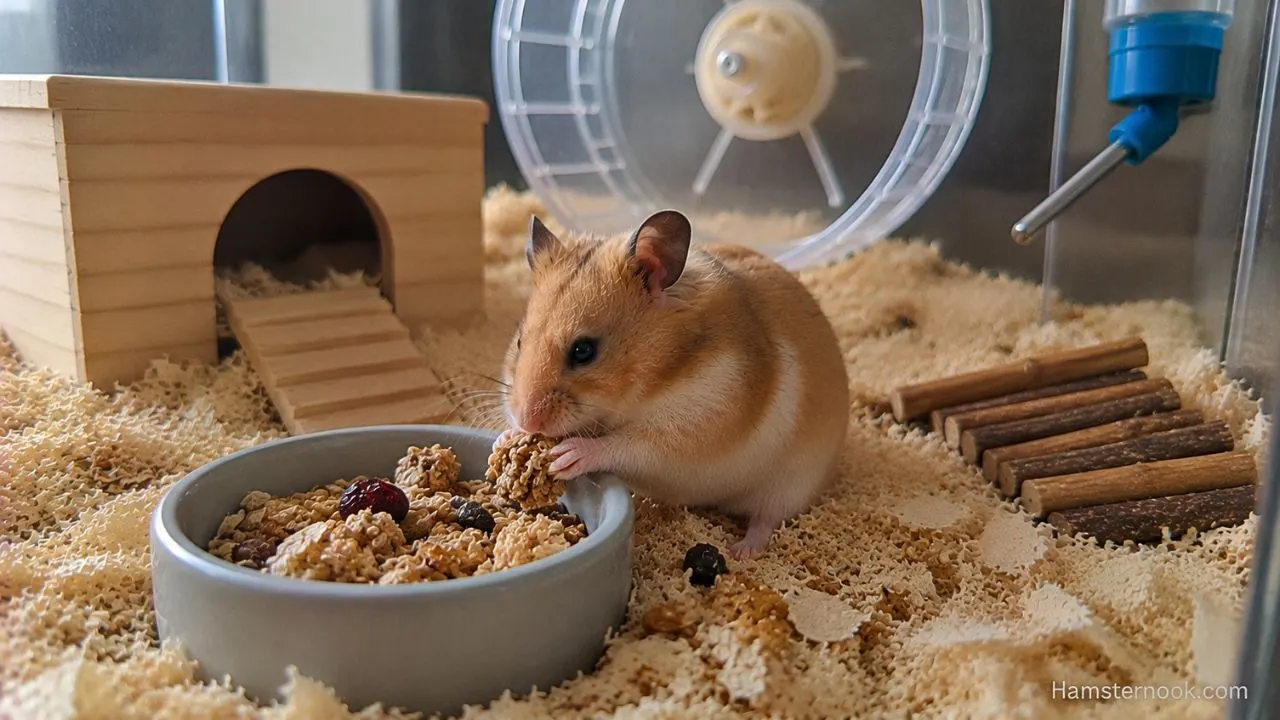
- Plain rabbit pellets: can be fed to hamsters occasionally; they should not replace a hamster-formulated diet.
- Rabbit hay: generally safe and can provide useful fiber and chewing/foraging enrichment, but it cannot replace a balanced hamster food.
- Rabbit muesli or mixed food: less suitable because ingredients vary and the mixture may not provide the balanced nutrition a hamster needs.
- Rabbit treats or specialty foods: check the exact ingredients before offering them.
- A few accidental bites: usually call for observation rather than panic, provided the product was ordinary rabbit food and your hamster is acting normally.
Hamsters have different nutritional requirements from rabbits. RSPCA and MSD Veterinary Manual guidance recommends a balanced food formulated for hamsters, while MSD specifically notes that rabbit pellets can be used occasionally or mixed with another suitable rodent food.
Why Rabbit Food Isn’t the Same as Hamster Food
The fact that hamsters and rabbits can both eat certain plant-based foods doesn’t mean their diets are interchangeable.
Hamsters are omnivores. Their natural diet includes seeds, grains, vegetation and animal-based foods such as insects. Rabbit diets, by contrast, are built around very high-fiber foods such as grass and hay.
That difference matters when choosing a food to feed every day.
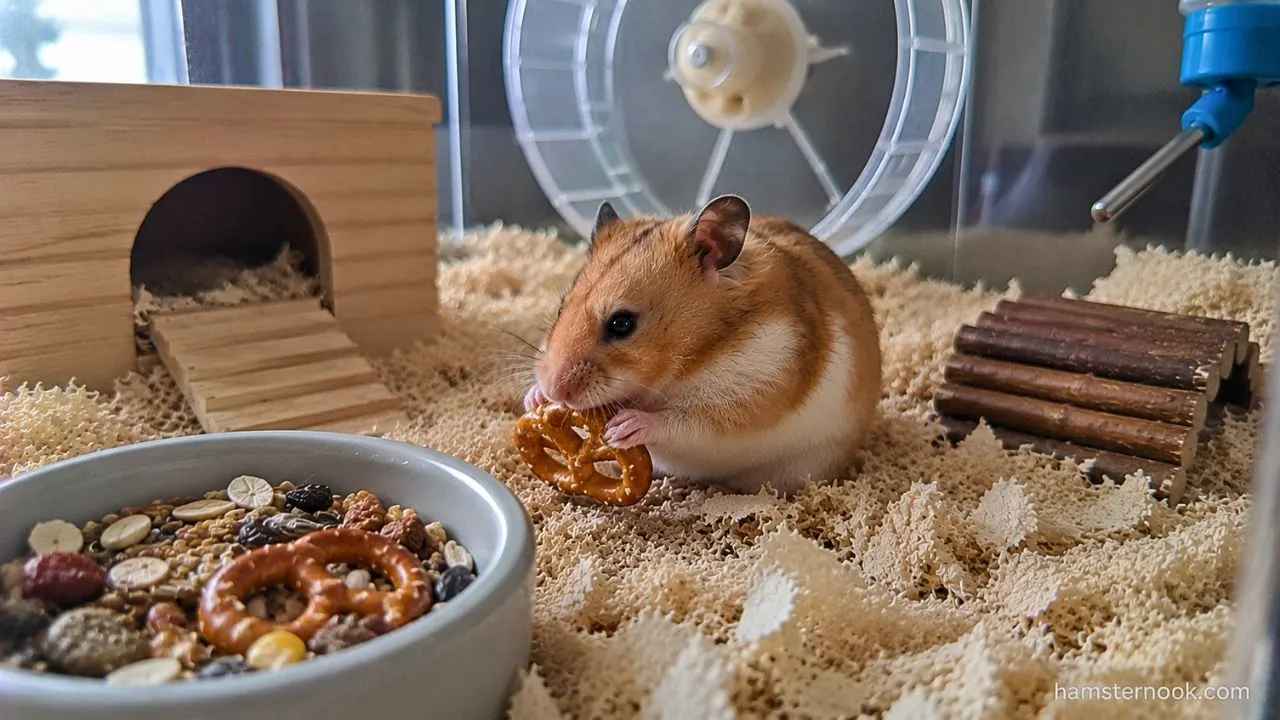
A hamster’s main food should provide the nutrients it needs in an appropriate balance. RSPCA recommends a good-quality commercial hamster food, such as a formulated pellet ration or suitable seed mixture, while MSD recommends a complete balanced pelleted diet specifically made for hamsters.
Rabbit pellets can contain more fiber or “roughage” than foods intended for some other rodents. MSD Veterinary Manual states that commercially available rabbit pellets can be fed to hamsters and may be mixed with mouse and rat food occasionally. That does not mean every rabbit product is suitable for hamsters or that rabbit food should replace a hamster-formulated diet.
What Happens If a Hamster Eats Rabbit Food?
It depends on the product and how much was eaten.
If your hamster stole a small amount of ordinary rabbit pellets, the most sensible response is usually to remove the rabbit food and return your hamster to its normal diet.
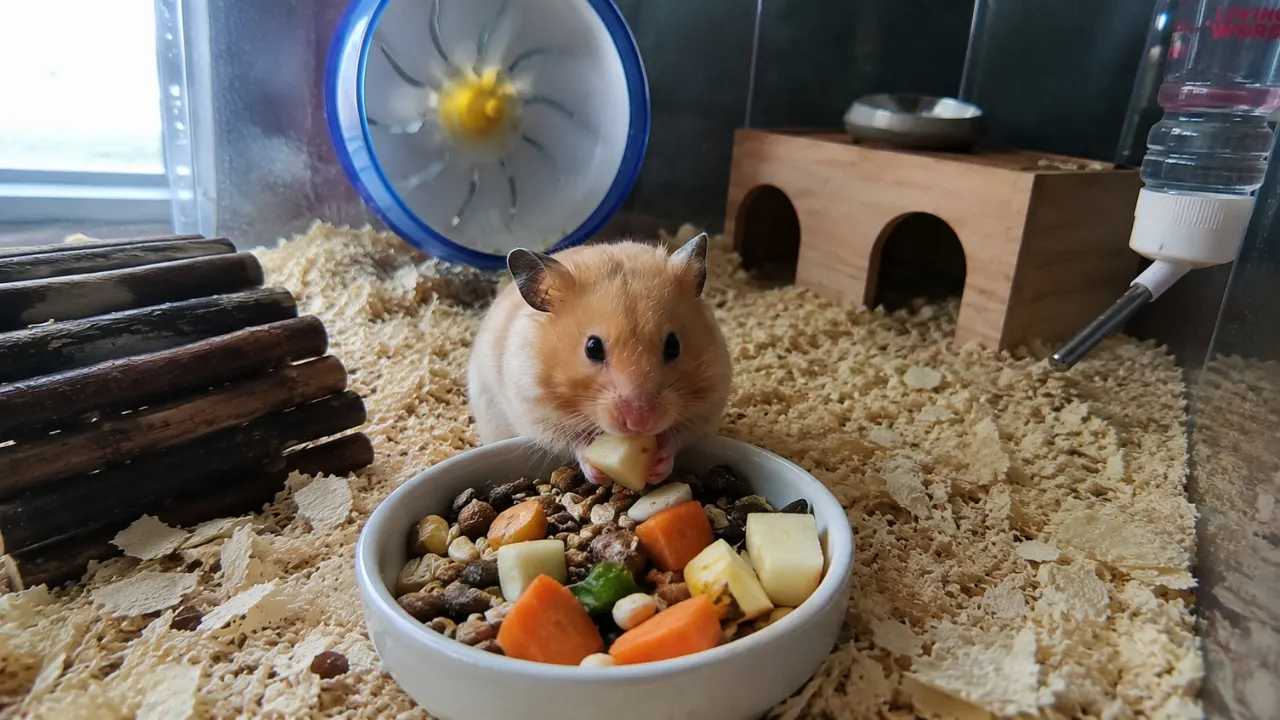
There is no reason to make the hamster vomit or try to “flush out” the food. Instead, keep fresh water available and observe the hamster normally.
Remember that hamsters naturally carry food in their cheek pouches and hide food around their enclosure. Finding rabbit pellets stored in a nest does not necessarily mean your hamster ate a large quantity.
If It Was Only a Few Plain Pellets
A few plain rabbit pellets are different from an unknown rabbit treat, supplement, or medicated product. If you don’t know exactly what your hamster ate, check the product ingredients before assuming it is safe.
MSD Veterinary Manual explicitly includes commercially available rabbit pellets among foods that can be fed to hamsters, although it describes them as something that may be mixed in occasionally rather than presenting them as the ideal hamster diet.

So if your hamster ate two or three pellets while you weren’t looking, don’t panic.
If Your Hamster Ate a Large Amount
A larger amount is more relevant because it represents a bigger dietary change.
Hamsters can be sensitive to changes in diet. RSPCA specifically advises avoiding sudden dietary changes because they can upset a hamster’s stomach.
In this situation:

- Remove the rabbit food.
- Provide the hamster’s normal food.
- Make sure fresh water is available.
- Check that the hamster is eating and behaving normally.
- Watch its droppings and rear end for changes.
- Contact your veterinarian if concerning signs develop.
Don’t respond by withholding food to “give the stomach a rest.” A hamster should continue to have access to its normal food and clean water.
Rabbit Pellets vs. Rabbit Muesli vs. Hay
“Rabbit food” can mean several very different products.
| Rabbit product | Can a hamster eat it? | Best approach |
|---|---|---|
| Plain rabbit pellets | Generally acceptable in small amounts | Fine if accidentally eaten; don’t use as the main hamster diet without veterinary guidance |
| Timothy or other suitable hay | Generally safe | Can be offered as enrichment, but not as the main food |
| Rabbit muesli/mixed food | Not ideal as a hamster’s main food | Check ingredients and avoid using it as a replacement for balanced hamster food |
| Rabbit treats | Depends on ingredients | Check the product before offering |
| Rabbit supplements/medicated products | Do not assume they are safe | Don’t give them unless a veterinarian specifically advises it |
Rabbit food varies considerably between products, so the ingredient list matters more than the word “rabbit” on the package.
If you’re unsure whether another food is appropriate for your hamster, Foods Hamsters Should Never Eat: Toxic & Unsafe Foods to Avoid can help you check foods and ingredients that should be avoided.

Can Hamsters Eat Rabbit Pellets Regularly?
This is where accidental eating and intentional feeding need to be separated.
A hamster eating a few rabbit pellets is very different from a hamster being fed rabbit pellets as its only food every day.
For routine feeding, choose a food specifically formulated for hamsters. RSPCA recommends a balanced hamster diet, and MSD describes a complete, balanced pelleted diet made for hamsters as appropriate for captive hamsters.
For a broader look at choosing and managing a hamster’s everyday diet, see Complete Hamster Diet Guide: What to Feed, How Much & How Often.

If rabbit pellets are being considered because your hamster refuses its normal food, has a dental problem, or needs a modified diet, talk to a veterinarian rather than changing the diet yourself.
What About Rabbit Hay?
Hay is a different situation from rabbit pellets.
PDSA recommends Timothy hay for hamsters as a source of fiber and chewing enrichment. Hay can also be incorporated into foraging and enrichment activities.
A small amount of clean, suitable hay can therefore be useful, but hay is not a complete hamster diet.

Your hamster still needs its normal balanced food.
Choose clean, good-quality hay and avoid anything that is damp, moldy, heavily dusty, or contaminated.
What Should You Do If Your Hamster Ate Rabbit Food?
If you discover your hamster eating rabbit food, don’t immediately assume something is wrong.
1. Identify the exact product
Look at the package if you have it.

Find out whether it was:
- Plain pellets
- A muesli-style mixture
- Hay
- A treat
- A supplement
- A medicated product
If you’re unsure what your hamster actually consumed, keep the package so you can give the ingredient information to your veterinarian if necessary.
2. Remove the rabbit food
There’s no benefit to allowing your hamster to continue eating from the rabbit food bowl.
Replace it with the hamster’s normal food.

3. Check the enclosure
Because hamsters hoard food, look around the nest and other hiding places for rabbit food that may have been carried away.
Don’t completely tear apart the enclosure unnecessarily just because you found one pellet. Excessive disturbance can be stressful. Instead, remove accessible rabbit food and check the usual food-storage areas when practical.
4. Provide fresh water
Your hamster should always have access to clean, fresh drinking water. Check that the bottle or drinking system is functioning properly.
5. Observe rather than treating
Don’t give medication, human remedies, laxatives, oils, or another animal’s medicine to try to counteract the rabbit food.
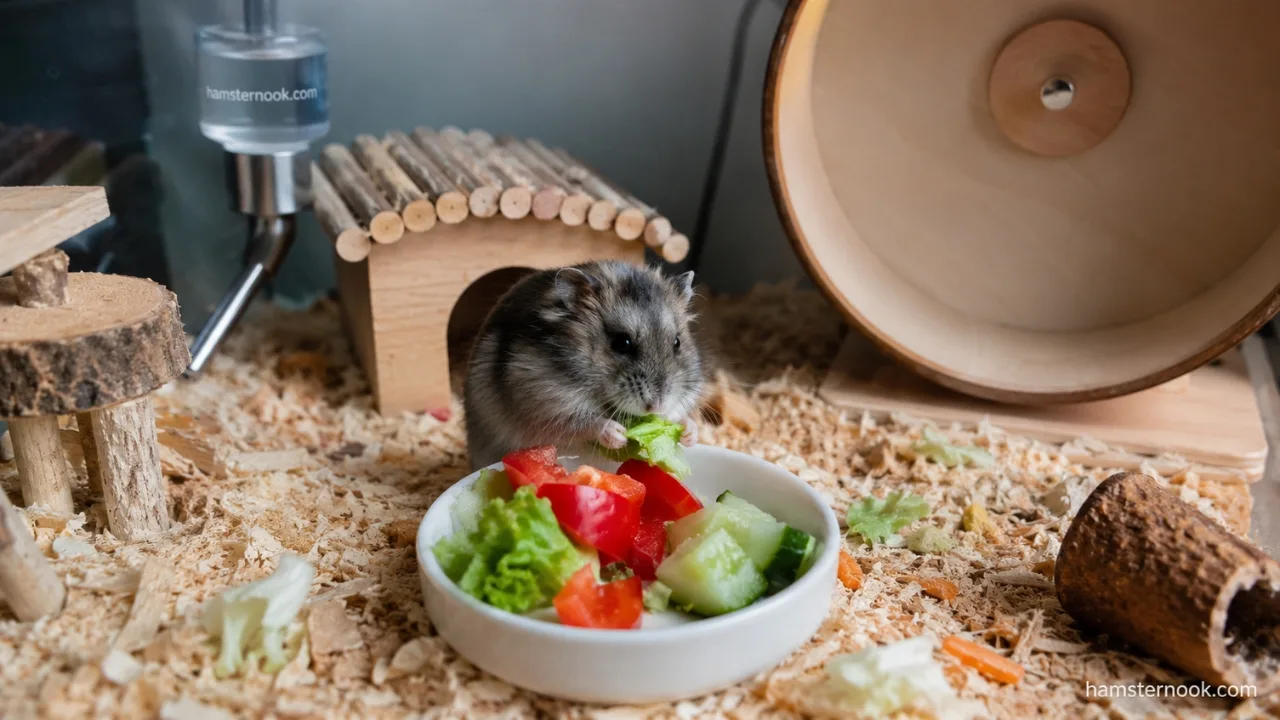
RSPCA warns that medicines intended for humans or other animals can be dangerous to hamsters.
Warning Signs to Watch For
Most importantly, watch your hamster, not just the food label.
Contact a veterinarian if you notice significant changes such as:
- Refusing food
- Reduced appetite
- Diarrhea or unusually wet feces
- A soiled or wet rear end
- Marked lethargy or inactivity
- Weight loss
- Hunched posture
- Nasal or eye discharge
- Trouble breathing
- Persistent sneezing or coughing
- A major change in normal behavior
MSD Veterinary Manual lists loss of appetite, inactivity, diarrhea, discharge, hunched posture and breathing difficulty among signs of illness in hamsters. RSPCA likewise advises prompt veterinary attention for changes such as reduced eating, moist droppings, soiling and signs of illness.
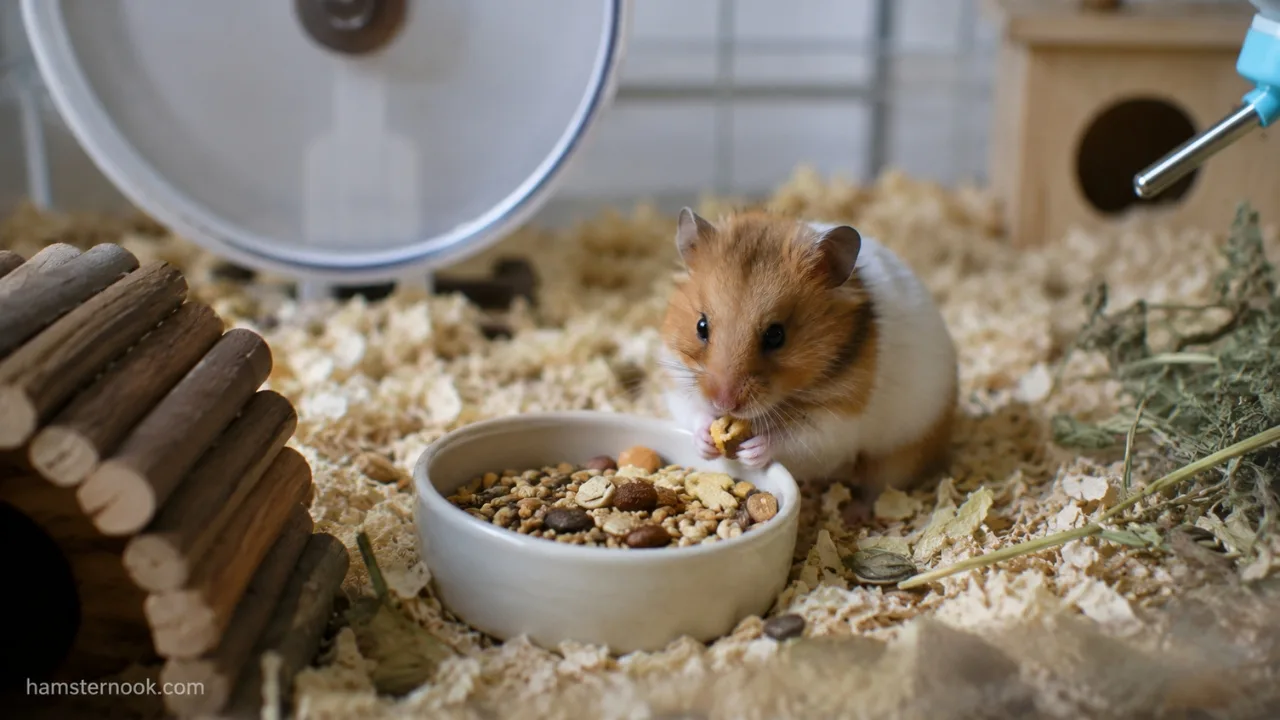
When Breathing Problems Are an Emergency
Rabbit food itself should not be blamed automatically if your hamster develops breathing trouble.
Difficulty breathing can have many causes, and veterinary sources consider it a sign requiring attention. If your hamster is visibly struggling to breathe, breathing unusually hard, or becoming weak, contact a veterinarian promptly rather than waiting to see whether it passes.
Common Mistakes Owners Make
Assuming all rabbit food is identical
Pellets, hay, muesli, treats and supplements are completely different products.
Always identify what your hamster actually ate.

Replacing hamster food with rabbit food
A rabbit pellet may be acceptable occasionally, but that doesn’t make it the best long-term diet for a hamster.
Changing the diet suddenly
Sudden dietary changes can upset a hamster’s digestive system. If a dietary change is genuinely necessary, make the change appropriately rather than suddenly switching foods.
If the diet change involves adding fresh foods, How to Introduce New Foods to a Hamster Safely: Step-by-Step Guide explains how to make that transition more carefully.
Panicking over one stolen pellet
Finding one rabbit pellet in a hamster’s enclosure doesn’t automatically mean your hamster is sick.

Look at the bigger picture: what was the product, how much could have been eaten, and is the hamster behaving normally?
Giving home remedies
Don’t try to counteract an unfamiliar food with medications or supplements. If the hamster develops concerning symptoms, veterinary assessment is safer than experimenting at home.
Can Rabbit Food Cause Wet Tail?
Don’t assume that any diarrhea after eating rabbit food is automatically “wet tail.”
Diarrhea in hamsters has multiple possible causes, including infections, stress and dietary changes. PDSA notes that sudden food changes can be associated with diarrhea, while MSD describes several medical causes of diarrhea in hamsters.
Because changes in droppings can also help owners notice health changes, What Do Healthy Hamster Droppings Look Like? Normal Color, Shape & Warning Signs provides a useful reference for what to watch for.
If your hamster develops diarrhea, especially with a wet or soiled rear end, reduced appetite, weakness or dehydration, contact a veterinarian rather than trying to diagnose the cause yourself.
Hamsters can deteriorate quickly when seriously ill, so significant changes should not be ignored.
What Should a Hamster Eat Instead?
For everyday feeding, choose a complete hamster food designed for the species and type of hamster you keep.

A balanced diet can then be supplemented appropriately with small quantities of suitable fresh foods. RSPCA recommends a balanced commercial hamster food with limited amounts of suitable greens, vegetables and fruit. PDSA similarly recommends commercial hamster pellets alongside small portions of fresh foods and suitable treats.
For a broader list of suitable foods and foods to avoid, see What Do Hamsters Eat? Complete Safe & Unsafe Food List.
Fresh food should be introduced carefully rather than suddenly replacing the normal diet.
Clean water should always be available.

Food can also be scattered or hidden around the enclosure to encourage natural foraging behavior rather than simply placing everything in one bowl.
Final Thoughts
So, can hamsters eat rabbit food?
A small amount of plain rabbit pellets is not automatically dangerous, and veterinary guidance from MSD specifically recognizes rabbit pellets as something that can be fed to hamsters occasionally. But that doesn’t make rabbit food a suitable replacement for a balanced hamster diet.
If your hamster accidentally ate some, identify the product, remove it, provide its normal food and fresh water, and observe your pet. If the rabbit food contained unusual ingredients, was a supplement or medication, or your hamster develops symptoms such as diarrhea, loss of appetite, lethargy or breathing difficulty, contact your veterinarian.

For everyday feeding, stick with food formulated to meet a hamster’s nutritional needs.
Frequently Asked Questions
Can hamsters eat rabbit pellets?
Yes. MSD Veterinary Manual states that commercially available rabbit pellets can be fed to hamsters and may be mixed with suitable rodent food occasionally. For routine feeding, however, a complete food formulated specifically for hamsters is the better choice.
What if my hamster accidentally ate rabbit food?
If it was ordinary rabbit pellets and only a small amount was eaten, remove the rabbit food and return your hamster to its normal diet. Make sure fresh water is available and monitor eating, droppings and behavior.
Can rabbit food make a hamster sick?
A sudden dietary change can upset a hamster’s digestive system, and the risk depends on the exact product and amount eaten. Rabbit food is also a broad term, so a plain pellet should not be treated the same way as a rabbit treat, supplement or medicated product.

Can hamsters eat rabbit hay?
Suitable hay, including Timothy hay, can be offered to hamsters and may provide fiber and enrichment. It should not replace a complete hamster food.
Can hamsters eat rabbit muesli?
It is better not to use rabbit muesli as a hamster’s main food. Muesli-style foods can contain a mixture of different ingredients, and the nutritional balance may not be appropriate for hamsters. A hamster-specific complete food is a better everyday choice.
Should I make my hamster vomit after eating rabbit food?
No. Do not attempt to make a hamster vomit or give home remedies. Remove the food, provide normal food and water, and contact a veterinarian if the product was unusual or your hamster develops concerning symptoms.
How long should I watch my hamster after it eats rabbit food?
There isn’t a reliable universal number of hours that applies to every rabbit-food product and every hamster. Monitor your hamster’s normal eating, activity and droppings, and seek veterinary advice promptly if anything concerning develops.
When should I call a vet?
Contact a veterinarian if your hamster stops eating or drinking, develops diarrhea or a soiled rear end, becomes unusually inactive, loses weight, develops nasal or eye discharge, has persistent sneezing or coughing, or has difficulty breathing.
References
This guide is based on trusted hamster nutrition, housing, husbandry, health, and welfare guidance from veterinary and animal welfare resources, including:
- RSPCA – What To Feed a Pet Hamster – Guidance on balanced hamster diets, feeding practices, fresh foods, treats, and access to clean drinking water.
- MSD Veterinary Manual – Providing a Home for a Hamster – Veterinary guidance on hamster housing, bedding, nesting, exercise, environmental conditions, and enclosure care.
- MSD Veterinary Manual – Hamsters: Husbandry and Health – Veterinary reference information covering hamster husbandry, health, nutrition, and common care considerations.
- MSD Veterinary Manual – Routine Health Care of Hamsters – Guidance on routine health monitoring, preventive care, nutrition, dental health, and recognizing changes that may require veterinary attention.
- PDSA – Hamsters as Pets – Practical advice on hamster diet, housing, exercise, handling, behavior, and general welfare.
- RSPCA – Hamster Health & Welfare Tips – Guidance on hamster health monitoring, common health concerns, grooming, dental care, and welfare.
Medical Disclaimer: This article is for general hamster-care information and does not replace veterinary advice. If your hamster is not eating, has diarrhea, is unusually lethargic, has breathing difficulty, or shows other signs of illness, contact a veterinarian experienced with hamsters or other small exotic pets.

Narayan Kumar is the founder and author of HamsterNook. He creates practical, research-based hamster care guides covering hamster behavior, nutrition, cage setup, enrichment, health, and everyday care. His goal is to help hamster owners make informed decisions and provide safer, healthier lives for their pets through clear, beginner-friendly information based on trusted animal care resources.