
Fresh fruits and vegetables can be a healthy addition to a hamster’s diet, but not every produce item is safe. Some foods are too sugary, others can upset digestion, and a few are potentially toxic. Knowing which foods are safe, how often to offer them, and the right portion sizes can help you avoid common feeding mistakes while giving your hamster more variety and enrichment.
The key is understanding which fruits and vegetables are safe, how much to feed, and which options should only be occasional treats.
In this guide, you’ll find a complete hamster-safe fruit and vegetable list, feeding recommendations for both Syrian and dwarf hamsters, foods to avoid, and practical tips for introducing fresh treats safely.
Quick Answer: What Fruits and Vegetables Can Hamsters Eat?
Hamsters can eat small amounts of suitable fresh vegetables and fruit as part of a balanced diet. Good options include cucumber, broccoli, bell pepper, zucchini, strawberries, blueberries, and small pieces of apple without seeds. Fruit should generally be offered less often because it contains more natural sugar. Grapes and rhubarb should not be fed to hamsters, and new foods should be introduced gradually in small portions.
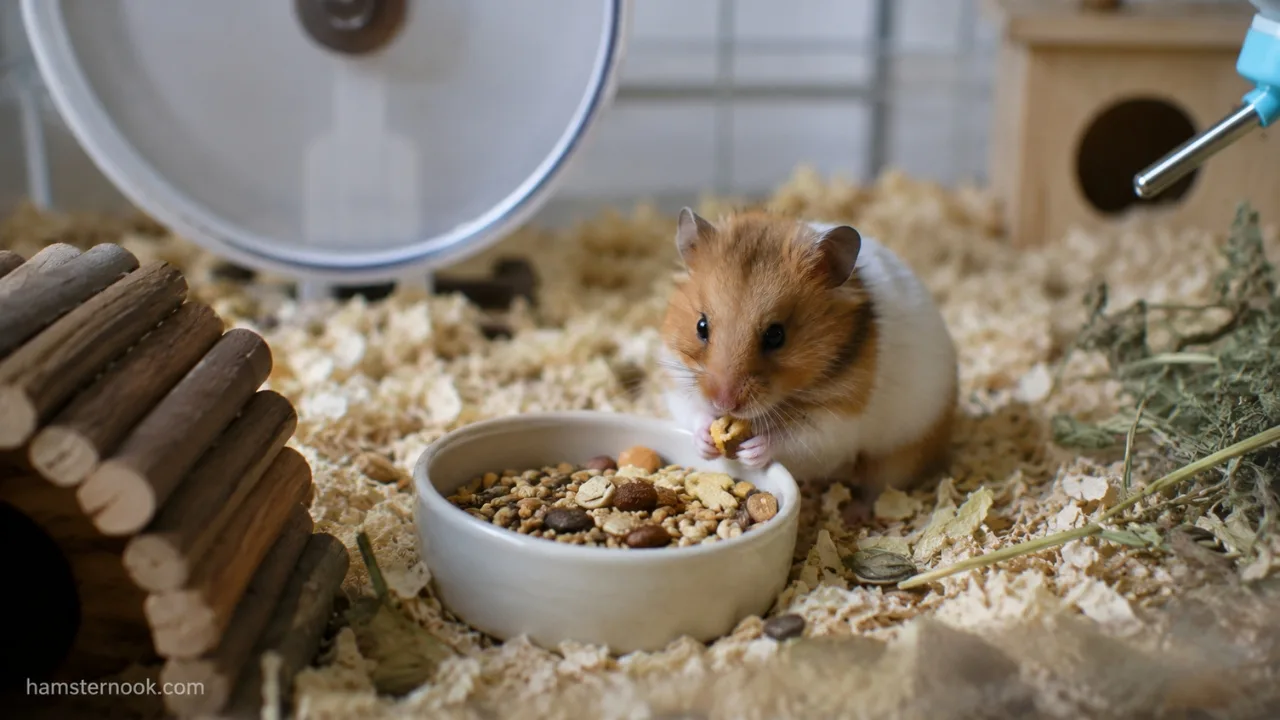
Why Fresh Foods Matter in a Hamster’s Diet
A high-quality commercial hamster food should always be the foundation of your hamster’s diet. However, small amounts of fresh produce can provide:
- Variety and enrichment
- Extra hydration
- Natural vitamins and minerals
- Mental stimulation through new textures and smells
Think of fresh foods as small additions to your hamster’s regular diet, not the main source of nutrition. Most calories should still come from a quality hamster food mix.
A balanced hamster diet should remain the foundation, while fruits and vegetables provide smaller amounts of variety and enrichment. Our What Do Hamsters Eat? Food List explains how staple foods, fresh foods, treats, and other dietary components fit together.
Most experts recommend treats and fresh foods make up only a small percentage of a hamster’s total diet.
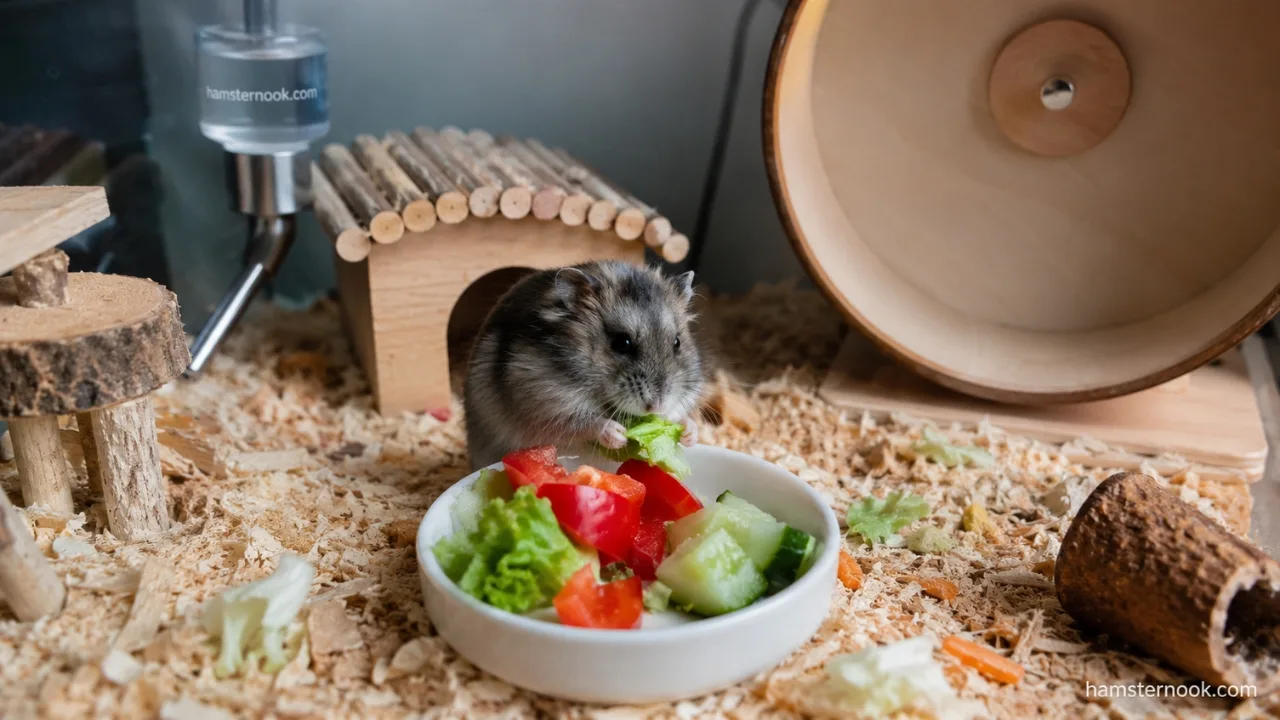
A Quick Note on Safe Hamster Feeding
Responsible hamster feeding is based on moderation rather than variety alone. Even healthy foods can cause digestive upset when portions are too large or introduced too quickly. These recommendations are intended for healthy pet hamsters and reflect feeding practices commonly used by experienced hamster owners and small-animal care professionals.
Best Vegetables for Hamsters
Vegetables are generally healthier than fruits for hamsters because they contain less sugar. Many veggies can safely be offered several times per week in tiny portions.
Safe Vegetables Hamsters Can Eat Regularly
| Fruit | Safe for Hamsters? | Feeding Notes |
|---|---|---|
| Apple | Yes | Remove seeds completely |
| Blueberries | Yes | Occasional treat |
| Strawberries | Yes | Small slices only |
| Banana | Yes | Very sugary; tiny amounts |
| Pear | Yes | Remove seeds |
| Grapes | No | Avoid; can be poisonous |
| Watermelon | Yes | Seedless pieces only |
| Raspberry | Yes | Feed occasionally |
| Peach | Limited | Remove pit completely |
Why Cucumber Is One of the Best Vegetables for Hamsters
Cucumber is often considered one of the safest beginner-friendly vegetables because it is:
- Low in sugar
- High in water
- Easy to digest
- Soft enough for small hamsters
It’s especially useful during warmer months to help support hydration.

However, feeding too much cucumber may still cause loose stools because of its water content.

Cucumber is one of the easier fresh foods for owners to introduce because of its high water content and relatively low sugar level. Our Can Hamsters Eat Cucumber? guide explains safe portions and what to watch for when adding cucumber to a hamster’s diet.
Vegetables Hamsters Should Only Eat Occasionally
Some vegetables are safe in moderation but should not become daily foods.
| Vegetable | Why Limit It |
|---|---|
| Carrots | Higher natural sugar |
| Corn | Starchy and calorie-dense |
| Spinach | Too much may upset mineral balance |
| Peas | Higher carbohydrate content |
These foods are best treated as occasional additions rather than staples.
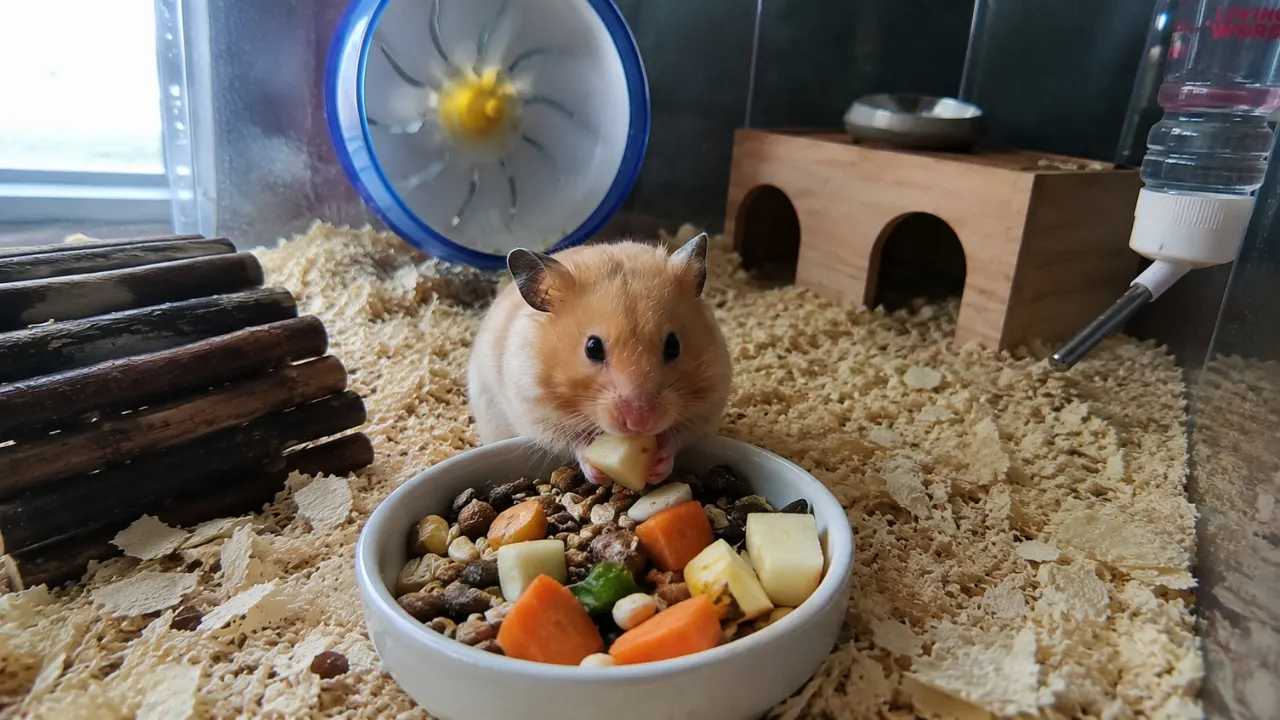
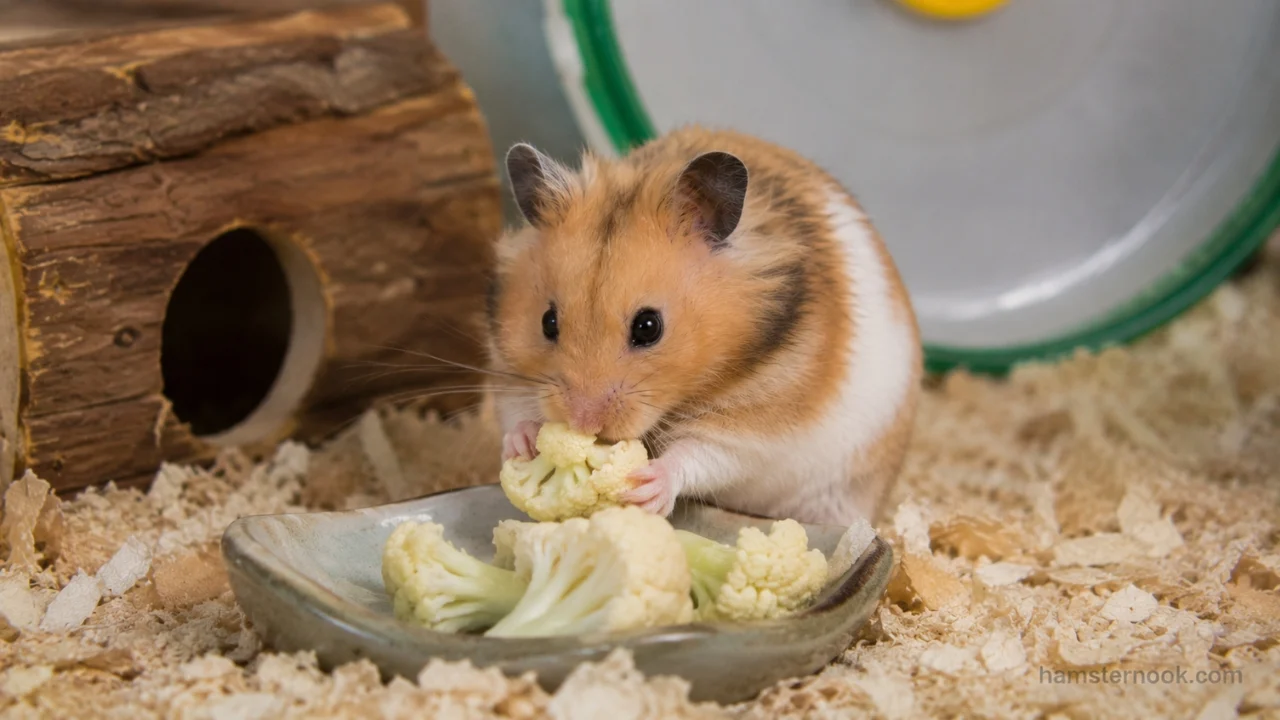
Broccoli is another suitable fresh vegetable option. Our Can Hamsters Eat Broccoli? Safe Amount, Raw vs Cooked & Risks guide covers safe preparation and portions.
Best Fruits for Hamsters
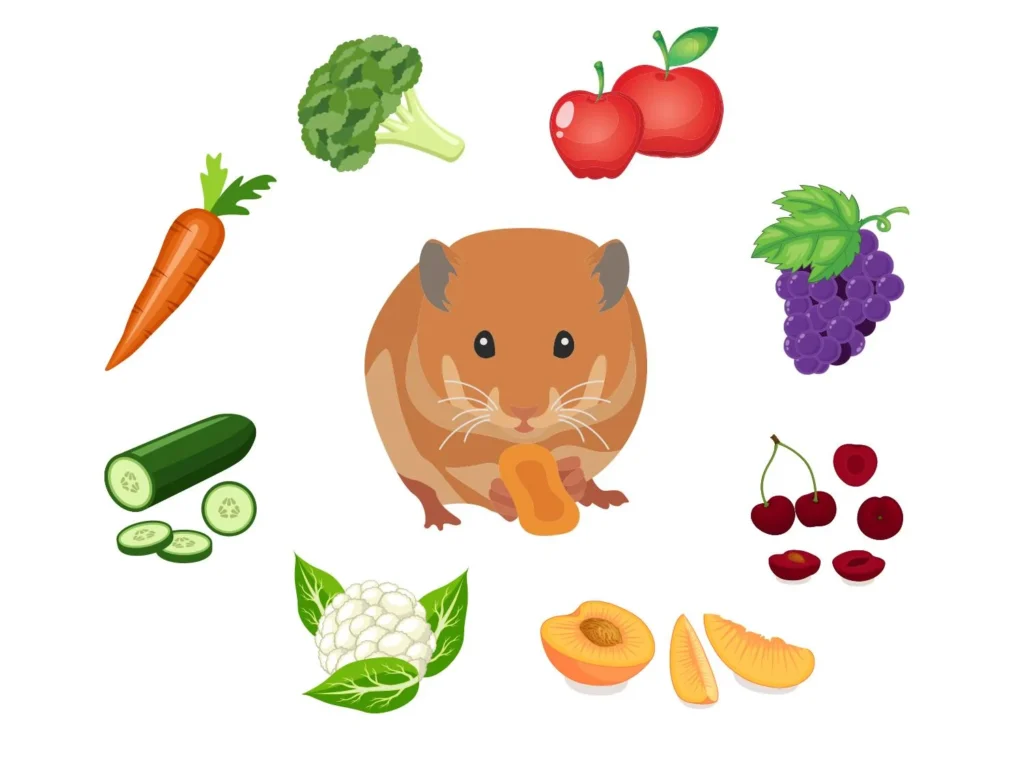
Most hamsters enjoy sweet fruits, but fruit should always be fed more carefully than vegetables because of natural sugar levels.
Safe Fruits for Hamsters in Small Amounts
| Fruit | Safe for Hamsters? | Feeding Notes |
|---|---|---|
| Apple | Yes | Remove seeds completely |
| Blueberries | Yes | Great occasional treat |
| Strawberries | Yes | Small slices only |
| Banana | Yes | Very sugary; tiny amounts |
| Pear | Yes | Remove seeds |
| Grapes | Yes | Tiny portions only |
| Watermelon | Yes | Seedless pieces only |
| Raspberry | Yes | Feed occasionally |
| Peach | Limited | Remove pit completely |
Watermelon can be a refreshing occasional treat because of its high water content, but portion size is important. Our Can Hamsters Eat Watermelon? Safe Portions, Risks & Feeding Guide explains exactly how much watermelon to offer and why this naturally sweet fruit should remain an occasional treat.
Best Low-Sugar Fruits for Hamsters
If you want safer fruit choices, these are usually better options:
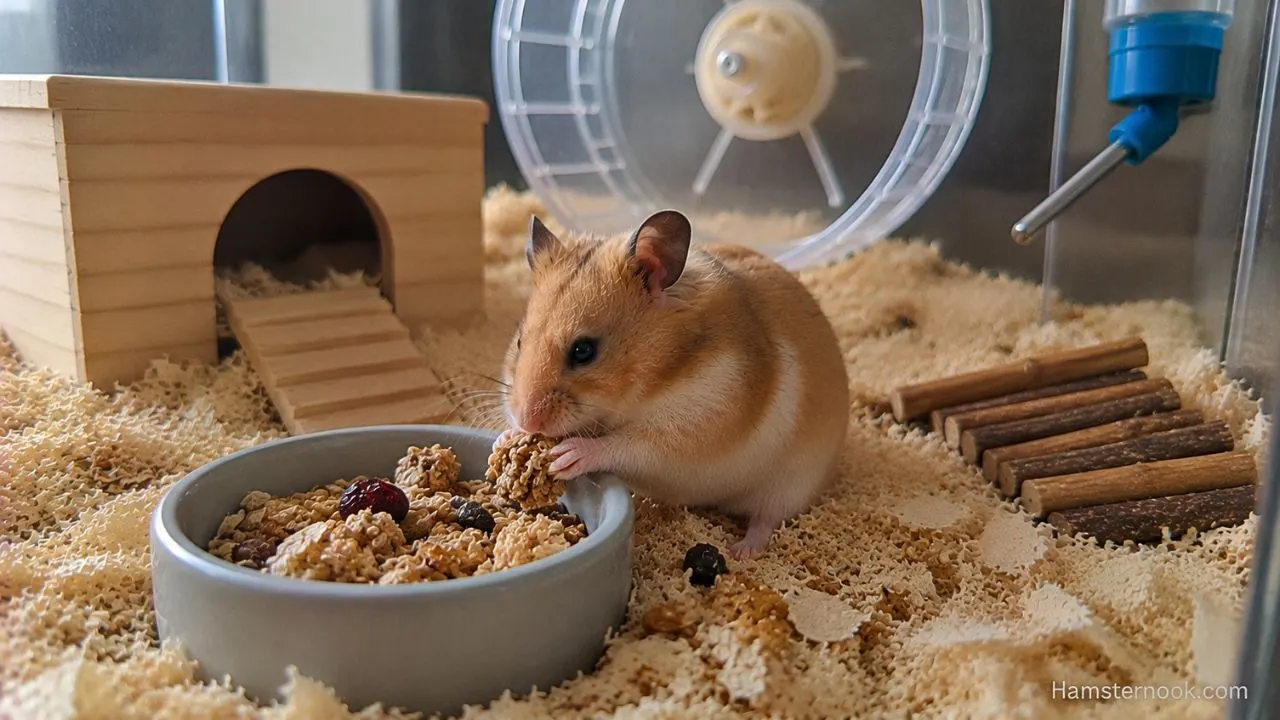
- Blueberries
- Strawberries
- Raspberries
- Small apple pieces
These fruits still contain sugar, but generally less than bananas or grapes.
Why Too Much Fruit Can Be Dangerous
Because fruit contains more natural sugar than most vegetables, portion control becomes especially important when choosing treats. Our Healthy Treats for Hamsters guide explains how occasional treats can fit into a balanced feeding routine without replacing the hamster’s main food.
Hamsters are tiny animals, and their bodies cannot handle large amounts of sugar.
Overfeeding fruit may contribute to:

- Weight gain
- Diabetes risk
- Digestive upset
- Tooth problems
- Reduced appetite for healthier foods
Although diabetes can have multiple causes, diets that contain excessive sugary treats may increase risk over time, particularly in dwarf hamster species. Fruit should be viewed as an occasional treat rather than a daily food source.
Dwarf hamster breeds are especially sensitive to sugary foods.
Individual hamsters can also have different tolerances for certain foods. If you notice soft stools or a change in appetite after introducing a new fruit, stop feeding it for a few days and reintroduce only if your hamster remains healthy.
Syrian vs Dwarf Hamster Fruit Guidelines
Because dwarf hamsters are more prone to diabetes and weight gain, fruit intake should be more restricted than it is for Syrian hamsters.

| Food Type | Syrian Hamster | Dwarf Hamster |
|---|---|---|
| Cucumber | Regular small portions | Regular tiny portions |
| Bell Pepper | Regular small portions | Regular tiny portions |
| Apple | Occasional treat | Limited treat |
| Banana | Rare treat | Best avoided or extremely rare |
| Grapes | Rare treat | Best avoided or extremely rare |
| Blueberries | Occasional treat | Very small occasional treat |
When in doubt, choose vegetables over fruit, especially for dwarf hamster species.
Safe Food Portion Guide for Hamsters
One of the biggest mistakes beginners make is offering portions that are far too large.
Hamsters only need very tiny servings of fresh food.
How Often Should Hamsters Get Fresh Foods?
Fresh foods do not need to be offered every day. Most healthy adult hamsters do well with fresh vegetables several times per week and fruit only occasionally.
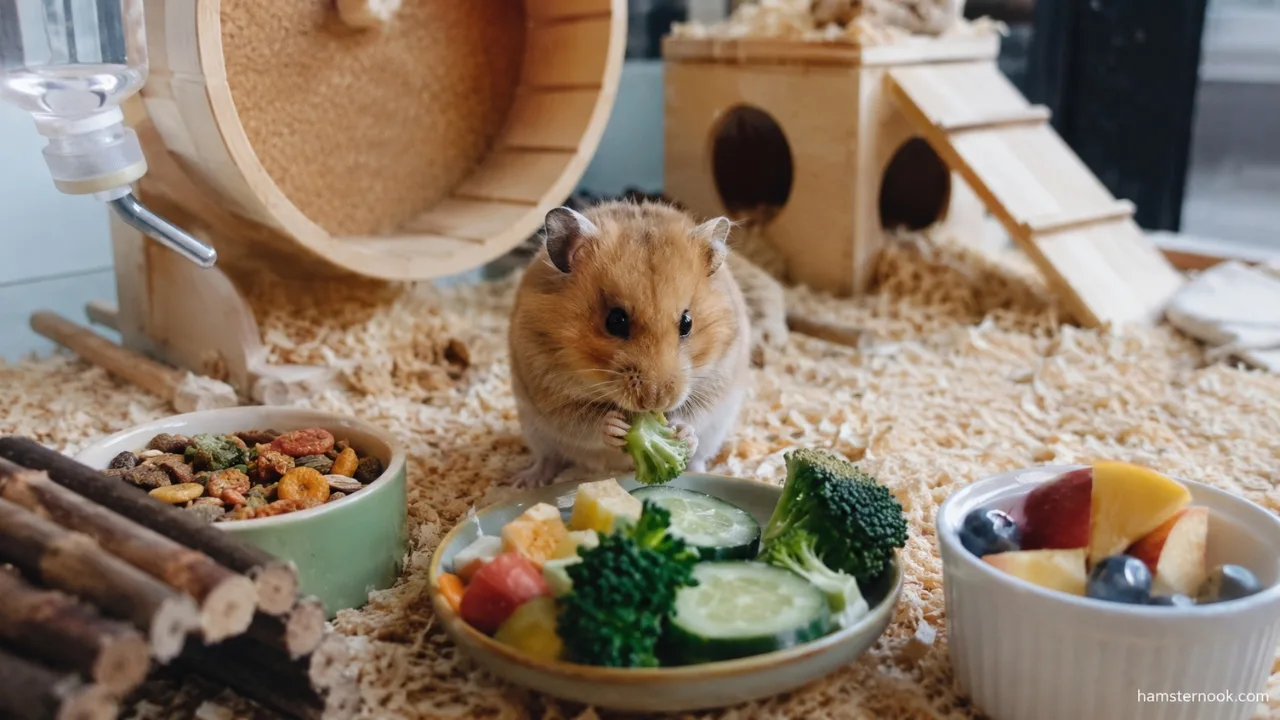
A simple approach is:
- Vegetables: 3–4 times weekly
- Fruit: 1–2 times weekly
- Sugary treats: Rarely
- Fresh water: Always available
Offering too many treats can cause some hamsters to ignore their balanced food mix, which should remain the primary source of nutrition.
If your hamster starts leaving its normal food while waiting for fresh foods or treats, reduce the extras rather than increasing the variety. Fresh produce should add variety to the diet without becoming more appealing than the nutritional staple your hamster relies on.
Many owners find it helpful to offer fresh foods after their hamster wakes up in the evening instead of during the day. This better matches their natural feeding routine and makes it easier to see whether your hamster actually eats the fresh food.

Recommended Portion Sizes
| Hamster Type | Fresh Food Portion |
|---|---|
| Syrian Hamster | 1–2 small bite-sized pieces |
| Dwarf Hamster | 1 very tiny piece |
Most hamsters benefit more from occasional fresh treats than from having produce available all the time.
How Small Should a Hamster’s Fresh Food Portion Be?
A fresh-food portion should be much smaller than a human-sized serving. For most hamsters, think in terms of one or two tiny bite-sized pieces rather than a handful of produce. Dwarf hamsters should receive even smaller portions.
The exact amount also depends on the food. A watery vegetable such as cucumber and a sugary fruit such as banana should not automatically be given in the same portion. When introducing a new food, start smaller and increase only if your hamster tolerates it well.
Should You Remove Uneaten Fresh Food?
Fresh fruits and vegetables spoil much faster than dry hamster food, especially in warm or humid environments. If your hamster doesn’t eat a fresh treat within two to four hours, remove it from the cage to reduce the risk of mold, bacteria, and unpleasant odors.

Many hamsters also hide fresh food inside their nest or food stash. Check these hiding places regularly whenever you offer produce, as forgotten fruit or vegetables can spoil quickly and affect the cleanliness of the enclosure.
If you regularly discover hidden fresh food, offering slightly smaller portions can help reduce waste while still giving your hamster plenty of variety.
Foods Hamsters Should Never Eat
Some fruits and vegetables are unsafe or toxic for hamsters.
Dangerous Foods to Avoid Completely
| Food | Reason It’s Unsafe |
|---|---|
| Onion | Potentially toxic |
| Garlic | Can damage red blood cells |
| Avocado | Potentially harmful |
| Raw Potato | Unsafe raw; especially if green or sprouting |
| Citrus Fruits | Best avoided while safety guidance remains mixed |
| Grapes | Can be poisonous to hamsters |
| Rhubarb | Can be poisonous to hamsters |
| Fruit Seeds/Pits | Choking and toxicity risks |
| Chocolate | Toxic to hamsters |
Even small amounts of some toxic foods may cause serious health problems.
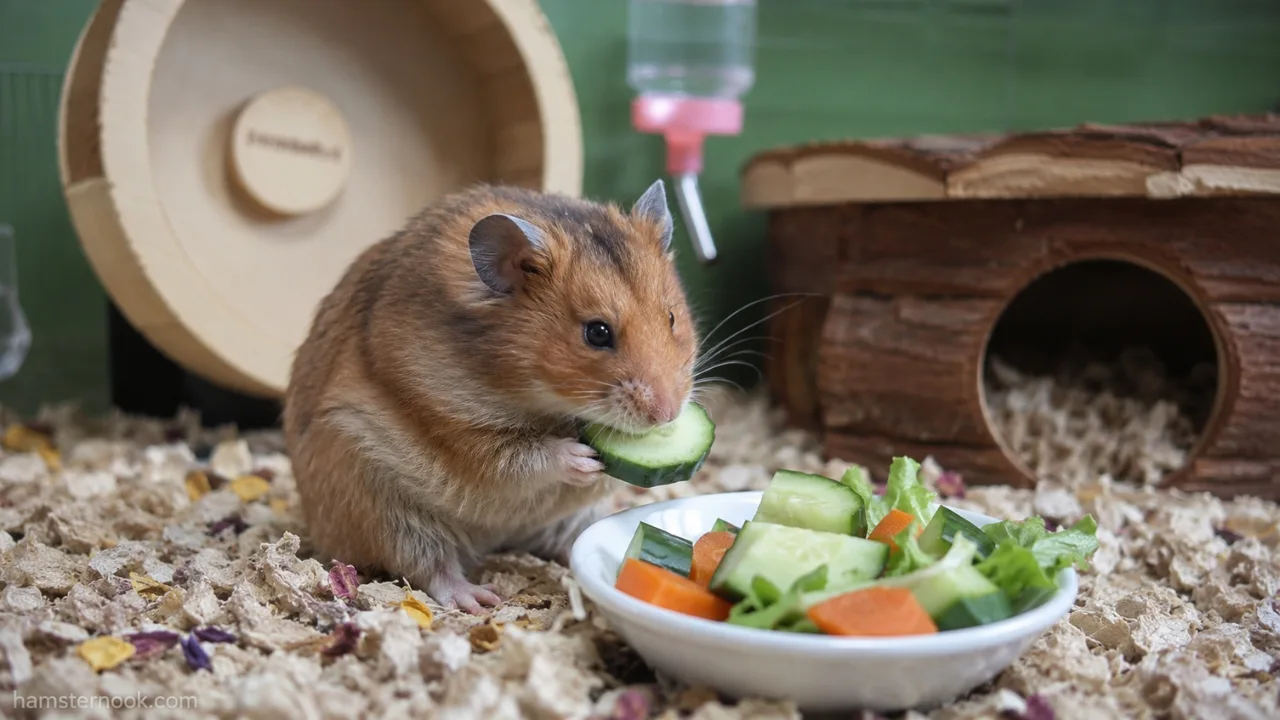
Fresh vs Frozen vs Dried Foods for Hamsters
Many owners wonder whether frozen or dried produce is safe.
Fresh Foods Are Usually Best
Fresh vegetables and fruits are generally the healthiest option because they contain natural moisture and fewer concentrated sugars.
Are Frozen Vegetables Safe?
Plain frozen vegetables without seasoning or sauces can be offered after they have been fully thawed.
Avoid:

- Salted frozen mixes
- Butter-coated vegetables
- Pre-seasoned products
Dried Fruit Should Be Limited
Dried fruit contains concentrated sugar because most water has been removed.
For example:
| Food Type | Sugar Level |
|---|---|
| Fresh Apple | Moderate |
| Dried Apple | Much Higher |
| Fresh Grapes | Moderate |
| Raisins | Extremely High |
How to Introduce New Foods to Your Hamster
If your hamster is young, elderly, recovering from illness, or has a history of digestive problems, introduce new foods even more slowly than usual. Waiting several days before testing another food can help you identify any negative reactions more easily.
Hamsters have sensitive digestive systems, so sudden diet changes may cause stomach problems.

Safe Feeding Steps for Beginners
- Introduce only one new food at a time.
- Start with a tiny portion.
- Watch for diarrhea or unusual behavior.
- Remove uneaten fresh food within a few hours.
- Avoid feeding multiple sugary treats together.
This makes it easier to identify which food caused problems if your hamster reacts badly.
Signs a Food Does Not Agree With Your Hamster
Some hamsters may simply dislike certain foods without experiencing digestive issues. However, symptoms such as diarrhea, persistent lethargy, or a noticeable change in eating habits should never be ignored.
If a new food causes your hamster to lose interest in its normal diet, stop adding more new foods and return to the familiar staple diet while you observe the reaction. If the change in eating continues or your hamster seems unwell, contact an exotic-pet veterinarian.
Not every hamster reacts the same way to certain foods.

Watch for symptoms like:
- Diarrhea
- Persistent lethargy
- Bloating
- Noticeable change in eating
- Loss of appetite
Stop feeding the suspected food immediately if symptoms appear.
Best Weekly Fresh Food Rotation for Hamsters
Offering variety helps prevent boredom while keeping nutrition balanced.
Example Safe Weekly Rotation
| Day | Fresh Food Option |
|---|---|
| Monday | Cucumber |
| Tuesday | Small broccoli floret |
| Wednesday | Blueberry |
| Thursday | Bell pepper |
| Friday | Tiny apple piece |
| Saturday | Zucchini |
| Sunday | No fresh treats |
This is only an example. Your hamster does not need fresh food every single day.
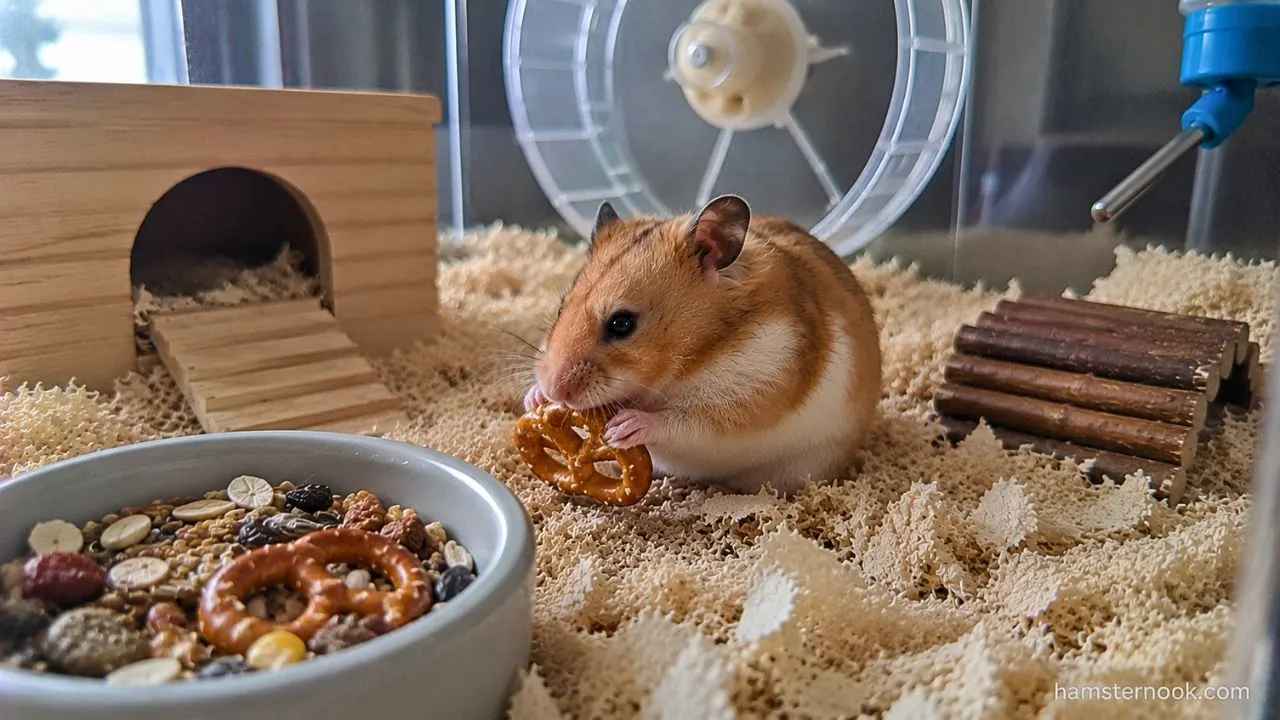
This schedule is only an example. Some healthy hamsters may enjoy fresh foods a little more or less often depending on their age, activity level, and overall diet, so it’s perfectly fine to adjust the routine while keeping portions small.
If you want another mild vegetable option, our Can Hamsters Eat Zucchini? Safe Portions, Benefits & Feeding Tips guide explains how to serve zucchini safely.
Does a Hamster Need Fresh Food Every Day?
No. Fresh fruits and vegetables are supplements to a balanced staple diet, not a requirement at every meal. Some owners worry that skipping fresh food for a day means their hamster is missing something, but a good-quality staple food should provide the nutritional foundation.
The more important habit is keeping portions small, introducing foods gradually, and avoiding several sugary treats on the same day.

Tips for Feeding Fruits and Vegetables Safely
These simple habits can help prevent many common feeding mistakes.
Always Wash Produce Thoroughly
This helps remove dirt, pesticides, and chemicals.
Remove Seeds and Pits
Apple seeds and fruit pits may be dangerous.
Avoid Seasonings
Hamsters should only eat plain fresh foods without salt, sugar, oils, or spices.

Feed Small Quantities
Tiny portions are safer and healthier.
Remove Spoiled Food Quickly
If your hamster regularly stores fresh food in bedding, read Why Does My Hamster Keep Hiding Food?
Hamsters often hide food in bedding, where fresh produce may rot.
Are Organic Fruits and Vegetables Better for Hamsters?
Organic produce may reduce pesticide exposure, but washing fruits and vegetables thoroughly is still important regardless of whether they are organic or conventional.

There is no strong evidence showing organic produce is dramatically healthier for hamsters specifically, but many owners prefer it when available.
Common Fresh Food Feeding Mistakes
Many feeding problems occur because owners accidentally overdo healthy foods.
Common mistakes include:
- Offering large slices instead of bite-sized pieces
- Feeding multiple fruits on the same day
- Leaving fresh food in the cage overnight
- Giving sugary fruits too frequently
- Introducing several new foods at once
- Assuming dwarf and Syrian hamsters have identical dietary needs
Keeping portions small and introducing foods gradually helps reduce the risk of digestive problems.
Final Thoughts
Fresh fruits and vegetables can be healthy, enriching additions to a hamster’s diet when fed correctly. Vegetables are usually the safer everyday choice because they contain less sugar, while fruits should remain occasional treats.
The best approach is moderation, variety, and careful observation. Small portions of safe foods like cucumber, broccoli, blueberries, and bell peppers can help keep your hamster interested in meals without overwhelming their digestive system.
If you’re building a complete feeding routine along with proper housing, enrichment, and daily care, our Ultimate Hamster Care Guide for Beginners brings everything together in one place.
Avoid risky foods, introduce new treats slowly, and remember that a high-quality hamster food should always remain the main part of your pet’s diet.

Frequently Asked Questions
What is the healthiest vegetable for hamsters?
Cucumber is often considered one of the healthiest options because it is low in sugar, hydrating, and easy to digest.
Can hamsters eat fruits every day?
It’s usually better to limit fruit because of the sugar content. Vegetables are generally safer for regular feeding.
Are carrots safe for hamsters?
Yes, carrots are safe in small amounts, but they contain more sugar than many vegetables.
Can dwarf hamsters eat fruit?
Yes, but dwarf hamsters should eat very small portions due to their higher diabetes risk.
What foods help keep hamsters hydrated?
Cucumber, zucchini, and watermelon contain high water content and may help support hydration in moderation.
Can hamsters eat lettuce?
Yes, romaine lettuce is usually safe in small amounts. Iceberg lettuce is less nutritious and may cause digestive issues if overfed.
Can baby hamsters eat fruits and vegetables?
Baby hamsters should primarily eat their regular balanced food. Fresh foods can be introduced gradually once they are fully weaned, using extremely small portions and only one new food at a time.
Can hamsters eat frozen vegetables straight from the freezer?
No. Frozen vegetables should always be thawed and brought to room temperature before feeding. Cold foods may be difficult for small animals to tolerate, and frozen pieces can be hard to chew safely.

What should I do if my hamster eats an unsafe food?
Remove the food immediately and monitor your hamster closely for symptoms such as diarrhea, lethargy, bloating, or loss of appetite. If concerning symptoms develop or a toxic food was consumed, contact an exotic veterinarian as soon as possible.
References
This guide is based on hamster nutrition, feeding, safe foods, treats, and general welfare guidance from trusted veterinary and animal welfare resources, including:
- RSPCA – Hamster Diet and Feeding – Guidance on balanced hamster diets, fresh foods, treats, feeding habits, and suitable food choices.
- PDSA – Hamsters as Pets – Advice on hamster nutrition, feeding, treats, hydration, housing, and general welfare.
- Blue Cross – Hamster Care Guide – Practical information on hamster diet, fresh foods, treats, feeding, and everyday care.
- MSD Veterinary Manual – Hamsters – Veterinary reference information covering hamster nutrition, health, husbandry, and common diseases.
- U.S. Food & Drug Administration – Selecting and Serving Produce Safely – Food-safety guidance on handling, washing, storing, and serving fresh fruits and vegetables.
Medical Disclaimer
This article provides general hamster-care and feeding information and is not a substitute for veterinary advice. If your hamster eats a potentially toxic food or develops persistent diarrhea, lethargy, loss of appetite, or other concerning symptoms, contact an exotic-pet veterinarian.

Narayan Kumar is the founder and author of HamsterNook. He creates practical, research-based hamster care guides covering hamster behavior, nutrition, cage setup, enrichment, health, and everyday care. His goal is to help hamster owners make informed decisions and provide safer, healthier lives for their pets through clear, beginner-friendly information based on trusted animal care resources.


