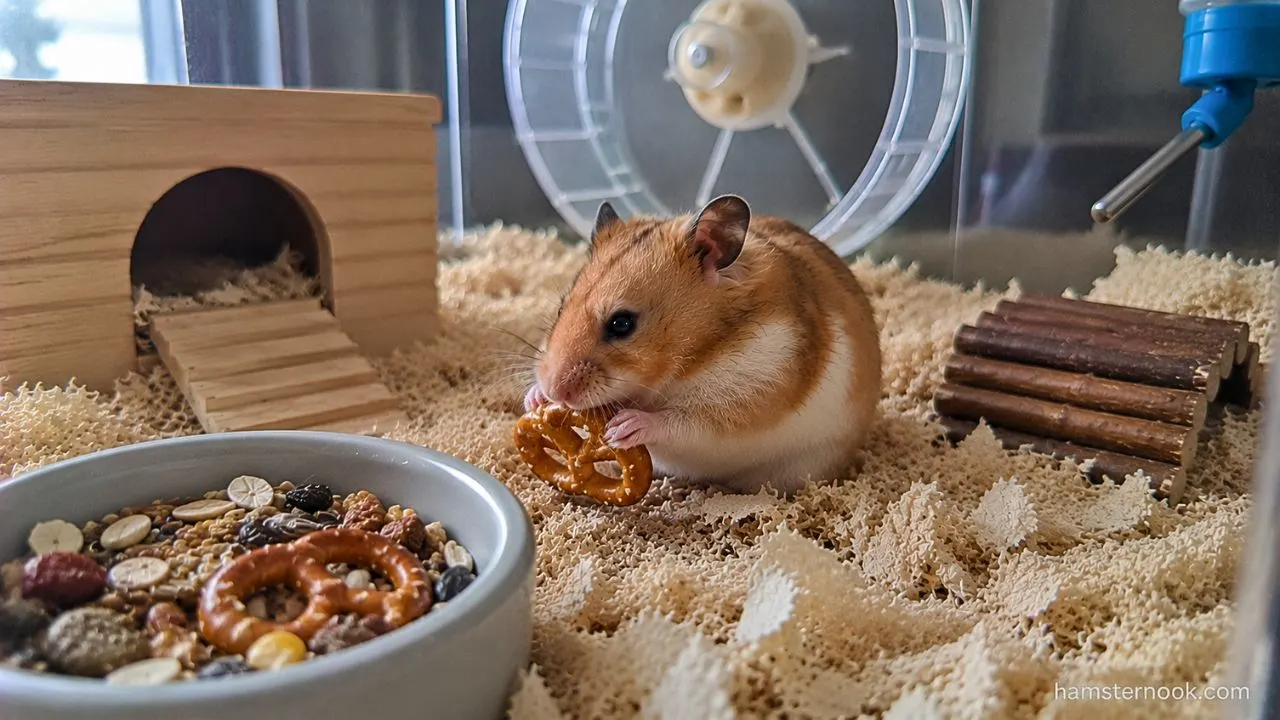
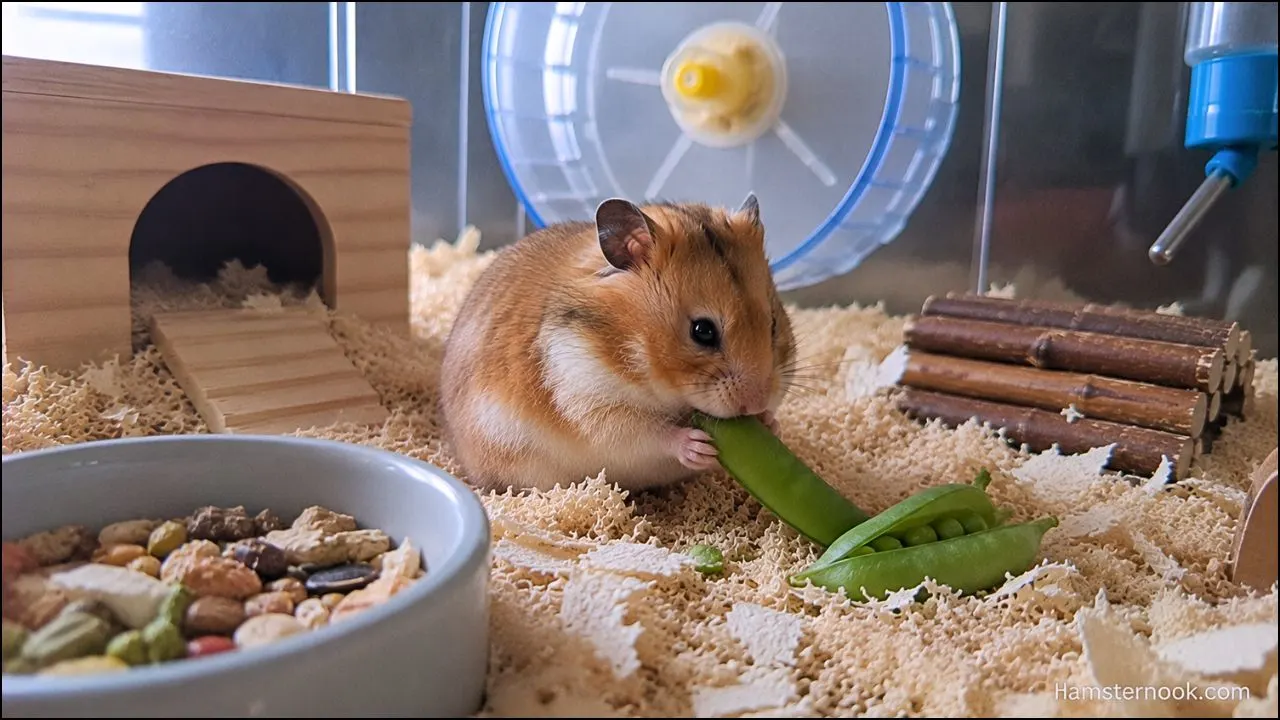
Tomatoes are a common food in many homes, so hamster owners often wonder whether they can safely share a small piece with their pet. The answer depends on which part of the tomato is offered, how ripe it is, and how much your hamster eats.
Small amounts of ripe red tomato flesh can be offered occasionally, but green tomatoes, leaves, stems, and vines should be avoided. Too much tomato may also cause digestive upset because of its moisture and acidity.
This guide explains how much tomato to offer, which parts are unsafe, how to prepare it, and what to do if your hamster eats too much.
This complete guide explains the benefits, risks, serving sizes, unsafe tomato parts, and the safest way to feed tomatoes to your hamster.

Are Tomatoes Safe for Hamsters?
Tomatoes are only one small part of a hamster’s overall feeding routine. For a broader look at staple foods, safe treats, and foods that should be avoided, see our What Do Hamsters Eat? Complete Beginner Food List (Safe & Unsafe Foods) guide.
Yes, hamsters can eat small amounts of ripe red tomato flesh as an occasional treat.

Tomato should not replace a hamster’s normal balanced diet. Because tomatoes contain a lot of moisture and are naturally acidic, feeding too much may cause digestive upset.
The parts to avoid are green or unripe tomatoes, leaves, stems, and vines. If you offer tomato, choose a ripe red tomato, wash it well, remove the plant parts, and serve only a tiny piece.

Can All Hamster Breeds Eat Tomatoes?
Most hamster breeds can eat tiny amounts of ripe tomato, but dwarf hamsters require more caution because of their smaller size and sensitivity to sugary or watery foods.
| Hamster Type | Tomato Recommendation | Important Note |
|---|---|---|
| Syrian hamster | Small amounts occasionally | Start with a tiny piece |
| Dwarf hamster | Smaller portions | Keep portions especially small |
| Roborovski hamster | Tiny amounts occasionally | Introduce gradually |
| Other hamster species | Tiny amounts occasionally | Individual tolerance can vary |
Moderation is especially important for smaller hamster breeds.
Nutritional Value of Tomatoes for Hamsters
Tomatoes contain water and several nutrients, but they should still be treated as a small supplementary food rather than an important part of a hamster’s diet.
| Tomato Feature | What It Means for Hamsters |
|---|---|
| High water content | Can add variety but should not replace drinking water |
| Natural nutrients | Useful in small amounts |
| Soft texture | Easy for many hamsters to nibble |
| Natural acidity | Too much may contribute to digestive upset |
The main diet should remain a suitable hamster food, with fresh foods offered in appropriate amounts.
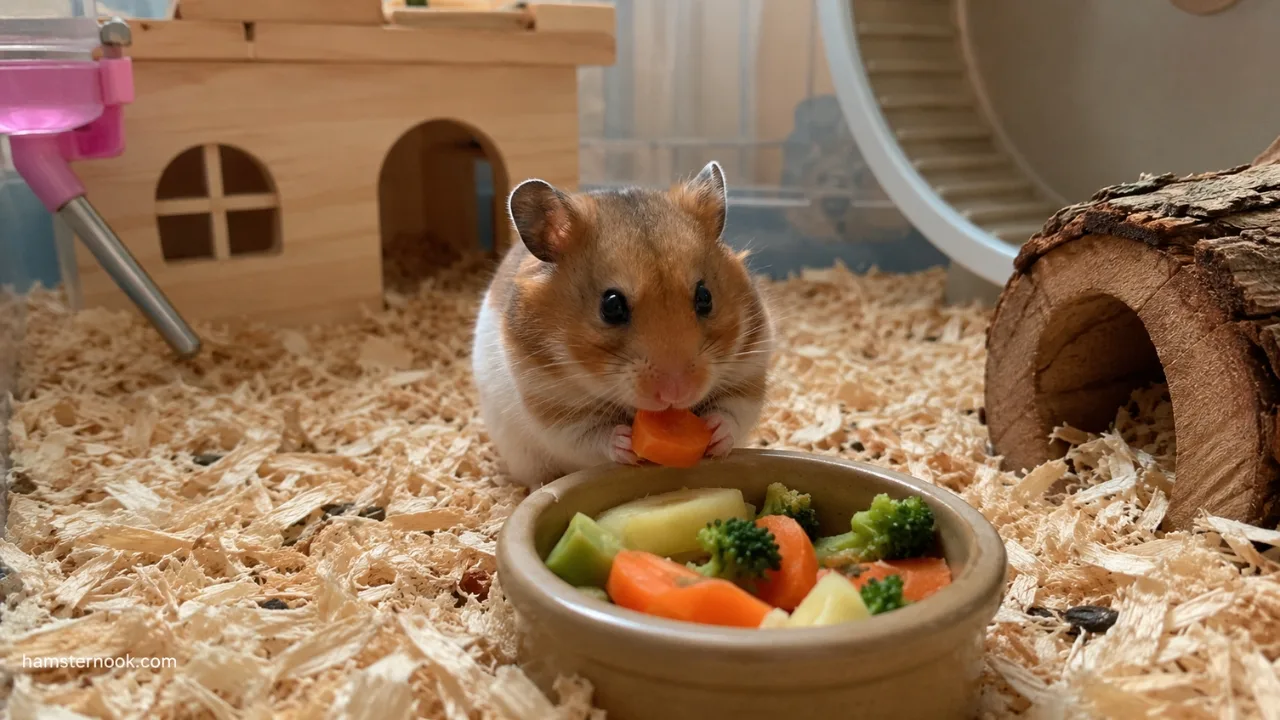
For a broader daily feeding plan, see our Complete Hamster Diet Guide: Best Foods, Safe Treats & Toxic Foods.
Tomato is a supplementary food, not a nutritional replacement for the hamster’s main diet. Fresh vegetables and fruit can add variety, but the staple diet should remain the foundation of daily nutrition. Merck Veterinary Manual likewise recommends a complete, balanced hamster diet, with healthy treats such as fruits and vegetables kept limited.
Benefits of Feeding Tomatoes to Hamsters
Tomatoes are just one option when adding fresh foods to a hamster’s diet. If you want to compare tomatoes with other suitable fruits and vegetables, our Best Fruits and Vegetables for Hamsters guide covers safe choices, portion sizes, and feeding tips.
When fed correctly, tomatoes may offer a few advantages.

Tomatoes May Help With Hydration
Tomatoes contain a high amount of water, but they should only be treated as a small food addition rather than a substitute for your hamster’s normal drinking water.
However, too much watery food can quickly cause digestive problems, so small portions are important.
Soft Texture Makes Tomatoes Easy to Eat
Ripe tomatoes have a soft texture that many hamsters can easily chew, but their softness does not make them a substitute for a balanced hamster diet.
Tomatoes Can Add Dietary Variety
Occasional fresh vegetables help add variety to a hamster’s diet and may reduce boredom.

Offering different textures and flavors can encourage natural curiosity and foraging behavior.
Risks of Feeding Tomatoes to Hamsters
Even though ripe tomatoes are safe in moderation, there are several important risks owners should understand.
Too Much Tomato Can Cause Diarrhea
Tomatoes contain a lot of water and acidity.
Overfeeding may lead to:
- Loose stools
- Stomach discomfort
- Digestive upset
Hamsters have delicate digestive systems, so even healthy foods can become problematic in large amounts.
Acidic Foods May Irritate the Stomach
Tomatoes are naturally acidic.
Some hamsters may experience stomach irritation if tomatoes are fed too often or in large portions.
Green Tomato Parts Are Unsafe
This is the most important safety concern.

The following parts should never be fed:
| Unsafe Tomato Parts | Why They’re Dangerous |
|---|---|
| Green tomatoes | Contain harmful compounds |
| Tomato leaves | Potentially toxic |
| Tomato stems | Unsafe for hamsters |
| Tomato vines | May contain toxic substances |
What If My Hamster Eats a Tomato Leaf or Green Tomato?
Do not wait for symptoms before getting advice if your hamster has eaten a tomato leaf, stem, vine, or unripe green tomato. Remove the plant material from the enclosure and contact an exotic-pet veterinarian for guidance. Keep the plant or a photo of it available if the veterinarian needs help identifying what was eaten.
Only ripe red tomato flesh should be offered.
For a broader list of foods that hamsters should avoid, see our Foods Hamsters Should Never Eat: Toxic Foods Every Owner Must Avoid guide.
Pesticide Residue Can Be Harmful
Tomatoes may carry pesticides or chemical residue if not washed properly.
Always rinse tomatoes thoroughly before feeding them to your hamster.
Safe vs Unsafe Tomato Foods for Hamsters
| Safe Tomato Foods | Unsafe Tomato Foods |
|---|---|
| Ripe red tomato flesh | Green tomatoes |
| Tiny fresh tomato pieces | Tomato leaves |
| Washed ripe tomatoes | Tomato stems |
| Small fresh portions | Tomato vines |
| Plain fresh tomatoes | Tomato sauce with seasoning |
Processed tomato products are not safe because they often contain salt, sugar, garlic, onion, or preservatives.
How Much Tomato Can a Hamster Eat?
Tiny portions are safest.
Recommended Serving Size
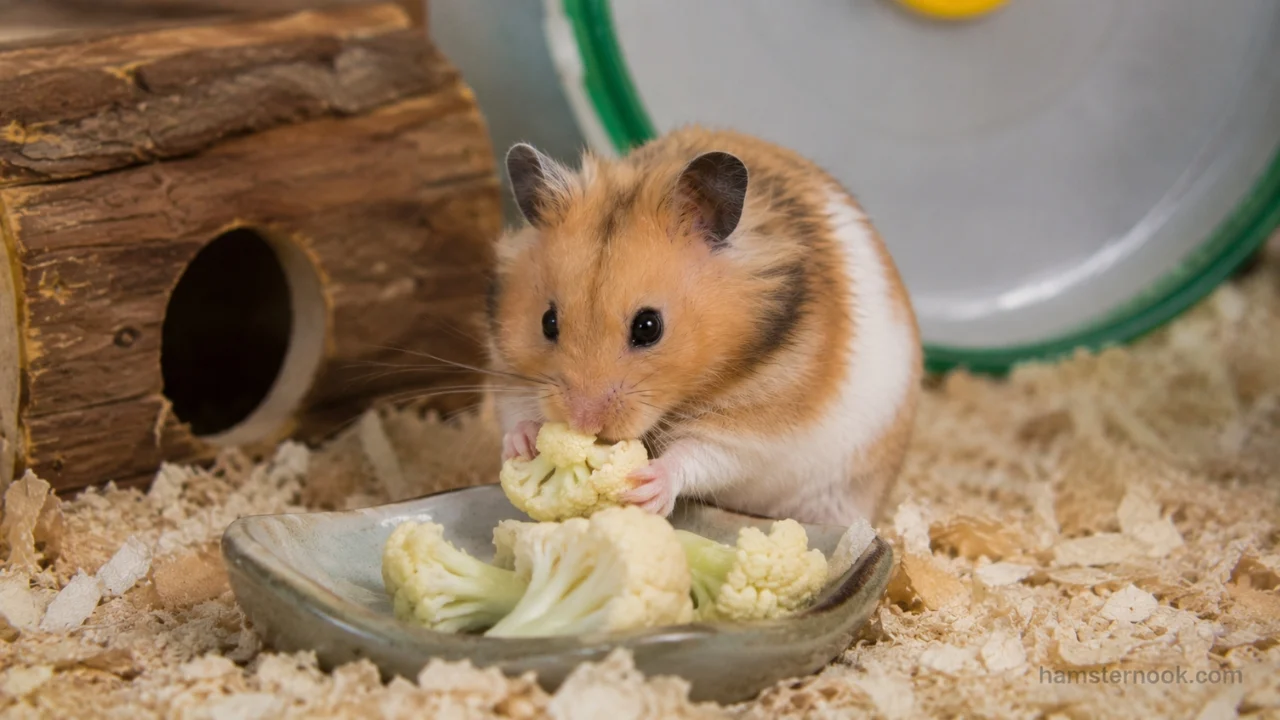
There is no single portion that fits every hamster, but a tiny piece of ripe tomato is a sensible starting point. For a first feeding, offer only a small taste and avoid introducing other new foods at the same time.
Tomato should remain an occasional treat, not a daily food. Smaller hamsters should receive smaller pieces.
What Should You Do the First Time You Feed Tomato?
For a hamster that has never eaten tomato before, start with a very small piece and introduce it on its own rather than combining it with several new foods. Watch your hamster’s appetite and droppings afterward. If everything remains normal, tomato can remain an occasional addition rather than becoming a regular part of the diet.
If you are introducing other fresh foods too, our How to Introduce New Foods to Your Hamster Without Upsetting Its Stomach guide explains how to introduce them gradually.
How to Prepare Tomatoes for Hamsters Safely
Preparation matters just as much as portion size.
Safe Preparation Steps
- Choose a ripe red tomato.
- Wash it thoroughly.
- Remove all stems and leaves.
- Cut a tiny piece of tomato flesh.
- Serve it plain, without salt, oil, spices, or sauce.
- Remove uneaten tomato after a few hours.
If tomato is a new food for your hamster, start with a very small piece rather than the full suggested serving. Introduce only one new food at a time and watch for changes in appetite, droppings, or behavior before offering it again. This makes it easier to identify which food caused a problem if digestive upset occurs.
Never feed canned or cooked tomatoes with spices or oils.
Can Hamsters Eat Cherry Tomatoes?
Yes, hamsters can eat a tiny piece of ripe cherry tomato occasionally. Cherry tomatoes are still moist and acidic, so their smaller size does not mean a whole tomato is an appropriate serving.

Cut it into a very small piece and serve it plain.
Can Hamsters Eat Grape or Roma Tomatoes?
Grape and Roma tomatoes can be treated like other tomato varieties: offer only ripe tomato flesh, wash it well, remove the stem and leaves, and give only a tiny piece occasionally. The variety does not make a large portion safe.
Can Hamsters Eat Tomato Seeds?
Tomato seeds do not need to be treated as a separate food, but you can remove excess seeds when preparing a small piece for your hamster. The more important safety steps are choosing ripe tomato, removing the plant parts, washing it, and keeping the portion tiny.
Can Hamsters Eat Cooked Tomatoes?
Fresh ripe tomato is the simplest option. Cooked tomato prepared for humans is best avoided because recipes often contain salt, oil, garlic, onion, spices, or sauces that are unsuitable for hamsters.
Cooked tomato dishes made for humans are often unsafe because they may contain:
- Salt
- Garlic
- Onion
- Butter
- Oil
- Spices
These ingredients can harm hamsters.
Custom Feeding Chart for Tomatoes
| Feeding Goal | Tomato Recommendation |
|---|---|
| Hydration Treat | Tiny fresh piece occasionally |
| Weight Control | Feed rarely due to natural sugars |
| Digestive Safety | Very small portions only |
| Dwarf Hamster Diet | Minimal feeding recommended |
| Beginner Owners | Start with extremely tiny amounts |
Infographic: Tomato Safety Checklist for Hamsters
| Quick Safety Check | Safe or Unsafe |
|---|---|
| Ripe red tomato flesh | Safe |
| Green tomato | Unsafe |
| Tomato leaves or stems | Unsafe |
| Tiny portion size | Safe |
| Daily tomato feeding | Unsafe |
| Washed fresh tomato | Safe |
| Tomato ketchup or sauce | Unsafe |
What If a Hamster Eats Too Much Tomato?
If your hamster eats more tomato than intended, stop offering it and monitor for digestive changes.
Watch for:

- Diarrhea
- Wet fur around the tail
- Bloating
- Lethargy
- Reduced appetite
If symptoms continue or worsen, contact an exotic-pet veterinarian.
If your hamster eats a tomato leaf, stem, vine, or unripe green tomato, treat that differently from simply eating too much ripe tomato. Remove access to the plant and contact a veterinarian for advice, especially if your hamster develops weakness, diarrhea, unusual behavior, or stops eating. PetMD specifically lists tomato leaves among foods that should be avoided for hamsters.
Better Vegetable Alternatives for Hamsters
If your hamster has a sensitive stomach, some vegetables may be easier to digest than tomatoes.

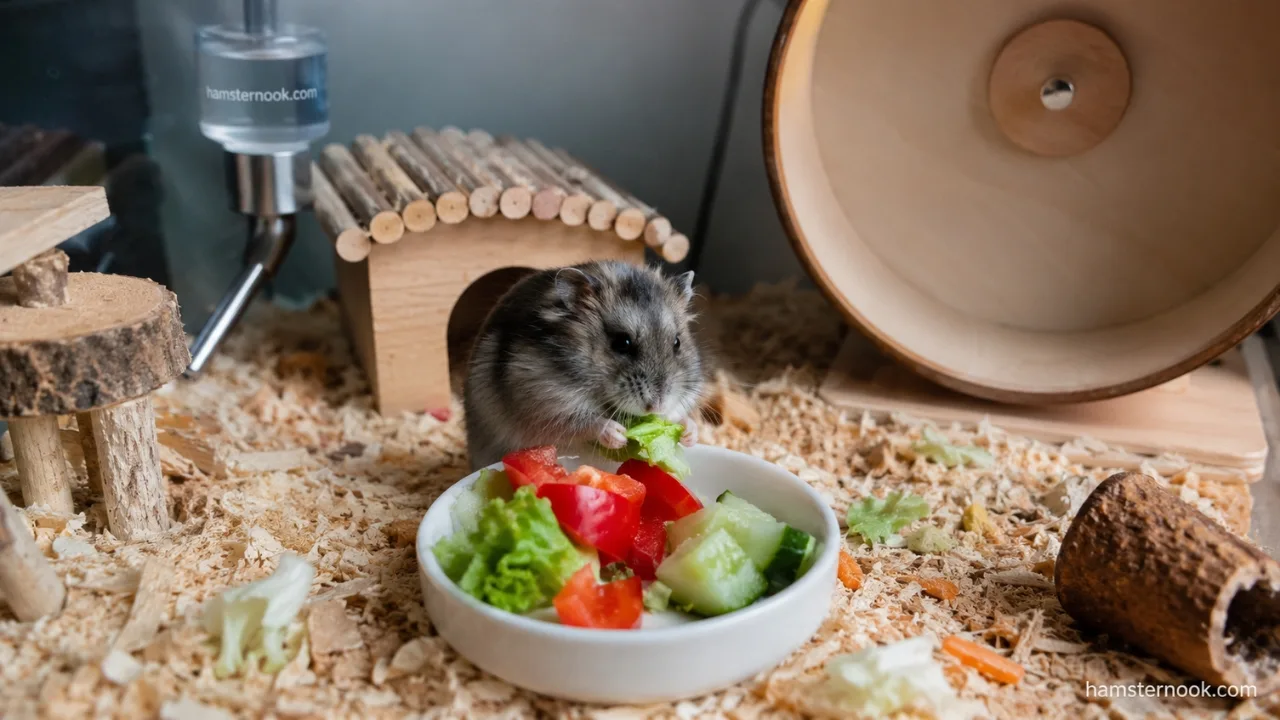
If you want to rotate vegetables rather than repeatedly feeding tomato, options such as cucumber and broccoli can add variety to the diet when offered appropriately. Our Can Hamsters Eat Cucumber? guide explains safe portions and feeding considerations for cucumber.

Good alternatives include:
- Cucumber
- Zucchini
- Broccoli
- Bell pepper
- Carrot in moderation
Offering variety is usually healthier than repeatedly feeding the same treat.
Foods Hamsters Should Never Eat
Some foods are dangerous or toxic to hamsters regardless of portion size.
Avoid feeding:

- Chocolate
- Garlic
- Onion
- Citrus fruits in excess
- Junk food
- Candy
- Raw potato
- Avocado
- Spicy foods
Always research unfamiliar foods before feeding them.
Tomatoes should always be treated as an occasional snack rather than a daily hamster food.
Final Thoughts
Hamsters can eat a tiny amount of ripe red tomato occasionally. The safest approach is simple: choose ripe tomato, wash it, remove all leaves and stems, serve a very small plain piece, and avoid making it a daily treat.
Green or unripe tomato and the plant’s leaves, stems, and vines should not be fed. If your hamster eats one of these parts, contact an exotic-pet veterinarian for advice.

Frequently Asked Questions
Can hamsters eat tomatoes every day?
No. Tomatoes should only be occasional treats because too much acidity and moisture may upset digestion.
Can hamsters eat raw tomatoes?
Yes. A small piece of ripe raw tomato can be offered occasionally. Wash it first, remove the stem and leaves, and serve it plain. Avoid green or unripe tomato.
Are cherry tomatoes safe for hamsters?
Yes, but only tiny pieces of ripe cherry tomato should be fed occasionally.
Can dwarf hamsters eat tomatoes?
Yes, but portions must stay extremely small due to their sensitive digestive systems.

Are tomato leaves toxic to hamsters?
Yes. Tomato leaves, stems, vines, and green tomatoes should never be fed.
Can hamsters eat tomato sauce?
No. Tomato sauce often contains salt, garlic, onion, sugar, and preservatives that are unsafe for hamsters.
What happens if a hamster eats too much tomato?
Overfeeding may cause diarrhea, bloating, or stomach discomfort.
References
This guide is based on hamster nutrition, safe fresh foods, feeding practices, and veterinary dietary guidance from trusted animal welfare and veterinary resources, including:
- RSPCA – What to Feed a Pet Hamster – Guidance on balanced hamster diets, small quantities of fresh vegetables and fruit, gradual food introduction, water, and monitoring eating and droppings.
- Merck Veterinary Manual – Providing a Home for a Hamster – Veterinary guidance on balanced hamster diets, limited fruits and vegetables, treats, and fresh drinking water.
- Merck Veterinary Manual – Hamsters – Veterinary information on hamster nutrition, husbandry, health, and appropriate dietary care.
- PetMD – Syrian Hamster Care Sheet – Hamster nutrition guidance, limited fresh foods, washing produce, removing uneaten fresh foods, and foods to avoid including unripe tomatoes.
- PetMD – What Can Hamsters Eat? – Guidance on safe human foods, fresh vegetables, occasional treats, and foods such as tomato leaves that should be avoided.

Narayan Kumar is the founder and author of HamsterNook. He creates practical, research-based hamster care guides covering hamster behavior, nutrition, cage setup, enrichment, health, and everyday care. His goal is to help hamster owners make informed decisions and provide safer, healthier lives for their pets through clear, beginner-friendly information based on trusted animal care resources.