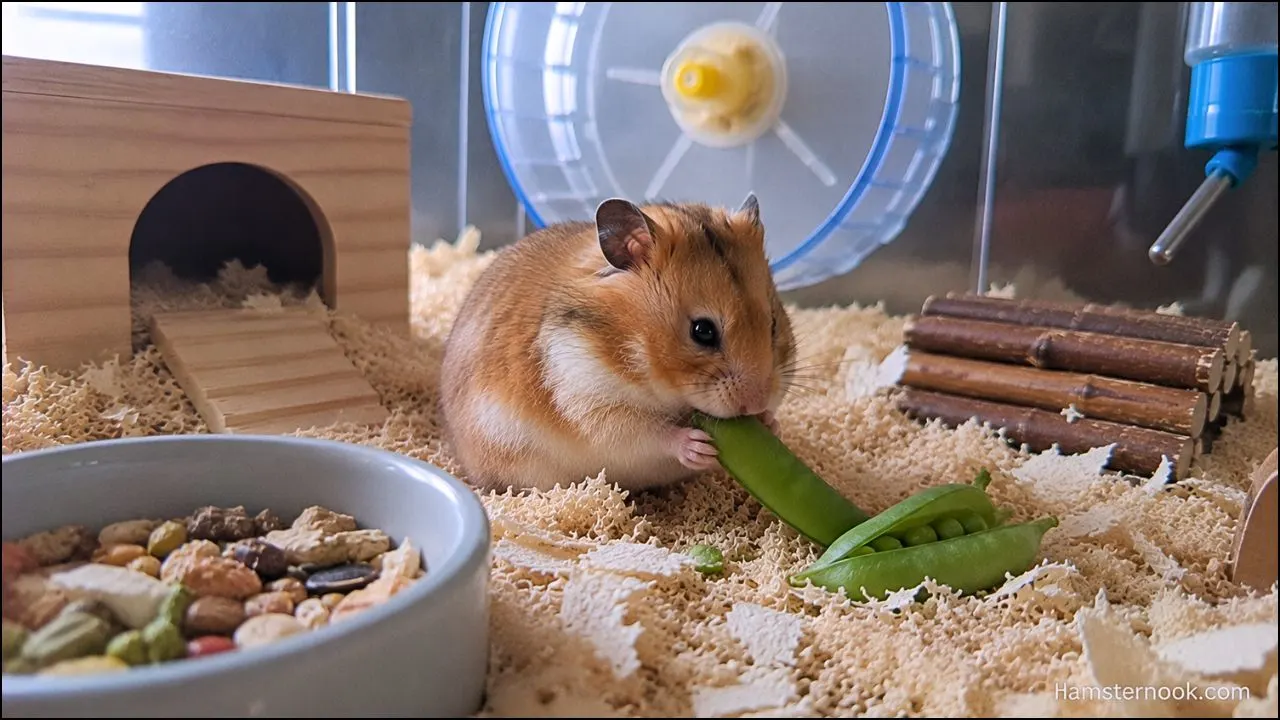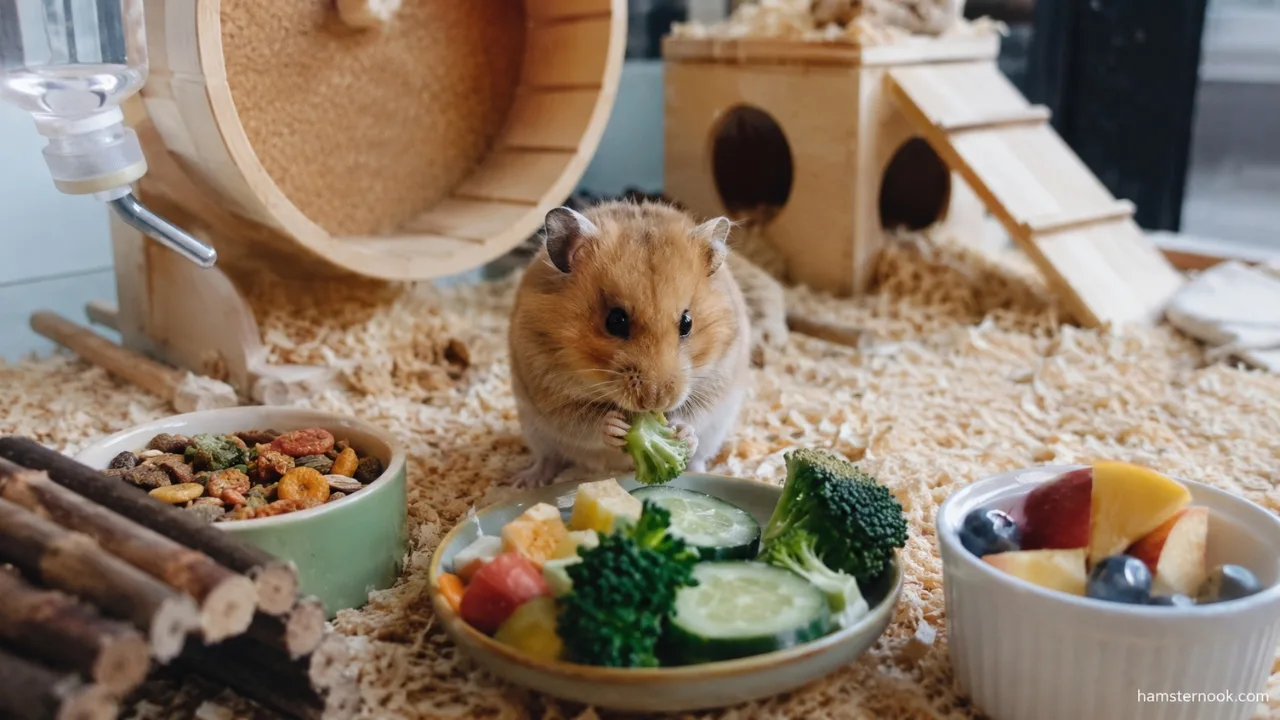
One of the biggest mistakes new hamster owners make is assuming that hamsters can safely eat any human food in small amounts. Because hamsters are tiny omnivores with delicate digestive systems, even certain “healthy” foods for humans can become dangerous for them.
Some foods support healthy growth, energy, and digestion, while others may lead to digestive problems, obesity, diabetes, or even toxicity. Knowing the difference between safe and unsafe foods is one of the most important parts of responsible hamster care.
This complete guide covers safe foods, toxic foods, healthy treat options, feeding rules, and beginner-friendly tips to help you build a safer and healthier diet for your hamster.
Quick Answer
Hamsters can eat a varied diet based on a complete hamster food, with small amounts of suitable vegetables, fruit, and occasional protein treats. Some foods should be avoided, including grapes and rhubarb, which RSPCA guidance identifies as potentially poisonous to rodents. Portion size also matters: fresh foods and treats should remain a small part of the overall diet rather than replacing the main hamster food.

What Do Hamsters Naturally Eat?
In the wild, hamsters eat a varied omnivorous diet that includes:
- Seeds
- Grains
- Grass
- Vegetables
- Small insects
- Plant materials
Pet hamsters thrive on balanced diets that mimic their natural feeding habits. Most of their nutrition should come from a high-quality commercial hamster food, while fresh foods and treats should only be small additions.
A healthy hamster diet usually includes:
| Food Type | Recommended Role |
|---|---|
| Commercial Hamster Pellets | Main daily diet |
| Seeds & Grains | Moderate amounts |
| Fresh Vegetables | Regular small portions |
| Fruits | Occasional treats |
| Protein Sources | Small weekly servings |
| Sugary or Fatty Treats | Rare or avoided |
Complete Safe vs Unsafe Foods for Hamsters
The table below covers many of the most commonly searched hamster foods.
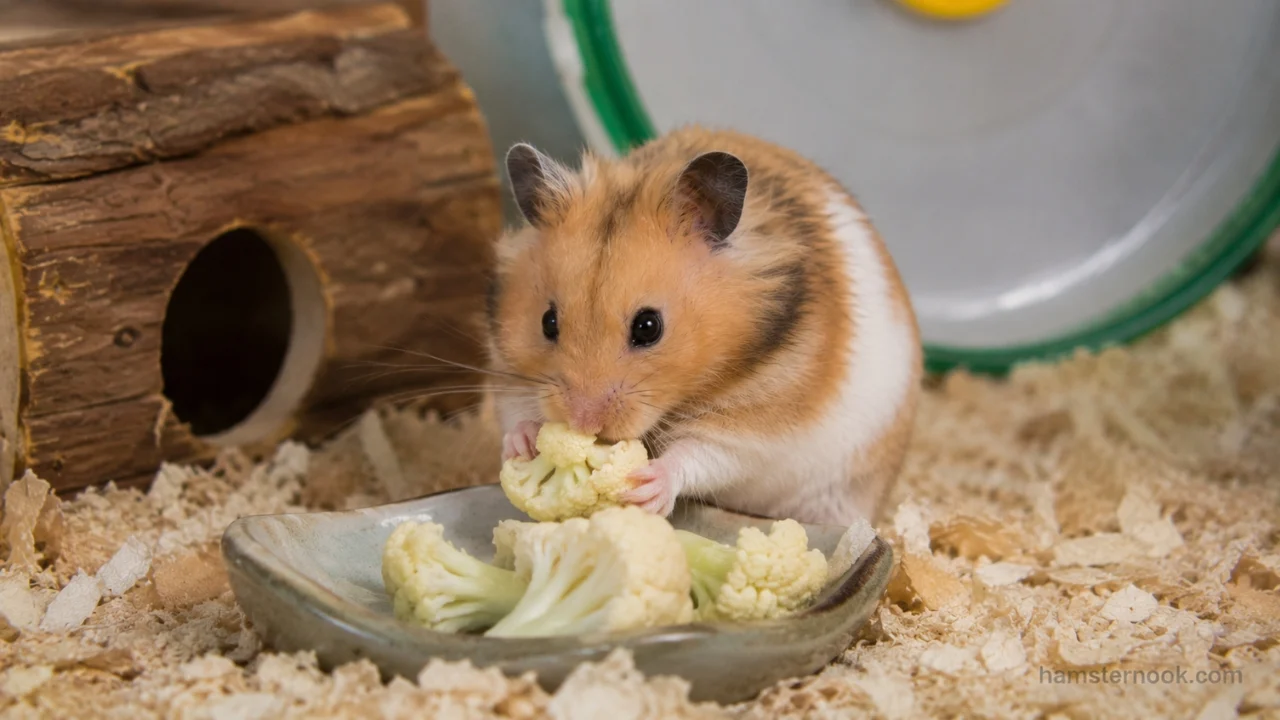
Safe vs Unsafe Hamster Food Chart
| Food | Safe or Unsafe | Important Notes |
|---|---|---|
| Apples (No Seeds) | Safe | Small slices only |
| Bananas | Safe in Moderation | High sugar content |
| Blueberries | Safe | Occasional treat |
| Broccoli | Safe | Good vegetable option |
| Carrots | Safe in Moderation | Natural sugars present |
| Cucumber | Safe | Hydrating and low calorie |
| Grapes | Safe in Moderation | Tiny portions only |
| Strawberries | Safe | Feed occasionally |
| Mealworms | Safe | Good protein source |
| Cooked Egg | Safe | Plain and unseasoned |
| Pumpkin Seeds | Safe | High in fat, feed sparingly |
| Oats | Safe | Plain oats only |
| Plain Rice | Safe | Fully cooked and plain |
| Almonds | Unsafe | Can contain harmful compounds |
| Chocolate | Unsafe | Toxic to hamsters |
| Onion | Unsafe | Harmful to digestive system |
| Garlic | Unsafe | Toxic in larger amounts |
| Citrus Fruits | Unsafe in Excess | Too acidic |
| Junk Food | Unsafe | Too salty and fatty |
| Candy | Unsafe | Dangerous sugar levels |
| Raw Beans | Unsafe | Difficult to digest |
| Avocado | Unsafe | High fat and possible toxicity |
| Alcohol | Unsafe | Extremely dangerous |
| Caffeine | Unsafe | Harmful to heart and nervous system |
Best Safe Vegetables for Hamsters
Fresh produce can be a healthy addition to a hamster’s diet when the right foods and portion sizes are chosen. Our Best Fruits and Vegetables for Hamsters guide explains which options are safest and how often they can be offered.
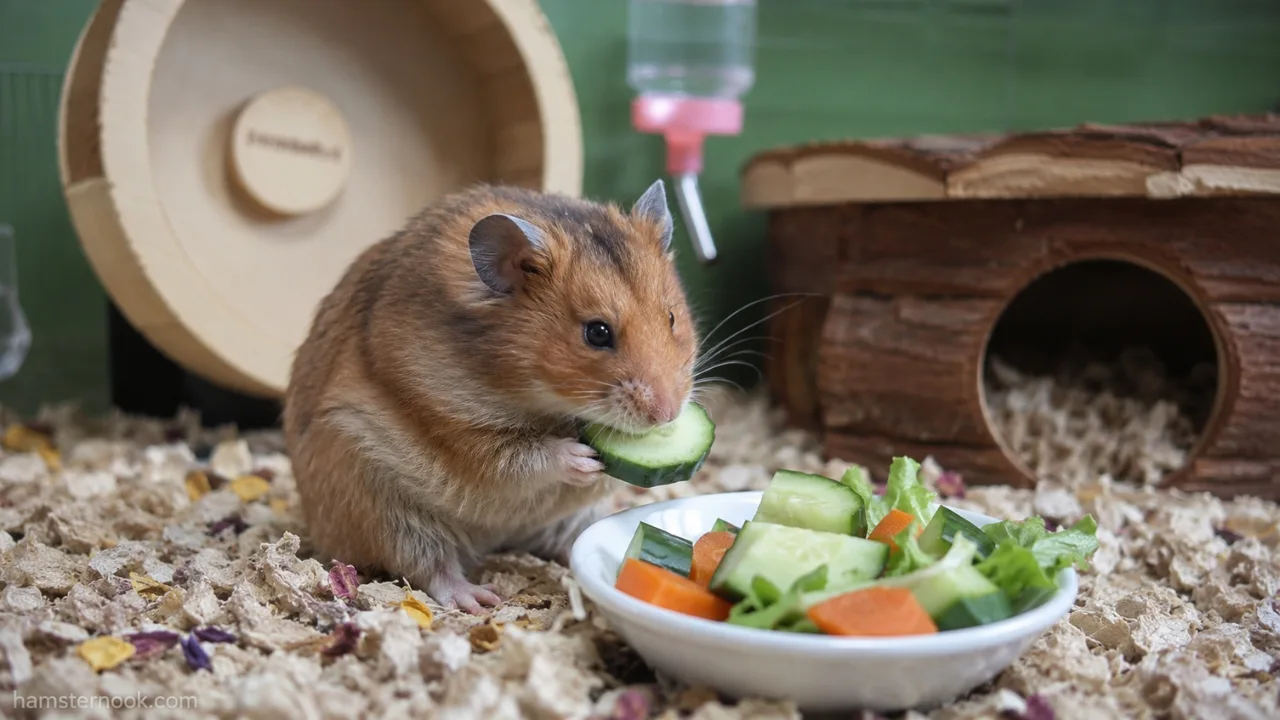
Vegetables are among the healthiest fresh foods for hamsters because many are low in sugar and rich in nutrients.
Healthy Vegetables Hamsters Can Eat
| Vegetable | Benefits | Feeding Tip |
|---|---|---|
| Cucumber | Hydration | Small slices |
| Broccoli | Fiber & vitamins | Serve raw or steamed |
| Bell Pepper | Vitamin C | Remove seeds |
| Zucchini | Low calorie | Thin pieces |
| Romaine Lettuce | Hydrating | Avoid iceberg lettuce |
| Peas | Protein & fiber | Feed occasionally |
All fresh vegetables should be washed thoroughly before feeding to remove pesticides and contaminants.
Safe Fruits for Hamsters
Fruits should only be occasional treats because many contain high amounts of natural sugar.
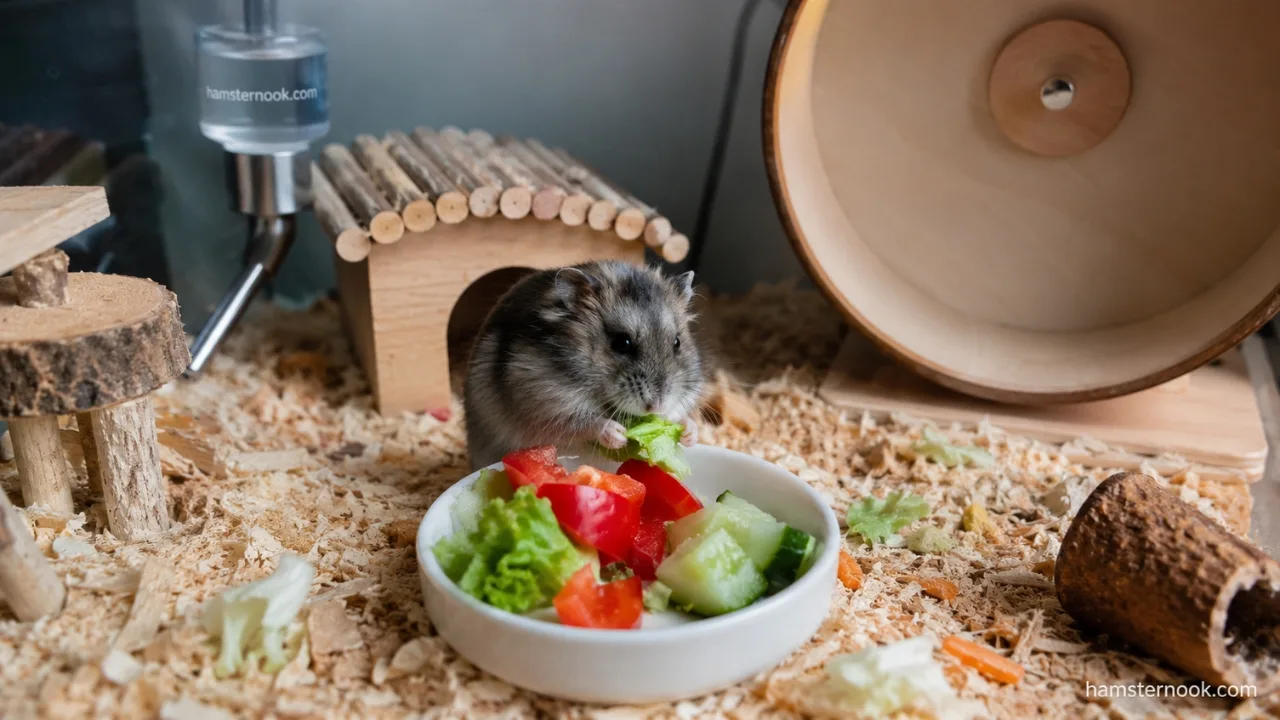
Best Fruits for Hamsters
| Fruit | Safe Amount |
|---|---|
| Blueberries | 1 small berry |
| Apple | Thin slice without seeds |
| Strawberry | Small piece |
| Banana | Tiny piece only |
| Pear | Small cube |
Dwarf hamsters are more sensitive to sugar, so fruit portions should be even smaller.
Protein Foods Hamsters Can Safely Eat
A balanced hamster diet includes more than just pellets and treats. Our What Do Hamsters Eat? Complete Food List explains how staple foods, fresh produce, and protein sources work together to support overall health.
Hamsters are omnivores, so small amounts of protein can support healthy growth and energy.
Safe Protein Options
| Protein Food | Notes |
|---|---|
| Mealworms | Feed sparingly |
| Plain Boiled Egg | No salt or oil |
| Plain Chicken | Fully cooked only |
| Tofu | Small portions |
| Commercial Protein Treats | Choose hamster-safe brands |
Too much protein or fat may lead to obesity, so moderation is important.
Foods Hamsters Should Never Eat
For a broader list of foods that should be avoided, our 15 Toxic Foods That Can Seriously Harm Your Hamster guide covers additional food-safety risks owners should know about.
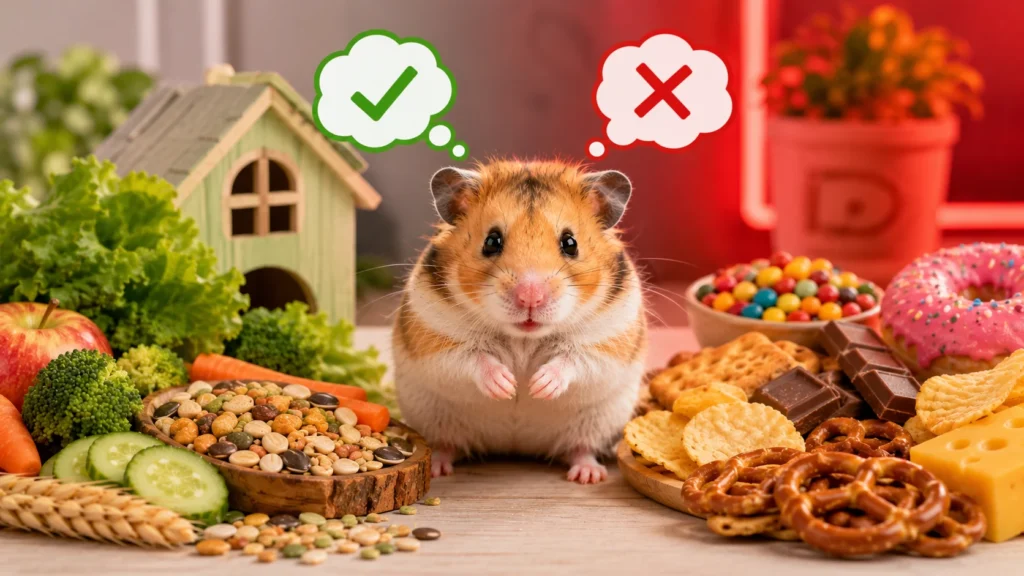
Some foods are considered dangerous or toxic to hamsters and should always be avoided.
Dangerous Foods for Hamsters
Chocolate
Chocolate contains compounds that can be toxic to small animals.
Onion and Garlic
These foods may irritate the digestive system and can become dangerous in larger amounts.

Processed Junk Food
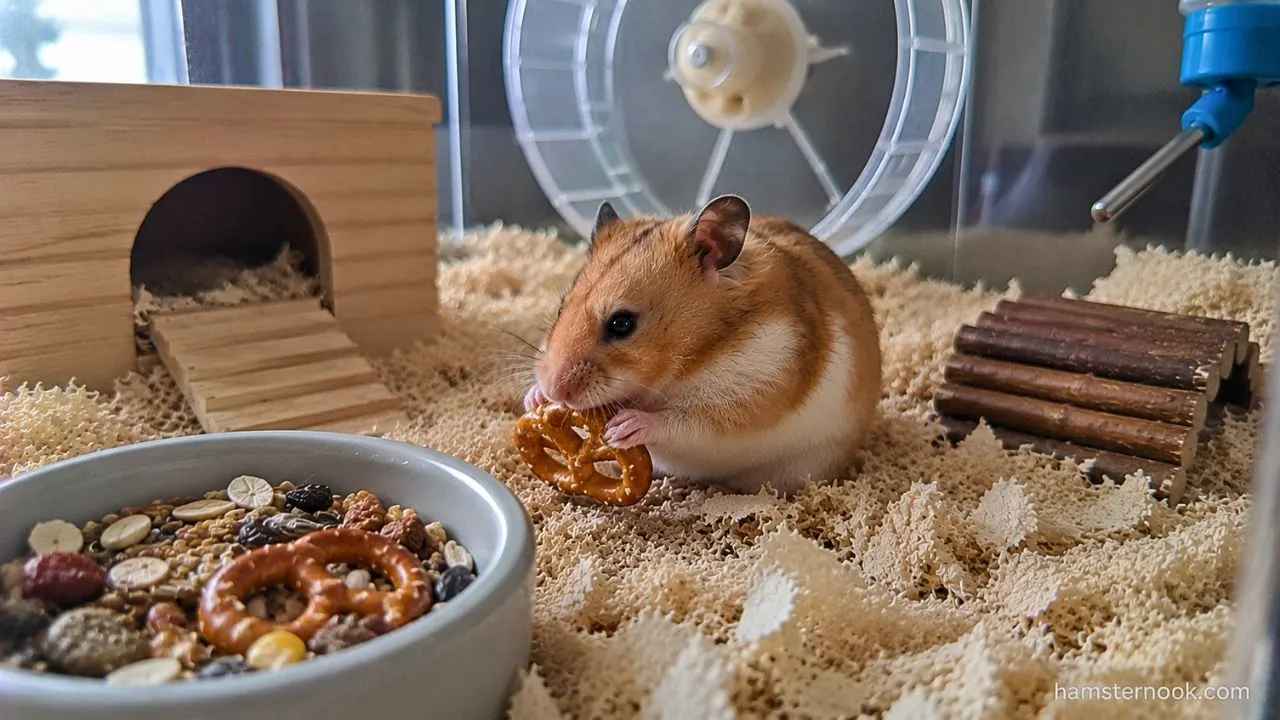
Chips, fast food, and salty snacks contain unhealthy fat, salt, and additives.
Sugary Candy
Hamsters are extremely sensitive to excess sugar, especially dwarf breeds prone to diabetes.
Citrus Fruits
Large amounts of acidic fruits may upset a hamster’s stomach.
Why Portion Size Matters for Hamsters
Even safe foods can become harmful when overfed.
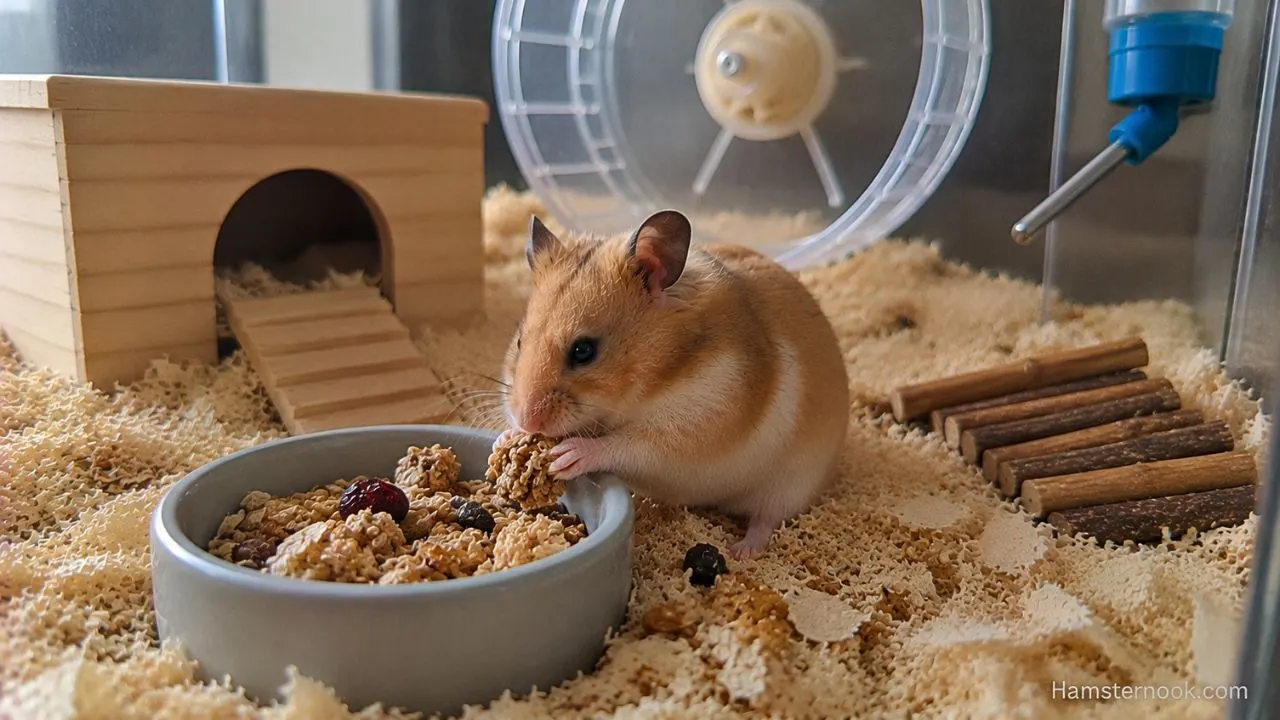
Hamsters have tiny stomachs, so large portions can quickly cause:
- Weight gain
- Diarrhea
- Nutritional imbalance
- Food hoarding and spoilage
Fresh treats should only make up a small percentage of the overall diet.
Many foods that are considered safe for hamsters become problematic only when they are fed too often or in excessive amounts. Portion size is often more important than the food itself, particularly when feeding fruits, seeds, nuts, and other calorie-dense treats.
Many owners accidentally overfeed healthy foods because hamsters seem eager to accept them. Even nutritious treats should remain occasional supplements rather than replacing a balanced commercial hamster diet.
How Often Should Hamsters Eat Fresh Foods?
Fresh foods should be introduced slowly and fed in moderation.
General Feeding Guide
| Food Type | General Guidance |
|---|---|
| Commercial hamster food | Main daily diet |
| Fresh vegetables | Small portions as part of the diet |
| Fruit | Small amounts as occasional treats |
| Protein treats | Occasional small treats |
| Sugary treats | Best avoided or kept very limited |
Always remove uneaten fresh food within a few hours to prevent spoilage.
Signs a Food Is Not Agreeing With Your Hamster
Digestive problems and appetite changes can sometimes appear after introducing unsuitable foods. Our Signs of a Sick Hamster guide explains which symptoms owners should monitor closely and when veterinary attention may be needed.
After introducing a new food, watch carefully for:
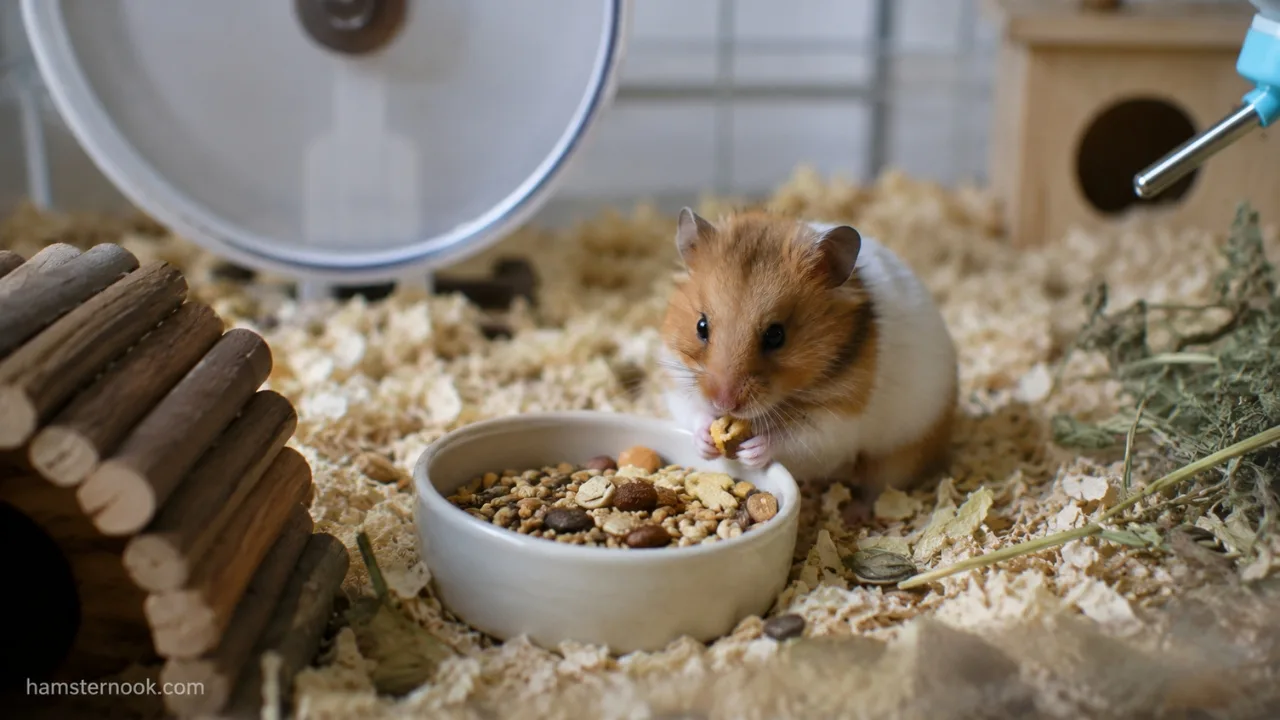
- Diarrhea
- Lethargy
- Loss of appetite
- Moist droppings or a soiled hind end
- Bloating
- Unusual behavior
If your hamster develops digestive changes after a new food, stop offering that food. If appetite drops, droppings become moist, the hind end becomes soiled, or your hamster otherwise appears unwell, contact a veterinarian promptly.
Safe Feeding Tips for Beginner Hamster Owners
Many hamster health problems come from diet mistakes that are easy to avoid.
Important Feeding Rules
- Introduce new foods slowly.
- Feed tiny portions only.
- Wash fresh produce carefully.
- Avoid seasoning, salt, sugar, and oil.
- Never feed spoiled food.
- Remove leftovers quickly.
- Prioritize balanced commercial hamster food.
Consistency and moderation are key to long-term hamster health.
Can Hamsters Eat the Same Foods Every Day?
Variety is important for a balanced hamster diet. While high-quality commercial hamster food should remain the dietary foundation, offering the same fresh food every day can limit nutritional variety and increase the risk of overfeeding certain nutrients.

Rotating safe vegetables, occasional fruits, and suitable protein sources helps create a more balanced feeding routine while also providing enrichment.
How to Introduce New Foods Safely
Whenever you offer a food your hamster has never eaten before, introduce only one new item at a time. This makes it much easier to identify the cause if digestive upset or unusual behavior develops. Introduce new foods gradually and avoid making several dietary changes at the same time. This makes it easier to identify which food may have caused a digestive problem or other reaction.
Common Feeding Mistakes Hamster Owners Make
New owners often unintentionally feed unsafe foods because hamsters appear willing to eat almost anything.
Diet-related mistakes are often part of broader care issues that new owners may overlook. Our 7 Common Hamster Mistakes That Can Make Your Pet Sick (And How to Avoid Them) guide covers several habits that can affect long-term health and wellbeing.
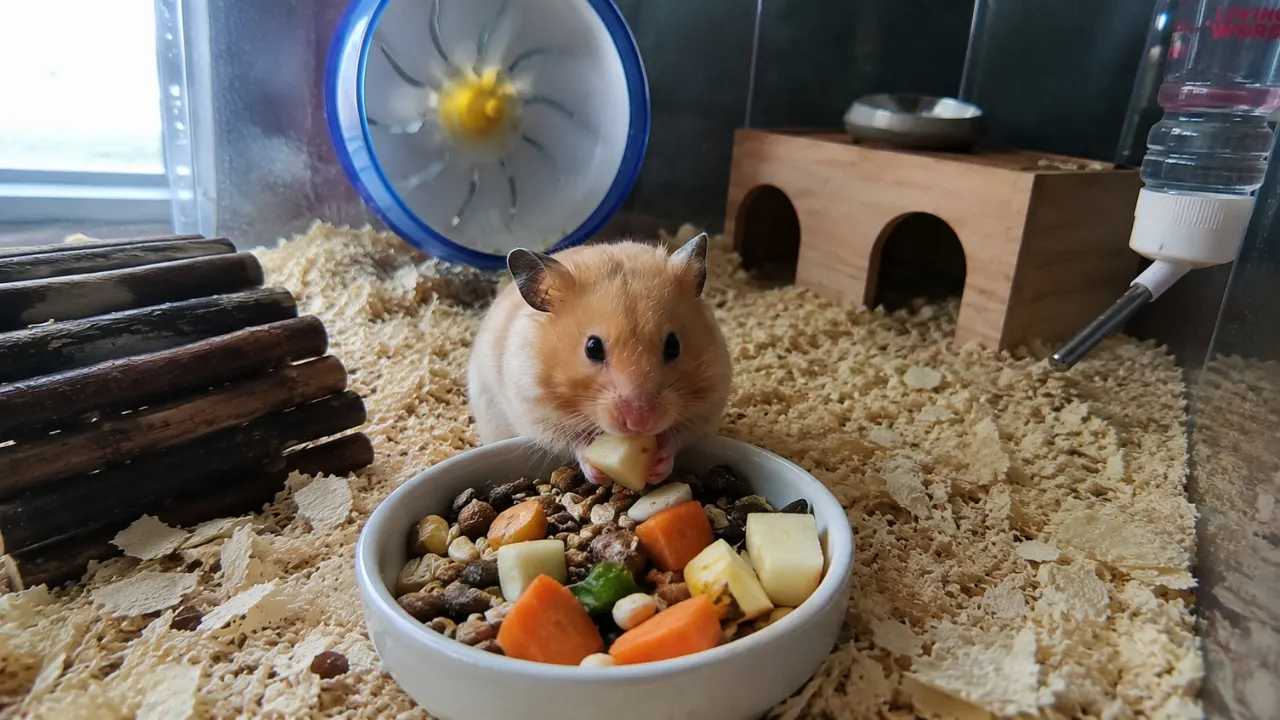
Common Mistakes Include
- Feeding too much fruit
- Giving human snacks
- Offering seasoned foods
- Overfeeding treats
- Ignoring sugar content
- Leaving fresh food overnight
Hamsters may try eating unsafe foods, so owners should always verify food safety before feeding.
Final Thoughts
Understanding safe and unsafe foods is one of the most important parts of hamster care. A balanced diet helps support healthy weight, proper digestion, energy levels, and long-term wellbeing.
Most of a hamster’s nutrition should come from high-quality hamster food, while fresh vegetables, small protein treats, and occasional fruits should only act as supplements.
When introducing any new food, remember that moderation matters. Small portions, careful observation, and avoiding toxic foods will help keep your hamster healthy and safe.

Nutrition is only one part of responsible hamster ownership. Our Ultimate Hamster Care Guide for Beginners brings together feeding, housing, enrichment, health, and daily care advice in one complete resource.
Frequently Asked Questions
What is the healthiest food for hamsters?
High-quality commercial hamster pellets or seed mixes designed specifically for hamsters are usually the healthiest staple foods.
Can hamsters eat human food?
Some human foods are safe in tiny amounts, but many are unsafe. Always research foods carefully before feeding.
What foods are toxic to hamsters?
Chocolate, onion, garlic, alcohol, caffeine, candy, and heavily processed foods should never be fed to hamsters.

Can hamsters eat fruit every day?
No. Most fruits contain too much sugar for daily feeding.
Are vegetables better than fruits for hamsters?
Generally yes, because vegetables are usually lower in sugar and safer for regular feeding.
What should I do if my hamster eats unsafe food?
Remove the food immediately and monitor for symptoms like diarrhea, lethargy, or breathing problems. Contact an exotic veterinarian if symptoms appear severe or persistent.
What food should make up most of a hamster’s diet?
High-quality hamster pellets or seed mixes formulated specifically for hamsters should make up the majority of the diet. Fresh vegetables, fruits, and protein treats should only be offered as supplements.
References
This guide is based on hamster nutrition, feeding, food safety, and general dietary care guidance from trusted animal welfare and veterinary resources, including:
- RSPCA – Hamster Diet and Feeding Guidance – Guidance on a balanced hamster diet, suitable foods, fresh foods, treats, feeding practices, and foods that may be harmful to hamsters.
- PDSA – Hamsters as Pets – General hamster nutrition, feeding, care, welfare, and guidance on maintaining a healthy diet.
- Blue Cross – Hamster Care Guide – Practical information on hamster diet, feeding, suitable foods, treats, and general husbandry.
- MSD Veterinary Manual – Hamsters – Veterinary reference information covering hamster nutrition, digestive health, common diseases, and general care.
- FDA – Selecting and Serving Produce Safely – Food safety guidance relevant to washing and handling fresh fruits and vegetables before feeding.

Narayan Kumar is the founder and author of HamsterNook. He creates practical, research-based hamster care guides covering hamster behavior, nutrition, cage setup, enrichment, health, and everyday care. His goal is to help hamster owners make informed decisions and provide safer, healthier lives for their pets through clear, beginner-friendly information based on trusted animal care resources.