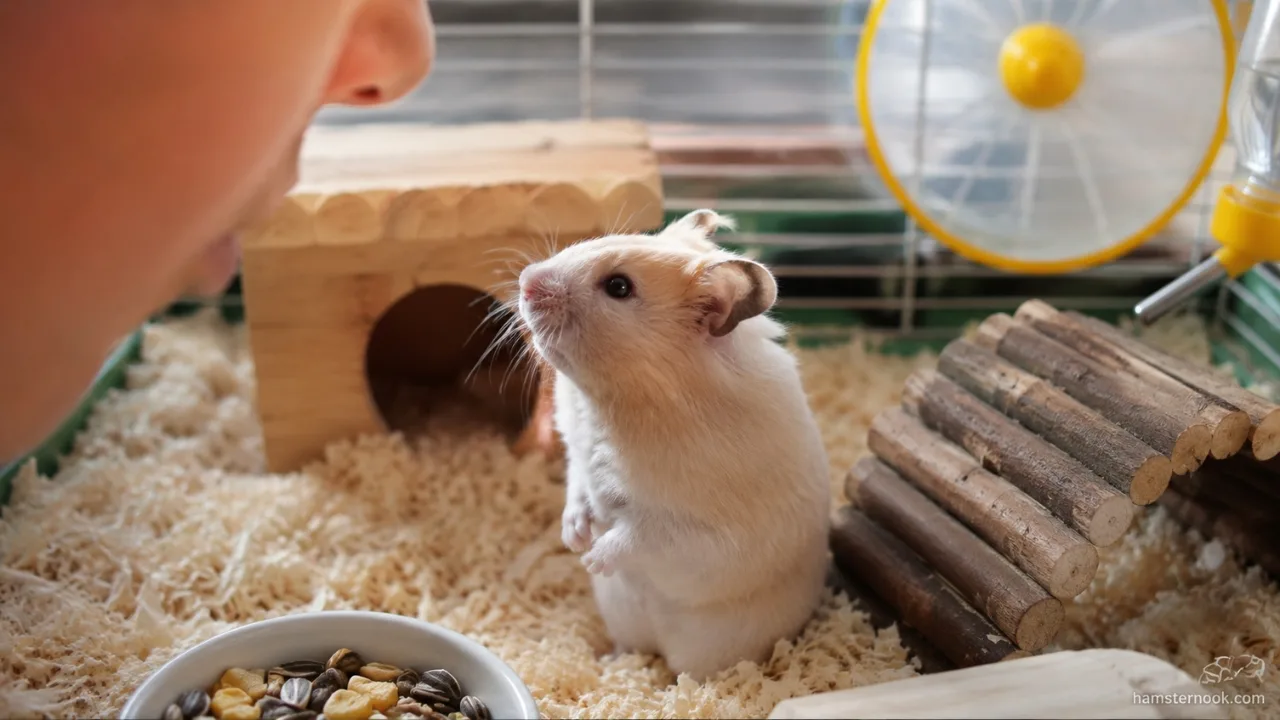
Have you ever noticed your hamster peeking out of its hide when you start talking or walking into the room? Many owners wonder whether their tiny pet actually recognizes their voice or if it’s simply reacting to everyday sounds. The answer is more interesting than a simple yes or no. While hamsters don’t understand human language the way people do, they can become familiar with your voice through repeated positive experiences. Over time, your voice can become one of several cues that helps your hamster recognize that you’re nearby and that nothing dangerous is about to happen.
Quick Answer
Yes, hamsters can become familiar with your voice, but they probably don’t recognize spoken words or understand conversations. Instead, they learn to associate your voice with daily routines like feeding, gentle handling, and calm interactions. Their sense of smell remains their primary way of recognizing familiar people, while your voice acts as an additional clue that you’re someone they already know.
Every hamster responds differently. Confident individuals may begin reacting to a familiar voice within a few weeks, while naturally shy hamsters often need much longer before showing any obvious response. A lack of visible reaction doesn’t necessarily mean your hamster hasn’t become familiar with you.
How Hamsters Experience the World
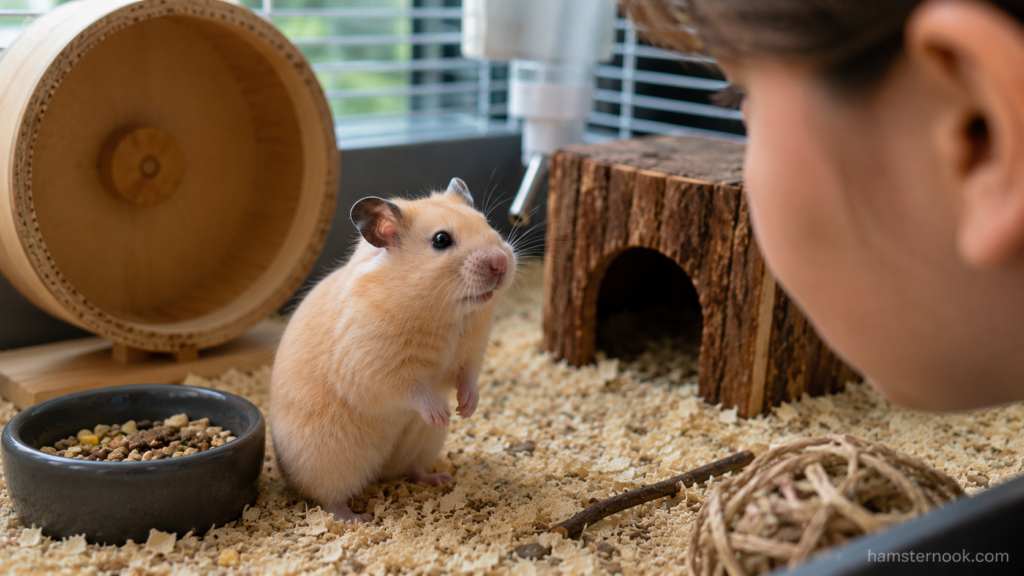
Unlike humans, hamsters don’t rely heavily on vision. They’re naturally nocturnal or crepuscular prey animals that depend on hearing, smell, and whisker sensitivity to stay aware of their surroundings.
Their ears can detect subtle sounds around them, including footsteps, cage doors opening, and familiar voices. Although hamsters hear extremely well, they don’t interpret speech the way people do. Instead of understanding individual words, they gradually associate familiar sounds with experiences such as feeding, gentle handling, and predictable daily routines.
For example, if they regularly hear the same calm voice before food appears or before gentle handling, they’ll gradually associate that sound with a safe experience.
If you’re interested in how hamsters communicate and interpret the world around them, you’ll also enjoy Hamster Behavior Guide: Understanding Every Common Hamster Behavior (2026), which explains many common behaviors that often confuse new owners.
Can Hamsters Tell Different People’s Voices Apart?
There isn’t much scientific research specifically testing whether pet hamsters can distinguish between individual human voices. However, animal behavior specialists agree that hamsters are capable of learning familiar sounds through repetition.
Many owners notice that their hamster reacts differently when they speak compared with when a visitor enters the room. That doesn’t mean your hamster understands what you’re saying. More likely, it has learned that your familiar voice is usually followed by something safe, such as food, calm interaction, or the start of its evening routine.
Your hamster may:
- Come out around its usual feeding time after hearing you.
- Stay relaxed while you quietly talk nearby.
- Freeze briefly when hearing an unfamiliar voice.
- Become curious instead of frightened during familiar routines.
These responses are examples of learned association rather than language comprehension.
Your Voice Is Only One Piece of the Puzzle
Although your voice matters, it probably isn’t the main way your hamster recognizes you.
Hamsters have an exceptional sense of smell, and your natural scent provides a much stronger identifier than your voice alone. When your hamster repeatedly experiences your scent alongside calm handling and feeding, those experiences combine to create familiarity.
Readers who want to understand this in more detail should also read Do Hamsters Recognize Their Owners? What Owners Should Know, where we explain how hamsters use scent, routine, and repeated daily experiences to identify familiar people instead of relying on just one sense.
Here’s how different senses work together:
| Sense | Role in Recognition |
|---|---|
| Smell | Primary way of identifying familiar people |
| Hearing | Learns familiar voices and daily sounds |
| Vision | Detects movement more than fine detail |
| Routine | Helps predict what happens next |
Rather than depending on a single cue, your hamster combines all of these signals every day.
Why Tone Matters More Than Words
Your hamster isn’t paying attention to the meaning of your sentences.
Instead, it notices qualities such as:
- A calm tone
- Familiar rhythm
- Consistent volume
- Predictable timing
Soft, steady speech is generally less startling than loud or sudden voices. Many experienced hamster owners naturally talk quietly before opening the enclosure because it gives their pet a chance to realize someone is nearby.
This simple habit often reduces surprise, especially if your hamster has just woken up.
Signs Your Has Become Familiar With Your Voice

Rather than looking for a single behavior, pay attention to small patterns over time. A hamster that consistently stays relaxed, continues exploring, or calmly approaches during familiar routines is usually showing greater confidence than one that simply looks toward your voice once.
Every hamster has a unique personality, so responses will vary. Some become confident fairly quickly, while others remain naturally cautious throughout their lives.
Possible signs include:
Coming Out After Hearing You
If your hamster regularly leaves its hide shortly after hearing your voice during its normal active hours, it may have learned that your arrival usually means food or a positive interaction.
Staying Relaxed While You Speak
Instead of immediately hiding, a comfortable hamster may continue eating, grooming, or exploring while you quietly talk nearby.
Looking Toward Your Voice
Some hamsters briefly stop what they’re doing and turn toward the source of a familiar sound. This doesn’t mean they understand speech, but it does suggest they’ve noticed a recognizable part of their environment.
Expecting Something Positive
A hamster that hears the same calm voice before receiving dinner or a favorite treat may begin anticipating that routine.
As trust grows, you’ll likely notice other positive behaviors as well. Our guide 10 Signs Your Hamster Trusts You explains many of the subtle body language cues owners often overlook during the bonding process.
Can Baby Hamsters Learn Your Voice Faster?
Young hamsters are still adapting to new surroundings, so early positive experiences can help them become comfortable with familiar sounds. That doesn’t mean they should be handled constantly or forced into interaction.
Patience is still the most important part of building trust.
Whether your hamster is young or fully grown, try to:
- Speak softly.
- Avoid sudden movements.
- Let your hamster approach voluntarily.
- Respect its sleeping schedule.
- Keep daily routines consistent.
If you’ve recently brought your hamster home, it’s completely normal if it seems nervous around every sound at first. The First Night With a New Hamster: What Every Owner Should Expect explains why this adjustment period is important and how to help your new pet settle in without unnecessary stress.
Can Talking to Your Hamster Strengthen Your Bond?
Talking to your hamster won’t teach it words or commands, but it can become part of a predictable daily routine.
Over time, hearing the same calm voice before feeding, spot cleaning, or offering a treat may help your hamster associate your presence with safety rather than uncertainty.
Consistency matters much more than talking often. A calm routine repeated every day helps your hamster become familiar with your presence far more effectively than frequent attempts to interact. Instead of immediately picking up a nervous hamster, allow it to become comfortable with your presence first. If you’re working on building trust, How to Get a Hamster to Trust You Faster Without Stressing It Out offers practical, beginner-friendly techniques that pair naturally with calm daily interactions.
Common Mistakes Owners Make
Even if your hamster has started recognizing your voice, certain habits can make it nervous again.
Common mistakes include:
- Waking your hamster during the daytime.
- Speaking loudly near the enclosure.
- Reaching into the cage suddenly.
- Picking up your hamster before it’s comfortable.
- Changing routines every day.
A predictable environment helps prey animals feel secure, and consistency usually produces better results than trying to speed up the taming process.
What You Should Do
If you want your hamster to become more comfortable with your voice, focus on building familiarity instead of trying to train it to respond to commands.
These simple habits can help build positive associations over time:
| What to Do | Why It Helps |
|---|---|
| Speak softly before opening the cage | Prevents startling your hamster |
| Feed at a consistent time | Reinforces familiar daily routines |
| Let your hamster approach you first | Builds confidence naturally |
| Handle only when your hamster is awake | Reduces stress and fear |
| Keep interactions calm and predictable | Helps your hamster associate you with safety |
If your hamster still seems nervous around you, don’t worry—trust takes time. Our article How Long Does It Take for a Hamster to Trust You? explains the factors that affect bonding and what you can realistically expect during the process.
When to Worry
It’s perfectly normal if your hamster doesn’t react to your voice every time. Some hamsters are naturally shy, while others simply stay focused on whatever they’re doing.
However, you should pay closer attention if your hamster suddenly:
- Hides much more than usual.
- Panics every time someone approaches the enclosure.
- Stops eating or drinking.
- Appears unusually inactive during its normal waking hours.
- Shows a sudden change in behavior alongside weight loss or other signs of illness.
A hamster that suddenly becomes fearful after previously acting comfortable may be reacting to a change in its environment, stress, or an underlying health problem rather than your voice. If these changes continue or are accompanied by physical symptoms, an examination by an experienced exotic animal veterinarian is the safest option.
Does Talking to Your Hamster Every Day Help?
Talking to your hamster isn’t essential, but it can become part of a reassuring daily routine.
Many owners naturally greet their hamster before feeding or cleaning the enclosure. While your pet won’t understand conversations, consistently hearing the same calm voice may help it recognize that you’re nearby and that nothing unpleasant is about to happen.
Just remember that talking should never replace proper care, enrichment, or patience. Building trust is about creating positive experiences, not saying specific words.
If you’re wondering why your hamster sometimes seems to ignore you completely, our guide Why Does My Hamster Ignore Me? explains several normal behavioral reasons and when there’s actually something to be concerned about.
Can Hamsters Forget Your Voice?
If you spend several weeks away, your hamster may become less responsive to your familiar voice at first. Fortunately, positive associations are often rebuilt quickly once regular feeding, calm interaction, and predictable routines resume. Rather than needing to “retrain” your hamster, most owners simply need to re-establish the same consistent routine.
Final Thoughts
Hamsters probably don’t recognize your voice in the same way people recognize one another, and they don’t understand spoken language like humans or some highly social pets. What they can do is learn familiar sounds through repeated, positive experiences.
Over time, your voice becomes one of several cues—alongside your scent, daily routine, and gentle handling—that helps your hamster recognize you’re someone familiar and safe.
The strongest bond develops through predictable daily care rather than constant interaction. Speaking calmly, following a consistent routine, and respecting your hamster’s natural behavior help build familiarity over time. Speak calmly, respect your hamster’s natural sleep schedule, avoid forcing interactions, and allow trust to develop at your pet’s own pace. For most hamsters, patience is far more valuable than any specific phrase you could say.
Frequently Asked Questions
Can hamsters recognize their owner’s voice?
They can become familiar with a person’s voice through repeated positive experiences, although they aren’t believed to understand spoken words or conversations.
Do hamsters know their names?
There’s no strong scientific evidence that hamsters recognize their names the way dogs often do. They are much more likely to respond to familiar sounds, routines, and scent cues.
Why does my hamster come out when I start talking?
If this happens regularly during your hamster’s normal active hours, it has likely learned that your voice is often followed by feeding, treats, or gentle interaction.
Can loud voices scare a hamster?
Yes. Hamsters have sensitive hearing, and sudden loud noises or shouting can startle them and increase stress.
How long does it take for a hamster to become familiar with your voice?
There’s no fixed timeline. Some hamsters begin associating a familiar voice with positive experiences within a few weeks, while naturally cautious individuals may take longer depending on their personality and previous experiences.
Can I talk to my hamster while holding it?
Yes, as long as your hamster is already comfortable being handled. Speaking in a calm, quiet voice can help maintain a relaxed interaction, but always pay attention to your hamster’s body language and let it return to its enclosure if it seems stressed.
References
- RSPCA – Caring for Hamsters
- PDSA – Hamster Care Advice
- Blue Cross – Hamster Care Guide
- Merck Veterinary Manual – Pet Rodents

Narayan Kumar is the founder and author of HamsterNook. He creates practical, research-based hamster care guides covering hamster behavior, nutrition, cage setup, enrichment, health, and everyday care. His goal is to help hamster owners make informed decisions and provide safer, healthier lives for their pets through clear, beginner-friendly information based on trusted animal care resources.