Bringing home a hamster looks simple on the surface. They’re small, relatively quiet, and often marketed as beginner-friendly pets. Unfortunately, many new owners discover later that hamsters have much more specific care requirements than pet stores often explain.
Some of the most common hamster care mistakes happen with the best intentions. Owners buy the cage recommended at the store, choose colorful accessories, and provide plenty of food, only to find their hamster chewing bars, trying to escape, or showing signs of stress.
The good news is that most beginner mistakes are completely preventable. Understanding them early can help your hamster live a healthier, safer, and more enriching life.
This guide covers the biggest mistakes new hamster owners make and the practical steps you can take to avoid them.

Quick Overview: Common Beginner Mistakes
| Mistake | Potential Consequence | Better Approach |
|---|---|---|
| Buying a cage that’s too small | Stress and boredom | Prioritize floor space |
| Using the wrong wheel size | Back strain and discomfort | Choose species-appropriate wheels |
| Handling too soon | Fear and biting | Allow adjustment time |
| Feeding too many treats | Obesity and poor nutrition | Focus on a balanced diet |
| Using unsafe bedding | Respiratory problems | Use hamster-safe substrates |
| Ignoring enrichment | Behavioral issues | Provide mental stimulation |
| Housing hamsters together | Fighting and injuries | House separately |
| Cleaning too often | Stress and scent loss | Spot-clean regularly |
| Skipping health checks | Delayed problem detection | Monitor regularly |
| Believing pet store advice without research | Care mistakes | Verify information from reliable sources |
What Are the Biggest Mistakes New Hamster Owners Make?
The biggest mistakes new hamster owners make include choosing a cage that is too small, using the wrong wheel size, handling a hamster too soon, feeding too many treats, providing insufficient enrichment, and relying solely on pet store advice. These mistakes can lead to stress, boredom, health problems, and behavioral issues, but most are easily avoided with proper research and setup.
Mistake #1: Choosing a Cage Based on Appearance Instead of Space
Enrichment doesn’t have to be expensive. Rotating chew toys, hiding food around the enclosure, rearranging tunnels occasionally, or adding cardboard tubes can keep your hamster mentally engaged without constantly buying new accessories. Small changes often make the habitat feel new again.

Many starter cages look attractive because they include colorful tubes, multiple levels, and bright accessories. Unfortunately, some of the most heavily marketed cages are also among the smallest and often provide far less floor space than a hamster actually needs.
Hamsters are ground-dwelling animals that benefit more from usable floor area than vertical climbing space.

A cage that is too small may contribute to:
- Excessive bar chewing
- Escape attempts
- Repetitive pacing
- Increased stress
Before buying a cage, calculate actual floor space rather than relying on packaging claims. If you’re unsure what a proper enclosure should include, read our Best Hamster Cage Setup for Beginners guide.
Mistake #2: Buying the Wrong Wheel Size
A wheel is one of the most important accessories in a hamster enclosure.
Unfortunately, many wheels sold for hamsters are too small.

When a wheel is undersized, a hamster’s back may curve unnaturally while running.
| Hamster Type | Recommended Wheel Size |
|---|---|
| Syrian Hamster | 11–12 inches |
| Dwarf Hamster | 8–10 inches |
| Chinese Hamster | 8–10 inches |
A properly sized wheel allows the hamster to run with a straight back. Proper enclosure equipment is one of the most important parts of a healthy setup, which we cover in Best Hamster Cage Setup for Beginners.
Mistake #3: Trying to Handle a New Hamster Immediately
New owners are often excited to interact with their hamster right away.
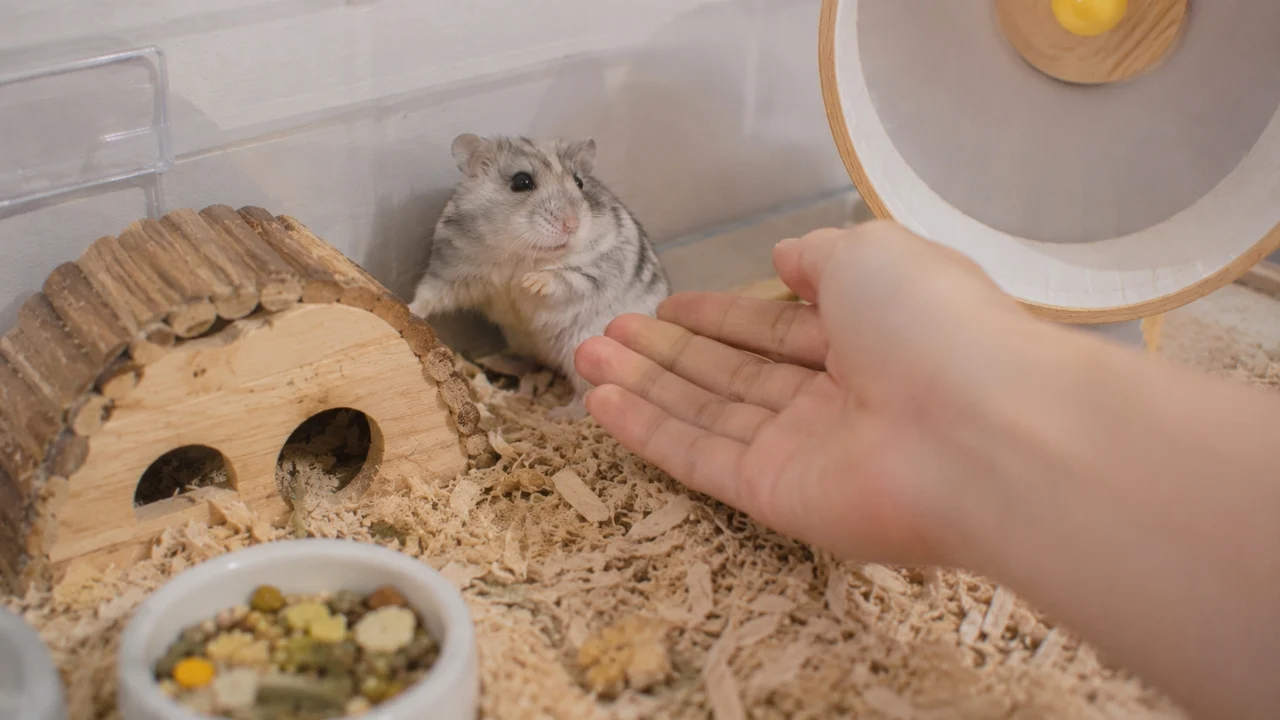
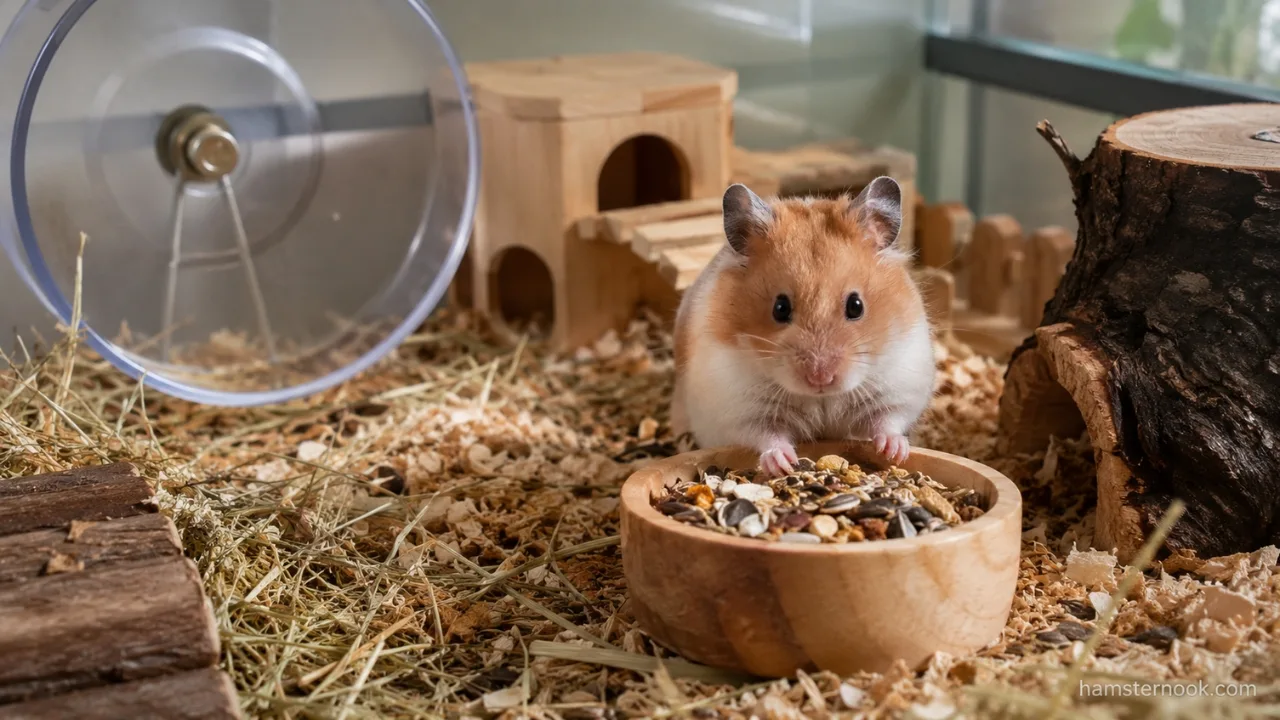
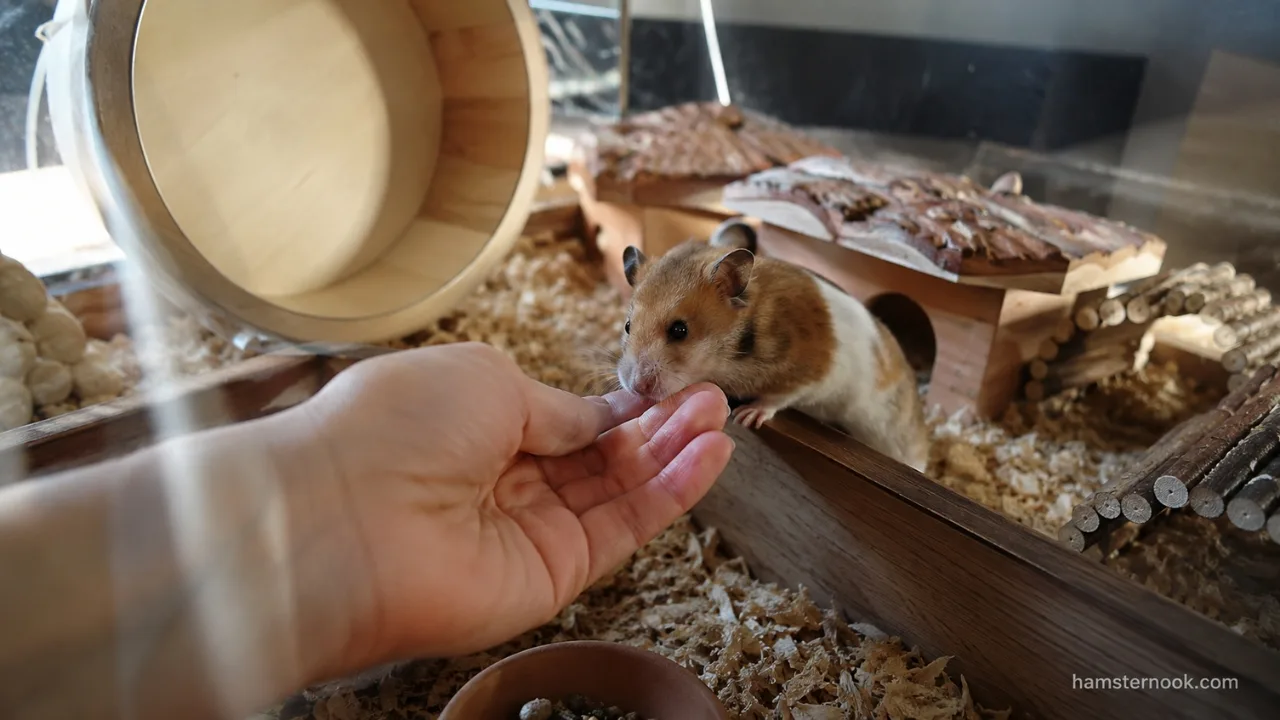
However, moving to a new home is stressful for a small prey animal. Immediate handling can increase fear and damage trust.
Instead:
- Give your hamster several days to settle in
- Speak softly near the enclosure
- Allow the hamster to approach voluntarily
- Use treats to build positive associations
Patience usually leads to a friendlier hamster in the long run. For a step-by-step approach, see How to Tame a Hamster Without Getting Bitten.
Mistake #4: Feeding Too Many Treats
Hamsters may eagerly accept treats, but that does not mean they should receive unlimited snacks.
Many commercial treats contain:

- Added sugars
- Honey
- Artificial ingredients
- Excess calories
Treats should only make up a small portion of the overall diet.
| Food Type | Feeding Frequency |
|---|---|
| High-quality hamster food | Daily |
| Vegetables | Several times weekly |
| Fruit | Occasional |
| Commercial treats | Limited |
| Sugary snacks | Avoid or minimize |
A balanced diet supports long-term health better than frequent treats.
Mistake #5: Using Unsafe Bedding Materials
Not all bedding marketed for small pets is safe for hamsters.
Some materials may cause respiratory irritation or physical injury.

Avoid:
- Cedar or pine bedding
- Scented bedding
- Fluffy nesting materials that can wrap around limbs
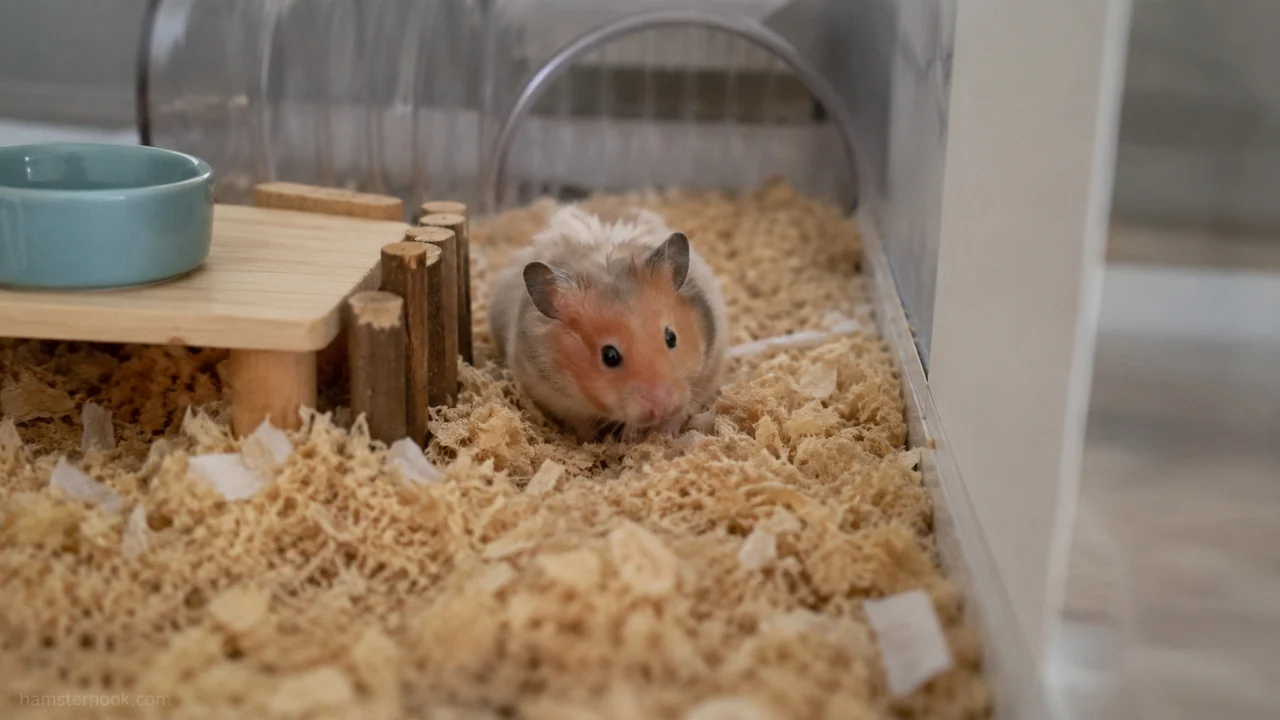
Safer options often include:
- Unscented paper bedding
- Aspen shavings
- Other hamster-safe substrates
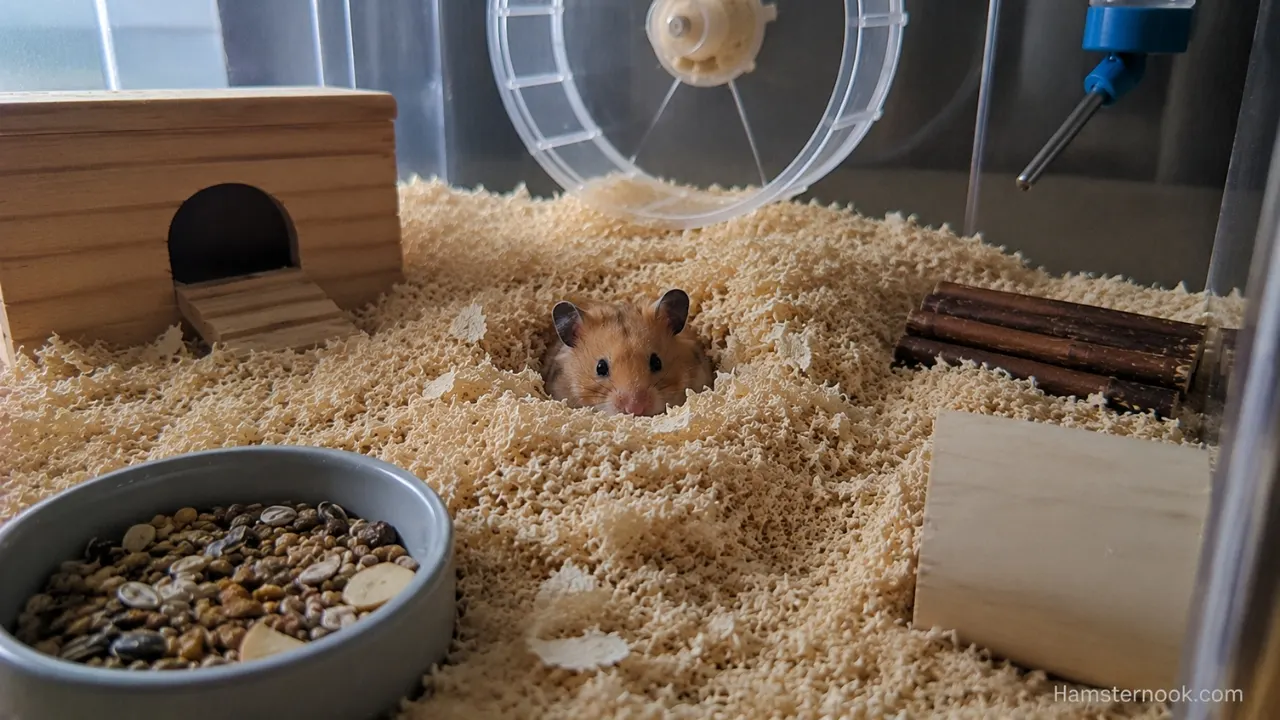
Deep bedding also allows natural burrowing behavior.
If you’re unsure how much bedding a hamster actually needs, read How Deep Should Hamster Bedding Be? for recommended depths and setup tips.
Mistake #6: Not Providing Enough Enrichment

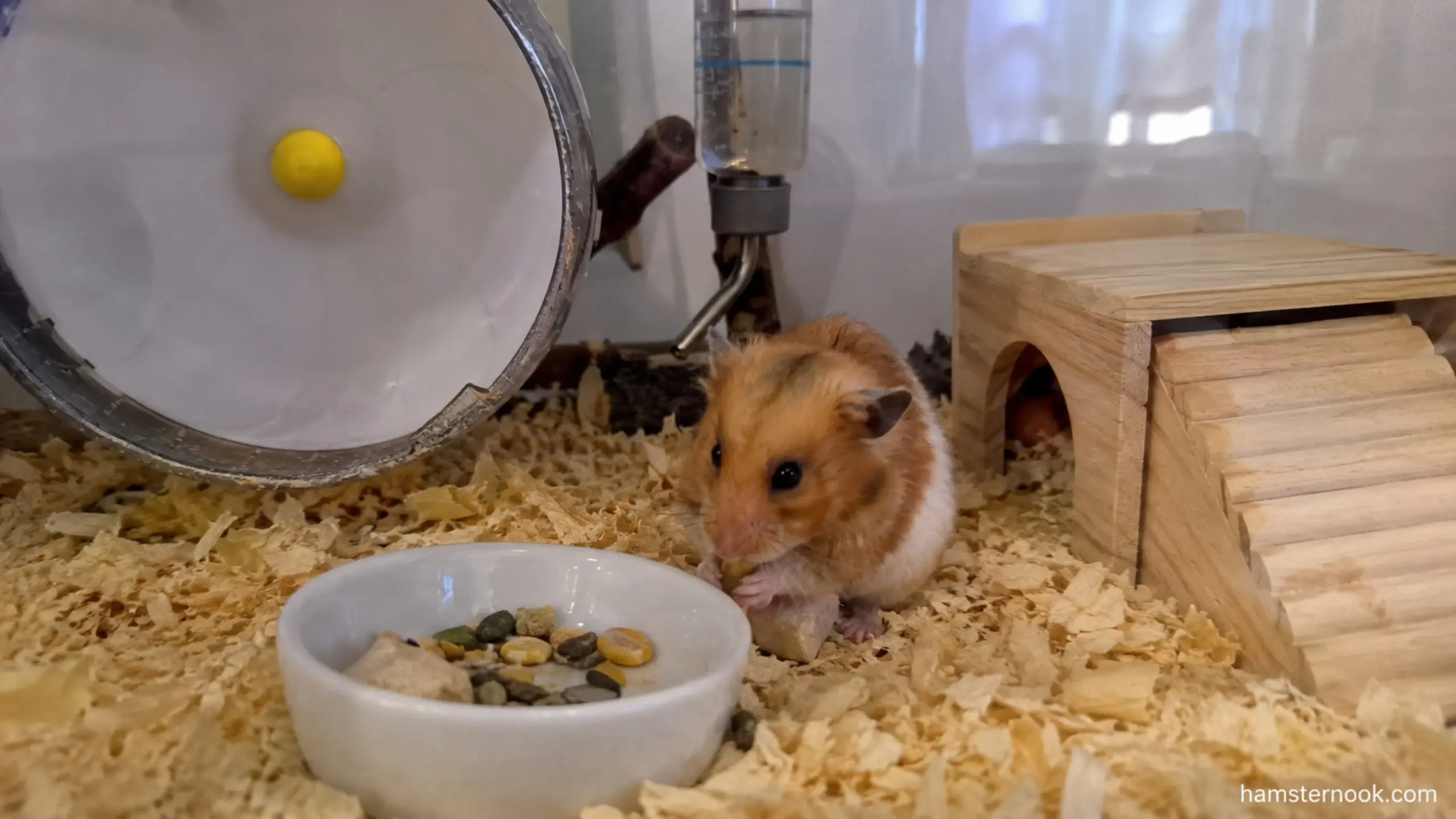
A food bowl and wheel alone do not meet all of a hamster’s needs.
Hamsters naturally enjoy:
- Digging
- Exploring
- Foraging
- Chewing
- Nest building
Without sufficient enrichment, boredom may develop.
Useful enrichment items include:

| Enrichment Item | Benefit |
|---|---|
| Sand bath | Grooming and digging |
| Cork logs | Exploration |
| Tunnels | Security |
| Chew toys | Dental health |
| Foraging toys | Mental stimulation |
| Multi-chamber hides | Natural nesting behavior |
Variety often helps keep hamsters engaged. If your hamster seems restless despite having toys, read Can Hamsters Get Bored in Their Cage? to learn additional enrichment strategies.
Mistake #7: Housing Hamsters Together
One of the most dangerous myths in hamster care is that hamsters enjoy companionship from other hamsters.
Most pet hamster species are solitary.
Even if two hamsters appear to get along initially, serious fights can occur unexpectedly.

Possible outcomes include:
- Injuries
- Stress
- Resource guarding
- Death in severe cases
For most pet hamsters, separate housing is the safest option.
Mistake #8: Completely Cleaning the Cage Too Often
Many owners assume frequent deep cleaning is the best way to keep a hamster healthy. In reality, removing too much bedding too often can make a hamster feel as though its territory has completely disappeared.
In reality, removing all bedding and scent markers too frequently can be stressful.
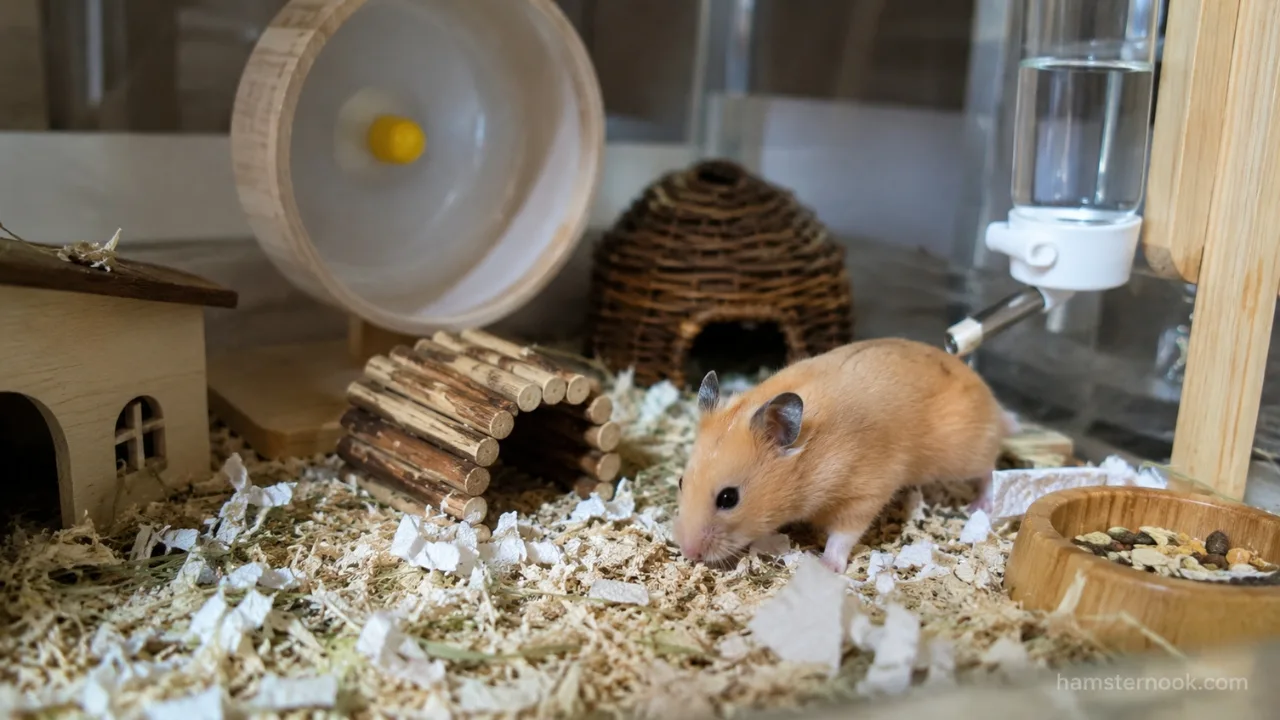
Hamsters rely heavily on scent to feel secure in their environment.
A better approach is usually:
| Cleaning Task | Suggested Frequency |
|---|---|
| Remove spoiled food | Daily |
| Spot clean soiled areas | Weekly |
| Replace portions of bedding | As needed |
| Full deep clean | Occasionally, depending on enclosure size |
Retaining some clean, familiar bedding often helps reduce stress.
Mistake #9: Ignoring Small Changes in Behavior
Hamsters are skilled at hiding illness because they are prey animals.
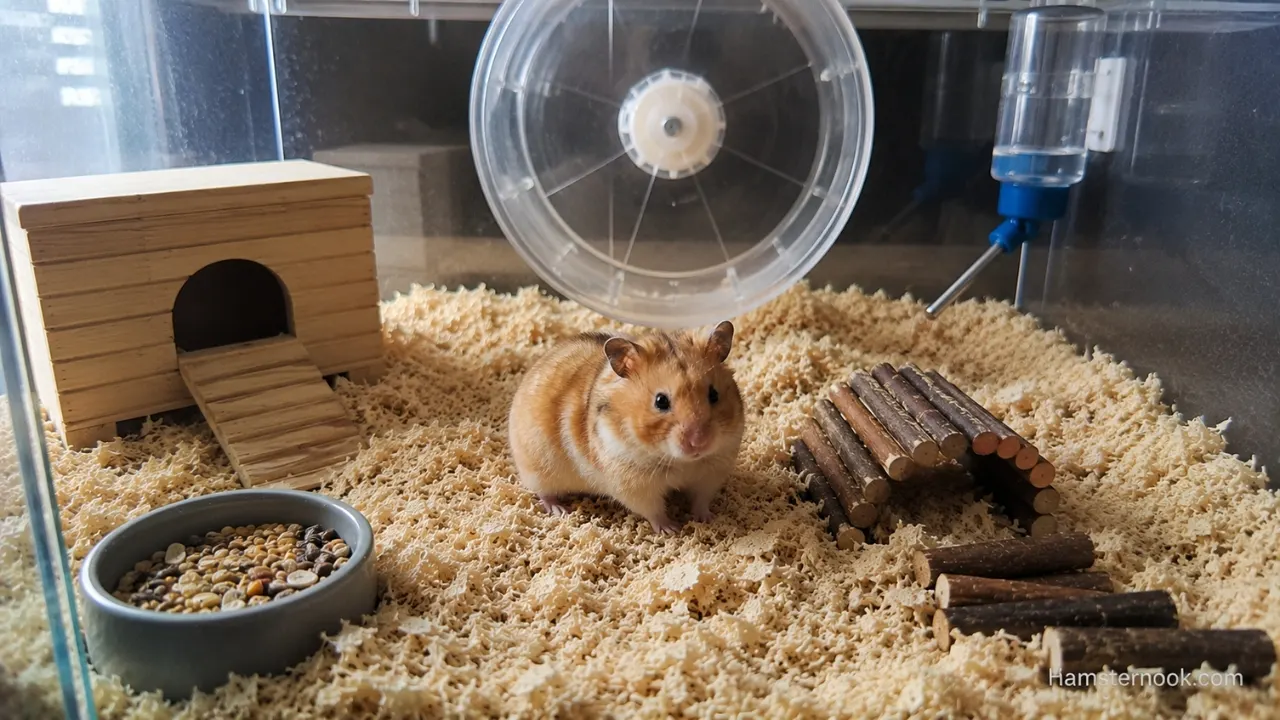
Minor behavioral changes may sometimes be the earliest warning signs that something is wrong.
Watch for:
- Reduced activity
- Weight loss
- Appetite changes
- Unusual sleeping habits
- Difficulty moving
- Changes in grooming
Learning to recognize subtle warning signs early can make a significant difference. Read 5 Warning Signs Your Hamster May Be Stressed for common stress-related behaviors owners should never ignore.
Regular observation makes it easier to notice problems early.

If your hamster stops eating, has difficulty breathing, becomes severely weak, or develops trouble moving, contact a veterinarian promptly rather than assuming the change is caused by stress or a care mistake.
Appetite changes are often one of the earliest warning signs. Read Why Is My Hamster Not Eating? Common Causes and Solutions to learn what to watch for.
Mistake #10: Relying Entirely on Pet Store Advice
Pet store employees can be helpful, but information quality varies significantly.
Some recommendations may be outdated or based on products rather than modern hamster care standards.
Before making major care decisions:
- Compare multiple sources
- Read current hamster care guides
- Consult experienced hamster organizations
- Speak with qualified veterinarians when needed
Learning from experienced hamster keepers and trusted welfare organizations gives you a much better understanding of proper care than relying on a single source. Taking a few extra minutes to verify information can prevent problems that are much harder to correct later.
How to Set Up Your Hamster for Success
The best hamster care does not require expensive gadgets or complicated setups.
A successful habitat usually focuses on a few key essentials.

| Essential Need | Why It Matters | What Owners Should Check |
|---|---|---|
| Large enclosure | Supports natural movement | Provide generous, uninterrupted floor space |
| Deep bedding | Encourages natural burrowing | Use suitable, low-dust bedding |
| Proper wheel | Provides exercise | Choose a solid running surface and suitable diameter |
| Balanced diet | Supports health | Provide complete hamster food and limit treats |
| Fresh water | Prevents water access problems | Check the water supply and bottle nozzle daily |
| Safe enrichment | Encourages natural behavior | Provide hides, tunnels, chew items and foraging opportunities |
| Quiet cage location | Reduces unnecessary disturbance | Avoid direct sunlight, drafts and noisy areas |
| Secure enclosure | Helps prevent escapes and injuries | Check doors, lids and potential hazards |
| Regular observation | Helps identify health changes | Monitor appetite, movement, weight and behavior |
Understanding what normal hamster behavior looks like can make health monitoring much easier. Our Why Is My Hamster Sleeping So Much? Normal vs Warning Signs guide explains what owners should expect.
Meeting these core needs often has a greater impact than buying numerous accessories.
Cage location matters too: Hamster Cage Placement: Safe Locations, Room Conditions & What to Avoid explains how to choose a quiet spot away from direct sunlight, drafts and unnecessary disturbances.
What Happens When These Mistakes Are Fixed?
Many owners notice positive changes within a few weeks after improving their hamster’s environment.

Common improvements include:
- Less bar chewing
- Fewer escape attempts
- More natural burrowing behavior
- Increased confidence around people
- Better activity levels
- Improved appetite and grooming habits
Even simple improvements can noticeably change a hamster’s behavior. Owners often see more natural burrowing, increased confidence, and better activity levels after providing enough space, deeper bedding, and species-appropriate enrichment. Consistency matters more than buying expensive products.
Many of these improvements are covered in our Ultimate Hamster Care Guide for Beginners, which walks through setting up a safe and enriching habitat from the very beginning.
Small Changes Make the Biggest Difference
New hamster owners sometimes feel they need to fix every mistake at once, but gradual improvements are usually less stressful for the hamster. Upgrading one part of the enclosure at a time, such as adding deeper bedding, replacing an undersized wheel, or increasing enrichment, allows your pet to adjust more comfortably while still improving its overall quality of life.

Final Thoughts
Most new hamster owners make at least one or two mistakes simply because there is so much conflicting information available. Fortunately, hamsters are resilient animals, and many common care issues can be corrected once they are recognized.
Focusing on adequate space, proper nutrition, suitable enrichment, and patient handling will help your hamster feel safer and more comfortable. Small improvements often lead to noticeable changes in behavior, activity levels, and overall well-being.
Successful hamster care isn’t about having the most expensive setup. Meeting your hamster’s basic needs consistently—adequate space, proper nutrition, enrichment, and regular observation—creates a healthier environment and helps prevent many common beginner mistakes before they start.
Frequently Asked Questions
Do beginner hamster mistakes cause long-term problems?
Sometimes. Issues such as small cages, poor diets, or inadequate enrichment can affect a hamster’s health and behavior over time. Fortunately, many common mistakes can be corrected once they are identified.
What is the most common mistake first-time hamster owners make?
Choosing a cage that is too small is one of the most common mistakes because many commercially sold hamster cages provide insufficient floor space.
How long should I wait before handling a new hamster?
Most hamsters benefit from several days of adjustment before regular handling begins. Some may require longer depending on their personality.
Can too many treats harm a hamster?
Yes. Excess treats can contribute to obesity, nutritional imbalance, and reduced interest in healthier foods.
Why does my hamster keep chewing the cage bars?
Bar chewing may be linked to boredom, stress, insufficient enrichment, or inadequate cage size.

Do hamsters need toys if they already have a wheel?
Yes. While wheels provide exercise, hamsters also benefit from digging, chewing, exploring, and foraging opportunities.
Is it okay to trust hamster care advice from pet stores?
Pet stores can provide useful information, but it’s wise to verify important care recommendations through multiple reliable sources and current hamster welfare guidelines.
References
This guide is based on hamster housing, husbandry, nutrition, enrichment, handling, behavior, and welfare guidance from trusted animal welfare and veterinary resources, including:
- RSPCA – Keeping Hamsters as Pets – General guidance on hamster housing, diet, enrichment, handling, behavior, and welfare.
- RSPCA – Creating a Good Home for Hamsters – Guidance on enclosure space, bedding, nesting, exercise, environmental conditions, and safe hamster housing.
- RSPCA – Hamster Behaviour – Information on natural hamster behavior, handling, activity, sleep patterns, stress, and environmental needs.
- RSPCA – Hamster Diet – Guidance on balanced hamster nutrition, treats, fresh foods, water, and feeding practices.
- Blue Cross – Hamster Care Guide – Practical guidance on hamster housing, bedding, enrichment, feeding, handling, and general wellbeing.
- MSD Veterinary Manual – Providing a Home for a Hamster – Veterinary guidance on enclosure setup, bedding, exercise, environmental conditions, and hamster husbandry.
- MSD Veterinary Manual – Disorders and Diseases of Hamsters – Veterinary information on common hamster health problems, disease signs, and conditions that may require veterinary attention.
- NC3Rs – Housing and Husbandry: Hamster – Guidance on appropriate hamster housing, bedding, environmental conditions, enrichment, and species-appropriate husbandry.
- NC3Rs – Choosing Appropriate Enrichment – Guidance on providing enrichment that supports natural hamster behaviors such as exploration, foraging, digging, and chewing.
Medical Disclaimer
This article is intended for educational purposes only and should not be considered veterinary advice. Some hamster care problems and changes in behavior can be associated with underlying health conditions, and individual hamsters may have different needs. If your hamster shows signs such as difficulty breathing, severe weakness, significant weight loss, loss of appetite, difficulty moving, or other persistent or concerning symptoms, consult a qualified exotic animal veterinarian for proper evaluation and treatment.

Narayan Kumar is the founder and author of HamsterNook. He creates practical, research-based hamster care guides covering hamster behavior, nutrition, cage setup, enrichment, health, and everyday care. His goal is to help hamster owners make informed decisions and provide safer, healthier lives for their pets through clear, beginner-friendly information based on trusted animal care resources.