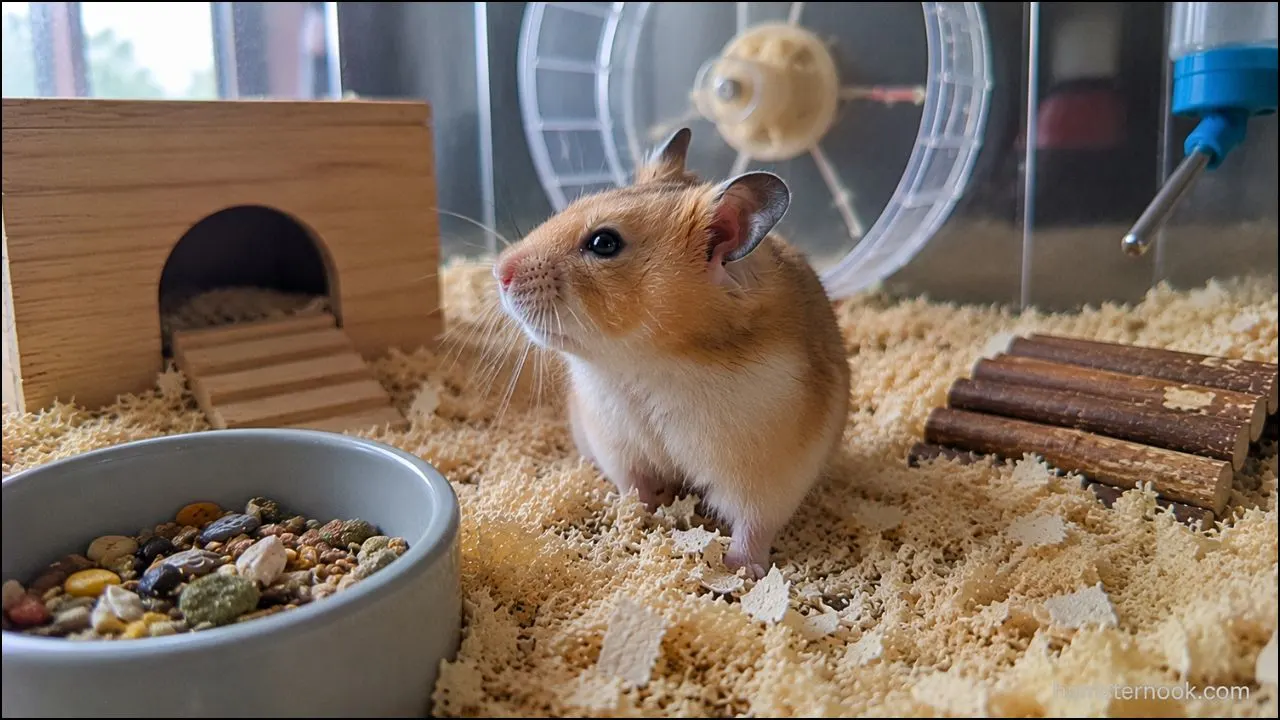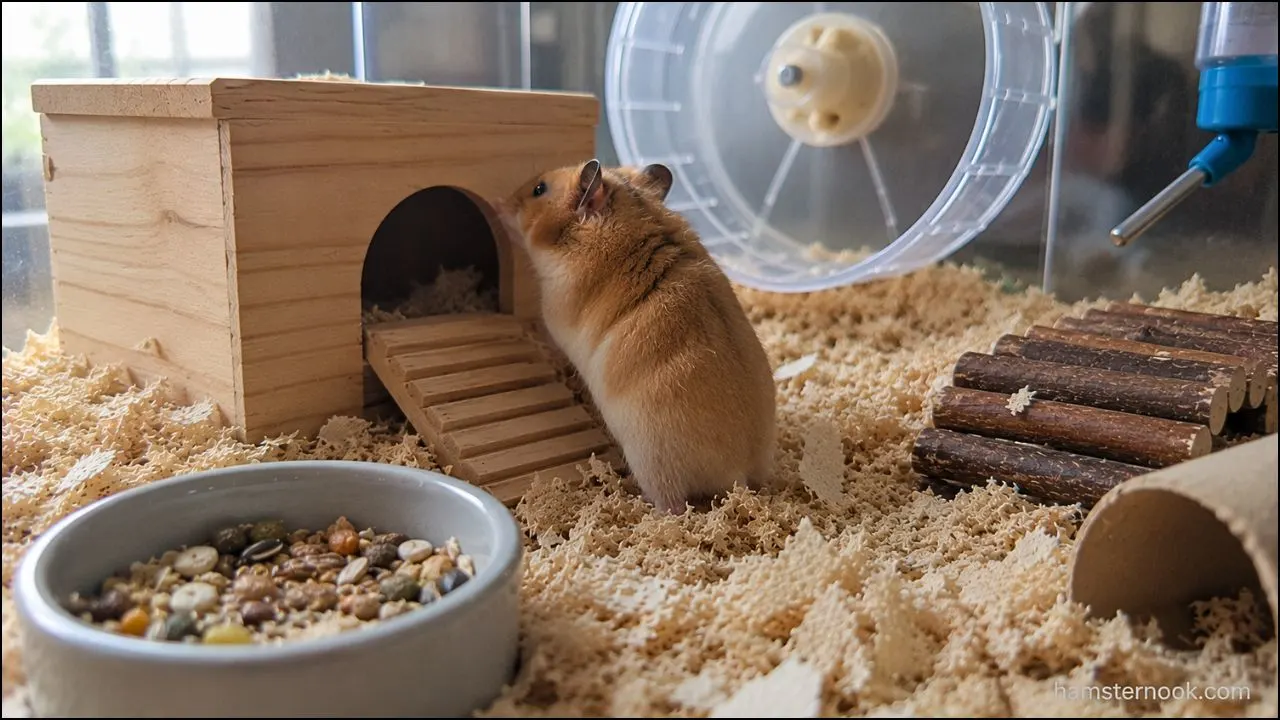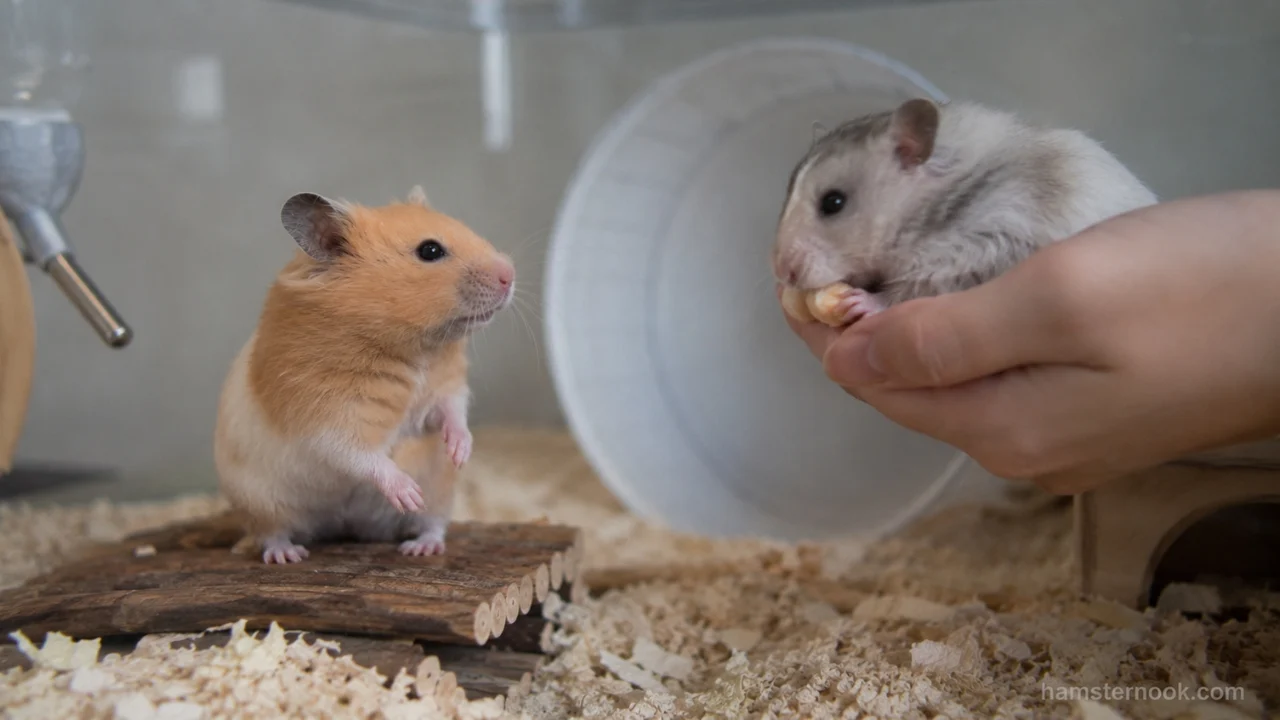
If you’ve ever noticed your hamster acting differently after you brought home another pet, handled a different hamster, or started paying attention to another animal, you may have wondered: Is my hamster jealous?
It’s a surprisingly common question among hamster owners. A hamster that suddenly starts rushing to the cage door, scent-marking more often, or acting unusually defensive can easily make owners wonder if jealousy is involved. But animal behavior is often more complex than it appears.
Scientists have not found evidence that hamsters experience jealousy in the same way humans do. However, they can react strongly to changes in their environment, unfamiliar scents, perceived competition, and disruptions to their routine. These reactions may look like jealousy even when something else is happening behind the scenes.
Understanding what is driving the behavior makes it much easier to respond in a way that helps your hamster feel comfortable and secure.
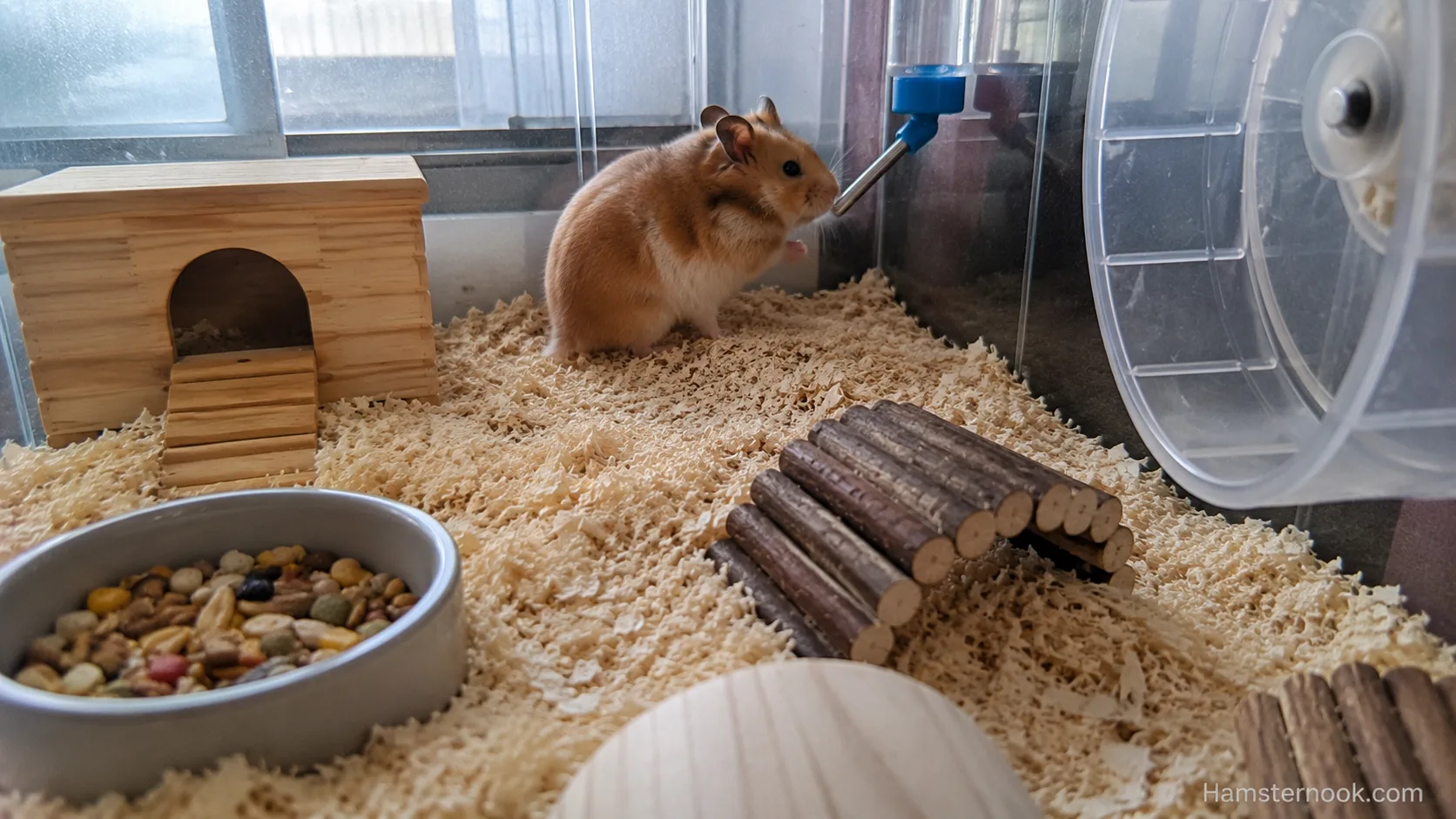
Do Hamsters Experience Jealousy Like Humans?
The simple answer is probably not.
Human jealousy involves complex emotions related to social relationships, self-awareness, and concerns about losing attention or status. There is currently no reliable scientific evidence showing that hamsters experience jealousy at this level.
Hamsters are generally solitary animals. Unlike highly social species that form complex group relationships, most pet hamsters naturally prefer living alone. Because of this, they do not process social interactions the same way humans, dogs, or some other animals might.
That said, hamsters are very aware of their surroundings. They notice changes in smells, routines, environments, and interactions. These changes can trigger behaviors that owners may interpret as jealousy.
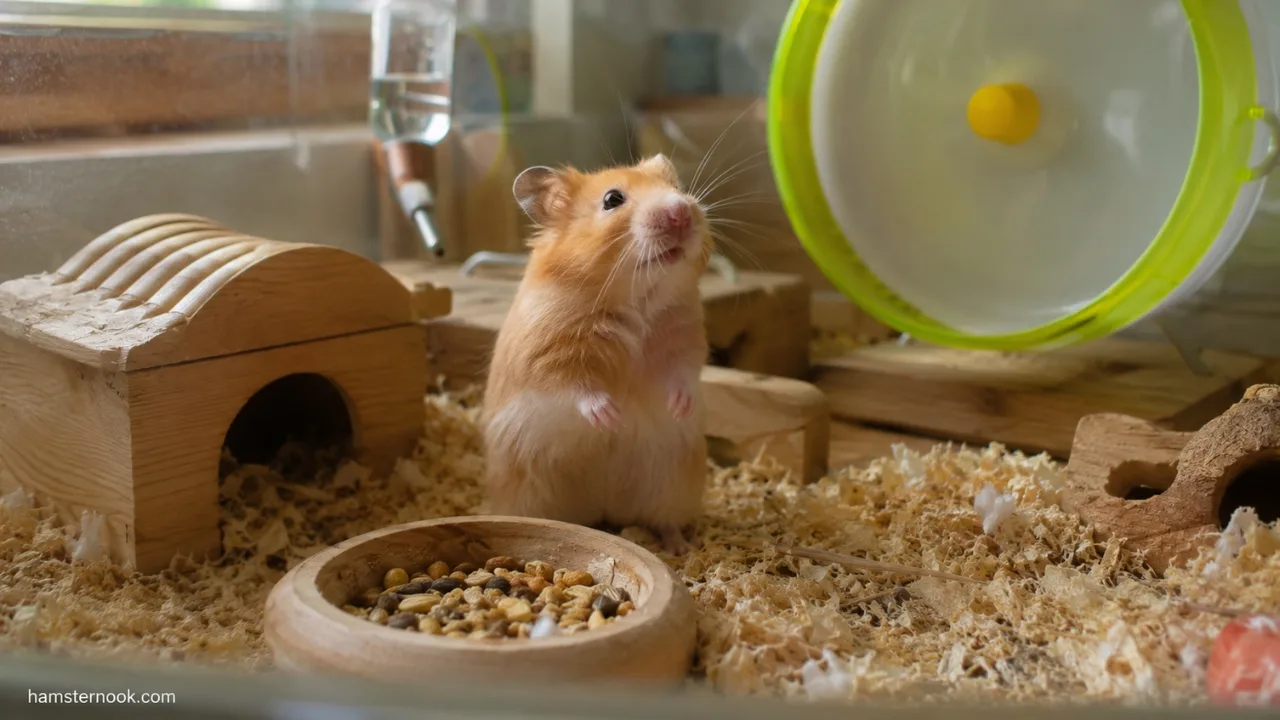
Why Some Hamster Behaviors Look Like Jealousy
A hamster doesn’t need to feel human-like jealousy to react when something changes.
In reality, many of the behaviors owners label as jealousy are better explained by a hamster reacting to scents, protecting territory, or adjusting to a change in its routine.
Common Situations Owners Mistake for Jealousy
| Situation | What Owners Often Think | More Likely Explanation |
|---|---|---|
| Hamster becomes more active after another pet gets attention | Jealousy | Increased curiosity or desire for interaction |
| Hamster becomes territorial after smelling another animal | Jealousy | Territorial instinct |
| Hamster suddenly seeks more handling | Jealousy | Learned behavior and attention seeking |
| Hamster becomes grumpy after routine changes | Jealousy | Stress or environmental disruption |
| Hamster reacts to another hamster’s scent | Jealousy | Natural territorial response |
The behavior may look similar on the surface, but the underlying cause is often very different.
Can Hamsters Recognize When You Handle Other Pets?
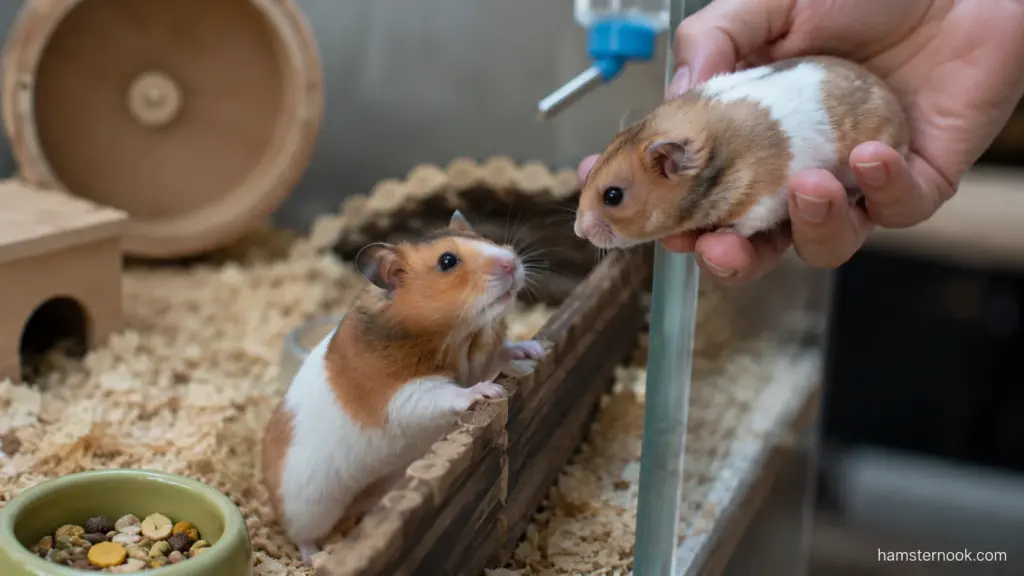
In many cases, yes. A hamster’s sense of smell is sensitive enough to detect scents left behind by other animals.
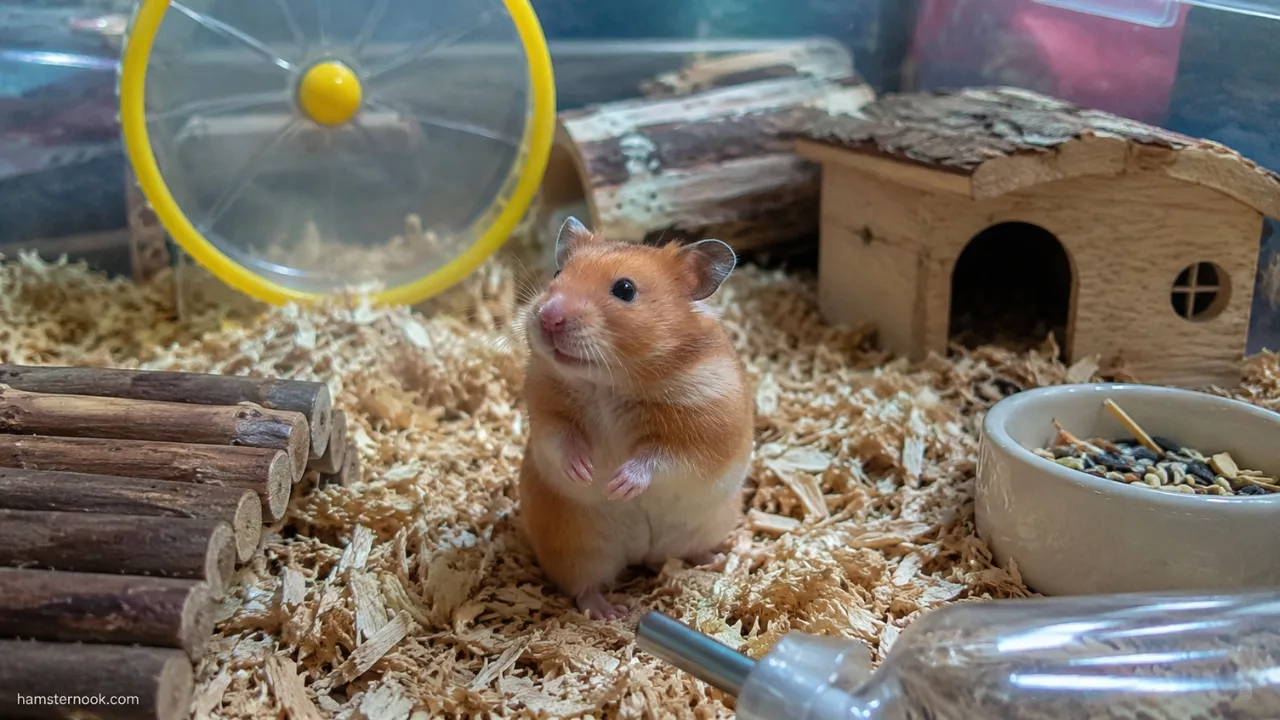
Hamsters have an excellent sense of smell and use scent information to understand their environment. If you pet another hamster, rabbit, cat, dog, or small animal and then immediately handle your hamster, it may notice the unfamiliar scent.
This can sometimes trigger:
- Increased sniffing
- Cautious behavior
- Temporary avoidance
- Scent marking
- Defensive postures
The hamster isn’t necessarily upset that you interacted with another pet. Instead, it may simply be investigating an unfamiliar smell entering its territory.
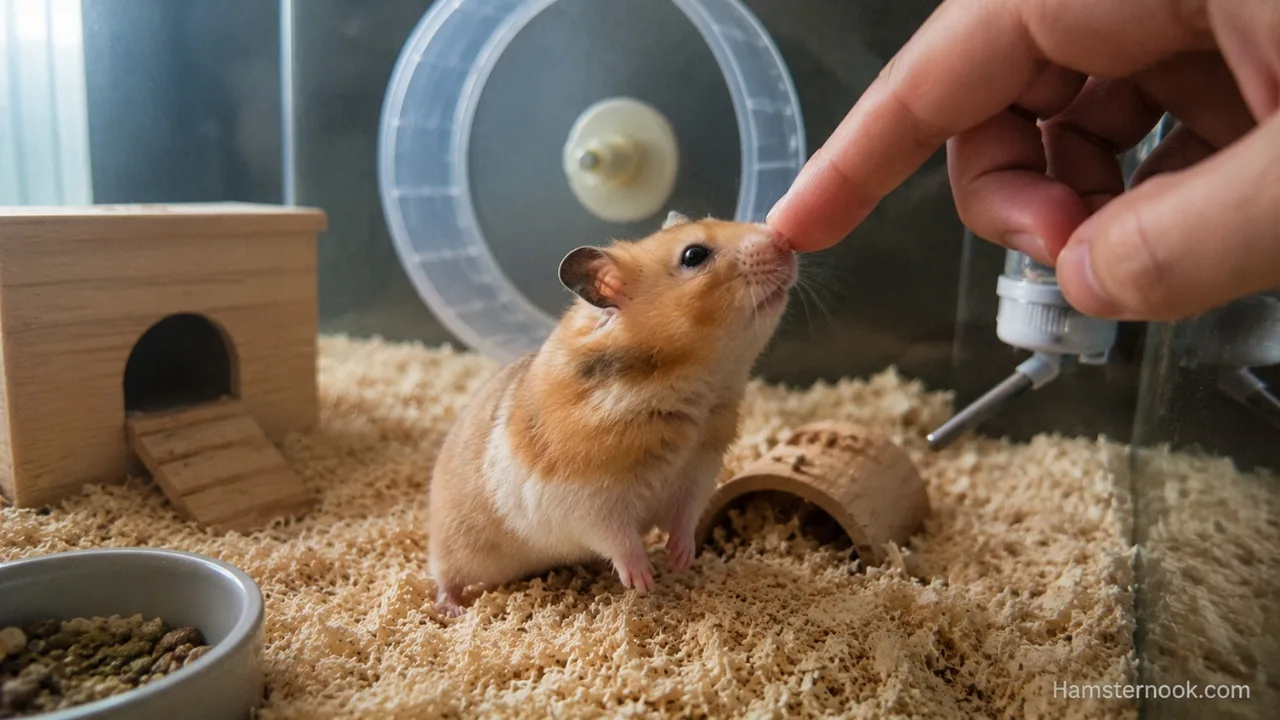
Many owners notice their hamster spends several minutes sniffing their hands after they’ve handled another pet. This reaction is usually strongest when the scent comes from another rodent, such as a hamster, gerbil, mouse, or rat. The hamster is gathering information about an unfamiliar animal rather than reacting emotionally.
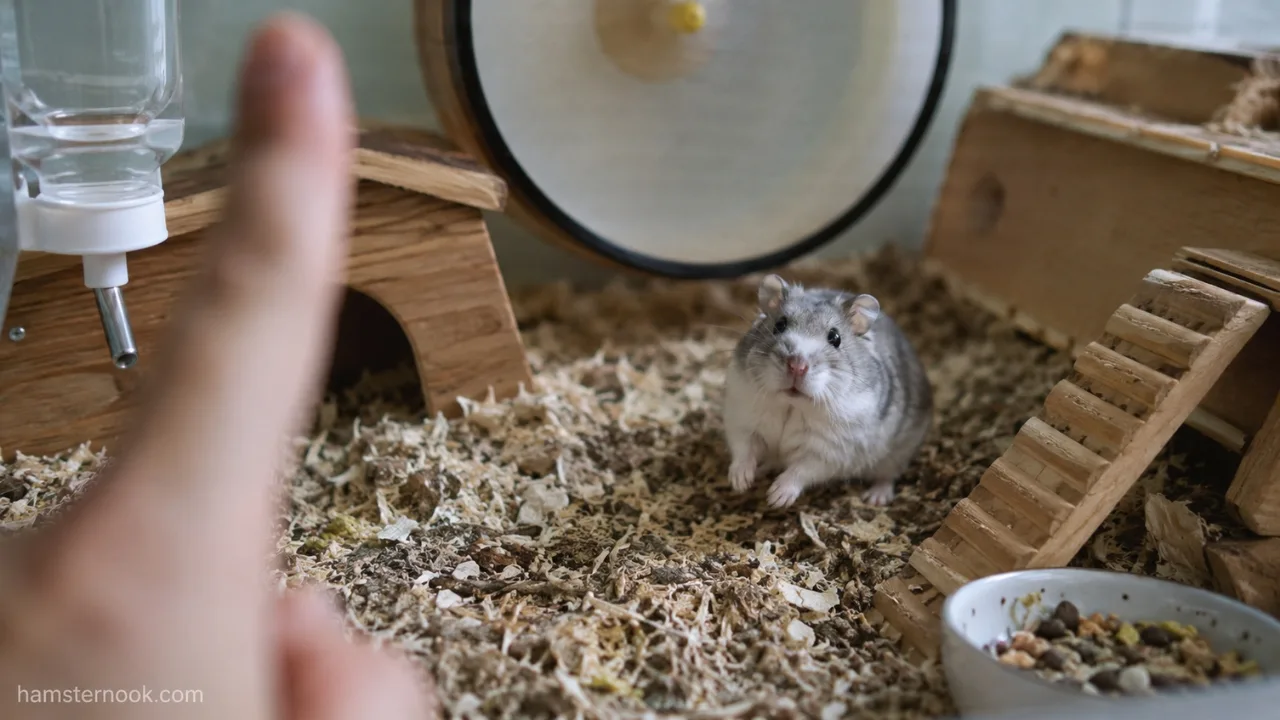
Changes in behavior around familiar and unfamiliar people are often easier to understand once you know Can Hamsters Recognize Their Owners?
Territorial Behavior Is Often Confused With Jealousy
Territorial instincts are one of the biggest reasons owners misinterpret hamster behavior.
Hamsters naturally protect their living space. In the wild, territory helps secure food, shelter, and safety. Even domesticated hamsters retain many of these instincts.
When a hamster smells another animal on your hands, clothing, or nearby objects, it may respond by:
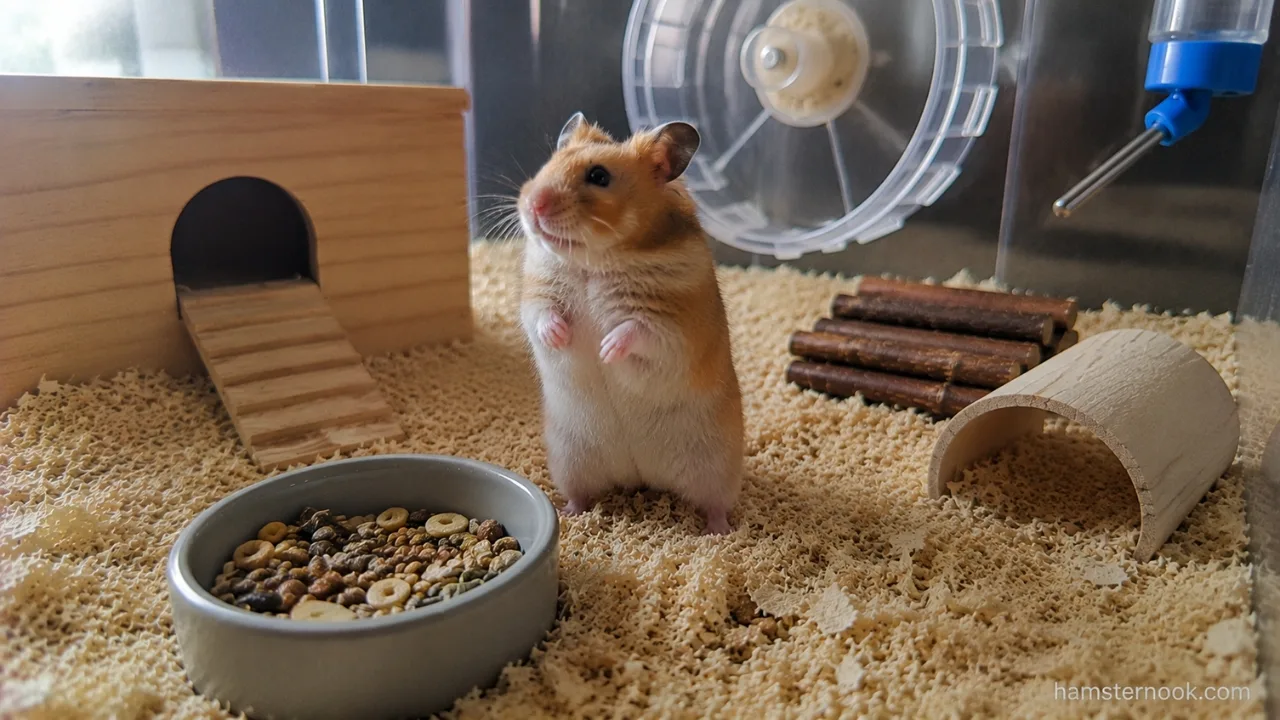
- Marking objects with scent glands
- Rubbing against cage items
- Becoming more alert
- Displaying defensive behaviors
- Investigating the source of the scent
These actions are usually territorial rather than emotional.
Understanding normal territorial behavior can make these reactions much easier to interpret. Why Does My Hamster Rub Against Things? explains one of the most common scent-marking behaviors owners notice.
Do Hamsters Get Jealous When You Bring Home Another Hamster?
This is one of the situations that causes the most confusion for owners.
If your hamster starts acting differently after you bring home another hamster, the reaction is more likely related to unfamiliar scents, territory, or a change in the environment than to jealousy. Even when hamsters never meet directly, they can often detect another hamster’s presence through smells on your hands, clothing, or nearby objects.
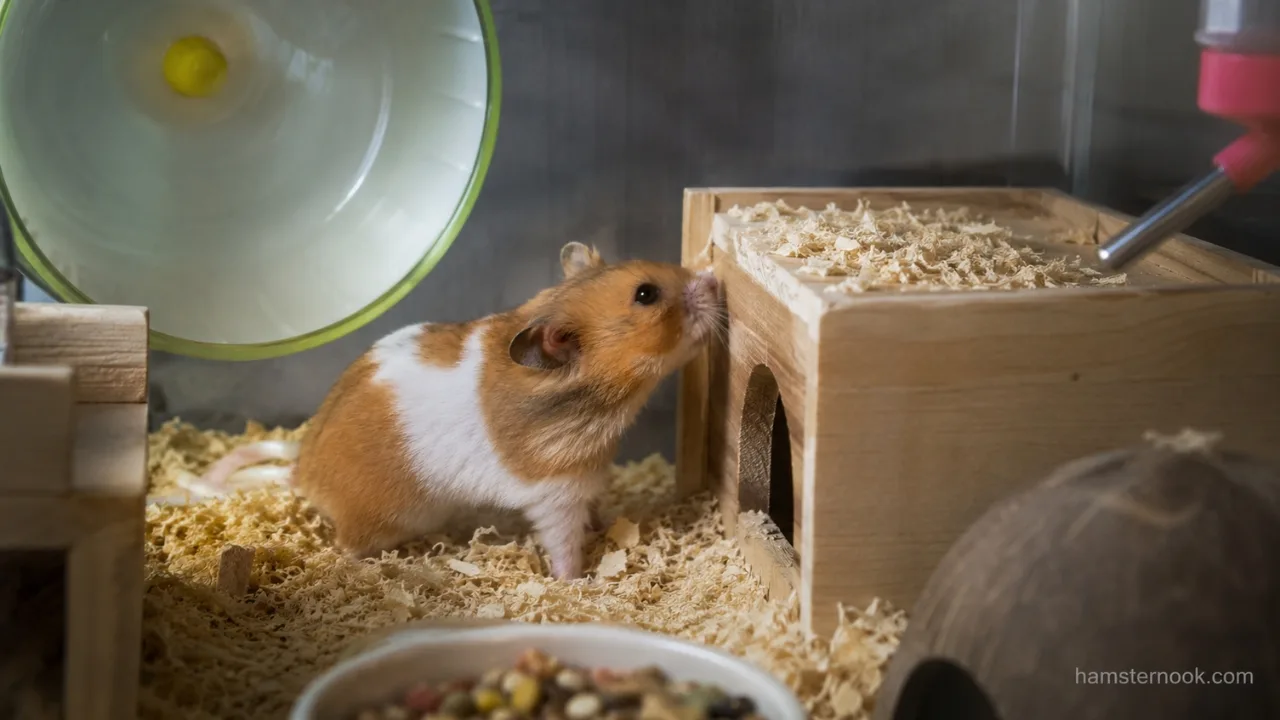
Some common reactions include:
- Increased scent marking
- More cage patrol behavior
- Extra sniffing of your hands
- Temporary defensiveness
- Increased interest in areas where new scents appear
These behaviors are especially common in Syrian hamsters, which are naturally solitary and highly territorial as adults.
Signs That May Look Like Jealousy
Some behaviors frequently cause owners to wonder whether their hamster is jealous.
Attention-Seeking Behavior
Certain hamsters learn that approaching the cage door, standing upright, or interacting with owners results in attention and treats.
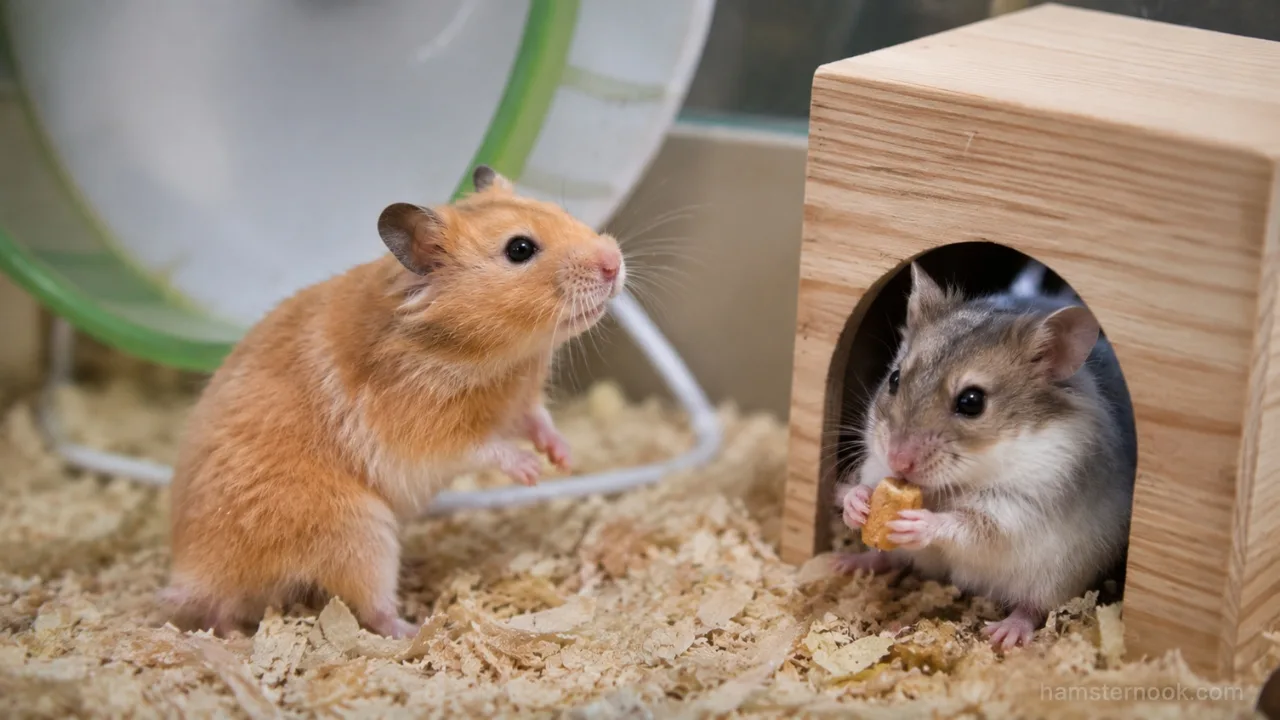
If attention suddenly decreases, the hamster may increase these behaviors.
Some hamsters become more active around familiar people or routines. Do Hamsters Get Excited to See You? Signs They Recognize & Trust You explains behaviors that may look like a strong reaction to an owner.
This isn’t necessarily jealousy. It may simply be learned behavior reinforced over time.
Increased Activity
A hamster may become more active when it notices activity nearby.

For example, if another pet is receiving attention in the same room, your hamster may wake up, explore, or seek interaction.
Again, curiosity is often a more likely explanation than jealousy.
Temporary Grumpiness
Changes in routine can affect hamster behavior.
A hamster that receives less interaction than usual may become less cooperative during handling sessions. This doesn’t automatically mean jealousy. Stress, disrupted routines, or reduced enrichment may be contributing factors.
Jealousy vs Stress: How to Tell the Difference
Stress is often mistaken for jealousy because the visible signs can overlap.
| Behavior | What May Actually Be Happening |
|---|---|
| Hiding more often | Stress, fear, or a response to environmental changes |
| Reduced appetite | Stress or illness; it should not be treated as evidence of jealousy |
| Excessive chewing | Stress, boredom, or another environmental issue |
| Increased alertness | A response to unfamiliar scents, sounds, or activity |
| Aggressive reactions | Fear, stress, or territorial behavior |
From a practical care perspective, it is usually more helpful to evaluate possible stressors first.
How Routine Changes Affect Hamster Behavior
Hamsters thrive on consistency.
Even small changes can influence their behavior, including:
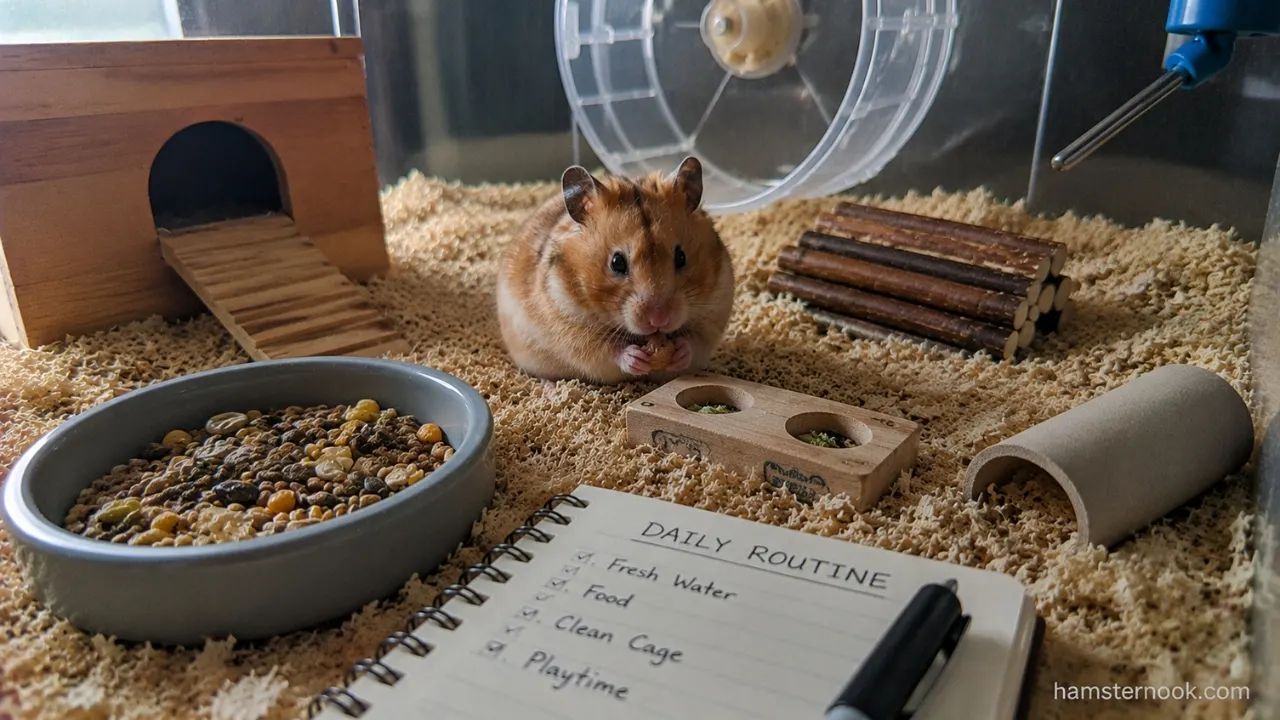
- New cage accessories
- Different feeding times
- New household pets
- Room rearrangements
- Changes in handling frequency
- Different sleep schedules around the home
If recent environmental changes seem to be affecting your hamster, see Where Should You Put a Hamster Cage? Best and Worst Locations Explained.
When routines change, hamsters often react by becoming more cautious, active, or defensive.
Owners sometimes interpret these reactions as emotional jealousy when they are actually responses to environmental change.
Can Hamsters Be Possessive of Their Owners?
There is no strong evidence suggesting that hamsters form possessive relationships in the same way some social animals can.
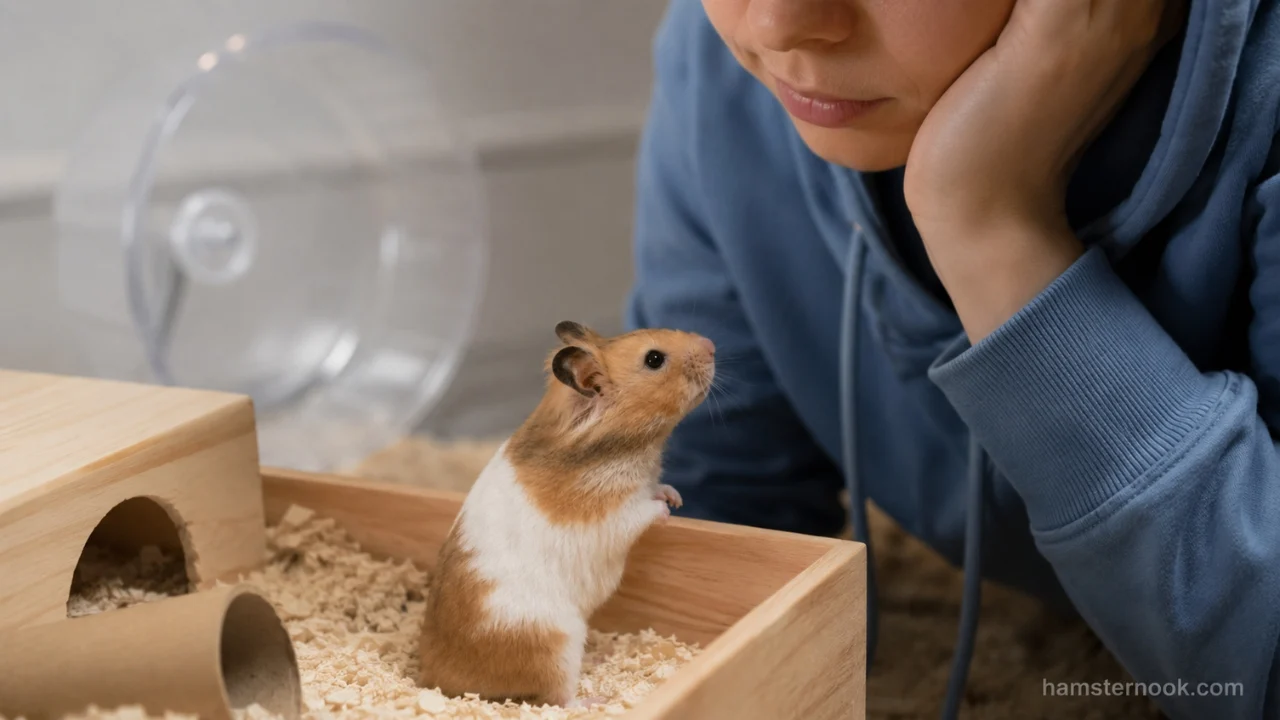
However, hamsters can become familiar with their owners.
Many pet hamsters learn:
- Your scent
- Your voice
- Feeding routines
- Handling habits
- Daily schedules
Familiarity often develops gradually through repeated interactions, much like the behaviors discussed in Can Hamsters Learn Their Names?
Over time, this familiarity can make your hamster noticeably more relaxed around you than around unfamiliar people. When routines change, the hamster may react simply because something familiar has changed.
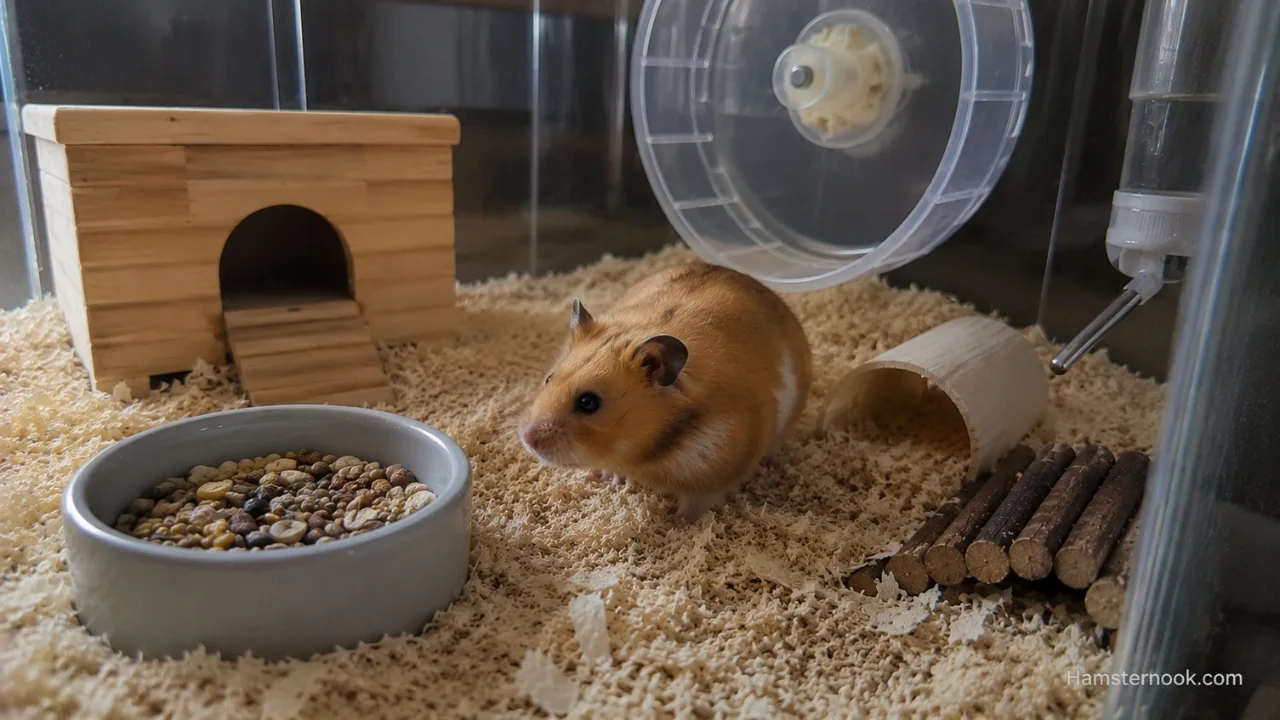
That familiarity can also help explain why some behaviors seem more social than others. 10 Signs Your Hamster Trusts You: How to Tell If They Like You covers the behaviors that can indicate growing familiarity and trust.
Owners often notice this trust developing gradually through daily interactions. Many of the behaviors associated with bonding are covered in 10 Signs Your Hamster Trusts You.
What to Do If Your Hamster Suddenly Acts Different
Instead of assuming jealousy, start by looking for practical explanations.
Check for Environmental Changes
Ask yourself:
| Question | Why It Matters |
|---|---|
| Has a new pet entered the home? | New scents can trigger reactions |
| Have handling routines changed? | Hamsters notice consistency |
| Has the cage been moved? | Changes can cause stress |
| Is the room noisier than usual? | Hamsters are sensitive to disturbances |
| Has diet recently changed? | Health and behavior are connected |
Identifying the cause often solves the mystery.
Maintain a Consistent Routine
Hamsters generally feel safest when they know what to expect.
Try to keep:
- Feeding times consistent
- Cleaning schedules predictable
- Handling sessions regular
- Sleeping areas quiet
- Environmental changes gradual
Consistency reduces unnecessary stress.

If your hamster seems unusually defensive after a routine change, check these warning signs your hamster may be stressed.
Wash Hands Before Handling
If you own multiple pets, washing your hands before handling your hamster can help reduce confusion caused by unfamiliar scents.
This simple habit often prevents defensive or cautious reactions.
If you regularly handle multiple pets, keeping separate towels or washing your hands between interactions can also reduce unfamiliar scents that may confuse your hamster.
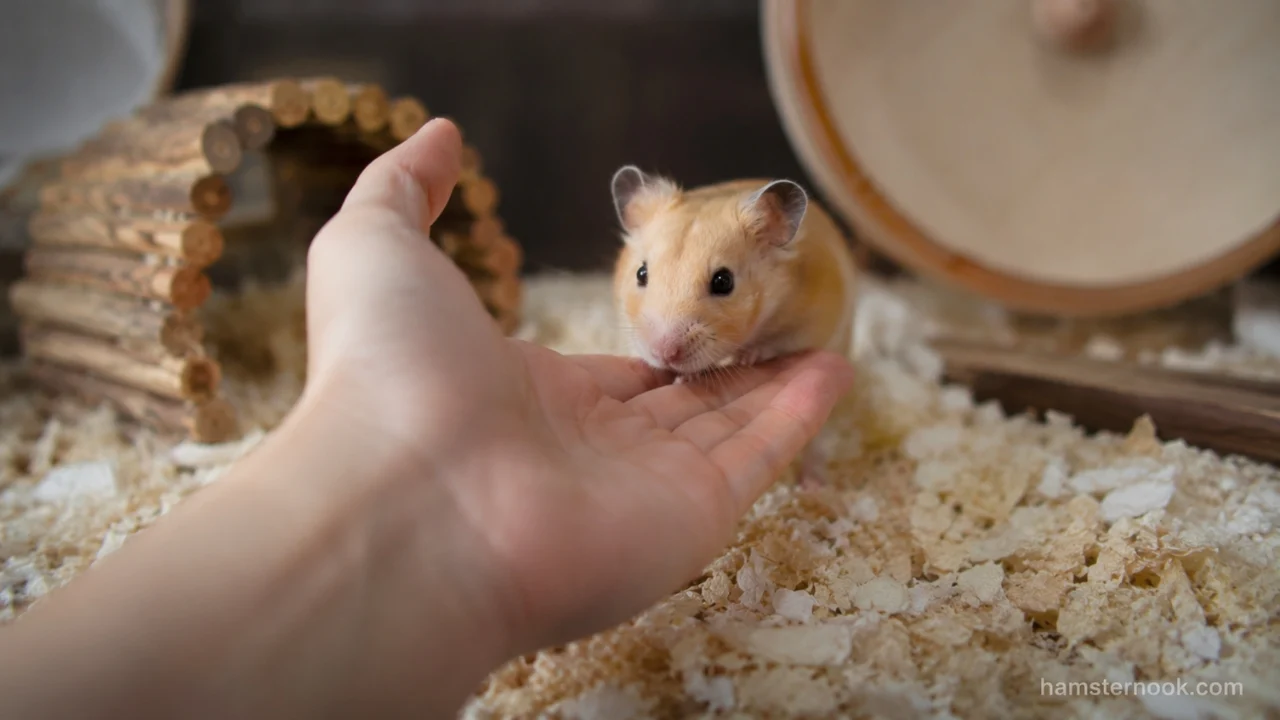
Can Hamsters Get Jealous of Other Hamsters?
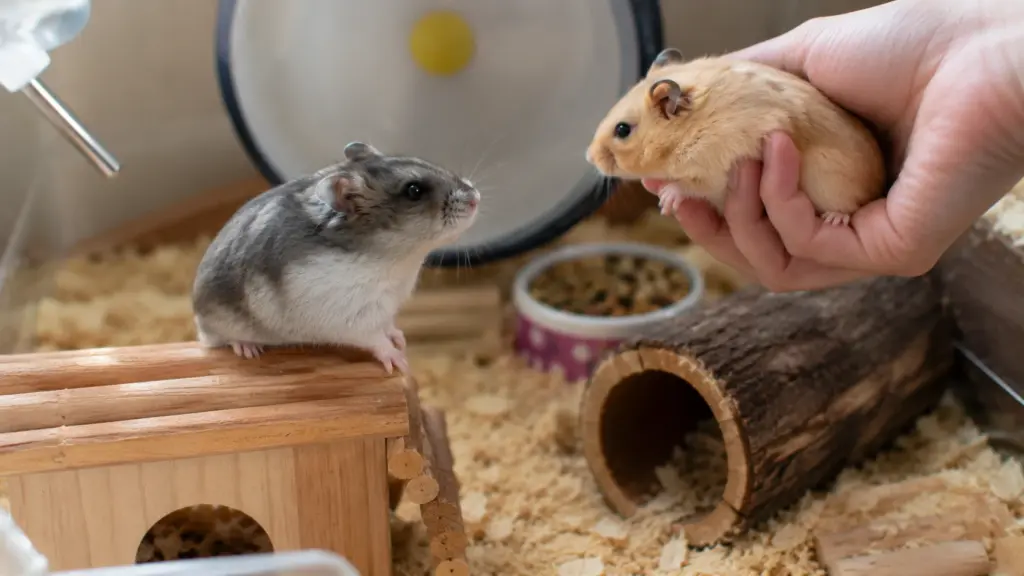
Why Do Hamsters React So Strongly to Another Hamster’s Scent?
A strong reaction to another hamster’s scent does not necessarily mean your hamster feels jealous. Sniffing, increased marking, alertness, or defensive behavior can simply be ways of investigating or responding to an unfamiliar animal in its environment. The safest response is to respect separate housing and avoid deliberately creating stressful encounters.
This question comes up frequently, especially when owners keep more than one hamster.
In most cases, what appears to be jealousy is more accurately described as territorial behavior.
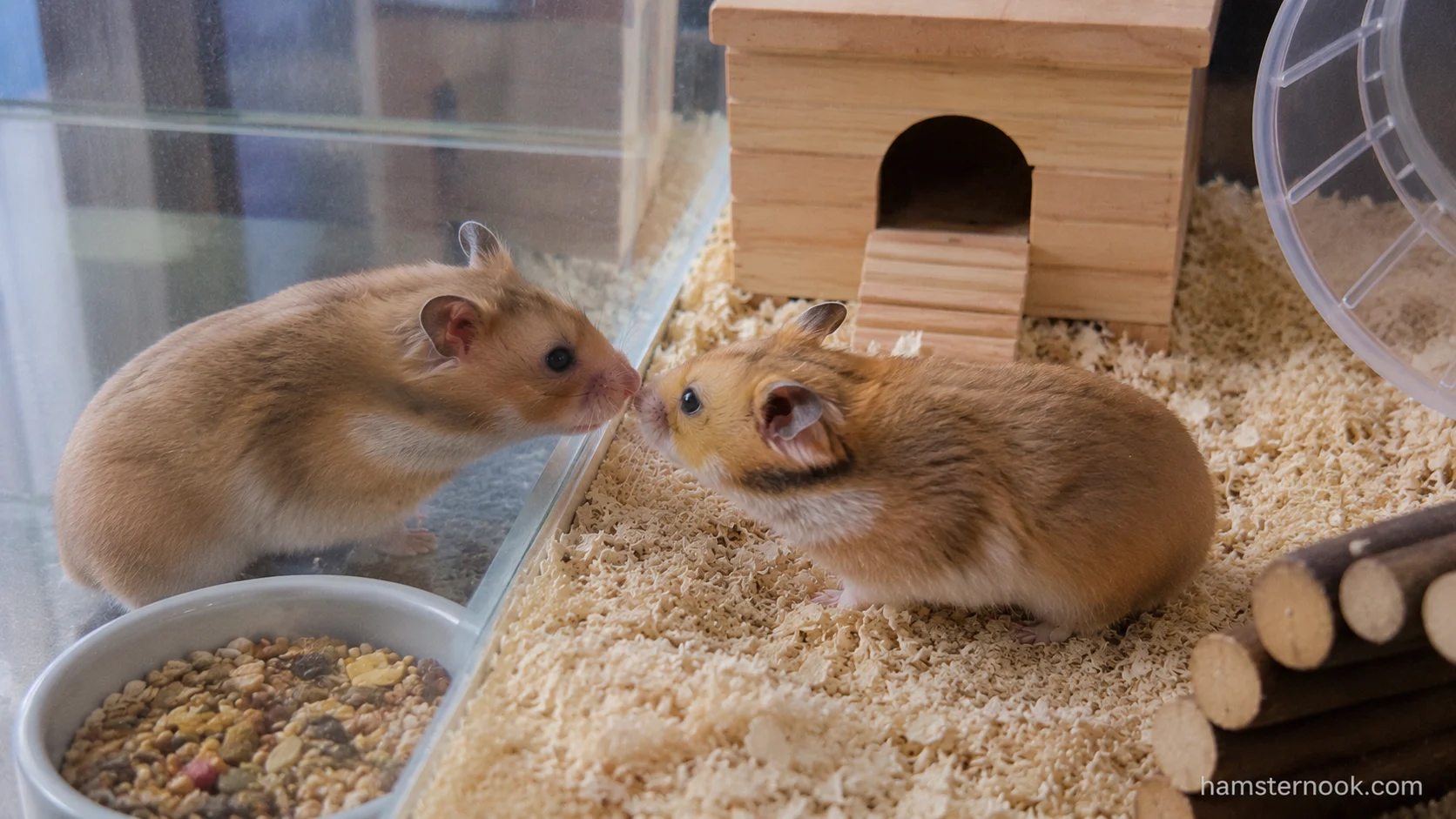
Most hamster species prefer living alone once mature. When another hamster enters what they consider their territory, conflicts often arise because of instinct rather than jealousy.
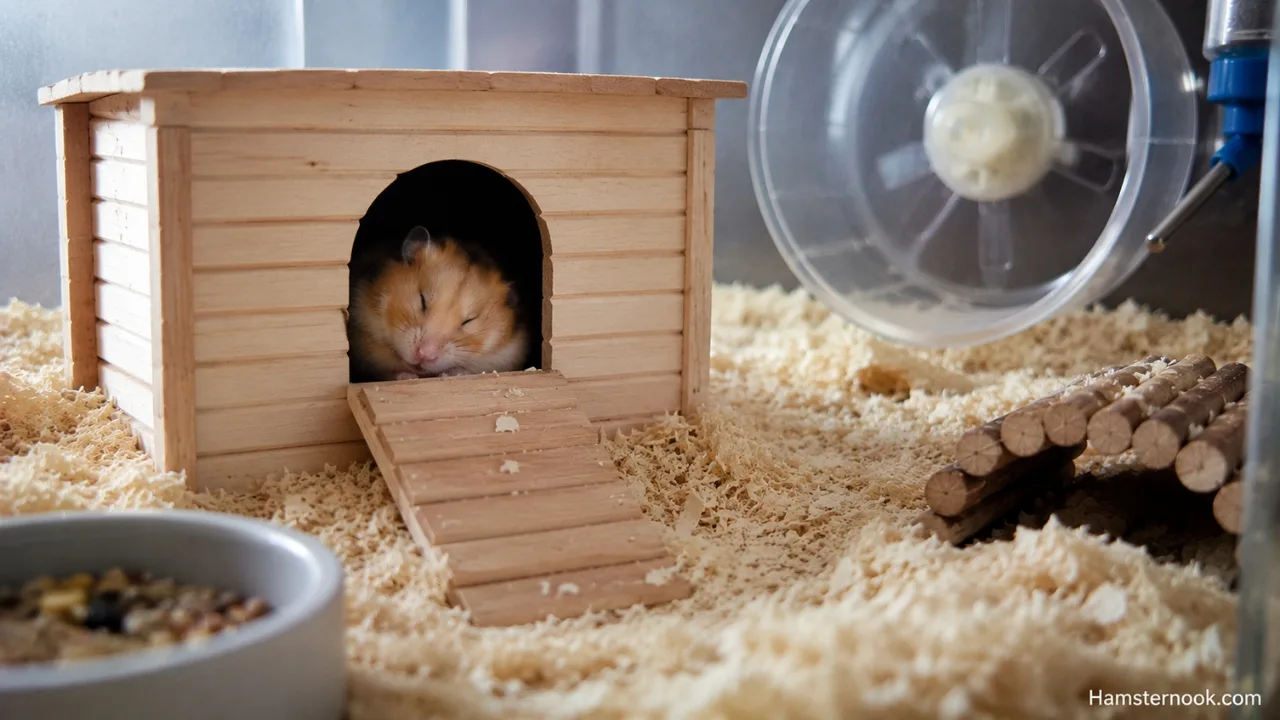
Never put two unfamiliar hamsters together to test whether one is jealous. What looks like jealousy is more likely to be a territorial response, and direct introductions can lead to conflict. Keeping hamsters separately housed and avoiding unnecessary introductions is the safer approach.
This is one reason many experts recommend separate housing for pet hamsters.
Understanding Your Hamster’s Individual Personality
Just like people, hamsters have individual personalities.
Some are naturally:
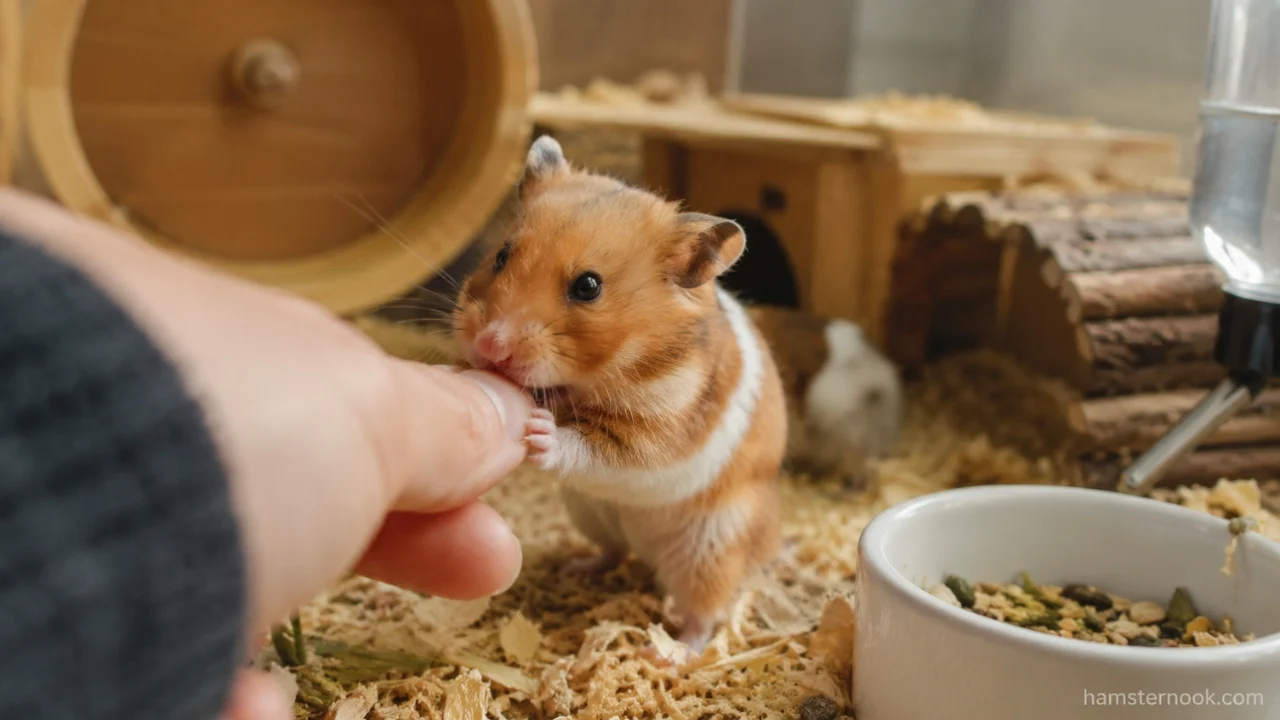
- Curious
- Bold
- Socially tolerant
- Food-motivated
- Independent
Others may be more cautious or sensitive to change.
Observing your hamster’s behavior over several days is usually more helpful than judging a single unusual reaction. Temporary changes often settle once your hamster becomes familiar with a new routine or environment.
These personality differences can influence how strongly a hamster reacts to new situations, making certain behaviors appear emotional when they are simply part of the hamster’s temperament.
Quick Answer
No, there is currently no scientific evidence that hamsters experience jealousy the way humans do. However, they often react to unfamiliar scents, changes in routine, territorial challenges, and reduced interaction. These reactions can sometimes look like jealousy even though they are usually driven by instinct, curiosity, or stress.
Final Thoughts
Hamsters probably do not experience jealousy in the same way humans do. What owners often describe as jealousy is usually a reaction to changes in scent, territory, routine, or the environment around them.
If you’re trying to understand whether a reaction is emotional or simply part of normal hamster behavior, Do Hamsters Understand Affection? How They Show Trust and Bond With You provides useful context about how hamsters respond to familiar people.
What many owners describe as jealousy is usually a combination of curiosity, territorial instincts, stress, and learned responses to changes in their surroundings. Looking at the overall situation rather than a single behavior often provides the clearest explanation.
Instead of focusing on whether a hamster is jealous, it’s usually more helpful to observe what has changed in its environment. By maintaining a stable routine, respecting territorial instincts, and providing regular enrichment, you can help your hamster feel secure and comfortable regardless of what is happening around it.
Frequently Asked Questions
Why does my hamster act differently after I pet another animal?
Your hamster can likely smell the other animal on your hands or clothing. The reaction is usually related to curiosity or territorial instincts rather than jealousy.
Can hamsters get jealous of cats or dogs?
There is no evidence that hamsters become jealous of other pets. However, they may react to unfamiliar scents, sounds, or activity levels in the home.
Do hamsters get attached to their owners?
Many hamsters learn to recognize and become comfortable with their owners through repeated positive interactions, although their relationships differ from those seen in highly social animals.
Why does my hamster seek more attention sometimes?
Changes in routine, curiosity, food expectations, or learned behaviors can make a hamster appear more attention-seeking.
Can a hamster become upset when ignored?
A hamster is more likely to react to changes in routine or reduced enrichment than to experience emotional jealousy. Consistent care remains important for overall well-being.
Is territorial behavior the same as jealousy?
No. Territorial behavior is a natural instinct related to protecting space and resources, while jealousy is a complex social emotion that has not been clearly demonstrated in hamsters.
References
This guide is based on hamster behavior, territorial instincts, scent communication, stress, handling, and welfare guidance from trusted animal welfare and veterinary resources, including:
- RSPCA – Hamster Behaviour – Guidance on natural hamster behavior, communication, territorial behavior, handling, activity patterns, and signs of stress.
- RSPCA – Keeping Hamsters as Pets – General guidance on hamster behavior, housing, welfare, handling, enrichment, and species-specific needs.
- Blue Cross – Hamster Care Guide – Practical information on hamster behavior, handling, housing, enrichment, routines, and wellbeing.
- MSD Veterinary Manual – Hamsters – Veterinary reference information covering hamster behavior, husbandry, health, territorial considerations, and conditions that can affect behavior.
- NC3Rs – Housing and Husbandry: Hamster – Guidance on hamster housing, environmental conditions, natural behaviors, enrichment, and welfare.
- NC3Rs – Choosing Appropriate Enrichment – Guidance on supporting natural behaviors and reducing environmental stress through appropriate enrichment.

Narayan Kumar is the founder and author of HamsterNook. He creates practical, research-based hamster care guides covering hamster behavior, nutrition, cage setup, enrichment, health, and everyday care. His goal is to help hamster owners make informed decisions and provide safer, healthier lives for their pets through clear, beginner-friendly information based on trusted animal care resources.