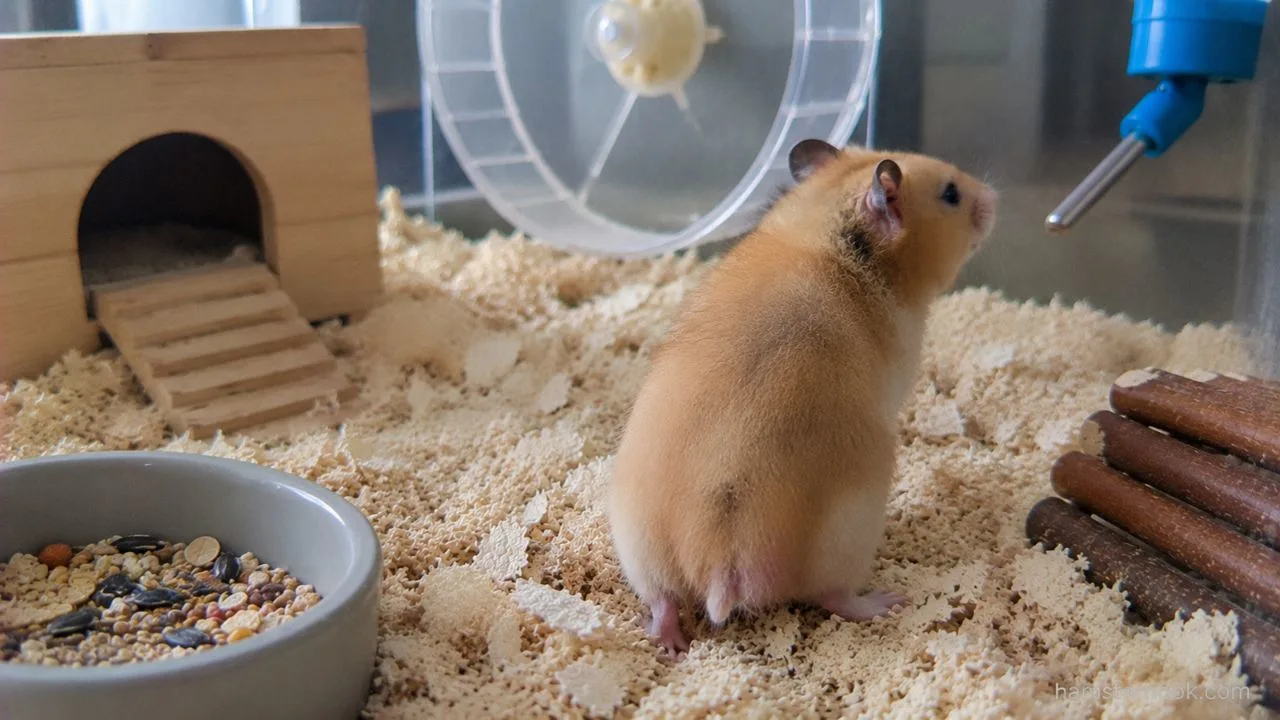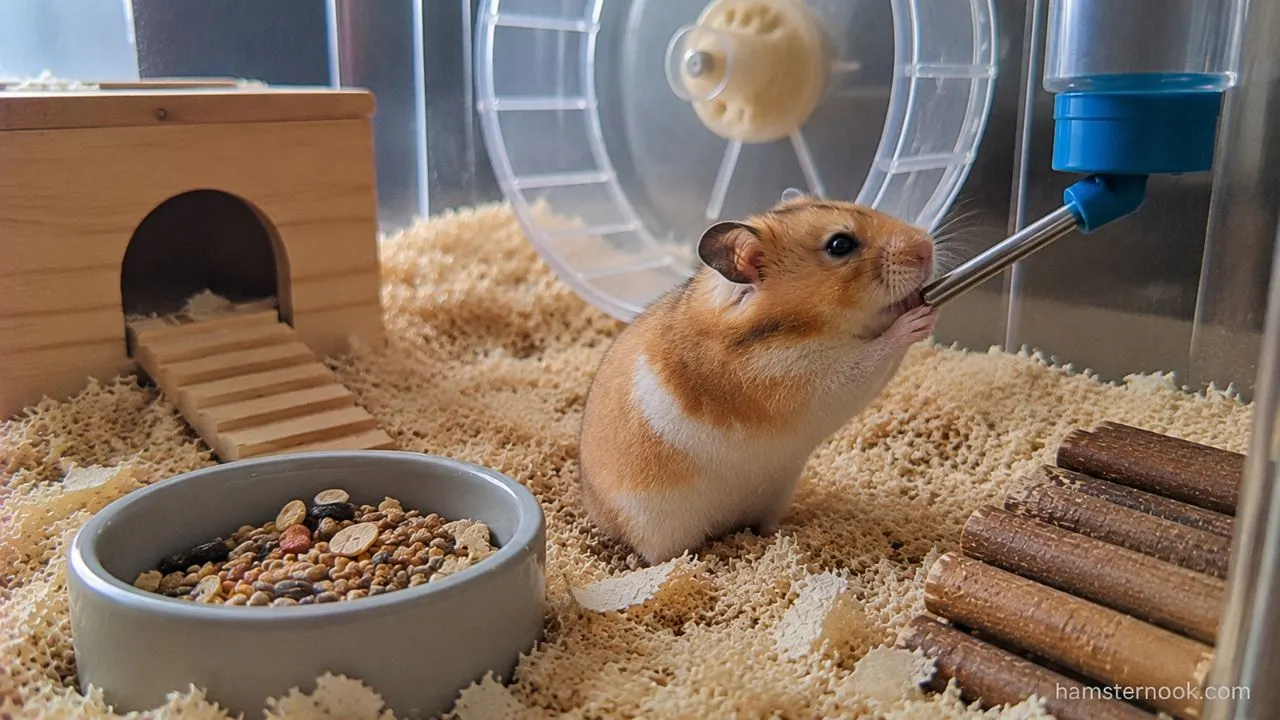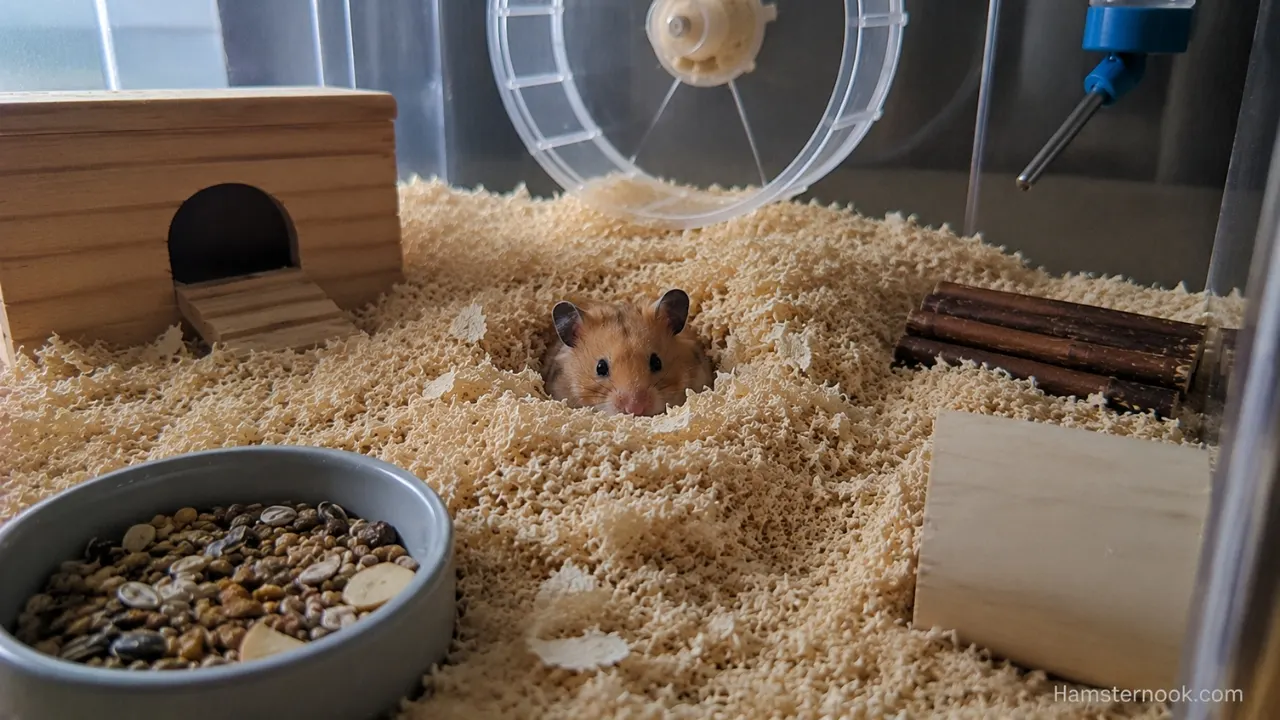
One of the most common enclosure mistakes is providing only a thin layer of bedding. While this may look tidy, it prevents hamsters from expressing one of their strongest natural instincts—burrowing. Providing enough bedding allows your hamster to create tunnels, sleeping chambers, and secure nesting areas that support both physical and emotional well-being.
A hamster that cannot dig, tunnel, and create nesting chambers is unable to express some of its most important natural behaviors. This can lead to boredom, frustration, and a lower quality of life. Providing the right amount of bedding is not just about comfort—it is a key part of proper hamster care.
If you’re wondering how deep hamster bedding should be, this guide explains minimum depth recommendations, why bedding matters, how different hamster species use it, and how to create a burrow-friendly habitat.
Quick Answer:
Guidance from major hamster welfare organizations varies slightly on the minimum depth. Blue Cross recommends at least 20 cm of suitable digging bedding, while PDSA recommends no less than 25 cm (10 inches). Providing 20–25 cm or more, with deeper areas where the enclosure safely allows it, gives your hamster more room to dig tunnels, build nests, and express natural burrowing behavior.
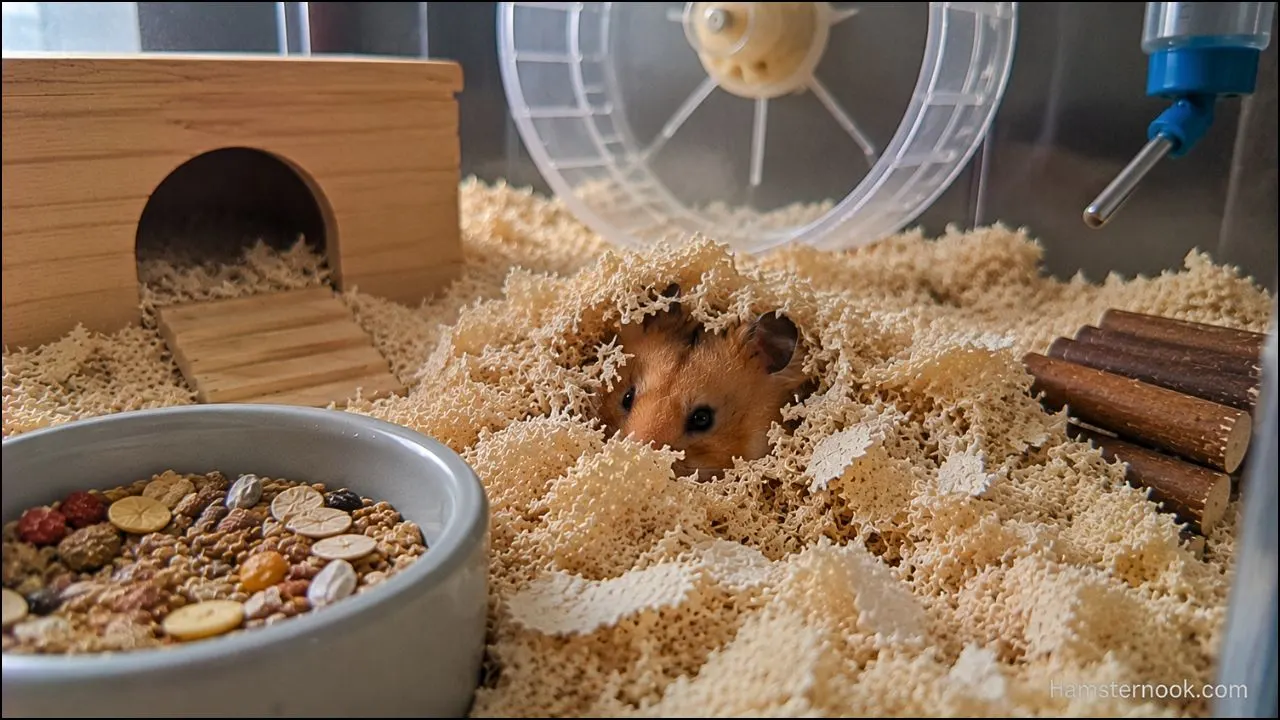
Why Bedding Depth Is So Important for Hamsters
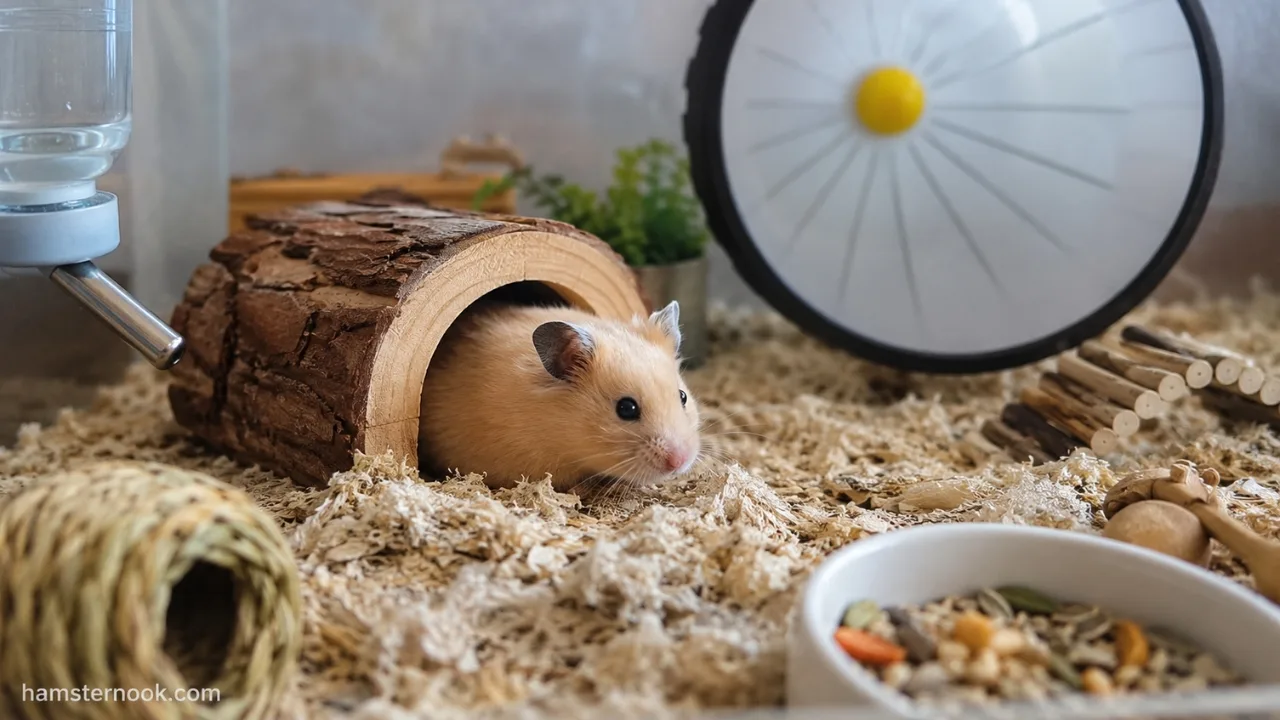
Hamsters are instinctive burrowers. In their natural environments, they create underground tunnel systems that serve several purposes.
These burrows help hamsters:
- Sleep safely
- Store food
- Escape predators
- Regulate temperature
- Raise young
- Feel secure
Because bedding can also help create a more stable microenvironment, the overall room temperature still matters. Our Hamster Temperature Safety Guide explains the temperature ranges and environmental risks owners should watch for.
Even domesticated hamsters retain these instincts. When enough bedding is available, many hamsters will build surprisingly complex tunnel networks.
Creating a burrow-friendly habitat is one part of providing excellent daily care. If you’re setting up a hamster enclosure for the first time, our Hamster Care Guide for Beginners walks through everything from housing and bedding to feeding and enrichment.
Without enough bedding to dig into, many hamsters simply cannot express the behaviors they are naturally driven to perform.
What Is the Minimum Bedding Depth for a Hamster?
The exact amount isn’t the same as simply covering the cage floor. Hamsters need enough depth to create stable tunnels, sleeping chambers, and food storage areas.
A commonly recommended minimum is around 8 inches (20 cm) of suitable bedding across a significant portion of the enclosure. Blue Cross specifically recommends a minimum of 20 cm of suitable digging bedding, while the RSPCA also recommends a thick layer deep enough to allow hamsters to dig and construct burrows.

However, deeper bedding is generally better.
| Bedding Depth | How to Interpret It |
|---|---|
| 1–3 inches | Too shallow for meaningful burrowing |
| 4–6 inches | Limited depth for burrowing |
| 8 inches (20 cm) | Meets the 20 cm minimum cited by Blue Cross |
| 10 inches (25 cm) | Matches the current PDSA minimum guidance |
| 10–12+ inches | Provides deeper burrowing space where the enclosure safely allows it |
The goal is not simply filling the cage with bedding. The bedding should also be able to hold tunnels and support stable burrows.
A simple way to check bedding depth is to measure vertically from the solid cage floor to the top of the bedding at several points. This helps you make sure the burrowing area is actually deep enough rather than judging the depth from the front of the enclosure alone.
How Much Bedding Do Different Hamster Species Need?
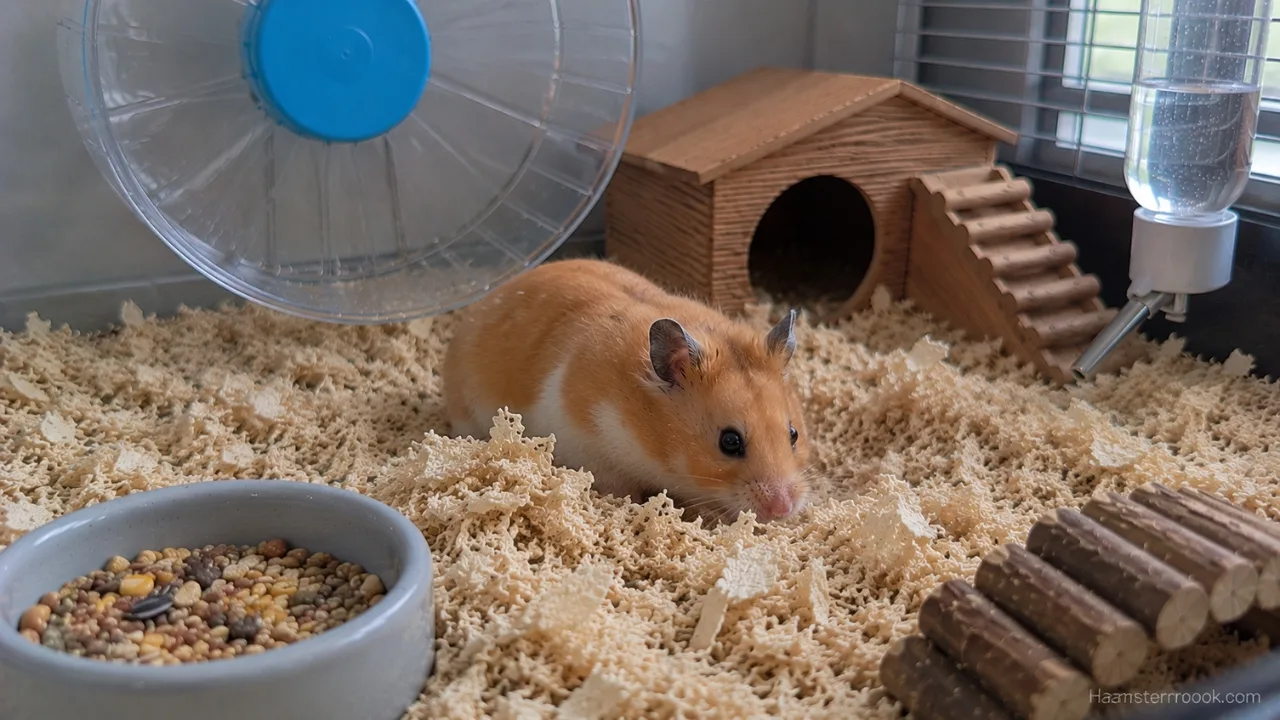
All hamster species need access to deep, suitable bedding for natural digging and burrowing. Current Blue Cross and PDSA guidance gives general bedding-depth recommendations rather than separate minimum depths for each species, so the same deep-bedding baseline should be used while providing more depth where the enclosure safely allows it.
| Hamster Type | Recommended Bedding Depth |
|---|---|
| Syrian Hamster | At least 20–25 cm, with deeper areas where safely accommodated |
| Roborovski Hamster | At least 20–25 cm, with deeper areas where safely accommodated |
| Winter White Dwarf Hamster | At least 20–25 cm, with deeper areas where safely accommodated |
| Campbell’s Dwarf Hamster | At least 20–25 cm, with deeper areas where safely accommodated |
| Chinese Hamster | At least 20–25 cm, with deeper areas where safely accommodated |
Larger enclosures often make it easier to provide these depths without overcrowding the habitat.
Signs Your Hamster Needs More Bedding
A hamster may show subtle clues when its enclosure lacks sufficient digging space.
Some common signs include:
- Constant digging at cage corners
- Scratching at the enclosure floor
- Attempting to burrow but failing
- Spending little time underground
- Increased boredom behaviors
- Excessive bar chewing in wire cages
- Restlessness during active hours
A lack of bedding isn’t the only reason these behaviors appear. Our 5 Warning Signs Your Hamster May Be Stressed guide explains how to tell whether stress, boredom, or another husbandry issue may be affecting your hamster.
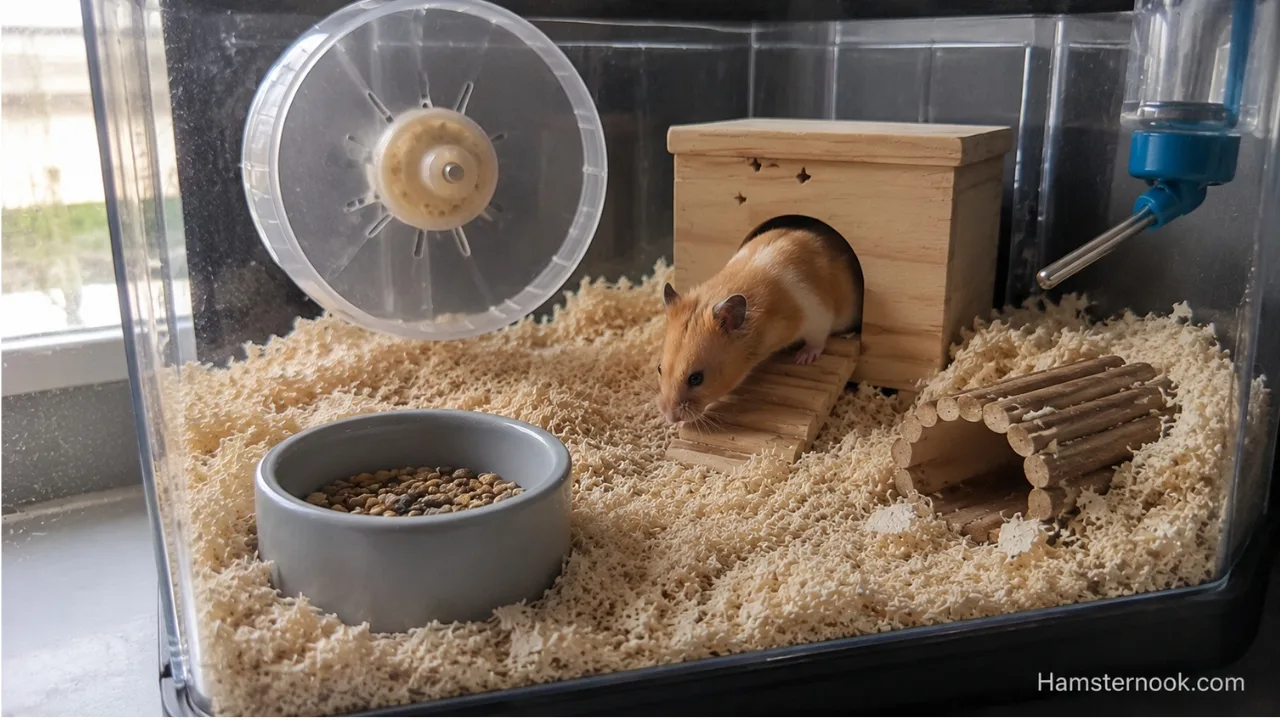
These signs do not always mean bedding is the only issue, but inadequate substrate depth is often a contributing factor.
Burrowing is one of the clearest natural behaviors hamsters use to feel secure. If your hamster suddenly stops digging even though suitable bedding is available, our Why Is My Hamster Not Burrowing? 7 Reasons & What to Do guide covers the common reasons and what owners can check next.
What Happens If Bedding Is Too Shallow?
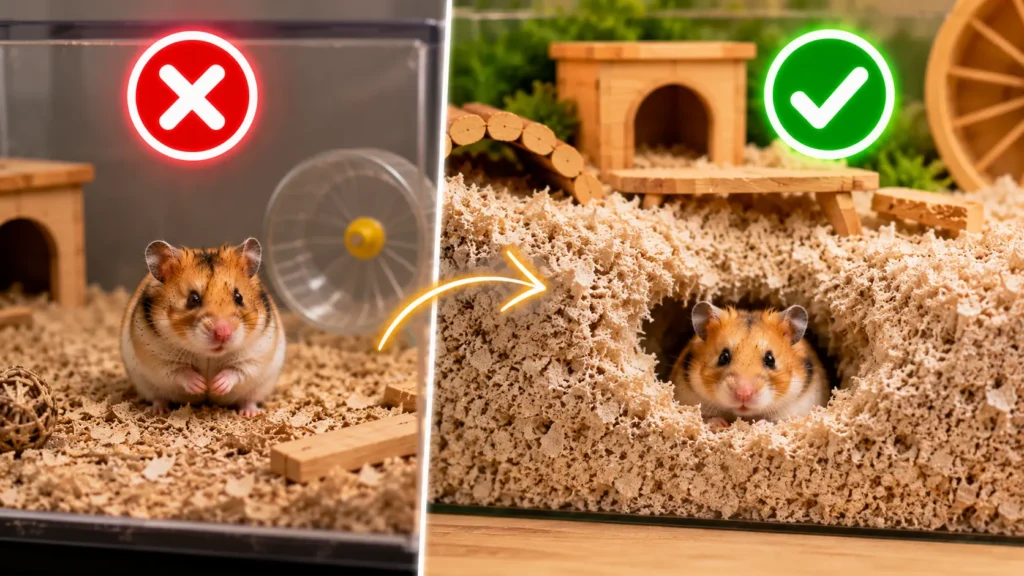
Shallow bedding limits natural behavior and environmental enrichment.
| Potential Issue | How It Affects the Hamster |
|---|---|
| Reduced burrowing | Limits instinctive behaviors |
| Increased boredom | Less mental stimulation |
| Lower sense of security | Fewer hiding opportunities |
| Poor nest building | Less comfortable sleeping areas |
| More stress-related behaviors | Increased frustration |
A hamster may still survive with shallow bedding, but survival and thriving are not the same thing.

If your hamster suddenly stops burrowing, becomes unusually inactive, or spends much more time hiding, don’t assume bedding is the only cause. Our What Your Hamster Does Right Before It Gets Sick guide explains how to tell the difference between normal behavior changes and early signs of illness.
Best Bedding Types for Deep Burrows
Not all bedding materials hold tunnels equally well.
Some substrates collapse easily, while others provide better structural support.
| Bedding Type | Burrow Support | Suitability |
|---|---|---|
| Paper-Based Bedding | Excellent | Highly recommended |
| Aspen Shavings | Good | Safe if dust-free |
| Hemp Bedding | Good | Suitable option |
| Soft Hay Mixed with Bedding | Improves stability | Useful addition |
| Pine Shavings | Poor choice | Not recommended |
| Cedar Shavings | Unsafe | Not recommended |
Choosing enough bedding is only half the equation—the material matters just as much. Our Best Bedding for Hamsters guide compares the safest substrates and explains which ones hold burrows most effectively.
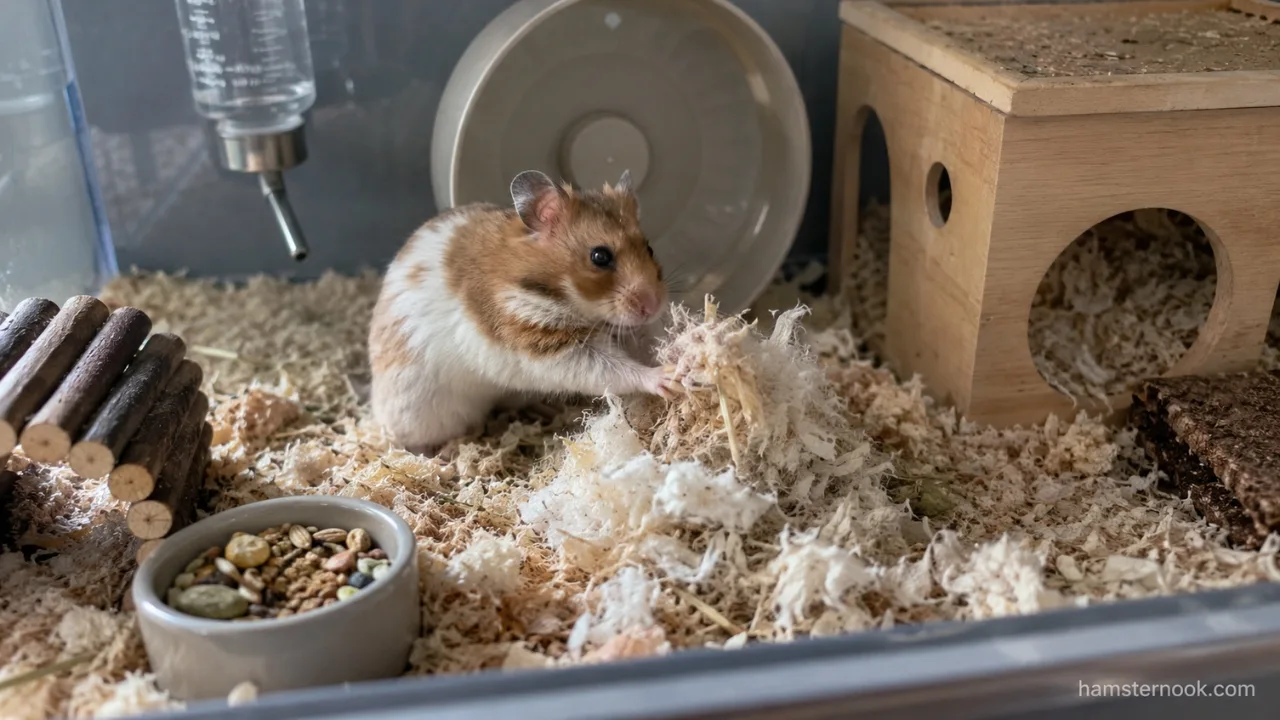
Many experienced hamster owners mix paper bedding with hay to help tunnels remain stable for longer periods.
How to Create Stable Hamster Burrows
Simply pouring bedding into the enclosure is not always enough.
To encourage successful burrowing:
- Compress bedding gently in layers.
- Create deeper sections in one area of the cage.
- Mix in tunnel-supporting materials if needed.
- Place hideouts partially buried under bedding.
- Avoid constantly disturbing completed burrows.
Heavy hides, platforms, and other solid accessories should have stable support rather than sitting loosely on deep bedding. This reduces the risk of an item shifting or collapsing into a burrow while your hamster is underneath it.
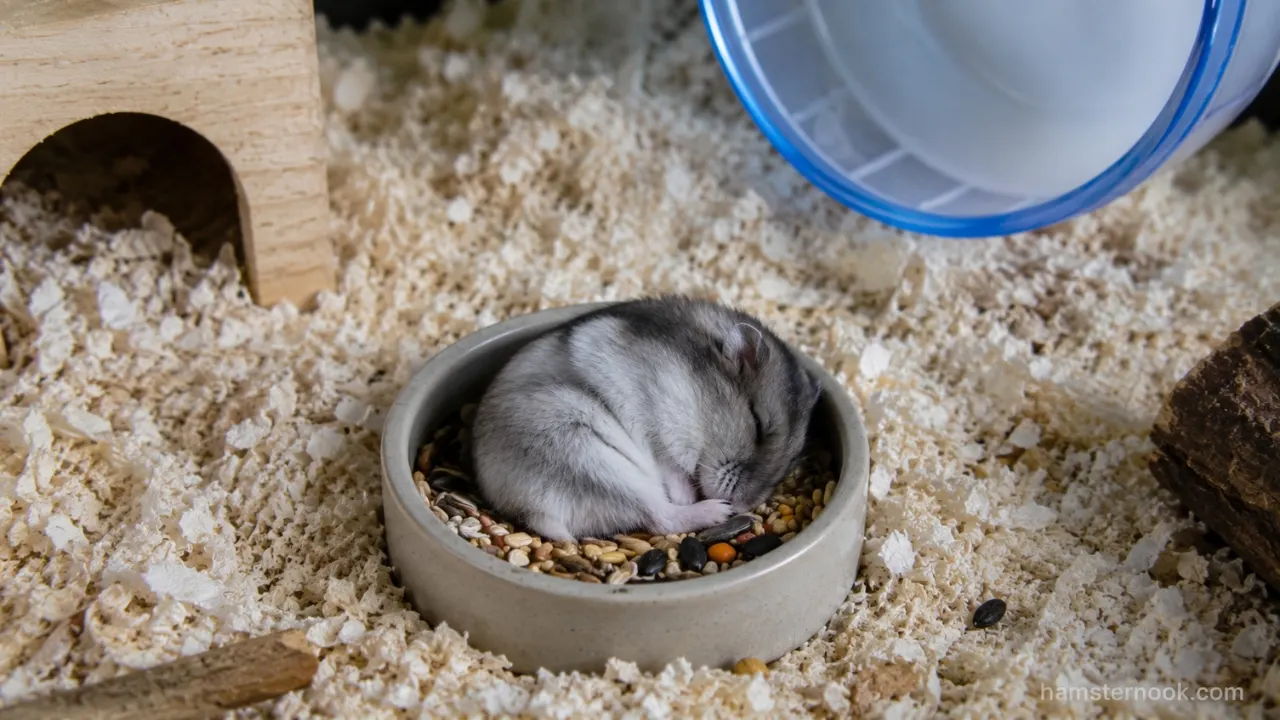
Compacted bedding often holds tunnels much better than loose, fluffy substrate.
If your hamster ignores deep bedding at first, don’t worry. Some hamsters need several days to become confident enough to dig extensively, especially after moving into a new enclosure. Once they feel secure, many gradually begin creating more complex tunnel systems.
Should Bedding Be Deep Throughout the Entire Cage?
Not necessarily.
Many owners create different zones within the enclosure.
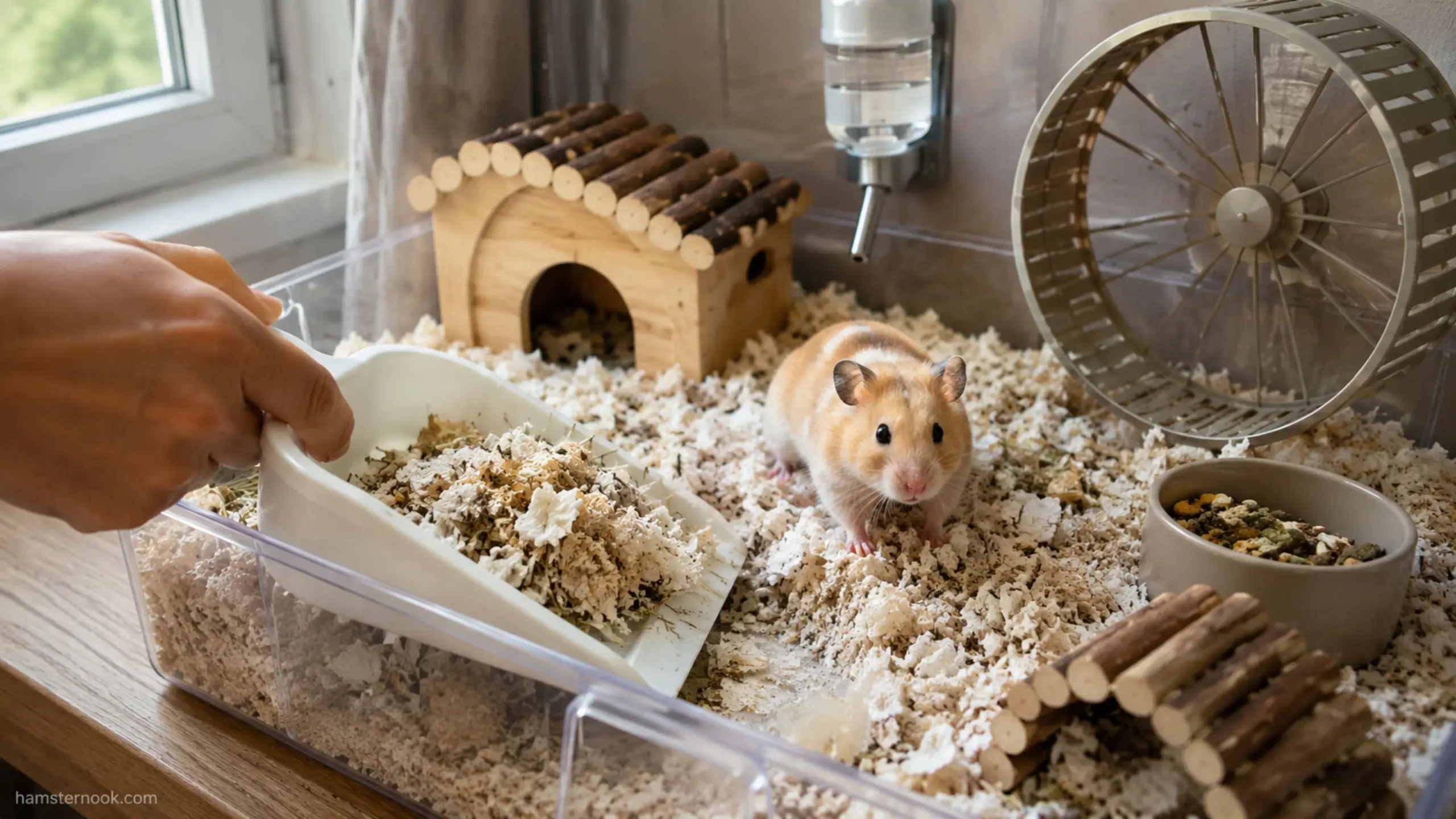
| Cage Area | Typical Bedding Depth |
|---|---|
| Burrowing Zone | 10–12+ inches |
| Wheel Area | 2–4 inches |
| Sand Bath Area | Minimal bedding |
| Feeding Area | Moderate bedding |
Deep bedding works best when it’s part of a well-planned enclosure. Our Best Hamster Cage Setup for Beginners guide shows how to combine bedding, hideouts, enrichment, and wheel placement into one practical habitat.
This approach allows hamsters to enjoy deep digging areas while keeping accessories stable.
How Much Bedding Does a Hamster Cage Actually Need?
The amount of bedding required depends on enclosure size.
| Cage Size | Approximate Bedding Needed for 8–10 Inches Depth |
|---|---|
| 600 sq in | 80–120 liters |
| 800 sq in | 120–160 liters |
| 1,000 sq in | 160–220 liters |
| 1,200 sq in | 220+ liters |
These are approximate volume estimates for a 20–25 cm bedding depth across the stated floor area. Actual bag requirements can vary because bedding compresses differently and you may not fill the entire enclosure to exactly the same depth.
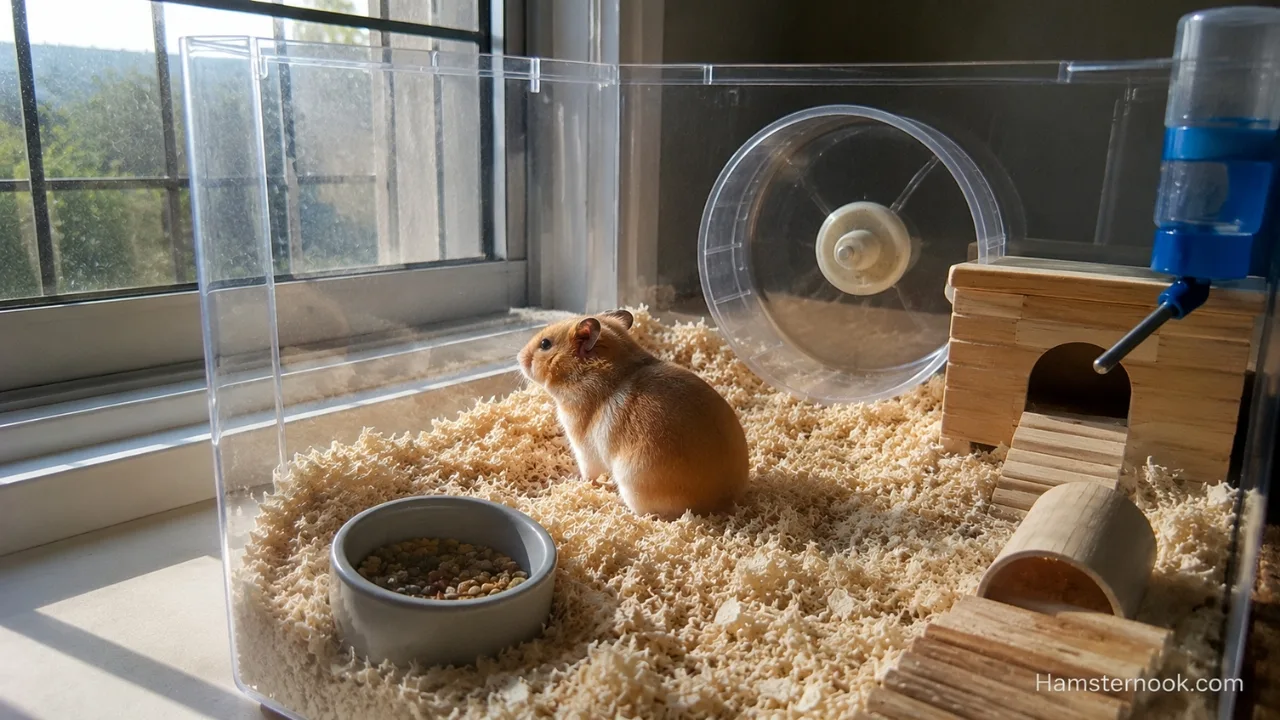
Buying bedding in larger packs is often more economical for spacious enclosures, especially if you maintain 8–12 inches of substrate year-round. Spot cleaning instead of replacing all the bedding at once also helps bedding last longer while preserving familiar scents.
Owners who switch from shallow bedding to deeper substrate are often surprised by how much more natural digging and nesting behavior they start seeing.
A well-designed enclosure works best alongside proper nutrition. Our Complete Hamster Diet Guide explains how habitat and diet work together to support your hamster’s long-term health.
Can Hamsters Have Too Much Bedding?
For healthy hamsters in appropriately sized enclosures, excessive bedding is rarely a problem.
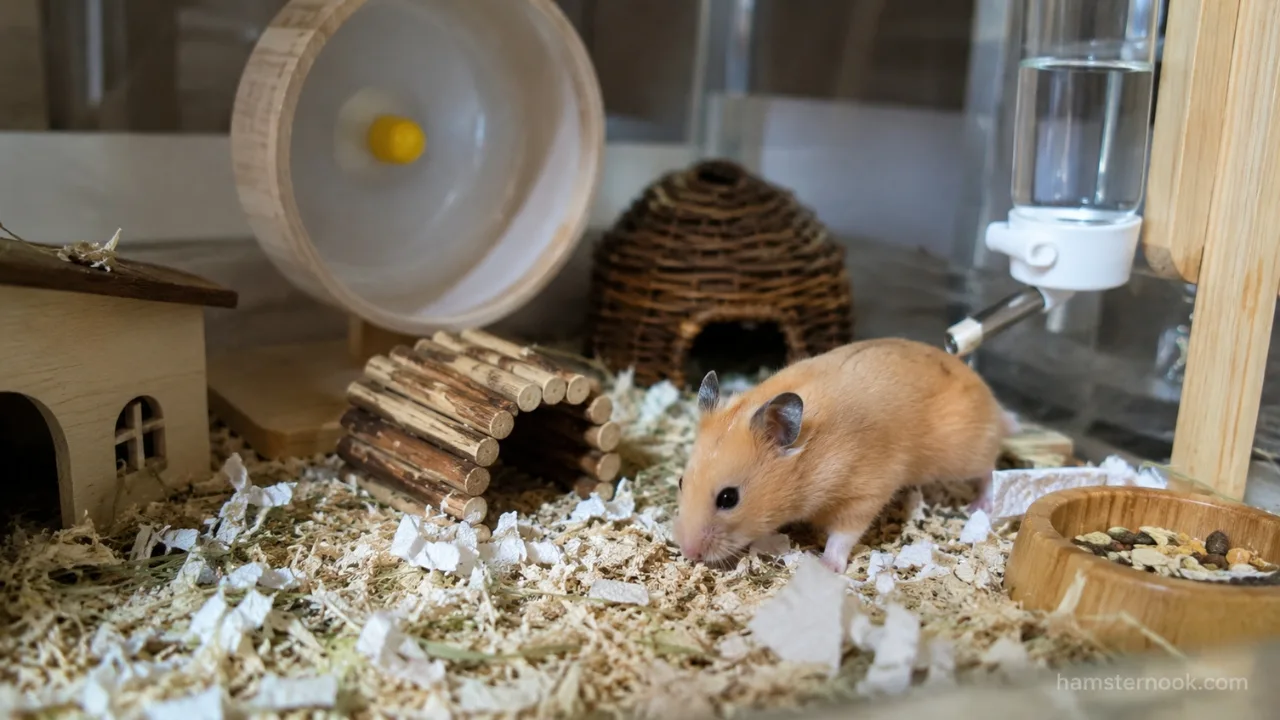
In fact, many hamsters become more active and confident when deeper bedding is provided.
Potential issues usually occur only when:
- Ventilation becomes poor
- Heavy accessories are placed unsafely on loose bedding
- The enclosure is too small to accommodate deep substrate properly
Can Hamsters Breathe Under Deep Bedding?
Deep bedding is not automatically unsafe because it is deep, but the enclosure still needs good ventilation and a stable setup. Heavy hides or platforms should have independent support rather than resting loosely on deep bedding, and the bedding should remain dry and suitable for burrowing. If a hamster appears trapped or is struggling to breathe, that should be treated as a safety or veterinary concern rather than assumed to be normal burrowing behavior.
In a properly sized enclosure, deeper bedding usually provides more opportunities for natural behavior and enrichment.
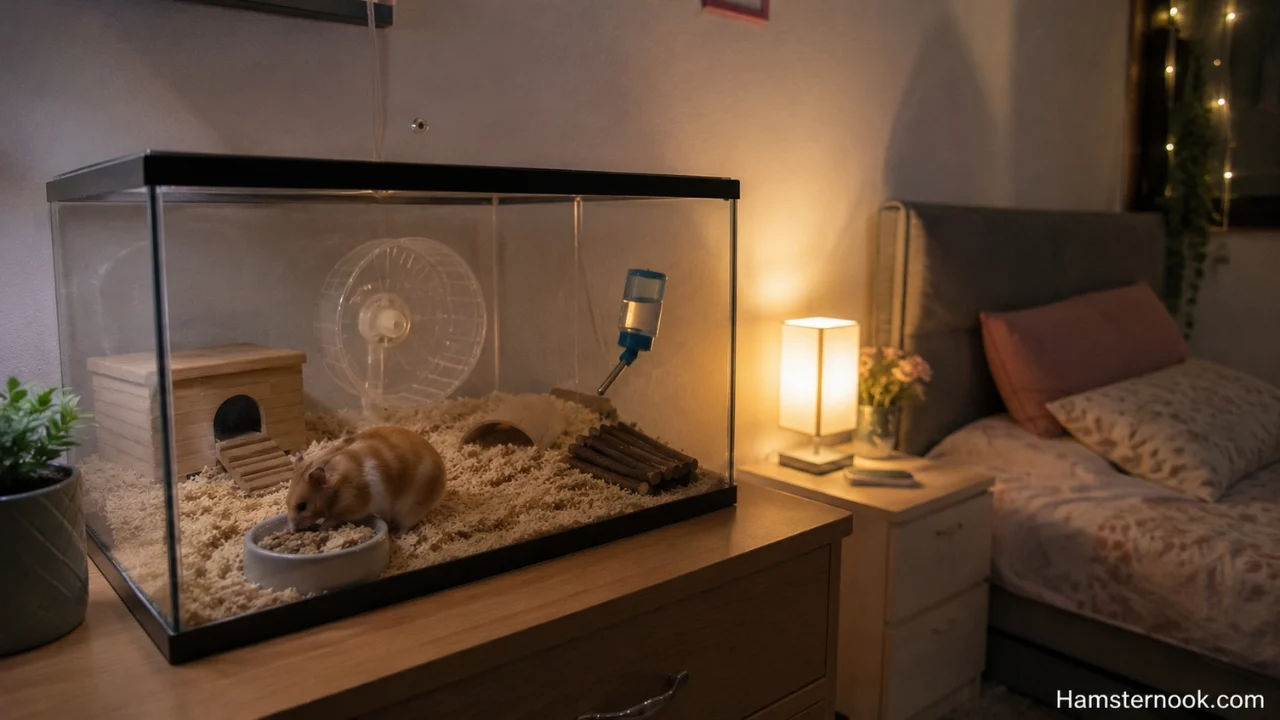
If your hamster suddenly spends much more time underground than usual, don’t assume deep bedding is the cause. Our Why Does My Hamster Hide All the Time? guide explains when hiding is normal and when it may signal stress or an underlying health problem.
Bedding Depth vs Cage Size: Which Is More Important?
Both are important, but they work together.
A large cage with shallow bedding still limits natural burrowing behavior. Likewise, deep bedding in a tiny cage can reduce usable floor space.
| Feature | Importance |
|---|---|
| Cage Floor Space | Essential |
| Bedding Depth | Essential |
| Wheel Size | Very Important |
| Enrichment | Very Important |
| Hideouts | Important |
Many enclosure problems happen because of small setup mistakes rather than a lack of effort. Our Common Hamster Mistakes guide explains other simple changes that can dramatically improve your hamster’s environment.

Lighting is another part of the environment that should not be overlooked when planning a hamster enclosure. Our Hamster Day/Night Lighting Guide explains how consistent light and dark periods can support a more appropriate daily routine.
The best hamster habitats balance all of these factors rather than focusing on only one.
Where the enclosure is placed matters too. A deep-bedding setup can still be unsuitable if the cage is exposed to direct sunlight, drafts, or temperature fluctuations, so our Hamster Cage Near Window Risks guide explains what to check before choosing the cage location.
Common Bedding Mistakes New Owners Make
Several bedding mistakes appear frequently among beginner hamster keepers.
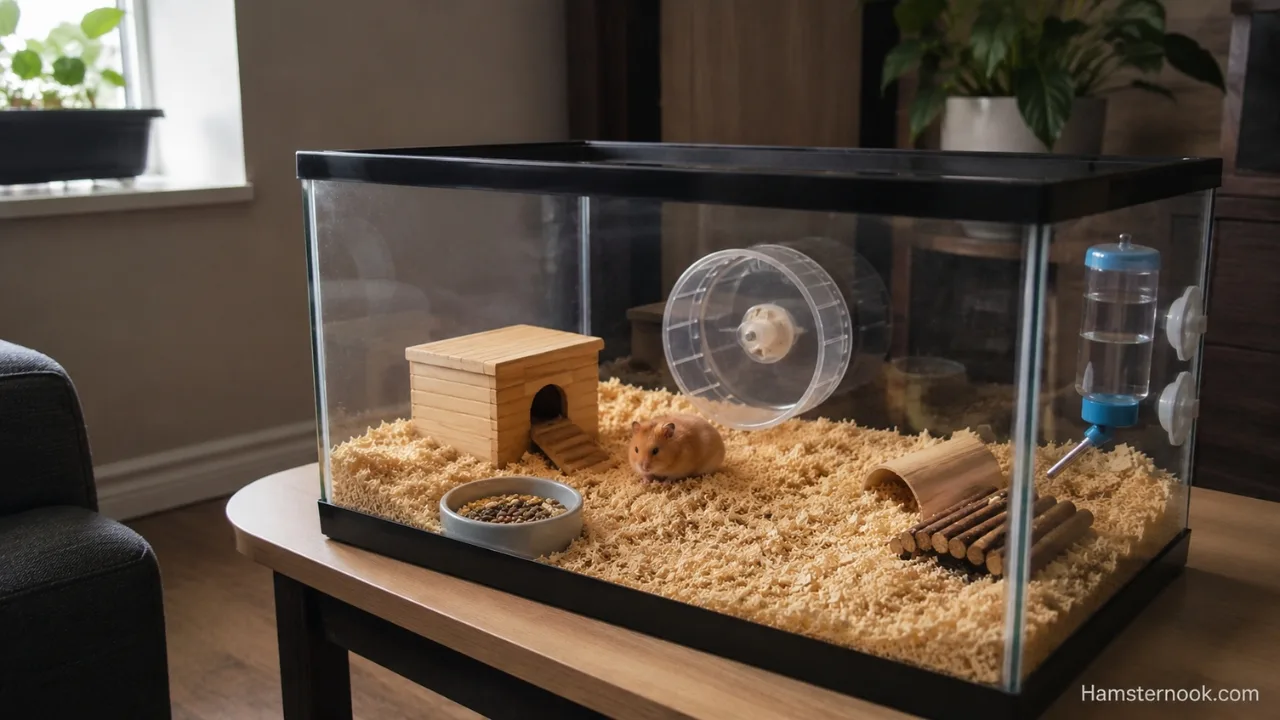
Many of these mistakes happen during the first few weeks of ownership. Our The Biggest Mistake New Hamster Owners Make in the First Week guide explains other common beginner errors that can affect a hamster’s confidence and well-being.
Using Too Little Bedding
Many commercial cage displays use only one or two inches of substrate, which is not enough for meaningful burrowing.
Cleaning the Entire Cage Too Often
Removing all bedding at once destroys scent trails and established burrows, which can create unnecessary stress.
Choosing Unsafe Bedding
Very dusty, scented, chemically treated, or unsuitable bedding can create respiratory and other safety concerns. Choose dust-extracted, untreated bedding intended for small animals, and avoid fluffy nesting materials that can become tangled around limbs or cause problems if eaten.

Prioritizing Cage Accessories Over Digging Space
Large toys sometimes take up valuable room that could be used for deeper bedding.
When upgrading an enclosure, try making one change at a time and observe how your hamster responds over the following week. Watching changes in digging, nesting, and activity levels helps you determine whether your setup is meeting your hamster’s natural needs.
How to Upgrade Bedding Without Replacing the Entire Cage
If you’re not ready for a full enclosure upgrade, small improvements can still help.
If your hamster is currently used to a very shallow substrate layer, you can increase the depth gradually rather than changing the entire enclosure at once. This also gives you a chance to check whether the bedding remains stable and whether your hamster is comfortable using the new burrowing area.
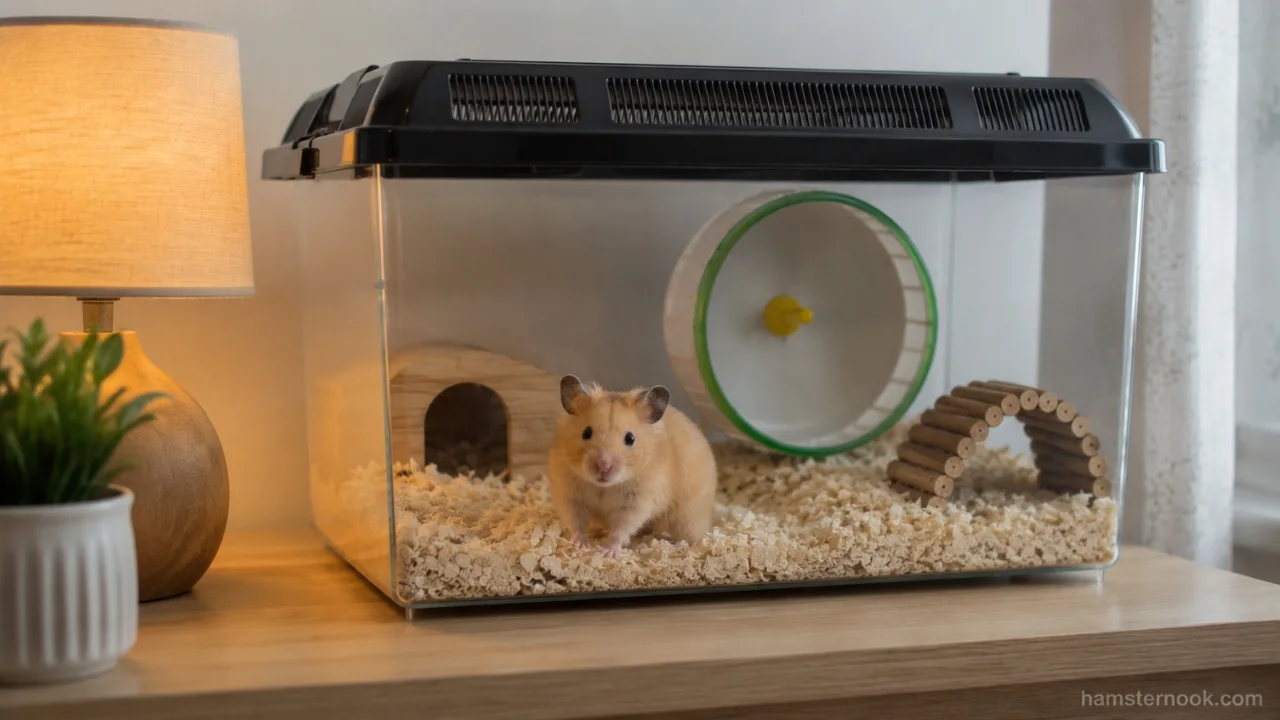
You can:
- Add deeper bedding to one side of the enclosure
- Use bedding retainers or barriers
- Rearrange accessories to create more digging space
- Add platforms to support heavy items safely
- Introduce hay for stronger tunnel structures
Even a few extra inches can significantly improve a hamster’s ability to burrow.
Does Bedding Need to Be Replaced All at Once?
Completely replacing every bit of bedding during routine cleaning is usually unnecessary. Spot cleaning soiled areas while leaving most clean bedding in place helps preserve familiar scents and reduces unnecessary stress for your hamster.
If you’re unsure when bedding should be changed more extensively, our How Often Should You Change Hamster Bedding? Spot Cleaning, Partial Changes & Full Cleanouts guide explains the difference between spot cleaning, partial changes, and full cleanouts.

Many owners are surprised to discover that simply increasing bedding depth leads to noticeable improvements in digging, nesting, and overall confidence. Small habitat changes often have a much greater impact on a hamster’s daily life than expensive accessories.
If you’re upgrading your hamster’s enclosure, increasing bedding depth is one of the simplest improvements you can make. Many owners notice more digging, better nesting, and calmer behavior within a short time after providing enough space for natural burrowing.
Final Thoughts
Deep bedding isn’t simply an optional upgrade—it’s a fundamental part of proper hamster care. Combined with a spacious enclosure, suitable enrichment, and a balanced diet, adequate bedding depth allows hamsters to express natural behaviors that contribute to a healthier and less stressful life.
Guidance varies slightly on the minimum depth: Blue Cross recommends at least 20 cm of suitable digging bedding, while PDSA recommends no less than 25 cm (10 inches). Providing a deeper burrowing area where the enclosure safely allows it gives your hamster more room to tunnel, nest, and express natural behavior.
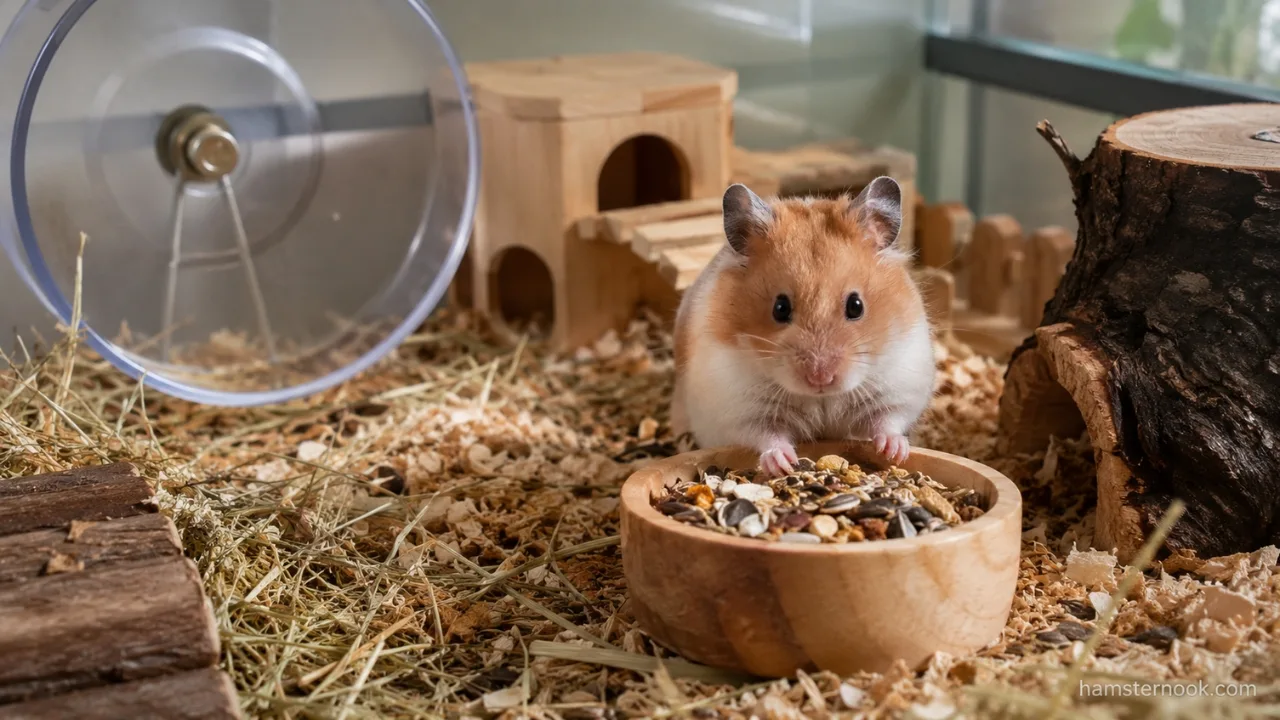
Deep bedding works best when combined with proper enrichment, exercise, and overall habitat design. For a complete setup overview, see our Hamster Care Guide for Beginners.
If your hamster currently has only a shallow layer of substrate, increasing bedding depth may be one of the simplest upgrades you can make to improve its daily life.
Frequently Asked Questions
Is 3 inches of bedding enough for a hamster?
No. Three inches is generally too shallow for meaningful burrowing and tunnel building.
What bedding depth is best for Syrian hamsters?
Most Syrian hamsters benefit from at least 10–12 inches of bedding, with deeper areas being even better.

Do dwarf hamsters need deep bedding too?
Yes. Dwarf hamsters also enjoy digging and burrowing and should have access to at least 8 inches of bedding.
Why does my hamster not burrow even with deep bedding?
Some hamsters burrow more than others. Bedding type, cage setup, and individual personality can all influence burrowing behavior.
Can I mix different bedding materials together?
Yes. Many owners successfully combine paper bedding, aspen, and hay to improve tunnel stability.
How often should hamster bedding be replaced?
Spot cleaning is usually preferred. Completely replacing all bedding too frequently can remove familiar scents and cause unnecessary stress.

Can I add more bedding without stressing my hamster?
Yes. Gradually adding extra bedding to one side of the enclosure is usually well tolerated and gives your hamster time to explore the deeper area without suddenly changing its entire environment.
References
This guide is based on hamster bedding, burrowing, housing, enrichment, husbandry, and welfare guidance from trusted animal welfare and veterinary resources, including:
- Blue Cross – Hamster Care Guide – Guidance on suitable bedding depth, digging and burrowing, enclosure setup, nesting, and hamster wellbeing.
- PDSA – Hamsters as Pets – Advice on hamster housing, bedding, enrichment, nutrition, exercise, and general welfare.
- RSPCA – Creating a Good Home for Hamsters – Guidance on bedding, burrowing, nesting, enclosure space, environmental conditions, and safe hamster housing.
- RSPCA – Keeping Hamsters as Pets – General hamster care, housing, natural behavior, enrichment, and welfare guidance.
- MSD Veterinary Manual – Providing a Home for a Hamster – Veterinary guidance on hamster enclosure design, bedding, nesting, ventilation, exercise, and environmental safety.
- NC3Rs – Housing and Husbandry: Hamster – Guidance on hamster housing, bedding, environmental conditions, burrowing opportunities, and species-appropriate husbandry.
- NC3Rs – Choosing Appropriate Enrichment – Principles for providing suitable enrichment and opportunities for hamsters to express natural behaviors.

Narayan Kumar is the founder and author of HamsterNook. He creates practical, research-based hamster care guides covering hamster behavior, nutrition, cage setup, enrichment, health, and everyday care. His goal is to help hamster owners make informed decisions and provide safer, healthier lives for their pets through clear, beginner-friendly information based on trusted animal care resources.