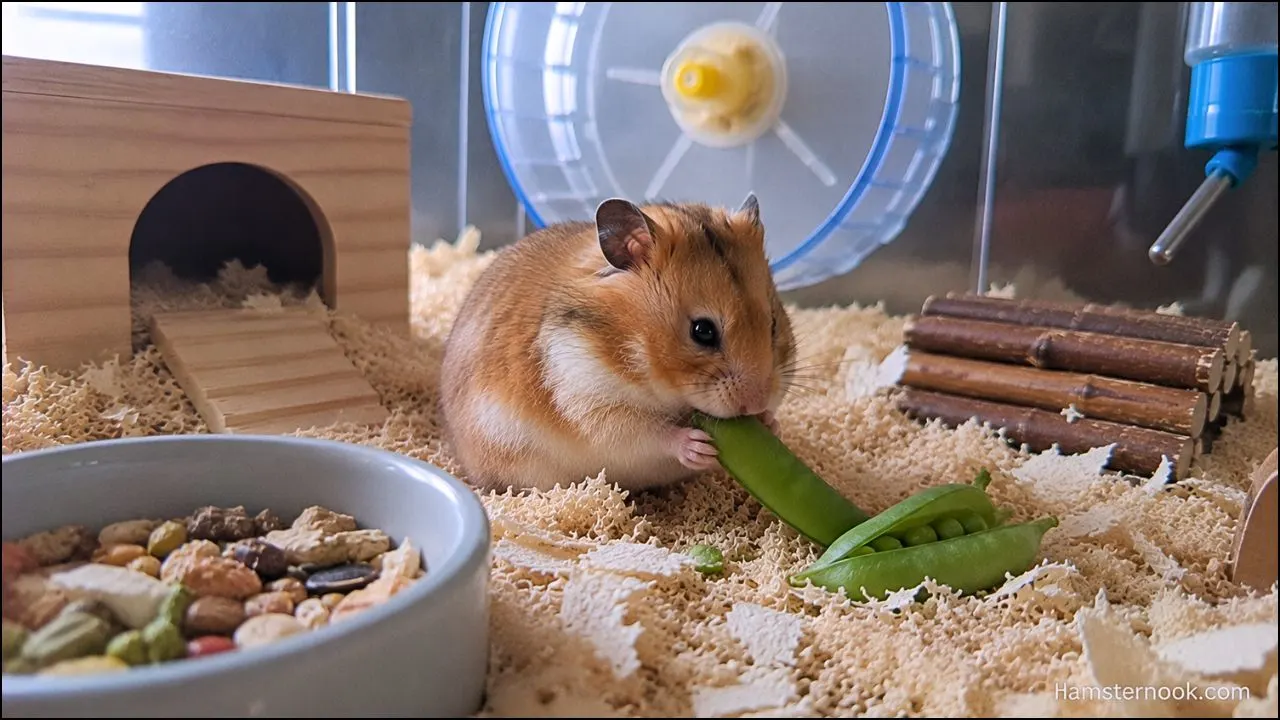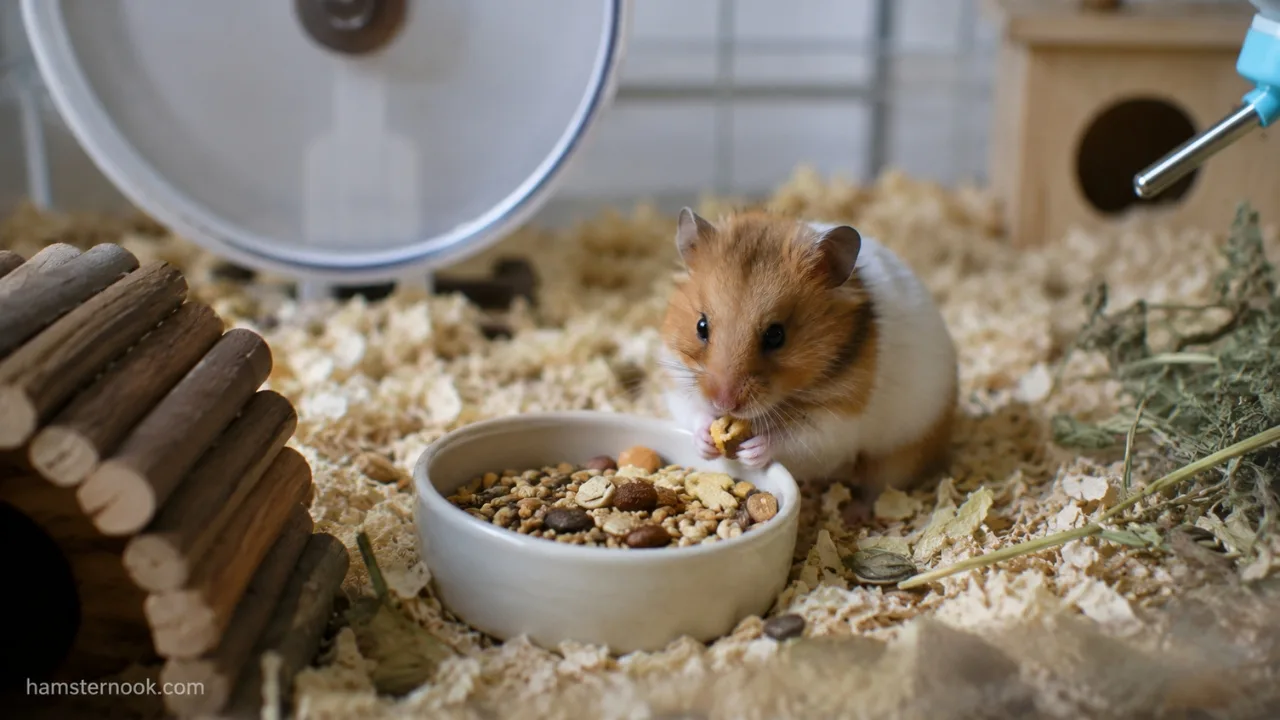
What Should Hamsters Eat Every Day: Feeding a hamster looks easy at first, but building a healthy daily diet takes more than simply filling a food bowl. The right foods, proper portions, and a consistent routine all help support your hamster’s long-term health. Pet stores often sell colorful food mixes, and many owners assume that’s all their hamster needs. In reality, a healthy hamster diet is about balance, variety, and consistency—not just filling a food bowl each day.
What your hamster eats every day affects almost every aspect of its health, including body weight, energy, digestion, coat quality, dental wear, and overall well-being. Small feeding habits repeated every day often have a bigger impact than occasional treats. Feeding too many treats, relying on low-quality seed mixes, or offering unsafe human foods can gradually lead to health problems that are often preventable.
Whether you’ve recently brought home your first hamster or want to improve your current feeding routine, this guide explains what hamsters should eat every day, which foods belong in their daily diet, what should only be occasional treats, and the common feeding mistakes every owner should avoid.
Quick Answer
A healthy hamster’s daily diet should be built around a complete commercial hamster food, with constant access to fresh drinking water. Small amounts of fresh vegetables can add variety, while fruit and richer treats should remain occasional rather than becoming part of the daily staple diet.
What Should a Hamster Eat Every Day?
A hamster’s daily diet should be built around a high-quality commercial hamster food that provides balanced nutrition. Fresh vegetables can be added in small amounts, while treats should remain occasional rather than daily.
A healthy daily feeding routine generally includes:
- A balanced hamster pellet or fortified food mix
- Small portions of hamster-safe vegetables
- Constant access to fresh, clean water
- Occasional protein-rich foods when appropriate
- Limited healthy treats
If you’re still learning the basics of hamster care, Ultimate Hamster Care Guide for Beginners (2026) provides a complete overview of housing, nutrition, enrichment, and everyday care.
What Makes a Good Hamster Diet?
A healthy hamster diet depends on consistent daily nutrition, with variety added in moderation rather than at every meal. Commercial hamster food should provide most daily nutrition, while fresh vegetables add enrichment and additional nutrients. Treats should stay small enough that they never replace the staple diet.

Why a Balanced Daily Diet Matters
Unlike larger pets that may tolerate an unbalanced diet for some time, hamsters are small animals with very specific nutritional needs.
A proper daily diet helps support:
- Healthy body weight
- Strong teeth
- Good digestion
- Healthy skin and coat
- Normal activity levels
- Long-term overall health
Poor nutrition, on the other hand, can contribute to obesity, selective eating, digestive upset, and nutritional deficiencies over time.
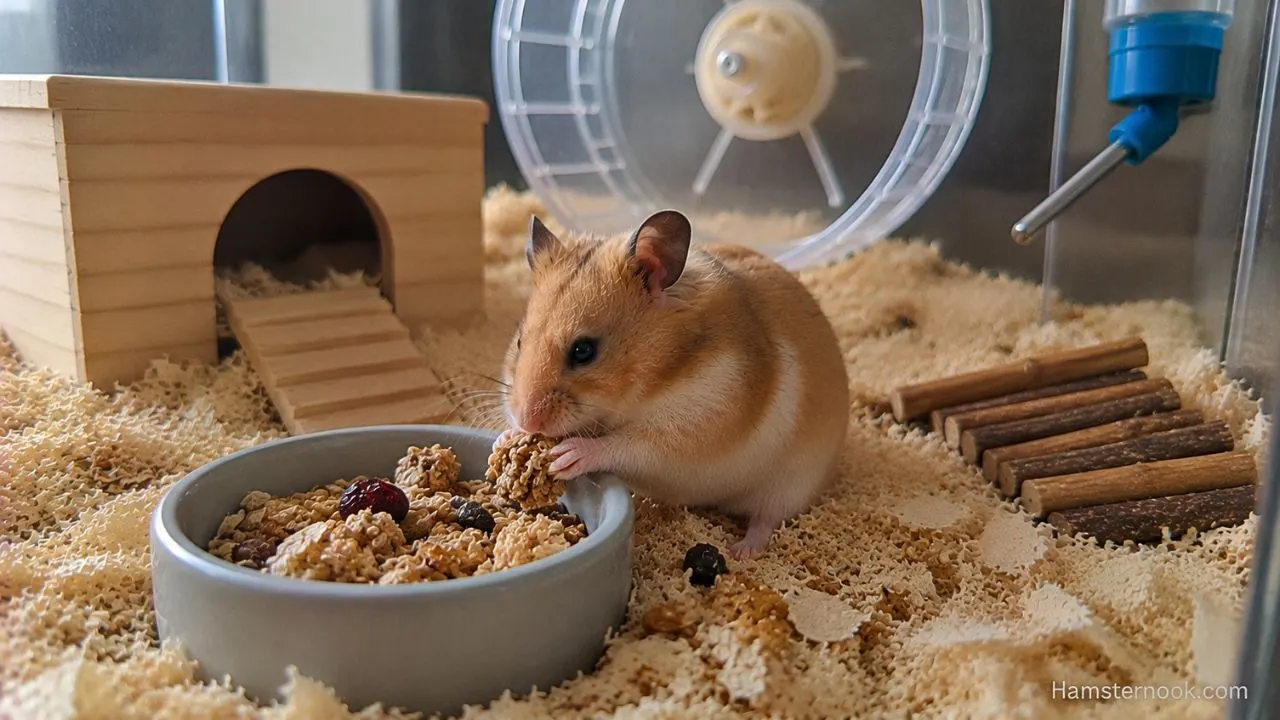
The Ideal Daily Hamster Diet Breakdown
While exact nutritional needs vary slightly by species and life stage, most healthy pet hamsters benefit from a diet centered on quality commercial food.
| Food Type | Feed Daily? | Purpose |
|---|---|---|
| High-quality hamster pellets or fortified mix | Yes | Main source of balanced nutrition |
| Fresh vegetables | Yes (small amounts) | Variety and additional nutrients |
| Fresh water | Always | Essential for hydration |
| Protein-rich treats | Occasionally | Supports normal body functions |
| Fruits | Occasionally | Treat only due to natural sugars |
| Commercial sugary treats | Rarely | Not necessary for daily nutrition |
Most of your hamster’s daily nutrition should come from a complete commercial hamster food. Fresh vegetables can be a small addition for variety, while fruit and other treats should stay limited so they do not replace the staple diet.
Choose a High-Quality Hamster Food First
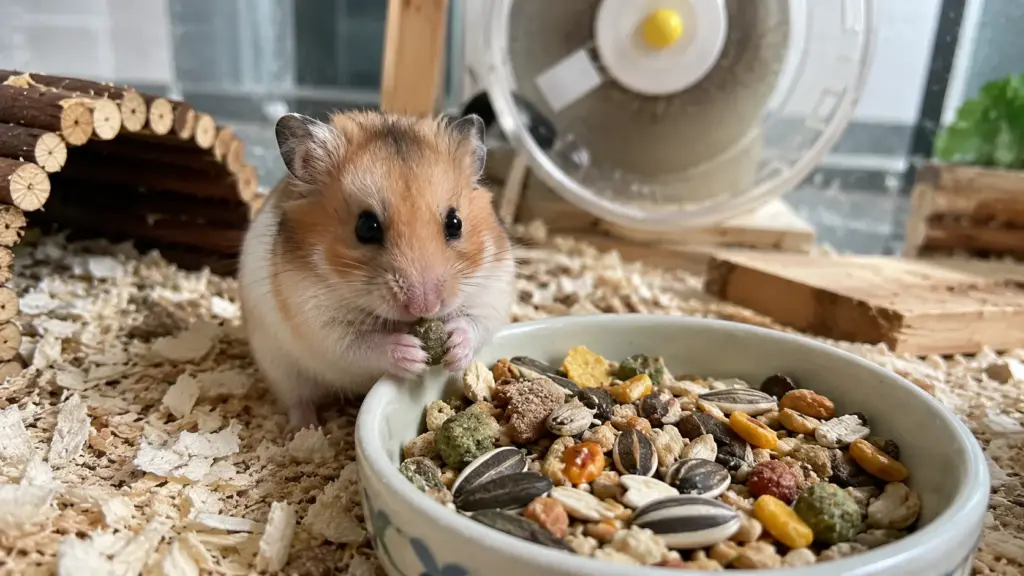
A complete hamster food formulated specifically for hamsters should always form the foundation of the daily diet.
Look for foods that contain a mixture of:
- Fortified pellets
- Whole grains
- Seeds
- Appropriate protein sources
Many owners choose seed-only mixes because hamsters seem to enjoy them. However, hamsters often pick out their favorite ingredients and leave the rest behind, creating an unbalanced diet.

Pelleted diets or fortified mixes help reduce selective feeding.
When comparing hamster foods, check the ingredient list rather than the front of the package. Products marketed with colorful treats or large amounts of dried fruit may look appealing but are not always the best choice for everyday feeding.
Fresh Vegetables Make a Healthy Daily Addition
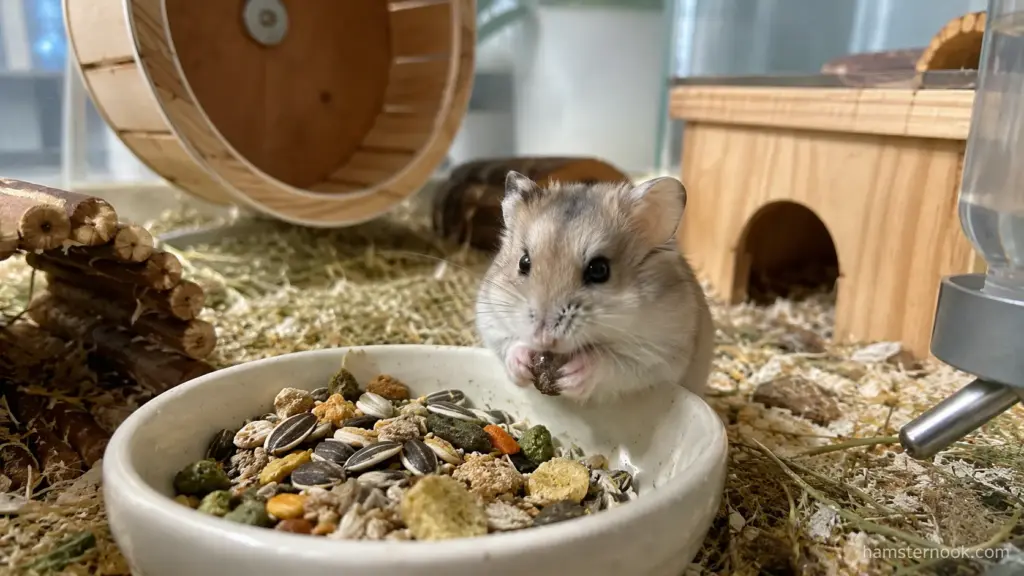
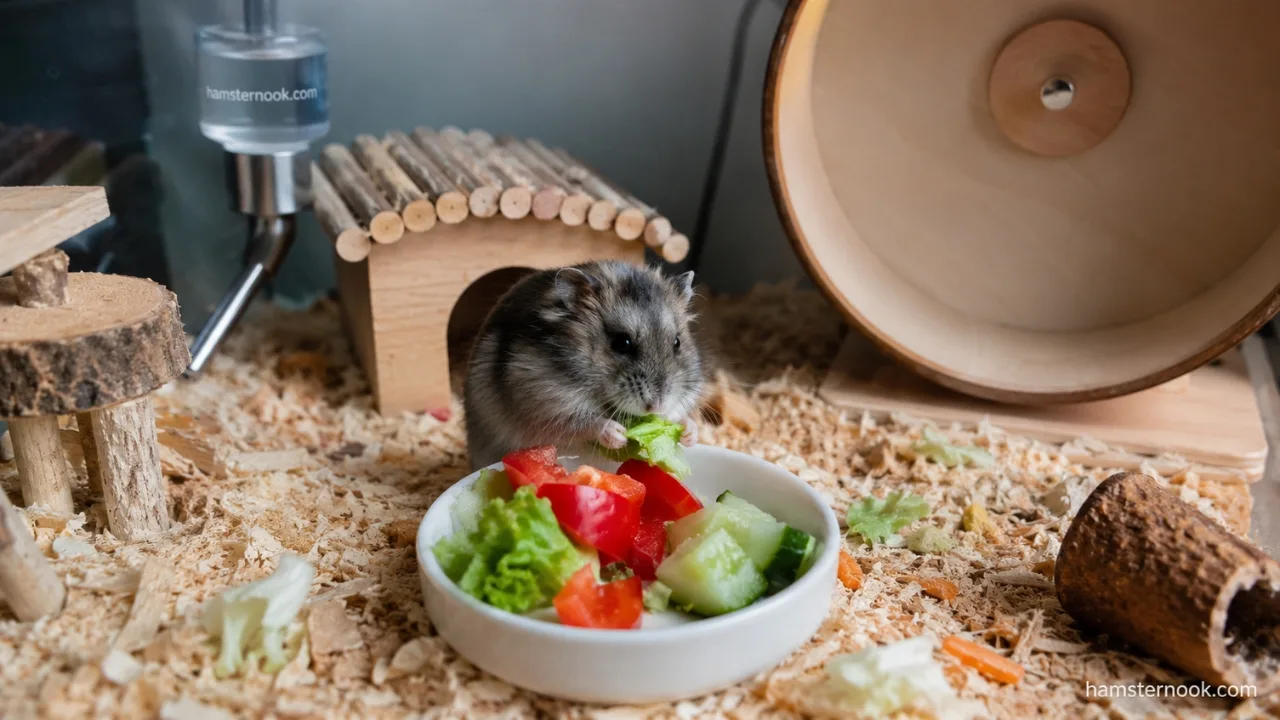
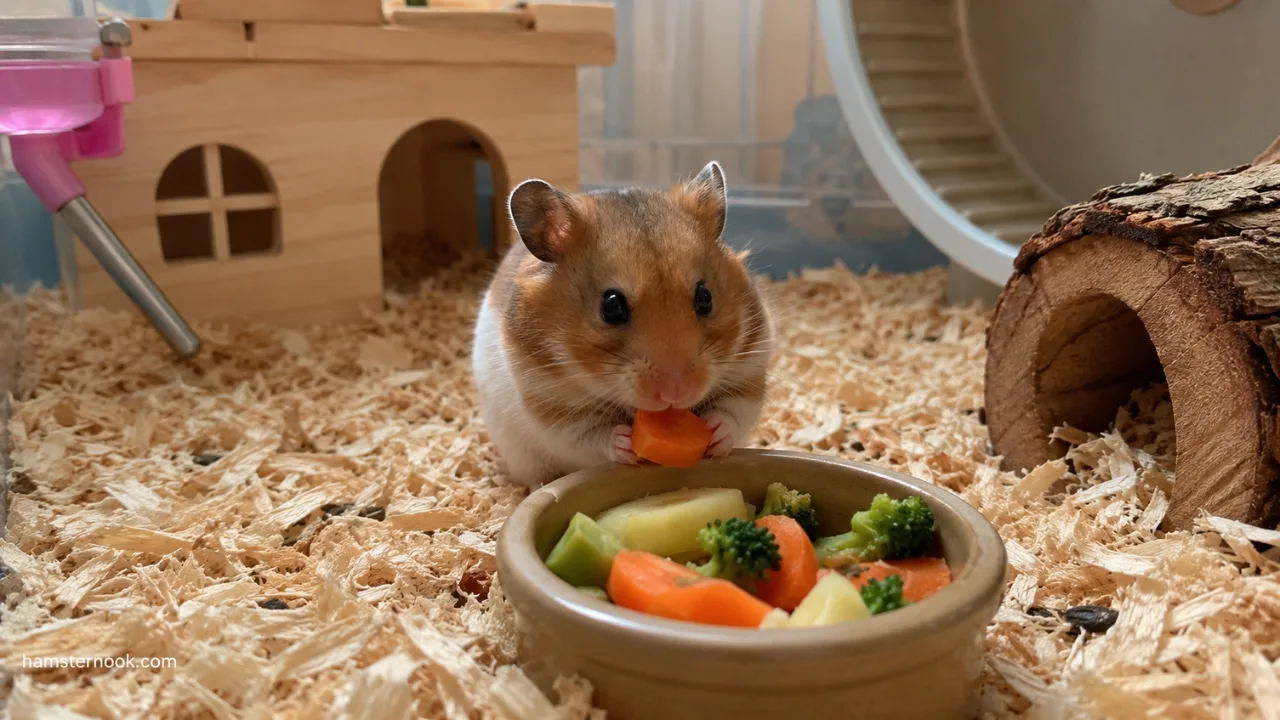
Small portions of fresh vegetables can safely complement a hamster’s staple food.
Good options include:
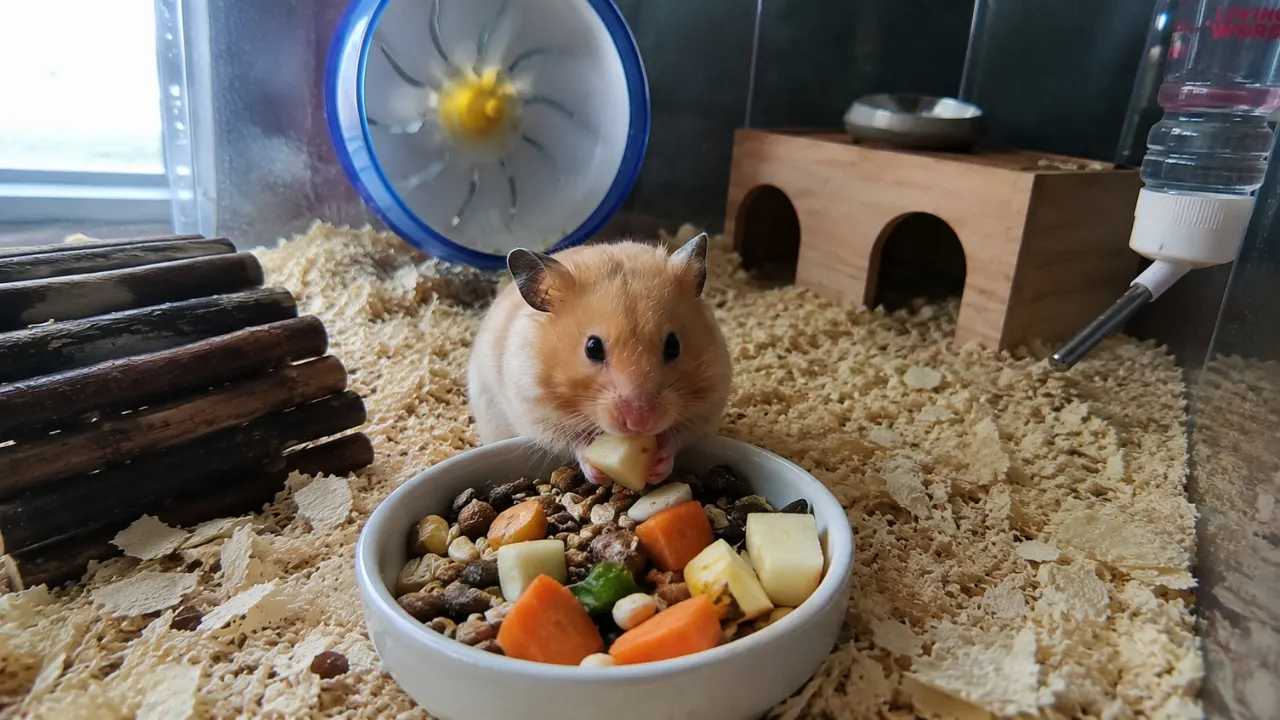
- Cucumber
- Broccoli
- Bell pepper
- Zucchini
- Carrot (small amounts)
- Spinach in moderation
Introduce only one new vegetable at a time and watch for changes in appetite or droppings over the next day. Remove any uneaten fresh food after a few hours so it doesn’t spoil inside the enclosure.
If you’re unsure which vegetables are safe, Best Fruits and Vegetables for Hamsters can help you choose healthy options while avoiding unsafe foods.
How Much Food Should a Hamster Eat Each Day?
A practical starting point for the daily dry-food portion is around 10 g (about 1 tablespoon) for Syrian hamsters and around 5–8 g (about 1 teaspoon) for Chinese, Campbell, Winter White and Roborovski hamsters, based on Woodgreen’s feeding guidance. These are starting points rather than universal amounts because food density, age, activity level, body condition, and the specific food can vary.
Fresh vegetables should remain a small addition rather than replacing the complete dry food. PDSA recommends a small daily portion of fresh fruit, vegetables and herbs, around 1–2 teaspoons in total.
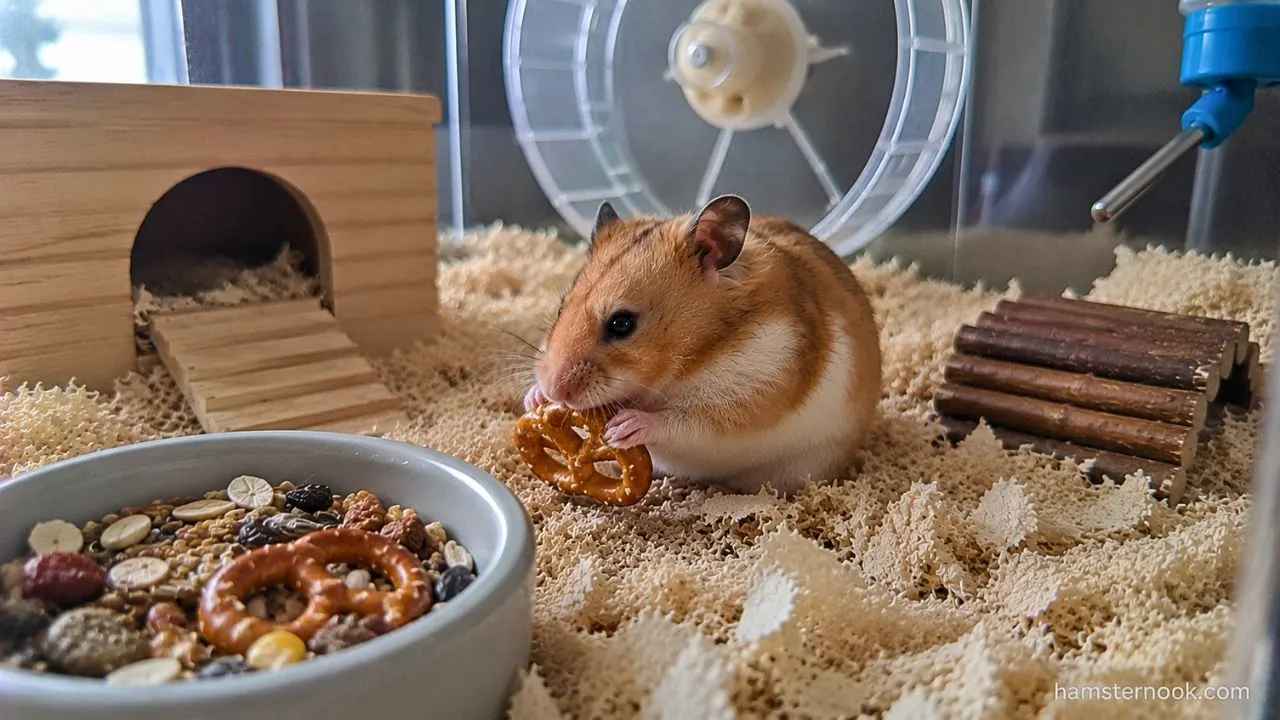
Instead of relying only on a measuring spoon, also monitor your hamster’s body condition, appetite, stored food, and overall eating habits.
Healthy hamsters usually:
- Eat gradually throughout the day and night
- Store food in their cheek pouches
- Build food caches inside the cage
Finding hidden food stores is normal behavior and does not necessarily mean your hamster is overeating.
If your hamster suddenly stops storing food or shows a noticeable drop in appetite, Why Is My Hamster Not Eating Like Normal? explains the common causes and when it’s time to be concerned.

Should Food Be Scattered or Served in a Bowl?
Both methods can work well.
Many owners place the staple diet in a food bowl while occasionally scattering small amounts around the enclosure. Scatter feeding encourages natural foraging behavior and provides additional mental stimulation without changing the overall diet.
Fresh Water Is Part of Every Daily Diet
Water is just as important as food.
Hamsters should always have access to clean, fresh drinking water.

Check every day that:
- The bottle is working properly
- Water is clean
- No leaks or blockages are present
Many hydration problems occur because owners assume the bottle is functioning when it is actually clogged.
If you use a water bottle, gently tap the metal drinking tube each day to confirm water flows properly. If you use a water bowl, clean and refill it daily to keep the water fresh.
For more information, read Can Hamsters Get Dehydrated? Signs Every Owner Should Know.

Should Hamsters Eat Protein Every Day?
Most healthy commercial hamster foods already contain enough protein for everyday feeding.
Additional protein treats may occasionally be appropriate for:
- Young hamsters
- Pregnant females
- Nursing mothers
- Hamsters recovering under veterinary guidance
Safe protein options include:
- Plain cooked egg
- Plain cooked chicken
- Dried mealworms
Additional protein should be viewed as a supplement rather than a daily requirement for healthy adult pet hamsters already eating a balanced commercial diet.

If you’re considering insect-based treats, Can Hamsters Eat Mealworms? Benefits & Risks explains when and how to offer them safely.
Foods That Should Only Be Occasional Treats
Many healthy foods still contain enough sugar or calories that they should not become daily snacks.
Examples include:
- Apples
- Bananas
- Strawberries
- Blueberries
- Pears
Fruits are best reserved for occasional treats because of their natural sugar content.

If you want more ideas for occasional snacks, our Best Hamster Treats: 10 Healthy & Safe Treats They Love guide covers suitable treat options and how to keep them in moderation.
Introduce New Foods Slowly
Even safe foods should be introduced gradually.
Offering several new foods at once makes it difficult to identify the cause if digestive upset occurs. Small portions introduced one at a time are usually the safest approach.
Foods Hamsters Should Never Eat
Some foods are unsafe regardless of portion size.
Avoid feeding:
- Chocolate
- Candy
- Onions
- Garlic
- Raw beans
- Grapes
- Rhubarb
- Alcohol
- Caffeinated drinks
- Salty chips
- Sugary desserts
- Processed meats
When introducing any new food, verify that it is considered hamster-safe before offering it. Some foods can be unsafe even when they are common human foods, so avoid relying on appearance or personal experience alone.
Common Daily Feeding Mistakes
Many feeding problems are caused by good intentions rather than neglect.
Feeding Too Many Treats
Treats should never replace balanced hamster food.
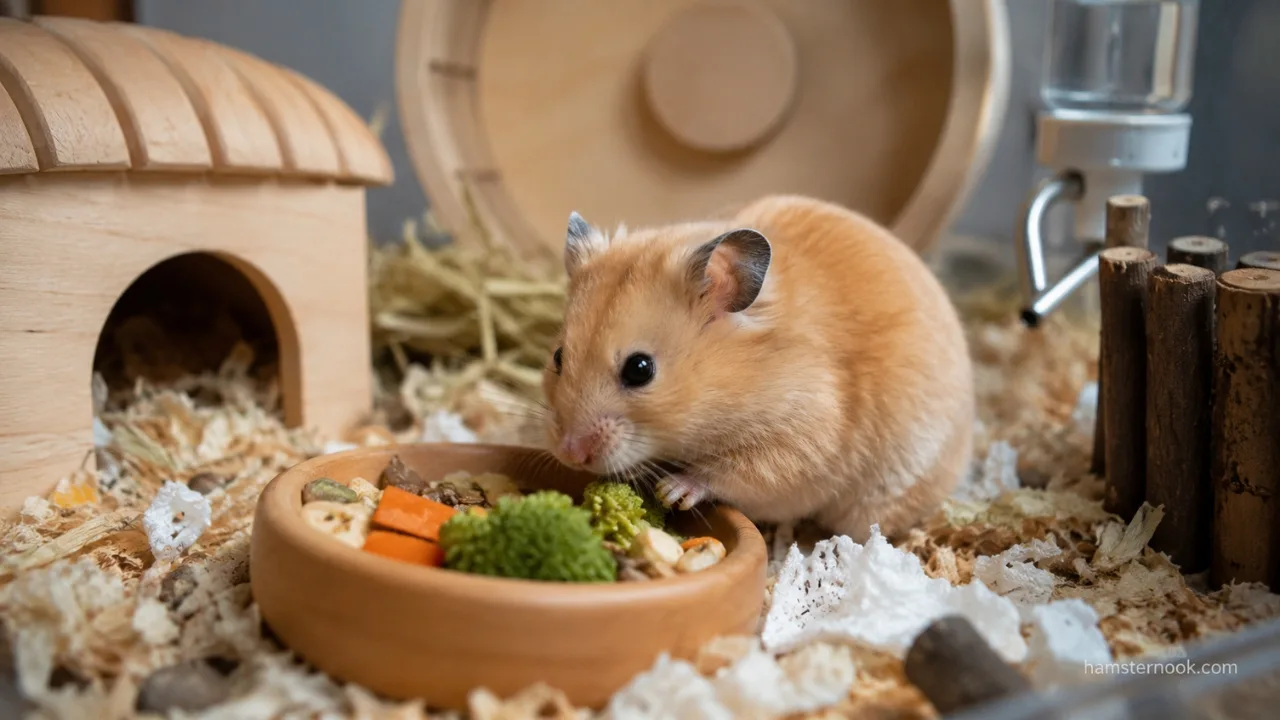
Excessive treats may contribute to:
- Weight gain
- Selective eating
- Poor nutrition
Refilling the Bowl Without Checking Stored Food
Hamsters naturally hoard food.
Before adding more food, inspect food storage areas to ensure old food has not spoiled.
Offering Large Portions of Fresh Food
Fresh vegetables should be offered in small portions.

Large amounts may spoil before your hamster eats them.
Ignoring Weight Changes
Unexpected weight gain or loss may indicate dietary or medical issues.
Regular observation helps owners notice problems early.
Feeding Too Much at Once
Adding large amounts of food every day can make it difficult to notice how much your hamster is actually eating. Small, consistent portions make it easier to monitor appetite and reduce unnecessary food waste.

Sample Daily Feeding Routine
The exact schedule can vary, but many owners find an evening routine works well because hamsters are naturally most active after sunset.
| Time | Feeding Task |
|---|---|
| Evening | Provide staple hamster food |
| Evening | Offer a small portion of fresh vegetables |
| Daily | Refresh clean drinking water |
| Daily | Remove uneaten fresh food |
| Occasionally | Offer a small healthy treat or protein supplement when appropriate |
Keeping a consistent routine helps many hamsters feel secure.
How to Tell If Your Hamster’s Diet Is Working
A healthy diet usually supports normal behavior and body condition.
Positive signs include:
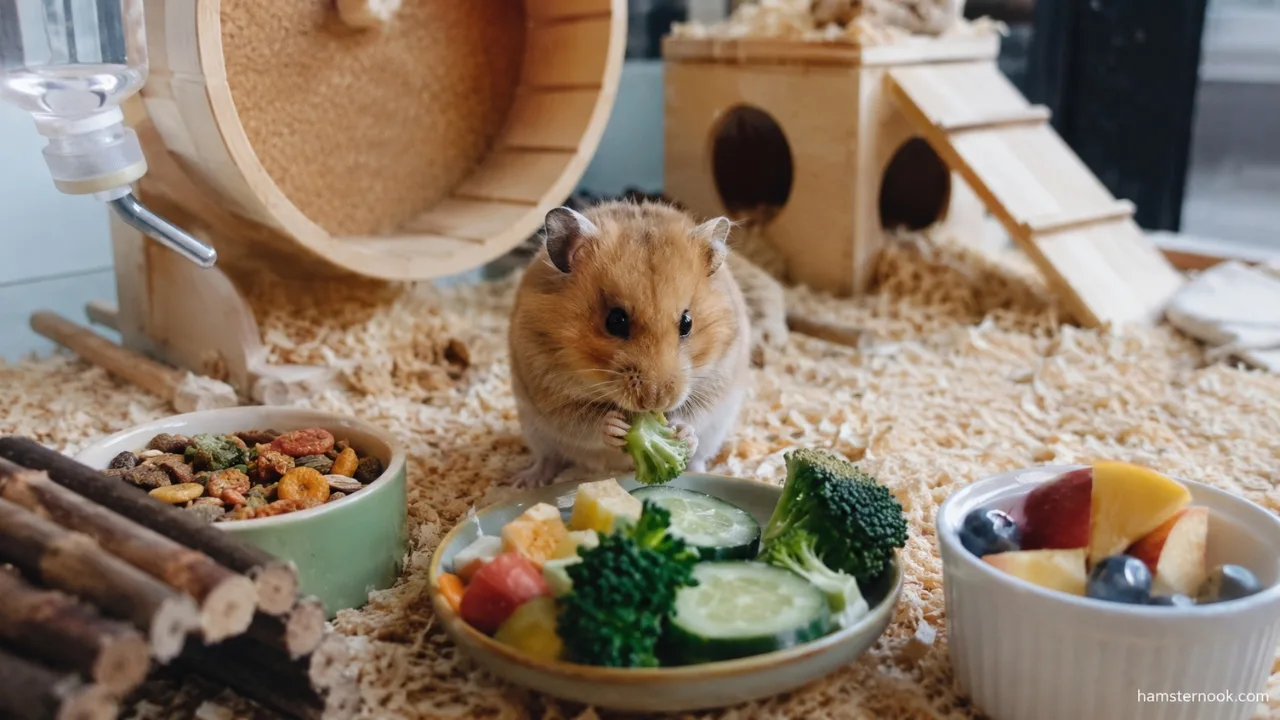
- Bright, alert eyes
- Smooth coat
- Steady body weight
- Regular activity
- Healthy appetite
- Normal droppings
Sudden changes in eating habits or body condition deserve closer attention.
Daily Feeding Checklist
A simple daily routine helps keep your hamster’s diet balanced.
- Refresh fresh drinking water.
- Offer the recommended amount of staple food.
- Remove leftover fresh vegetables.
- Check stored food for spoilage.
- Observe your hamster’s appetite and activity.
- Avoid giving treats every day.
Final Thoughts
Feeding your hamster well is less about buying expensive foods and more about providing the right balance every day. Consistency, moderation, and a quality staple diet are the foundations of good nutrition. High-quality commercial hamster food should always form the foundation of the daily diet, supported by small portions of fresh vegetables, constant access to clean water, and only occasional healthy treats.
Avoid the temptation to overfeed fruits or snacks simply because your hamster enjoys them. Like many small pets, hamsters often eat what tastes best rather than what is healthiest.

A balanced feeding routine, sensible portions, and appropriate food choices give your hamster the best chance of staying healthy throughout its life.
Important Note
Individual hamsters may have different nutritional needs depending on their age, health, pregnancy status, or veterinary treatment. If your hamster suddenly stops eating, loses weight, or develops digestive problems, consult an experienced veterinarian rather than changing the diet without guidance.
Frequently Asked Questions
What should hamsters eat every day?
A hamster’s daily diet should mainly consist of a high-quality hamster pellet or fortified food mix, along with small portions of fresh vegetables and constant access to clean water.
Can hamsters eat vegetables every day?
Yes. Many hamster-safe vegetables can be offered daily in small amounts as part of a balanced diet.

How often should I feed my hamster?
There is no single required feeding time for every hamster. Many owners offer food in the evening because hamsters are usually most active then, but the daily ration can be split into more than one feeding if that works better. The important point is that the hamster receives its appropriate daily amount and always has access to fresh water.
Should fruits be part of a hamster’s daily diet?
No. Fruits are best offered only occasionally because they contain natural sugars that can contribute to weight gain if fed too frequently.
Is a seed mix enough for a hamster?
Not always. Seed-only mixes can encourage selective feeding. A fortified food or quality pellet-based diet generally provides more balanced nutrition.
Do hamsters need fresh water every day?
Yes. Fresh, clean drinking water should be available at all times, and the water bottle or bowl should be checked daily to ensure it is working properly.

Can hamsters eat the same food every day?
Yes. A complete commercial hamster food is designed to be fed daily. Variety should come from small portions of safe vegetables and occasional treats rather than constantly changing the staple diet.
How do I know if I’m feeding too much?
If large amounts of food remain untouched for several days, your hamster is gaining unnecessary weight, or food caches are becoming excessive, review portion sizes and feeding habits.
Should I leave food in my hamster’s cage all day?
Yes. Hamsters naturally gather and store food for later. Instead of removing all stored food, check regularly to ensure cached fresh foods have not spoiled.
References
This guide is based on trusted hamster nutrition, care, housing, and welfare guidance from veterinary and animal welfare organizations, including:
- RSPCA – What To Feed a Pet Hamster – Guidance on hamster diet, feeding, fresh foods, treats, and nutritional care.
- PDSA – Hamsters as Pets – General guidance on hamster care, nutrition, housing, exercise, and welfare.
- Blue Cross – Choosing the Right Small Pet – Information on small-pet care requirements, welfare, and responsible pet ownership.
- MSD Veterinary Manual – Providing a Home for a Hamster – Veterinary guidance on hamster housing, bedding, exercise, nesting, and environmental needs.

Narayan Kumar is the founder and author of HamsterNook. He creates practical, research-based hamster care guides covering hamster behavior, nutrition, cage setup, enrichment, health, and everyday care. His goal is to help hamster owners make informed decisions and provide safer, healthier lives for their pets through clear, beginner-friendly information based on trusted animal care resources.