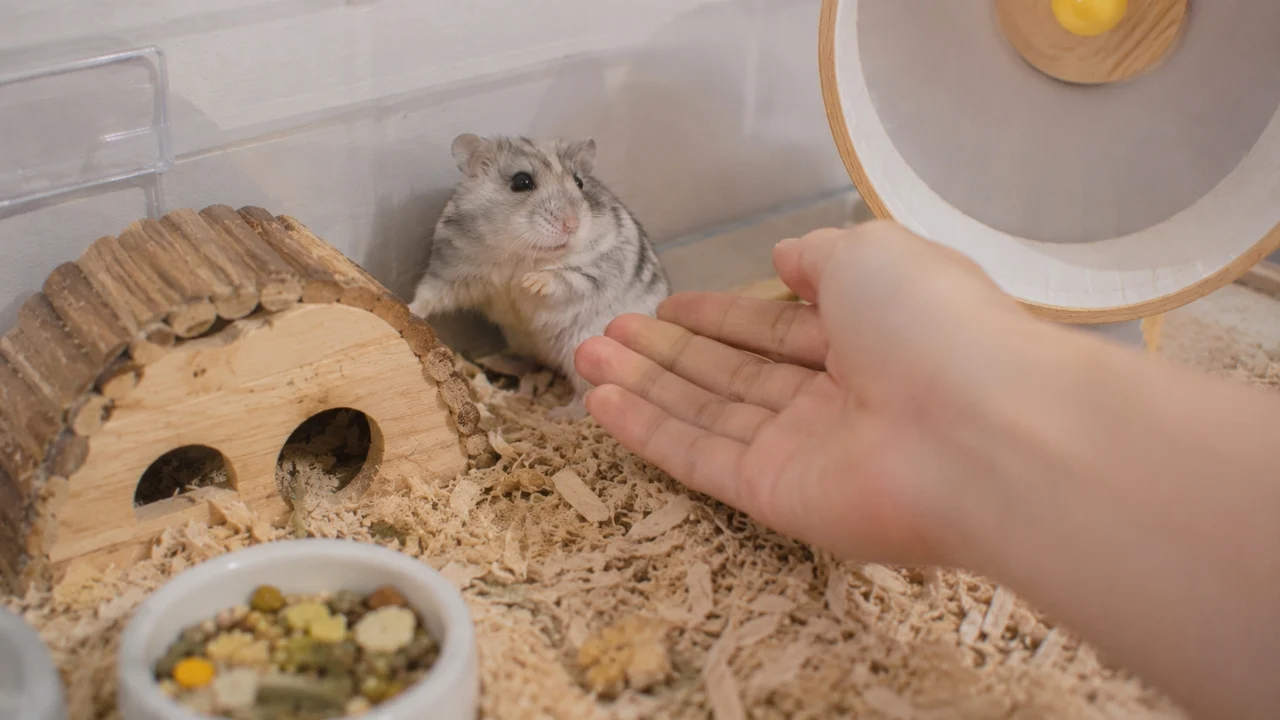
Bringing home a new hamster is exciting. After setting up the cage, choosing the bedding, and watching your tiny new pet explore its surroundings, it’s tempting to reach in and start bonding right away. Many owners are eager to hold their hamster on the first day because they assume early handling will speed up bonding.
Unfortunately, this is one of the most common mistakes new hamster owners make.
A hamster that has just arrived in a new home is often overwhelmed, confused, and stressed. Picking it up too soon can make the adjustment period much harder and may even delay the trust-building process you’re hoping to start. While one brief interaction is unlikely to cause lasting harm, repeated handling during the first few days can create fear, defensive behaviors, and unnecessary stress.
Understanding what happens when a hamster is handled too early can help you avoid common setbacks and build a stronger relationship with your pet from the beginning.

Every hamster adjusts at its own pace. Some appear curious within a day or two, while others spend most of their first week hiding. Neither response is unusual. The key is allowing the hamster to gain confidence before expecting physical interaction.
A calm first night also matters during this adjustment period; our The First Night With a New Hamster: What to Expect and What to Avoid guide explains how to help a new arrival settle in without unnecessary disturbance.
Why a New Hamster Needs Time to Adjust
When a hamster arrives in a new home, nearly everything around it is unfamiliar.
The cage smells different. The bedding is new. The sounds, lighting, temperature, and people are all unknown. Before arriving at your home, the hamster may have experienced transportation, handling, and a completely different environment.

From the hamster’s perspective, it has suddenly lost every familiar scent, sound, and hiding place it previously knew.
This adjustment period is often called the “settling-in phase,” and it plays a major role in future behavior. Owners who understand this phase are usually more successful at building trust. If you’re preparing for a new pet, learning about The Biggest Mistake New Hamster Owners Make in the First Week can help you avoid several common beginner errors.
What Happens When You Hold a Hamster Too Soon?

Not every hamster reacts the same way, but handling during the adjustment period commonly triggers stress-related behaviors.
Instead of viewing your hand as a friendly gesture, a newly arrived hamster may see it as a potential threat. Hamsters are prey animals by nature, which means their instincts are designed to keep them alert to danger.

Increased Stress Levels
Stress is the most common consequence of early handling.
In many cases, owners do not notice stress immediately because hamsters often respond by hiding or becoming unusually quiet rather than showing obvious signs of distress.
A hamster that is still adjusting may become overwhelmed when lifted, restrained, or repeatedly approached. While stress isn’t always immediately visible, it can influence behavior for days or even weeks.
Signs of stress may include:

- Hiding constantly
- Refusing treats
- Sleeping more than usual
- Avoiding certain areas of the cage
- Freezing when approached
Fear-Based Biting
Many owners mistakenly assume that a bite automatically means aggression.
In reality, most early bites are defensive reactions. A frightened hamster may bite because it feels trapped or threatened.
If you’re unsure whether your hamster is biting out of fear or another reason, Why Does My Hamster Bite Me? Causes & How To Stop It explains the most common causes and how to respond calmly.
This is especially common when:

- The hamster is awakened unexpectedly
- A hand enters the cage too quickly
- The hamster is grabbed from above
- The hamster has not yet learned that your presence is safe
Understanding the difference between fear and aggression is important. Articles like Why Does My Hamster Bite Me When I Try to Pick It Up? can help owners interpret these behaviors correctly.
Delayed Trust Building
Once a hamster associates hands with stressful experiences, rebuilding confidence often takes longer than allowing a few extra days of adjustment at the beginning.
One of the biggest ironies of early handling is that it can slow down the bonding process.
Many owners pick up a hamster immediately because they want it to become comfortable with people. However, if the experience is frightening, the hamster may become more cautious around hands in the future.

Trust develops when a hamster consistently experiences safety, not when it is forced into interaction.
Common Signs Your Hamster Was Handled Too Soon
Some hamsters show obvious signs of stress, while others are more subtle.
The following behaviors may suggest your hamster needs more time to adjust.
| Behavior | Possible Meaning |
|---|---|
| Running away when approached | Fear or uncertainty |
| Hiding for long periods | Adjustment stress |
| Refusing food from your hand | Lack of trust |
| Jumping suddenly when disturbed | Nervousness |
| Biting during handling | Defensive behavior |
| Flattening body against the ground | Feeling threatened |
A single behavior alone does not always indicate stress. Look for several of these signs occurring together over multiple days.
How Long Should You Wait Before Handling a New Hamster?
There is no exact number of days that works for every hamster.
Some confident hamsters begin showing curiosity within a few days, while others need a week or more before they feel comfortable.
A general guideline is:
| Stage | Recommended Approach |
|---|---|
| First 24 hours | Provide food, fresh water, and a quiet environment. Avoid unnecessary handling while your hamster settles in. |
| After settling in | Speak softly near the enclosure and let your hamster become familiar with your presence without forcing interaction. |
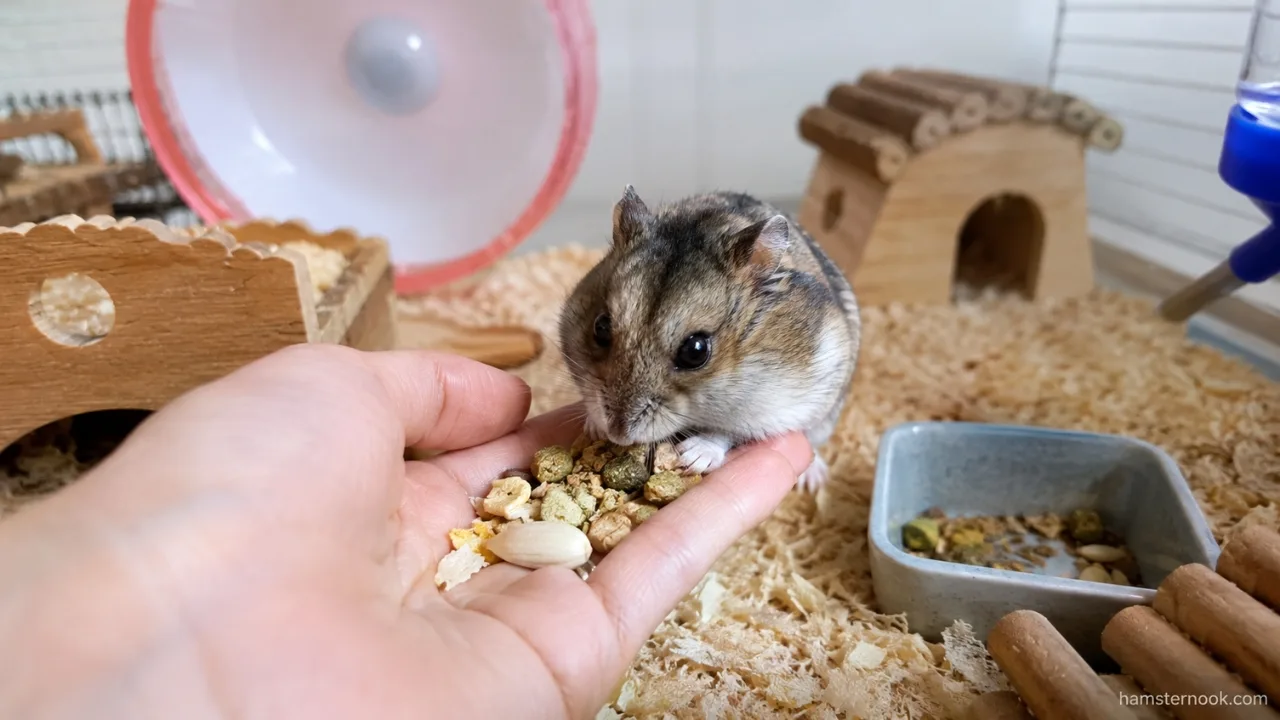
| When your hamster is comfortable | Offer a small hamster-safe treat and allow your hamster to approach and sniff your hand voluntarily. |
| When your hamster consistently approaches calmly | Introduce gentle handling gradually, supporting the body with both hands and keeping the hamster close to a safe surface. |
| If your hamster shows fear | Pause the interaction and give it more time. Progress according to its behaviour rather than a fixed schedule. |
These timelines are only general guidelines. A confident hamster may progress faster, while a nervous hamster may need additional time before it feels comfortable interacting.

The hamster’s behavior matters more than the calendar.
Many first-time owners worry that waiting a few extra days will slow down bonding. In reality, giving your hamster time to settle often leads to faster trust because the first interactions feel safe instead of stressful.
A hamster that approaches the cage front, accepts treats, and remains calm around your hand is usually more prepared for interaction than one that still hides whenever someone enters the room.
Why Hamsters See Hands Differently Than Humans Do
Humans often associate touch with comfort and affection.
Hamsters do not naturally think this way.
In the wild, something reaching down from above is usually a predator. Birds of prey attack from overhead, so many hamsters instinctively react to hands approaching from above the cage.
This is why sudden grabbing often causes panic.
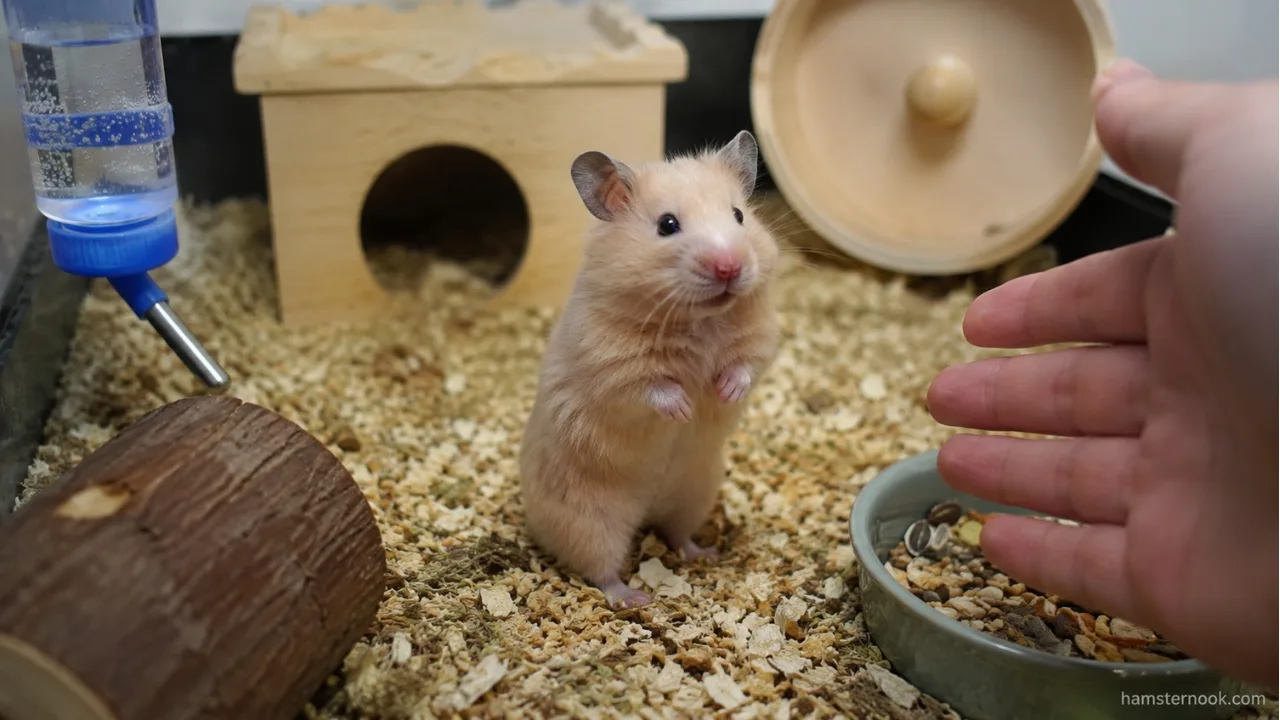
Instead of reaching immediately for your hamster, allow it to investigate your hand voluntarily. Learning how hamsters interpret human behavior can make bonding much easier. You may also find Can Hamsters Learn Their Names? interesting if you’re working on building recognition and trust.
Better Ways to Bond During the First Week

The good news is that trust-building can begin long before physical handling becomes necessary.
Spend Time Near the Cage
Simply sitting near the enclosure allows your hamster to become familiar with your voice, movements, and scent.
Over time, these things become part of the hamster’s normal environment rather than something to fear.
Let Your Hamster Approach You
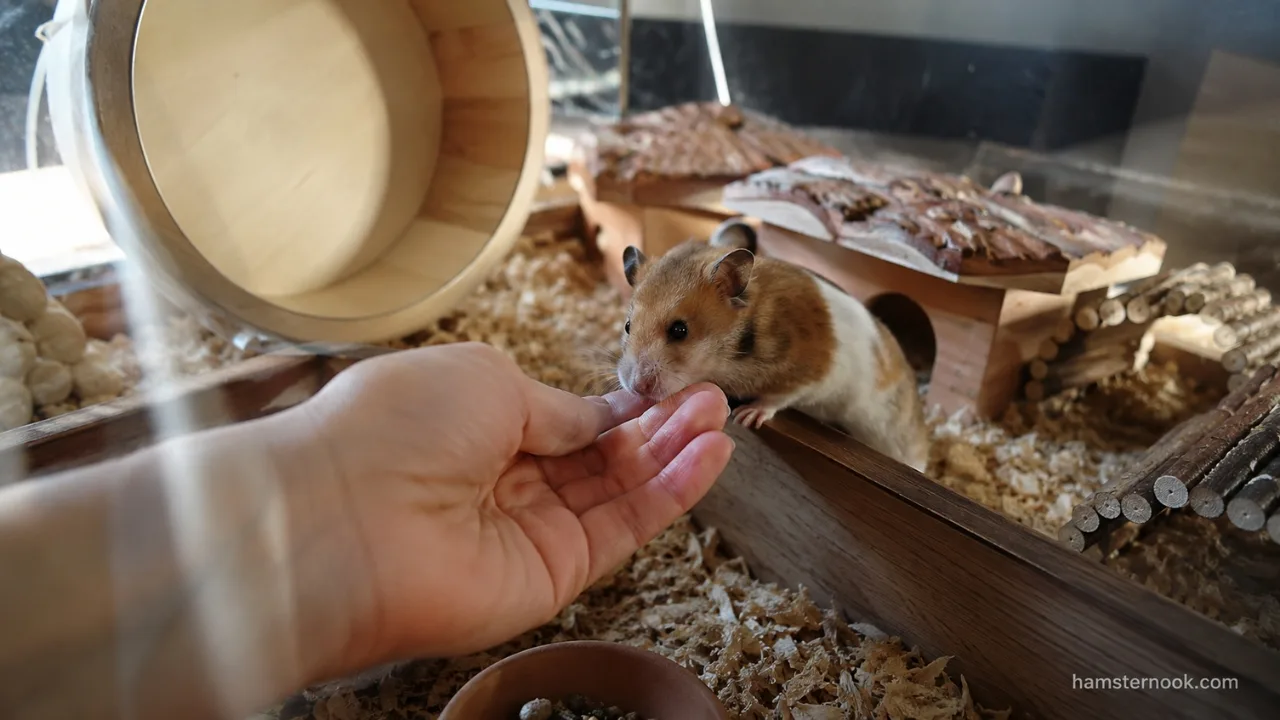
Place your hand inside the enclosure without attempting to grab the hamster.
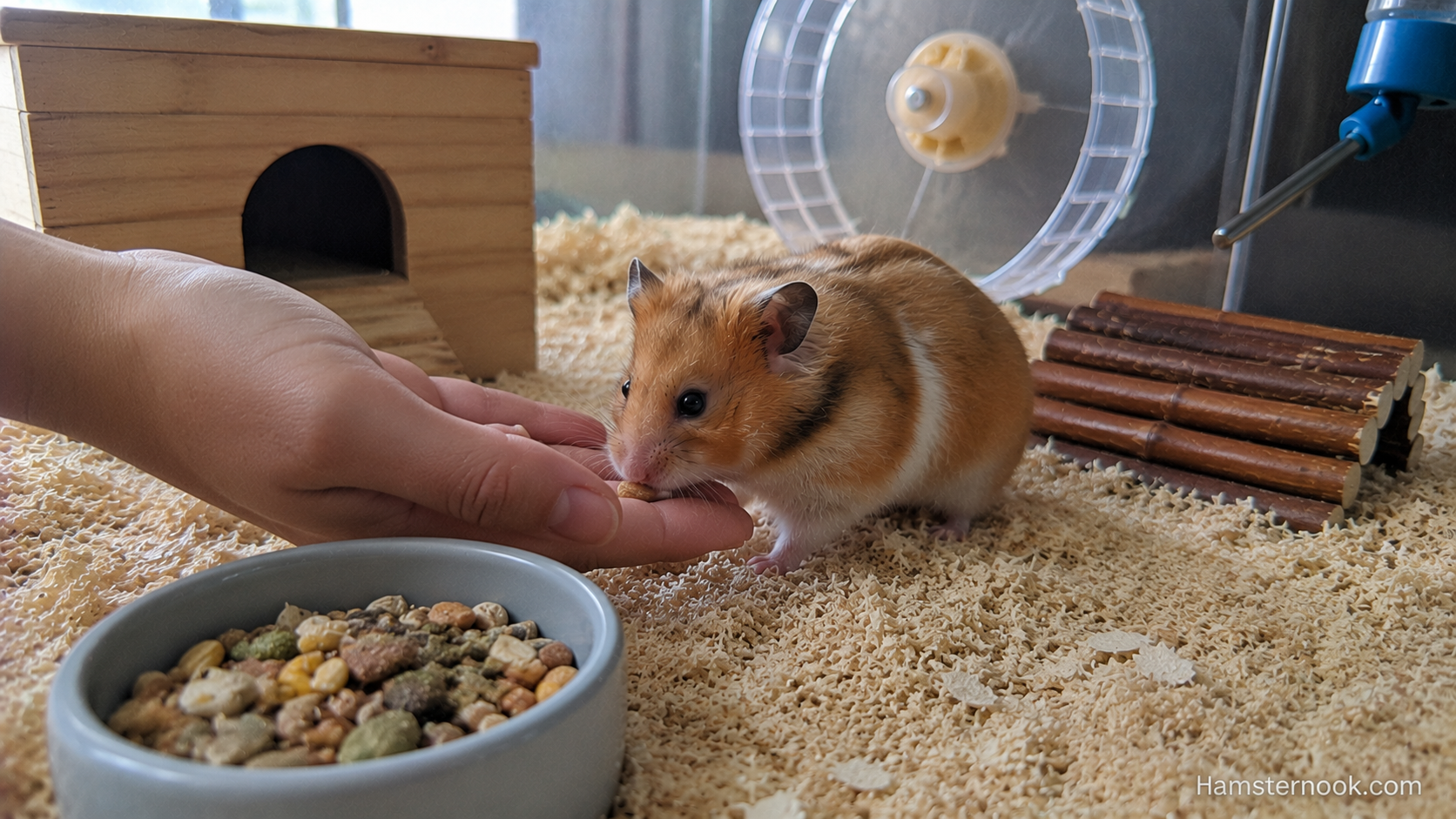
Allow the hamster to:
- Sniff your hand
- Walk near your hand
- Take treats from your fingers
Use Food as Positive Reinforcement
Small hamster-safe treats can help create positive associations.
The goal is not to bribe your hamster but to teach it that your presence predicts good experiences.
Owners interested in early bonding often benefit from reading How to Tame a Hamster Without Getting Bitten, which focuses on trust-building methods that don’t involve forcing interaction.

Common Mistakes That Make Early Handling Worse
Even well-meaning owners sometimes make adjustment stress worse.
Waking a Sleeping Hamster
Hamsters are naturally active during evening and nighttime hours.
Waking a sleeping hamster to play or cuddle often leads to irritation and stress.
Passing the Hamster Around
Family members are often excited to meet a new pet.

However, multiple people handling a hamster during its first few days can be overwhelming.
Removing the Hamster From the Cage Too Soon
The cage should become the hamster’s safe space.
Taking a hamster out before it feels secure in its enclosure can increase anxiety.
If your hamster seems frightened of everything around it, you may find Understanding Why Your New Hamster Seems Scared of Everything helpful for recognizing normal adjustment behaviors.

Fortunately, a single brief handling session rarely causes lasting problems. The biggest issue usually comes from repeated handling before the hamster feels secure.
What If You Already Held Your Hamster Too Soon?
Many owners worry they’ve permanently damaged their relationship after handling their hamster on the first day.
Fortunately, that is rarely the case.
Most hamsters regain confidence surprisingly well when future interactions remain calm and predictable.
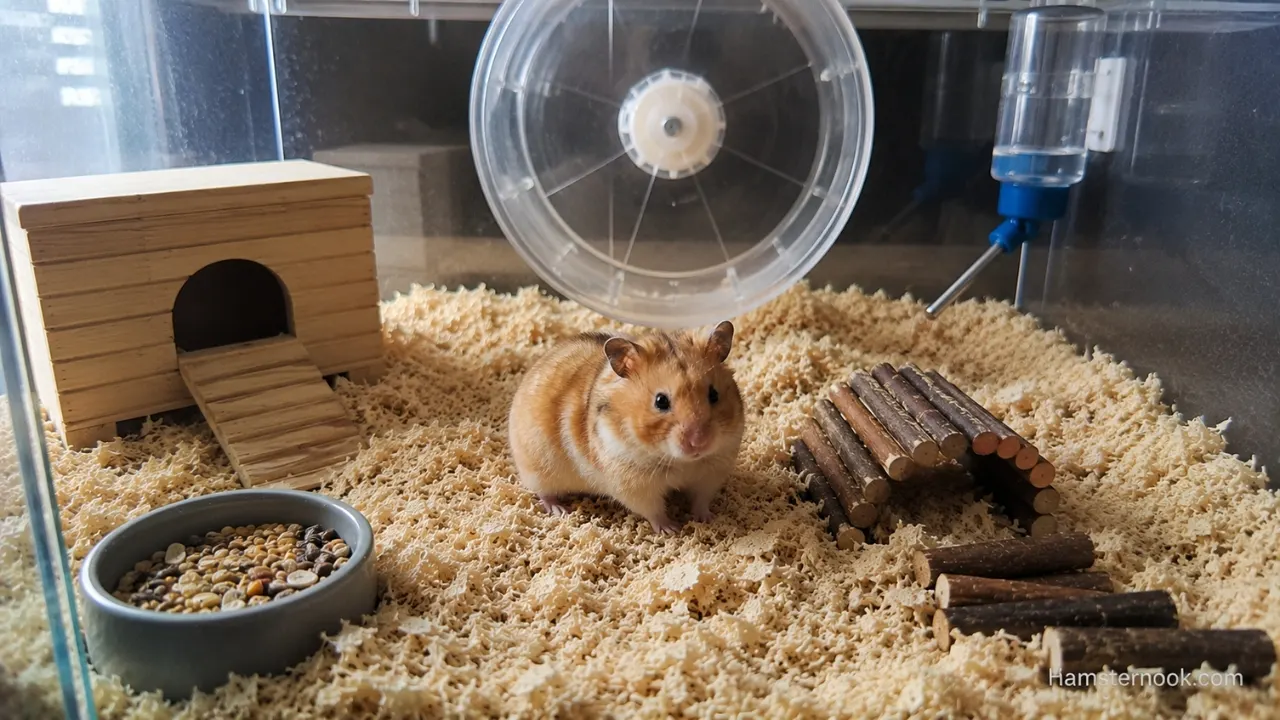
One mistake during the first day rarely ruins the relationship. What matters most is avoiding repeated handling while your hamster is still adjusting to its new surroundings.
If you’ve already handled your hamster too early:
- Reduce unnecessary interaction for a few days.
- Focus on routine care.
- Allow the hamster to approach you voluntarily.
- Offer treats occasionally.
- Avoid chasing or grabbing.
Most hamsters gradually regain confidence when they learn that future interactions are safe and predictable.
How to Tell When Your Hamster Is Ready for Handling
Rather than focusing on a specific timeline, look for behavioral clues.

A hamster may be ready for gentle handling when it:
- Approaches your hand willingly
- Takes treats calmly
- Continues normal activities near you
- Shows curiosity rather than fear
- Does not immediately run away
Hamsters that choose to interact voluntarily usually become easier to handle and more confident over time.
Owners often notice that once a hamster becomes comfortable, progress happens surprisingly quickly. Articles such as Signs Your Hamster Finally Trusts You can help identify these milestones.
Successful taming is usually measured by the hamster’s willingness to approach voluntarily, not by how quickly it can be picked up.

Building Long-Term Trust Starts With Patience
Many new owners assume that frequent handling automatically creates trust.
In reality, trust develops through consistent positive experiences.
If you’re looking for a complete step-by-step guide to caring for a new hamster, our Ultimate Hamster Care Guide for Beginners (2026) brings together everything from housing and feeding to taming and health in one place.
When a hamster feels secure in its surroundings, curiosity naturally begins to replace caution. By respecting your hamster’s adjustment period, you’re giving it the best possible foundation for a healthy relationship.

Frequently Asked Questions
Is it bad to hold a hamster on the first day?
Most hamster owners and care experts recommend avoiding handling on the first day. Giving the hamster time to settle into its new environment usually results in easier bonding later.
Will my hamster hate me if I picked it up too soon?
No. Most hamsters recover well from early handling experiences. Giving your hamster time and space afterward usually helps rebuild confidence.
How many days should I wait before touching my new hamster?
Many owners wait several days before beginning trust-building exercises. The hamster’s behavior is a better guide than a fixed number of days.
Why does my new hamster run away from my hand?
Running away is usually a normal reaction from a hamster that has not yet learned your scent, routine, and intentions. This behavior often improves as trust develops.

Can early handling cause biting?
Yes. A frightened hamster may bite as a defensive reaction when it feels trapped or threatened.
What is the safest way to start handling a new hamster?
Start by letting the hamster approach your hand voluntarily. Once it consistently accepts treats and remains calm around your hand, gentle handling can be introduced gradually.
References
This guide is based on hamster behavior, handling, adjustment, stress reduction, and welfare guidance from trusted animal welfare and veterinary resources, including:
- RSPCA – Hamster Behaviour – Guidance on natural hamster behavior, handling, activity patterns, and recognizing signs of stress or fear.
- RSPCA – Keeping Hamsters as Pets – General advice on hamster care, settling into a new environment, handling, and welfare.
- Blue Cross – Hamster Care Guide – Practical guidance on hamster handling, taming, housing, and helping a new hamster adjust.
- PDSA – Hamsters as Pets – Advice on hamster behavior, handling, daily care, and providing a suitable environment.
- MSD Veterinary Manual – Providing a Home for a Hamster – Veterinary guidance on suitable housing, environmental needs, and supporting hamster welfare.

Narayan Kumar is the founder and author of HamsterNook. He creates practical, research-based hamster care guides covering hamster behavior, nutrition, cage setup, enrichment, health, and everyday care. His goal is to help hamster owners make informed decisions and provide safer, healthier lives for their pets through clear, beginner-friendly information based on trusted animal care resources.