
For many new hamster owners, the most exciting moment is finally holding their pet for the first time. Unfortunately, it’s also when many mistakes happen. A hamster that seems calm in its cage can become frightened if picked up too quickly, grabbed from above, or handled before it has learned to trust you.
Most hamsters can become comfortable with handling once they learn that your hands are safe and predictable. Success usually comes from moving slowly and allowing the hamster to decide how quickly interactions progress. When done correctly, handling sessions can strengthen trust, reduce stress, and make routine care much easier.
Whether you’ve just brought home a new hamster or you’re trying to build confidence with a nervous pet, this guide will show you exactly how to hold a hamster safely without causing fear or unnecessary stress.
Why Hamsters Get Scared When Being Picked Up
Before learning the correct handling technique, it helps to understand why hamsters often react nervously.

In the wild, hamsters are prey animals. Birds, foxes, snakes, and other predators hunt them. Because of this, hamsters are naturally cautious and alert to anything approaching from above.
Many common handling mistakes accidentally mimic predator behavior.
| Situation | How a Hamster May Interpret It |
|---|---|
| Hand swooping down from above | Predator attack |
| Sudden grabbing | Immediate danger |
| Loud noises during handling | Threat nearby |
| Fast movements | Unsafe environment |
| Forced handling | Loss of control |
Understanding this instinct helps explain why patience is so important.
Signs Your Hamster Is Ready to Be Handled
Not every hamster is immediately comfortable with human contact. Knowing when your hamster is comfortable enough for handling can prevent unnecessary stress.

A hamster may be ready for handling when it:
- Approaches your hand voluntarily
- Accepts treats from your fingers
- Appears relaxed around you
- Sniffs your hand without running away
- Climbs onto your palm willingly
If your hamster still hides whenever you approach, spend more time building trust before attempting to pick it up.
How to Build Trust Before Holding Your Hamster
Trust should come before handling.
Many owners make the mistake of trying to pick up a hamster on the first day. While some hamsters tolerate this, others become frightened and take longer to bond afterward.

Let Your Hamster Adjust First
After bringing a hamster home, allow several days for adjustment.
If your hamster spends most of its time hiding during the adjustment period, read Why Does My Hamster Keep Hiding? to understand what is normal and when you should be concerned.
During this period:
- Speak softly near the cage
- Avoid excessive handling
- Maintain a consistent routine
- Allow exploration of the enclosure
This helps the hamster feel secure in its new environment.

Use Treat-Based Training
Offering healthy treats can create positive associations with your presence.
Good options may include:
- Small sunflower seeds
- Tiny pieces of cucumber
- Small bits of hamster-safe vegetables
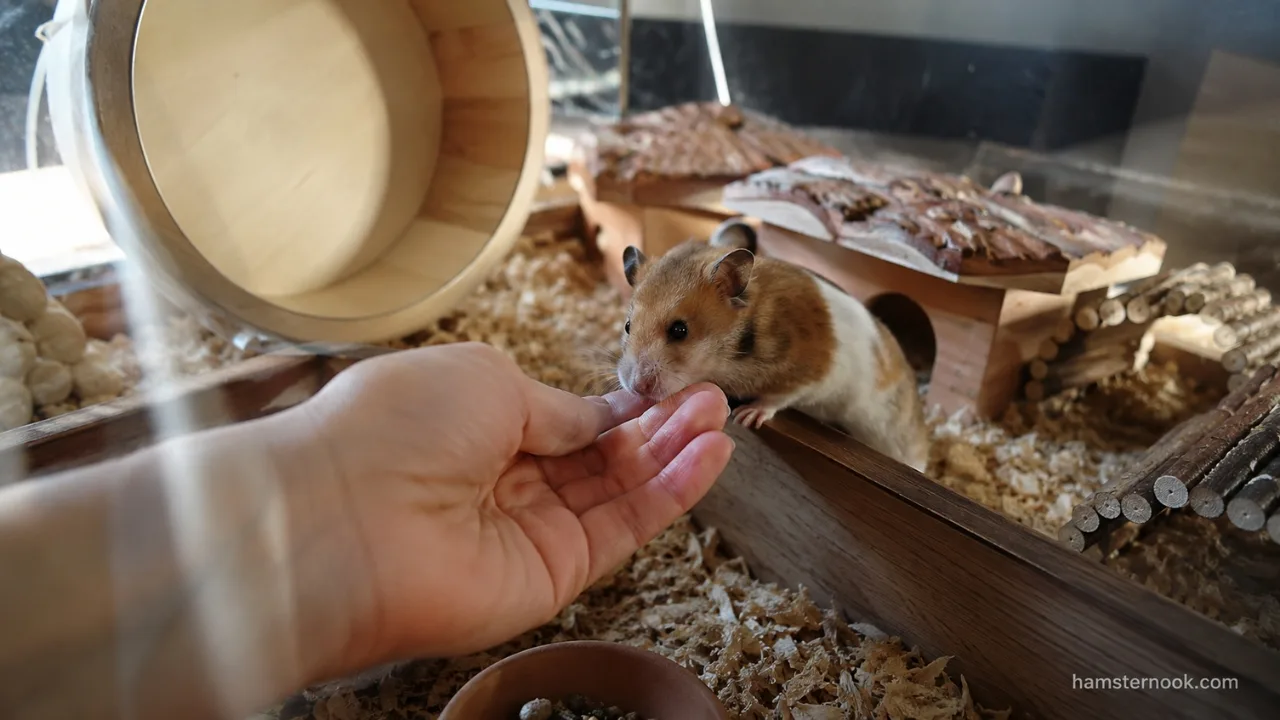
Place treats on your open palm and allow the hamster to approach voluntarily.
Choosing safe treats is important because some foods can upset a hamster’s digestive system. See What Can Hamsters Eat? Complete Food List for a detailed guide.

Allow Curiosity to Lead
Instead of chasing your hamster with your hand, let curiosity do the work.
Most hamsters naturally investigate new objects and scents. Over time, many will begin climbing onto an open hand without being forced.
If your hamster is still nervous around your hands, building your hamster’s trust gradually can make handling much easier.
Step-by-Step Guide to Holding a Hamster Safely

Once your hamster appears comfortable with your presence, you can begin gentle handling.

Step 1: Wash Your Hands
Clean hands remove food scents that may encourage nibbling.
Strong odors such as perfumes, lotions, or food residue can confuse a hamster.
Step 2: Wake Your Hamster Gently
Never startle a sleeping hamster.
Instead:
- Speak softly
- Allow natural waking
- Offer a treat
- Wait until fully alert
Suddenly waking a hamster may cause defensive reactions.
Step 3: Place Your Hand Flat
Place your hand inside the enclosure with your palm facing upward.
Avoid grabbing or cornering the hamster.
Allow the hamster to investigate at its own pace.

Step 4: Let the Hamster Climb On
The safest handling begins when the hamster chooses to step onto your hand.
This creates a sense of control and reduces fear.
Step 5: Use Both Hands for Support
Once the hamster is on your hand, gently place your other hand around the sides.
The goal is support, not restraint.

Think of your hands as a secure platform rather than a cage.

What If Your Hamster Won’t Let You Pick It Up?
If your hamster backs away, freezes, or repeatedly tries to escape, do not chase or grab it. Pause the session and give it more time to become comfortable with your hands.
For a hamster that will not climb onto your hands, use a small safe container or hideout to move it instead of forcing a pickup. This can reduce struggling and lower the risk of a fall or bite.
Step 6: Lift Slowly
Raise your hands only a short distance at first.

Keeping the hamster close to a soft surface reduces injury risk if it jumps unexpectedly.
Best Ways to Hold Different Hamster Personalities
Not all hamsters respond to handling in the same way.
| Hamster Personality | Recommended Approach |
|---|---|
| Curious and social | Allow voluntary climbing onto hands |
| Nervous or shy | Build trust gradually with treats |
| Recently adopted | Focus on observation before handling |
| Easily startled | Use slower movements and shorter sessions |
| Confident adult | Gentle regular handling sessions |
Adapting your approach often leads to What works for one hamster may not work for another, so it’s worth adjusting your approach based on your pet’s personality.
better results than forcing a single method.

Common Mistakes That Scare Hamsters
Many handling problems happen because owners unknowingly create fear.
Grabbing From Above
This is one of the fastest ways to frighten a hamster.
A hand coming directly from above resembles a predator attack and can trigger panic.
Holding Too Tightly
Hamsters need support, not squeezing.

Excessive restraint can make them struggle, bite, or become fearful of future handling.
Handling Too Soon After Arrival
A hamster that has just moved into a new home is already dealing with unfamiliar sights, smells, and sounds.
Adding immediate handling may increase stress.
Chasing Around the Cage
Trying to catch a hamster often damages trust.

If your hamster runs away, pause and try again later.
Allowing Children to Handle Unsupervised
Hamsters are small and fragile.
Young children should always be supervised during handling sessions.
Signs Your Hamster Is Feeling Stressed During Handling
Learning to recognize stress signals helps you stop before fear escalates.

For a broader explanation of what different reactions mean, see our Hamster Body Language Explained guide.
| Stress Signal | What It May Mean |
|---|---|
| Flattened ears | Nervousness |
| Rapid movement | Attempting escape |
| Sudden freezing | Fear or uncertainty |
| Repeated jumping | Wants to get away |
| Teeth chattering | Defensive behavior |
| Biting | Feeling threatened |
If these signs appear, calmly return the hamster to its enclosure.
How Long Should You Hold a Hamster?
Short sessions are usually best when building trust.
| Experience Level | Suggested Session Length |
|---|---|
| New hamster | 1–3 minutes |
| Building trust | 3–5 minutes |
| Comfortable hamster | 5–15 minutes |
| Experienced and relaxed hamster | Based on individual comfort |
Ending sessions while the hamster remains calm often creates more positive experiences.

Safe Places to Handle a Hamster
The environment matters almost as much as the handling technique itself.
Good handling locations include:
- Sitting on a bed
- Sitting on the floor
- Inside a playpen
- Over a soft blanket
Avoid:
- Standing while holding the hamster
- Handling near stairs
- High surfaces
- Areas where escape is possible
Even tame hamsters can jump unexpectedly.

What to Do If Your Hamster Bites You
Biting does not automatically mean a hamster is aggressive.
Common causes include:
| Reason for Biting | Possible Solution |
|---|---|
| Fear | Slow down handling process |
| Startling the hamster | Approach more gently |
| Smelling food on hands | Wash hands first |
| Pain or illness | Monitor health and behavior |
| Lack of trust | Spend more time bonding |
Punishing a hamster for biting should never be done. Building trust is far more effective.
Can You Hold a Hamster Every Day?
Yes, many hamsters enjoy regular interaction once trust is established.

Regular, positive interactions help many hamsters stay comfortable with being handled.
However, every hamster has a unique personality. Some enjoy daily interaction, while others prefer shorter and less frequent sessions.
Pay attention to your hamster’s comfort level rather than following a strict schedule.
If your hamster consistently avoids handling, focus on rebuilding trust rather than increasing the number of sessions. Let its behavior guide when you handle it.

Final Thoughts
Holding a hamster safely is less about technique and more about trust. Hamsters are naturally cautious animals, and forcing interaction rarely produces good results. By allowing your hamster to approach voluntarily, using gentle movements, and respecting its comfort level, you can create positive experiences that strengthen your bond over time.
Many hamsters become much easier to handle once they learn that your hands are not a threat and that every interaction is calm and predictable. When you focus on trust first and handling second, both you and your hamster are more likely to enjoy the experience.
Frequently Asked Questions
Is it normal for a new hamster to be afraid of being held?
Yes. Most hamsters need time to adjust to a new environment before feeling comfortable with handling.
Why does my hamster run away when I put my hand in the cage?
This usually means the hamster is still building trust or feels uncertain about human interaction.

Can I pick up my hamster while it is sleeping?
No. Hamsters should be allowed to wake naturally before any handling takes place.
How long does it take for a hamster to trust you?
Some hamsters become comfortable within days, while others may require several weeks of consistent, gentle interaction.
Should I wear gloves when handling a hamster?
Gloves can make it harder for a hamster to recognize your scent and may reduce trust-building. Bare, clean hands are generally better.
What is the safest way to pick up a hamster?
Allow the hamster to climb onto your open hands voluntarily and support its body with both hands while lifting slowly.

References
This guide is based on hamster behavior, handling, trust-building, welfare, and husbandry guidance from trusted animal care organizations and veterinary resources, including:
- RSPCA – Hamster Care and Welfare Guidance – Handling, behavior, welfare, housing, and helping hamsters feel safe.
- PDSA – Hamsters as Pets – Hamster care, handling, behavior, welfare, and general husbandry guidance.
- Blue Cross – Looking After Your Hamster – Hamster handling, care, behavior, housing, and welfare guidance.
- Merck Veterinary Manual – Hamster Care and Husbandry – Veterinary information on hamster behavior, handling, housing, and general care.
Medical Disclaimer: This article is intended for educational purposes only and should not be considered veterinary advice. A hamster’s fear, biting, or sudden change in handling behavior can sometimes be associated with pain or an underlying health problem. If your hamster suddenly becomes unusually aggressive, appears painful, stops eating, becomes lethargic, has difficulty moving, or shows other concerning symptoms, consult a qualified exotic animal veterinarian for proper evaluation and treatment.

Narayan Kumar is the founder and author of HamsterNook. He creates practical, research-based hamster care guides covering hamster behavior, nutrition, cage setup, enrichment, health, and everyday care. His goal is to help hamster owners make informed decisions and provide safer, healthier lives for their pets through clear, beginner-friendly information based on trusted animal care resources.