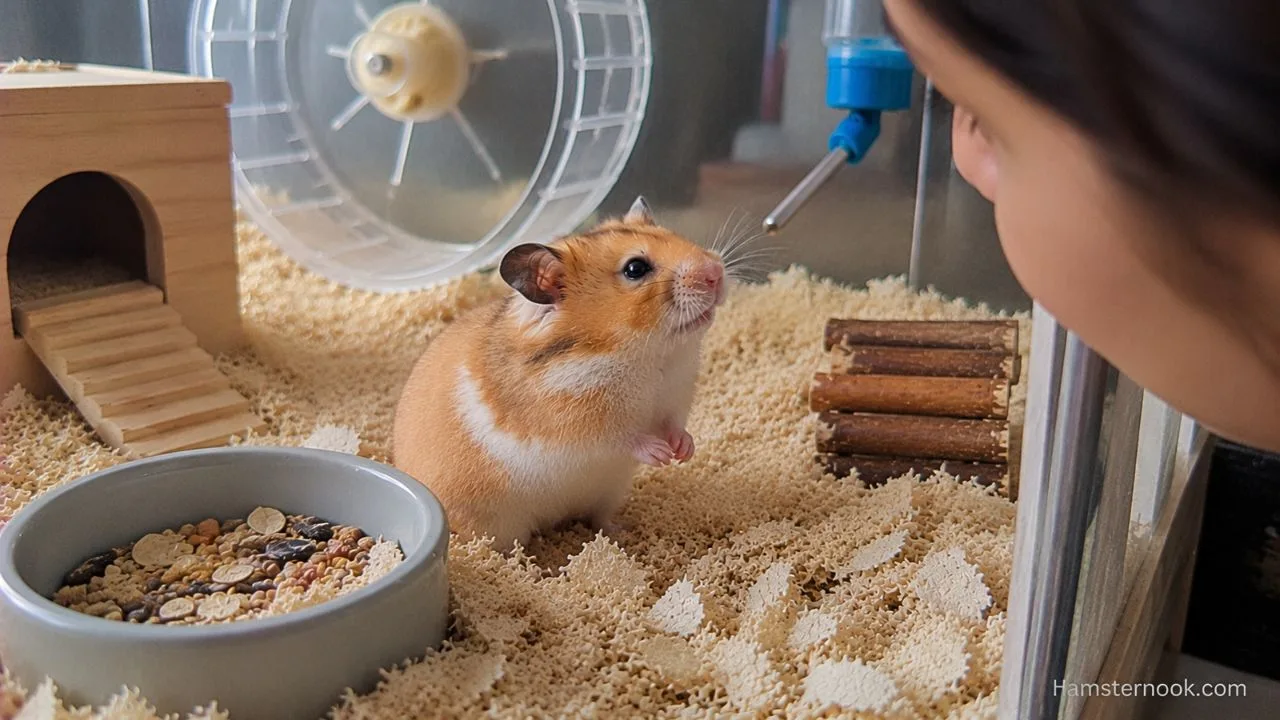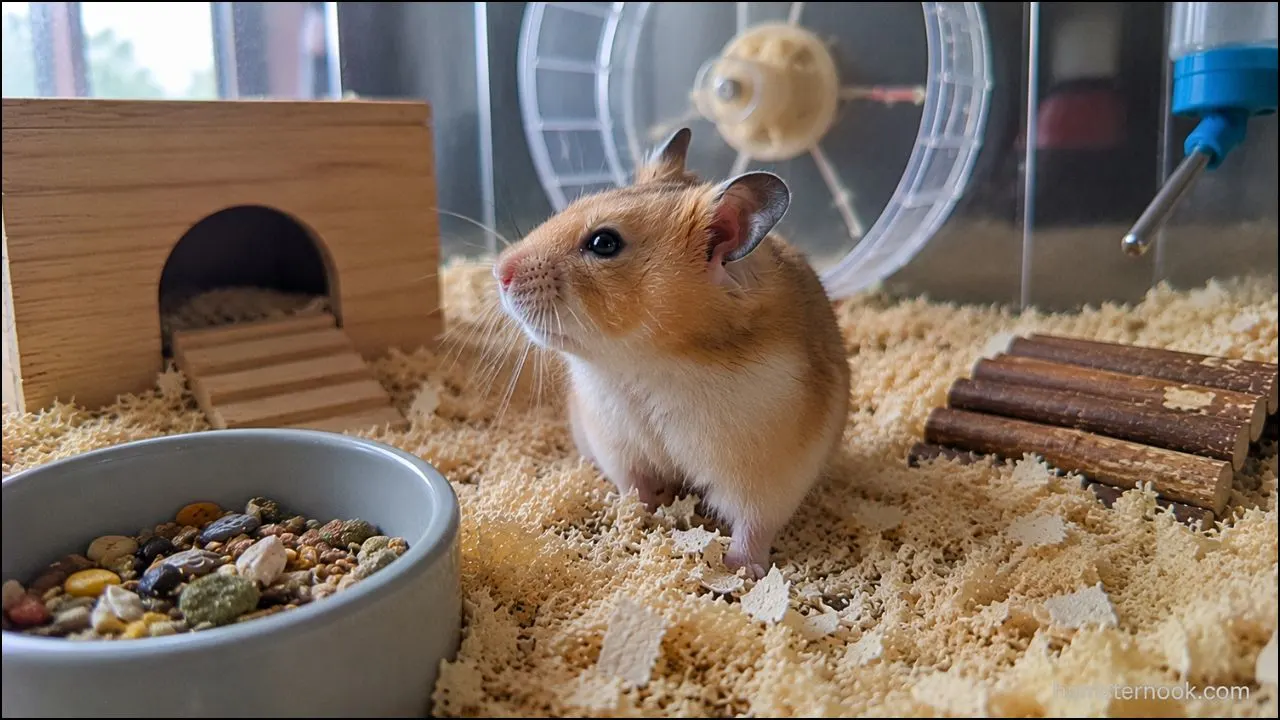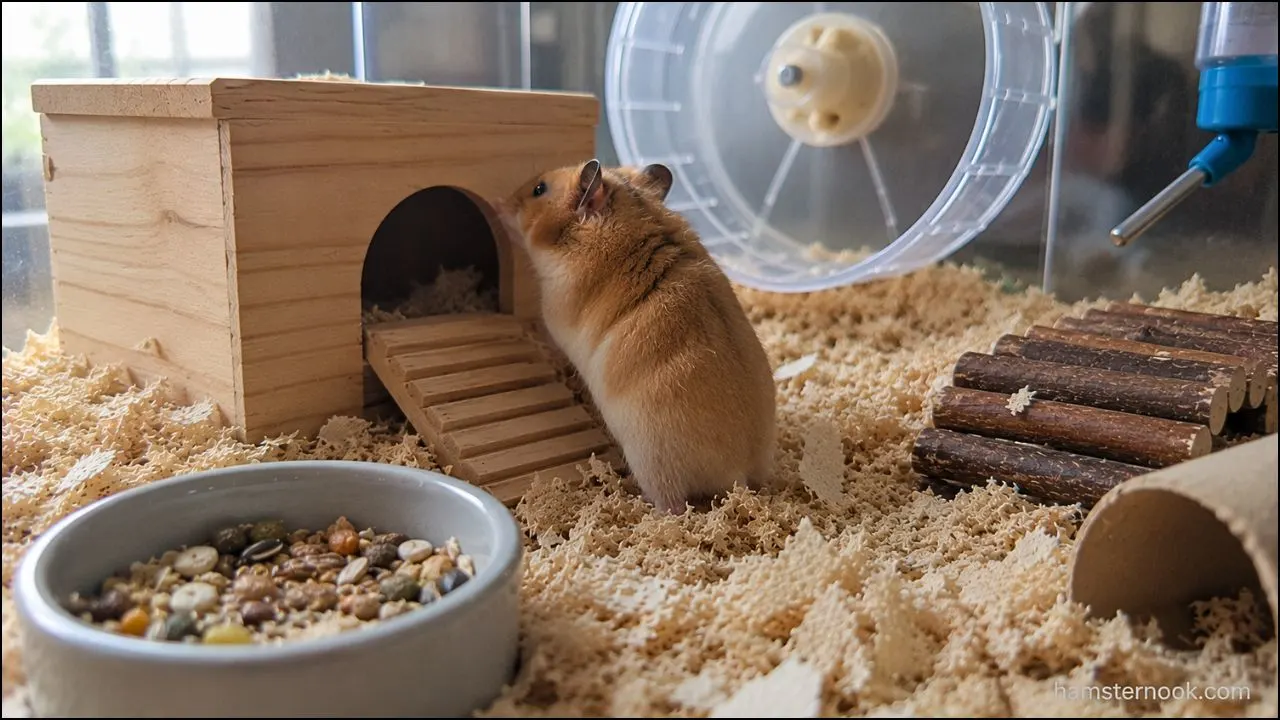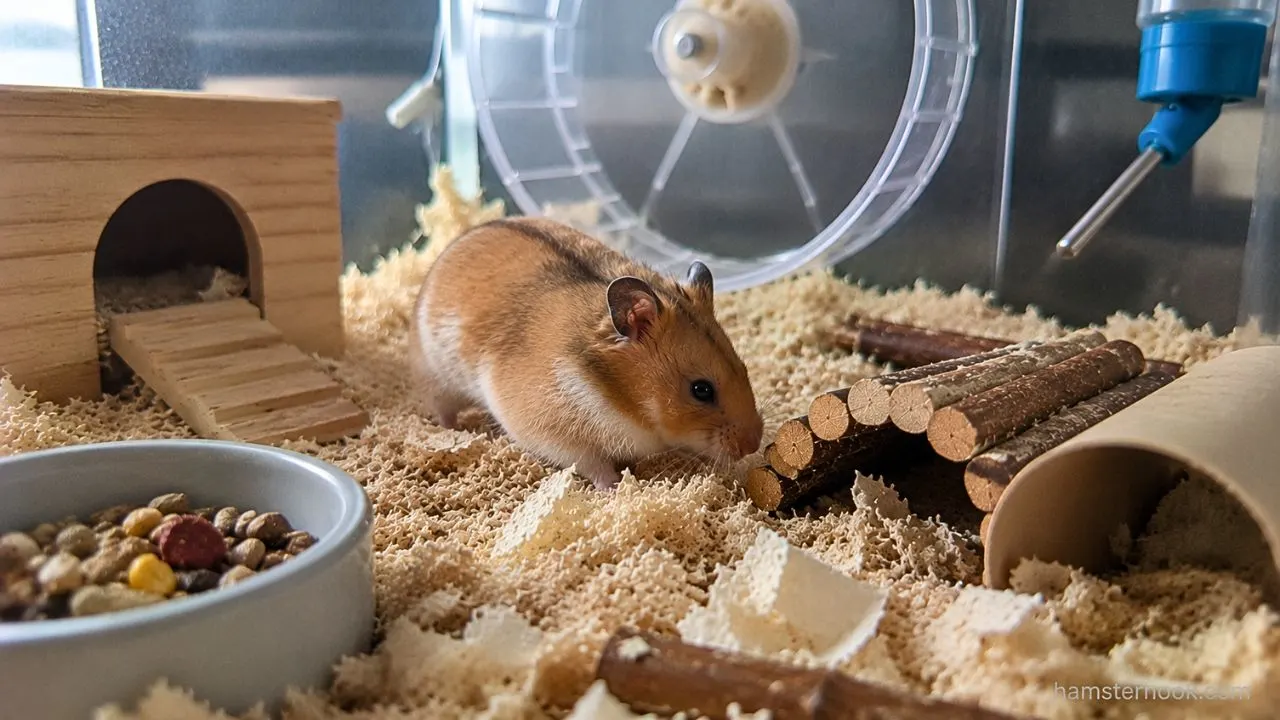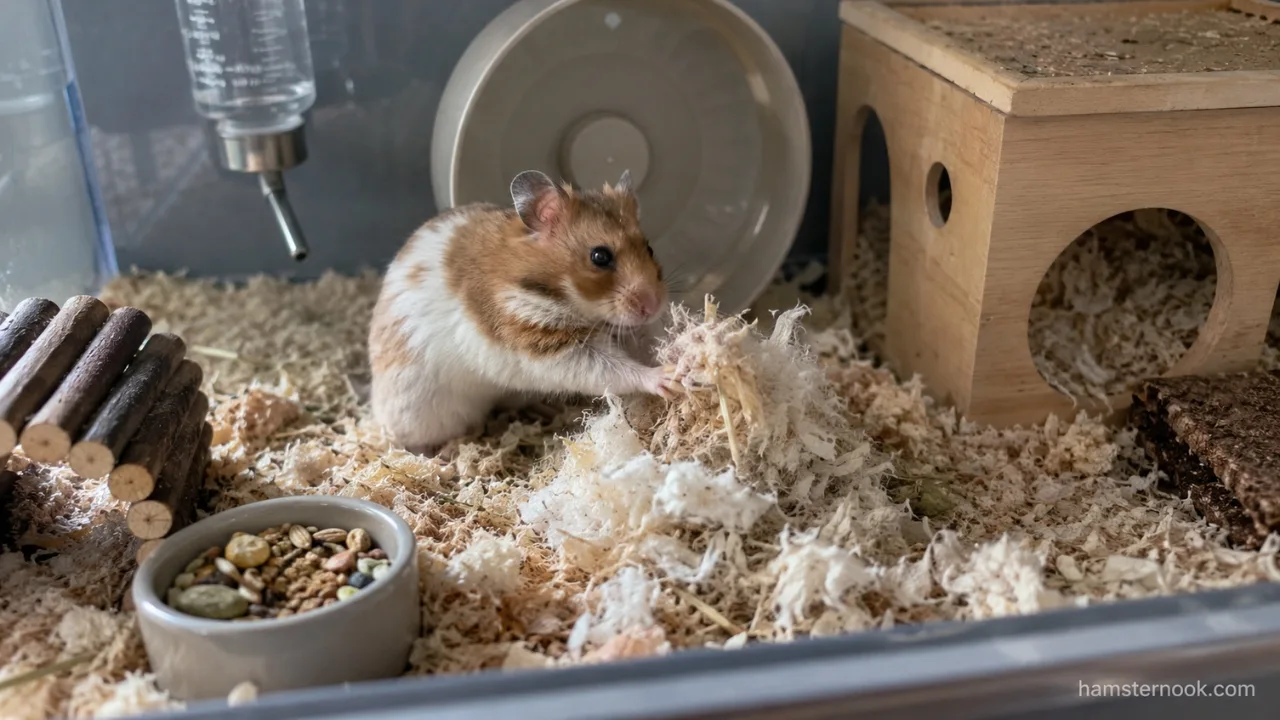
You carefully place your hamster’s food bowl, hideout, tunnels, and bedding exactly where you want them. The next morning, everything looks completely different. The food dish has moved, bedding is piled into a corner, toys have been buried, and the cage seems as though a tiny interior designer worked overnight.
If this sounds familiar, don’t worry. In most cases, rearranging the cage is completely normal hamster behavior. In fact, it often shows that your hamster is active, comfortable, and expressing natural instincts.
Understanding why hamsters constantly move things around can help owners create a better habitat and recognize the difference between healthy behavior and signs of stress.
If these behaviors continue or become more intense, 5 Warning Signs Your Hamster May Be Stressed explains the early signs that can help you tell the difference between temporary stress and a problem that needs attention.
Why Hamsters Naturally Rearrange Their Environment
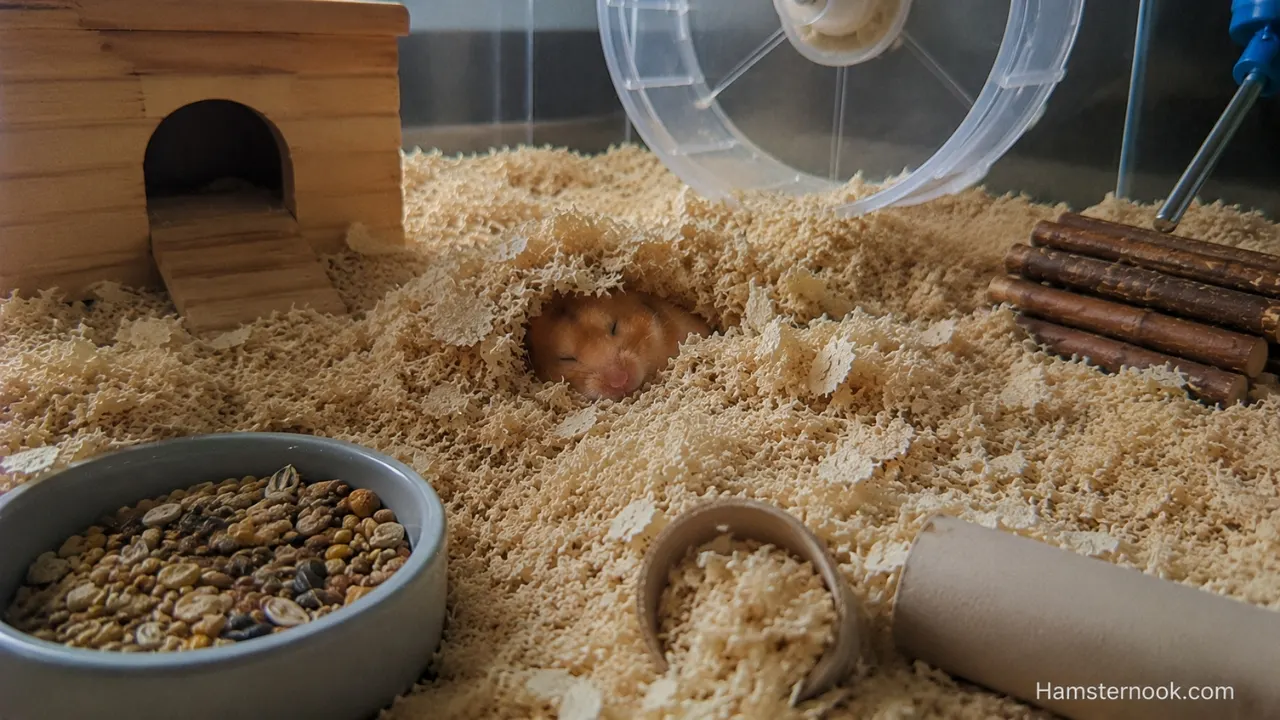
Hamsters are instinctive nest builders and territory managers. Even though pet hamsters live in cages, their natural behaviors remain largely unchanged from their wild relatives.
In the wild, hamsters spend much of their time:
- Digging burrows
- Creating nesting chambers
- Storing food
- Blocking tunnel entrances
- Organizing living spaces
- Modifying their environment for safety
Your hamster sees its cage the same way. What looks messy to you often looks perfectly organized to your pet.
Common Reasons Hamsters Rearrange Their Cage
In most cases, several natural instincts are working together rather than just one specific reason. Most hamsters move things around for several natural purposes.
| Reason | What the Hamster Is Doing | Is It Normal? |
|---|---|---|
| Nest Building | Moving bedding into sleeping areas | Yes |
| Food Storage | Carrying food to hidden locations | Yes |
| Creating Pathways | Clearing travel routes | Yes |
| Security Behavior | Blocking entrances or hiding spots | Yes |
| Burrowing Instincts | Reshaping bedding and tunnels | Yes |
| Exploration | Testing and modifying surroundings | Yes |
These behaviors are generally signs of a mentally active hamster.
Your Hamster May Be Building a Better Nest
One of the most common reasons for cage rearrangement is nest construction.
Hamsters rarely sleep where owners expect them to. Instead, they choose a location they feel is safest and most comfortable.
To improve their nest, they often:
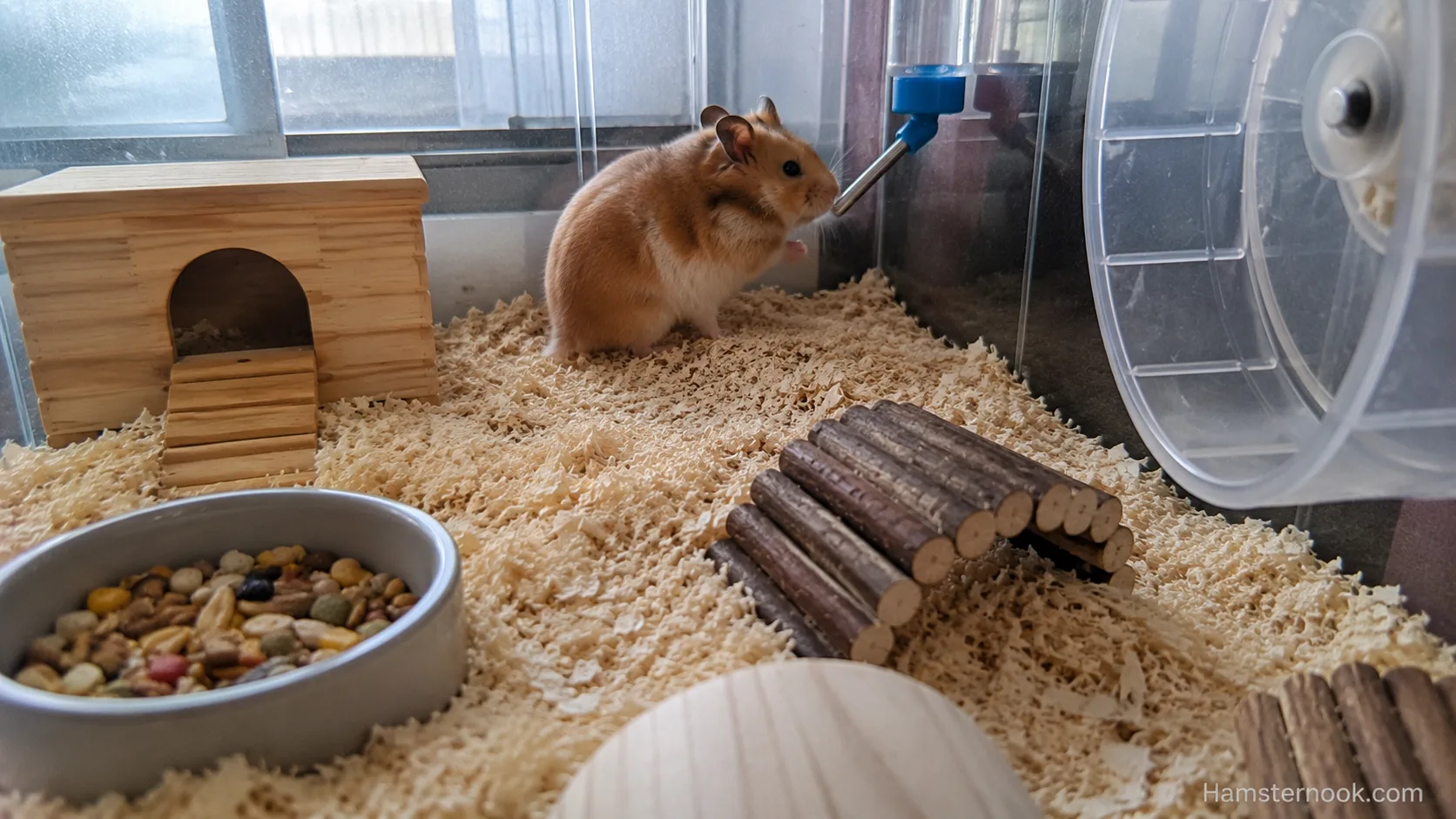
- Drag bedding across the cage
- Move soft materials into one area
- Cover sleeping spots
- Build underground chambers
Many owners clean a cage only to discover that their hamster rebuilds the entire sleeping area overnight.
This is normal and healthy behavior.
Food Hoarding Often Causes Cage Changes
Hamsters are famous for storing food.
In the wild, food may not always be available, so hamsters instinctively collect and store supplies whenever they find them.
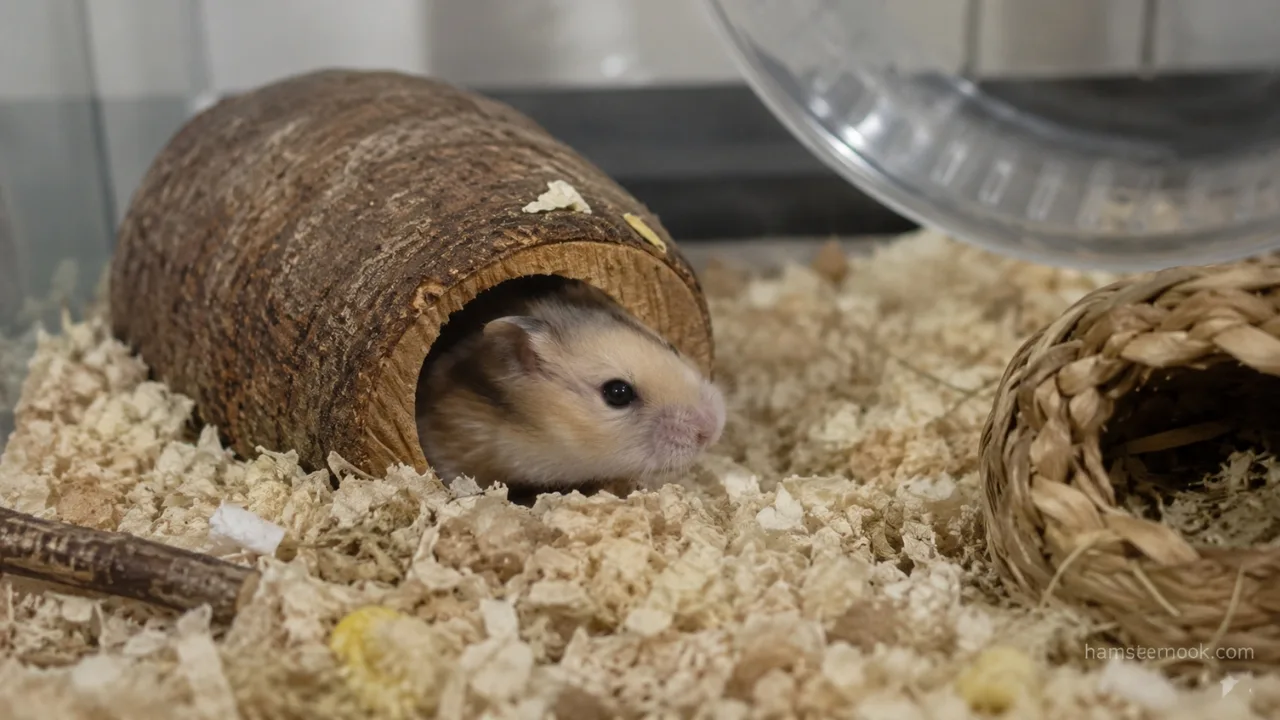
You may notice your hamster:
- Moving pellets into tunnels
- Carrying treats to a nest
- Emptying food bowls
- Creating hidden food caches
This behavior sometimes makes owners think their hamster is not eating. In reality, the food has simply been relocated.
If you’ve ever wondered why your hamster keeps moving pellets into tunnels or hiding food around the cage, Why Does My Hamster Keep Hiding Food? explains this natural hoarding instinct in more detail.
Rearranging Helps Hamsters Feel Safe
A hamster’s cage is its territory.
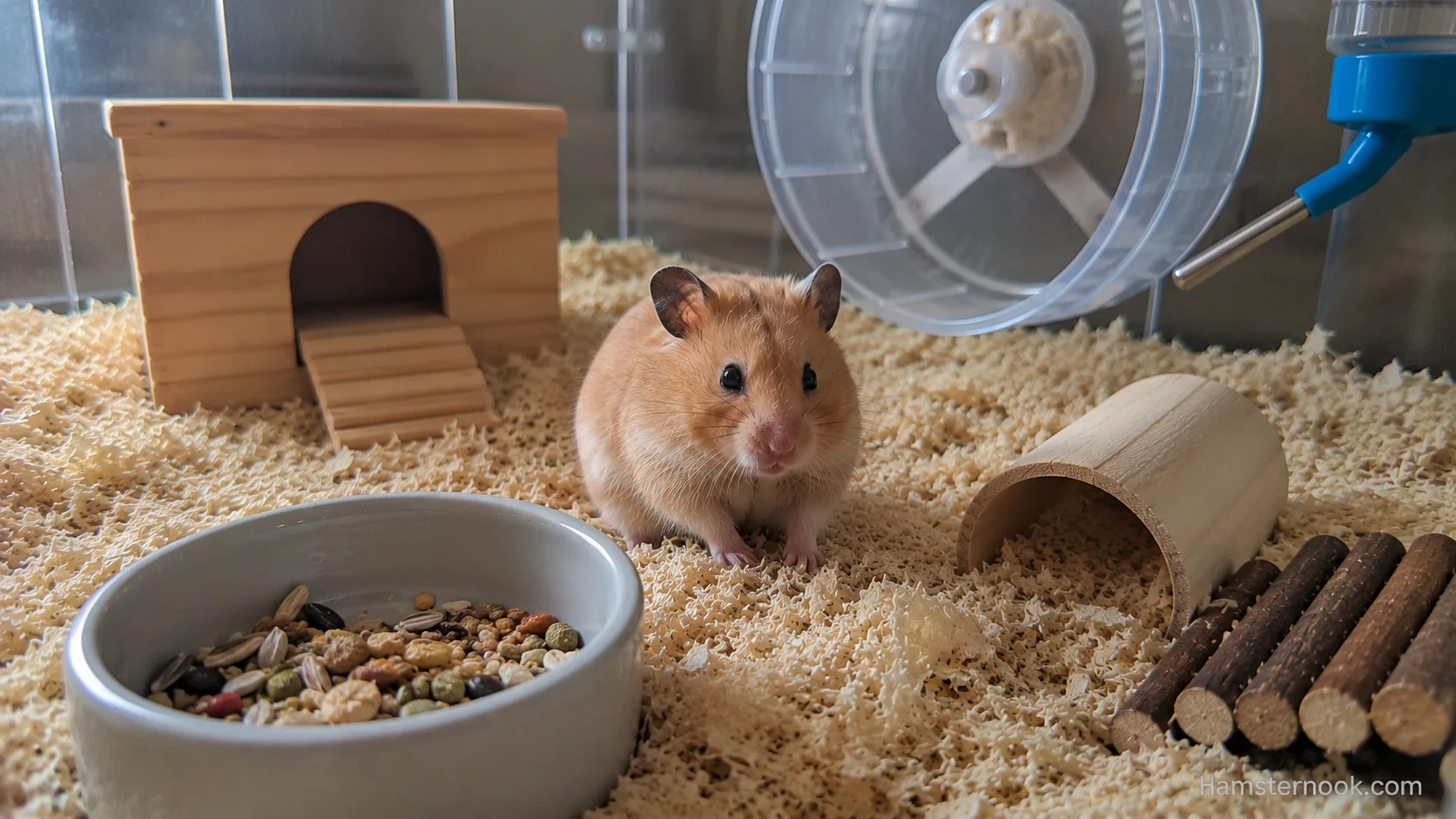
Like many prey animals, hamsters constantly adjust their environment to improve security.
They may:
- Cover entrances with bedding
- Create hidden pathways
- Build walls around nests
- Block exposed sleeping areas
These changes help them feel protected from potential threats.
Even domesticated hamsters retain these survival instincts.
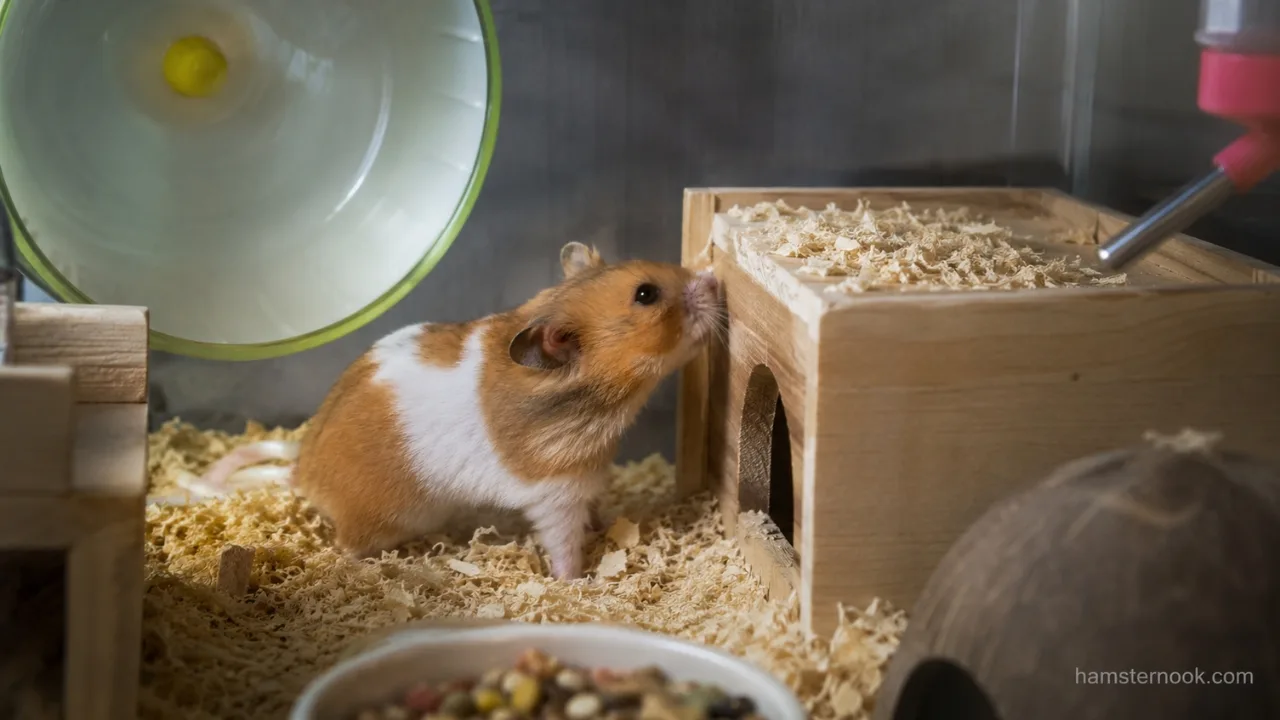
Burrowing Instincts Can Transform a Cage Overnight
Hamsters are natural diggers.
Given enough bedding depth, many hamsters create extensive tunnel systems that completely alter the cage layout.
| Burrowing Behavior | What You May Notice |
|---|---|
| Tunnel Building | Bedding shifts throughout cage |
| Chamber Creation | Large empty spaces under bedding |
| Entrance Construction | Openings appearing in new places |
| Bedding Relocation | Deep piles forming in corners |
| Nest Expansion | Growing underground sleeping areas |
Owners often underestimate how much digging a hamster can accomplish in a single night.
Why Hamsters Move Their Toys and Accessories
Some hamsters move more than just bedding.
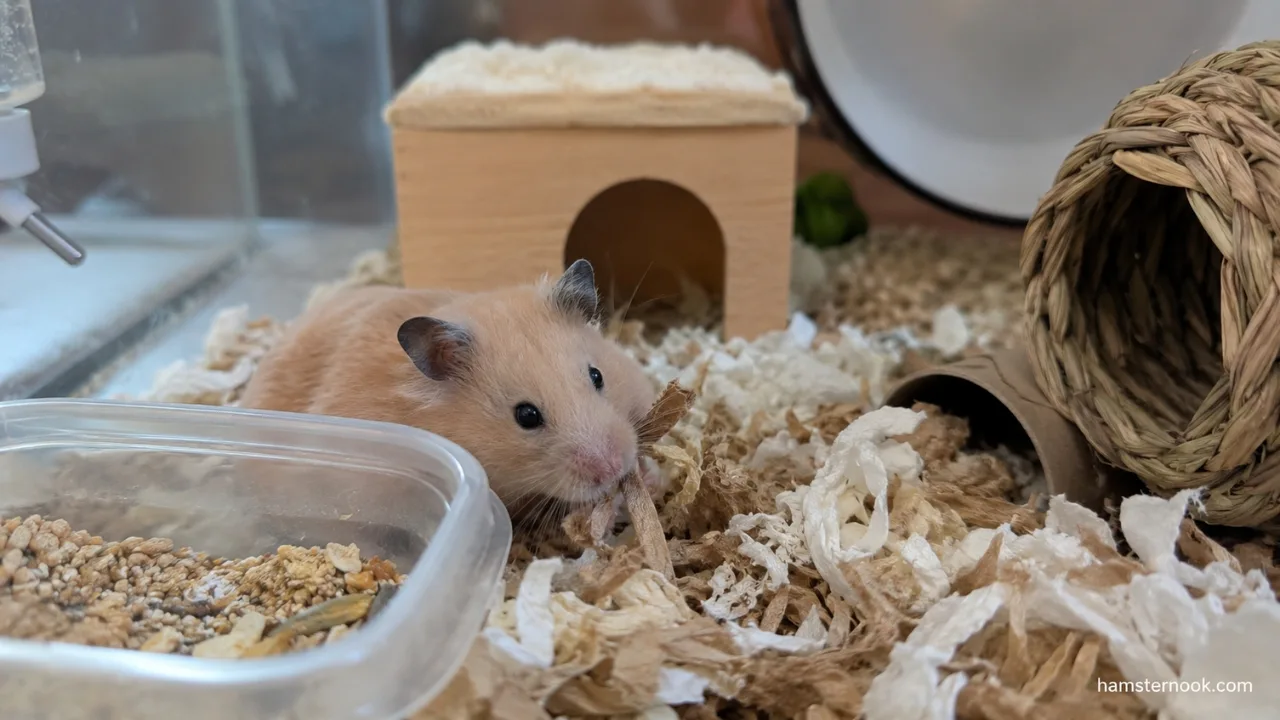
You may find:
- Hideouts in different positions
- Chew toys buried
- Lightweight dishes moved
- Small bridges shifted
This behavior is often part of environmental customization.
Your hamster is essentially arranging its living space according to its preferences rather than yours.
Is Rearranging a Sign of Boredom?
Sometimes, but not always.
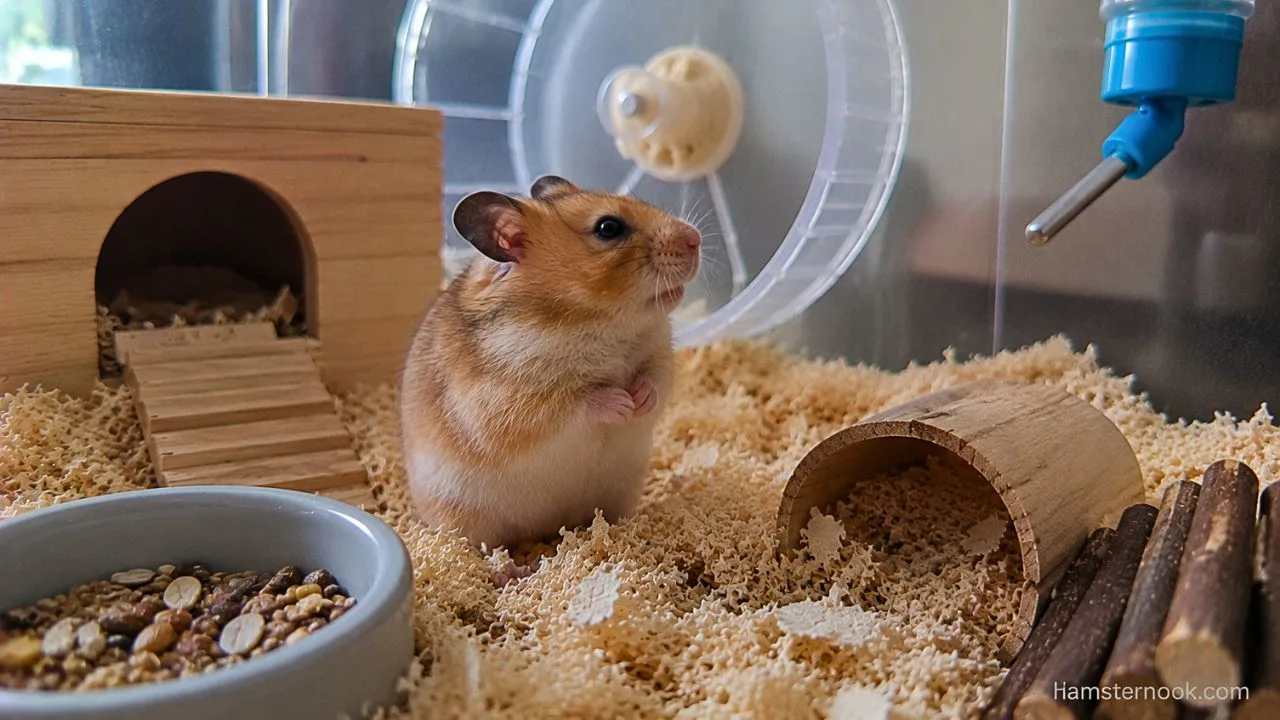
Normal cage rearrangement differs from boredom-related behaviors.
| Normal Rearranging | Potential Boredom Behavior |
|---|---|
| Building nests | Repetitive pacing |
| Burrowing naturally | Constant bar chewing |
| Storing food | Obsessive climbing |
| Creating tunnels | Repeated escape attempts |
| Moving bedding occasionally | Frantic activity with no purpose |
If rearranging occurs alongside healthy eating, sleeping, and activity patterns, boredom is usually not the cause.
Can Stress Cause Excessive Cage Rearrangement?
Occasionally, yes.
A stressed hamster may become unusually focused on changing its environment.
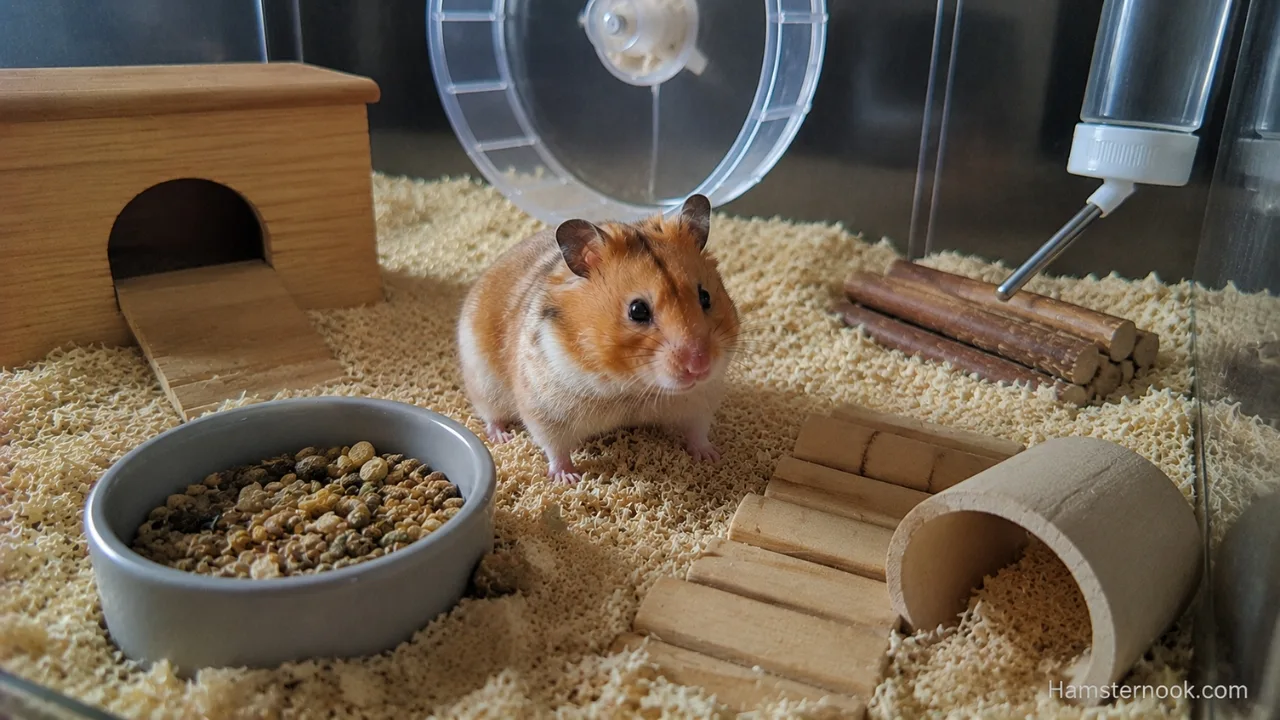
Potential stress triggers include:
- Frequent cage cleanings
- Loud noises
- New pets nearby
- Sudden habitat changes
- Insufficient hiding places
- Small cage size
Stress-related rearranging is often accompanied by other signs such as hiding excessively, reduced appetite, or unusual nervousness.
If hiding becomes more frequent at the same time as the cage rearranging, our Why Is My Hamster Always Hiding? When It’s Normal and When to Worry guide explains when increased hiding can be normal and when it deserves closer attention.
Why Does My Hamster Undo Everything After I Clean the Cage?
Many owners become frustrated when a freshly cleaned enclosure is immediately “destroyed.”
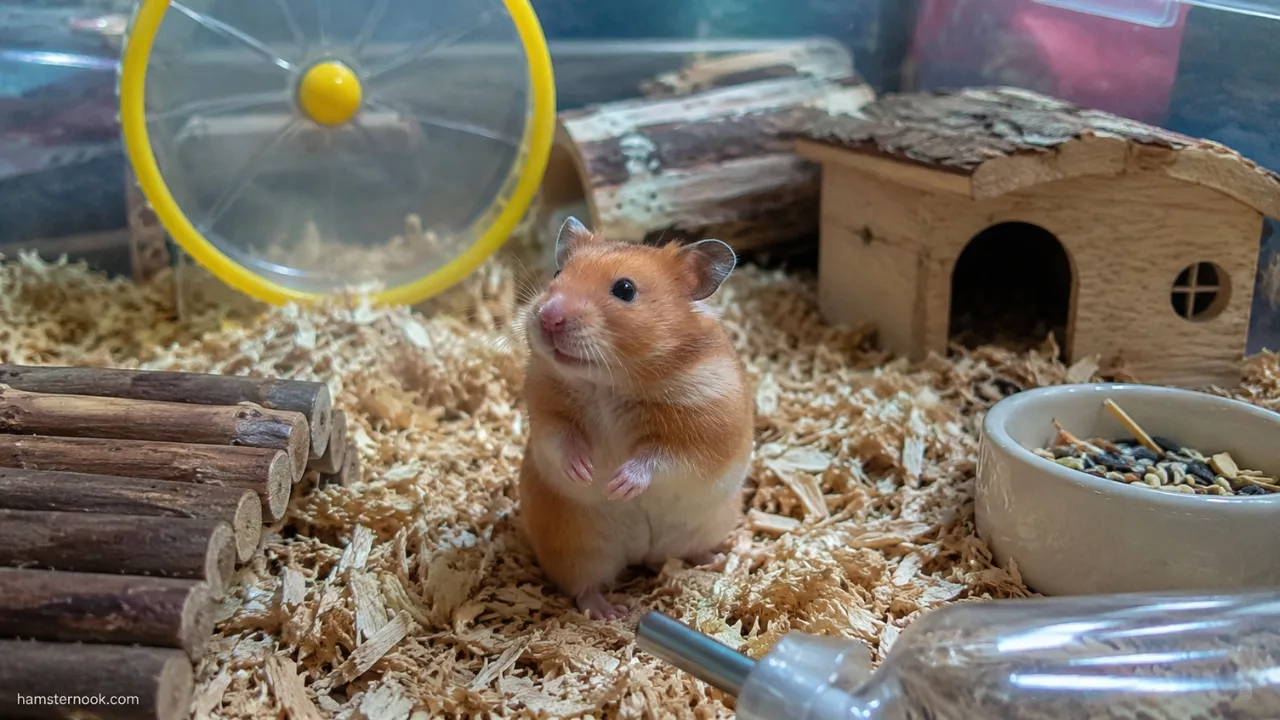
From your hamster’s perspective, however, cleaning removes familiar scents and territory markers.
After cleaning, your hamster often tries to restore normality by:
- Rebuilding nests
- Moving bedding
- Relocating food
- Re-establishing pathways
- Marking territory again
This response is completely normal, and many owners notice it after every cage cleaning.
In fact, it often means your hamster is comfortable enough to reclaim its space.
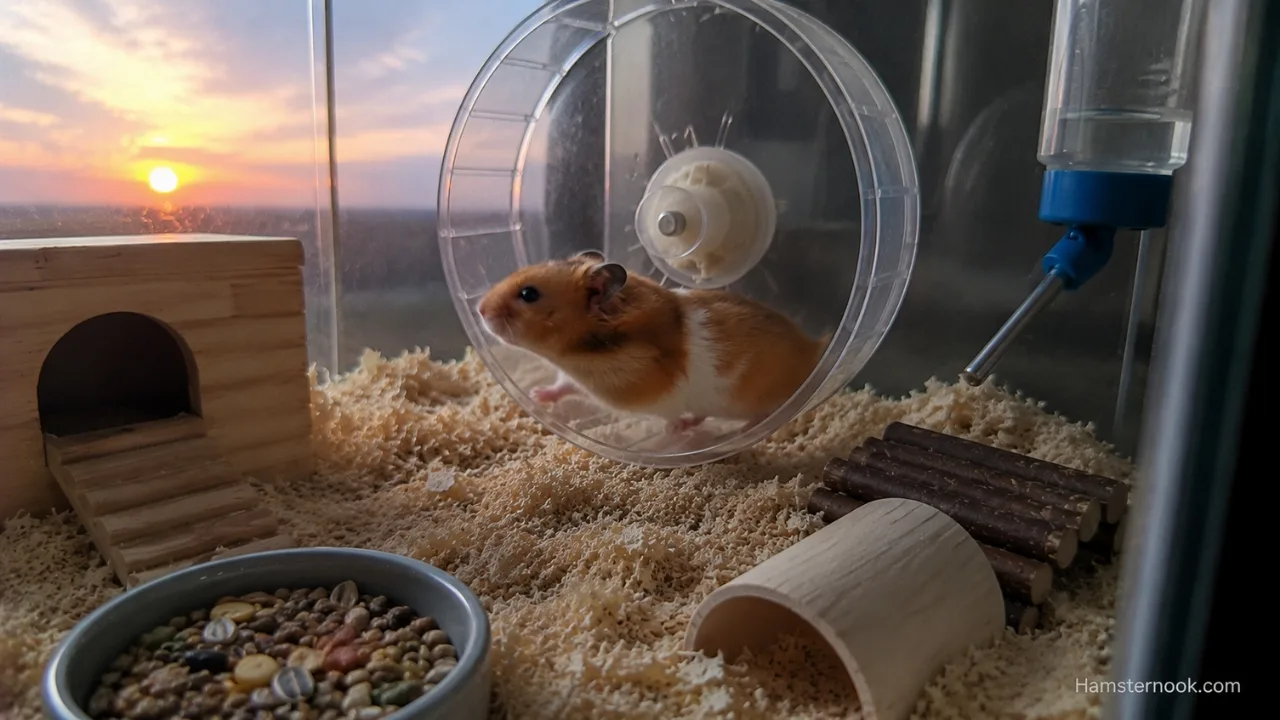
Should You Stop Your Hamster From Rearranging the Cage?
Generally, no.
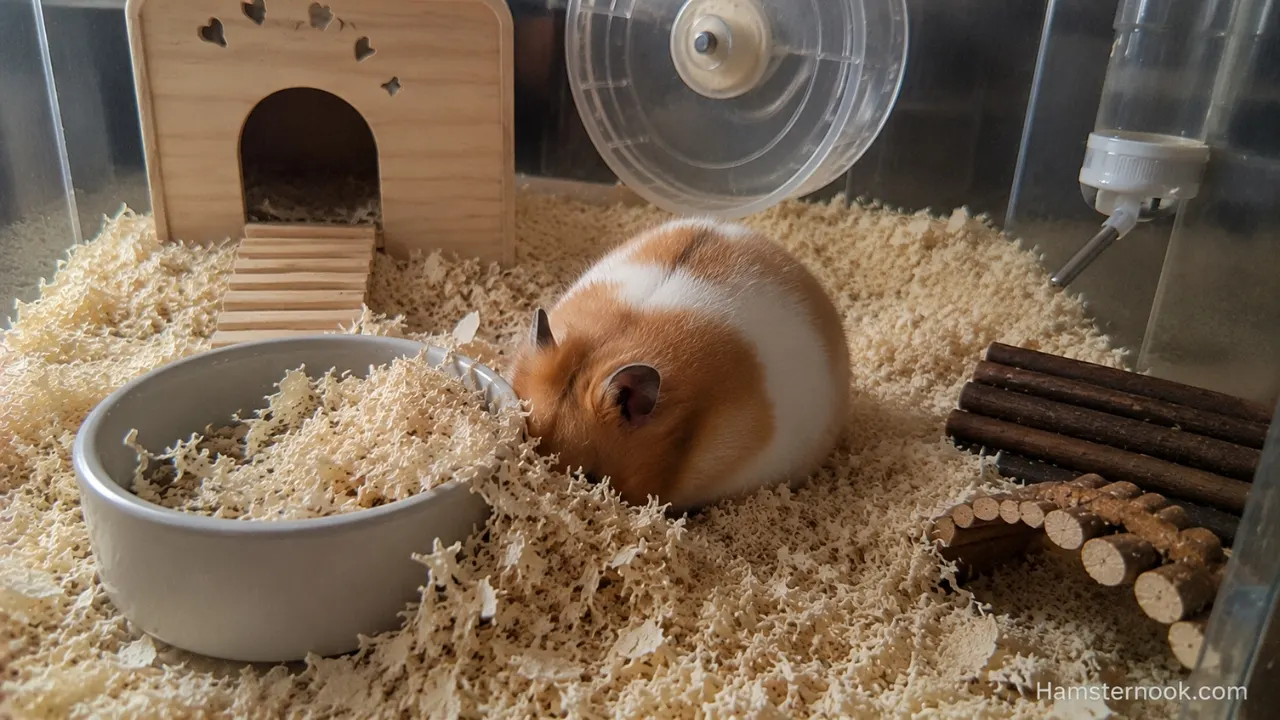
The only time you should step in is if heavy accessories become unstable after digging. Make sure ceramic houses, platforms, and other heavy items remain securely supported so they can’t collapse onto your hamster.
Instead of preventing it, focus on providing materials that support it.
Helpful cage features include:
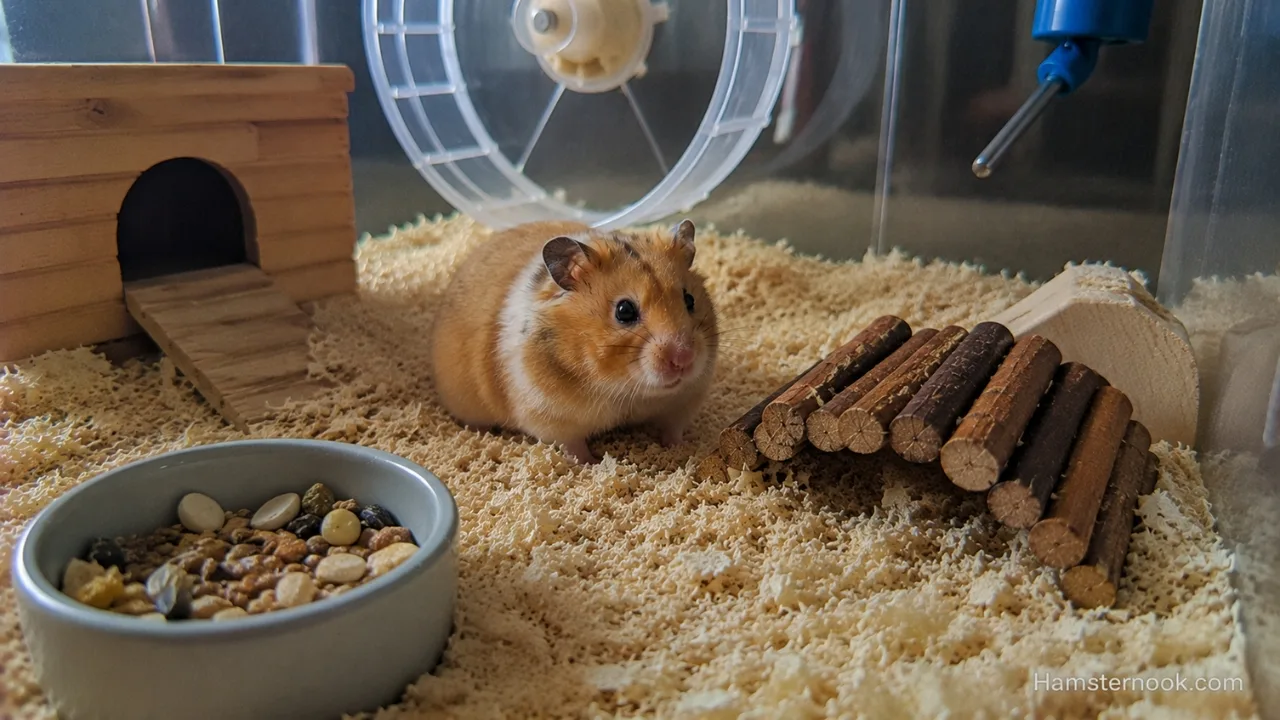
- Deep bedding
- Multiple hideouts
- Safe tunnels
- Nesting materials
- Foraging opportunities
- Chew toys
The more opportunities a hamster has to express natural instincts, the more fulfilling its environment becomes.
When Cage Rearranging May Indicate a Problem
Although rearranging is usually harmless, certain situations deserve attention.
| Behavior | Possible Concern |
|---|---|
| Frantic digging at cage walls | Cage may be too small |
| Constant attempts to escape | Environmental stress |
| Destructive chewing with rearranging | Boredom or frustration |
| Sudden behavior changes | Possible illness or stress |
| Reduced eating and activity | Potential health issue |
When Should You Be Concerned About Cage Rearranging?
Rearranging is usually not a concern by itself. Pay closer attention when the behavior is sudden or unusually intense and happens together with changes such as reduced eating, reduced activity, excessive hiding, repeated escape attempts, or other unusual behavior. In that situation, look at the whole pattern rather than judging the rearranging alone.
If your hamster suddenly becomes inactive, stops eating, or begins acting differently alongside constant cage rearranging, Signs of a Sick Hamster explains the warning signs that shouldn’t be ignored.
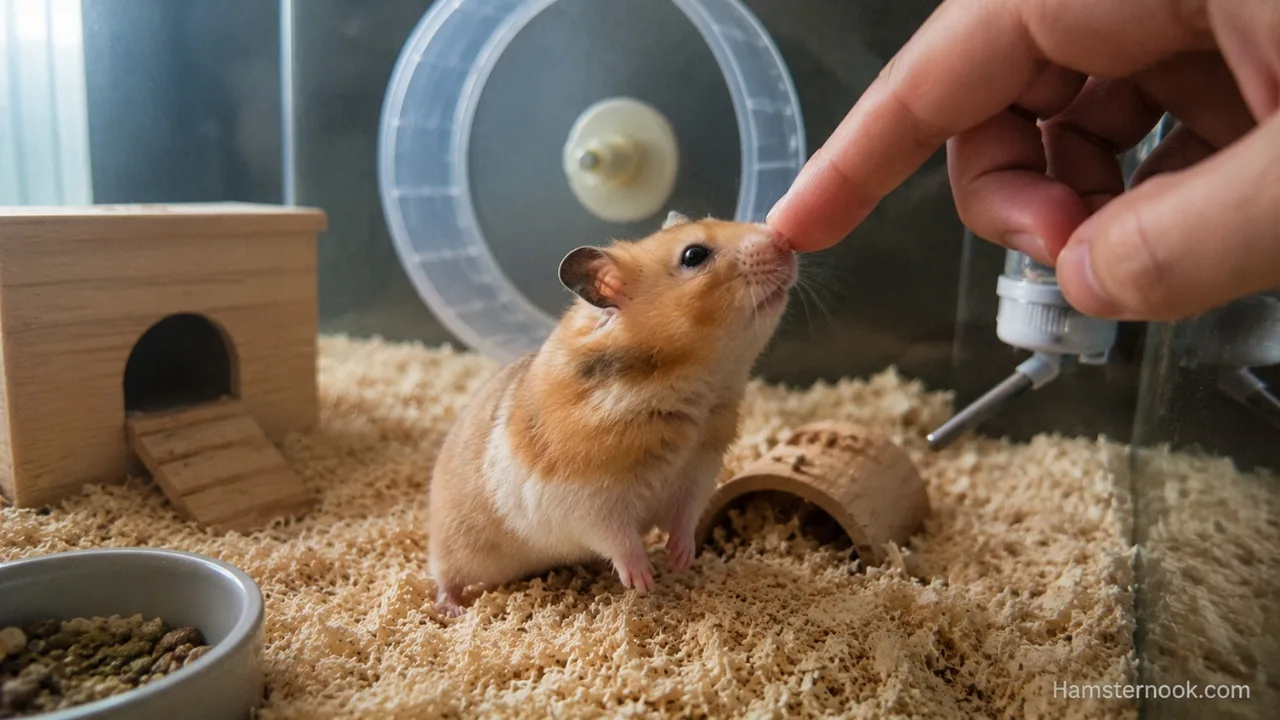
Context matters. Rearranging alone is rarely a problem.
How to Support Healthy Rearranging Behavior
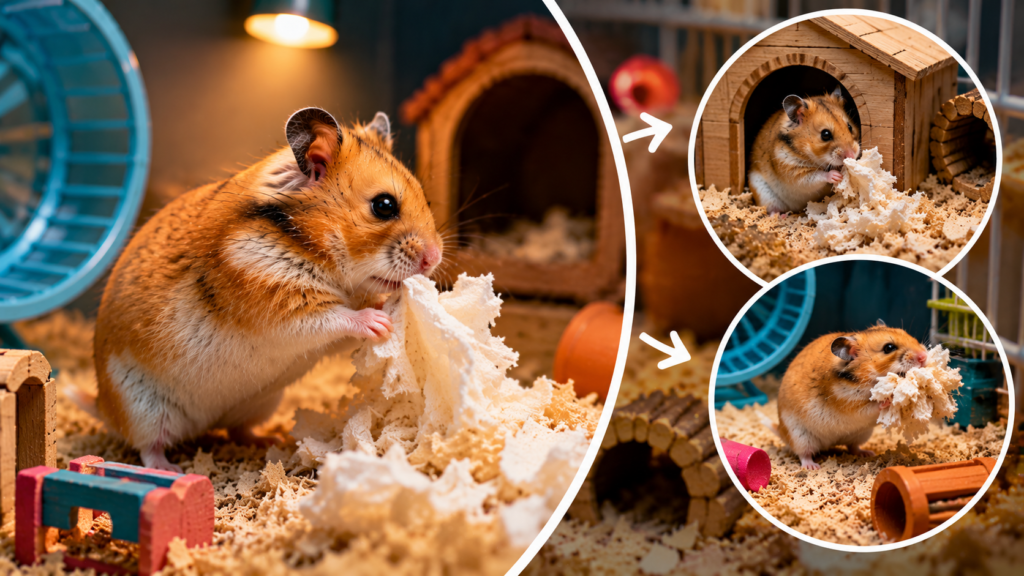
If your hamster enjoys modifying its habitat, you can encourage safe enrichment.
Consider providing:
| Enrichment Item | Benefit |
|---|---|
| Deep paper bedding | Supports burrowing |
| Cork tunnels | Encourages exploration |
| Multi-chamber hideouts | Promotes nesting |
| Safe nesting paper | Helps nest building |
| Foraging toys | Encourages natural behaviors |
| Sand bath | Adds environmental variety |
These additions allow hamsters to reshape their surroundings in healthy ways.

What Rearranging Can Tell You About Your Hamster
Many owners see cage rearrangement as a nuisance, but it can actually reveal a lot about a hamster’s personality.
Some hamsters are meticulous organizers that maintain consistent nest locations. Others are constant renovators that redesign their habitat every few days.
Observing these habits can help you better understand:
- Preferred sleeping areas
- Favorite hiding spots
- Activity patterns
- Nesting preferences
- Natural instincts
Each hamster develops its own unique way of managing its space.
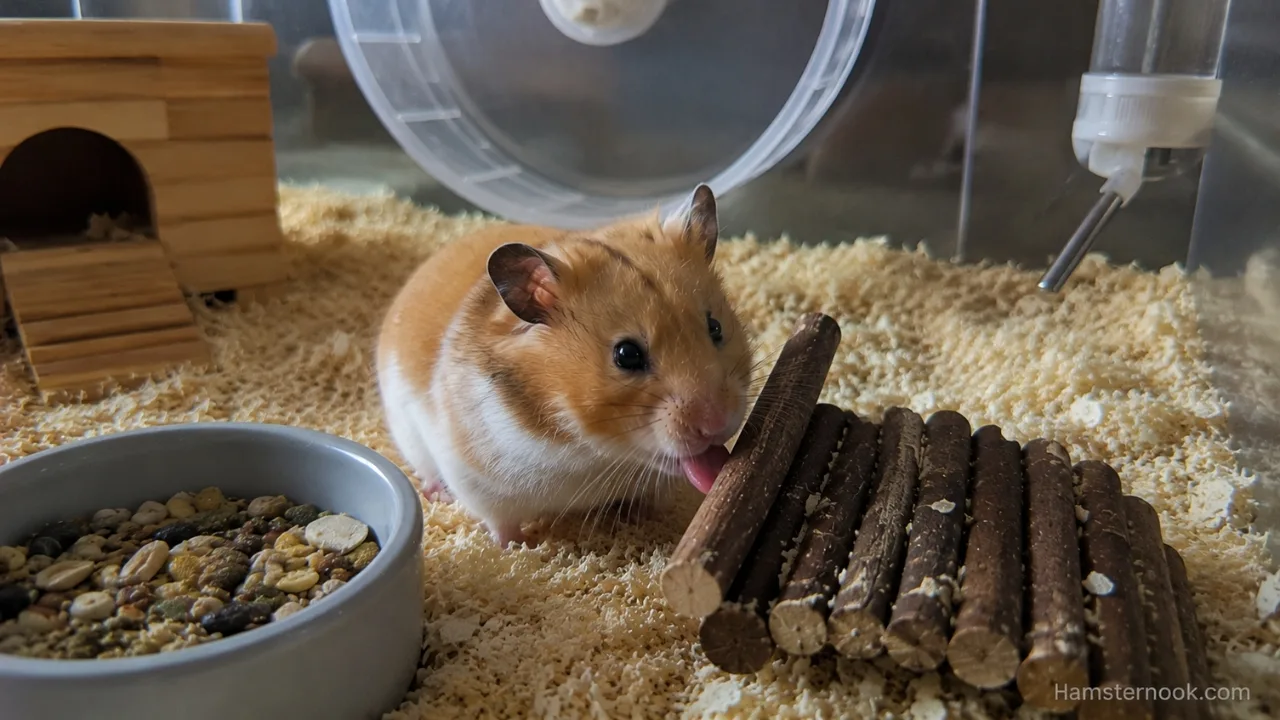
Some hamsters make only small adjustments to their habitat, while others regularly redesign large sections of their enclosure. Both behaviors are considered normal as long as the hamster remains healthy and active.
Final Thoughts
If your hamster keeps rearranging its cage, the behavior is usually nothing to worry about. Moving bedding, relocating food, modifying tunnels, and redesigning nesting areas are all natural behaviors rooted in instincts that help wild hamsters survive.
Providing enough space is important because a cramped enclosure can contribute to stress and unwanted behaviors. If you’re unsure whether your habitat is meeting your hamster’s needs, Best Hamster Cage Setup for Beginners explains how to create a safer and more enriching environment.
Rather than viewing the changes as a problem, consider them evidence that your hamster is actively interacting with its environment. A cage that allows digging, nesting, burrowing, and exploration gives your pet opportunities to express these important natural behaviors.
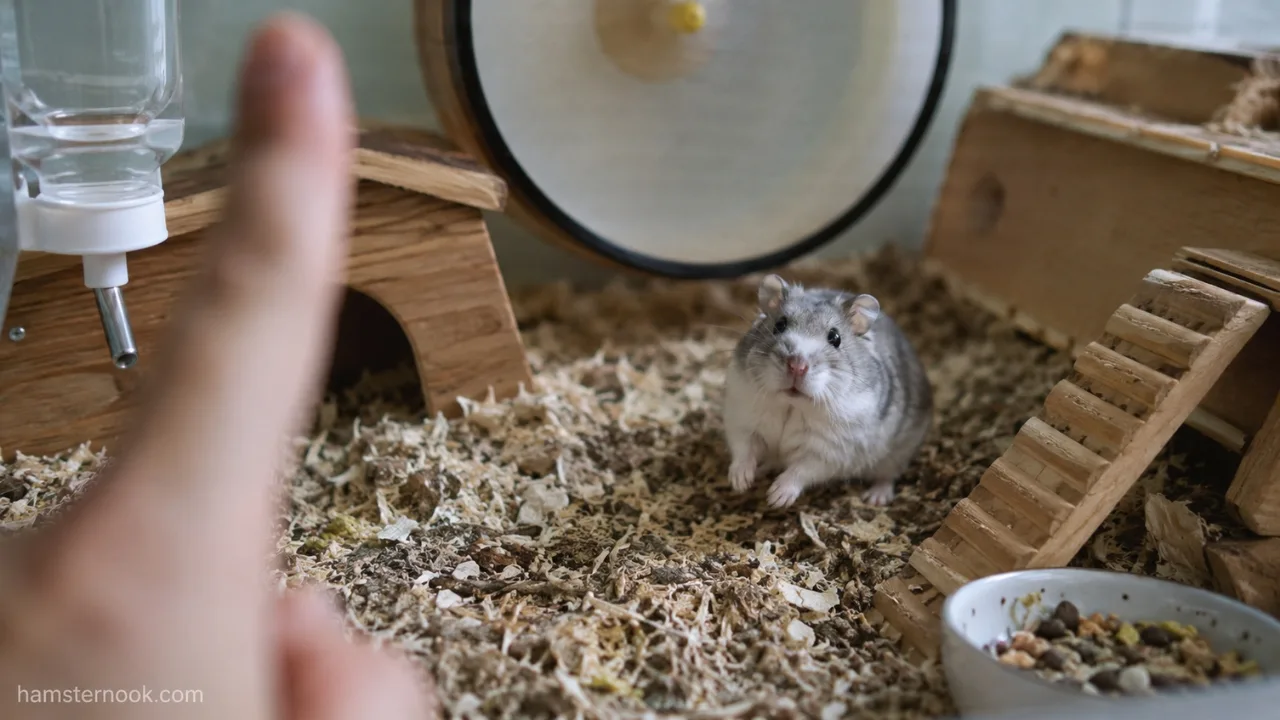
As long as your hamster is eating normally, remaining active, and showing no signs of illness or severe stress, a constantly changing cage layout is often a sign of a healthy and engaged hamster.
Frequently Asked Questions
Why does my hamster move all its bedding into one corner?
Hamsters often concentrate bedding where they want to build a secure nest. This helps create a comfortable sleeping area that feels protected.
Is it normal for a hamster to bury its food bowl?
Yes. Some hamsters bury food bowls or move food elsewhere because food hoarding is a natural survival instinct.
Why does my hamster destroy the cage setup I create?
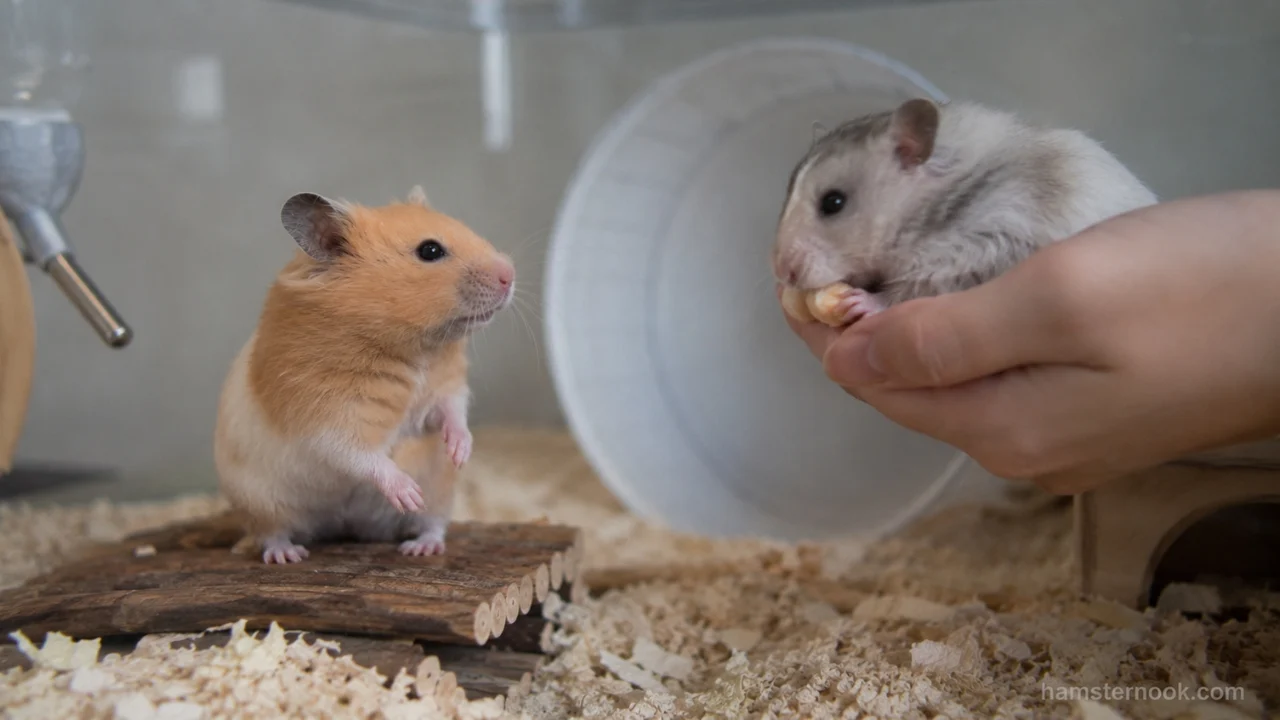
Your hamster is not destroying the setup. It is customizing the environment according to its own needs and instincts.
Should I keep putting items back where they were?
In most cases, no. Constantly rearranging the cage yourself may frustrate your hamster and interrupt natural behaviors.
Why does my hamster rearrange the cage every night?
Hamsters are nocturnal and perform most activities after dark. Nest building, digging, and organizing often happen while owners are asleep.
How long does it take a hamster to rearrange its cage?
There is no fixed amount of time. Hamsters often do their digging, nest building, food storing, and cage rearranging at night, so the enclosure may look noticeably different by morning.
Can rearranging behavior mean my hamster is unhappy?
Not usually. Rearranging alone is considered normal. However, if it occurs alongside bar chewing, escape attempts, weight loss, or unusual behavior, it may be worth evaluating the habitat or consulting a veterinarian if health concerns are present.
Why does my hamster move things around right after I clean the cage?
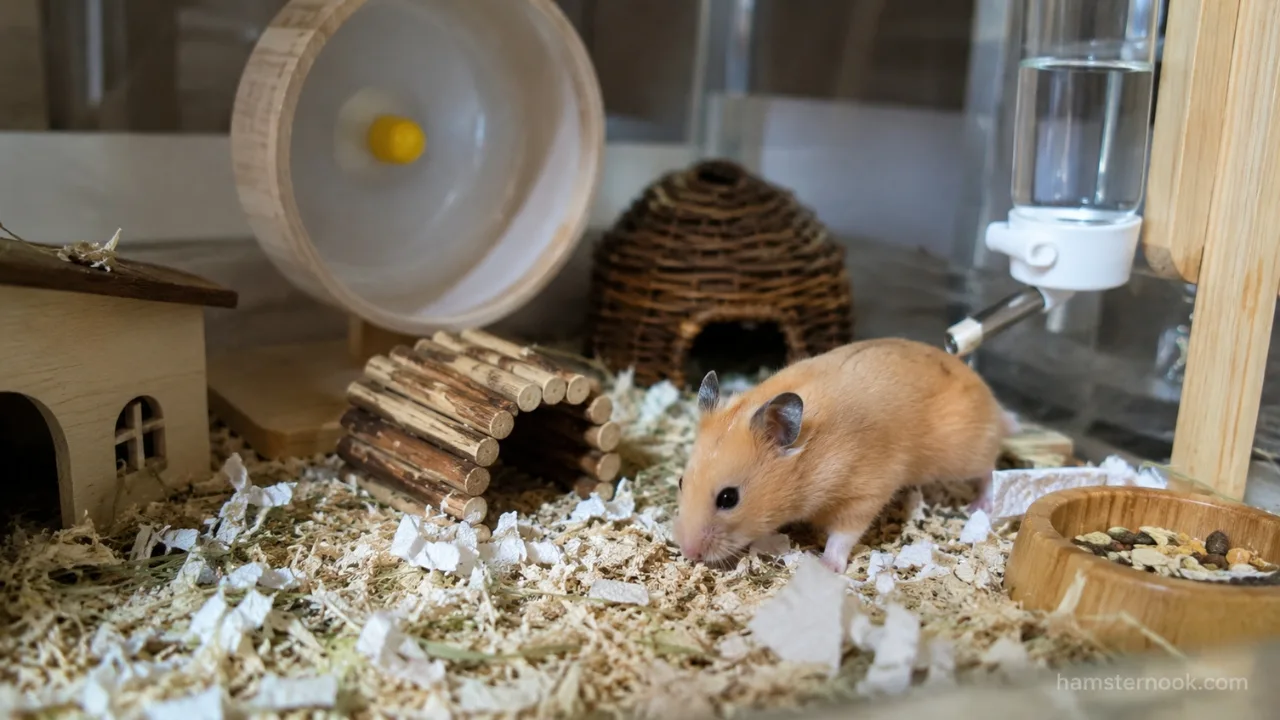
Cleaning removes familiar scents and territory markers. Many hamsters immediately rebuild nests, relocate bedding, and reorganize their environment to make the cage feel familiar again.
References
This guide is based on hamster behavior, natural instincts, housing, enrichment, burrowing, nesting, and welfare guidance from trusted animal welfare and veterinary resources, including:
- RSPCA – Hamster Behaviour – Guidance on natural hamster behaviors, burrowing, nesting, activity patterns, enrichment, and supporting normal behavior.
- RSPCA – Creating a Good Home for Hamsters – Guidance on bedding, nesting material, hiding places, cage setup, cleaning, and providing an environment that supports natural behaviors.
- RSPCA – Keeping Hamsters as Pets – Information on hamster behavior, digging, food hoarding, exploration, activity, and general welfare.
- MSD Veterinary Manual – Providing a Home for a Hamster – Veterinary guidance on hamster housing, deep bedding, nesting materials, shelters, exercise, food storage, and natural activity.
- NC3Rs – Housing and Husbandry: Hamster – Guidance on burrowing, nest building, food hoarding, enrichment, cage cleaning, familiar scents, and species-appropriate husbandry.
- Blue Cross – Hamster Care Guide – Practical information on hamster housing, bedding, enrichment, handling, exercise, and general wellbeing.
Medical Disclaimer:
This article is for educational purposes only and should not replace veterinary advice. If cage rearranging occurs alongside illness, appetite loss, weight loss, or unusual behavior, consult a qualified exotic pet veterinarian.

Narayan Kumar is the founder and author of HamsterNook. He creates practical, research-based hamster care guides covering hamster behavior, nutrition, cage setup, enrichment, health, and everyday care. His goal is to help hamster owners make informed decisions and provide safer, healthier lives for their pets through clear, beginner-friendly information based on trusted animal care resources.