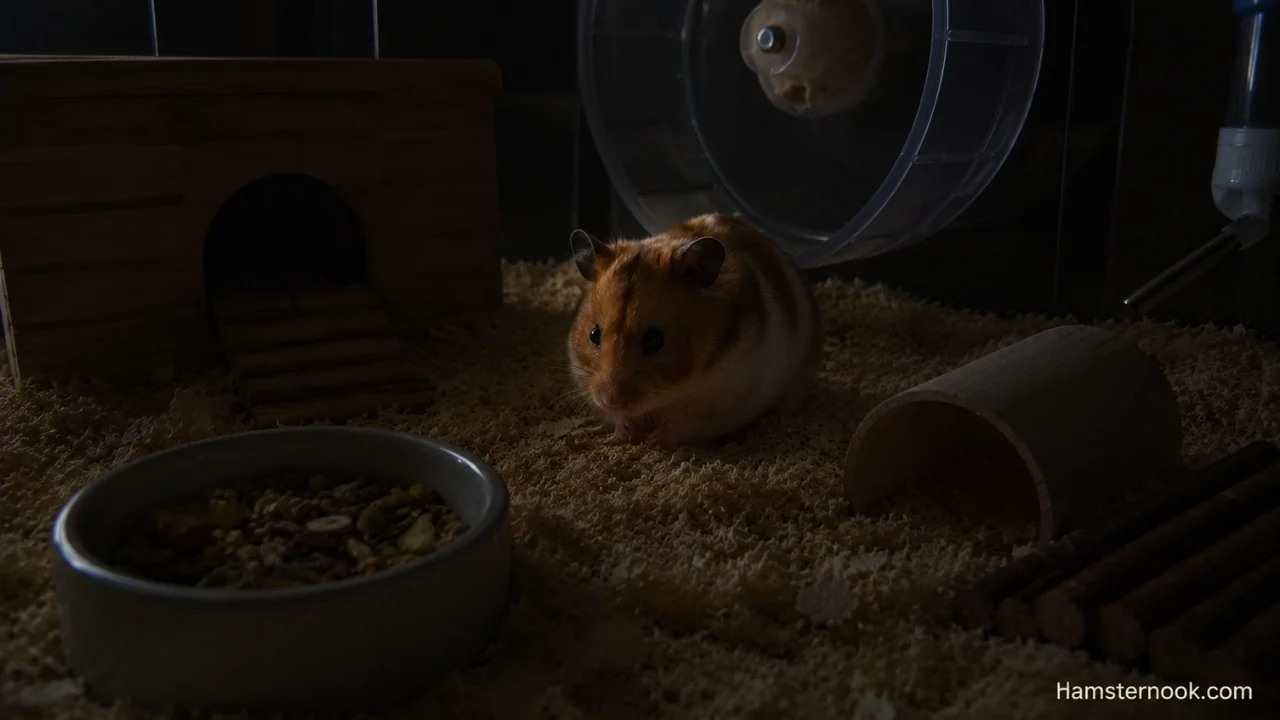
Many hamster owners notice that their pet seems most active when the room gets darker. Watching a hamster run on its wheel, explore tunnels, and search for food at night often leads to one question: can hamsters actually see in the dark? The answer is not as simple as many people think.
While hamsters are well adapted to low-light conditions, they do not have true night vision. Understanding how hamster eyesight works can help you create a more comfortable habitat and better understand your pet’s natural behavior.a
Can Hamster Really See in the Dark?
Hamsters cannot see in complete darkness.
This means hamsters can see when there is some available light, but their vision should not be described as true night vision. In very dim conditions, they can still use their other senses to help locate familiar paths, food, and shelter.
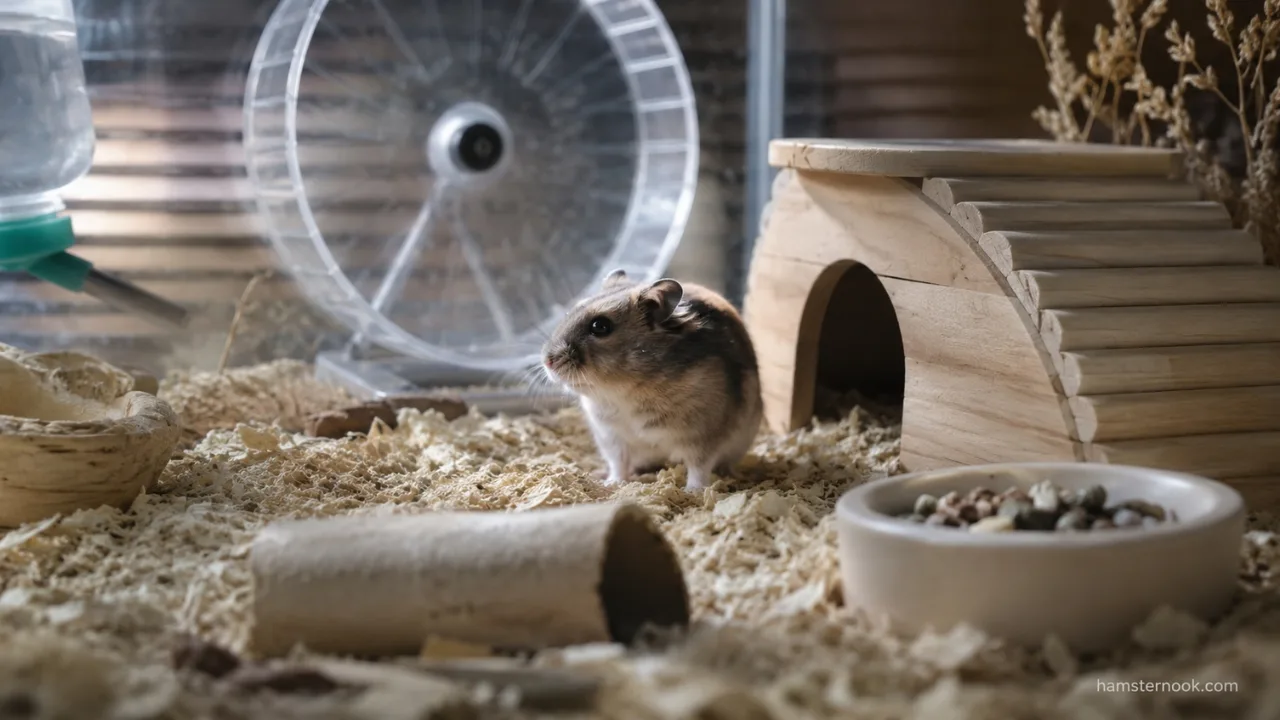
Like humans and most mammals, hamsters need at least a small amount of light to see their surroundings. However, they are much better adapted to dim lighting conditions than people.
Hamsters are crepuscular animals, meaning they are most active during dawn and dusk when light levels are low. Their eyes have evolved to function well in these conditions, allowing them to move around more effectively in dim environments than humans can.
While they can see reasonably well in low light, they cannot see in total darkness where no light is available.
In practical terms, a hamster may move confidently around a familiar cage when the room is dim, but complete darkness is different. If there is no available light at all, the hamster cannot rely on eyesight to see objects in front of it. Its sense of smell, hearing, whiskers, and memory then become especially important for navigating familiar surroundings.
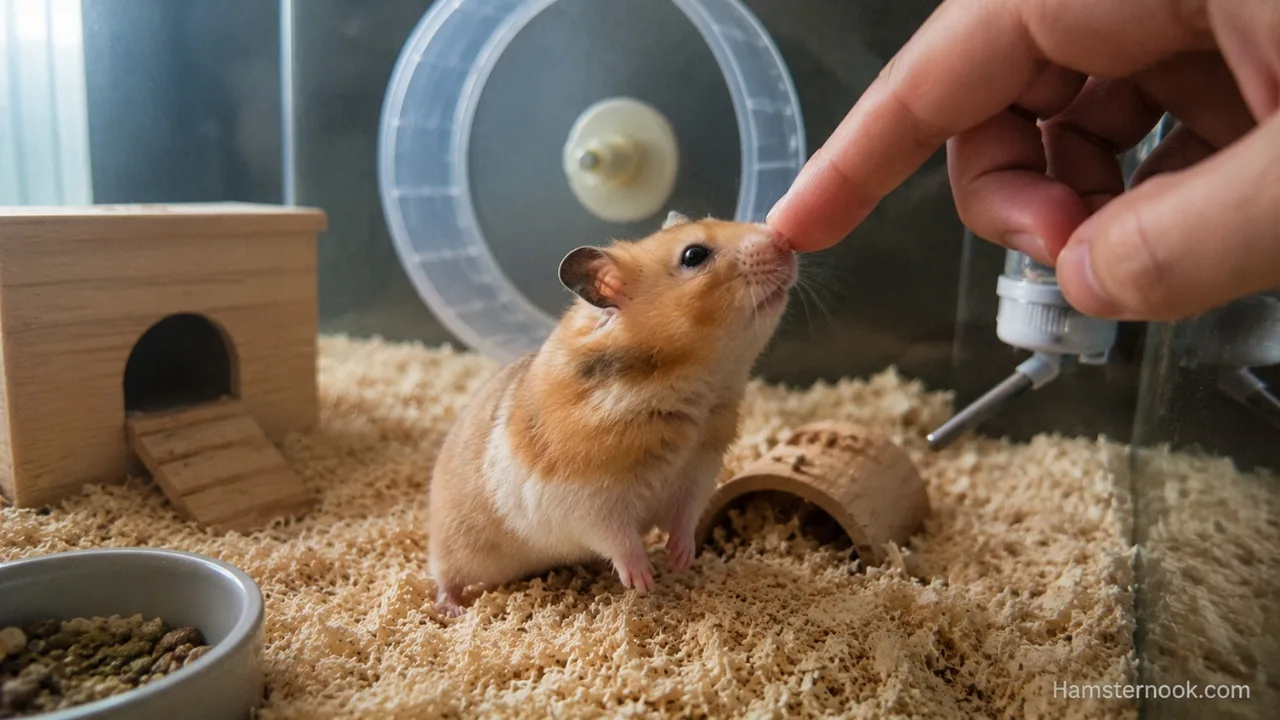
How Hamster Vision Differs From Human Vision
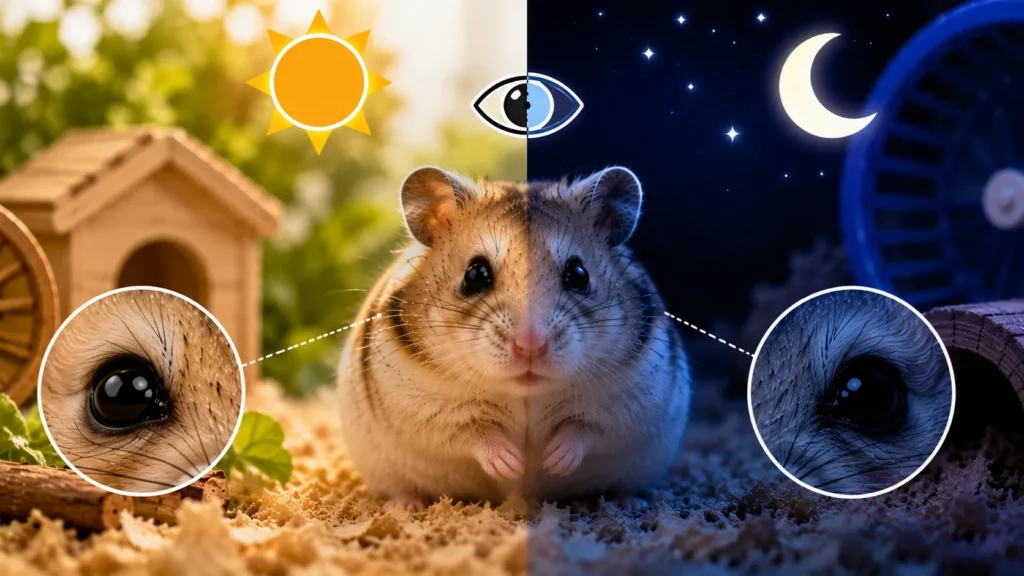
Humans rely heavily on vision to understand the world. Hamsters rely more on smell, hearing, whiskers, and memory.
The table below highlights some key differences.
| Feature | Hamsters | Humans |
|---|---|---|
| Vision Quality | Relatively poor | Highly detailed |
| Low-Light Ability | Good | Moderate |
| Color Perception | Limited | Broad color range |
| Dependence on Sight | Low | Very high |
| Dependence on Smell | Very high | Low |
| Night Activity | Naturally active | Mostly inactive |
Because hamsters depend less on vision, poor eyesight does not significantly limit their ability to explore and navigate.
This is one reason blind or partially sighted hamsters can often adapt surprisingly well to familiar environments when other senses remain healthy.
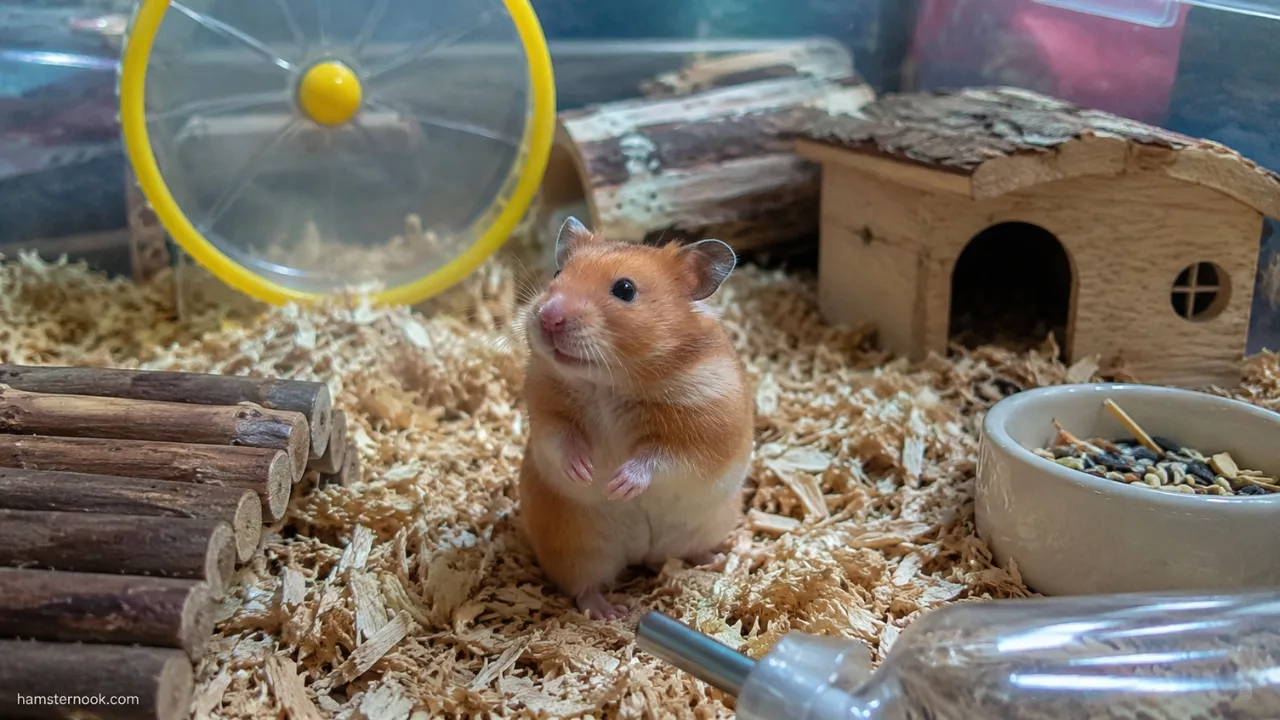
Why Are Hamsters Active at Night?
Many owners mistakenly think hamsters are nocturnal.
Many owners are surprised to learn that hamsters are not truly nocturnal. Because hamsters are most active during lower-light periods, understanding the Are Hamsters Nocturnal? Understanding Their Natural Sleep Schedule guide can also help explain why they become active when the room gets darker.
In reality, most pet hamsters are considered crepuscular, meaning they are naturally active during the early morning and evening hours.
This schedule offers several advantages in the wild:

| Benefit | Why It Helps Hamsters |
|---|---|
| Cooler temperatures | Reduces overheating risk |
| Lower predator activity | Improves survival chances |
| Easier food searching | Less competition for resources |
| Reduced exposure | Safer movement between shelters |
Their low-light adaptations developed because of these natural activity patterns.
How Well Can Hamsters See in Low Light?
Hamsters can generally see well enough in dim lighting to:
- Locate food
- Find their nest
- Navigate familiar paths
- Use exercise wheels
- Explore their environment
However, their vision is not particularly sharp.
Objects often appear less detailed than they would to humans. This is one reason hamsters rely heavily on other senses to identify their surroundings.
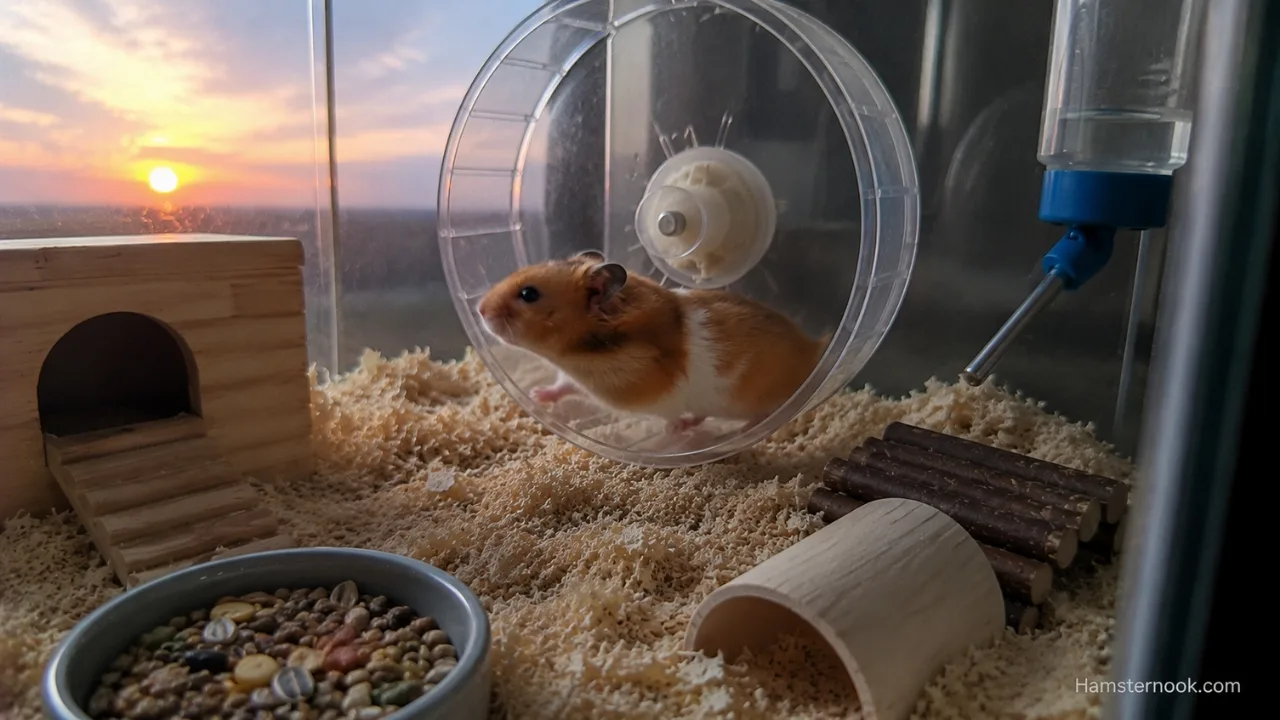
A hamster may recognize your scent long before it recognizes your face.
Because scent plays such an important role in hamster behavior, many owners wonder how their pets identify familiar people. Our Do Hamsters Get Excited to See Their Owners? guide explores how hamsters recognize routines, scents, and regular interactions.
Do Hamsters Have Color Vision?
Scientists believe hamsters can see some colors, but their color perception is much more limited than that of humans.
They likely do not experience the full range of colors that people see.

While exact color perception varies among species and remains an area of ongoing research, color is generally less important to hamsters than scent and touch.
This explains why brightly colored toys and accessories are usually more appealing to owners than to the hamsters themselves.
How Hamsters Navigate Without Strong Eyesight
Hamsters possess several highly developed senses that compensate for their relatively poor vision.
Understanding body language can reveal how a hamster feels in different situations. Our Hamster Body Language Explained: Signs of Stress, Fear & Happiness guide explains the signals owners commonly observe.
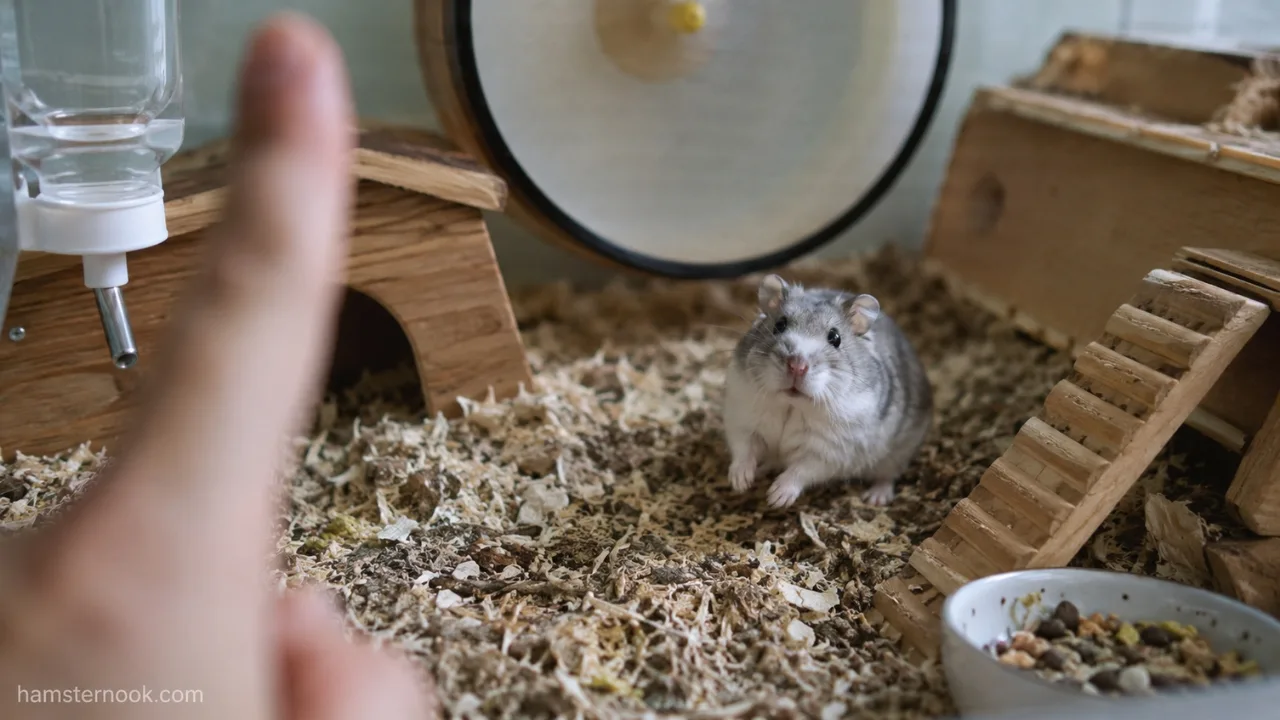
Sense of Smell
A hamster’s sense of smell is one of its strongest tools.
They use scent to:
- Locate food
- Identify territory
- Recognize familiar people
- Detect other animals
- Find their nest
Scent plays a much larger role in daily life than eyesight.
Sensitive Whiskers
Hamster whiskers are extremely important navigation tools.
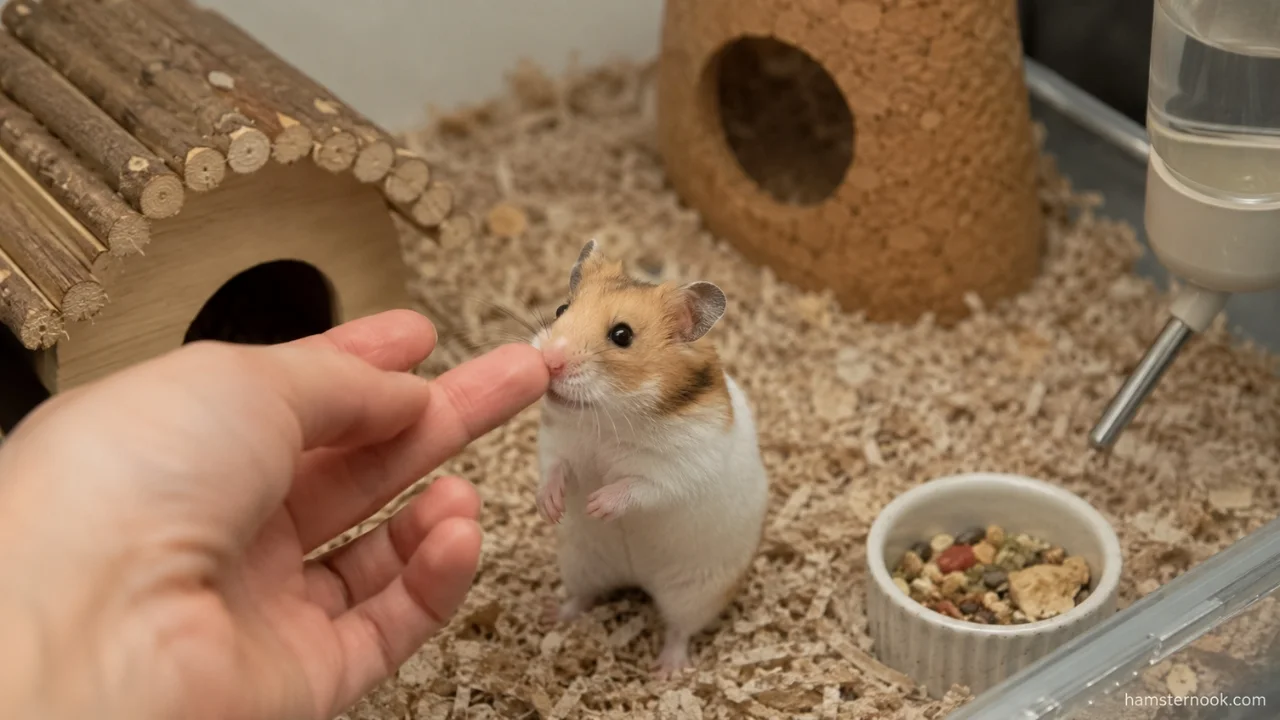
Whiskers help them:
- Detect nearby objects
- Judge narrow spaces
- Avoid obstacles
- Explore safely in darkness
In low-light conditions, whiskers often provide more useful information than eyesight.
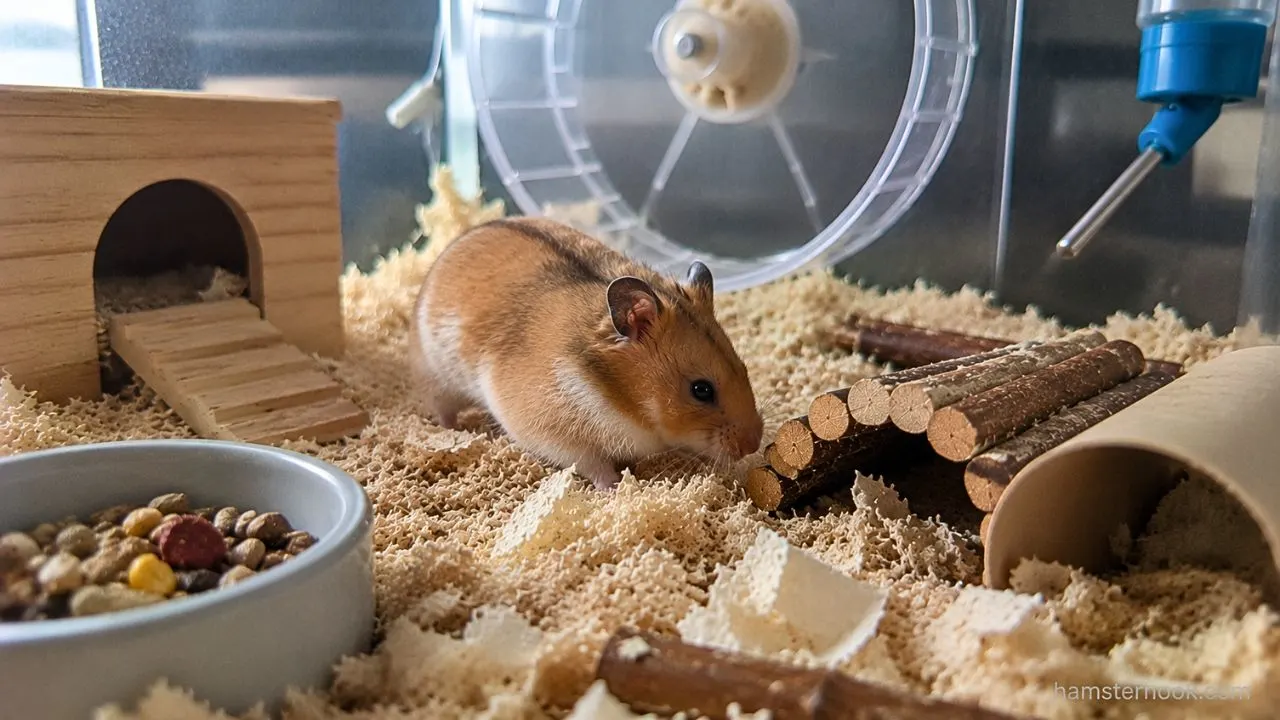
Excellent Hearing
Hamsters can hear sounds that humans cannot detect.
Their hearing helps them:
- Identify movement
- Detect danger
- Communicate with other hamsters
- Stay aware of their surroundings
This heightened hearing helps compensate for limited visual detail.
Do Different Hamster Species See Differently?
While all hamster species share similar visual characteristics, there can be minor differences.
| Hamster Species | Vision Characteristics |
|---|---|
| Syrian Hamster | Typical low-light adaptation |
| Roborovski Hamster | Similar low-light ability |
| Campbell’s Dwarf Hamster | Relies heavily on scent and hearing |
| Winter White Hamster | Adapted for twilight activity |
| Chinese Hamster | Similar visual capabilities to other species |
Despite small differences, no common pet hamster species possesses true night vision.
Can Bright Lights Hurt Hamsters?
Bright lighting can make hamsters uncomfortable.
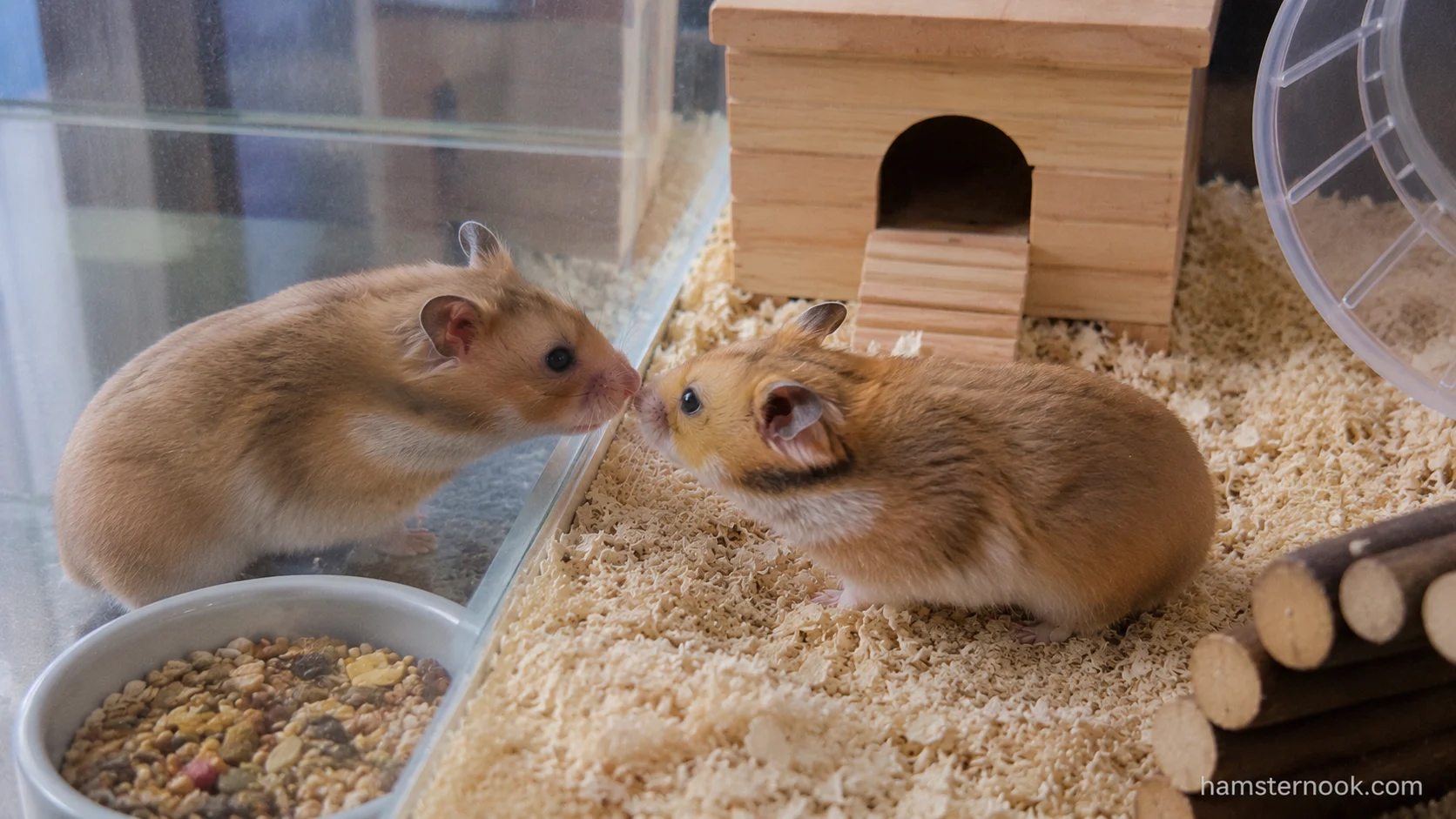
Since they are naturally active during low-light periods, sudden exposure to strong light may cause stress or encourage them to retreat to hiding places.
Common signs of discomfort around bright lighting include:
- Squinting
- Hiding frequently
- Reduced activity
- Staying inside shelters
This does not mean hamster rooms must remain dark all day. A normal day-night cycle is healthy and important.
Do Hamsters Like the Dark?
Hamsters are adapted to lower-light conditions, so darkness itself is not usually something they need to avoid. However, it is more accurate to say they are adapted to dim or low-light periods than to say they prefer complete darkness. They are naturally active around dawn, dusk, and other low-light periods, while their other senses help them navigate when visibility is poor.
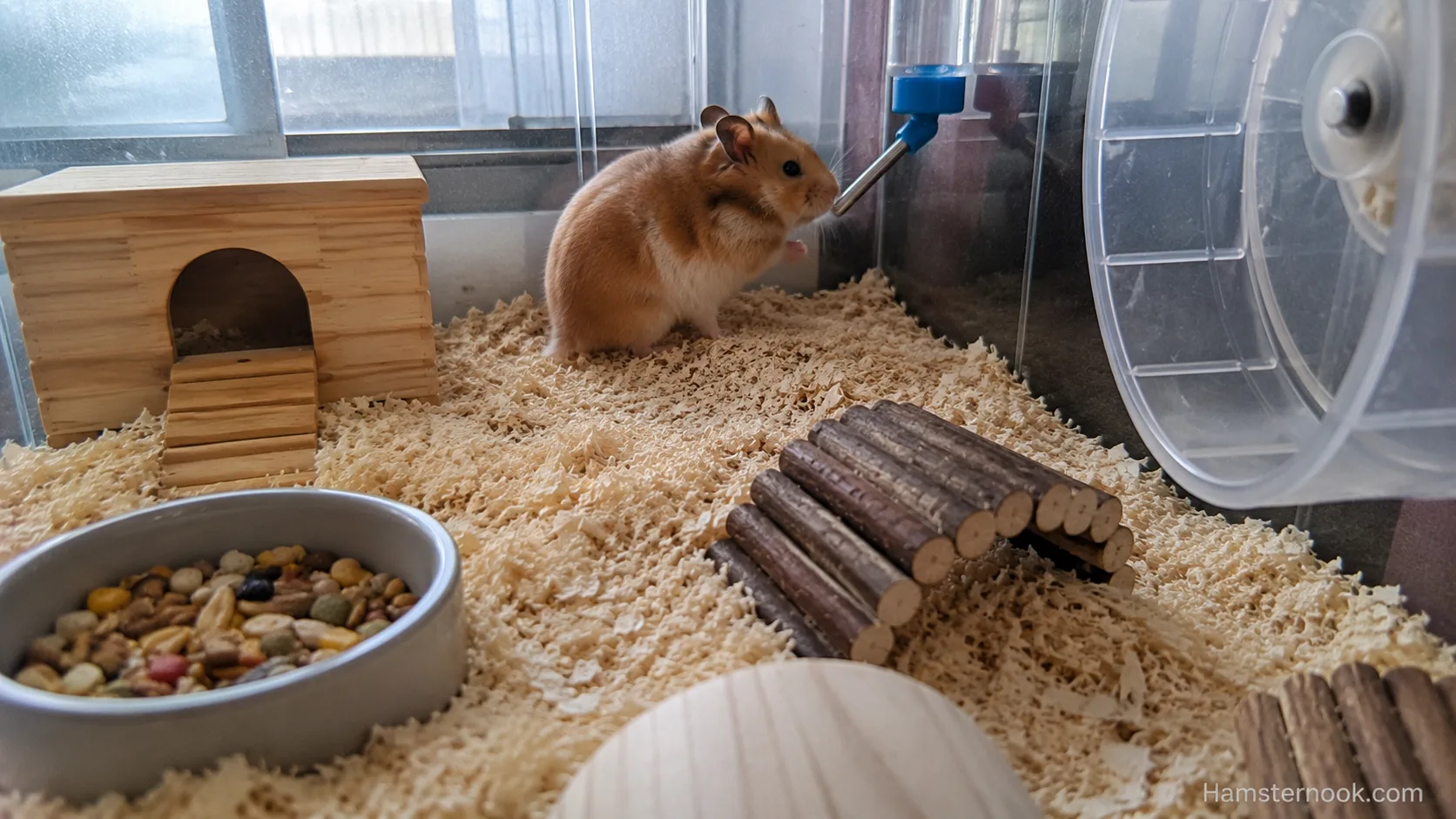
A hamster does not need a light left on overnight just because the room becomes dark. A consistent day-night cycle is more important than keeping the enclosure illuminated at night.
Keeping the cage away from direct sunlight and other strong environmental changes is also important when choosing the right location for a hamster enclosure. Where Should You Put a Hamster Cage? Best and Worst Locations Explained
Now that we understand how hamsters see in low-light conditions, the next question is whether owners should provide extra lighting at night.
Should You Leave a Light On for Your Hamster at Night?
Most hamsters do not need a night light.
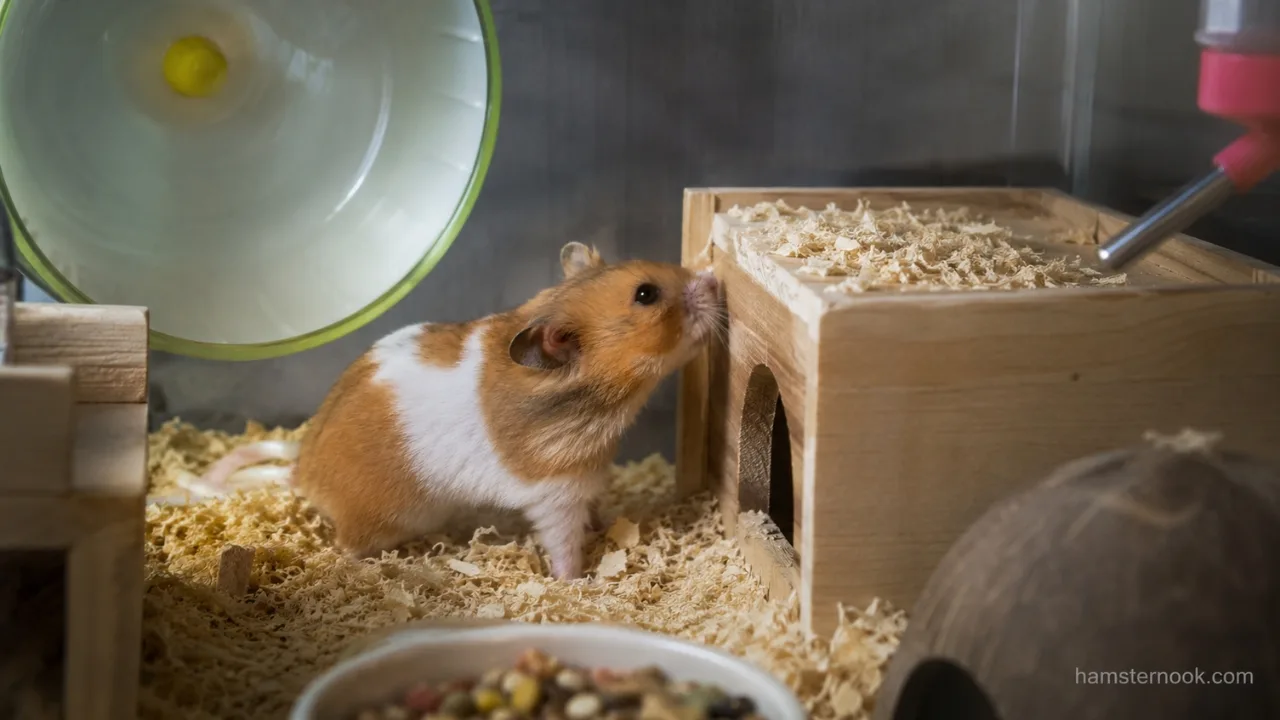
In fact, maintaining a natural light cycle is usually the better option.
| Lighting Situation | Recommended? | Reason |
|---|---|---|
| Normal daylight during the day | Yes | Supports natural rhythm |
| Darkness at night | Yes | Mimics natural conditions |
| Constant bright lighting | No | May cause stress |
| Bright spotlight on cage | No | Can disrupt comfort |
| Soft ambient room light | Usually acceptable | Provides some visibility without excessive brightness |
Allowing your hamster to follow a natural day-night schedule supports normal behavior patterns.
For more detail on how daylight, darkness, and nighttime lighting affect hamsters, see our Do Hamsters Need Light? Daylight, Darkness & Night Lights Explained guide.
How Poor Eyesight Affects Pet Hamsters
Because hamster eyesight is relatively weak, they may occasionally startle when approached unexpectedly.
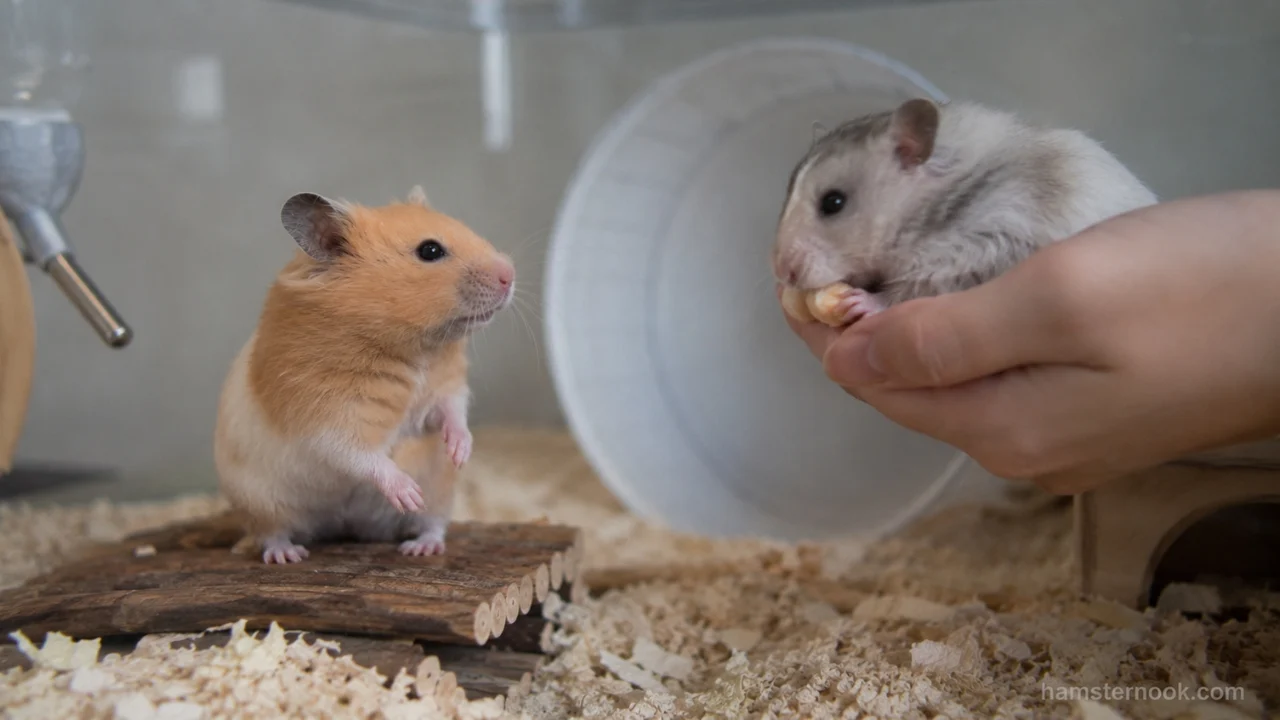
Owners can help by:
- Speaking softly before handling
- Approaching slowly
- Allowing the hamster to smell their hand first
- Avoiding sudden movements
These simple habits help build trust and reduce stress.
When Vision Changes May Be a Health Concern
A hamster with naturally limited eyesight is not necessarily unhealthy. However, a sudden change in how your hamster moves or responds to its surroundings can be worth paying attention to. Bumping into familiar objects repeatedly, difficulty finding food or water, unusual squinting, eye discharge, swelling, or a noticeable change in normal behavior may indicate an eye or health problem rather than ordinary limited vision. If these changes appear suddenly or continue, contact a qualified veterinarian for advice.
Signs Your Hamster Is Using Its Other Senses
You may notice behaviors that demonstrate how much hamsters rely on non-visual information.
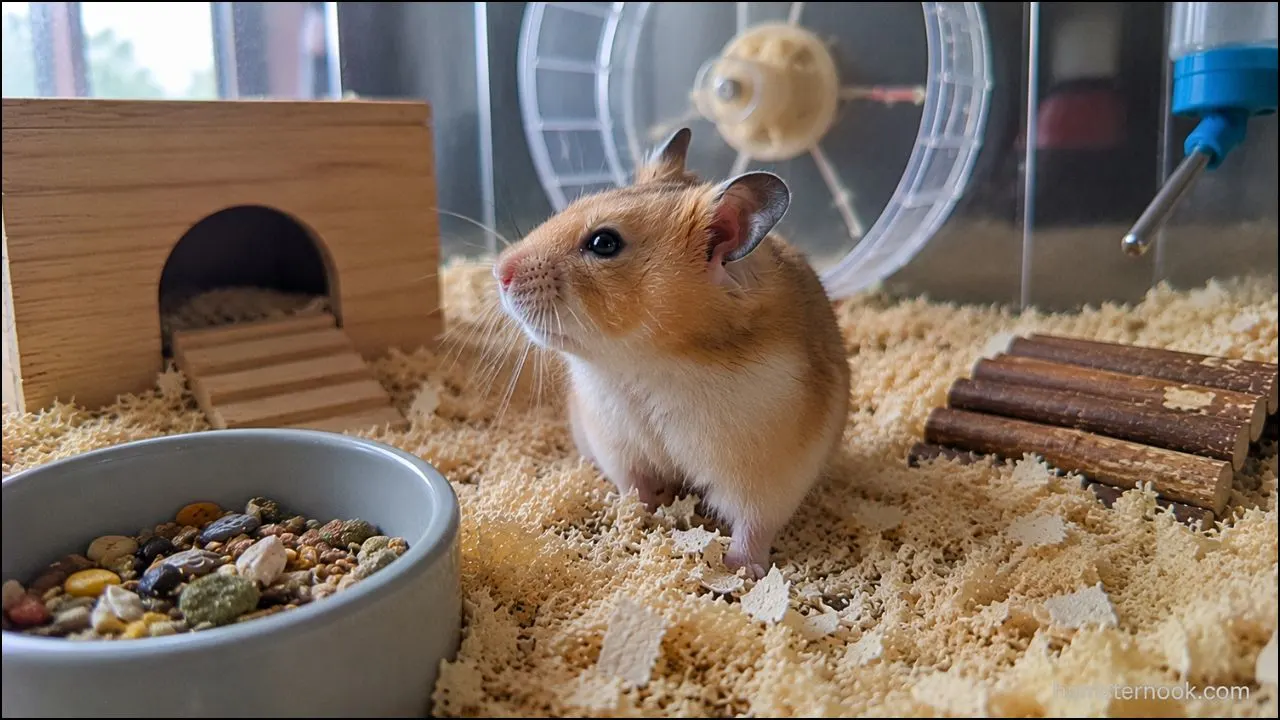
Examples include:
- Sniffing everything before interacting with it
- Following familiar scent trails
- Touching objects with whiskers
- Reacting quickly to sounds
- Navigating familiar cage layouts effortlessly
These behaviors are normal and show how effectively hamsters adapt despite limited eyesight.
Why Understanding Hamster Vision Matters
Knowing how hamsters experience their environment can help owners make better decisions about cage placement, lighting, handling, and enrichment. Small adjustments often make a noticeable difference in a hamster’s comfort and confidence.
These adjustments work best when the enclosure also provides enough space, appropriate hamster cage setup, appropriate bedding, hiding areas, and enrichment for normal activity.
Common Myths About Hamster Vision
Several myths about hamster eyesight continue to circulate among pet owners.
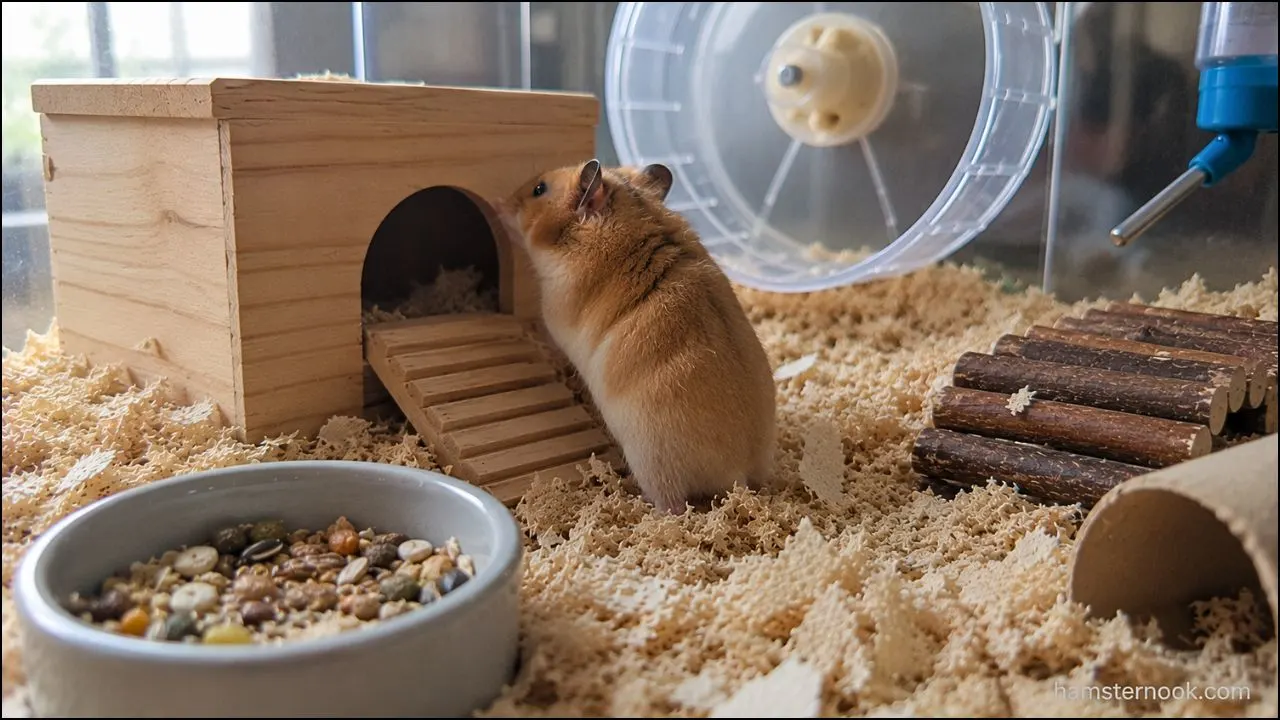
One important distinction is that being active in darkness does not mean a hamster can see perfectly without light. A hamster may move confidently through a familiar enclosure because it combines limited vision with smell, hearing, whiskers, and memory.
| Myth | Reality |
|---|---|
| Hamsters can see perfectly in total darkness | False; they need some light to see |
| Hamsters are blind | False; they can see, but vision is limited |
| Hamsters only use eyesight | False; smell, hearing, and whiskers are equally important |
| Bright lights improve hamster activity | False; excessive brightness may cause discomfort |
| Hamsters recognize owners mainly by sight | False; scent plays a much larger role |
Understanding these misconceptions helps owners better interpret their hamster’s behavior.
Understanding normal hamster behavior makes it easier to tell the difference between healthy activity and unusual behavior changes.
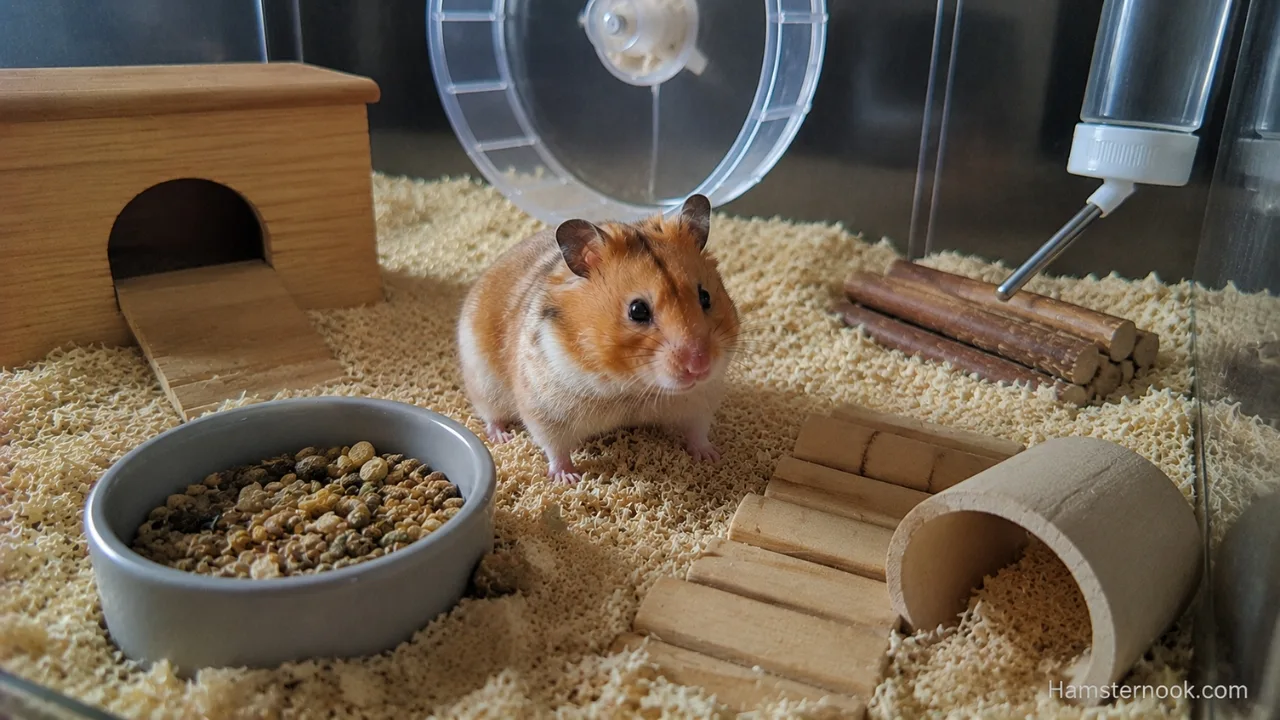
Recognizing normal behavior patterns makes it easier to spot potential problems early. Our Signs of a Sick Hamster: Warning Symptoms Every Owner Should Know guide explains the health changes owners should never ignore.
Final Thoughts
Hamsters cannot see in complete darkness, but they are remarkably well adapted to low-light environments. Instead of relying on eyesight alone, they use a combination of smell, hearing, whiskers, and memory to navigate their surroundings.
For owners, the best approach is to support a natural day-night cycle and avoid unnecessary bright lighting at night. When given a comfortable environment that matches their natural instincts, hamsters can remain active, confident, and stress-free.
Frequently Asked Questions About Hamster Vision
Can hamsters see better at night than during the day?
Hamsters are adapted to lower-light conditions, so they are generally more comfortable and active when lighting is dim. However, this does not mean they can see better in complete darkness.
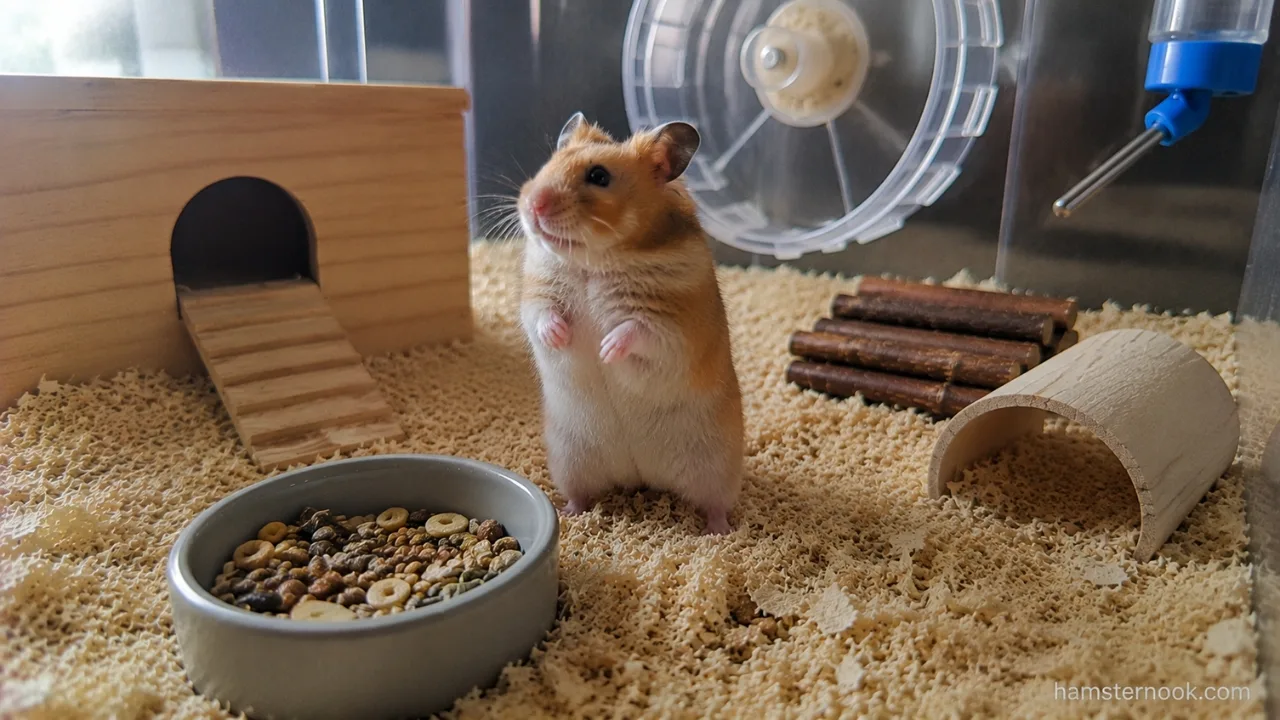
Can hamsters see in complete darkness?
No. Hamsters require at least a small amount of light to see their surroundings and do not have true night vision.
Are hamsters nocturnal?
Most pet hamsters are crepuscular, meaning they are most active during dawn and dusk rather than throughout the entire night.
Do hamsters recognize their owners?
Yes. Hamsters primarily recognize owners through scent, voice, and routine rather than facial recognition. They often become familiar with regular feeding schedules, sounds, and scents over time.
Why does my hamster come out when the lights are off?
Hamsters naturally prefer low-light conditions because they evolved to be active during twilight hours.

Should I use a night light for my hamster?
In most cases, no. A normal day-night cycle with darkness at night is usually best.
Can hamsters see colors?
Hamsters can likely see some colors, but their color vision is much more limited than that of humans.
Can hamsters find their way around without good eyesight?
Yes. Hamsters rely heavily on smell, whiskers, hearing, and memory, which allows them to navigate familiar environments even when vision is limited.
References
This guide is based on hamster vision, behavior, lighting, environmental care, and welfare guidance from trusted veterinary and animal welfare resources, including:
- RSPCA – Keeping Hamsters as Pets – General guidance on hamster behavior, daily activity, housing, environmental needs, and welfare.
- RSPCA – Hamster Behaviour – Information on natural hamster activity patterns, sensory behavior, sleeping habits, and responses to the environment.
- RSPCA – Creating a Good Home for Hamsters – Guidance on suitable enclosure placement, environmental conditions, lighting, bedding, hiding areas, and hamster welfare.
- Blue Cross – Hamster Care Guide – Practical information on hamster behavior, housing, lighting, handling, enrichment, and general wellbeing.
- MSD Veterinary Manual – Providing a Home for a Hamster – Veterinary guidance on hamster housing, environmental conditions, activity, shelter, and care requirements.
- NC3Rs – Housing and Husbandry: Hamster – Guidance on hamster housing, environmental conditions, husbandry, and supporting natural behaviors.

Narayan Kumar is the founder and author of HamsterNook. He creates practical, research-based hamster care guides covering hamster behavior, nutrition, cage setup, enrichment, health, and everyday care. His goal is to help hamster owners make informed decisions and provide safer, healthier lives for their pets through clear, beginner-friendly information based on trusted animal care resources.