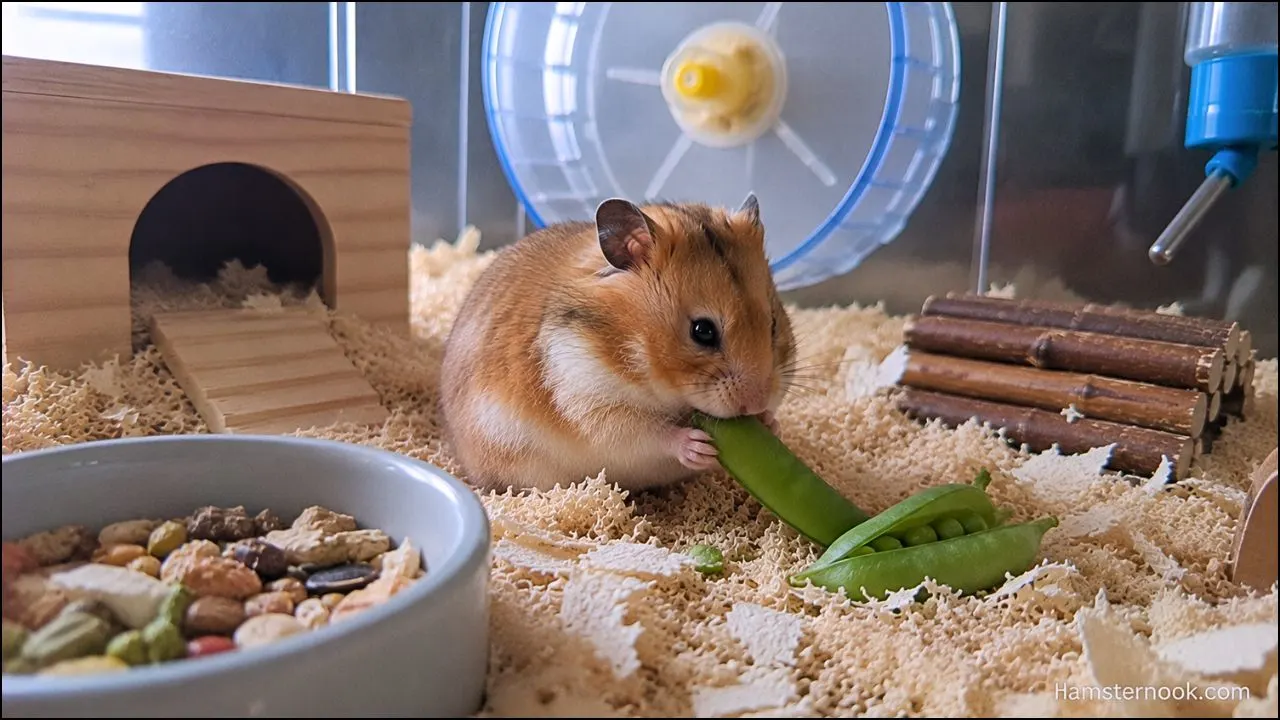
Many hamster owners unintentionally offer foods that seem healthy but may contribute to obesity, diabetes, digestive upset, or nutritional imbalance over time. Understanding which foods should form the foundation of your hamster’s diet is one of the best ways to support lifelong health and well-being.
A proper hamster diet is about balance, variety, and understanding what your pet truly needs to stay healthy long term. The right foods help support energy, healthy teeth, proper digestion, a shiny coat, and natural foraging behavior.
This complete hamster diet guide explains the best foods for hamsters, safe fruits and vegetables, protein sources, foods to avoid, feeding schedules, and common beginner mistakes. Whether you own a Syrian hamster or a dwarf breed, this guide will help you build a safer and healthier feeding routine.
A healthy diet works best alongside proper housing, enrichment, and daily care. If you’re new to hamster ownership, our Hamster Care Guide for Beginners brings together everything you need to know about feeding, habitat setup, behavior, health, and routine care in one place.
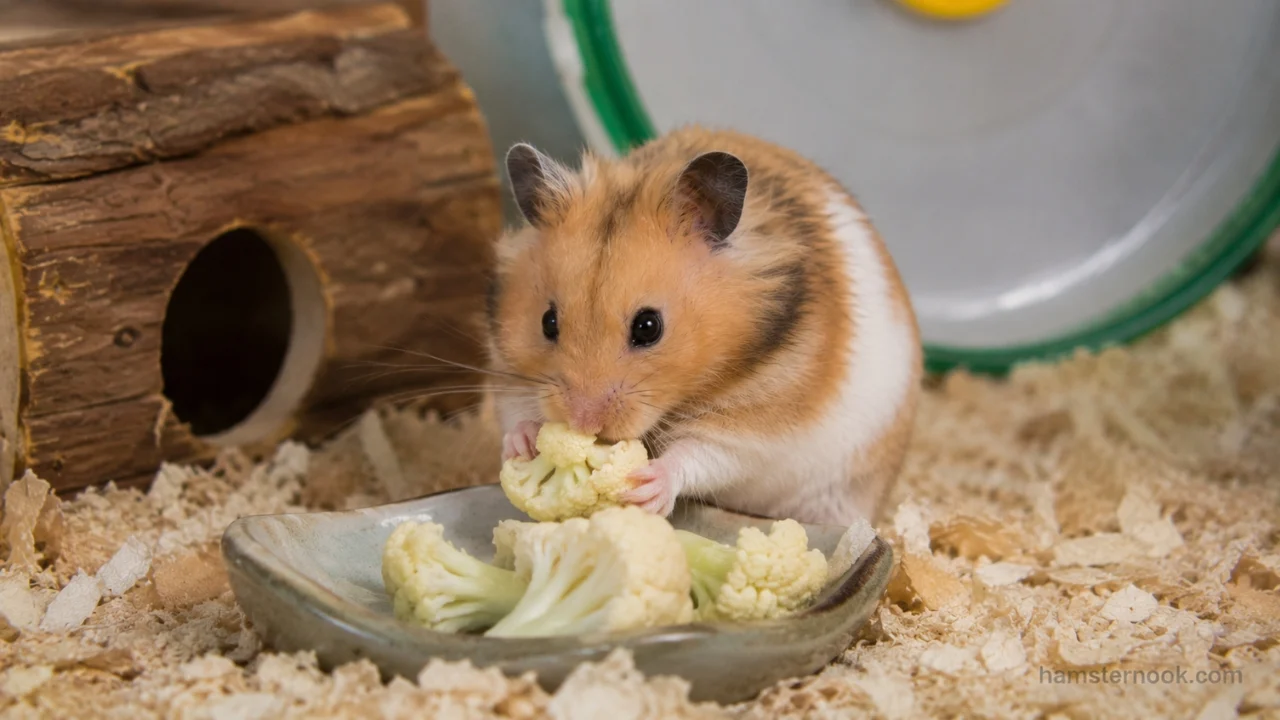
Quick Answer:
A healthy hamster diet should be built around a quality commercial hamster food, with safe vegetables added regularly, small amounts of appropriate protein, and fruit used only as an occasional treat. Fresh water should always be available. Sugary, heavily processed, and toxic foods should be avoided.
What Do Hamsters Eat in the Wild?
Understanding a hamster’s natural diet makes it easier to feed them correctly in captivity.
Wild hamsters are omnivores. They naturally eat a mix of:
- Seeds
- Grains
- Grass
- Plant roots
- Vegetables
- Insects
- Small amounts of fruit
They also spend a large part of their day foraging for food. Pet hamsters still have these natural instincts, which is why food variety and enrichment are important.
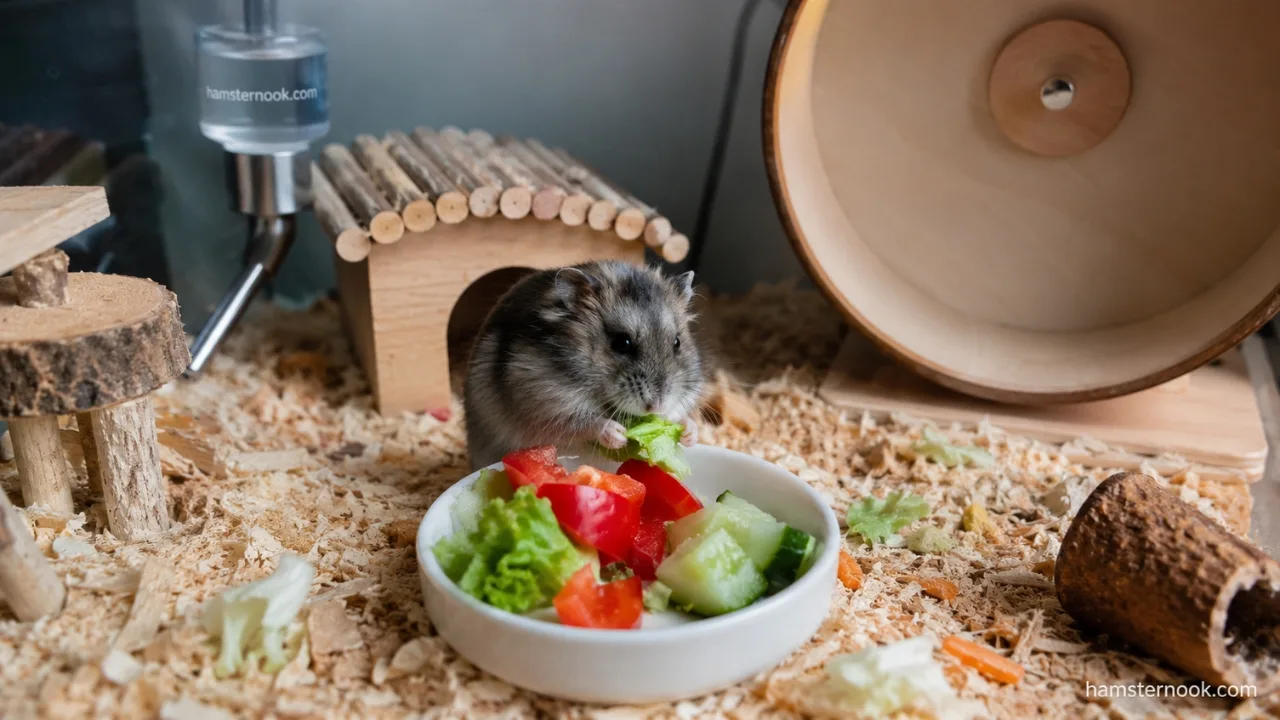
Unlike rabbits or guinea pigs, hamsters do not require unlimited hay as the center of their diet, although small amounts can still be useful for nesting and chewing.
Best Hamster Food: What Should Make Up the Main Diet?
A high-quality commercial hamster food should always form the foundation of your hamster’s diet.
The healthiest options usually include:
- Pellets or lab blocks
- Seed mixes with balanced nutrition
- Whole grains
- Moderate protein levels
A balanced commercial food helps ensure your hamster receives consistent nutrients that homemade diets may miss.
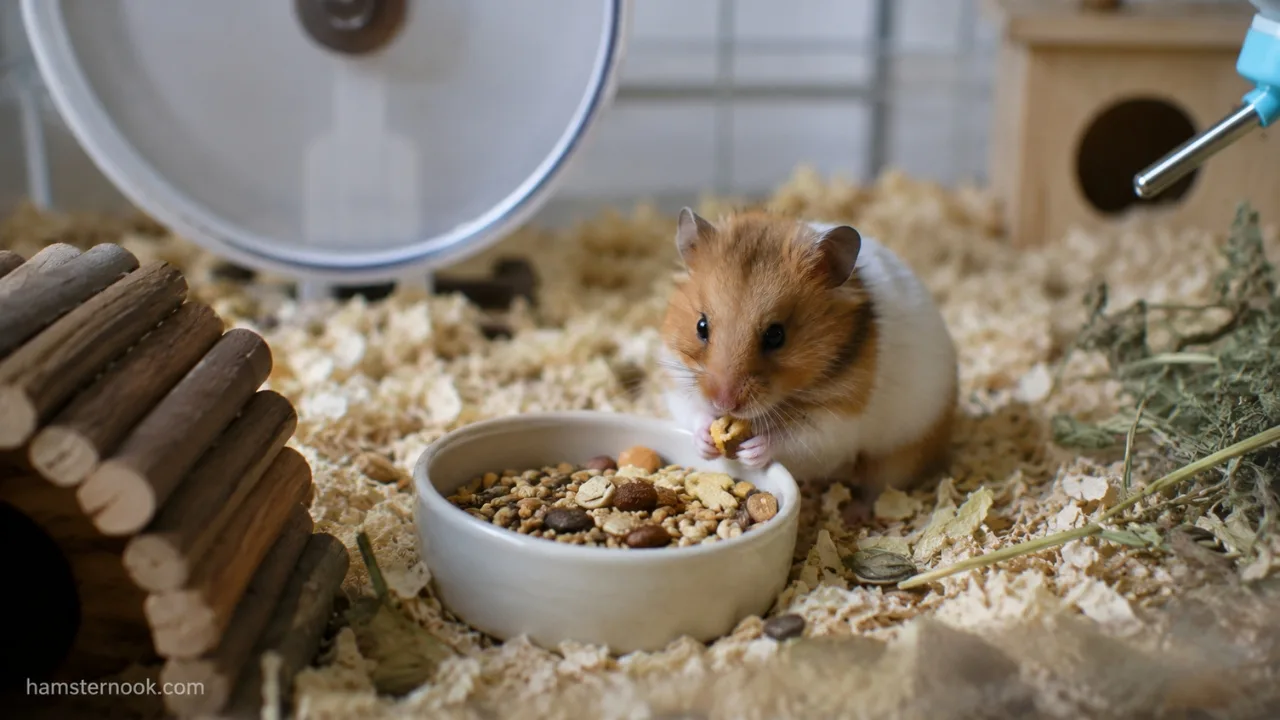
How to Safely Switch Your Hamster to a New Food
Changing your hamster’s food too quickly can upset its digestive system, even if the new food is healthier. Whenever possible, make the transition gradually over the course of a week.
A simple approach is to mix a small amount of the new food with the old one for the first few days. As your hamster becomes used to it, slowly increase the amount of the new food while reducing the old food.
| Days | Old Food | New Food |
|---|---|---|
| Days 1–2 | 75% | 25% |
| Days 3–4 | 50% | 50% |
| Days 5–6 | 25% | 75% |
| Day 7+ | 0% | 100% |
During the transition, watch for changes in appetite, droppings, or activity. Most hamsters adjust without problems, but slowing the process is usually the safest choice if you notice digestive upset.
If you’re changing foods because your hamster is recovering from illness or has stopped eating normally, speak with an experienced exotic veterinarian before making major dietary changes.
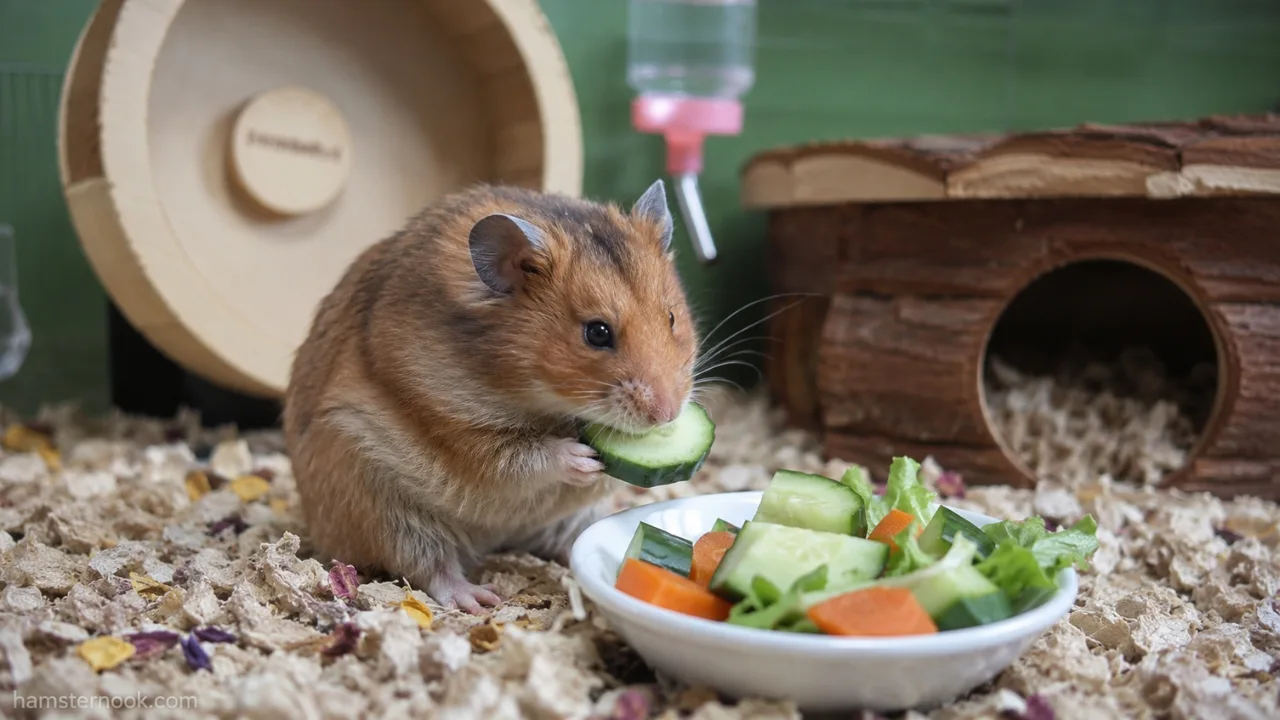
When introducing any unfamiliar food, making the change gradually can make it easier to identify whether your hamster reacts poorly to a new ingredient. Our How to Introduce New Foods to a Hamster Safely: Step-by-Step Guide explains the process in more detail.
Pellets vs Seed Mixes: Which Is Better for Hamsters?
Both have advantages and disadvantages.
| Food Type | Benefits | Drawbacks |
|---|---|---|
| Pellets/Lab Blocks | Balanced nutrition in every bite | Less variety and enrichment |
| Seed Mixes | Encourages natural foraging | Hamsters may pick favorite foods only |
| Combination Feeding | Balanced nutrition plus enrichment | Requires portion control |
Essential Nutrients Every Hamster Needs
Hamsters require several important nutrients for long-term health.
| Nutrient | Why It Matters | Common Sources |
|---|---|---|
| Protein | Muscle maintenance and growth | Mealworms, eggs, chicken |
| Fiber | Healthy digestion | Vegetables, grains |
| Healthy Fats | Energy and coat health | Seeds in moderation |
| Vitamins & Minerals | Overall body function | Fresh vegetables |
| Carbohydrates | Daily energy | Whole grains |
Protein needs can vary slightly by breed and age. Young or pregnant hamsters generally need more protein than older adults.
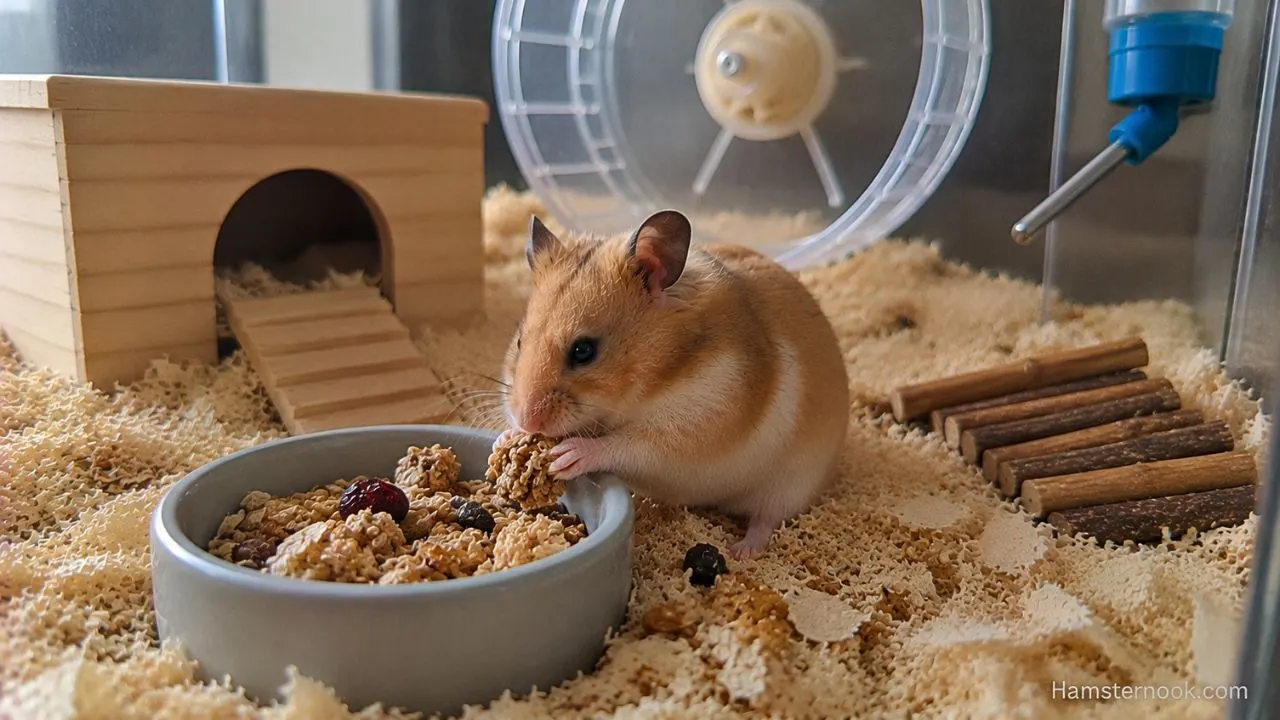
Best Vegetables for Hamsters
Fresh vegetables are one of the healthiest additions to a hamster’s diet when fed correctly.
Vegetables provide:
- Fiber
- Hydration
- Vitamins
- Mental stimulation
Choosing the right vegetables is easier when you know which options are safest and how often they should be offered. Our Best Fruits and Vegetables for Hamsters guide compares safe choices, portion sizes, and feeding tips for offering fresh foods safely.
Safe Vegetables Hamsters Can Eat
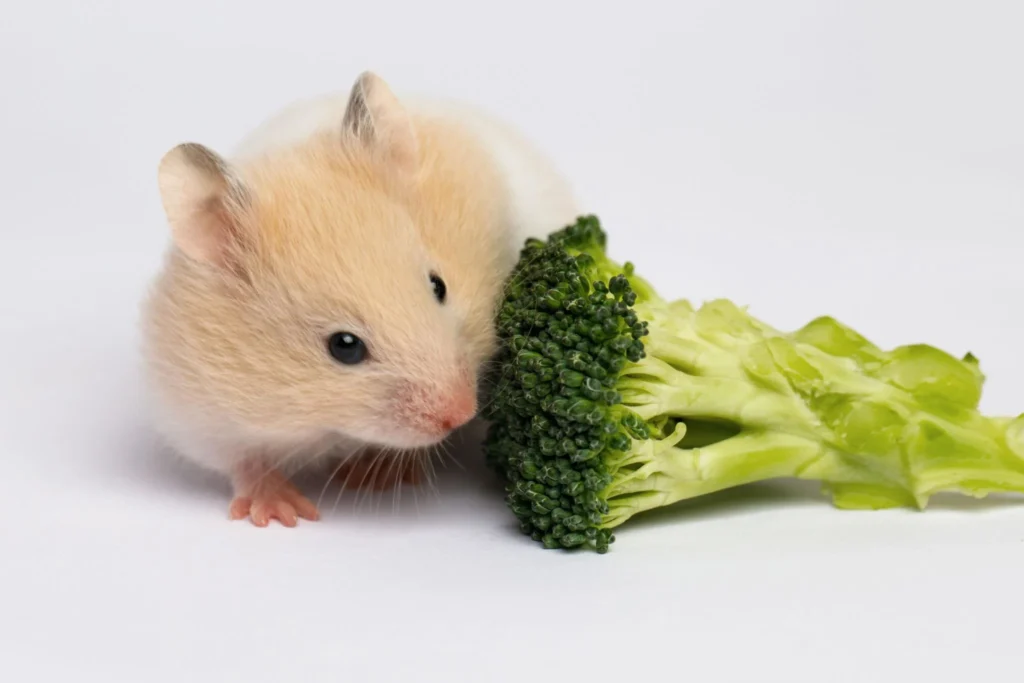
Broccoli is one of the healthiest vegetables for hamsters when served correctly. Our Can Hamsters Eat Broccoli? Safe Amount, Raw vs Cooked & Risks guide explains safe portion sizes, preparation tips, and feeding considerations.
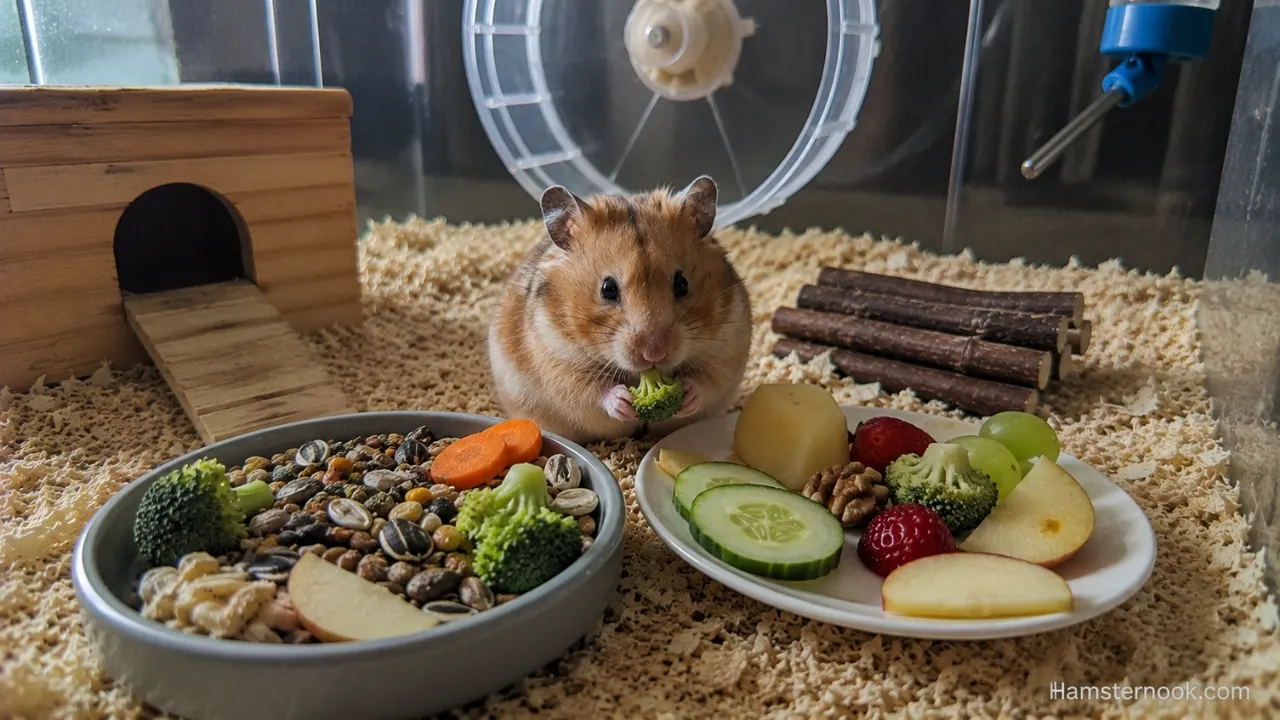
| Vegetable | Safe for Hamsters? | Feeding Notes |
|---|---|---|
| Cucumber | Yes | Excellent hydration treat |
| Broccoli | Yes | Feed small florets only |
| Carrot | Yes | Higher sugar, feed moderately |
| Bell Pepper | Yes | Rich in vitamin C |
| Zucchini | Yes | Easy to digest |
| Spinach | Limited | Small amounts occasionally |
| Peas | Yes | Good occasional protein source |
| Romaine Lettuce | Yes | Better than iceberg lettuce |
Always introduce vegetables slowly to avoid digestive upset.
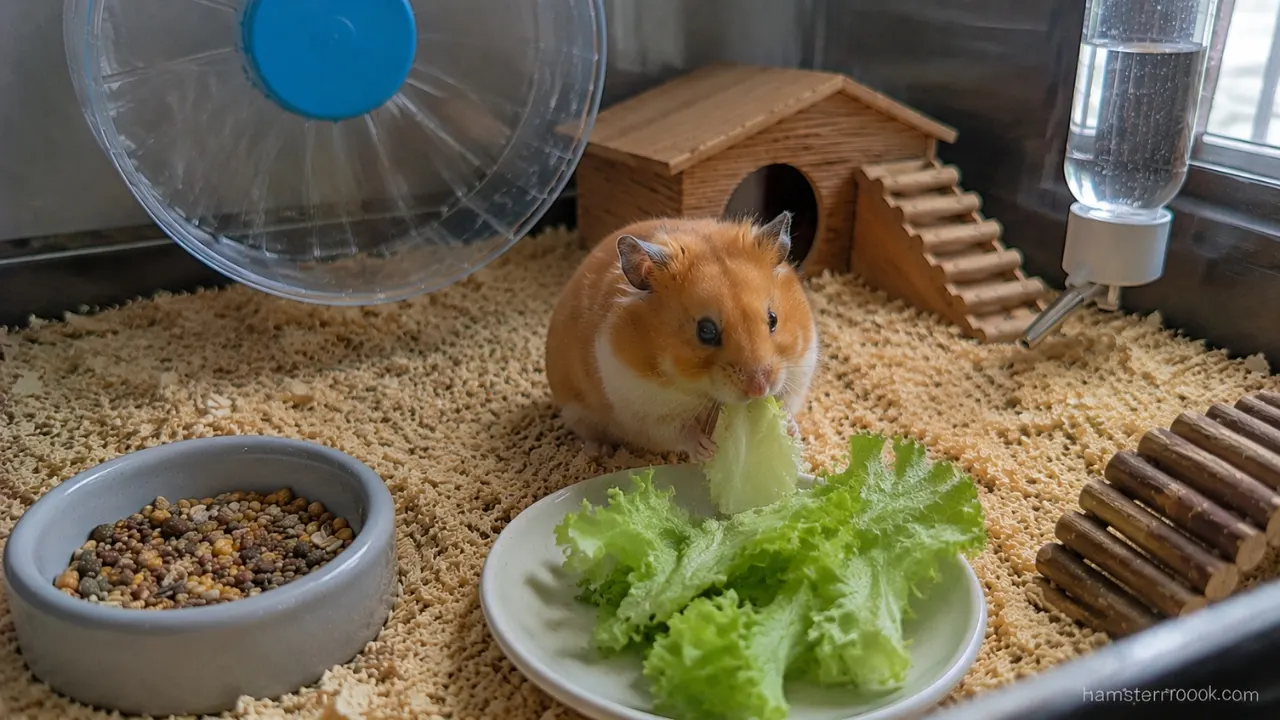
Romaine lettuce is another beginner-friendly vegetable when offered in moderation. Our Can Hamsters Eat Lettuce? Safe Feeding Guide explains which lettuce varieties are safest and which ones should be limited.
Best Fruits for Hamsters in Moderation
Fruit should only be offered as an occasional treat because of its natural sugar content.
Dwarf hamster breeds are especially sensitive to sugary foods and are more prone to diabetes, so fruit should be offered less frequently than it is for Syrian hamsters.
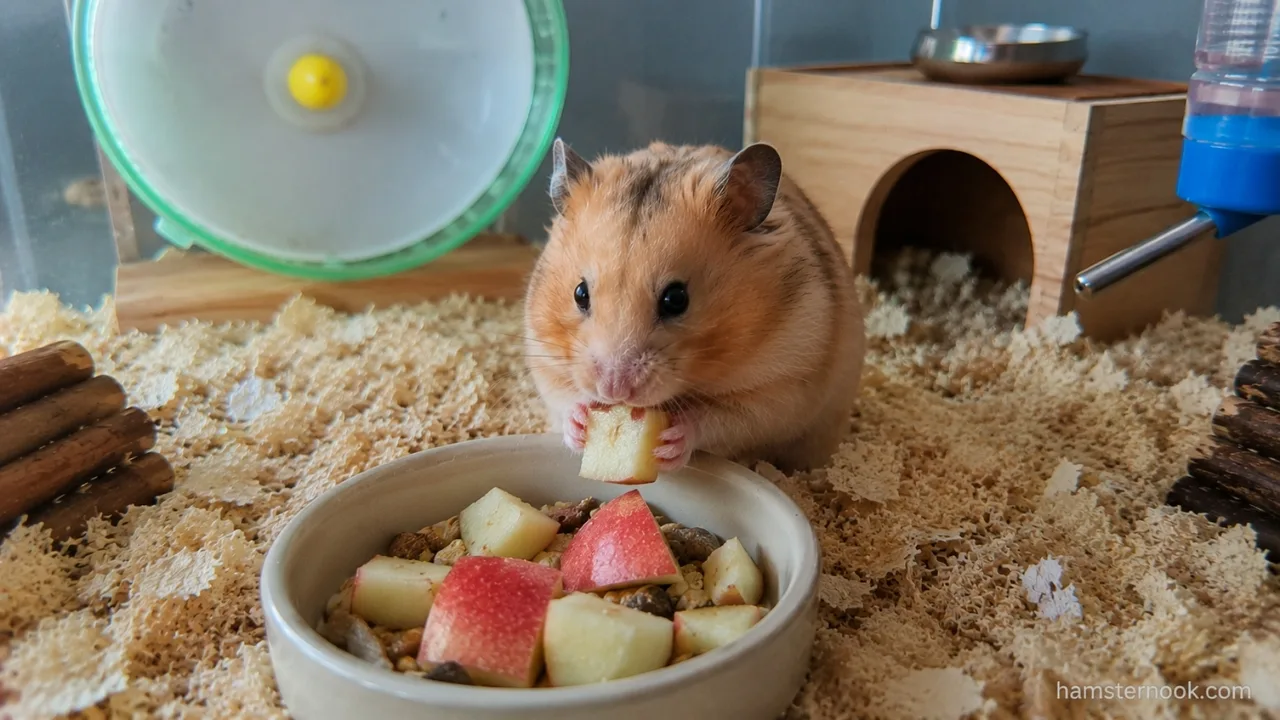
Watermelon contains plenty of water but also natural sugar, making moderation especially important. Our Can Hamsters Eat Watermelon? Safe Amount, Seeds & Rind Explained guide explains appropriate portions and feeding considerations.
Safe Fruits for Hamsters
| Fruit | Safe? | Important Notes |
|---|---|---|
| Apple | Yes | Remove seeds |
| Blueberries | Yes | Tiny portions only |
| Strawberries | Yes | Small occasional portions |
| Banana | Limited | Higher sugar content |
| Pear | Yes | Feed small pieces |
| Melon | Yes | Small occasional portions |
| Watermelon | Limited | Small portions because it contains natural sugar |
Fresh fruit is usually safer than dried fruit because dried fruit contains concentrated sugar.
If you’re looking for more treat ideas beyond fruit, our Best Hamster Treats: 10 Healthy & Safe Treats They Love guide covers safe treat options and how to keep them as a small part of your hamster’s overall diet.
Healthy Protein Sources for Hamsters
While vegetables and treats often get the most attention, protein is just as important because hamsters are natural omnivores.

Hamsters naturally eat insects and other protein-rich foods in the wild.
Safe Protein Foods for Hamsters
- Plain cooked chicken
- Boiled egg
- Mealworms
- Crickets from safe pet sources
- Plain tofu in tiny amounts
Protein treats should be unseasoned and free from oils, butter, salt, or spices.
If you’re deciding which protein treats are safest, our Can Hamsters Eat Mealworms? guide explains serving sizes, feeding frequency, and when mealworms are a better choice than other protein sources.
Best Seeds and Grains for Hamsters
Seeds are natural favorites for hamsters, but they should still be balanced carefully.

Healthy Seeds in Moderation
- Pumpkin seeds
- Flax seeds
- Millet
- Oats
- Sunflower seeds
Sunflower seeds are very fatty, so they should only be occasional treats.
Foods Hamsters Should Never Eat
Some foods are dangerous or toxic for hamsters and should always be avoided.
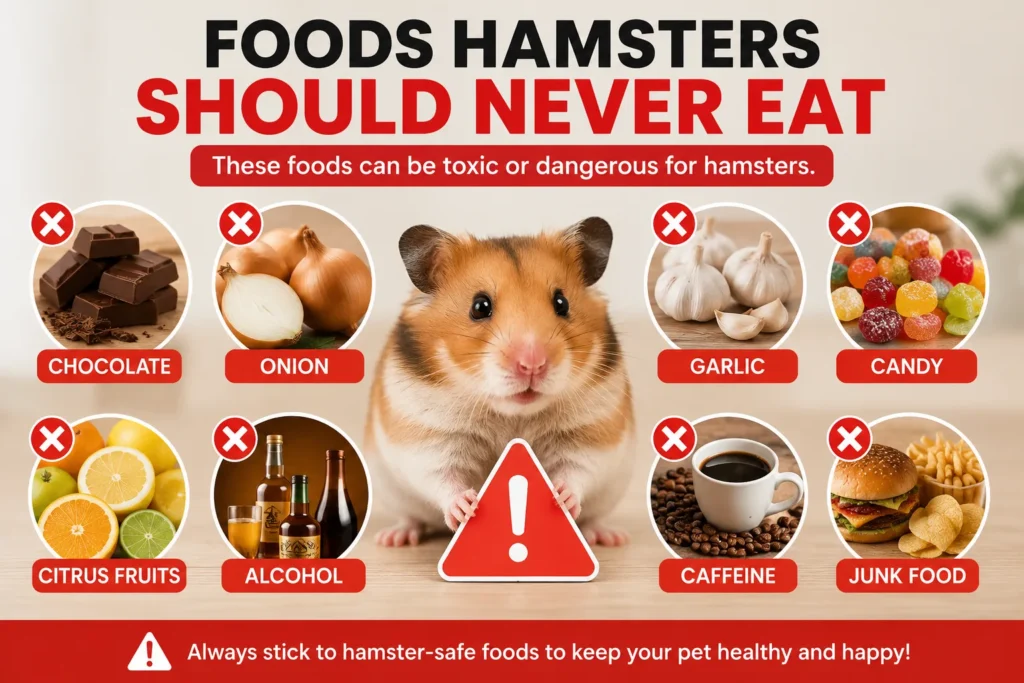
Toxic Foods for Hamsters
| Food | Why It’s Dangerous |
|---|---|
| Chocolate | Poisonous to rodents |
| Grapes | Can be poisonous to rodents |
| Rhubarb | Avoid because it can be poisonous |
| Onion | Can damage red blood cells |
| Garlic | Can be harmful and should be avoided |
| Alcohol | Not suitable for hamsters |
| Caffeinated Drinks | Avoid because caffeine is unsafe for small pets |
Never assume human snack foods are safe for pets.
For a complete breakdown of dangerous ingredients and why they should always be avoided, see our Foods Hamsters Should Never Eat: Toxic & Unsafe Foods to Avoid guide.

Can Hamsters Eat Human Food?
Some plain human foods are safe in tiny amounts, but many processed foods are not suitable.
Occasionally Safe Human Foods
- Plain oatmeal
- Plain rice
- Small pieces of cooked pasta
- Plain boiled potato
- Unsweetened cereal
Unsafe Human Foods
- Chips
- Fast food
- Sugary desserts
- Salty snacks
- Fried foods
If a food contains heavy seasoning, sugar, artificial sweeteners, or oil, it should usually be avoided.
How Often Should You Feed a Hamster?
Most hamsters should receive fresh food daily.
Try feeding your hamster around the same time each evening whenever possible. Since hamsters are naturally most active during the evening and night, a consistent feeding routine often encourages normal eating habits and makes changes in appetite easier to notice.

A typical feeding routine includes:
| Food Type | Frequency |
|---|---|
| Commercial hamster food | Daily |
| Fresh vegetables | Several times weekly |
| Fruits | 1–2 times weekly |
| Protein treats | Weekly |
| Seeds/treats | Occasionally |
Hamsters naturally store food in hidden spots, so owners should check food stashes regularly to remove spoiled fresh foods.
If you’re unsure what a normal daily routine should look like, our What Should Hamsters Eat Every Day? Daily Diet, Portions & Safe Foods guide explains how staple food, fresh foods, and occasional treats can fit into a consistent feeding routine.
How Much Food Does a Hamster Need?
Overfeeding is one of the most common hamster care mistakes.
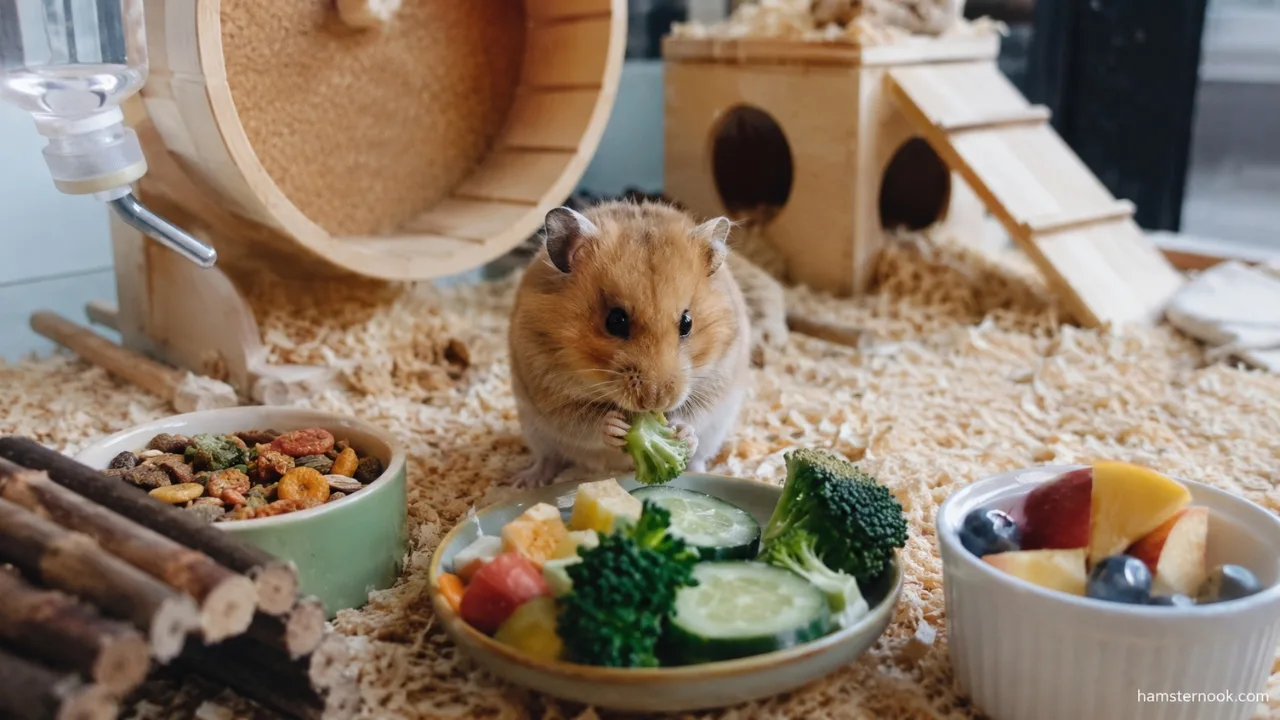
General Portion Guidelines
| Hamster Type | Approximate Daily Food |
|---|---|
| Syrian Hamster | 1–2 tablespoons |
| Dwarf Hamster | 1–2 teaspoons |
Activity level, age, and individual metabolism may slightly change feeding needs.
These amounts are starting points rather than exact requirements for every hamster. Food intake can vary with the individual, age, activity level, and the type of food being offered. Monitor your hamster’s body condition and food stash instead of repeatedly increasing the portion simply because the bowl looks empty.
How Much Fresh Food and Treats Should a Hamster Get?
Fresh foods should stay a small addition to the main diet rather than replacing the staple food. As a practical starting point, fresh pieces can be very small, and treats should remain limited so they do not displace the balanced commercial diet. MSD Veterinary Manual guidance recommends keeping fruits, vegetables, and treats to no more than 10% of the diet.
Many owners notice that their hamster doesn’t finish every meal in one sitting because storing food is completely normal. Rather than filling the bowl again immediately, check food stash areas first to avoid accidental overfeeding.

Can Hamsters Overeat?
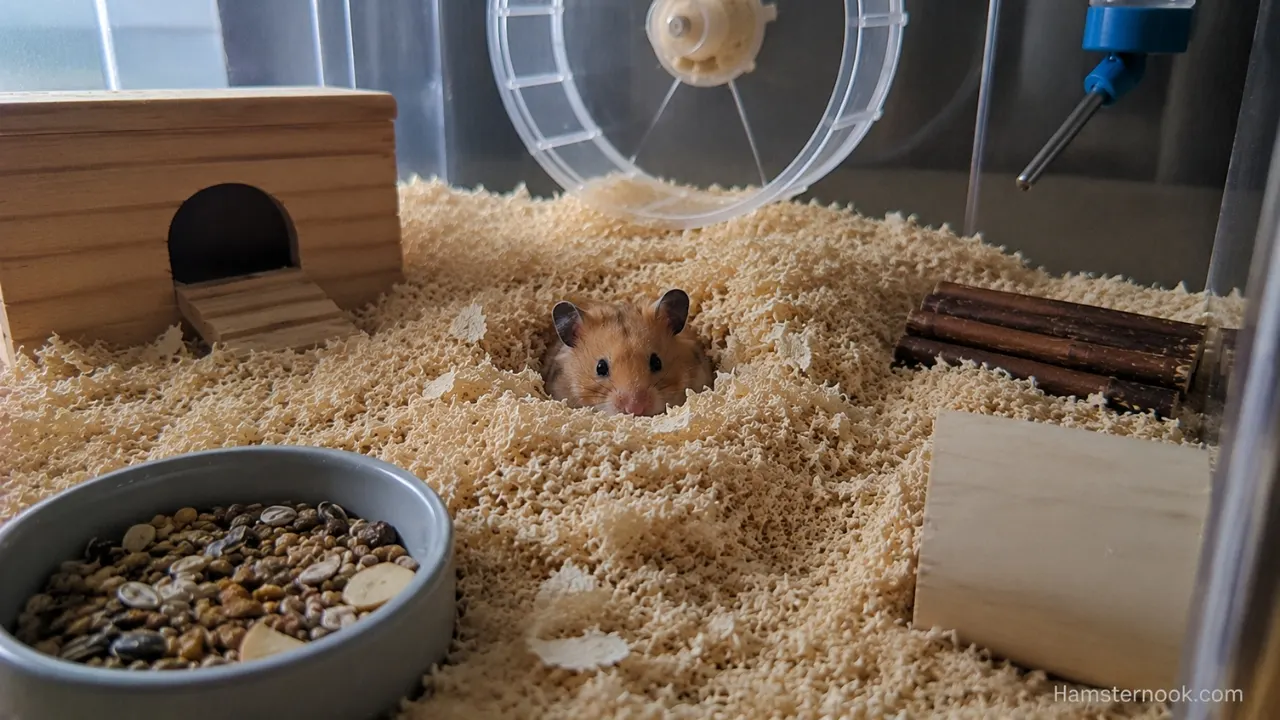
Hamsters naturally collect and store food, so a full food bowl doesn’t always mean they’re eating too much. Many owners discover hidden food stashes inside hideouts, tunnels, or nesting areas because hoarding is a completely normal instinct.
The bigger concern is repeatedly refilling the food bowl without checking those stored supplies first. This can gradually lead to excessive food intake, unnecessary waste, and weight gain.
A healthy hamster should have a rounded body without appearing overweight. If your hamster becomes noticeably less active, struggles to climb, or develops visible fat around the hips, it may be receiving more calories than it needs.
Rather than reducing food suddenly, start by limiting sugary treats and fatty seeds while continuing to provide a balanced staple diet. Regular exercise, enrichment, and opportunities to forage are just as important as portion control when maintaining a healthy weight.

Checking hidden food stores once or twice each week also helps prevent spoiled fresh food from accumulating inside the cage.
Food hoarding is one of the most natural hamster behaviors and isn’t usually a sign that your pet is overeating. Our Why Does My Hamster Keep Hiding Food? guide explains why hamsters build food stashes and when owners should be concerned.
Does Diet Change by Hamster Breed?
While all pet hamsters need a balanced diet, not every breed has exactly the same nutritional needs. Size, activity level, and sensitivity to sugar can all affect how often certain foods should be offered.
Syrian Hamsters
Syrian hamsters are the largest pet hamster species and usually eat slightly larger portions than dwarf breeds. They can enjoy a wider variety of vegetables, grains, and protein sources, although sugary treats should still be limited. A balanced commercial hamster food should remain the foundation of their daily diet.
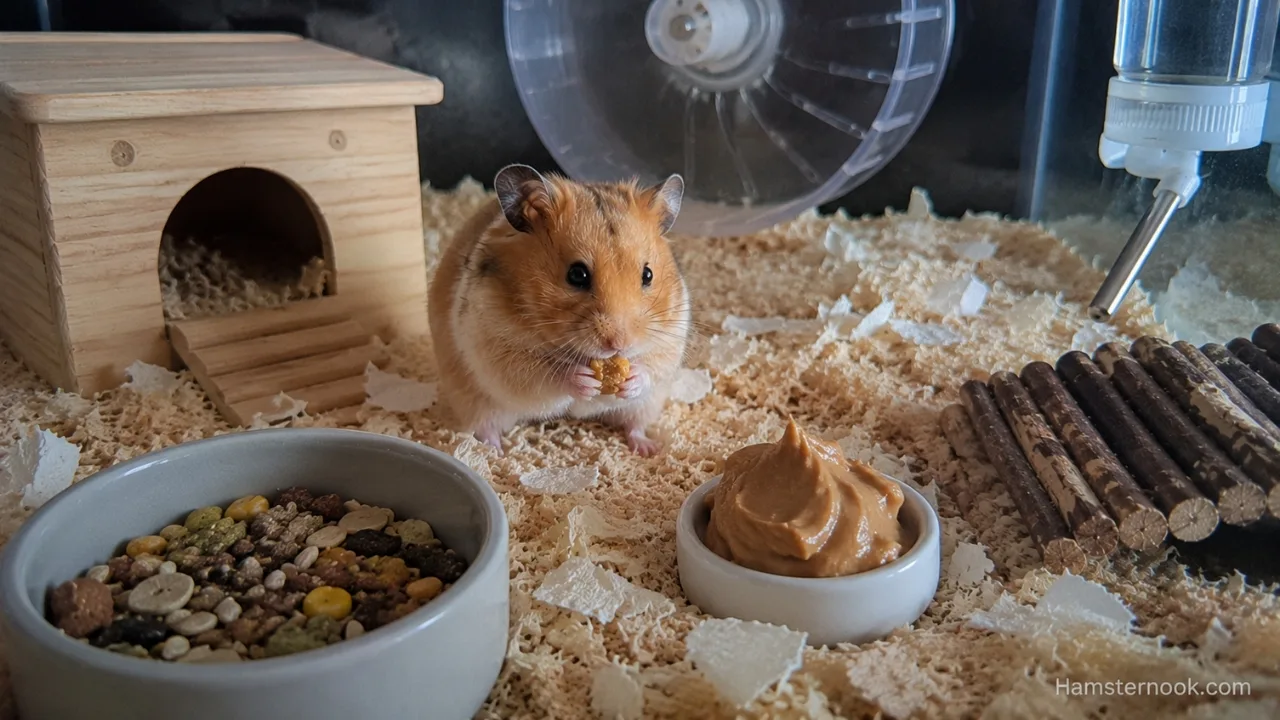
Dwarf Hamsters
Dwarf hamsters, including Campbell’s and Winter White hamsters, are much more prone to diabetes than Syrian hamsters. Because of this, fruit should only be offered occasionally and in very small amounts. Vegetables are generally a better choice for regular fresh treats because they contain less natural sugar.
Roborovski Hamsters
Roborovski hamsters are extremely active and burn a surprising amount of energy despite their tiny size. They usually benefit from a varied diet with plenty of quality commercial food, small amounts of vegetables, and occasional protein treats. Since they are naturally energetic, they often spend more time foraging and storing food than larger breeds.
Chinese Hamsters
Chinese hamsters have dietary needs similar to other dwarf species. A balanced diet with controlled portions, limited sugary foods, and regular fresh vegetables helps support healthy weight and stable blood sugar levels.
Regardless of breed, introducing new foods gradually is always the safest approach. Every hamster is an individual, so watching how your own pet responds to different foods is just as important as following general feeding guidelines.

Feeding Baby, Adult, and Senior Hamsters
A hamster’s nutritional needs naturally change throughout its life. Adjusting the diet slightly as your hamster grows can help support long-term health.
| Life Stage | Diet Focus |
|---|---|
| Baby Hamster | Higher protein for growth |
| Adult Hamster | Balanced commercial diet with fresh vegetables |
| Senior Hamster | Easy-to-eat foods and careful weight monitoring |
Baby Hamsters
Young hamsters grow quickly and need slightly more protein than healthy adults. Small portions of plain boiled egg or mealworms offered occasionally can help support healthy development alongside a quality commercial hamster food.
Adult Hamsters
Healthy adult hamsters do best on a consistent feeding routine. Their diet should mainly consist of a balanced hamster pellet or seed mix, while vegetables, protein, and occasional treats provide variety without replacing the staple diet.
Senior Hamsters
Older hamsters may become less active and lose weight more easily. Some seniors also have trouble chewing harder foods. If you notice your hamster eating more slowly, softer foods like cooked plain oats or tiny pieces of plain boiled egg may be easier to manage. Any sudden weight loss or refusal to eat should always be investigated rather than assumed to be a normal part of aging.

Sample Weekly Feeding Schedule
Many new owners ask exactly what a healthy week of feeding should look like. The schedule below is only an example, but it shows how fresh foods can be rotated without overfeeding treats.
| Day | Fresh Addition |
|---|---|
| Monday | Cucumber |
| Tuesday | Broccoli |
| Wednesday | Small mealworm |
| Thursday | Bell pepper |
| Friday | Zucchini |
| Saturday | One blueberry or tiny apple slice |
| Sunday | No fresh treats, staple food only |
Fresh vegetables don’t need to be different every day, but rotating safe foods provides variety and encourages natural foraging behavior. Any uneaten fresh food should always be removed within a few hours before it begins to spoil.
Building a Balanced Weekly Diet
A healthy hamster diet isn’t about feeding a different food every day. Instead, think of each week as a balance between staple food, fresh vegetables, occasional protein, and limited treats.
Commercial hamster food should remain available every day because it provides the nutrients your hamster needs most consistently. Fresh vegetables can then be rotated several times throughout the week to add fiber, hydration, and enrichment.

Protein treats, such as mealworms or small pieces of plain boiled egg, are best offered once or twice a week rather than daily. Fruit should remain an occasional treat because even naturally sweet foods contain enough sugar to become unhealthy if fed too often.
Seeds like sunflower or pumpkin seeds can also be enjoyed in moderation, but they should never replace a balanced hamster food. Since these treats are high in fat, offering only a few at a time helps reduce the risk of unnecessary weight gain.
There’s no need to make every week’s menu completely different. A simple routine built around quality hamster food, fresh vegetables, and occasional treats is usually healthier than constantly changing foods.
A balanced diet has the greatest impact when it’s paired with a suitable enclosure. Our Best Hamster Cage Setup for Beginners guide explains how habitat design, enrichment, and feeding routines work together to support long-term health.

Common Hamster Feeding Mistakes Beginners Make
New hamster owners often unintentionally create unhealthy feeding habits.
Feeding Too Many Sugary Treats
Fruit, yogurt drops, and sugary snacks should remain occasional treats only.
Offering Unsafe Store-Bought Treats
Some commercial hamster treats contain:
- Added sugar
- Artificial coloring
- Honey coatings
- Excess fat
Simple natural foods are usually safer and healthier for hamsters.

Not Providing Enough Variety
A diet based only on seeds may lead to nutritional imbalance.
Hamsters benefit from safe variety and enrichment.
Ignoring Water Quality
Fresh clean water should always be available.
Water bottles should be checked daily for leaks or blockages.
Do Hamsters Need Hay?
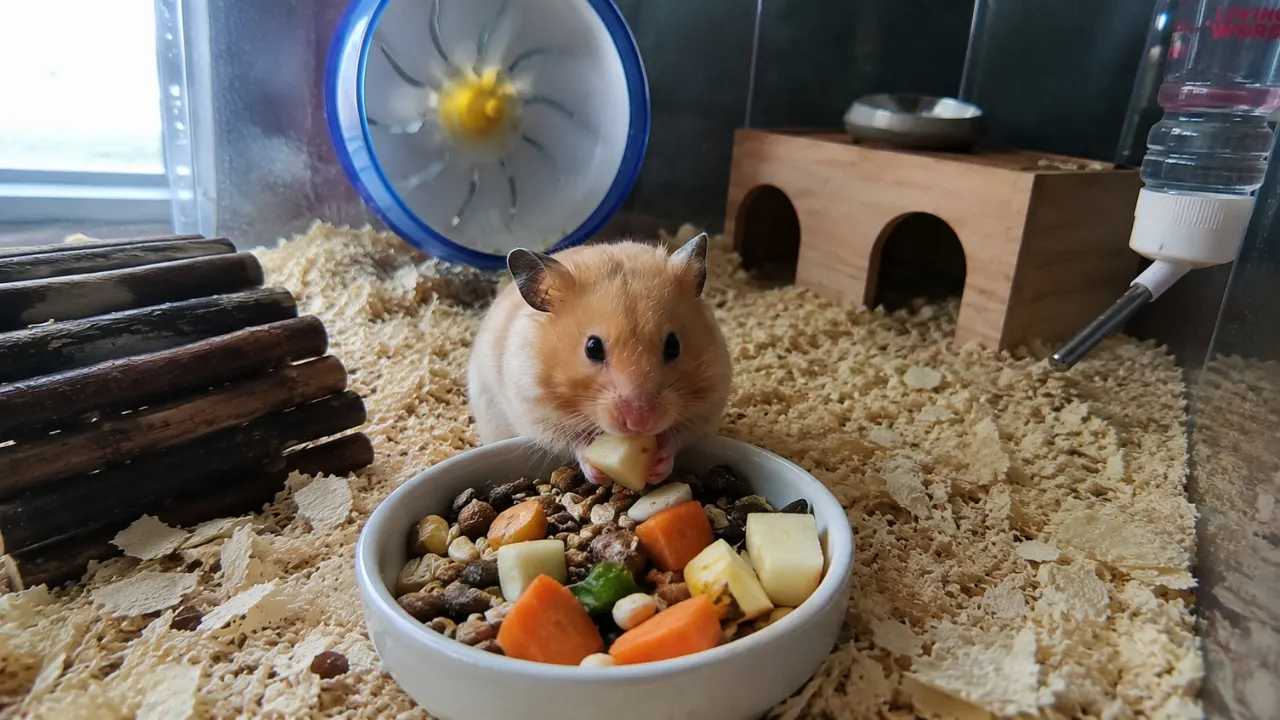
Hay is not essential like it is for rabbits or guinea pigs, but it can still provide benefits.
Small amounts of clean hay may help with:
- Nest building
- Foraging enrichment
- Extra fiber
- Chewing behavior
Timothy hay is generally considered a safe option.
Signs of a Healthy Hamster Diet
A properly fed hamster usually shows:

- Bright eyes
- Healthy weight
- Smooth fur
- Regular activity
- Normal droppings
- Strong appetite
Sudden weight loss, diarrhea, or lethargy may indicate dietary problems or illness.
If these symptoms appear suddenly rather than gradually, they may indicate more than a nutritional problem. Our What Your Hamster Does Right Before It Gets Sick (Warning Signs Owners Miss) guide explains the subtle behavioral changes that often appear before obvious illness develops.
Can Hamsters Become Overweight From Poor Diet?
Yes. Hamsters can easily become overweight when fed too many sugary treats, fatty seeds, or processed foods regularly.
Signs of an overweight hamster may include:

- Difficulty running
- Less activity
- Visible body fat
- Trouble grooming
- Low energy
Seasonal Feeding Tips for Hamsters
A hamster’s appetite and activity level may change slightly throughout the year. While their basic diet should remain consistent, seasonal conditions can influence how much they eat, drink, and exercise.
During Summer
Hot weather increases the risk of dehydration, so fresh, clean water should always be available. Water-rich vegetables like cucumber or zucchini can be offered occasionally to provide extra hydration, but they should never replace drinking water.
Avoid leaving fresh foods in the cage for long periods during hot weather because they spoil more quickly.
During Winter
Hamsters often become less active during colder months, especially if room temperatures drop. Continue feeding a balanced diet, but avoid offering extra treats simply because your hamster appears to be sleeping more.

Always keep the enclosure in a stable environment and avoid sudden temperature changes that could cause unnecessary stress.
Safe Herbs Hamsters Can Eat
Many fresh herbs can be offered occasionally as small treats and environmental enrichment. They should never replace vegetables or the main diet but can provide additional variety.
| Herb | Safe? | Notes |
|---|---|---|
| Basil | ✅ | Small fresh leaves |
| Parsley | ✅ | Feed occasionally |
| Cilantro | ✅ | Fresh only |
| Dill | ✅ | Small amounts |
| Mint | ✅ | Very small portions |
As with any new food, introduce herbs one at a time and watch for digestive upset before offering them again.
Foods to Offer When Your Hamster Is Recovering From Illness
A sick hamster should never have its diet changed dramatically without veterinary advice, but some foods are often easier to eat while recovering.
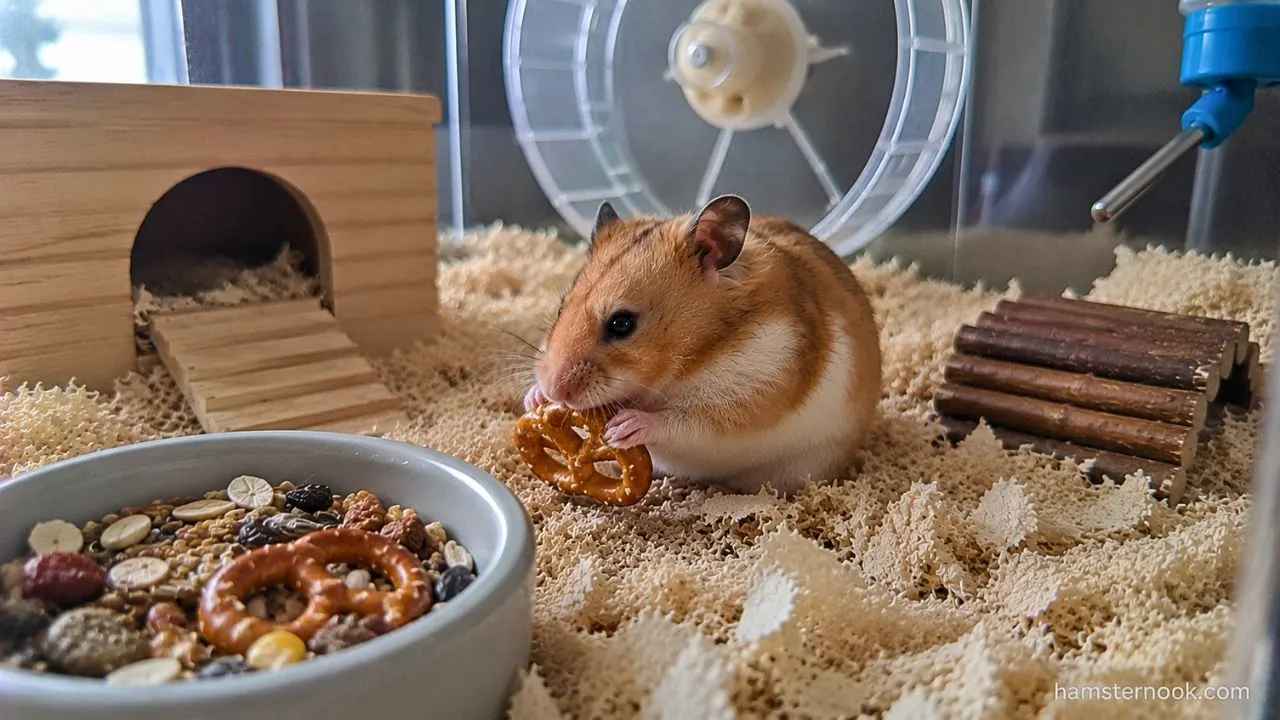
Soft options such as plain boiled egg, cooked oats, or softened commercial hamster pellets may be easier for weak hamsters to chew than hard seed mixes.
Encouraging hydration is equally important. Always make sure fresh water is easily accessible, and never attempt force-feeding unless specifically instructed by an experienced exotic veterinarian.
If your hamster refuses food for an extended period or becomes increasingly weak, veterinary care should not be delayed.
How to Read Hamster Food Labels
Not every hamster food sold in pet stores provides the same level of nutrition. Attractive packaging doesn’t always mean the food is well balanced, so it’s worth spending a few minutes reading the ingredient label before buying.

A quality hamster food should list grains, seeds, or other natural ingredients near the top of the ingredient list rather than artificial fillers. Variety is also important because hamsters naturally eat a mixture of different foods instead of relying on a single ingredient.
When comparing products, try to avoid foods that contain large amounts of added sugar, colorful artificial pieces, or sticky honey coatings. These ingredients may make the mix look appealing, but they don’t provide the balanced nutrition most pet hamsters need.
It’s also helpful to choose foods specifically formulated for hamsters instead of mixes designed for several small animals. Different species have different nutritional needs, and a hamster-specific formula is usually the safer long-term choice.
Even the best hamster food works best when it’s part of a balanced routine that also includes fresh vegetables, occasional protein, and constant access to clean drinking water.

Daily Hamster Diet Checklist
A simple daily routine helps prevent many common feeding mistakes.
- ✓ Fresh drinking water available
- ✓ High-quality hamster food provided
- ✓ Fresh vegetables offered (when scheduled)
- ✓ Leftover fresh food removed
- ✓ Food stash checked before adding extra food
- ✓ Treats kept small and occasional
- ✓ Body weight and appetite observed regularly
Following a consistent routine is often more beneficial than frequently changing foods or offering extra treats.
Choosing the Right Food Bowl
The type of food bowl you use can make feeding cleaner and easier for both you and your hamster.
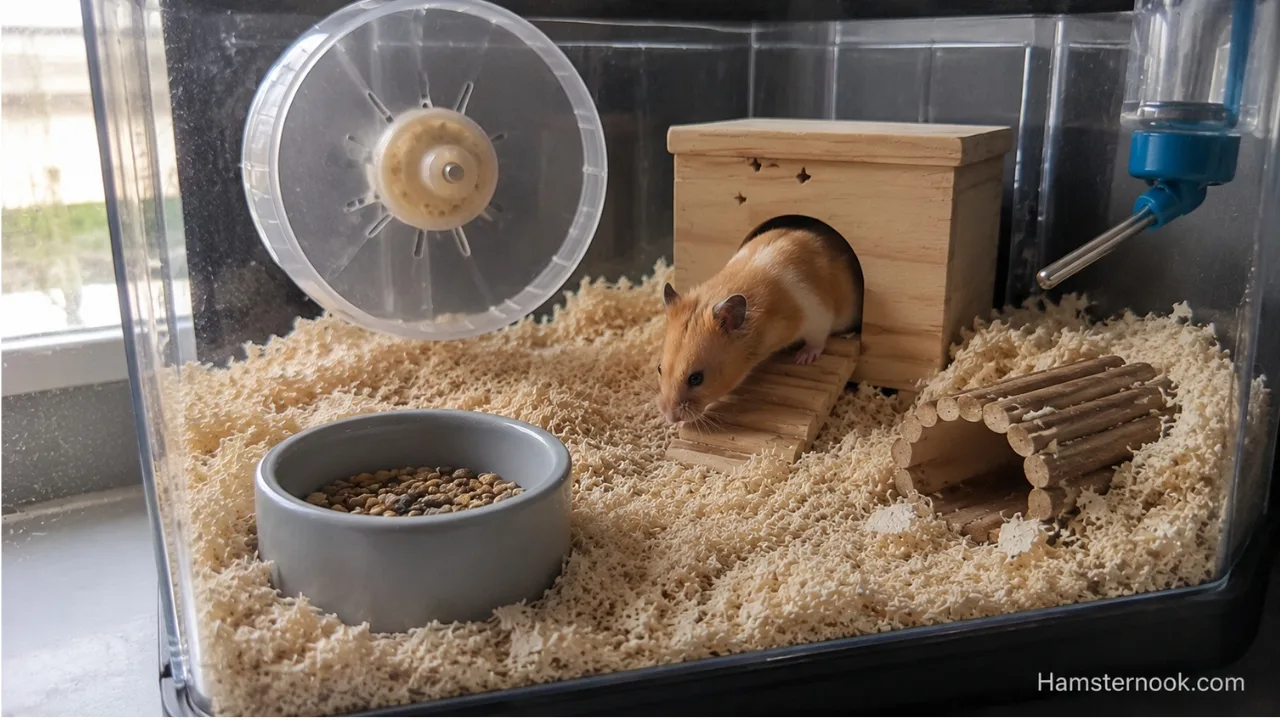
A small ceramic bowl is usually the best choice because it is difficult to tip over, easy to clean, and heavy enough to stay in place while your hamster eats. Lightweight plastic bowls can sometimes be pushed around the cage or become scratched over time, making them harder to keep hygienic.
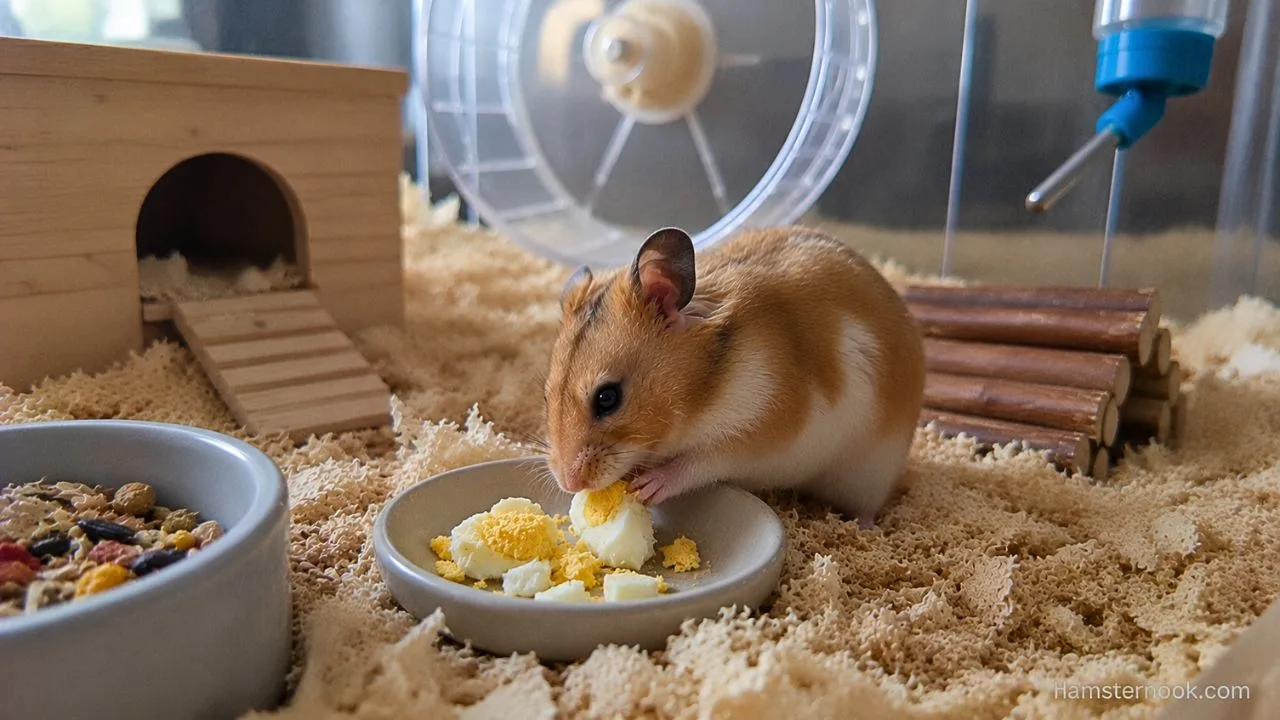
Choose a bowl that is shallow enough for your hamster to reach comfortably without climbing inside. This helps reduce food waste and makes daily cleaning much easier.
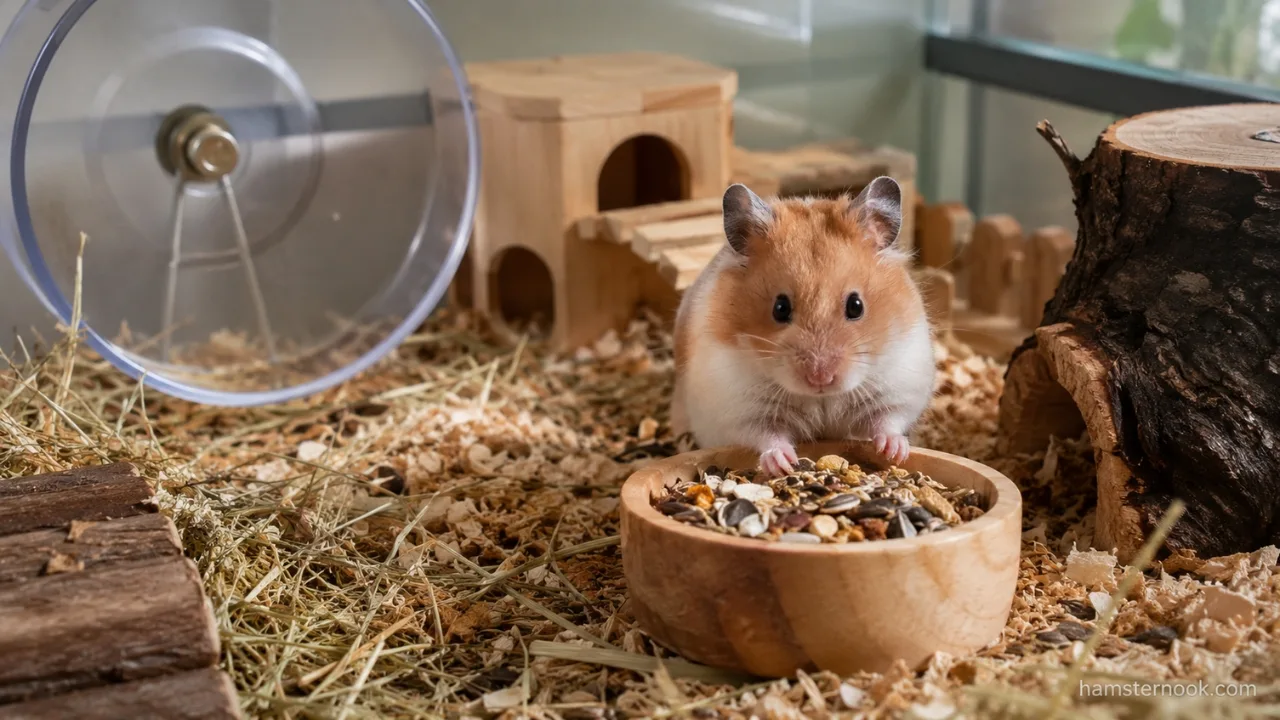
Some owners also like scattering part of their hamster’s daily food around the enclosure instead of placing everything in a bowl. This encourages natural foraging, keeps your hamster mentally active, and makes mealtime more interesting. Many hamsters seem to enjoy searching for food just as they would in the wild.
Whether you use a bowl, scatter feeding, or a combination of both, keeping feeding areas clean and removing spoiled fresh food should always be part of your daily routine.
Whichever feeding method you choose, make small adjustments gradually instead of changing your hamster’s routine overnight. Consistency helps many hamsters feel more confident while still providing opportunities for natural foraging and enrichment.
Common Hamster Diet Myths
Many hamster owners receive well-meaning advice that isn’t always accurate. Understanding a few common myths can help you make better feeding decisions.
Myth: Hamsters Can Eat Anything Humans Eat
False. Many everyday foods are too salty, sugary, fatty, or toxic for hamsters.
Myth: Fruit Is Always Healthy
While fruit contains vitamins, it also contains natural sugars. Most fruits should only be occasional treats, especially for dwarf hamsters.
Myth: More Treats Mean a Happier Hamster
Treats can strengthen positive interactions, but overfeeding often causes obesity and nutritional imbalance. A healthy hamster benefits far more from a balanced staple diet than frequent snacks.
Myth: If a Hamster Eats It, It Must Be Safe
Hamsters are naturally curious and may nibble foods that are actually harmful. Owners should always verify food safety before introducing anything new.
Safe Foods That Should Still Be Limited
Some foods are perfectly safe for hamsters but should still be offered only in moderation. Feeding too much of a healthy food can sometimes cause just as many problems as offering an unsafe one.
Fruits are a good example. While blueberries, apples, strawberries, and bananas contain useful vitamins, they also contain natural sugars. Small portions given occasionally are much healthier than daily servings.
Seeds are another nutritious treat, but they are naturally high in fat. Pumpkin seeds and sunflower seeds can be excellent rewards during taming sessions, yet offering too many may gradually contribute to unnecessary weight gain.

Protein treats should also remain occasional additions rather than everyday foods. Mealworms, boiled egg, or plain cooked chicken can support a balanced diet, but commercial hamster food should always remain the primary source of nutrition.
Offering a wide variety of safe foods over time is usually healthier than relying heavily on one favorite treat.
Practical Feeding Tips From Experienced Hamster Owners
Many experienced hamster owners follow a few simple habits that help prevent feeding problems before they start.
Instead of adding more food whenever the bowl looks empty, they first check hiding places where hamsters naturally store extra food. This prevents accidental overfeeding and helps identify spoiled fresh foods before they become a problem.

Introducing only one new food at a time also makes it much easier to identify the cause if digestive upset develops. Patience is especially important with young, elderly, or recently adopted hamsters, which may need extra time to adjust to dietary changes.
Finally, remember that every hamster is slightly different. Some eagerly accept new vegetables, while others need several opportunities before trying something unfamiliar. Allowing your hamster to explore new foods at its own pace usually leads to better long-term eating habits than forcing sudden changes.
Keeping a simple record of your hamster’s favorite foods, weekly weight (if possible), and any reactions to newly introduced foods can help you identify small dietary problems early. This gradual approach is especially useful for young, senior, or recently adopted hamsters.
How to Monitor Your Hamster’s Eating Habits
Healthy hamsters don’t always finish every meal immediately because storing food is a natural instinct. Instead of focusing only on how much food disappears from the bowl, monitor your hamster’s body condition, activity level, appetite, and food stash regularly. These observations often provide a better picture of long-term dietary health than the amount of food eaten each day.

A balanced hamster diet doesn’t need to be complicated. Building a simple routine around quality commercial food, fresh vegetables, occasional protein, and limited treats is usually far more beneficial than constantly introducing new foods or expensive supplements.
Final Thoughts
A healthy hamster diet is based on consistency rather than complexity. High-quality staple food, safe fresh vegetables, occasional protein, and moderate treats work together to provide balanced nutrition that supports natural behavior, healthy weight, and long-term wellness.
The safest approach is to introduce new foods slowly, avoid sugary and processed snacks, and focus on simple natural ingredients. Small changes in diet can make a major difference in a hamster’s long-term health and quality of life.
By understanding which foods are safe, which should be limited, and which are dangerous, hamster owners can confidently provide a healthier and more enriching life for their pets.
Frequently Asked Questions
What is the healthiest food for hamsters?
A high-quality hamster pellet or balanced seed mix combined with fresh vegetables is generally considered the healthiest base diet.
Can hamsters eat fruit every day?
No. Fruit contains sugar and should only be offered occasionally.
Do hamsters need protein?
Yes. Hamsters are omnivores and benefit from small amounts of protein in their diet.
Can hamsters survive on only seed mixes?
Seed mixes alone may lead to selective eating and nutritional imbalance if not properly balanced.
Is lettuce safe for hamsters?
Romaine lettuce is usually safe in small amounts, but iceberg lettuce should be limited because it contains mostly water and little nutrition.
How often should hamster cages be checked for hidden food?
Food stashes should be checked regularly, especially when fresh foods are offered, to prevent spoilage and bacteria growth.
Can hamsters eat packaged pet treats daily?
No. Many packaged hamster treats contain added sugar, honey, or artificial ingredients and should only be fed occasionally.
Should I leave food in my hamster’s bowl all day?
Yes, but check hidden food stashes regularly before adding more. Because hamsters naturally hoard food, an empty bowl doesn’t always mean they have finished eating. Monitoring stored food helps prevent overfeeding and spoiled fresh foods.
References
This guide is based on hamster nutrition, feeding, safe foods, hydration, dietary variety, and welfare guidance from trusted veterinary and animal welfare organizations, including:
- RSPCA – What to Feed a Pet Hamster – Guidance on balanced hamster diets, commercial food, seeds, vegetables, fruit, fresh water, food hoarding, feeding changes, and monitoring eating habits.
- PDSA – Hamsters as Pets – Information on hamster nutrition, pellets, fresh vegetables and fruit, protein treats, Timothy hay, water, food enrichment, and safe feeding practices.
- MSD Veterinary Manual – Providing a Home for a Hamster – Veterinary guidance on hamster nutrition, commercial diets, protein requirements, fruits and vegetables, treats, seed feeding, food hoarding, and fresh water.
- MSD Veterinary Manual – Hamsters – Veterinary information on hamster biology, omnivorous feeding habits, balanced commercial diets, and general husbandry.
- RSPCA – Keeping Hamsters as Pets – General hamster care and welfare guidance covering diet, feeding behavior, food storage, hydration, enrichment, and daily care.
- RSPCA – Hamster Health – Guidance on monitoring appetite, drinking, droppings, body condition, and changes that may require veterinary attention.

Narayan Kumar is the founder and author of HamsterNook. He creates practical, research-based hamster care guides covering hamster behavior, nutrition, cage setup, enrichment, health, and everyday care. His goal is to help hamster owners make informed decisions and provide safer, healthier lives for their pets through clear, beginner-friendly information based on trusted animal care resources.