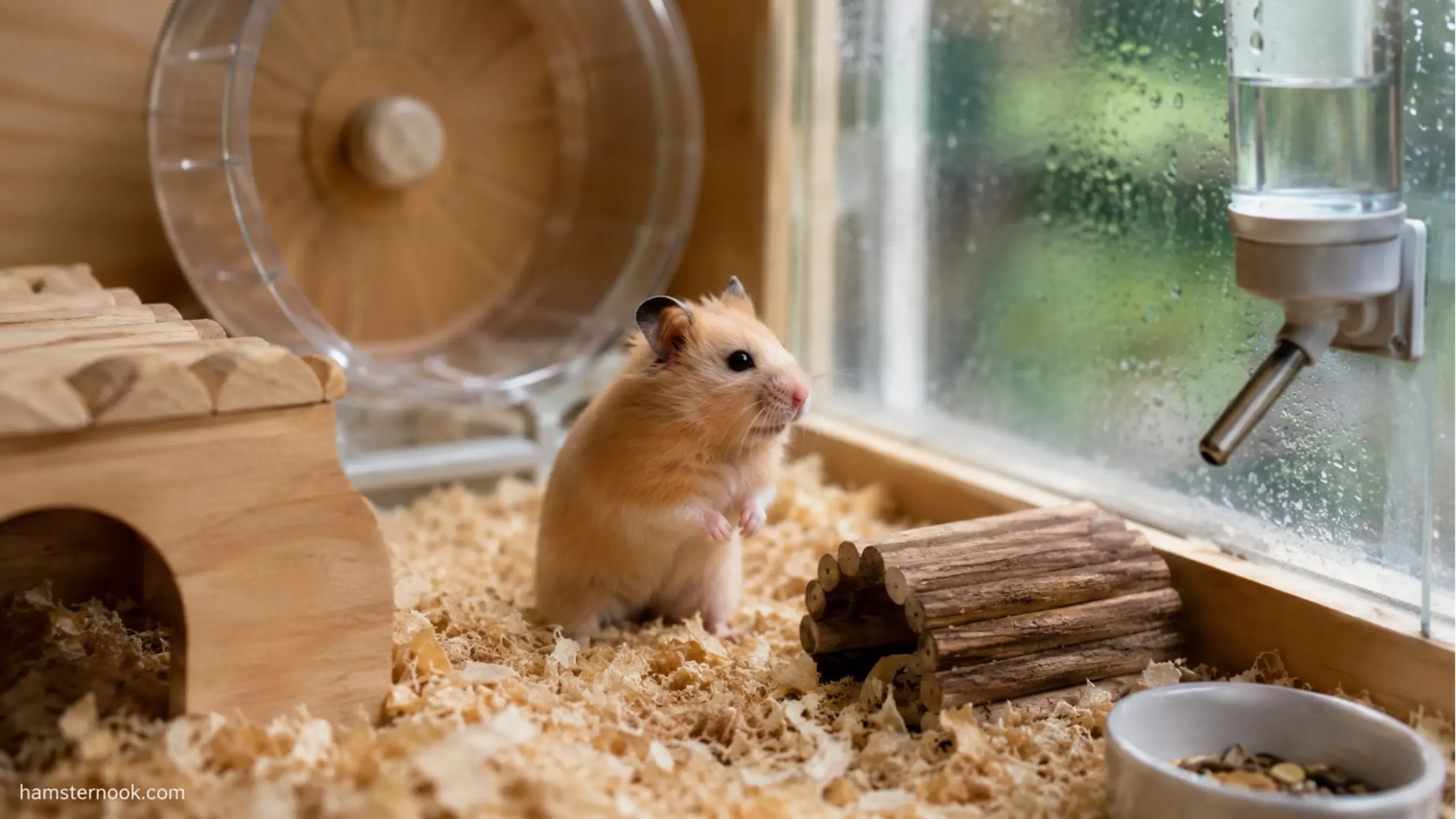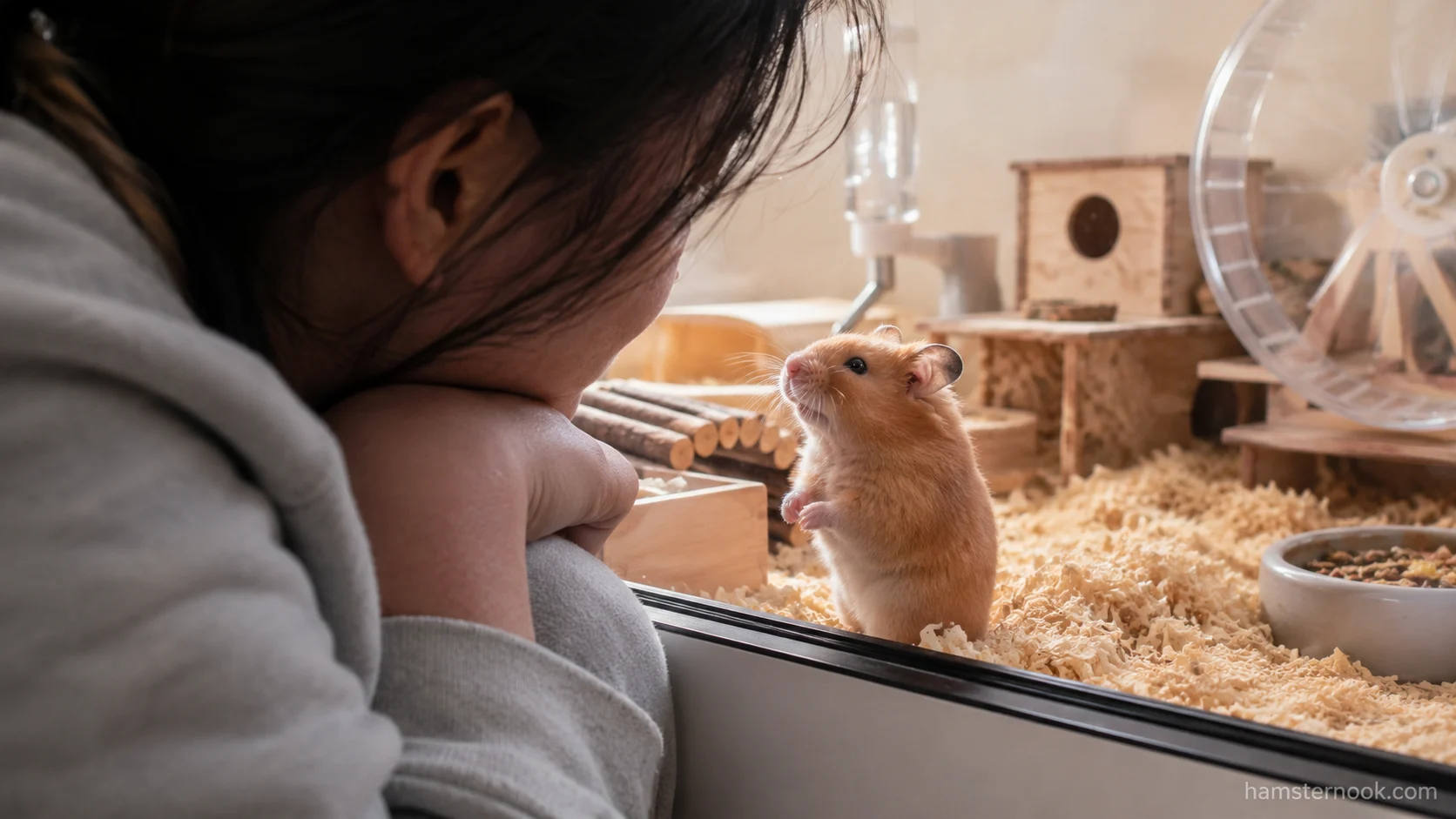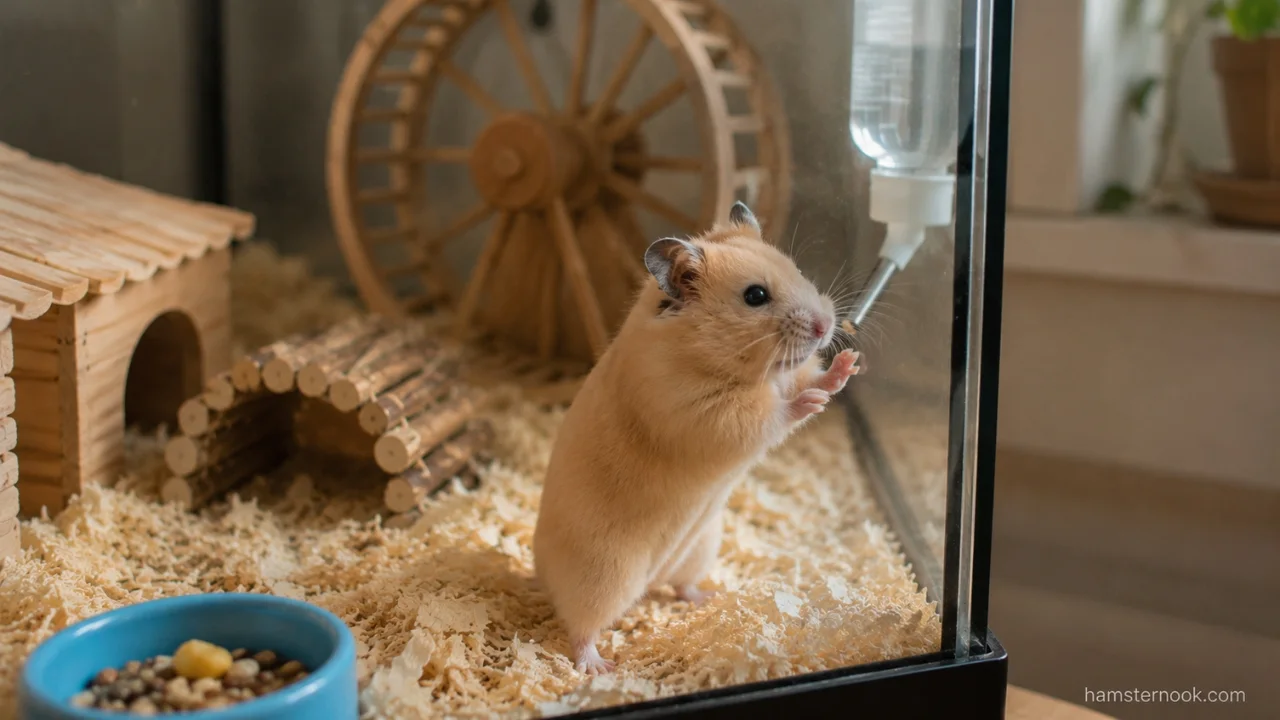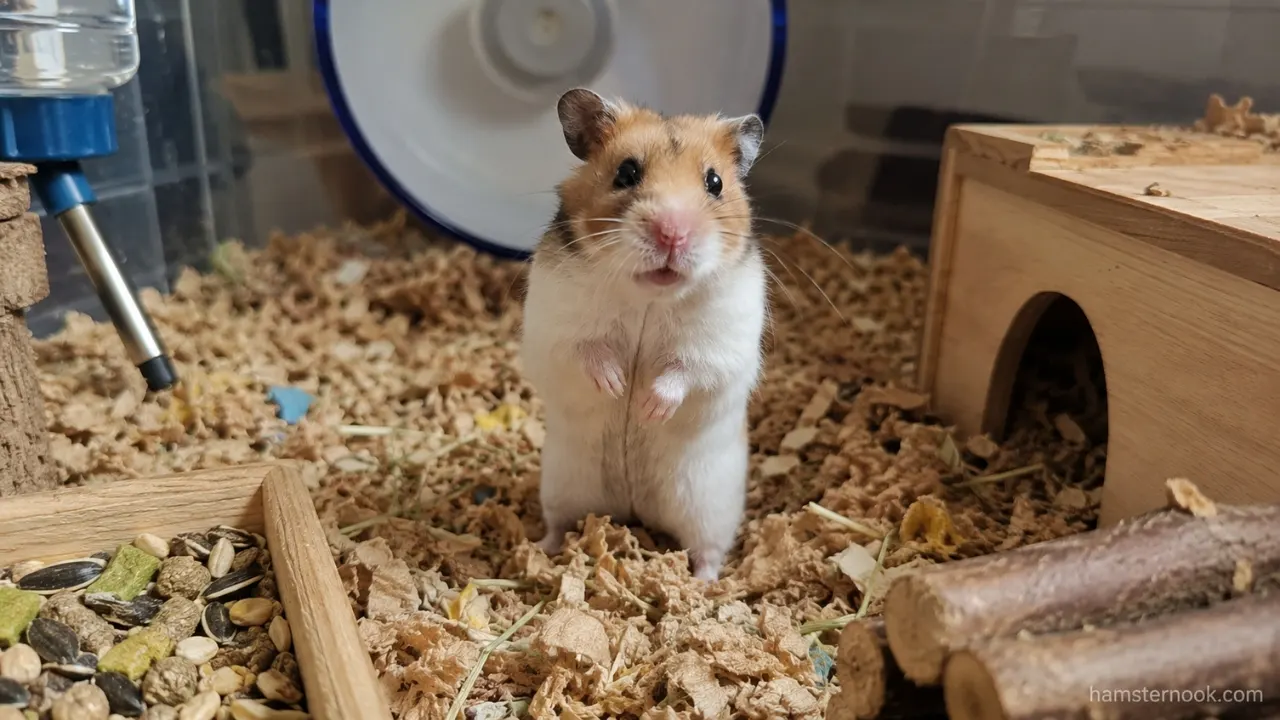
Have you ever walked into the room and noticed your hamster staring directly at you? Maybe it pauses on its wheel, pokes its head out of a hideout, or stands on its hind legs while watching your every move. For many new owners, this behavior can feel surprisingly intense. Some wonder if their hamster is trying to communicate, while others worry that something might be wrong.
In most cases, a hamster watching you closely is a normal part of how it learns about its environment, recognizes familiar people, and decides whether something nearby deserves its attention.
Hamsters are naturally curious animals that rely heavily on observation to understand their surroundings. If your hamster seems to keep an eye on you, it is usually gathering information, recognizing routines, or deciding whether you are a source of food, safety, or potential danger.
Knowing why your hamster watches you makes it easier to understand what its behavior is actually telling you.
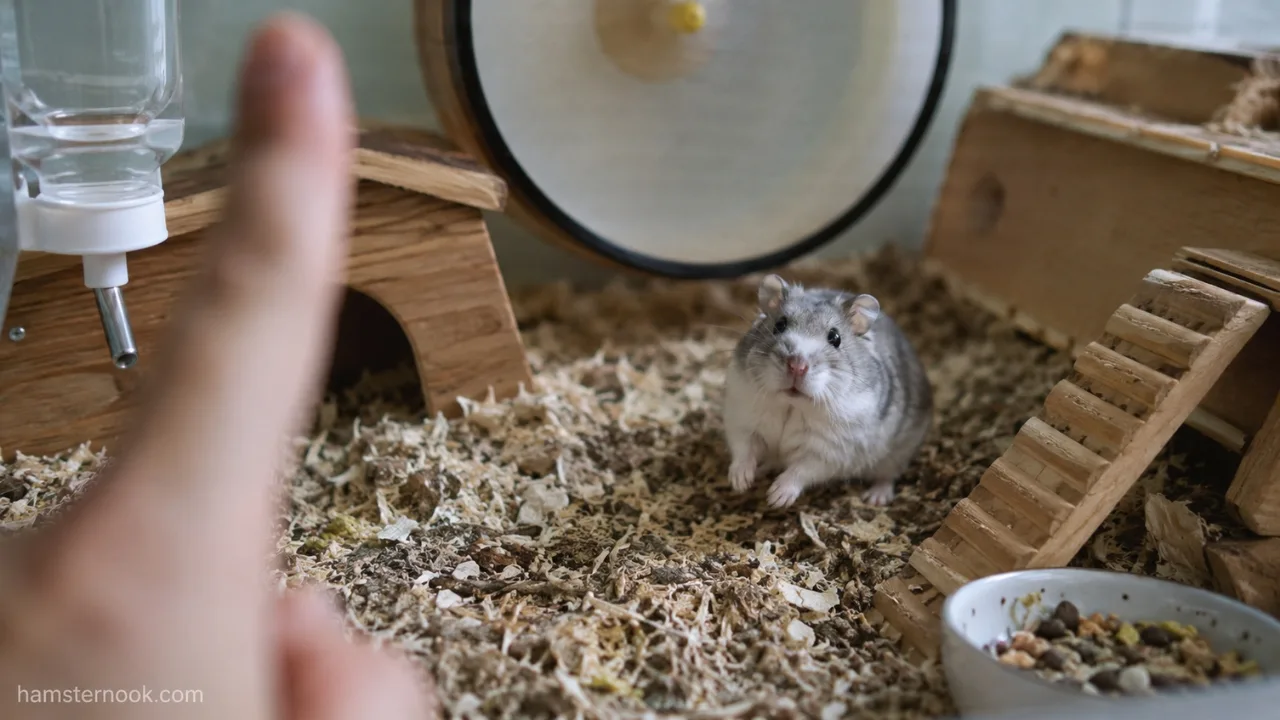
Why Do Hamsters Stare at Their Owners?
Unlike humans, hamsters cannot ask questions or investigate their environment through conversation. Instead, they learn by observing, listening, smelling, and exploring.
When your hamster watches you, it is often trying to figure out what is happening around it.
Some common reasons include:
- Curiosity
- Recognizing your routine
- Expecting food or treats
- Monitoring potential threats
- Learning your scent and behavior
- Seeking interaction
What the behavior means usually becomes clearer when you look at the hamster’s posture and what is happening around it.
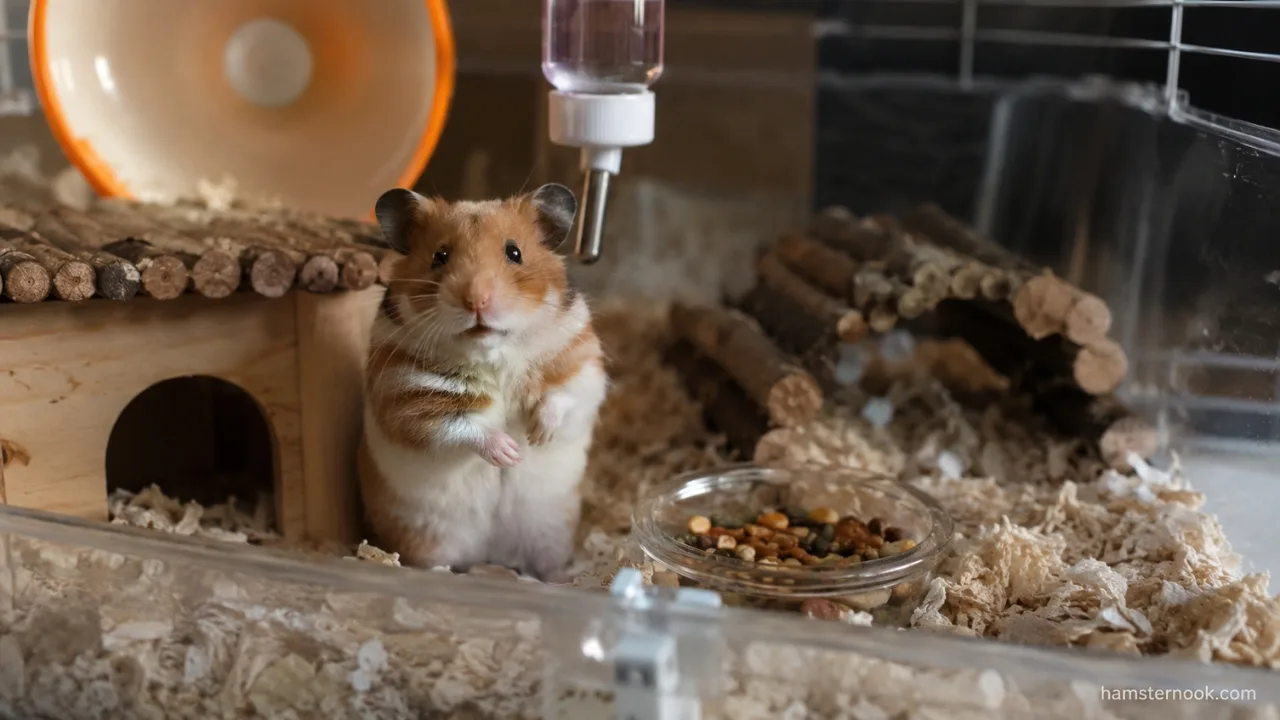
Your Hamster May Simply Be Curious
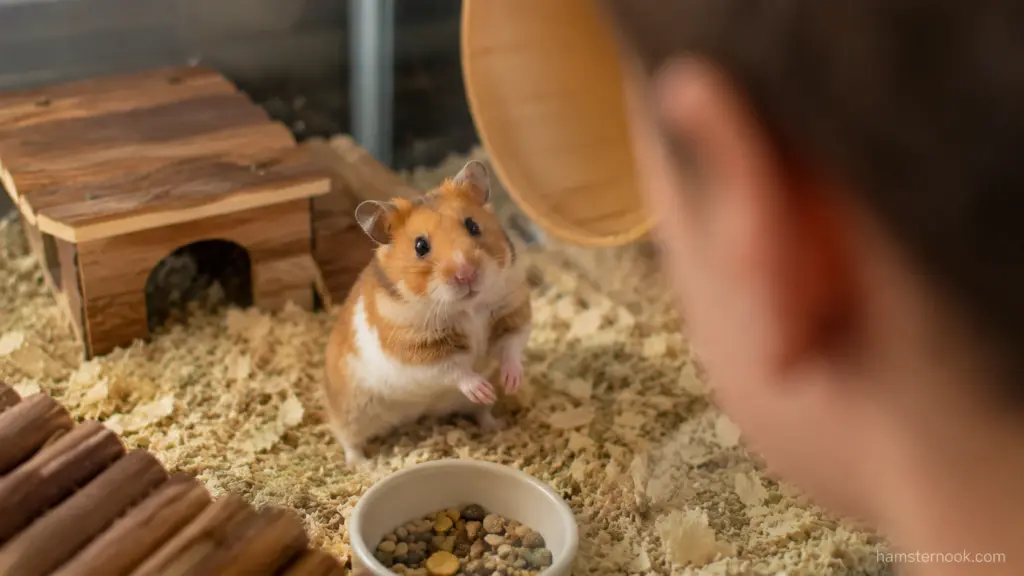
Curiosity is one of the most common reasons hamsters watch people.
Although hamsters spend much of their time sleeping, they are naturally investigative animals when awake. In the wild, staying aware of their surroundings helps them find food and avoid predators.
Your hamster may watch you because:
- You entered the room
- You made a new sound
- You moved furniture
- You changed something in the cage
- You are doing something unusual nearby
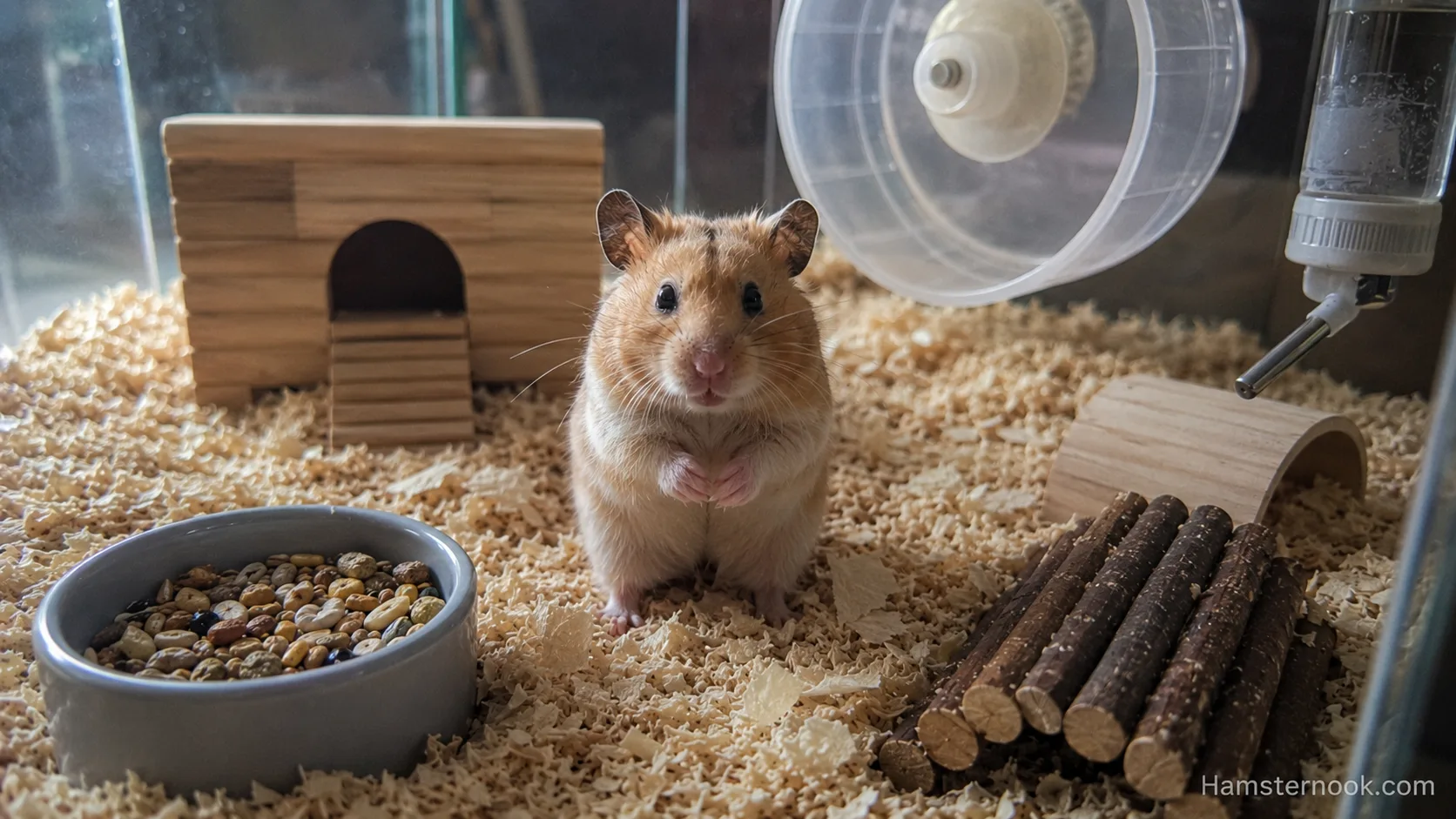
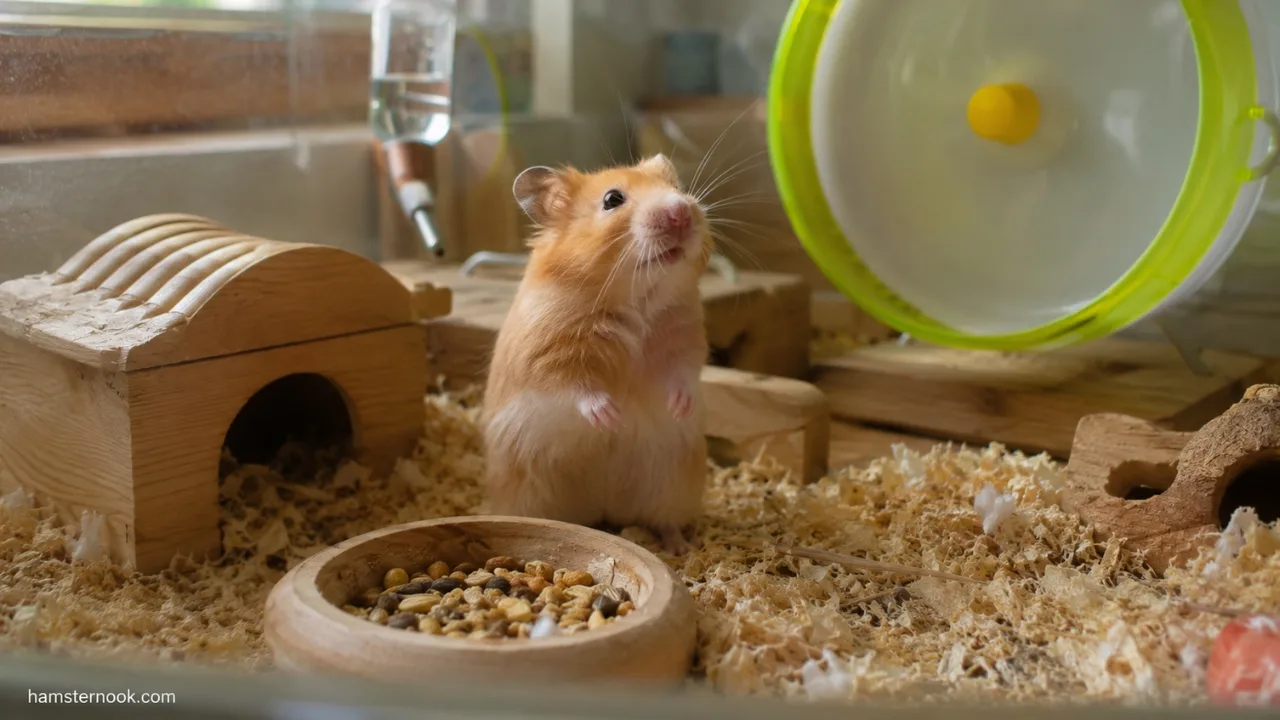
A curious hamster will often appear alert but relaxed. It may stand upright, move its ears forward, and continue normal activities after observing you.
Watching You Can Be Part of Learning Your Routine
Hamsters quickly learn patterns.
Many owners notice that their hamster becomes active around feeding time or appears at the front of the enclosure when it hears certain sounds. This happens because hamsters can associate routines with outcomes.
Your hamster may watch you closely because it has learned:
| Owner Action | What the Hamster May Expect |
|---|---|
| Walking toward the cage | Food or treats |
| Opening the cage door | Interaction or playtime |
| Speaking softly nearby | Familiar presence |
| Refilling water or food | Daily routine |
| Turning off lights | Active nighttime period |
After a while, many hamsters start reacting to these routines before the event itself occurs.
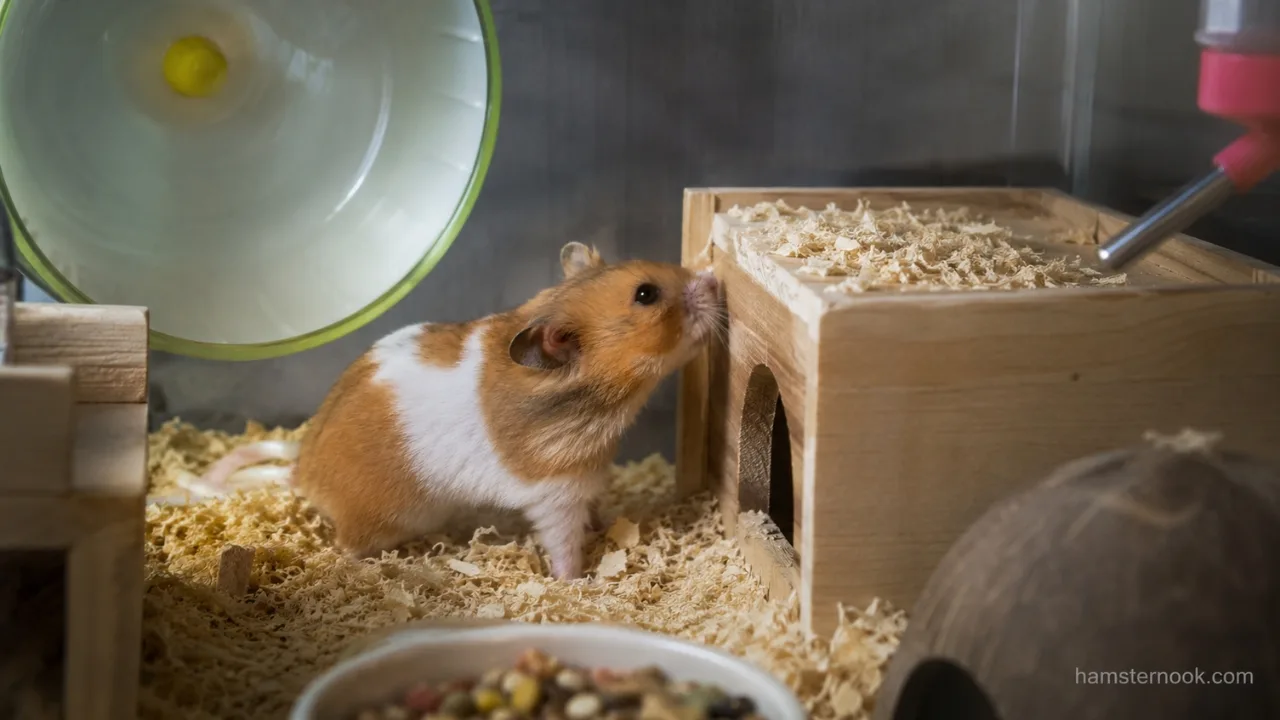
Watching you closely is often one of the first signs that your hamster is beginning to recognize familiar routines and people. Owners who notice this behavior usually wonder whether their pet can actually identify them over time. Our Can Hamsters Recognize Their Owners by Smell Alone? explains how scent, daily routines, and repeated positive experiences help hamsters become familiar with the people who care for them.
Your Hamster Might Associate You With Food
Let’s be honest—many hamsters become excellent observers when treats are involved.
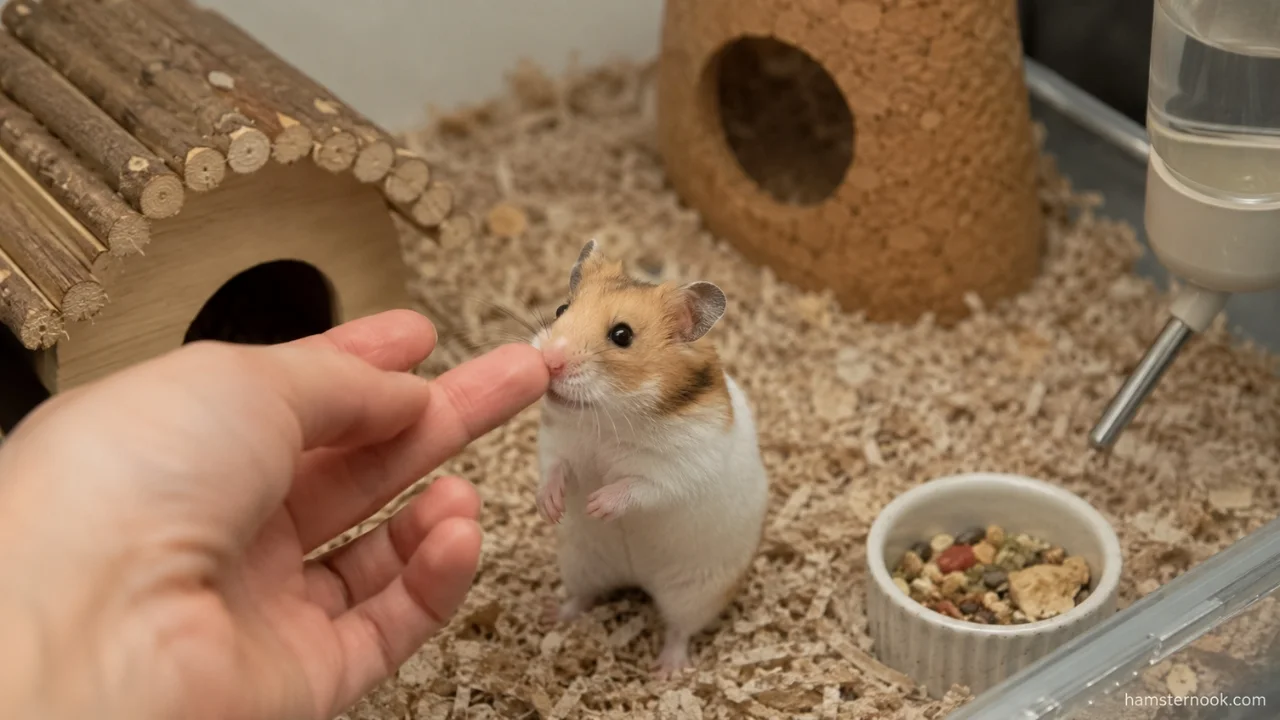
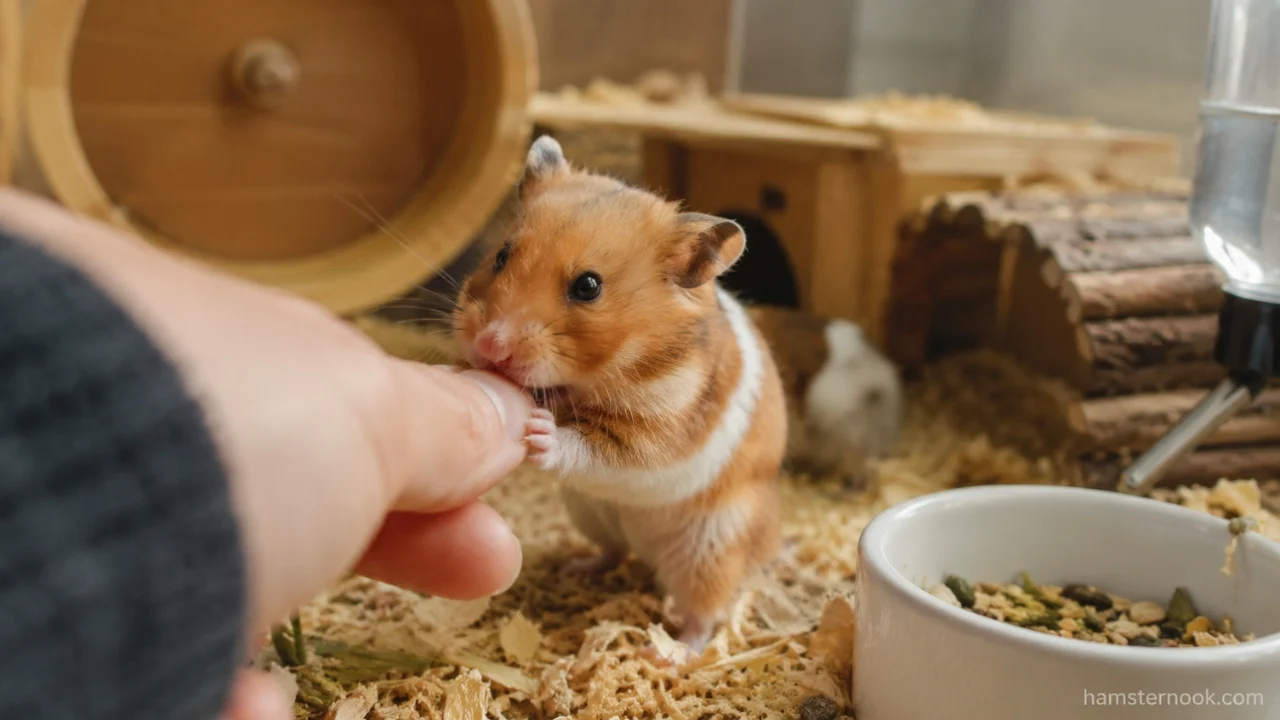
If you regularly hand-feed vegetables, seeds, or healthy snacks, your hamster may learn that you are the person who provides good things.
Signs your hamster is watching for food include:
- Waiting near the food area
- Running to the cage front when you appear
- Sniffing the air repeatedly
- Following your movements around the enclosure
This behavior is generally positive and shows that your hamster has formed a connection between you and rewarding experiences.
Is My Hamster Watching Me Because It Trusts Me?
Sometimes, yes.
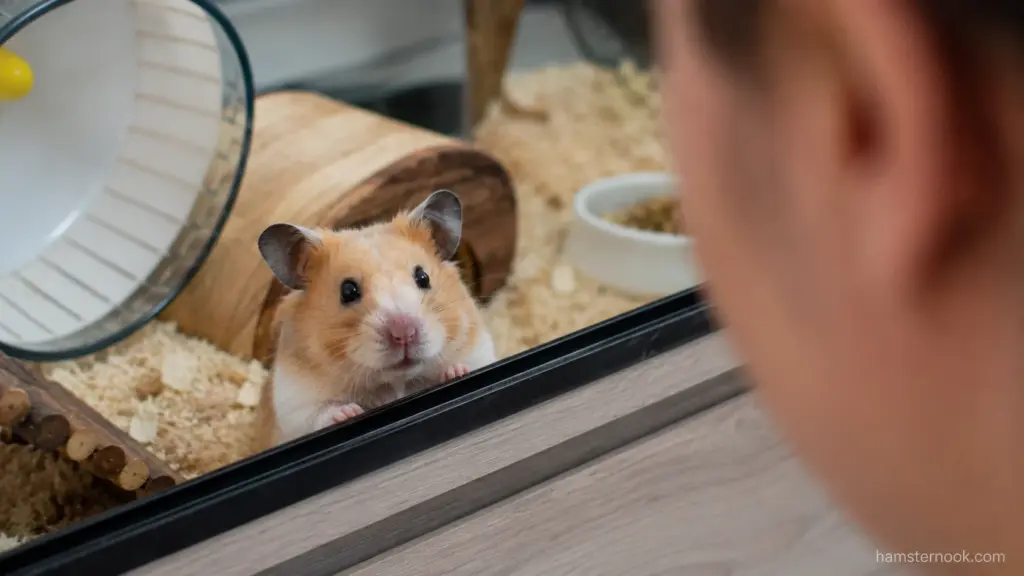
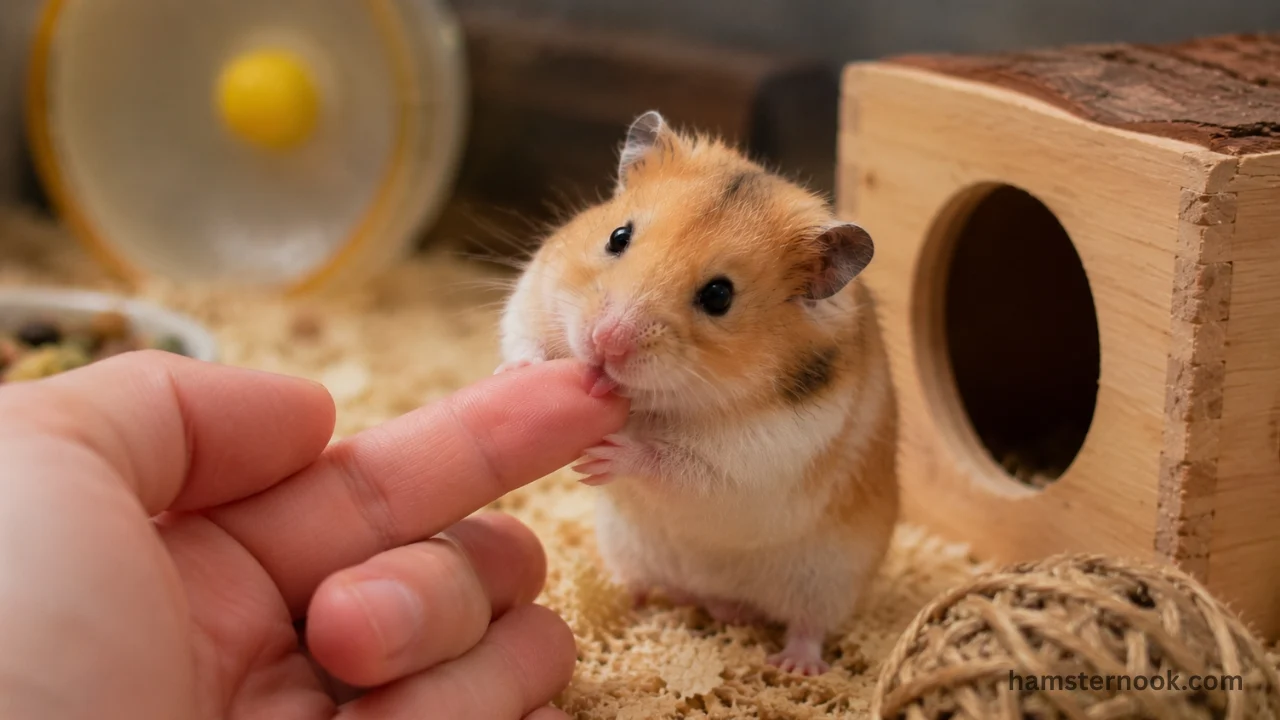
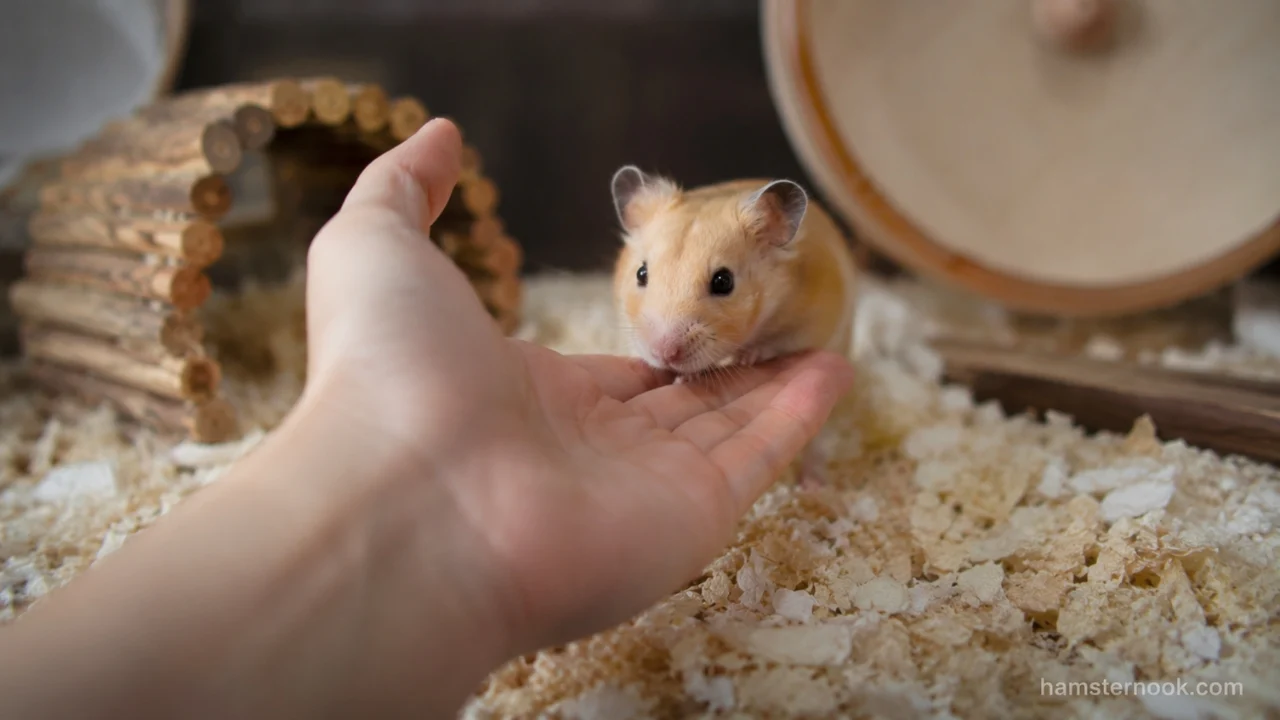
A hamster that feels comfortable around its owner may watch without showing signs of fear. Instead of hiding, it remains visible and interested in what you are doing.
Possible signs of trust include:
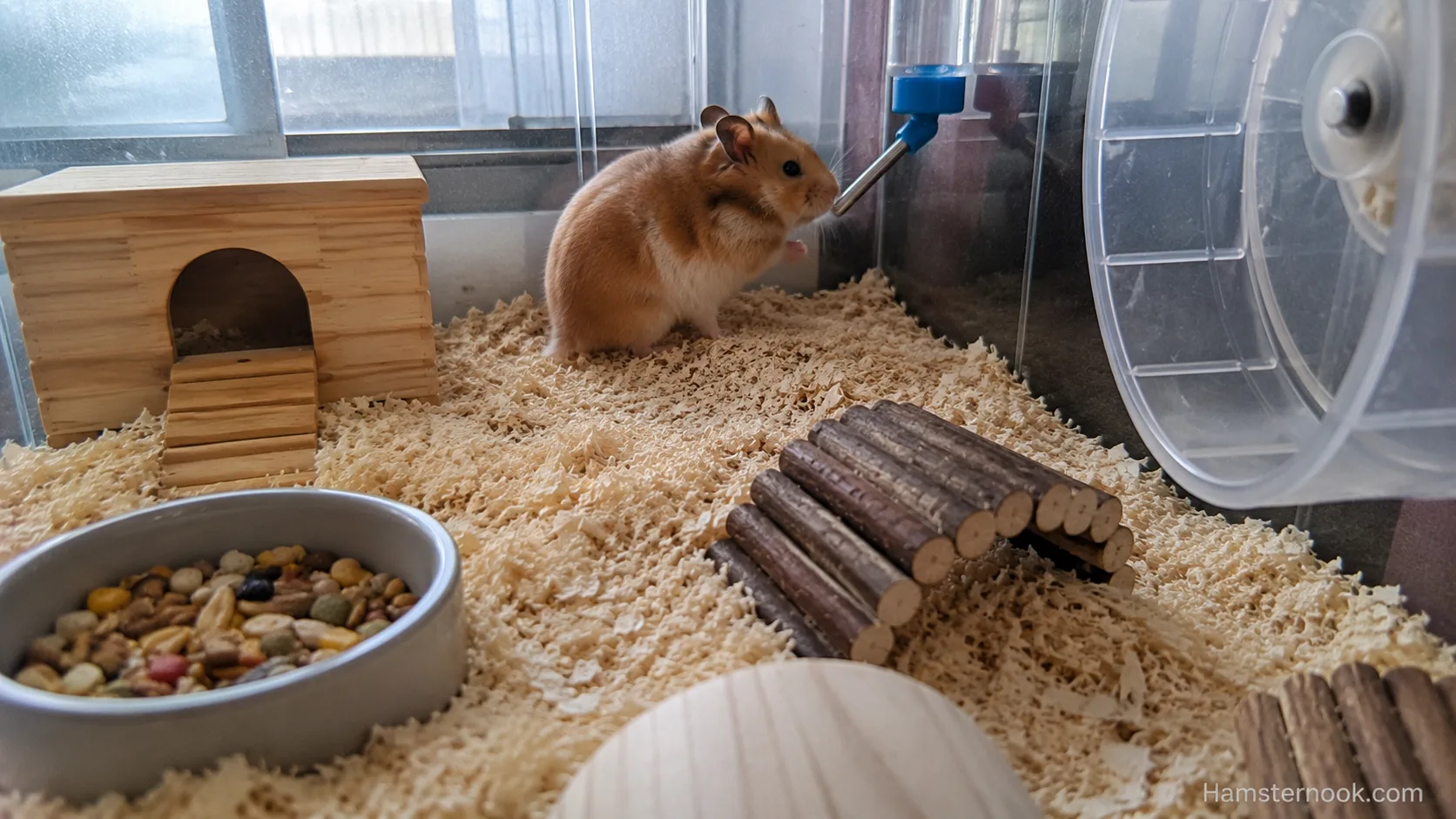
- Approaching the cage front
- Taking treats from your hand
- Grooming while you are nearby
- Remaining relaxed during observation
- Exploring normally in your presence
Watching from a distance is often part of the trust-building process rather than a sign that something is wrong. Many hamsters observe their owners carefully before feeling confident enough to approach. Our 10 Signs Your Hamster Trusts You explains the behaviors that usually appear as trust develops naturally over time.
When Watching Is Actually a Fear Response
Not every staring hamster is relaxed.
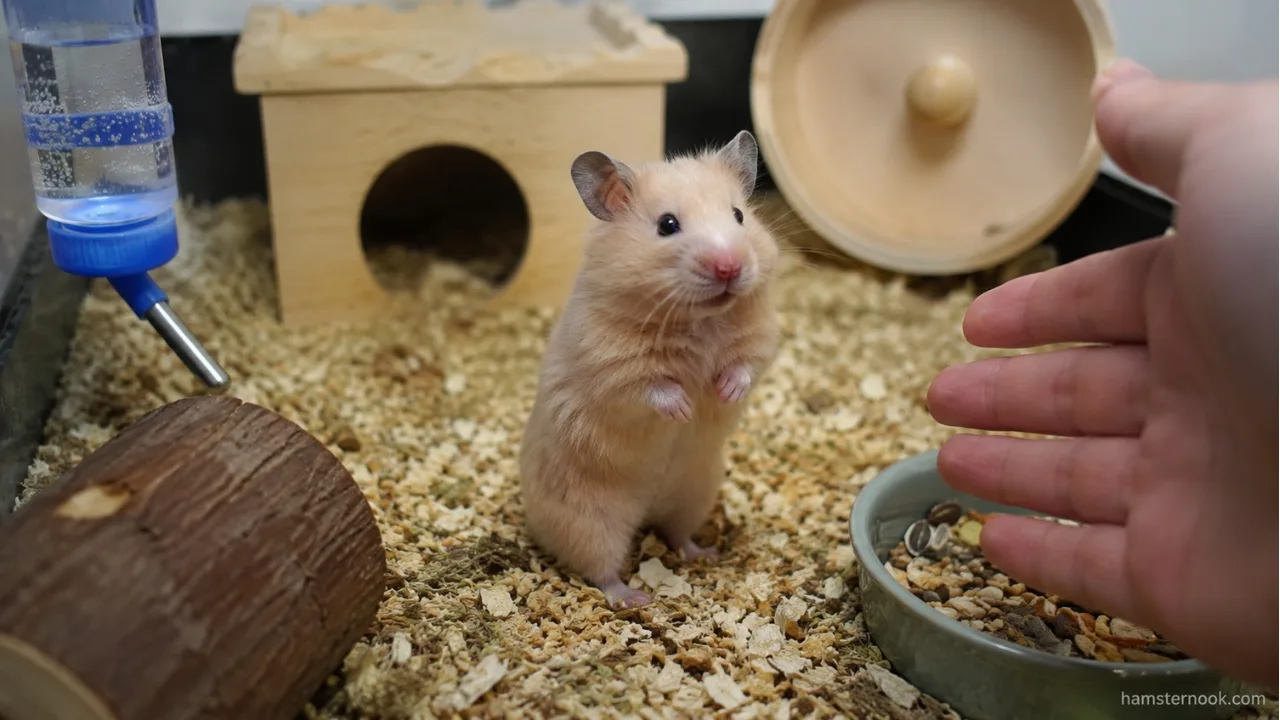
Because hamsters are prey animals, they constantly assess potential threats. A hamster that watches you without moving may sometimes be trying to determine whether you are dangerous.
Fear-based watching often looks different from curiosity.
| Curious Hamster | Nervous Hamster |
|---|---|
| Relaxed posture | Frozen posture |
| Continues exploring | Remains motionless |
| Ears positioned normally | Body appears tense |
| Approaches occasionally | Avoids movement |
| Accepts treats | Refuses treats |
If your hamster seems frightened, give it more space and avoid sudden movements around the enclosure.
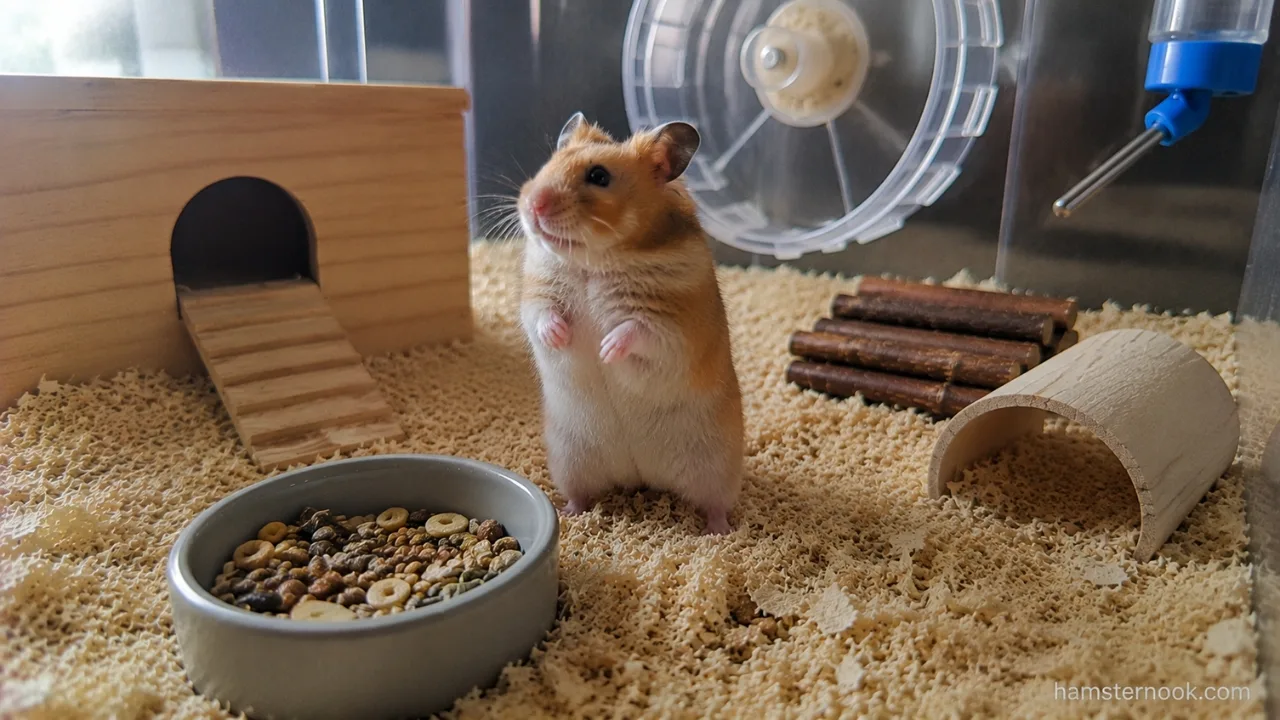
Why Does My Hamster Stand Up and Watch Me?
A hamster standing on its hind legs is often trying to gather more information.
This posture allows the hamster to:
- See better
- Smell the air
- Locate sounds
- Investigate activity outside the cage
Owners often interpret this as begging or greeting behavior, but it is usually an observation technique.

When a hamster stands upright and watches you, it is usually trying to gather more information about a sound, movement, scent, or activity that caught its attention.
Can Hamsters Recognize Their Owners?
Hamsters do not recognize people the same way dogs do, but they can become familiar with individual humans.
They primarily rely on:
- Scent
- Voice
- Daily routines
- Consistent interactions
Over time, many hamsters learn that a specific person provides food, cleaning, and positive experiences.
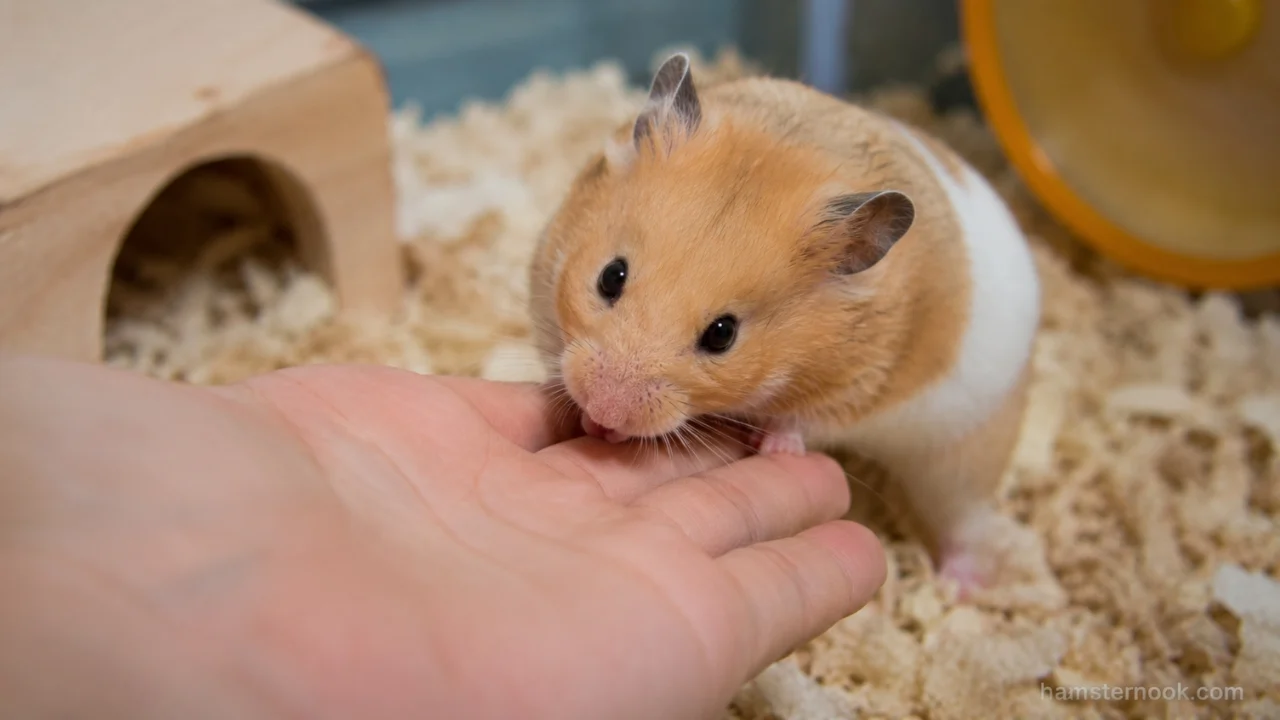
This familiarity may explain why some hamsters watch their owners more closely than strangers.
Recognizing a familiar person involves much more than simply responding to a name. Hamsters mainly rely on scent, routine, and repeated positive experiences to tell people apart. Our Do Hamsters Prefer One Person? explores why some hamsters appear noticeably more comfortable around one owner than others.
Why Does My Hamster Watch Me at Night?
Nighttime is when hamsters are naturally most active.
Because they are crepuscular and often active during evening hours, they spend more time exploring and observing when the household becomes quieter.
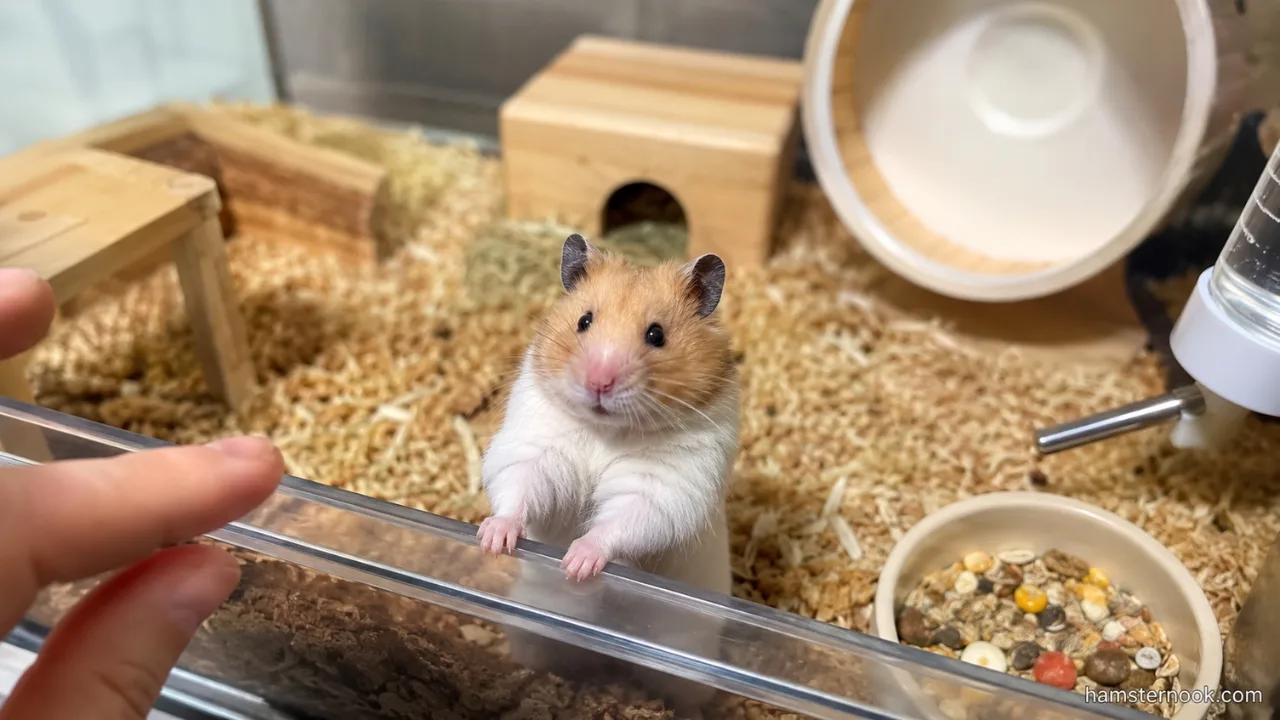
A hamster watching you at night may be:
- Looking for food
- Waiting for interaction
- Exploring its surroundings
- Following familiar activity patterns
Many owners notice increased attention from their hamster during these active periods.
Could My Hamster Be Bored?
Sometimes.
A hamster that spends excessive time sitting and watching may not have enough enrichment.
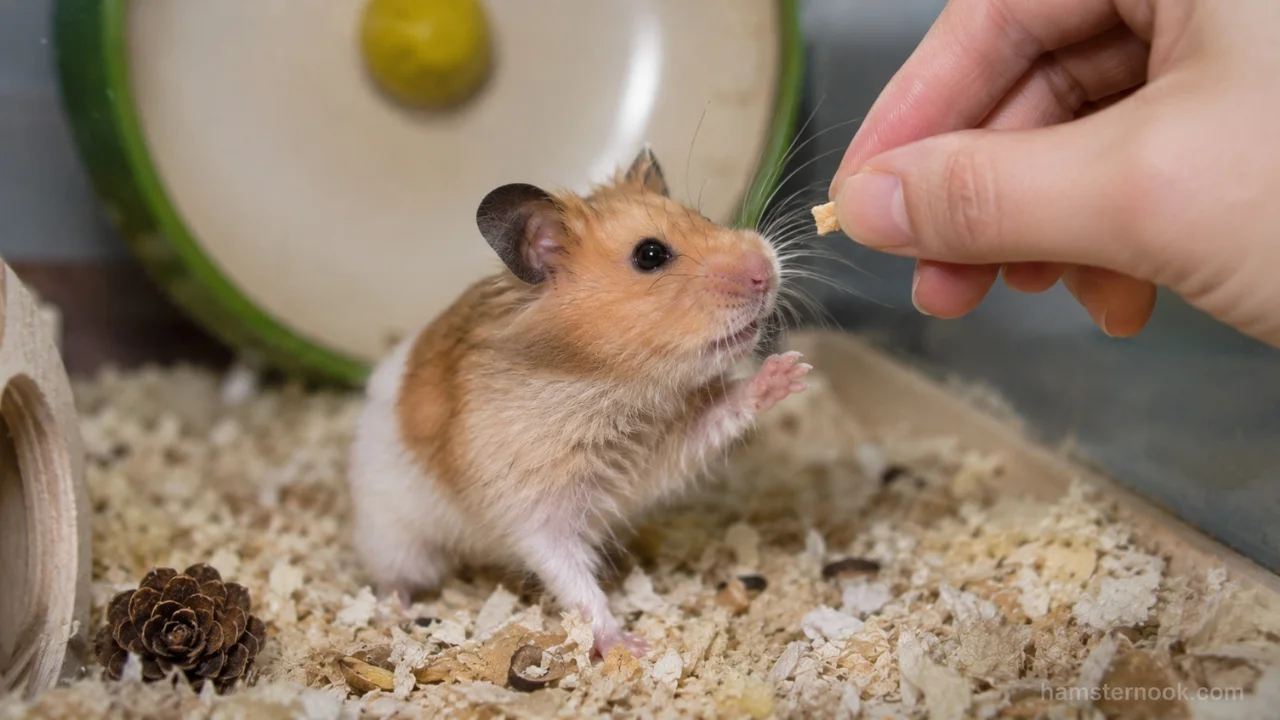
While observation is normal, boredom can develop if the enclosure lacks stimulation.
Signs that boredom may be contributing include:
- Repetitive pacing
- Bar chewing
- Excessive inactivity
- Lack of exploration
- Reduced interest in toys
Providing enrichment opportunities can help.
If your hamster spends long periods sitting and watching without exploring, the enclosure itself may need improvement rather than more interaction. Our Best Hamster Hideouts and Sleeping Areas: What Hamsters Actually Prefer explains how a secure environment encourages natural exploration and helps reduce boredom-related behaviors.
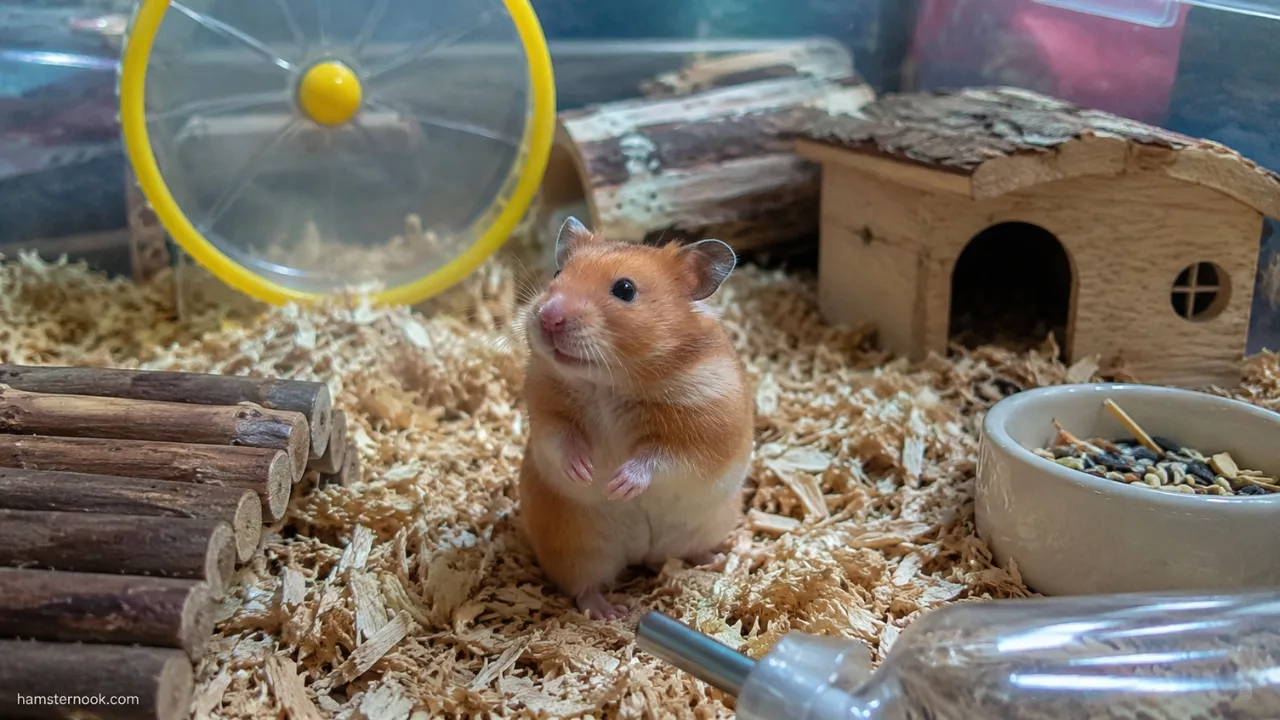
Common Mistakes Owners Make When a Hamster Watches Them
Many well-meaning owners accidentally misinterpret this behavior.
Assuming the Hamster Wants Immediate Handling
Watching does not always mean your hamster wants to be picked up.
Some hamsters simply enjoy observing without direct interaction.
Disturbing a Relaxed Hamster
If your hamster is calmly watching from a hideout or platform, avoid constantly opening the cage to interact.
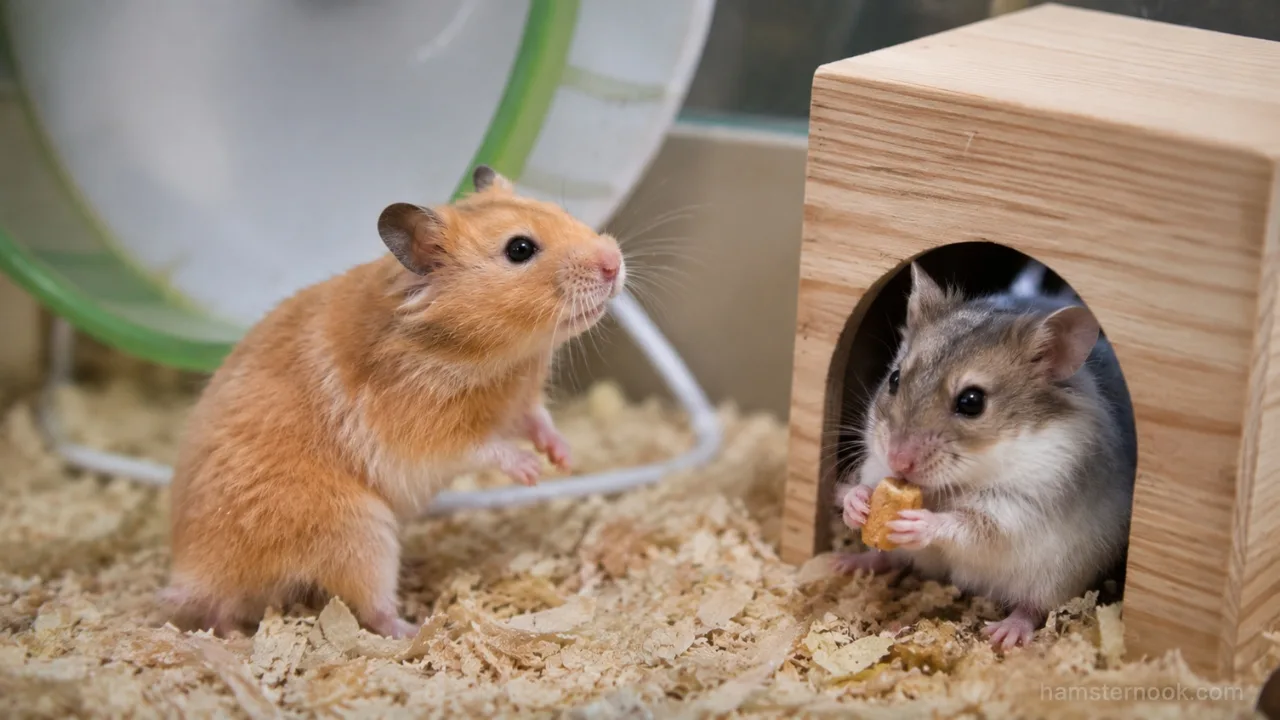
Observation alone is often part of normal behavior.
Offering Treats Every Time
While occasional treats help with bonding, rewarding every glance can encourage unhealthy feeding habits.
Balance interaction with proper nutrition.
Ignoring Signs of Fear
If your hamster appears frozen, flattened, or defensive, the staring may be stress-related rather than social.

Learning to distinguish curiosity from anxiety is important.
How to Respond When Your Hamster Watches You
How you respond should depend on whether your hamster seems relaxed, curious, or nervous.
Helpful approaches include:
- Speak softly
- Move slowly around the cage
- Offer occasional treats
- Allow voluntary interaction
- Respect sleeping hours
- Avoid sudden movements
Offer treats only occasionally instead of every time your hamster watches you. Otherwise, it may begin expecting food whenever you approach the enclosure, making it harder to build trust through normal interaction alone.
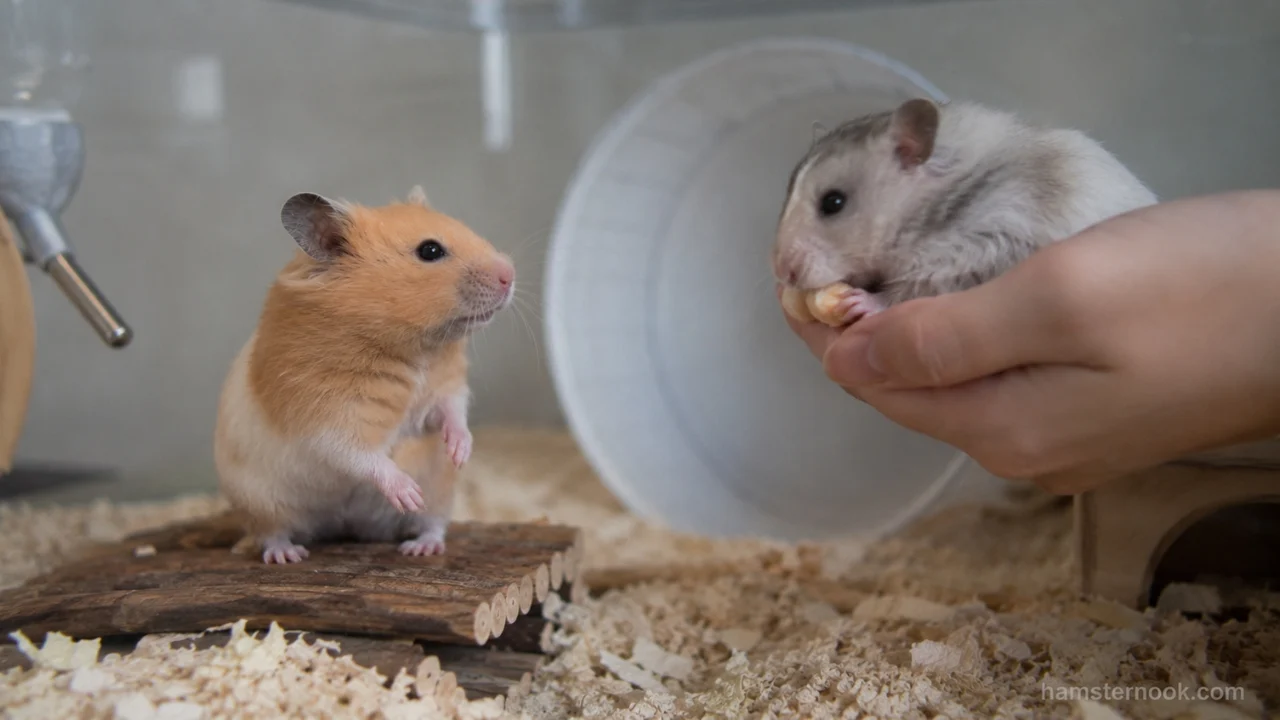
These habits help reinforce trust and reduce unnecessary stress.
Does Watching Mean My Hamster Wants to Be Picked Up?
Not necessarily. Many owners assume a hamster that watches them wants attention, but observation alone isn’t an invitation to handle it. A relaxed hamster may simply be curious about your movements or waiting for its normal routine. Let your hamster choose whether to approach you instead of reaching into the enclosure every time it looks in your direction.
Signs Your Hamster Enjoys Your Presence
While hamsters are not typically as social as dogs or cats, some behaviors suggest they are comfortable around you.
Look for signs such as:
| Behavior | What It May Mean |
|---|---|
| Approaches the cage front | Interested in interaction |
| Takes treats calmly | Comfortable with your presence |
| Continues grooming nearby | Feels safe |
| Explores while you watch | Relaxed and confident |
| Sniffs your hand willingly | Curious and trusting |
A hamster showing these behaviors is generally becoming accustomed to you.
A hamster that calmly watches you while remaining relaxed is often making steady progress with bonding, even if it isn’t ready to climb onto your hand yet. Our How to Get a Hamster to Trust You Faster Without Stressing It Out explains simple daily habits that help strengthen trust without overwhelming a cautious hamster.
When Should You Be Concerned?
Simply watching you is rarely a sign of illness and is usually considered normal hamster behavior.
However, consider consulting an exotic veterinarian if the behavior is accompanied by:
- Sudden lethargy
- Loss of appetite
- Weight loss
- Difficulty moving
- Constant hiding
- Significant behavior changes
These symptoms are more important than the watching itself.
What Your Hamster’s Body Language Can Tell You
Watching behavior becomes much easier to understand when you look at your hamster’s body language at the same time.
| Behavior While Watching | What It Usually Means |
|---|---|
| Standing upright with ears forward | Curious and gathering information |
| Grooming while watching | Relaxed and comfortable |
| Slowly approaching the cage front | Interested in interaction |
| Sniffing repeatedly | Investigating scents and activity |
| Freezing with a tense body | Unsure or cautious |
| Hiding immediately after watching | Nervous or startled |
Instead of focusing only on the staring itself, try looking at the hamster’s overall posture. A relaxed hamster that watches and then continues exploring is usually showing normal curiosity, while a tense hamster may need more time to feel secure.
Final Thoughts
If your hamster watches you closely, there is usually no reason to worry. In most cases, your pet is simply being curious, learning your routine, recognizing a familiar person, or hoping that food might be involved.
The key is to pay attention to the hamster’s overall body language. A relaxed hamster that watches you while continuing its normal activities is usually showing healthy curiosity. A tense hamster that freezes or appears fearful may need more time, patience, and space.
Watching the same behavior over several days is often more useful than judging a single moment. If your hamster continues eating, exploring, grooming, and using its wheel normally, watching you is usually just part of its natural curiosity.
The longer a hamster lives with you, the more familiar your voice, scent, and daily habits become. What looks like staring is often just part of how it keeps track of the world around it.
References
This guide is based on hamster behavior, husbandry, welfare, and care guidance from trusted veterinary and animal care organizations, including:
- RSPCA – Hamster Care Guide
- PDSA – Caring for Your Hamster
- Blue Cross – Hamster Care Advice
- Merck Veterinary Manual – Behavior and Husbandry of Small Mammals
Frequently Asked Questions
Why does my hamster stare at me without moving?
A hamster that stares without moving is usually observing something carefully. If its body appears relaxed, it is likely curious. If it seems tense or frozen, it may be assessing a potential threat.
Does my hamster recognize me when it watches me?
Hamsters can become familiar with their owner’s scent, voice, and routine. While they do not recognize people exactly like dogs do, they often learn who regularly cares for them.
Why does my hamster stand up and look at me?
Standing on its hind legs helps a hamster see, smell, and hear more effectively. It is often a sign of curiosity and environmental awareness.
Is it good if my hamster watches me?
Usually, yes. Watching is a normal behavior and often indicates curiosity, routine recognition, or interest in interaction.

Why does my hamster only watch me when I have food?
Hamsters quickly learn associations. If treats are frequently offered, your hamster may connect your appearance with feeding opportunities.
Can a hamster watch its owner because it likes them?
Some hamsters become comfortable and interested in their owners over time. While they may not express affection the same way larger pets do, calm observation and voluntary interaction can be positive signs of trust and familiarity.

Narayan Kumar is the founder and author of HamsterNook. He creates practical, research-based hamster care guides covering hamster behavior, nutrition, cage setup, enrichment, health, and everyday care. His goal is to help hamster owners make informed decisions and provide safer, healthier lives for their pets through clear, beginner-friendly information based on trusted animal care resources.