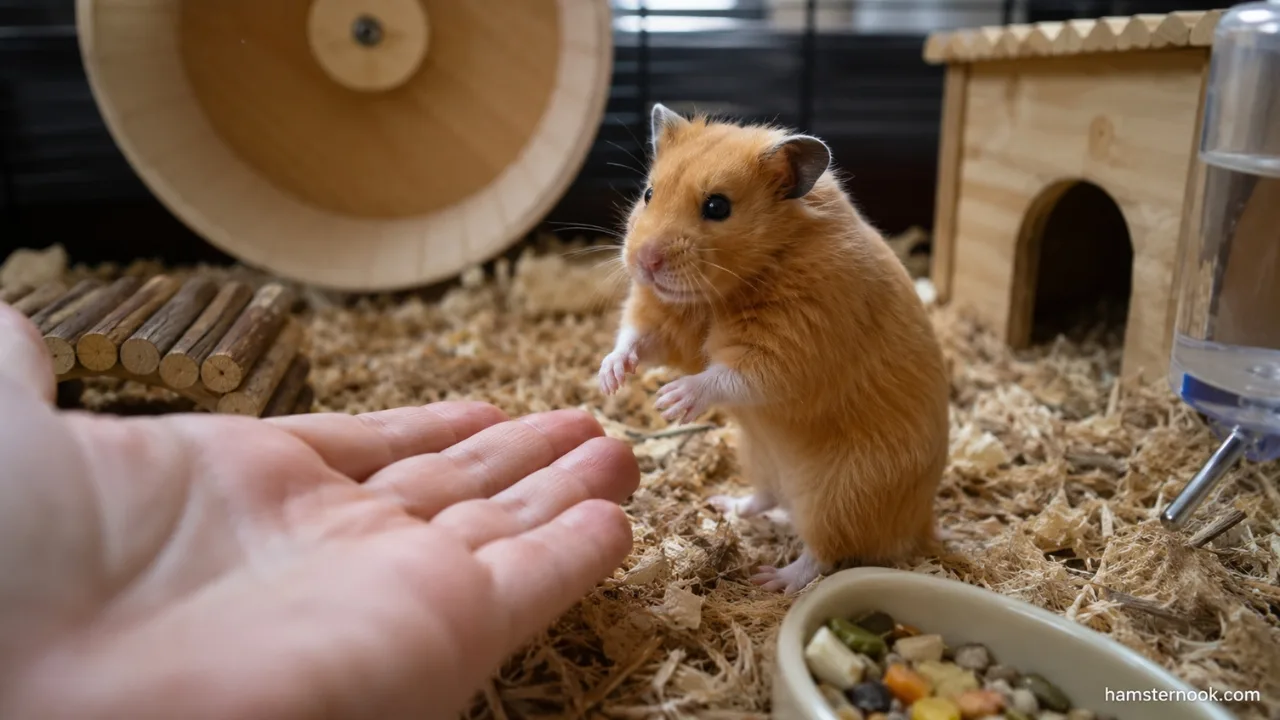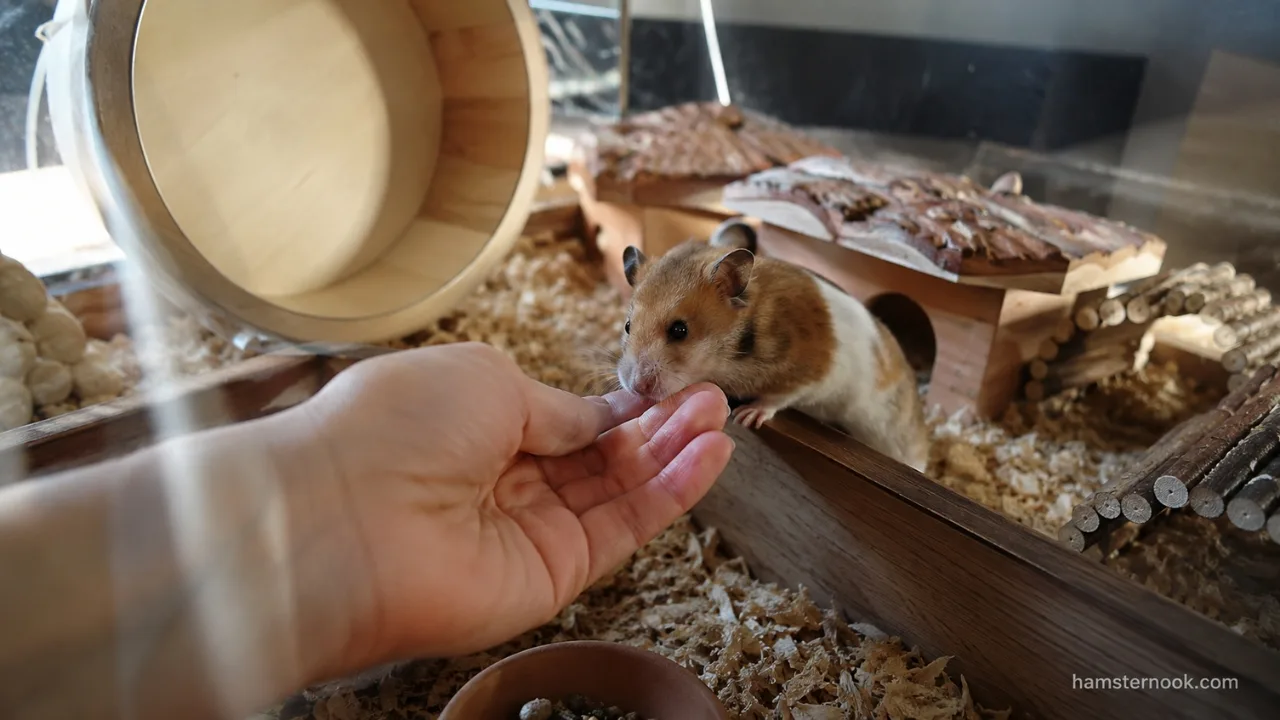
You bring your new hamster home, set up a comfortable enclosure, provide fresh food and water, and patiently wait for the exciting moment when your tiny pet willingly approaches you. But instead, your hamster hides, runs away, or disappears into its burrow every time you get near the cage.
If this sounds familiar, you’re not alone.
One of the most common questions new hamster owners ask is, “How long does it take for a hamster to trust me?” The answer varies from hamster to hamster, but most healthy hamsters begin showing signs of trust within a few days to several weeks when handled correctly.
Trust develops best when a hamster never feels pressured to interact before it’s ready. It’s about creating an environment where your hamster feels safe enough to choose interaction on its own. Understanding how trust develops can help you avoid common mistakes and build a stronger bond with your pet.

Quick Answer:
There is no fixed timeline for a hamster to trust you. Some begin approaching their owner within days, while others need several weeks or longer. Previous experiences, temperament, environment, and gentle, voluntary interactions all influence progress. Look for gradual changes such as approaching your hand, taking treats calmly, and remaining relaxed around you rather than judging trust by a deadline.
How Long Does It Usually Take for a Hamster to Trust Its Owner?
There is no exact timeline that applies to every hamster.
Some naturally confident hamsters may begin approaching their owners within a few days. Others may take several weeks before feeling comfortable enough to interact regularly.
Several factors influence how quickly trust develops:
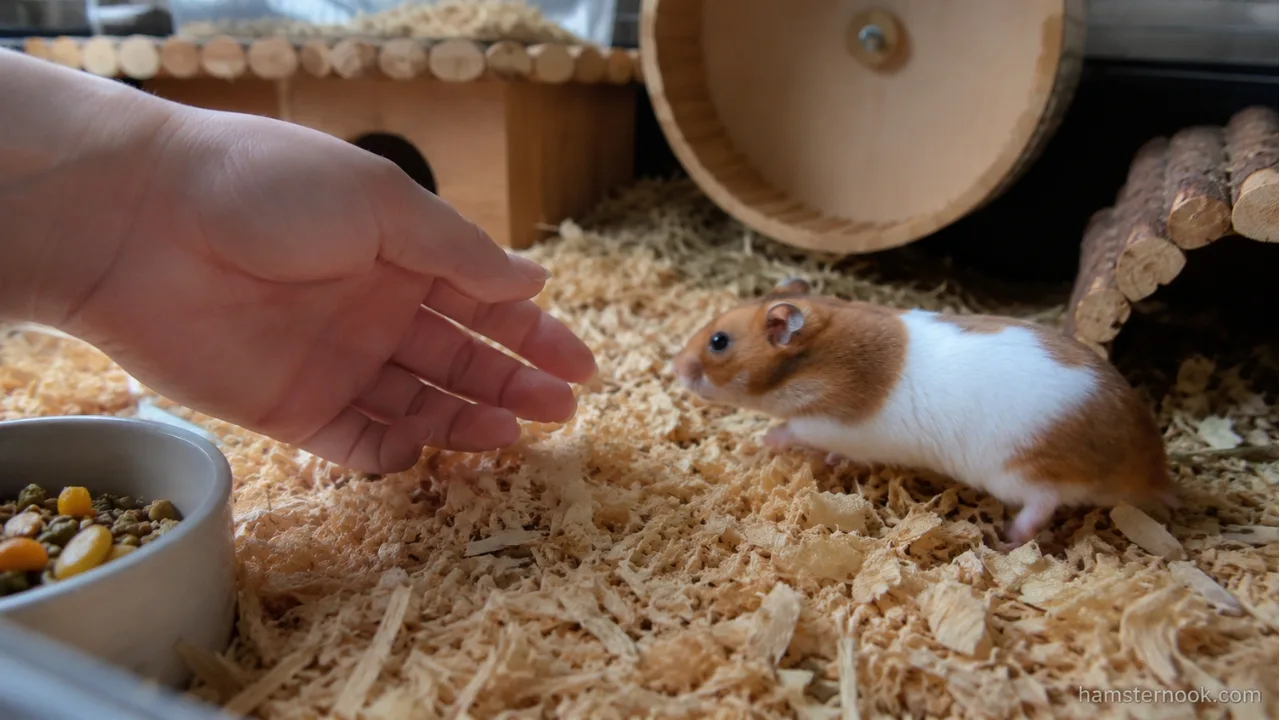
| Factor | Impact on Trust Building |
|---|---|
| Age | Younger hamsters often adapt faster |
| Personality | Confident hamsters usually trust sooner |
| Previous Handling | Positive experiences help build trust faster |
| Cage Environment | A secure habitat reduces stress |
| Owner Behavior | Patience and consistency encourage trust |
| Health Status | Sick or stressed hamsters may take longer |
In general, many hamsters start showing noticeable trust within one to four weeks when owners follow proper taming techniques.
Why Hamsters Don’t Automatically Trust Humans
Unlike dogs, hamsters are not naturally social animals that seek companionship from humans.
In the wild, hamsters are prey animals. Their survival depends on being cautious around larger creatures. To a hamster, a human hand entering the cage can initially seem more like a predator than a friend.
This natural instinct explains why new hamsters often:

- Hide when approached
- Freeze in place
- Run back to their burrow
- Avoid being touched
- Bite when frightened
These behaviors don’t mean your hamster dislikes you. They simply mean trust has not been established yet.
Many owners mistake normal daytime sleep for avoidance, especially during the first weeks of bonding. Understanding your hamster’s normal sleep behavior can help you avoid waking it unnecessarily and accidentally slowing the trust-building process. Our Hamster Sleeping Positions Meaning guide also explains what different sleeping positions can tell you about how comfortable your hamster feels.
Signs Your Hamster Is Beginning to Trust You
A hamster rarely goes from hiding constantly to enjoying handling overnight. More often, trust starts with small moments such as staying visible when you approach, accepting a treat, or showing curiosity instead of immediately running away.
Most owners notice trust building through small changes that happen over days or weeks rather than all at once.

Approaching the Front of the Cage
A hamster that consistently comes forward when you approach is becoming more comfortable with your presence.
If your hamster regularly stays visible or walks toward the front of the enclosure when you arrive, it is usually becoming more comfortable with your presence.
Instead of hiding immediately, it may pause to investigate.
Taking Treats From Your Hand
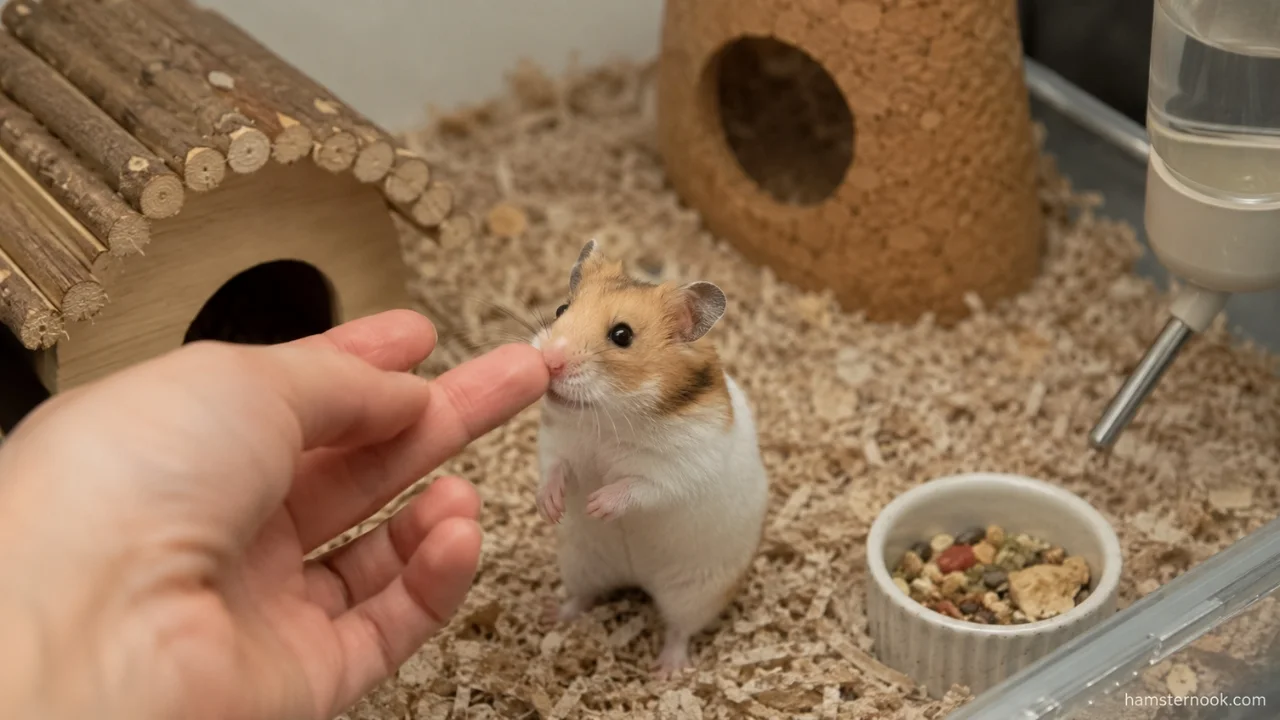
Taking a treat directly from your fingers is often one of the first clear signs that trust is developing.

This shows that your hamster feels safe enough to approach despite its natural caution.
Grooming Around You
Hamsters usually groom themselves only when they feel reasonably secure.
If your hamster cleans its fur while you’re nearby, it’s a positive sign.
Climbing Onto Your Hand Voluntarily
Few behaviors show trust more clearly than a hamster voluntarily stepping onto your hand.
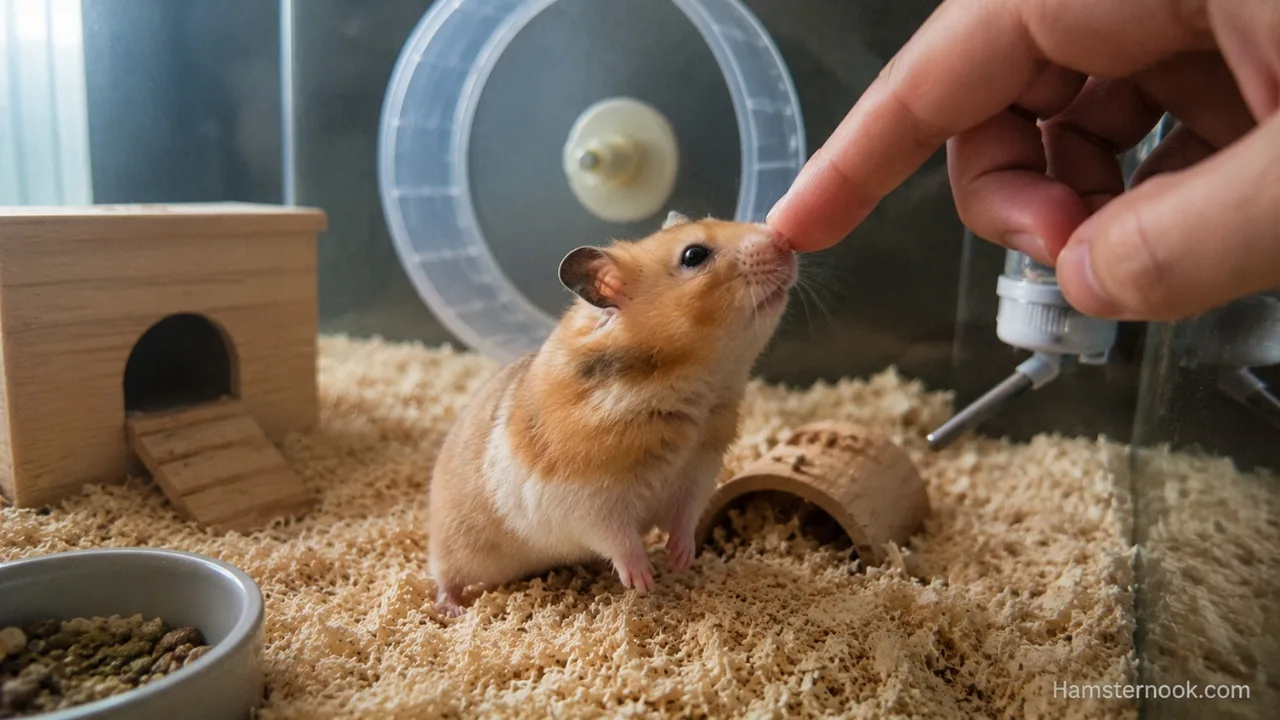
A hamster that willingly steps onto your hand is choosing interaction rather than being forced into it.
Voluntary interaction can also appear in smaller ways before a hamster is ready to climb onto your hand. Some owners notice their hamster approaching, sniffing, or gently licking them once it becomes comfortable. Our Hamster Licks You guide explains what this behavior can mean and when it is simply normal exploration.
Typical Trust-Building Timeline
While every hamster is different, the following timeline is common.
| Stage of Adjustment | Possible Behavior |
|---|---|
| Initial adjustment | Hiding, sleeping, and avoiding direct interaction may be common. |
| Growing familiarity | Exploring while you are nearby or watching you from a safe place. |
| Early trust | Sniffing your hand or accepting a treat without being forced. |
| Increasing confidence | Approaching voluntarily and staying relaxed during brief interactions. |
| Ongoing bonding | Becoming more comfortable with routine care, while still preferring limited handling. |
Some hamsters move through these stages faster, while others need more time.

Most hamsters make the biggest progress once they feel secure in their surroundings.
How to Help a Hamster Trust You Faster
You cannot rush trust, but you can make it easier by ensuring every interaction feels safe and predictable.
Give Your Hamster Time to Settle In
The first few days often have the biggest influence on how secure your hamster feels in its new home.
When a hamster first arrives home, it is learning:
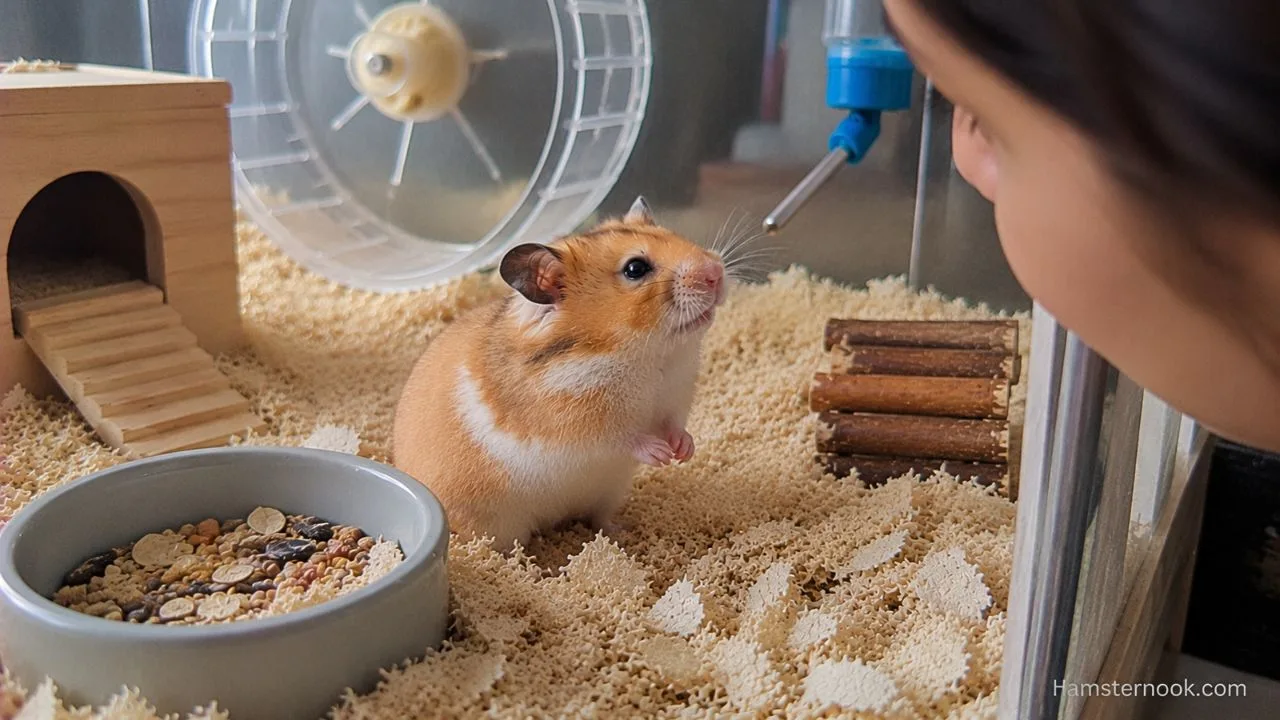
- New smells
- New sounds
- New routines
- New surroundings
Avoid excessive handling during the first few days.
Allow your hamster to become familiar with its environment before expecting interaction.
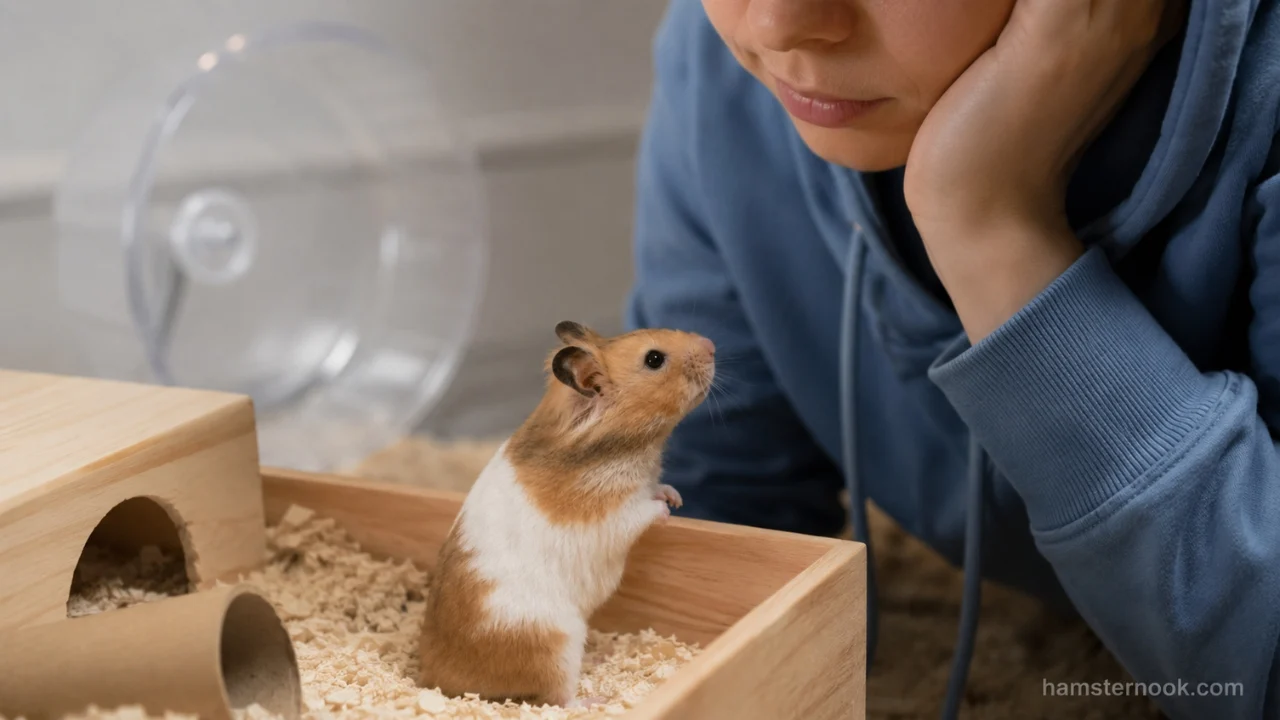
Speak Softly Around the Cage
Your hamster quickly learns to recognize familiar voices.
Talking calmly while performing routine care helps your hamster associate your presence with safety rather than danger.
Offer Treats Consistently
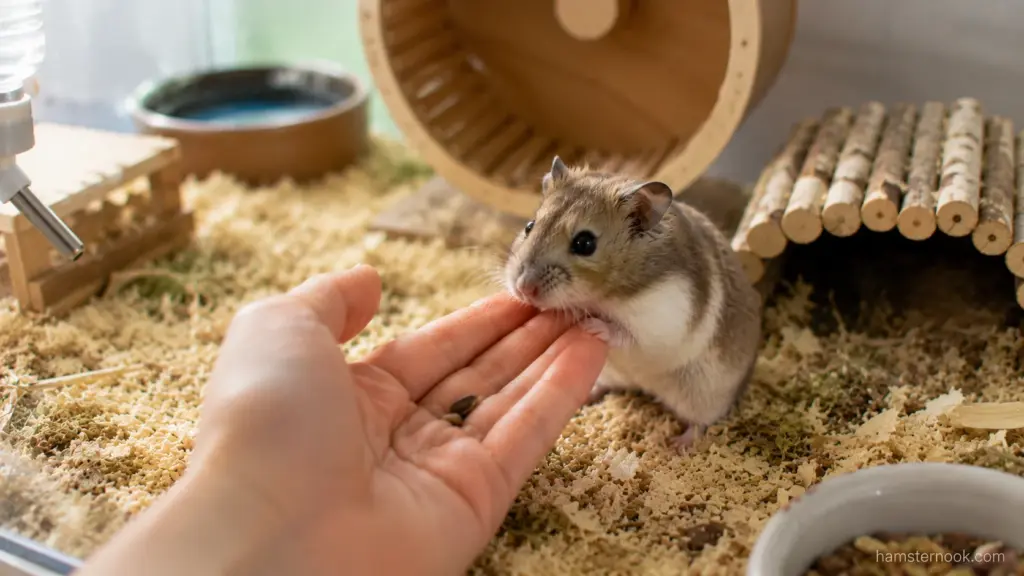
Food can help create positive associations.
Good options include:
- Small seeds
- Tiny vegetable pieces
- Hamster-safe treats
Place the treat near your hand rather than forcing contact.
Over time, your hamster may begin approaching voluntarily.

Let the Hamster Make the First Move
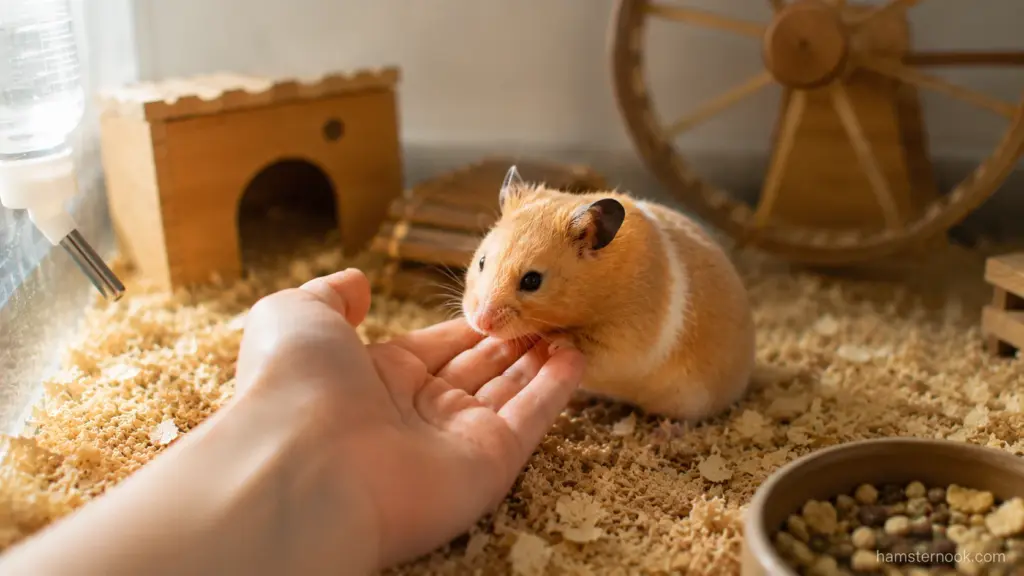
One of the biggest mistakes owners make is trying to pick up the hamster too soon.
Instead, place your hand flat inside the enclosure and allow the hamster to investigate at its own pace.
Hamsters that choose interaction often become more confident than those that are repeatedly grabbed.
Common Mistakes That Slow Down Trust Building
Even well-meaning owners sometimes accidentally create setbacks.

Waking a Sleeping Hamster
Hamsters are naturally active during the evening and night.
Waking them during daylight hours can cause stress and irritability.
Respecting your hamster’s natural routine is an important part of building trust. Other environmental disturbances can also make a cautious hamster less comfortable around people. Our Things Hamsters Absolutely Hate guide explains common situations that can increase stress and make handling more difficult.
Chasing Your Hamster Around the Cage
Trying to corner or catch a hamster can make it view your hands as a threat.

Trust develops much faster when the hamster controls the interaction.
Handling Too Frequently
Short positive sessions are better than long stressful ones.
A few minutes of calm interaction is often more effective than repeated handling attempts.
End the interaction when your hamster begins showing clear fear, repeatedly tries to escape, freezes, flattens its body, or becomes defensive. Stopping while the interaction is still calm helps prevent your hamster from associating your hand with stressful experiences.

Ignoring Signs of Fear
If your hamster is:
- Running away constantly
- Flattening its body
- Chattering its teeth
- Attempting to bite
It may need more time before progressing to the next stage.
How Different Hamster Breeds May Build Trust
Breed can influence behavior, although personality remains the biggest factor.
A hamster’s species may influence its typical activity and handling preferences, but breed alone cannot predict how quickly an individual will trust its owner. Temperament, previous handling, health, and the way interactions are introduced all matter. Avoid assuming that a hamster will enjoy being held simply because it belongs to a particular breed; watch its individual behavior and let it approach voluntarily.
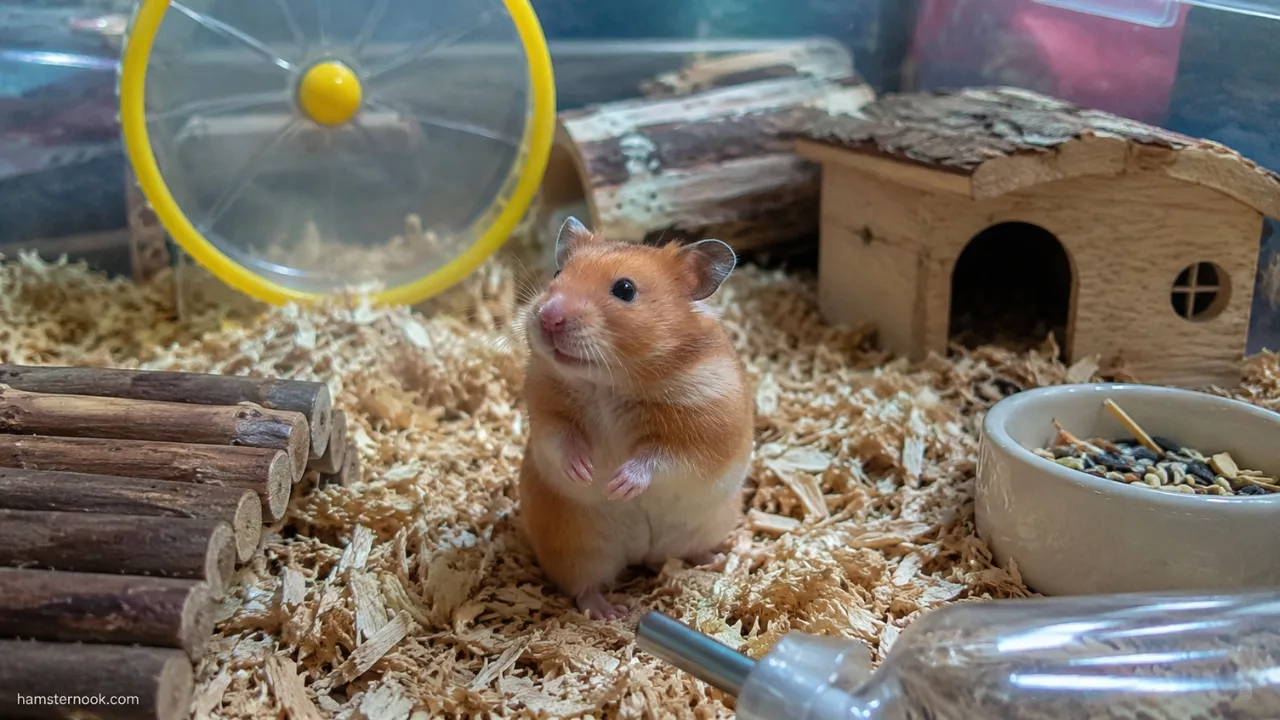
Breed tendencies can influence behavior, but individual personality usually plays a much larger role in how quickly trust develops.
For example, owners researching Why Is My Hamster So Hyper at Night? often discover that certain breeds naturally display more active behaviors than others.
What If Your Hamster Still Doesn’t Trust You After Several Weeks?
Some owners expect trust to look like a hamster happily sitting in their hands. In reality, many hamsters show trust in quieter ways, such as remaining relaxed during cage maintenance or willingly approaching for food.
Some hamsters simply require more time.
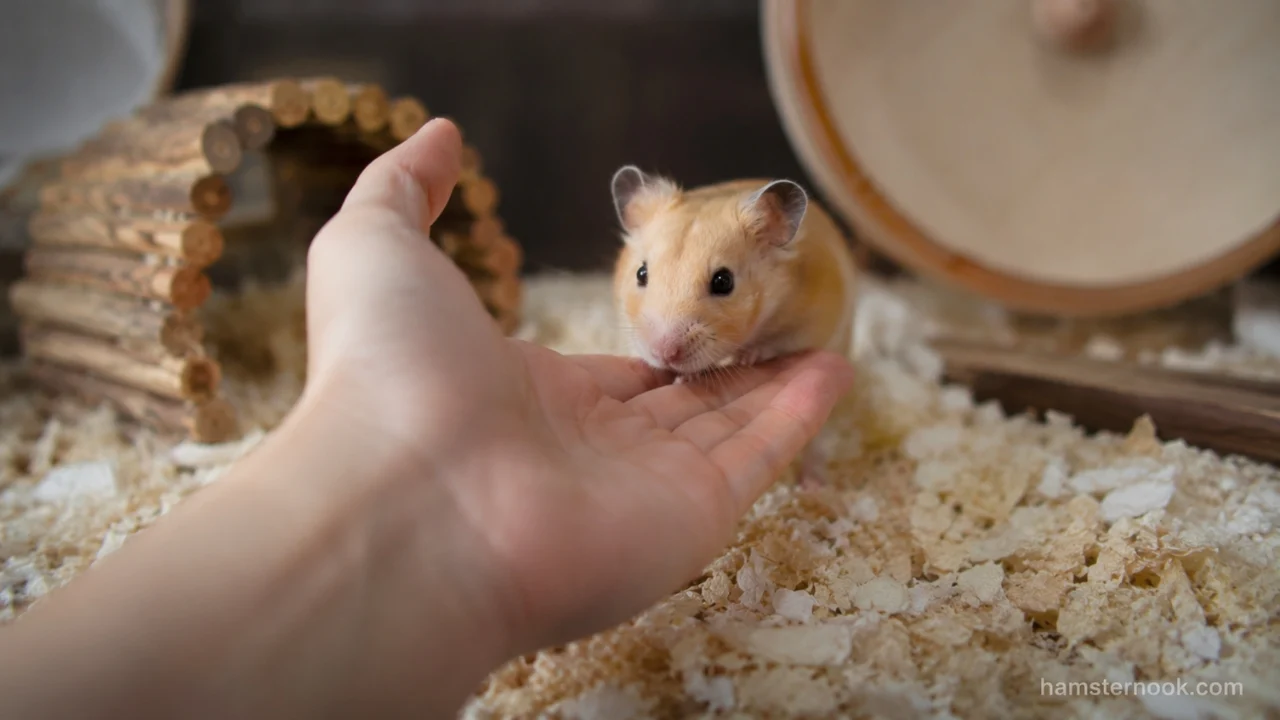
If progress seems to stop, do not respond by handling your hamster more often or forcing longer sessions. Go back to the last stage where your hamster was comfortable and spend several days rebuilding positive experiences from there. Trust often develops unevenly, with some days showing clear progress and others seeming like a setback.
- Personality differences are normal.
- A hamster that doesn’t enjoy being held can still trust its owner.
- Trust is not measured only by whether a hamster likes physical contact.
How Can You Tell Trust From Simply Tolerating Handling?
A hamster tolerating your presence is not always the same as actively trusting you. A more meaningful sign of trust is when your hamster voluntarily approaches you, remains relaxed around your hand, takes food without immediately retreating, or chooses to stay near you during normal activity.
If your hamster only remains still because it feels trapped or frightened, that should not be mistaken for trust. Look for voluntary behavior and a relaxed body posture rather than judging trust by whether your hamster allows you to pick it up.
A hamster may trust you if it:
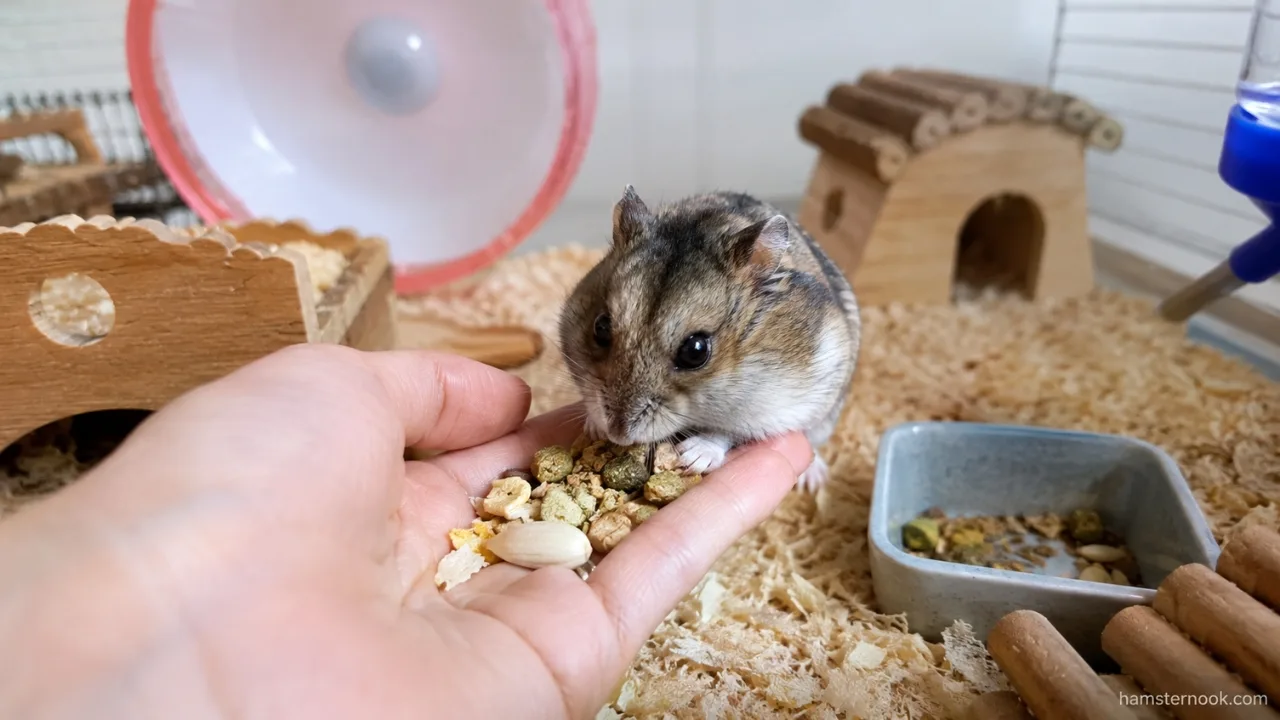
- Takes treats willingly
- Approaches when you enter the room
- Shows curiosity around you
- Remains relaxed during routine care
Voluntary approaches, relaxed behavior, and willingness to investigate are useful signs to watch for; 10 Signs Your Hamster Trusts You: How to Tell If They Like You explains other behaviors that may indicate growing confidence.
Warning Signs That Fear May Be Replacing Trust
Healthy caution is expected.
Persistent fear is different.
Watch for signs such as:

| Behavior | Possible Meaning |
|---|---|
| Constant hiding for weeks | Ongoing stress |
| Aggressive biting | Fear or discomfort |
| Refusing food | Potential health concern |
| Excessive freezing | Anxiety |
| Repeated escape attempts | Feeling unsafe |
If these behaviors continue despite proper care, review the enclosure setup and overall environment.
If your hamster continues to run away or seems frightened around you, Why Is My Hamster Scared of Me? Causes, Signs & How to Rebuild Trust explains common reasons and how to approach bonding more gradually.
Building Long-Term Trust Beyond the First Month
Trust doesn’t stop developing after the first few weeks.
Long-term trust usually comes from:

- Consistent routines
- Gentle handling
- Respecting boundaries
- Positive interactions
- Proper habitat care
Many owners notice that their hamster becomes increasingly confident over several months.
The hamster learns that its owner provides food, safety, and predictable experiences.
Repeated positive experiences can help a hamster become familiar with the people caring for it. Do Hamster Recognize Their Owners? How Hamsters Recognize You explains how familiar people may become associated with scent, voice, and routine.
Over time, these repeated positive interactions create familiarity and trust.
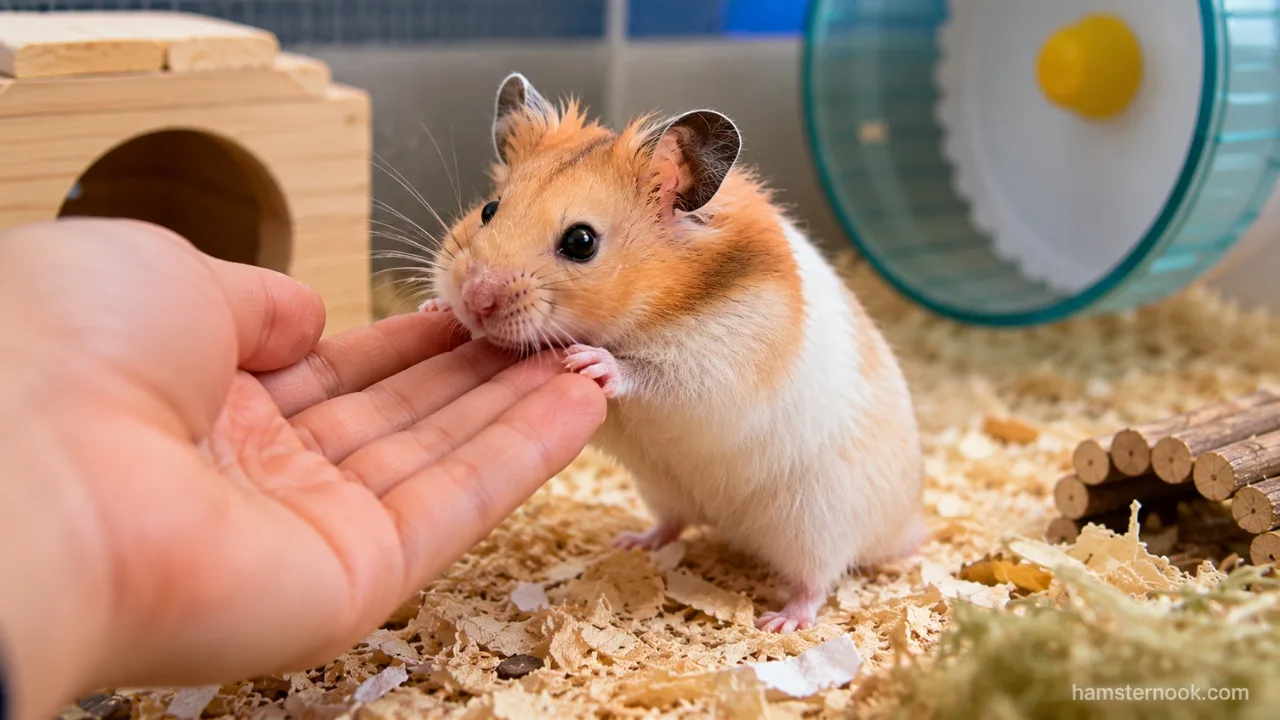
Many first-time owners worry that a hamster still hiding after a few days means something is wrong. In reality, cautious behavior is extremely common during the adjustment period and usually improves with consistent, low-pressure interactions.
Final Thoughts
Most hamsters begin trusting their owners within a few days to several weeks, but there is no universal timeline. Every hamster has its own personality, history, and comfort level.
The key to building trust is patience. Hamsters are prey animals that need time to learn that you are not a threat. By allowing your hamster to settle in, offering positive experiences, and avoiding common mistakes, you can help create a strong and lasting bond.
Given enough time and positive experiences, many hamsters gradually become far more relaxed around the people they see every day.
Frequently Asked Questions
How long does it take for a hamster to stop being scared of you?
There is no reliable deadline. Some hamsters become more comfortable within days, while others need several weeks or longer. Keep interactions calm and voluntary, and return to an earlier, comfortable stage if your hamster starts showing fear.
Can a hamster learn to trust humans completely?
Many hamsters become comfortable with regular handling and interaction, but individual personalities vary. Some remain more independent than others.
Why does my hamster run away when I put my hand in the cage?
This usually happens because the hamster has not fully associated your hand with safety yet. More gradual trust-building is often needed.
Should I hold my hamster every day to build trust?
Daily interaction can help, but only if the hamster is comfortable. Forced handling often slows progress rather than improving it.
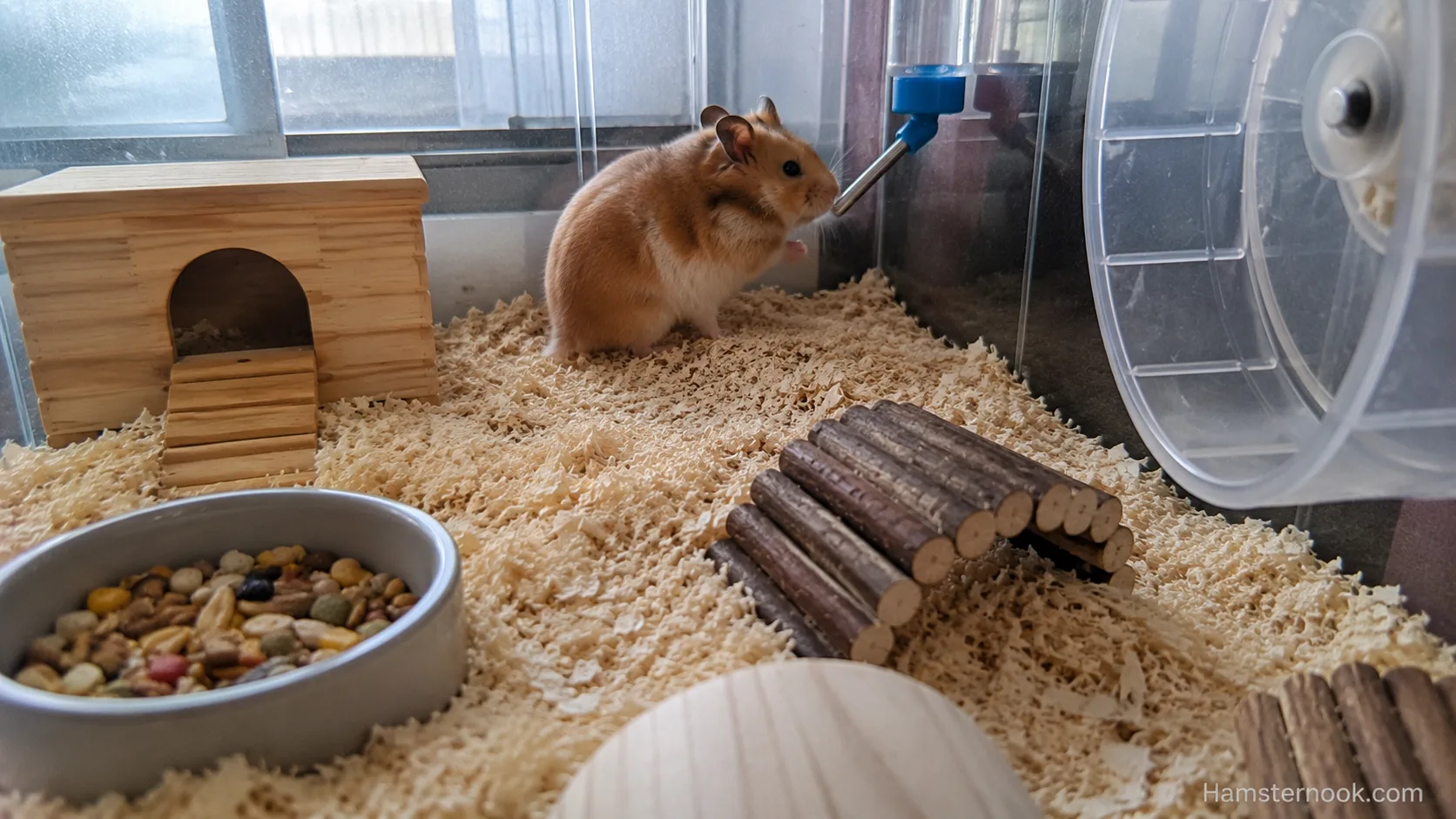
Can treats make a hamster trust you faster?
Treats can create positive associations, but they work best when combined with patience and gentle behavior.
What is the fastest way to bond with a hamster?
The most effective approach is allowing the hamster to approach you voluntarily, using consistent routines, calm behavior, and positive reinforcement rather than forcing interaction.
References
This guide is based on hamster behavior, taming, handling, stress, communication, and welfare guidance from trusted animal welfare and veterinary resources, including:
- RSPCA – Hamster Behaviour – Guidance on natural hamster behavior, handling, activity patterns, communication, and signs of stress.
- RSPCA – Keeping Hamsters as Pets – General guidance on hamster care, handling, behavior, housing, welfare, and helping hamsters adjust to their environment.
- Blue Cross – Hamster Care Guide – Practical advice on hamster handling, settling in, enrichment, housing, and building positive interactions.
- MSD Veterinary Manual – Providing a Home for a Hamster – Veterinary guidance on hamster housing, environmental needs, handling considerations, and reducing stress.
- NC3Rs – Housing and Husbandry: Hamster – Guidance on hamster housing, environmental conditions, natural behaviors, enrichment, and welfare.
- NC3Rs – Choosing Appropriate Enrichment – Guidance on supporting natural behaviors and providing suitable environmental enrichment for hamsters.

Narayan Kumar is the founder and author of HamsterNook. He creates practical, research-based hamster care guides covering hamster behavior, nutrition, cage setup, enrichment, health, and everyday care. His goal is to help hamster owners make informed decisions and provide safer, healthier lives for their pets through clear, beginner-friendly information based on trusted animal care resources.