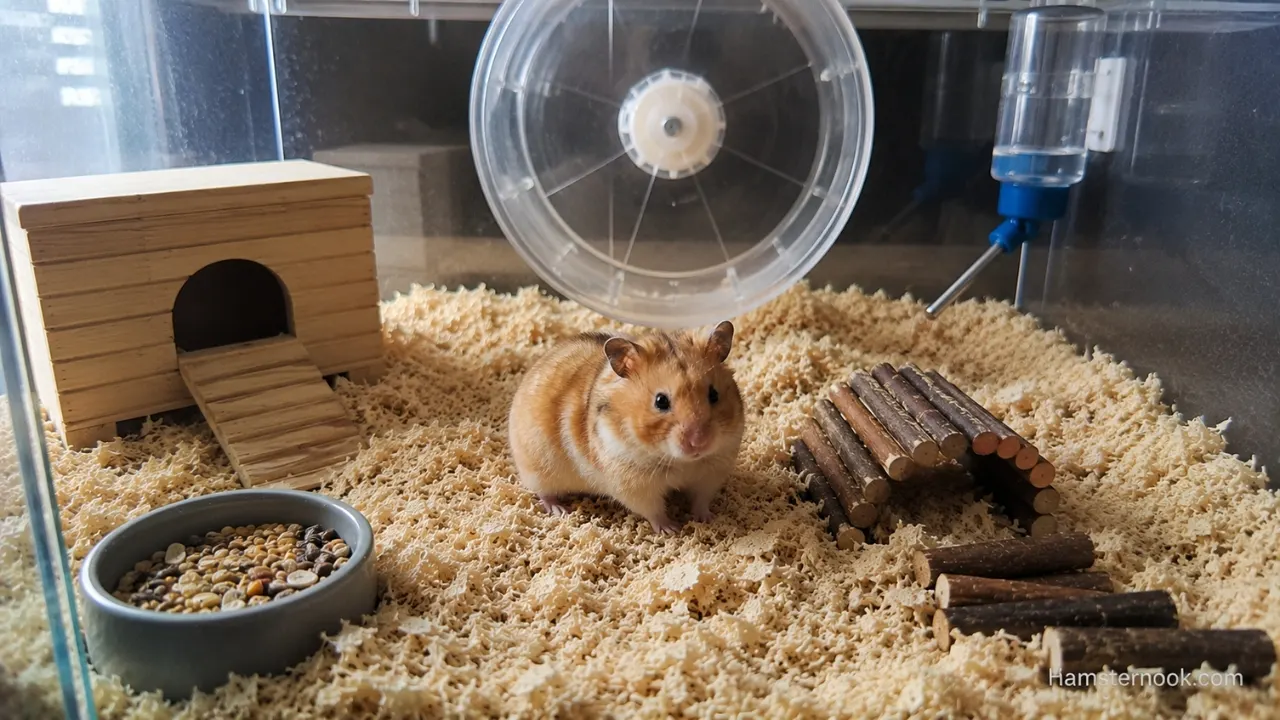
Setting up a hamster cage for the first time can be confusing. A good setup is about much more than choosing a cage and adding a wheel. Your hamster needs enough uninterrupted floor space, deep bedding for burrowing, a correctly sized solid wheel, secure hides, enrichment, and good ventilation.
For most beginners, a practical starting point is an enclosure with at least 100 × 50 cm (40 × 20 inches) of uninterrupted floor space, 8–12 inches of bedding, and enough room for a proper wheel and enrichment. This guide shows you how to put those pieces together into a safe, comfortable hamster habitat.
A well-designed enclosure allows hamsters to burrow, forage, run, hide, and express natural behaviors safely. When these needs are met, hamsters are generally more active, confident, and less likely to develop stress-related behaviors.
This guide covers everything beginners need to create a safe, comfortable, and realistic hamster habitat that supports long-term health and happiness.

Quick Answer
A beginner-friendly hamster cage should provide at least 100 × 50 cm (40 × 20 inches) of uninterrupted floor space, 8–12 inches of bedding, a properly sized solid wheel, multiple hideouts, safe enrichment, and good ventilation. These essentials allow hamsters to burrow, run, forage, and express natural behaviors safely.
Quick Hamster Cage Setup Checklist
| Essential | Beginner Recommendation |
|---|---|
| Floor space | 100 × 50 cm minimum |
| Bedding | 8–12 inches |
| Syrian wheel | 11–12 inches |
| Dwarf wheel | 8–10 inches |
| Hideouts | 2 or more |
| Wheel surface | Solid running surface |
| Bedding | Unscented and low-dust |
| Sand bath | Safe hamster sand |
Why a Proper Hamster Cage Setup Matters
A hamster’s cage is its entire world. Unlike dogs or cats that roam around the house, hamsters rely on their enclosure for exercise, sleep, security, mental stimulation, and natural behaviors.
Poor setups can lead to:
- Chronic stress
- Obesity
- Boredom
- Injuries
- Respiratory problems
- Spine issues from small wheels
- Bar chewing and escape attempts
Research and hamster welfare organizations consistently recommend larger enclosures with deep bedding and enrichment because hamsters behave more naturally and show lower stress levels in better environments.
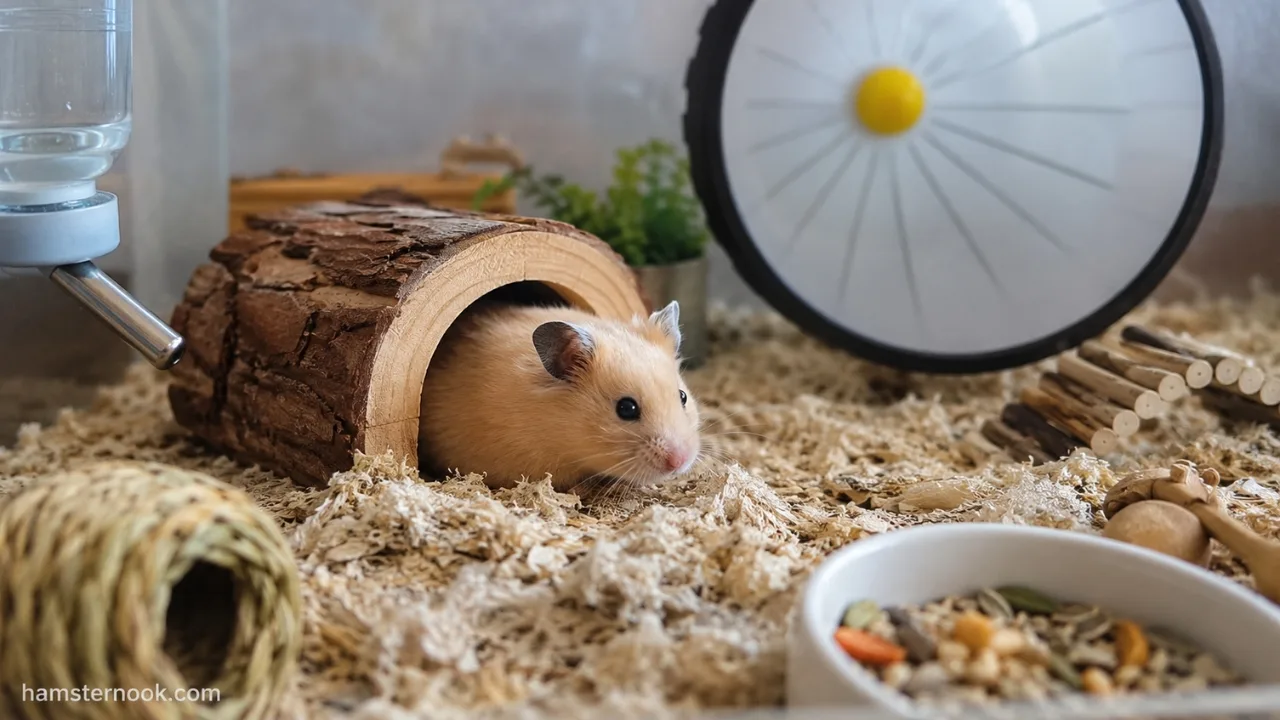
A suitable enclosure is one part of responsible hamster ownership. Our Hamster Care Guide for Beginners brings together everything you need to know about housing, feeding, behavior, health, and daily care in one place.
Recommended Hamster Cage Size for Beginners
One of the biggest mistakes beginners make is choosing a cage based on what looks cute instead of what the hamster actually needs.
Most modern hamster welfare recommendations suggest a minimum enclosure size of around:
- 100 cm x 50 cm (40″ x 20″)
- Around 775 square inches of unbroken floor space
If you’re unsure whether your enclosure is large enough, read our detailed guide: Do Hamsters Need a Bigger Cage? Signs Yours Is Too Small
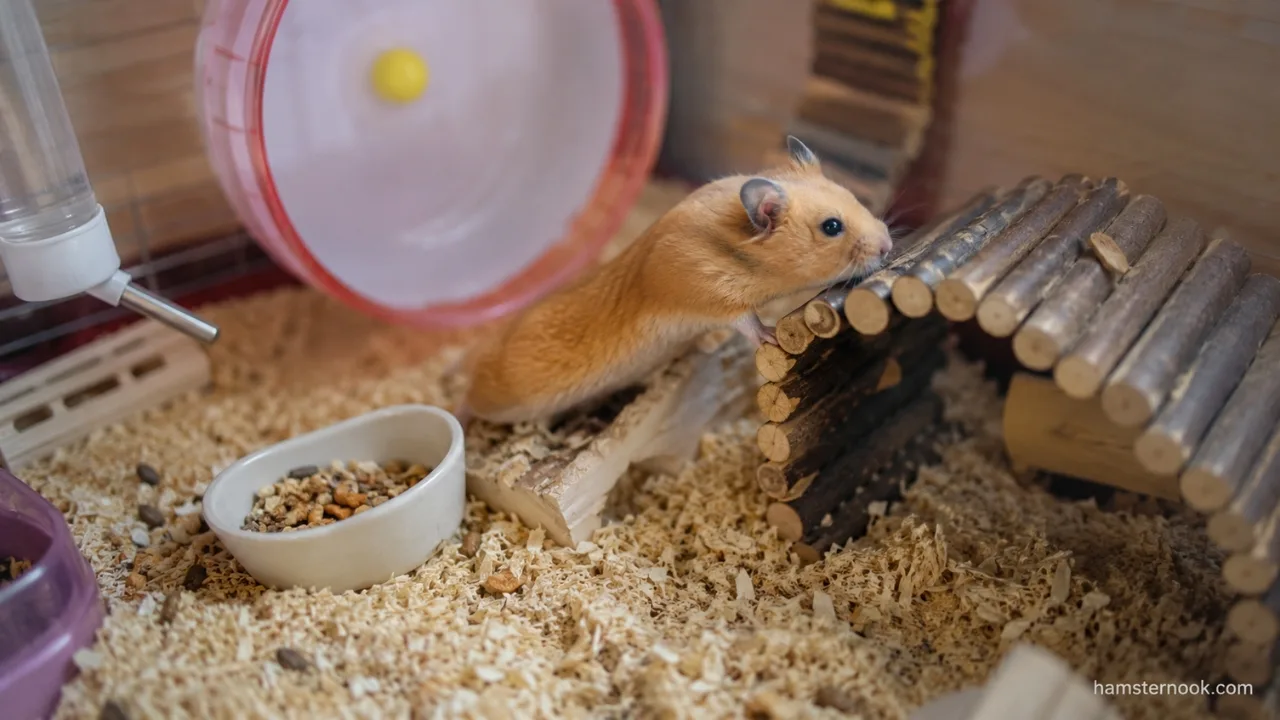
Larger uninterrupted floor space gives your hamster more room for deep bedding, a properly sized wheel, secure hides, and enrichment.
Quick Cage Size Comparison
| Hamster Type | Recommended Minimum Size | Ideal Wheel Size | Bedding Depth |
|---|---|---|---|
| Syrian Hamster | 100 x 50 cm | 11–12 inch wheel | 10–12 inches |
| Dwarf Hamster | 100 x 50 cm | 8–10 inch wheel | 8–10 inches |
| Roborovski Hamster | 100 x 50 cm | 8 inch wheel | 8–10 inches |
Avoid tiny colorful starter cages with tubes and multiple levels. Many are far too small and difficult to clean properly.
Best Cage Types for Beginner Hamster Owners
How to Set Up a Hamster Cage Step by Step
Once you have the right enclosure, build the habitat around your hamster’s basic needs rather than filling it with accessories. Set up the cage in this order:
1. Start With Enough Floor Space
Use an enclosure with at least 100 × 50 cm (40 × 20 inches) of uninterrupted floor space. A larger enclosure gives you more room for deep bedding, a properly sized wheel, hides, and enrichment.
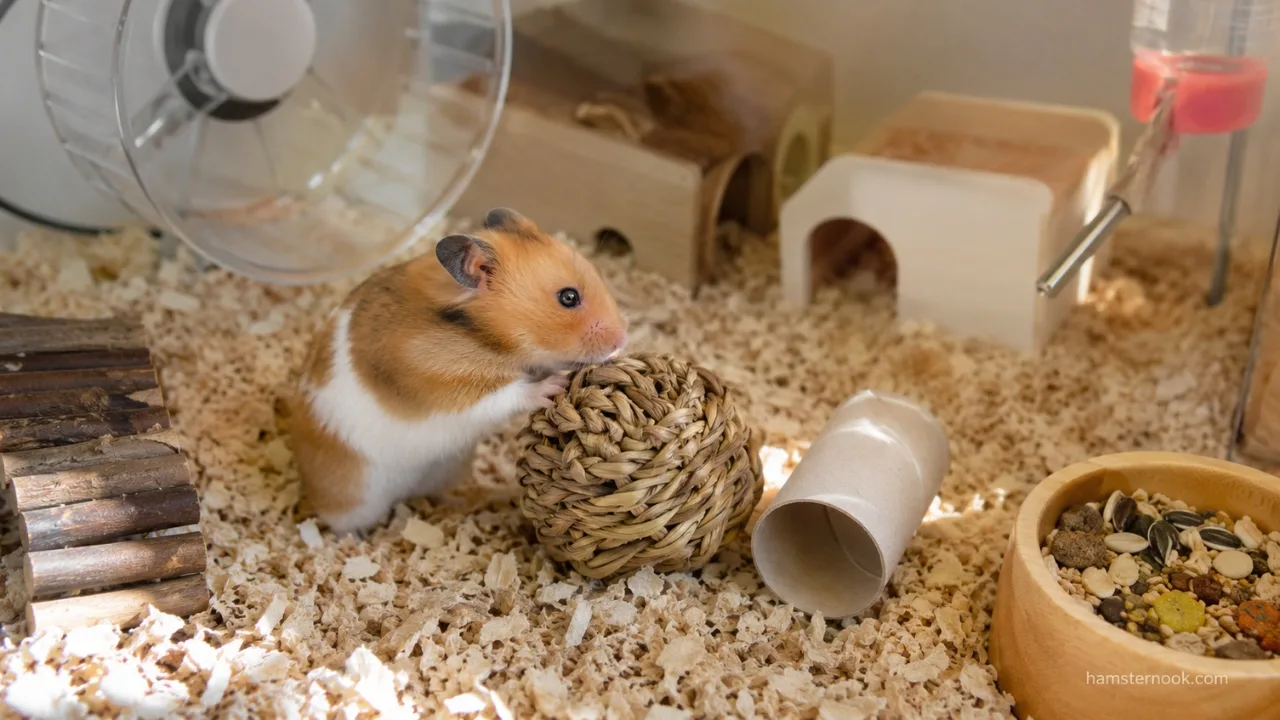
2. Add Deep Bedding
Create a deep bedding area of at least 8–10 inches, with 10–12 inches or more where practical. The bedding should be suitable for burrowing and able to hold tunnels.
3. Add the Correct Wheel
Choose a stable wheel with a solid running surface and enough diameter for your hamster to run without keeping its back curved.
4. Add Secure Hideouts
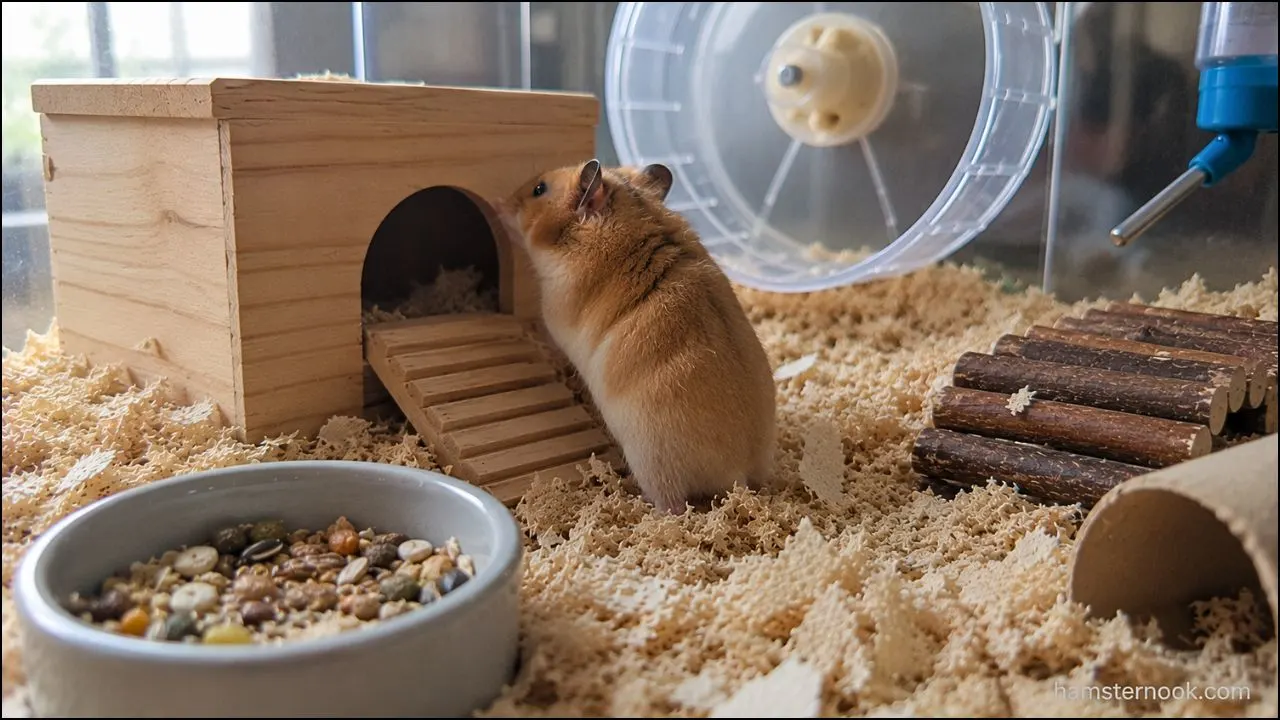
Provide multiple dark, secure places where your hamster can sleep and retreat. Keep heavy accessories stable, especially when they sit over deep bedding.
5. Create a Sand Bath Area
Add a suitable sand bath in a separate area of the enclosure so your hamster has a place for natural grooming.
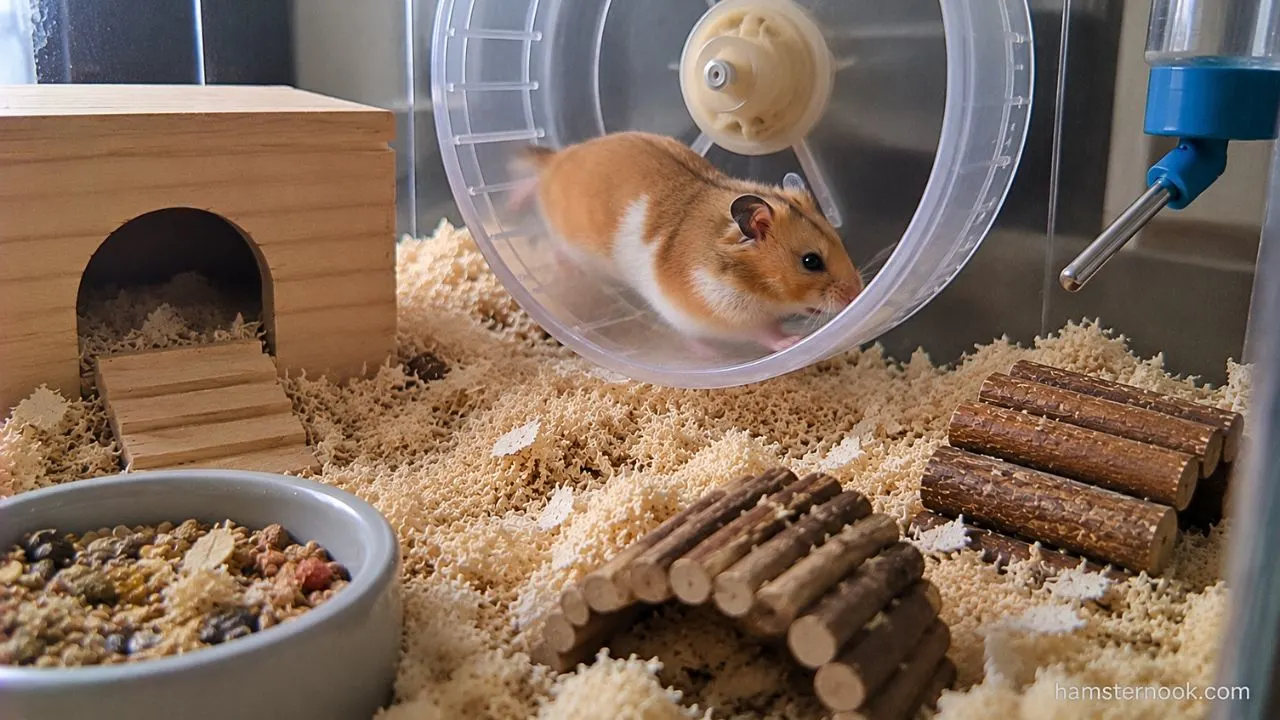
6. Add Enrichment
Use safe chews, tunnels, cork, cardboard, sprays, and foraging opportunities without overcrowding the usable floor space.
7. Create Separate Activity Zones
Keep the main areas of the cage easy to navigate by giving your hamster space for burrowing, running, hiding, bathing, eating, and exploring.
Our Hamster Cage Enrichment: 10 Safe Ideas for Boredom & Natural Behavior guide covers additional ways to add enrichment while keeping essential floor space usable.
8. Check the Setup Before Use
Before placing your hamster inside, check that the wheel is stable, hides cannot collapse, the enclosure is escape-proof, water is working properly, and there are no sharp edges, gaps, or unsafe materials.
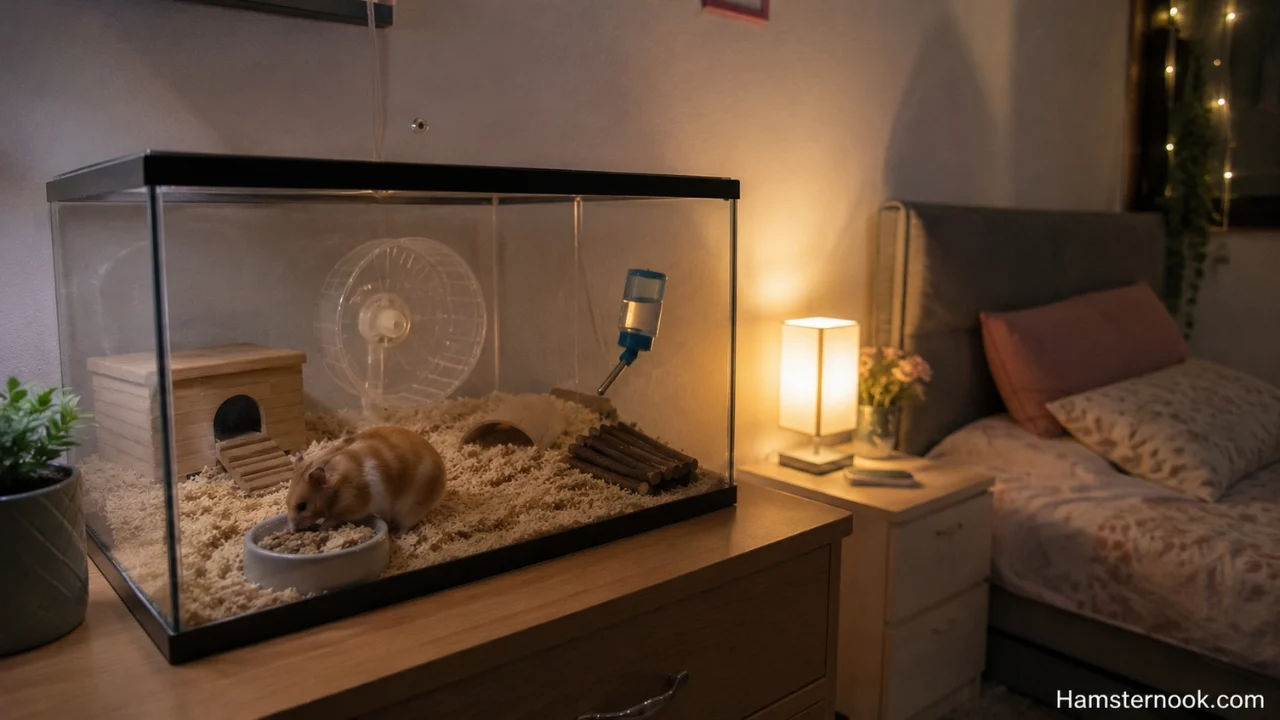
Different cage styles work well as long as they provide enough uninterrupted floor space.
Glass Tank Enclosures
Aquariums and tank-style cages are popular because they:
- Hold deep bedding well
- Reduce bedding mess
- Prevent escapes
- Allow excellent visibility
A properly ventilated tank with a secure mesh lid works especially well for dwarf hamsters.
Large Bin Cages
DIY bin cages are affordable and beginner-friendly.
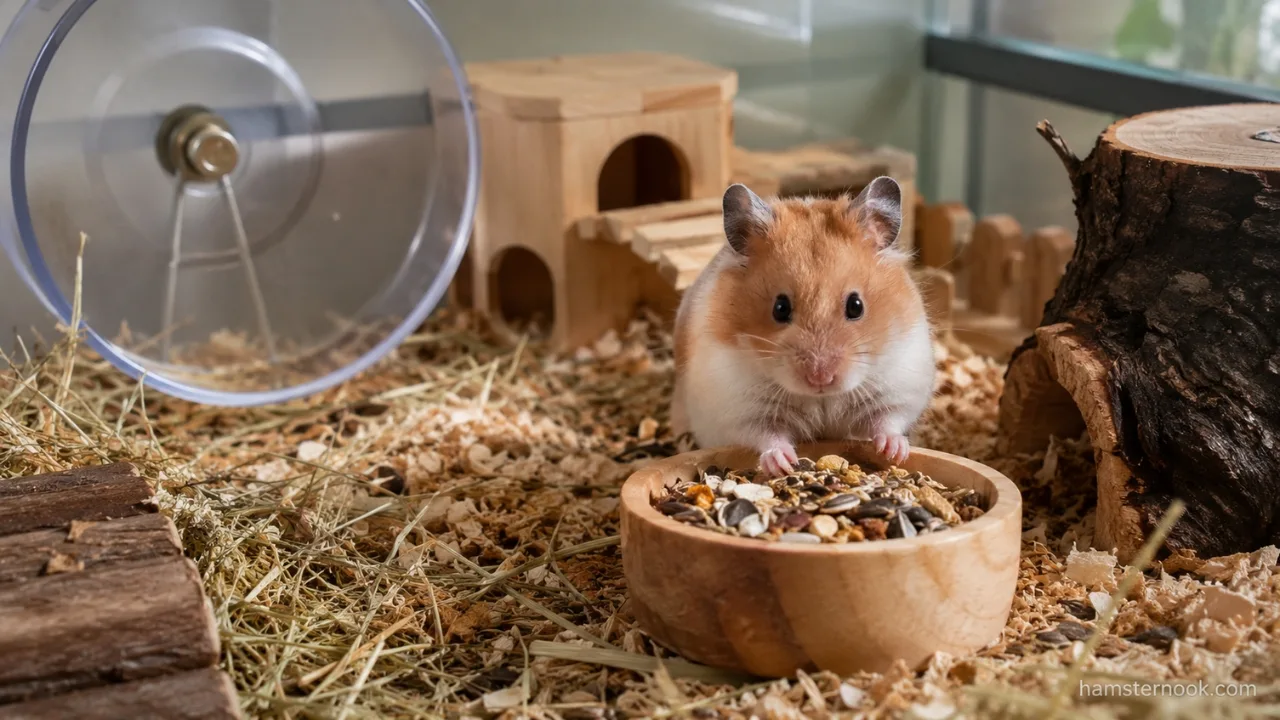
Advantages include:
- Budget-friendly setup
- Lightweight
- Easy customization
- Good bedding depth
Choose large clear storage bins with proper ventilation added safely.
Good ventilation is important because a hamster enclosure needs fresh airflow without creating strong drafts. Any DIY modification should leave the enclosure secure and escape-proof while allowing adequate air exchange throughout the habitat.
Wooden Hamster Enclosures
Wooden cages are attractive and often provide excellent floor space.
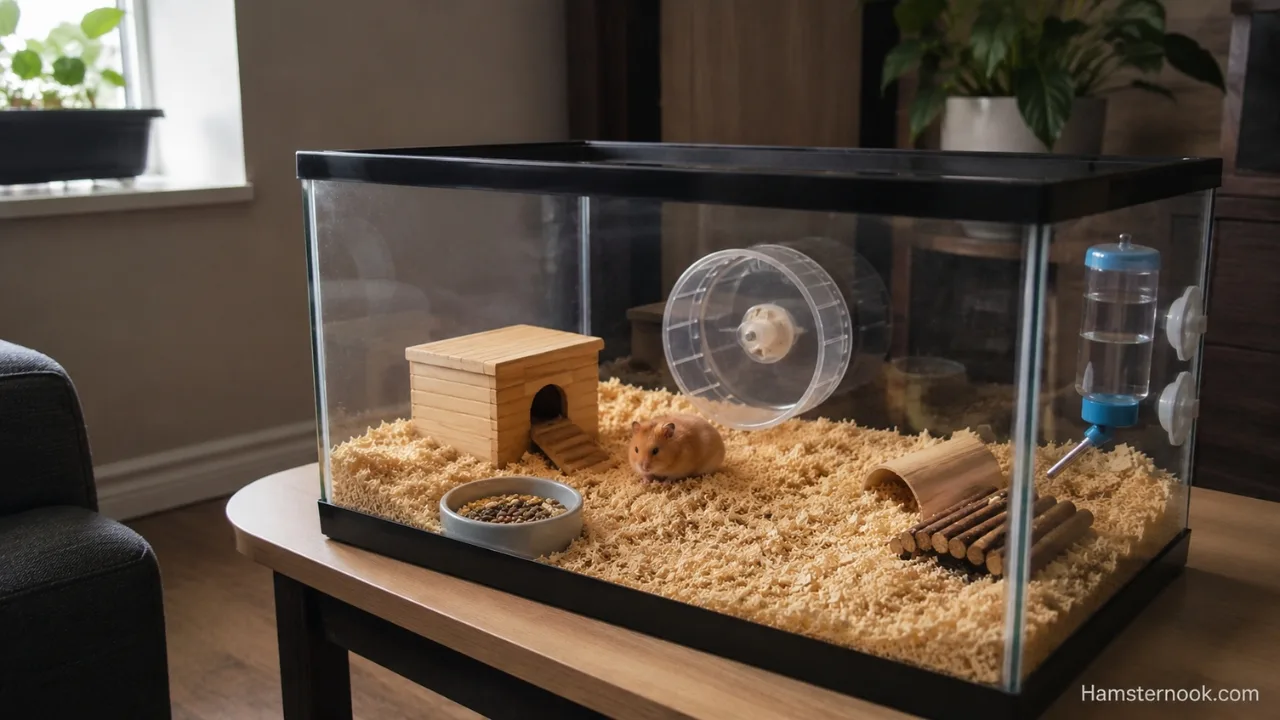
Good wooden cages should have:
- Proper ventilation
- Non-toxic materials
- Waterproofed interior sections
- Secure latches
Wire Cages
Wire cages can work if they are large enough and have safe bar spacing.
However, many wire cages sold in stores are too small and too shallow for proper bedding depth.
Safe Bedding for a Comfortable Hamster Setup
A well-designed enclosure should always be supported by proper nutrition. Our Complete Hamster Diet Guide: Best Foods, Safe Treats & Toxic Foods explains how a balanced diet works alongside a healthy habitat to support long-term wellbeing.
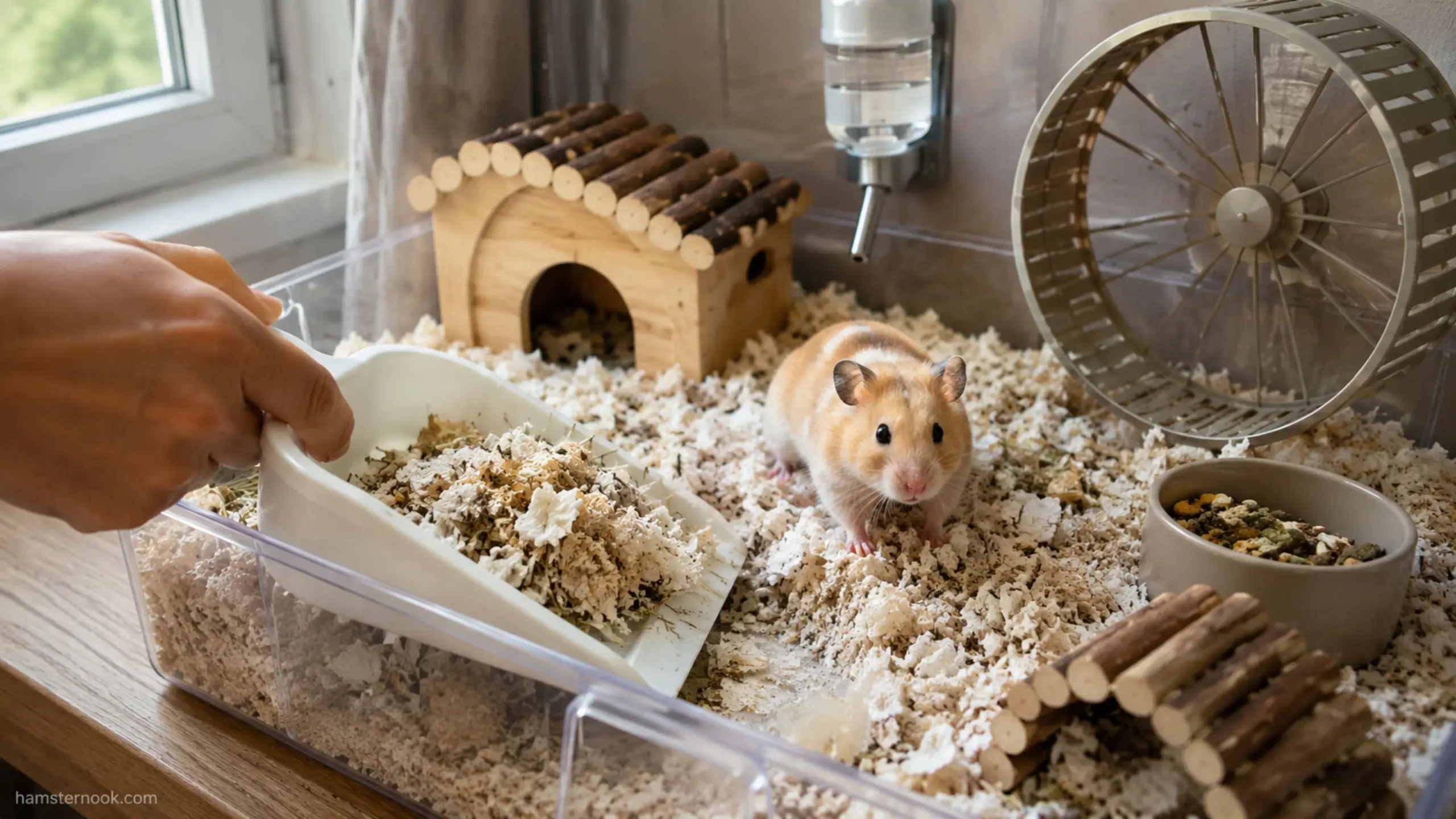
Hamsters are natural burrowers. Deep bedding is not optional — it is essential.
Many welfare sources recommend at least:
- 8–10 inches minimum
- 10–12 inches preferred in some areas
Deep bedding allows tunnel building and reduces stress.
Safe Bedding Options
Good beginner-safe choices include:
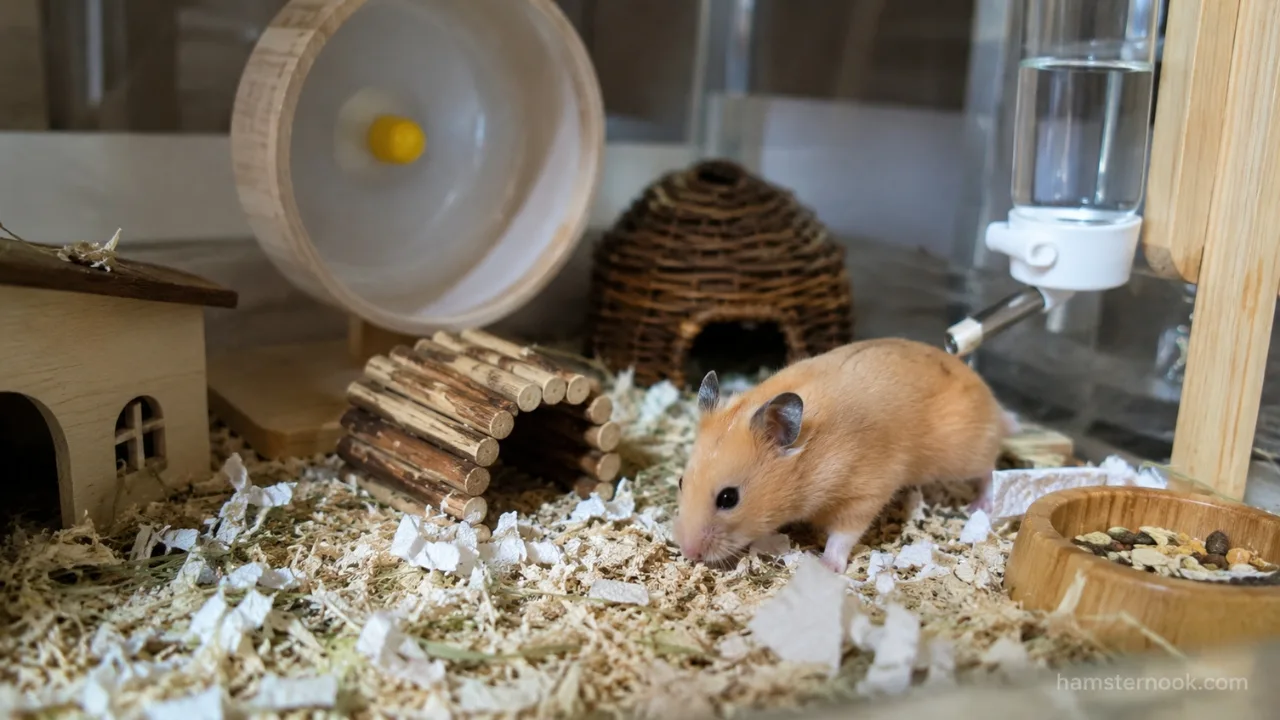
- Unscented paper bedding
- Aspen shavings
- Hemp bedding
The bedding should hold tunnels well and remain relatively dust-free.
Bedding Types to Avoid
Never use:
- Cedar bedding
- Scented bedding
- Fluffy cotton nesting material
These can cause respiratory issues or dangerous entanglement injuries.
For nesting material, plain unscented toilet paper is usually much safer.

Choosing the Right Hamster Wheel
A hamster wheel is one of the most important accessories in the cage.
Hamsters are naturally very active and spend long periods running and exploring each night, so the wheel must be:
- Large enough
- Solid-surface
- Stable and quiet
Small wheels force the hamster’s spine into an unnatural curve, which may contribute to discomfort and long-term issues.
A hamster that can run comfortably is also more likely to display relaxed, natural behavior. Our How to Tell If Your Hamster Is Happy or Unhappy guide explains the everyday behaviors that often reflect good physical and emotional wellbeing.

Recommended Wheel Sizes
| Hamster Species | Recommended Wheel Diameter |
|---|---|
| Syrian Hamster | 11–12 inches |
| Dwarf Hamster | 8–10 inches |
| Roborovski | 8 inches |
Avoid:
- Mesh wheels
- Wire wheels
- Wheels with gaps or rungs
Solid running surfaces are safest.
Essential Accessories Every Beginner Setup Needs
A hamster cage should feel secure, stimulating, and natural.
Hideouts
Hamsters need dark, quiet sleeping areas.
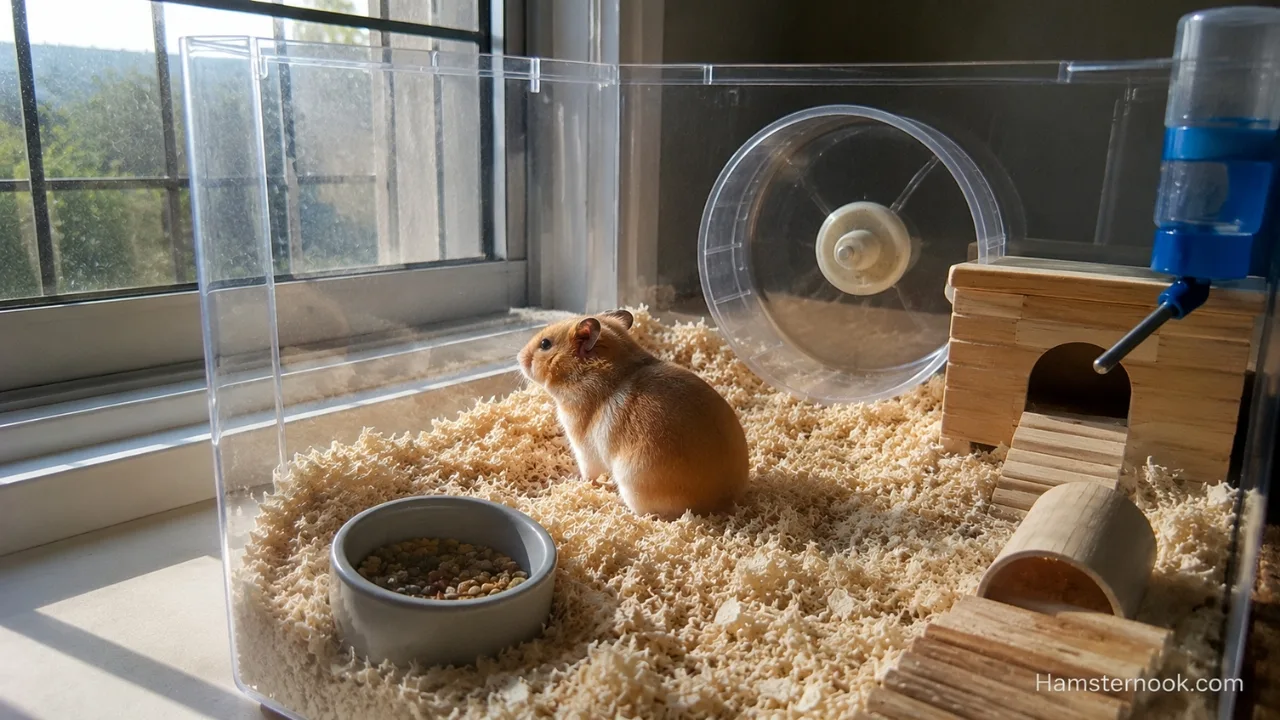
Good hide options include:
- Wooden houses
- Cork logs
- Ceramic hides
- Multi-chamber hides
Providing more than one secure hiding option gives your hamster a choice of places to rest and retreat, especially when the enclosure has enough space for multiple activity areas.
Position one hide in a quieter part of the enclosure and another closer to your hamster’s regular activity area. Giving your hamster a choice of secure resting places often helps it feel more confident while exploring the cage.
When using deep bedding, heavy hides and other solid accessories should be placed securely so they cannot shift or collapse into a burrow. Stable support is especially important for anything your hamster may dig underneath.
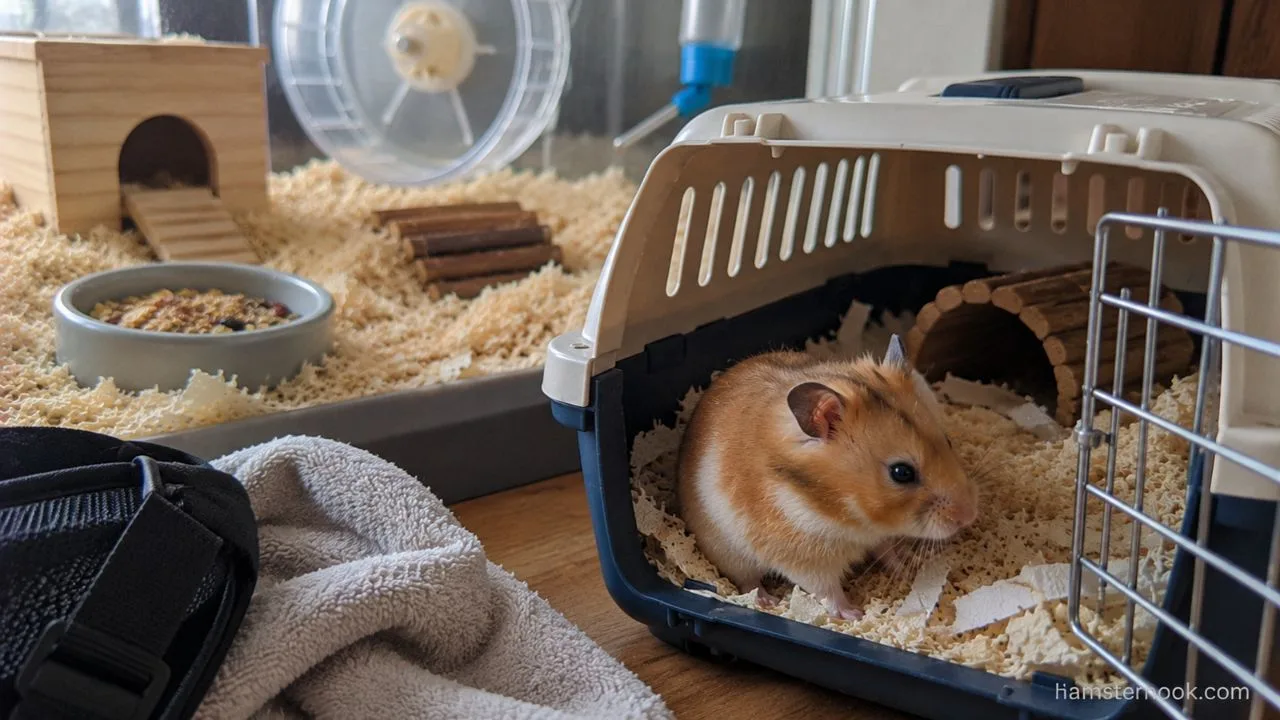
Sand Bath
Most hamsters naturally clean themselves using sand.
Use:
- Reptile-safe sand without added calcium or dyes
Avoid:
- Dust bath powders
- Chinchilla dust
Dust products can irritate the respiratory system.

Chews and Enrichment
Hamsters need mental stimulation and chewing opportunities.
Safe enrichment includes:
- Apple wood sticks
- Cardboard tubes
- Cork tunnels
- Willow balls
- Foraging sprays
- Dig boxes
Scatter feeding food around the cage also encourages natural foraging behavior.
Beginner-Friendly Cage Layout Ideas
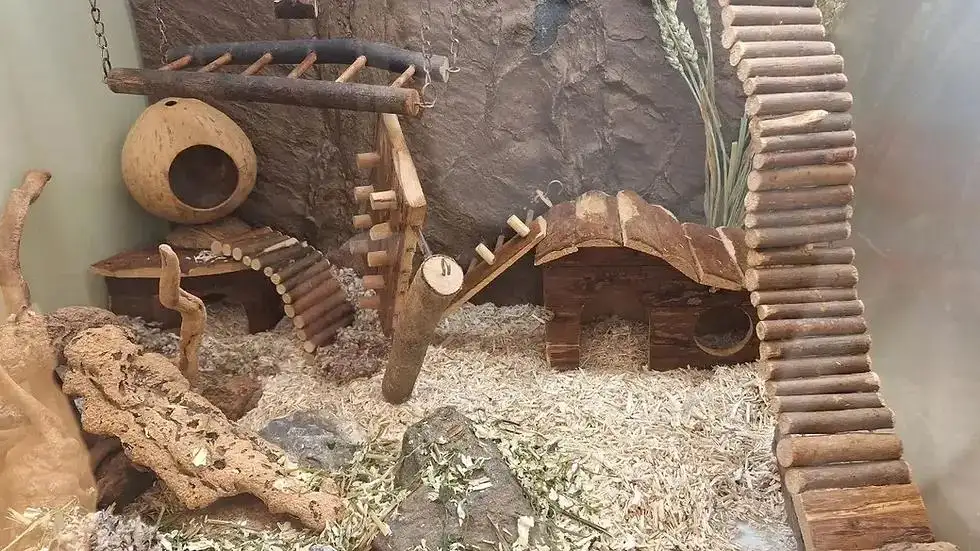
A balanced cage setup usually includes different activity zones.

Example Layout
Burrowing Area
One side filled with deep bedding for tunnels.
Wheel Zone
Flat stable area for the wheel.
Sand Bath Corner
Placed away from the nesting area.
Hide and Food Area
Quiet section with hides and food storage.

Enrichment Zone
Tunnels, chews, sprays, and climbing textures.
This creates variety without overcrowding the cage.
Why Multi-Chamber Hides Are Helpful
Many hamster owners focus on wheels and toys but overlook the importance of secure sleeping areas.
Multi-chamber hides can help by:
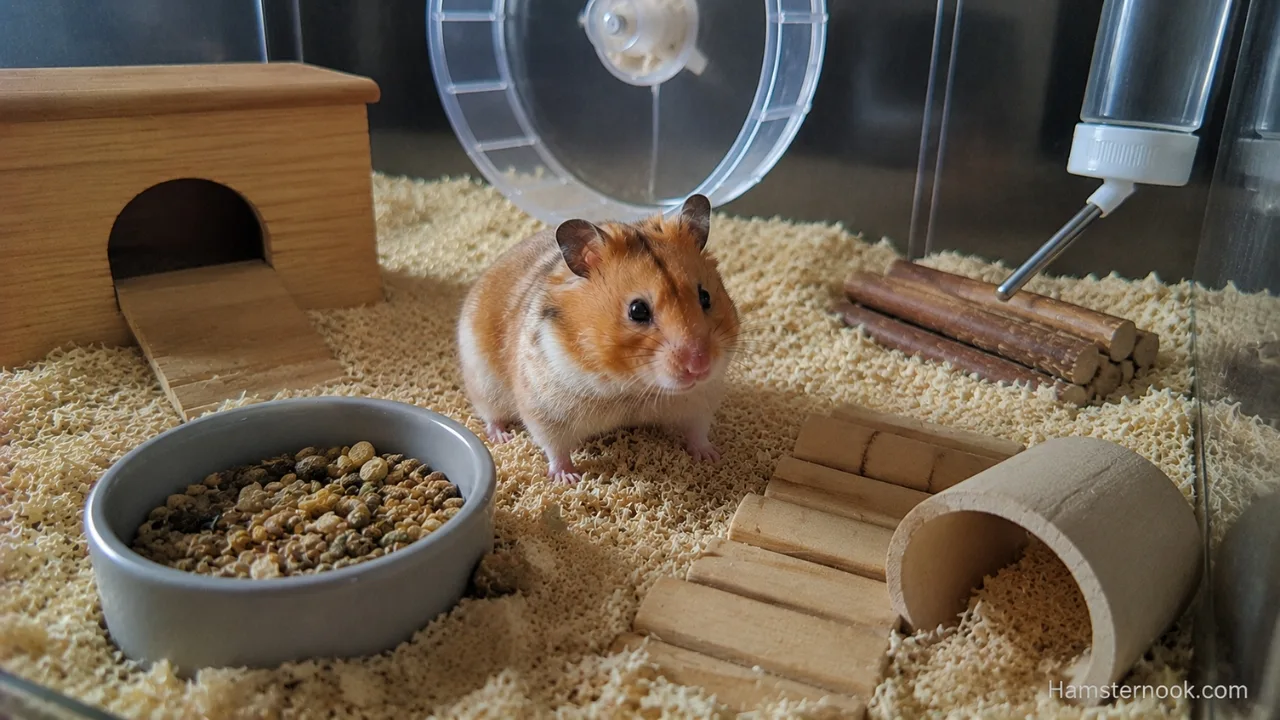
- Providing dark sleeping spaces
- Encouraging natural nesting behavior
- Reducing stress
- Offering separate areas for sleeping and food storage
Many hamsters use multi-chamber hides similarly to underground burrows in the wild.
Common Hamster Cage Setup Mistakes Beginners Make
Buying a Tiny Starter Cage
Small cages are still heavily marketed even though they are often too small for proper hamster enrichment and natural behaviors.
Many enclosure problems happen during the first week because owners unknowingly follow outdated advice. Our The Biggest Mistake New Hamster Owners Make in the First Week guide explains several common beginner mistakes and how to avoid them.
Using Too Little Bedding
Thin bedding layers prevent natural burrowing behavior.

Choosing Unsafe Accessories
Dangerous products still sold in stores include:
- Cotton fluff
- Tiny wheels
- Mesh wheels
- Hamster balls
Some veterinary welfare groups specifically discourage hamster balls because they limit natural behavior and may make natural movement and navigation more difficult for some hamsters.
Overcrowding the Cage
Too many toys can reduce usable floor space.
Cleaning Too Frequently
Hamsters rely heavily on scent familiarity.
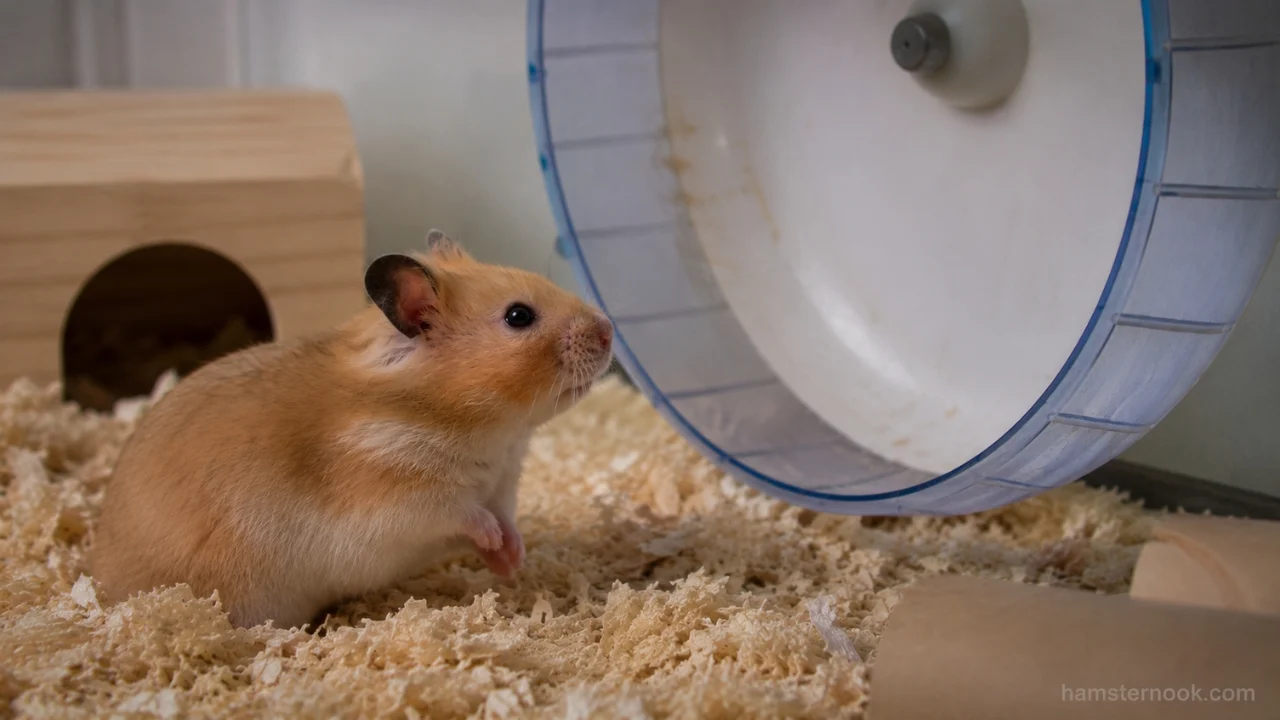
Avoid full deep cleans every few days. Instead:
- Spot clean regularly
- Replace dirty areas only when needed
- Keep part of the old bedding to preserve scent
Rather than following a fixed cleaning schedule, pay attention to how quickly your hamster soils different areas of the enclosure. Cleaning only the areas that need attention helps maintain hygiene while preserving familiar scents that make hamsters feel secure.
Best Beginner Hamster Setup on a Budget
You do not need an expensive luxury setup to create a good habitat.
A safe budget setup can include:

- Large storage bin enclosure
- Unscented paper bedding
- Proper wheel
- DIY cardboard hides
- Reptile sand bath
- Simple wooden chews
Prioritize:
- Cage size
- Wheel quality
- Bedding depth
Fancy decorations matter far less than proper fundamentals.
If your budget is limited, spend more on enclosure size, bedding, and a properly sized wheel before buying decorative accessories. These essentials have a much greater impact on your hamster’s daily welfare.
Signs Your Hamster Setup Needs Improvement
Your hamster may need a better setup if you notice:
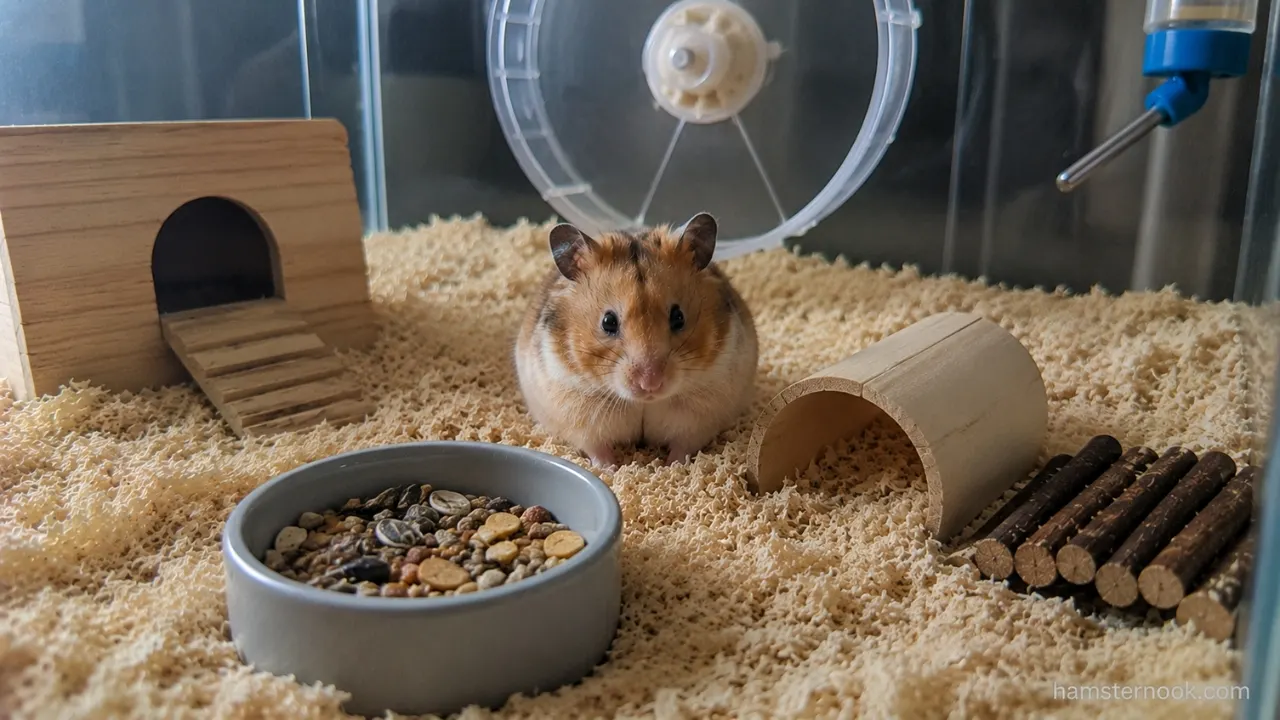
- Constant bar chewing
Persistent bar chewing usually points to an environmental problem rather than bad behavior. Our Why Is My Hamster Biting the Cage? Causes & Easy Fixes guide explains the most common causes and practical solutions.
- Climbing cage bars
- Repetitive pacing
- Trying to escape
- Aggression
- Excessive sleeping from boredom
- Lack of burrowing behavior
These behaviors often improve after upgrading cage size, bedding depth, and enrichment.
Changes in your hamster’s posture, activity level, and daily routine often provide additional clues about how comfortable it feels in its environment. Our Hamster Body Language Explained: Signs of Stress, Fear, Happiness & Trust guide helps you interpret these behaviors more accurately.
Safe Cleaning Routine for Hamster Cages
Keeping the enclosure clean is important, but over-cleaning can cause stress.
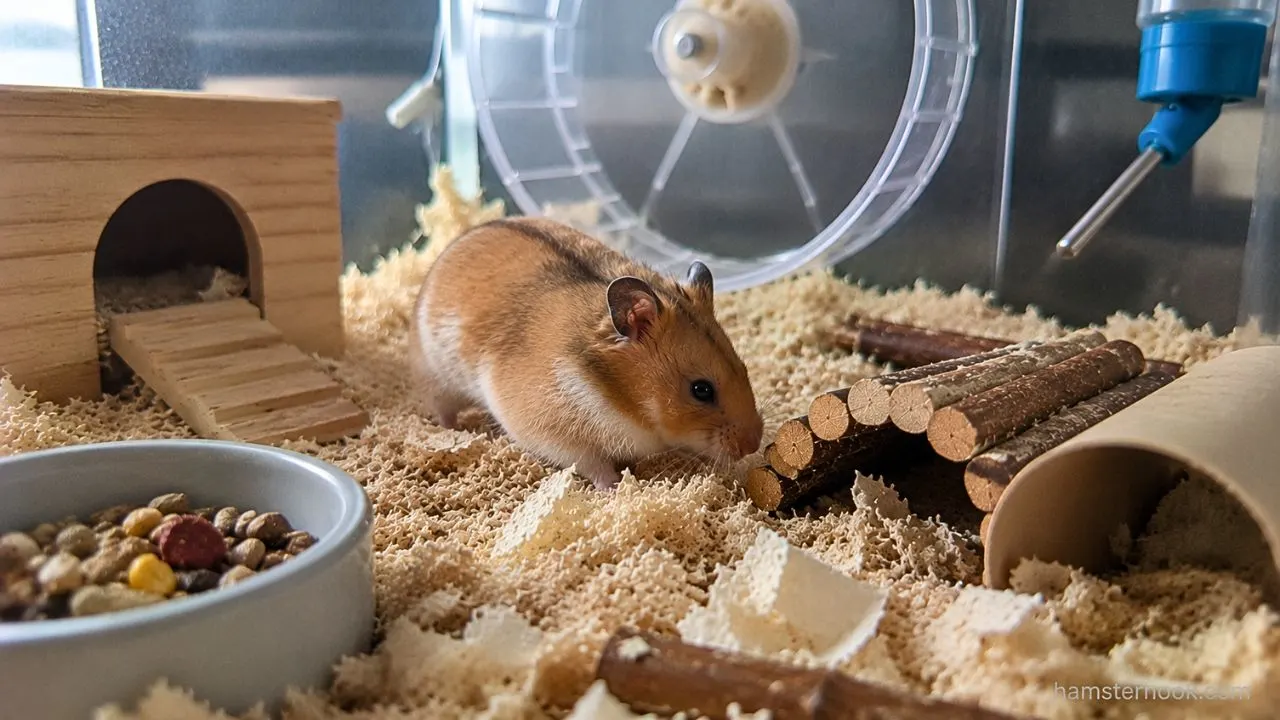
Good Cleaning Routine
| Task | Recommended Frequency |
|---|---|
| Spot clean pee areas | Every few days |
| Refresh sand bath | Weekly |
| Clean wheel and food dish | Weekly |
| Partial bedding replacement | As needed |
| Full deep clean | Only occasionally |
Always avoid strong chemical cleaners or scented sprays.
If your hamster suddenly becomes less active or behaves differently after environmental changes, don’t assume it’s only stress. Our What Your Hamster Does Right Before It Gets Sick: 10 Early Warning Signs guide explains the subtle health changes that owners often overlook.
Where Should You Place a Hamster Cage?
Choose a quiet room with a stable temperature, away from direct sunlight, radiators, air conditioners, televisions, and speakers. A calm location helps reduce unnecessary stress and supports healthier sleep patterns.
Because temperature stability is an important part of cage placement, our Hamster Temperature Safety Guide explains what environmental conditions owners should watch for and how temperature changes can affect a hamster.
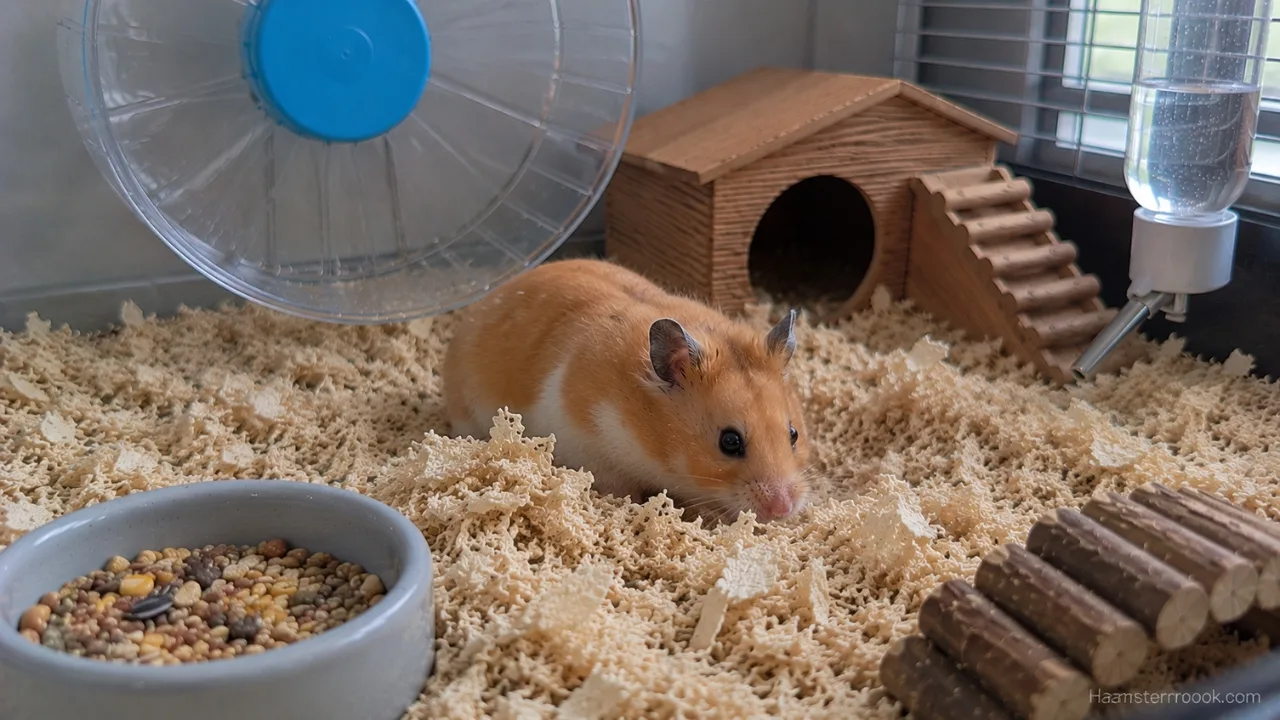
The area around the cage should also remain reasonably consistent throughout the day. Avoid locations where sunlight, heating, cooling vents, or household activity can cause noticeable changes in temperature or disturbance.
For a more detailed placement checklist, our Hamster Cage Placement: Safe Locations, Room Conditions & What to Avoid guide covers suitable room conditions and common placement problems.
Building a great hamster habitat doesn’t require expensive accessories. Focusing on space, bedding, enrichment, and safety creates an environment where your hamster can express its natural behaviors every day.
Lighting is another part of the environment that should be planned alongside the cage itself. Our Hamster Day/Night Lighting Guide explains how normal daylight, nighttime darkness, and direct sunlight can affect a hamster’s daily routine.
Final Thoughts
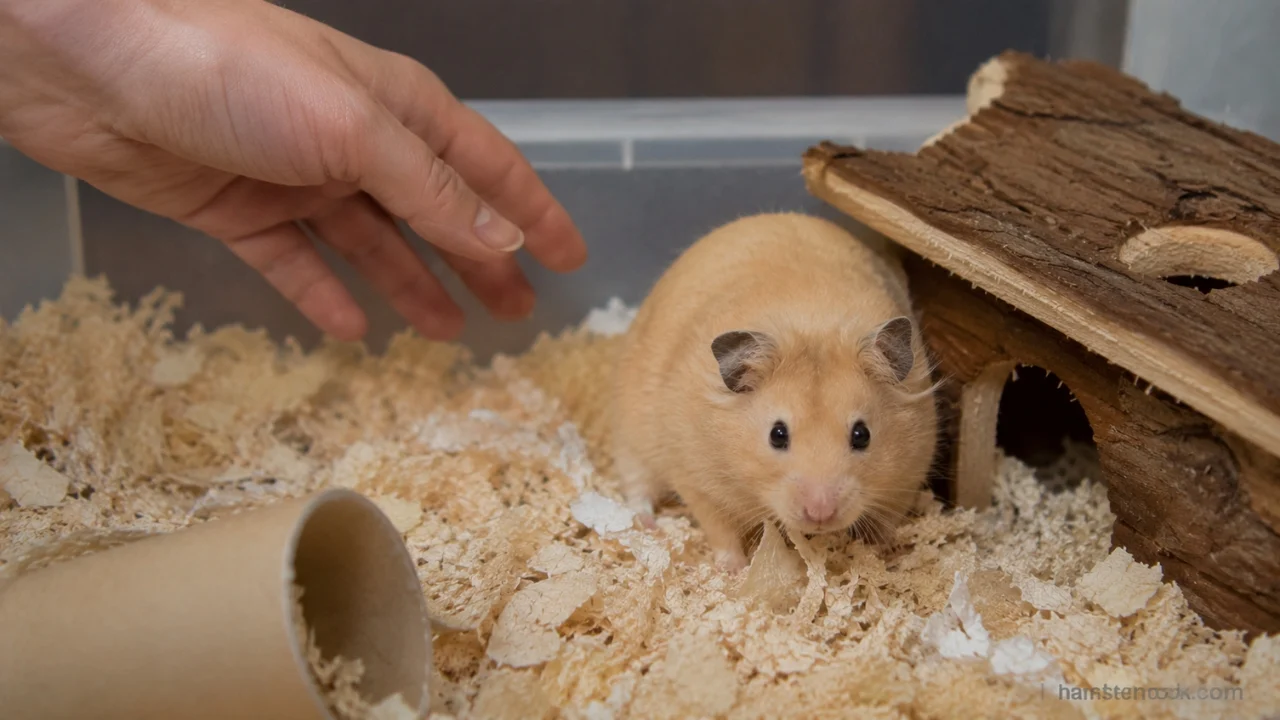
The best hamster cage setup is built around your hamster’s natural instincts rather than decorative accessories. Providing enough space to burrow, explore, run, hide, and forage creates an environment that supports healthier behavior and long-term wellbeing.
Before bringing your hamster home, it is worth setting up the enclosure completely and checking every essential item. Make sure the wheel spins freely, the water bottle dispenses properly, the hides are stable, the bedding is deep enough, and there are no gaps or loose parts that could create an escape or injury risk.
If you are starting from scratch, remember that the most important upgrades are:
- Large unbroken floor space
- Deep burrow-friendly bedding
- Correct wheel size
- Safe enrichment
- Quiet secure hiding places
A proper cage setup supports long-term health, but it’s still important to recognize early warning signs of illness. Our Signs of a Sick Hamster: Warning Symptoms Every Owner Should Know guide explains the symptoms that should never be ignored.
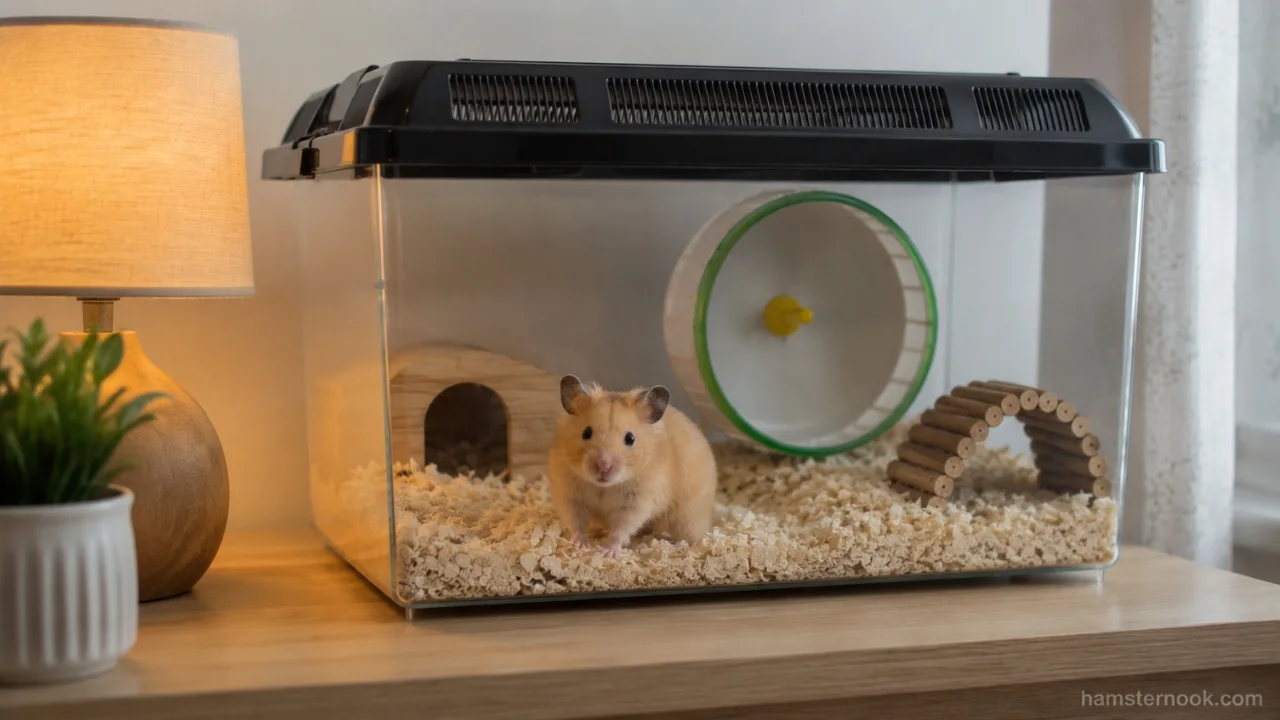
A thoughtful cage setup helps support natural behaviors, reduces stress, and creates a safer environment for long-term health. Small improvements in space, bedding, enrichment, and hideouts can make a significant difference in a hamster’s overall wellbeing.
FAQ About Hamster Cage Setups
What is the best cage for a beginner hamster owner?
Large glass tanks, bin cages, or spacious wooden enclosures are often easiest for beginners because they allow deep bedding and good enrichment options.
Can hamsters live in small pet store cages?
Many commercial starter cages are unfortunately too small for proper hamster welfare and do not allow enough bedding depth or exercise space.
How deep should hamster bedding be?
At least 8–10 inches is recommended, with deeper bedding preferred whenever possible.
Are hamster balls safe?
Many welfare organizations discourage hamster balls because they restrict natural movement, ventilation, and the hamster’s ability to hide or stop safely.
Do dwarf hamsters need large cages too?
Yes. Dwarf hamsters are very active and still benefit from large enclosures with enrichment and deep bedding.
What bedding is safest for hamsters?
Unscented paper bedding, hemp bedding, and aspen shavings are commonly considered safe options.
How often should I fully clean a hamster cage?
Full deep cleans should be limited. Frequent full cleanouts can cause stress because hamsters depend heavily on familiar scents. Spot cleaning is usually better for routine maintenance.
Should a hamster cage be placed near a window?
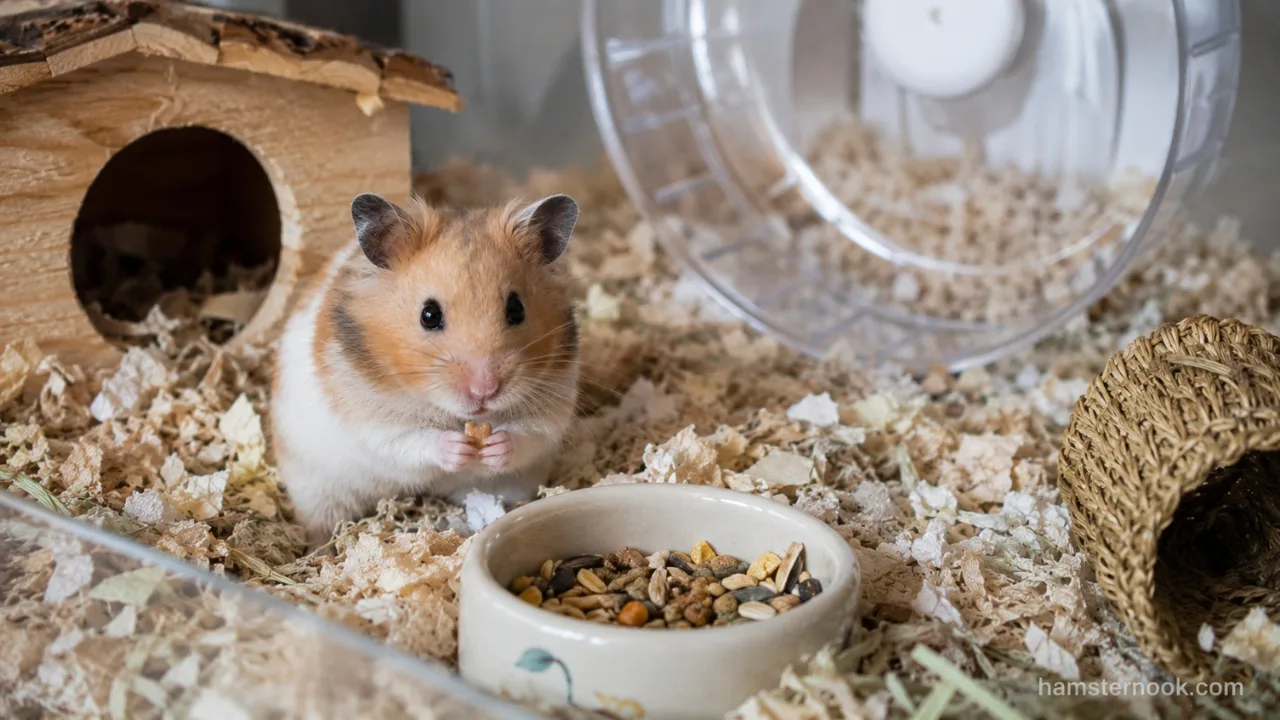
No. Direct sunlight can quickly overheat a hamster enclosure and cause temperature fluctuations. A quiet area away from direct sunlight is usually safer.
Direct sunlight is particularly important to avoid when choosing a cage location. Our Hamster Cage Near Window Risks guide explains how sunlight, drafts, temperature fluctuations, and outdoor disturbances can affect an enclosure.
Should I rearrange my hamster’s cage often?
No. Frequent layout changes can make some hamsters feel less secure. It’s usually better to keep the basic layout consistent while rotating a few enrichment items occasionally.
What should I put in a hamster cage?
A beginner hamster cage should include a spacious enclosure, deep bedding, a properly sized solid wheel, multiple hides, a sand bath, safe chew items, enrichment, food, and fresh water. Arrange these essentials so your hamster still has plenty of uninterrupted floor space for natural movement and exploration.

What size hamster cage should I get?
A practical beginner starting point is at least 100 × 50 cm (40 × 20 inches) of uninterrupted floor space. A larger enclosure gives you more room for deep bedding, a properly sized wheel, hides, and enrichment.
References
This guide is based on hamster housing, bedding, enrichment, exercise, cage setup, cleaning, and welfare guidance from trusted animal welfare and veterinary resources, including:
- RSPCA – Creating a Good Home for Hamsters – Guidance on enclosure size, bedding, nesting areas, exercise, enrichment, cage environment, and hamster welfare.
- RSPCA – Keeping Hamsters as Pets – General guidance on hamster housing, bedding, diet, exercise, behavior, enrichment, and daily care.
- Blue Cross – Hamster Care Guide – Practical information on cage setup, bedding, exercise wheels, hiding places, enrichment, feeding, and hamster wellbeing.
- MSD Veterinary Manual – Providing a Home for a Hamster – Veterinary guidance on hamster enclosure design, bedding, nesting, exercise, ventilation, and environmental care.
- NC3Rs – Housing and Husbandry: Hamster – Guidance on hamster housing, bedding, environmental conditions, enrichment, and species-appropriate husbandry.
- NC3Rs – Choosing Appropriate Enrichment – Guidance on providing suitable enrichment that supports natural hamster behaviors and welfare.

Narayan Kumar is the founder and author of HamsterNook. He creates practical, research-based hamster care guides covering hamster behavior, nutrition, cage setup, enrichment, health, and everyday care. His goal is to help hamster owners make informed decisions and provide safer, healthier lives for their pets through clear, beginner-friendly information based on trusted animal care resources.